Sunday, August 18th, 2024 2:35pm, Honeydew, California, Fairwind: Natascha spent the weekend at Fairwind to participate in an Ayahuasca ceremony. Afterwards she interviewed practitioners Chonon and Adelina. From her experience this plant medicine opens the third eye, allowing in information and reflection on communal living, healthy life choices, clearing chakras, and giving thanks to ones ancestors and those who have passed. You can learn more about their projects by visiting shipibocollectiveshop.com and shamanic-dream.com. The spread of this information and donations toward their tribe help keep their traditions alive.
“Plant medicine enables me to confront my triggers rather than suppressing them. It supports me in processing my trauma rather than overlooking it.”
-Natascha
Natascha: Thank you, everyone, for tuning in to the Little Lost Forest blog. Today I’m going to be interviewing Adelina and Chonon from the Shipibo tribe of the Amazon in Peru. Hello, Adelina and Chonon. Thank you for taking this time for this interview. Thank you, Albert, for translating this conversation from English to Spanish. How have your travels been so far? Where have you stopped?
Albert: ¿Cómo han sido tus viajes y a dónde has ido?.
Adelina: Oh thank you. Mhm. En mi viaje ha ido todo bien. Hemos venido acá, también tenemos un amigo. Gracias a Alberto también. Estamos acá en Arcata y después de acá vamos a ir a Utah también visitar una Amiga.
Albert: So yeah she says the travels have been great right now in Arcata California. Honeydew. Um after this she’s going to be going to Utah. And that’s where she was before this as well. They have community there and friends.
Natascha: Wonderful, thank you. What is your mission?
Albert: ¿Cuál es tu misión?
Adelina: Mi misiós es esta, ¿No? Como vuelvo a decir que he trabajado con 25 mujeres de mi comunidad y también buscar el mercado donde vender para poder ayudar a mi comunidad.
Chonon: Claro, mediante la medicina estar… Siempre conectar con la gente y una de las aazones por las que hacemos todo esto es simplemente por el amor tenemos al ser humano. Un gran amor y un gran respeto.
Albert: Gracias. So she says that her mission is well back in Pucallpa. She works with 25 other women in her community, and one of her missions is to network. And they do this all out of love. And, um, she wants to help support the community. And so she’s looking for different outlets and places to show her art and exhibit the beautiful artwork that they do make.
Natascha: Thank you. When working with plant medicine, is it grown on a farm or found in the jungle?
Chonon: Yo puedo responder esa pregunta. La medicina que nosotros hacemos, tú sabes la razón, ¿Verdad? Ahora en esta globalización de la Ayahuasca, se ha tomado especialmente en la comunidad donde nosotros vivimos a que no haya, es muy dificil de encontrar en su estado natural. Como Los antiguos, ¿Verdad? Entonces, lo que nosotros hacemos es trabajar con los tios, con la familia, ¿Verdad? Tenemos hectáreas para sembrar la medicina, la chacruna, la ayahuasca… Entonces, mediante eso, para no poder abusar de lo que está trayendo a la salud, es mejor reforestar. Asi es como nosotros hacemos la medicina.
Albert: Gracias, Chonon. So in their community, with the globalization of ayahuasca and a lot of the plants that they use, um, these plants are very rare to find in the wild. And so in order to keep them safe in the jungle, they try to keep the oldest vines alive, the plants alive and in properties of their, uh family members, they try to plant as much as they can in order to keep what’s natural alive and and to to save that.
Natascha: Thank you. How is it processed?
Albert: ¿Cuál es el proceso de hacer la medicina?
Adelina: ¿Cómo hacemos la medicina? Bueno, para hacer la medicina, nos toma alrededor de tres a cinco dias, dependiendo cuanto vamos a hacer. Nosotros lo hacemos en la selva. Siempre.
Albert: Vamos a hacer un bloqueado para… un poquito. And she says it takes about 3 to 5 days to make the medicine, depending on how much they’re gonna make. And they make it up in the jungle.
Chonon: Lo que hacemos es con ayahuasca y chacruna, esas dos únicas plantas.
Albert: So they have two ingredients. It’s ayahuasca and chacruna which uh ayahuasca is a vine. Capoeira banisters and the chacruna leaf in combination.
Chonon: Nosotros lo que hacemos primero es pues, hacemos un proceso de machacar la liana y después vamos en capas poniendo la ayahuasca… Es una olla muy grande, así. Todo eso, tal vez ponemos unos sesenta litros de agua, más o menos, todo eso se reduce a tres litros.
Albert: Okay, so they start by, um, smashing up the vine. The chacruna or the ayahuasca vine. Sorry. And, um, then they have a really large pot that they put it all in, and they put it in layers and they layer the ayahuasca and the chacruna, and then they put about 100l of water into the pot, and they cook it down until it turns into about just three liters of the medicine. So 100 will turn into like three after cooking it for 3 to 5 days.
Natascha: Well, thank you for sharing. How does art play a role in your ceremony?
Chonon: ¿Cómo hace…?
Adelina: Yeah.
Chonon: Yo voy a responder eso también.
Albert: Okay, perfecto.
Chonon: El arte es muy importante. Especialmente este arte, ¿No? Este arte viene de la ayahuasca.
Albert: She says the art is really important especially with what they have here. She said this comes from the ayahuasca.
Chonon: Entonces todo esto es la inspiracion de las vibraciones de los ícaros, de las canciones que vienen de las visiones.
Albert: So this is all inspired by the visions that come through the, um, the icaros that come through the visions of ayahuasca. When received-
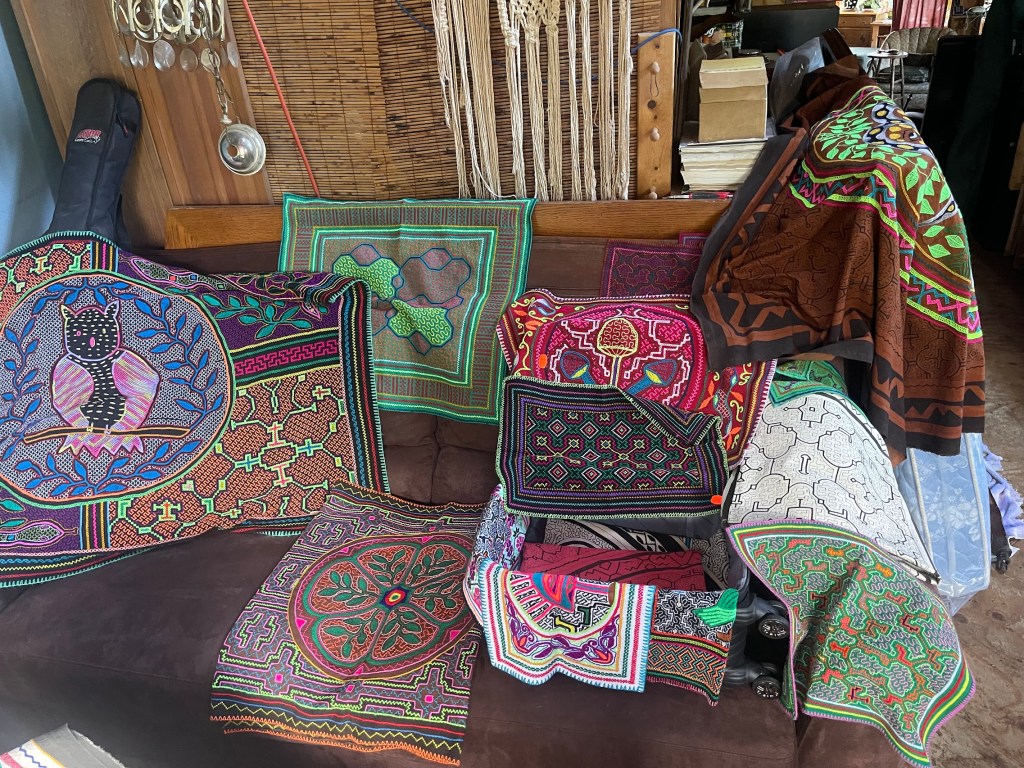


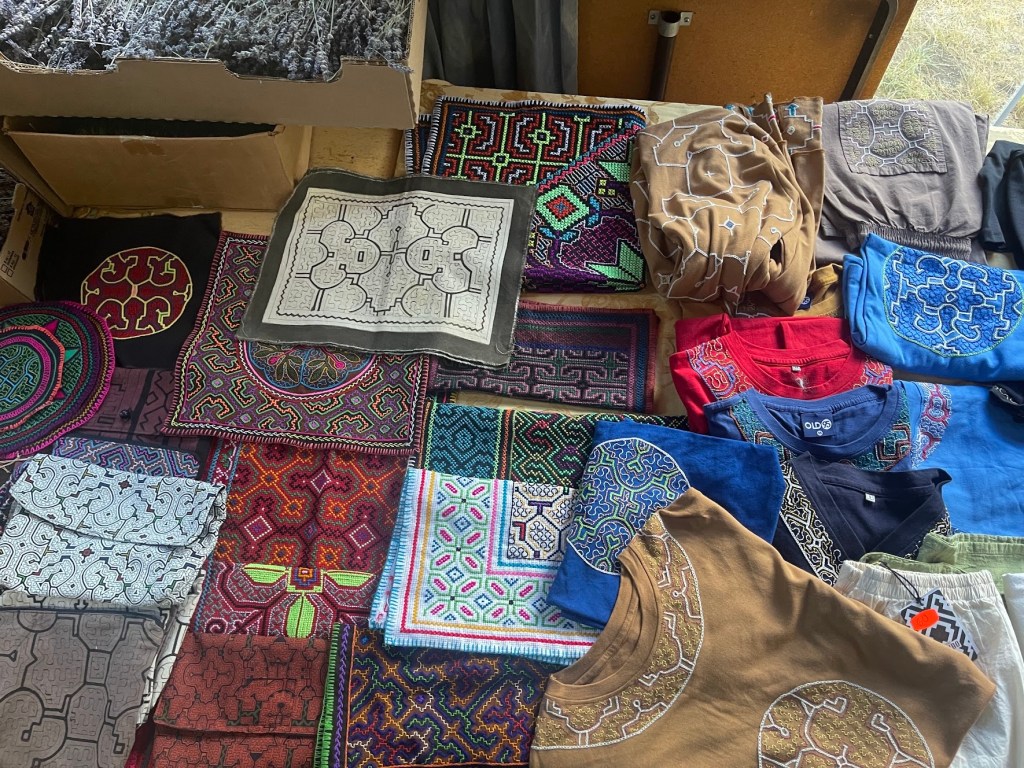


Chonon: Y todo esto tiene un significado, no es un diseño que está hecho por hacer, especialmente ¿Qué significado tiene? La mayoría es a sanación, protección, traernos sabiduría de los ancestros.
Albert: She said that every design on these patterns is not just set there for looks. Every single design and shape has a meaning, um, healing, protection, um, gifts from their ancestors.
Chonon: Sí, entonces, obviamente nosotros al llevarlo a la ceremonia, es una forma de honor, de respeto hacia todos los grandes espiritus que cuidan, nos guían y nos llevan a la dirección de la medicina.
Albert: So this is all in honor of, um, their ancestors and their guides that help guide them through these ceremonies. Mhm.
Natascha: Thank you. How has the medicine strengthened the relationship between you and your daughter.
Albert: Está preguntando cómo se ayudan la medicina a poder de usted y su hija y cómo ayuda a crecer su relacion.
Adelina: Nuestros ancestros nos enseñaron también. Entonces nosotros también. Yo aprendí de mis abuelos, mis abuelos, tías, tíos. Entonces ahora a mi hija yo le he transmitido y le estoy enseñando cómo trabajar con la medicina.
Albert: So these practices have been passed down from generation to generation. Um, Adelina was taught by her grandparents and her uncles and aunts and in lieu she is also teaching her family. She also has sons and other daughters back at Pucallpa. We’re really happy to have Chanon here with her. And, um, that is just part of their culture and how they how they grow together. Mhm.
Natascha: How are you received as medicine woman in your community?
Albert: ¿Cómo eres recibida en tu comunidad como una mujer de la medicina?
Adelina: Sí, nosotros en la comunidad, hombres y mujeres casi somos… Toda comunidad hacemos medicina en nuestra comunidad.
Albert: Mhm.
Adelina: Mhm.
Albert: ¿Y Cómo eres recibida en la comunidad?
Adelina: Nos tratan bien, porque la medicina para nosotros es muy sagrado y cuando nos enfermamos, con eso nosotros sanamos. Es una sanacion muy buena. Es medicina muy fuerte, es nuestra farmacia en nuestra comunidad.
Albert: Qué bueno.
Albert: She says we’re kind of like a pharmacy in the community. They’re very well received. Um, you know, her and the whole community make a lot of medicine. And, um, when people get sick in the community, you know, the ayahuasca and the medicines that they make alongside that really help cure a lot of sickness in the community. So jokingly looked at as a pharmacy. Yeah.
Adelina: Haha.
Natascha: What is the role of the assistants? How do they enhance the experience.
Albert: The assistance of-
Natascha: During ceremony
Albert: ¿Qué es el trabajo de la existencia en ceremonia y cómo se ayuda a la experiencia?
Chonon: Bueno, el asistente forma una vital parte de la ceremonia también, especialmente cuando hay grupos mayores de 10 personas en el circulo. ¿Por qué? Porque si es menos está bien, el chamán se puede hacer cargo de todos. Pero cuando no está a su alcance de poder ver tal vez más de 20 personas digamos un ejemplo, forma un poquito de dificultad, especialmente, y eso es asi siempre, no simplemente cuando venimos acá vamos a tener un asistente. En la comunidad, en la selva con toda familia siempre hay alguien toma una dosis muy pequeña para poder cuidar de todos. Siempre va a ser importante.
Albert: So she says.
Albert: Usually when sitting down with anything less than ten people, they really don’t need assistance in any way that they can take care of everybody in that circle. But usually like ten or more people, um, they’ll have somebody that maybe drinks a little bit less in order to watch over people, because when there’s like 20 people in a sitting, you know, it’s a little bit harder for the facilitator who is sitting in the very back to have a watchful eye over everybody. So therefore there’s somebody who takes a little bit less that is there to take care of other people that are in need of assistance, thus enhancing the experience.
Natascha: How does ayahuasca represent your culture?
Albert: ¿Cómo representa el ayahuasca tu cultura?
Chonon: Oh, el ayahuasca. Bueno, como dicen los abuelos, del ayahuasca venimos nosotros.
Albert: She says, just like their grandparents say, from the ayahuasca is from which where they came.
Chonon: Entonces nosotros formamos parte, nosotros somos los hijos de la ayahuasca, dicen los abuelos. Por eso dicen que nosotros debemos practicar. No podemos hacer desaparecer este conocimiento. De la ayahuasca viene el idioma, de la ayahuasca viene el arte, de la ayahuasca viene el conocimiento de la medicinas. Abre todas las puertas hacia el conocimiento. Es la escuela de la vida.
Albert: Wow.
Albert: So ayahuasca. Gracias. Ayahuasca to them is extremely huge. It is, um, everything from which where they came. They said that it brings them their language, their songs, their culture, their art, their visions, their healing. And, it’s told by their grandparents that they need to practice with this medicine because without it they are not. You know, it is everything for them.
Natascha: That’s a very beautiful answer. Thank you. What are some struggles in your community that you would like to overcome?
Albert: ¿Cuáles son los problemas de tu comunidad que te gustaría solucionar?
Adelina: Nuestro problema ahora en las nuevas generaciones, nuestros hijos ya no quieren… El problema más grande es que ya no quieren usar nuestra vestimenta, ya no quieren hablar nuestro idioma y algunos ya no quieren practicar la medicina. Entonces, ese es el problema más grande de la comunidad ahorita y eso nosotros queremos que no se acabe la cultura, el arte y esa es mi preocupacion. Yo quiero ayudarlo. También yo quiero hacer como una pequeña escuela también para ensenarlos a ellos también.
Albert: So she says, one of the problems in her community right now that she is really working on is that the new generations and the, the younger people in their community are starting to lose sight of the practice. They don’t find as much interest in wearing the traditional garbs the garments making the art. Um, a lot of people are speaking less of their traditional language or the Shipibo language. Adelina wants to make a school to teach people to continue these traditions, to teach them the language so that they don’t lose these special traditions.
Albert: Mhm.
Natascha: Can you share with us a prayer for the earth in your native tongue?
Albert: ¿Puedes compartir un rezo para el mundo en tu idioma nativo?
Albert: Gracias.
Adelina:
Albert: That’s right. Yeah Thank you.
Natascha: If you would like to translate.
Albert: Chonon, is there any of that that you would like to translate?
Chonon: Bueno, dice…. Bueno, acá estamos pues nosotros…
Albert: We’re here.
Chonon: En este momento.
Albert: At this moment.
Chonon: Pedimos al gran creador.
Albert: We’re asking the great creator.
Chonon: Que nos guía, que nos dé la fuerza para seguir caminando.
Albert: That they guide us and they give us the strength to continue walking this earth.
Chonon: Para poder compartir siempre la alegría, los buenos pensamientos.
Albert: To continue to share happiness and good thoughts.
Chonon: Que por favor, la gente que tiene estos malos pensamientos, guíalos hacia los buenos sentimientos.
Albert: And to please help the people with bad thoughts, to guide them into better thoughts and good states of mind.
Chonon: Así para que no haya más sufrimiento en este planeta.
Albert: To no longer have suffering on the planet.
Chonon: Por favor, guíanos una vez mas.
Albert: Again, please guide us.
Chonon: Y muchas gracias a tí, gran creador por siempre…
Albert: And thank you so much. Great creator for always-
Chonon: acompañarnos, guiarnos.
Albert: -For always accompanying us and guiding us.
Chonon: Gracias.
Albert: Thank you.
Chonon: Gracias. Gracias.
Natascha: All right. This is our last question. What is tribe life like? And what does it mean to you?
Albert: Esta es la última pregunta. ¿Cómo es el vida en una tribu? Y ¿Qué es para ustedes?
Chonon: ¿Cómo es más o menos?
Albert: ¿Cómo es la vida…?
Adelina: O cómo viven.
Speaker3: Cómo viven, sí.
Albert: Cómo viven.
Adelina: En.
Adelina: la comunidad más que todo.
Chonon: Bueno, en la comunidad… Forma dos partes, especialmente si hablamos del curanderismo, de las prácticas, es una práctica muy común. Todo Shipiru aabe qué es un curandero y tiene mucho respeto a quien practica la medicina y saben quienes somos. Y también está la comunidad que no practica la medicina. Entonces todo es un balance, todos vivimos en armonía y asi es como decimos. Especialmente cuando dicen los abuelos, en nuestra comunidad, nosotros siempre hay que compartir con nuestras abuelas… Cuando viene alguien, visita… Nosotros con mucha alegria, mucho amor. Entonces nuestra comunidad siempre trata de vivir en armonía.
Albert: Déjenme atravesar un poquito para no atravesarme. She’s saying so it’s like there’s like two parts and it’s a balance because there’s the curanderos in the community, which they are a part of the medicine and there’s people that don’t practice the medicine. And it’s really important that when somebody comes into the community that they receive them with joy and love and they bring them into the community and embrace them. And you know, everybody in the community knows that like that. The people that don’t practice medicine know the people who do practice medicine and really, um, rely on that as well. Um, so yeah, she’s saying it’s a balance.
Albert: Mhm. Mhm.
Chonon: Entonces, eso es lo que nos enseña la ayahuasca. Porque somos la ayahuasca. La ayahuasca nos enseña a tener balance en la vida. Entonces por eso en la comunidad los abuelos siempre dicen “hay que tener un balance, estar en siempre en neutro”, no podemos tampoco como explotar y tampoco en este otro, siempre en el medio.
Albert: Wow.
Albert: So she said it all comes back to the ayahuasca and what is taught by their grandparents and the people that came before them, the generations before them, is that they must remain balanced. They cannot go too far in either direction. You know, be too loud in medicine or be too quiet in the community. And so, yeah, it’s really important in the ayahuasca helps them bring balance to the community in those ways.
Natascha: Well, thank you so much for your time. Thank you for your service. Thank you for coming. I appreciate you guys.
Albert: Iraqshi.
Adelina: Iraqshi. Iraqshi. Gracias. Thank you.
Fairwind is a remote mountain retreat center, nestled in the Mattole Valley on a knoll looking out across at the King’s Range Wilderness. It has had the honor of hosting several cultural healers from different countries. Its intention is to respect all traditions and spiritual paths. This combined with the spirit of the land that has long fostered healing. The Temple is built with sacred geometry, using the trees from the location . There is also a seven circuit Labyrinth which allows visitors to engage in creating sacred space and share prayers for the benefit of all.
https://www.gofundme.com/static/js/embed.js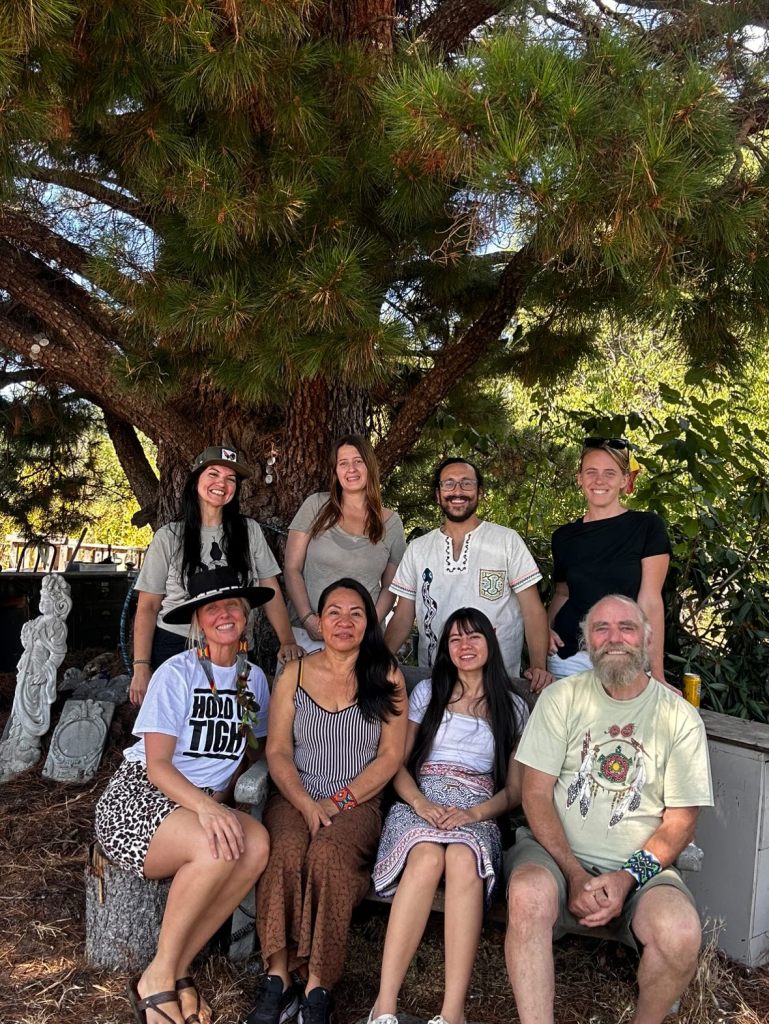
 Little Lost Forest