Green Rush Interview 2: Mihael’s 49 year Observation Overview

February 19th 2026, Trinidad, CA: I sat in Mihael’s home, which he has rented for the past 20 years, where he has observed the animal life in Humboldt County both in the ocean and on land. Mihael has another home named Fairwind that is off-grid in Honeydew, CA that he built for the ground up, housing his family and his community. It is now used as a spiritual retreat. Mihael has always worked in town as a carpenter, driving from his home in Honeydew to Trinidad and working for the residents inbetween. Through his work, life, and family he has observed the sweeping changes in Humboldt from the beginning of the Cannabis revolution until it’s ultimate down fall after legalization. This interview goes into great detail about the observations that Miheaal hasa madae, from the good to the bad. Focusing on the economy, the cannabis industry and the local environment. Thank you, Mihael and our readers for your time and interest in the stories of Humboldt County. 
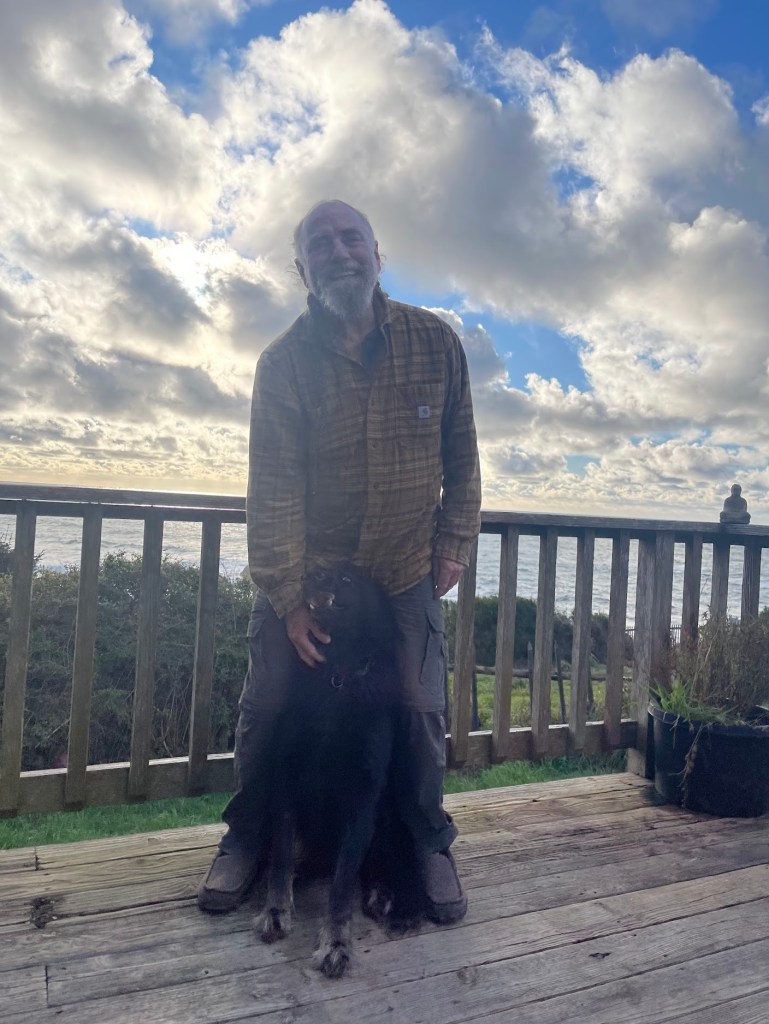
Natascha: Hello and welcome to the Little Lost Forest blog, where we are documenting an oral history of Humboldt County and examining the economic shifts that followed the legalization of cannabis. Today, we’re speaking with Mihael Kavanaugh, creator and steward of Fairwind, a healing retreat in Honeydew, California. As a longtime resident of Humboldt County, Michal built his dream from the ground up, living off grid and creating a space dedicated to healing, safety and community care. When he purchased Fairwind, it had nothing to do with marijuana, but the collapse of the local cannabis economy has deeply affected his ability to sustain Fairwind and the life he created there. His story reflects the broader ripple effects felt across Humboldt, raising important questions about what happens to rural communities when their foundational economy disappears and how those shifts reshape livelihood, land and collective identity. 

Hi, Mihael. How are you doing today?

Mihael: I’m doing pretty good, all things considered.

Natascha: Yeah. Thank you for meeting with me. How long have you lived in Humboldt?

Mihael: Oh, 49 years.

Natascha: And what is your history as a resident in this area?

Mihael: When I first came, I was doing tree planting in the winter and construction in the summer. I started going to college at College of the Redwoods, where I opted to not rent and just put a wiki up in the mountains and hike to school.

Natascha: Well that’s creative. What is your history as a resident in this area?

Mihael: Well, going to school was definitely a start and I was very involved with the aspects of preserving nature and environmental concerns. Being a tree planter, I saw the direct effects of logging, I planted trees in Washington, Oregon, California, Idaho, and Montana. So I had a very good perspective of the effects of logging.

Natascha: You also read poetry on a radio station. What radio station was that?

Mihael: That is Kmud radio, the second Wednesday of every month at 8 p.m.

Natascha: That’s lovely. 

How would you define cannabis culture prior to legalization?

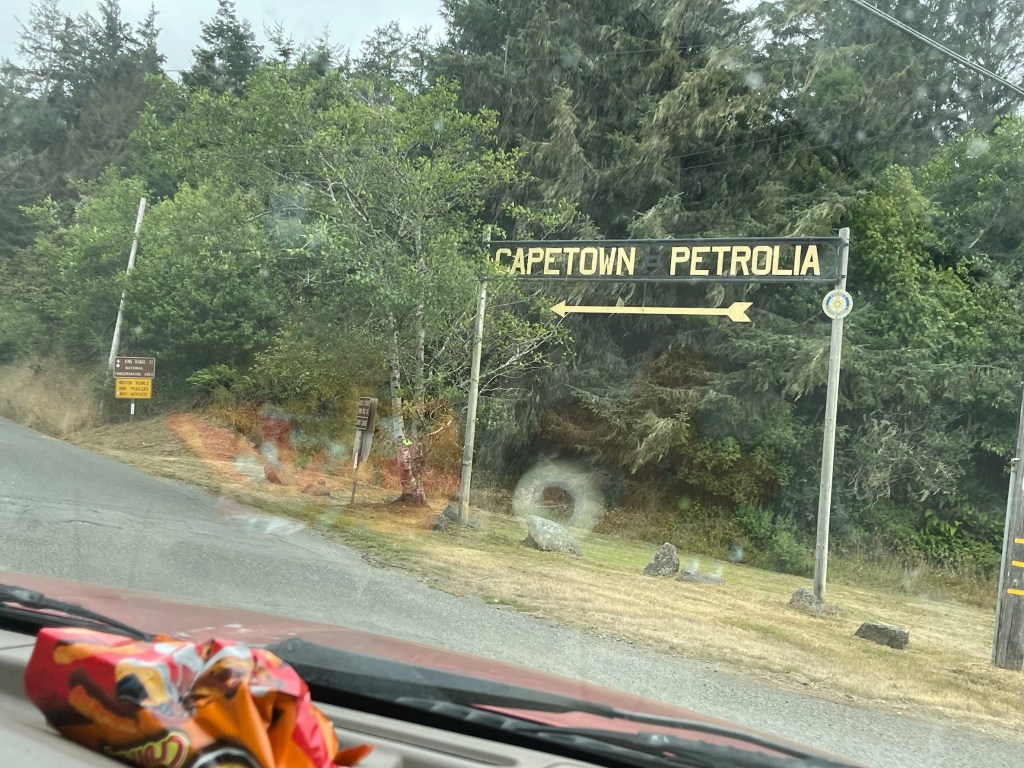
Mihael: Well, people were growing in the hills in the early 70s, and a lot of the back-to-the-land movement, people from the 60s found little niches. There were certain communities that they found strongholds, in the Mattole was one of them. I was a little bit younger than some of those people, but the back to land movement was part of the reason I bought property in the mountains, to raise my family, in a close way to nature, and try to grow as much food as we could. And I didn’t have anything to do with marijuana, but it was already in the hills, but not a dominant force; police weren’t doing raids, and there wasn’t much being grown. It was definitely a different era. 

Natascha: And you’re talking about your property in Fairwind?

Mihael: Yeah, it’s out in the Mattole. I witnessed it go through many transformations; almost every decade, there was something new. I mean, it was almost 20 years before medical marijuana came into effect, which was a huge dynamic. Probably the biggest in the early years, CAMP, campaign against marijuana planting started in 1984, primarily 83, they did a couple of things, but not really. By 84, it was full-on military. They were dropping crews of 16 fully armed military-type people, combing the hills. And that created the whole guerrilla culture of people growing in the woods, hiding things. I never grew on the property in the early years. For the sake of having children there. So I didn’t, you know, we could stand there and wave at them, and neighbors would come to my place because they knew it was a safe place. And, um, it entailed hiking many miles in the woods. So that suited me because I loved nature and hiking. But at that time, the price also fluctuated greatly. People said, ” Oh, it went up so much.”

Mihael: Yeah, but you could only grow two ounces as compared to growing a 1 or 2lb plant because you had to hide it. I mean, it’s extremely hide it or risk getting it all taken. So I saw many helicopters during those years. I think the biggest years were 84 through probably 94 or 5. Um, and they really, uh, they had a thing about honeydew. It was one of the first places they ever hit, and they would come there every year for a couple of weeks. And, um, so that created a whole different culture. In that same time when it started going up in price, then people started moving there solely for the green rush quote – of they could grow 100lbs and leave at the end of the year and make a small fortune. I was still doing construction and raising my family, and that wasn’t me. Although there were people, and unfortunately, with that, it changed the community. I think you have a question later about that, but I could go on right now and address those things.

Natascha: Yeah. I mean, go ahead. Keep talking and we’ll go through the questions.

Mihael: The way it affected the community was that a lot of the people who originally moved there, especially before the marijuana boom, we’re moving there because they love the land. They had a relationship with the land. They wanted to grow their food. They wanted to kind of step out of the system of society and live simply off the land. So there was a sense of community that was really strong, and you knew your neighbors, their children knew your children. On the community at Fairwind, we even built our own school. I allowed 4 or 5 other families to live there so we wouldn’t have to go for social. We were mostly on the land all the time with goats, sheep, donkeys, horses, chickens growing our food, then it was a really unique relationship with one another, but with the animals and the land. There was a certain kind of utopian element about it, especially growing up in San Francisco, where the whole back to the land movement thing was something that drove me as a youth. I was listening to Alan Watts when I was 12 years old and just having those influences. Stephen Gaskin, who started the Tennessee farm he used to teach at San Francisco State College and did a radio show. So I was hearing that stuff. The element of living off the land changed because then people started making big money when some of the neighbors who started making more money than… it was almost too much money.

Mihael: So then lots of drugs started coming in. Unsavory people started coming in, people started getting greedy. It changed the dynamics, except for the people who wanted to just keep it simple. That was a big change in that mid 80s era where I saw a lot of people shift their focus, and there was a certain abundance to it that allowed people to build their house to buy their solar panels too. I almost paid off the land just doing tree planting and construction and, and that was adequate. Land was a lot less expensive. Then, of course, once the boom started happening, the price of land started going up. And then it became a cultural kind of phenomena that when CAMP became so heavy and so oppressive because– they were– people started growing indoors with generators. So that was a whole ‘nother culture that I didn’t adhere to because then they were growing in these bunkers and houses, running diesel generators all the time so that they couldn’t be seen from the helicopters. So that was then another like a layer to the evolution of the grossing. A lot more people started moving up from the city going, oh, I don’t care about the lifestyle, but I can come here and make money.

Mihael: It changed the dynamics of some of the people that were moving there because they weren’t moving there, because of the love of the place and a relationship with the land. They were moving there with the hope of making some big bucks. And so that that was like, and like I say, almost every decade, there was another wave of that where it changed again. That happened again in the late 90s when the medical scripting happened, where then people could grow in a greenhouse and they couldn’t just come and take it because it was potentially legal. So the whole helicopter days of them being so oppressive shifted. In some ways good, because people were not so stressed out. They weren’t having to run around underneath the military M-16s. It kind of simplified things and for a time it didn’t get out of control. But then because that happened, then people started taking advantage of that. And that’s when people started bulldozing tops of mountains and growing way too much. And then that brought in a whole ‘nother energy of people from other countries, you know, and Bulgarians moved in, the cartels moved in. Although some of those people came even in the early 80s but just a little bit, It became much more. 

Mihael: The more they realized how much money– you know, when people start floating millions– then other people are like, oh, here, I’m going to be the big dog and run this thing and then that eroded the sense of community because it was so based on money and not caring about the environment. I remember, you know, because I listen to the radio, how many times they would find a grow way out in the woods on a national forest or whatever, and there’d be pallets of poison, you know? Because they were just trying to grow so many thousands of pounds, they didn’t care about the environment. We used to have a ton of great horned owls. Over time, they just disappeared, probably because of people using rat poison. And so those kinds of effects are definitely the negative of people, quote, going for it and going, not caring. I would say that in the early years, most of the original back-to-the-landers and mom-and-pop people were super conscious. They would not use poison. They kept it much more simple. They were stewards of the land. They were taking care of the land. They were the ones trying to defend the land. That culture is, unfortunately, kind of just got overrun by the bigger scenes, and then, hence the kickback from the authorities, because then the authorities are like, oh, we got to go after these environmental people, ruining the environment, and bulldozing and cutting down all the trees and damming creeks.

Mihael: and because some of that stuff, that’s where they were crossing the line. Then making it harder for the people who are living in a good way. There was an in-between time where the schools were thriving, and the children were thriving. The small businesses were doing good and there was rich music, the festivals were happening. 

I remember one of the firemen’s Hall burnt down in Garberville and then, you know, a little while later they were like, oh, let’s do this fundraiser to build a new community center, you know, so that’s when the Mateel formed. The fire company, even in Honeydew, we used to do a food booth at Reggae on the River as a fundraiser for our own fire company. But then that evolved into the Roll on the Mattole like, let’s do our own little music thing. And so a lot of the non-profits, schools, fire companies, they all benefited from those bigger events because it was like, hey, we’re bringing in all this people, this culture, and this is a way to help nurture those fundamental parts of our own culture. At the same time, I think there were some of the government agencies that were like, oh, we can’t let them have solar panels and not be on the grid.

Mihael: The whole Say No Reagan-era was actually, they called it a War-on-Drugs. So the government didn’t like the counterculture getting a foothold in becoming self-sustaining. And a lot of these people, a lot of my friends and people that moved in, you know, were Vietnam vets, who didn’t fit well in society, but fit well into the mountain culture. There were a lot of them who might have been called misfits, yet they were just artists. They were people who wanted to live differently and were culturally, actually adjusted to that lifestyle, and people honored that. If there was a certain neighbor that really wanted to be like a hermit, if there was someone who wanted to be plugged in to the school system and helping with the different events, then there was room for that too. I worked at the Petrolia Community Center the very first summer I was there, and you know, straight away, these are your people. They’re in your valley. So you get to know the families. You get to know the elders. You can get to know the youth. And then as you have children, and then, you know, I’m part of the fire company. I was part of the coaching the basketball.

Mihael: You evolve in the ways that you can plug in and be a part. At least that’s my nature. And like I said, some just stayed quiet and just wanted to make money. You know, for me, that wasn’t why I moved there. So that was never a big priority. In the mid to late 90s, when the whole Prop 215, they call it medical marijuana, it allowed people a little more freedom and a little less anxiety because of the anxiety of the oppression of the helicopters and them driving down the roads and convoys coming in and turning people’s lives upside down. It was heartbreaking sometimes. Not always in a just way, you know, they weren’t just going after the big growers, they were going after some of the mom and pa growers, people who were barely making it, you know? And so that’s when it’s like, come on, let it be. That became even more apparent when it became legalized, because then the people who just were making enough to get by and take care of things, they were spending their money in the restaurants, they were spending their money to go see music. They were buying clothes. Even the trimmers, you know, people always, oh, trim-igrants, blah, blah, blah.

Mihael: But they were staying in the motels sometimes, too. They were buying food. They were buying clothes. That money was being totally cycled right back into the county. And in a good way. And unfortunately, when they shut that down, that’s when a ton of businesses shut down because they took away the very foundation of what was helping things thrive. And that element of– let me interject here. When it became legal, there was Prop 19, was the first one to be voted for. It was geared towards small growers and medical, and written by some of the founders of the people who were kind of at the forefront of things. I think I remember hearing that some corporation in Utah spent almost $40 million with advertisements against 19, saying, “We don’t want this in our schools. We don’t want kids to have access to this.” You know, portraying it as a terrible, bad thing we weren’t ready for. It would have been much more well-rounded for the economy in Northern California, and a better situation for all the growers. But most of the voters are in Southern California and San Francisco. So they were swayed to think, Oh, this isn’t good. So then when prop 64, which was written by corporations for corporations, was presented just two years later, the same $40 million was portraying how good it was, like, oh, finally we have this thing.

Mihael: And so that’s an $80 million spread of swaying by propaganda, people’s voting and. And of course, when they first wrote it, it was supposed to only be an acre with all these guidelines. And within a matter of months, they changed that because the stockholders said, we’re not going to be able to make much money if we can only have an acre. And of course, all the growers in the hills, the only stocks they held were the herb stocks, not anything having to do with Wall Street and investment firms. So that was a huge shift in economic status that then limited a lot of the people that could even afford to get a permit. Uh, you know, I knew some people very close to me who, you know, spent $100-200,000 jumping through the hoops, not even being able to grow for a while to get their permits. They were losing money some years, busting their butt growing, growing, growing with all the stipulations, everything and still losing money. So a number, a lot of them just stopped. They said, this isn’t worth it. Why am I working to fail? And I think the county did some things in the beginning. A lot of it was state regulated, and that was beyond the county’s control. But there were other counties that were much more lenient.

Mihael: You know, like Mendocino, you could have 25 plants with no problem. You didn’t have to jump through a million hoops. So a lot of the people were still able to do okay. Humboldt, I think shot themselves in the foot and then the other foot and then the– and not knowing that they were really crippling their own county by having way too many regulations, making it way too hard, making people literally suffer. People were committing suicide because they couldn’t meet all the regulations and and then they were watching their families hurt. And to me, that’s tragic. That’s a system that has failed miserably. When people are doing everything in their power for years and then committing suicide because they’re failing. And some of that was due to, unfortunately, to some of the programs that the county had and too many strict things. It’s one thing to shut down the big dogs who are trying to grow a thousand plants or bulldozing but a lot of the smaller growers who were just one of the small things, they should have just let it be and our economy wouldn’t have just taken a nosedive. It’s sad, I go to Garberville every month for acupuncture and my radio show and half the stores are empty. It’s like a ghost town. The ones that are still there are not thriving. They’re barely making it. There used to be a ton of restaurants and clothing stores and gift shops and– How are they going to cater to tourists, which is what they’re hoping to do again, because tourists are always come here but if someone stays near there and there’s no restaurants and there’s no stores to shop and nothing catering to, then they’re probably not going to stay long. 

Obviously, now that the redwoods aren’t going to go anywhere. That was a battle in the 80s and 90s, um, to save them. What degree we could. Corporations had their heyday with that. Again, with junk bonds, and just that’s another story. Now, a lot of people are trying to reinvent themselves. Those that are still in the permit realm of marketing, branding, and developing their science behind some of it.

Mihael: I’m always a little sad that there isn’t more emphasis on the spiritual part and the prayers that are in the plant because people feel that, at least people I sold to way back in the 80s, people came back to me and say, oh, does the guy who grows this actually say prayers over marijuana? So it’s not just about the nitrogen, phosphorus, and potassium; many people emphasize the fertilizer, but how you treat the plant and how it affects the feeling that comes forth from it.

Mihael: There are people though, that are fostering better ways to work with it. With some of the regulations, there are people who are still using chemicals. It’s supposed to be organic, it’s supposed to be tested against that. They’ve even proven that some of the labs are fudging the numbers to make it sound like the plants are better than it is. And that’s just counter if you want to view the plant as a sacred healing medicine plant, that’s where the business part always twists things, because then it’s about money. It’s not about medicine. Hopefully, in the future, it’s hard to say how it’s going to go. People tell me that some of what’s in the dispensaries isn’t actually even that good quality. Sometimes it’s old, and to me, that’s just sad. I think a lot of people have gone back to buying stuff on the black market because it’s just better. That’s the backfiring of all the regulations and rules where for decades, people didn’t have that. And so they always found it. Growing up and in school, it was always there and from all over the world, that was the beauty of it.

Mihael: You know, it’s a very cultural thing to a lot of countries that and it has been growing in a lot of countries for a long time. It’s not just a modern thing. There’s a certain beauty to that, and I don’t think people emphasize enough that different strains create different feelings, that there’s stuff that’ll keep you up. There’s stuff that’s more of an uplifting high, and other stuff that’s more like you’re tired at the end of the day and you want to sit on the couch. So there are different types for those different things, and not enough is spoken about that. And even each plant: if you harvest it on a given day, two weeks later, it’s going to be a different feeling, a different flavor, a different high. Two weeks later, that same plant will be different again. People are starting to learn about that. But, you know, a lot of us knew that stuff 40 years ago. I think there should be more emphasis on that, because it opens the door to it being more beneficial in other ways. And I’m glad that now, like many elderly people, I’m finding such benefits and dropping other pharmaceuticals. I know a couple of people who used to take six different medicines that now,  a little cannabis is all they need and they’re actually better off for it and spending less, and having a better quality of life. Of course, the pharmaceutical companies are like that’s why they’ve resisted it all along.

Mihael: Because they don’t have control over it. It’s a plant grown in the hills, and they want to synthesize it into something you buy in a pill bottle. They’ve done some of that, too, because that’s the way big pharma is. That’s the way money corporations are. How do we make a buck? It’s not about providing a service to people. And I think in the early years, it was more about a relationship with it. It was your friends and smaller circles of people you worked with. There was an inherent beauty in that; you had a relationship not only with the plant but also with the people who received it and what they wanted. My musician friends were always like, ” Hey, we want this one because they stay up at night practicing.” Do you have any other questions? I went off on a number of tangents there.

Natascha: Yeah. While you were gorilla growing, which is when you grow off-grid, right?

Mihael: Well, like a mile away from your home in Timberland or forest land, nowhere near anybody’s house, you know, in the trees.

Natascha: Carrying all, all your supplies.

Mihael: I used to hike up to two miles sometimes to go to some of my spots.

Natascha: What was your connection to the plant? Why did you do that?

Mihael: Primarily because of the helicopters, you had to hide it. In the summer, it’s hot and dry.So you have to find a place where there’s a spring. So sometimes that mile and a half or two miles was because that’s where the spring was. Then I would set up simple garbage cans with a drip system from the spring and servicing just eight plants, or maybe 15. Just small, small plots enough to grow, maybe a couple pounds.

Natascha: Why did you grow cannabis? What was important to you to do so?

Mihael: Because I was doing the homesteading thing of raising my kids. We were even homeschooling, growing as much food as we could. It was another infusion of some money that allowed me to still have that lifestyle; of being there, helping raise my children, helping build on the house, tending the fruit trees- it’s 65 fruit trees. When you’re doing farming like that of gardens and that it takes a lot of energy. Heck, I knew people who had huge organic food farms and they’d sell $150,000 worth of produce, but they’d still break even. So even they, after selling $150,000 worth of produce, would have a few plants by the river to help them have a decent quality of life.

Natascha: So what I’m hearing from you is that there is a connection between sustainable living, living off the land and cannabis.

Mihael: Definitely. For me, when you’re doing it in the right way, it’s a right livelihood thing too, because you’re working with a plant and you’re not harming nature, you’re not harming anything. Then it’s something of benefit for people. It’s helping people deal with their pain or dealing with their anxiety, so it’s a win-win that way. It’s not easy work by any means. People think you just put a couple seeds in the ground and no, you got to tend to it for eight months. It’s a lot of work.

Natascha: How did you protect your farm and your business?

Mihael: So in the early years, like I say, just didn’t even grow on the land. So that there was no risk to our well-being and being threatened by the authorities. Even when Prop 215 got passed, I waited two years until I heard the state attorney general, state that as the top law enforcement person in the state, that he had to protect my right to be able to grow. And I was like, cool. So that was the first year I grew something closer to my house and it was just a tiny little 10 x 20. Neighbors teased me and said, what, build yourself a real greenhouse because they had bigger greenhouses. So for me, a 10 x 20 was like way bigger than a cold frame. But for them, it was like, no, you’re still in a cold frame.

Natascha: I mean, your house is the most immaculate, detailed, built home I’ve ever seen. So you had the skills and chose to remain small and humble, it sounds like. When you sold your product, it sounds like you mostly sold to friends and family. Were there any other primary clients, maybe from out of town or–

Mihael: Well, you know, some of my friends from my youth would say bring it to San Francisco, and I’m talking again, 2 to 4 units. Nothing big, you know. And then they would provide some of that to some of their friends. So again, it was just small. You know, friends helping friends kind of thing.

Natascha: When you reflect on the upbringing of your family, was that lifestyle desirable?

Mihael: For the most part. We didn’t have a phone for 20 years because we were out on the mountain. It wasn’t even a possibility. We didn’t have television or the media. We had a little tiny radio, but the children grew up playing in nature. So they made things all the time. They rode their bikes and built tree forts. They created skits and acted. Their imaginations were very fertile. The downside was that when the helicopters came around, they still felt that tension. Even though the helicopter couldn’t land, there was an element of them feeling threatened by it. In part because a couple of times I ran down to the woods to save my crop, so they had this anxiety about that, but also the element of growing up in nature, and, like I say, I made a point of having other children on the land. So they also had friends they could play with. It made it more complete for them. And as they got older and learned that some of their kids, their friends, had video games and stuff like that, of course, they wanted to go stay at that person’s house and hang out and play because they had devices we didn’t have, and that was okay. Of course, they wanted me and I said, no, you get enough of it, you know? So it was all right.

Natascha: What was the crime rate like prior to legalization in Humboldt?

Mihael: Right. Well, so, you know, of course, that’s a remote mountain part. I think it was pretty minimal back then. In the early years, of course, there were always people, but there were a lot of other drugs besides marijuana. I think that’s where a lot of the crime came from. Twas ever thus. It still is that way because I think that some of that stuff. Oh, it just conjures up a whole ‘nother level. Although there were definitely some instances where people, because there was so much money involved with the marijuana deals, there were some very shady stuff that happened. Like that Murder Mountain, I think I didn’t even watch one whole series, but that kind of glorified that part of it. Unfortunately, again, because there was just so much money that then people coming from the city, who maybe were part of gangs and a whole nother kind of thing took advantage of people who were just living on the hill. As far as now, I think we’re in a whole nother era now because money is so tight everywhere. Homelessness has increased. That’s not solely related to marijuana. It’s an influence, but I think that’s more a political agenda of the billionaire class and the ultra rich to suffocate the little people. I think there’s a whole nother level of crime now that didn’t exist before that.

Mihael: Um, I don’t think that can be correlated to the marijuana industry as much as to the bigger picture. Like I say with the ultra rich and corporations and taking away people’s, making the cost of living so extreme when the wages are still the same. For a lot of the people they just up and moved away. Some people went to Oregon, others to Montana, and they found they could live more comfortably outside California. I mean, a lot of people who live in Humboldt are here because it’s just beautiful and they don’t make as much money as they the Bay area, but they just seem to live here rather than there. I left San Francisco as soon as I graduated high school. I’m grateful for having grown up there. It’s so the crime, unfortunately, there’s an undercurrent of young people into meth or heroin or, nowadays, God-awful fentanyl. I think those things drive some of the crime in a whole different way. And people who smoke pot usually are not out in the bars, getting in fights, and even that, alcohol is a whole nother thing compared to marijuana.

Natascha: Do you think the community expected the economic downfall after legalization?

Mihael: I think a lot of people braced themselves for it and knew that that would be a flip side. I know I did. I saw the writing on the wall. Especially with 64 as compared to 19. I think if 19 had passed, it wouldn’t have been such a dramatic nosedive off a cliff. I’ll have to point to the corporations, that’s cold, hard facts.

Natascha: What was the change in Fairwind after legalization?

Mihael: At that point, most of my kids had already moved away, so things were different. Anyway after 20 years of having a community there, I reached a little point of like, I’d rather have no people than the wrong people. So it just became very simplified. I built the temple to create the retreat center. Anticipating that kind of shift. That was again, right when my youngest daughter went to university. So it was like embracing a new stage in my own life. It was going pretty good up until, well, Covid was one thing that happened. In 2019, I only had 17 plants on my land,  medical prescription, which was totally in the parameters of what I could have. And they came and raided and tore everything down, went through my house with warrants, totally turned my life upside down. Threatened me with $65,000 a day, fines for a water tank that was leaning two degrees, and they said it was ready to fall down the hill. I’m like, did you actually see it? I had an environmental hazard thing that was double A, C and D batteries in a bucket in my recycling, they were threatening with $10,000 a day.

Mihael: I mean, the list of things that they were trying to find me for were so redundant. They were so pissed off that they thought they were going to find some kind of big grow with guns and they didn’t find any of that. And they found someone who’s taking care of the land and living simply. I think that they were probably just totally ashamed of themselves. 

It really tormented me emotionally for months. It was just really tragic because there was no, I wasn’t there, if I was there, I would have said, hey, come on in, have some tea, have some coffee. How can I help you? 

And they probably wouldn’t have cut down a single thing, uh, because I was in the parameters of legally. Okay. Uh, one of my elders in Ireland was, um, ill and I went back to visit them before they passed away. So, uh, but that was disheartening. They had come, they had sent me a notice three years before. With what, what how did they term it? Code enforcement. There was a name for the violation and I just went right in the office and talked to the main guy.

Mihael: I was like excuse me, you made a mistake. I shouldn’t even get this letter because again, I hardly had anything grown. Oh, I’ve been in the military 26 years, and I’ve been in this field. Oh, and he does an aerial view with his computer of my house, garden, and orchard. Oh, what’s this? And then he scrolls across the meadow to my lavender field. And he goes, What about this big outdoor cultivation site?” And I laughed, and I said, uh, you mean my lavender field? And he goes, Oh. These were six-foot bushes, lavender that had been in 20 years, big, healthy, several rows, not fenced or anything, because you don’t have to fence lavender. I said, Hey, if you look at those pictures, it’s there year-round. I don’t just plant it every year. Well, can you get me some pictures? I said, Sure. I have tons of pictures of my lavender field. And then he scrolls over to the temple space and goes, well, what about this big building that you built? How do I know you’re not growing in there? And I said, uh, excuse me.

Mihael: We use it for yoga and meditation. I can give you pictures of the inside of it, too. And who in their right mind would build a big, beautiful, sacred geometry-type space to grow pot in? Then he said, Well, are you? I’m going to be really frank. Are you growing anything on the land other than your medical? And I just straight up said, No. I was being honest. I just had a tiny little patch. He wrote it off. He excused it. So the crazy thing was, three years later, when they came with the warrants, I had even less. And I, you know, people said they’d probably been wanting to get me for a long time because I lived there on the hill so long. I’m still in debt because I never did grow much; I was still doing carpentry. I was still doing tile work and building houses for people. And, you know, I mean, I never stopped working for other people and doing things. So that was that.

Natascha: What do you think this says about our government and sustainable living?

Mihael: They are afraid of people who are off-grid and growing their own food and unplugged from the system, because that is what they want to have control over. They want to have a grip on people and their lifestyle. And so when people are living self-sustaining, they’ve shut down almost all the small farms, now it’s industrial-sized farms, even for our food. Small farms, all those people for generations took care of themselves. Ranchers took care of themselves. People used to portray ranchers and growers as two distinct groups. And over time, many people in the community realized: no, you’re growing your own food, you’re doing a lot of the same. There’s actually more in common than not with a lot of the back-to-landers and the ranchers, seeing that. Maybe they dress a little differently, but when their kids are all in school together, and you’re doing school events, and you’re all hanging out, or you’re going to different community events there, you’re all friends, you’re all neighbors, you’re all the same community. I think there are powers that want to create that division; the same goes for environmentalists compared to loggers. A lot of times, those environmentalists were trying to protect the loggers’ jobs, and that came to light in lieu of all the Maxxam stuff and all that, because when Maxxam shut it down, they were taking their pensions.

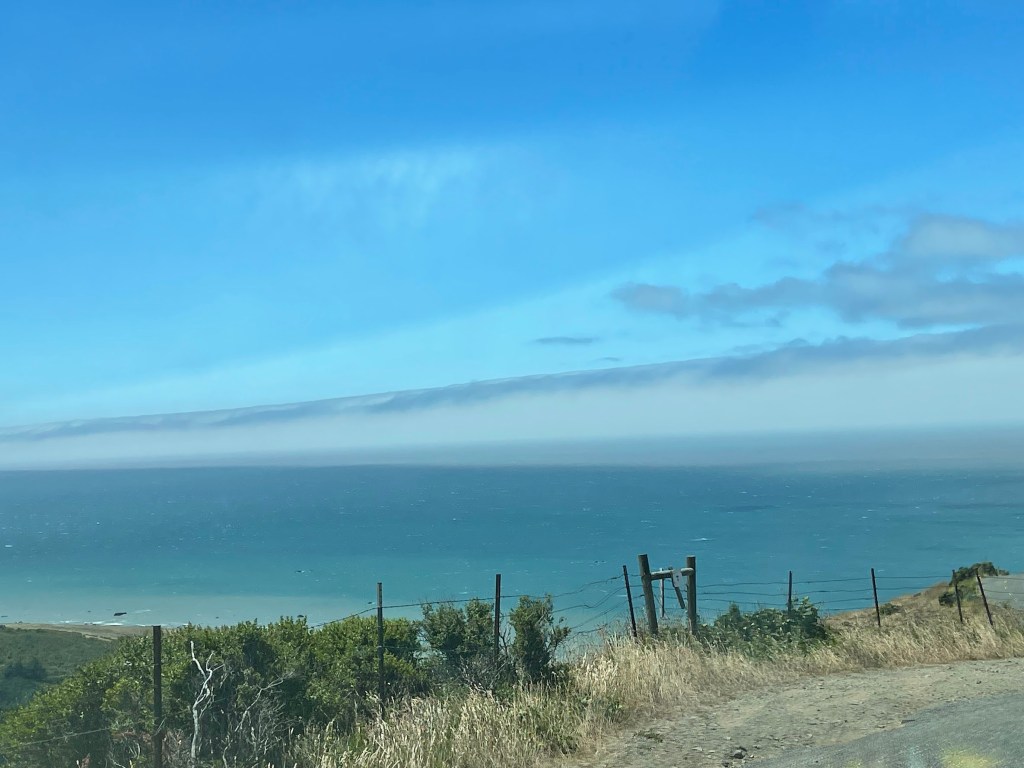
Mihael: They were screwing the whole community of the logging. And a lot of those environmentalists were trying to preserve the method of their operations because, in the early years, it was more like a family-run business. And they wanted their child to be able to go into that business; they wanted the grandchild to be able to go into that business. The only way that could happen is if even the logging was done sustainably. But once the corporation came in, totally unsustainable, they tried to cut everything as fast as they could rape and destroy. So it was interesting because then even then, a lot of them saw you were actually trying to stand up for us, even though the powers that be were saying, Oh, they’re trying to take your jobs. But that’s the old story. The corporations are always trying to divide. They’ll twist the story to make it sound like you’re against each other. When, even though, it’s not that way. They’re the ones with the big pile of cookies, while the two other people are sitting there with their one cookie, going, ‘they’re trying to take your cookie, not them with their massive pile.’ I just saw a whale by the way.

Natascha: Yeah. I’ve never seen a whale in my life. I’m so happy they’re still here. I’ve heard that the whales are not singing as much as they used to. Have you heard this?

Mihael: They’re not singing. Mm. I haven’t heard that.

Natascha: Okay. It’s really worrisome for me. I’ve been thinking about it.

Mihael: I know.

Mihael: Their migration periods are all messed up because I’ve been watching them for 20, 21 years very closely. For some of them to still be going south, while others in Baja are birthing their babies and heading north soon. I’ve never seen that. I’ve never seen an overlap. Never.

Natascha: What do you think that’s from?

Mihael: The oceans are warming and just the climate changing. Global weirding.

Natascha: I’ll interview you again on the whales.

Mihael: That island there normally has 10,000 murres on it. Right now, there’s not a single one and they usually come in December. But that’s another story.

Natascha: So what changes did you notice in land ownership, housing or access to property after legalization?

Mihael: Well one of the biggest ones is property value has plummeted. Because so many people couldn’t afford to make their land payments and weren’t growing anymore. Then they were forced to sell. Then when you got a thousand parcels on the market, when there used to only be 100, people are desperate. Unfortunately then, say for me, I’m still trying to do carpentry and whatnot to make my payments. I’ve always done okay, but because of injuries and such, it’s harder. But my property value 25 years ago was said to be about 25,000. Okay. I put $200,000 into building the temple and other improvements, and it’s not even appraised at $200k now. So 25 years later, my property is worth less than it was, even though I sunk a ton of money into it. So that’s tragic. The people that are holding on are creating, more people are going back to fishing, more people are going back to logging. I looked into logging myself and was told I would have to cut so many trees and would only make like $5,000. I was like, forget that. Economically people are struggling. But again, the people who have been there a long time, they’re hanging in there. Although I know a few people down in the valley who want to sell their home that’s very dear to them just because they have mega grows right next to them. You have to hear the beeping of forklifts and trucks and fans and their homestead that used to be so dear to them– now, it’s not the same place.

Natascha: So how did these changes affect relationships and community cohesion?

Mihael: A lot more isolation. A lot less community stuff. It seems much more separate. Except for the people with young children who meet up because of school. Those people maybe have a little more and then like in the middle, there’s a pancake breakfast or there’s the cabaret every so many months. So that gets people out of the hills or The Roll on the Mattole, where once a year you see all these people that you only see once a year. It’s changed dramatically for many people. They do their town run, they go up north to get supplies, and don’t even go to the local store as much.

Natascha: So, what do you feel the long-term effects of cannabis legalization are on Humboldt County?

Mihael: Unfortunately, I would say that it’ll take a long time for things to restructure to come out of it economically. There are still some people who are hanging in there with pretty big grows and they’re doing okay. They’re not doing great. And of course, you don’t have to hire trimmers and stuff like that who are getting paid, a third of what they used to get. So even the farm help doesn’t make much because the growers are not making much. It’s sad, I know some people who work on vegetable farms who get paid more than people who grow pot on farms. That’s how bad that is. As far as where it’s going to go in the long term, I think it’s reaching a point where people are trying to recreate it and brand it because a lot of people who do grow here know that its got a reputation because the climate here is one of the best in the world. And so people can grow some of the best herbs in the world. So they have to market it in such a way that they’re not competing with the big grower that grows thousands of pounds. Because once you do that, then you’re losing the touch. I always grew my own seedlings and still do. Then you have a personal relationship with it. So some of the farmers who are still growing sun-grown, that is, well, the best word I can use is consort.

Mihael: So people are growing consort quality, and there’s always a niche for that. I always said that even before the legalization, there would always be a niche for consort quality. It’s harder for them to have a market for it. People have to work harder to get it out and get a dispensary to say, oh, okay, I will pay a little more for this because it’s top shelf. I’ll make that analogy with the top shelf. People will pay a lot more for a fine tequila because of how it is. And so it’s similar with herb. You can buy something that is on sale at the dispensary, but it’s not going to have the flavor. It’s not going to have the same high. There will always be a niche for that. And people just have to work at it. That also requires branding and making a point. I had someone years ago telling me that I should patent some of my strains because I’m the only one in the world who has them, but because I’m only growing my six plants recreationally and I’m not supposed to sell it, then I can’t. What’s the point of doing that? Oh, well. Nice thought.

Natascha: What hopes or concerns do you have for the future of Humboldt County?

Mihael: Irregardless of marijuana, you mean?

Natascha: Yes.

Mihael: Well, Humboldt, how do they say, it’s behind the redwood curtain? I think that, climate-wise, Humboldt is a very, very unique place. Environmentally, it has one of the most diverse ranges of birds in the world. Because there are so many local farmers and industries. Even if all the highways collapsed, Humboldt would still be fine and take care of itself. Some of those elements are something that we can hold on to and know to be true. The concerns are that there are still corporate entities trying to, uh, finagle their way in and change things. They’re still trying to, or they actually even started cutting some of the redwoods in Richardson Grove. Amazon’s now building a big facility here in Mckinleyville and oh, yeah, it’s going to be 167 jobs. But then it’s like, because in my own personal belief system, Amazon is one of the very things that eroded the nature of our country. Just like Walmart, it came to town and destroyed almost every small business thriving in Old Town Eureka. And people fought it for years. Walmart was not able to build here for a long time, and then they found a backdoor way to get into the old coal place. And, you know, and sure enough, you know, you saw all the other K-marts all failed. A lot of the small stores all failed and that’s the eroding of the American dream.

Mihael: To me, the American dream was where individuals could make things happen and make their life a reality. And when the corporations stomp on it and stomp on it and stomp on it and make it impossible to compete, then people just, you know– I think the Humboldt’s really strong in that element of still clinging to a different way. Things like Arcata not letting fast food places build anywhere near downtown, [instead] we’ll give you up there by Giuntoli and Valley West.When Walmart moved into Eureka, you saw the direct effect. I don’t think the Amazon thing is going to change too much, because anyone who wants something from Amazon will buy it anyway. It’ll just make their job easier. It’ll change trucking and maybe even airline stuff that deliver things to get that next-day package. I think that the culture between people wanting to come here for redwoods, people wanting to come here for the ocean, for fishing, those are always going to be points that people from other places will come here and hopefully everybody thinks about that. It’s too foggy and the weather’s not good and they don’t want to move here. Because that would change things.

Natascha: On the topic of hope. After visiting Fairwinds, I decided Arcata has a community that is a healing mecca. Do you have any thoughts on that?

Mihael: I think that Arcata. In the region, the whole region has loaned itself for that. There’s probably more healers per capita here than most places. Just as there are more artists and musicians and instrument makers who are world renowned in this. However many 150,000 people or whatever live in Humboldt and Arcata because of the university. So many people that went to university there back in say, the 60s and 70s fell in love with the place and stayed. And so then we started having the alternative food stores. I mean, the co-op was just in a tiny little thing on the plaza back in the day and they moved, I think one… two… then where Wild Berries is, they were there for a time before building the other place. Things like natural food stores, herb stores, moonrise herbs and HumboldtHerbals, massage schools, places like heartwood that taught alternative healing. All those elements kind of came out of that same era. Kind of going along with the back to the land movement thing of people learning the alternative ways and people having gone to say, India or other cultures where they studied some of those practices. That was also a whole movement out of the 60s and 70s of learning about Buddhism or Hinduism or Ayurvedic or Rastafari. So the spiritual element was also integrated into that healing element. And that I think is their kind of hand in hand because people who are usually leaning into the healing modality, a lot of them have that spiritual foundation. Yeah, so I think, I do believe that there is an element of that one Native American elder I studied with like over 40 years ago spoke about ley lines, which are like energy fields in the earth.

Natascha: Mhm.

Mihael: And she said that there was one going from up near Montana that went through Mount Shasta and then cut over to the coast here near Trinidad. And then it triangulated with the four corners Hopi region. I think that some of that goes way past this generation or that generation that’s pure earth energy. I think that is an undercurrent also of why people are drawn here.

Natascha: Is there anything else you’d like to share that you think is important in understanding this history?

Mihael: I do believe that marijuana herb is a sacred plant and has been used in cultures for thousands of years. I think it has influenced many aspects of our culture in this region. They talk about the Emerald Triangle of Trinity, Mendocino, Humboldt, because that’s where, in the 70s and maybe even late 60s, that’s where people were, first taking the seeds from these other foreign places and bringing them here and developing them. Because of that, some of those pioneers who really had a firm grasp on developing really good quality, it became kind of a mecca of the sort. I think that will continue on in some form; there are people here who are third-generation herb growers. So that’s saying something, you know. And hopefully it integrates in a good way. I wish that legalization, sadly, now everything’s wrapped in plastic and has to be packaged this way and that way; it’s almost contradictory to the whole environmental part. Again, they have to meet safety protocols and things like that.

Natascha: Thank you for sharing your time, your honesty, and your lived experiences with us. Your story reflects the resilience, creativity, and vulnerability that define so many lives in Humboldt County, shaped by its shifting economy. By speaking about your work, your land, and the challenges of sustaining Fairwind, in the wake of these changes, you help illuminate the broader human impact of economic transformation. Your voice contributes to preserving the memory of a community in transition, one built on independence, mutual care, and deep connection to place. We are grateful for your willingness to share your journey and to help ensure that these stories remain part of Humboldt County’s living history. Thank you for being part of this archive.

Mihael: It is an honor. 

Please donate to Mihael to keep Fairwind!

https://gofund.me/7d512babf

Interview With Satya Healing at Ramone’s

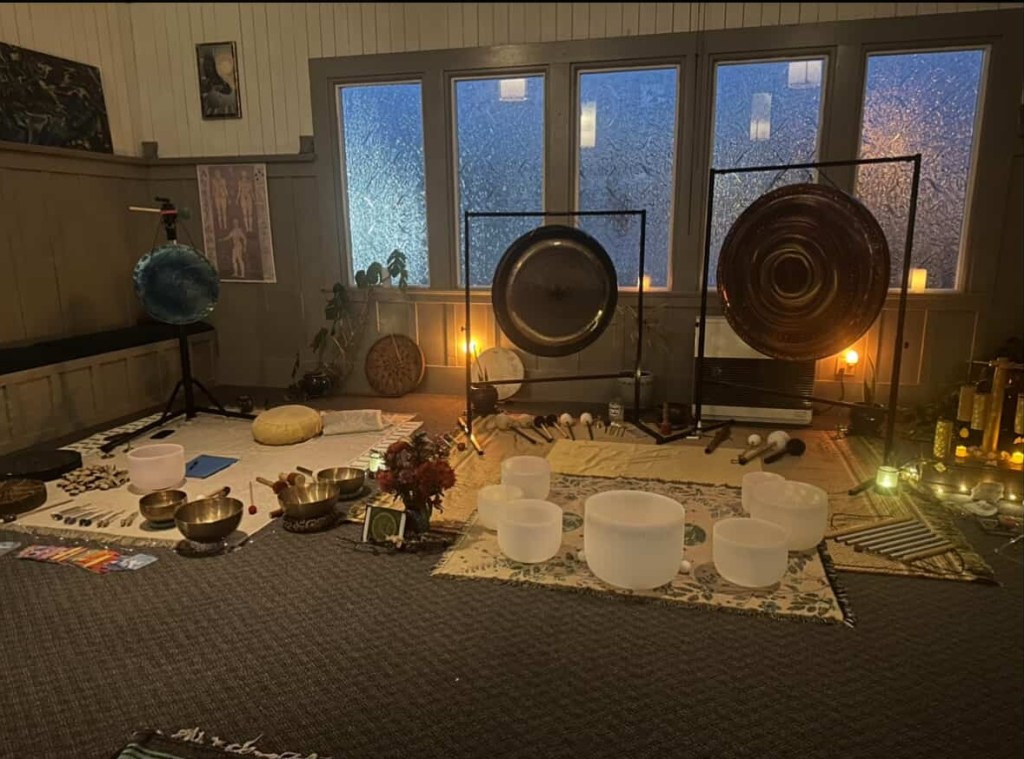
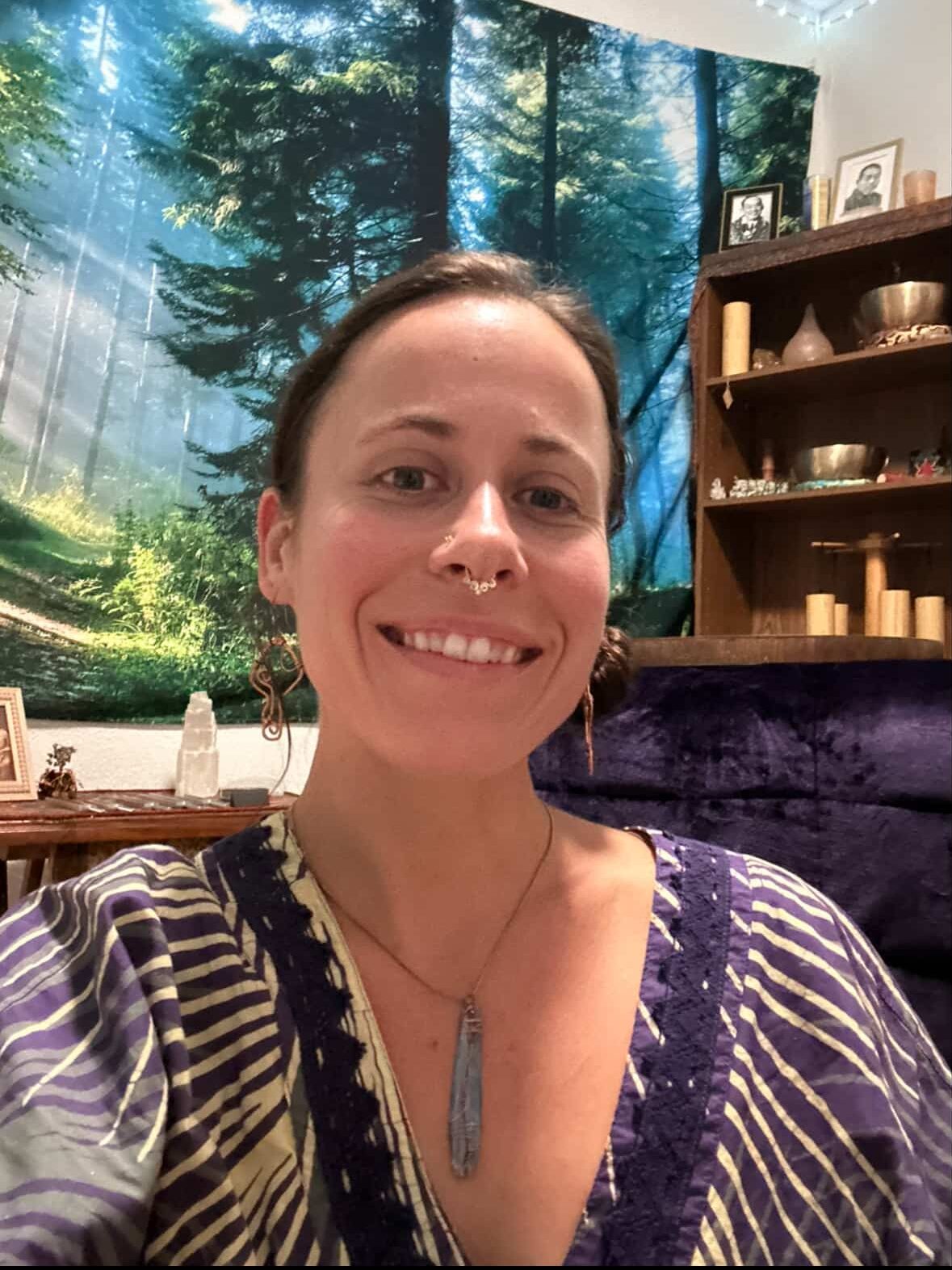
On November twentieth, around nine in the morning, Natascha and her family friend, Sam P, met with Satya at Ramone’s Bakery and Coffee in Eureka. Their conversation became a deep dive into Satya’s history in the healing arts and the many ways she serves the community as a facilitator of sound baths, microdose offerings, yoga, reiki, and tuning fork sessions. Satya has brought peace of mind to many by offering a safe space to release, recover, nurture, and learn how to move through life’s challenges with greater ease.

As we enter the winter season, we invite you to explore the power of sound healing and discover how giving this practice a chance can enhance your life in the most positive way.

Natascha: Good morning Satya. Thank you so much for joining me today. At Little Lost Forest we’re always honored to highlight local healers, artists and visionaries. And today we’re in for a special treat. Humboldt County sound healing artist Satya Earth, founder of Satya Healing, is here to share her journey, her craft and the heart centered intention behind her work. I first discovered Satya during one of her sound healings and mushroom microdose sits. Over the course of about 90 minutes, a small mushroom microdose, gentle yoga and closed eyes opened the door to a vivid inner landscape. The soundscape she and her collaborators created carried me from the depths of the ocean to a fairy lantern forest, and eventually into the far reaches of space. The magic she facilitates comes not only from the instruments she uses, but from a deep well of knowledge, intuition, and care. Today we dive into that magic, its origins, its purpose, and the person behind it. Can you tell us a little bit about yourself? 

Satya:Thank you for having me here. It’s really great to see you. A little bit about myself. I’m a mama of two little ones.  They are my whole world and have been a driving force for my evolution in the landscape of sound healing, energy work and working with medicine. My background comes from psychology. I majored in psychology and got my bachelor’s in 2014, and from there I decided to branch out and study different forms of holistic healing. I studied yoga and herbalism, energy work, and sound healing, and have now branched out into the realm of working with psilocybin. 

Natascha: Yay! Thank you for sharing. When did your journey with sound healing begin? 

Satya: I attended my first sound bath with Jen Madrone back in 2017, and that was an initiation into the world of sound healing and experiencing. Noticing where I was in my life at that time.  

Sound healing can stir up a lot of things for us, especially if we’re just beginning the journey. Throughout the years, I’ve gathered tools to support integrating the experiences and emotions that arise when receiving sound healing. This has helped to make it easier to understand and navigate the things that come up. It can really bring up a lot of stuff. Like old stories and thought patterns. Bringing them forward to be acknowledged and felt. It was a beautiful introduction to getting to know myself. The stories that I hold and how to how to work with them and how to transform them. In 2021 was when I bought my first gong and that was inspired through the birth of my second daughter. I had a very challenging experience with postpartum depression. In a place of desperation to not return to pharmaceuticals, I searched online things that could help my nervous system and help with depression and anxiety. Sound healing was the first thing that popped up. I was reminded of my experiences with Jen and decided to take the leap to purchase my first gong. 

Natascha: That’s beautiful. I really love how you worked against the postpartum and found natural ways to heal instead of falling into it. Did you have any mentors or influential teachers along the way? 

Satya: Absolutely. My number one mentor, her name is Josie Bravo. I met her when I was when I was in a hospital. I had a really hard adolescence; childhood. She met me at some of the hardest times in my life. I’ve known her for 29 years now. She has been a guiding light and I wouldn’t be where I am today without her support. 

Natascha: Wow. 

Satya: She’s been a really big influence. Like a guardian angel for me along this path. My other mentors are Jen Madrone. She’s an incredible being, here in Humboldt County. I’ve studied Reiki II and my Master Reiki course with her. A couple other influential teachers are Eileen McKusick. She’s the woman that discovered tuning the human biofield. I love blending my own interpretation of her teachings into my sessions.  I scan the field with a tuning fork and listen for different sounds and that resonate from the tuning forks to let me know where there is perhaps some stuck energy that can be brought into coherent energy. Another incredible teacher that I haven’t had the opportunity to learn from yet, but I’ve heard great things of his name is Mike Tamburo and he will be here in Humboldt County in March 2026.  

Natascha: What will Mike be teaching you or working with you? 

Satya: He’s a gong master. He’ll be doing three day long class for a few days. And we’ll be learning different techniques and styles of how to work with sacred healing instruments, mainly gongs. 

Natascha: During your sessions, there’s usually other people in the room that are playing the instruments along with you or offering the mushroom micro-doses. Who do you choose to collaborate with for your sound healing sessions? 

Satya: I just collaborated with Fallon Orr. We had a beautiful offering where we offered microdosing, yoga nidra and sound healing. It was a different space from the class that that you attended. More stillness and opportunity to reflect in that stillness. It was very supportive for rest. 

I just received my certification as a psychedelic facilitator through Emerald Valley Institute. After sharing medicine in the community for nearly 4 years, I decided I wanted to learn more about the history, culture and varying approaches to holding ceremony in psychedelic spaces. Another person I have worked with is Michiah Tobin. She’s an acupuncturist based out of Fortuna. I love blending multiple modalities together for a transformative intentional experience.

Natascha: Well thank you. How do these sounds and frequencies impact your participants? 

Satya: That’s a great question. Each person and how they experience sound is very unique. And each session is very unique. Some of the things that I have noticed participants experience would be emotional clearing and release. I’ve heard some really good feedback on how people will come into a session feeling highly stressed and overwhelmed with life and would leave with a new state of grounded clarity. The beautiful thing about sound healing is that it creates neural plasticity and neurogenesis. By approaching your session with an intention this offers us an opportunity to see, feel and think differently about the things that we’re experiencing in life. And like you said, when we’re in this space there are visuals, there’s feelings of floating. It can be a psychedelic experience without the medicine, with the things that we see and that we feel. It offers a place of deep rest for the nervous system. 

Natascha: Absolutely. I definitely found a release for my anxiety when I go to your sound healings and I feel really well going back into the world, more prepared. Your vocal work is especially moving where you learn to sing? What language or tradition are you drawing from? 

Satya: I’ve been singing since I was three. Song has been a part of my whole life. I was in choir for eight years, and I was in a band for a couple years. Interestingly, I always felt nervous. And to this day, I still feel some nerves before I sing. But, after I traveled to India back in 2014, I was studying yoga there and we learned a lot of mantras and Sanskrit prayers. It is in this place of prayer that the anxiety dissolves and my intention of sharing song expands. I sing in Sanskrit, and the songs that you’ve probably heard are called the beginning prayer, the ending prayer and the Anahata prayer.

Our voices are our most powerful instrument, and it’s my mission to continue sharing this instrument, along with these other instruments and empowering other people to come into a place of comfort in their own body and their voice. I encourage people when I’m singing, when the sounds are going; we can hum, we can sing too, and start to vocalize because that’s how we can move energy throughout our body. 

Natascha: Yeah, that’s some of my favorite moments. I really enjoy your singing, and I like that you pushed me to sing and your participants to sing, because oftentimes I don’t use my voice. It does resonate with me, and it does bring something positive out. So thank you for doing that. What dreams and aspirations do you have for such a healing moving forward? 

Satya: I love this question. 

Natascha: What’s next? 

Satya: Yes I am so excited about what’s next. 

I am creating some packages to make these experiences more accessible. After going through my psychedelic facilitator training, I really want to work with marginalized communities. Whether that means I look into what it would be to become a nonprofit or I look into fiscal sponsorship. I really believe that this type of medicine is something that everybody needs. 

Natascha: Cool. I can’t wait to see where you go with it. Was there anyone who inspired the evolution of your art or an event? Possibly. 

Satya: Absolutely. I had some moments to reflect on this, and the evolution of my art truthfully, has come from a place of pain and suffering and knowing that these wounds can be transformed. And I’m speaking from a mother wound that without that experience and without those wounds, I wouldn’t be where I’m at today. Having a troubled relationship inspired me to ask: how can I best show up for myself and how can I best show up for my children and for my community? How can I create this space of safety and trust within myself and within my community?

I’ve been learning different communication styles, like compassionate communication, paraphrasing and reflecting. These are all practices that I’m in a space of learning right now and eager to implement into how I parent my children and how I speak to myself, how I speak to my community and to my clients, and I’m really encouraging all of us to become more curious about how are we communicating with ourselves? How are we communicating with our loved ones? Because this is where we can we can really come together and come together in a space of safety and trust. 

Natascha: I think you’re really advocating for people that are struggling, that there’s a light on the end of the tunnel. As a mother, too, there’s a lot of stress in motherhood and seeing you blossom and bloom that shows that we don’t have to be the pain of our families, but that we could create our own positive walk of life and the way that you impact your community. It loudly speaks that you walk the walk that you’re not just talk. So thank you for doing all the all the work you do with us here in Humboldt. What are your thoughts on human consciousness? 

Satya: Another fabulous question, Natascha. My thoughts on human consciousness; human consciousness to me, is a state of being. I come from a spiritual and perhaps Buddhist approach where I believe that all living sentient beings from our animals to the trees to the rocks, to the dirt, to the insects. We all have a consciousness. We are all here coexisting as one on this cell of Earth. And when we can come into that place of connection, we can really start to come together in this collective ecosystem. 

Satya Sound Baths

Natascha: That’s beautiful. How does that deconstruct the ego when you come into a mindset of a universal consciousness? 

Satya: Mmm, yeah. We’re definitely deconstructing the ego and perhaps deconstructing the hierarchy of humans being at the top and everything else being below us. I know that there is definitely some advancement in technology where we are now having the opportunity to communicate with our animal friends. And it is deconstructing how we view our existence and how we view the existence of other beings in this world. It’s really powerful. We can come into this from a wholehearted space, or we can, you know, use it for power. So it’s really up to the individual and how we approach this type of technology. Language is technology too. You know, it’s like these things are always advancing. And so it’s like, who is behind this and what are our intentions behind it? And it’s how we show up and how we reflect that into our circles and into our community. And that’s when we really have that opportunity again, to come together into this collective space of awareness, which is kind of linking to that state of consciousness, the consciousness and the awareness, how we show up, how we reflect, how we have awareness of our energy and how we impact the environment around us. I feel like I could go on forever. 

Natascha: I love this, I just want to dig a little deeper into it. You mentioned animals briefly. Is there a connection between your sound healing and nature? Maybe you play your music outside, or you feel a deeper connection to the earth and to the animals when you perform sound healing? 

Satya: Absolutely. I have a very deep connection with the elements and with nature. When I take my gong out and I play next to that maple tree and Cheatham Grove, I’m playing for that tree and I’m playing for the land. And I just imagine this time lapse of this tree living there and all the things that have surrounded it. And for me, I just, I want to be with that tree for that moment and play the sounds. And when I play my infinity disc, that sounds like the ocean, I’m like, man, this tree won’t ever have that opportunity to be by the ocean. So maybe I could bring the ocean to the tree. 

Natascha: Cool and lastly, what are your beliefs or reflections on the afterlife? 

Satya: Reflections on the afterlife. I do believe that we are reincarnated. I do believe in karma. I believe that the things that we’re experiencing in this life are perhaps a reflection of the life we’ve led before. I also go between this, you know, when we die, we go into the void. We go into emptiness. No one knows. And we have access to so much information that we can decide what we want to believe. But we truly just don’t ever know. So when I think about what the afterlife is, I like to consider a lot of things. But I also don’t have a concrete belief because nobody truly knows. 

Natascha: Absolutely.Do you have any advice for someone that might be depressed, anxious, or struggling in their life? How to get out of that negative spiral? 

Satya: Well, there are many approaches to helping ourselves through these stagnant, dark places. The first approach that I like to suggest is, depending on the severity of it, is having a counselor or a therapist. Somebody to offer an objective perspective, somebody who will support us in our stories that we share and perhaps guide us into healthier states of thinking. Also bringing in the element of what are we putting in and on our body. And that’s not just food, that’s not just cosmetics. That includes the things that we watch, that includes the people that we surround ourselves with. That includes supplements that we’re taking. So it’s really a whole approach when we start getting into this world of depression and anxiety. I mean, we can look at our gut microbiome that’s definitely linked to anxiety. Parasites are linked to anxiety. And then when we start to go in a little bit deeper outside of the the physical being of depression and anxiety, we can start to go into like the emotional body and the ethereal body, and that’s where we can bring in these alternative modalities to help us. That could be energy work, that could be sound healing and microdosing. But then again, drawing it back into the self, it’s really about our perspective, how we speak to ourself. So again, coming into that tug of war that we experience when we’re going into this place of depression and anxiety: The stories that we tell ourselves, how we talk to ourselves. And a lot of this is linked to how we were raised and how we were talked to and how we were taught to manage these things. 

Satya: In my psychedelic facilitator training,  we learned about this thing called the default mode network. And when we’re born, up until we’re about four, this network in our mind is very malleable. But around the age four, we are now learning to exist in the world through the way that we are talked to by our family members and the authority around us. And those pathways start to get very rigid. And so then we start existing in that story. So when we are working with psilocybin in larger doses, we have the opportunity to do what is called a reset dose, where the default mode network gets shut down. And this is where we have access to new pathways, new ways of thinking and feeling existing, perceiving and we want to be slow with this. Whenever we’re in this place of depression and anxiety, how long did it take us to get here? How long have we been in that place? And just know that there’s no one pill. There’s no one experience that’s going to shift things. This is a practice that we have to implement and be dedicated to daily. The most important facet of that is who are we surrounding ourselves with? Who is our support system, our community, the classes we attend, the people we talk to. These are all factors to consider when we’re starting to address these symptoms of depression and anxiety. 

Natascha: Coming into the winter, is there are certain practices that you do seasonally; more winter style forms of healing? 

Satya: When we come into the winter. I personally think about darkness. I think about going into a place of hibernation. I think about what is nature doing? And I do my best as a single mother, to slow down. Some practices that we can do is look at how we can slow down. How we can create spaciousness and just noticing when we are overdoing. When we are doing too much and just taking a moment to step back, reflect and say “hey, I need to cancel.” 

Satya: One practice that I learned recently that’s been so helpful, is tuning into our breath and tuning into what it means to clear our energetic field. When we are starting to experience that tightness in the body, or we notice we’re getting really overwhelmed and feeling frantic. Come back into the breath. Breathe through the souls at the feet.

Satya: And as we’re exhaling, we’re releasing this energy out through the crown of the head. And this is the cycle. Breathing in through the feet, coming through the center of the body, breathing out through the crown. And as we continue this breath, we’re starting to think about, I’m breathing in calm and I am letting go of any tension. I’m letting go of any chaos that I’m holding in my belly, that I’m holding in my heart. I’m holding in my brain. I’m letting that go. I’m returning it to sender. I’m returning it to the universe. And I love this practice, especially for people who are highly sensitive or for highly empathic people. People who tend to absorb energies easily. This is an amazing breath practice, because then we get to tune into not only our breath and clearing our fields, but we’re starting to acknowledge what is mine and what is not mine. What am I holding on to? Maybe I’m holding on to something that I experienced yesterday, and now it’s time to let that go. And it’s time to bring in that clearing and that self-forgiveness, so that we can have a clear field and show up for our friends and our family in a more balanced state. 

Natascha: As we move into the winter, sound healing offers a powerful way to calm the nervous system, reconnect with the heart, and bring clarity to the mind. Satya, thank you so much for your time and for sharing your wisdom with our Little Lost Forest community. 

Satya: Thank you so much. I appreciate you. Thank you for calling me in and sharing these moments together. Blessings. 

Next Sound Bath is Dec. 18th 2025

Instagram

Website

Interview with Interdimensional Artist Synchro Mystic

Find the full interview on YouTube Here.

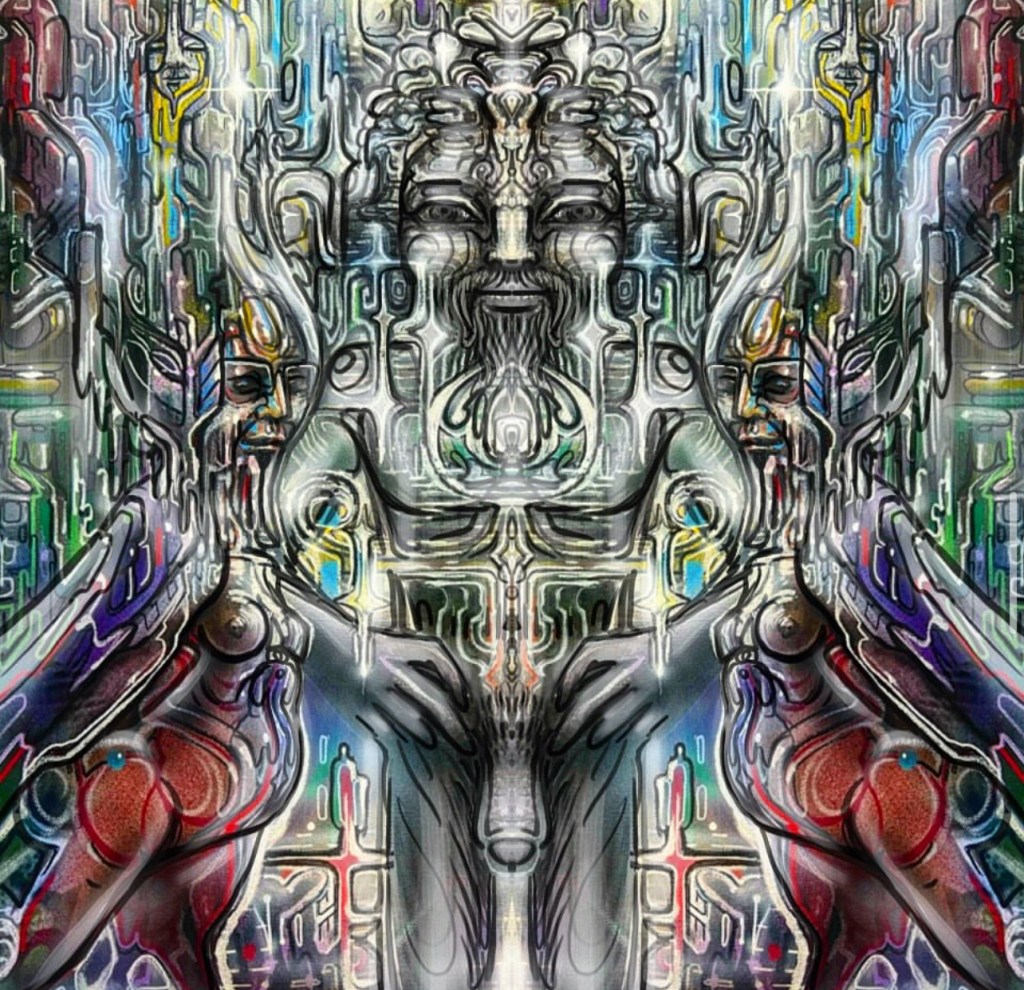
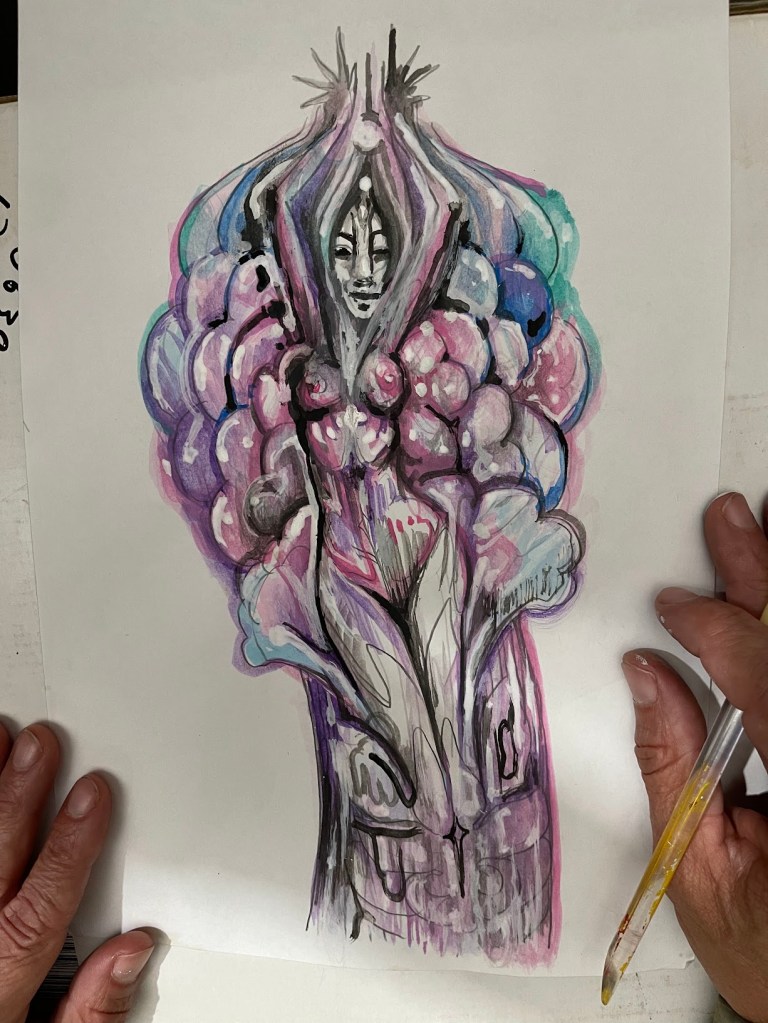
Natascha: I’m here at Azila’ Cauldron in Eureka with Roman, a visionary artist and OG creative force of Humboldt County. My name is Natascha, and I want to thank you for tuning into the Little Lost Forest blog. I’m beyond excited to dive into the art, theory, history, and creative journey of Roman a.k.a Synchro Mystic. How are you doing?

Roman: Doing pretty good. Thank you.

Natascha: Awesome. Roman, where are you from?

Roman: Mind, body or spirit?

Natascha: All. All of the above.

Roman: I typically say that that way because my body is from Mexico. My spirit is universal, and my mind is global. My mind knows and exists and is part of a global reality that we’re perceiving together. And that definitely is who I am. But also, my physical body is a certain part of who I am, and my spirit is definitely on this mission. That is who I am as well. And those three are distinctly different things in a certain way, and my job is to try and align those together, that’s why.

Natascha: Your universal consciousness has landed you here.

Roman: Yes, but so many dimensions we can talk about that from. And that’s why I like to do art.

Natascha: Wonderful. Well during these interviews, feel free to dive into rabbit holes. We’re all really interested to see what inspires this beautiful art you make.

Roman: Thank you.

Natascha: How old were you when you first started drawing and creating?

Roman: I called myself, and this is, like, one of the most profound and silly, experiences in my life. I called myself an artist at three years old, and I specifically remember this experience that did that. And one of my older sisters came home from school with this big pad of paper, and it looked huge. But then again, I was a little kid, so it might have been a normal sized pad of paper. [Natascha’s Laughter] But then she puts it down, and then she shows me her drawings and I’m like before this moment, I considered myself a magician. And I was like, always pretending to make things disappear out of handkerchiefs and silly things that I saw. And I thought, I’m a magician. So, there’s first, there’s that. And I think that’s very symbolic because I think art is very magical. But anyway, I saw this sketchbook that my sister had, and one there was a crocodile she drew, and I could see a crocodile on this paper with lines drawn on a two-dimensional flat piece of paper, and I could see the three-dimensional crocodile that it was. And I was like, wow, that’s cool. And then the next one was a girl in a bikini. And I was like, that’s a girl in a bikini. I know exactly what it is. And it’s just a few simple lines on a flat piece of paper. And I was like, that’s magical. [Natascha: Mhm.] So, from that moment onward, I instantly call myself an artist, even though I didn’t know how to draw or whatever, because, uh, because at first, I was a magician. So, what did you have to learn?

Natascha: Would you say at a young age you related magic to art.

Roman: Instantly at three years old.

Natascha: That’s wonderful. I think you kind of answered this question, but what initially inspired you? Maybe outside of your sister’s drawing, what were some of the inspirations that have ended up fueling your creativity now?

Roman: Oh, man, I could have countless and countless stories, but I guess one fundamental, um, experience was, uh, being in Seattle during a very critical time in history, and I mean that in many different ways. The music scene and then the technological explosion that was coming from Microsoft at that time, an era when the very beginning and I tried LSD and, something I was never really too proud to boast about. But I also think that it’s a very important thing to express, that there’s these moments of that we can utilize as tools to activate something. Because on my psychedelic awakening, I definitely had so many things come together. And it isn’t all based on the psychedelic awakening. The Psychedelic Awakening gave me a view into the things that were already happening in my life. Like, calling myself a artist/ magician at three years old and a lot of mystical experiences that I never really understood growing up. That happened throughout my life. But for some reason, having a reflection like psychedelics or something external outside of us, like aliens or whatever, if you’re blessed enough to see that. But these external reflections allow us to look back at ourselves to witness these things from a third point perspective. And that helps us wake up, you know, like, oh, yeah, I notice these patterns throughout my life, I’ve never really realized how to deal with those experiences. And sometimes when you have like a psychedelic awakening, it gives you an angle to look at those things through.

Natascha: Wonderful. How would you define visionary art?

Roman: Well, visionary art to me means a lot of things. It leads me to the next thing I’m going to talk about. But just to answer your question first is, you know, at first when I got introduced to visionary Art, it was, outsider art. That was because I looked at a visionary art, magazine when I was really young, and I remembered i. It was more from people that I didn’t go to school to do art. For some reason, it was like, they call them outsider art. I thought that was interesting because there’s a visionary art museum with, uh, all these artists in there before the psychedelic visionary art movement. So then when they called the visionary art movement visionary art movement, it kind of like, wasn’t sure about that. And also, to me, vision means of our vision. But I don’t know what other art isn’t from our vision as much. (Natascha: Okay.) But don’t get me wrong, I still use that title to express our movement of artists because it’s something that people recognize right now within our circles of people, which is very powerful.

Natascha: Mhm.

Roman: However, I don’t think that it specifically talks about the movement that I’m a part of which I feel like the people of artists that you recognize yourself liking to are not a part of necessarily only. I created an art movement called the Interdimensional Art movement. (Natascha: Lovely.) And I even told Alex Gray about these things before we named the thing visionary art movement. And this was a long time ago. And he never even heard of that. And he really was vibrating with that idea, too. Which is really cool to always be able to share your ideas with other people and get reflection. And the Interdimensional art movement the acronym is I.M. (Natascha: Nice.) It’s based on the finite of yourself, your personality, your ego or whatever it is you’re that you’re wanting to express. And then the full title, Interdimensional Art movement has no limits. I think that’s more true to the what the visionary art movement that we synchronize with at the moment.

Natascha: Interdimensional Art Movement.Got it. Can you share a bit about your history as a visionary artist?

Roman: To simplify things, psychedelic awakening in Seattle. Recognizing everything at once and wanting to be part of an art movement. Because as an artist, you always look back at art movements and you relate to certain groups like the Surrealists, the Pre-Raphaelites, or like any segment throughout history, which is really inspired in certain ones inspired us more than others. Art Nouveau or whatever. I couldn’t deny that I didn’t want- I wanted to be part of a group like that, but there was no real group to that I could associate myself to at that moment. Plus, I wasn’t that advanced. But these ideas were coming. These desires were coming to me. But then I started paying attention to what kind of art movement would I want to be a part of? And then that’s when a lot of answers started coming, and that’s when I recognized, oh, those art movements. And we’re answering these questions that they ask themselves. And that’s why they became art movements, because they were answering a question of defining who we are as a culture. And that’s what creates a movement. And we attract each other that are representing this, this reality together. And then, um, that harmonizes us as a collective.

Natascha: That’s beautiful. Who are some of your colleagues in the visionary art community?

Roman: To me, I love the way you ask because there’s a seriousness to it. And then that kind of makes me laugh because I’m also a space cadet artist. But my colleagues. I’ve been blessed enough to have colleagues of all different sorts. Like, my Seattle experience was pretty profound because, when I was having this psychedelic awakening, and I was reinterpreting reality. And then I was like, I want to hang out with the Beatles. But the Beatles already happened many years before me. So, like, put the vibration I was getting the LSD vibe or whatever, you know, and I was like, wait a minute, I’m in Seattle. [Natascha laughs.] Just to bring that into perspective and for a few many years I would keep on running into people like Nirvana, Soundgarden, Alice in Chains. And this is my canvas. And I played in this dimension for a few years of running into these people all the time, getting to know these people from different perspectives. Like, I have so many memories to even remember at the moment, but one of them that’s on my mind right now is, uh, Soundgarden when they were recording BadMotorFinger. They had my paintings in the studio while they were recording a little bit of that album and stuff like that.

Roman: I remember going in there and picking up my artwork and them being all, like, polite and kind and gentle, but they’re like, really, they’re all really tall, like over six feet, you know? For me, that’s tall. Just having those memories ingrained in my brain and seeing how influential these people were, it was pretty intense. So there’s colleagues like that, but more precisely, to the art world is like, from Alex Grey. I don’t know. It’s hard to tell because the way that I learned about my colleagues is through a party that we started. That’s why it’s really hard to answer that question, because I have to, like, share the story of why I know these people. Because if I say Alex Grey, who might be the most famous and people recognize him, but there’s. I don’t want to skew the vibe just by that attention when there’s so many other beautiful and amazing artists and they all were attracted from this interdimensional art show we threw up in Seattle. And this was the beginning of before where? Before what we were doing. There was hardly ever, like, a live artist and galleries at events. That’s like something that was, I wouldn’t want to say that we started it, but we definitely made it a ritual.

Roman: And it brought together all these artists that some are now famous visionary artists from Luke Brown, Carrie Thompson. It’s like really challenging to even start naming them because there’s so many that I can’t even name. A lot of them, I’m sure that you would recognize. For instance, like Carrie Thompson came to make the most beautiful stages of electronic events throughout the world. You would recognize them because they’re super beautiful and Alex Gray and Mark Henson. I don’t know if you know Mark Henson, but he’s an amazing artist from not that far from here, from Lake County. And if I showed you his art, you would obviously recognize him.

But the reason why I really enjoy these people is because it was a family calling that brought us together, like these shows that we used to throw up in Seattle. Were exactly that. It really bonded a large group of artists together that never recognized themselves before. Now it’s easy to see. It’s all easily recognizable. But before then, we didn’t have anybody. This was like the beginning of us recognizing each other, which was really amazing.

-Roman

Natascha: Wonderful. At that time, were you part of a community? You say we.

Roman: I would say we because I can’t. I don’t ever want to feel like I’m taking responsibility for it. That’s one aspect which is still egotistical, but I am an ego, [laughter] and it’s very influential to where my idea is coming from. But at the same time, it is a collective thing that I’m just being aware of and I’m wanting to share that with people. So, I say we because, you know, I might have been inspiring certain ideas, but it came to be through a network of different people.

Natascha: Awesome. Okay. So, in your art, you use mixed media in your paintings on canvas, and they’re all very incredible and beautiful. We’ve discussed acrylic paint, pencil and paint pens in the past. Are there other mediums you’d love to work with?

Roman: Did you say airbrush?

Natascha: No.

Roman: That’s probably one of my favorite things, even though my relationship hasn’t been too intense with it yet lately. Definitely airbrush. Cool pencil for sure. Yeah.

Natascha: That leads us to our next question. What role does pencil play in your paintings beyond sketching the initial image?

Roman: Well, lately it’s been like taking a central role and I’ve allowed myself to draw more. Then I keep on realizing why I didn’t allow myself to do that more often. Because it really brings my vision together. Because I really love to draw with a pencil, and it really flows. And it’s a relationship between the lead and the and whatever the paper or canvas or whatever. It allows me to put a lot of detail as soon as I start painting, it becomes an emotional thing and I start relating to the canvas with emotions. And then oftentimes I’m I get lost in the emotions of it. When drawing with a pencil, it’s more mental, more ideas. That helps me like navigate because I’m an idea person. I can constantly be channeling my ideas, but then I bring in the emotions of color, and that’s when it starts to get the feeling. But it’s not as controllable for me.

Natascha: Can we take a second and look at this painting over to your left. Is there a pencil in that painting right there?

Roman: Yeah, this one is one of like I said recently, it’s been taking main stage. This is one of the paintings that I did as a live painting. Mhm. And I just allowed myself to just feel the music and vibe and not care about painting and just draw. So I drew pretty much the whole thing with pencil. And then I loosely started airbrushing and painting on top of it, but without covering the pencil. Of course it’s very raw and very loose. But there’s something I like about it. There’s something metallic about it that I really like.

Natascha: How do you select your color palette? You have a very nice rainbow assortment of colors in a lot of your paintings.

Roman: Yeah, definitely spectral for sure, because that’s the reality that I’ve seen. You know, a lot of my art was inspired by me walking around a lot. So, whatever I could bring with me, because that’s the way I’ve explored my reality. But also, with what I have and what I had for a while was black India ink and with airbrush, and that was it, a big bottle of it. And then I started wanting to paint with color. And then you realize you want the least amount of colors, or that was my experience. And then that led me to like, oh, the spectrum, the southern colors. From here I can do different shades of shades of whatever. That was if I look at it from the physical aspect. Like I said, you asked me who I am or, you know, uh, that’s physical. There’s also the mental and the mental is, it’s more chakra style. I use the rainbow colors because I feel like there are these seven dimensions. Those are perceiving reality. So, to me, when I learned about the chakras, it started making sense.

And being a psychedelic artist, I like to travel to different dimensions, so to speak. And the chakra system seems to be a way to understand that because each of the colors are a vibration and each vibration has a negative and a positive polarity. And if you start understanding how they interact with each other, then you can travel consciousness in that manner.

-Roman

Roman: And that’s the primary reason I use the rainbow color palette.

Natascha: Oh. That’s lovely. I hear a lot of entombment in your body when you paint and meditation as you’re painting and choosing your color palette is very interesting. Can you tell us more about the reoccurring themes in your work, what those might look like?

Roman: Definitely a lot of meditating beings, and sometimes I question myself on that. But like, I’ve had visions of tapping higher states of consciousness and feeling that. And there’s always people in the meditating pose and really high vibration. Maybe it’s just me, but I’ve heard this from other people, too that these beings come in from other or we tap into a vibration or dimension that they are meditating in. When I experience that, it makes so much sense why I would be so infatuated with painting that because I’m not necessarily Buddhist, but I definitely visit the teachings a lot because very super profound. And it definitely helps as far as, you know, being present with yourself. So, there’s all those things too. I definitely have to admit there’s a lot of goddess imagery. A lot of awakening. A lot of dance parties. The dance parties are the symbol for humanity, I feel.

Natascha: Yeah. Who are the characters that we’re looking at? Do they have names? Personalities?

Roman: I don’t think about it too much, because I think it’s just like who we are on one level. So, I don’t really recognize any separation from just a snapshot of anywhere I would go. There are people dancing or whatever. That’s the main thing. But then the other profound thing is, I don’t know if you’ve heard of Tribe 13, but that was like our production company up in Seattle that through the Interdimensional Art shows. And it still continues to this day. And we have thousands of artists connected to that name. I think that you would consider visionary artists specifically. But essentially Tribe 13 is a traveling gallery at different events and that’s what we’ve been doing since Seattle, but definitely been to that gallery like boom Festival and Envision Festival and a myriad of other ones.

Natascha: You know, he just posted this on your Instagram, but can you tell us more about the meaning of Tribe 13? What where did you guys derive the name from

Roman: It’s really profound vision that happened to me as I was awakening. I told you about me about my psychedelic awakening that led me into really questioning my reality and really, dropping out, so to speak, to just meditate on these things. I started recognizing different patterns and the desire to be myself and to be accepted for myself and accept other people for themselves, which is a freedom, and all based on just the basic fundamentals of this country. So, it kind of unified all these things. But I was recognizing that nobody’s really living up to it. What does that mean? So, then I started questioning who I am. Who? Where do I belong? Or as a part of society or whatever? As I was having these profound questions, I would run into signs of different things.

And Tribe 13 stems from those realizations- as I was awakening up to this way of looking at reality- the symbols are infinite, and I can point them out later. But essentially what makes a Tribe 13 member is to recognize that we create reality, which means the only way to tap into this presence is to be in a state of giving and constant giving.

-Roman

Roman: A lot of people say, oh, yeah, it makes a lot of sense. That way you can receive. I’m like, no, that’s not the point. You can’t, um, you can’t live in a binary perspective. It’s got to be a unified perspective. And it has to come from source. So, to become a Tribe 13 member is to recognize that you are marrying yourself to your true self, which essentially synchronizes, synchronizes that to all the other beings that are doing that themselves. There’s no control mechanism, no one’s better or worse than you from from that perspective, those kind of perspectives can only come from the outer world. But the outer world is not a reality because we have to be in a state of giving. If you’re wanting to receive things, and that is one way of looking at it, but that you’re going to receive an illusion. So, Tribe 13 is the beings that are synchronized by giving from within out. Which art is the symbol of.

Natascha: Wonderful.

Natascha: I you’ve been talking about spirituality a lot, but how does spirituality influence your creative process?

Roman: Well, it helps me recognize who I am. You ask me who I was in the beginning, and I can’t answer that from one perspective. Like mind, body and spirit and spirituality. I feel like it helps guide us into what we’re supposed to be doing or wanting to do. And we don’t have to be deceived by an external belief of spirit or whatever, but to really recognize what you’re really wanting to intend as your person on this earth, which is really basic and not spiritual at all. But I would consider that spirituality because, again, chapter 13 and the vision of having to offer yourself from this source, from this center, is crucial to that. And why I would call it spirit is because it’s beyond what I could perceive. If I’m in a state of offering, I will be in this state of awe of the actual manifestation, if that’s going on.

Natascha: Would you say your art is an extension of that?

Roman: Without a doubt. But what is not. Everything is from that state. But oftentimes comes from like a really, maybe not evolved state or a weird interpretation or even negative. All these things have a way of manifesting.

Natascha: Sure. Yeah. Okay. What draws you to sacred geometry?

Roman: I definitely use sacred geometry as a thing, but I never really stick to it like some of my contemporaries, for sure. Um. Uh, yeah, I have, like, this deep gratitude for it. But I was thinking, like, if, uh, sacred geometry exists, then, uh, we are part of this, uh, sacred geometry. So, whatever I do is a part of the sacred geometry, because I can’t have a choice other than to create through the sacred geometry. So then at that point, I’m like, out the door. Don’t pay attention to it.

Natascha: Don’t even think about it.

Roman: I know exactly.

Natascha: It’s in the flowers, it’s already there.

Roman: Exactly.

Natascha: All right. What about your local community? How does that inspire your art?

Roman: That it confuses me, which inspires my art. I think our community and that’s why I, like I make a big deal with the dance party and social event because it gives us a view into our community. Where we come and show our art, our dance, our vibe, our talk, or this or the way we get drunk and shitfaced. I only say that that way because we need a safe place that people get to experience themselves and then figure out themselves so they can correct themselves. And I feel that these social settings in a loving and open environment have a way to heal. So those kinds of experiences wouldn’t be happening. And I just say that because we have a lot of healing to do, and we really need to, like, allow people to people to process their inspiration by not just accepting a rude behavior, but to recognizing and knowing that being recognized also starts having an alignment of sorts.

Natascha: I really appreciate you saying that. What shifts have you noticed in the festival scene, and why do you keep returning as an artist?

Roman: Well, to me, if there’s going to be any time traveler’s ever to come into existence, they’ll probably come through portals such as psychedelic events throughout the world.

Natascha: Cool.

Roman: I really believe that because when we go to an event like this with the artists, with the musicians, with the styles, with everybody offering their little trips, it really is like an eclectic group of people that are highly open and well, as far as judging against other forms of people in the world. We’re definitely at that point because we’re in this offering state of being or curious state of being, I guess might be better. That it allows a lot of things to come through, and that’s exciting to me.

Natascha: Kind of like they’re creating something new in these communities. There’s some kind of evolution/ evolving going on.

Roman: I definitely think that there is, but that it’s up to us for being open, because the opposite is also true, where people are being dumb and like, not learning or whatever. But I think that’s part of the fun for me because and what keeps me coming back is because I’m coming back now as an older person that has experienced certain things and like sometimes, I’ll get on my, like, flow where, like, I already know every conversation. [Natascha: Oh, no] -in a really amazing way. Not that I know the whole conversation, but what people are experiencing. And I feel like if we can develop our language, we can help bring people through a lot of experiences, a lot faster by just communicating with each other. And that’s one of my favorite things at a festival.

Like when I open myself up, I get attracted to these little circles and we get to share the pipe and then talk, and then all of a sudden, they’re like I had this one vision, blah blah, blah blah. I’m like, I’m like, I would look at the person and say, so what? And then they’re like, got their little spirit shattered. But then they recognize, like, what do you mean? Like, well, what are you going to do about it? And then like start talking to people like that and then like really brings this awareness to the person’s trip, like, oh, somebody’s actually listening to me. And then they go even deeper into their thing. And then you experience those kinds of awakenings so you can express your awakening to those people, and then you can stop and start helping guide this awakening collectively. So yes, there is an evolution of sorts like that.

-Roman

Natascha: Like, cool. So, on a global level, what changes would you like to see and how do you channel that vision into your art?

Roman: Well, there’s only one mission. The mission is to recognize that everything comes from within, out, and start not judging the external world or feeling like the you’re going to get validation from the external world. But to really believe in oneself, to be able to provide the offering that you really want to provide to the external world, not the other way around. If we could all start understanding that that’s how we fit in.

I feel like that’s when the big change happens, because so many people are trying to consume what they need to be or trying to acquire a sense of belonging from an external world to validate themselves. And it really screws up the whole mechanism of our existence. Because the universe is also like a, not an ego. So, it’s like whatever we’re creating is like going to manifest, uh, hugely, you know, because it’s like what we’re focusing on at the moment. So, I feel like once we start offering our true gift from inside then the universe reacts and recognizes that it can only provide abundance.

-Roman

Natascha: Lovely. That goes back to giving, giving, giving, giving. I love that so much. What upcoming events can we expect to see you at?

Roman: I’m excited to show my art across the street at Los Bagels next month in Eureka.

Natascha: Arts alive, right?

Roman: Yeah. Yeah. I still got a piece myself together, so I’m like, oh, yeah. That’s happening.

Natascha: Wonderful. What are some of your bigger goals as an artist?

Roman: I don’t know, I would like to write a book. I guess that’s one of my goals, because then I can solidify what I’ve been talking to with every people and just document it to be able to share that idea to other people, and it’s always been a lifelong dream. As an artist, oh, artist book, that’s an accomplishment. Uh, so there’s that. But that’s the physical. But on the spiritual plane, I’m on the quest to the eternal party at the end of time. Cool.

Natascha: I’ll meet you there.

Roman: Well, that’s the that’s the trick you just mentioned there. But I’m talking about the end of time. So, there are parties right. Right now.

Natascha: That’s happening right now. Yeah, we’re in it.

Roman: It comes back from the state of giving. That’s how you tap into it. So, if you’re in a constant state of giving, you’re at the eternal party.

Natascha: I love that. Awesome. Well, Roman, thank you so much for taking the time to chat with us. We’re here at Azila’s Cauldron. You can find it on Instagram at @azilascauldron. It’s been an absolute pleasure. You can find Roman’s Instagram @Synchromystic and a huge thank you as well to Julian for recording this interview. You can check out his work on Instagram @depixture_media. All right. Thank you everyone.

Mushroom Identification in Humboldt County

Happy Winter Solstice! 

December has come, and rain has poured, which, to us enthusiasts, means the mushrooms are popping! We have done some local exploring over the past two weeks, and I have some pictures from Redwood Fields to share with you. We did not forage these mushrooms (#takepictures, #leavefootprints) but spent time locating and identifying them with our two-year-old helper, Malakai! 

They say kids are better at finding mushrooms because their eye level is closer to the ground! All the reason to take your young ones out mushroom hunting! 

If you are interested in the basics of mushroom foraging please check out my blog post Foraging Mushrooms in Humboldt County.

When entering Redwood Fields, we turn right to the back of the parking lot where the trailhead begins. When hiking this trail, it’s easy to get lost in time and space, so note where you’re going. This trail is less maintained than others and has a roughness that I appreciate. Many fallen trees aid in the production of fungus and flora. Here is what we found. 

All of these fungi are inedible to my knowledge. 

Hypholoma fasciculare, also known as Sulphus Tuft, grows from wood, stumps, or roots and is a beautiful reminder to check tree growth for clusters. 

Above is another photo we got of the Sulphus Tuft.

Clavulinopsis Laeticolor has a solid yellow ochre color and has a wiggly alien look growing in tall, thin towers coming out of the hardwood undergrowth.

Hygrocybe Punicea are related to agaric, meaning they are gilled and part of the Hygrophoraceae family. They are locally known as scarlet waxy caps. They are beautiful in color and shape. 

Here is a scarlet waxy cap whose gills are upward; this is to release all of its spores at the end of its life cycle before decomposing back into the earth and reiterating the ground around it for the new generation of mushrooms to sprout. 

This is also a Hygrocybe Punicea!

This slimy, narly orange mushroom pouring out of the ground (to the left) is the starter of a Hygrocybe flavescens, also called a golden waxy cap. As you can see, this mushroom pushes up from the ground to disperse spores in its fruiting body; this part of the cycle is called the primordial formation. To the Right is the Hygrocybe flavescens in its midlife progression. 

We came across a little patch of Infundibulicybe gibba al, a common funnel. This mushroom may resemble a Clitopulus Prunulus (the Sweetbread mushroom), but you can tell, unlike the Sweetbread mushroom which has a thicker lip, the Common funnel reaches its name by concaving inward with a thin lip. 

I could not correctly identify this mushroom (#10). I believe it is a Lepiota. As you can see in this photo, it is an older mushroom. Not all mushrooms curl up at the end of their life cycle, or they could have died before it was ready to dispense their spores. Mushrooms are more identifiable when a picture of their gills, stems, and overside is captured.

I couldn’t even get close to identifying Mushroom 11. 

The Alice in Wonderland mushroom, scientifically known as Amanita muscaria, has a minor toxin and can be dangerous. I don’t recommend processing it without extensive knowledge. It is known that North American medicine healers would gather the urine of reindeer that took on the hallucinogenic properties of the Amanitas and drink the substance to create a spiritual journey. 

I’ve identified this mushroom as the Russula Xerampelina, or the Shellfish-scented Russula. Many types of Russulas can easily be identified by their deep rose color that varies in shades and thick white gills. 

The mushroom above (Mushroom 15) remains unidentified but feel free to leave your thoughts in the comments!

The tall, thin fungus on the left side is the Tremellodendron pallidum or Ttremellodendron Schweinitzii; its street name is the Jellied False Coral. It is not actually in the coral family but in the Jelly because of the microscopic structure of its spore-producing basidia. The centered mushroom in its late stage is not remarkable anymore, but looking at the next photo, I assume they are the same fungus species. 

This beautiful white mushroom is the Cuphophyllus virgineus, also known as the Snowy waxcap. This cap is rounded until it ages and flattens as it is exposed upward. In this photo, it resembles a blossoming flower. 

Interestingly enough, this mushroom is devastating the forest. It’s called Heterobasidion annosum and causes root rot commonly in pine trees. It is responsible for one billion US dollars annually, according to Wikipedia. This virus usually is infected with fresh cuts in the tree and spreads through the roots to neighboring trees and by insects. It causes large cavities in the roots and lower stems, and when the tree dies, it creates gaps in the canopy, affecting the area’s moisture and the sunlight, impacting the lives of the forest critters. After the tree dies, the fungus lives in the stump and spreads. ScienceDirect.com says this fungus originates from Laurasia. This fungus is hard and dark brown, which can turn black with white polypores on the underside.

Tyromyces chioneus, whose common name is White cheese polypore, is the cause of white rot in birch trees and most hardwood trees. It is also necessary as a deadwood decomposer. A polypore is a shelf-like fungus (instead of a mushroom’s stem) that’s spore-producing cells line pores. This white shelf fungus can be found individually or in clusters of 2-3. 

Thank you for reading and I hope this information is accurate and helpful while you explore Humboldt County forest!

References:

https://www.mushroomexpert.com/

https://lostcoastoutpost.com/nature/

https://en.wikipedia.org/

https://www.sciencedirect.com/

Two Moms and Five Kids Camping in Petrolia, CA

The smell of petrichor seeped through the window. The three littles ranging from two to six sat in car seats while my eldest, my friend, and I, along with the beagle, Aspen, who jumped from lap to lap sat in the front in the F150 with all our gear in the bed. We drove through the quaint Victorian town of Ferndale and past the sign that read, Capetown Petrolia, up a winding road. I put Get This Party Started on by Pink! We sang songs for about twenty minutes from the sign until we lost service and resorted to country blues CDs. We pulled off the road when it began to drizzle and questioned heading back to avoid the rain. We quickly decided we would bear through it and drove over the mountain to the coast where the fog rolled off the sea. The wind blew through fields of tall grass. Petrolia has one store/ post office, a cluster of homes, and some beautiful gardens. A skateboard ramp repping the tag “P Town” and other artist-like homes are sprinkled off the roads.

A little way out A.W. Way campsite is on the right of the road south. It is first come, first serve but there are many campsites. A.W. Way is $30 a night campground compared to the coastal campsite which is $8. We chose this one to avoid high winds. We settled on the far side/ inside of the loop, where there was easy river access. Rolling mountains surrounded the campsite. There are no redwoods in the area due to humidity and a lack of fog, said one of the trail signs near the entrance by the showers and bathrooms. We unpacked the bikes first and the kids chased after one another making the half loop around the site. The large Costco tent will fit us all. When the kids came in we had them collect pinecones and twigs to help start our fire.

We were soon greeted by our neighbors and their kids. We instantly connected and were encouraged to step out of our shells and socialize.

The mother of the neighboring kids told us after taking us in fully, “It’s easy to get caught up in the time-lapse of being a mother, we forget to forgive, and most of all we forget to forgive ourselves.”

Down on the riverbed, we found a small pool with salamanders, tadpoles, and river snakes. The kids used a net to catch and release the critters. My two-year-old played easily in his floaties with the other kids in this small pool. Further down, east, there is a bridge and a trail that we never found but got lost along the river looking for. To the west there was a bigger pool where we brought the kids and found many of the other campers lounging in. The rushing of the stream into the bigger pool was enough to quickly float the littles down a way without being too aggressive or pushing their heads underwater. I wish I had brought water shoes. I laid with the baby on the rocks and I was elevated.

If there are so many moms in the world, I thought, and this is how they feel when they hold their child, then there must be really good energy going into this world on a constant basis. 

We cooked chicken and boxed fried rice one night and the other night we made burgers. We had fruits and circus animals for snacks. Marshmallows and graham crackers for dessert. Bacon and muffins for breakfast. Top Ramen and hot chocolate after heating up some water. We always pack too much food but often forget one of the kitchen supplies- salt and pepper, dish soap, sponge, cutting board, etc.

The second day we picked up the ecstatic fifth kid from Lost Coast camp and we were met up with another friend. The wind picked up and even though our tent was staked it was pulled right out of the dirt causing it to collapse. We parked the car to face the wind and that protected our tent enough- along with a few more stakes. At night we sat under a billion stars calling out the spaceships, satellites, and exploding stars. We played Cards Against Humanity, the family edition and told scary stories that lead to old memories and funny outcomes. The kids fell asleep easily and it wasn’t freezing throughout the night, even though I’m sure it can be near the Autumn.

On the last day the park really seemed to fill. Schools, dirt bike groups, and lots and lots of families loaded into the sites. The campsite supports a good amount of people and it seems that it attracts a fun and heartfelt crowd. Leaving Petrolia we stopped by the store and loaded up on fresh snacks. We made a longer stop on the coast and collected shells and driftwood. Our camping trip was easy going and we were happy to escape the hustle and bustle of Humboldt city life.

Against the Grain

Image by John Bauer

After being in the festival scene for ten years, I have been introduced to a fair share of magical creatures. Most women I run into associate with the magical Faye. This includes fairies, pixies, and whatever version of the winged, magical creatures. I’ve never been gentle or graceful. Faye is different from the category I fall under. For me to manifest, I have to call to the Earth, ground down, clear my mind, and call upon helping energy. It has never been a flicker of a wand or a little bit of pixie dust; in other words, things have never come to me easily.

I have realized that I stomp on the ground, dance like a monkey, and sneeze like an elephant. My space is organized for those who can appreciate an earthly way of organization, and my heart is always open until given a reason to be closed, and then it’s hard to get it to open up again. Now trolls are a Norwegian myth. They are creatures of the Earth, and when exposed to the sun, they turn to stone. They live in solitude or small clans. They travel and like to make dark, damp, and forgotten places of the forest their home. They are often criticized for being evil and ugly, but trolls are widely misunderstood. They are also full of knowledge, hope, and adventure. Trolls can come in all sizes but are descendants of giants; hence they are known to be large creatures. Some trolls are forest trolls, bridge trolls, and dormant underground trolls. Hell, I think I started as a desert troll. Dancing to drum and bass and dark house out in the High/ Mohave desert. Spinning fire in the dust, the audience being the stars whom I was sure could see my flames. My point is we don’t all have to be fairies, and we don’t have to give a damn what other people think of us.

As a troll, I have a dry sense of humor but find myself funny, laughing in my head over my jokes. I enjoy kicking up dirt, and before I met my husband, I searched for him at every party, gathering, and event, stomping around till the wee night. This fire kept me going and awake, making me particularly worn and dirty compared to my peers. When I met Jeremy and told him my weird troll idealism, he said he knew I was the one. He is the hermit. He is the gatekeeper. He is a source of hermetic philosophy. When I met him, we fit like a glove; when we are apart, like a puzzle, not all the pieces are there.

I get criticized by the wisest of fairy folk for my trollin’. I also understand where they come from. Why would you call yourself that? Why would you categorize yourself as something dimwitted and ugly? Well, my life wasn’t full of acceptance. Instead, I found myself rejected, pushed away and exiled. The more time I spent alone, the more I found myself, learned to express my weird ways, and came to peace with who I am. The more I come into myself, the less I have to hide, and the more I can turn away from the people who hurt me. It’s hard to let go of the people I have been told to trust, those who are supposed to guide me. Having a partner who loves and accepts me allows me to let go of that crow pecking at my shoulder, telling me I can’t do it, I’m not good enough, I’m incapable. Even more so, he has helped me gain the energy to turn away from the people I trusted to guide me, that instead ostracized and controlled me. By turning away, I have given myself space to love myself, work on myself, and be myself- not what society has told me I must be.

I am coming to a remarkable transition in my life where I can break away from the societal norms that were pressured onto me, the long aboding laws that were carved into my mind and body, and instead make my own story up, my reality—one where I fit into my version of self, can reach my potential and can grow in my art, literature, and well-being. My advice is not to be scared to go against the grain, and when everyone tells you, why would you want to be that? Why would you categorize yourself as something like that? Make your own narrative. Not every troll has to be rude, ugly, and drooling. No, the trolls are working with the Earth to help create the space and magic the fairies live in. Respect all creatures, magical or not, and find your own potential.

Tarot Card Writing Prompt:

Photo by Irina Demyanovskikh

Snapshot. Choose a sing card and write a one-page story that explains or describes what’s happening. Try to add drama. Be imaginative.Tarot for Writers by Corrine Kenner.

Death

A woman of wings, feathers, and beastly qualities emerges from the embers. She held a half-moon metallic staff with a burning red ember at its center. She hovered forward. The darkness of the underworld is colder, the stillness denser, and the vastness hollower than she had ever experienced on Earth. The creatures crawled toward her in fear, pulled by power. They bowed and trembled, pushing through the energy to graze her presence. She stepped up on the night crawlers and lost souls as they traveled into a staircase, throwing themselves over each other as she ascended out of the darkness until a blue light illuminated Pluto’s gate.

“Come with me,” she spoke to the doomed. “You deserve closure.”

Eris opened the gates of hell for all the creatures to return to earth. She flipped the hourglass and froze the stone doors open until the end of Samhain. “May chaos bring peace and understanding.”

The man on the moon sent Pegasus down from the cosmos and invited Eris for tea, and she gladly accepted.

“A shift,” A strong man with skin the color of bark and the face of a sacred ibis spoke.

“Yes, I have emerged,” Eris lit an herbal sacrament and inhaled, and she found a suitable stone like an altar to make herself comfortable on. 

“To make changes, “Eris spoke arrogantly.

The eternal being Yah’s eye squinted. “I make the changes.”

“I have basked in the light of your earthly realm presence and experienced your ‘changes,’ “she spoke unhindered.

“Well, please… indulge me on your human experience.”

“I was not needed,” she flicked the joint, and plants began to grow from its ashes. Yah quickly stomped them out.

“And what makes you think you are needed now?” Yah said dryly and annoyed.

“I thought you invited me for tea?” Eris responded. She felt no need to reveal her skin or to batter her eyes.

Yah snapped his fingers, and the creatures of the moon, blue earth-dwelling characters, set up a table and porcelain arrangement along with silver utensils.

“What are you doing on earth?”

“Creating chaos. There’s a need for that.” Eris said, making up her tea the way she liked it- black.

One-Time
Monthly
Yearly

Make a one-time donation

Make a monthly donation

Make a yearly donation

Choose an amount

¤5.00
¤15.00
¤100.00
¤5.00
¤15.00
¤100.00
¤5.00
¤15.00
¤100.00

Or enter a custom amount

¤

Your contribution is appreciated.

Your contribution is appreciated.

Your contribution is appreciated.

DonateDonate monthlyDonate yearly

Camping with Young Ones

Last month I went on three camping trips with the kids, to the Summer Music and Arts Festival, Grizzly Creek campsite, and with my partner to Ruth Lake. We had a great time and no one got sunburned! Here are a few quick tips on how I made it camping for a month with my kiddos!

The Sumer Music and Arts Festival was the hardest of the trips. We were vending and had a fairly large pop-up behind our booth but it’s not easy keeping a ten-month old in the shade. He enjoyed walking around and listening to music. I brought ear muffs for the kiddos so they could enjoy the stage and a wagon to pull the baby in. We were placed next to a yoga dome that was never built so there was less traffic our way. My daughter got poison oak in her eye on Sunday and we had to rush to the ER and they dosed her with steroids. I’d say we reacted properly and got her help as soon as it was obvious the swelling wasn’t going to go down with over-the-counter drugs. I came back to pack up without the kids. We brought lots of water to this event and had friends camping with us to help along the way.

Grizzly Creek Campsite we were able to cook on the fire. Check-in took a little while but the kids played with the freshwater spickets. Friends came and went and our dog Zed protected the campsite. Halaya set up her first tent which was a huge accomplishment. I took the kids swimming and Malakai had a blast in the water. He wasn’t a fan of his LifeVest but we had a lot of fun in the shallow area. I didn’t bring enough formula and the surrounding stores didn’t have any but I was able to contact a friend to bring it before it was too late! Camping with the kids isn’t nearly as hard as it might seem. The baby wakes up twice a night and I have extra bottles made. I made the bottles with hot water but I might have made a bottle or two during the day without making a fire and heating it. We brought baby sunscreen and a little sun hat. Halaya read to me at night and wrote a haiku in her journal. On Sunday we went hiking and explored the forest and river. I used my Ergobaby backpack to comfortably hike with the baby. It was a path off the road that doesn’t look like it gets a lot of foot traffic and leads to a beautiful clover field.

My husband got jealous of all our camping and wanted to come with us on an excursion. He loves to fish, so we went to Ruth Lake. Ruth Lake is beautiful. You can see the trees on the hilltop are burned from recent fires and have a white tint. The valley had come back, with lots of greenery and life. We wanted to camp at Boy Scout Camp but so did everyone else because it was full. I would recommend getting a reservation for that one, word says it has great fishing. Instead, we settled for the first campsite Fir Cove Campsite. The sites were more spread out than the other sites, there was easy access to the water and hiking trails. We brought both the dogs on this one and they did great! Halaya and I walked the trail closest to the water and it lead to the next campsite. We swam in the water which was mushy and full of tall grass. I swam pretty far out and the weeds continued to tickle my body. We cooked hot dogs and let the dogs swim after the beach was clear of other guests. We drove around looking for the perfect fishing spot but couldn’t find it. I recommend reserving a boat, fish are released into the lake seasonally.

Overall camping with the kids is magical. In the forest, no work and time spent together. I loved every moment I got with my children, friends, dogs, and husband. I appreciate everyone that was a part of my camping excursion. The biggest tip is not to forget sunscreen, lots of water, and formula. Don’t be scared to sleep in the tent with the kids and spend time under the stars.

Till next time!

Renascence Music Festival Laytonville 2022

(Image by Lyjia)

Renascence means the revival of something that has been dormant.

A transformational festival is a music and art event that wakes the unconscious, resonates the soul and unleashes the skills trapped within.

June 10-12 (Laytonville, CA)- Renascence has been a music festival that has been thriving to come to existence through the creative minds of artist that have been attending transformational festivals since 2016. Aspired to have been in production since pre-covid, taking a major hit when the gathering was indefinitely postponed in 2020. The name Renascence resonates with attendee’s as they have been forced in their homes and away from community gatherings for the past two years due to COVID. The festival brought what we’ve been waiting for, a healing and rejuvenating experience. It was a beautiful relief and intimate reunion as we came into flow with the Renascence crew.

Volunteers began streaming in on Thursday, although the build crew had arrived the week prior. Gates opened to the public on Friday and people weeded through the quaint hippie town of Laytonville and on to the outskirts to the event.

Renascence was held at Mendocino Magic, an exclusive 600-acre campsite at the Holland Reservoir, which provides clean water to neighboring farms. With plenty of room to camp, attendees dropped off their gear and had the option to park in general parking or car camp. Glamping was also available! Cheerful camp host-squad was present and proud to share their “burning man” inspired foundation where they host other events such as stargazing, campouts, and paintball.

Three stages were conveniently placed within comfortable walking distances from camping areas. The Basin stage was hidden at the furthest North corner near RV camping, headlining DJs such as Angelic Roots, SUDS, Alien Kitty, and Bioship who threw down phat beats into the early morning, turning off its speakers at 8am. At Meadow Stage, across from artist camping and surrounded by vendors, live artist, and Couch Fam, hosted several more DJ’s including Beat Kitty, AN-TEN-NAE, Dev Step, and AHEE. The third stage, the Reservoir, hosted live music and EDM, situated along the waterfront under a comfortable shade structure, with amazing musicians such as Reverend Stefen Sams, Ancestree and LaPostive. With such incredible music comes fun, loving vibes.

Vendors, performing artists, and live artists filled this space with creative endeavors. Wire wraps and fine jewelry by Or Original’s, pipes and bongs by Leafy Green, and hand sewn jackets from Zuvuya by Representz Clothing. Headlining live artist, Joe Mallory (who painted at Renascence pre party), and guest artist Gabriel Welch. Alongside Elliot Bliss, Katie Rose and many more. Fire performers, aerial silk dancers, LED flow artists and exotic dancers left each stage a unique experience. Talk of the town was that the first Renascence was an artist party, we were left in awe flooded with talent all around.

Hiking trails, kayaks, clean swimming water and art sculptures made this more than a music festival but an exclusive experience. In between stages stood a tea teepee with psychedelic black light art and a patio where ayahuasca inspired music by Eostar and the WEB of ONE rang into the valley. Healing from the community coming together must have imprinted the land, by the time Sunday rolled around so did the heavy rains, which is always needed and appreciated in Mendocino County.

Co- founder and producer Tori Love made a statement on June 20th reflecting on the festival,

“We have been pouring our hearts and souls into creating something that is rooted deep within the magic that lies within all of us and nature divine. Curating an experience that juxtaposes wholesome and hyphy, creating a container for rejuvenation, love, inspiration, silliness and play, reflection and clarity, unification, and diversity…

We intended Renascence to be a releasing of old stigmas and selves whilst taking empowering steps together towards a brighter, more loving self and world…

These powerful intentions and this pure hearted magic that has been weaved into the birth of Renascence was overwhelmingly present at this year’s first Renascence Festival just a couple weekends ago,

We look forward to continuing to curate and bring forth an even more beautiful experience for all for many years to come!

This is just the beginning of a new era of gatherings based in love, community appreciation, integrity, diversity and inspiration!”

Tori Love

Volunteer lead and co-producer Jordan @santacruzceramics also states after processing the event, “My experience was humbling and gratifying. Being able to provide the experience of Renascence for our community was the single biggest undertaking of mind, body and spirit I have ever done. Working with Tori to bring our dreams into reality was a blessing along every step of the way and we’re so excited to do it again next year!”

Party-goer and old-school DJ, Lyjia (Tom Core) states, “Beautiful grounds and staff were welcoming. Had no idea what to expect and was pleasantly surprised. I had heard a joke that people party to bass music in the forests and didn’t realize it was true!”

I highly recommend checking the Renascence Festival IG (@renascencefestival) to view all the talent that attended, and I hope to see you there next year!

Foraging Mushrooms in Humboldt County

If you’re familiar with my blog, you might have read my post “Places to Hike in Humboldt County.” Headwaters Reserve. This beautiful salmon spawning preserve has more to offer than meets the eye. Take a trip along the dirt paths that branch from the cement road, and a trained eye will see a whole ecosystem full of mushrooms.

Why forage mushrooms? Mushrooms are a fungus that grows from mycelium. There are miles of mycelium under the forest floor, a massive white fiber that communicates with trees and the rest of the duff. Mycelium grows mushrooms for different purposes, from decomposing dead material to forming partnerships with plants. Mushrooms vary in characteristics and design. Some are poisons, some induce hallucinations, and others are great in meals. When picking your mushrooms, be careful which you touch, which you eat, and which you use for medical purposes.

Are you interested in mushroom foraging but don’t know where to begin? There are a few simple steps you can take to start your mushroom adventures!

Amanita muscaria

The best time to look for mushrooms is during the rainy season. Mushrooms grow in different habitats. Some thrive on trees, while others can be underneath ferns or in the dunes and your backyard. In Humboldt, Porcinis form close relationships with pine trees. You may find these and Chanterelles also under spruces. Oyster mushrooms like to expand on dead and dying alder trees. Ways to identify mushrooms is by using a book such as Mushrooms of the Redwood Coast by Noah Siegel. Other ways to identify mushrooms are taking pictures and using an app or a Facebook group. At first, it might be overwhelming. I don’t recommend searching for a specific species unless you know that it will be growing in a particular area. In identifying mushrooms it is also important to recognize the surrounding trees.

Humboldt County is a mecca for mushroom foraging. There are many trails and forests where you can find all types of shrooms! The mushroom community is supportive and will help guide you in safe foraging. While mushroom hunting, you should only take what you need, don’t take all the mushrooms (!), and leave no trace. It is bad ju-ju to sell natural resources, including mushrooms, so do it for fun and your community! My neighbor blessed me with chanterelles that we put on our steak, and it was the best meal I ever had! These kinds of actions not only put a smile on someone’s face but create memories that are not easily forgotten. Mushrooms foraging is a family sport, so grab your loved ones and head to the woods to see what you can find! You are continuing the mushroom life cycle just by walking through the terrain.
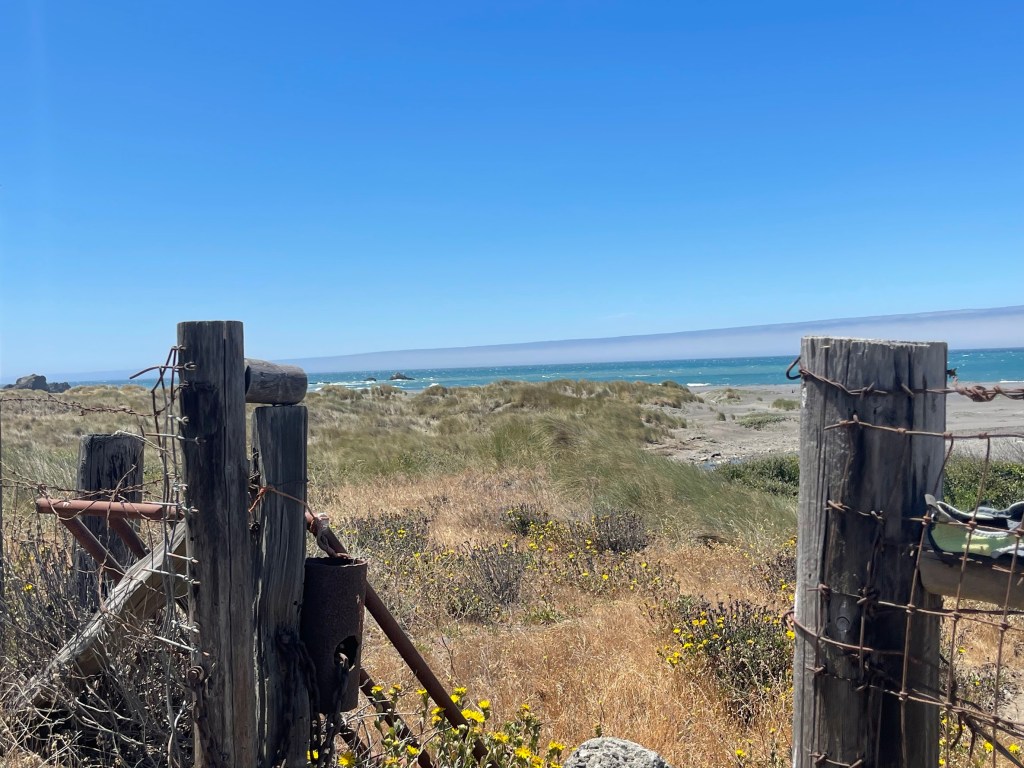
Lactarius aestivus

Please follow habitat guidelines. It is strictly noted not to walk off-trail at the headwaters preserve. Stick to the dirt trail!