Mongrels — Generational Trauma, Monstrosity, and Memory Through Motion

NIG72LPZIJNTESAFAXFLXQKGDA


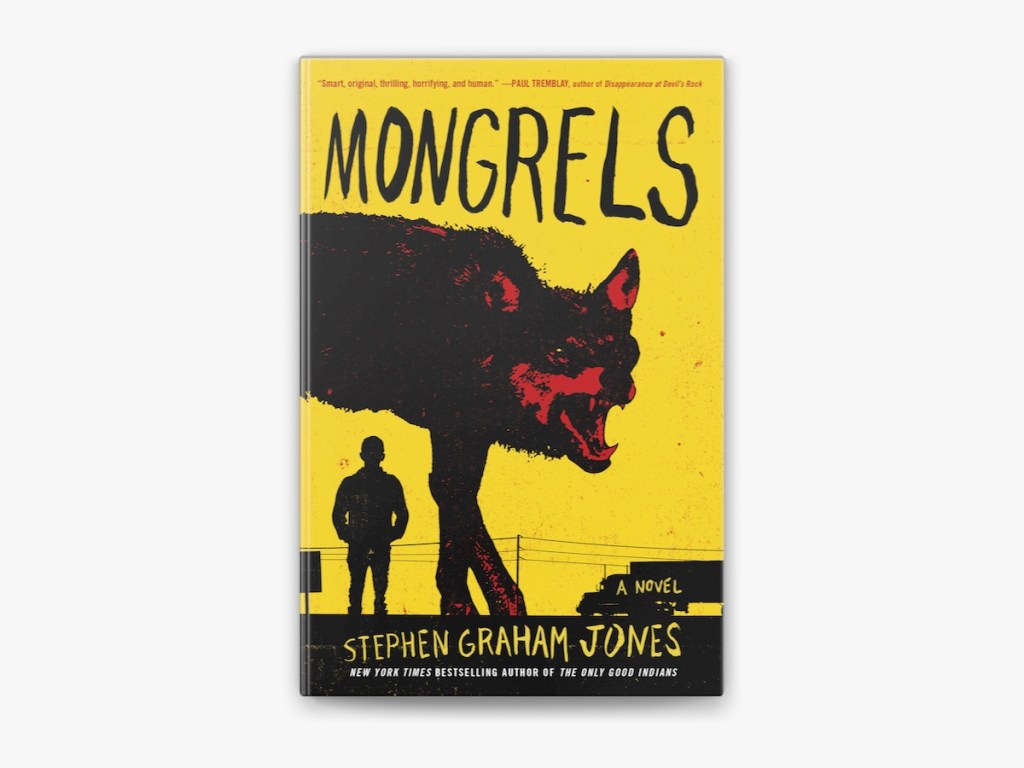
Jones, Stephen Graham. Mongrels: A Novel. HarperCollins/William Morrow, 2016.

Mongrels by Stephen Graham Jones is a coming-of-age horror novel told through the perspective of an unnamed boy growing up in a nomadic family of werewolves. Living alongside his Aunt Libby and Uncle Darren, the nephew struggles to understand who he is as he waits to discover whether he will eventually transform himself. Throughout the novel, Jones uses the werewolf figure not simply as a monster but as a metaphor for poverty, marginalization, generational trauma, displacement, and survival.

The nephew is rarely named directly. Instead, he is often referred to through shifting identities such as “the nephew,” “the vampire,” “the mechanic,” or “the prisoner.” This creates a feeling of instability surrounding identity itself, reflecting the uncertainty of adolescence and self-discovery. Although his experiences are supernatural, the emotional core of the story feels deeply human: the desire to belong somewhere while fearing what you may become.

As the family is forced from town to town, instability becomes their normal way of life. Darren works dangerous and degrading jobs, while Libby repeatedly pulls the family back together whenever things fall apart. Eventually, Darren disappears after falling in love with a woman outside the family, leaving the nephew once again abandoned by a male role model. Shortly before the nephew’s own transformation, Libby promises she will remain beside him:

“I’ll still be here,” the aunt says, reaching her hand across, taking his.
“Just like Darren,” the nephew says. “Werewolf promises aren’t any good, don’t you know that one by now?” (296).

That line captures one of the novel’s strongest emotional themes: the fear of abandonment inherited across generations.

Werewolves as Social Outsiders

One of the most powerful aspects of Mongrels is the way Jones compares werewolves to the poor, the criminalized, and the socially unwanted. The nephew grows up believing imprisonment and suffering are inevitable for people like him: “Everybody goes to jail at some point. Werewolves especially” (53). The family survives through scavenging, temporary work, theft, and constant movement. Childhood friendships are temporary because they never last long enough to take root.

The werewolf mythology becomes a framework for exploring inherited trauma. The nephew’s mother became pregnant after an act of violence and died during childbirth. Throughout the novel, there are fragmented stories surrounding her death, some softened or disguised by family storytelling. The grandfather often “humanizes” horrific events through strange, indirect narratives instead of telling the truth directly. One disturbing example involves him describing killing a rabid dog:

“Once I hit her that first time, little pup, I like to have never got that next lick in…” (17).

The story feels awkward, violent, and emotionally detached, especially through the child’s eyes. Later, however, the novel reveals a much darker parallel beneath the story: the brutal death of the nephew’s mother during childbirth while infected with the werewolf condition. The grandfather seems more comfortable transforming trauma into folklore than confronting the real violence directly. In Mongrels, the “humanized” stories often become the fantasy, while the true human experiences underneath remain unbearable to speak aloud.

Memory Through Cars

One literary element that deeply stood out to me was the way cars function throughout the novel. The vehicles are disposable, stolen, temporary, patched together, and constantly changing, much like the family itself. Yet at the same time, the make and model of each car becomes a way of tracking memory, emotion, and periods of life. The cars become emotional landmarks.

Jones repeatedly introduces vehicles with careful specificity:

“Nearly two weeks later, he finally drifted in again. What he drove… was a pretty pristine old Mercury Monterey” (71).

And later:

“The Sabre wasn’t close to street legal anymore…” (71).

The naming of the cars grounds the timeline emotionally. Instead of remembering life through stable homes or permanent places, the family remembers periods of survival through whatever means carried them at the time. The cars become connected to memory, identity, grief, movement, and family history. Each one marks a chapter in the nephew’s life. Because the family is constantly uprooted, the vehicles become one of the only consistent ways to orient time and memory.

This detail resonated with me deeply because it reflects how people living unstable or nomadic lives often attach memory to objects in motion rather than permanent locations. In Mongrels, cars become temporary homes, escape routes, symbols of survival, and emotional timestamps all at once.

Monstrosity and Emotional Truth

What I take from this novel for my own writing is the permission to lean into dramatized or monstrous figures to express emotional truth. By filtering lived experiences through imaginative characters like werewolves, the novel creates a bridge between realism and metaphor, allowing readers to emotionally inhabit difficult truths. The supernatural elements never feel disconnected from humanity. Instead, they intensify it.

Libby’s warning to the nephew echoes throughout the novel:

“Not all kids born to a werewolf are a werewolf” (21).

Beneath the horror and mythology, Mongrels becomes a story about inheritance—what we fear inheriting, what we cannot escape, and the possibility of becoming something different despite where we come from.

Grace — Motherhood, Survival, and Lyricaly Haunting


Deón, Natashia. Grace. Counterpoint, 2016.

Grace by Natashia Deón is a historical horror novel that follows the life and death of a young Black woman named Naomi. Told through a nonlinear narrative, the novel follows Naomi as a ghost after her death, watching over her daughter Josephine while reflecting on the trauma, violence, love, and resilience that shaped her life. The story blends ghost story, historical fiction, and lyrical prose into something emotionally devastating and deeply human.

Gender roles and the brutality of slavery play a major role throughout the novel. Naomi begins as a hidden child, concealed by her mother from Massa, the slave owner who controls their lives. After witnessing abuse and violence against her family, Naomi kills Massa in order to protect herself and avenge her mother. She is then forced into survival alone, wandering through a world where Black women are constantly vulnerable to exploitation and violence.

Throughout the novel, men repeatedly fail the women around them through manipulation, abandonment, rape, cheating, and abuse. Yet alongside this darkness is an equally powerful theme of motherhood and feminine endurance. Naomi’s mother survives by complying outwardly while secretly protecting her children. Hazel, Naomi’s sister, becomes an example of survival and sacrifice. Even when Naomi herself is betrayed by Jeremy—the first man she truly loves—she eventually refuses to remain trapped in abuse. Jeremy attempts to pimp her out, abandons her during pregnancy, and later returns only to shame her. Naomi ultimately walks away, choosing both herself and her child over submission.

Motherhood Beyond Death

Shortly after Josephine’s birth, Naomi is killed by slave catchers. However, death does not end her connection to her daughter. As a ghost, Naomi remains tethered to Josephine, unable to fully let go. Some of the most haunting moments in the novel are not the supernatural ones, but the emotional truths surrounding motherhood, attachment, and grief. Annie tells Naomi’s spirit:

“One day you will leave her, by your choice. It’s what you’re supposed to do. At some point, every mother has to let her child go” (185).

That line stayed with me long after reading the book. It transforms the ghost story into something much larger about the pain of motherhood itself: loving someone enough to eventually release them into the world.

Lyrical Prose and Emotional Rhythm

One of the strongest literary elements in Grace is Deón’s lyrical prose. She slows down intimate moments and emotional observations until they almost feel suspended in time. Her writing often moves with a poetic rhythm that makes even painful scenes feel beautiful and deeply sensory.

“I wish he would smell sweet to me like a man looking for love or seemed soft like a man who could love me silly and forgive me for the thangs he didn’t know about me” (38).

The prose lingers inside physical sensation, emotion, memory, and desire. Rather than rushing through events, Deón allows moments to fully breathe. Her storytelling carries humor, sexuality, tenderness, and humanity even within the horror of slavery and violence.

What I take from this novel for my own writing is the importance of slowing down and honoring the details of life itself. Grace reminded me that storytelling is not only about plot progression but about fully inhabiting emotional moments, relationships, and sensory experience. The novel feels like a ghost story not simply because of Naomi’s spirit, but because it honors the cycle of life, motherhood, trauma, love, and memory itself. It suggests that even after death, the emotional imprint we leave on one another persists.

The Burning Earth — Man vs. Nature and the Cost of Empire

Amrith, Sunil. The Burning Earth: A History. W. W. Norton & Company, 2024.

The Burning Earth by Sunil Amrith is a historical examination of climate change, empire, war, and humanity’s relationship with the natural world. The book explores how rising populations, industrialization, greed, and global conflict directly reshape the environment, while environmental collapse simultaneously reshapes the human condition. Throughout the text, Amrith presents history as deeply interconnected with nature rather than separate from it.

One of the most compelling ideas within the book is the danger of believing that technology alone can solve climate collapse. Amrith discusses the concept of the technosphere, humanity’s attempt to “engineer the climate itself” (331), while warning of the consequences that follow: “species loss, the depletion of fresh water, assaults on the forests and the oceans—and reducing the incentive for the wealthy and the powerful to change their behavior in any way” (332). The book repeatedly returns to the idea that those in power often exploit both land and people while avoiding responsibility for the damage left behind.

War Against Nature

A major theme throughout this book is Man vs. Nature, but also the illusion that humanity exists separately from nature. Amrith argues that environmental destruction and human suffering are directly intertwined. Civilization expands, consumes, wages war, and extracts resources while ecosystems collapse alongside it. He writes, quoting Hannah Arendt, that “earthly nature, for all we know, may be unique in the universe in providing human beings with a habitat in which they can move and breathe without effort and without artifice” (252).

This quote deeply resonated with me because it reinforces how fragile and rare our planet truly is. The Earth is not simply a backdrop to human history but the condition that makes human life possible at all. Throughout history, conflict between rulers and the ruled, empires and indigenous peoples, industrialization and sustainability, has repeatedly led to environmental collapse alongside human suffering.

Amrith traces these patterns through multiple eras of history. In 1426, Portuguese colonizers burned the forests of Madeira for sugar plantations, destroying ecosystems alongside local culture and community. During periods of empire and expansion, gold, oil, and resources fueled war while forests, oceans, animals, and entire ways of life were erased in the process. The industrialization of warfare only accelerated this destruction. “War machines were thirsty for oil” (171), Amrith explains, connecting environmental extraction directly to global violence and political ambition.

Discordia and Environmental Tyranny

This book strongly reinforced the central themes within my own novel, Discordia. My thesis asks: How does tyranny affect our environment? And beneath that: When and how do we rise against tyranny?

What The Burning Earth helped crystallize for me is that war, environmental collapse, and the human condition cannot truly be separated from one another. As long as we treat issues like sustainability, politics, war, and social inequality as isolated problems, the destruction continues to spread outward into every part of life.

One of the most haunting passages in the book describes wounded soldiers during World War II, comparing modern warfare to mythological monsters and apocalyptic visions. A Punjabi Rajput soldier wrote, “This is not a war… this is the end of the whole world” (172). That line captures something deeply relevant to our present moment. Environmental destruction is not disconnected from political violence or greed; they are reflections of the same imbalance.

This book ultimately reminded me that humanity behaves as though it stands above nature, when in reality, we are part of a singular living organism. To harm the planet is to harm ourselves. Healing the environment also requires healing the systems of violence, exploitation, and tyranny that continue to consume it.

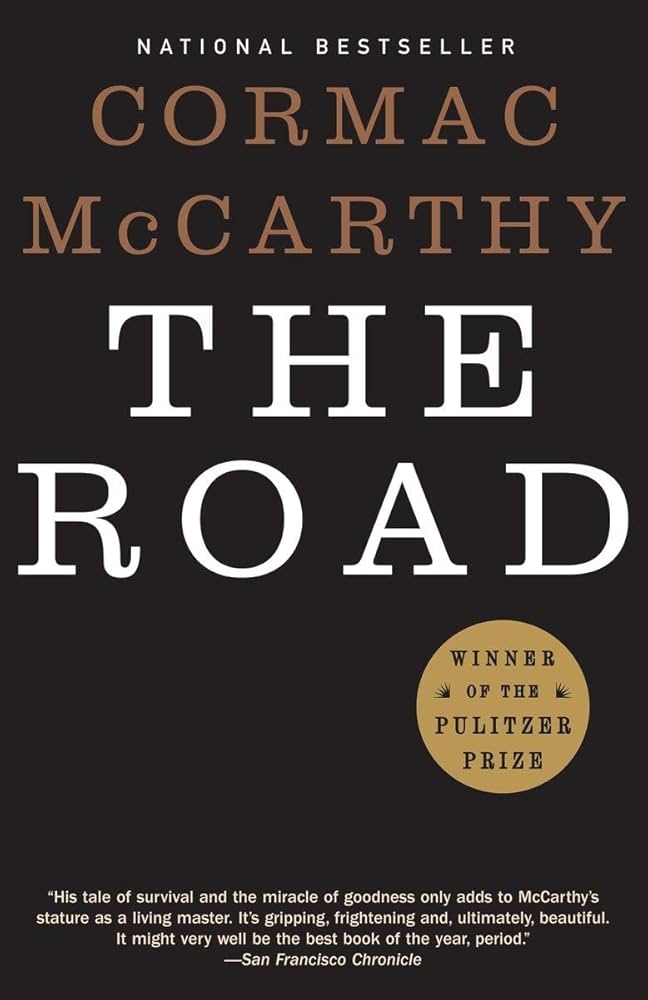
The Road — Repetition and Emotional Desolation

McCarthy, Cormac. The Road. Vintage International, 2007.

The Road by Cormac McCarthy is a dystopian horror novel set in an apocalyptic America where cannibalism has become normalized, and survival itself feels unnatural. The story follows a father and son, referred to only as “the man” and “the boy,” as they travel west toward the coast searching for warmer weather and some remaining fragment of hope. Along the road, they encounter starvation, violence, death, and the constant fear of other survivors.

When they finally reach the coast, however, they discover the same emptiness and danger they faced throughout the journey. At one point, they discover an abandoned ship and recover supplies, including a gun. After the boy accidentally leaves the gun behind, the father injures himself retrieving it, further weakening his already dying body. Eventually, the father dies on the road, leaving the young boy alone in a brutal world. By the end of the novel, another man approaches the child, claiming to have a family, and the two continue down the road together.

Repetition as Atmosphere

One of the most noticeable literary devices in this novel is repetition. Much of the story moves back and forth between short conversations between the father and son. The dialogue often revolves around death, survival, fear, or reassurance. The boy constantly seeks affirmation from his father, asking whether his father is telling the truth or whether things will be okay. McCarthy writes:

“The man was trying to kill us. Wasn’t he. Yes he was. Did you kill him? No. Is that the truth? Yes. Okay. Is that all right? Yes” (270).

The repetition creates a bleak emotional rhythm throughout the novel. The dialogue is stripped down, sparse, and often emotionally restrained. Even moments of tenderness feel muted by exhaustion and by the need to survive.

Another repeated element is the physical movement across the landscape: “They slept… They hiked… they followed” (88–89). The repetition of actions and imagery reinforces the emptiness of the world around them. Town after town, road after road, ash after ash, the setting rarely changes. This creates a suffocating atmosphere where time and geography almost blur together.

Emotional Flatness and Monotony

While I understand that McCarthy intentionally uses repetition to create emotional desolation, I personally struggled to fully enjoy the novel because the dialogue and prose became overly repetitive. Conversations often felt dry or emotionally flat:

“Is it okay? Yeah. It’s okay. Does it hurt? Yes. It hurts” (266).

The characters themselves sometimes felt similarly muted. Most people they encounter blend together under the same grayness of survival, fear, and hopelessness. I also noticed repeated imagery throughout the novel that made the world feel emotionally stagnant: “In the morning they stood in the road, and he and the boy argued about what to give the old man” (173). The landscape, conversations, and interactions often carried the same tone, with little variation.

For my own writing, this book helped me think about balance. Repetition can absolutely be powerful when used intentionally to create mood, rhythm, or emotional weight. However, I also realized how important it is for me, personally, to vary dialogue, imagery, pacing, and character voice to maintain emotional engagement with the reader. Even in bleak or desolate worlds, I am more drawn to stories where moments of tonal variation, personality, or vivid emotional shifts break through the darkness.

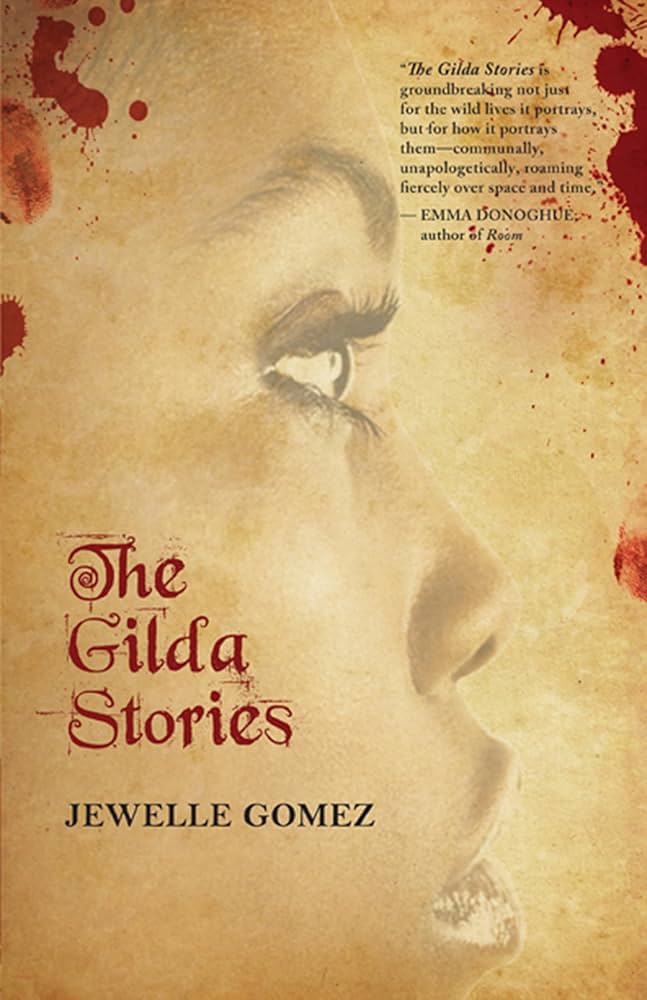
The Gilda Stories — Chosen Family, Immortality, and Resistance


Gomez, Jewelle. The Gilda Stories. Beacon Press, 2023.

The Gilda Stories by Jewelle Gomez is a vampire novel that explores racism, queer love, slavery, chosen family, and survival across generations. More than simply a vampire story, the novel examines what it means to belong to one another in a world built on violence and displacement. The story begins with a frightened young woman escaping slavery and finding refuge in Gilda’s brothel, where she is introduced to compassion, education, and community in a way she has never experienced before.

“The gambling, musical divertissements, and the private rooms were all well attended. Gilda employed eight girls, none yet twenty…” (14). From the beginning, Gomez creates a setting that feels alive with intimacy and emotional texture. The young woman remains fearful of white men and the possibility of being dragged back into slavery: “Any of these men could capture her and take her back to the plantation” (29). Yet within Gilda and Bird’s household, she witnesses something entirely different from the cruelty she has known. The women are intelligent, capable, compassionate, and empowered: “They all had manners of ladies, could read, write, and shoot” (24).

Eventually, the young woman learns that Gilda and Bird are vampires, though Gomez reimagines vampirism as something rooted in connection rather than violence. “It is through our connection with life, not death, that we live” (43). The vampires in this world do not exist purely as predators. Instead, they exchange energy, dreams, and emotional understanding with humanity. Gomez writes, “We draw life into ourselves, yet we give life as well… It’s a fair exchange in a world full of cheaters” (43).

Chosen Family and Queer Love

One of the strongest elements in this novel is its exploration of chosen family. The emotional architecture of the relationships feels deeply intentional, especially the connection between Gilda and Bird. Their love is romantic, nurturing, and spiritual all at once. When Gilda prepares to die, she asks the young woman to remain with Bird, believing she belongs among them. Eventually, the young woman takes on the name Gilda herself, continuing the family’s lineage and identity she has entered.

Throughout the novel, Gomez repeatedly returns to the idea that family is not solely determined by blood, but by loyalty, protection, understanding, and mutual care. Eleanor later says, “…to choose someone for your family is a great responsibility. It must be done not simply out of your own need or desire but rather because of a mutual need” (63). That line felt especially powerful to me because it defines family as a responsibility rather than ownership.

The language surrounding community and belonging throughout the novel is often breathtakingly beautiful: “Those of us who can withstand that uneasy pulling of the sea’s waters swirling about the bay feel firmly rooted here and protective of each other” (71). Gomez creates an emotional atmosphere where intimacy and survival become deeply intertwined.

Resistance Against Exploitation

The antagonist, Fox, represents exploitation, cruelty, and domination. Unlike Gilda’s compassionate philosophy, Fox treats working women as disposable and slave-like. Because Gilda herself escaped plantation slavery, her conflict with Fox becomes deeply personal and symbolic. As the story unfolds over time, Gilda also becomes involved in activist movements such as Greenpeace and the Black Panther Party, continuing the novel’s larger themes of justice, resistance, and collective care.

One thing I struggled with personally was pacing. I found myself wishing Fox had been introduced earlier within the story, possibly within the first sixty pages, to create a stronger central tension sooner. I also wanted the novel to slow down more often and remain longer inside the emotional and sensual details of each scene. The relationships, touches, environments, and emotional moments were among the novel’s strongest parts, and I often found myself wanting more time to fully inhabit them before the story moved forward. By the end, the pacing felt rushed to me compared to the emotional depth established earlier in the novel.

Still, what stayed with me most was the novel’s belief in companionship and healing across time. Even after centuries, distance, grief, and transformation, the characters continue searching for connection with one another. The story ultimately suggests that survival alone is not enough; people also need intimacy, community, and love in order to remain whole.

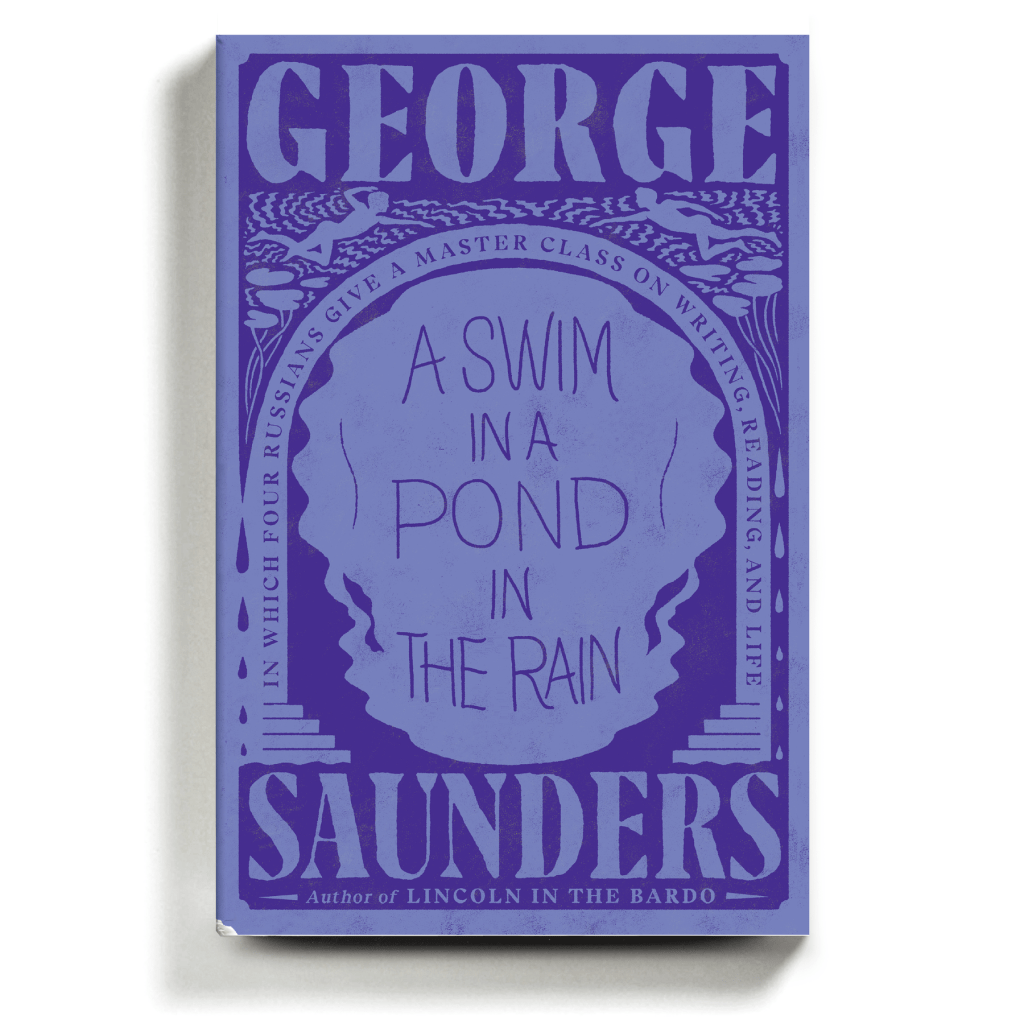
A Swim in a Pond in the Rain — Winning through Authenticity

Saunders, George. A Swim in a Pond in the Rain: In Which Four Russians Give a Master Class on Writing, Reading, and Life. Random House, 2021.

A Swim in a Pond in the Rain by George Saunders is a craft book that examines four Russian authors and how storytelling can reflect morality, culture, human nature, and community. Saunders breaks down the mechanics of storytelling sentence by sentence, showing how every detail matters and how intentional writing creates emotional resonance.

One story that stood out to me was The Singers. The story slowly introduces an entire tavern full of people before the singing contest even truly begins. Saunders writes, “It was an unbearably hot July day when, scarcely able to drag one foot after the other, I walked slowly, accompanied by my dog, up the Kolotovka ravine in the direction of the Cozy Corner” (67). Immediately, we are placed into the exhaustion, the heat, and the atmosphere of the setting.

At first, the pacing almost feels too slow. The first eleven pages are mostly descriptions of people sitting in a bar. But that slowness becomes the point. Instead of simply saying the tavern was crowded, the story allows us to feel the room through observation, gossip, body language, and internal dialogue. The tavern becomes alive.

Community as Character

One of the most interesting craft choices in this story is how the community itself becomes a character. Every person in the tavern seems connected through shared history and quiet observation. The narrator notices Yashka the Turk standing in the center of the room: “a lean, slender man of twenty-three, wearing a long-skirted blue nankeen coat” (69). Small details like clothing, posture, and mannerisms layer the scene until the reader can almost smell the tavern and hear the crowd shifting around the room.

The emotional tension builds between the two singers. The contractor performs perfectly, technically polished and controlled. Yashka, however, sings with emotion and vulnerability. His voice is imperfect, but it resonates far deeper with the people listening.

Authenticity Resonates More Than Perfection

This story reminded me that authenticity will almost always move people more than perfection. A technically flawless performance may impress an audience, but emotional honesty is what creates connection. Yashka’s flaws are what make him human, and because of that, his singing reaches the community in a way the contractor’s performance cannot.

Saunders also discusses how long the buildup is before the actual “heart” of the story occurs. The exposition takes patience, but without it, the emotional payoff would not land the same way. The reader must first understand the people, the environment, and the culture before the climax can truly matter.

The Child Within the Adult

At the end of the story, after the celebration and drinking have ended, the narrator walks home and overhears a boy shouting to his brother, “Dad wants to give you a good hiding!” (82). It is such a small and almost humorous ending, but it carries something universal within it. No matter how old we become, there is still a child somewhere inside us. Across cultures, generations, and countries, people continue echoing the same emotions and relationships.

This book deeply influenced the way I think about storytelling. Sometimes spending extra time in setting, atmosphere, and internal observation can create a much more immersive emotional experience. It also reminded me that flawed characters are often the most lovable because they feel real. Most importantly, it reinforced the idea that, despite our cultural differences, there are deeply human experiences that connect us all.

Mean: The Power of Reclamation

Gurba, Myriam. Mean. Coffee House Press, 2017.

Mean is a creative autobiography and true-crime narrative that follows Myriam Gurba from childhood to adulthood as she confronts rape, racism, cultural identity, and personal transformation. Haunted—literally and figuratively—by the ghost of Sophia, a raped and murdered woman, Myriam is compelled to visit the place where Sophia died. Through this haunting, she faces her own trauma and survivor’s guilt. Gurba’s voice is sharp, defiant, and self-aware, blending humor and horror in equal measure as she examines cruelty, injustice, and the survival mechanisms women develop to exist within them.

The title Mean becomes a lens through which Gurba explores power and pain. The book opens with Sophia’s death:

“Wrecking her makes him feel like she belongs to him” (2).

By beginning with this act of violence, Gurba forces readers to confront the brutality often silenced in stories of women—especially women of color. The murder of Sophia, a Spanish woman killed by a Hispanic man, mirrors Gurba’s own experience with sexual assault and raises questions of ownership, violence, and cultural complicity. Through this, Gurba links her trauma to a collective experience, a bridge between the living and the dead—between victimhood and survival.

When Gurba talks about being “mean,” she often invokes the cattiness of girlhood, but her real subject is cruelty in all its forms—social, racial, and systemic. The word “mean” becomes elastic, stretching from playground gossip to the most profound violations of humanity. She illustrates this concept through humor and absurdity, such as her discussion of the “Michael Jackson donut,” which sparks a debate about whether the pastry—half chocolate, half powdered sugar—is racist. Gurba observes:

“What I found most interesting was that everybody dominating this debate was white” (163).

Her point lands sharply: conversations about racism are often dominated by white voices, leaving people of color excluded from their own narratives. Gurba writes that the opinions of the two “mud people” in the room were never solicited—a darkly humorous yet devastating critique of white-centered discourse on race.

Another central motif in the book is the phrase “white girl,” which Gurba uses as both political and literary shorthand. It exposes the subtle hierarchies that shape American culture and classrooms:

“White girls from the English-only classes refused to socialize with girls from the bilingual classes” (19).

The term becomes layered—a symbol of privilege, separation, and the ways in which whiteness is normalized. Gurba’s repetition of “white girl” challenges readers to recognize how language itself can uphold systems of exclusion. She recalls moments of alienation and microaggression, from classmates to family acquaintances:

“‘What is this?’ in that supremely bitchy California-girl accent some white girls reserved for interrogating my mother’s hospitality” (19).

Through these moments, Gurba transforms “mean” from insult to insight—a way of naming the everyday cruelties that shape a person’s world.

As I read this novel, I found myself turning the question of “mean” inward. What does it mean to be “mean” as a woman, a survivor, a writer? Is meanness cruelty, or is it the courage to hold boundaries in a world that demands your silence? Gurba redefines the word as an act of reclamation: to be mean is to speak, to refuse apology, to survive.

In my own writing, I hope to evoke this same self-examination—to make readers question the norms we excuse, the systems we uphold, and the voices we choose to hear. Mean reminds me that storytelling is not just about empathy; it’s about confrontation. It’s about being brave enough to look directly at the discomfort—and to speak from it anyway.

People Collide: Opposing Wants in Each Other’s Bodies

McElroy, Isle. People Collide. HarperVia, 2023.

A blend of satire and queer fiction, People Collide by Isle McElroy takes readers by surprise with its sharp humor and emotional depth. The novel follows Eli and Elizabeth, a married couple who seem perfect together on the surface—Eli is sweet, funny, and attentive, while Elizabeth is ambitious, successful, and confident. Yet beneath their charm lies mutual dissatisfaction. Eli resents Elizabeth’s constant criticism and sexual demands, while Elizabeth grows tired of his lack of ambition and emotional availability. When an unexplained event causes them to switch bodies, they are forced to confront the very parts of each other they have avoided—and, in doing so, the unspoken distance between them.

At its core, the novel explores recognition and empathy within relationships: the desperate need to be seen, understood, and appreciated. Both Eli and Elizabeth fail to listen to one another, and their transformation becomes a metaphor for what happens when communication collapses. The reader is reminded that true connection comes only when we are comfortable within ourselves—and capable of hearing others.

Eli, insecure and self-critical, longs to be noticed by Elizabeth, the woman he adores but feels overshadowed by. His self-sabotaging behavior manifests through an eating disorder—

“Eli would throw up after meals while she was always at her desk writing” (75)—
and through infidelity, as if seeking pain in exchange for attention. Once trapped in Elizabeth’s body, Eli experiences an entirely new vulnerability. The physical form he once idealized now becomes a source of fear and insecurity. As the narrative deepens, McElroy cleverly shifts perspective, giving Eli’s internal voice more space than Elizabeth’s, symbolizing the emotional distance that defines their marriage.

From Eli’s point of view, readers gain an honest reflection of gendered experience and self-awareness:

“I always walked faster than everyone else like I didn’t care. It didn’t bother me until I was in her body” (112).

Now living as Elizabeth, Eli also encounters the world’s perception of himself:

“Is that what you think of him?” I asked. “That Eli was negligent?” (188).

Through this inversion, Eli gains insight into how others view his failures—a painful but transformative realization.

Elizabeth, in contrast, is ambitious and driven, yet emotionally distant. She perceives Eli as dependent and unmotivated. Her professional success and self-assuredness lead her to view Eli as an obstacle rather than a partner. After the body swap, however, Elizabeth experiences a new kind of freedom in living as Eli—a freedom that feels less confined by social expectations. Instead of nurturing Eli’s insecurities, she begins to relish autonomy and sexual exploration:

“This place is loaded with dicks,” she said. “There’s no better place to talk about dicks” (198).

McElroy uses humor and discomfort to illustrate gendered liberation and the ways in which societal conditioning shapes our desires.

Ultimately, the two remain trapped in a cycle of unmet needs—the woman seeking companionship, the man craving freedom. Even in their new bodies, their minds remain unchanged, unable to bridge the emotional gap between them. Eli reflects on this repeating pattern:

“There are things you won’t be able to plan for… You can plan for the towels and the flashlights and the recycling and the aunts, but at some point you’ll have to trust me, because all I can do is aspire to the version of you I find the most accurate, which is the version of you that I love, the kind and brilliant and generous person—someone who would, I truly believe, let her partner sleep through the night” (218).

This reflection captures the tragic irony of their relationship: love filtered through self-interest, intimacy blurred by projection.

By diving into dark psychology and relational imperfection, McElroy forces readers to confront the parts of love that society often avoids—jealousy, resentment, and incomplete listening. For me as a writer, this novel underscores the power of storytelling to reveal the truths we hide from ourselves. It reminds me to bring awareness to my own characters—to let them stumble, misunderstand, and grow. Through such honest portrayals, fiction becomes not just reflection, but revelation—of culture, of identity, and of the fragile art of being human.

Rehearsal for Dying by Ariel Gore

Gore, Ariel. Rehearsals for Dying: Digressions on Love and Cancer. Feminist Press, 2025.

Rehearsal for Dying is a work of creative nonfiction written from Ariel Gore’s perspective about her wife Deena’s Stage Four breast cancer and the profound effect it has on their relationship. When Deena is diagnosed, the disease is already terminal. Despite their efforts to fulfill Deena’s bucket list, their days are consumed by doctor visits, conflicting medical information, and the slow, visible process of dying. Gore’s narrative captures the tension between love and loss—the desire to hold on to moments of life while facing the inevitability of death.

Deena chooses to forgo both chemotherapy and a double mastectomy, understanding that survival is no longer possible. In her own writing, she captures this painful acceptance:

“Then what’s the point?” (179)

The line appears in Deena’s musical, spoken by Ariel, blurring the boundary between art and lived experience. Despite their effort to remain hopeful, Ariel’s grief grows unbearable as she confronts the truth that there is no recovery, only the process of letting go.

Throughout the book, the doctors’ language becomes its own kind of character—a reflection of authority, hope, and denial. Their diction shapes Deena’s emotions and Ariel’s mistrust. When the doctors speak positively, Deena clings to optimism; when they are blunt, she collapses into despair. Gore reveals how language—especially medical language—can wound even when meant to heal.

Early in the narrative, Dr. Ego tells Deena that she can help her, adding,

“If I’m the one to walk you over there, they’ll wait for the devil” (80).

The line reads almost metaphorically—the doctor as the devil guiding Deena deeper into her personal hell, toward the PET scan that confirms her suffering.

Soon after, Dr. Ego lays out a strict plan:

“Ms. Chafetz, you will have six months of IV chemo, and you will have a double mastectomy” (84).

The phrasing is directive rather than compassionate; Deena is given no choice, only instructions.

Later, Dr. Mushroom, the pain specialist, delivers the most brutal truth:

“This disease is going to take your life” (184).

Deena instantly rejects his bluntness, calling him an “asshole.” When another physician, Dr. Vogue, offers hope, Deena’s spirit brightens:

“I think your cancer will get better once we start the Enheru” (231).

Through these encounters, Gore exposes the contradiction between false hope and harsh honesty. The doctors’ attempts to be factual or encouraging often fail to consider the emotional timing and vulnerability of their patient. Deena’s reactions are not weakness—they are a valid response to the way information is delivered. Compassionate communication, Gore implies, requires not just accuracy but empathy, patience, and space for grief.

In my own writing, I often find myself drawn to characters like Deena—those who hold onto hope in moments of uncertainty. Like Gore, I want to give voice to resistance, to compassion, and to the quiet defiance of those who face authority and mortality with courage. In my novel Discordia, my protagonist Eris reflects:

“There is more than just human disaster. There are the mountains, the children, ancient knowledge that has not yet been destroyed.”

This spirit of perseverance mirrors the emotional depth Gore achieves through her storytelling.

Deena dies at the end of Rehearsal for Dying, but she reads and approves the manuscript before her death. Her act of signing off on the book becomes a final, poignant gesture—a conscious acknowledgment of her diagnosis and a symbolic acceptance of her fate. In doing so, Deena transforms her death into an act of authorship—her ultimate rehearsal for dying.

Guide to Beginner’s Yoga: Embracing the Sacred Flow 

The Season of Anya 

On Dec 21, 2025, I sat down with Anya, and we discussed her new book Embracing the Sacred Flow. You can find it at this Amazon affiliate link. Before we begin with the interview, I’d like to share with you the dedication: 

Dedication 

This book is dedicated to anyone who has ever felt broken beyond repair, lost without a sense of direction, or silently suffering through the chaos. I see you. It is never too late to reclaim your sense of self, to heal, to transform, and to set yourself free. Spirit is here to guide your soul back home where it’s warm and cozy. 

Let’s dive in:  

Natascha: Hello, this is Natascha with the Little Lost Forest blog. Today we will be interviewing Anya with the season of Anya and her new book, Embracing the Sacred Flow. We were sitting at the Revolution Roasters with a cup of coffee, and my son  Malakai. Anya and I are doing a cross-promotion. She interviewed Spellbound earlier this month and plans to share in the next few weeks I will link the podcast here once it’s available. Anya, how are you doing today? 

Anya: I’m doing so well. Just enjoying this beautiful sunny San Diego weather in December. And happy to see you, girlfriend. 

Natascha: Yeah, it’s really nice to see you, too. Years of friendship has brought us here to this point where we’re both working on our businesses and our brands, and we get to talk about the different art that we enjoy. And I just so appreciate doing this with you and being here with you today. 

Anya: Likewise. Likewise. 

Natascha: Can you tell me a little bit about The Season of Anya? 

Anya: Yeah. So basically, Season of Anya is an online community, a culmination of healing modalities that are for those of us who are looking to transform ourselves, to transform our personal identities, to maybe transform our physical, mental, spiritual health and finding ourselves. Typically, it’s a journey for those of us who are interested in spirituality. My main healing modalities with The Season of Anya are yoga, magick, and witchcraft. Yoga is for grounding. Magick is for finding that love for life. And then witchcraft is the ritual. It is the practice that ties it all together. Yoga grounds me, witchcraft elevates me and magick is everything else in between. Because life is ultimately what you make it. And so many of us just really don’t understand how much power we have to change and transform. And I am bringing everyone together to give them their own tools and create a positive community filled with individuals who wish to change themselves and the world for the better. 

Natascha: Yeah, that really makes me want to self-reflect and see how I could change my life for the more positive. What got you to start this healing journey? 

Anya: What got me started? It all started, probably, I mean, well, I used to be 325lbs. That was not a result of just a girl who loved food, but a girl who was in a lot of pain, a lot of emotional pain. Didn’t know how to process her trauma, didn’t have the tools and resources to just feel normal. That resulted in my weight loss journey, which was my commitment to my physical health. Why physical health? Because the three of them are related; mind, body and Spirit. Right? They all interconnect, and with finding that discipline and with finding that balance within – Then yoga came into my life shortly after, and that taught me kind of how to embrace the physical practice of yoga and learning how to feel good in my body. Then shortly after that, my spiritual practice came into act, and that resulted in me learning how to live a spiritual life so I could transform, but also remain positive and free flowing and just feel better about the trajectory of my life. Because it’s been imperative for me to understand that it is me and only me who’s responsible for my trajectory, not the course that others have set for me my whole life. Same goes for those of you tuning into this today. 

Natascha: Yeah, I also started with yoga before I got into my witch practices. So that resonates with me as well. Were there mentors early on that helped you when you were most in pain, or did you find yoga and your spiritual practice on your own? 

Anya: Oh, absolutely. There are two groups of people that I find really keen that helped me on my journey. First of all, it was Mel and Kaleo from Rebel and Muse. My friend Kristan invited me to their yoga retreat back in 2018, and from there I realized…how messed up I was. If we’re being perfectly honest. Yoga retreats are so awesome and empowering because they remind you that you’re in a safe space to simply be yourself. That experience slowly started my self-awareness, self-reflection journey of, “oh boy, my normal, is not everybody else’s normal”. So, that kind of was an awakening for me. With that, especially with feeling comfortable in my body and just having kind of that mirror of reflection on me help set the stage for the inner work ahead. Then shortly after I met who would become a huge mentor of mine: Taren S with the House of Witchcraft. She opened the Witches Cottage out here in San Diego, and I got to dance around the bonfire with her and our coven out there for many moons. Through that, I learned spirituality, I learned accountability, I learned healing, I learned what it was to take care of myself and to empower myself, but also how important community is and how we are truly in it for one another. 

Natascha: Yeah. On the subject of community, how has your spiritual and health journey changed the way that you hold your friendships and your romantic relationships? 

Anya: Ooh. That’s a great question. I feel like it’s taken the people pleaser out of the scenario- for sure. I no longer wish to hold on to what’s not for me. And also with that, though, I do give all my friends the benefit of the doubt through open communication and through being vulnerable and being communicative. I mean, the ones who get it, get it. If I bring up an issue with a friend and be like, hey, what the heck? And they respond- that’s the kind of people I want in my life. I find that romantically, it’s been awful because I realize a lot of partners don’t want to do the work, and it’s hard, especially being at this point in my journey and single. Well, I need somebody who’s at least going to match where I’m at. 

Natascha: Well, that’s really important for young folks and for women of all ages to hear. We so easily will go along with what partners want from us because we want to appease them, or we don’t want to be by ourselves. By holding your energy and by being an empowered woman, you’re holding boundaries that maybe some of us put down just to get along with others. 

Anya: You know, for better or worse, I sometimes- I feel like I have nothing else to lose. I’ve had some pretty horrible life experiences and with that, you know, has come strength, especially my romantic relationships. And it’s like, ‘Hey, I’ve got nothing to lose,’ so why not walk in faith and see what happens and see if I can actually stop limiting myself and create the life I deserve. 

Natascha: Before we get into your book, did you want to tell us any more about The Season of Anya? What kind of content you put out, or products or things that people can engage in? 

Anya: Sure! So the Season of Anya is the main hub. I’m really passionate about my free monthly newsletter. So, to those of you tuning in to this, I highly recommend you check that out. That is the heart of my blog. Uh, I know that newsletters are so outdated, but that’s where I share my monthly tips, and not only just that, but also shine light about being in tune with the world around me. I have very cute little witchy stories, I share that are just true moments of surrendering to the flow, and I love sharing those stories, and they often bring a laugh out of my audience and give them opportunities to reflect and connect. So, definitely, definitely- check that out. Then I’m also working on YouTube and social medias and trying to figure out my flow and grind with that. But it all centers back to The Season of Anya community, where ultimately, I’d like to host witchcraft retreats. In fact, next year with my friends at House of Witchcraft, we are co-hosting a retreat in New Orleans in July because I want to give that experience of retreats to the rest of the community, so you too, can learn how to open up and feel safe and vulnerable in a protected environment, an empowering environment and find yourself again. 

Natascha: Yeah, that sounds like a great community experience. Does your lineage come into play with your practice? 

Anya: Ooh, Great question, actually. It has been for sure. So, I’m Italian, American, first generation, and with my lineage being Italian is so much there’s so much witchcraft actually associated with Italian culture. And it’s just so funny because it’s this interesting connection of witchcraft meets Catholicism. And that was actually understanding my Italian roots, even connecting through the Italian Goddess Aradia and other deities, but specifically, she has really just connected me to the essence of who I am as an Italian American witch. And it has been a really cool journey. 

Natascha: All right. Thank you so much for sharing that with us. Here I am looking at Embracing the Sacred Flow. What inspired this book? 

Anya: Well, you know, as somebody with really chronic anxiety and an addiction to over productivity and not learning how to just be present in my body, yoga has been a really crucial component for not only my healing journey, but also my life journey. This book kind of just goes over [that]. It’s going to be a multi-volume series. I wanted to give my audience something that’s really easy to read. I mean, honestly, you can read this in an hour or two, and it’s something reflective that gives you prompts for going inward and just kind of tips to get through your life. I talk about some breathing exercises in there. We talk about yoga philosophies, and I talk about learning how to be comfortable and being in tune with your body. Because especially if you are on the path of a witch, learning how to flow and just feel connected to yourself will always, always, always be your saving grace. It’s your anchor. It’s your life force. I’m really proud of it. I’m happy with this content. It’s a start of many, many books to come. I’m excited for you to check it out. 

Natascha: If somebody follows the practices in this book, how often do you recommend that they do the yoga, do the breathing? What kind of schedule does this look like in your everyday life? 

Anya: Well, yeah. Well, with everyday life, I try to make it very routine where it’s something that you can just tap into immediately. Yes, I do talk about creating an altar and the stretches and the flows, but really, I mean, it’s almost about like micro meditations because we don’t always have time for the big stuff, right? It’s learning on how to feel comfortable and not overwhelmed in any moment. As somebody who had been overwhelmed with literally everything my whole life, this is a new me, you know? But learning how to get rid of that overwhelm and just be here and learning how to release tension in your body and feel comfortable in every moment is life changing and I want to share that freedom with everyone.  

Natascha: Wow. That’s amazing. I mean, I feel like if you’re working in a cubicle or if you have children that drive you crazy, or if you’re just a student that’s trying to find their way, this book could really help create a positive routine in your life and a sacred flow that doesn’t only align with the mind and body, but with your higher consciousness and creating a healthy future for the person that’s tapping into this magic. Yes. So, what’s next? 

Anya: Ooh, well what’s next? Writing wise, I definitely have been sitting on a spell jars book: Spell Jars 101 book that I just need to kind of polish up a little bit. Just put my last little touches to it. And I really am excited for this upcoming book as well. You know, it’s like, okay, we learn how to tune in, we know how to stay sacred, we know how to stay connected and this book really talks about manifestation. And it demystifies the practice, a little bit of witchcraft, of spells and workings. Because it’s not about sitting at your altar, it’s about getting out there too and doing the work. You want a better life, you got to do the work…while adding a little witchy twist to it. That makes it my own. And I feel like Spell Jars 101 takes a fresh approach that you haven’t seen in your standard witchy books. 

Natascha: That’s wonderful. Thank you so much for being an outstanding witch, doing positive work, light work, spiritual work, tuning into the body, soul, and mind. Is there anything else you’d like to share with us before we end the interview? 

Anya: No, just go ahead and check me out on my website, subscribe to my free newsletter, and I promise your life will be forever changed. 

Natascha: All right. Thank you so much. 

Anya: Thanks, girl! 

www.theseasonofanya.com to sign up for my free monthly newsletter, blog, and be the first to know about my upcoming witchy retreats. 

https://www.youtube.com/@theseasonofanya

https://www.Instagram.com/theseasonofanya

https://www.etsy.com/shop/AnyasApothecary