Mean is a creative autobiography and true-crime narrative that follows Myriam Gurba from childhood to adulthood as she confronts rape, racism, cultural identity, and personal transformation. Haunted—literally and figuratively—by the ghost of Sophia, a raped and murdered woman, Myriam is compelled to visit the place where Sophia died. Through this haunting, she faces her own trauma and survivor’s guilt. Gurba’s voice is sharp, defiant, and self-aware, blending humor and horror in equal measure as she examines cruelty, injustice, and the survival mechanisms women develop to exist within them.
The title Mean becomes a lens through which Gurba explores power and pain. The book opens with Sophia’s death:
“Wrecking her makes him feel like she belongs to him” (2).
By beginning with this act of violence, Gurba forces readers to confront the brutality often silenced in stories of women—especially women of color. The murder of Sophia, a Spanish woman killed by a Hispanic man, mirrors Gurba’s own experience with sexual assault and raises questions of ownership, violence, and cultural complicity. Through this, Gurba links her trauma to a collective experience, a bridge between the living and the dead—between victimhood and survival.
When Gurba talks about being “mean,” she often invokes the cattiness of girlhood, but her real subject is cruelty in all its forms—social, racial, and systemic. The word “mean” becomes elastic, stretching from playground gossip to the most profound violations of humanity. She illustrates this concept through humor and absurdity, such as her discussion of the “Michael Jackson donut,” which sparks a debate about whether the pastry—half chocolate, half powdered sugar—is racist. Gurba observes:
“What I found most interesting was that everybody dominating this debate was white” (163).
Her point lands sharply: conversations about racism are often dominated by white voices, leaving people of color excluded from their own narratives. Gurba writes that the opinions of the two “mud people” in the room were never solicited—a darkly humorous yet devastating critique of white-centered discourse on race.
Another central motif in the book is the phrase “white girl,” which Gurba uses as both political and literary shorthand. It exposes the subtle hierarchies that shape American culture and classrooms:
“White girls from the English-only classes refused to socialize with girls from the bilingual classes” (19).
The term becomes layered—a symbol of privilege, separation, and the ways in which whiteness is normalized. Gurba’s repetition of “white girl” challenges readers to recognize how language itself can uphold systems of exclusion. She recalls moments of alienation and microaggression, from classmates to family acquaintances:
“‘What is this?’ in that supremely bitchy California-girl accent some white girls reserved for interrogating my mother’s hospitality” (19).
Through these moments, Gurba transforms “mean” from insult to insight—a way of naming the everyday cruelties that shape a person’s world.
As I read this novel, I found myself turning the question of “mean” inward. What does it mean to be “mean” as a woman, a survivor, a writer? Is meanness cruelty, or is it the courage to hold boundaries in a world that demands your silence? Gurba redefines the word as an act of reclamation: to be mean is to speak, to refuse apology, to survive.
In my own writing, I hope to evoke this same self-examination—to make readers question the norms we excuse, the systems we uphold, and the voices we choose to hear. Mean reminds me that storytelling is not just about empathy; it’s about confrontation. It’s about being brave enough to look directly at the discomfort—and to speak from it anyway.
A blend of satire and queer fiction, People Collide by Isle McElroy takes readers by surprise with its sharp humor and emotional depth. The novel follows Eli and Elizabeth, a married couple who seem perfect together on the surface—Eli is sweet, funny, and attentive, while Elizabeth is ambitious, successful, and confident. Yet beneath their charm lies mutual dissatisfaction. Eli resents Elizabeth’s constant criticism and sexual demands, while Elizabeth grows tired of his lack of ambition and emotional availability. When an unexplained event causes them to switch bodies, they are forced to confront the very parts of each other they have avoided—and, in doing so, the unspoken distance between them.
At its core, the novel explores recognition and empathy within relationships: the desperate need to be seen, understood, and appreciated. Both Eli and Elizabeth fail to listen to one another, and their transformation becomes a metaphor for what happens when communication collapses. The reader is reminded that true connection comes only when we are comfortable within ourselves—and capable of hearing others.
Eli, insecure and self-critical, longs to be noticed by Elizabeth, the woman he adores but feels overshadowed by. His self-sabotaging behavior manifests through an eating disorder—
“Eli would throw up after meals while she was always at her desk writing” (75)— and through infidelity, as if seeking pain in exchange for attention. Once trapped in Elizabeth’s body, Eli experiences an entirely new vulnerability. The physical form he once idealized now becomes a source of fear and insecurity. As the narrative deepens, McElroy cleverly shifts perspective, giving Eli’s internal voice more space than Elizabeth’s, symbolizing the emotional distance that defines their marriage.
From Eli’s point of view, readers gain an honest reflection of gendered experience and self-awareness:
“I always walked faster than everyone else like I didn’t care. It didn’t bother me until I was in her body” (112).
Now living as Elizabeth, Eli also encounters the world’s perception of himself:
“Is that what you think of him?” I asked. “That Eli was negligent?” (188).
Through this inversion, Eli gains insight into how others view his failures—a painful but transformative realization.
Elizabeth, in contrast, is ambitious and driven, yet emotionally distant. She perceives Eli as dependent and unmotivated. Her professional success and self-assuredness lead her to view Eli as an obstacle rather than a partner. After the body swap, however, Elizabeth experiences a new kind of freedom in living as Eli—a freedom that feels less confined by social expectations. Instead of nurturing Eli’s insecurities, she begins to relish autonomy and sexual exploration:
“This place is loaded with dicks,” she said. “There’s no better place to talk about dicks” (198).
McElroy uses humor and discomfort to illustrate gendered liberation and the ways in which societal conditioning shapes our desires.
Ultimately, the two remain trapped in a cycle of unmet needs—the woman seeking companionship, the man craving freedom. Even in their new bodies, their minds remain unchanged, unable to bridge the emotional gap between them. Eli reflects on this repeating pattern:
“There are things you won’t be able to plan for… You can plan for the towels and the flashlights and the recycling and the aunts, but at some point you’ll have to trust me, because all I can do is aspire to the version of you I find the most accurate, which is the version of you that I love, the kind and brilliant and generous person—someone who would, I truly believe, let her partner sleep through the night” (218).
This reflection captures the tragic irony of their relationship: love filtered through self-interest, intimacy blurred by projection.
By diving into dark psychology and relational imperfection, McElroy forces readers to confront the parts of love that society often avoids—jealousy, resentment, and incomplete listening. For me as a writer, this novel underscores the power of storytelling to reveal the truths we hide from ourselves. It reminds me to bring awareness to my own characters—to let them stumble, misunderstand, and grow. Through such honest portrayals, fiction becomes not just reflection, but revelation—of culture, of identity, and of the fragile art of being human.
Gore, Ariel. Rehearsals for Dying: Digressions on Love and Cancer. Feminist Press, 2025.
Rehearsal for Dying is a work of creative nonfiction written from Ariel Gore’s perspective about her wife Deena’s Stage Four breast cancer and the profound effect it has on their relationship. When Deena is diagnosed, the disease is already terminal. Despite their efforts to fulfill Deena’s bucket list, their days are consumed by doctor visits, conflicting medical information, and the slow, visible process of dying. Gore’s narrative captures the tension between love and loss—the desire to hold on to moments of life while facing the inevitability of death.
Deena chooses to forgo both chemotherapy and a double mastectomy, understanding that survival is no longer possible. In her own writing, she captures this painful acceptance:
“Then what’s the point?” (179)
The line appears in Deena’s musical, spoken by Ariel, blurring the boundary between art and lived experience. Despite their effort to remain hopeful, Ariel’s grief grows unbearable as she confronts the truth that there is no recovery, only the process of letting go.
Throughout the book, the doctors’ language becomes its own kind of character—a reflection of authority, hope, and denial. Their diction shapes Deena’s emotions and Ariel’s mistrust. When the doctors speak positively, Deena clings to optimism; when they are blunt, she collapses into despair. Gore reveals how language—especially medical language—can wound even when meant to heal.
Early in the narrative, Dr. Ego tells Deena that she can help her, adding,
“If I’m the one to walk you over there, they’ll wait for the devil” (80).
The line reads almost metaphorically—the doctor as the devil guiding Deena deeper into her personal hell, toward the PET scan that confirms her suffering.
Soon after, Dr. Ego lays out a strict plan:
“Ms. Chafetz, you will have six months of IV chemo, and you will have a double mastectomy” (84).
The phrasing is directive rather than compassionate; Deena is given no choice, only instructions.
Later, Dr. Mushroom, the pain specialist, delivers the most brutal truth:
“This disease is going to take your life” (184).
Deena instantly rejects his bluntness, calling him an “asshole.” When another physician, Dr. Vogue, offers hope, Deena’s spirit brightens:
“I think your cancer will get better once we start the Enheru” (231).
Through these encounters, Gore exposes the contradiction between false hope and harsh honesty. The doctors’ attempts to be factual or encouraging often fail to consider the emotional timing and vulnerability of their patient. Deena’s reactions are not weakness—they are a valid response to the way information is delivered. Compassionate communication, Gore implies, requires not just accuracy but empathy, patience, and space for grief.
In my own writing, I often find myself drawn to characters like Deena—those who hold onto hope in moments of uncertainty. Like Gore, I want to give voice to resistance, to compassion, and to the quiet defiance of those who face authority and mortality with courage. In my novel Discordia, my protagonist Eris reflects:
“There is more than just human disaster. There are the mountains, the children, ancient knowledge that has not yet been destroyed.”
This spirit of perseverance mirrors the emotional depth Gore achieves through her storytelling.
Deena dies at the end of Rehearsal for Dying, but she reads and approves the manuscript before her death. Her act of signing off on the book becomes a final, poignant gesture—a conscious acknowledgment of her diagnosis and a symbolic acceptance of her fate. In doing so, Deena transforms her death into an act of authorship—her ultimate rehearsal for dying.
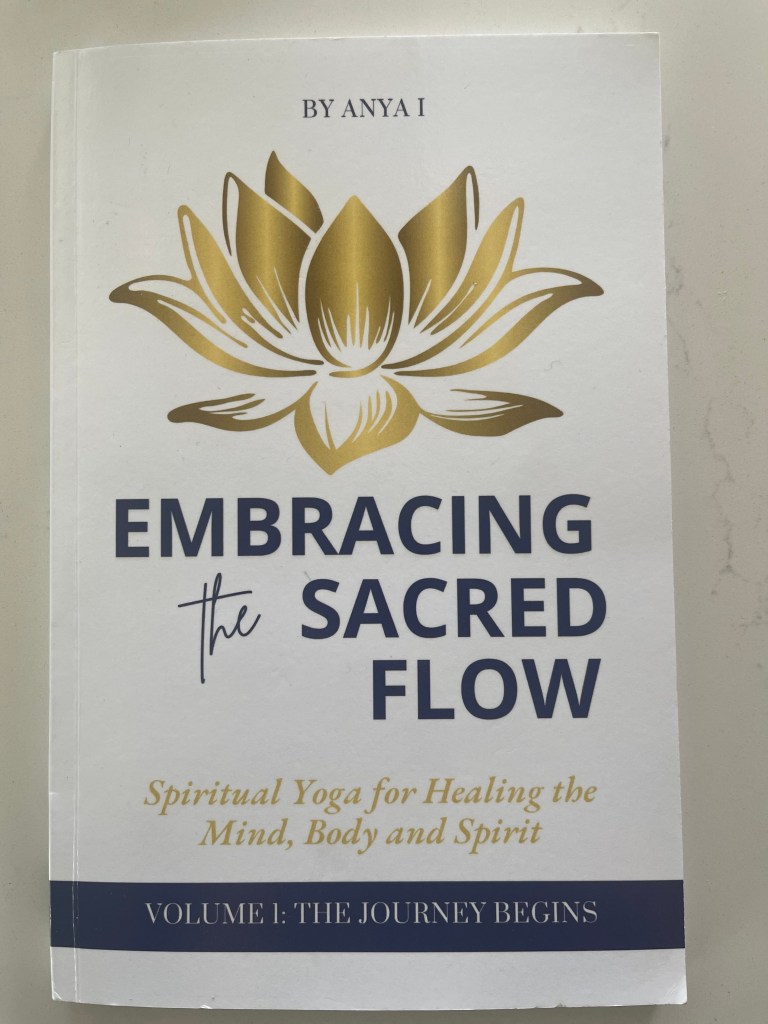
On Dec 21, 2025, I sat down with Anya, and we discussed her new book Embracing the Sacred Flow. You can find it at this Amazon affiliate link. Before we begin with the interview, I’d like to share with you the dedication:
Dedication
This book is dedicated to anyone who has ever felt broken beyond repair, lost without a sense of direction, or silently suffering through the chaos. I see you. It is never too late to reclaim your sense of self, to heal, to transform, and to set yourself free. Spirit is here to guide your soul back home where it’s warm and cozy.
Let’s dive in:
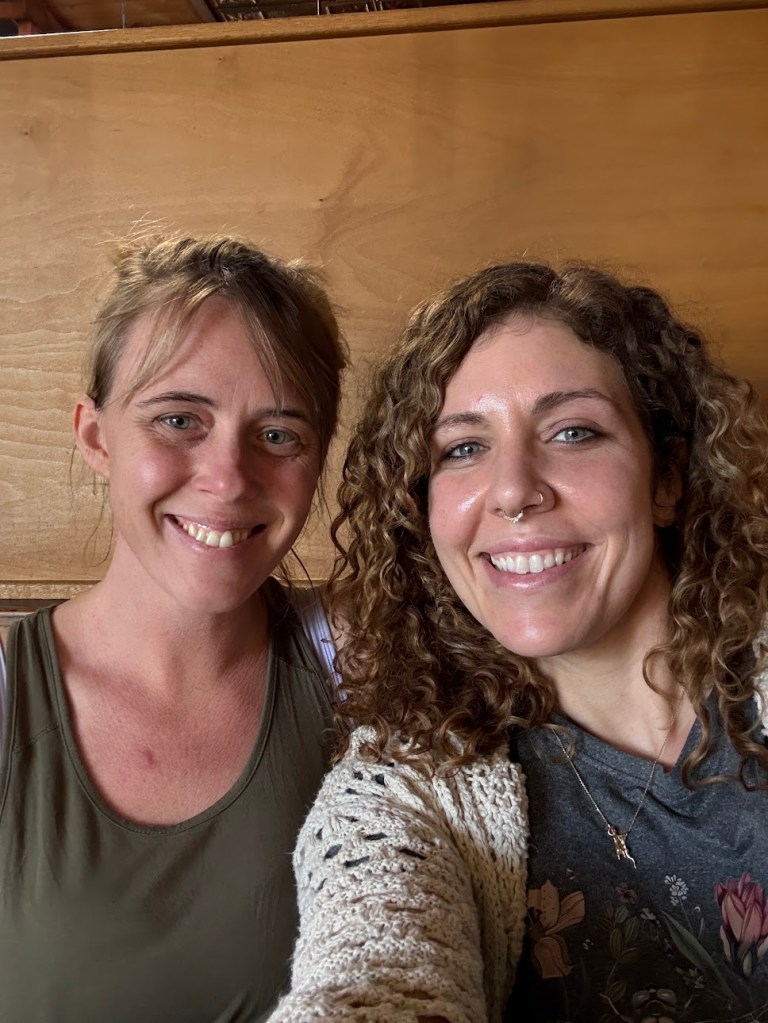
Natascha: Hello, this is Natascha with the Little Lost Forest blog. Today we will be interviewing Anya with the season of Anya and her new book, Embracing the Sacred Flow. We were sitting at the Revolution Roasters with a cup of coffee, and my son Malakai. Anya and I are doing a cross-promotion. She interviewed Spellbound earlier this month and plans to share in the next few weeks I will link the podcast here once it’s available. Anya, how are you doing today?
Anya: I’m doing so well. Just enjoying this beautiful sunny San Diego weather in December. And happy to see you, girlfriend.
Natascha: Yeah, it’s really nice to see you, too. Years of friendship has brought us here to this point where we’re both working on our businesses and our brands, and we get to talk about the different art that we enjoy. And I just so appreciate doing this with you and being here with you today.
Anya: Likewise. Likewise.
Natascha: Can you tell me a little bit about The Season of Anya?
Anya: Yeah. So basically, Season of Anya is an online community, a culmination of healing modalities that are for those of us who are looking to transform ourselves, to transform our personal identities, to maybe transform our physical, mental, spiritual health and finding ourselves. Typically, it’s a journey for those of us who are interested in spirituality. My main healing modalities with The Season of Anya are yoga, magick, and witchcraft. Yoga is for grounding. Magick is for finding that love for life. And then witchcraft is the ritual. It is the practice that ties it all together. Yoga grounds me, witchcraft elevates me and magick is everything else in between. Because life is ultimately what you make it. And so many of us just really don’t understand how much power we have to change and transform. And I am bringing everyone together to give them their own tools and create a positive community filled with individuals who wish to change themselves and the world for the better.
Natascha: Yeah, that really makes me want to self-reflect and see how I could change my life for the more positive. What got you to start this healing journey?
Anya: What got me started? It all started, probably, I mean, well, I used to be 325lbs. That was not a result of just a girl who loved food, but a girl who was in a lot of pain, a lot of emotional pain. Didn’t know how to process her trauma, didn’t have the tools and resources to just feel normal. That resulted in my weight loss journey, which was my commitment to my physical health. Why physical health? Because the three of them are related; mind, body and Spirit. Right? They all interconnect, and with finding that discipline and with finding that balance within – Then yoga came into my life shortly after, and that taught me kind of how to embrace the physical practice of yoga and learning how to feel good in my body. Then shortly after that, my spiritual practice came into act, and that resulted in me learning how to live a spiritual life so I could transform, but also remain positive and free flowing and just feel better about the trajectory of my life. Because it’s been imperative for me to understand that it is me and only me who’s responsible for my trajectory, not the course that others have set for me my whole life. Same goes for those of you tuning into this today.
Natascha: Yeah, I also started with yoga before I got into my witch practices. So that resonates with me as well. Were there mentors early on that helped you when you were most in pain, or did you find yoga and your spiritual practice on your own?
Anya: Oh, absolutely. There are two groups of people that I find really keen that helped me on my journey. First of all, it was Mel and Kaleo from Rebel and Muse. My friend Kristan invited me to their yoga retreat back in 2018, and from there I realized…how messed up I was. If we’re being perfectly honest. Yoga retreats are so awesome and empowering because they remind you that you’re in a safe space to simply be yourself. That experience slowly started my self-awareness, self-reflection journey of, “oh boy, my normal, is not everybody else’s normal”. So, that kind of was an awakening for me. With that, especially with feeling comfortable in my body and just having kind of that mirror of reflection on me help set the stage for the inner work ahead. Then shortly after I met who would become a huge mentor of mine: Taren S with the House of Witchcraft. She opened the Witches Cottage out here in San Diego, and I got to dance around the bonfire with her and our coven out there for many moons. Through that, I learned spirituality, I learned accountability, I learned healing, I learned what it was to take care of myself and to empower myself, but also how important community is and how we are truly in it for one another.
Natascha: Yeah. On the subject of community, how has your spiritual and health journey changed the way that you hold your friendships and your romantic relationships?
Anya: Ooh. That’s a great question. I feel like it’s taken the people pleaser out of the scenario- for sure. I no longer wish to hold on to what’s not for me. And also with that, though, I do give all my friends the benefit of the doubt through open communication and through being vulnerable and being communicative. I mean, the ones who get it, get it. If I bring up an issue with a friend and be like, hey, what the heck? And they respond- that’s the kind of people I want in my life. I find that romantically, it’s been awful because I realize a lot of partners don’t want to do the work, and it’s hard, especially being at this point in my journey and single. Well, I need somebody who’s at least going to match where I’m at.
Natascha: Well, that’s really important for young folks and for women of all ages to hear. We so easily will go along with what partners want from us because we want to appease them, or we don’t want to be by ourselves. By holding your energy and by being an empowered woman, you’re holding boundaries that maybe some of us put down just to get along with others.
Anya: You know, for better or worse, I sometimes- I feel like I have nothing else to lose. I’ve had some pretty horrible life experiences and with that, you know, has come strength, especially my romantic relationships. And it’s like, ‘Hey, I’ve got nothing to lose,’ so why not walk in faith and see what happens and see if I can actually stop limiting myself and create the life I deserve.
Natascha: Before we get into your book, did you want to tell us any more about The Season of Anya? What kind of content you put out, or products or things that people can engage in?
Anya: Sure! So the Season of Anya is the main hub. I’m really passionate about my free monthly newsletter. So, to those of you tuning in to this, I highly recommend you check that out. That is the heart of my blog. Uh, I know that newsletters are so outdated, but that’s where I share my monthly tips, and not only just that, but also shine light about being in tune with the world around me. I have very cute little witchy stories, I share that are just true moments of surrendering to the flow, and I love sharing those stories, and they often bring a laugh out of my audience and give them opportunities to reflect and connect. So, definitely, definitely- check that out. Then I’m also working on YouTube and social medias and trying to figure out my flow and grind with that. But it all centers back to The Season of Anya community, where ultimately, I’d like to host witchcraft retreats. In fact, next year with my friends at House of Witchcraft, we are co-hosting a retreat in New Orleans in July because I want to give that experience of retreats to the rest of the community, so you too, can learn how to open up and feel safe and vulnerable in a protected environment, an empowering environment and find yourself again.
Natascha: Yeah, that sounds like a great community experience. Does your lineage come into play with your practice?
Anya: Ooh, Great question, actually. It has been for sure. So, I’m Italian, American, first generation, and with my lineage being Italian is so much there’s so much witchcraft actually associated with Italian culture. And it’s just so funny because it’s this interesting connection of witchcraft meets Catholicism. And that was actually understanding my Italian roots, even connecting through the Italian Goddess Aradia and other deities, but specifically, she has really just connected me to the essence of who I am as an Italian American witch. And it has been a really cool journey.
Natascha: All right. Thank you so much for sharing that with us. Here I am looking at Embracing the Sacred Flow. What inspired this book?
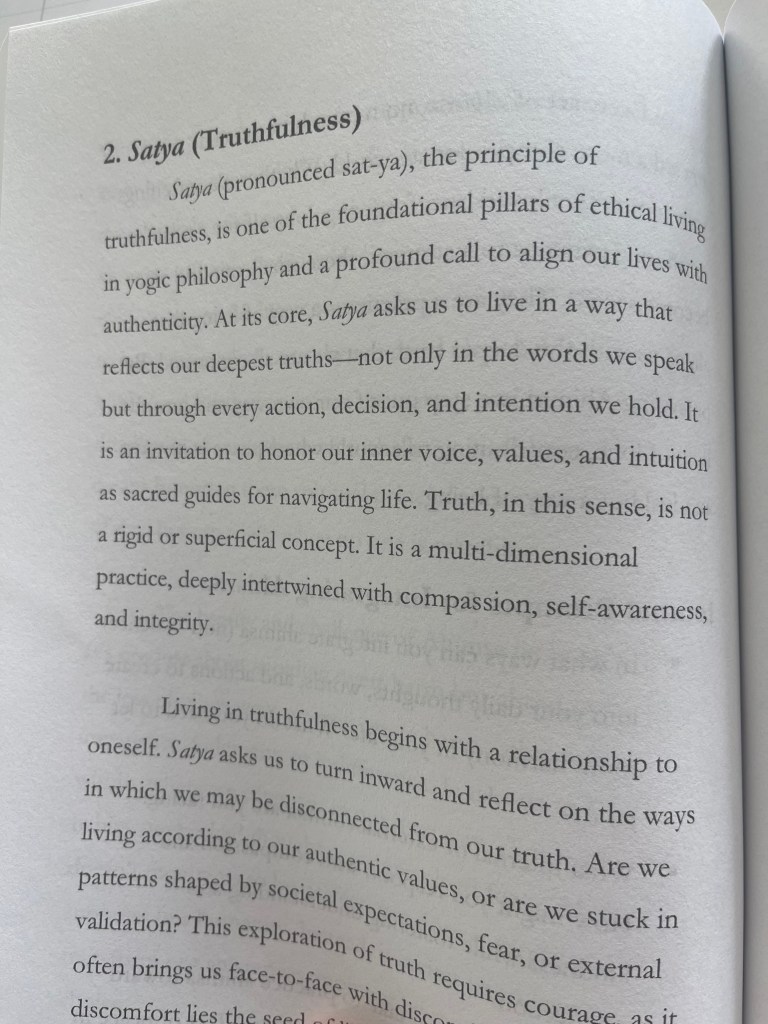
Anya: Well, you know, as somebody with really chronic anxiety and an addiction to over productivity and not learning how to just be present in my body, yoga has been a really crucial component for not only my healing journey, but also my life journey. This book kind of just goes over [that]. It’s going to be a multi-volume series. I wanted to give my audience something that’s really easy to read. I mean, honestly, you can read this in an hour or two, and it’s something reflective that gives you prompts for going inward and just kind of tips to get through your life. I talk about some breathing exercises in there. We talk about yoga philosophies, and I talk about learning how to be comfortable and being in tune with your body. Because especially if you are on the path of a witch, learning how to flow and just feel connected to yourself will always, always, always be your saving grace. It’s your anchor. It’s your life force. I’m really proud of it. I’m happy with this content. It’s a start of many, many books to come. I’m excited for you to check it out.
Natascha: If somebody follows the practices in this book, how often do you recommend that they do the yoga, do the breathing? What kind of schedule does this look like in your everyday life?
Anya: Well, yeah. Well, with everyday life, I try to make it very routine where it’s something that you can just tap into immediately. Yes, I do talk about creating an altar and the stretches and the flows, but really, I mean, it’s almost about like micro meditations because we don’t always have time for the big stuff, right? It’s learning on how to feel comfortable and not overwhelmed in any moment. As somebody who had been overwhelmed with literally everything my whole life, this is a new me, you know? But learning how to get rid of that overwhelm and just be here and learning how to release tension in your body and feel comfortable in every moment is life changing and I want to share that freedom with everyone.
Natascha: Wow. That’s amazing. I mean, I feel like if you’re working in a cubicle or if you have children that drive you crazy, or if you’re just a student that’s trying to find their way, this book could really help create a positive routine in your life and a sacred flow that doesn’t only align with the mind and body, but with your higher consciousness and creating a healthy future for the person that’s tapping into this magic. Yes. So, what’s next?
Anya: Ooh, well what’s next? Writing wise, I definitely have been sitting on a spell jars book: Spell Jars 101 book that I just need to kind of polish up a little bit. Just put my last little touches to it. And I really am excited for this upcoming book as well. You know, it’s like, okay, we learn how to tune in, we know how to stay sacred, we know how to stay connected and this book really talks about manifestation. And it demystifies the practice, a little bit of witchcraft, of spells and workings. Because it’s not about sitting at your altar, it’s about getting out there too and doing the work. You want a better life, you got to do the work…while adding a little witchy twist to it. That makes it my own. And I feel like Spell Jars 101 takes a fresh approach that you haven’t seen in your standard witchy books.
Natascha: That’s wonderful. Thank you so much for being an outstanding witch, doing positive work, light work, spiritual work, tuning into the body, soul, and mind. Is there anything else you’d like to share with us before we end the interview?
Anya: No, just go ahead and check me out on my website, subscribe to my free newsletter, and I promise your life will be forever changed.
Natascha: All right. Thank you so much.
Anya: Thanks, girl!
www.theseasonofanya.com to sign up for my free monthly newsletter, blog, and be the first to know about my upcoming witchy retreats.
Le Guin, Ursula K. The Dispossessed. Harper & Row, 1974
Ursula K. Le Guin’s The Dispossessed uses literary activism to reflect on the social and political tensions of the United States during the 1970s. This anarchist utopian science fiction novel follows the journey of a physicist, Dr. Shevek, who travels from the anarchist planet Anarres to the capitalist world of Urras in an attempt to launch his theory of cross-planetary communication. Through his eyes, Le Guin examines the constructs of gender, corruption, human existence, and freedom—revealing that both utopia and dystopia are flawed systems. The resolution, Le Guin suggests, lies not in perfection but in open dialogue and exchange of ideas.
The people of Anarres—also referred to as Odonians—hold a distorted perception of Urras due to their near-total isolation. Anarres has no prisons, and its citizens’ understanding of punishment comes only from history books. Their concept of Urras is shaped by distant memory and political myth. As Shevek observes, “You heard it: detest Urras, hate Urras, fear Urras” (41). Their fear and contempt arise not from experience, but from alienation—a societal narrative built on inherited prejudice rather than truth.
Le Guin emphasizes this disconnect through the story of Odo, the prophet and ideological founder of Anarres. Shevek reflects on the irony of her legacy:
“Odo had never set foot on Anarres. She had lived and died and was buried in the shadow of green-leaved trees in unimaginable cities, among people speaking unknown languages, on another world. Odo was an alien: an exile.” (96)
Even on his home planet, Shevek shares this sense of exile. His desire to travel to Urras is not born of rebellion but of curiosity—of wanting to understand both worlds more deeply and to find common ground between them.
Despite minimal contact, the two planets depend on each other for trade and survival, yet their lack of communication perpetuates misunderstanding. When Shevek arrives on Urras, he is celebrated as a brilliant visitor, but his observations soon reveal the same inequalities that plague his own society. His experiences on Urras force him to question the political system of Anarres and the illusion of safety that its collective ideology provides. He begins to see how even an anarchist world can fall into subtle forms of control through conformity and fear.
On Urras, Shevek encounters the harsh realities of gender inequality, economic disparity, and human suffering—from the poor conditions of hospitals to the fragile survival of children. His invention of a communication device becomes a symbolic act: a bridge not only between worlds, but between ideologies. By reopening the flow of information, Shevek helps both planets see themselves more clearly.
Le Guin’s work continues to inspire me as both a reader and a writer. Her exploration of imperfect societies encourages me to build realistic worlds in my own fiction—worlds that mirror our own struggles between freedom and control, justice and comfort, idealism and survival. Like Shevek, I am drawn to explore communication across divides, and how connection—through art, science, or empathy—can dissolve the barriers we construct between “us” and “them.”
In my MFA class at Antioch University Los Angeles, The Uses of Invented Language, Redefined Language, and Foreign Language as Tools for World Building, taught by Rita Bullwinkel, we explored how writers can make language their own by inventing it, subtly altering familiar words to create emphasis, or redefining their meanings entirely.
For this exercise, each writer was assigned a familiar word and asked to redefine it within a fictional world—allowing its meaning to emerge through story rather than explanation. The goal was to let language quietly shape the rules of the world and the limits placed on its characters.
The word canoe was assigned to me. (I offered the word triptych to my partner.)
In this piece, canoe is redefined as a place a woman goes alone to give birth—a space of autonomy, danger, and taboo. Once she enters, no one is meant to follow.
Below is an excerpt from that exercise.
This piece takes place in an imagined world and does not represent any real cultural practice.
Canoe (Excerpt)
My feet hit the ground, brush, and sticks, stabbing the soft cradles of my soles. Through the long grass, I saw the floating structure ahead—a long form with a narrow entrance. A fire burned inside it, smoke slipping upward through a small chimney at the back, surely lit by the swamp witch who knew the intentions of my arrival.
I could hear Agatha screaming from afar.
“Jefferson, Jefferson! Wait, my darling—please don’t do this alone.”
Her voice was desperate. This would be her twelfth delivery—four sons, seven grandchildren—and none of them had been born in the canoe. None of them until this one.
My body ached, and a cry escaped me. My stomach clenched in agony. My water had broken long ago, and I could feel the baby pressing downward.
Why didn’t I come sooner? Why didn’t I listen to my intuition? Now it was almost too late.
Agatha had fallen into a deep depression after my husband’s sudden death. She was weakened by grief and fatigue and could no longer keep pace with me.
The ground shifted to wood and rattled beneath my weight. When was the last time anyone crossed this bridge? Surely it was Jagara—the young nymph who once danced in the trees for play, until play led her into the shelter of the canoe.
“Don’t!” Agatha screamed.
I paused at the edge of Siskou Lake, breathing in the stillness, the warm yellow and inky sunset smeared across the water’s surface.
Inside, the canoe was dark and narrow. I followed the fire’s glow, forcing my body through the tight squeeze of mud and hay adobe. At the far end, the space opened into a wide chamber with a rounded ceiling. The hearth fumed softly, smoke slipping through a small vent toward the heavens.
Now the villagers will not choose how this baby enters the world.
I will birth my child here—despite the risk—and from this place, we will grow within our community without being controlled by a system.
McNamara, Miriam. The Unbinding of Mary Reade. Reprint ed., Sky Pony Press, 2019.
The Unbinding of Mary Reade is a historical fiction novel about a transgender pirate named Mary, who lives as Mark and joins a crew led by Captain Jack. Jack’s female companion, Anne, takes a romantic interest in Mark, and their evolving relationship becomes the heart of the story.
Mary’s life of disguise begins when her mother forces her to live as a boy in order to secure her grandmother’s inheritance, binding her chest with a sheet to conceal her gender. Over time, Mary becomes accustomed to being perceived as a man and develops fluid attraction, forming a close relationship with a servant named Beth. When Beth exposes Mary’s secret, Mary is forced to flee and eventually takes to the sea. Living as Mark the pirate, she earns respect among the crew—but her growing affection for Anne threatens to expose her again. When Anne learns the truth, she expresses a desire to bind herself and live as a man as well. Mary warns her of the hardships that come with this life, but Anne insists that being a woman in the 1700s is far worse.
In this annotation, I explore some of the controversial and allegorical themes McNamara weaves into her narrative—many of which still reflect social struggles in our world today. The novel uses historical fiction to examine class systems, gender identity, and freedom through a lens of political allegory.
One passage captures the novel’s commentary on class inequality:
“If only everything worked that way.” If only Granny had just double what Mum did. If only Baas had double what his sailors did. “Imagine if the king himself could only have twice as much as the poorest beggar. That world would be a different place.” (75)
Here, McNamara critiques the imbalance of wealth and power by imagining a world where those in authority could earn no more than double their subordinates. This reflection feels remarkably relevant in today’s world, where similar inequalities persist across class lines.
Later, a heartfelt conversation between Mary and Anne highlights the struggle for autonomy and freedom, particularly for women and those living under oppressive rule:
“You’re never free, so long as you’re subject to someone—to a captain, or the crown, or whatever good-for-nothing man decides to lord over you.” (82)
This line resonates deeply with the current political climate. Though America was founded as “the land of the free,” modern politics challenge that promise. During Donald Trump’s presidency, many saw the erosion of democratic norms—the undermining of separation of powers, the targeting of free speech, and the questioning of birthright citizenship. McNamara’s words remind us that freedom must be continuously protected, and that systems of control—whether monarchies or modern governments—can threaten that ideal.
As a writer, I am inspired by McNamara’s ability to weave political allegory into personal narrative. I aim to do the same in my own work—addressing tyranny within communities, advocating for women’s rights, championing LGBTQ+ acceptance, and encouraging open dialogue across divisions. In my fiction, I want to support characters who use zie/zir/zirs pronouns, model resistance against unjust authority even at great personal risk, and portray diverse people working together to rebuild communal, earth-centered lives.
Through The Unbinding of Mary Reade, McNamara demonstrates how storytelling can both preserve history and challenge it—reminding us that identity, justice, and freedom are battles that transcend time.
On November twentieth, around nine in the morning, Natascha and her family friend, Sam P, met with Satya at Ramone’s Bakery and Coffee in Eureka. Their conversation became a deep dive into Satya’s history in the healing arts and the many ways she serves the community as a facilitator of sound baths, microdose offerings, yoga, reiki, and tuning fork sessions. Satya has brought peace of mind to many by offering a safe space to release, recover, nurture, and learn how to move through life’s challenges with greater ease.
As we enter the winter season, we invite you to explore the power of sound healing and discover how giving this practice a chance can enhance your life in the most positive way.
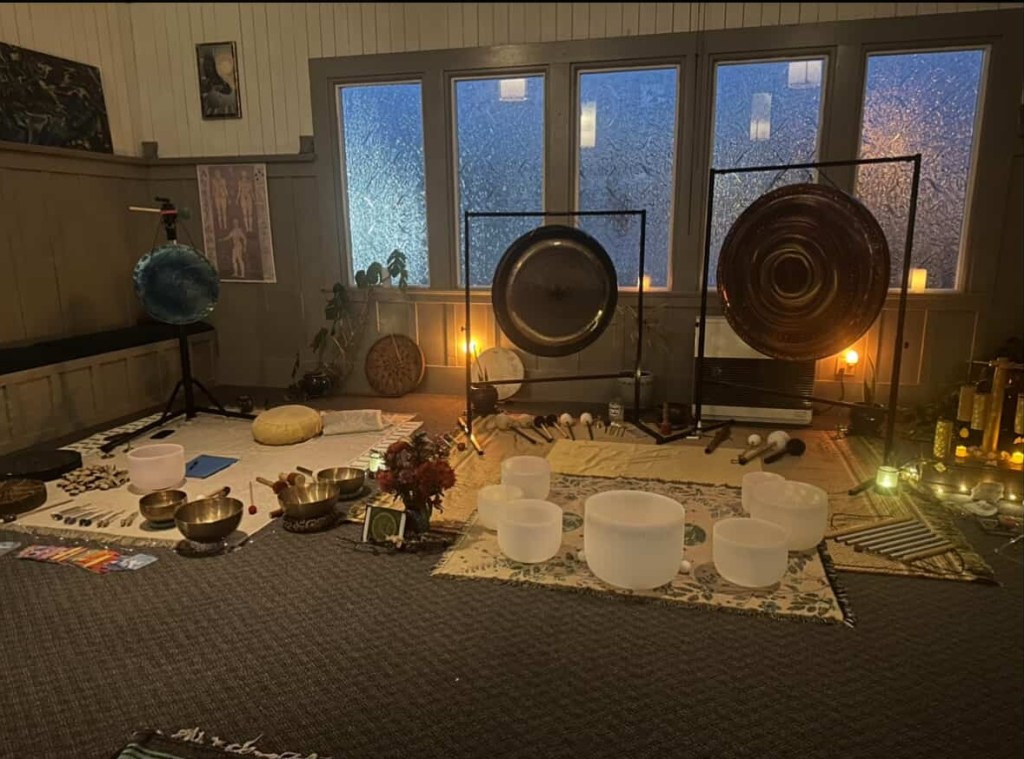
Natascha: Good morning Satya. Thank you so much for joining me today. At Little Lost Forest we’re always honored to highlight local healers, artists and visionaries. And today we’re in for a special treat. Humboldt County sound healing artist Satya Earth, founder of Satya Healing, is here to share her journey, her craft and the heart centered intention behind her work. I first discovered Satya during one of her sound healings and mushroom microdose sits. Over the course of about 90 minutes, a small mushroom microdose, gentle yoga and closed eyes opened the door to a vivid inner landscape. The soundscape she and her collaborators created carried me from the depths of the ocean to a fairy lantern forest, and eventually into the far reaches of space. The magic she facilitates comes not only from the instruments she uses, but from a deep well of knowledge, intuition, and care. Today we dive into that magic, its origins, its purpose, and the person behind it. Can you tell us a little bit about yourself?
Satya:Thank you for having me here. It’s really great to see you. A little bit about myself. I’m a mama of two little ones. They are my whole world and have been a driving force for my evolution in the landscape of sound healing, energy work and working with medicine. My background comes from psychology. I majored in psychology and got my bachelor’s in 2014, and from there I decided to branch out and study different forms of holistic healing. I studied yoga and herbalism, energy work, and sound healing, and have now branched out into the realm of working with psilocybin.
Natascha: Yay! Thank you for sharing. When did your journey with sound healing begin?
Satya: I attended my first sound bath with Jen Madrone back in 2017, and that was an initiation into the world of sound healing and experiencing. Noticing where I was in my life at that time.
Sound healing can stir up a lot of things for us, especially if we’re just beginning the journey. Throughout the years, I’ve gathered tools to support integrating the experiences and emotions that arise when receiving sound healing. This has helped to make it easier to understand and navigate the things that come up. It can really bring up a lot of stuff. Like old stories and thought patterns. Bringing them forward to be acknowledged and felt. It was a beautiful introduction to getting to know myself. The stories that I hold and how to how to work with them and how to transform them. In 2021 was when I bought my first gong and that was inspired through the birth of my second daughter. I had a very challenging experience with postpartum depression. In a place of desperation to not return to pharmaceuticals, I searched online things that could help my nervous system and help with depression and anxiety. Sound healing was the first thing that popped up. I was reminded of my experiences with Jen and decided to take the leap to purchase my first gong.
Natascha: That’s beautiful. I really love how you worked against the postpartum and found natural ways to heal instead of falling into it. Did you have any mentors or influential teachers along the way?
Satya: Absolutely. My number one mentor, her name is Josie Bravo. I met her when I was when I was in a hospital. I had a really hard adolescence; childhood. She met me at some of the hardest times in my life. I’ve known her for 29 years now. She has been a guiding light and I wouldn’t be where I am today without her support.
Natascha: Wow.
Satya: She’s been a really big influence. Like a guardian angel for me along this path. My other mentors are Jen Madrone. She’s an incredible being, here in Humboldt County. I’ve studied Reiki II and my Master Reiki course with her. A couple other influential teachers are Eileen McKusick. She’s the woman that discovered tuning the human biofield. I love blending my own interpretation of her teachings into my sessions. I scan the field with a tuning fork and listen for different sounds and that resonate from the tuning forks to let me know where there is perhaps some stuck energy that can be brought into coherent energy. Another incredible teacher that I haven’t had the opportunity to learn from yet, but I’ve heard great things of his name is Mike Tamburo and he will be here in Humboldt County in March 2026.
Natascha: What will Mike be teaching you or working with you?
Satya: He’s a gong master. He’ll be doing three day long class for a few days. And we’ll be learning different techniques and styles of how to work with sacred healing instruments, mainly gongs.
Natascha: During your sessions, there’s usually other people in the room that are playing the instruments along with you or offering the mushroom micro-doses. Who do you choose to collaborate with for your sound healing sessions?
Satya: I just collaborated with Fallon Orr. We had a beautiful offering where we offered microdosing, yoga nidra and sound healing. It was a different space from the class that that you attended. More stillness and opportunity to reflect in that stillness. It was very supportive for rest.
I just received my certification as a psychedelic facilitator through Emerald Valley Institute. After sharing medicine in the community for nearly 4 years, I decided I wanted to learn more about the history, culture and varying approaches to holding ceremony in psychedelic spaces. Another person I have worked with is Michiah Tobin. She’s an acupuncturist based out of Fortuna. I love blending multiple modalities together for a transformative intentional experience.
Natascha: Well thank you. How do these sounds and frequencies impact your participants?
Satya: That’s a great question. Each person and how they experience sound is very unique. And each session is very unique. Some of the things that I have noticed participants experience would be emotional clearing and release. I’ve heard some really good feedback on how people will come into a session feeling highly stressed and overwhelmed with life and would leave with a new state of grounded clarity. The beautiful thing about sound healing is that it creates neural plasticity and neurogenesis. By approaching your session with an intention this offers us an opportunity to see, feel and think differently about the things that we’re experiencing in life. And like you said, when we’re in this space there are visuals, there’s feelings of floating. It can be a psychedelic experience without the medicine, with the things that we see and that we feel. It offers a place of deep rest for the nervous system.
Natascha: Absolutely. I definitely found a release for my anxiety when I go to your sound healings and I feel really well going back into the world, more prepared. Your vocal work is especially moving where you learn to sing? What language or tradition are you drawing from?
Satya: I’ve been singing since I was three. Song has been a part of my whole life. I was in choir for eight years, and I was in a band for a couple years. Interestingly, I always felt nervous. And to this day, I still feel some nerves before I sing. But, after I traveled to India back in 2014, I was studying yoga there and we learned a lot of mantras and Sanskrit prayers. It is in this place of prayer that the anxiety dissolves and my intention of sharing song expands. I sing in Sanskrit, and the songs that you’ve probably heard are called the beginning prayer, the ending prayer and the Anahata prayer.
Our voices are our most powerful instrument, and it’s my mission to continue sharing this instrument, along with these other instruments and empowering other people to come into a place of comfort in their own body and their voice. I encourage people when I’m singing, when the sounds are going; we can hum, we can sing too, and start to vocalize because that’s how we can move energy throughout our body.
Natascha: Yeah, that’s some of my favorite moments. I really enjoy your singing, and I like that you pushed me to sing and your participants to sing, because oftentimes I don’t use my voice. It does resonate with me, and it does bring something positive out. So thank you for doing that. What dreams and aspirations do you have for such a healing moving forward?
Satya: I love this question.
Natascha: What’s next?
Satya: Yes I am so excited about what’s next.
I am creating some packages to make these experiences more accessible. After going through my psychedelic facilitator training, I really want to work with marginalized communities. Whether that means I look into what it would be to become a nonprofit or I look into fiscal sponsorship. I really believe that this type of medicine is something that everybody needs.
Natascha: Cool. I can’t wait to see where you go with it. Was there anyone who inspired the evolution of your art or an event? Possibly.
Satya: Absolutely. I had some moments to reflect on this, and the evolution of my art truthfully, has come from a place of pain and suffering and knowing that these wounds can be transformed. And I’m speaking from a mother wound that without that experience and without those wounds, I wouldn’t be where I’m at today. Having a troubled relationship inspired me to ask: how can I best show up for myself and how can I best show up for my children and for my community? How can I create this space of safety and trust within myself and within my community?
I’ve been learning different communication styles, like compassionate communication, paraphrasing and reflecting. These are all practices that I’m in a space of learning right now and eager to implement into how I parent my children and how I speak to myself, how I speak to my community and to my clients, and I’m really encouraging all of us to become more curious about how are we communicating with ourselves? How are we communicating with our loved ones? Because this is where we can we can really come together and come together in a space of safety and trust.
Natascha: I think you’re really advocating for people that are struggling, that there’s a light on the end of the tunnel. As a mother, too, there’s a lot of stress in motherhood and seeing you blossom and bloom that shows that we don’t have to be the pain of our families, but that we could create our own positive walk of life and the way that you impact your community. It loudly speaks that you walk the walk that you’re not just talk. So thank you for doing all the all the work you do with us here in Humboldt. What are your thoughts on human consciousness?
Satya: Another fabulous question, Natascha. My thoughts on human consciousness; human consciousness to me, is a state of being. I come from a spiritual and perhaps Buddhist approach where I believe that all living sentient beings from our animals to the trees to the rocks, to the dirt, to the insects. We all have a consciousness. We are all here coexisting as one on this cell of Earth. And when we can come into that place of connection, we can really start to come together in this collective ecosystem.
Natascha: That’s beautiful. How does that deconstruct the ego when you come into a mindset of a universal consciousness?
Satya: Mmm, yeah. We’re definitely deconstructing the ego and perhaps deconstructing the hierarchy of humans being at the top and everything else being below us. I know that there is definitely some advancement in technology where we are now having the opportunity to communicate with our animal friends. And it is deconstructing how we view our existence and how we view the existence of other beings in this world. It’s really powerful. We can come into this from a wholehearted space, or we can, you know, use it for power. So it’s really up to the individual and how we approach this type of technology. Language is technology too. You know, it’s like these things are always advancing. And so it’s like, who is behind this and what are our intentions behind it? And it’s how we show up and how we reflect that into our circles and into our community. And that’s when we really have that opportunity again, to come together into this collective space of awareness, which is kind of linking to that state of consciousness, the consciousness and the awareness, how we show up, how we reflect, how we have awareness of our energy and how we impact the environment around us. I feel like I could go on forever.
Natascha: I love this, I just want to dig a little deeper into it. You mentioned animals briefly. Is there a connection between your sound healing and nature? Maybe you play your music outside, or you feel a deeper connection to the earth and to the animals when you perform sound healing?
Satya: Absolutely. I have a very deep connection with the elements and with nature. When I take my gong out and I play next to that maple tree and Cheatham Grove, I’m playing for that tree and I’m playing for the land. And I just imagine this time lapse of this tree living there and all the things that have surrounded it. And for me, I just, I want to be with that tree for that moment and play the sounds. And when I play my infinity disc, that sounds like the ocean, I’m like, man, this tree won’t ever have that opportunity to be by the ocean. So maybe I could bring the ocean to the tree.
Natascha: Cool and lastly, what are your beliefs or reflections on the afterlife?
Satya: Reflections on the afterlife. I do believe that we are reincarnated. I do believe in karma. I believe that the things that we’re experiencing in this life are perhaps a reflection of the life we’ve led before. I also go between this, you know, when we die, we go into the void. We go into emptiness. No one knows. And we have access to so much information that we can decide what we want to believe. But we truly just don’t ever know. So when I think about what the afterlife is, I like to consider a lot of things. But I also don’t have a concrete belief because nobody truly knows.
Natascha: Absolutely.Do you have any advice for someone that might be depressed, anxious, or struggling in their life? How to get out of that negative spiral?
Satya: Well, there are many approaches to helping ourselves through these stagnant, dark places. The first approach that I like to suggest is, depending on the severity of it, is having a counselor or a therapist. Somebody to offer an objective perspective, somebody who will support us in our stories that we share and perhaps guide us into healthier states of thinking. Also bringing in the element of what are we putting in and on our body. And that’s not just food, that’s not just cosmetics. That includes the things that we watch, that includes the people that we surround ourselves with. That includes supplements that we’re taking. So it’s really a whole approach when we start getting into this world of depression and anxiety. I mean, we can look at our gut microbiome that’s definitely linked to anxiety. Parasites are linked to anxiety. And then when we start to go in a little bit deeper outside of the the physical being of depression and anxiety, we can start to go into like the emotional body and the ethereal body, and that’s where we can bring in these alternative modalities to help us. That could be energy work, that could be sound healing and microdosing. But then again, drawing it back into the self, it’s really about our perspective, how we speak to ourself. So again, coming into that tug of war that we experience when we’re going into this place of depression and anxiety: The stories that we tell ourselves, how we talk to ourselves. And a lot of this is linked to how we were raised and how we were talked to and how we were taught to manage these things.
Satya: In my psychedelic facilitator training, we learned about this thing called the default mode network. And when we’re born, up until we’re about four, this network in our mind is very malleable. But around the age four, we are now learning to exist in the world through the way that we are talked to by our family members and the authority around us. And those pathways start to get very rigid. And so then we start existing in that story. So when we are working with psilocybin in larger doses, we have the opportunity to do what is called a reset dose, where the default mode network gets shut down. And this is where we have access to new pathways, new ways of thinking and feeling existing, perceiving and we want to be slow with this. Whenever we’re in this place of depression and anxiety, how long did it take us to get here? How long have we been in that place? And just know that there’s no one pill. There’s no one experience that’s going to shift things. This is a practice that we have to implement and be dedicated to daily. The most important facet of that is who are we surrounding ourselves with? Who is our support system, our community, the classes we attend, the people we talk to. These are all factors to consider when we’re starting to address these symptoms of depression and anxiety.
Natascha: Coming into the winter, is there are certain practices that you do seasonally; more winter style forms of healing?
Satya: When we come into the winter. I personally think about darkness. I think about going into a place of hibernation. I think about what is nature doing? And I do my best as a single mother, to slow down. Some practices that we can do is look at how we can slow down. How we can create spaciousness and just noticing when we are overdoing. When we are doing too much and just taking a moment to step back, reflect and say “hey, I need to cancel.”
Satya: One practice that I learned recently that’s been so helpful, is tuning into our breath and tuning into what it means to clear our energetic field. When we are starting to experience that tightness in the body, or we notice we’re getting really overwhelmed and feeling frantic. Come back into the breath. Breathe through the souls at the feet.
Satya: And as we’re exhaling, we’re releasing this energy out through the crown of the head. And this is the cycle. Breathing in through the feet, coming through the center of the body, breathing out through the crown. And as we continue this breath, we’re starting to think about, I’m breathing in calm and I am letting go of any tension. I’m letting go of any chaos that I’m holding in my belly, that I’m holding in my heart. I’m holding in my brain. I’m letting that go. I’m returning it to sender. I’m returning it to the universe. And I love this practice, especially for people who are highly sensitive or for highly empathic people. People who tend to absorb energies easily. This is an amazing breath practice, because then we get to tune into not only our breath and clearing our fields, but we’re starting to acknowledge what is mine and what is not mine. What am I holding on to? Maybe I’m holding on to something that I experienced yesterday, and now it’s time to let that go. And it’s time to bring in that clearing and that self-forgiveness, so that we can have a clear field and show up for our friends and our family in a more balanced state.
Natascha: As we move into the winter, sound healing offers a powerful way to calm the nervous system, reconnect with the heart, and bring clarity to the mind. Satya, thank you so much for your time and for sharing your wisdom with our Little Lost Forest community.
Satya: Thank you so much. I appreciate you. Thank you for calling me in and sharing these moments together. Blessings.
I am looking forward to the Super Winter Moon—also known as the Cold Moon—on December 4th at 3:14 p.m. PST.
The Cold Moon is traditionally understood as the final full moon of the year and has been associated with stillness, endurance, and introspection. The name “Cold Moon” appears in the traditional lunar calendars of several Indigenous peoples of the Northeastern United States, including the Mohawk, who used the term to describe the deepening cold and the natural slowing of the world. Other cultures—such as early European agrarian communities—also recognized this moon as a marker of winter’s threshold, a time of rooting inward and preparing for spiritual renewal.
I will be offering a Grounding Ceremony at the Grove of Hecate on Saturday, December 6th, where we will honor the season by calling the Cailleach—the ancient winter goddess of Scotland and Ireland—into our practice. The meditation below is one I created specifically for this ceremony to support grounding, clarity, and connection during the Winter Moon.
If the meditation aligns with you, please feel free to use it in your own practice, or join us in person on Saturday. May this season bring deep rest, insight, and renewal.
🧊 Who Is the Cailleach?
Pronunciation:KY-lakh (the “kh” like a soft clearing of the throat) Origins: Scotland, Ireland, and the Isle of Man Domains:
Winter, storms, and the fierce cleansing cold
Ancestors, the ancient ones
Transformation, endings, thresholds
Bones, stone, mountain magic
Sovereignty, the wisdom of age
Renewal through stillness
Her imagery: An ancient blue-faced crone, tall as a mountain, with white hair streaming like winter waterfalls. She carries a staff or hammer that freezes the land. She shapes cliffs and valleys, raises storms, and guards the thresholds between seasons.
Her teaching: The Cailleach is not a “gentle” goddess—she is honest, raw, clarifying. She strips away illusion, clears what must die, and makes space for new cycles. Winter is not absence—it’s gestation, the deep dreaming that precedes rebirth.
Invoking her means:
Honoring endings
Honoring ancestors
Honoring the deepest inner knowing
Stepping into personal sovereignty
Allowing the cold to purify and sharpen intuition
She is perfect for cord-cutting, deep release, and intuitive messages.
🌬️ Grounding + Centering Ritual Script
Opening & Smoke Cleansing
(Light the sage) “Sacred smoke, we welcome you. Carry away what clings, what obscures, what weighs upon spirit or breath. Leave only clarity, presence, and the soft hum of truth.”
(Pause and let the smoke pass)
Settling Into the Body
“Please find a comfortable seat. Let your spine lengthen softly, as if a thread of moonlight is drawing the crown upward. Let your shoulders melt down your back. Let the jaw unclench. Allow the belly to soften.”
“Close your eyes if you wish, and bring your awareness to the sacrum—the root of the spine— the ancient bone where instinct, memory, and ancestry live.”
🌱 Rooting Into Gaia
“Imagine roots unfurling from your sacrum, spiraling down through the floor, through soil and stone, reaching deep into the warm heart of Gaia.
With each inhale, feel those roots thicken. With each exhale, feel the Earth rise to meet you.”
“Call in your ancestors—those of your blood, your spirit, and your path. Feel them settle behind you like a warm cloak.”
🫁 Breath Through the Chakras (Guided Visualization)
“And now that we are rooted, we come into the breath.
We will be breathing in through the nose, slowly and intentionally, inhaling for a count of four… holding the breath for a count of four… and then exhaling through the mouth for a count of six.
The longer exhale signals to the body and spirit that it is safe to soften, safe to open, safe to release.
We will use this breath as we move through the chakras — taking a few breaths in each chakra, first bringing our awareness to the energy center itself, and then breathing life into it.”
(Pause)
“Let’s practice three rounds together before we begin our ascent.”
Breath Practice “Inhale through the nose for 1…2…3…4… Hold for 1…2…3…4… Exhale through the mouth for 1…2…3…4…5…6…
Again — Inhale…2…3…4… Hold…2…3…4… Exhale…2…3…4…5…6…
One more — Inhale…2…3…4… Hold…2…3…4… Exhale…2…3…4…5…6…”
(Pause, let the energy settle)
“When we move through each chakra, you will take several breaths just like this — first feeling into the energy of the center, and then letting the breath illuminate it.”
“Now we begin our ascent.”
1. Root
“Inhale into the base of the spine. A deep red glow forms—steady, grounding, anchoring.”
Take a slow inhale through the nose, feeling the pelvic floor gently expand downward. Exhale through the mouth, imagining heaviness draining into the Earth. Feel warmth gather in the hips like glowing coals.
2. Sacral
“Let the breath rise to the pelvis. A warm orange tide moves through you, igniting creativity, flow, and sensual presence.”
Let the lower belly swell softly on the inhale like a rising wave. Exhale and imagine the water smoothing your emotions from the inside. Feel a gentle sway or natural rocking in the hips
3. Solar Plexus
“Breathe into the belly. A golden ember brightens—your power, your autonomy. Let it expand with your inhale, and soften with the exhale.”
Inhale and feel the diaphragm press outward in all directions. Exhale with intention, softening the stomach. Feel heat spreading across the ribs like sunlight breaking through clouds.
4. Heart
“Draw breath into the chest. A green flame unfurls and opens like a blooming rose. With the exhale, release anything gripping the heart— old stories, old hurts, old armor.”
If comfortable, place a hand over the sternum. Inhale as though your breath widens the collarbones. Exhale and let your shoulders melt. Imagine a breeze traveling through the lungs, clearing space.
5. Throat
“Inhale into the throat. A blue ring of truth begins to spin, clearing space for your authentic voice.”
Inhale slowly, cooling the back of the throat. Exhale with a soft sigh, releasing tension in the jaw and neck. Feel a subtle vibration at the throat—your inner tuning fork.
6. Third Eye
“Bring breath to the space between the brows. An indigo star brightens, opening intuition, insight, and inner sight.”
Inhale and imagine breath traveling upward behind the eyes. Exhale slowly, smoothing the forehead. Sense a slight pulsing at the brow, like an inner lantern igniting.
7. Crown
“And finally, inhale to the crown of the head. A white-gold pillar ignites, shooting upward into the night sky, connecting you to your higher self— the luminous, timeless version of you that has always known your way.”
Inhale and feel the top of your head gently lift. Exhale gently, letting light rain down through the scalp and spine. Feel yourself become a conduit—open, luminous, receptive.
👁️ Receiving a Message From the Higher Self
“Allow that light to pour down into you. Ask silently: What do I need in this moment? What truth wants to come forward?
Maybe your higher self cradles the inner child in the soft cavern of the belly. Maybe forgiveness rises like thawing snow. Maybe a manifestation shimmers on the horizon. Maybe a cord appears—thin, frayed, ready to be released.”
✂️ Cord-Cutting / Release
“If there is something pulling at you— a fear, an expectation, a sorrow, a person, a pattern— see it now as a strand of shadow.
With your next exhale, imagine the strand dissolving into frost and blowing away on a winter wind.”
“Feel the space that opens. Feel the light that replaces it.”
❄️ Inviting the Cailleach
“And now, we invite the Cailleach, Ancient Mother of Winter, Shaper of mountains, Keeper of endings, To stand at the edge of our circle.”
“Feel her presence like crisp winter air— sharp, honest, clarifying. Her blue gaze sees truth without fear. Her cold wind sweeps away what is dead, leaving room for what is becoming.”
“Cailleach, grandmother of storms, we honor you. Cleanse us. Strengthen us. Guide our steps through winter’s threshold.”
(Pause to let the energy settle)
🌕 Closing Gratitude + Three OMs
“Thank you, higher self. Thank you, beloved ancestors. Thank you, Gaia, for holding us. Thank you, Cailleach, for standing guard over this sacred space.”
“When you are ready, place your hands at your heart.”
Instructions for Leading Three OMs
Speak calmly:
“We will close with three OMs. Each OM is one long breath— Inhale fully, then let the sound roll out in three parts:
Aaaah… Uuuuuh… Mmmmmm…
Let the M vibrate in the skull, as if you are ringing a bell inside the body.”
“First OM— Inhale deeply… OMMMMMMMMM…”
(Let the sound fade completely before speaking again)
“Second OM— Inhale… OMMMMMMMMM…”
(Pause)
“Final OM— Inhale… OMMMMMMMMM…”
Let silence hold for a moment, then:
“Blessed be. The circle is grounded, the work is done.”
The Fifth Season: Every Age Must Come to an End by N.K. Jemisin
The Fifth Season is a science fiction novel set on a supercontinent called the Stillness. The narrative alternates between two third-person perspectives—Damaya and Syenite—and one second-person perspective, Essun. Syenite travels with her assigned mentor, Alabaster, and their relationship begins in hostility but evolves into mutual understanding and respect. Meanwhile, Essun journeys with Hoa and Tonkee in search of her daughter, Nassun. Through her grief and drive for revenge, Essun gradually rekindles her hope in others, even those of a race that once shattered her past. Damaya’s story, told from childhood, introduces the world of the Fulcrum and the deceit of the Guardians, which shapes the novel’s class system. In the end, all three main characters—Damaya, Syenite, and Essun—are revealed to be the same person, leaving readers eager to continue the trilogy in search of an answer to the haunting question: Where is Nassun?
In this essay, I closely examine Syenite’s relationship with Alabaster, focusing on the literary device of the relationship arc, and tracing the development of their connection over time. I also explore how this arc reflects Syenite’s relationship to herself across her three identities.
Syenite faces a social obligation to maintain a sexual partnership with her mentor, Alabaster. As an orogene, the Guardians have trained her to obey. Because of her strength, she is expected to breed with Alabaster as part of their mission:
“If Syen isn’t careful, if she pisses off the wrong people, if she lets herself get labeled difficult, they will kill her career and assign her permanently to the Fulcrum, leaving her nothing to do but lie on her back and turn men’s grunting and farting into babies” (71).
Alabaster’s response to this forced intimacy defines the tension in their dynamic:
“Because that’s hate in his face” (72).
From their first interactions, the reader senses an unjust world—one that both characters resist in their own ways. After their first encounter, Syenite feels ashamed, while Alabaster remains emotionally distant. Their sex continues, mandated by the Fulcrum’s breeding program, and Alabaster observes:
“I think you hate me because… I’m someone you can hate. I’m here, I’m handy. But what you really hate is the world” (149).
Alabaster knows that any child they conceive will be enslaved to power a node, “chained to a wire seat and drained.” Though the Guardians paired them for power and procreation, Alabaster instead mentors Syenite to question authority and imagine freedom. When they reach the island of Meov, he remarks,
“They don’t kill their roggas [slur for orogene] here. They put them in charge” (296).
Later, their relationship deepens when they take on a third lover, Innon. This is the turning point—their intimacy becomes mutual, and the idea of a child shifts from duty to love.
“It’s just been so long, Syen… Not since he’s had a lover he wanted” (354). This love trio embodies a sense of hope and agency: “‘Baster doesn’t want her that way, nor she him. And yet it’s unbelievably arousing for her to watch Innon drive him to moaning and begging…” (372).
Syenite’s relationship arc with herself mirrors the world’s cyclical “seasons” of disaster and calm. As Damaya, her relationship with her parents is dark:
“…and hates herself, because of course Mother and Father are selling Damaya if she can think such thoughts” (27). When she is handed over to Schaffa, her Guardian, he breaks her hand to enforce obedience, saying, “Never say no to me… I am your Guardian. I love you” (99). Her belief that “the Guardians are the closest thing to safety a rogga will ever have” (329) exposes the depth of her conditioning. We see this again in Syenite’s awareness: “…that she is a slave, that all roggas are slaves, that the security and sense of self-worth the Fulcrum offers is wrapped in the chain of her right to live and the right to control her own body” (348).
When Syenite later faces Schaffa again, she must finally say no—to end the cycle of control. Through this, the reader understands the whole arc of resistance and self-realization across her identities.
The novel’s structure allows us to recognize how Syenite’s history shapes Essun’s present. “Once you lived surrounded by the walls he built for you, in a home you made together, in a community that actually chose to take you in” (407). The rise and fall of peace between “seasons” parallels Essun’s struggle for survival. When Alabaster is taken by a stone eater and Syenite is left alone to protect their son, Coru, the irony deepens when we later discover that Hoa—also a stone eater—genuinely cares for Essun.
“But I wanted to travel with you… I like you” (396).
Relationships are central to both my storytelling and personal philosophy. Self-discovery often begins through connection with others—through those who choose to invest their time and care. This truth is mirrored in Syenite and Alabaster’s relationship: although it began as an obligation, they ultimately choose one another. Alabaster gives Syenite a glimpse of happiness and freedom she has never known—from her family, the Guardians, or herself. The relationship among the three versions of Syenite reflects the many selves that exist within every human life and how our past continually shapes our present. This lesson inspires me to write deeper, more honest relationship arcs in my own characters and to embrace how lived experience can transform the people we become.
Work Cited Jemisin, N.K. The Fifth Season. Orbit, 2015.





 Little Lost Forest