Natascha: This is Natascha with the Little Lost Forest blog. Today I will be interviewing Noelle Cox, a local Eureka legend who specializes in oil paints, gold leaf, and customized frames. Noel Cox showcased her exhibit Underneath the Surface at Morris Graves in January 2024. Noel takes a surreal and abstract approach to local animals. Fantasized creatures, glorified bugs, and self-portraits. In her sci-fi paintings, a dark humor lingers in the foreground as each piece is staged with class and elegance. It’s September 7th, around 5:00, and we’re sitting down together in her home studio.
Natascha: Hi, Noel. How are you doing today?
Noelle: I’m okay. I’m good. It’s good to have you.
Natascha: Thanks for having me.
Noelle: Thank you for having an interview with me.
Natascha: I was very excited all the way up to this point. So thank you so much for sitting with me.
How old were you when you started seeing yourself as an artist?
Noelle: Well, I think it was kind of gradual, but I think that I really got serious when I was about 16. I painted my first oil painting. Yeah, but I would draw, you know, I took it very seriously, actually. It was something I could do by myself that I could feel sacred about.
Natascha: And what was the oil painting of?
Noelle: It was kind of dark. It was a dead lady. With strings attached to it in the night sky.
Natascha: And how did it make you feel when you saw the finished piece?
Noelle: I wasn’t quite, you know, what do you call it? Satisfied with it. But when I look at it/ when I looked at it, I was like, wow, okay, This is kind of how I feel, you know?
Natascha: From what I understood, your father just passed.
Noelle: Yeah.
Natascha: I’d like to take a moment of silence in remembrance of him. What was his name?
Noelle: David Dinkfeld.
[Pause]
Natascha: I wanted to know, how has your father influenced your art?
Noelle: Yeah, that’s still something I’m trying to figure out. But I know that my dad was a very intense person, and he, you know, he had the sort of the mentality of that if your second place thats the first loser. And I was a swimmer before. He wanted me to win. Win, win.
Natascha: Yeah.
Noelle: Yeah. I think that when I pushed, you know, when I stepped back from that, because I had to. Because it was too much pressure. That was kind of a time when I retreated back into art. That was something that I could hold for myself. I would lock myself in my room and do art. I think.
Noelle Cox, Mr.Sadie
Natascha: Did you ever have any professional training?
Noelle: No, I mean. I went to; when I was seven, I went to watercolor classes that my dad took me to- my mom, my parents. I learned how to do a little bit of art. But no, I have- I tried to take a class in junior college but I’m so stubborn. I don’t want to be told how to paint, so.
Natascha: Wow. The work that you’re putting out looks like it has gone through many courses.
Noelle: Well, it takes a long time to do too. Yeah.
Natascha: How long did it take you to look at a finished piece of yours and think, this is good quality work? I’m really feeling proud of the standard of work I’m putting out.
Noelle: I think it’s more of a feeling that it gives me when I see it. But no work is really ever finished. I think mostly it’s about, for me: When I look at it, I’m just done with it. And it’s also combined with, that the image sort of disappears for me and then it doesn’t have anything else that I can add. Like disappears in the sense of not like not seeing it, but there’s nothing left.
Natascha: I love the way you phrased that. What are your favorite things to paint?
Noelle: Anything that means a lot to me. Yeah. The feeling it has to have some sort of meaning to me and something to say. Those are my favorite.
Natascha: You mentioned that you use oil. Can you expand on the mediums you use and where you source your mediums?
Noelle: I buy my oil paints from Blick and I get the Winsor and Newton. I mean, they’re not the greatest, but they’re affordable.
Natascha: Okay.
Noelle: I mean, it depends on which ones. There’s the higher end and then there’s the lower end, and I usually get the lower end.
Natascha: And then you have to use a thinner with it, correct?
Noelle: I just use the refined linseed oil.
Natascha: Interesting. Thank you. What events in your life have influenced your work as a painter?
Noelle: So many things. Being a mom, being a woman, you know, in this weird capitalistic, patriarchal culture that it seems like you can’t- it’s almost like we see ourselves as women through, like the patriarchal eye. And I think that it can be very confusing.Yeah, it’s bizarre.
Noelle Cox, I love you Zed
Natascha: Your gallery work is different than your commissioned work. Next to you is a commission of my dog Zed, who passed a year ago. While your gallery work really encompasses these fantasized creatures and the animals and bugs. How has becoming a commissioned artist impacted the way you paint?
Noelle Cox, The Fly on the Wall
Noelle: I think that what it does is it puts less- I think about myself less and I think about what other people want from me more. That’s the difference. My personal work is about my voice, about saying what I want to say. And then when you have the commission work, it’s- you’re trying to telepathically sort of connect with what another person wants out of your work, you know?
Natascha: Yeah, there’s definitely a connection there.
Natascha: What was the timeline and process like through the transition of painting for yourself and painting for others? When did you start opening yourself up to commission work?
Noelle: So that was when the pop market died. It’s not just one time. It was a gradual thing, but it happened pretty quickly.
Natascha: Yes.
Noelle: And. You know, my husband and I we grew pot and that was how we made a living. And that was how I had the time and the money to be able to do art. I think that once we lost the farm I was like, what? What am I going to do? You know what everybody says is like, well, I shouldn’t say what everybody says, but what a lot of people say is, do what you love and make money at that. And so I tried. And I don’t regret it at all. But art is a tricky thing to make money on. It’s, you know, and especially in an economy, I think the economy globally is having a rough time right now. And on top of that our area here in Humboldt is having an even worse time because of that. There’s not as much money.
Natascha: Agreed.
Noelle: Yeah.
Natascha: Has art played a healing role in your life?
Noelle: Oh, yeah. Oh, yeah. If I didn’t have it, I don’t know where I would be. It gives me stability and a voice. I would probably be an addict, honestly.
Natascha: Go art.
Noelle: Seriously, yeah. Because I’m so determined to do it and to keep doing it that I want to have the right state of mind for it. I don’t want to waste my life. I want to be able to do the best I can with what I have.
Natascha: I think you’re speaking loudly to this community. And a lot of people could gain a lot of inspiration just from the words that you’re saying now. Thank you.
I did have a chance to glance at your bio on the Morris grave site, and you mentioned that your move from SoCal to NorCal, was a culture shock that was both healing and dark. Would you say that your paintings now express your impression and self-expression of Humboldt?
Noelle: Oh, yeah. But I don’t think it’s like- I think it’s more subliminal. The culture here in Humboldt is, in my opinion, way better than down in Southern California. Southern California is very, you know, it’s about money and looks, itemizing your body and it’s very Capitalistic, cultural, patriarchal. I don’t know, it’s very destructive.
Natascha: Okay
Noelle Cox
Noelle: And up here, there’s more of- at least in the social ring that I was in, there’s more of an awareness of the goddess and more of the feminine- the feminine power, rather than down in Southern California. It’s more like you’re an object for making money and stuff, and there’s not really any power besides how you are sexualized or whatever that is. This place is a very healthy place, compared to down there.
Natascha: That really makes me wonder. Can you tell me a little bit more about your experience in Los Angeles and how perceptions of body image may have influenced your process as a painter, and what you paint?
Noelle: Yeah, there’s a lot of pain in self-image when you grow up on movies and TV and plastic surgery and all this stuff. You start to learn what you’re valued as. I think that a lot of my self-portraits are a quest to accept myself as a human being, for being beautiful the way that I am and not an item.
Natascha: Thank you.
Noelle: Yeah.
Natascha: What impact on your community do you want to convey with the message in your work?
Noelle: I think that I want people to question why. Why things are the way they are. Don’t just go with what people say. Question it. You know, we need to reevaluate our perception and our way forward.
Natascha: How does politics, governing, and even corruption play a part in your art?
Noelle: Oh, politics is greatly corrupted no matter where you go. I’m sure that it has a lot of influence in subtle ways, but I try not to concentrate too much on it because I don’t really have a lot of faith in politics. And because I’ve understood that when you’re someone who wants to be in power, a politician. Those are the people that you don’t want to have in power. And I’m not really sure how to solve that in this system.
Natascha: I think talking about is a great first step.
Noelle: Yeah.
Natascha: How does fun and play interact with your art and processing?
Noelle: I used to have more fun. I think the trick is to not be married to your ideas so tightly and to try to let loose. When you get an image done, to not hold so tightly to it. If it’s not working, let it have room, and that’s the play. But it does take discipline too. And then sometimes I have good days where I’m painting and I’m just like, yeah, this is great, you know, and I do like a little jig or whatever.
Natascha: And then others, you don’t.
Noelle: Yes.
Natascha: Every time you see people painting on social media, they look so happy. And sometimes when I paint, it’s like, fuck, shit.
Noelle: Oh, yeah.
Noelle Cox
Noelle: Well, I mean, that’s like at least half of it. You know, it’s a lot of frustration and it’s a lot of work. And I think that one of the things that a lot of people who don’t paint don’t realize is- that I think a lot of people think that painting is just like this happy go lucky. You know, you just poop out of product without any like, you know, effort. But it takes a lot of effort and a lot of commitment and a lot of times, a lot of times it is very consuming and frustrating. And it’s a lifestyle, really.
Natascha: Wow.
Noelle: Yeah.
Natascha: How long does it take you to paint a painting?
Noelle: Well, I think it depends, but for this one, it takes. I think it took about 25 days of full, full 25 days. Not including building the frame and working the image, like going, okay. I’m going to work with this image and then you dream on it and you think about it and you kind of formulate it. And that takes time too. It’s more just like a subconscious time. But yeah, it consumes you, you know? It’s the way that I live.
Natascha: You’re very generous with the way you value your art, the way that you offer to others. Thank you. Thank you for putting all your time and effort into it.
Noelle: Yeah. You’re welcome, very much.
Natascha: How do you know when the painting is done?
Noelle: When I’m just done, [laughter] I mean, I don’t know. Yeah. That’s a hard question. I mean, when it sometimes a painting will start to become invisible to me, as in, not like I can see it, but it’s not- I’m not feeling it anymore. And I think that’s kind of when it becomes done is there’s nothing else I can add.
Natascha: What motivates your color palette?
Noelle: I love warm colors. Um, you know, but blues are not my favorite. Um, but I love the sky. You know, the sky blues are- When you’re painting a sky, you got to use blue but I, you know, my favorite colors are red, black and gold.
Natascha: Cool. Who are some of your favorite artists?
Noelle: You know, I don’t really look at a lot of art, honestly. I think that a lot of people are artists that don’t create art. I’ve gone through my different, like, I like Klimt. But lately, the artists that I’ve been really inspired by are people who have been doing research and, you know, creating ideas of a reality that we don’t see in what we’re taught in our culture. You know, like Marija Gimbutas and Vicki Noble and people who are visioning a different reality, a different future for us. That’s important. It’s very important.
Natascha: What work of art that you’ve made are you the proudest of? And can you tell me in depth details about your processing?
Noelle: I think- I’m not sure about proud, but I guess, I don’t know, probably Beneath The Veil. The cross one. That was the most- it took a while, and it was the most involved. It took a lot of [pause] looking inside about how I’m feeling about all this and what it means. How I’m feeling about the signals I’m getting from- throughout my life. With that one, because I used to have, like, sort of a vague image that would come to me and then I would create a frame around it. But with that one- I had to make that cross frame. And it had sit in storage for a good year or two until I finally formulated what needed to be on it. And that’s usually what I do now, is that I create different shapes.
Noelle Cox
[Recording got interrupted.]
Noelle: Yeah, the actual frame. Because I like to create frames that are different sizes or different shapes and stuff because I get tired of painting in squares and rectangles. The different shapes actually conjure different feelings for me. And so that’s an avenue that I can work with.
Noelle: That one was in storage for a while and it took a little bit. Well, a little bit, it took probably about a year to actually really be… Honest with how I’m feeling. I mean, I’m really good at being honest about things, but you have to let things, solidify and coagulate and then you start working with the image and drawing it on a piece of paper and kind of working through the different symbolism and what it means to me and how people might interpret it. So, there’s a lot of cerebral stuff. You have to kind of be in touch with your subconscious. I’ve been learning more about the things that I didn’t learn in public school or just the culture in general, is that there’s quite a bit of subconscious stuff going on for everybody. And I try to, you know, use my intuition and to go into that route of subconscious.
Natascha: Would you say it’s a joint subconscious? Is this something that you feel on a communal level?
Noelle: I think.
Noelle: The older I get, the more I realize that it’s possible that I have sort of empathic, or I don’t really know what that is, but there’s signals and it’s hard to- it’s hard to know. What it is. But I think that there’s communication and there’s like, I just have to say what I’m feeling, I’m still trying to figure this out [head scratch.]
Natascha: Sometimes I like to think that it bubbles out. It comes up to the surface and-
Noelle: Just.
Natascha: Comes out.
Noelle: And that’s the way that I can- or that I feel like I can. That’s my voice. I feel most confident being able to communicate through painting, through imagery.
Natascha: Lovely.
Noelle Cox
Natascha: If you had a message you wanted to share with emerging artists, what would it be?
Noelle: I think it depends on what kind of artist you are.
Natascha: Okay.
Noelle: People want, you know, neutral, beautiful images, and they’ll buy them. But there’s not a lot of money right now. I think that part of an artist’s job, if you want to make money at it, because I don’t, you know, I make a little bit here and there but it’s connections. You have to be social. You have to socialize in a group that has a lot of money. But at the same time, a lot of people who have a lot of money. And I’m not saying everybody, but a lot of people who have a lot of money, they’re not going to- You’re kind of a toy. You’re something to play with. And I mean, not saying that with everybody, but they launder money through it and, you know, it’s a whole game. But yeah, it’s not. Anyways my advice is to be careful and to listen to yourself, your inner self and what it is that you want out of it. Because this world is full of givers and takers, and there’s a lot of takers. And you have to be careful and to not don’t dishonor yourself. Yeah.
Natascha: What upcoming pieces or exhibits can we look forward to see from you in the future?
Noelle: I don’t have any personal work shows coming up, but I do have the mounted prints that I make. They’re going to be shown at the Humboldt Herbs Herbals this November and December and then in Arcata, at the A to Z, I care. Yeah.
Natascha: The same pieces?
Noelle: I’m making a whole stack of mounted prints.
Natascha: Well, thank you so much for your time today. I’m happy to take home our commission piece. I love you, Zed. My family’s 12-year-old terrier passed away in the summer of 2024. Below is Noelle Cox’s oil on canvas painting and Zed’s obituary. Thank you so much.
Noelle: Thank you so much. So much.
Noelle Cox
Zed’s Obituary
I met Zed in February 2016, the first night I stayed with Jeremy in the Tarzan house in Oceanside. We watched Courage the Cowardly Dog, and Zed had his precious tennis ball. Jeremy drew his pointer finger along the horizon, and Zed nudged the ball with his nose, following Jeremy’s line. I remember Jeremy having a profound connection with his dog, and I thought if this guy is that good to his dog, he will be that good to his woman. Zed always loved to lick face and bark at squirrels. On long car rides, he would get excited over the cows. No matter where we went, Zed was always a good guard dog, friendly to cats, a cuddler, and licker. When it was just Jeremy, Zed, and me living in the tent, Zed would sleep curled against my belly, and I imagined him as my baby.
When I moved in with Tallulah in her LB apartment, Jeremy followed shortly after, and Tallulah was nervous to host Zed with her two cats. But Zed was really good with the cats, and she grew to love Zed. On our wedding day Zed walked with Orion and I down the aisle. Everyone thought it was rehearsed, but Zed just knew, knew that the day was something special, and when we got down to the stand, he stood post at Jeremy’s side. I cannot imagine the sense of loss Jeremy has; their bond was unbreakable. Every day with Zed was absolutely beautiful, full of love and care. He was an emotional support dog for me and kept me calm and supported while I went through hard times. He was an emotional support dog to Halaya as she transitioned into a new home with a new mother figure, and he was by Malakai’s side from the moment of birth. Zed went on lots of walks, he ate lots of good meat, and slept in our bed every night. I got to spend his last night with him against my belly; after we’ve gotten so far together, into a home, a family, our babies. Jeremy got to spend Zed’s last moments with him, watching the sunrise. I wish I could spend a million more nights with Zed, a million more walks, a million more face licks, but he’s in a better place, and I am grateful for the memories we had. I love you, Zed.
Natascha: This is Natascha with the Little Lost Forest blog, and I’m thrilled to be here today with abstract mixed media artist Sam Pedisich, who is currently showcasing his work at Gallery Cor in Asheville, North Carolina. Fun fact Gallery Cor takes its name from the Latin root “cor”, meaning heart and courage, which feels like a perfect reflection of Sam’s work and artistic spirit. Sam and I are connecting over Zoom today. He’s at his home in North Asheville, North Carolina. It’s 130 in the afternoon, and I’m here in Eureka, California. And it’s 10:30 in the morning. Sam is not only an incredible artist, but also a former middle school teacher of mine from the Environmental Resources Academy. We call the ERA at Guajome Park Academy. He’s been a close family friend of mine ever since. Hi, Sam. How are you doing today?
Sam: I’m great. Thank you. Natascha.
Natascha: Alright, let’s jump into it. I read in your bio on Gallery Cor’s website that you have an avid history as a motorcycle rider, teacher, having served a jail sentence, a youth boat builder, instructor, and so much more. Can you please touch on some points of your expansive history?
Sam: Wow. I think a common thread is being outside, and it was important to me that that when we were working together at Guajome Park Academy, I think you were in the seventh and eighth grade, that that it was outside and we, we experienced the elements and I’ve always tried to look for that. So, my current job enables me to, to see all of what nature is doing now that I’m working on tugboats for the last 12 years. I think the key point with everything about my career path is that I’ve always tried to be outside and encourage other people to be outside.
Sam Pedisich Mixed Media
Natascha: That’s lovely. I know I’ve enjoyed the hard lessons we endured in middle school, up on the hill in the sun. I don’t remember too many times in the rain, but definitely there might have been a couple of camping trips we’ve done and diverse weather. How old were you when you started seeing yourself as an artist?
Sam: I made a pretty firm commitment when I was probably about eight, that I wanted to do what I saw in the Chrysler Museum in Norfolk, and I was most attracted by, um, highly textured, probably what might have been the 50s abstract expressionist movement that was going on. And I managed to get in that museum about once a month, it seemed, because it was free, and it still is. And not that big, but global, important pieces in there worldwide throughout history. But the modern American stuff really fascinated me. And I noted that acrylic, which I’d never heard of, of course, was what the paintings were made with. And they sold those paints in the museum gift shop. And the more I think about this, the more important I realize my mother was and how she raised her four kids. I asked for some paints, and she bought some acrylic paints from the museum gift shop, which probably was four times more than it could have been. But over the years, the two of us figured out what kind of bulk we should buy. And like, I needed a lot more white and black and that I could mix colors so we didn’t need to buy a 36 color set. But she would respond pretty quickly if I told her I needed a canvas. I was typically painting like, you know, ten by 20 was big to me.
Like, I remember being 13 or 14 when I painted maybe a, a 24 by 30. And I thought that was huge. And I actually just sold that last year. It was a puma that I painted between my eighth and ninth grade in 1977. And that was oils and oil paints expensive. And, um, you know, I would use a tube of, of any given color for one painting. And it’s just remarkable that my mother figured out how to keep me in, in supplies. So, when I think I was in the early fifth grade, beginning of fifth grade, we moved and at that point I told my mother I needed art lessons. And the art at school was- was essentially playtime. And later on in high school, I was fascinated by my fellow students who were in legitimate art classes. But I was very I was interested in electives like band and music and sports. So, I didn’t I didn’t take any academic, public school or even private school, um, art classes or in college either. So that’s why Gallery Core owner, Leslie Rowland, calls me an outside, outsider artist. But that doesn’t mean I’m not. I’m not attuned to the academic traditions. My wife Erin jokes that I’m an outsider artist because when I’m painting something big in the house, she says. Can you take that shit outside? So, I knew when I was eight that I was going to paint.
And when we showed up in North Florida in the boonies, I don’t know how she did it, but my mom found a painter that was just a couple of miles from the house that, had lessons and a small studio that he had. It was a busy little hub for the county for all kinds of artists. And I can remember one named Brita, Brita Hobbs, who was, quite, quite, quite effective in what her vision was. She painted the realistic scenes of the rural South, but also some African animals. And she had she had a predilection for how to present an animal in a way that you wanted to hang it on the wall. And my, my mentor teacher was Jean Barber, and I, I know that he charged $5 every Wednesday, and I was probably there for anywhere between 2 and 3 hours once a week until, let’s see, that would have been fifth, sixth, seventh, eighth, ninth grade and then 10th grade. I went to Catholic school for a couple of years and missed him. Then I went to college in Jacksonville, not far from where Gene Barber Studio was. But he would come out to Jacksonville once in a while because he had some studio friends and some collectors closer to where I was going to college. So maybe once a month I would get on my motorcycle and have a rolled canvas or something, or I’d get one from his, whatever art store he was giving a lesson in, and I would show ad hoc, show up and enjoy his company, and have him coach me with whatever I was working on.
I can remember how he introduced me to palette knives, and I thought that at that point that I was a demigod because I could swing paint around on the canvas. And I like looking back. And I can honestly, truly, totally remember some of those palette strokes that I’ve made when I see some of those works from now. And I actually have a bodily central nervous system memory of those swipes.
So, I don’t I don’t know if you decide that you’re an artist or creator. I just think that, um, this term neurodivergent, I don’t I don’t think that has a whole lot of meaning. I think every single human being is so unique that, um, as an educator, when I figured that out, I was in about my sixth year, and that changed everything. So, when I to answer the question succinctly, when did I decide I was an artist? I mean, I was born to put color on a canvas because that’s all I did. And I, I love doing it. When I was three, I would draw a circle and put some shit in it to make it look like what I thought a face would look like and then two sticks hanging down and you know, my mom would glue that onto a piece of wood, and she probably has it in the attic now, and it’d be hilarious to look at it, because I just love it when- There’s a, there’s a term going around like, um, well, my four year old could do that. I’m like, yes, of course they can. That’s what’s so wonderful about being a person who wants to share, like, yeah, what’s wrong with that? Like, I bet your four-year-old can sing and dance too. And, you know, I just met a man today at physical therapy, and he had to pass some time away doing a certain exercise. And his coach was giving him different ways to account for the time. And I said you could just sing a song. And he goes, I can’t sing. I’m like, I wish somebody would tell me that. So, uh. Yeah. How long have you known you were a singer? Um, I’m not a singer. That doesn’t mean I’m not going to sing. That enough? [funny/sarcastic] I looked at the questions that you’re going to ask me, and some of them I’m going to have, like three words for. So, I’m not going to take four hours doing this interview.
Natascha: I love asking this question, actually. I love hearing the timeline of people’s art history. When they kind of figured that they were an artist and coming into themselves because you see pieces of everything you’ve mentioned in the art you do now, if that’s your passion for history, to using the palette knife, the animals that you saw, it all shows in the artwork that you create now. So, it’s actually, I know it might be a commonsense thing that, “Oh, I’ve always been an artist,” but hearing people explain when and how that evolved for them is a lot of fun for me. So, thank you for explaining thoroughly.
Sam Pedisich
Sam: I’d like to give a couple of milestones that are opportunities for parents and educators to really blow it on this. My family, the older generations owned a wallpaper factory, so we were frequently putting up new wallpaper in our house. And then it occurred to me that that some of the prints were essentially what would look like if you had used a brush. So, there was a commercial for a life saver commercial candy, where there was a monster with a long tongue, and he was catching the Life savers as they fell through the sky. And I was fascinated by that when I was about 11. So, I asked my mom, I just want, I want to paint that on my wall with- and I had a crazy uncle that just died recently- And he was he was very supportive of my art, and he would dabble in everything. He was he was a radio DJ. He gave me a lot of music and he had some Day-Glo stuff in his house. So, I got a bunch of Day-Glo paint which will ruin a wall. You can’t paint over it with latex paint. It will keep bleeding through. But my mother let me paint the lifesaver monster with Day-Glo paint, knowing that no matter what happened, she would just put another coat of wallpaper on it. So, um, so much happened to me from being able to paint my own bedroom walls over and over again. So, I had, you know, a ten foot by eight foot canvas perpetually. And when I got tired of whatever the mural I had, which would sometimes only last a couple of weeks, I’d either put clear coat, clear color wallpaper on it or paint over it and do something different. And in terms of encouragement, it’s just so easy to tell somebody that, “Well, we don’t have time for that” or “that costs money and, or, you know, you can’t paint that wall or we just limit people so much.
And then even with technology. The other issue is you got a ten-year-old, he’s not going- he or she is not going to produce anything of commercial value for years. And this idea, okay, you got talent. That’s meaningless. Nobody has talent. They have practice. It’s the same as walking. Look how long it takes a kid to learn how to walk. Like, I don’t know, a year. But we won’t give them a year to dabble with watercolors. We’ll just find a watercolor set, and then they lose it, and that’s the end of it.
I was never encouraged. I just was never discouraged. And then in middle school, you know, the kids noticed, your classmates noticed that, that you’ve got a tiger painted on the back of your jacket, and they’re like, how’d you do that? I’m like, you know, I’ve been learning how to do this for years. And they go, I want one. I’m like, yeah, you’re going to give me $10. So, I was charging ten bucks and there were several kids walking around in my eighth grade who had various jungle animals on- which was popular back then to have your denim jacket with shit on it, you know? Embroidery and stuff like that. But it takes acrylic paint really well. And the point I’m trying to make is that we act like we respect stuff as a community and as a culture, but we don’t support it in some of the most simplest ways. Make sense?
The Elephant She Knows, Sam Pedisich, Mixed Media
Natascha: Yeah. All right. Have you had any other professional training besides the training that you’ve mentioned? Any other classes?
Sam: I was, I was impoverished and I had a broken leg that wasn’t healing correctly, and I really needed money. And this was in 90 or 89, 89, 90. And I saw an ad for a German club wanted, wanted some murals done. So, they were about an hour away. I managed to get to their clubhouse near Pensacola, and they had these photos They had photographs of people in the club, and they wanted them in, in four foot by four foot, scenes that they could spread around their hall. And I said, okay. It’s going to take me thinking to myself, it’s going to take me a couple of hours to do an impressionistic reasonable cartoon of what they were looking for. And they had about ten of them. So, I charged 35 bucks each for a four foot by four foot, basically portraits of members of the club doing traditional German activities. And they really liked it. And I thought I was rich.
And then I saw an ad in the paper when they used to do that, and there was a sign company that just said painters needed signs. So, I showed up. And I had no idea how to… I knew how to do layout because my father had had had been a poster maker in college. And he had taught us how to space out letters in order to win um elementary school council elections. Like whoever has the best posters wins. Yeah. I showed up at the sign shop that was hand painting signs back before everything was vinyl and technical. I said I don’t have a lot of lettering experience, but I know how to do layout and, you know, I showed him a couple of pictures of some of the murals I’d been doing, and he hired me, and I think that was because I had rowed in college and he had been a coxswain. And so anybody who rowed in college can do anything. And he knew that, and I got to go out on site climbing up ladders to literally hand paint some of the billboards that needed small changes on them. But basically, we would take the billboards in 11 pieces and hang them up in the warehouse and turn the lights off and shoot a projector. So, it was pretty much paint by number kind of shit. But I got to do some portraits of- I did a portrait of Pancho Villa on a billboard by hand, and that took me a day, and I learned how to paint really fast and especially under circumstances where there’s not going to be any up close scrutiny, but it’s, you know, it’s going to be looked at from 100 yards away on the highway. So, you have to know how to work with where the viewer’s eye is going to be so that early 1990 is when I realized that I was set up to be a commercial artist.
Sam Pedisich, Mixed Media
Natascha: Now, were you using stencils for that, or was that all freeform?
Sam: Um, both. It depended on what the pictorial was. Later on in San Diego I was doing, they would just say, we need a palm tree and they’d have an eight and a half by 11 image that they’d taken. They didn’t really care how I got that onto the four foot by eight foot sign up in the corner. So sometimes I would just freehand it. I’m happy with free forming anything that’s not much bigger than me, but I have to get way back. I’ll graph it out. And I learned how to do that from a high school Renaissance class about how the cathedral painters cut, literally cut their… they graph their stuff out just like anybody would, you know, so that AA1, a one inch by one inch piece of paper in your hand equates to one foot by one foot on the cathedral ceiling. And then at that sign painting, the first sign painting job I had, I learned how to make a pounce pattern, which is when you draw the life size thing on a big roll of paper, and you put cardboard underneath it and you take a sewing wheel that puts little holes in it where, where you’re going to put your thread, but instead of sewing thread, you just put the whole piece of paper up on the billboard and then beat on it with a sock full of chalk. Take the paper off and you can see the dotted lines. So that’s how, that’s how, brick wall mural painters often work. Does that answer your question, or did I stray from that too much?
Natascha: I absolutely love that idea. I like thinking of big murals, and I always wonder sometimes how they do things at that big of a scale. So, I’ve never heard the chalk.
Speaker5: Um, it’s called a pounce pattern.
Sam: I mean, you can go online and find some really cute ones. There in these beautiful cedar boxes with, you know, this real soft thing. And it’s actually a little hole you open up and you pour the chalk in there, and then you take that wooden block, and you beat it on the wall and you go, oh, the chalk is coming out. It’s kind of nice- pounce patterns.
Sam Pedisich, Mixed Media
Natascha: So how has art played a healing role in your life?
Sam: I don’t usually prefer to spend time alone. I’m so insecure and neurotic that I like to surround myself by a lot of stimulation. And one of the I have a terrible, terrible short attention span. So it works in my benefit to be working on a painting, because then I’ll spend three, 4 or 5, eight hours by myself happy. AndI think that’s really good for my brain. And I’ll listen to music, but I’m not listening to podcasts where I have to think. I’ll just listen to one single song for 24 straight hours, and then I’ll end up naming the painting after that. And I mean, there’s no way that that cannot be healing, especially if it’s a good song.
Natascha: I think you sent me one of your songs or some inspiration before.
Sam: And you listen to it. You’re like, I don’t know where it’s got to do with the painting, but, I mean, I have a painting of an elephant, you know, two elephants, an uncle and his nephew. And the title is, uh, “they were red violins playing in my dreams.” And, you know, I actually wrote it around the border in pretty sloppy lettering. It’s like, critical to the painting.
Natascha: I like words on paintings. I think that’s fun.
Speaker6: Yeah. Yeah.
Natascha: What is your relationship with Gallery Cor?
Sam: The owner, I met Leslie in our rowing club back maybe over ten years ago. And I don’t know how she found out that I painted. Somebody must have told her. But she had a studio gallery called the London Studio that was located in- it was well placed in the city of Asheville. And it was like an October or something. She said, Sam, I think your stuff’s pretty good, do you want to you want to do a show? And I was like, hell yeah. And then I go like what? And she told me the wall space, she goes, do you have enough? And I said, I mean, I could gather ten paintings, but I don’t feel right about doing that. If I’m going to do a show, they’re going to be the last ten paintings I’ve done. I’m not dredging. It’s not consistent because it doesn’t fit my growth. And, what? I give a shit about my paintings [enough] to be throwing stuff up from five years ago. It’s kind of funny because my (this will tell you that) daughter at the time was about ten and I consider her an artist ever since she was young. So, I came home from that meeting with Leslie and I said, you know, Leslie, I’m working on a tugboat.I don’t have a lot of time to produce, but I can have a series of ten paintings in the beginning of February, which would mean I’d have to paint, uh, 1 or 2 paintings every piece of the six days that I’m home. Which is a pretty good schedule for me if I’m intense. So, actually, I might have been home a week or two at a time then. And so I said, yeah, I can have ten paintings for you in February. She said, great, I’ll give you the month of February and you can have the whole studio. I was like, oh hell yeah. Previous to that, I’d only shown at the little sidewalk thing, you know, every six months in some small town, and I’d sell 3 or 4 paintings of a monkey hanging from a tree or something. I had a gallery in Jacksonville that I was showing stuff in regularly when I was a teenager, young teenager, that, pretty much whatever I painted, it would sell because I was charging like 30, 35 bucks for, you know, an 18 by 24 that was functional. So, Leslie gave me that show, and I think I might have sold 5 or 6 paintings out of there and paid her rent for the month, and she’s pretty happy about that.
[We] had a big party there, and I just I just felt incredibly awesome. That was 2016. And, she’s been keeping track of my stuff on Facebook and around town and occasionally she visits my home, and we’re friends, and we rowed a lot together. We spent a whole much more time rowing together in the old fart rowing Club than having anything to do with art. But I, um, a huge, huge, huge turning point happened last spring when the owner of a big antique barn, who I don’t know, she’s a friend of my son. Oh, let me tell you what Marlene said. When I came home and told my family that, “Hey, Leslie’s going to give me a month. She’s going to give me a show in February. I’m going to have-” and this was like, in October- And I said, “yeah, I’ve got an idea for ten paintings that’s going to be on all one theme. And matter of fact, that’s one behind me right there my mom bought. It’s a portrait of her. She wanted it to stay in the family. I said, well, you’re gonna have to buy it.
Natascha: Right on.
Sam: So, I said my wife is not that in tune with how artists think and what their work is like. But when I said, yeah, I’ve got some ideas start to finish. I’ve already got them sort of sketched out to have ten paintings ready by February. And my daughter just was like, “Dad, you have work to do.”
Natascha: Yeah. Go do it.
Sam: My son had a friend in the house, and she saw- She saw a heron and the elephants that I had. And she said,”Oh my gosh, Elan, you gotta, you gotta- Whose paintings are these? Where did you get these? What’s going on with this?” And he goes, “That’s my dad. He’s a painter.” She goes, “We need to talk, man, because I want him to do a show at the Antique Tobacco Barn because we need to diversify there. And we’ve got this whole outdoor area that maybe it would work.” So I linked up with her in the spring of last year and she has so much room that I was painting six foot by eight foot portable pieces that that were boxed that you could hang anywhere you wanted and you could just lean them up on the wall from the floor. So we arranged. I wanted to have, like, a blowout show where my son, who’s a chef, could smoke a hog and we’d get a band to play, and I’d have about 15, 16 paintings up, which I ended up having 16 paintings up, and I sold ten of them. So, I made enough money to pay a reasonable amount to a rock band that I really like called Hello, June that came down from West Virginia. They stayed at the house. It was one of the best parties in the world. And I mean that stimulated me to start taking shit really seriously. And that show had some much more developed confidence. And that was more expressionistic, realistic stuff. And I wasn’t doing too much abstract back then.
Sam Pedisich, Mixed Media
I’m I’ve only really become confident with straight up abstracts. And in the past year where I’ll start a painting and just go, this is, this is it. It doesn’t need anything else. I’m just going to keep it. What I’m trying to get out is already there and has nothing to do with speed or intention. It’s like you dig a hole and it’s deep enough to lie down in and cover yourself up. Why would you dig it deeper? You know? After that August 2nd show last year, as Lesley was paying attention, and she said she used different words to describe my work that were much more positive. So, I don’t want to sound grandiose, but it was a lot better than “Sam your shits okay.” She’s highly respectful and encouraging and impressed by what I’m up to now. She’s Gallery Cor.
She goes, you’re going to do well in Gallery Cor and we’re going to price these things what you should be charging rather than the ridiculously insane, pathologically low prices that you’re charging right now. And she just rolls her eyes and goes, I can’t believe you sold that for that, because I could have got you, like, a way different number. And I’m like, I’m not doing this for the money because I make a good living. But she’s like, you got to be part of the artist community and you have to, you know you don’t have to but it’s really good for the artist community to keep the price points in a location in a spectrum that can allow artists to survive if they’re good.
Natascha: Well, I like what you said earlier about when you were younger, and you priced everything at $35 and it fly off the shelves. You know, I think there’s a good balance and it’s nice to see the progression and the respect. Your art’s amazing. It definitely deserves recognition.
Sam: Thank you.
Natascha: Yeah. Of course. So you do use mixed media and we’ve talked a little bit in the past about where you source your media. Do you mind telling us what media you use and where you source it from?
Sam: I use any kind of paint I can find. I don’t give a shit what. I don’t care how much is in the can. I’ll go to the hardware store and go “Let me see your bad mixes and your samples and shit.” I’ll go, “Look, nobody’s buying that. I’ll give you ten bucks for those four sample cans.” And you know, what are you going to do? You’re cabinet of bad mixes is full. Here’s 20 bucks. Let me have those six quarts right there because I use a lot of paint. And I mean, I don’t know if you’ve checked lately, but it’s not hard for me to put a quart of paint on a six by eight, and that’s $22. Like, not that I don’t want to spend money on the paintings, but the shit is not free. So, I’m not buying paint at an art store. And I don’t judge people who do that. They can. They can live their life any way they want. And I’m seriously, truly not judging people who paint with expensive oils because they’re painting. They’re doing something different than what I’m doing. I’m a sign painter. And I’m, you know, I like having the label of being an outside artist because then I can do whatever I want, and I don’t have- I mean, I have clients who like my work who have bought more than two of my paintings. And I know that every several months they’ll have an idea and they want me to produce it for them, and I’ll just knock it out and immediately, even if it’s not the style I’m happy with. And I may buy some kind of outdoor epoxy if I know they’re going to have it outside. But to answer your question, I use whatever I can get a hold of.
Natascha: Yeah. Besides paint, what else do you use? Uh, if you don’t use anything else, it’s fine.
Sam: I use a lot of fabric, and I’ll find out what I want to what the image is going to be after I’ve dug through the bins. I mean, I have one of my favorite paintings I think is the best I’ve done called Little Things. The inspiration for that was this velvety printed, flowery little blue jacket vest that must have belonged to, like a 7 or 8 year old girl that I found on the street downtown during Hurricane Helene recovery. I don’t know that jacket was in the street because of the hurricane, but it just happened to be there, and I said, oh my God, I love that blue. And I love that print on it. So, then I knew that I was going to paint this this row of monkeys, snow monkeys in a pool. And, you know, I wanted a lot of different cool colors and hot colors so that blue really helped. This last painting I did, I had a collection of about five different earthy, warm, soft, gauzy, you know, pinks and oranges and pale tangerine colors. Things that I thought really went well together. And lately I’ve been covering the entire substrate with fabric, up to maybe ten layers. And some of those fabrics are lace or gauze that you can see through. It provides a lot of depth in the painting. So, besides paint, I’ll use fabric. I’m not trying to put like a bunch of collage and crazy shit on a painting, but I did the monkeys that I was speaking of that had the blue jacket. That frame was carefully constructed, intentional, charcoaled, that a wood frame that had been burnt consistently. You had the sense that there had been a fire, but you can also see that it was a very intentional piece that the artist had created that, that that wasn’t just finding firewood, you know.
Sam Pedisich, Mixed Media
Natascha: Is there reoccurring themes and symbols in your art? What would you say is the best example of those?
Sam: Oh gosh, I don’t I don’t even really give a whole lot of attention to what’s reoccurring. I think what usually if there’s a figure they’re looking at the viewer. That might be a recurring theme. Lately there might be a recurring theme of some sort of audacity where the narrative, the thematic narrative is not classic. It’s usually eventful. That’s a tough question. I don’t know. Uh, one of the recurring themes is I’ll have a totally ungrounded figure, like I did a painting of a Fennec fox. Where, I mean, he’s just floating in space. I mean, I’m not really concerned about scenery.
Natascha: In your pieces, I see faces of your community. How do you channel community and individuals in your work?
Sam: I paint people that have changed the way I think about people in general. Like, I choose to paint people who have awakened me in some way. That’s all I can tell you.
Natascha: That’s beautiful. What else inspires your art?
Sam: I went through fabric, um, textures.
Natascha: Maybe events, life events that may influence your art.
Sam: No I don’t. That doesn’t- usually it’s music. The feelings that music gives me. Where I’m feeling something that I want to get out.
Natascha: Does politics governing or even corruption ever play a part in your art?
Sam: I think that we’re experiencing complacency and focusing on minutia. Now, give me an example. Like, you can bring up some really big theme, like human rights where it’s like, let’s discuss what a human right is. A human right means it’s a fucking human right, that there can be no discussion about it, it can’t be parsed. So, it can’t be broken into pieces and turned into some parliamentary procedural thing, because either I have a right or I don’t, and it doesn’t matter if it belongs to the states, the community, the electorate or the executive department. It’s my right. And without getting into any, you know, political discussion about what my human rights are, we don’t need to have a political discussion about what my human rights are, because we know what a human right is. I have control over. Right. So, I don’t want to waste my time with a political discussion. So lately I have been choosing subjects that are audacious or bereft of hope. Like the fox that I painted. He’s on one side of the canvas and he’s not going anywhere. It’s a ten foot long canvas, and from one end of it to the other, it was just an abyss. And there’s nothing on the other side. He’s not looking at it. He’s where he is. All he has is his own self-awareness. And, um, it’s philosophically complicated, but I think you can understand it.
It’s easy to say that we have to be in charge of our own consciousness and our own visions, and I try to paint like that.
Natascha: So yes.
Sam: Yes.
Natascha: Yes, yes, yes.
Sam: I’m not going to paint a pastoral scene because somebody needs/ somebody wants to have a beautiful painting of a wooden barn on their house. I’m so disinterested in that. But I know a painter named Bonnie Mackenzie. She can paint that subject, and it will stir your psychological, philosophical soul. Because she’s that good.
Natascha: Yes.
Sam: And she’s in rifle, Colorado. I’ve been really close with her since 89, I guess. She was a good inspiration for me when I look at what she’s doing today. It just blows my mind. Her command of the medium and her consistency. She’s right up there with Georgia O’Keeffe as far as I’m concerned, even though she paints in a completely different style. This is the last thing that she painted that I saw of her. She’s just full board. I could just see the maelstrom. And we’re looking at scene in the high. You’re not in the mountains, but in rifle, Colorado. It’s not real high mountain. So, you’re not looking at the range of the Rockies or anything. And it’s just it’s you can see the sky swirling and the activity of the wood and the architect of a decaying couple of barns and the way the foliage and the landscape works. It’s just astounding. Now, if I could do that, I would maybe do more of it. I’m not trying not to paint like that. I’m just not attracted to painting, barns and cows. And I remember being at a county fair in Texas, in rural Texas, and being initially very disappointed that all the high school art was paintings of the noses of cows and chickens and people holding eggs and stuff like that.
And it was like, you know, 10% of the artwork was provocative and challenging and risk taking, you know. And I calmed down a bit and I was like, okay, these are 14, 15, 16 year old kids. They’re painting what they love. I mean, they chose those subjects because that’s what they that’s what they’re immersed in. And they want they’re bonded. So, they’re incredible witnesses. And I matured. This was about five years ago. I matured, and I realized that it’s not my job to tell people what they could paint or not even just tell them, but even judge it personally. It’s got nothing to do with me. They’re struggling and they’re trying to figure out what they want to care about and how they want to honor it, and whether it’s a ritual of technique which is prayerful. They’re paying homage to the life around them. The best way they know how. And that’s what I do. So there you go.
North Dartmouth Smoked Your Travel Team
Natascha: I love it. How does fun and play interact with your art?
Sam: If I’m not having fun, I’m not doing it, man. I’ll go get drunk. I mean, I’m ecstatic when I’m painting. And I’ll be celebratory when I’m done. I’ll be like, “God damn, honey, did you see that? Holy shit. I’m so happy with this.” And she’ll go “Do all artists talk about their work like that?” And I’ll go. “The good ones do.”
Natascha: Yeah. Your processing seems very positive. Mine might not always be that way.
Sam: The next day, I always have to make some repairs and fix some things that I didn’t notice when I was in my frenzy the day before. So yeah, I’ll walk slowly into the work and then I’ll, and then there’s a crescendo and then like I’m getting frenzied and then I kind of just call it quits and I’ll leave an incredible mess out and then get a few hours of sleep and wake up and take a look at it and go, oh my God, that red stripe over there just does not work, you know, or something.
Natascha: So, you work on barge boats, and you spend long periods away from your family and home. You talked about how you find time to paint. By scheduling these very disciplined few days when you’re home that you work hard on your paintings. If that’s the case, then is there any times that you maybe take breaks where you feel like you need to step back from your discipline to recuperate or how else does your scheduling tend to fluctuate?
Sam: I don’t put a premium on my painting time. That’s like one of my fifth priorities. If somebody invites me to go hiking in the woods, I’m going hiking in the woods and- I never, ever have tension or any sort of discipline with the schedule. The actions of my painting are disciplined, even though they might not look like it.
I mean, there’s a way to splash in the water intentionally with control. Just because it’s splashing doesn’t mean its pure chaos. I had a young artist friend tell me that they see me, like exploring the edge of chaos. So, I do not prioritize my painting time. There have been a few times when it’s been like two days before a show, and I had a show that I really wanted six paintings in, and it just didn’t seem right. I had a composition/ I had a layout that I really was looking for and like two days before the show, this was in December of last year. I was like, I’m going to do this portrait of Clara. I have to. I’m just not going to leave it in my back pocket anymore. And that took a push, and it turned out to be a powerful piece that actually sold immediately. And I was astounded. Well, you never know. But to answer your question more directly, I don’t push things aside because I want to paint. Painting is not the priority, and that’s why I always just have fun doing it.
Natascha: I think that’s an important point because we’re told that we must work our whole lives and to push, push, push. There’s something about art where, you know, if it if it’s flowing, it’s flowing, and if it’s not, there’s no reason to push it. So, I’m glad that you you clarified that.
Sam: Yeah. I agree with what you just said. I could have said that. Yes, I agree totally.
Natascha: How long does it take you to paint a painting on average?
Sam: Oh, the average would probably be 15 to 20 hours from, well, you got to count starting to build the substrate. You know, I boxed the plywood and that takes an hour and a half to two hours. And then I prime it, and then I’ll glue some fabric here and there and get my color forms down. And I’ll it takes a couple hours to get the basic feel for the fields. You know what I mean by fields of color. Like, okay, it’s going to be a huge big piece of velvet blue over here. And then I’m going to have this kind of intricate shit with a bunch of layers. So oftentimes I don’t even start putting the image on there for about 3 or 4 hours. So, it’ll take me a day or a good session to just prepare the substrate, and then I’ll do a 5 or 6 hour session until I run out of energy. And then oftentimes I’ll paint in one session and it’s typically at night, like after dinner, you know, I’ll get going about 8:00 and I might not finish until 4:00 in the morning, and then I’ll be exhausted and then I’ll fix it. I’ll put another couple hours into it. So, I think it’s fair to say somewhere between 15 and 20 hours typically.
Natascha: Cool. And how do you know when the painting is done? Are there any times when you keep adding and keep adding and keep adding.
Sam: You know, I never really had a problem with that.
Natascha: Okay.
Sam: I always, I always kind of knew when it was done. Usually it’s done sooner than I think.
Natascha: Yeah.
Sam: I’m not trying to be cocky about it, but it’s like, okay, that’s what I was feeling, and we’re good.
Natascha: Uh, what motivates your color palette?
Sam: The fabric that I find that I’m stimulated by. So, I don’t usually have a preconceived notion about how that’s going to happen until I see it. I can tell you, I’m certainly not trying to make it look like what you think the natural world looks like. I don’t really care about that at all. Like, I’m not going to paint a tree with purple leaves. I’m not a visionary or a fantasy illustrator. Right. And that’s left over from Gene Barber when I was a kid. When I painted raccoons and ponds and I was hilariously afraid of painting people because, you know, immature, ignorant viewers, all they care about is what you painted looks like, what they think that thing’s supposed to look like, which is ridiculous. So, it took me. It took me until I was in my 20s to give that up. And it turns out it’s not that hard to paint something that looks like what people think that thing looks like. So color. I don’t really try to make it be realistic. And I usually make the colors more prevalent. And I think maybe you’ve seen have you seen that blue lake with the lake swimmers in it?
Lake Jones State Park, Sam Pedisich, Mixed Media
Natascha: No, it doesn’t ring a bell.
Sam: A lot of those colors are natural colors? But that scene wouldn’t have had the vividness of those colors. I’ll send it to you when we’re done. When we’re done?
Natascha: Yeah, I want to see it.
Sam: I’m really happy with those colors.
Natascha: When I think of your art, I think of earthy tones and bright reds. Blacks and whites. Like a big, major grayscale. I would like to see the lake one with the vibrant colors.
Sam: Have you seen these two sisters called Sisters? They’re armed guerrilla rebel fighters from Eritrea. That’s very, very abstract. Expressionistic. And it’s all black and white, except for the green and red of their uniforms and the wedding dress that I cut up with these yellow flowers on it that I painted yellow. Um, so it’s basically a black painting with overly vivid- what’s the word when there’s a whole… saturation, saturated colors.
Natascha: That’s amazing.
Sam: I’ll send you that.
Natascha: Yeah, I’ll definitely post it in the interview. That sounds great.
Sam: Cool. Yeah, that’s a good example.
Natascha: I know you said that there’s not many events [ that influensed you] and this questions on traveling. Has travel influenced your art? Have you learned new skill sets when you traveled or has travel at all influenced, if anything the theme of your art? Or the way you paint?
Sam: No, traveling just allows me to see more art, and that’s inspiring. I would say reading and understanding different cultures through my avid reading. Like, I learned a lot about composition from reading Joseph Campbell describing the difference between an eastern painter and a Western painter. And then I was fascinated by this book, Orhan Pamuk about the Muslim and the Renaissance painters who were figuring out that you could paint an actual likeness of somebody and maybe not go to hell. Because the Islamic, the Islam art history is, is that it’s um, it’s just not appropriate when in their religious beliefs. At least in what very importantly, in the 1400s, that it was inappropriate to paint someone’s likeness. And it was done surreptitiously because they were imitating the Venetian artists who were doing these gloriously beautiful portraits with oils and stuff. And Joseph, I had a painting that I stole the image from a magazine. The Christian Science Monitor had a photo of two kids, and I think they were in China and they’re squatting down- their asses are almost sitting on the road- and they’ve got this bowl of water between the two of them, and each of them has a wash rag up to their face and they’re facing each other.
So it’s just totally balanced, totally mathematically set up. I was inspired to recreate that because it’s such an eastern motif where it’s a very balanced pattern of equilibrium on both sides. And I think that that is a challenging composition in contemporary art, to have something that’s both sides of the camera are exactly the focus point is in the middle, and you know that each figure is a mirror of itself. And so, I was you know, I may be an outside outsider artist, but that doesn’t mean I haven’t read 75ft on shelves worth of art history and theory and things like that. I know what happens to the eye when it looks at it. When it looks at something. Inspiration has not been traveled. It’s just been learning.
Natascha: I love that, thank you. Thanks for sharing. Is there a few of your favorite artists maybe that you haven’t mentioned yet that you would like to share with us?
Sam: I was heavily influenced by Picasso for 20 years, and one of my favorite paintings is Three Musicians. It’s different. He came up with a new language and he almost be like discovering a new instrument. And I, I have carried those images around, from that painting, forever. And I’m only like in the past decade or so, kind of released the film that’s always going on, the “Imax theater” inside my skull, has that image of that painting gone away. I have recently been very attuned with Soutine. He’s a Jewish French post-war painter who, Leslie of Gallery Cor, turned me on to a few years ago, and it was very complimentary that she said, I think you would like this guy because it reminds me of how you paint. I was like, Jesus Christ, this guy’s amazing. And I like Chagall a lot because he puts stuff untethered. And his stuff is not aloof. It’s not. You don’t have to work your ass off to find out what he’s trying to tell you. I like the fact that it’s memory and it’s fantasy going on, but he doesn’t really care whether or not everything is anatomically perfect other than Scheille. Scheille is one of my favorites because of his audacity and his confidence. He just does not fuss around. He fascinates me because there’s no telling what would happen to him. He died at 27 of the Spanish flu in the same room that his girlfriend had died.
Was a terrible judge of that. So he interests me. And he was the darling of Klimt. Klimt I like, even though his shit is so prevalent. Um. But then. Then there’s. I forget their names. Forgive me this, but the crass Krasner, I think. Or Krasinski. Uh, I’m feeling like an asshole right now, but, um. Um. Oh, shit. Who’s the guy who was slinging paint that everybody was like, uh, you’re painting? Who’s that? God damn it. I can’t think of his name. Oh, but his wife was better than him because you could tell that that she had, um…
Natascha: Jackson Pollock.
Sam: Yeah. Pollock’s wife (Lee Krasner). He’s a super pain in the ass dude. He was a terrible, terrible person to live with. And it’s amazing that she was even able to survive and put up with him. He’s just a total drunk. Like, way worse than Hemingway. And she’s good. You would look at her stuff and you go, he was doing her poorly. I mean, he was a shitty rendition of what she could come up with. And there’s also another male famous 50s American abstract expressionist. And I think his last name begins with an R (Willem de Kooning), but I’m old. I forget all kinds of shit. His wife (Elaine de Kooning) was badass, and, uh, I think I meant to have it written down in front of me because I knew you would ask me this, but, um, it’s interesting to go back to the 50s because there’s so many women who were badass painters that nobody gave a shit about because it was so patriarchal.
Natascha: Yeah.
Sam: And there’s a lot, a lot of good discoveries still to be made.
Natascha: Yeah.
Sam: What else you got?
Natascha: How does your art align with Gallery Cor mission to make the world a better place?
Sam: They are trying to get people to see- to give more opportunity to get out of, to get out of the boundaries of what you think needs to go up on your living room wall. The clients at Gallery Cor are acquisitive in a positive way. They are wanting to get a hold of something that has value in the realm of the humanities. So, they’re really very respectful of the creative process that helps us understand our senses and our sociology and for example, just beautiful sculptures that make beautiful noise. There’s a sculptor there. His first name is John. I forget his last name, but he takes cast-off metal pieces and makes these gorgeous Japanese style looking things. They’re highly balanced and sort of like a good flower arrangement where it’s just not -everything’s not in perfect arrangement. But yet, if you strike this bell with one of the pieces of metal that are appropriated into the sculpture, it’s just beautiful. So, you know, John the sculptor is asking you to participate in the creation. This is not a new idea in museums of contemporary art to have had interactive exhibits, since probably the 60s.
Natascha: Yeah.
Sam: I’ve been to some very interesting ones that still resonate with me. So Gallery Cor is trying to- It sounds preposterous or like excessive- but I hate to use the word, but I can’t think of a better word. They’re trying to redefine the relationship between the viewer and the painting. A lot of the artwork in there, it’s clear what the engagement of the body of the artist was. You can visualize the process. That brush was drug from the top to the bottom. And over there it was drug from the bottom to the top. And it’s evident. And so, to make the world a better place, they’re choosing subjects that that are not necessarily that popular in the fine art museums.
Natascha: Nice.
Sam: If you look at their website, it’s pretty evident.
Natascha: That’s cool. It’s radical. Were you living in North Carolina during Hurricane Helena, and how did it affect your community and your daily life?
Sam:
It inspired me to do. I painted every night during the recovery, and it was, it was blood and guts. I’ve done a lot of difficult things, and I’ve, I’ve been traumatized in various different ways. I can tell you that Helene fucked this city up, and we’re fucked up, and we’re not- We’re not good to go. We’re damaged. Heart, body, soul. Terrain. The Asheville, the city of Asheville is fucked up.
And it affected everybody. I did a portrait towards the end of the- We didn’t have drinking water for 53 days. Think about it. We’re not a town. We have apartment buildings that are socially subsidized, that have residents on the 11th floor who are not ambulatory. They can’t go up and down stairs. We didn’t have electricity for weeks, so people had to carry five-gallon buckets upstairs, me, to flush toilets for people who hadn’t had their toilet flushed for over a week. So that’s just one concrete image that you can multiply by 100 to figure out what we were going through. So how are you going to eat when there’s no ATM and there’s no grocery store open because, HELLO, there is no electricity?
So, it didn’t look like dystopia, it was dystopian and it didn’t look like a movie. It was real. And so, you had to just walk down the street to figure out where you were going to eat, and there’d be somebody with a fire cooking food. And that was going on for weeks. It was unbelievable. [Deep Breath] So back to that. I painted a portrait of a young woman who I identified in my own heart as like, the hardest working person in recovery. Everywhere I went, I saw her doing something. She was hooking a trailer up or unloading/ hauling water or organize and or telling people what was still left to be done at a certain site that had been had been cleared out. She was amazing. The painting is called Clara, and the woman who bought that painting didn’t even know why, why that portrait was done at all. And when she found out, she was even more, more pleased, than understood why she was attracted to it. Because I think it comes across in the painting.
Natascha: Was she able to see the painting?
Sam: Oh, yeah. Yeah, she was appreciative of it. She was endeared to it.
Natascha: Well, I’m so sorry you guys had to go through that. That’s tragic. And I hope that the recovery is continuing and that you guys are getting some support.
Sam: We’re improving. We’re improving. Nobody gave up. Nobody’s in despair.
Natascha: Yeah. What work of art is your favorite? And can you tell us some details about the processing of that painting?
Sam: You mean my own personal work?
Natascha: Yeah.
Sam: I think this fennec fox that I spoke about. This fox is aligned with the writings of Antoine de Saint Exupéry, who wrote The Little Prince. There’s a fox in that story. And it turns out Antoine de Saint-Exupéry was a pilot for decades. And he was a shitty pilot because he crashed a lot, and he was flying his airplane in the 20s across Africa and shit. And he’d end up in the desert. And he had like three near-death experiences and so did I, and not three, but a couple. It’s hard to, it’s hard to really tell when, what, they are, you know? But I definitely had 1 in 2020 where I was in the abyss and there were no lights and nobody was wearing robes and nobody was assigning me a harp. I didn’t know how I could speak about that, and I, I actually figured out how to paint it. And it’s the ten foot long by three feet wide of a fox coming out of/ from behind some burlap that looks like it could be either a building or a tree or something. So, the fabric is suggestive of damaged trees. And this I painted at the end of the first week in recovery. And it took me a good 20 or 30 hours, of a couple hours every night, several hours every night.
Because when it got dark, it was hard to do any more recovery work. And we were moving trees out of people’s driveways or figuring out how to keep a roof from leaking. Thank God it didn’t rain after that. But people’s roofs were caved in all over the place, from trees falling and wind ripping the roofs off. So, there was a huge scramble to try to get as much as we could get done as quickly as possible. And so, I was exhausted.
These paintings that I did, I did six of them and hung them at a gallery on December 7th. And that hurricane hit the last weekend of September. So those eight weeks were still recovery. I took a break for about a week and a half. I rode my motorcycle down to Jacksonville and took a breather. I just could not believe how affected I was by that hurricane. But this painting that I spoke about before with this fennec fox, Antoine de Saint-Exupéry, was fascinated by how little, little they need. They survive on no water, no food. And they’re just really compact. And they’re cute as fuck. They have these big old long ears. And everybody loves them. And it was interesting because this thing was hanging up across the alley outside of the gallery, because it was too big to fit with the rest of my other five paintings in there. And across the alley was a Christmas, crafts warehouse pop-up gallery with maybe 200 vendors. And I felt like my painting was the perfected antithesis of the Christian myth. And one of my Christian friends says, “Well, I see some hope in this painting.” I said, “Identify because I’m going to tell you, there’s no hope in this painting. The fox doesn’t even have any eyes. He’s just his eyes are black. There’s nothing for him to see, and his body’s position where he’s not moving anymore. He’s stopped and he’s just floating. It’s he is noticing. That’s all he’s doing.” I actually named it after a friend of mine named Byron, and I asked him ahead of time if I could do this, and he said, “Yes, that’d be. I want you to name a painting after me if you feel like you want to.” And it’s called Byron Notices Joy. The joy is that he knows. He’s noticing he’s got nothing, nothing, nothing but his ability to be aware. And that’s the best painting and the most important painting I’ve ever done.
Natascha: I love that. Thank you for sharing. Um, okay, so we had if you had a message you wanted to share with emerging artists, what would it be?
Sam: It’s it’s going to be hard to get critique because everybody loves you and they want you to create. So, you have to listen to what they like and you can ask them questions instead of saying, hey, would you like to hang this on your wall? You say, what part of this do you find compelling? Or they’ll go, oh, I just love the way you did the grass. And hold that. Hold what they say.They mean your loved ones because it’s your family that’s going to tolerate you first and then. So, my advice is to listen and stop thinking that you’re doing some sort of personal expression.None of this shit that I just told you about this fox has anything to do with me. It’s not my self-expression. It’s Antoine de Saint-Exupéry. It’s the fox. It’s the abyss. It’s. It’s like people who go to go find themselves. There’s no self to find. You already are yourself. You’re sitting with yourself, so there’s no looking you can learn. Instead of going, oh, I want to go find myself. What you might mean is I want to pour some more shit into my brain. In my heart. But you’re still going to be yourself. You’re still going to be that fox with nowhere to go. That’s not really advice. That’s just philosophy.
I don’t know what to tell somebody who wants to paint if just paint or create or you know, and it doesn’t, it does. Nothing matters if it’s- you’re going to die anyway.Nobody gives a shit about your art. You just do what you want to do, you know? And don’t take advice either. My dad gave me the best advice in the world. He said, the reason you shouldn’t take advice from anybody, they’re not you. How’s that?
Natascha: I think you’re going to create emerging artist rebels. A coming explosion. But I love that. What upcoming pieces or exhibits can we look forward to of yours in the future at Gallery Cor or elsewhere?
Sam: I’m loyal to Gallery Cor. I’m thinking that when I get back from Alaska I’ll speak with Gallery Cor about approving or encouraging me to do a series that would show up maybe in early March of 2026. Where Hello, June would play again. It would be more of a multi- what’s it called? You know, like a festival. You’d have music and you’d have some art and there’s a farm not far from downtown Asheville called Rare Bird. And it’s a good venue for something like that because they have a big giant cabin, they can put a band up. They have beautiful, lush grass, and they have a wonderful, wonderful barn performance space where it’s just idyllic. So, I’m going to be in Alaska for seven months. I’m going to take a break from art. I might do some charcoal or some pencil portrait work or to try to hone my skills about some stuff like that. But I’m going to be busy in Alaska. I’m certainly not going to be painting large canvases and stuff until November of this year when I get back, so it remains to be seen. But I do dream of having another festival that I might bring another couple of artists into, but that’s about a year from now.
Natascha: What would you name your festival?
Sam: Oh God. That’s interesting. Oh, I don’t even know yet. I’m going to think of something. That’s a good idea.
Natascha: Um, would you live to paint at your festival?
Sam: I’m starting to see that that would be a good idea, because the owner of the tobacco barn that gave me that show in August of last year. She is keen on having some live painting going on. I saw a live artist at a New Orleans style, jazz horn and saxophone band that we all love in Asheville. And, a dude was doing a wonderful, wonderful piece off to the side. It was inspiring. That seems like something that people are interested in. Anybody who I talk to, I mean, dozens of people I brought that up with have always been enthusiastic about the concept. I’m totally happy with somebody seeing how I start to finish the painting.
Natascha: Yeah. If you have the canvas or the wood block made already, I can imagine you almost finishing or, you know, getting a good, a good start on it.
Sam: Yeah. If I start, if I had everything primed and all my fabric in a pile, I mean, I could have something feasible that three feet by five feet in the course of 3 or 4 hours.
Natascha: Well, that’s really exciting. That is something to look forward to.
Sam: Right on.
Natascha: Well, thank you so much, Sam, for your time today.
Sam: It’s been a wonderful break from acting like I’ve got important shit to do.
Natascha: I’m here at Azila’ Cauldron in Eureka with Roman, a visionary artist and OG creative force of Humboldt County. My name is Natascha, and I want to thank you for tuning into the Little Lost Forest blog. I’m beyond excited to dive into the art, theory, history, and creative journey of Roman a.k.a Synchro Mystic. How are you doing?
Roman: Doing pretty good. Thank you.
Natascha: Awesome. Roman, where are you from?
Roman: Mind, body or spirit?
Natascha: All. All of the above.
Roman: I typically say that that way because my body is from Mexico. My spirit is universal, and my mind is global. My mind knows and exists and is part of a global reality that we’re perceiving together. And that definitely is who I am. But also, my physical body is a certain part of who I am, and my spirit is definitely on this mission. That is who I am as well. And those three are distinctly different things in a certain way, and my job is to try and align those together, that’s why.
Natascha: Your universal consciousness has landed you here.
Roman: Yes, but so many dimensions we can talk about that from. And that’s why I like to do art.
Natascha: Wonderful. Well during these interviews, feel free to dive into rabbit holes. We’re all really interested to see what inspires this beautiful art you make.
Roman: Thank you.
Natascha: How old were you when you first started drawing and creating?
Roman: I called myself, and this is, like, one of the most profound and silly, experiences in my life. I called myself an artist at three years old, and I specifically remember this experience that did that. And one of my older sisters came home from school with this big pad of paper, and it looked huge. But then again, I was a little kid, so it might have been a normal sized pad of paper. [Natascha’s Laughter] But then she puts it down, and then she shows me her drawings and I’m like before this moment, I considered myself a magician. And I was like, always pretending to make things disappear out of handkerchiefs and silly things that I saw. And I thought, I’m a magician. So, there’s first, there’s that. And I think that’s very symbolic because I think art is very magical. But anyway, I saw this sketchbook that my sister had, and one there was a crocodile she drew, and I could see a crocodile on this paper with lines drawn on a two-dimensional flat piece of paper, and I could see the three-dimensional crocodile that it was. And I was like, wow, that’s cool. And then the next one was a girl in a bikini. And I was like, that’s a girl in a bikini. I know exactly what it is. And it’s just a few simple lines on a flat piece of paper. And I was like, that’s magical. [Natascha: Mhm.] So, from that moment onward, I instantly call myself an artist, even though I didn’t know how to draw or whatever, because, uh, because at first, I was a magician. So, what did you have to learn?
Natascha: Would you say at a young age you related magic to art.
Roman: Instantly at three years old.
Natascha: That’s wonderful. I think you kind of answered this question, but what initially inspired you? Maybe outside of your sister’s drawing, what were some of the inspirations that have ended up fueling your creativity now?
Roman: Oh, man, I could have countless and countless stories, but I guess one fundamental, um, experience was, uh, being in Seattle during a very critical time in history, and I mean that in many different ways. The music scene and then the technological explosion that was coming from Microsoft at that time, an era when the very beginning and I tried LSD and, something I was never really too proud to boast about. But I also think that it’s a very important thing to express, that there’s these moments of that we can utilize as tools to activate something. Because on my psychedelic awakening, I definitely had so many things come together. And it isn’t all based on the psychedelic awakening. The Psychedelic Awakening gave me a view into the things that were already happening in my life. Like, calling myself a artist/ magician at three years old and a lot of mystical experiences that I never really understood growing up. That happened throughout my life. But for some reason, having a reflection like psychedelics or something external outside of us, like aliens or whatever, if you’re blessed enough to see that. But these external reflections allow us to look back at ourselves to witness these things from a third point perspective. And that helps us wake up, you know, like, oh, yeah, I notice these patterns throughout my life, I’ve never really realized how to deal with those experiences. And sometimes when you have like a psychedelic awakening, it gives you an angle to look at those things through.
Natascha: Wonderful. How would you define visionary art?
Roman: Well, visionary art to me means a lot of things. It leads me to the next thing I’m going to talk about. But just to answer your question first is, you know, at first when I got introduced to visionary Art, it was, outsider art. That was because I looked at a visionary art, magazine when I was really young, and I remembered i. It was more from people that I didn’t go to school to do art. For some reason, it was like, they call them outsider art. I thought that was interesting because there’s a visionary art museum with, uh, all these artists in there before the psychedelic visionary art movement. So then when they called the visionary art movement visionary art movement, it kind of like, wasn’t sure about that. And also, to me, vision means of our vision. But I don’t know what other art isn’t from our vision as much. (Natascha: Okay.) But don’t get me wrong, I still use that title to express our movement of artists because it’s something that people recognize right now within our circles of people, which is very powerful.
Natascha: Mhm.
Roman: However, I don’t think that it specifically talks about the movement that I’m a part of which I feel like the people of artists that you recognize yourself liking to are not a part of necessarily only. I created an art movement called the Interdimensional Art movement. (Natascha: Lovely.) And I even told Alex Gray about these things before we named the thing visionary art movement. And this was a long time ago. And he never even heard of that. And he really was vibrating with that idea, too. Which is really cool to always be able to share your ideas with other people and get reflection. And the Interdimensional art movement the acronym is I.M. (Natascha: Nice.) It’s based on the finite of yourself, your personality, your ego or whatever it is you’re that you’re wanting to express. And then the full title, Interdimensional Art movement has no limits. I think that’s more true to the what the visionary art movement that we synchronize with at the moment.
Natascha: Interdimensional Art Movement.Got it. Can you share a bit about your history as a visionary artist?
Roman: To simplify things, psychedelic awakening in Seattle. Recognizing everything at once and wanting to be part of an art movement. Because as an artist, you always look back at art movements and you relate to certain groups like the Surrealists, the Pre-Raphaelites, or like any segment throughout history, which is really inspired in certain ones inspired us more than others. Art Nouveau or whatever. I couldn’t deny that I didn’t want- I wanted to be part of a group like that, but there was no real group to that I could associate myself to at that moment. Plus, I wasn’t that advanced. But these ideas were coming. These desires were coming to me. But then I started paying attention to what kind of art movement would I want to be a part of? And then that’s when a lot of answers started coming, and that’s when I recognized, oh, those art movements. And we’re answering these questions that they ask themselves. And that’s why they became art movements, because they were answering a question of defining who we are as a culture. And that’s what creates a movement. And we attract each other that are representing this, this reality together. And then, um, that harmonizes us as a collective.
Natascha: That’s beautiful. Who are some of your colleagues in the visionary art community?
Roman: To me, I love the way you ask because there’s a seriousness to it. And then that kind of makes me laugh because I’m also a space cadet artist. But my colleagues. I’ve been blessed enough to have colleagues of all different sorts. Like, my Seattle experience was pretty profound because, when I was having this psychedelic awakening, and I was reinterpreting reality. And then I was like, I want to hang out with the Beatles. But the Beatles already happened many years before me. So, like, put the vibration I was getting the LSD vibe or whatever, you know, and I was like, wait a minute, I’m in Seattle. [Natascha laughs.] Just to bring that into perspective and for a few many years I would keep on running into people like Nirvana, Soundgarden, Alice in Chains. And this is my canvas. And I played in this dimension for a few years of running into these people all the time, getting to know these people from different perspectives. Like, I have so many memories to even remember at the moment, but one of them that’s on my mind right now is, uh, Soundgarden when they were recording BadMotorFinger. They had my paintings in the studio while they were recording a little bit of that album and stuff like that.
Roman: I remember going in there and picking up my artwork and them being all, like, polite and kind and gentle, but they’re like, really, they’re all really tall, like over six feet, you know? For me, that’s tall. Just having those memories ingrained in my brain and seeing how influential these people were, it was pretty intense. So there’s colleagues like that, but more precisely, to the art world is like, from Alex Grey. I don’t know. It’s hard to tell because the way that I learned about my colleagues is through a party that we started. That’s why it’s really hard to answer that question, because I have to, like, share the story of why I know these people. Because if I say Alex Grey, who might be the most famous and people recognize him, but there’s. I don’t want to skew the vibe just by that attention when there’s so many other beautiful and amazing artists and they all were attracted from this interdimensional art show we threw up in Seattle. And this was the beginning of before where? Before what we were doing. There was hardly ever, like, a live artist and galleries at events. That’s like something that was, I wouldn’t want to say that we started it, but we definitely made it a ritual.
Roman: And it brought together all these artists that some are now famous visionary artists from Luke Brown, Carrie Thompson. It’s like really challenging to even start naming them because there’s so many that I can’t even name. A lot of them, I’m sure that you would recognize. For instance, like Carrie Thompson came to make the most beautiful stages of electronic events throughout the world. You would recognize them because they’re super beautiful and Alex Gray and Mark Henson. I don’t know if you know Mark Henson, but he’s an amazing artist from not that far from here, from Lake County. And if I showed you his art, you would obviously recognize him.
But the reason why I really enjoy these people is because it was a family calling that brought us together, like these shows that we used to throw up in Seattle. Were exactly that. It really bonded a large group of artists together that never recognized themselves before. Now it’s easy to see. It’s all easily recognizable. But before then, we didn’t have anybody. This was like the beginning of us recognizing each other, which was really amazing.
-Roman
Natascha: Wonderful. At that time, were you part of a community? You say we.
Roman: I would say we because I can’t. I don’t ever want to feel like I’m taking responsibility for it. That’s one aspect which is still egotistical, but I am an ego, [laughter] and it’s very influential to where my idea is coming from. But at the same time, it is a collective thing that I’m just being aware of and I’m wanting to share that with people. So, I say we because, you know, I might have been inspiring certain ideas, but it came to be through a network of different people.
Natascha: Awesome. Okay. So, in your art, you use mixed media in your paintings on canvas, and they’re all very incredible and beautiful. We’ve discussed acrylic paint, pencil and paint pens in the past. Are there other mediums you’d love to work with?
Roman: Did you say airbrush?
Natascha: No.
Roman: That’s probably one of my favorite things, even though my relationship hasn’t been too intense with it yet lately. Definitely airbrush. Cool pencil for sure. Yeah.
Natascha: That leads us to our next question. What role does pencil play in your paintings beyond sketching the initial image?
Roman: Well, lately it’s been like taking a central role and I’ve allowed myself to draw more. Then I keep on realizing why I didn’t allow myself to do that more often. Because it really brings my vision together. Because I really love to draw with a pencil, and it really flows. And it’s a relationship between the lead and the and whatever the paper or canvas or whatever. It allows me to put a lot of detail as soon as I start painting, it becomes an emotional thing and I start relating to the canvas with emotions. And then oftentimes I’m I get lost in the emotions of it. When drawing with a pencil, it’s more mental, more ideas. That helps me like navigate because I’m an idea person. I can constantly be channeling my ideas, but then I bring in the emotions of color, and that’s when it starts to get the feeling. But it’s not as controllable for me.
Natascha: Can we take a second and look at this painting over to your left. Is there a pencil in that painting right there?
Roman: Yeah, this one is one of like I said recently, it’s been taking main stage. This is one of the paintings that I did as a live painting. Mhm. And I just allowed myself to just feel the music and vibe and not care about painting and just draw. So I drew pretty much the whole thing with pencil. And then I loosely started airbrushing and painting on top of it, but without covering the pencil. Of course it’s very raw and very loose. But there’s something I like about it. There’s something metallic about it that I really like.
Natascha: How do you select your color palette? You have a very nice rainbow assortment of colors in a lot of your paintings.
Roman: Yeah, definitely spectral for sure, because that’s the reality that I’ve seen. You know, a lot of my art was inspired by me walking around a lot. So, whatever I could bring with me, because that’s the way I’ve explored my reality. But also, with what I have and what I had for a while was black India ink and with airbrush, and that was it, a big bottle of it. And then I started wanting to paint with color. And then you realize you want the least amount of colors, or that was my experience. And then that led me to like, oh, the spectrum, the southern colors. From here I can do different shades of shades of whatever. That was if I look at it from the physical aspect. Like I said, you asked me who I am or, you know, uh, that’s physical. There’s also the mental and the mental is, it’s more chakra style. I use the rainbow colors because I feel like there are these seven dimensions. Those are perceiving reality. So, to me, when I learned about the chakras, it started making sense.
And being a psychedelic artist, I like to travel to different dimensions, so to speak. And the chakra system seems to be a way to understand that because each of the colors are a vibration and each vibration has a negative and a positive polarity. And if you start understanding how they interact with each other, then you can travel consciousness in that manner.
-Roman
Roman: And that’s the primary reason I use the rainbow color palette.
Natascha: Oh. That’s lovely. I hear a lot of entombment in your body when you paint and meditation as you’re painting and choosing your color palette is very interesting. Can you tell us more about the reoccurring themes in your work, what those might look like?
Roman: Definitely a lot of meditating beings, and sometimes I question myself on that. But like, I’ve had visions of tapping higher states of consciousness and feeling that. And there’s always people in the meditating pose and really high vibration. Maybe it’s just me, but I’ve heard this from other people, too that these beings come in from other or we tap into a vibration or dimension that they are meditating in. When I experience that, it makes so much sense why I would be so infatuated with painting that because I’m not necessarily Buddhist, but I definitely visit the teachings a lot because very super profound. And it definitely helps as far as, you know, being present with yourself. So, there’s all those things too. I definitely have to admit there’s a lot of goddess imagery. A lot of awakening. A lot of dance parties. The dance parties are the symbol for humanity, I feel.
Natascha: Yeah. Who are the characters that we’re looking at? Do they have names? Personalities?
Roman: I don’t think about it too much, because I think it’s just like who we are on one level. So, I don’t really recognize any separation from just a snapshot of anywhere I would go. There are people dancing or whatever. That’s the main thing. But then the other profound thing is, I don’t know if you’ve heard of Tribe 13, but that was like our production company up in Seattle that through the Interdimensional Art shows. And it still continues to this day. And we have thousands of artists connected to that name. I think that you would consider visionary artists specifically. But essentially Tribe 13 is a traveling gallery at different events and that’s what we’ve been doing since Seattle, but definitely been to that gallery like boom Festival and Envision Festival and a myriad of other ones.
Natascha: You know, he just posted this on your Instagram, but can you tell us more about the meaning of Tribe 13? What where did you guys derive the name from
Roman: It’s really profound vision that happened to me as I was awakening. I told you about me about my psychedelic awakening that led me into really questioning my reality and really, dropping out, so to speak, to just meditate on these things. I started recognizing different patterns and the desire to be myself and to be accepted for myself and accept other people for themselves, which is a freedom, and all based on just the basic fundamentals of this country. So, it kind of unified all these things. But I was recognizing that nobody’s really living up to it. What does that mean? So, then I started questioning who I am. Who? Where do I belong? Or as a part of society or whatever? As I was having these profound questions, I would run into signs of different things.
And Tribe 13 stems from those realizations- as I was awakening up to this way of looking at reality- the symbols are infinite, and I can point them out later. But essentially what makes a Tribe 13 member is to recognize that we create reality, which means the only way to tap into this presence is to be in a state of giving and constant giving.
-Roman
Roman: A lot of people say, oh, yeah, it makes a lot of sense. That way you can receive. I’m like, no, that’s not the point. You can’t, um, you can’t live in a binary perspective. It’s got to be a unified perspective. And it has to come from source. So, to become a Tribe 13 member is to recognize that you are marrying yourself to your true self, which essentially synchronizes, synchronizes that to all the other beings that are doing that themselves. There’s no control mechanism, no one’s better or worse than you from from that perspective, those kind of perspectives can only come from the outer world. But the outer world is not a reality because we have to be in a state of giving. If you’re wanting to receive things, and that is one way of looking at it, but that you’re going to receive an illusion. So, Tribe 13 is the beings that are synchronized by giving from within out. Which art is the symbol of.
Natascha: Wonderful.
Natascha: I you’ve been talking about spirituality a lot, but how does spirituality influence your creative process?
Roman: Well, it helps me recognize who I am. You ask me who I was in the beginning, and I can’t answer that from one perspective. Like mind, body and spirit and spirituality. I feel like it helps guide us into what we’re supposed to be doing or wanting to do. And we don’t have to be deceived by an external belief of spirit or whatever, but to really recognize what you’re really wanting to intend as your person on this earth, which is really basic and not spiritual at all. But I would consider that spirituality because, again, chapter 13 and the vision of having to offer yourself from this source, from this center, is crucial to that. And why I would call it spirit is because it’s beyond what I could perceive. If I’m in a state of offering, I will be in this state of awe of the actual manifestation, if that’s going on.
Natascha: Would you say your art is an extension of that?
Roman: Without a doubt. But what is not. Everything is from that state. But oftentimes comes from like a really, maybe not evolved state or a weird interpretation or even negative. All these things have a way of manifesting.
Natascha: Sure. Yeah. Okay. What draws you to sacred geometry?
Roman: I definitely use sacred geometry as a thing, but I never really stick to it like some of my contemporaries, for sure. Um. Uh, yeah, I have, like, this deep gratitude for it. But I was thinking, like, if, uh, sacred geometry exists, then, uh, we are part of this, uh, sacred geometry. So, whatever I do is a part of the sacred geometry, because I can’t have a choice other than to create through the sacred geometry. So then at that point, I’m like, out the door. Don’t pay attention to it.
Natascha: Don’t even think about it.
Roman: I know exactly.
Natascha: It’s in the flowers, it’s already there.
Roman: Exactly.
Natascha: All right. What about your local community? How does that inspire your art?
Roman: That it confuses me, which inspires my art. I think our community and that’s why I, like I make a big deal with the dance party and social event because it gives us a view into our community. Where we come and show our art, our dance, our vibe, our talk, or this or the way we get drunk and shitfaced. I only say that that way because we need a safe place that people get to experience themselves and then figure out themselves so they can correct themselves. And I feel that these social settings in a loving and open environment have a way to heal. So those kinds of experiences wouldn’t be happening. And I just say that because we have a lot of healing to do, and we really need to, like, allow people to people to process their inspiration by not just accepting a rude behavior, but to recognizing and knowing that being recognized also starts having an alignment of sorts.
Natascha: I really appreciate you saying that. What shifts have you noticed in the festival scene, and why do you keep returning as an artist?
Roman: Well, to me, if there’s going to be any time traveler’s ever to come into existence, they’ll probably come through portals such as psychedelic events throughout the world.
Natascha: Cool.
Roman: I really believe that because when we go to an event like this with the artists, with the musicians, with the styles, with everybody offering their little trips, it really is like an eclectic group of people that are highly open and well, as far as judging against other forms of people in the world. We’re definitely at that point because we’re in this offering state of being or curious state of being, I guess might be better. That it allows a lot of things to come through, and that’s exciting to me.
Natascha: Kind of like they’re creating something new in these communities. There’s some kind of evolution/ evolving going on.
Roman: I definitely think that there is, but that it’s up to us for being open, because the opposite is also true, where people are being dumb and like, not learning or whatever. But I think that’s part of the fun for me because and what keeps me coming back is because I’m coming back now as an older person that has experienced certain things and like sometimes, I’ll get on my, like, flow where, like, I already know every conversation. [Natascha: Oh, no] -in a really amazing way. Not that I know the whole conversation, but what people are experiencing. And I feel like if we can develop our language, we can help bring people through a lot of experiences, a lot faster by just communicating with each other. And that’s one of my favorite things at a festival.
Like when I open myself up, I get attracted to these little circles and we get to share the pipe and then talk, and then all of a sudden, they’re like I had this one vision, blah blah, blah blah. I’m like, I’m like, I would look at the person and say, so what? And then they’re like, got their little spirit shattered. But then they recognize, like, what do you mean? Like, well, what are you going to do about it? And then like start talking to people like that and then like really brings this awareness to the person’s trip, like, oh, somebody’s actually listening to me. And then they go even deeper into their thing. And then you experience those kinds of awakenings so you can express your awakening to those people, and then you can stop and start helping guide this awakening collectively. So yes, there is an evolution of sorts like that.
-Roman
Natascha: Like, cool. So, on a global level, what changes would you like to see and how do you channel that vision into your art?
Roman: Well, there’s only one mission. The mission is to recognize that everything comes from within, out, and start not judging the external world or feeling like the you’re going to get validation from the external world. But to really believe in oneself, to be able to provide the offering that you really want to provide to the external world, not the other way around. If we could all start understanding that that’s how we fit in.
I feel like that’s when the big change happens, because so many people are trying to consume what they need to be or trying to acquire a sense of belonging from an external world to validate themselves. And it really screws up the whole mechanism of our existence. Because the universe is also like a, not an ego. So, it’s like whatever we’re creating is like going to manifest, uh, hugely, you know, because it’s like what we’re focusing on at the moment. So, I feel like once we start offering our true gift from inside then the universe reacts and recognizes that it can only provide abundance.
-Roman
Natascha: Lovely. That goes back to giving, giving, giving, giving. I love that so much. What upcoming events can we expect to see you at?
Roman: I’m excited to show my art across the street at Los Bagels next month in Eureka.
Natascha: Arts alive, right?
Roman: Yeah. Yeah. I still got a piece myself together, so I’m like, oh, yeah. That’s happening.
Natascha: Wonderful. What are some of your bigger goals as an artist?
Roman: I don’t know, I would like to write a book. I guess that’s one of my goals, because then I can solidify what I’ve been talking to with every people and just document it to be able to share that idea to other people, and it’s always been a lifelong dream. As an artist, oh, artist book, that’s an accomplishment. Uh, so there’s that. But that’s the physical. But on the spiritual plane, I’m on the quest to the eternal party at the end of time. Cool.
Natascha: I’ll meet you there.
Roman: Well, that’s the that’s the trick you just mentioned there. But I’m talking about the end of time. So, there are parties right. Right now.
Natascha: That’s happening right now. Yeah, we’re in it.
Roman: It comes back from the state of giving. That’s how you tap into it. So, if you’re in a constant state of giving, you’re at the eternal party.
Natascha: I love that. Awesome. Well, Roman, thank you so much for taking the time to chat with us. We’re here at Azila’s Cauldron. You can find it on Instagram at @azilascauldron. It’s been an absolute pleasure. You can find Roman’s Instagram @Synchromystic and a huge thank you as well to Julian for recording this interview. You can check out his work on Instagram @depixture_media. All right. Thank you everyone.
Saturday 2, 2024; 2 pm-2 am MushLove Crew threw a twelve-hour psytrance party at Ramp Art Skatepark in Arcata, CA. Local DJs came together with some out of town talent on the Day of the Dead, and a crowd, mixed of all ages, danced together under the continuous loop of psychedelic tunes like a space cadet’s first encounter with aliens. Sam Murphy (DJ Melting Vision), the event’s host and production manager, worked alongside Stacia, co-host and stage designer, whose creative vision transformed the space and Kale Oliver (DJ PYMANDER) project manager and CoCreator helped Sam dial in the details and logistics leading up to these events.
“[Kale] He’s our old school, Sam’s our new school, and I bridge the gaps in between! I Thoroughly enjoy Kales classic picks that stimulate a particular vibration and nostalgia while Sams strong drive to provide new music in his sets both live and weekly on Humboldt hot air (every sunday 12-2) typically has a bouncy but deep vibration ” They came together as a team and created the perfect pallet for me and the crew to enhance with Creative and interactive installs.” -Stacia
The decor was like stepping into a neon Mayan Jungle, with flowers, skulls, and mushrooms. VIP offered a smoke lounge, skate bowl, and bar. The feeling of unity, inspiration, and movement flooded my veins while dancing with my community during the waxing moon.
Music by Minds medicine, Andrus, Luzidtrip and Formless are a few of the DJs who performed. Amazing sound engineering was provided by Paul Westerman. Stacia’s stage design transported us to a neon Mayan Jungle filled with vibrant flowers, skulls, and mushrooms. The decor pulsed with energy, drawing everyone into the atmosphere. The VIP area featured a cozy smoke lounge, skate bowl, and bar, creating spaces to connect and recharge. In the warm glow of the waxing moon, a powerful sense of unity, movement, and inspiration flowed through the crowd as we danced together, embodying the spirit of community and shared joy.
Here are two questions that were asked at the party and recorded later on.
Stacia: Two of the questions you had asked me during the party were two that not only did I like being asked but I also really liked my answer. One of the questions you asked me was where do I get my flowers from? Which is, you know, a lot of them I grow myself and dry. Many of them are foraged in small bits when I’m out adventuring with my dog (such as the bunny tail grasses and yarrow on some of my most recent beach visits!) Some of them are from clients’ properties that have given me access to their gardens or saved from previous events and utilized differently. Then also for the hydrangeas, I had reached out to my community on Craigslist and basically said, I will trade my time for your blooms. I will help you reset your bush so that it can bloom better next year. And I actually had three different families reach out that I went and basically traded resetting their hydrangea bushes in exchange for blooms that will last years. And I was just really appreciative that the community supported my search for foraged materials and also was able to help a couple families who can be expecting more healthy stronger blooms next year!
Stacia: The other question you had asked me was about some of the inspiration, I’m always inspired by what I have access too and that is where the creative visualization begins and all the ideas unfold from there with trial and sometimes error until it all works !!! -And there was that whole wall surrounding the paint play table with portraits that were by a local artist, who passed away about ten years ago. His mom and I were organizing the garage and it was an emotionally bonding experience as we each took in the different portraits one by one both seeing them for our first time
-I’m going to ask his mom, who lent me that art, if she would like his name mentioned in the article [Ryan Cox], because that might be a cool way to carry on life throughout death. That art was just so emotionally intense and, and just kind of made your brain think in a way that, for me, felt very much like a searching…[trails off]
Artist Ryan Cox
Artist Ryan Cox
Artist Ryan Cox
Artist Ryan Cox
Artist Ryan Cox
Artist Ryan Cox
Stacia and I were sorting out the garage one day and we found a tightly rolled bundle of canvases. I was thinking ‘this should go but knew that I should look at what I was throwing out. We unravelled the bundle and it was a collection of portraits R [Ryan] had painted. I had never seen them before. They brought me to tears. Stacia felt them with me and [I] was moved [when] asked if she could get them out into the world. I said yes, as I know my son would want his brushstrokes, his expression to continue speaking even after his death. He was dedicated to art, music, and all that helps us see each other and love more. He pushed boundaries and was the kindest person I’ve ever known. I don’t say this because I am his mother, I say this because that’s the legacy he left us. Passion for expression, play, insight, always infused by his kindness, his huge spirit and generosity that infused his life.
-Ryan’s Mum
Adriana Orta infront of Ryan’s paintings.
Sunday, I sat down with Stacia of StaciaFlowerSolutions At Clam Beach. The interview may have started the night before, but this was a quieter, more intimate setting. As my children played with her dog, Neptune, I had a few minutes to ask her questions about her flower arrangements and her goal as an artist. You may be surprised how this artist strives for connection, collaboration, and sustainability to make her dreams of the “Avatar Jungle” come true.
Natascha: Hi, this is Natascha with the Little Lost Forest, a Humboldt County lifestyle blog. I’m here with Stacia after going to a MushLoveCrew event hosted by Sam, Kale, and Stacia. Stacia is a Creative amongst other things and she puts together floral designs and visually satisfying interactive spaces.
Hi, Stacia. How’s it going?
Stacia: I’m doing great today. How about you?
Natascha: I’m doing really well. Thank you. Last night was the Day of the Dead. How did the Spanish holiday inspire your floral arrangements?
Stacia: Day of the Dead was a great inspiration because it encompasses a lot of what I have been doing for my creations and alter spaces already. You know, there’s life and death, and then there’s us; kind of everything in the middle. And that’s what Dia De Los Muertos is about. It’s about remembering its ok to feel sad about what you’ve lost or how things have changed. But also remembering to celebrate all the joy and life and energy that was here at one time. It was a great day to know that we could hold space for what we’ve lost, even if it’s not people or animals, but even just our stories and our lives as they change. There’s death, there’s life, there’s everything in between. And together it can be so beautiful and harmonious (especially while sharing space on the dance floor)
Natascha: That’s wonderful. There are dried, dead flowers and then there’s also live flowers in your arrangements. Is that correct?
Stacia: That is correct, yeah. Dried/preserved flowers that will last multiple events and fresh cuts from that day! To be dried later Trying to curate a balance between the two for both visual aesthetic and function of being gifted or repurposed
i especially love utilizing herbs that smell good and keep the dance floor fresh
Natascha: And I noticed that some of them were glowing. Is there another aspect to your design?
Stacia: I am inspired by the Avatar Forest, and I would love to create that atmosphere for other people to enjoy! You know, these installs start out with simple enhancements with the neon, but I dream to collaborate with someone who can actually assist me with their knowledge for engineering wiring and programming and together we would be able to create it, where people can go and interact and touch it and it glows and moves and breathes.
Natascha: It sounds like interactive art. How do you, how does your audience perceive your art? What kind of feelings and emotions are you trying to inspire within them?
Stacia: Interactive is definitely on point. I’ve been getting a lot of great feedback about things that can be moved, things that can be played with. One of my highlights this year being our blacklight body paint table, leaving it out sometimes for people to help themselves, or sometimes being there to kind of start the playful process. Watching not only the flowers become neon, but the people become neon. And we’re all part of the installation and we’re all moving and playing and, you know, I’m painting, they’re painting, everybody’s painting each other, and it’s so fun to watch it spread through the crowd!
Natascha: That’s great. What are your ideas for the future with the flower arrangements?
Stacia: My ideas with flower arrangements are infinite. I love everything about flowers, whether it’s the metaphors for our lives and the way we are or, you know, the fact that they’re natural materials that we can use and repurpose. The dried flowers used at this event have made it onto multiple altar spaces across multiple genres of music, with so many different energies being absorbed into them. Our earth, our stones, our plants, it’s all absorbing and vibrating everything around us. I love creating custom anything and i’m up to the challenge! I love repurposing and my biggest dreams would be building a tribe of creators and all playing to our strengths to help people’s custom creations ,floral dreams or event ideas come true. Really- whether it’s weddings, events, storefront installs, custom celebrations and everything in between.
Natascha: Wonderful. What’s your position with the MushLove crew?
Stacia:I joined Much Love Crew as they started out this year I had a strong desire to contribute in a big way and i feel lucky to take on the roll of deco coordinator. Im passionate about psy trance and the healing its helped me with so when i met sam and learned of the vision i wanted to help make that dream come true
I feel lucky to have had some amazing inspiring people come and collaborate and volunteer their time, their energy and a willingness to be in the present moment and grow from there
You know, I have a general vision, and a plethora of materials. But the crew is like, we’re all new, we’re all coming together. It’s like, I’m sort of there to lead, but more- I just want to bring people together to make weird art and MushLove is here to bring people together to be weird and just be together.
Natascha: What is your past history with the music scene?
Stacia: Starting on the East coast, I have been involved in the music scene of all different genres for many, many years. (I remember my first event solo vision was a womp wednesday at the wonder bar in allston MA featuring wobble sauce ) after moving from MA to CA i was compelled to work with another flower i’m passionate about and I took a decent hiatus from the music scene while I was working at The Lost Whale Inn found in Trinidad gaining many of my amazing floral skills along with many other skills i utilize to chase my dreams now!. Um, and now that I dream bigger, it’s…. You put part of your heart into your passion and kind of just dream big that you can survive off of what your passionate about
Natascha: Totally. Well, is there anything else you want to add?
Stacia: I just I, I would love it if people- not even just as the MushLove psytrance thing but in general like we’re all here and there’s a lot of people that want to create together. I’m happy to hold space and gather materials and reach out if you feel inspired by anything that I do, or you have an idea that you need an assist with, I’m happy to contribute. Like other people have for me and my visions.
[Added after interview] Stacia: I’m really appreciative of the spaces I’ve been welcomed to with the intent to let my creative form flow. The trust I’ve been given by not only the properties, the teams, the crews, the volunteers and everyone in between. But just like it’s all helping me grow into a better person, too, you know? Making art is a beautiful thing. collaborating on art with other humans is even more beautiful, especially on a creative journey of helping each other grow, change, and inspire
Natascha: If somebody wants to contact you, what would be the easiest way for them to get Ahold of you? Um, probably through Instagram.
Stacia: Has my email there too and then through there. If we need a more direct contact, we can share numbers and all of that.
September 28, 2024, Eureka High School, Eureka, CA: After seeing Sage preform next to local Native students at two different Eureka City Schools during California Native American week I was able to sit down with him and Mia, a Eureka High School student, and ask him a few questions about his non-profit and his mission to showcase Native American culture and ceremony to our community. Never before have I seen cultural healing practices in educational setting. I was intrigued by these assemblies going on in Northern California schools and community centers.
Natascha: Hello! Welcome to the Little Lost Forest blog. I am here today with Sage at Eureka High School. He has been performing at schools in Northern California for California Native American/ Indian day.
Natascha: Hello Sage, thanks for sitting with us. How is your day going?
Sage: Manahu, it’s going well. Thank you.
Natascha: I just want to know, what’s your mission?
Sage: So, my mission is to help spread awareness of us as native people still being present. You know, we still have our culture. We still have a living way of sharing the traditions that our people have today, and also that we have a presence, you know, because there are many times when our people are overlooked or often seen as no longer really around. We don’t have a voice. Or there’s even where I’m from there’s this, perspective of like, oh, you guys are you’ve been defeated. You know, you need to sit quietly and, uh, it’s just a mentality that’s, you know, that’s been in people’s minds for a long time. So, my mission is to, you know, show that we’re still here. We still have strength. We still have grace. We’re still all about keeping things going. And, uh, you know, it’s about honoring the legacy of our loved ones that have gone on, the ones that have, uh, that are no longer here, that we can continue the traditions of song and dance and language and things that they taught and keep them going. So that’s what my mission is.
Natascha: And when you say we, you’re talking about your tribe? What tribe are you from?
Sage: So, I’m from the Big Pine Paiute tribe. From my mother, my late mother, Margaret Romero. And we call ourselves the Tovowahammatu Numu. And I’m also of the Taos Pueblo, the Tuah-Tahi people, people of the Red Willow. That’s the people of my late father, Andrew Romero. And we, when I say we, it’s obviously talking about my tribe, my community. But then again, you know, I don’t really have the right to speak for everybody. I’m just generally speaking, in terms of everybody that’s within our community. But, you know, I say it in a respectful way. So that’s who I mean.
Natascha: What about your culture do you feel has been lost?
Sage: Quite a few things have been lost. Where we come from, our people experience the Owens Valley Indian Wars, which was in 1862. And so, you know, fairly recent if you think about the history of the United States. And within that, our people were removed from our valley. And it wasn’t until the early 1900s, 1912, 1914, that our people started coming back because of the failure of the fort systems. They weren’t able to, you know, retain or keep our people there in a healthy manner or also just functional manner because it was so terrible back then. But back then they started putting our people back in the valley. Our people started moving back. And within that, of course, there was a loss of a lot of, you know, family members that didn’t survive the movement, the basically trail of tears of our Paiute people during that time.
Sage: And so, we lost a lot of connection to language, dances, songs, stories, things that had been passed down because obviously people that held those didn’t survive those times. So, they weren’t able to carry it on. And then with the introduction of Colonization efforts and, you know, being indoctrinated into different religions of people from different parts of the world. You know, it made our people forget about who we were and start adopting the beliefs of others because they lost a lot of the connection of the ancestors from that time. And so, you know, they started learning like Christianity and different teachings from other people.
Sage: And so, within that, there was also the effort of eliminating the Indian identity and making sure we all become a part of the general population, you know, the melting pot of America. And so, the idea was to eliminate language, eliminate culture, eliminate things that they do and just make them citizens of the United States. Work job, pay bills, retire, and that’s it. You know, you’re done. Uh, so within that, we lost a lot of culture, and now our people are really working to revitalize a lot of those things. There’s a big revitalization of language, right now. Of course, with dance and song, you see a lot of these things coming back. More people are practicing, more people are learning. Young, young ones are starting to learn earlier. And, uh, you know, that’s a big part of our culture. And we still got it going on today. But we did lose a lot in those times.
Natascha: And when you refer to the medicine, what are you referring to?
Sage: So, when I’m doing my presentations, I often talk about medicine. And as i explained to the children, it’s not about pills or a drink you have to take. It’s just the medicine to us is a spirit and the emotion. Your body, what’s around you, how you portray yourself, how you carry yourself, how you treat others. That’s a medicine. How you make people feel. And so, when you’re doing something like me sharing the hoop dance, you know, it’s, uh, affecting people differently that watch it, you know, some people will see it and they’ll see take something out. And I believe that, that’s a medicine. That feeling that I’m giving them. And so, within myself, I have to make sure I’m living in a good way. I don’t partake of any type of drugs or alcohol. Things like that, substances. Because I know that when I’m out there dancing, I want to make sure every message that’s going through my body, through the hoops is received in a good way. You know, because when you mix just like any prescription drug, you mix them wrong. You can make people sick, right? So, there’s that whole aspect of the spirit.
Sage: Same idea.
Sage: You want to make sure you’re in a good place when you’re sharing these type of things. Because that medicine, the dance, the songs, everything that helps people and that’s what it is to us.
Natascha: Well, thank you for sharing the medicine with our community.
Speaker1: Thank you.
Natascha: Do you feel like the community as a whole can and should participate in a Native American cultural celebration?
Sage: Uh. It depends. It really is dependent upon what community you’re around, because there are some ceremonies that our people keep private that we still have. And oftentimes our people will share that, this is just for our community, this is for our people. And, you know, it’s just a way of having respect given people, our people and space and time to have that just for our people. But like with the gatherings like tonight or like a powwow or a social gathering, a big time, which often happens here, that’s everybody’s welcome to come to those. So that’s always a good thing. And I think it’s a good spirit, you know, because it shows people what we do. You hear the stories, you hear the protocol. You learn how to how to act when you’re there. And oftentimes, you know, we ask people when you come to these gatherings, so make sure you’re not under any type of influence. You’re not drunk, you’re not high or anything like that. Come with a clear mind when you’re there so you can be present. And, you know, as I talked about before, medicine, how it’s important. That’s also so you can receive that good medicine and balance.
Sage: So, I think it’s good for people to come and attend to our public ones like tonight and take part and learn, you know, because as my mission is to, you know, spread awareness. If nobody’s coming, they’re not going to, you know- it’s not going to- my awareness efforts aren’t going to spread because people aren’t hearing the stories. But if people from the community non-natives are coming, they’ll hear the stories. They’ll see the perspective; they’ll experience it hands on in a sense. You know, being right there and hearing it and seeing things in person is so much more powerful than, you know, watching YouTube videos or TikToks and things like that. There’s more, you know, it has more impact upon your soul when you’re there, present with it. So that’s always good to have. So yeah, I’d encourage people to come to public, but remember the protocols and make sure you. Ask first if it’s something that the public can come to, or if it’s just for the tribe.
Natascha: Thank you. Can you tell us the story on love?
Sage: So, there’s many stories of love within our tribal peoples, and really depends on where you’re at and what time of the season it is and stuff like that. But the one I’ve been telling at the presentations, because I play the Native flute, has been a story of courtship about the efforts someone would take if they had become interested in somebody. And this comes from the Plains people.
Sage: And so, this story talks about an individual falling in love with another. And so, when that time comes and they’re of age, you know, the proper age, they’re kind of grown a little bit. And they’re given permission by their family that they could start doing these types of things. Perhaps they had gone through their puberty ceremonies, adolescent ceremonies, because that’s something you have as native people, so they’re seen as an adult.
Sage: All right. So, if you become interested in somebody you would often start learning the protocols of your family. So, one of those protocols is a flute song for those people from the plains. And the flute song would have been passed down for generations. So, their family has a song that’s specific to them. And they would go, and they would learn that song. And then once they knew it, they took time and devoted themselves to that practice. They would take the time to go to that person that they were interested in, go to their lodge, which was not just the person, but also their family, and they would sit outside it at night after the sun had gone down. And then they would begin playing that one song, and they’d play that song all through the night until, you know, the first light started coming.
Sage: And then they would take the time to go get a little rest themselves, because you’re not supposed to sleep all day just because you’re trying to be romantic. And so, they would go and rest up, and they would come back the next night, and they would do that again all through the night. And then after that they would come back again. Third night. Then they’d come back again a fourth night. So, they would do this for four nights in a row. And then after the fourth night was the time to show it out, because as they were doing that, the person being played for in the lodge, that they’d have an idea, you know, someone was interested in them, so they know, but they were never allowed to look out and see who was playing for them.
Sage: So, it was a little bit of a mystery, per se. And so, after that fourth night, the individual that was interested played the flute would go in front of everybody in the village in the middle of everybody, and they would start playing that same song over and over again in the middle of the day. And this would, you know, make people say, oh, there’s that song that was played at that lodge over there. Somebody go get that individual that was living there. Someone go find them and bring them back so they could see who’s been playing for them. And so, they would do that and that person would come back to the village and they could finally see who was playing the flute. And so, if they were interested, you know, and they accepted that courtship, all they had to do was go up to that person and take their hand in front of everybody in the front of the village, and then everybody would bear witness and say, okay, these two are now together. Let’s let them build a relationship. Let’s let them get to know each other. Nobody else tried to come and disrupt that. Let’s respect that space so that. That’s what that would be known.
Sage: And from there, that couple would begin, you know, their life, whatever their family would be, they would start creating that. And there was also the turn of maybe they weren’t interested. And if that would happen, they would simply just have to turn around and walk away. And that person in the middle with the flute would continue playing and just wait and wait and wait and maybe someone will come and tap him on the shoulder and say, it’s okay, how come you know that? Kind of give them the give them the little assurance that they’ll be all right. You know, and it’s time to stop.
Sage: So, there’s that story there.
Sage: And then they would just continue on. And I was accepted. You know, it wasn’t something that you wouldn’t try to go and protest and say, how dare you not accept my flute song? You know, you couldn’t do that. You just said accept it because it wasn’t your time. And so that’s how it was done. And that’s a story that’s passed down. And that’s the way that a lot of families were created back in the day, was using such a technique of courtship.
Speaker1: Out of curiosity. Did you ever play the flute for four days?
Speaker3: I’ve tried, yes, I’ve tried and failed, unfortunately.
Natascha: It’s awfully romantic.
Sage: Sometimes, too romantic for this day and age. [Both laughing] Yeah.
Natascha: How do you think sharing culture can unite and make our communities stronger?
Sage: As I said before, it’s about raising awareness and getting an understanding of each other. Because if you’re creating barriers, if you’re pushing people away, you don’t want to have them around. You’re never going to get a sense of connection. You’re never going to be able to form any type of relationship, whether it’s a big one or a small one or whatever. So, to be able to have that connection of seeing each other and hearing each other’s stories and feeling things on a human level, you know, that’s important because that’s what is so important about multicultural gatherings, people coming together and sharing whatever it may be. It gives you an understanding of where other people come from.
Sage: It doesn’t necessarily mean you’re going to go and, you know, um, be an appropriator go appropriate to the culture. You know, it’s not that. It’s just your understanding of what they’re doing because, you know, everybody’s life journey is different, and it’s beautiful to see all these cultures and how they became the way they are. Even within tribes, native tribes, different languages, different songs, different types of dances. But still, you know, we all respect that. We give each other space and time and understand that, oh, this is how you do it. Oh, this is how we do it. But it’s not like an argument. It’s not like, oh, we’re doing it better and we’re doing it right. No, it’s just that, oh, this is our people’s way. This is your way. That’s good, I understand that. So, I’ll give you space when I need to. You know, that’s that understanding. And I think that’s really important to have in the world today some, some connections so that people can experience each other and just see where they’re coming from. I think it’s beautiful when you can use art and culture as a way to connect to that.
Natascha: Oh, I totally agree. I’m talking about art and culture. How does art play a part in your ceremony?
I think there is a teaching of an elder that said that to us, art is our ceremony. It’s not necessarily art. It is just a ceremony. What it is, you know, our dances and our songs. You could label it as art, right? But to us, to do this dance in itself is a ceremony. There’s no distinction, there’s no separation.
Sage Romero
Sage: It’s just one thing to us. And so, to us, you know, it has to be there where we can share these things together. And, well, like you look at the sand paintings of the Diné people, how they paint with sand and my people with our baskets, how we utilize them. Again, people can see that as arts and crafts, right? But to us, there’s always a deeper meaning to these things. And there’s just it just doesn’t really make sense to me as a native person to separate them because they’re so intertwined and connected. And I think it’s just it’s pretty much just one thing to us.
Natascha: Awesome. Is there anything else you would like to add or share on culture and community to our readers?
Speaker3: I would just say continue learning about others in a good way. You know, appropriate way. Don’t be appropriator or don’t be going and stealing other people’s culture. You know, always ask permission and find out what’s proper for you to do and what’s something you can learn. And you can go and develop yourself. Make sure there’s communication. You know that’s important. But as for other things, I think it’s just important to be a part and share it. Like these gatherings like this, community gatherings, experiencing things, you know, be in the moment. That’s the important part. Be there, be there, be present. Use your eyes to watch. Use your skin to feel the wind around you, the air, the music. You know, how the drum can impact the air around you and all the things that are happening and just be there. That’s what I would say is take it in as much as it is. Take it for what it is. You know, make that effort to be a part of something and go with an open mind and a good mind and good heart. That’s all I can say about that.
Natascha: Well, thank you so much, Sage, for sharing all this awesome wisdom and stories with me.
Sage: All right. Thank you.
Sage Andrew Romero is a member of the Tovowahamatu Numu (Big Pine Paiute) and Tuah-Tahi (Taos Pueblo) Tribes. He is an accomplished Hoop Dancer/ Cultural Presenter/ Director/ Animation Artist/ Singer/ Keynote Speaker and has traveled internationally sharing the Culture of his people through song, story, dance and art. He is the founder and Director of the AkaMya Culture Groups, a Native American owned and operated 501(C)(3) Nonprofit Organization based in Tovowahamatu, Payahu Nadü (Big Pine, California).
I came to Cannifest to support my local cannabis scene, and it didn’t disappoint. Sponsored by SAFFY THC, the first Black and Jamaican-owned cannabis farm in Humboldt County that offers the community sun-grown, greenhouse-controlled dank light dep flower that can be found at Zen Humboldt and Proper Wellness. What I discovered went beyond my favorite cannabis community, local glass artists, and funky, groovy music—what truly captivated me was the underground street art culture.
Cannabis businesses, dispensaries, and farms from all over California gathered to showcase their products. Local dispensaries like Arcata Fire, Proper Wellness, Phenotopia (Santa Rosa), Zen Humboldt, Moca + The Ganjery, and Heritage (Ukiah) were all in attendance, showing the diversity and dedication of California’s cannabis industry. Many out-of-towners were surprised to see street artists painting directly on the city walls. These murals stay up until Cannifest rolls around the following year, when they are painted over, and the cycle starts again.
“It’s too bad,” Ember from Soulshine Glass remarked to me. “I really liked some of the previous art.” “Well, it’s kind of like your glass art,” I said, perhaps a bit dimly. “It doesn’t last forever.” “Well, it can,” she replied. That’s when I realized I’ve been seriously mistreating my own glass collection.
The impermanence of street art is something I find absolutely beautiful. Artists create for themselves—to express a fleeting moment, connect with their community, push boundaries, and make bold statements. Knowing their work will eventually be covered challenges them to create again and again, evolving with every piece. It’s a cycle of relentless creativity. Maybe that’s why graffiti culture pulls at my heartstrings so strongly.
This year at Cannifest, I made it a point to chat with some of the street artists to hear what they had to say about their work and the impact of this ephemeral art form.
Willow + Ember from Soulshine ArtWinning Banger
And of course, the music was on fire! The main stage lineup featured incredible performances from Lettuce, the Dirty Dozen Brass Band, Rainbow Girls, Mendo Dope, Oteil & Friends, the Nth Power, Junior Toots, the Magnificent Sanctuary Band, and a Wiyot Tribe Blessing to honor the event. Over at the Unity Stage, Deep Groove Society, Storytime Crew, Pressure Anya, One Wise Sound, Redwood Roots, and Marjo Lak kept the energy flowing.
Note from Conversations with Participants Indoor growers will tell you they’re too good for trimming—“Trimming sucks!” Meanwhile, outdoor homegrown farmers will tell you how much joy they get from trimming fat, crystal-coated nugs—“Oh yeah, I love trimming!”
Take the poll: Where do you stand on trimming?
Natascha: So. What’s your tag name?
Artist1: Eesh.
Natascha: Eesh. Can you tell me some advice about tagging to unexperienced artists?
Artist1: Get in where you fit in.
Natascha: All right. Thank you very much. I love the colors that you use. Is there anything that inspires this piece that you did today?
Artist1:Artwork and vandalism.
Natascha: Hi. I’m here with a tag artist. What was your tag name?
Artist2: Oh, I don’t have a tag name. My name is Matthew Olivieri, though.
Natascha: Okay. Thank you, thank you. Matthew. Um, this is a very distinct cube.
Natascha: What kind of cube is this?
Artist2: Well, um. That’s a different question. Um, yeah, it’s.
Natascha: Revert back to the original question.
Artist2: The original question? Um, yeah. The shape of the cube is an isometric cube.
Natascha: Yes. Thank you. And where did you learn about isometric? And, like, what inspired the isometric cube?
Artist2: Well, I actually teach a lot of, uh, I teach art at the juvenile detention facility here in town. Yeah, so I teach how to do 2D or. I’m sorry. Two. Two point perspective and three point perspective and things like that. So I’ve been working with kind of geometric stuff like this for a little while. Um, but in an educator capacity. But I kind of take my, my work home with me a little bit by drawing things like this for myself, you know? So this is actually a logo of sorts. Um, a shout out of sorts for the business that I’m starting with my cousin.
Natascha: Oh, I see it. So, so, um, and then we do.
Artist2: He does, uh, augmented reality on top of my artwork.
Natascha: Wow.
Artist2: So if you scan this QR code, you can actually activate activate the the augmented reality on your phone.
Natascha: Sweet. I’ll tag it in the blog. I really appreciate your time and your art and what you do for the community. That’s awesome. Thank you.
Artist2: Thank you.
Natascha: Hi. What’s your tag name?
Artist3: Uh, Lauren Wheeler. Oh, tag. Uh, I’m. For what? For this. Okay. Yeah. Or. Yeah. Uh, 21 bangers over Instagram.
Artist3: What does this piece mean to you- Politically.
Artist3: Politically?
Natascha: Yeah.
Artist3: Uh, I’m not into politics, so it doesn’t have anything to do.
Natascha: So is it anti-political?
Artist3: It ain’t. Anti anything. It’s it’s it’s pro thinking.
Natascha: Um, you don’t feel like there’s revolutions going on all the time when people protest and speak up?
Artist3: Well, I feel like revolutions just puts you right back into the same spot. It’s an evolution that has to happen.
Natascha: Do you think that happens within, or do you think that happens on a governmental level, on a whole country level.
Artist3: That happens within because it’s thought that put us into these spots. It’s thought that even is going on right now. Everything is only a thought and people’s been killed to think this thought for many years. And then everybody thinks the same thought about the revolt or what’s going on with the government or the money or all this thing. Right? So to evolve, you got to think drastically different and not in those terms.
Natascha: If people are looking for healing, what kind of community do you recommend to find healing in.
Artist3: The same vibration.
Natascha: All right. Thank you very much.
Artist3: Yeah. Thank you.
“The people shouldn’t confirm around the community, the community should confirm around the people.
Lauren Wheeler
Natascha: Hi. What’s your tag name?
Artist4: Uh, my name is Zevo. Z-E-V-O.
Natascha: All right. Zevo, I was wondering, what part of your culture has influenced your tag piece today?
Artist4: Uh, so I’m Chicano, and the Chicano handstyle really influenced me. The old English letters and stuff like that. It’s a big part of my culture.
Natascha: All right. It’s super dope. And where are you from?
Artist4: I’m from Santa Barbara. Socal.
Natascha: Okay. All right. Thank you so much.
Natascha: Hey, what’s your tag name?
Artist5: My tag name is Golden Flower underscore CA.
Natascha: This is a really awesome piece. What is the hand in the in the snake represent to you?
Artist5: To me it represents a connectedness with the water as well. And, yeah, the symbols of just, something humanistic or creature like. Yeah.
Natascha: What about SEON? What does that represent?
Artist5: So this is a collaboration with my friend from Chile. And so this is supposed to be some type of compass. And that is literally the country of Chile in a chili like pepper form.
Natascha: I love it. That totally brings the two pieces together. Thanks for the explanation.
Natascha: Hi Christopher, I love this piece that I’m looking at. Can you tell me a little bit about your style?
Artist 6: Um, yeah. Just try to keep it sharp and clean and vicious looking. And we’re doing, we’re doing a comic book called the Max. Kind of like a tribute to it and putting our own graffiti twist to it.
Natascha: Okay. Thank you so much. It looks sick.
Natascha: Hi, Erica. This is a really beautiful, feminine piece that you put up here at CanniFest. Can you tell me a little bit about the story behind this piece?
Artist7: Well, quick blurb. We have our queen bee and her best buds, and it’s- I’ve been messing around with doing figurative work with creature heads, alluding to a more feral side of things that we often don’t acknowledge and probably should acknowledge more.
Natascha: All right, I see that absolutely.
Artist7: -Know your monsters. I like to paint a lot of the animals that are often given a bad rep and, you know, misunderstood monsters and bees are definitely one of them. So we gave a feminine woman with a bee head and her beast buds.
Natascha: Awesome. Thank you for keeping it fresh, I love it.
Sunday, August 18th, 2024 2:35pm, Honeydew, California, Fairwind: Natascha spent the weekend at Fairwind to participate in an Ayahuasca ceremony. Afterwards she interviewed practitioners Chonon and Adelina. From her experience this plant medicine opens the third eye, allowing in information and reflection on communal living, healthy life choices, clearing chakras, and giving thanks to ones ancestors and those who have passed. You can learn more about their projects by visiting shipibocollectiveshop.com and shamanic-dream.com. The spread of this information and donations toward their tribe help keep their traditions alive.
“Plant medicine enables me to confront my triggers rather than suppressing them. It supports me in processing my trauma rather than overlooking it.”
-Natascha
Natascha: Thank you, everyone, for tuning in to the Little Lost Forest blog. Today I’m going to be interviewing Adelina and Chonon from the Shipibo tribe of the Amazon in Peru. Hello, Adelina and Chonon. Thank you for taking this time for this interview. Thank you, Albert, for translating this conversation from English to Spanish. How have your travels been so far? Where have you stopped?
Albert: ¿Cómo han sido tus viajes y a dónde has ido?.
Adelina: Oh thank you. Mhm. En mi viaje ha ido todo bien. Hemos venido acá, también tenemos un amigo. Gracias a Alberto también. Estamos acá en Arcata y después de acá vamos a ir a Utah también visitar una Amiga.
Albert: So yeah she says the travels have been great right now in Arcata California. Honeydew. Um after this she’s going to be going to Utah. And that’s where she was before this as well. They have community there and friends.
Natascha: Wonderful, thank you. What is your mission?
Albert: ¿Cuál es tu misión?
Adelina: Mi misiós es esta, ¿No? Como vuelvo a decir que he trabajado con 25 mujeres de mi comunidad y también buscar el mercado donde vender para poder ayudar a mi comunidad.
Chonon: Claro, mediante la medicina estar… Siempre conectar con la gente y una de las aazones por las que hacemos todo esto es simplemente por el amor tenemos al ser humano. Un gran amor y un gran respeto.
Albert: Gracias. So she says that her mission is well back in Pucallpa. She works with 25 other women in her community, and one of her missions is to network. And they do this all out of love. And, um, she wants to help support the community. And so she’s looking for different outlets and places to show her art and exhibit the beautiful artwork that they do make.
Natascha: Thank you. When working with plant medicine, is it grown on a farm or found in the jungle?
Chonon: Yo puedo responder esa pregunta. La medicina que nosotros hacemos, tú sabes la razón, ¿Verdad? Ahora en esta globalización de la Ayahuasca, se ha tomado especialmente en la comunidad donde nosotros vivimos a que no haya, es muy dificil de encontrar en su estado natural. Como Los antiguos, ¿Verdad? Entonces, lo que nosotros hacemos es trabajar con los tios, con la familia, ¿Verdad? Tenemos hectáreas para sembrar la medicina, la chacruna, la ayahuasca… Entonces, mediante eso, para no poder abusar de lo que está trayendo a la salud, es mejor reforestar. Asi es como nosotros hacemos la medicina.
Albert: Gracias, Chonon. So in their community, with the globalization of ayahuasca and a lot of the plants that they use, um, these plants are very rare to find in the wild. And so in order to keep them safe in the jungle, they try to keep the oldest vines alive, the plants alive and in properties of their, uh family members, they try to plant as much as they can in order to keep what’s natural alive and and to to save that.
Natascha: Thank you. How is it processed?
Albert: ¿Cuál es el proceso de hacer la medicina?
Adelina: ¿Cómo hacemos la medicina? Bueno, para hacer la medicina, nos toma alrededor de tres a cinco dias, dependiendo cuanto vamos a hacer. Nosotros lo hacemos en la selva. Siempre.
Albert: Vamos a hacer un bloqueado para… un poquito. And she says it takes about 3 to 5 days to make the medicine, depending on how much they’re gonna make. And they make it up in the jungle.
Chonon: Lo que hacemos es con ayahuasca y chacruna, esas dos únicas plantas.
Albert: So they have two ingredients. It’s ayahuasca and chacruna which uh ayahuasca is a vine. Capoeira banisters and the chacruna leaf in combination.
Chonon: Nosotros lo que hacemos primero es pues, hacemos un proceso de machacar la liana y después vamos en capas poniendo la ayahuasca… Es una olla muy grande, así. Todo eso, tal vez ponemos unos sesenta litros de agua, más o menos, todo eso se reduce a tres litros.
Albert: Okay, so they start by, um, smashing up the vine. The chacruna or the ayahuasca vine. Sorry. And, um, then they have a really large pot that they put it all in, and they put it in layers and they layer the ayahuasca and the chacruna, and then they put about 100l of water into the pot, and they cook it down until it turns into about just three liters of the medicine. So 100 will turn into like three after cooking it for 3 to 5 days.
Natascha: Well, thank you for sharing. How does art play a role in your ceremony?
Chonon: ¿Cómo hace…?
Adelina: Yeah.
Chonon: Yo voy a responder eso también.
Albert: Okay, perfecto.
Chonon: El arte es muy importante. Especialmente este arte, ¿No? Este arte viene de la ayahuasca.
Albert: She says the art is really important especially with what they have here. She said this comes from the ayahuasca.
Chonon: Entonces todo esto es la inspiracion de las vibraciones de los ícaros, de las canciones que vienen de las visiones.
Albert: So this is all inspired by the visions that come through the, um, the icaros that come through the visions of ayahuasca. When received-
Chonon: Y todo esto tiene un significado, no es un diseño que está hecho por hacer, especialmente ¿Qué significado tiene? La mayoría es a sanación, protección, traernos sabiduría de los ancestros.
Albert: She said that every design on these patterns is not just set there for looks. Every single design and shape has a meaning, um, healing, protection, um, gifts from their ancestors.
Chonon: Sí, entonces, obviamente nosotros al llevarlo a la ceremonia, es una forma de honor, de respeto hacia todos los grandes espiritus que cuidan, nos guían y nos llevan a la dirección de la medicina.
Albert: So this is all in honor of, um, their ancestors and their guides that help guide them through these ceremonies. Mhm.
Natascha: Thank you. How has the medicine strengthened the relationship between you and your daughter.
Albert: Está preguntando cómo se ayudan la medicina a poder de usted y su hija y cómo ayuda a crecer su relacion.
Adelina: Nuestros ancestros nos enseñaron también. Entonces nosotros también. Yo aprendí de mis abuelos, mis abuelos, tías, tíos. Entonces ahora a mi hija yo le he transmitido y le estoy enseñando cómo trabajar con la medicina.
Albert: So these practices have been passed down from generation to generation. Um, Adelina was taught by her grandparents and her uncles and aunts and in lieu she is also teaching her family. She also has sons and other daughters back at Pucallpa. We’re really happy to have Chanon here with her. And, um, that is just part of their culture and how they how they grow together. Mhm.
Natascha: How are you received as medicine woman in your community?
Albert: ¿Cómo eres recibida en tu comunidad como una mujer de la medicina?
Adelina: Sí, nosotros en la comunidad, hombres y mujeres casi somos… Toda comunidad hacemos medicina en nuestra comunidad.
Albert: Mhm.
Adelina: Mhm.
Albert: ¿Y Cómo eres recibida en la comunidad?
Adelina: Nos tratan bien, porque la medicina para nosotros es muy sagrado y cuando nos enfermamos, con eso nosotros sanamos. Es una sanacion muy buena. Es medicina muy fuerte, es nuestra farmacia en nuestra comunidad.
Albert: Qué bueno.
Albert: She says we’re kind of like a pharmacy in the community. They’re very well received. Um, you know, her and the whole community make a lot of medicine. And, um, when people get sick in the community, you know, the ayahuasca and the medicines that they make alongside that really help cure a lot of sickness in the community. So jokingly looked at as a pharmacy. Yeah.
Adelina: Haha.
Natascha: What is the role of the assistants? How do they enhance the experience.
Albert: The assistance of-
Natascha: During ceremony
Albert: ¿Qué es el trabajo de la existencia en ceremonia y cómo se ayuda a la experiencia?
Chonon: Bueno, el asistente forma una vital parte de la ceremonia también, especialmente cuando hay grupos mayores de 10 personas en el circulo. ¿Por qué? Porque si es menos está bien, el chamán se puede hacer cargo de todos. Pero cuando no está a su alcance de poder ver tal vez más de 20 personas digamos un ejemplo, forma un poquito de dificultad, especialmente, y eso es asi siempre, no simplemente cuando venimos acá vamos a tener un asistente. En la comunidad, en la selva con toda familia siempre hay alguien toma una dosis muy pequeña para poder cuidar de todos. Siempre va a ser importante.
Albert: So she says.
Albert: Usually when sitting down with anything less than ten people, they really don’t need assistance in any way that they can take care of everybody in that circle. But usually like ten or more people, um, they’ll have somebody that maybe drinks a little bit less in order to watch over people, because when there’s like 20 people in a sitting, you know, it’s a little bit harder for the facilitator who is sitting in the very back to have a watchful eye over everybody. So therefore there’s somebody who takes a little bit less that is there to take care of other people that are in need of assistance, thus enhancing the experience.
Natascha: How does ayahuasca represent your culture?
Albert: ¿Cómo representa el ayahuasca tu cultura?
Chonon: Oh, el ayahuasca. Bueno, como dicen los abuelos, del ayahuasca venimos nosotros.
Albert: She says, just like their grandparents say, from the ayahuasca is from which where they came.
Chonon: Entonces nosotros formamos parte, nosotros somos los hijos de la ayahuasca, dicen los abuelos. Por eso dicen que nosotros debemos practicar. No podemos hacer desaparecer este conocimiento. De la ayahuasca viene el idioma, de la ayahuasca viene el arte, de la ayahuasca viene el conocimiento de la medicinas. Abre todas las puertas hacia el conocimiento. Es la escuela de la vida.
Albert: Wow.
Albert: So ayahuasca. Gracias. Ayahuasca to them is extremely huge. It is, um, everything from which where they came. They said that it brings them their language, their songs, their culture, their art, their visions, their healing. And, it’s told by their grandparents that they need to practice with this medicine because without it they are not. You know, it is everything for them.
Natascha: That’s a very beautiful answer. Thank you. What are some struggles in your community that you would like to overcome?
Albert: ¿Cuáles son los problemas de tu comunidad que te gustaría solucionar?
Adelina: Nuestro problema ahora en las nuevas generaciones, nuestros hijos ya no quieren… El problema más grande es que ya no quieren usar nuestra vestimenta, ya no quieren hablar nuestro idioma y algunos ya no quieren practicar la medicina. Entonces, ese es el problema más grande de la comunidad ahorita y eso nosotros queremos que no se acabe la cultura, el arte y esa es mi preocupacion. Yo quiero ayudarlo. También yo quiero hacer como una pequeña escuela también para ensenarlos a ellos también.
Albert: So she says, one of the problems in her community right now that she is really working on is that the new generations and the, the younger people in their community are starting to lose sight of the practice. They don’t find as much interest in wearing the traditional garbs the garments making the art. Um, a lot of people are speaking less of their traditional language or the Shipibo language. Adelina wants to make a school to teach people to continue these traditions, to teach them the language so that they don’t lose these special traditions.
Albert: Mhm.
Natascha: Can you share with us a prayer for the earth in your native tongue?
Albert: ¿Puedes compartir un rezo para el mundo en tu idioma nativo?
Albert: Gracias.
Adelina:
Albert: That’s right. Yeah Thank you.
Natascha: If you would like to translate.
Albert: Chonon, is there any of that that you would like to translate?
Chonon: Que nos guía, que nos dé la fuerza para seguir caminando.
Albert: That they guide us and they give us the strength to continue walking this earth.
Chonon: Para poder compartir siempre la alegría, los buenos pensamientos.
Albert: To continue to share happiness and good thoughts.
Chonon: Que por favor, la gente que tiene estos malos pensamientos, guíalos hacia los buenos sentimientos.
Albert: And to please help the people with bad thoughts, to guide them into better thoughts and good states of mind.
Chonon: Así para que no haya más sufrimiento en este planeta.
Albert: To no longer have suffering on the planet.
Chonon: Por favor, guíanos una vez mas.
Albert: Again, please guide us.
Chonon: Y muchas gracias a tí, gran creador por siempre…
Albert: And thank you so much. Great creator for always-
Chonon: acompañarnos, guiarnos.
Albert: -For always accompanying us and guiding us.
Chonon: Gracias.
Albert: Thank you.
Chonon: Gracias. Gracias.
Natascha: All right. This is our last question. What is tribe life like? And what does it mean to you?
Albert: Esta es la última pregunta. ¿Cómo es el vida en una tribu? Y ¿Qué es para ustedes?
Chonon: ¿Cómo es más o menos?
Albert: ¿Cómo es la vida…?
Adelina: O cómo viven.
Speaker3: Cómo viven, sí.
Albert: Cómo viven.
Adelina: En.
Adelina: la comunidad más que todo.
Chonon: Bueno, en la comunidad… Forma dos partes, especialmente si hablamos del curanderismo, de las prácticas, es una práctica muy común. Todo Shipiru aabe qué es un curandero y tiene mucho respeto a quien practica la medicina y saben quienes somos. Y también está la comunidad que no practica la medicina. Entonces todo es un balance, todos vivimos en armonía y asi es como decimos. Especialmente cuando dicen los abuelos, en nuestra comunidad, nosotros siempre hay que compartir con nuestras abuelas… Cuando viene alguien, visita… Nosotros con mucha alegria, mucho amor. Entonces nuestra comunidad siempre trata de vivir en armonía.
Albert: Déjenme atravesar un poquito para no atravesarme. She’s saying so it’s like there’s like two parts and it’s a balance because there’s the curanderos in the community, which they are a part of the medicine and there’s people that don’t practice the medicine. And it’s really important that when somebody comes into the community that they receive them with joy and love and they bring them into the community and embrace them. And you know, everybody in the community knows that like that. The people that don’t practice medicine know the people who do practice medicine and really, um, rely on that as well. Um, so yeah, she’s saying it’s a balance.
Albert: Mhm. Mhm.
Chonon: Entonces, eso es lo que nos enseña la ayahuasca. Porque somos la ayahuasca. La ayahuasca nos enseña a tener balance en la vida. Entonces por eso en la comunidad los abuelos siempre dicen “hay que tener un balance, estar en siempre en neutro”, no podemos tampoco como explotar y tampoco en este otro, siempre en el medio.
Albert: Wow.
Albert: So she said it all comes back to the ayahuasca and what is taught by their grandparents and the people that came before them, the generations before them, is that they must remain balanced. They cannot go too far in either direction. You know, be too loud in medicine or be too quiet in the community. And so, yeah, it’s really important in the ayahuasca helps them bring balance to the community in those ways.
Natascha: Well, thank you so much for your time. Thank you for your service. Thank you for coming. I appreciate you guys.
Albert: Iraqshi.
Adelina: Iraqshi. Iraqshi. Gracias. Thank you.
Fairwind is a remote mountain retreat center, nestled in the Mattole Valley on a knoll looking out across at the King’s Range Wilderness. It has had the honor of hosting several cultural healers from different countries. Its intention is to respect all traditions and spiritual paths. This combined with the spirit of the land that has long fostered healing. The Temple is built with sacred geometry, using the trees from the location . There is also a seven circuit Labyrinth which allows visitors to engage in creating sacred space and share prayers for the benefit of all.
Little Lost Forest presents the Tea Lounge at Eclectic Farms, providing a donation-based tea and cuddle puddle space.
Eclectic Farms is a Northern California event located in the mountains of Titlow Hill, a multi-generation oasis for underground music events. The lively EDM scene hosts multiple stages and genres, artists, and play areas for performers, carnies, and lovers of nightlife. Located an hour from Cal Poly Humboldt, people aged 18-99 from all over the world and different walks of life gather to dance under the musical umbrella. Supporting local talent, Eclectic Farms is a community-made event that showcases local DJs, musicians, painters, interactive art pieces, paracord trampolines, farm living, and is placed in the heart of the Redwoods. Lasers, concert visuals, premium sound, pole dancing, aerial performers, fire dancers, and go-go dancers all enhance the main stage, while two garage stages played live music and more trap-style EDM. This year, the Mush Love Crew hosted a second stage lit with black lights, neon decor, and bodypaint with a pop-rock dance vibe. If you dare enter the tea lounge, Little Lost Forest hosts a relaxing space in a bell tent covered in local art, cushy pillows, and delectable tea.
The past three events have been out of this world. You might be familiar with some of the talent coming through Eclectic Farms. DJ and live artist Joe Mallory opened the first party in June with psychedelic ambient music. June’s headliner was Rammun, a couple from Willits who played spiritual funk rap. While Narion worked the mixing board, Luna rapped conscious, mind-expanding lyrics. Maggie fire-hooped with Humboldt Circus, and her performance was both mesmerizing and inspiring. Something about the relationship between the dancer and the fire creates a trance-like ambiance on the dance floor. LoCo Flow Fusion is a central Humboldt-based fire troupe. Bartending and performing is the incredible Boofy the Clown. Mushroom cocoa and niche tea blends offered by Ana’s Herbals. Deep, intercate tarot readings channeled by TOAD and art and firespinning by local artist @psychicmisfit.
When asking Mush Love Crew to make a statement for the blog, they gladly told us a little about themselves:
“Our June show was our first all-night outdoor party as Mush Love Crew, so that was super special. Our deco coordinator is Stacia Weener at @Staciaflowersolutions on ig, she absolutely deserves to be mentioned because our stage only looks that good because of her. We also did that one as a collaborative effort with Siskiyou Psytrance. At that party we had an international dark psy duo called Promnesia play. We also had Feral Selector from SoHumSyndicate, Agent 37 from Siskiyou Psytrance.
Our July party we collaborated with our sister crew Fractal Factory out of Oakland. Our headliner was Tugadoom, a brilliant live experimental dark psy act from South Africa originally. Also from the crew was Luzidtrip who played an outstanding forest set.
Mush Love Crew’s resident DJs are Melting Vision, Pymander, and Joe-E. I founded this crew on New Year’s Eve of 2023 with the goal of building a home for psytrance in Humboldt County. Hope this is helpful, and I’m happy to provide any more info! We’ve got another party in the works for early November!
Stacia is renowned as a found and foraged artist, creating her works using materials she finds around her. She emphasizes reusing, repurposing, and utilizing nature as much as possible. Her unique vision aligns perfectly with our Psytrance crew. Additionally, she’s very welcoming to other artists who wish to collaborate or get involved.”
I highly appreciate their ability to bring high-energy dancing and a neon atmosphere to the event. The DJs bring high-quality psytrance back to the dance floor.
Our Tea Lounge is a new addition to the Eclectic Farms parties. Our goal is to create a place to relax, revive, and connect with the community. The Tea Lounge dome tent came from a grant for the Festival of Dreams in Eureka, where many of our crew members participated in the “Wigi Dome” project. The Tea Lounge displays art by local artists, offers donation-based tea and sweet treats, and has a plethora of pillows, blankets, and small tables. I enjoy offering tarot readings in the tea lounge, along with live painting outside of the lounge. Some of the aesthetics might be familiar to those who know Little Lost Forest, with themes of the forest, the human body, and otherworldly creatures. As a team, we collaborate on art projects and strive to create immersive art so others can join in the experience of creation. In July we featured Cal Poly Artist Jolie.
This Saturday 8/10/24 we will be back on Titlow Hill. Tealulah will be joining us with @tealullahstravelingtealounge. We look forward to serving unique tea blends that stimulate or relax the mind. I expect to be showcasing ceramic sculptures by Jackalope Studios. Jackie is a Cal Poly graduate, ceramics studio artist and painter. We display paintings by Natascha and Jeremy Pearson. Natascha has been painting at EDM events since 2012 with San Diego crews Triptych, Soul Works and the Cool Cat Cafe. Jeremy is a local cannabis grower with twenty years of experience, currently working @primeexotics_dispensary off broadway in Eureka. @Orioncooksit is our team chef, who specializes in health conscious and energizing organic options. Our newest team member @disenchantedcreations is our rave mom who is embarking on a van life adventure and world schooling. Together we make the Tea Lounge a place for you to enjoy.
Sunday March 17, 2024. Natascha drove down to Red Bluff in Southern Humboldt County, with her father and son to meet up with Soulshine on their property to talk glass. Inspired by their work she had seen at Summer Arts and Music, as well as their last shop in Eureka, and their fun-ky Facebook podcast. Her quest was to find out ‘What’s next?’
Natascha: Thank you for meeting with me today. I’m Natascha from the Little Lost Forest blog. I’m excited to learn more about Soulshine and your new space here in Southern Humboldt. How are you guys doing today?
Ember: I’m doing awesome.
Willow: Yeah, we’re really, really enjoying this spring day.
Natascha: Ember and Willow, welcome back from Wisconsin. How was your trip?
Ember: We were in Wyoming. [They mentioned they did have a studio in the past in Wisconsin, Natascha messed up.] And the trip was awesome.
Willow: It was awesome. We were there for, like, six weeks.
Ember: We really enjoy going to different studios, which we got to do in Wyoming. We got to teach and help them develop classes and product and then we also got to blow glass of our own. So, it was just a really awesome situation. Sam and Alicia, they’re awesome people. We had a great time.
Natascha: That sounds like so much fun.
Ember: Hoping to do more with them in the future. So that’s kind of fun and exciting for us. So, moving in more than one direction. But at the same time, we’re going to get to blow glass, we’re going to get to teach. So, a couple of our passions.
Willow: Yeah. Lots of exciting things.
Natascha: Right on. I watched a video on your website. It mentioned that you’ve been blowing glass for 19 years. Is that still accurate?
Willow: Uh, I have been blowing glass since 1994. So, this is 30 years this year.
Natascha: Wow. Congratulations. Woohoo! How about you?
Ember: I’ve been blowing glass. I actually took glassblowing in college. I don’t know if I should even say what year it was. It was a very long time ago. But I also, at the same time, had three kids living on the mountain and really got into that for a while. And I think I’ve been back into glassblowing full-time since 2010.
Natascha: What’s your process like? Do you sketch out your artwork before creating it, or do you prefer to work spontaneously?
Willow: I think both. Sometimes you’re making things that have to fit in a box, because it’s an order for something. And other times you’re making things, where you have to share a vision with other artists and you have to be able to kind of have a plan for that. It can just flow as it go(es) kind of thing. But everybody needs to understand the same kind of end goal. So, that each person can find where they fit into that collaborative team. It’s hard to do that. You know, when you’re by yourself and you’re just going for it, making shit, then you can just be open and free.
Ember: I think that’s one of the things that you’re really good at is in a collaborative class teaching situation, you do, he does a great job at actually drawing out the plan, organizing people so that everybody’s got a part, and a job. And it’s kind of somewhat defined as- not as far as what artwork they’re doing, but where that part will be on the piece. And that, I think is a talent of yours. It’s super helpful in teaching and collaborating with other artists. Yeah.
Natascha: Lovely. Your artwork features brilliant and smooth colors. What’s your favorite palette to work with?
Willow: I think I have some crazy ideas. I think the best color palette we get are the ones where, uh, where I let Amber pick the colors.
Natascha: Ooh.
Willow: Wait, you know, not even that. I like when she just drives the ship. She’s like, this is what it’s gonna be. And I love it because then I…
Ember: We, like, you know, go back and forth, we go…
Willow: Back and forth like we always battle between; I like bold black line outlines, you know what I mean? Like, I like everything to look like a traditional tattoo, you know, with a really fat black outline and a bold image, like a sticker, like you would see a bright poster image.
Ember: I like all the colors between.
Willow: So, she wants it like, white and, like, she wants white in between every line.
Ember: I don’t just like white, I like all the colors!
Willow: And I want black in between every line. And so somewhere between white and black, you have to find a balance, you know. But as far as the colors together, I don’t really have a good sense of that. Like, she definitely influences that unless I know like I’m gonna do a fire water palette, but then I know. Well, all right, I’m gonna pick the fire colors and then the water colors and then- But otherwise if I don’t go with what she says…
Ember: I love color.
Willow: If I don’t go with what her plan is then…
Ember: -If it has purple and fuchsia. Yeah, right. You know, bright, beautiful green. Oh, yeah. Just the drippy, yummy stuff that just makes you want to kind of drool a little at the mouth and makes your eyes just kind of pop and your heart like, whoa.
Willow: You can’t argue with that. You gotta be like, fuck yeah, right. This is the perfect blend, right?
Ember: Throw some sparkles in there.
Willow: If it was up to me, it would be like; yeah, it’s black and white and purple and blue and yellow and green and like, holy shit balls. You know what I mean?
Ember: We have fun with color together. Yeah.
Natascha: I dig it. What is the learning process like for mastering glassblowing?
Willow: Hours is powers. [pause] It’s how you get to Carnegie Hall, right? You got too hours with powers, right? That’s the same thing. It’s like. Hours is powers. If you want to do anything. It’s not really about how talented you are or how smart you are, or how dumb you are or how cool you are, it’s about how much do you want to do that thing, and how much are you willing to dedicate your life to doing that thing.
Ember: So, passion, passion does come in there because hours, you still have to have passion for that medium. Uh, I like think about glass all the time and how much I actually love the medium. Like I was just, for some reason, thinking about it the other night. And I was thinking about how I look at it has changed over the years. And now, where at one time I was afraid, kind of, for when I’d get the glass so hot that it would just flow and move. Now I get off on that. I like, love it. I love how it gets so soft and movement and I can control and make the movement happen. It’s really symbiotic feeling. I love that feeling of symbiosis with the medium. I think that is really…
Willow: Yeah. It’s like an extension of your hand.
Ember: Or your whole body. More, more beyond that. Yeah. Your passion.
Natascha: What are some of the dangers and risks associated with glassblowing?
Willow: Uh, you get addicted to glassblowing. It’s just like.
Ember: It’s like it’s addicting.
Willow: Kind of like crack or heroin or any of those kinds of drugs, really.
Ember: Let’s refer to it as bitten by the glass bug. It’s a little bit nicer. It’s happier, I like it.
Willow: It’s really hard on your bank account. You gotta be dedicated and willing to bust your ass. And so, you gotta be willing to be rich, be poor, be rich, you’re poor, you’re rich, you’re really poor, you’re rich, you’re poor. And that’s like how it is. And if you’re lucky, there’s a you’re rich part that’s like enough to save enough money that you can, like, actually buy groceries. You know, like it’s a commitment that you’re like, this is what I’m gonna do. And some people, they just have another job and they just do that on the side. And those are some people that got a pretty good idea sometimes because it’s hard. It’s hard. And so, it’s hard on that. You know I don’t think like other risks. Like you’re not going to blow your ass up. Maybe. People get burned, but I, I think the pizza taking pizza out of the oven is way sketchier. I don’t know. I get a lot of little cuts that like, they’re just tiny little cuts, you know, but they’re in like a shitty spot and then you get them, like, all over, and then suddenly you have like 8 or 9 and you’re like, I have some kind of curse of the 10,000 cuts and these. That sucks really bad.
Ember: You know what? I get cut, I get burned, and I, I don’t know, it’s still like, somehow, I hardly even feel it. I just want to get back and do it more.
Willow: You get superpowers.
Ember: Yeah, yeah.
Willow: You just like, gotta push through it.
Ember: Yeah. I got the worst burn on my hand right here.
Willow: Oh yeah, that hot graphite.
Ember: I dropped a graphite tool. And I tried to catch it because I didn’t want it to break on the floor because, you know, they’re expensive.
Willow: It didn’t, it didn’t break.
Ember: It didn’t break, but it burned my hand pretty bad.
Willow: That graphite. Don’t fucking play. That graphite like, just fucking hurts.
Ember: But aloe is a wonderful thing. Aloe and a little lanacane.
Willow: And weed.
Ember: And weed.
Willow: I’ve heard, that weed is really good for that.
Ember: I don’t know.
Willow: I heard that, yeah.
Ember: I think so. I yeah, I smoked, I did try, I used it, it seemed to help.
Natascha: Talking about budgets, what aspects of glassblowing tends to be more expensive and are there ways for beginners to start on a budget?
Willow: Ooh, glass is expensive.
Willow: I think that (where) there is a will, there is a way. I think you can totally start on a budget. Willow will kind of say the opposite. He’s like, buy the giant torch, spend all the money right away. But I don’t feel that way. I feel like starting out at your comfortable spot and working your way that direction. Because even if you buy yourself a small torch, I think buying yourself the largest, the best, hottest, small torch or a torch that you can work with, I don’t know. You’ll have to get out there on the glass classifieds and look for somebody who’s no longer interested or upgrading. People upgrade all the time.
So starting out small with a torch that you can afford and working your way up. As you get better, you’ll be able to sell more things and put that money back into your glassblowing. Just like if you had any type of business or something passionate that you were about you would take whatever money came that way and put it back into it, you know? So, I think that is a really good thing to do with glassblowing because you can start out and if you’re really strong and passionate about doing this, you’re going to find a way and you’re going to make those really awesome pendants, those little things, those sculptures or those small pieces that make you happy. You’re going to go out there and you’re going to show them to people. You’re going to share your love, your passion for what you’ve made, and people are going to want part of that. And then you’re going to be able to build your kind of pocket full of things you can do, and that you have, you know, to get through life with. And put that back into your business and get more color, get a bigger torch, and keep moving forward. Because just like life glass is a journey.
Natascha: Wonderful. Can you share some advanced techniques that you guys have mastered?
Willow: We do a lot of sectional montage and linework techniques. Ember does a lot of incredible sculptural pieces that we bring together, like the two a lot, and that has been some of the best kind of things we’ve been doing lately.
Ember: Yeah, I love when we just, like, come up with an idea and I get to sculpt some amazing picture that came into my mind and make it three-dimensional out of glass. I love it. It’s amazing. And then we get to put that together with some amazing shapes that Willow comes up with color and we work together.
Willow (whispers): She picks the colors.
Ember: We do some awesome stuff together at the same time. Like, my love for glass doesn’t stop at lampworking. I really love working out of the furnace and making big pieces of glass work, which involves a lot of body movement. It’s a whole nother part of the medium. And it’s one of the awesome things about the medium is I feel like it’s endless learning. So, if you’re one of those people who likes to be challenged, you love learning. I feel like I could keep learning about different parts and areas of glass my whole life and still not feel like I’ve touched everything. So that’s exciting.
Natascha: Yeah, it’s humble coming from such a master. Super cool. Is it possible to accidentally burn the glass during the blowing process?
Ember: Mm mm. Interesting. Yes. Depending on the type of glass, you can.
Willow: You can boil the glass by heating it with two forceful and hot of a flame or whatever you’re heating it with at one time. And you’re blasting it so hard that the surface boils before the heat can radiate into the core of the piece, like thermodynamics. Right? It’s like a pot pie. It stays hot in the middle, and it cools from the outside, but it has to heat up the same way, because glass is an insulator and it’s going to pull its heat into the core. That’s what makes it gather into a round ball or something like that. And so any flame that you put to it, it’s gonna get hot and it’s gonna melt. But if you like, heat it on high, it’s gonna boil the rice, you know, and you don’t want to boil the rice, and you want to simmer the rice really slowly. And so when it can hold that water in and absorb that, you know, then you have that perfect rice. And it’s the same thing with the glass. It wants to be heated in the right kind of flame for the situation. Even different kinds of glass, different…
Willow: –colors.
Ember: Different colors. Yeah. Uh, have different chemicals or reactive properties that sometimes you want to boil. You want to boil the rice, sometimes a little bit that you get to break the rules or bend the rules. And then there’s other times that you want to like activate the system and you heat the glass and when you heat it, in a different kind of flame, different shit happens, you know what I mean?
Molecules inside the matrix get to float to the surface and create different colors or different effects. Right?
-Ember
Ember: Yeah.
Willow: Kind of like that.
Natascha: Yeah. That was a really good answer.
Willow: Is it too sciency?
Natascha: No, that was so cool.
Willow: Fucking science shit’s awesome.
Natascha: I think so too. Yeah. What’s your favorite type of piece to create?
Ember: I love creating sculptural pieces. I pretty much do a lot of sculptural pieces that I would want to put on functional pieces. And I do a lot of sculptural pieces. I like to make pendants so that people could wear them.
Natascha: What kind of themes do you like to use?
Ember: Um, mostly themes from nature. I love everything about the world in nature, and I love flowers, I love animals, I love trees, I love, yeah. And I actually get really inspired by colors of nature, I don’t know.
Natascha: How about you, Willow? Favorite type of piece to create?
Willow: I like to work with line work, and what that means is that I make a tube that’s a hollow tube but has like encased different colors all around it. So, it’s a lined tube that’s hollow. And I make that first, and then I pull that out, and when I pull it out, I get about four feet of that same color, really dense color, lined tube. And then I take that one piece and I rip it up into like 30 smaller pieces of line tubing, and then I twist them all together in different ways and then reassemble them back together in different ways often on like a 90 degree off-axis. And then there’s all this math that goes into it, and, uh, I get really into shape with the math formula of taking the spirals and stacking them together and reassembling the sections to make more patterns. And then if I make this many here and, you know, three, three, three, anyway, you know what I mean? It gets all mathy. But I like to create patterns like through that with the lines, by reassembling the lines and create really elegant forms. I think I really like extreme flat like transitions, you know, like, I don’t know, instead of slopey bubbles. I like to be, like, cut shapes. Yeah.
Natascha: Ember, now I hear what you mean about the shapes.
Willow: And it’s all math, though. That puts that back together again. That’s the… I don’t know, I sucked at math in school.
Natascha: I did too, I’m not good at math.
Ember: Math’s not my favorite thing at all.
Natascha: But now you’re using math in a different way and it is how you connect with it now.
Willow: That’s how I see math, I guess, all along.
They [teachers] didn’t show me that, like, hey, you can take a spiral and put three spirals together and it makes this other spiral.
-Willow
I’d be like, oh shit, there you go. I get the math. I’d have gotten an A. [laughter] They just didn’t teach me like that. They just taught me the other way. Yeah. You know they taught me the other math.
Natascha: And we talked a little bit about your inspirations being nature. Are there other inspirations that come through in your design work and your art?
Ember: I mean, if we’re going to do something like a collab piece, there’s different things that’ll create inspiration. If we’re going to do lighting for somebody’s house. Okay. I love doing that, too. [dream-like] What’s going to make their house look beautiful, you know? Yeah.
Willow: That’s always fun. Envisioning color palettes in lighting. They’re made in layers. So, we start with white on the inside, and then we put down other colors. And then we put down other colors over that. And then the light is inside shining out. So, you’re seeing that radiate out. So, you’re really seeing this like matrix of layers of glass and transparent colors over opaque colors over different other colors, you know, with spaces and gaps in between. So, you can create something that’s like, really cool and create a whole effect in somebody’s house. You know, I think that was really a fun thing to do. You can really, uh, really it ties the room together, you know?
Ember: Well, and it’s just also knowing you’re making this functional piece that’s going to be part of people’s lives every day and light their world… In glass it looks amazing.
Willow: Yeah, I love glass.
Willow: Um. Uh oh. I almost knocked the bong over.
Natascha: Before getting into glassblowing, what other forms of art were you guys involved in?
Ember: I think that I did all kinds of art growing up my whole life. My dad’s a really awesome artist and a painter and sculptor. And my mom had us involved in doing all kinds of arts and crafts. That’s how our family communicated. That’s how our family got along. I don’t know, I feel pretty blessed that was my world growing up, because I think that carries over into my life and my kids’ lives that I get to share that love with them. And I’ve always said if I wasn’t working in glass, I’d be working in another medium. Whatever’s available out there, I would grab and want to make stuff with it. So, I don’t know. I feel like I’m really blessed to get to work with glass, but also working with anything that’s out there in your world that you can see, like you can make art out of anything, everything. And that’s one of the amazing things about it, just go outside and look around you. If you can’t make it outside, look around your house, make art out of something you have. I, yeah, I think that I guess.
What did I do before? Let’s see before. Right before I got into glass, I was making jewelry using glass beads, and I was like, fuck, I want to make my own glass beads. I don’t want to use other people’s glass beads. These beads were from all over wherever, you know, and I wasn’t feeling conscious about that. I was like, I want to make my own glass jewelry with my own glass beads. So I took, uh, glass bead-making class in college. And back then, I mean, there wasn’t hardly any glass classes or anything hardly going on. It was like, uh, this couple came over. He had designed some, like, head for the map gas. And we all, like, used map gas to make beads. And we stuck them in vermiculite and, um.
Willow: Low tech.
Ember: Very, very low tech. So that’s why when people say, oh, I don’t have enough money to set up a situation to blow glass, I kind of feel like, just like that. Go back to that first time that I blew glass, and, it took nothing; but it took a metal rod, some bead release, some vermiculite and a metal bucket and a little Mapp gas with an airhead on it and I made glass beads. And that’s because I think that there’s that whole situation. If you really want to do it, don’t wait, don’t wait till you have that big, thick thing of money. Don’t wait. Take that little bit and start and let it grow.
Ember: Crazy.
Natascha: Cool. So, do you guys sell your artwork in Wyoming as well?
Willow: Yes, we did.
Natascha: Are there other locations where you guys display your art?
Willow: Let’s see, we have our artwork at Ph Glass, Plaid Hemp Company. They have five locations in Wyoming. You can buy some of our functional pieces and we sell our other work. On our Facebook page or off of our Instagram.
Ember: Yeah. I have a proto line that I’ve sold to different shops.
Ember: They have 19 stores throughout Washington and Oregon. Ash Denton has some of my pieces he picked up at Vegas.
Willow: Xhale City. They have 29 stores in Georgia, and they have a bunch of our glass.
Ember: So, I think it’s all over the place. It’s all over.
Willow: But if you want, like, you can just hit us up in the DMs. That’s what the kids say. Yeah. And we’ll be happy to make something for anybody. And we’re almost ready to have people out taking classes.
Ember: Yeah. And we’re happy to start doing custom orders.
Willow: Custom orders, all this stuff.
Ember: And we should be doing classes, hopefully. You know, I think it’s going to take us probably another few weeks. 3 or 4 weeks, I would say. And then we can maybe start doing class. Actually depends on the weather. If we get a lot of rain, it might be too muddy. But if the weather stays gorgeous like this. Yeah, that’ll be amazing.
Willow: If it dries out a little bit. It’ll be perfect.
Ember: But eventually that’s our big plan, you know, that we see in our future is being able to set this place up so people can come out here. We especially want to start a community out here where maybe we’re working with underprivileged youth and kids at risk and being able to have kids out here where they can be part of nature, relax and maybe get in touch with their spiritually motivated passions, and art forms that we can see all around us. And being able to share that with them and hopefully get them in the glass shop, experiencing that as a medium. One of the things I love about it is that we can make it super fun, super simple. You don’t have to play the concert right off. You know, you can make some just really happy, fun things that just bring you joy. And I want to share that with people.
Natascha: I love your passion for the community. Right on. You kind of talked about this, but I recall your previous location in Old Town, Eureka. It was a glass shop with a studio in the back. What motivated you guys to move into this current space?
Ember: We’ve always had this dream about having Glass Camp, so we had that place in our studio over there in Eureka for ten years, and it was an awesome spot. We’re super, proud of everything that we got to do there and make happen, and all the classes and people that came through. We still feel really connected to that. But also at the same time, after the ten years we were there we felt like we could offer more. I think that us having this dream of Glass Camp and still sharing our passion when this place came up and was offered, we thought this was just the best place to grow a glass camp because it’s beautiful. It’s really not that far outside of many towns around here. We’re 20 minutes from Fortuna. We’re still only 40 minutes from the old glass shop. All that’s going to happen is you’re going to come out here instead of the place in town, you’re going to breathe fresh air. You’re going to relax and I feel like you’re just going to be able to get more in touch with that artist side of yourself, you know? And I don’t know, for me, I think it’s just bringing that good quality to life, to ourselves, our friends, our family, and sharing it with the community.
Natascha: You have the Eel River right here in the backyard?
Willow & Ember: Yeah, yeah, yeah.
Willow: We got riverfront.
Ember: In the summer. We’re hoping to make a path down to the river. People can picnic, you know, and enjoy the water.
Willow: There’s kind of a path now.
Ember: We’re working on it a little.
Natascha: I admire how you’re growing everything from the bottom up. It’s too cool.
Willow: We were when we got here. It was like camping. We were camping here. It was. It was crazy.
Ember: Yeah, it was awesome.
Natascha: Can you give me a verbal visualization of what the new studio space might look like.
Willow: Oh, let’s see, right now it’s a 46-foot by 8.5ft wide. Refrigerated Safeway semi-trailer truck. Awesome, right? So, we put the shop in there. It’s ugly too, by the way. It is not a pretty one.
Ember: We’re gonna paint it.
Willow: She’s ugly, but you gotta have the vision. The current state on the outside is like, wow, that truck’s seen some miles, right?
Ember: We’re taking artistic designs right now for the outside of the truck. You never know. It could be like some amazing mural that we’re gonna put on there. That’s magic.
Willow: That’s exactly. The vision inside of there is, the very back is like a co-working room where we can do lapidary and polishing and cold cutting with the saw and all that kind of stuff. Ventilated, separate back area. And then there’s a spot where Ember’s torch and my torch are right together in there. And then there’s a spot where the lathe will go right next to that. And then after that, it’s kind of like another [Marvin. Leave her alone. (Talking about the dog)] Another long table where we’re going to have room for classes up to four people at a time. And then after that, on the end is hippie Chris. He has his spot right there. And so, there’s another side of the shop [Ember: That, Dave’s in there], and Dave’s in there as well with his torch.
Ember: We’re gonna bump it out…
Willow: We’re bumping it. Right. So that’s all on one side of the truck on the other side is pretty much an open wall, except we have our color rack somewhere in there, but we don’t know exactly where it goes. But we just got a sliding glass door that’s seven feet wide by 80in tall. So that’s pretty fucking tall, right? And it’s a sliding glass door. [Talking about the dog: Marvin. No, Marvin. He’s really. He’s really. Yeah. He likes people.] Uh, anyway, uh, yeah, it’s seven feet, seven feet wide. We got this big ass sliding glass door. And then, uh, right next to that, we have this other giant windows like we have in our house there, that eight foot wide by 2.5ft tall windows. We’re gonna put that right in next to it. And so we’re gonna then build a deck out there. But we have two trucks, right. You can’t see the other one. We have another one that was a Salvation Army, donation truck. She’s 32ft. That one actually has paperwork, man. It’s a pretty fucking nice truck.
Ember: We had a way to drive it. We could take it places. She’s a pretty nice truck. That’s part of a dream further down the line, now that…
Willow: -Now that the rain is over. Right. So, like, what we’ll do is where they’re at. They’re just parked parallel to each other. But we’re gonna move the salvation truck out of the way, take the big truck and slide it down like 10 or 20- as many 20fts as we can do down that way. And then we’re gonna turn the Salvation Army truck the other way. So it’s back end is like that, and it makes like a L or a T or wherever the fuck it fits. Right. And then…
Ember: –we can have a nice big deck.
Willow: Now we’re in that L pocket, we can hang out.
Ember: People can even hang out and watch glass blowing through the big sliding glass door or window.
Willow: Yeah, with the deck outside it.
Ember: You know, people want to go out and smoke. You can still watch us. You can still gather out there, create a really nice space.
Willow: With like a covered area. So that way people have an outdoor (area). Even in the winter, it might be pretty cool. And then we could even have an entrance into the other truck from the other side of the alley, you know. But they’re still trucks, so they’re temporary and they’re on wheels, and the decks won’t be attached to the buildings. They’ll be two inches apart.
Ember: Right next to it.
Willow: So, they’re temporary. And the county, you know, we’ll follow all the county guidelines because we’re like in a floodplain. So, we can’t like do build like that. We’ve had to kind of figure out all these other ways what’s allowed, what’s not allowed. We wanted…
Ember: -we wanted creativity.
Willow: …shipping containers, and then have an upstairs and all that. But then the county was like, no, you can’t have shipping containers. So, we had to get rid of our shipping containers. And then we got-
Ember: I know we’re lucky they took them back.
Willow: -semi trucks- I know.
Ember: We bought them locally, luckily. We wouldn’t have been able to do that if we bought them you know (big corp)…
Willow: And the people were super cool. They helped us find the semi-truck.
Willow: And the truck driver guy. He even went and got the semi-truck trailers and brought them here for us in the rain. And it was like right when the trucker parade was, yeah, Kenny, Kenny Howard, he’s awesome. And Travis and Cousin Travis, they both had an excavator and a semi-truck, and they got this.
Ember: They got the big rig stuff.
Willow: Yeah, they brought them in here and it was already Mud City. And Kenny got his big-
Ember: They moved our houses.
Willow: Yeah, they moved our houses. We couldn’t be over there because of the neighbors. So, Travis has, like, a big thing with a flatbed that moves, and we cut our houses in half because now they’re ten by 12, so they’re 120ft² under. You know, you guys can’t be over 120ft² without a permit.
Natascha: So, you’re following all the rules.
Willow: We cut them in half. Now we have 220ft². And Travis is awesome [Ember: I know]. He brought them all the way over here and put them back on the pure blocks.
Ember: Anyway, the shop’s going to be awesome when we get it together. Yeah, but it’s-
Willow: But it’s on wheels.
Natascha: It’s a party I wanted to attend. That sounds really cool.
Ember: Yeah, yeah. We’re gonna have little Christmas lights. It’s gonna be really nice.
Natascha: Does Soulshine have a motto or a guiding principle?
Willow: Oh, she’s got all those. You got all the good ones. Be the ripple. Uh, what was your?
Ember: Be the ripple.
Willow: Let your soul shine.
Ember: Why dream small when you can dream big? Yeah. And it’s I don’t know if you know. Remember, I don’t know. We have a lot of, um.
Ember + Willow: Lot of them. Shoot.
Willow: Stay lit.
Ember + Willow: Stay.
Willow: Stay lit, folks.
Ember: Yeah.
And, you know, don’t settle for the life that you have.
-Ember
If you don’t love it, you know, that’s part of dreaming big. What is the best vision of your life that you can envision? And when you see that, follow it, find that, follow it and don’t give it up. Just keep that in your vision. And I believe that it will keep unfolding in every, every fold that happens is like another part of that. So, you can see it. You can see it happening, you can see how close it is. Just wait. It will keep getting closer. And the other part of that is, is that’s going to keep changing. Just staying fluid in your art and staying fluid in your life and not just sticking to one thing, because there’s going to be times when you need those other things that you know and have learned and experienced or want to. Being able to stay fluid makes those new places happen.
Natascha: Those words resonate with me. Can you share some of the challenges you face in the glassblowing process or even within the business?
Willow: Glassblowing is just part of the business. Everybody thinks, oh, if I could learn to blow glass and I could learn to do this technique or make that kind of product, I could just be rich or I could make it and be successful. But really you have to be smart. You got to be a business person first. The glassblowing part is important and is why you do it. It’s what you’re passionate about, but it’s not what makes it happen.
You know what makes it happen is being a smart business person and knowing how to market yourself.
-Willow
Uh, a great artist with a shitty marketing department is not going to make it or is not going to really make it, you know, in any kind of way that’s able to put the kids through college and pay their bills. But crappy artists with a great marketing department and a really good photographer are gonna go far, you know, it’s just the way it is. And so, you have to find balance in what you want your life to be, or else you have to have good partners or friends or whatever to handle. You have to have a team, you know what I mean? And that takes different kind of business sense.
Ember + Willow: It’s hard.
Ember: It’s a hard job being an artist. You have to have a lot of hats.
Ember + Willow: There’s a lot of-
Ember: Hats, a lot of hats to wear.
Willow: A lot of pieces to the pie that all have to be able to come together – where the rubber meets the road, you know what I mean? Like, can you buy food? Can you buy gas? Can you live a way that you feel like you’re comfortable, whatever that level is that you need? You know, like I’ve seen artists find all those things. Like everybody, it’s different for every person. Some people just want to go out in the garage and make cool things and be inspired, because it doesn’t matter who you are, whether you’ve had a 30-minute marble-making class and you’re sitting there on the torch staring at that fire, trying to keep the little ball of goo from falling on the table or whatever the fuck. Or you’ve been doing it for 30 years and ten-million hours behind the torch or behind the fire in some way or another. That experience that high, that whatever- Like that experience. That ride is the same thing. That’s the same rush, that’s the same euphoria or catharsis or whatever.
I was having a really shitty day. I was really depressed. And then all of a sudden I, like, juggled the ball of goo and I can’t even remember why I was upset. And now I’m just like, whoa, look, I didn’t drop the ball of goo, right? And it’s like, it’s so simple, you know what I mean? But, like, it doesn’t matter why you blow glass or why you do that. Because if you juggle the ball of goo, you’re gonna feel that kind of experience. And it’s always the same. And I think that’s pretty cool. It transcends- glassblowing is like a staircase. Everybody’s on the staircase. Some people just started moving up before you. And some people do it every day for ten hours a day. And some people do it once a week or once a month, and everybody’s on that staircase. But everybody’s like, feeling that same feeling every time they go up the next step. Right? That same rush, that same, it’s fucking amazing. That’s if you can find a way to do that and pay your fucking rent, drop the mic right there. And it takes a lot. It takes a lot, I think. I think it’s like that with any art though. You can’t just expect because you can make cool art, that you’re gonna be able to sell it and make a living. And I’m gonna have a nice house and a picket fence, and their dog’s gonna be cute, and everything’s gonna be cool, you know what I mean? Like, yeah, I think that’s a great idea.
Natascha: It’s hard.
Ember: That’s just a fairy tale thing. Yeah, you know, it is. Life is hard work. If you really, really want something and it’s worth having, then you have to work a little bit for it. Yeah, maybe you have to work really hard for it and you-
Willow: –gotta keep working.
Ember: And maybe you have to work harder than you’ve ever worked in your whole life, but eventually you’ll get past that and it’s worth all that hard work.
Willow: And then you might have to start.
Natascha: I saw that when I met you guy. You put a lot of work into your relationship and into your art and to your business, and I see that.
Willow: It’s pretty amazing. You gotta really want something really bad. You know? You gotta really want something.
Ember: I think it takes that to make it through like those hard times, you know?
Willow: That’s the secret sauce right there. You just gotta really, really want that super bad and just do whatever it takes every day. You know, the successful artists aren’t the one that make a really badass piece of art. You go to like, the, we go to Glass Vegas, right? This big boiler silicate flameworking show all the big artists, everybody, all the everybody’s there. Big guys, small guys, famous guys, every guy, every guy, every girl, every amazing glass artist that’s in the scene. They’re all there. And there’s like a whole area in the beginning when you walk in with all this crazy ass amazing stuff, you’re like, holy fucking shit, right? Blows you away. And the best artists aren’t the ones that can make something like that. The best artists, the ones that can, like, make something and then on Monday morning, go back in the studio and make something again. And then in the morning, go back in the studio and make something again. And you know what I mean? Like, that’s what makes it, your ability to make art and then go back again and make something again. Whether it’s like coming up with another incredible idea that you’re passionate about for a whole new project that you’re gonna start all over again or what?
Ember: That’s where the whole world and whole community of glass comes in. I think that there’s many cogs on the wheel that in, like, art, it’s not one way, it’s not one person. It’s many ideas and many people and all of them are valid, and all of them have value and are amazing because, like, some of those big art pieces are truly, truly works of art. That person had a vision and they probably drew it out and they got together with multiple people and they made that dream happen. They made that come true. And so when we do go to that place in World Cup of Champions and of glass, you know, anywhere, and there’s so many of them, you know, in different types of glass. Yeah. Uh, admiration and, you know. No thought of you know what, what does that person actually do to make their money? I’ve just, like, in awe of, uh, how somebody can just dream their dream and make it in their medium. And it’s a piece of beauty that just makes me feel inspiration to be able to make people feel that and everyone gets to admire that. I think that’s what keeps helping them push us all forward in our medium. Wherever you’re at, if you’re wanting to just do proto if you want to do, you know, big art pieces or you just want to do your little thing. Either way, that inspiration of what can be is out there for us to see. And that’s what keeps pushing our community of borrow glass workers forward. It keeps pushing not just our artists, but it also keeps pushing, more than that; our tools, our colors, it all keeps moving forward, you know, and that is fucking community of glass. That is not just one person, not ten. It’s a huge worldwide community. And it is amazing.
Ember + Willow: Yeah.
Ember: Magic. There’s magic.
Natascha: You really hit my next question on the head, I was going to ask about the glassblowing community. Is there anything you wanted to add about the glassblowing community to help somebody that’s not in it, understand what that community looks like?
Ember + Willow: Mhm. Ah.
Willow: I think there’s a lot of people that see people from the outside looking in in the beginning, like artists that have been successful for a long period of time. And they seem to set wierd milestones based on what they see from artists who maybe have been doing it for 40,000 hours of time. And here somebody starts something and they have a good talent, but they get frustrated because they can’t compete with somebody that has 40,000 hours of practice ahead of you. And so I think that there’s a lot of like highs and lows in setting realistic expectations. Like if you want to blow glass to make money, you could blow glass for about three weeks. Learn like a set few things like how to make a little pendant, how to make a little marble, how to make a little league, you know, doodly bopper. And like, you could open up a pendant marble doodly bopper fucking mega domain on the internet and pay your kid’s college education, right? If you want to blow glass because you’re passionate about it, you just want to learn and grow and improve, and you don’t set those kinds of barriers to your own learning in front of you, then it’s a better ride. You know what I mean? Like, I don’t know, uh, because I think, I think a lot of people, they just see, like, all these things, I want to be able to do this or I want to be able to do that, and that’s all cool. You could do that and you could maybe make money doing that. But you can also do these really easy this, this, this and this make a bunch of money and then you can pay and afford to be able to do whatever your heart (desires).
Ember + Willow: Yeah.
Ember: Because all those little things are your practice. Yeah. Those are your small practice. It’s like your small meditation every day. That really comfortable zone where you’re like relaxed, you’re comfortable, and meditation starts happening. It’s that way for the glass when you’re starting, and it’s just comfortable with that small pendant and doing it again and again and again. And pretty soon meditation is happening and you’re not really thinking about so much what you’re doing. You’re just-
Willow: –just meditating. Meditating is huge. Breathing is-
Ember + Willow: -big.
Willow: Breathing with the glass.
I think once the glass starts moving, learning to time your rhythmic breathing in with the glass as you’re working, I find is really important for me, breathing through it.
-Willow
Otherwise, I notice I’m like getting really into something and I’m holding my breath and I’m like. And I’m tense and my shoulders are turning and my arms are working and my neck is tense as fuck. All in this contorted, really weird position. Or maybe I’m trying to use gravity in different ways, so I’m contorting my body and all kinds of angles in order to push the glass one way or the other. And if I don’t breathe out, I’m like, otherwise, I’m holding my breath and gritting my teeth and it’s-
Ember: Like, you don’t breathe, you could faint.
Willow: Yeah, you could go down. You saw that one go down. That guy go down one time. But he was kind of a dick.
Ember: Oh, yeah.
Willow: That guy went down anyway.
Ember + Willow: Wasn’t breathing.
Willow: No, he just was holding his breath. It got too hot. He was kind of a jerk. So, it happened.
Ember: Too many heats.
Ember: But that was in the, uh, in-
Willow: the hot shot. It was really hot that day.
Willow: Anyway.
Willow: We tried to tell him to breathe.
Ember + Willow: Shit.
Natascha: I think you got a full circle around the community. Thank you. [laughter] Yeah.
Willow: The glass community is all different people, though. There’s a lot of different people. There’s so many kinds of glass. There’s a million different…
Ember + Willow: -directions.
Willow: You can go. And each one involves a very deep fucking rabbit hole that you could suck you in for your whole life. Each one. Or you could pull out and say, I’m gonna be the jack of all trades, and I’m gonna, like, go down this rabbit hole and this one and this one, and then I’m gonna start combining rabbit holes together.
Ember: I’m a rabbit.
Willow: And so, it just depends on how many rabbit holes you want to go down. But there’s a different community for every rabbit hole. And then there’s a bigger, broader community of glass, and then there’s a bigger, broader community. It just depends on what you’re looking for. Some people just want to hang out in their garage and make cool shit. They’re gonna get the same high as the other people. Whatever you’re looking for in life, if you just look for it.
Ember: It’s a big community of people who are just people. Yeah, just like when you go out in the world, you’re going to meet all kinds of people. It’s like that in the glass community.
Willow: Yeah.
Willow: Not everybody likes licorice. Some people like licorice. They really like licorice.
[Natascha looks really confused]
Ember: You gotta think about that one.
Natascha: As talented of artists, as you guys are yourselves. Are there any other artists you particularly admire in this trade?
Ember: I’ve, I personally, girl fan out on some female glassblowers because it’s a male-dominated medium.
Willow: It is definitely a boys club.
Ember: I’ve noticed throughout the time I’ve been with glass that it is a boy’s club. It’s hard to even get in. It’s hard to even learn as a female glassblower. It’s getting, it’s changing and it’s changed, I think, a lot in the last ten years. But before then, it’s been really difficult for female glassblowers to not only be respected, that’s been lacking and still does in our community, but also sharing is different. Sometimes a lot of guys get together and, you know, maybe they can communicate together, but communicating with, uh, female that you’re kind of sometimes not in the big circle of, of everything. And so that’s been, I think, really challenging. As a female glassblower, I enjoy teaching because I want other women who have experienced that to experience more freedom. I want female community glassblowers to share. I would like to see there be more of a female glassblowing presence together and stronger. And there is that small group, but it’s really like a part of a little bit of a, you know, echelon group, which are, you know, people that I fan out on. So, you know, it’s okay.
Natascha: Can you name a few (female glassblowers)?
Ember: I really love Windstar. I, right now, I hope I don’t slaughter her name, Sibelley. She hasn’t been blowing glass very long, but she was able to move really far in the glass world. And I admire that about her. And I like that she’s moved around a lot, and she’s doing well. And she recently got a job teaching at Corning. And, fuck, I think it’s amazing. And she’s pretty young also. All different glass of flowers that I, like, admire. I love Kelly Howard, who has the Lincoln City glassblowing place right there in Oregon. I love what she did, and I love that she is a female glassblower. It’s fucking empowering.
Natascha: Okay. We only have one more question and this is the silliest. This is the one that I came up with last night before I printed everything and drove out. So, this one’s just for fun. If you see a shift of consciousness already happening in our world, what is it?
Ember: Uh, shift of consciousness is, I see it as a change in community. I think people are moving into from a physical community to an online communities. And so, I worry about the importance of being- eye contact, one-on-one, the importance of touch, the importance of hug, the importance of knowing people, truly knowing them. Because when we sit across from each other and this one-on-one, or even multiples, when we sit across from each other and we talk and we communicate and we share, we get to share so much more. We’re not only using our voice and our ears, but we’re also using what body language people use. The eye contact, just even the vibe, the feel, the energy that moves between us all; life, everything is energy. And I worry about us missing that. And that’s part of us wanting to have a community space and glass that we get to share. And, you know, we’re like- really- open to having all kinds of art and artists also sharing. So, you know, it moves beyond in creating more of that one-on-one community with each other. I think there’s a reason why we move in and out of each other’s lives. I think noticing the importance of that and the value in that, I think creates a bigger and better love for the community and each other. And I think that that’s what’s starting to move out of us all. And I don’t want that.
Natascha: Beautiful. Anything to add? Hello? Nope. It’s okay. You don’t have to.
Ember: What are we talking about again?
Natascha: The shift in consciousness.
Willow: Well, I think people are waking up. Some people are waking up and other people are resisting because their focus is maybe not ready for change, but I think there’s a lot of people waking up. I think there’s a lot of big things that are going to happen. And I think. Yeah. You got to be a warrior, though. This is great weed, right?
Natascha: Yes.
Ember: Maybe you’re in for the long haul, but that the part that really is, is not, not that you’d be at war, but that you be at peace. That you be at love, that you be open. Yeah. That you be open to the universe. To be open to love, share love, give love. One fucking smile can change somebody’s life in one moment. In one moment, that person could have needed that. Just one small gift didn’t cost you a penny, but you gave it and they respond back. Man, you know you did something. You know you changed something. The energy of that one person, they give back to you when they notice that your energy, you vibe, that energy, I don’t know. But the energy of being in touch with that energy of us all being together. That buzz, that fucking beehive.
Willow: What she said. Yeah.
Ember: Love, love.
Natascha: Well, thank you so much, Soulshine, for offering me your time, trusting me with your space, and sitting down for this interview. I hope that the Humboldt County community gets some really great information from this. And thank you to everyone who comes to visit my blog.
Today we will discuss perspective, perspective in art, and cosmic perspective.
Tarot Card: Choose a card and tell me how the card relates to you today.
Quick warm-up; neckrolls, touch toes, etc.
Breath in 12345, Hold 12345, Slowly Release 12345
Breath in 12345, Hold 12345, Slowly Release 12345
Breath in 12345, Hold 12345, Slowly Release 12345
Breath in 12345, Hold 12345, Slowly Release 12345
Breath in 12345, Hold 12345, Slowly Release 12345
Thank the elementals of the North, in your mind’s eye picture elements of the earth.
Thank the elementals of the East; in your mind’s eyes picture elements of air.
Thank the elementals of the South; in your mind’s eye picture elements of fire.
Thank you elementals of the West; in your mind’s eye picture elements of water.
Thank Pachamama, the earth and ground we sit on,
Thank the cosmos above,
Thank yourself for showing up here today. Sit with the bright light that fuels your soul, the same bright light that fires the sun.
Thank the sun,
thank yourself,
acknowledge your light.
Imagine you are in a dark cosmic space,
In a rush, like a rapid river, you come into the earth, as if out of a womb, to the light.
Where are you?
Notice your surroundings, rather it be inside or outside,
picture the town you are in,
the state that town resides in,
the continent that holds that state.
Now imagine the planet that, that continent calls home.
And the galaxy on the planet lives.
Bring your mind’s eye higher to the Universe that the galaxy is a part of.
Take a deep breath and look around you.
You are never alone.
Say it out loud; I am never alone.
Okay, thank you for allowing me to guide you to this place. Sit here for a second, look around you. What do you see?
This is inside you, and every one of us.
Acknowledge the vastness, that exists within you and within me.
The complexity of that cycle is infinite and continues to exist, exist in you and in me.
Now lift yourself into a flying position, and travel back to your planet, where you came out of the darkness and into space. This is your safe space. Do you remember it?
What is around you? Are there people?
Are you in a city? Are you on a mountain? Near a Lake?
Are you around people? What are the people doing?
Are you around animals? What are the animals doing?
We’re going to paint this space, so sit with you for as long as you are comfortable. Explore the details of this space.
Now while you are in this safe space, take a mirror, and look into the mirror. In the mirror is a problem. A problem that has been bothering you for a very long time.
How do you respond in your day-to-day life to this problem?
Do you scream at it?
Throw objects because of it?
Do you experience hate for others because of this problem?
Self-hate because of this problem?
Self-doubt?
Do you feel unrest because of this problem?
Has it kept you up at night?
Today we’re going to accept this problem for what it is. You can’t hate a problem you accept. You can only move forward once you’ve accepted a problem.
After you have chosen to accept this problem, we are going to explore ourselves by using this problem.
Looking at this problem in this mirror, talk to the problem. Have a conversation with this problem. Ask it questions, express your thoughts, and listen to the answers.
We are going to sit in silence for approximately five minutes.
When you feel satisfied with the conversation, we have had with the problem take a pair of scissors and cut any strings that attach you to this problem This problem is no longer serving you are you are ready to move on. After you have cut the cords, say goodbye to the problem and wish it a safe travel into the light.
Place down the mirror and look at the space you are in. Is anything different?
Do you notice more in the space?
What details stand out to you?
Please hold onto this imagery as you open your eyes.
When we experience uncontrollable rage, we view it from the perspective of the self rather than the global consciousness. This doesn’t devalue your rage. Your rage may or may not be valued. But even great leaders have not solved their problems by running into battle, but rather by placing their pieces deliberately and playing their cards strategically.
Now let’s get into perspective in art:
To understand perspective in art we start with the viewer,
The viewer sees infinitely far away, this is the horizon line. On the horizon line is a vanishing point. A single vanishing point is called one one-point perspective.
Now let’s add a second vanishing point, in most cases the vanishing points are slightly off the frame.
Now lower the horizon line, now the viewer is looking up. Add a third vanishing point above off frame. This is called a three-point perspective. We can also take the horizon line and move it up, now we are looking down.
Now take an object and put it far in the distance, the object will become smaller. Bring that object closer and it will be larger.
Take note that there is a relationship between size/ distance and eye level.
Now imagine a river or a car going from angle to another, you see the slope?
Now put that same river, or that same angle into the distance, the line is going to look horizontal. Distance forces horizontal lines.
Distance forces horizontal
Now quickly let’s talk about light and shadow. We discussed this in detail in our last class.
We have the foreground which is closest to the viewer, then the midground, and the background. In the foreground, we can see the shadow of the sun easily. As well progress into the background the shadow will be less. In the foreground, there is a variety of color and values in the shadow. In the midground, the depth of colors are brought to the cyan-blue colors. In the background, there are simple changes in colors. The sky does not go from yellow to blue but rather the yellow influences the blue and the blue fades into yellow. Color happens due to light, so the light family reserves its colors more than the shadow family. Yellows get filtered out because of the atmosphere.
Take your notebook and start sketching your scene. Remember we are focusing on perspective. This will not be a portrait but rather a landscape.
Where are you looking toward the horizon line? Up, down?
Place your horizon line onto the paper.
Are you looking toward the left? the right? the center? Plot your vanishing point. If the vanishing point is a three-point perspective than plot your vanishing points off the frame. Now draw your chart lines.
Where do the buildings, trees, and objects fall on the horizon line?
What objects overlap? Buildings overlapping other buildings? People overlapping the ground? Boats overlapping walls of trees? Not overlapping shapes take away from your scene. Populate your painting. Put basics down, this is a tree, this is a person, etc., and fill the space. We will audit later. Tweak the lines to lead to the vanishing point.
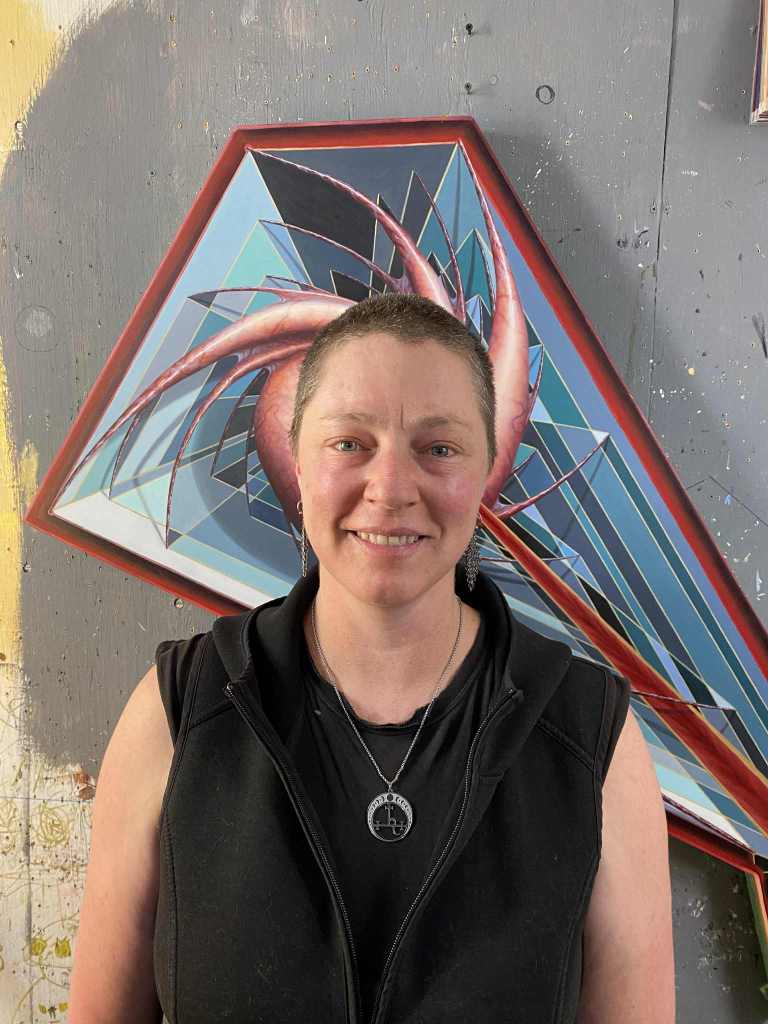

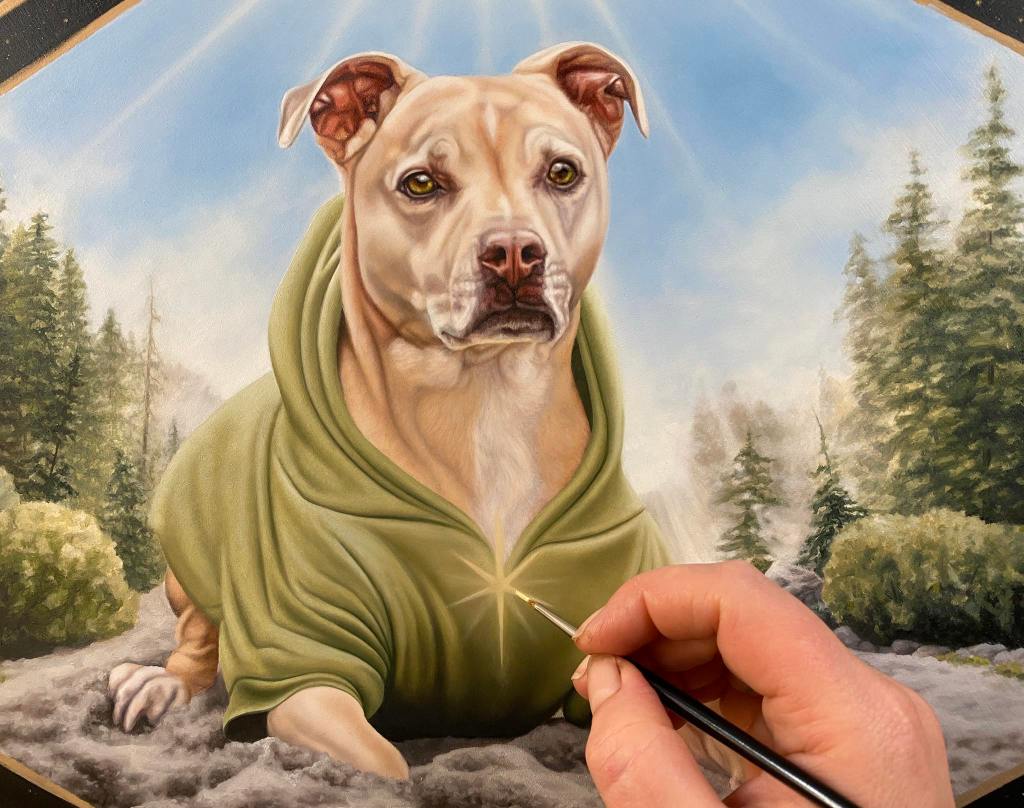


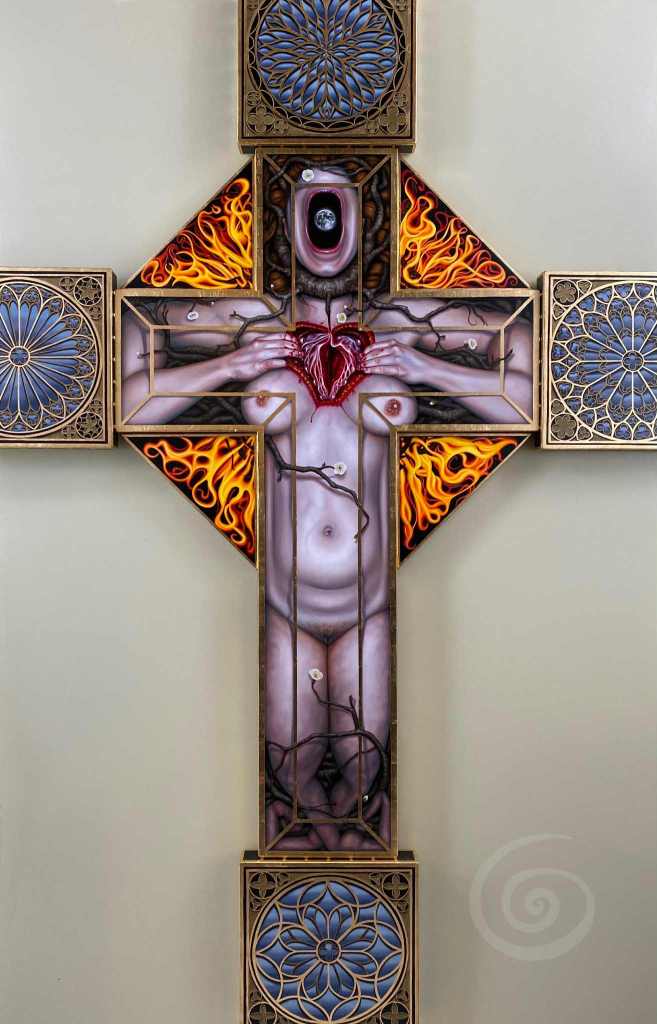
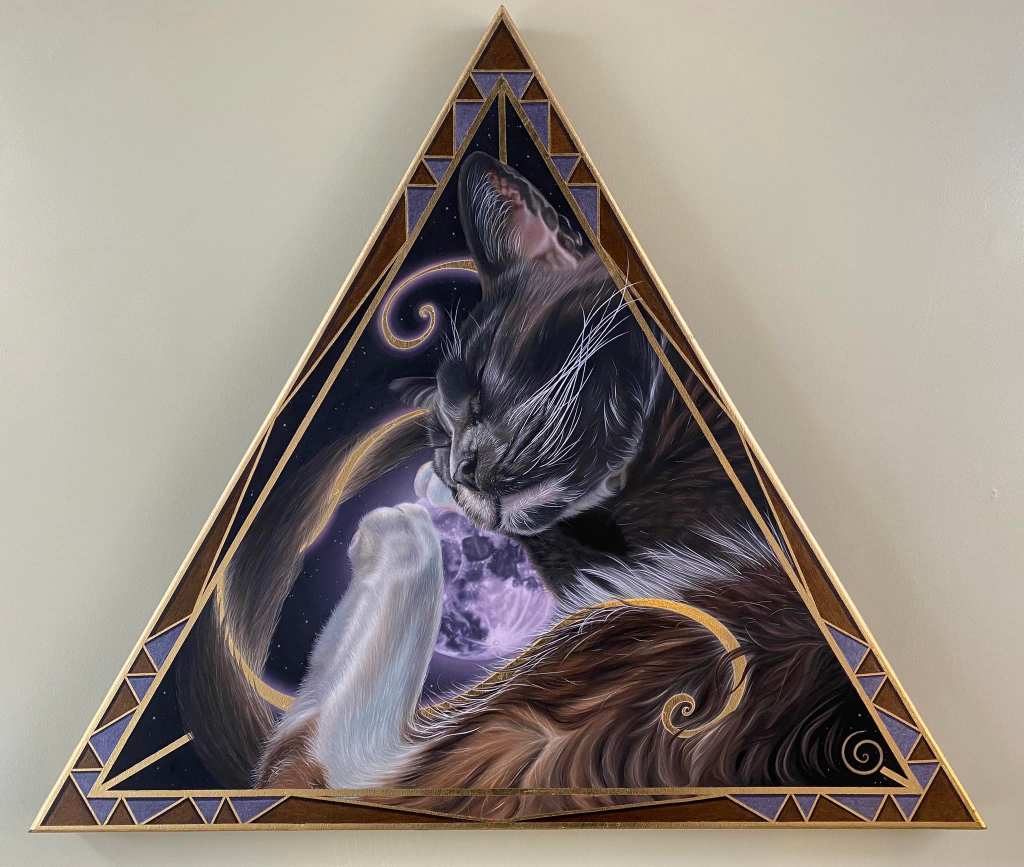


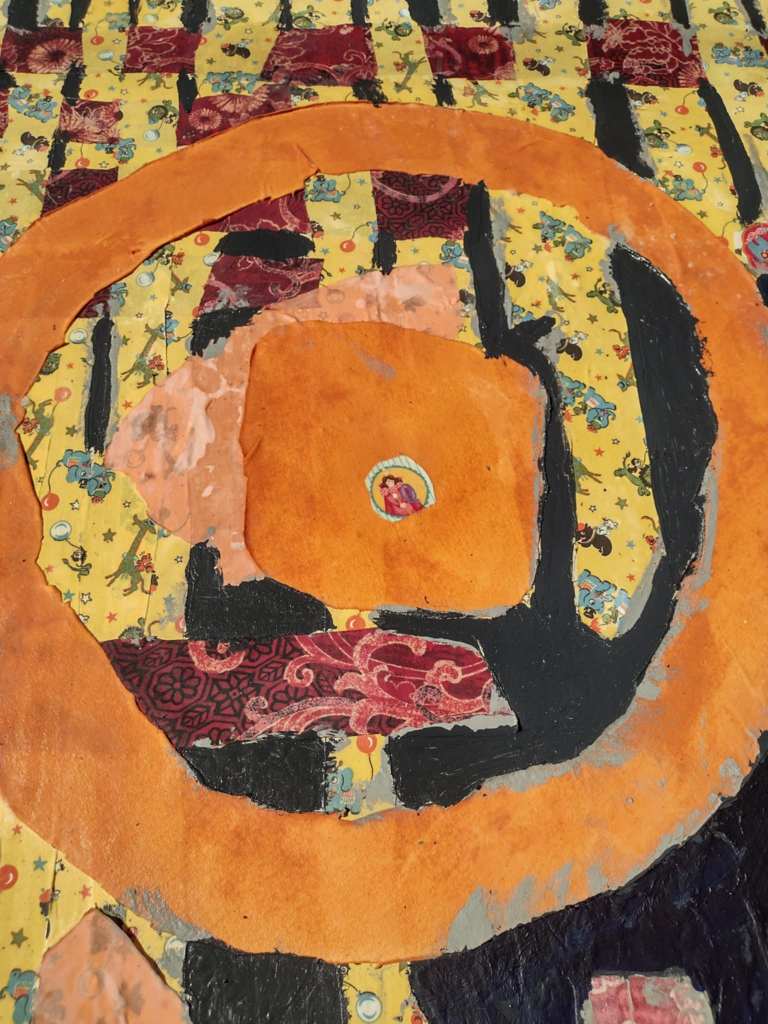
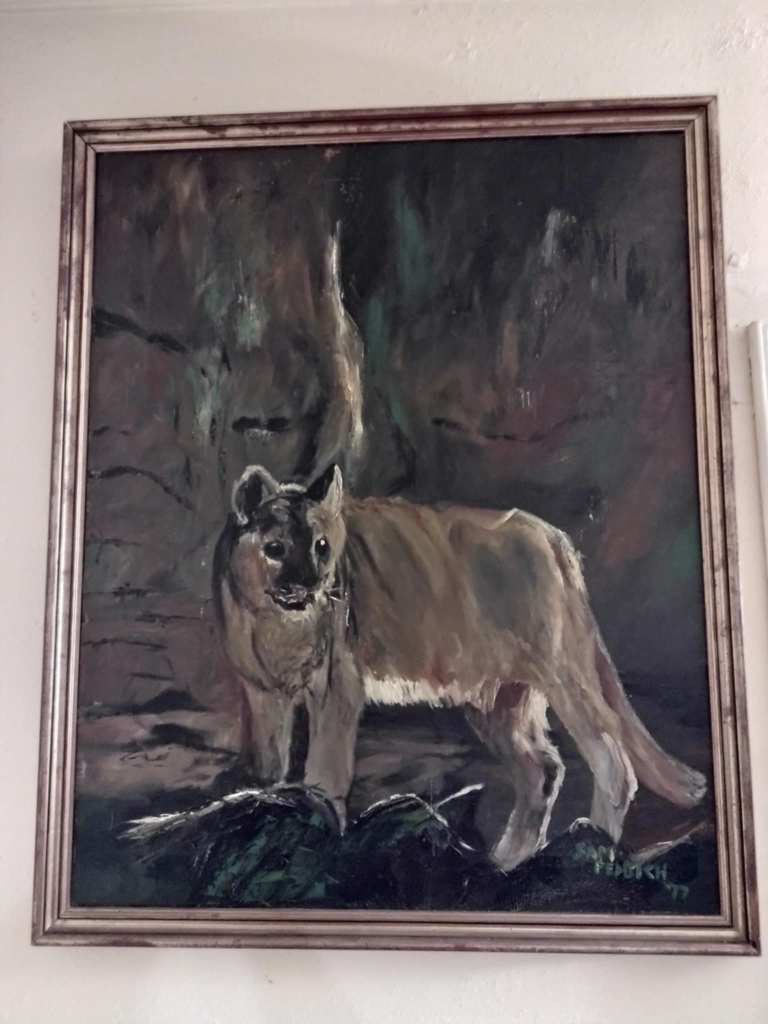
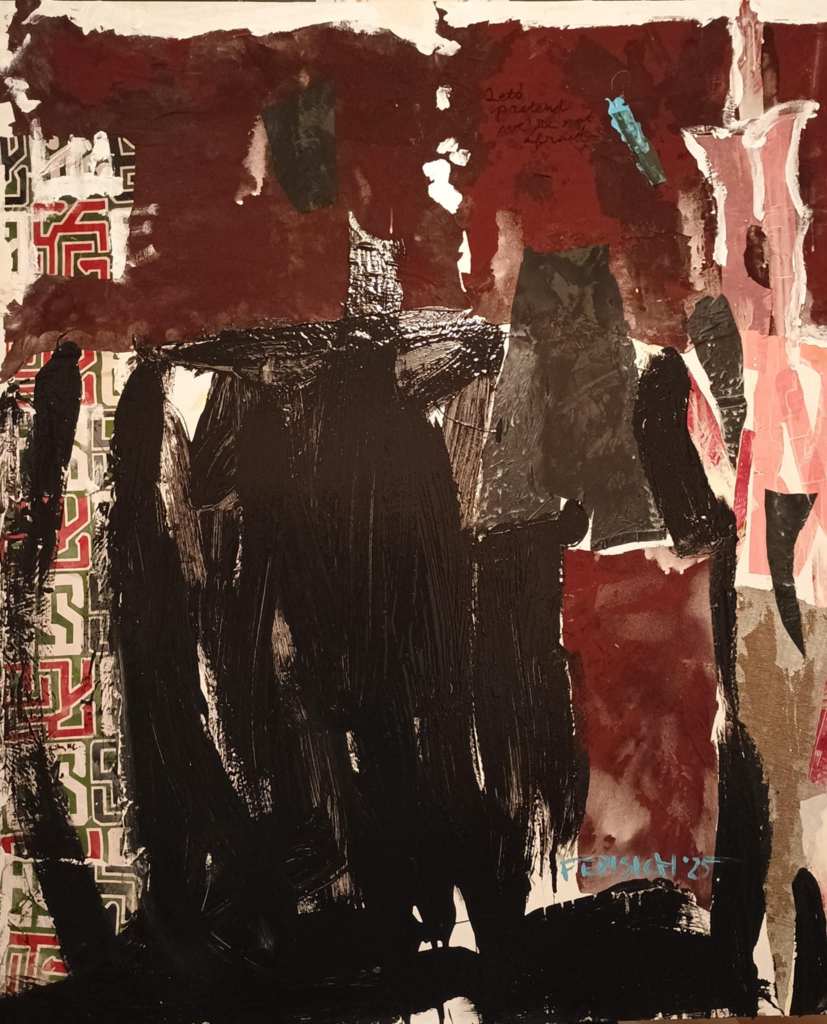


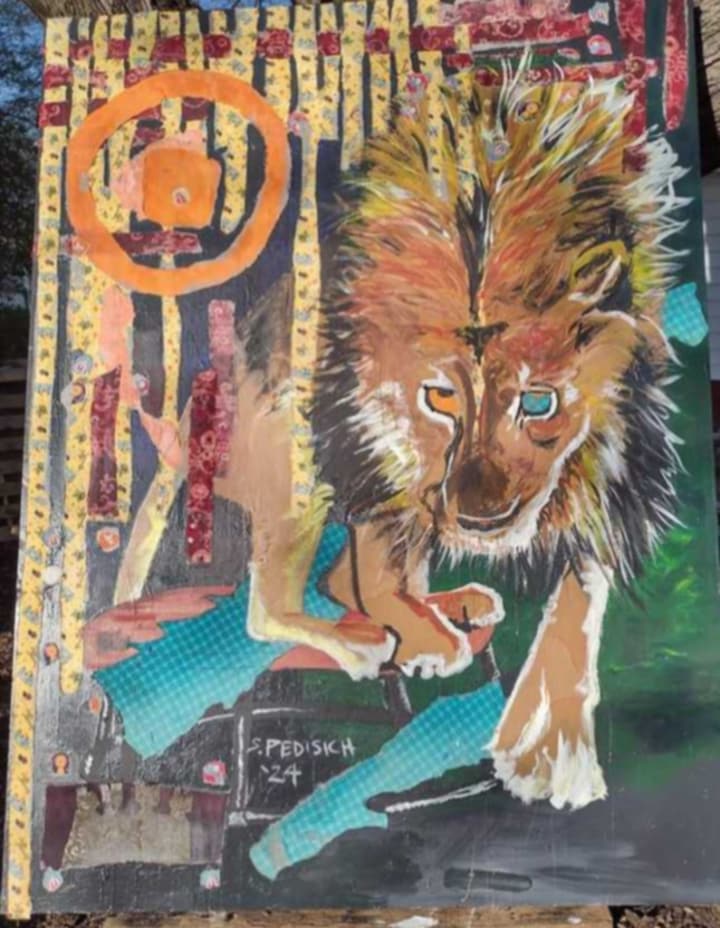


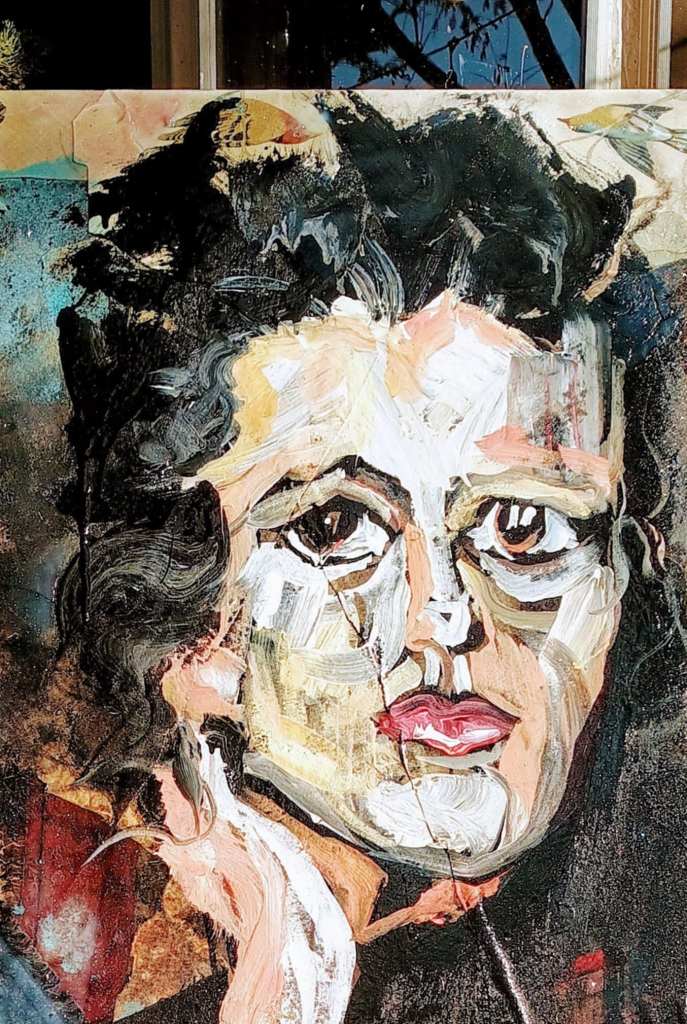


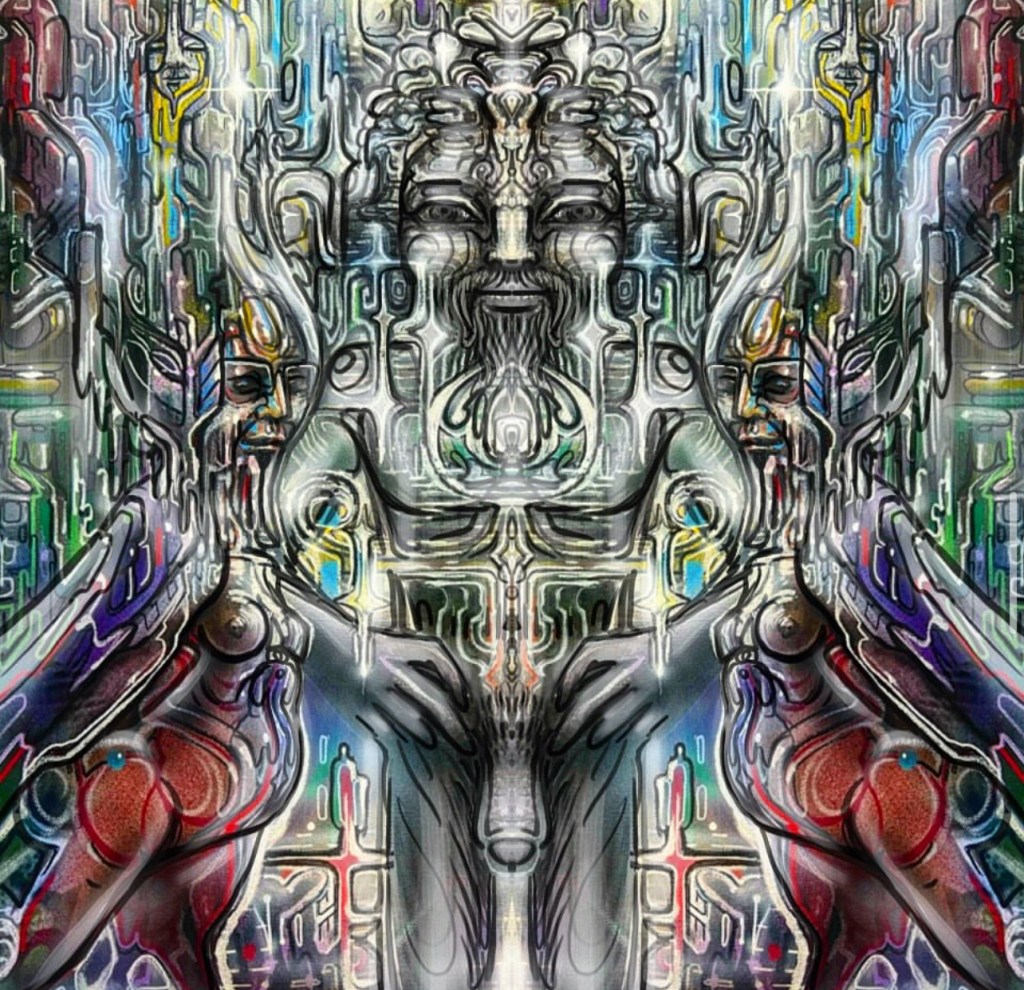
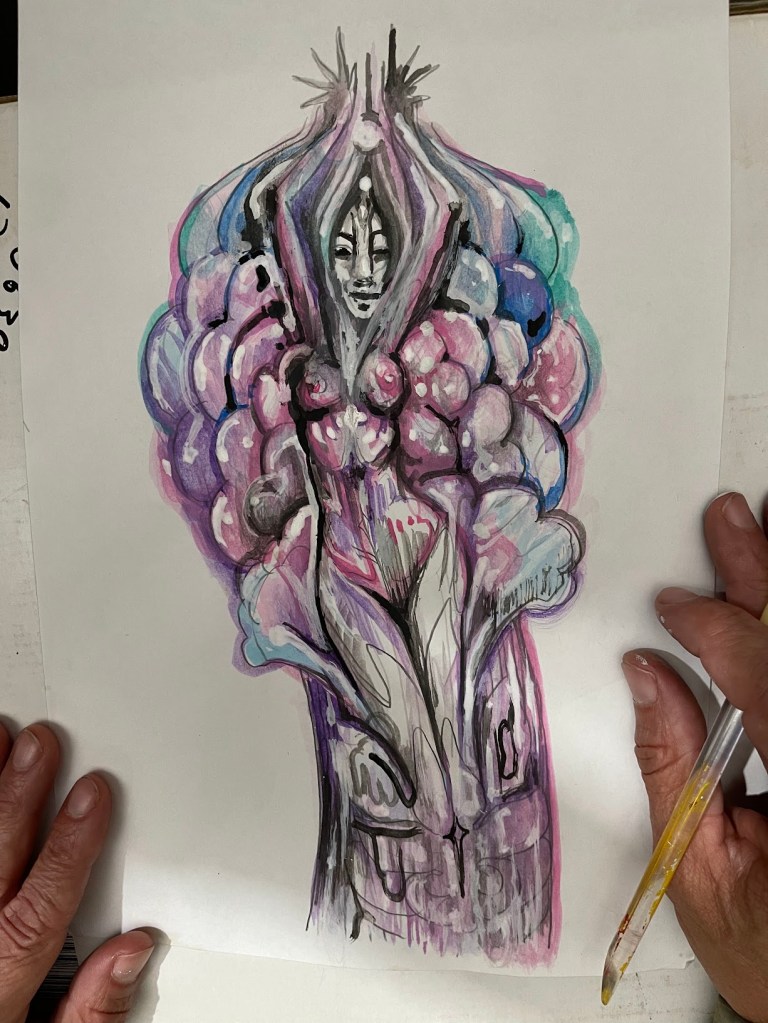

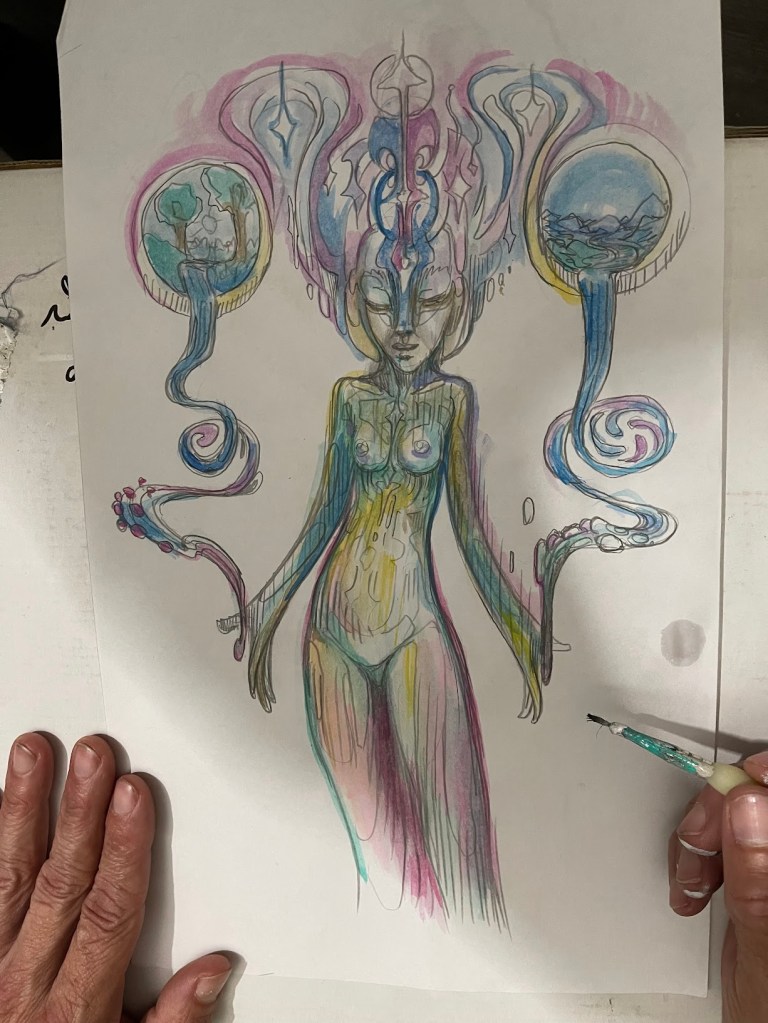
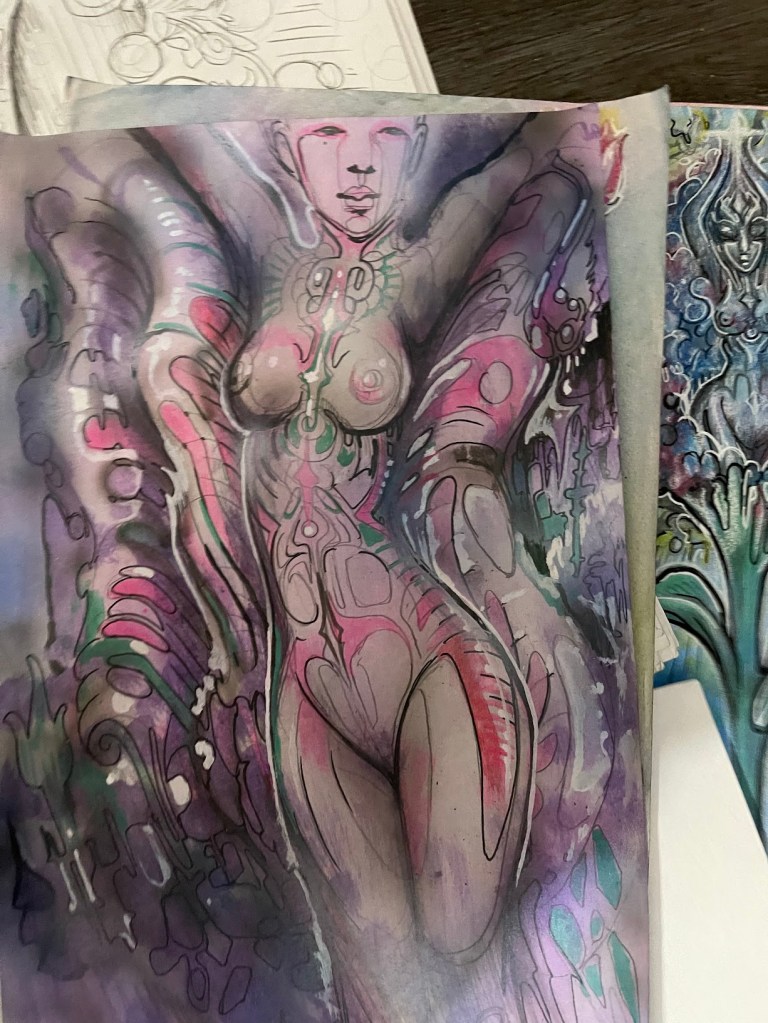


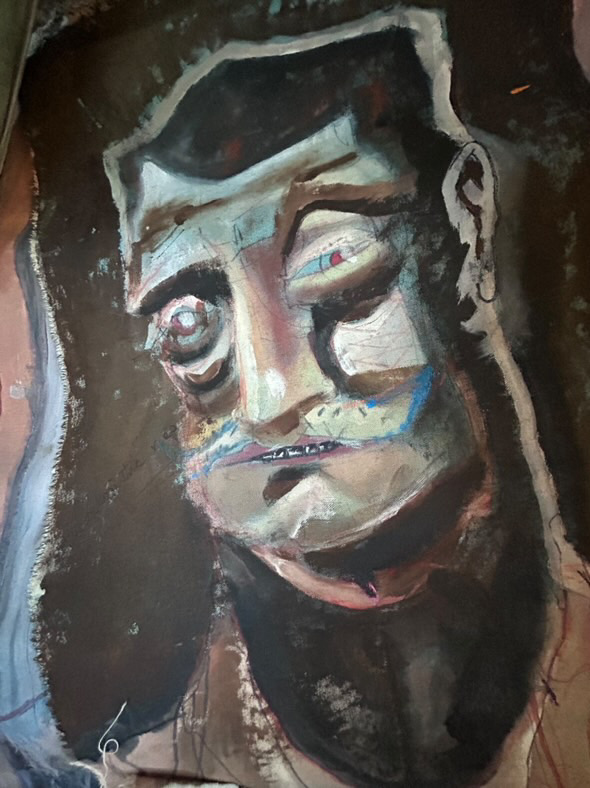
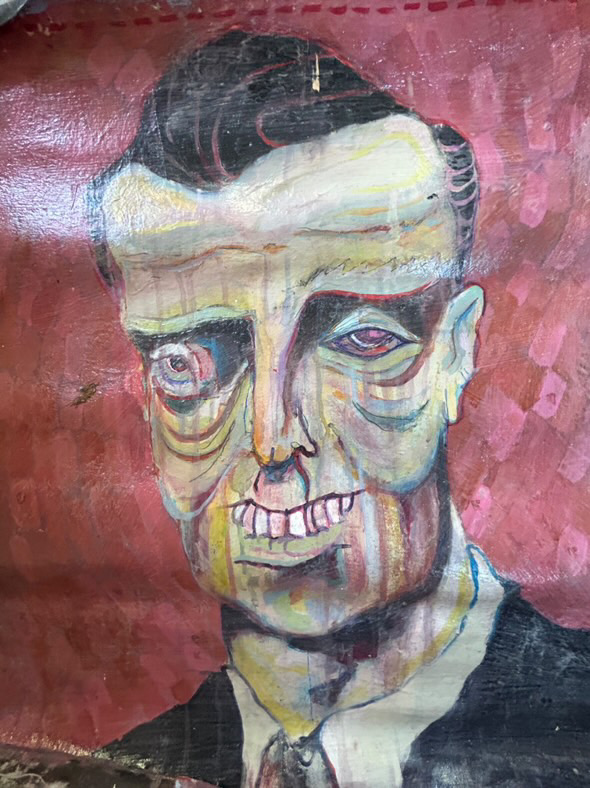


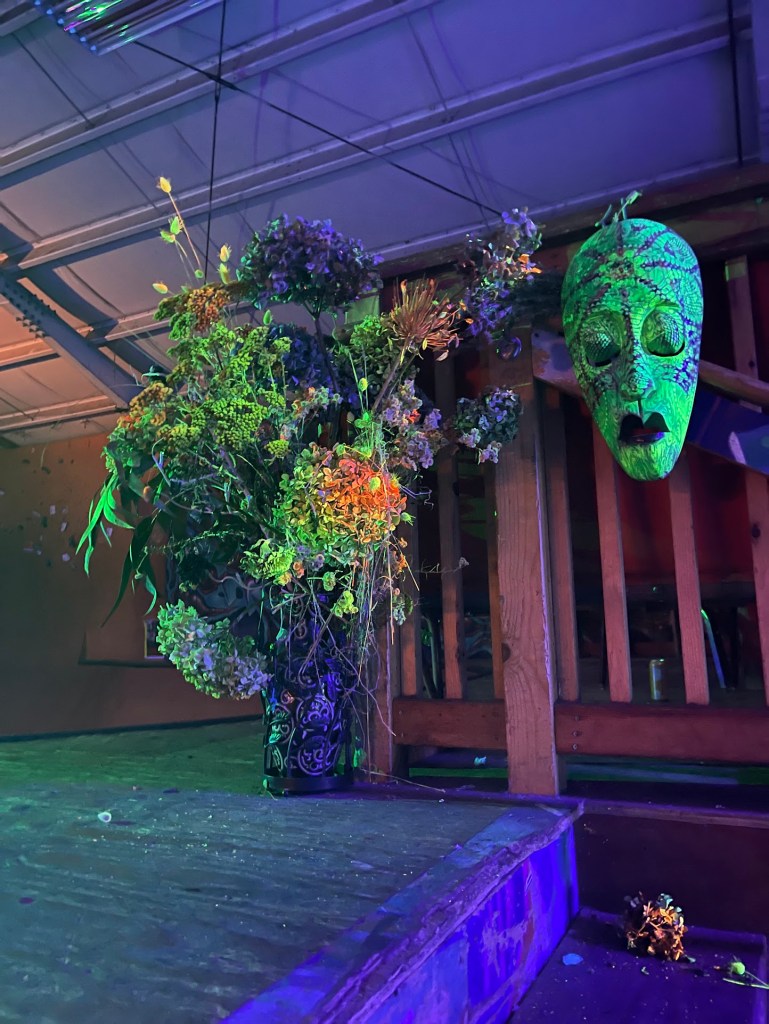



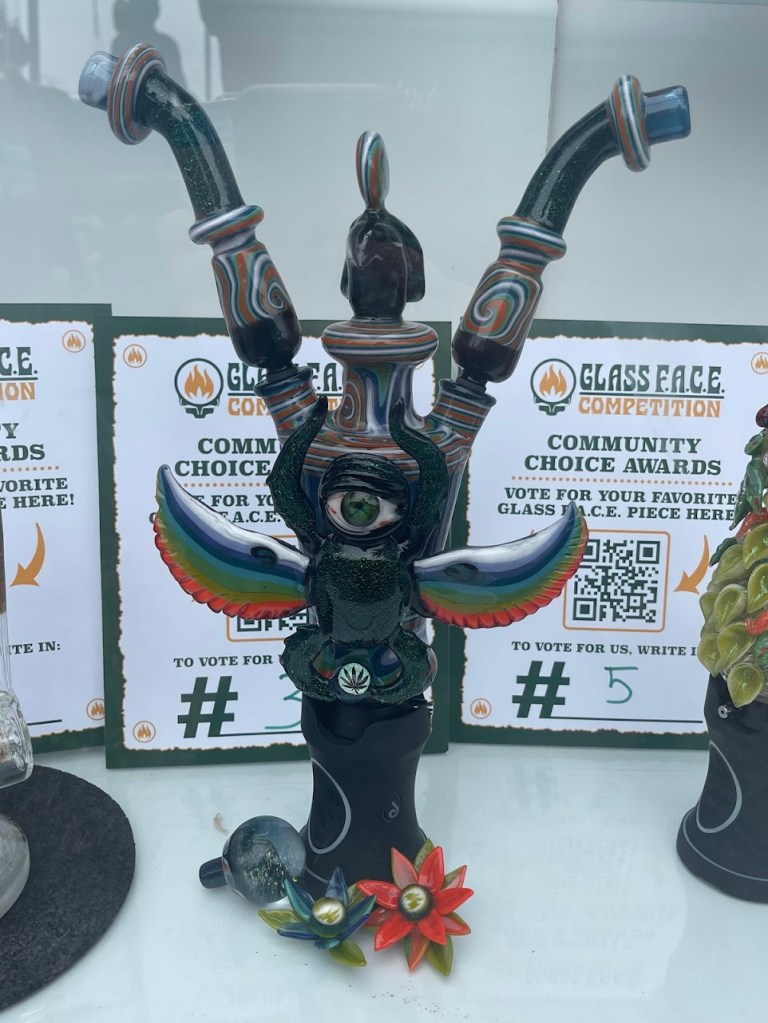

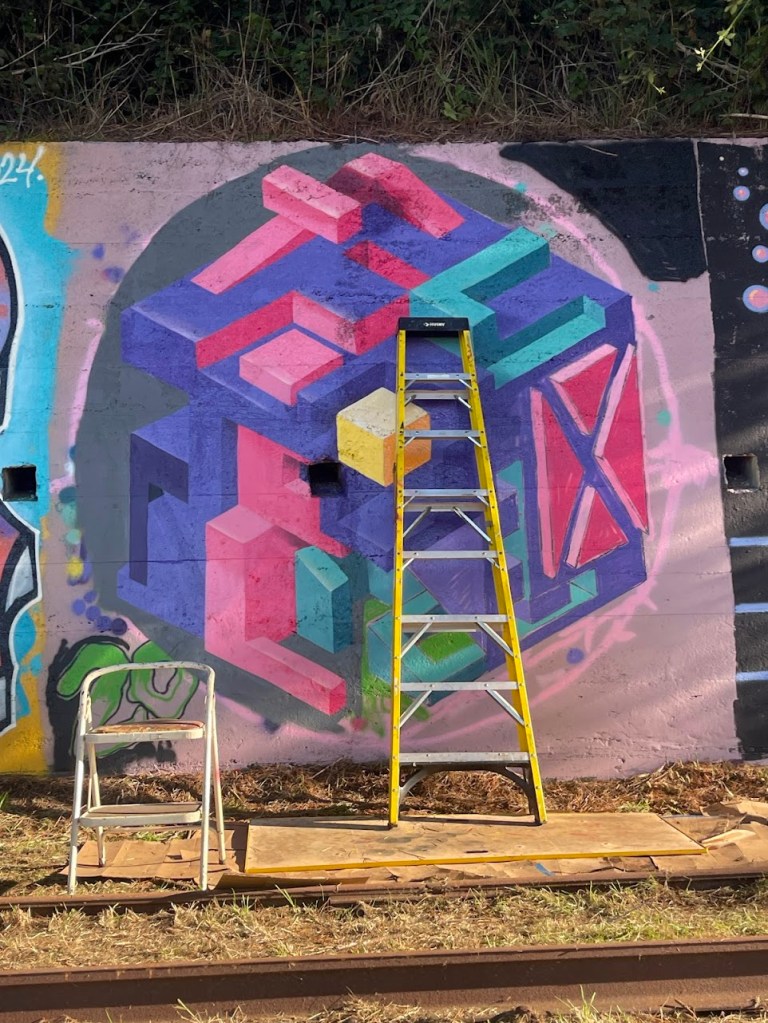

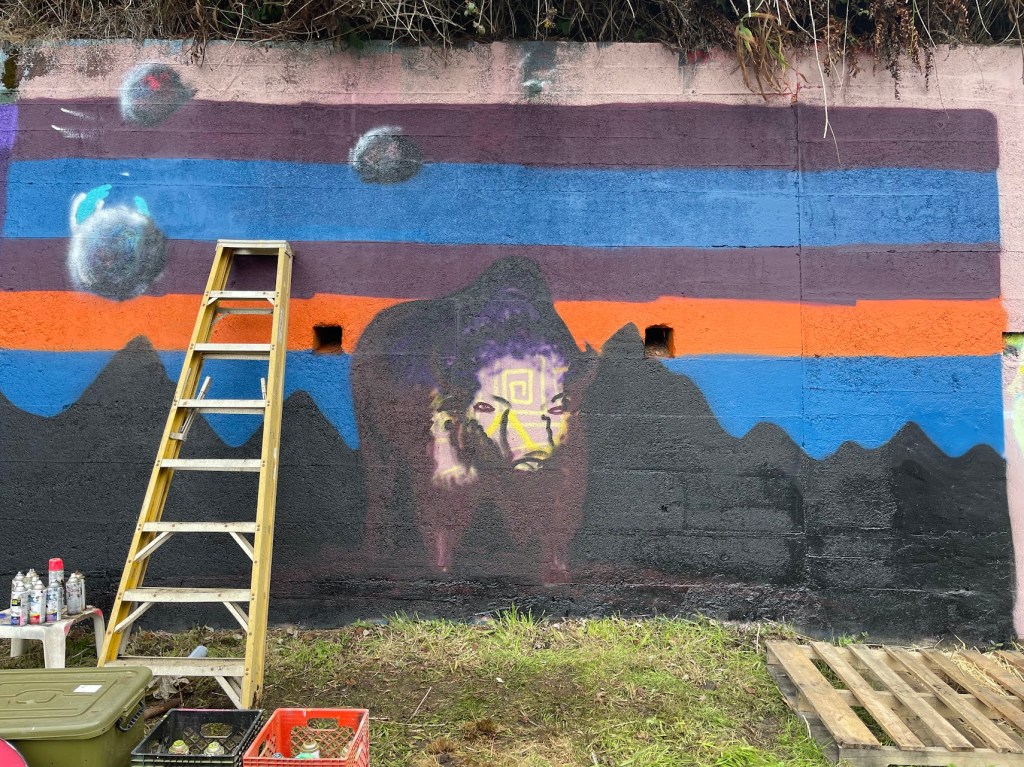
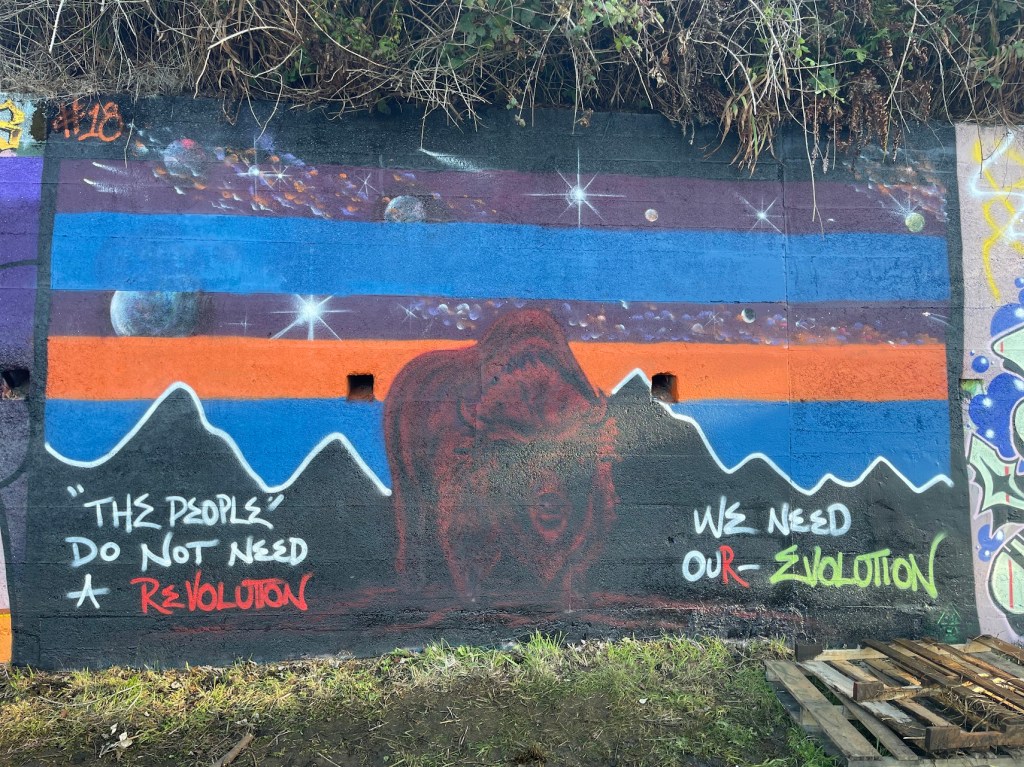

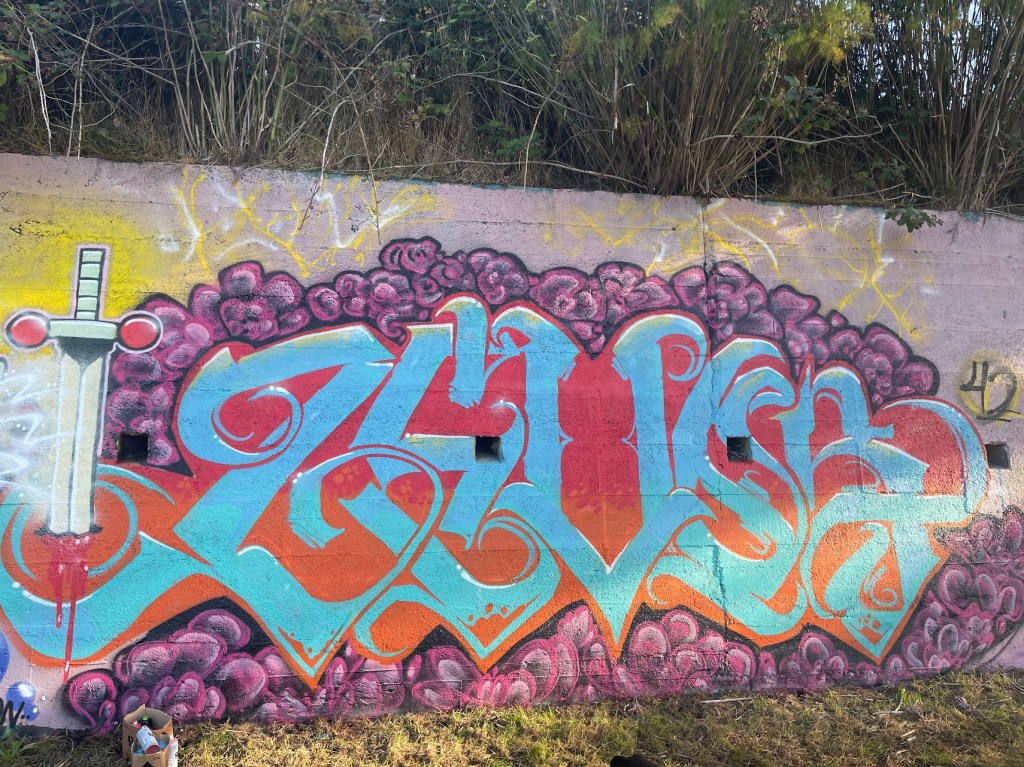


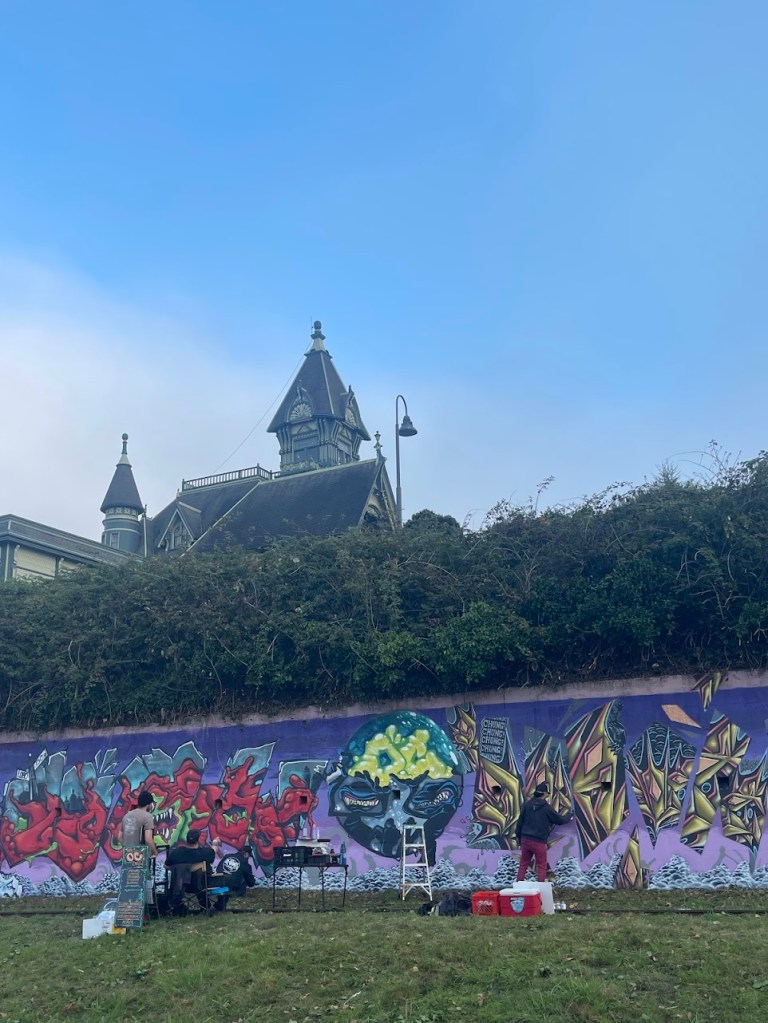
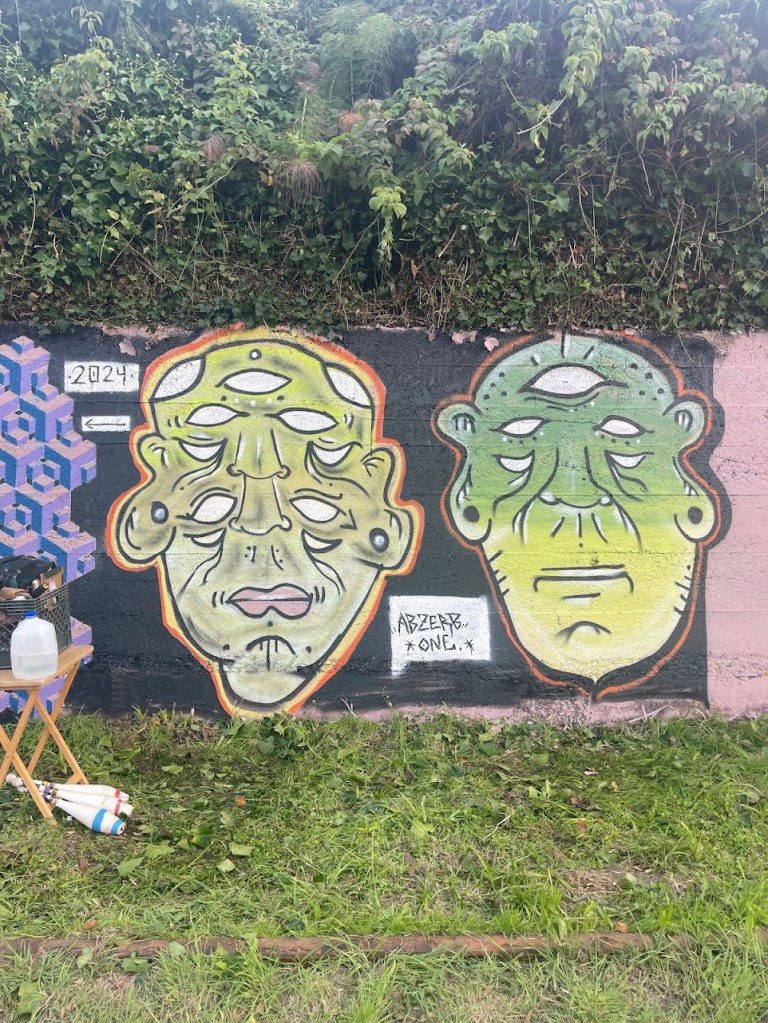


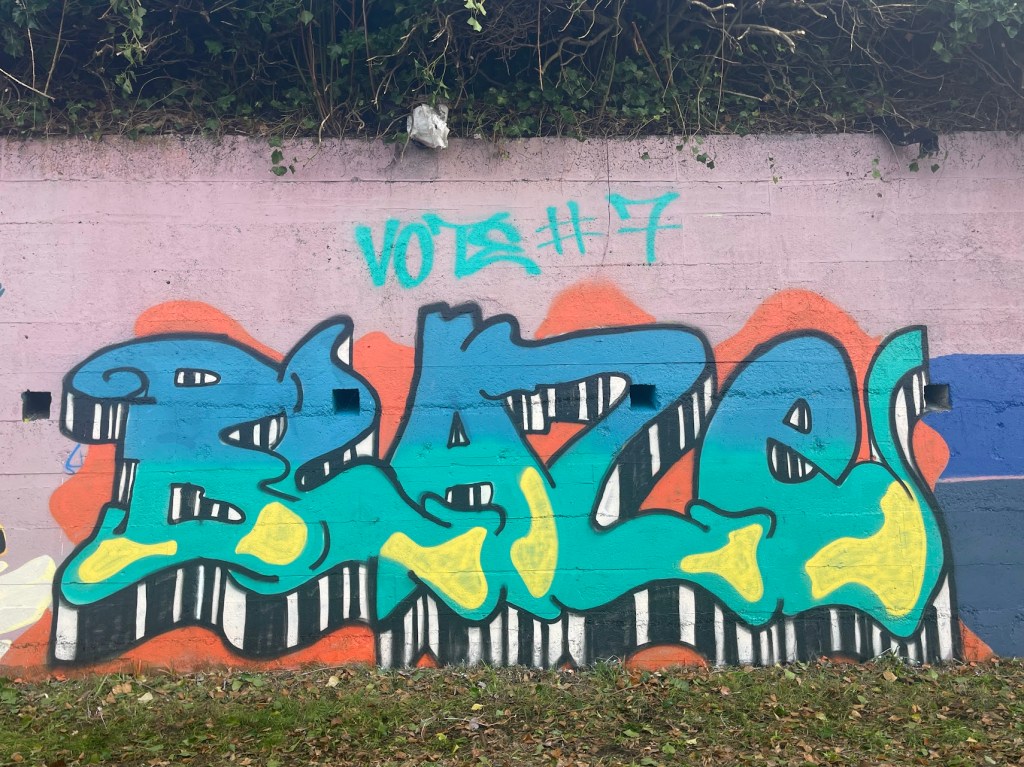


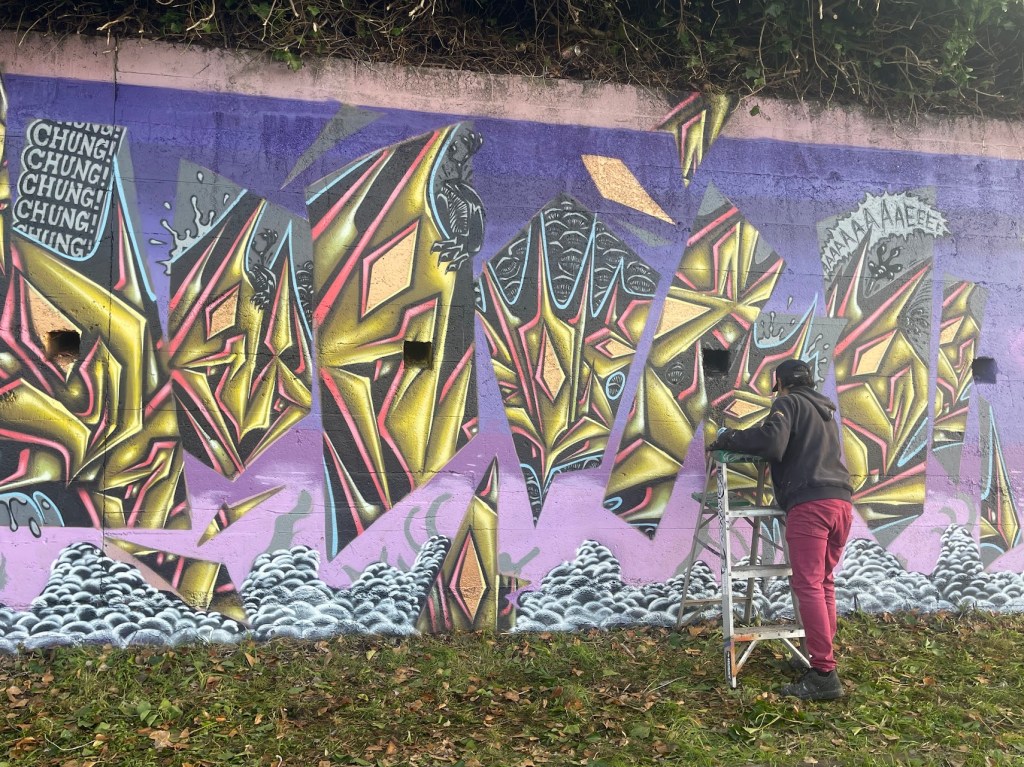
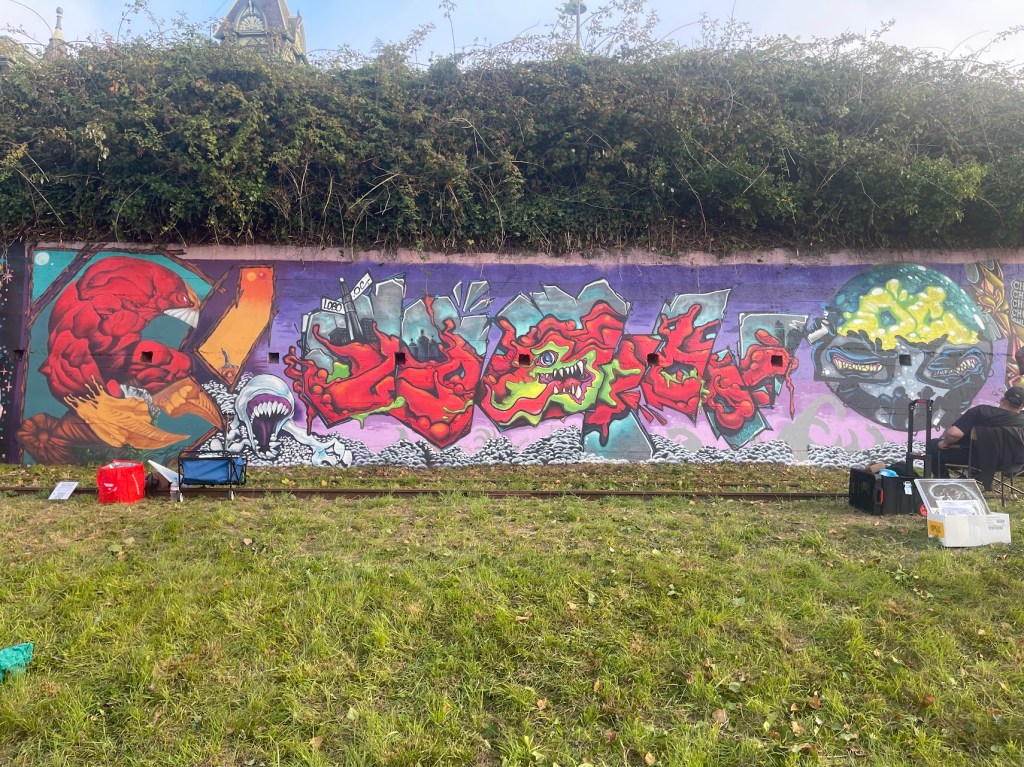
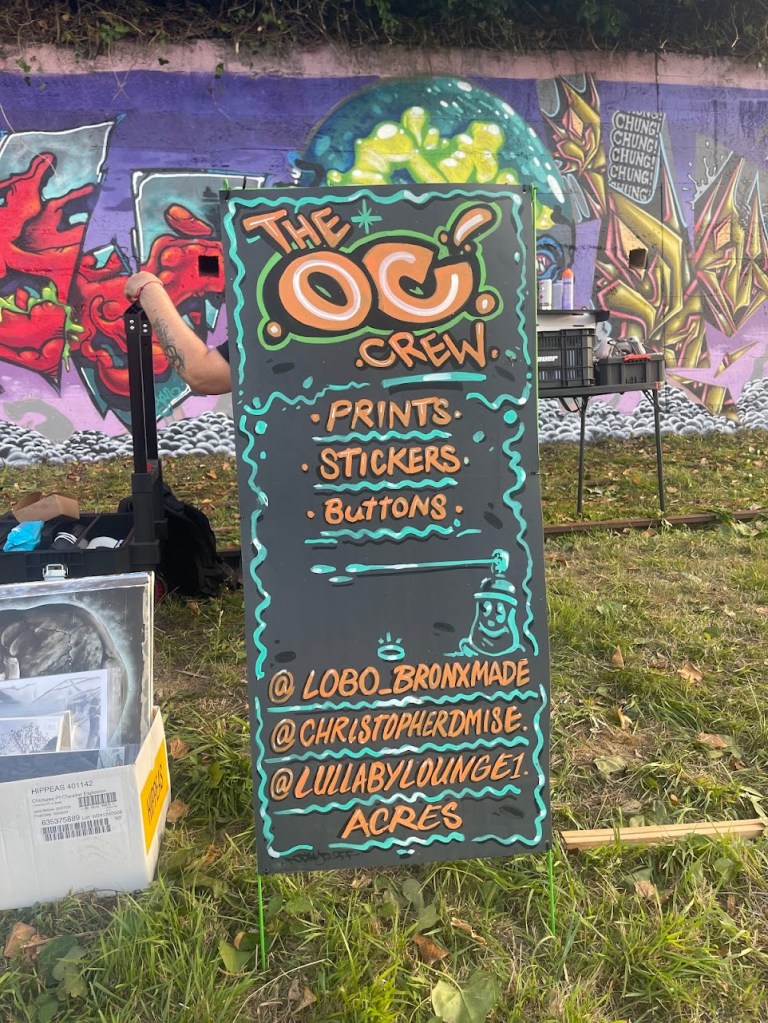


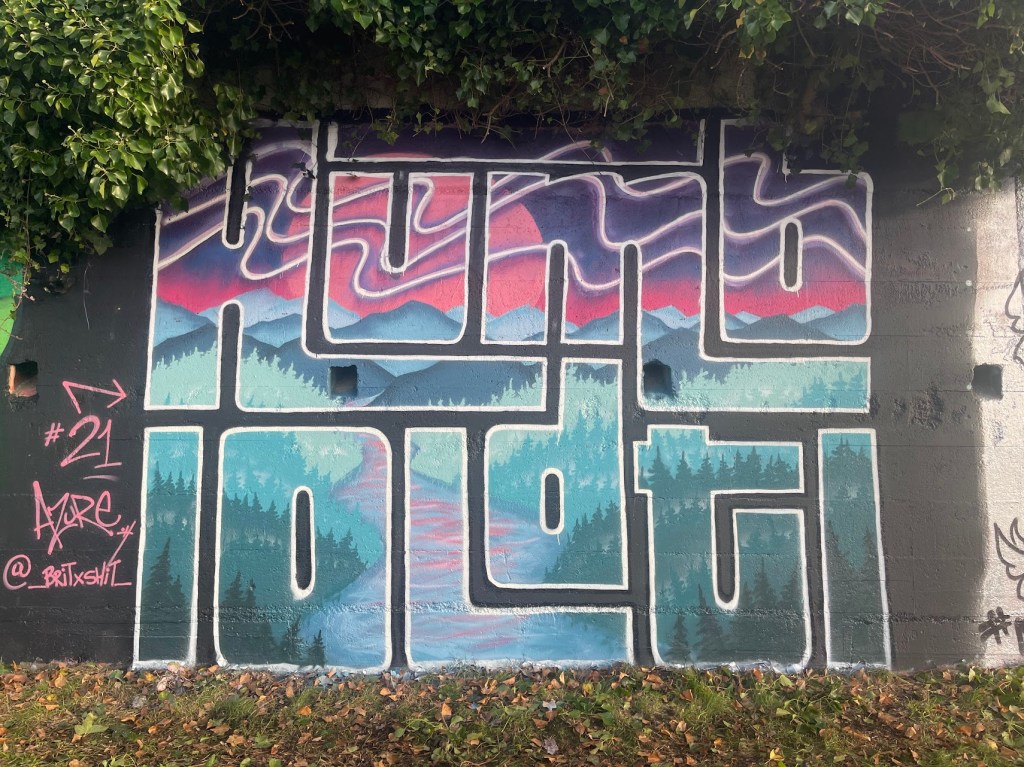

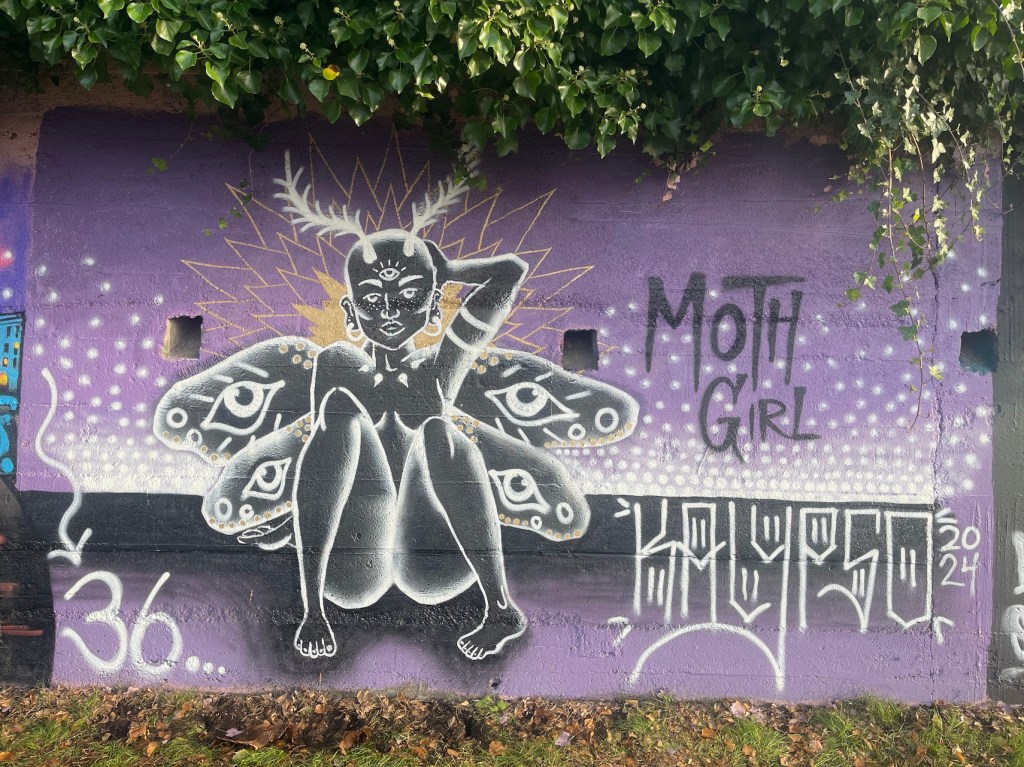





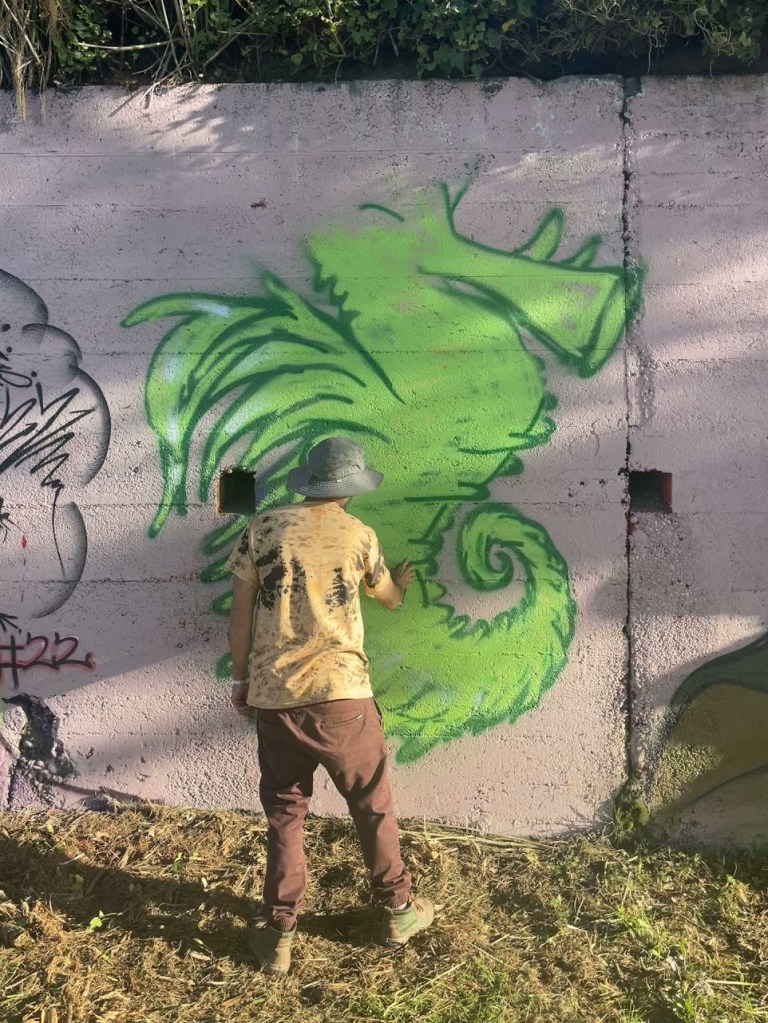


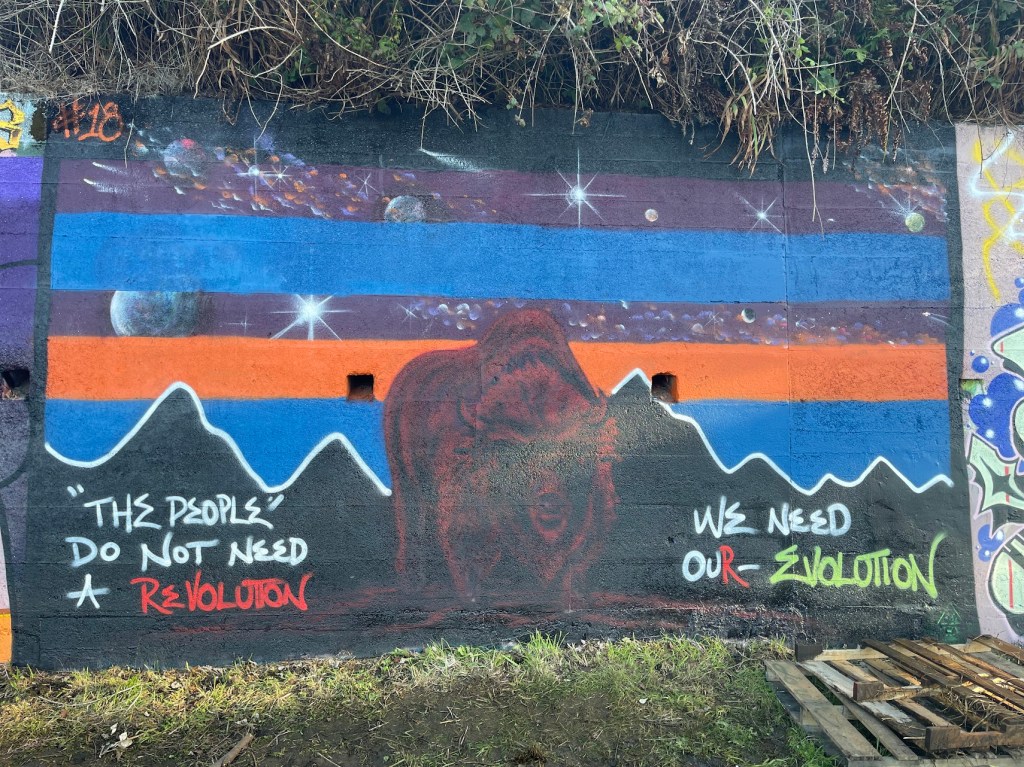
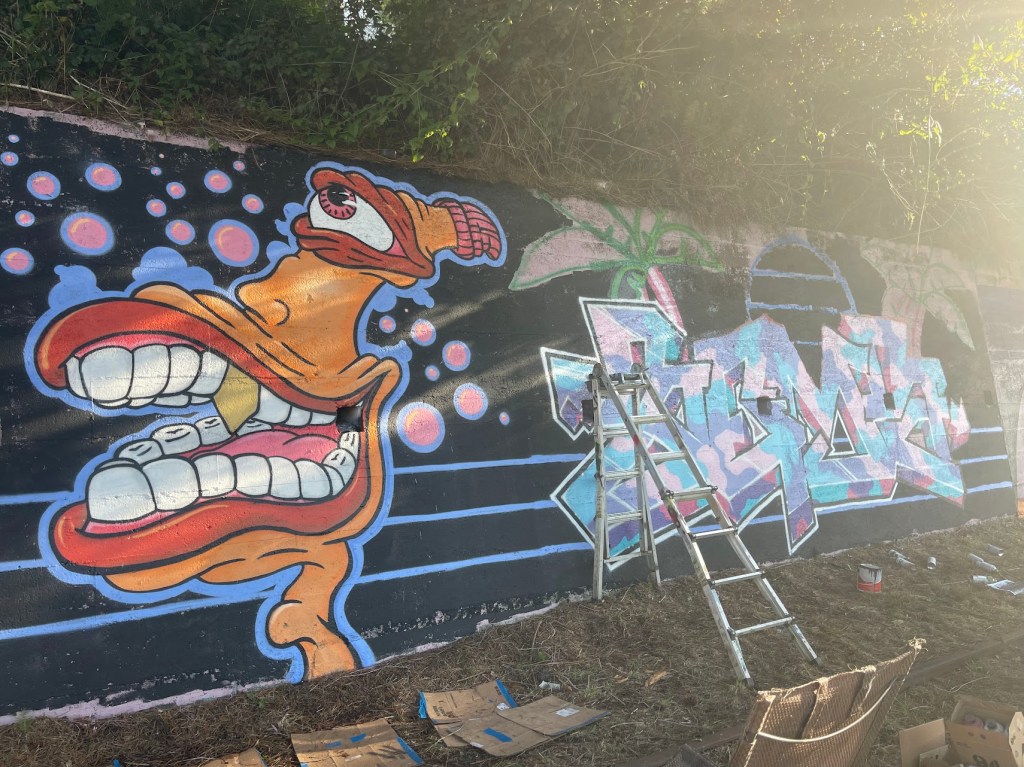
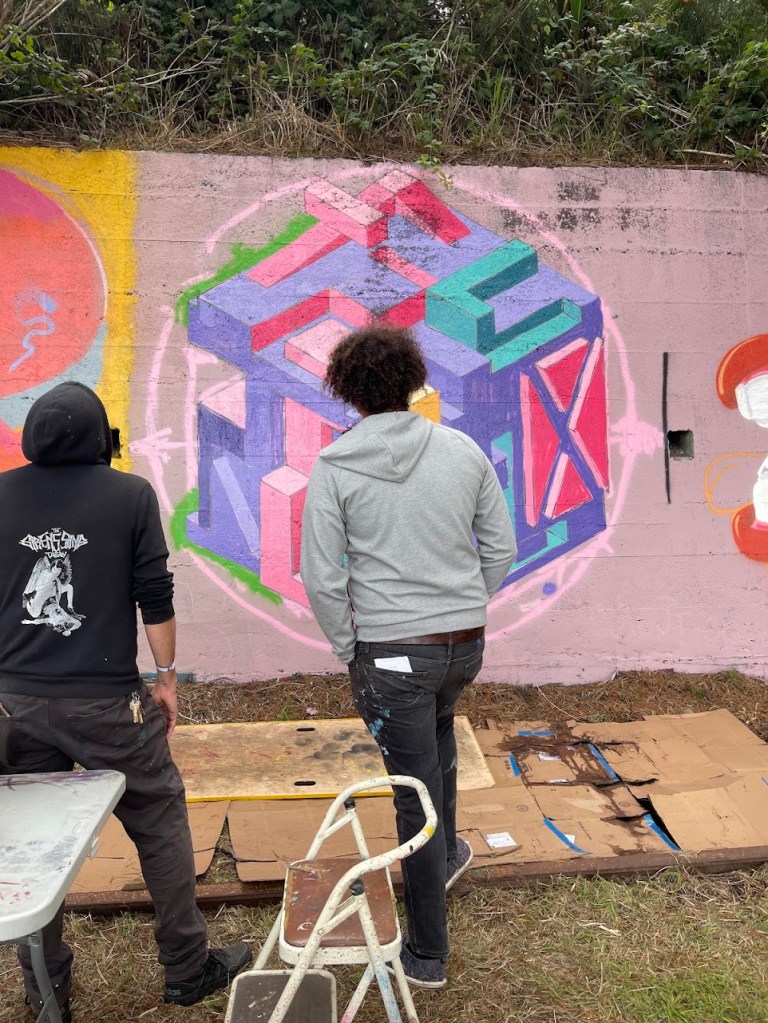
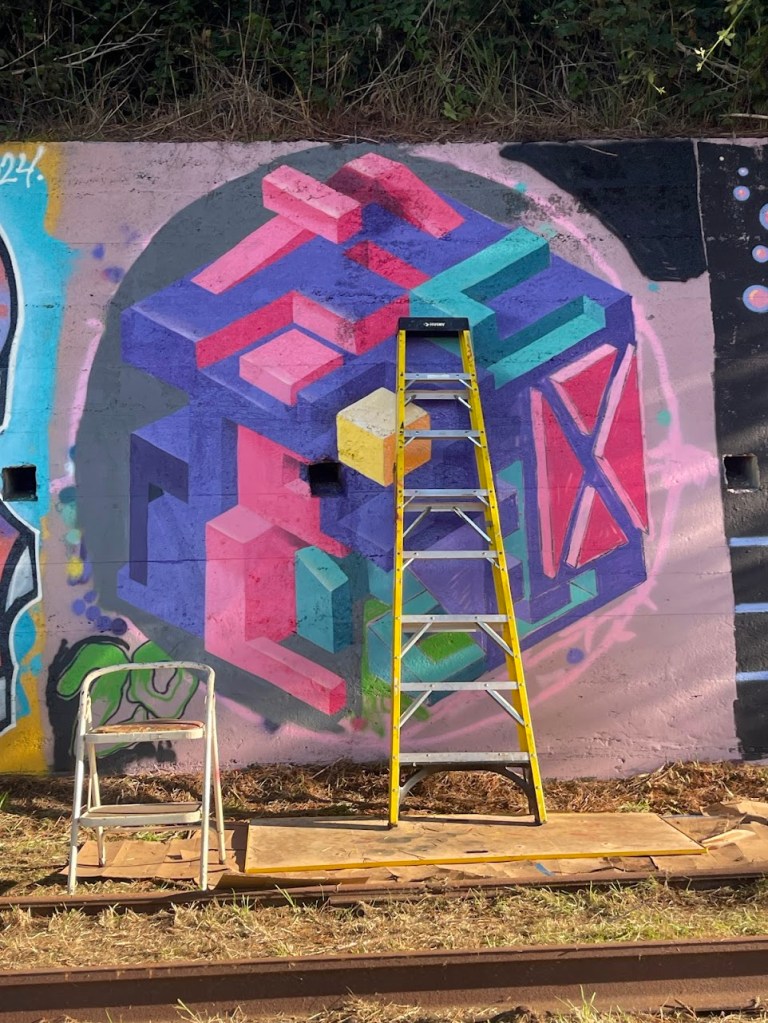
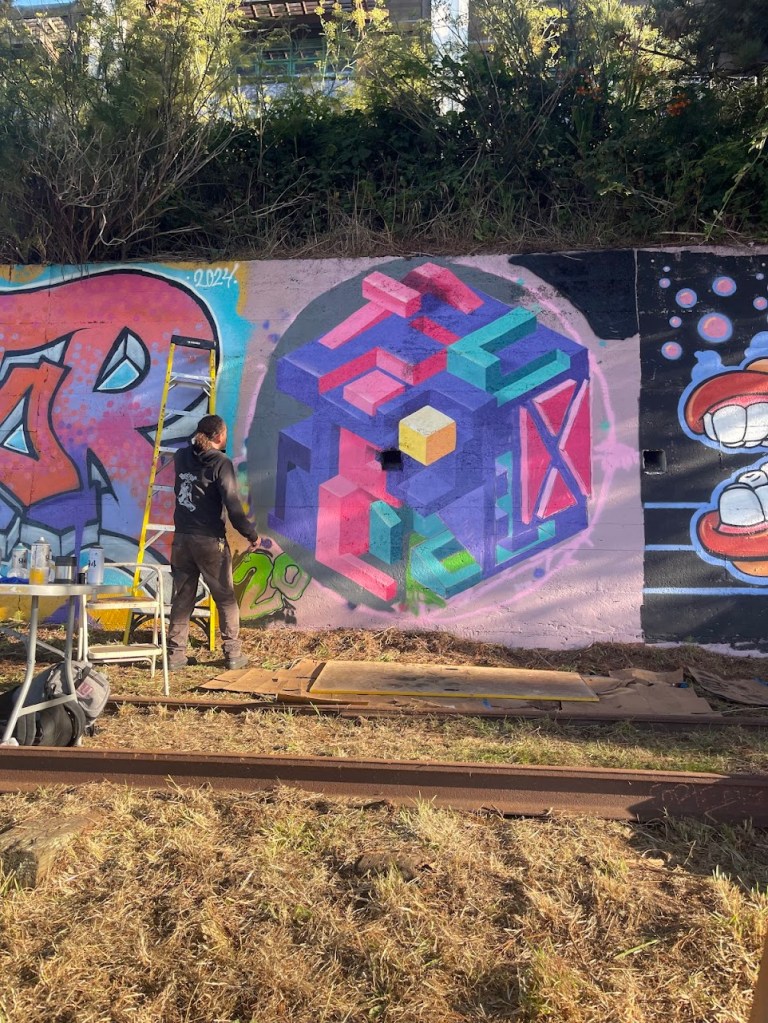


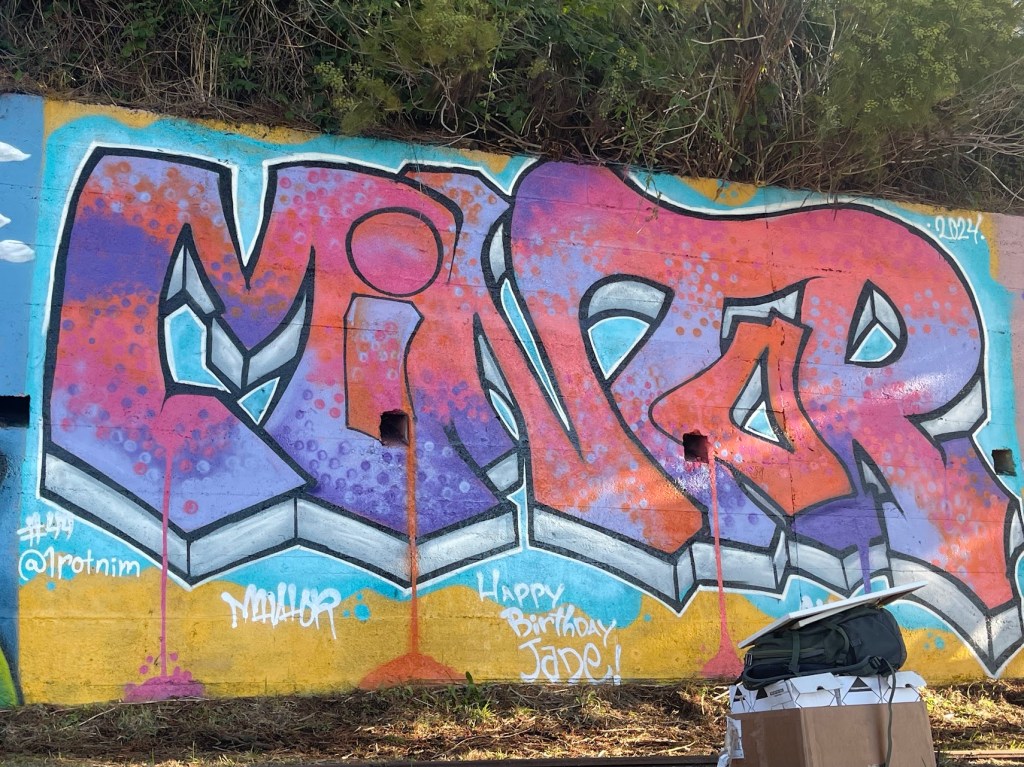


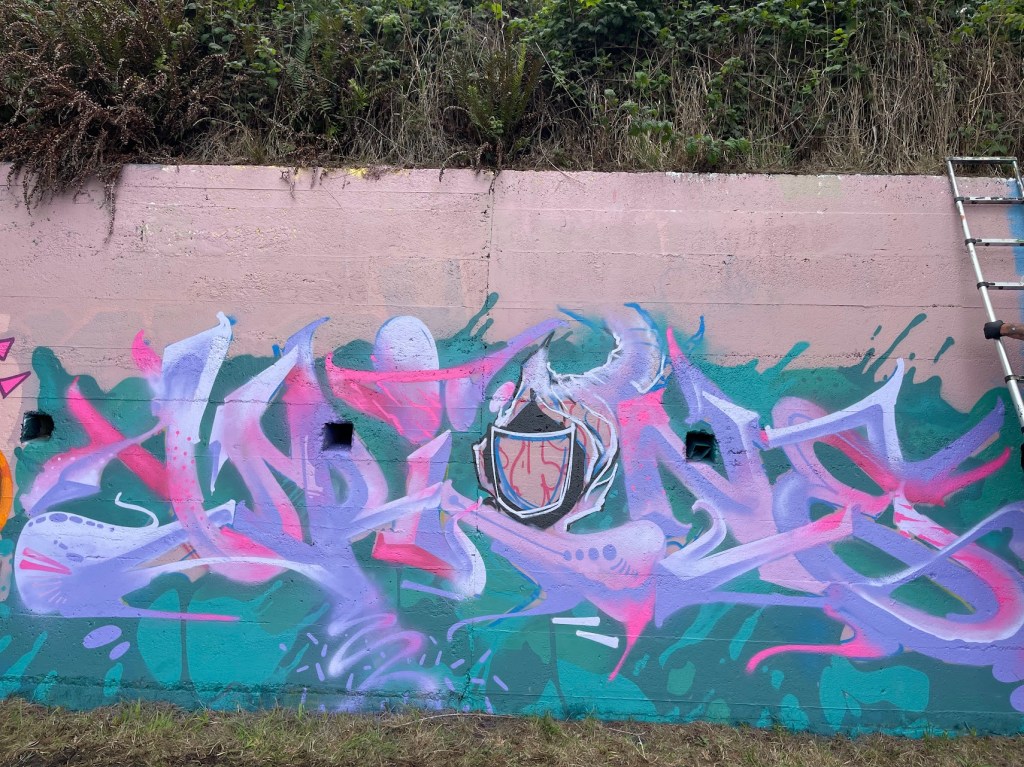









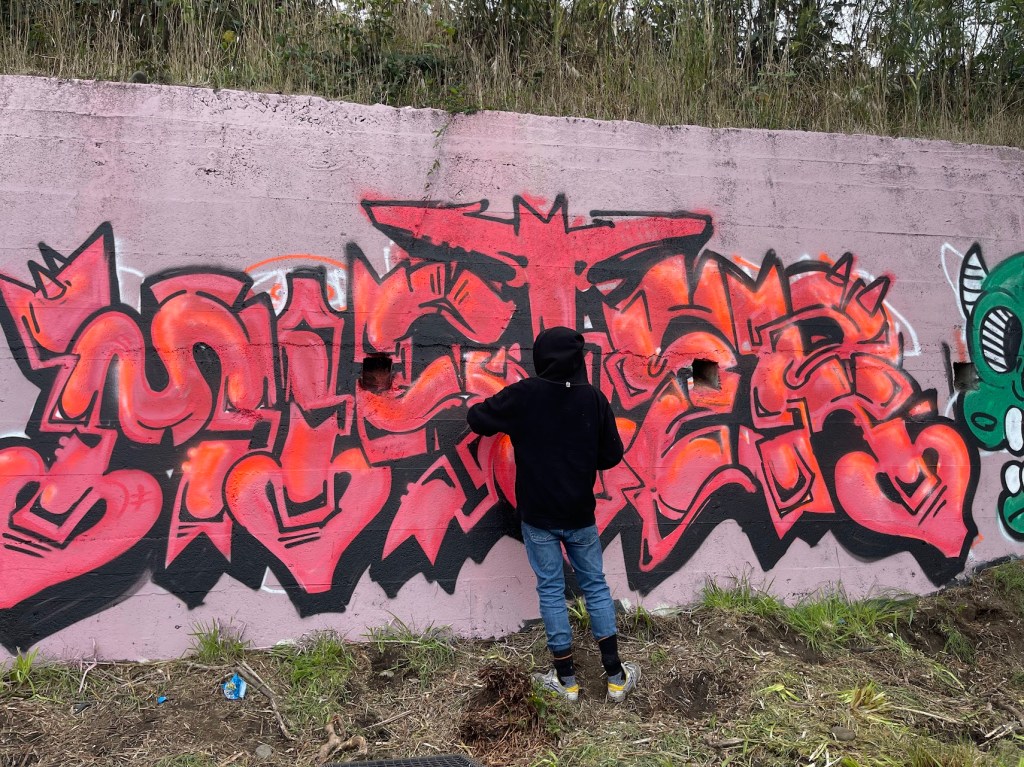
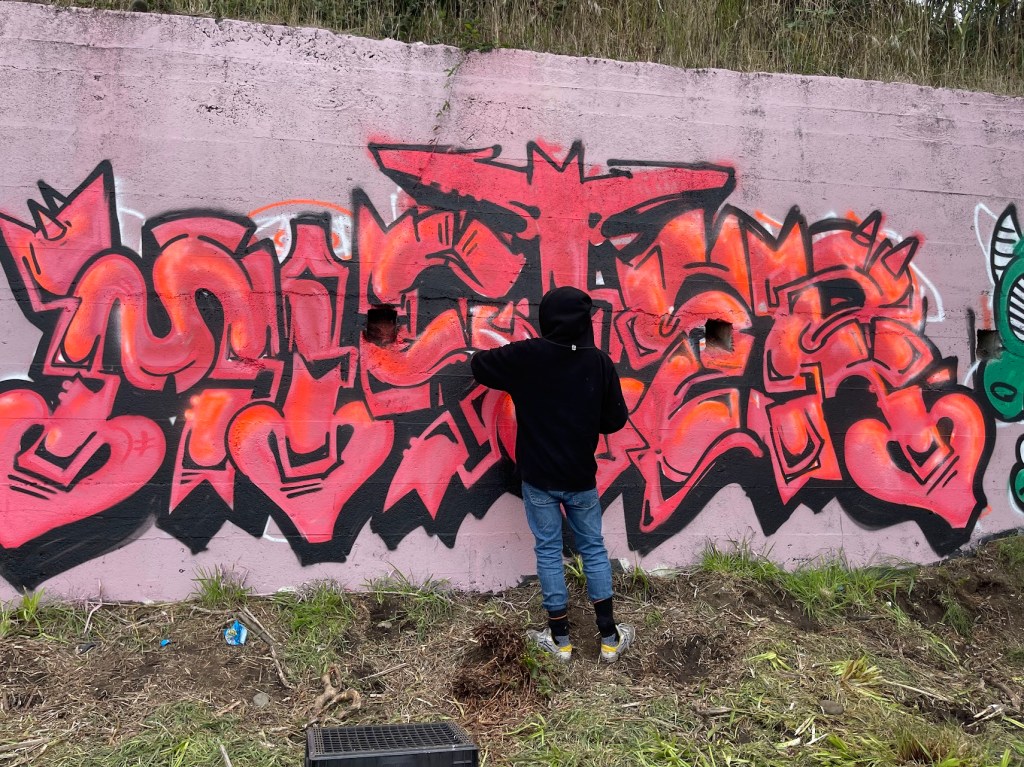


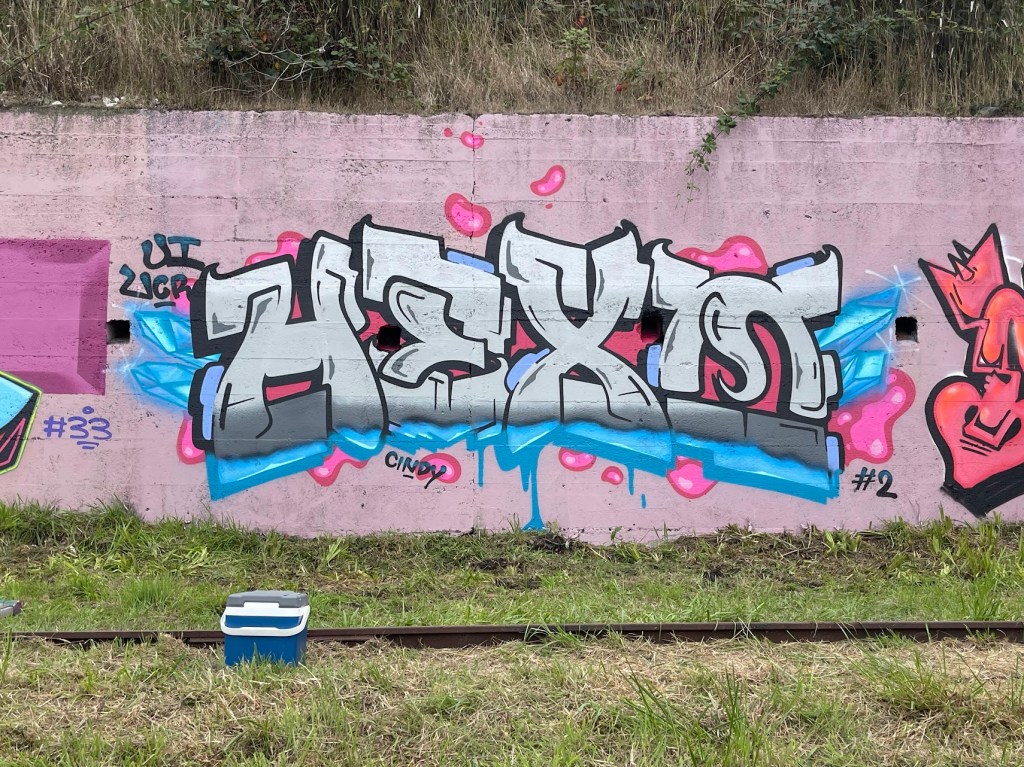
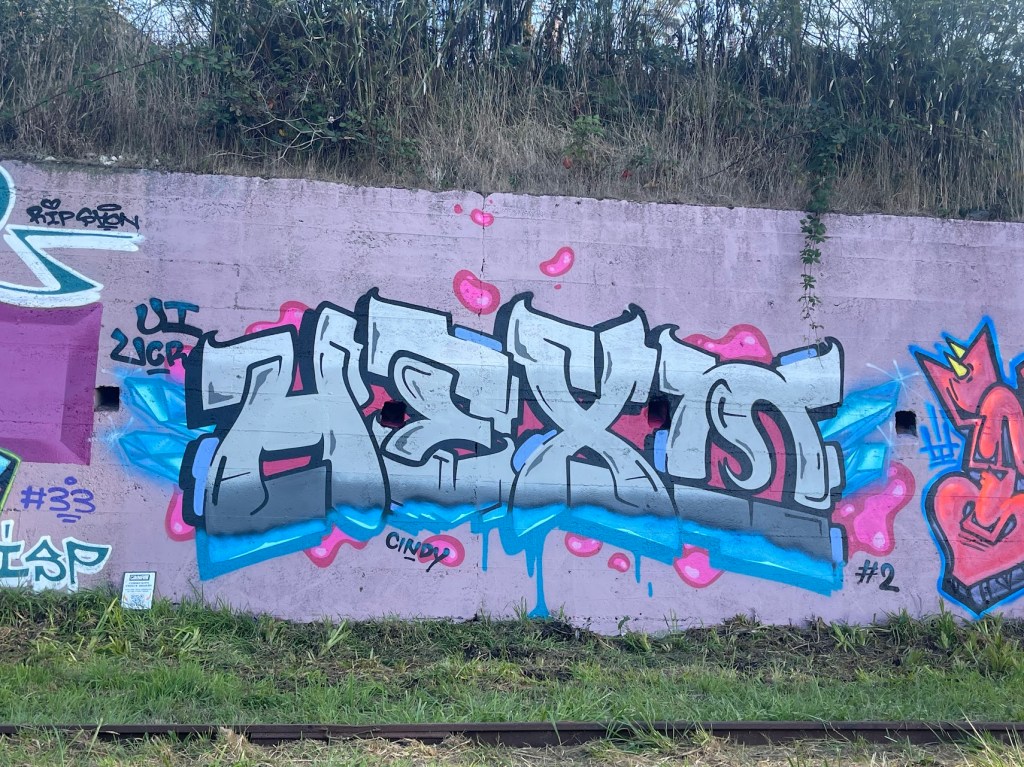
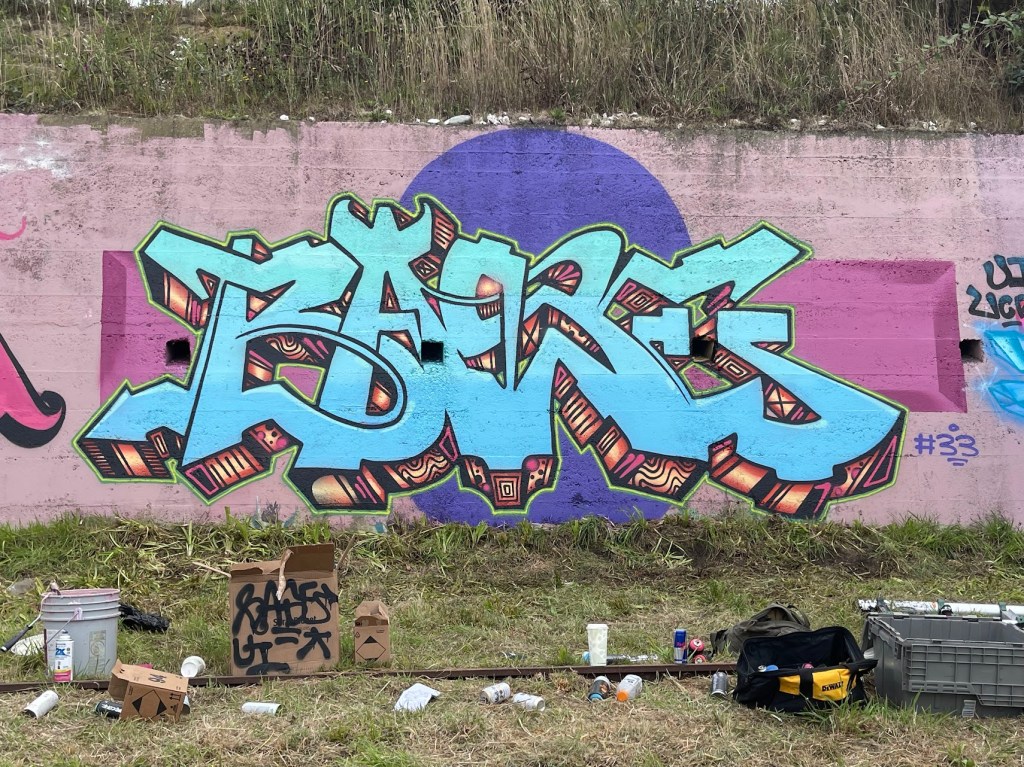


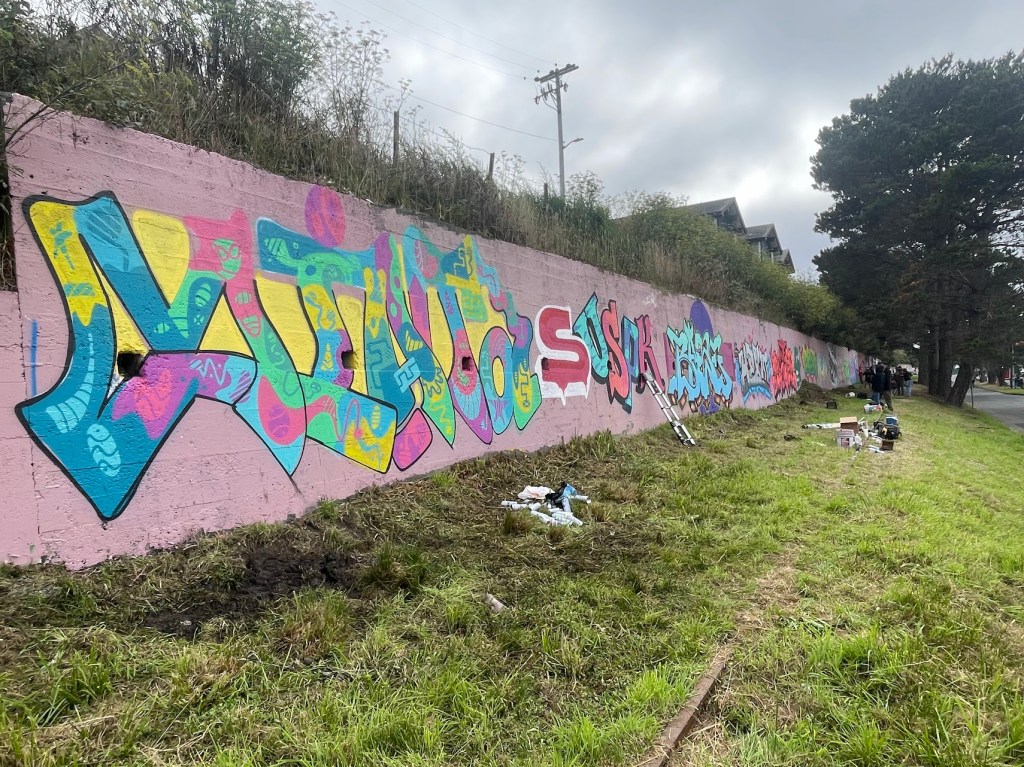
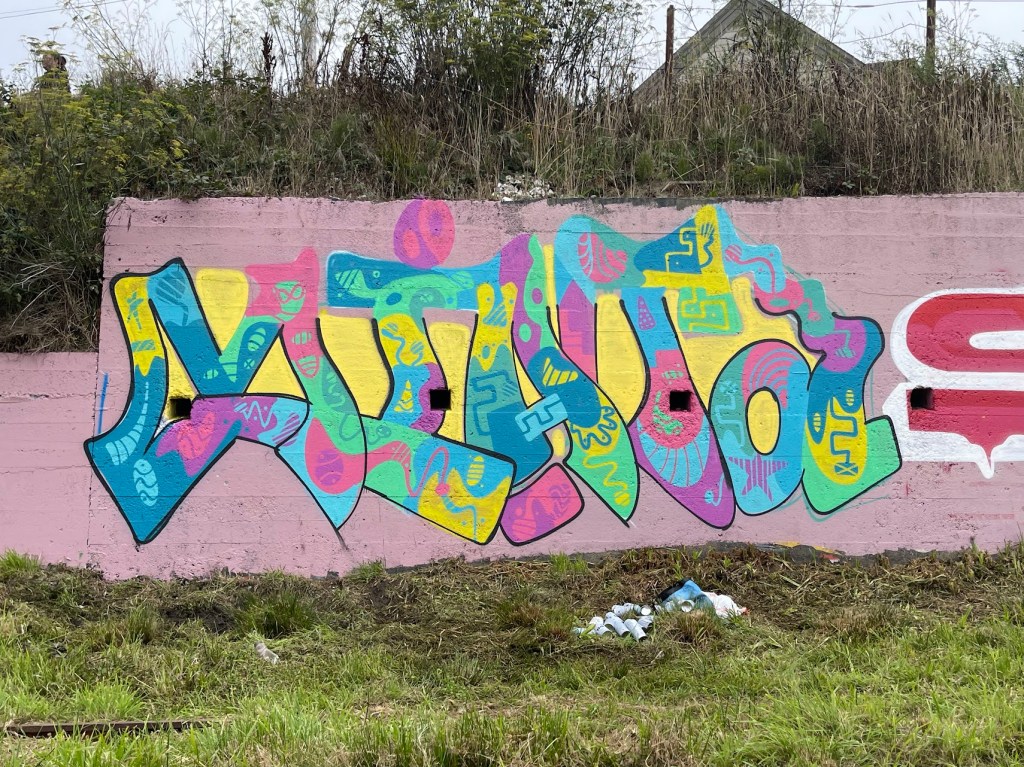


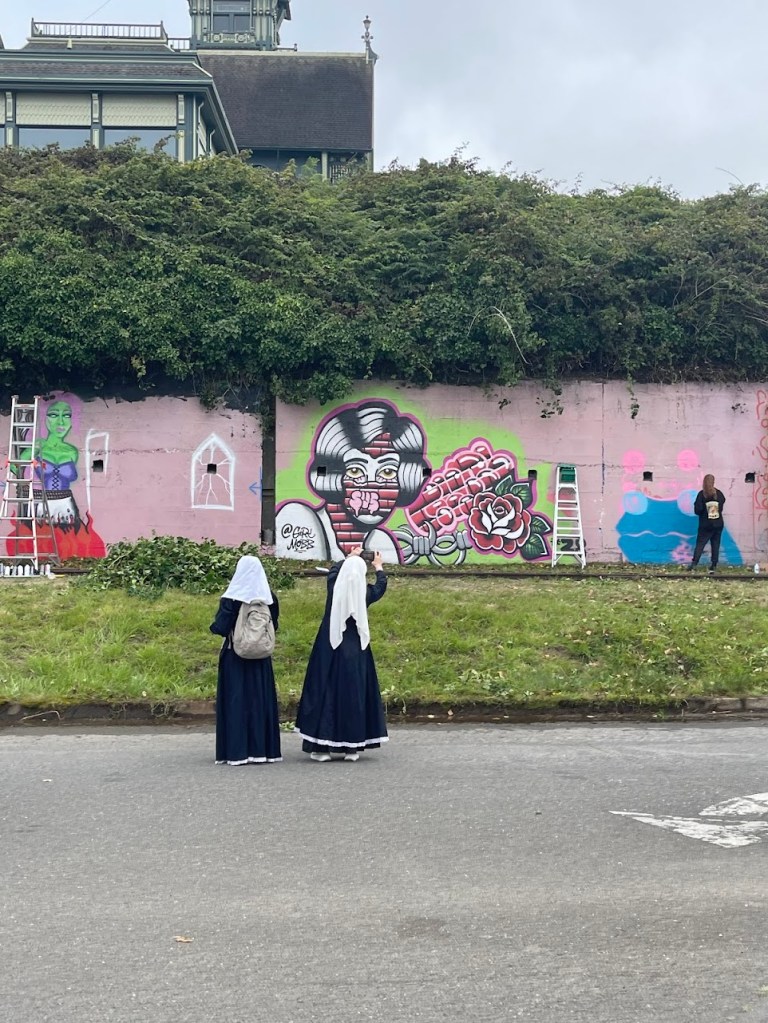


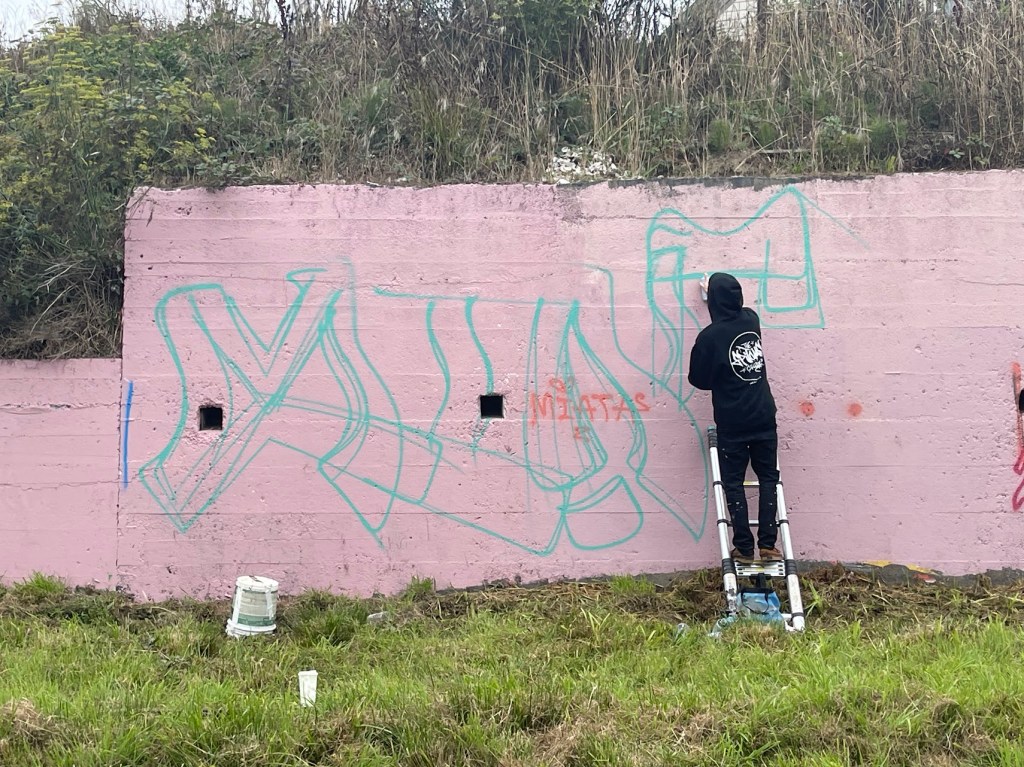
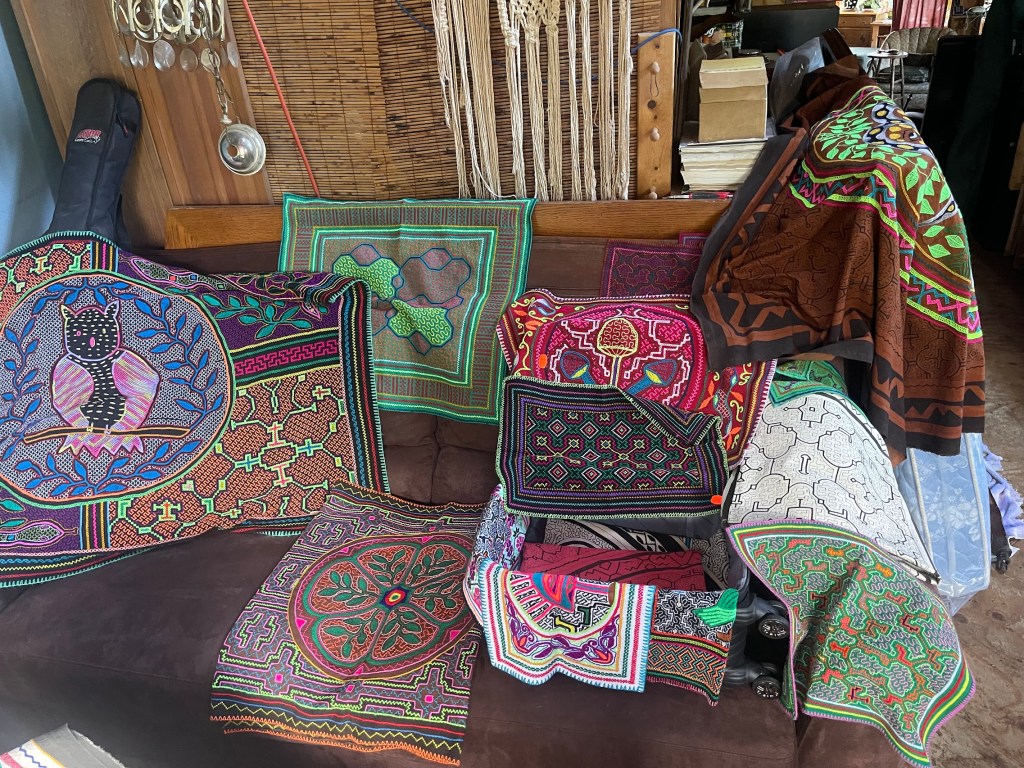


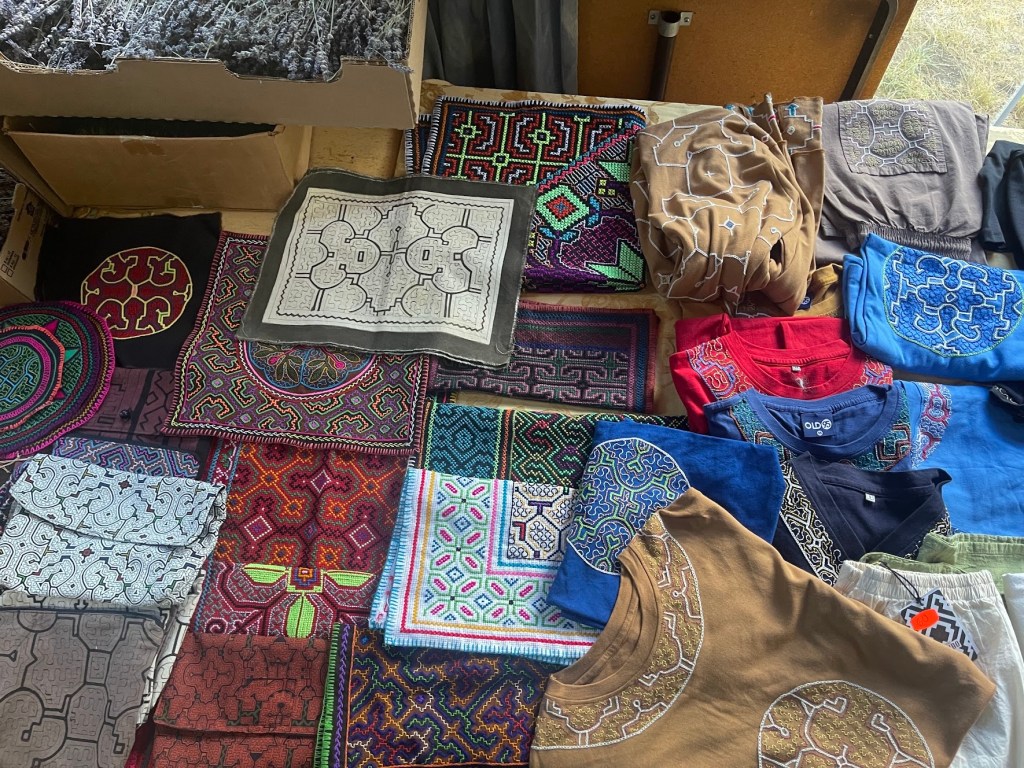


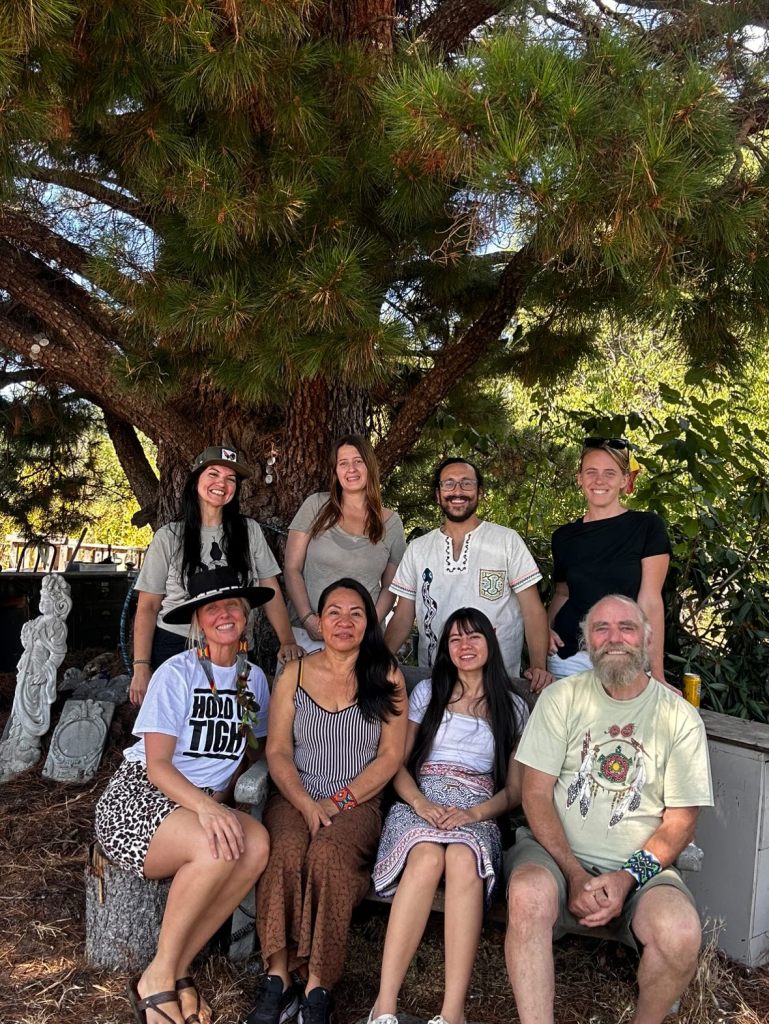
















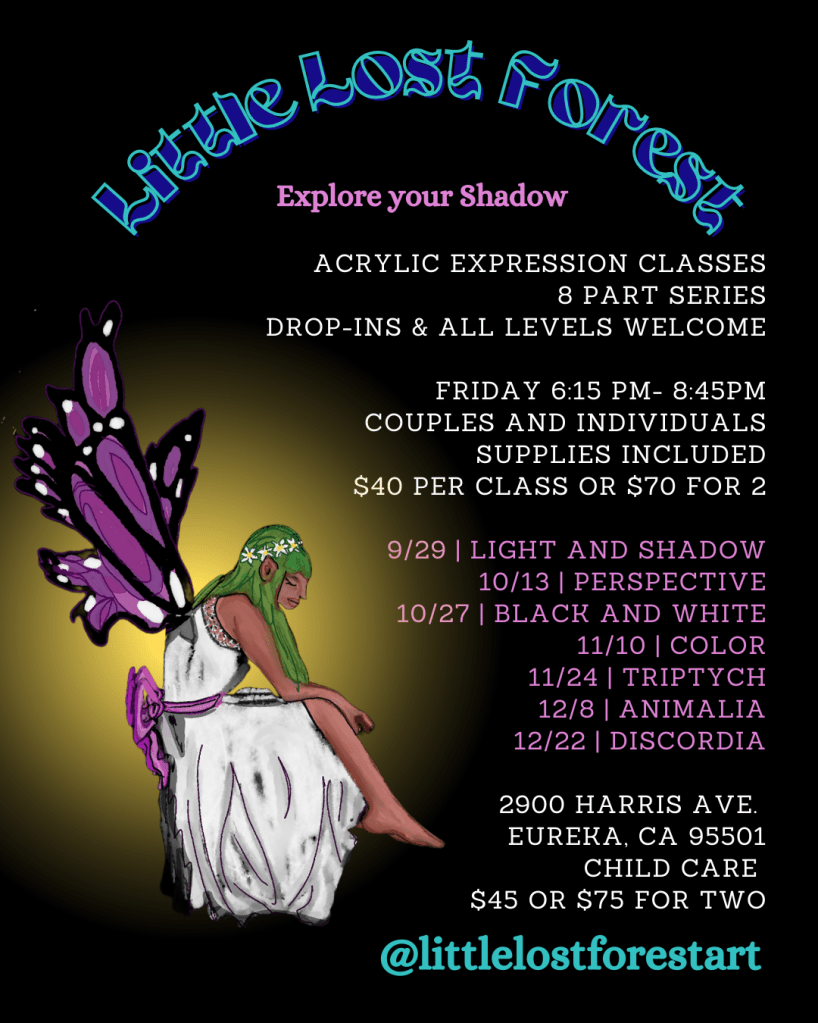


 Little Lost Forest