Mean is a creative autobiography and true-crime narrative that follows Myriam Gurba from childhood to adulthood as she confronts rape, racism, cultural identity, and personal transformation. Haunted—literally and figuratively—by the ghost of Sophia, a raped and murdered woman, Myriam is compelled to visit the place where Sophia died. Through this haunting, she faces her own trauma and survivor’s guilt. Gurba’s voice is sharp, defiant, and self-aware, blending humor and horror in equal measure as she examines cruelty, injustice, and the survival mechanisms women develop to exist within them.
The title Mean becomes a lens through which Gurba explores power and pain. The book opens with Sophia’s death:
“Wrecking her makes him feel like she belongs to him” (2).
By beginning with this act of violence, Gurba forces readers to confront the brutality often silenced in stories of women—especially women of color. The murder of Sophia, a Spanish woman killed by a Hispanic man, mirrors Gurba’s own experience with sexual assault and raises questions of ownership, violence, and cultural complicity. Through this, Gurba links her trauma to a collective experience, a bridge between the living and the dead—between victimhood and survival.
When Gurba talks about being “mean,” she often invokes the cattiness of girlhood, but her real subject is cruelty in all its forms—social, racial, and systemic. The word “mean” becomes elastic, stretching from playground gossip to the most profound violations of humanity. She illustrates this concept through humor and absurdity, such as her discussion of the “Michael Jackson donut,” which sparks a debate about whether the pastry—half chocolate, half powdered sugar—is racist. Gurba observes:
“What I found most interesting was that everybody dominating this debate was white” (163).
Her point lands sharply: conversations about racism are often dominated by white voices, leaving people of color excluded from their own narratives. Gurba writes that the opinions of the two “mud people” in the room were never solicited—a darkly humorous yet devastating critique of white-centered discourse on race.
Another central motif in the book is the phrase “white girl,” which Gurba uses as both political and literary shorthand. It exposes the subtle hierarchies that shape American culture and classrooms:
“White girls from the English-only classes refused to socialize with girls from the bilingual classes” (19).
The term becomes layered—a symbol of privilege, separation, and the ways in which whiteness is normalized. Gurba’s repetition of “white girl” challenges readers to recognize how language itself can uphold systems of exclusion. She recalls moments of alienation and microaggression, from classmates to family acquaintances:
“‘What is this?’ in that supremely bitchy California-girl accent some white girls reserved for interrogating my mother’s hospitality” (19).
Through these moments, Gurba transforms “mean” from insult to insight—a way of naming the everyday cruelties that shape a person’s world.
As I read this novel, I found myself turning the question of “mean” inward. What does it mean to be “mean” as a woman, a survivor, a writer? Is meanness cruelty, or is it the courage to hold boundaries in a world that demands your silence? Gurba redefines the word as an act of reclamation: to be mean is to speak, to refuse apology, to survive.
In my own writing, I hope to evoke this same self-examination—to make readers question the norms we excuse, the systems we uphold, and the voices we choose to hear. Mean reminds me that storytelling is not just about empathy; it’s about confrontation. It’s about being brave enough to look directly at the discomfort—and to speak from it anyway.
On November twentieth, around nine in the morning, Natascha and her family friend, Sam P, met with Satya at Ramone’s Bakery and Coffee in Eureka. Their conversation became a deep dive into Satya’s history in the healing arts and the many ways she serves the community as a facilitator of sound baths, microdose offerings, yoga, reiki, and tuning fork sessions. Satya has brought peace of mind to many by offering a safe space to release, recover, nurture, and learn how to move through life’s challenges with greater ease.
As we enter the winter season, we invite you to explore the power of sound healing and discover how giving this practice a chance can enhance your life in the most positive way.
Natascha: Good morning Satya. Thank you so much for joining me today. At Little Lost Forest we’re always honored to highlight local healers, artists and visionaries. And today we’re in for a special treat. Humboldt County sound healing artist Satya Earth, founder of Satya Healing, is here to share her journey, her craft and the heart centered intention behind her work. I first discovered Satya during one of her sound healings and mushroom microdose sits. Over the course of about 90 minutes, a small mushroom microdose, gentle yoga and closed eyes opened the door to a vivid inner landscape. The soundscape she and her collaborators created carried me from the depths of the ocean to a fairy lantern forest, and eventually into the far reaches of space. The magic she facilitates comes not only from the instruments she uses, but from a deep well of knowledge, intuition, and care. Today we dive into that magic, its origins, its purpose, and the person behind it. Can you tell us a little bit about yourself?
Satya:Thank you for having me here. It’s really great to see you. A little bit about myself. I’m a mama of two little ones. They are my whole world and have been a driving force for my evolution in the landscape of sound healing, energy work and working with medicine. My background comes from psychology. I majored in psychology and got my bachelor’s in 2014, and from there I decided to branch out and study different forms of holistic healing. I studied yoga and herbalism, energy work, and sound healing, and have now branched out into the realm of working with psilocybin.
Natascha: Yay! Thank you for sharing. When did your journey with sound healing begin?
Satya: I attended my first sound bath with Jen Madrone back in 2017, and that was an initiation into the world of sound healing and experiencing. Noticing where I was in my life at that time.
Sound healing can stir up a lot of things for us, especially if we’re just beginning the journey. Throughout the years, I’ve gathered tools to support integrating the experiences and emotions that arise when receiving sound healing. This has helped to make it easier to understand and navigate the things that come up. It can really bring up a lot of stuff. Like old stories and thought patterns. Bringing them forward to be acknowledged and felt. It was a beautiful introduction to getting to know myself. The stories that I hold and how to how to work with them and how to transform them. In 2021 was when I bought my first gong and that was inspired through the birth of my second daughter. I had a very challenging experience with postpartum depression. In a place of desperation to not return to pharmaceuticals, I searched online things that could help my nervous system and help with depression and anxiety. Sound healing was the first thing that popped up. I was reminded of my experiences with Jen and decided to take the leap to purchase my first gong.
Natascha: That’s beautiful. I really love how you worked against the postpartum and found natural ways to heal instead of falling into it. Did you have any mentors or influential teachers along the way?
Satya: Absolutely. My number one mentor, her name is Josie Bravo. I met her when I was when I was in a hospital. I had a really hard adolescence; childhood. She met me at some of the hardest times in my life. I’ve known her for 29 years now. She has been a guiding light and I wouldn’t be where I am today without her support.
Natascha: Wow.
Satya: She’s been a really big influence. Like a guardian angel for me along this path. My other mentors are Jen Madrone. She’s an incredible being, here in Humboldt County. I’ve studied Reiki II and my Master Reiki course with her. A couple other influential teachers are Eileen McKusick. She’s the woman that discovered tuning the human biofield. I love blending my own interpretation of her teachings into my sessions. I scan the field with a tuning fork and listen for different sounds and that resonate from the tuning forks to let me know where there is perhaps some stuck energy that can be brought into coherent energy. Another incredible teacher that I haven’t had the opportunity to learn from yet, but I’ve heard great things of his name is Mike Tamburo and he will be here in Humboldt County in March 2026.
Natascha: What will Mike be teaching you or working with you?
Satya: He’s a gong master. He’ll be doing three day long class for a few days. And we’ll be learning different techniques and styles of how to work with sacred healing instruments, mainly gongs.
Natascha: During your sessions, there’s usually other people in the room that are playing the instruments along with you or offering the mushroom micro-doses. Who do you choose to collaborate with for your sound healing sessions?
Satya: I just collaborated with Fallon Orr. We had a beautiful offering where we offered microdosing, yoga nidra and sound healing. It was a different space from the class that that you attended. More stillness and opportunity to reflect in that stillness. It was very supportive for rest.
I just received my certification as a psychedelic facilitator through Emerald Valley Institute. After sharing medicine in the community for nearly 4 years, I decided I wanted to learn more about the history, culture and varying approaches to holding ceremony in psychedelic spaces. Another person I have worked with is Michiah Tobin. She’s an acupuncturist based out of Fortuna. I love blending multiple modalities together for a transformative intentional experience.
Natascha: Well thank you. How do these sounds and frequencies impact your participants?
Satya: That’s a great question. Each person and how they experience sound is very unique. And each session is very unique. Some of the things that I have noticed participants experience would be emotional clearing and release. I’ve heard some really good feedback on how people will come into a session feeling highly stressed and overwhelmed with life and would leave with a new state of grounded clarity. The beautiful thing about sound healing is that it creates neural plasticity and neurogenesis. By approaching your session with an intention this offers us an opportunity to see, feel and think differently about the things that we’re experiencing in life. And like you said, when we’re in this space there are visuals, there’s feelings of floating. It can be a psychedelic experience without the medicine, with the things that we see and that we feel. It offers a place of deep rest for the nervous system.
Natascha: Absolutely. I definitely found a release for my anxiety when I go to your sound healings and I feel really well going back into the world, more prepared. Your vocal work is especially moving where you learn to sing? What language or tradition are you drawing from?
Satya: I’ve been singing since I was three. Song has been a part of my whole life. I was in choir for eight years, and I was in a band for a couple years. Interestingly, I always felt nervous. And to this day, I still feel some nerves before I sing. But, after I traveled to India back in 2014, I was studying yoga there and we learned a lot of mantras and Sanskrit prayers. It is in this place of prayer that the anxiety dissolves and my intention of sharing song expands. I sing in Sanskrit, and the songs that you’ve probably heard are called the beginning prayer, the ending prayer and the Anahata prayer.
Our voices are our most powerful instrument, and it’s my mission to continue sharing this instrument, along with these other instruments and empowering other people to come into a place of comfort in their own body and their voice. I encourage people when I’m singing, when the sounds are going; we can hum, we can sing too, and start to vocalize because that’s how we can move energy throughout our body.
Natascha: Yeah, that’s some of my favorite moments. I really enjoy your singing, and I like that you pushed me to sing and your participants to sing, because oftentimes I don’t use my voice. It does resonate with me, and it does bring something positive out. So thank you for doing that. What dreams and aspirations do you have for such a healing moving forward?
Satya: I love this question.
Natascha: What’s next?
Satya: Yes I am so excited about what’s next.
I am creating some packages to make these experiences more accessible. After going through my psychedelic facilitator training, I really want to work with marginalized communities. Whether that means I look into what it would be to become a nonprofit or I look into fiscal sponsorship. I really believe that this type of medicine is something that everybody needs.
Natascha: Cool. I can’t wait to see where you go with it. Was there anyone who inspired the evolution of your art or an event? Possibly.
Satya: Absolutely. I had some moments to reflect on this, and the evolution of my art truthfully, has come from a place of pain and suffering and knowing that these wounds can be transformed. And I’m speaking from a mother wound that without that experience and without those wounds, I wouldn’t be where I’m at today. Having a troubled relationship inspired me to ask: how can I best show up for myself and how can I best show up for my children and for my community? How can I create this space of safety and trust within myself and within my community?
I’ve been learning different communication styles, like compassionate communication, paraphrasing and reflecting. These are all practices that I’m in a space of learning right now and eager to implement into how I parent my children and how I speak to myself, how I speak to my community and to my clients, and I’m really encouraging all of us to become more curious about how are we communicating with ourselves? How are we communicating with our loved ones? Because this is where we can we can really come together and come together in a space of safety and trust.
Natascha: I think you’re really advocating for people that are struggling, that there’s a light on the end of the tunnel. As a mother, too, there’s a lot of stress in motherhood and seeing you blossom and bloom that shows that we don’t have to be the pain of our families, but that we could create our own positive walk of life and the way that you impact your community. It loudly speaks that you walk the walk that you’re not just talk. So thank you for doing all the all the work you do with us here in Humboldt. What are your thoughts on human consciousness?
Satya: Another fabulous question, Natascha. My thoughts on human consciousness; human consciousness to me, is a state of being. I come from a spiritual and perhaps Buddhist approach where I believe that all living sentient beings from our animals to the trees to the rocks, to the dirt, to the insects. We all have a consciousness. We are all here coexisting as one on this cell of Earth. And when we can come into that place of connection, we can really start to come together in this collective ecosystem.
Natascha: That’s beautiful. How does that deconstruct the ego when you come into a mindset of a universal consciousness?
Satya: Mmm, yeah. We’re definitely deconstructing the ego and perhaps deconstructing the hierarchy of humans being at the top and everything else being below us. I know that there is definitely some advancement in technology where we are now having the opportunity to communicate with our animal friends. And it is deconstructing how we view our existence and how we view the existence of other beings in this world. It’s really powerful. We can come into this from a wholehearted space, or we can, you know, use it for power. So it’s really up to the individual and how we approach this type of technology. Language is technology too. You know, it’s like these things are always advancing. And so it’s like, who is behind this and what are our intentions behind it? And it’s how we show up and how we reflect that into our circles and into our community. And that’s when we really have that opportunity again, to come together into this collective space of awareness, which is kind of linking to that state of consciousness, the consciousness and the awareness, how we show up, how we reflect, how we have awareness of our energy and how we impact the environment around us. I feel like I could go on forever.
Natascha: I love this, I just want to dig a little deeper into it. You mentioned animals briefly. Is there a connection between your sound healing and nature? Maybe you play your music outside, or you feel a deeper connection to the earth and to the animals when you perform sound healing?
Satya: Absolutely. I have a very deep connection with the elements and with nature. When I take my gong out and I play next to that maple tree and Cheatham Grove, I’m playing for that tree and I’m playing for the land. And I just imagine this time lapse of this tree living there and all the things that have surrounded it. And for me, I just, I want to be with that tree for that moment and play the sounds. And when I play my infinity disc, that sounds like the ocean, I’m like, man, this tree won’t ever have that opportunity to be by the ocean. So maybe I could bring the ocean to the tree.
Natascha: Cool and lastly, what are your beliefs or reflections on the afterlife?
Satya: Reflections on the afterlife. I do believe that we are reincarnated. I do believe in karma. I believe that the things that we’re experiencing in this life are perhaps a reflection of the life we’ve led before. I also go between this, you know, when we die, we go into the void. We go into emptiness. No one knows. And we have access to so much information that we can decide what we want to believe. But we truly just don’t ever know. So when I think about what the afterlife is, I like to consider a lot of things. But I also don’t have a concrete belief because nobody truly knows.
Natascha: Absolutely.Do you have any advice for someone that might be depressed, anxious, or struggling in their life? How to get out of that negative spiral?
Satya: Well, there are many approaches to helping ourselves through these stagnant, dark places. The first approach that I like to suggest is, depending on the severity of it, is having a counselor or a therapist. Somebody to offer an objective perspective, somebody who will support us in our stories that we share and perhaps guide us into healthier states of thinking. Also bringing in the element of what are we putting in and on our body. And that’s not just food, that’s not just cosmetics. That includes the things that we watch, that includes the people that we surround ourselves with. That includes supplements that we’re taking. So it’s really a whole approach when we start getting into this world of depression and anxiety. I mean, we can look at our gut microbiome that’s definitely linked to anxiety. Parasites are linked to anxiety. And then when we start to go in a little bit deeper outside of the the physical being of depression and anxiety, we can start to go into like the emotional body and the ethereal body, and that’s where we can bring in these alternative modalities to help us. That could be energy work, that could be sound healing and microdosing. But then again, drawing it back into the self, it’s really about our perspective, how we speak to ourself. So again, coming into that tug of war that we experience when we’re going into this place of depression and anxiety: The stories that we tell ourselves, how we talk to ourselves. And a lot of this is linked to how we were raised and how we were talked to and how we were taught to manage these things.
Satya: In my psychedelic facilitator training, we learned about this thing called the default mode network. And when we’re born, up until we’re about four, this network in our mind is very malleable. But around the age four, we are now learning to exist in the world through the way that we are talked to by our family members and the authority around us. And those pathways start to get very rigid. And so then we start existing in that story. So when we are working with psilocybin in larger doses, we have the opportunity to do what is called a reset dose, where the default mode network gets shut down. And this is where we have access to new pathways, new ways of thinking and feeling existing, perceiving and we want to be slow with this. Whenever we’re in this place of depression and anxiety, how long did it take us to get here? How long have we been in that place? And just know that there’s no one pill. There’s no one experience that’s going to shift things. This is a practice that we have to implement and be dedicated to daily. The most important facet of that is who are we surrounding ourselves with? Who is our support system, our community, the classes we attend, the people we talk to. These are all factors to consider when we’re starting to address these symptoms of depression and anxiety.
Natascha: Coming into the winter, is there are certain practices that you do seasonally; more winter style forms of healing?
Satya: When we come into the winter. I personally think about darkness. I think about going into a place of hibernation. I think about what is nature doing? And I do my best as a single mother, to slow down. Some practices that we can do is look at how we can slow down. How we can create spaciousness and just noticing when we are overdoing. When we are doing too much and just taking a moment to step back, reflect and say “hey, I need to cancel.”
Satya: One practice that I learned recently that’s been so helpful, is tuning into our breath and tuning into what it means to clear our energetic field. When we are starting to experience that tightness in the body, or we notice we’re getting really overwhelmed and feeling frantic. Come back into the breath. Breathe through the souls at the feet.
Satya: And as we’re exhaling, we’re releasing this energy out through the crown of the head. And this is the cycle. Breathing in through the feet, coming through the center of the body, breathing out through the crown. And as we continue this breath, we’re starting to think about, I’m breathing in calm and I am letting go of any tension. I’m letting go of any chaos that I’m holding in my belly, that I’m holding in my heart. I’m holding in my brain. I’m letting that go. I’m returning it to sender. I’m returning it to the universe. And I love this practice, especially for people who are highly sensitive or for highly empathic people. People who tend to absorb energies easily. This is an amazing breath practice, because then we get to tune into not only our breath and clearing our fields, but we’re starting to acknowledge what is mine and what is not mine. What am I holding on to? Maybe I’m holding on to something that I experienced yesterday, and now it’s time to let that go. And it’s time to bring in that clearing and that self-forgiveness, so that we can have a clear field and show up for our friends and our family in a more balanced state.
Natascha: As we move into the winter, sound healing offers a powerful way to calm the nervous system, reconnect with the heart, and bring clarity to the mind. Satya, thank you so much for your time and for sharing your wisdom with our Little Lost Forest community.
Satya: Thank you so much. I appreciate you. Thank you for calling me in and sharing these moments together. Blessings.
The Fifth Season: Every Age Must Come to an End by N.K. Jemisin
The Fifth Season is a science fiction novel set on a supercontinent called the Stillness. The narrative alternates between two third-person perspectives—Damaya and Syenite—and one second-person perspective, Essun. Syenite travels with her assigned mentor, Alabaster, and their relationship begins in hostility but evolves into mutual understanding and respect. Meanwhile, Essun journeys with Hoa and Tonkee in search of her daughter, Nassun. Through her grief and drive for revenge, Essun gradually rekindles her hope in others, even those of a race that once shattered her past. Damaya’s story, told from childhood, introduces the world of the Fulcrum and the deceit of the Guardians, which shapes the novel’s class system. In the end, all three main characters—Damaya, Syenite, and Essun—are revealed to be the same person, leaving readers eager to continue the trilogy in search of an answer to the haunting question: Where is Nassun?
In this essay, I closely examine Syenite’s relationship with Alabaster, focusing on the literary device of the relationship arc, and tracing the development of their connection over time. I also explore how this arc reflects Syenite’s relationship to herself across her three identities.
Syenite faces a social obligation to maintain a sexual partnership with her mentor, Alabaster. As an orogene, the Guardians have trained her to obey. Because of her strength, she is expected to breed with Alabaster as part of their mission:
“If Syen isn’t careful, if she pisses off the wrong people, if she lets herself get labeled difficult, they will kill her career and assign her permanently to the Fulcrum, leaving her nothing to do but lie on her back and turn men’s grunting and farting into babies” (71).
Alabaster’s response to this forced intimacy defines the tension in their dynamic:
“Because that’s hate in his face” (72).
From their first interactions, the reader senses an unjust world—one that both characters resist in their own ways. After their first encounter, Syenite feels ashamed, while Alabaster remains emotionally distant. Their sex continues, mandated by the Fulcrum’s breeding program, and Alabaster observes:
“I think you hate me because… I’m someone you can hate. I’m here, I’m handy. But what you really hate is the world” (149).
Alabaster knows that any child they conceive will be enslaved to power a node, “chained to a wire seat and drained.” Though the Guardians paired them for power and procreation, Alabaster instead mentors Syenite to question authority and imagine freedom. When they reach the island of Meov, he remarks,
“They don’t kill their roggas [slur for orogene] here. They put them in charge” (296).
Later, their relationship deepens when they take on a third lover, Innon. This is the turning point—their intimacy becomes mutual, and the idea of a child shifts from duty to love.
“It’s just been so long, Syen… Not since he’s had a lover he wanted” (354). This love trio embodies a sense of hope and agency: “‘Baster doesn’t want her that way, nor she him. And yet it’s unbelievably arousing for her to watch Innon drive him to moaning and begging…” (372).
Syenite’s relationship arc with herself mirrors the world’s cyclical “seasons” of disaster and calm. As Damaya, her relationship with her parents is dark:
“…and hates herself, because of course Mother and Father are selling Damaya if she can think such thoughts” (27). When she is handed over to Schaffa, her Guardian, he breaks her hand to enforce obedience, saying, “Never say no to me… I am your Guardian. I love you” (99). Her belief that “the Guardians are the closest thing to safety a rogga will ever have” (329) exposes the depth of her conditioning. We see this again in Syenite’s awareness: “…that she is a slave, that all roggas are slaves, that the security and sense of self-worth the Fulcrum offers is wrapped in the chain of her right to live and the right to control her own body” (348).
When Syenite later faces Schaffa again, she must finally say no—to end the cycle of control. Through this, the reader understands the whole arc of resistance and self-realization across her identities.
The novel’s structure allows us to recognize how Syenite’s history shapes Essun’s present. “Once you lived surrounded by the walls he built for you, in a home you made together, in a community that actually chose to take you in” (407). The rise and fall of peace between “seasons” parallels Essun’s struggle for survival. When Alabaster is taken by a stone eater and Syenite is left alone to protect their son, Coru, the irony deepens when we later discover that Hoa—also a stone eater—genuinely cares for Essun.
“But I wanted to travel with you… I like you” (396).
Relationships are central to both my storytelling and personal philosophy. Self-discovery often begins through connection with others—through those who choose to invest their time and care. This truth is mirrored in Syenite and Alabaster’s relationship: although it began as an obligation, they ultimately choose one another. Alabaster gives Syenite a glimpse of happiness and freedom she has never known—from her family, the Guardians, or herself. The relationship among the three versions of Syenite reflects the many selves that exist within every human life and how our past continually shapes our present. This lesson inspires me to write deeper, more honest relationship arcs in my own characters and to embrace how lived experience can transform the people we become.
Work Cited Jemisin, N.K. The Fifth Season. Orbit, 2015.
By Natascha Pearson Jones, Stephen Graham. The Buffalo Hunter Hunter. First Saga Press hardcover edition, Saga Press, 2025.
Stephen Graham Jones’s Buffalo Hunter Hunter is a historical horror novel that blurs the boundaries between myth, memory, and morality. Set across multiple timelines, it follows Pastor Arthur Beaucarne, who in 1912 records the confession of Good Stab, a Blackfoot vampire recounting his experience during the 1870 massacre of the Blackfoot people. As settlers destroy both Native lives and the buffalo that sustain them, Good Stab becomes a living symbol of survival, guilt, and decay.
Generations later, Etsy, Beaucarne’s great-great-great-granddaughter, discovers his logbook and, as a journalist, seeks to understand the past that haunts her family. Her search culminates in a confrontation with Good Stab himself—a scene that serves as both a power shift and a moral reckoning. With Good Stab’s identity and survival in her hands, Etsy must decide whether to end his life or allow him to continue feeding. Her choice becomes an allegory for agency, accountability, and inherited trauma.
The novel’s tone is brutal yet strangely meditative, combining the grotesque intimacy of horror with the restrained rhythm of oral storytelling. Jones describes the settlers’ violence toward the Blackfoot people and the buffalo with chilling precision, but Good Stab’s narration delivers these horrors with such calm that the reader feels both repelled and mesmerized. His storytelling maintains a balance between intimacy and distance, as if ritualizing pain into memory.
Good Stab’s voice grounds the story in Indigenous experience and language. Phrases such as
“Beaver Medicine wasn’t for me anymore” (115) and “…and my eyes are slitted down like this because I’m already looking ahead…” (41) root the narrative in Blackfoot cadence and worldview. Even when recounting unspeakable acts, the tone remains measured, spiritual, and deliberate—echoing the endurance of a people who have seen everything taken from them and still continue.
Good Stab’s recurring reference to Pastor Beaucarne as “Three Persons—Father, Son, Creator” (28) interweaves Christianity and Indigenous spirituality, merging sacred language with horror. Jones collapses faith and flesh, the cross and the fang, into a single mythology. The calm precision of his prose heightens the horror:
“The hide-hunters pulled the boy’s pants down and bent him over one of their knees, and the other one dropped down behind him, was untying his pants that were sticky with blackhorn blood” (211).
The violence is shocking, yet the narration remains detached, forcing the reader to inhabit the same emotional distance the traumatized narrator does.
In classic Western stories, settlers are often the heroes, but Jones subverts this entirely. Here, the Native vampire—traditionally cast as the monster—becomes the moral center. The reader roots for Good Stab even as he drinks blood, because his existence reclaims power from the colonizers who destroyed his people. We come to trust him, even during the most brutal moments, as a vessel of justice and remembrance.
Jones also threads a powerful commentary on religion, assimilation, and identity. The vampire becomes an apt metaphor for colonization—feeding on the living, erasing culture, and leaving behind bodies stripped of spirit. After the massacres, Native survivors are forced into Christianity, captured in images of children dressed in Western clothes, their hair cut, their heritage erased. The transformation from free people to “civilized” captives mirrors Good Stab’s own curse—immortality as a form of damnation.
As a writer, I’m deeply inspired by Jones’s craft, particularly the way he merges historical realism with supernatural horror. In Discordia, I aim to draw from similar techniques—using rhythm, diction, and cultural voice to create immersive worlds that echo the truths of history. Jones’s prose captures the daily life, geography, and humor of the Blackfoot people in brief but powerful glimpses:
“This is how we’re born into the world, and this was what was happening to me, I was being born again, but not like the Black Robe said when he baptized all the Pikuni in Big River, when I was throwing up Whitehorn milk and Wolf Calf was patting me on the back and smoking his short pipe and chuckling” (95).
In just a few lines, he conveys rebirth, cultural duality, and embodied experience. His language carries both the sacred and the horrific, allowing the past to haunt the present without losing its humanity.
By drawing from Jones’s approach—merging brutality with stillness, history with myth—I hope to create worlds where horror and hope coexist, and where the act of storytelling itself becomes a form of survival.
Perhaps you’ve read Beloved by Toni Morrison and seen Sethe as a cold-blooded killer who abandons her parenting to her daughter, Denver, and gradually loses her sanity after escaping slavery. However, I believe the brutal hardships of slavery deeply shaped Sethe’s motives- her act of killing came from a desperate desire to protect her child from a life of bondage. You might also think Paul D left because he couldn’t handle Sethe’s trauma, but I’m convinced he walked away not from her pain, but from his own inability to confront the constant threat and trauma that came with being Black in that time. Before judging Sethe, I recommend watching this video, which offers a perspective on how societal oppression affects individuals and connects these historical injustices to modern issues such as abortion laws and ICE policies.
This is a seven-week series of book annotations. Please read the books and join the discussion.
Natascha: I’m here at Azila’ Cauldron in Eureka with Roman, a visionary artist and OG creative force of Humboldt County. My name is Natascha, and I want to thank you for tuning into the Little Lost Forest blog. I’m beyond excited to dive into the art, theory, history, and creative journey of Roman a.k.a Synchro Mystic. How are you doing?
Roman: Doing pretty good. Thank you.
Natascha: Awesome. Roman, where are you from?
Roman: Mind, body or spirit?
Natascha: All. All of the above.
Roman: I typically say that that way because my body is from Mexico. My spirit is universal, and my mind is global. My mind knows and exists and is part of a global reality that we’re perceiving together. And that definitely is who I am. But also, my physical body is a certain part of who I am, and my spirit is definitely on this mission. That is who I am as well. And those three are distinctly different things in a certain way, and my job is to try and align those together, that’s why.
Natascha: Your universal consciousness has landed you here.
Roman: Yes, but so many dimensions we can talk about that from. And that’s why I like to do art.
Natascha: Wonderful. Well during these interviews, feel free to dive into rabbit holes. We’re all really interested to see what inspires this beautiful art you make.
Roman: Thank you.
Natascha: How old were you when you first started drawing and creating?
Roman: I called myself, and this is, like, one of the most profound and silly, experiences in my life. I called myself an artist at three years old, and I specifically remember this experience that did that. And one of my older sisters came home from school with this big pad of paper, and it looked huge. But then again, I was a little kid, so it might have been a normal sized pad of paper. [Natascha’s Laughter] But then she puts it down, and then she shows me her drawings and I’m like before this moment, I considered myself a magician. And I was like, always pretending to make things disappear out of handkerchiefs and silly things that I saw. And I thought, I’m a magician. So, there’s first, there’s that. And I think that’s very symbolic because I think art is very magical. But anyway, I saw this sketchbook that my sister had, and one there was a crocodile she drew, and I could see a crocodile on this paper with lines drawn on a two-dimensional flat piece of paper, and I could see the three-dimensional crocodile that it was. And I was like, wow, that’s cool. And then the next one was a girl in a bikini. And I was like, that’s a girl in a bikini. I know exactly what it is. And it’s just a few simple lines on a flat piece of paper. And I was like, that’s magical. [Natascha: Mhm.] So, from that moment onward, I instantly call myself an artist, even though I didn’t know how to draw or whatever, because, uh, because at first, I was a magician. So, what did you have to learn?
Natascha: Would you say at a young age you related magic to art.
Roman: Instantly at three years old.
Natascha: That’s wonderful. I think you kind of answered this question, but what initially inspired you? Maybe outside of your sister’s drawing, what were some of the inspirations that have ended up fueling your creativity now?
Roman: Oh, man, I could have countless and countless stories, but I guess one fundamental, um, experience was, uh, being in Seattle during a very critical time in history, and I mean that in many different ways. The music scene and then the technological explosion that was coming from Microsoft at that time, an era when the very beginning and I tried LSD and, something I was never really too proud to boast about. But I also think that it’s a very important thing to express, that there’s these moments of that we can utilize as tools to activate something. Because on my psychedelic awakening, I definitely had so many things come together. And it isn’t all based on the psychedelic awakening. The Psychedelic Awakening gave me a view into the things that were already happening in my life. Like, calling myself a artist/ magician at three years old and a lot of mystical experiences that I never really understood growing up. That happened throughout my life. But for some reason, having a reflection like psychedelics or something external outside of us, like aliens or whatever, if you’re blessed enough to see that. But these external reflections allow us to look back at ourselves to witness these things from a third point perspective. And that helps us wake up, you know, like, oh, yeah, I notice these patterns throughout my life, I’ve never really realized how to deal with those experiences. And sometimes when you have like a psychedelic awakening, it gives you an angle to look at those things through.
Natascha: Wonderful. How would you define visionary art?
Roman: Well, visionary art to me means a lot of things. It leads me to the next thing I’m going to talk about. But just to answer your question first is, you know, at first when I got introduced to visionary Art, it was, outsider art. That was because I looked at a visionary art, magazine when I was really young, and I remembered i. It was more from people that I didn’t go to school to do art. For some reason, it was like, they call them outsider art. I thought that was interesting because there’s a visionary art museum with, uh, all these artists in there before the psychedelic visionary art movement. So then when they called the visionary art movement visionary art movement, it kind of like, wasn’t sure about that. And also, to me, vision means of our vision. But I don’t know what other art isn’t from our vision as much. (Natascha: Okay.) But don’t get me wrong, I still use that title to express our movement of artists because it’s something that people recognize right now within our circles of people, which is very powerful.
Natascha: Mhm.
Roman: However, I don’t think that it specifically talks about the movement that I’m a part of which I feel like the people of artists that you recognize yourself liking to are not a part of necessarily only. I created an art movement called the Interdimensional Art movement. (Natascha: Lovely.) And I even told Alex Gray about these things before we named the thing visionary art movement. And this was a long time ago. And he never even heard of that. And he really was vibrating with that idea, too. Which is really cool to always be able to share your ideas with other people and get reflection. And the Interdimensional art movement the acronym is I.M. (Natascha: Nice.) It’s based on the finite of yourself, your personality, your ego or whatever it is you’re that you’re wanting to express. And then the full title, Interdimensional Art movement has no limits. I think that’s more true to the what the visionary art movement that we synchronize with at the moment.
Natascha: Interdimensional Art Movement.Got it. Can you share a bit about your history as a visionary artist?
Roman: To simplify things, psychedelic awakening in Seattle. Recognizing everything at once and wanting to be part of an art movement. Because as an artist, you always look back at art movements and you relate to certain groups like the Surrealists, the Pre-Raphaelites, or like any segment throughout history, which is really inspired in certain ones inspired us more than others. Art Nouveau or whatever. I couldn’t deny that I didn’t want- I wanted to be part of a group like that, but there was no real group to that I could associate myself to at that moment. Plus, I wasn’t that advanced. But these ideas were coming. These desires were coming to me. But then I started paying attention to what kind of art movement would I want to be a part of? And then that’s when a lot of answers started coming, and that’s when I recognized, oh, those art movements. And we’re answering these questions that they ask themselves. And that’s why they became art movements, because they were answering a question of defining who we are as a culture. And that’s what creates a movement. And we attract each other that are representing this, this reality together. And then, um, that harmonizes us as a collective.
Natascha: That’s beautiful. Who are some of your colleagues in the visionary art community?
Roman: To me, I love the way you ask because there’s a seriousness to it. And then that kind of makes me laugh because I’m also a space cadet artist. But my colleagues. I’ve been blessed enough to have colleagues of all different sorts. Like, my Seattle experience was pretty profound because, when I was having this psychedelic awakening, and I was reinterpreting reality. And then I was like, I want to hang out with the Beatles. But the Beatles already happened many years before me. So, like, put the vibration I was getting the LSD vibe or whatever, you know, and I was like, wait a minute, I’m in Seattle. [Natascha laughs.] Just to bring that into perspective and for a few many years I would keep on running into people like Nirvana, Soundgarden, Alice in Chains. And this is my canvas. And I played in this dimension for a few years of running into these people all the time, getting to know these people from different perspectives. Like, I have so many memories to even remember at the moment, but one of them that’s on my mind right now is, uh, Soundgarden when they were recording BadMotorFinger. They had my paintings in the studio while they were recording a little bit of that album and stuff like that.
Roman: I remember going in there and picking up my artwork and them being all, like, polite and kind and gentle, but they’re like, really, they’re all really tall, like over six feet, you know? For me, that’s tall. Just having those memories ingrained in my brain and seeing how influential these people were, it was pretty intense. So there’s colleagues like that, but more precisely, to the art world is like, from Alex Grey. I don’t know. It’s hard to tell because the way that I learned about my colleagues is through a party that we started. That’s why it’s really hard to answer that question, because I have to, like, share the story of why I know these people. Because if I say Alex Grey, who might be the most famous and people recognize him, but there’s. I don’t want to skew the vibe just by that attention when there’s so many other beautiful and amazing artists and they all were attracted from this interdimensional art show we threw up in Seattle. And this was the beginning of before where? Before what we were doing. There was hardly ever, like, a live artist and galleries at events. That’s like something that was, I wouldn’t want to say that we started it, but we definitely made it a ritual.
Roman: And it brought together all these artists that some are now famous visionary artists from Luke Brown, Carrie Thompson. It’s like really challenging to even start naming them because there’s so many that I can’t even name. A lot of them, I’m sure that you would recognize. For instance, like Carrie Thompson came to make the most beautiful stages of electronic events throughout the world. You would recognize them because they’re super beautiful and Alex Gray and Mark Henson. I don’t know if you know Mark Henson, but he’s an amazing artist from not that far from here, from Lake County. And if I showed you his art, you would obviously recognize him.
But the reason why I really enjoy these people is because it was a family calling that brought us together, like these shows that we used to throw up in Seattle. Were exactly that. It really bonded a large group of artists together that never recognized themselves before. Now it’s easy to see. It’s all easily recognizable. But before then, we didn’t have anybody. This was like the beginning of us recognizing each other, which was really amazing.
-Roman
Natascha: Wonderful. At that time, were you part of a community? You say we.
Roman: I would say we because I can’t. I don’t ever want to feel like I’m taking responsibility for it. That’s one aspect which is still egotistical, but I am an ego, [laughter] and it’s very influential to where my idea is coming from. But at the same time, it is a collective thing that I’m just being aware of and I’m wanting to share that with people. So, I say we because, you know, I might have been inspiring certain ideas, but it came to be through a network of different people.
Natascha: Awesome. Okay. So, in your art, you use mixed media in your paintings on canvas, and they’re all very incredible and beautiful. We’ve discussed acrylic paint, pencil and paint pens in the past. Are there other mediums you’d love to work with?
Roman: Did you say airbrush?
Natascha: No.
Roman: That’s probably one of my favorite things, even though my relationship hasn’t been too intense with it yet lately. Definitely airbrush. Cool pencil for sure. Yeah.
Natascha: That leads us to our next question. What role does pencil play in your paintings beyond sketching the initial image?
Roman: Well, lately it’s been like taking a central role and I’ve allowed myself to draw more. Then I keep on realizing why I didn’t allow myself to do that more often. Because it really brings my vision together. Because I really love to draw with a pencil, and it really flows. And it’s a relationship between the lead and the and whatever the paper or canvas or whatever. It allows me to put a lot of detail as soon as I start painting, it becomes an emotional thing and I start relating to the canvas with emotions. And then oftentimes I’m I get lost in the emotions of it. When drawing with a pencil, it’s more mental, more ideas. That helps me like navigate because I’m an idea person. I can constantly be channeling my ideas, but then I bring in the emotions of color, and that’s when it starts to get the feeling. But it’s not as controllable for me.
Natascha: Can we take a second and look at this painting over to your left. Is there a pencil in that painting right there?
Roman: Yeah, this one is one of like I said recently, it’s been taking main stage. This is one of the paintings that I did as a live painting. Mhm. And I just allowed myself to just feel the music and vibe and not care about painting and just draw. So I drew pretty much the whole thing with pencil. And then I loosely started airbrushing and painting on top of it, but without covering the pencil. Of course it’s very raw and very loose. But there’s something I like about it. There’s something metallic about it that I really like.
Natascha: How do you select your color palette? You have a very nice rainbow assortment of colors in a lot of your paintings.
Roman: Yeah, definitely spectral for sure, because that’s the reality that I’ve seen. You know, a lot of my art was inspired by me walking around a lot. So, whatever I could bring with me, because that’s the way I’ve explored my reality. But also, with what I have and what I had for a while was black India ink and with airbrush, and that was it, a big bottle of it. And then I started wanting to paint with color. And then you realize you want the least amount of colors, or that was my experience. And then that led me to like, oh, the spectrum, the southern colors. From here I can do different shades of shades of whatever. That was if I look at it from the physical aspect. Like I said, you asked me who I am or, you know, uh, that’s physical. There’s also the mental and the mental is, it’s more chakra style. I use the rainbow colors because I feel like there are these seven dimensions. Those are perceiving reality. So, to me, when I learned about the chakras, it started making sense.
And being a psychedelic artist, I like to travel to different dimensions, so to speak. And the chakra system seems to be a way to understand that because each of the colors are a vibration and each vibration has a negative and a positive polarity. And if you start understanding how they interact with each other, then you can travel consciousness in that manner.
-Roman
Roman: And that’s the primary reason I use the rainbow color palette.
Natascha: Oh. That’s lovely. I hear a lot of entombment in your body when you paint and meditation as you’re painting and choosing your color palette is very interesting. Can you tell us more about the reoccurring themes in your work, what those might look like?
Roman: Definitely a lot of meditating beings, and sometimes I question myself on that. But like, I’ve had visions of tapping higher states of consciousness and feeling that. And there’s always people in the meditating pose and really high vibration. Maybe it’s just me, but I’ve heard this from other people, too that these beings come in from other or we tap into a vibration or dimension that they are meditating in. When I experience that, it makes so much sense why I would be so infatuated with painting that because I’m not necessarily Buddhist, but I definitely visit the teachings a lot because very super profound. And it definitely helps as far as, you know, being present with yourself. So, there’s all those things too. I definitely have to admit there’s a lot of goddess imagery. A lot of awakening. A lot of dance parties. The dance parties are the symbol for humanity, I feel.
Natascha: Yeah. Who are the characters that we’re looking at? Do they have names? Personalities?
Roman: I don’t think about it too much, because I think it’s just like who we are on one level. So, I don’t really recognize any separation from just a snapshot of anywhere I would go. There are people dancing or whatever. That’s the main thing. But then the other profound thing is, I don’t know if you’ve heard of Tribe 13, but that was like our production company up in Seattle that through the Interdimensional Art shows. And it still continues to this day. And we have thousands of artists connected to that name. I think that you would consider visionary artists specifically. But essentially Tribe 13 is a traveling gallery at different events and that’s what we’ve been doing since Seattle, but definitely been to that gallery like boom Festival and Envision Festival and a myriad of other ones.
Natascha: You know, he just posted this on your Instagram, but can you tell us more about the meaning of Tribe 13? What where did you guys derive the name from
Roman: It’s really profound vision that happened to me as I was awakening. I told you about me about my psychedelic awakening that led me into really questioning my reality and really, dropping out, so to speak, to just meditate on these things. I started recognizing different patterns and the desire to be myself and to be accepted for myself and accept other people for themselves, which is a freedom, and all based on just the basic fundamentals of this country. So, it kind of unified all these things. But I was recognizing that nobody’s really living up to it. What does that mean? So, then I started questioning who I am. Who? Where do I belong? Or as a part of society or whatever? As I was having these profound questions, I would run into signs of different things.
And Tribe 13 stems from those realizations- as I was awakening up to this way of looking at reality- the symbols are infinite, and I can point them out later. But essentially what makes a Tribe 13 member is to recognize that we create reality, which means the only way to tap into this presence is to be in a state of giving and constant giving.
-Roman
Roman: A lot of people say, oh, yeah, it makes a lot of sense. That way you can receive. I’m like, no, that’s not the point. You can’t, um, you can’t live in a binary perspective. It’s got to be a unified perspective. And it has to come from source. So, to become a Tribe 13 member is to recognize that you are marrying yourself to your true self, which essentially synchronizes, synchronizes that to all the other beings that are doing that themselves. There’s no control mechanism, no one’s better or worse than you from from that perspective, those kind of perspectives can only come from the outer world. But the outer world is not a reality because we have to be in a state of giving. If you’re wanting to receive things, and that is one way of looking at it, but that you’re going to receive an illusion. So, Tribe 13 is the beings that are synchronized by giving from within out. Which art is the symbol of.
Natascha: Wonderful.
Natascha: I you’ve been talking about spirituality a lot, but how does spirituality influence your creative process?
Roman: Well, it helps me recognize who I am. You ask me who I was in the beginning, and I can’t answer that from one perspective. Like mind, body and spirit and spirituality. I feel like it helps guide us into what we’re supposed to be doing or wanting to do. And we don’t have to be deceived by an external belief of spirit or whatever, but to really recognize what you’re really wanting to intend as your person on this earth, which is really basic and not spiritual at all. But I would consider that spirituality because, again, chapter 13 and the vision of having to offer yourself from this source, from this center, is crucial to that. And why I would call it spirit is because it’s beyond what I could perceive. If I’m in a state of offering, I will be in this state of awe of the actual manifestation, if that’s going on.
Natascha: Would you say your art is an extension of that?
Roman: Without a doubt. But what is not. Everything is from that state. But oftentimes comes from like a really, maybe not evolved state or a weird interpretation or even negative. All these things have a way of manifesting.
Natascha: Sure. Yeah. Okay. What draws you to sacred geometry?
Roman: I definitely use sacred geometry as a thing, but I never really stick to it like some of my contemporaries, for sure. Um. Uh, yeah, I have, like, this deep gratitude for it. But I was thinking, like, if, uh, sacred geometry exists, then, uh, we are part of this, uh, sacred geometry. So, whatever I do is a part of the sacred geometry, because I can’t have a choice other than to create through the sacred geometry. So then at that point, I’m like, out the door. Don’t pay attention to it.
Natascha: Don’t even think about it.
Roman: I know exactly.
Natascha: It’s in the flowers, it’s already there.
Roman: Exactly.
Natascha: All right. What about your local community? How does that inspire your art?
Roman: That it confuses me, which inspires my art. I think our community and that’s why I, like I make a big deal with the dance party and social event because it gives us a view into our community. Where we come and show our art, our dance, our vibe, our talk, or this or the way we get drunk and shitfaced. I only say that that way because we need a safe place that people get to experience themselves and then figure out themselves so they can correct themselves. And I feel that these social settings in a loving and open environment have a way to heal. So those kinds of experiences wouldn’t be happening. And I just say that because we have a lot of healing to do, and we really need to, like, allow people to people to process their inspiration by not just accepting a rude behavior, but to recognizing and knowing that being recognized also starts having an alignment of sorts.
Natascha: I really appreciate you saying that. What shifts have you noticed in the festival scene, and why do you keep returning as an artist?
Roman: Well, to me, if there’s going to be any time traveler’s ever to come into existence, they’ll probably come through portals such as psychedelic events throughout the world.
Natascha: Cool.
Roman: I really believe that because when we go to an event like this with the artists, with the musicians, with the styles, with everybody offering their little trips, it really is like an eclectic group of people that are highly open and well, as far as judging against other forms of people in the world. We’re definitely at that point because we’re in this offering state of being or curious state of being, I guess might be better. That it allows a lot of things to come through, and that’s exciting to me.
Natascha: Kind of like they’re creating something new in these communities. There’s some kind of evolution/ evolving going on.
Roman: I definitely think that there is, but that it’s up to us for being open, because the opposite is also true, where people are being dumb and like, not learning or whatever. But I think that’s part of the fun for me because and what keeps me coming back is because I’m coming back now as an older person that has experienced certain things and like sometimes, I’ll get on my, like, flow where, like, I already know every conversation. [Natascha: Oh, no] -in a really amazing way. Not that I know the whole conversation, but what people are experiencing. And I feel like if we can develop our language, we can help bring people through a lot of experiences, a lot faster by just communicating with each other. And that’s one of my favorite things at a festival.
Like when I open myself up, I get attracted to these little circles and we get to share the pipe and then talk, and then all of a sudden, they’re like I had this one vision, blah blah, blah blah. I’m like, I’m like, I would look at the person and say, so what? And then they’re like, got their little spirit shattered. But then they recognize, like, what do you mean? Like, well, what are you going to do about it? And then like start talking to people like that and then like really brings this awareness to the person’s trip, like, oh, somebody’s actually listening to me. And then they go even deeper into their thing. And then you experience those kinds of awakenings so you can express your awakening to those people, and then you can stop and start helping guide this awakening collectively. So yes, there is an evolution of sorts like that.
-Roman
Natascha: Like, cool. So, on a global level, what changes would you like to see and how do you channel that vision into your art?
Roman: Well, there’s only one mission. The mission is to recognize that everything comes from within, out, and start not judging the external world or feeling like the you’re going to get validation from the external world. But to really believe in oneself, to be able to provide the offering that you really want to provide to the external world, not the other way around. If we could all start understanding that that’s how we fit in.
I feel like that’s when the big change happens, because so many people are trying to consume what they need to be or trying to acquire a sense of belonging from an external world to validate themselves. And it really screws up the whole mechanism of our existence. Because the universe is also like a, not an ego. So, it’s like whatever we’re creating is like going to manifest, uh, hugely, you know, because it’s like what we’re focusing on at the moment. So, I feel like once we start offering our true gift from inside then the universe reacts and recognizes that it can only provide abundance.
-Roman
Natascha: Lovely. That goes back to giving, giving, giving, giving. I love that so much. What upcoming events can we expect to see you at?
Roman: I’m excited to show my art across the street at Los Bagels next month in Eureka.
Natascha: Arts alive, right?
Roman: Yeah. Yeah. I still got a piece myself together, so I’m like, oh, yeah. That’s happening.
Natascha: Wonderful. What are some of your bigger goals as an artist?
Roman: I don’t know, I would like to write a book. I guess that’s one of my goals, because then I can solidify what I’ve been talking to with every people and just document it to be able to share that idea to other people, and it’s always been a lifelong dream. As an artist, oh, artist book, that’s an accomplishment. Uh, so there’s that. But that’s the physical. But on the spiritual plane, I’m on the quest to the eternal party at the end of time. Cool.
Natascha: I’ll meet you there.
Roman: Well, that’s the that’s the trick you just mentioned there. But I’m talking about the end of time. So, there are parties right. Right now.
Natascha: That’s happening right now. Yeah, we’re in it.
Roman: It comes back from the state of giving. That’s how you tap into it. So, if you’re in a constant state of giving, you’re at the eternal party.
Natascha: I love that. Awesome. Well, Roman, thank you so much for taking the time to chat with us. We’re here at Azila’s Cauldron. You can find it on Instagram at @azilascauldron. It’s been an absolute pleasure. You can find Roman’s Instagram @Synchromystic and a huge thank you as well to Julian for recording this interview. You can check out his work on Instagram @depixture_media. All right. Thank you everyone.
September 28, 2024, Eureka High School, Eureka, CA: After seeing Sage preform next to local Native students at two different Eureka City Schools during California Native American week I was able to sit down with him and Mia, a Eureka High School student, and ask him a few questions about his non-profit and his mission to showcase Native American culture and ceremony to our community. Never before have I seen cultural healing practices in educational setting. I was intrigued by these assemblies going on in Northern California schools and community centers.
Natascha: Hello! Welcome to the Little Lost Forest blog. I am here today with Sage at Eureka High School. He has been performing at schools in Northern California for California Native American/ Indian day.
Natascha: Hello Sage, thanks for sitting with us. How is your day going?
Sage: Manahu, it’s going well. Thank you.
Natascha: I just want to know, what’s your mission?
Sage: So, my mission is to help spread awareness of us as native people still being present. You know, we still have our culture. We still have a living way of sharing the traditions that our people have today, and also that we have a presence, you know, because there are many times when our people are overlooked or often seen as no longer really around. We don’t have a voice. Or there’s even where I’m from there’s this, perspective of like, oh, you guys are you’ve been defeated. You know, you need to sit quietly and, uh, it’s just a mentality that’s, you know, that’s been in people’s minds for a long time. So, my mission is to, you know, show that we’re still here. We still have strength. We still have grace. We’re still all about keeping things going. And, uh, you know, it’s about honoring the legacy of our loved ones that have gone on, the ones that have, uh, that are no longer here, that we can continue the traditions of song and dance and language and things that they taught and keep them going. So that’s what my mission is.
Natascha: And when you say we, you’re talking about your tribe? What tribe are you from?
Sage: So, I’m from the Big Pine Paiute tribe. From my mother, my late mother, Margaret Romero. And we call ourselves the Tovowahammatu Numu. And I’m also of the Taos Pueblo, the Tuah-Tahi people, people of the Red Willow. That’s the people of my late father, Andrew Romero. And we, when I say we, it’s obviously talking about my tribe, my community. But then again, you know, I don’t really have the right to speak for everybody. I’m just generally speaking, in terms of everybody that’s within our community. But, you know, I say it in a respectful way. So that’s who I mean.
Natascha: What about your culture do you feel has been lost?
Sage: Quite a few things have been lost. Where we come from, our people experience the Owens Valley Indian Wars, which was in 1862. And so, you know, fairly recent if you think about the history of the United States. And within that, our people were removed from our valley. And it wasn’t until the early 1900s, 1912, 1914, that our people started coming back because of the failure of the fort systems. They weren’t able to, you know, retain or keep our people there in a healthy manner or also just functional manner because it was so terrible back then. But back then they started putting our people back in the valley. Our people started moving back. And within that, of course, there was a loss of a lot of, you know, family members that didn’t survive the movement, the basically trail of tears of our Paiute people during that time.
Sage: And so, we lost a lot of connection to language, dances, songs, stories, things that had been passed down because obviously people that held those didn’t survive those times. So, they weren’t able to carry it on. And then with the introduction of Colonization efforts and, you know, being indoctrinated into different religions of people from different parts of the world. You know, it made our people forget about who we were and start adopting the beliefs of others because they lost a lot of the connection of the ancestors from that time. And so, you know, they started learning like Christianity and different teachings from other people.
Sage: And so, within that, there was also the effort of eliminating the Indian identity and making sure we all become a part of the general population, you know, the melting pot of America. And so, the idea was to eliminate language, eliminate culture, eliminate things that they do and just make them citizens of the United States. Work job, pay bills, retire, and that’s it. You know, you’re done. Uh, so within that, we lost a lot of culture, and now our people are really working to revitalize a lot of those things. There’s a big revitalization of language, right now. Of course, with dance and song, you see a lot of these things coming back. More people are practicing, more people are learning. Young, young ones are starting to learn earlier. And, uh, you know, that’s a big part of our culture. And we still got it going on today. But we did lose a lot in those times.
Natascha: And when you refer to the medicine, what are you referring to?
Sage: So, when I’m doing my presentations, I often talk about medicine. And as i explained to the children, it’s not about pills or a drink you have to take. It’s just the medicine to us is a spirit and the emotion. Your body, what’s around you, how you portray yourself, how you carry yourself, how you treat others. That’s a medicine. How you make people feel. And so, when you’re doing something like me sharing the hoop dance, you know, it’s, uh, affecting people differently that watch it, you know, some people will see it and they’ll see take something out. And I believe that, that’s a medicine. That feeling that I’m giving them. And so, within myself, I have to make sure I’m living in a good way. I don’t partake of any type of drugs or alcohol. Things like that, substances. Because I know that when I’m out there dancing, I want to make sure every message that’s going through my body, through the hoops is received in a good way. You know, because when you mix just like any prescription drug, you mix them wrong. You can make people sick, right? So, there’s that whole aspect of the spirit.
Sage: Same idea.
Sage: You want to make sure you’re in a good place when you’re sharing these type of things. Because that medicine, the dance, the songs, everything that helps people and that’s what it is to us.
Natascha: Well, thank you for sharing the medicine with our community.
Speaker1: Thank you.
Natascha: Do you feel like the community as a whole can and should participate in a Native American cultural celebration?
Sage: Uh. It depends. It really is dependent upon what community you’re around, because there are some ceremonies that our people keep private that we still have. And oftentimes our people will share that, this is just for our community, this is for our people. And, you know, it’s just a way of having respect given people, our people and space and time to have that just for our people. But like with the gatherings like tonight or like a powwow or a social gathering, a big time, which often happens here, that’s everybody’s welcome to come to those. So that’s always a good thing. And I think it’s a good spirit, you know, because it shows people what we do. You hear the stories, you hear the protocol. You learn how to how to act when you’re there. And oftentimes, you know, we ask people when you come to these gatherings, so make sure you’re not under any type of influence. You’re not drunk, you’re not high or anything like that. Come with a clear mind when you’re there so you can be present. And, you know, as I talked about before, medicine, how it’s important. That’s also so you can receive that good medicine and balance.
Sage: So, I think it’s good for people to come and attend to our public ones like tonight and take part and learn, you know, because as my mission is to, you know, spread awareness. If nobody’s coming, they’re not going to, you know- it’s not going to- my awareness efforts aren’t going to spread because people aren’t hearing the stories. But if people from the community non-natives are coming, they’ll hear the stories. They’ll see the perspective; they’ll experience it hands on in a sense. You know, being right there and hearing it and seeing things in person is so much more powerful than, you know, watching YouTube videos or TikToks and things like that. There’s more, you know, it has more impact upon your soul when you’re there, present with it. So that’s always good to have. So yeah, I’d encourage people to come to public, but remember the protocols and make sure you. Ask first if it’s something that the public can come to, or if it’s just for the tribe.
Natascha: Thank you. Can you tell us the story on love?
Sage: So, there’s many stories of love within our tribal peoples, and really depends on where you’re at and what time of the season it is and stuff like that. But the one I’ve been telling at the presentations, because I play the Native flute, has been a story of courtship about the efforts someone would take if they had become interested in somebody. And this comes from the Plains people.
Sage: And so, this story talks about an individual falling in love with another. And so, when that time comes and they’re of age, you know, the proper age, they’re kind of grown a little bit. And they’re given permission by their family that they could start doing these types of things. Perhaps they had gone through their puberty ceremonies, adolescent ceremonies, because that’s something you have as native people, so they’re seen as an adult.
Sage: All right. So, if you become interested in somebody you would often start learning the protocols of your family. So, one of those protocols is a flute song for those people from the plains. And the flute song would have been passed down for generations. So, their family has a song that’s specific to them. And they would go, and they would learn that song. And then once they knew it, they took time and devoted themselves to that practice. They would take the time to go to that person that they were interested in, go to their lodge, which was not just the person, but also their family, and they would sit outside it at night after the sun had gone down. And then they would begin playing that one song, and they’d play that song all through the night until, you know, the first light started coming.
Sage: And then they would take the time to go get a little rest themselves, because you’re not supposed to sleep all day just because you’re trying to be romantic. And so, they would go and rest up, and they would come back the next night, and they would do that again all through the night. And then after that they would come back again. Third night. Then they’d come back again a fourth night. So, they would do this for four nights in a row. And then after the fourth night was the time to show it out, because as they were doing that, the person being played for in the lodge, that they’d have an idea, you know, someone was interested in them, so they know, but they were never allowed to look out and see who was playing for them.
Sage: So, it was a little bit of a mystery, per se. And so, after that fourth night, the individual that was interested played the flute would go in front of everybody in the village in the middle of everybody, and they would start playing that same song over and over again in the middle of the day. And this would, you know, make people say, oh, there’s that song that was played at that lodge over there. Somebody go get that individual that was living there. Someone go find them and bring them back so they could see who’s been playing for them. And so, they would do that and that person would come back to the village and they could finally see who was playing the flute. And so, if they were interested, you know, and they accepted that courtship, all they had to do was go up to that person and take their hand in front of everybody in the front of the village, and then everybody would bear witness and say, okay, these two are now together. Let’s let them build a relationship. Let’s let them get to know each other. Nobody else tried to come and disrupt that. Let’s respect that space so that. That’s what that would be known.
Sage: And from there, that couple would begin, you know, their life, whatever their family would be, they would start creating that. And there was also the turn of maybe they weren’t interested. And if that would happen, they would simply just have to turn around and walk away. And that person in the middle with the flute would continue playing and just wait and wait and wait and maybe someone will come and tap him on the shoulder and say, it’s okay, how come you know that? Kind of give them the give them the little assurance that they’ll be all right. You know, and it’s time to stop.
Sage: So, there’s that story there.
Sage: And then they would just continue on. And I was accepted. You know, it wasn’t something that you wouldn’t try to go and protest and say, how dare you not accept my flute song? You know, you couldn’t do that. You just said accept it because it wasn’t your time. And so that’s how it was done. And that’s a story that’s passed down. And that’s the way that a lot of families were created back in the day, was using such a technique of courtship.
Speaker1: Out of curiosity. Did you ever play the flute for four days?
Speaker3: I’ve tried, yes, I’ve tried and failed, unfortunately.
Natascha: It’s awfully romantic.
Sage: Sometimes, too romantic for this day and age. [Both laughing] Yeah.
Natascha: How do you think sharing culture can unite and make our communities stronger?
Sage: As I said before, it’s about raising awareness and getting an understanding of each other. Because if you’re creating barriers, if you’re pushing people away, you don’t want to have them around. You’re never going to get a sense of connection. You’re never going to be able to form any type of relationship, whether it’s a big one or a small one or whatever. So, to be able to have that connection of seeing each other and hearing each other’s stories and feeling things on a human level, you know, that’s important because that’s what is so important about multicultural gatherings, people coming together and sharing whatever it may be. It gives you an understanding of where other people come from.
Sage: It doesn’t necessarily mean you’re going to go and, you know, um, be an appropriator go appropriate to the culture. You know, it’s not that. It’s just your understanding of what they’re doing because, you know, everybody’s life journey is different, and it’s beautiful to see all these cultures and how they became the way they are. Even within tribes, native tribes, different languages, different songs, different types of dances. But still, you know, we all respect that. We give each other space and time and understand that, oh, this is how you do it. Oh, this is how we do it. But it’s not like an argument. It’s not like, oh, we’re doing it better and we’re doing it right. No, it’s just that, oh, this is our people’s way. This is your way. That’s good, I understand that. So, I’ll give you space when I need to. You know, that’s that understanding. And I think that’s really important to have in the world today some, some connections so that people can experience each other and just see where they’re coming from. I think it’s beautiful when you can use art and culture as a way to connect to that.
Natascha: Oh, I totally agree. I’m talking about art and culture. How does art play a part in your ceremony?
I think there is a teaching of an elder that said that to us, art is our ceremony. It’s not necessarily art. It is just a ceremony. What it is, you know, our dances and our songs. You could label it as art, right? But to us, to do this dance in itself is a ceremony. There’s no distinction, there’s no separation.
Sage Romero
Sage: It’s just one thing to us. And so, to us, you know, it has to be there where we can share these things together. And, well, like you look at the sand paintings of the Diné people, how they paint with sand and my people with our baskets, how we utilize them. Again, people can see that as arts and crafts, right? But to us, there’s always a deeper meaning to these things. And there’s just it just doesn’t really make sense to me as a native person to separate them because they’re so intertwined and connected. And I think it’s just it’s pretty much just one thing to us.
Natascha: Awesome. Is there anything else you would like to add or share on culture and community to our readers?
Speaker3: I would just say continue learning about others in a good way. You know, appropriate way. Don’t be appropriator or don’t be going and stealing other people’s culture. You know, always ask permission and find out what’s proper for you to do and what’s something you can learn. And you can go and develop yourself. Make sure there’s communication. You know that’s important. But as for other things, I think it’s just important to be a part and share it. Like these gatherings like this, community gatherings, experiencing things, you know, be in the moment. That’s the important part. Be there, be there, be present. Use your eyes to watch. Use your skin to feel the wind around you, the air, the music. You know, how the drum can impact the air around you and all the things that are happening and just be there. That’s what I would say is take it in as much as it is. Take it for what it is. You know, make that effort to be a part of something and go with an open mind and a good mind and good heart. That’s all I can say about that.
Natascha: Well, thank you so much, Sage, for sharing all this awesome wisdom and stories with me.
Sage: All right. Thank you.
Sage Andrew Romero is a member of the Tovowahamatu Numu (Big Pine Paiute) and Tuah-Tahi (Taos Pueblo) Tribes. He is an accomplished Hoop Dancer/ Cultural Presenter/ Director/ Animation Artist/ Singer/ Keynote Speaker and has traveled internationally sharing the Culture of his people through song, story, dance and art. He is the founder and Director of the AkaMya Culture Groups, a Native American owned and operated 501(C)(3) Nonprofit Organization based in Tovowahamatu, Payahu Nadü (Big Pine, California).
On March 6, 2023, Interview with historian Josh Buck at the Clarke Museum in Eureka on the Wigi, Humboldt’s Bay. Natascha’s goal is to educate herself and her community on the Wigi (pronounced with a hard g) in preparation for the Wigi Dome Project.
Natascha: Okay, Awesome. Thank you, Josh. Cool.
Josh: So, Humboldt Bay. It used to be called Wigi, the Wiyot name for Humboldt Bay. This poster here summarizes the cultural importance of Wigi to the Wiyot people. It was both a place that supplied ample resources to sustain their way of life and a place described as their place of origin. I’m sure you’re familiar with Tuluwat, also known as Gunther Island, also known as Indian Island. This island is infamous for multiple reasons, to the Wiyot Tribe.
Tuluwat is a place of ceremonial and spiritual significance. Every year, ideally, there would have been a ceremony in the form of a dance held on the island. And this occurred until the massacre of 1860, during which several residents of Humboldt County who had moved here post-1850 took a couple of boats out to the island. And they used, as they put it, “silent weapons.” They used hatchets and knivesand targeted them at a specific time when they knew most men would be away. Men were still on the island, although many of them were elders of the tribe. The estimated number of those killed that day varies between 80 to 250. Tuluwat was not the only location here in Humboldt that was attacked that day.
If you take a look at this map right here. Wiyot villages and places of cultural significance surrounded Wigi’s shores. And here on the south spit, where people call the South Jetty now, there were attacks on the Mad River. And these were atrocities that were committed by a few. And I can get much more detailed on the events that led up to that in terms of involvement on the part of both the state and federal governments who took it upon themselves to solve the quote-unquote “Indian problem.” That being said, the Tuluwat Massacre was incredibly disheartening to many local residents.
Leading up to the attack, there had been federal troops stationed in Eureka, specifically Fort Humboldt, and around Humboldt County. There were once many military fort installations throughout the county, including Fort Seward, Camp Curtis, and now Cal Poly Humboldt. Ulysses S. Grant, the 18th President of the U.S., was stationed at Fort Humboldt for a time prior to the Civil War. He noted in his memoirs that it was not the settlers so much that needed the protection as it was the Native Americans that lived here. With the introduction of settlers post-1850, the way of life for the Wiyot people and all the local tribes was upended. They went from having abundant resources to sustain themselves to having situations where raw materials and staple food groups became challenging to acquire, one example being overfishing.
One of the staples of their diet, acorns, suddenly became very hard to access because the settlers brought hogs. And, of course, the hogs will eat just about anything, including acorns. So local tribe members were starving and having a challenging time adapting to the new economy that was forced on them. Native Americans of California were treated very similarly to African-Americans here in the country at the time; they were treated as lesser people. They had a word for Native Americans, locally and abroad: “diggers.” And I don’t think you must stretch your mind too far to imagine the connotations here.
Genocide was sanctioned at the state and federal level. I will say that for the federal troops here before the Civil War broke out, the objective was not to exterminate Native Americans compared to the Home Guard. Because when you see the Civil War get introduced, all the federal troops here in the county suddenly were pulled east to fight the war. This left an opportunity for a state militia to be formed in the form of a home guard. Now, this home guard had watched the federal troops for years and years, waiting for them to, quote-unquote, do the right thing and either force Native Americans onto particular reservations or exterminate them outright.
The settler’s perspective was, well, they’re attacking my homestead, and they’re stealing our cattle. Settlers inflated the number of robbed or killed cattle drastically. They would write to the California governor and report false claims in that respect. And you can read primary source material on this that shows that they would claim hundreds and hundreds of cattle would be killed by local natives and that something needed to be done about it. The governor responded in kind by installing more and more troops in the area. I don’t have the name of the fella that was governor at the time, but you can see that even at the state level, it very much, though, could be considered state-sponsored extermination. But I want to give you a bit more backstory on the introduction to settlers in the Humboldt Bay region. I could tell you a bit about the origin stories for Humboldt Bay itself, according to Yurok and Wiyot legend. According to Wiyot legend, there was an individual named Southwest Young Man. Now, Southwest Young Man fell in love with a woman named Butterball, and Butterball frequented Wigi. And one day, he confessed his love for her, and she did not reciprocate. Well, he became jealous and decided to urinate in Wigi. They say that the body of water now known as Humboldt Bay has been salty ever since, implying that at one point, Humboldt Bay may have been a freshwater lagoon rather than a saltwater bay.
This is interesting because the Yurok people to the north of us have a similar legend. Their origin story says that there was an individual named Earthquake who had a companion, and he would travel around the county and said, “You know what? I can make the ground sink at any particular spot in the county.” And one of those locations, according to Yurok legend, is Humboldt Bay. It’s also the mouth of the Klamath River, and also, if you were to go north, two rivers further north out of the county, then it would have been there as well. Sümeg (aka Patrick’s Point State Park) is another one of those locations where Earthquake made the land drop significantly within a short period. This is interesting because geological evidence suggests that that did happen. We don’t exactly know when, but it is possible that the amount of erosion that took place, especially from a significant cataclysmic earthquake here on the West Coast, made these locations drop. But it’s just interesting to take the legend and then compare it to the scientific evidence that goes with it.
This is a painting of Humboldt Bay or Eureka, as it looked in approximately 1854. So very early on. It’s an incredibly rural area, coastal redwoods. This is likely very close to Bucksport; It used to be Buck’s Port, and Fort Humboldt would be in the further reaches. Going back to 1806, so many world-famous explorers sailed by Humboldt Bay. The first European individuals to enter Humboldt Bay from out of the area entered it in about 1806. They were on a ship called the O’cain, a Russian fur trading vessel.
They had been making their way south, charting and mapping. Now they decided to land just outside the entrance to Humboldt Bay. And you might be wondering how individuals like Sir Francis Drake and Alexander von Humboldt, how did they manage just to sail right on by, which is one of four significant bays here in California. And the answer is, it’s a very narrow entrance here off our coast. And it’s also very foggy around here, as you know. So, without getting incredibly close to that entrance, there is a lot of potential, A, for accidents to occur because of all the variables involved with sailing that close and not being able to see it.
So, Trinidad Bay was discovered much sooner, in 1775. And when I say discovered, what I really mean by that is European settlers and individuals traveling along the coast, whether it was the Spanish, the Russians, or later on, U.S. citizens. But the Wiyot people have been in Humboldt for over a thousand years, and plenty of evidence indicates that. So, if you’re interested in exploring more on that topic, I highly recommend a book by Ray Raphael and Freeman House called Two Peoples One Place. It dives into the specifics of Wiyot culture.
Following the expedition of the O’cain. And this is a map of that expedition. The second quote, unquote discovery of Humboldt Bay, took place in 1849. The Josiah Gregg party had made their way east to the Trinity mines, and they were tasked with trying to find the tail end of the Trinity River, if not a bay that they had heard about from local Native American guides. And it’s disappointing because Josiah Gregg was the leader of this expedition, and he wrote a diary during this ordeal. But he was the only one who was killed due to that expedition. And we don’t have his diary anymore. As far as I know, the only individual who wrote something was L. K. Wood. And that might be a familiar name, as Gregg and L.K. Wood have place names here in Humboldt that have been named after them.
“They [The Wiyot tribe] said that the body of water between the north and south spit of Humboldt Bay is deeper than the redwoods are tall…” -Josh B.
This party faced severe hardship, making their way from the east, and they ended up right along the coast. And they found the beach and made their way south. They ran into members of the Wiyot tribe, who took them to what is now the north spit of Humboldt Bay. So right, right here on this map. And they warned them ahead of time. They said that the body of water between the north and south spit of Humboldt Bay is deeper than the redwoods are tall, and they did not take them at their word. They decided to see it for themselves. And they ultimately concluded that they were right. There wasn’t going to be any way for them to really make it across from the. North Spit to the South spit without a vessel, which they did not have access to. They were the first Europeans in Humboldt, what is now Humboldt County. And they had a good experience with local Native Americans.
Now, when they decided to leave the area, that was when the trouble started. Getting here must have been an absolute nightmare. For example, you have to search for food and fresh water constantly. You’re in uncharted territory. There were so many variables that made this expedition grueling and unpleasant. There were a lot of disagreements that took place during this particular expedition.
And when they got south out of Eureka, what is now the Eureka area, and made their way towards the Eel River. The party decided to split up in two; L.K. Woods’s party decided to head for Sonoma County, whereas Gregg’s party decided they would be going towards Sacramento. Now, somewhere along the way, Gregg, we don’t know exactly what happened. He may have angered the people he was with and very well may have been killed for some decisions he had made. But what is more likely is that he just starved. He was on his horse and fell from it and probably sustained an injury from falling off that horse and ultimately died as a result.
L.K. Wood didn’t fare too much better. He did not lose his life. But on that way down, they ran into the California grizzly bears, which were very big here in the county back then. And at one point, he had two grizzly bears going after him. One of them had his jaws down on his head. The other one had his feet. So, he’s getting pulled and strained by these two massive grizzlies. And if you’re interested in reading more about that expedition, I recommend The Discovery of Humboldt Bay by L.K. Wood. It’s a primary source that does much better justice to the story than I am currently.
With this discovery, word gets out that there is this bay. Right around this same time, the California gold rush is kicking off. People want to go east to the Trinities and hear, ‘Hey, hold on a second. We don’t have to go by land up through the middle of California to get here. We can sail into Humboldt Bay and then push east towards the Trinity mines. It’s much easier.’ So someone must find this bay, ideally via sea, because if you sail north from San Francisco, you need a port.
Sure enough, Captain Henry Buhne and the Laura Virginia in April the following year, 1850 was the first U.S. vessel to enter Humboldt Bay. Henry Buhne was a prominent individual here in the county. He would go on to have a series of general stores. And if you look on top of the triplet case over there, we have one of the signs belonging to one of his many businesses; he’s another individual with a whole lot of property in the county named after him.
I also recommend this movie, which the Humboldt County Historical Society made. It’s available on YouTube but called The Disasters of Humboldt Bay. They put together a distinguished panel of experts who will give you specific information on Humboldt Bay’s history, especially from the Wiyot perspective, as several individuals on the panel are all Wiyot. Post-expedition Humboldt becomes a landing zone for people hoping to strike it rich.
The first real place name city in Humboldt is Humboldt City, which is long gone. Shortly after that, Union springs up. Union stuck around much longer than Humboldt City, but it became Arcata. And in 1854, we saw the development of a long wharf that jutted out into what is now Arcata Bay. And if you go to the marsh, you can see the pilings that used to jet way, way out into the bay was well over it was like 11,000 ft into the bay. And why did they do that? Well, they did that because as you approach the bay shore, the bay is very shallow and becomes a tidal mudflat.
Humboldt Bay is treacherous. But even when you enter it, it’s not ideal for landing craft. It just hasn’t been forever. Now, the only way to get goods from the ships was to build this incredibly long wharf and then have boats anchor off the coast here within Arcata Bay. And then, they developed the very first railroad in California, the Union Plank Walk and Rail Track Company.
Now, this wasn’t a railroad in the conventional sense. A wooden rail system ran from the tail end of that wharf right into the community of Union. And this is how the settlement goes from very small to very big. You can suddenly land everything you need that you can’t get from out of the area in this spot. So, Union grows exponentially, and you see the development of Arcata. Then you see Eureka get developed. Eureka becomes the true county seat, and things just explode from there.
People came for gold. They thought they would strike it rich when it came to making their way east and finding an immense amount of gold that would line their pockets for the rest of their lives. What people ultimately stayed for, though, was the redwood gold that they found. The vast swaths of redwood trees that were thousands and thousands of years old proved to be a commodity that people wanted. Now, the local tribes of our area were not only the original stewards but also the original… loggers of the area, but they were much more ethical, I think is the right word I’m looking for.
When it came to sourcing the material needed to make things like Redwood Canoes, they would pick a tree that was dying because the tribes here recognized that everything around us has a spirit and that they would do their best to be able to sustain the earth rather than plunder it for fortune and for building up and amassing these massive cities that we would see being built.
The timber stands in Humboldt became even more popular when the catastrophic earthquake of 1906 occurred in San Francisco. That cataclysmic event tore the city asunder and resulted in a great blaze that moved throughout the city, reducing much of it to ash. And we see this sudden demand for redwood timber skyrocket because they need to rebuild San Francisco now. So, the redwoods of Humboldt County end up rebuilding San Francisco, and every single one of those loads before 1914 will be going out via a sailing ship, much like the ones you see here. Now, many of these vessels were built in the county. There were a few shipyards. There was Bendixsen. There was Rolf’s, and many more. All of these were made using Redwood Lumber. What better way to build a ship than having the material you need here? These ships are going to be transporting lumber to San Francisco all over the world. And Redwood becomes the go-to commodity of Humboldt County. And it lasted that way. And to this day, we still have a significant lumber mill.
We have Schmidbauer Lumber. We have Almquist Lumber. But the number of lumber mills that there used to be by the 1940s, you see hundreds and hundreds of logging operations in the county. And now we’re moving into the territory of less than a dozen. As you move closer to the present and that’s not due to monopolization so much as it is changes in demand. When we are introduced to compete with the Canadian market and the East Coast, we see demand shift to those resource areas rather than here. But it’s also environmental regulation that takes place in California.
There’s always been a recognition that redwood trees stand out, and you see these pioneer groups like Save the Redwoods League that championed them and made it a primary effort to save them, even in the early 1900s. So, while those groups exist, we don’t see a true stoppage of this massive lumber industry here in the county until much later. We do see groves get preserved. But as far as the grander scheme of the county, it’s minimal. Over 90% of the old growth here in the county was ultimately cut. And we have beautiful examples of pristine thousand-year-old or older redwoods in the county. But to compare it to what Humboldt used to look like is shocking. If you drive through the streets of Eureka and on any given spot, you can occasionally see these massive redwood stumps sitting right in somebody’s front yard.
And those are remnants of a time long gone where Eureka has changed significantly since 1850. Ships that are coming in and out of Humboldt Bay they’re facing a variety of issues. Of course, as I mentioned, the fog is the big one. The entrance to Humboldt Bay is less than half a mile wide. By contrast, the Golden Gate Bridge is the narrowest point on San Francisco Bay. So, you can imagine which one you would instead navigate through.
If you go out to the north and south jetty, as illustrated in this photo, you can easily spot the other side if you’re standing there on either side. Not only is it narrow, the bay itself is only dozens of feet deep, whereas the entrance to San Francisco Bay is hundreds. Humboldt Bar, just off the coast, just outside the mouth of Humboldt Bay, is incredibly treacherous. If you don’t time it right, two tidal changes occur daily on Humboldt Bay. And if you don’t time that right, especially back then, you’re going to have issues. If you’re caught up in a squall or if you’re caught up in a significant storm, it’s going to be a horrible time for those on the ship. If we move over here, this is an excellent representation of how deadly trying to get in and out of the bay was. Dozens of shipwrecks occurred both north and south of Humboldt Bay. But if you look at that, you can see that dozens of shipwrecks take place at Humboldt Bar. It got to the point where locals are demanding that some kind of federal or state assistance arrives here on the bay to ensure that in the event of a catastrophic shipwreck, we have a team of people ready to go out and try and save them. And that leads to the creation of the lifesaving station here in the county. This was built right on the Samoa Peninsula in 1878.
Now, the federal government sponsored this project, and they supported the creation of the lifesaving station here and along the Pacific Northwest coast. They chose particular locations, though. They had the data available to them to indicate, okay, if we’re going to invest this money, we want to make sure that it’s somewhere where there are consistent wrecks, and we can do something to address them. And that’s precisely what they did. They identified Humboldt Bar as a severe problem. So, they built this station, and at first, it was all volunteers, believe it or not, and it only could handle about six volunteers in The Keeper at the time. They were all referred to as Surfmen, and their whole responsibility was to stand by and wait for an emergency.
And that they did. And they had plenty of opportunity to be able to show what they could do as far as rescue efforts go. It wouldn’t be until 1915 that the Coast Guard is going to be developed, and they are the official federal program that took over responsibility from the Surfmen. It wouldn’t be until much later that we would get the facility you can now go to on the Samoa Peninsula. There is the Humboldt-based station now, and I’m hoping that in a month or so, we’re going to have a field trip out there so people can have the opportunity to see the inside of it. But yes, this new facility could house many more people. And now you have paid individuals working here in the county, which is excellent. And ever since then, the Coast Guard Sector of Humboldt Bay has developed further and further. And now not only do they have the ability to save individuals with vessels like the Coast Guard cutters, but they’ve also got helicopters now, which I’m sure you see routinely flying around Humboldt, and that’s the United States Coast Guard Sector Humboldt Bay that’s responsible, specifically the air station located in Mckinleyville. In addition to the lifesaving station and the Coast Guard station, you also see the development of lighthouses here in the county, a favorite subject for many folks.
If you go to the Samoa Peninsula, very close to Bunker Road, you will find the footprint of Humboldt County’s oldest lighthouse. It’s long gone. It’s nothing more than brick in the sand at this point. But it is the first lighthouse built here in the county to try and address all of these variables these incoming and outgoing ships had to face. That particular White House was built in 1855. And there’s a photo of it there on the left in 1912. Within a few years of building that facility, they figured out that it would be too low during really heavy fog for the beacon to benefit incoming ships. So, they start looking for a place with a higher elevation. And that will manifest itself as a table Bluff lighthouse, which was built in. I will get a date for you on when that was created. It was at least about two, not quite two decades afterward, but it was the second of ultimately five that would be built. As time passed, you would see more and more White House activity. You’ll see one in Trinidad, pop up, one at Cape Mendocino, and one at Punta Gorda near Shelter Cove, right on the Mattole River, or rather just south of it. You can still visit a lot of these. The only one truly gone is the Humboldt Harbor Light House in Samoa.
You can see the Table Bluff Lighthouse. It will be on Woodley Island, right next to the restaurant there. And all the ships that dock here just off the shore in Eureka. You can also see the Punta Gorda Lighthouse. It is still sitting out there, although all the outbuildings surrounding it are gone. It makes for a great hike, especially along the Lost Coast trail. The Trinidad Head Lighthouse is the only one still active and in its original spot. The Cape Mendocino Lighthouse was picked up and moved, just like the one at Table Bluff, and it wound up just inland on Shelter Cove’s coastline. So, if you go to Shelter Cove and right down to the beach, you can see this lighthouse now moved there. It’s not in operation, but it’s still cool to see.
Suppose you want to see the original frontal lens that used to be in Humboldt Harbor and subsequently transferred to Table Bluff Lighthouse. In that case, you can see that at the Maritime Museum in Samoa.
The Clarke is a living museum. This will only be on display for about four months. But the Maritime Museum in Samoa has an outstanding collection. They have pieces of ships and shipwreck memorabilia that we will never have, and they have a fantastic amount of photographs about maritime history, especially the Coast Guard.
This case highlights the variation in the types of ships that frequented Humboldt Bay, especially the early ones. All of these range in date and time. But if you move here, you can see these examples of these tall three-masted ships that frequented Humboldt Bay the most in the early days. Then you’re going to see a transition to steam schooners, which became more popular for local tugboat use and getting people from point A to point B. Over here, these are all examples of the shipwrecks that have occurred both on Humboldt Bay and near. For example, there’s a photograph of the Corona, one of the more infamous shipwrecks in the county. She wrecked just off of Humboldt Bar in 1907. And if you go to the North jetty these days, you can still see the remains of her mast sticking out of the sand. She’s moved further and further inland, just with repeated waves pushing her closer and closer to shore. But I like that shipwreck because it’s one you can still see in our area.
The most infamous shipwrecks that occurred here in Humboldt were in 1916 and 1917, respectively. The United States was dragged into WWI and leading up to that, we had a lot of tension building. There were three submarines, state-of-the-art vessels that were patrolling the California coast. They had been tasked with entering every one of the ports as a military exercise. Now, the H3 Submarine was the third sub of that group, and it was the last one to try and navigate its way into Humboldt Bay. So, it had a nickname amongst its crew, The Hoodoo, because she had had many problems over her use.
The H3 sub mistook a light off the coast for the lighthouse, ran aground just off the coast of Samoa, and got incredibly stuck. And the story of trying to get those men off of a sub while the surf constantly came in and out was a significant ordeal. So, finally, local contractors told the federal government…we will get your submarine unstuck. We will drag it up on the shore, which will only cost you $18,000. They looked at that and said, ‘That’s a nice proposal. But really, I think we’ll just do it our way.’ So, what did they do?
Well, there was a cruiser named the USS Milwaukee, which was built in 1906. An enormous vessel, State of the Art, will cost $4 million to make in 1906. And adjusted for inflation, that’s hundreds of millions of dollars. Well, they brought the Milwaukee up to try and latch on to the sub and drag her back out. And when they did that, they brought the Milwaukee up and one other naval ship. And the name I don’t have on me at the moment. I can get that, though. The way it was set up, the sub is on the shore. The Milwaukee is just off the coast with a line running to the Milwaukee, and then behind the Milwaukee, there was the second naval ship tied off to the Milwaukee, and then a tugboat tied off to the Milwaukee.
Well, once they got here, they were sitting there resting off the coast, and suddenly, the storm hit, and those two ships had to let go of Milwaukee. And in the process, Milwaukee ran aground. So now, not only do you have the submarine stuck. You’ve got this massive cruiser also stuck. So what to do about that? Well, it was going to be more complex than local contractors saying we can just drag this up on the beach-no way.
Ultimately, what ended up happening was Mercer Fraser, a local company that’s been around since 1870, was given the contract to haul the sub out of the water, just like they had initially planned to do. Meanwhile, the Milwaukee had to be stripped of all its vital components and reduced to very little. It was a complete and utter loss, though all of her arms and armament ended up going to Mare Island here in California, where they were repurposed. But the teak decking, the very top layer on the ship, was stripped.
And then a lot of it was either given or sold to local high schools for the woodshop kids to work on. And a piece of that teak decking is on display right now. I can’t tell you how much of this is still out there at this point, but the historical society somehow got ahold of pieces of it and ended up selling it as a benefit for the historical society in 2012. But these are all photos that highlight the timeline of that event. Moving through with the H3 sub washing up on shore shortly after that, the Milwaukee in 1917, early 1917. They had to build a whole new extension on our local railroad just to be able to reach the Milwaukee. And they had to build on the beach, which I can’t imagine was easy. Some daring individual climbed to the top of the mast here and snapped this incredible photo of the Milwaukee kind of keeled over.
These are two spectacular pieces. The one on the left is a bulkhead clock from the wrecked Milwaukee. A fisherman swam out to the ship, recovered this clock, and brought it back. And I don’t know the story behind the ceramic mug, but it was also recovered along with that lantern right there. So, there are pieces of this that still definitely exist. If you go out to Samoa, though, and look for a big rock about halfway to Bunker Road just on the side of the road, that is the memorial to the loss of the Milwaukee. No one died during this event, but it was an incredible loss in terms of monetary value.
Many people in the newspaper painted Humboldt County as at fault for what happened with the Milwaukee, even though it was not a Humboldt Bay that it wrecked in. It wrecked off the coast of Humboldt Bay, just very close to its entrance. I don’t know if people were troubled with the county and the loss of this ship during a time of war. But Humboldt played its part in regaining its good standing with the public.
The shipbuilding that had become a vital feature of the county and especially of the bay suddenly changed gears, and they wanted to develop ships that could carry goods and people for the war effort. This is the very last time you see wooden warships being built, which were made right here in Humboldt. These are all photos of the different types of ships made at Rolfe’s shipyard and Hammond Lumber Company’s shipyard. One of these, in particular, the Conqueror, was huge.
Unfortunately and fortunately, depending on how you look at it, these vessels were created late in the war. It reached the point where the West Coast turned out a boat like this about once a day. It was getting impressive. They were cranking them out like crazy. And then, the war ended in 1918. And now you have all of these wooden vessels that the federal government ordered, and now they have no war to participate in. So, many of them wound up going south to kind of a ship graveyard. And the outlines of many of these vessels can still be seen as a tourist attraction in the southern United States. But it’s just kind of crazy to think that all of this redwood timber and these resources were ultimately kind of for nothing. And it was dubbed, very fittingly, a fleet to be forgotten in the grand scheme of things.
WWII s a similar event in that shipbuilding was still a prominent feature here in Humboldt. The Chicago Bridge and Iron Works was an out-of-area company, of course. Still, they selected Humboldt because it was an ideal location for building these massive dry docks and these incredibly tall floating cranes that would be used for the war. Now, why did they pick Humboldt Bay over San Francisco Bay? At the time, Humboldt was the only bay in California that wasn’t obstructed by a massive bridge. So, you could build these vessels as tall as you wanted, but that way, they wouldn’t have the opportunity to plow right into a bridge. So, they did.
It was the most significant commercial project ever to take place here in the county by a particular company. This is an aerial view of that operation. Both men and women worked for this company. And if you were to go down near Costco, that’s approximately where all this occurred. There’s very little sign to indicate that this was ever here. There’s no memorial or recognition of the services of the men and women who did this. But it is still a vital feature of the country’s history. If you’re interested in more information, I recommend Jack Burrell’s senior thesis on when WWII came to the county.
There’s also a guy named Ray Olson who made an incredible YouTube video about the shipbuilding and the bunkers located on the North jetty. Now, you can still go to these bunkers if you want to. There are under 15 of them out there. But they were all built to store ammunition. There was a lot of concern over a Japanese invasion of the US mainland, even though it never occurred. People were still gearing up and becoming ready for it.
The closest thing that ever happened to that was to the north of us in Brookings, where a submarine, the I-25, had a plane that could have its wings folded down into the inside of the submarine and be launched with a slingshot. Well, the I-25 launched this little plane carrying a pilot named Fujita. And Fujita’s objective was to fly over the coast in Brookings, Oregon, and drop incendiary bombs to try and start a massive forest fire. They didn’t count on the fact that the Pacific Northwest is so heavy with fog and dew. So, the bombs that they dropped had minimal impact.
You can still go where the bombs fell on the Brookings Bomb Site trail. Still, it is one of the lesser-known stories of the Second World War that the US mainland was attacked. Still, we never actually saw a full-on invasion anywhere along California’s coast or the Pacific Northwest mainland. But there are certainly remnants of an imminent attack. There were blackouts throughout the county where everyone was ordered to kill their lights at night. Humboldt State was painted camouflage to blend in with the trees around it. A blimp base in Samoa was there to help patrol the waters off the coast and try and spot Japanese submarines and other vessels.
And, of course, the Japanese did target, especially fuel tankers, off the coast. This is a photo of the Emidio, the first Pacific Coast vessel torpedoed during the war after the attack on Pearl Harbor. And this came after the attack on Pearl Harbor. Very shortly after that, on December 20th, 1941. If you want to see the remains of the Emidio, all you have to do is go to Crescent City. And in the Harbor district, they have the very front, most of the Emidio.
This case is all about the whaling industry here in Humboldt County. Now whaling is a practice in the United States that dates back much further, but whaling took off in the early 1940s here in Humboldt, especially during the war. There were a lot of uses for whale oil and whale meat, especially when it came to rationing during the Second World War. Sources I’ve read indicated that with the rationing of specific goods like meat, they suddenly started turning to alternatives. And what are you going to do? Well, we’re going to hunt some whales.
This whole case is filled with remnants of that era here in Humboldt, which few people are proud of. But it happened. There were several facilities in the county for whaling, the most prominent of which was the Fields landing whaling station just south of Eureka. This is an overhead shot of it, and this series of photos just illustrates the process of capturing and hunting these whales.
There were four vessels post-World War two that were well-known in this area. The Donna Mae, the Alan Cody, and the other two names escaped me, but they were all ex-World War II freighters. They had been converted into whaling ships, and each vessel had a massive gun on the bow that would be used for hunting. From what I’ve been told, these ships hunted in pairs. One of them would have the harpoon, and the other would have a compressor on board because these whales are darn near as giant as the vessels going after them. So how do you get them back? Well, you fire that harpoon, drag it closer to the ship, and pump oxygen into it to keep it afloat. And that’s how you get it back to the processing center. And that’s what these photos are. Drag the whale up, and process it.
And, boy, let me tell you, the smell was just absolutely horrific. People in Fields Landing the neighbors of this facility complained so much because it just reeked out there. And not only do you have a facility like this in field landing, but you also have one in Trinidad. Hauling in whales was a natural spectacle. Humboldt never really had a Disneyland-type attraction aside from the redwood trees, but it drew big crowds when a whale came ashore, whether they were tourists or locals. And that’s been captured in a series of photographs that people took. I particularly like this one, which shows this little girl standing in the mouth of this massive whale they brought ashore in the early 1940s. And all of these photos have been colorized as well.
This is Trinidad and their whaling operation. And then here, in the case, we have examples of Flensing knives. Processing the whale was a dirty business. You needed some particular tools for the job. And a variety can be seen on display here at the Clarke. I’ve got an example of a whale vertebrae.
This particular harpoon was not used here locally. But it is an excellent example of the fight that can ensue. When you hit a whale with something like this, each one of these harpoons had an explosive tip. So, when it made an impact, ideally, it would have killed it instantly. But that only sometimes happens. And these whales are mighty.
So strong that it can bend thick pieces of metal like this harpoon toward them.
The last whale to be hunted here in the United States was near San Francisco Bay, one of those ex-WWII vessels converted into Whaling ships, which went south out of the area. When the whaling industry in Humboldt ended in the 1950s in San Francisco Bay, whaling continued, and it wasn’t until ’71 that the very last whale to be killed by a company was spotted and fired upon with that harpoon right there. So it is the very last harpoon to be used in a successful whale hunt in the United States. And it’s on loan from the collection of Larry Swingseth.
But that is more or less through the whaling industry. And here are a few of those vessels. I was referring to the Winona as the Dennis Gail and the Winona, and there was the Donna Mae and the Alan Cody. Those were the four primary vessels.
Of course, fishing here in the county since time immemorial for the local tribes has been a cornerstone practice for sustaining their way of life. And that is, of course, continued with the introduction of European settlers in the area. The problem lies within the fallout from the timber industry and overharvesting, leading to practices like clearcutting and erosion, which actively fill up creeks and rivers. And lead to a decline in population and just overfishing as a practice. And there’s an old Native American legend that says that at one point on the Eel River, you could walk from bank to bank on the backs of the salmon. This is because there were so many fish. But now you’re fortunate to see the Salmon in the Eel River. You can still see them in the Klamath River, but even there, the runs are different from what they used to be.
There were several canneries here in Eureka. Lazio’s was a massive cornerstone industry here in Eureka. They had a restaurant and a cannery that processed fish and shipped it out. And a lot of this stuff, just like the redwood lumber industry, is continued, but not nearly to the point it once was. In all cases, whether it was regulation or overfishing over cultivating trees, all that stopped for one reason or another. And these are just all examples of scenes on Humboldt Bay. All the many shifts that are now still there. This is these are much earlier shots, though. I’m trying to think if there’s anything I still need to include in particular.
There are many different ways to catch fish, especially in areas like Trinidad Bay and the beaches there. Smelt fishing is vast and hugely important, especially for the Yurok tribe. This is an example of a surf net that was used. Unfortunately, not many photographs could be considered prime examples of not staged material when people with photos eventually did come to be ethnographers for the area. But there are two that we have here on display.
This same photographer would stage a lot of things. The guy named Edward Curtis and his images are widely available online. Still, he’s gotten, I guess, a bit of a bad rap because he staged a lot of the material that he otherwise absolutely did photograph local Native Americans. Still, he would ask them to do things that only sometimes represent daily life. But this means a better example of the work that he carried out because it is much more in line with what actual practice would look like in action. And both of those were taken very close to Trinidad.
Let’s see. Is there anything else I should cover?
Are there any particular questions you have for me on these topics?
Natascha: Yeah. Thank you so much for educating me so much, and I do have a few questions.
Josh: Yes.
Natascha: Um, I wanted to know when was the bay the most populated?
Josh: I would say probably these days because it depends on what time period you’re looking at. If we’re looking at pre-contact, Wiyot villages surrounded the entire bay. Still, the Wiyot tribe was never particularly massive compared to Humboldt’s current population. Humboldt’s always had a relatively small population, especially Eureka. If you walk around, many of the buildings first established here in Eureka are still everywhere. And that is due, in significant part, to the fact that our population has only grown so much over the years. So, these days, the amount of traffic you see on Humboldt Bay is probably darn near an all-time high. You could make a case that fewer ships are coming to transport goods and lumber out of the area. But that’s an interesting question. It depends on what lens you’re looking through. If you’re looking at it from a commercial perspective, it indeed has declined. But we’ve also recuperated that with the introduction of cruise ships coming into the area—or just tourists in general who ride the Madaket or other commercial vessels.
Natascha: And Boy, do you see any effects on the bay with the increase in population?
Josh: I would think so, yes. Over the years, there’s been a lot of effort to focus on the environmental impacts of maritime activity here on the Bay. There are a lot of natural events that make Humboldt Bay challenging to access. For example, the Eel River has the highest level of sediment turbidity here in the United States for a river of its size, which means that the erosion on either side feeds into the river. Then the river carries it right to the mouth of Humboldt Bay, leading to the development of that sandbar offshore. So, you must constantly dredge all that to keep up with it. And that one impact is that dredging has been a long-standing practice on the bay to keep ships coming in and out. I know very little about the history of toxins on the bay. Still, with all the lumber mill activity, whether Hammond Lumber, Simpson, Georgia-Pacific, or Louisiana-Pacific, there was a lot of runoff from those facilities. And I wouldn’t necessarily quote me on that one, but a lot of industry has especially come and gone on the Samoa Peninsula. And when it comes to fishing, I need the stats to indicate that the fish population has declined severely over the years. But the main one that has dropped is the salmon population. That’s a vital example of a significant change in take your fish that has just declined in people over the years, whether because of filling in creeks or leading to worsening conditions n rivers, or overfishing as a practice.
Natascha: You were talking about Europeans coming by boat, and I know that many otters were affected by that. Do you think that there was a change in the ecosystem when the otters were fished for their skins?
Josh: I don’t know much about that through this specific lens of the otter population, but I wouldn’t doubt it either. A lot of change has occurred, whether you look at it from the perspective of the grizzly bear here in Humboldt County or the California condor. One is wiped out, and the other one just got reintroduced. The Yurok tribe recently released 2 to 4 condors. We have an example of a condor at the end named Charlie. And he represents the last of his kind here in the county, aside from those just released. We believe he was found in about 1899. So, with the introduction of poisonscavenger birds like Charlie would ingest, it reduce their population significantly. So, yes, the animal population here on the bay has changed considerably since 1850—no doubt about that.
Natascha: What would it be if you could make an orison for the Humboldt Bay?
Josh: Make a what now?
Natascha: A wish.
Josh; Oh, a wish for the bay. (Pause) I would like sustainable commerce and way of life to be a common practice again. I think that local tribes were stewards of this land, and we’re learning a lot from them. We’re listening and trying to replicate practices. Things like prescribed burns are returning that will lead to the management of these areas. And there’s a middle ground to be had. But I hope that the life we’ve seen over the years on the bay will return, and the ecosystem will continue to flourish. You see these beautiful herons that grace the shores of Humboldt Bay, blue herons, and all these different birds at the marsh in Arcata. It’s just wonderful to see wildlife returning while still finding enough economic enterprise to sustain the capability of managing these areas to a point where, you know, human activity still takes, if you want to say, a front seat but a coexisting seat with the ecosystems of our area.
Natascha: Thank you so much, Josh. I appreciate your time.
I conducted three interviews this week on folx in the LGBTQIA community. Here is one of them!
Natascha: Hi, this is Natascha with Little Lost Forest, and I will be interviewing Ranma today. A very good friend of mine for the past ten years. Ranma, how are you doing?
Ranma: I’m doing good, thank you for asking.
Natascha: Awesome, I’m so happy to hear. Will you please tell us your pronouns?
Ranma: Well, my pronouns are she and her.
Natascha: Sweet, and as I understand, you have transitioned?
Ranma: Yes, that is correct. I have been in transition for about a year, and I think four months now.
Natascha: Wow, the time has gone by. It flies. Can you tell me a little about yourself, what you do, and what your hobbies are?
Ranma: I’m an artist. I’m very athletic. I used to break dance. I love listening to music. I love making illustrations. I try to do illustrations for the trans community, and I also do designs for everyone else. As you know, I’m very open with my artwork. As for a real job- that is basically my real job because I have epilepsy and can not work.
Natascha: Well, a full-time artist is definitely a real job, and you keep yourself quite busy.
Ranma: It helps when you’re mad.
Natascha: Yeah, it does help when you’re mad. I can agree with that. How has transition healed you?
Ranma: Um, well, it allowed me to be myself completely. And now I actually have a bigger palette of fashion than I had before. More clothes to choose from, which can be awesome and really bad at the same time. If you saw my room, you could see the toll it’s taken.
Natascha: That’s great. The clean-up might be more now.
Ranma: Yeah! I need one of those machines now that they clean the ice with-
Natascha: Like in Meet the Jetsons.
Ranma: That’s right, a Zambonie. A Zamboni or a mechanical maid or something.
Natascha: I’m sure you can manifest anything. It will come to you. Why is it important to use proper pronouns while someone is transitioning?
Ranma: Well, because, for one, that person was never actually their birth gender. Inside they were always woman or male, and actually saying so would help their body’s energetical cells (helping every trans person realize that they are beautiful, Angelic even) to actually blossom. -Because it feels good to be called what you’re striving for. It was always there, but you know, you’re just trapped in this skin suit.
Natascha: That’s beautiful. Why do you think some cis-gendered folks are bothered by others’ use, announcement, or display of their correct pronouns?
Ranma: Well, to be honest, I think a lot of cispeople are very uneducated about their own sexuality. And also I think that they’re fearful. For instance, if they see a cute woman and that woman turns out to be a transwoman, it’s like, ‘Oh Shit, am I gay now?’ You know, and vice versa. To be honest, I think it’s just insecurity.
Natascha: Do you feel transitioning has changed you in any way?
Ranma: I can’t answer that one too precisely because I have always been me, but the biggest change that I can say is that I am actually 24/7 happy.
Natascha: I’ve heard that a lot in these interviews. That it [transition] has helped with depression and has made people very happy. That is wonderful.
Ranma: One of my friends I went to bars with was like, ‘Oh my god, you’ve changed so much.’ For instance, you smile more, and I thought to myself, I thought I always smiled. No, no, no, you smile a little bit, and then you put on a depressing song for karaoke, and then you sing a depressing song for karaoke, but here you are dancing and smiling and more upbeat songs for karaoke. So I’m like, alright, well, thank you, I didn’t notice that.
Natascha: Cool, this is a question I threw in there, which is kind of important to me because I have children, and I’m introducing my daughter into the LGBTQ(IA) community.
Ranma: Awesome-
Natascha: Why do you think it is important to introduce children to the LBGTQ community?
Ranma: That has so many answers. For one, it’s really good for child evolution right there to be accepting of everyone and everything and to realize that there is more than one way to live life. And everyone is the same. You know, it is also the journey of who you are. There are grown adults who have no idea who they are.
Natascha: Yeah, absolutely, and there are people that transition later in life so, and don’t find happiness until then.
Ranma: I am one of them. I didn’t even know I could do this until four years ago when I had my trans fiance, and we broke up, and I found out that, as much as I don’t want to admit it, I was completely jealous of her.
Natascha: Does it all make sense now? Are things coming together for you?
Ranma: Yeah, the only thing I have to really be cautious of is haters.
Natascha: Can you tell me a little more about that? What kind of negative reactions or discrimination do you have to face?
Ranma: Basically everything that comes with being a woman, those discriminations (referencing that women have to go through, all women have to go through, being judged on their beauty and being seen as just sexual entities, etc.)- that type of stuff. And then there’s little stuff like my aunt still likes to mislabel me, misgender me, as you know he. And like someone did this to you! And it’s like, no, I did this to myself, and I’m happy. I made a choice. And it’s quite interesting. The landlord still calls me he ’cause he caught me at the entrance of my transition, and he’s old, he’s sweet, you know he just can’t open up that third eye and get down with me being a woman and him being able to still talk to me and chill and have a beer with me.
Natascha: Yeah, I’m sorry you have to deal with that. At the same time, I think you’re really blossoming into your true self, and you’re absolutely beautiful and stunning. I don’t think anyone is going to get you down, and if they do, you call me. Is there anything else you want to add?
Ranma: There are some of our old friends that just recently saw me and haven’t seen me in a bit, and I just went to the bar. I have this overall skirt. A beautiful overall skirt, and I think you know Kevin. You know, dreadlock, Kevin. He couldn’t say to my face that he found me attractive. He told Eddie, my housemate instead, and said, ‘Oh my god, who’s that? She’s got beautiful legs,’ and found out it was me. ‘That’s Ranma,’ ‘Oh, Ranma? Can I meet her?’ ‘Kevin, you already know Ranma. Ranma used to be Rasheed. That’s Ranma.’ ‘Oh, okay. She has beautiful legs.’
Natascha: Now you get to show them off.
Ranma: I love showing them off. Especially when an old friend hits on you. ‘You don’t recognize me?’, ‘Okay.’
Natascha: Well, you’re a new person now.
Ranma: Not even how I speak? I think I still speak the same.
Natascha: I think you do, but you know it’s a new you, and I am so proud of you. Is there anything else you wanted to add to help educate the community on transgenders or using pronouns?
Ranma: Well, all I want to offer is a little bit for everyone on this one. Loving yourself will allow you to love others. And that’s the basic thing if you’re cis, trans, or miscellaneous, you know it doesn’t matter. It all starts from loving yourself; once you love yourself, you can be yourself and learn to love everyone else.
Natascha: Thank you so much, Ranma, for coming on today. These are short ten-minute interviews. I appreciate you.
Ranma: No worries.
Thank you, everyone for reading, educating your community, and spreading the word that using the correct pronouns when someone is in transition is showing respect! I look forward to sharing more interviews early next week.
Me: Hello Everyone, today we will be interviewing Fernando Rebolloso. Fernando, can you please introduce yourself and your social media accounts.
Fernando: Yes, my name is Mr.Rebelloso, also known as Medicine man or AKA. Blue Honey. Anyways the only social media account that I have is a sound cloud. You can type in my name in there. I’ll help you spell it out, Mr.Rebolloso, and you can find my mixes on there and whatnot, my music. Mostly my mixes, though.
Blue Honey
Me: Woohoo. What first sparked your interest in electronic music?
Fernando: Well, I was actually a kid when I first heard electronic music in the ’90s. I used to stay up until the middle of the night until 3 am with a tape recorder and tape deck trying to listen to Jam and Z 90, Alice DJ and Eiffle 65, all the European or just old school techno that everybody knows in the ’90s, you know the famous stuff. Then, later on in my early teens, I started going to raves, and that’s what sparked my interest. I went to Monster Massive. Monster Massive I saw DJ Ressa at Monster Massive, and he was killin’ it, and I was like, that’s what I want to do for the rest of my life, even if it’s a hobby or whatnot because people grow out of things or whatnot. But I’m still doing it, and I love playing electronic music, and my favorite genre is break beats, and my favorite artist is DJ Icey,and he is one of the artists that I love. He actually inspired me a lot in mixing and trying to produce and make remixes.
Me: How did you start DJ’ing?
Fernando: How did I start Dj’ing, well, I had a friend named DJ Drips in high school and I didn’t have no gear because my family was poor so I went to his family all the time because they had a lot of instruments and everything because they were churchgoers and his dad did the sound, so his dad had a lot of sound instruments and I got a lot of DJ gear and sound equipment, so his son and I started DJing together, but not really, he was really into hip hop, and I was into electronic music so he would let me come over and jam out and use his gear. Then, when I was like 19-20, I bought my own set of DJ gear. I started on STR-80s, and it had a little reverse switch and a bent tonearm, a one-a-be technique back then. And then I started playing records, and that’s how I started DJing in my early teens and twenties or whatnot.
Me: Awesome. What technology and programs do you use now?
Fernando: Right now I use, Serato and Pioneer. Those two. I like using the CDJ’s from the Pioneer record box. I’m pretty well versed because I grew up with the technology and the bugs that they’ve been trying to fix and all that stuff, and ya, those are the main two programs I’ve been trying to use, a record box and scratch Serrato.
Me: What inspires your music?
Fernando: What inspires my music? Well, that’s a tough question to answer. I believe everything that is going on in my life helps me write a story every time I Dj. But that’s when I’m doing like a programmed mix or a freestyle mix that everyone can enjoy on sound cloud. But when I go out DJ, freestyle, I’m mostly in the party mood and just want to see everyone’s booty shake. That’s what inspires me when I play live.
Me: I feel that. Where have you performed?
Fernando: I’ve performed a lot in San Diego, CA. I was one of the founders of Danksgiving San Diego for nine years. Rufio, you might recognize that name in San Diego. He’s the other founder. I’ve played at Spin Nightclub, I’ve played at the Fire Circle, I’ve played at Youtopia for a lot of years. In the beginning of my career, I played at a venue called Theater X. I was an intermission DJ. And also an after party DJ, in their underground storage area. There was like a staircase going underneath the building. I don’t know what you’d call that but anyways, a lot of places like that: small venues, small parties, the Jumping Turtle in San Marcos, CA. I played the Onyx room one time but mostly just a lot of random dessert parties, the Indigo Vertex, a lot of things like that.
Me: Cool! How has your style changed over the years?
Fernando: Well, I used to play a lot of acid breaks, but now I play a lot of booty breaks and quick mixing like hip hop style because I believe that today’s youth is so used to watching videos online and their attention span can’t keep attention to whatever they’re listening to- I totally forgot the question.
Me: It was, ‘how has your style changed?’
Fernando: Sorry, I’m a little stoned. It’s changed a lot from progressive to party, back to progressive. It’s like I said earlier on in the interview, it depends on how I feel and what’s going on in my life-
Me: -a wide range of genres.
Fernando: Oh yeah, exactly, you know Natascha. You’ve seen me play Drum and Bass, House.
Me: Some Oldies and Hip Hop stuff. How does your location and environment influence your music? You’ve gone through that a little bit, but do you feel differently in the desert than you would in Oceanside by the beach? What kind of genres and type of music interests you when you’re in these environments and locations?
Fernando: That does influence me a lot. When I’m in the desert, I feel more spiritual, and I feel more at one with myself for some reason. If I’m in an earthy environment, you know I am Hispanic, so anything tropical, that helps out a lot for sure. I play more jungly music, whatever is more earthy like the greenery around me and the ocean as well. I try to play more progressive when I’m on the ocean. Super progressive because the ocean helps me out a lot.
Me: Oh, I love that. What effects do you want your music to have on people besides shaking ass on the dance floor? What do you want them to walk away with?
Fernando: I want them to walk away with being happy. Or at least to say, Ohhh that was sickkkk. You know how you guys feel when you walk away from a sick ass DJ playing. I get that effect as well. Mostly I want them to walk away with a feeling of being fucking happy. I don’t know how to describe it. It may be progressive because I use progressive music in my booty breaks. I just want them to walk away with a good experience and that they had a good time on the dance floor, and that they communicated with people or whatever they’re trying to do. Mostly happy I guess.
Me: How does music influence your life? What changes does it bring into your world?
Fernando: Music has done a lot to me and my life. When I was a kid, I started off with classical music and then branched off into jazz, then rock, then hip hop, then punk, then street punk, and also like industrial and all that other stuff. It has a big influence on my life, and if music hasn’t been in my life, I’d probably be dead right now. To be honest, you know what I mean.
Me: It’s a lifesaver.
Fernando: There you go. It is a lifesaver. Thank you, Natascha.
Me: How does your lifestyle influence your music?
Fernando: My lifestyle is definitely pretty crazy right now. It influences my music a lot. Like I said, whatever I’m going through it helps me channel what I’m going through.
Me: How would you describe your lifestyle?
Fernando: Right now? As a nomad, as a traveler, a traveling musician maybe. That’s what I think. That’s all that I can describe as my lifestyle—living one day at a time and living to the fullest.
Me: What advice do you have for novice DJ’s?
Fernando: Umm, practice, practice, practice, and play from your heart. That’s all I can really say about that. There may be some people that don’t like you playing from you’re heart, but then you’re going to reconnect to that one person that is having trouble in their lives, that needs you in their life. If you can change one person’s mind on the dancefloor, I feel like that’s all you really need. It’s great. I don’t know.
Mr.Rebolloso at a Triptych Event.
Me: That’s beautifully said. Where can we catch you next?
Fernando: Right now, I’m just doing online stuff. I’m hoping you can catch me back live anywhere, San Diego or in Eureka, CA, because right now I’m traveling between Southern and Northern California. I don’t know yet. I’ll keep you guys posted on my sound cloud. That’s all I can say is that you can catch me online right now until somebody books me again because of COVID and everything. You know how the world is.
Me: Check out Fernando on his sound cloud and book him! Thank you, everyone, for tuning in, and thank you, Fernando!

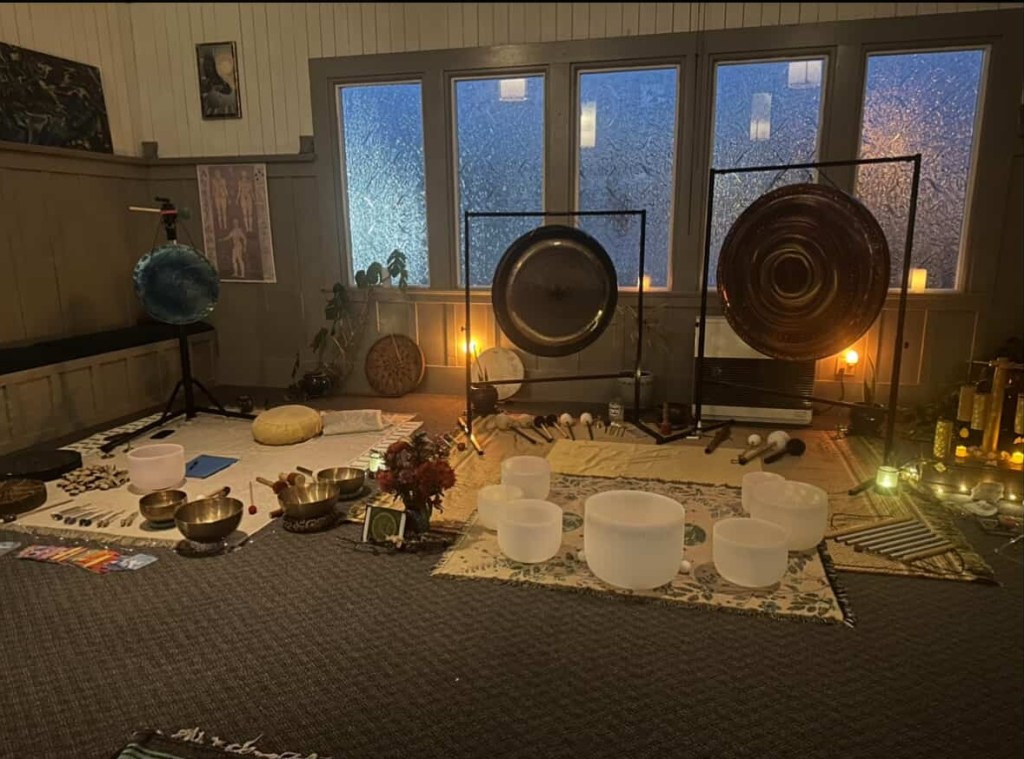
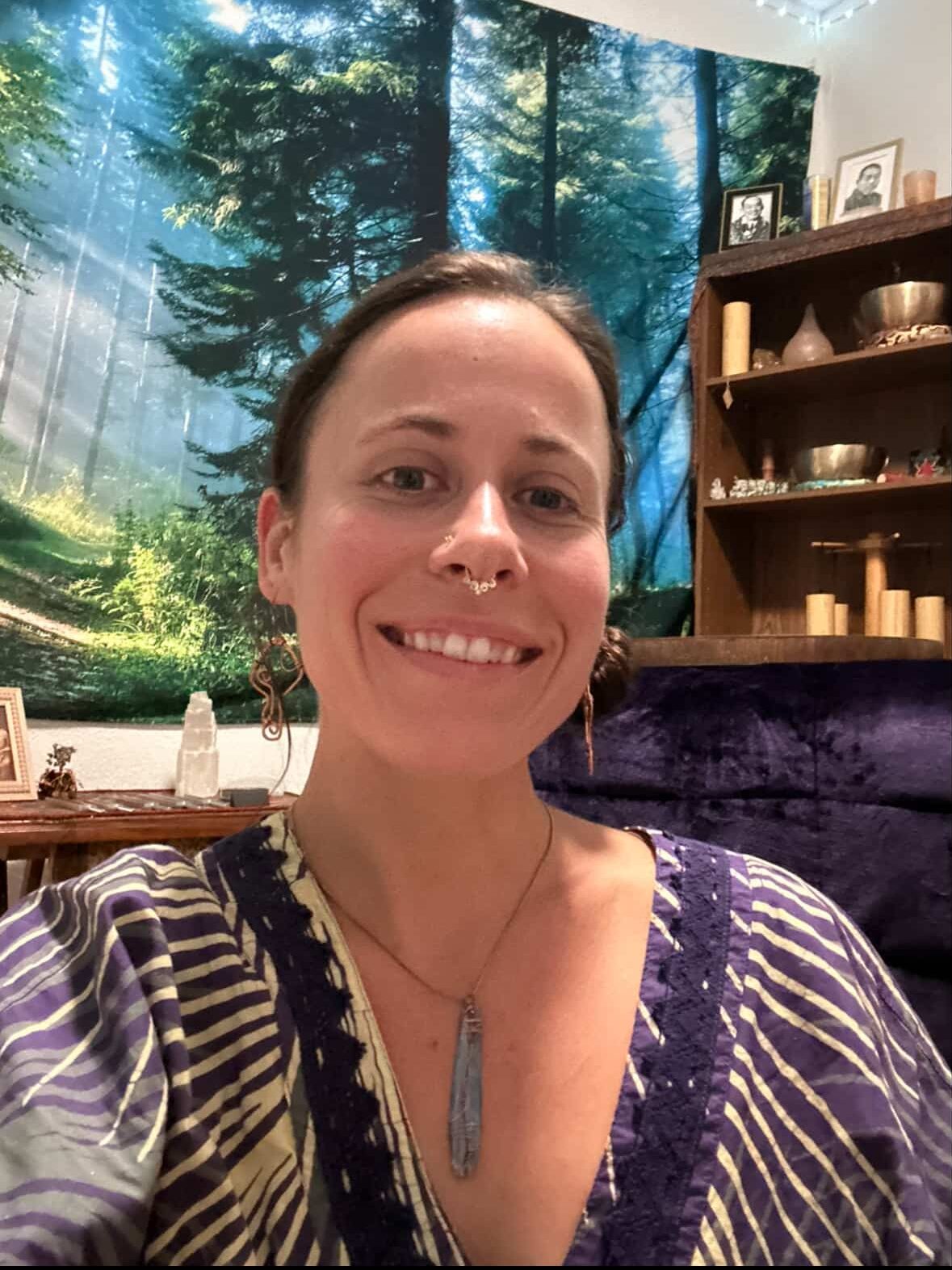


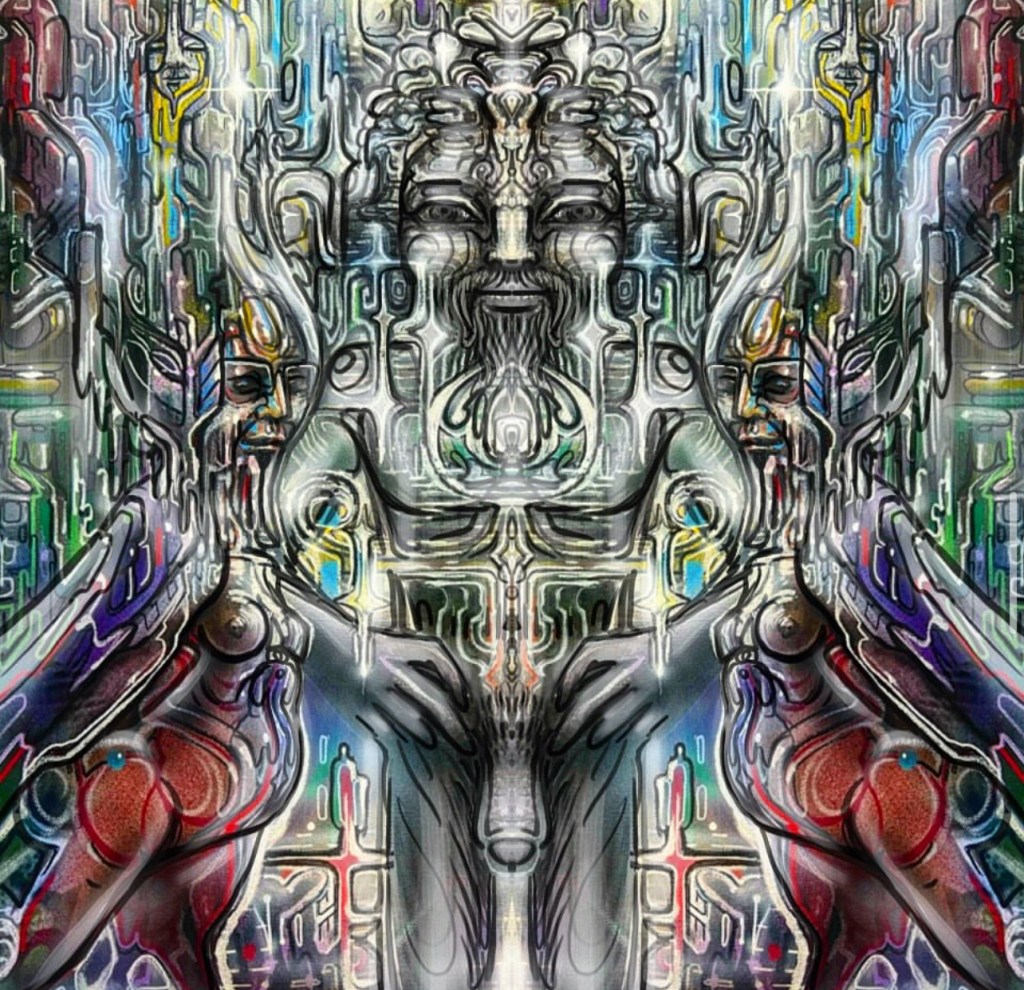
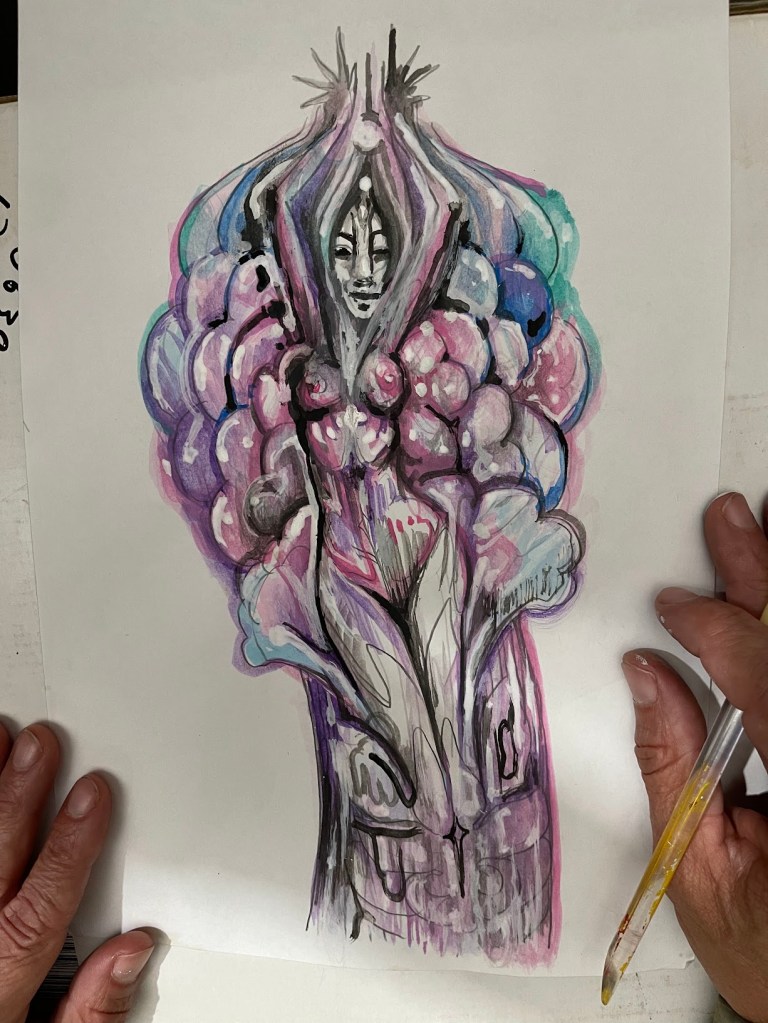
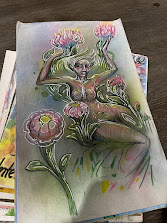

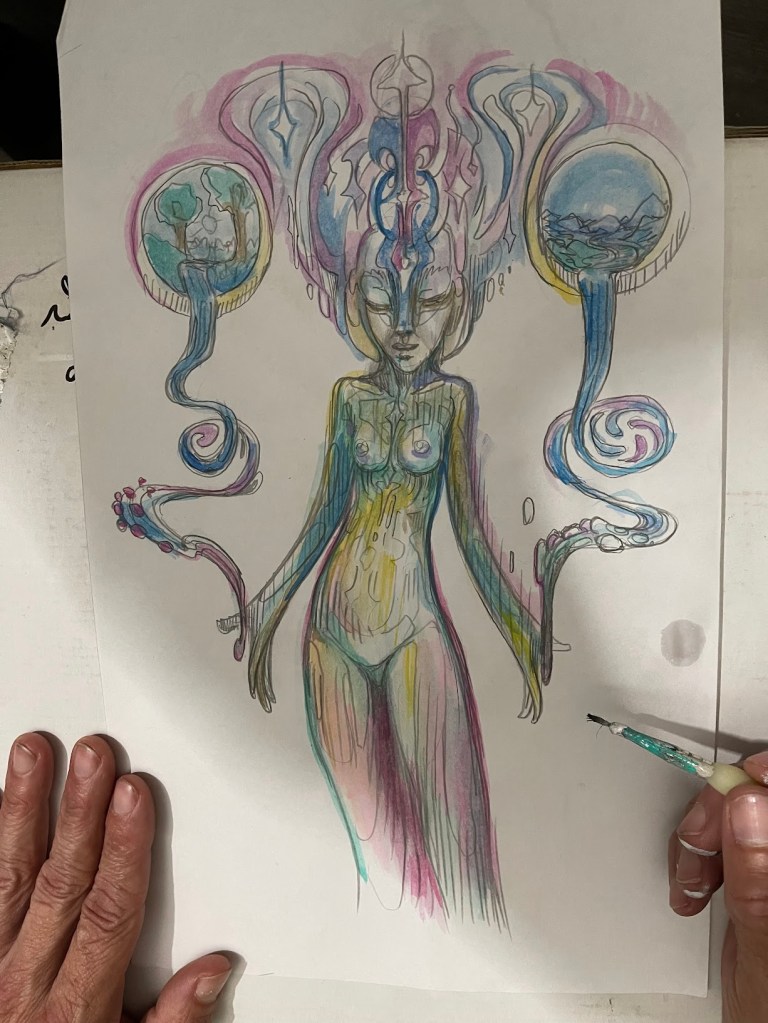
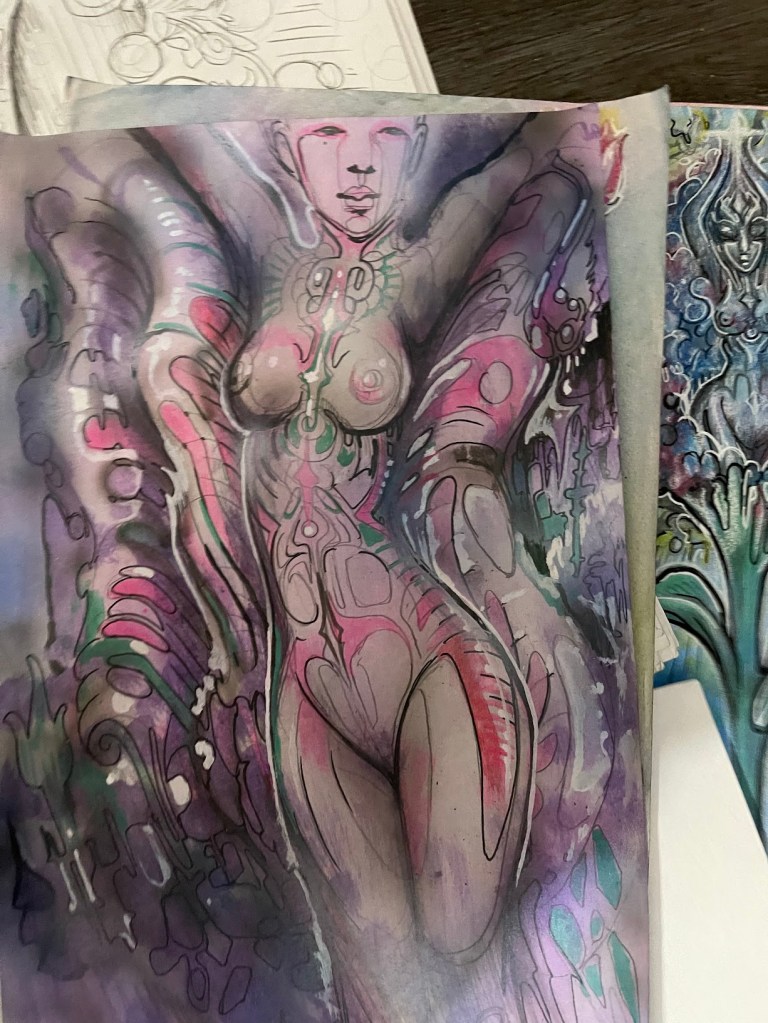



 Little Lost Forest