Interview with Interdimensional Artist Synchro Mystic

Find the full interview on YouTube Here.

Natascha: I’m here at Azila’ Cauldron in Eureka with Roman, a visionary artist and OG creative force of Humboldt County. My name is Natascha, and I want to thank you for tuning into the Little Lost Forest blog. I’m beyond excited to dive into the art, theory, history, and creative journey of Roman a.k.a Synchro Mystic. How are you doing?

Roman: Doing pretty good. Thank you.

Natascha: Awesome. Roman, where are you from?

Roman: Mind, body or spirit?

Natascha: All. All of the above.

Roman: I typically say that that way because my body is from Mexico. My spirit is universal, and my mind is global. My mind knows and exists and is part of a global reality that we’re perceiving together. And that definitely is who I am. But also, my physical body is a certain part of who I am, and my spirit is definitely on this mission. That is who I am as well. And those three are distinctly different things in a certain way, and my job is to try and align those together, that’s why.

Natascha: Your universal consciousness has landed you here.

Roman: Yes, but so many dimensions we can talk about that from. And that’s why I like to do art.

Natascha: Wonderful. Well during these interviews, feel free to dive into rabbit holes. We’re all really interested to see what inspires this beautiful art you make.

Roman: Thank you.

Natascha: How old were you when you first started drawing and creating?

Roman: I called myself, and this is, like, one of the most profound and silly, experiences in my life. I called myself an artist at three years old, and I specifically remember this experience that did that. And one of my older sisters came home from school with this big pad of paper, and it looked huge. But then again, I was a little kid, so it might have been a normal sized pad of paper. [Natascha’s Laughter] But then she puts it down, and then she shows me her drawings and I’m like before this moment, I considered myself a magician. And I was like, always pretending to make things disappear out of handkerchiefs and silly things that I saw. And I thought, I’m a magician. So, there’s first, there’s that. And I think that’s very symbolic because I think art is very magical. But anyway, I saw this sketchbook that my sister had, and one there was a crocodile she drew, and I could see a crocodile on this paper with lines drawn on a two-dimensional flat piece of paper, and I could see the three-dimensional crocodile that it was. And I was like, wow, that’s cool. And then the next one was a girl in a bikini. And I was like, that’s a girl in a bikini. I know exactly what it is. And it’s just a few simple lines on a flat piece of paper. And I was like, that’s magical. [Natascha: Mhm.] So, from that moment onward, I instantly call myself an artist, even though I didn’t know how to draw or whatever, because, uh, because at first, I was a magician. So, what did you have to learn?

Natascha: Would you say at a young age you related magic to art.

Roman: Instantly at three years old.
Natascha: That’s wonderful. I think you kind of answered this question, but what initially inspired you? Maybe outside of your sister’s drawing, what were some of the inspirations that have ended up fueling your creativity now?

Roman: Oh, man, I could have countless and countless stories, but I guess one fundamental, um, experience was, uh, being in Seattle during a very critical time in history, and I mean that in many different ways. The music scene and then the technological explosion that was coming from Microsoft at that time, an era when the very beginning and I tried LSD and, something I was never really too proud to boast about. But I also think that it’s a very important thing to express, that there’s these moments of that we can utilize as tools to activate something. Because on my psychedelic awakening, I definitely had so many things come together. And it isn’t all based on the psychedelic awakening. The Psychedelic Awakening gave me a view into the things that were already happening in my life. Like, calling myself a artist/ magician at three years old and a lot of mystical experiences that I never really understood growing up. That happened throughout my life. But for some reason, having a reflection like psychedelics or something external outside of us, like aliens or whatever, if you’re blessed enough to see that. But these external reflections allow us to look back at ourselves to witness these things from a third point perspective. And that helps us wake up, you know, like, oh, yeah, I notice these patterns throughout my life, I’ve never really realized how to deal with those experiences. And sometimes when you have like a psychedelic awakening, it gives you an angle to look at those things through.

Natascha: Wonderful. How would you define visionary art?

Roman: Well, visionary art to me means a lot of things. It leads me to the next thing I’m going to talk about. But just to answer your question first is, you know, at first when I got introduced to visionary Art, it was, outsider art. That was because I looked at a visionary art, magazine when I was really young, and I remembered i. It was more from people that I didn’t go to school to do art. For some reason, it was like, they call them outsider art. I thought that was interesting because there’s a visionary art museum with, uh, all these artists in there before the psychedelic visionary art movement. So then when they called the visionary art movement visionary art movement, it kind of like, wasn’t sure about that. And also, to me, vision means of our vision. But I don’t know what other art isn’t from our vision as much. (Natascha: Okay.) But don’t get me wrong, I still use that title to express our movement of artists because it’s something that people recognize right now within our circles of people, which is very powerful.

Natascha: Mhm.
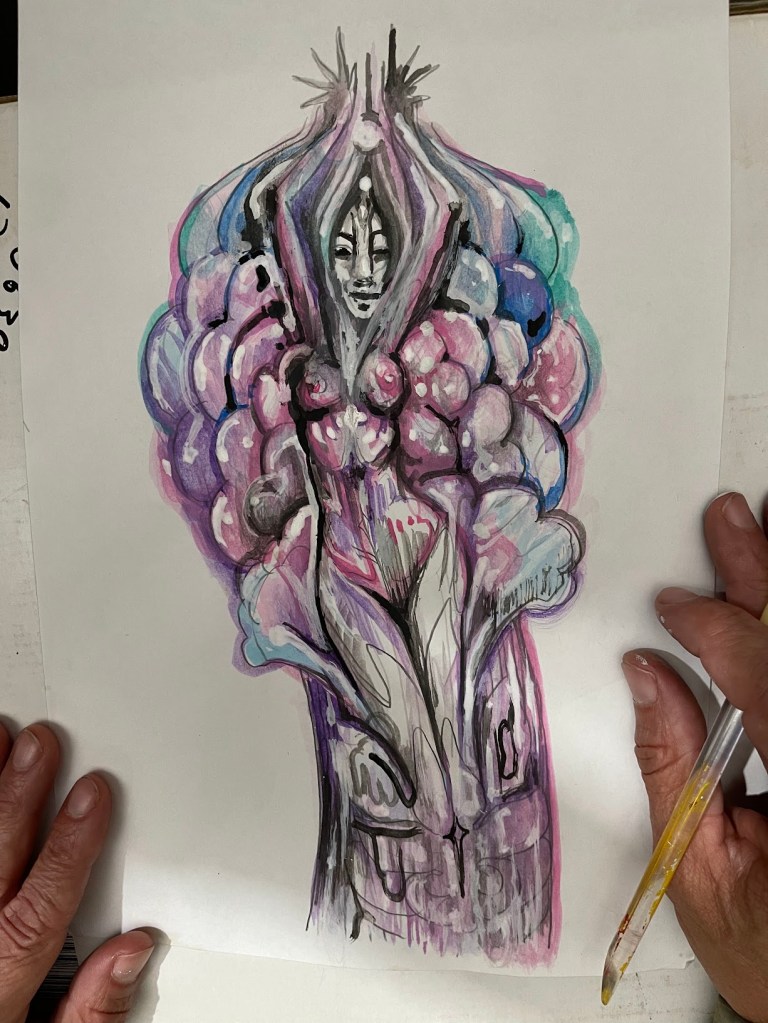
Roman: However, I don’t think that it specifically talks about the movement that I’m a part of which I feel like the people of artists that you recognize yourself liking to are not a part of necessarily only. I created an art movement called the Interdimensional Art movement. (Natascha: Lovely.) And I even told Alex Gray about these things before we named the thing visionary art movement. And this was a long time ago. And he never even heard of that. And he really was vibrating with that idea, too. Which is really cool to always be able to share your ideas with other people and get reflection. And the Interdimensional art movement the acronym is I.M. (Natascha: Nice.) It’s based on the finite of yourself, your personality, your ego or whatever it is you’re that you’re wanting to express. And then the full title, Interdimensional Art movement has no limits. I think that’s more true to the what the visionary art movement that we synchronize with at the moment.

Natascha: Interdimensional Art Movement.Got it. Can you share a bit about your history as a visionary artist?

Roman: To simplify things, psychedelic awakening in Seattle. Recognizing everything at once and wanting to be part of an art movement. Because as an artist, you always look back at art movements and you relate to certain groups like the Surrealists, the Pre-Raphaelites, or like any segment throughout history, which is really inspired in certain ones inspired us more than others. Art Nouveau or whatever. I couldn’t deny that I didn’t want- I wanted to be part of a group like that, but there was no real group to that I could associate myself to at that moment. Plus, I wasn’t that advanced. But these ideas were coming. These desires were coming to me. But then I started paying attention to what kind of art movement would I want to be a part of? And then that’s when a lot of answers started coming, and that’s when I recognized, oh, those art movements. And we’re answering these questions that they ask themselves. And that’s why they became art movements, because they were answering a question of defining who we are as a culture. And that’s what creates a movement. And we attract each other that are representing this, this reality together. And then, um, that harmonizes us as a collective.

Natascha: That’s beautiful. Who are some of your colleagues in the visionary art community?

Roman: To me, I love the way you ask because there’s a seriousness to it. And then that kind of makes me laugh because I’m also a space cadet artist. But my colleagues. I’ve been blessed enough to have colleagues of all different sorts. Like, my Seattle experience was pretty profound because, when I was having this psychedelic awakening, and I was reinterpreting reality. And then I was like, I want to hang out with the Beatles. But the Beatles already happened many years before me. So, like, put the vibration I was getting the LSD vibe or whatever, you know, and I was like, wait a minute, I’m in Seattle. [Natascha laughs.] Just to bring that into perspective and for a few many years I would keep on running into people like Nirvana, Soundgarden, Alice in Chains. And this is my canvas. And I played in this dimension for a few years of running into these people all the time, getting to know these people from different perspectives. Like, I have so many memories to even remember at the moment, but one of them that’s on my mind right now is, uh, Soundgarden when they were recording BadMotorFinger. They had my paintings in the studio while they were recording a little bit of that album and stuff like that.
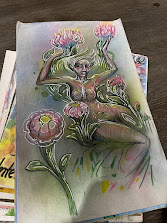
Roman: I remember going in there and picking up my artwork and them being all, like, polite and kind and gentle, but they’re like, really, they’re all really tall, like over six feet, you know? For me, that’s tall. Just having those memories ingrained in my brain and seeing how influential these people were, it was pretty intense. So there’s colleagues like that, but more precisely, to the art world is like, from Alex Grey. I don’t know. It’s hard to tell because the way that I learned about my colleagues is through a party that we started. That’s why it’s really hard to answer that question, because I have to, like, share the story of why I know these people. Because if I say Alex Grey, who might be the most famous and people recognize him, but there’s. I don’t want to skew the vibe just by that attention when there’s so many other beautiful and amazing artists and they all were attracted from this interdimensional art show we threw up in Seattle. And this was the beginning of before where? Before what we were doing. There was hardly ever, like, a live artist and galleries at events. That’s like something that was, I wouldn’t want to say that we started it, but we definitely made it a ritual.

Roman: And it brought together all these artists that some are now famous visionary artists from Luke Brown, Carrie Thompson. It’s like really challenging to even start naming them because there’s so many that I can’t even name. A lot of them, I’m sure that you would recognize. For instance, like Carrie Thompson came to make the most beautiful stages of electronic events throughout the world. You would recognize them because they’re super beautiful and Alex Gray and Mark Henson. I don’t know if you know Mark Henson, but he’s an amazing artist from not that far from here, from Lake County. And if I showed you his art, you would obviously recognize him.

But the reason why I really enjoy these people is because it was a family calling that brought us together, like these shows that we used to throw up in Seattle. Were exactly that. It really bonded a large group of artists together that never recognized themselves before. Now it’s easy to see. It’s all easily recognizable. But before then, we didn’t have anybody. This was like the beginning of us recognizing each other, which was really amazing.

-Roman

Natascha: Wonderful. At that time, were you part of a community? You say we.

Roman: I would say we because I can’t. I don’t ever want to feel like I’m taking responsibility for it. That’s one aspect which is still egotistical, but I am an ego, [laughter] and it’s very influential to where my idea is coming from. But at the same time, it is a collective thing that I’m just being aware of and I’m wanting to share that with people. So, I say we because, you know, I might have been inspiring certain ideas, but it came to be through a network of different people.

Natascha: Awesome. Okay. So, in your art, you use mixed media in your paintings on canvas, and they’re all very incredible and beautiful. We’ve discussed acrylic paint, pencil and paint pens in the past. Are there other mediums you’d love to work with?

Roman: Did you say airbrush?

Natascha: No.

Roman: That’s probably one of my favorite things, even though my relationship hasn’t been too intense with it yet lately. Definitely airbrush. Cool pencil for sure. Yeah.

Natascha: That leads us to our next question. What role does pencil play in your paintings beyond sketching the initial image?

Roman: Well, lately it’s been like taking a central role and I’ve allowed myself to draw more. Then I keep on realizing why I didn’t allow myself to do that more often. Because it really brings my vision together. Because I really love to draw with a pencil, and it really flows. And it’s a relationship between the lead and the and whatever the paper or canvas or whatever. It allows me to put a lot of detail as soon as I start painting, it becomes an emotional thing and I start relating to the canvas with emotions. And then oftentimes I’m I get lost in the emotions of it. When drawing with a pencil, it’s more mental, more ideas. That helps me like navigate because I’m an idea person. I can constantly be channeling my ideas, but then I bring in the emotions of color, and that’s when it starts to get the feeling. But it’s not as controllable for me.

Natascha: Can we take a second and look at this painting over to your left. Is there a pencil in that painting right there?

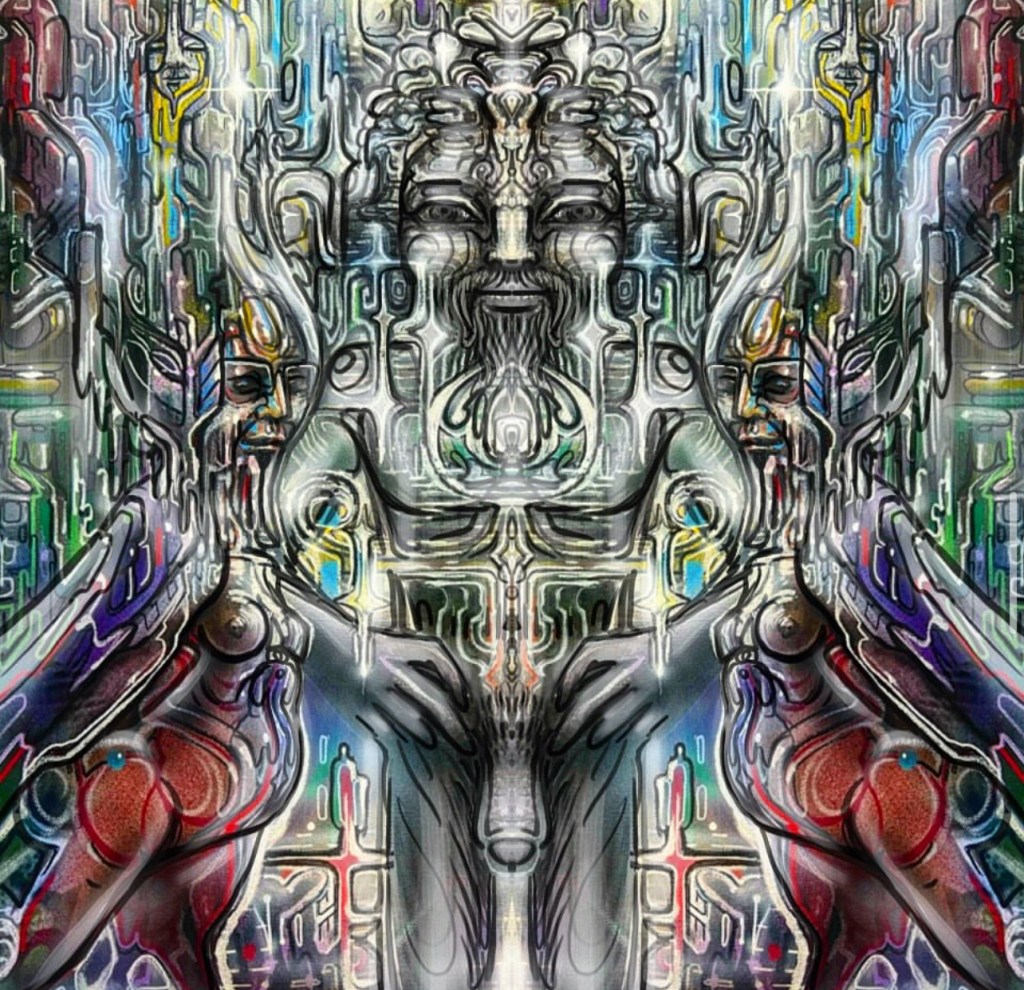
Roman: Yeah, this one is one of like I said recently, it’s been taking main stage. This is one of the paintings that I did as a live painting. Mhm. And I just allowed myself to just feel the music and vibe and not care about painting and just draw. So I drew pretty much the whole thing with pencil. And then I loosely started airbrushing and painting on top of it, but without covering the pencil. Of course it’s very raw and very loose. But there’s something I like about it. There’s something metallic about it that I really like.

Natascha: How do you select your color palette? You have a very nice rainbow assortment of colors in a lot of your paintings.

Roman: Yeah, definitely spectral for sure, because that’s the reality that I’ve seen. You know, a lot of my art was inspired by me walking around a lot. So, whatever I could bring with me, because that’s the way I’ve explored my reality. But also, with what I have and what I had for a while was black India ink and with airbrush, and that was it, a big bottle of it. And then I started wanting to paint with color. And then you realize you want the least amount of colors, or that was my experience. And then that led me to like, oh, the spectrum, the southern colors. From here I can do different shades of shades of whatever. That was if I look at it from the physical aspect. Like I said, you asked me who I am or, you know, uh, that’s physical. There’s also the mental and the mental is, it’s more chakra style. I use the rainbow colors because I feel like there are these seven dimensions. Those are perceiving reality. So, to me, when I learned about the chakras, it started making sense.

And being a psychedelic artist, I like to travel to different dimensions, so to speak. And the chakra system seems to be a way to understand that because each of the colors are a vibration and each vibration has a negative and a positive polarity. And if you start understanding how they interact with each other, then you can travel consciousness in that manner.

-Roman

Roman: And that’s the primary reason I use the rainbow color palette.

Natascha: Oh. That’s lovely. I hear a lot of entombment in your body when you paint and meditation as you’re painting and choosing your color palette is very interesting. Can you tell us more about the reoccurring themes in your work, what those might look like?

Roman: Definitely a lot of meditating beings, and sometimes I question myself on that. But like, I’ve had visions of tapping higher states of consciousness and feeling that. And there’s always people in the meditating pose and really high vibration. Maybe it’s just me, but I’ve heard this from other people, too that these beings come in from other or we tap into a vibration or dimension that they are meditating in. When I experience that, it makes so much sense why I would be so infatuated with painting that because I’m not necessarily Buddhist, but I definitely visit the teachings a lot because very super profound. And it definitely helps as far as, you know, being present with yourself. So, there’s all those things too. I definitely have to admit there’s a lot of goddess imagery. A lot of awakening. A lot of dance parties. The dance parties are the symbol for humanity, I feel.

Natascha: Yeah. Who are the characters that we’re looking at? Do they have names? Personalities?

Roman: I don’t think about it too much, because I think it’s just like who we are on one level. So, I don’t really recognize any separation from just a snapshot of anywhere I would go. There are people dancing or whatever. That’s the main thing. But then the other profound thing is, I don’t know if you’ve heard of Tribe 13, but that was like our production company up in Seattle that through the Interdimensional Art shows. And it still continues to this day. And we have thousands of artists connected to that name. I think that you would consider visionary artists specifically. But essentially Tribe 13 is a traveling gallery at different events and that’s what we’ve been doing since Seattle, but definitely been to that gallery like boom Festival and Envision Festival and a myriad of other ones.

Natascha: You know, he just posted this on your Instagram, but can you tell us more about the meaning of Tribe 13? What where did you guys derive the name from

Roman: It’s really profound vision that happened to me as I was awakening. I told you about me about my psychedelic awakening that led me into really questioning my reality and really, dropping out, so to speak, to just meditate on these things. I started recognizing different patterns and the desire to be myself and to be accepted for myself and accept other people for themselves, which is a freedom, and all based on just the basic fundamentals of this country. So, it kind of unified all these things. But I was recognizing that nobody’s really living up to it. What does that mean? So, then I started questioning who I am. Who? Where do I belong? Or as a part of society or whatever? As I was having these profound questions, I would run into signs of different things.

And Tribe 13 stems from those realizations- as I was awakening up to this way of looking at reality- the symbols are infinite, and I can point them out later. But essentially what makes a Tribe 13 member is to recognize that we create reality, which means the only way to tap into this presence is to be in a state of giving and constant giving.

-Roman

Roman: A lot of people say, oh, yeah, it makes a lot of sense. That way you can receive. I’m like, no, that’s not the point. You can’t, um, you can’t live in a binary perspective. It’s got to be a unified perspective. And it has to come from source. So, to become a Tribe 13 member is to recognize that you are marrying yourself to your true self, which essentially synchronizes, synchronizes that to all the other beings that are doing that themselves. There’s no control mechanism, no one’s better or worse than you from from that perspective, those kind of perspectives can only come from the outer world. But the outer world is not a reality because we have to be in a state of giving. If you’re wanting to receive things, and that is one way of looking at it, but that you’re going to receive an illusion. So, Tribe 13 is the beings that are synchronized by giving from within out. Which art is the symbol of.

Natascha: Wonderful.

Natascha: I you’ve been talking about spirituality a lot, but how does spirituality influence your creative process?

Roman: Well, it helps me recognize who I am. You ask me who I was in the beginning, and I can’t answer that from one perspective. Like mind, body and spirit and spirituality. I feel like it helps guide us into what we’re supposed to be doing or wanting to do. And we don’t have to be deceived by an external belief of spirit or whatever, but to really recognize what you’re really wanting to intend as your person on this earth, which is really basic and not spiritual at all. But I would consider that spirituality because, again, chapter 13 and the vision of having to offer yourself from this source, from this center, is crucial to that. And why I would call it spirit is because it’s beyond what I could perceive. If I’m in a state of offering, I will be in this state of awe of the actual manifestation, if that’s going on.

Natascha: Would you say your art is an extension of that?

Roman: Without a doubt. But what is not. Everything is from that state. But oftentimes comes from like a really, maybe not evolved state or a weird interpretation or even negative. All these things have a way of manifesting.

Natascha: Sure. Yeah. Okay. What draws you to sacred geometry?
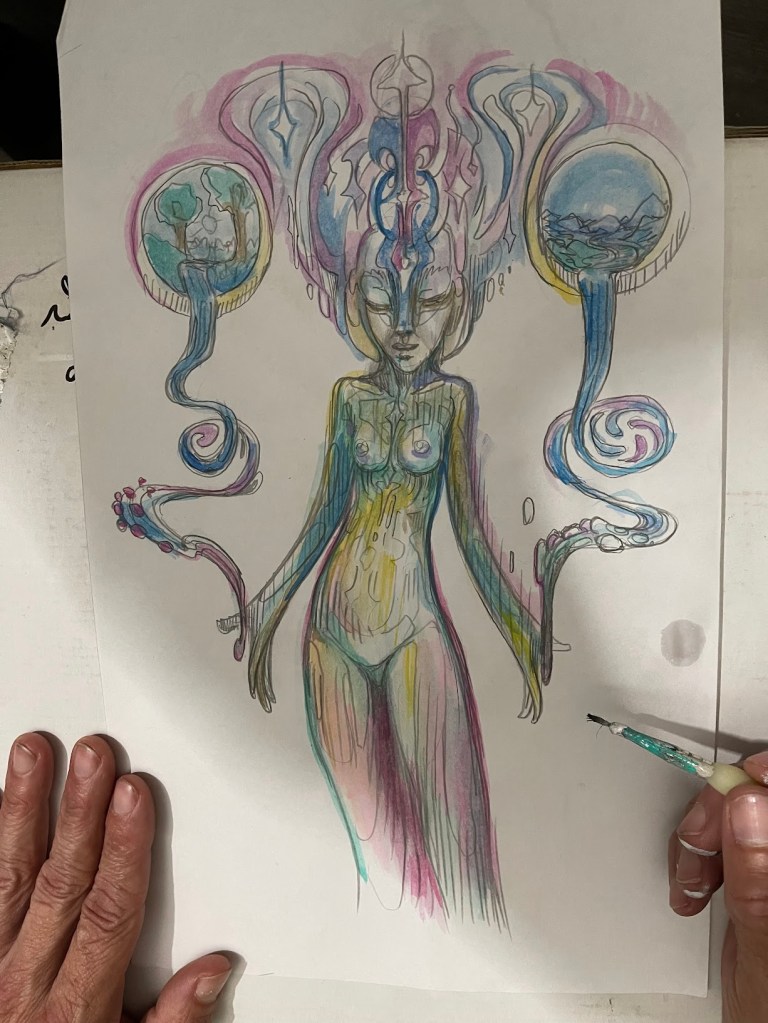
Roman: I definitely use sacred geometry as a thing, but I never really stick to it like some of my contemporaries, for sure. Um. Uh, yeah, I have, like, this deep gratitude for it. But I was thinking, like, if, uh, sacred geometry exists, then, uh, we are part of this, uh, sacred geometry. So, whatever I do is a part of the sacred geometry, because I can’t have a choice other than to create through the sacred geometry. So then at that point, I’m like, out the door. Don’t pay attention to it.

Natascha: Don’t even think about it.

Roman: I know exactly.

Natascha: It’s in the flowers, it’s already there.

Roman: Exactly.

Natascha: All right. What about your local community? How does that inspire your art?

Roman: That it confuses me, which inspires my art. I think our community and that’s why I, like I make a big deal with the dance party and social event because it gives us a view into our community. Where we come and show our art, our dance, our vibe, our talk, or this or the way we get drunk and shitfaced. I only say that that way because we need a safe place that people get to experience themselves and then figure out themselves so they can correct themselves. And I feel that these social settings in a loving and open environment have a way to heal. So those kinds of experiences wouldn’t be happening. And I just say that because we have a lot of healing to do, and we really need to, like, allow people to people to process their inspiration by not just accepting a rude behavior, but to recognizing and knowing that being recognized also starts having an alignment of sorts.

Natascha: I really appreciate you saying that. What shifts have you noticed in the festival scene, and why do you keep returning as an artist?

Roman: Well, to me, if there’s going to be any time traveler’s ever to come into existence, they’ll probably come through portals such as psychedelic events throughout the world.

Natascha: Cool.

Roman: I really believe that because when we go to an event like this with the artists, with the musicians, with the styles, with everybody offering their little trips, it really is like an eclectic group of people that are highly open and well, as far as judging against other forms of people in the world. We’re definitely at that point because we’re in this offering state of being or curious state of being, I guess might be better. That it allows a lot of things to come through, and that’s exciting to me.

Natascha: Kind of like they’re creating something new in these communities. There’s some kind of evolution/ evolving going on.

Roman: I definitely think that there is, but that it’s up to us for being open, because the opposite is also true, where people are being dumb and like, not learning or whatever. But I think that’s part of the fun for me because and what keeps me coming back is because I’m coming back now as an older person that has experienced certain things and like sometimes, I’ll get on my, like, flow where, like, I already know every conversation. [Natascha: Oh, no] -in a really amazing way. Not that I know the whole conversation, but what people are experiencing. And I feel like if we can develop our language, we can help bring people through a lot of experiences, a lot faster by just communicating with each other. And that’s one of my favorite things at a festival.

Like when I open myself up, I get attracted to these little circles and we get to share the pipe and then talk, and then all of a sudden, they’re like I had this one vision, blah blah, blah blah. I’m like, I’m like, I would look at the person and say, so what? And then they’re like, got their little spirit shattered. But then they recognize, like, what do you mean? Like, well, what are you going to do about it? And then like start talking to people like that and then like really brings this awareness to the person’s trip, like, oh, somebody’s actually listening to me. And then they go even deeper into their thing. And then you experience those kinds of awakenings so you can express your awakening to those people, and then you can stop and start helping guide this awakening collectively. So yes, there is an evolution of sorts like that.

-Roman

Natascha: Like, cool. So, on a global level, what changes would you like to see and how do you channel that vision into your art?

Roman: Well, there’s only one mission. The mission is to recognize that everything comes from within, out, and start not judging the external world or feeling like the you’re going to get validation from the external world. But to really believe in oneself, to be able to provide the offering that you really want to provide to the external world, not the other way around. If we could all start understanding that that’s how we fit in.
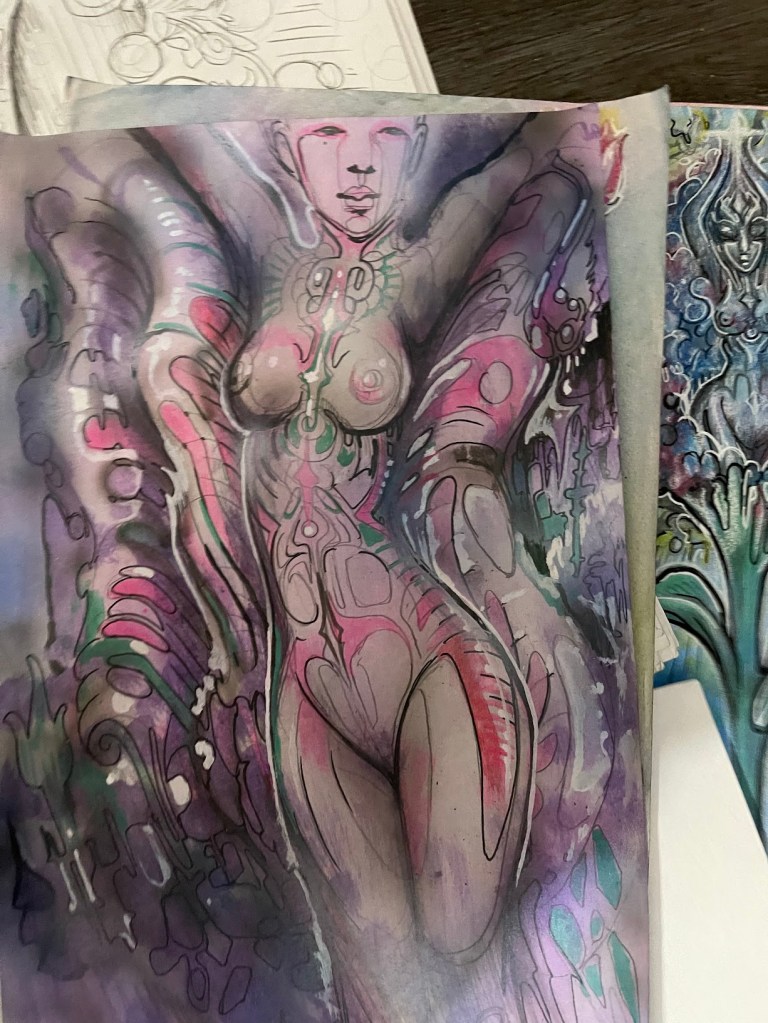
I feel like that’s when the big change happens, because so many people are trying to consume what they need to be or trying to acquire a sense of belonging from an external world to validate themselves. And it really screws up the whole mechanism of our existence. Because the universe is also like a, not an ego. So, it’s like whatever we’re creating is like going to manifest, uh, hugely, you know, because it’s like what we’re focusing on at the moment. So, I feel like once we start offering our true gift from inside then the universe reacts and recognizes that it can only provide abundance.

-Roman

Natascha: Lovely. That goes back to giving, giving, giving, giving. I love that so much. What upcoming events can we expect to see you at?

Roman: I’m excited to show my art across the street at Los Bagels next month in Eureka.

Natascha: Arts alive, right?

Roman: Yeah. Yeah. I still got a piece myself together, so I’m like, oh, yeah. That’s happening.

Natascha: Wonderful. What are some of your bigger goals as an artist?

Roman: I don’t know, I would like to write a book. I guess that’s one of my goals, because then I can solidify what I’ve been talking to with every people and just document it to be able to share that idea to other people, and it’s always been a lifelong dream. As an artist, oh, artist book, that’s an accomplishment. Uh, so there’s that. But that’s the physical. But on the spiritual plane, I’m on the quest to the eternal party at the end of time. Cool.

Natascha: I’ll meet you there.

Roman: Well, that’s the that’s the trick you just mentioned there. But I’m talking about the end of time. So, there are parties right. Right now.

Natascha: That’s happening right now. Yeah, we’re in it.

Roman: It comes back from the state of giving. That’s how you tap into it. So, if you’re in a constant state of giving, you’re at the eternal party.

Natascha: I love that. Awesome. Well, Roman, thank you so much for taking the time to chat with us. We’re here at Azila’s Cauldron. You can find it on Instagram at @azilascauldron. It’s been an absolute pleasure. You can find Roman’s Instagram @Synchromystic and a huge thank you as well to Julian for recording this interview. You can check out his work on Instagram @depixture_media. All right. Thank you everyone.

Tea Lounge

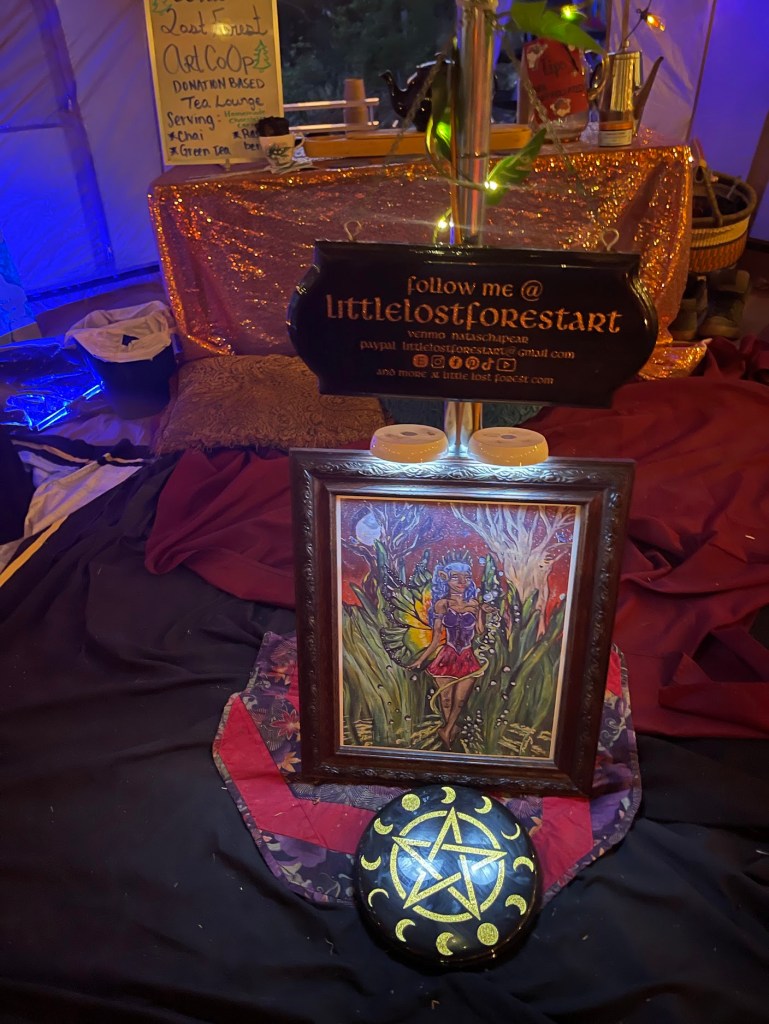
Little Lost Forest presents the Tea Lounge at Eclectic Farms, providing a donation-based tea and cuddle puddle space.

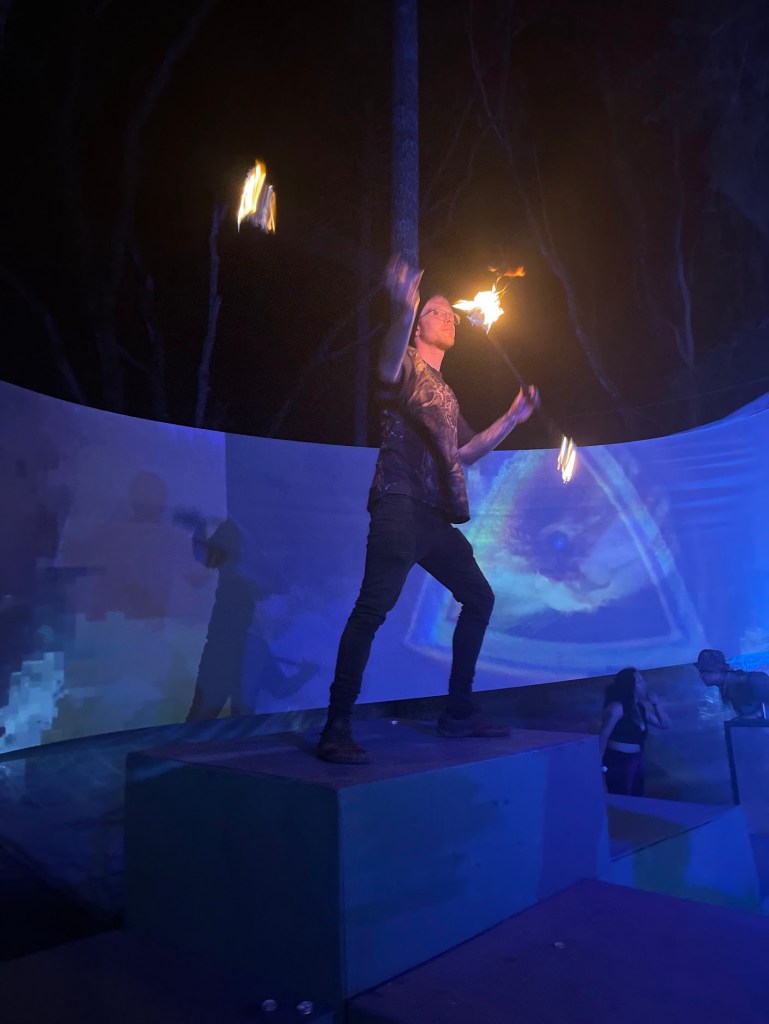
Eclectic Farms is a Northern California event located in the mountains of Titlow Hill, a multi-generation oasis for underground music events. The lively EDM scene hosts multiple stages and genres, artists, and play areas for performers, carnies, and lovers of nightlife. Located an hour from Cal Poly Humboldt, people aged 18-99 from all over the world and different walks of life gather to dance under the musical umbrella. Supporting local talent, Eclectic Farms is a community-made event that showcases local DJs, musicians, painters, interactive art pieces, paracord trampolines, farm living, and is placed in the heart of the Redwoods. Lasers, concert visuals, premium sound, pole dancing, aerial performers, fire dancers, and go-go dancers all enhance the main stage, while two garage stages played live music and more trap-style EDM. This year, the Mush Love Crew hosted a second stage lit with black lights, neon decor, and bodypaint with a pop-rock dance vibe. If you dare enter the tea lounge, Little Lost Forest hosts a relaxing space in a bell tent covered in local art, cushy pillows, and delectable tea.

The past three events have been out of this world. You might be familiar with some of the talent coming through Eclectic Farms. DJ and live artist Joe Mallory opened the first party in June with psychedelic ambient music. June’s headliner was Rammun, a couple from Willits who played spiritual funk rap. While Narion worked the mixing board, Luna rapped conscious, mind-expanding lyrics. Maggie fire-hooped with Humboldt Circus, and her performance was both mesmerizing and inspiring. Something about the relationship between the dancer and the fire creates a trance-like ambiance on the dance floor. LoCo Flow Fusion is a central Humboldt-based fire troupe. Bartending and performing is the incredible Boofy the Clown. Mushroom cocoa and niche tea blends offered by Ana’s Herbals. Deep, intercate tarot readings channeled by TOAD and art and firespinning by local artist @psychicmisfit.

When asking Mush Love Crew to make a statement for the blog, they gladly told us a little about themselves:

“Our June show was our first all-night outdoor party as Mush Love Crew, so that was super special. Our deco coordinator is Stacia Weener at @Staciaflowersolutions on ig, she absolutely deserves to be mentioned because our stage only looks that good because of her. We also did that one as a collaborative effort with Siskiyou Psytrance. At that party we had an international dark psy duo called Promnesia play. We also had Feral Selector from SoHumSyndicate, Agent 37 from Siskiyou Psytrance.

Our July party we collaborated with our sister crew Fractal Factory out of Oakland. Our headliner was Tugadoom, a brilliant live experimental dark psy act from South Africa originally. Also from the crew was Luzidtrip who played an outstanding forest set.

Mush Love Crew’s resident DJs are Melting Vision, Pymander, and Joe-E. I founded this crew on New Year’s Eve of 2023 with the goal of building a home for psytrance in Humboldt County. Hope this is helpful, and I’m happy to provide any more info! We’ve got another party in the works for early November!

Stacia is renowned as a found and foraged artist, creating her works using materials she finds around her. She emphasizes reusing, repurposing, and utilizing nature as much as possible. Her unique vision aligns perfectly with our Psytrance crew. Additionally, she’s very welcoming to other artists who wish to collaborate or get involved.”

I highly appreciate their ability to bring high-energy dancing and a neon atmosphere to the event. The DJs bring high-quality psytrance back to the dance floor.

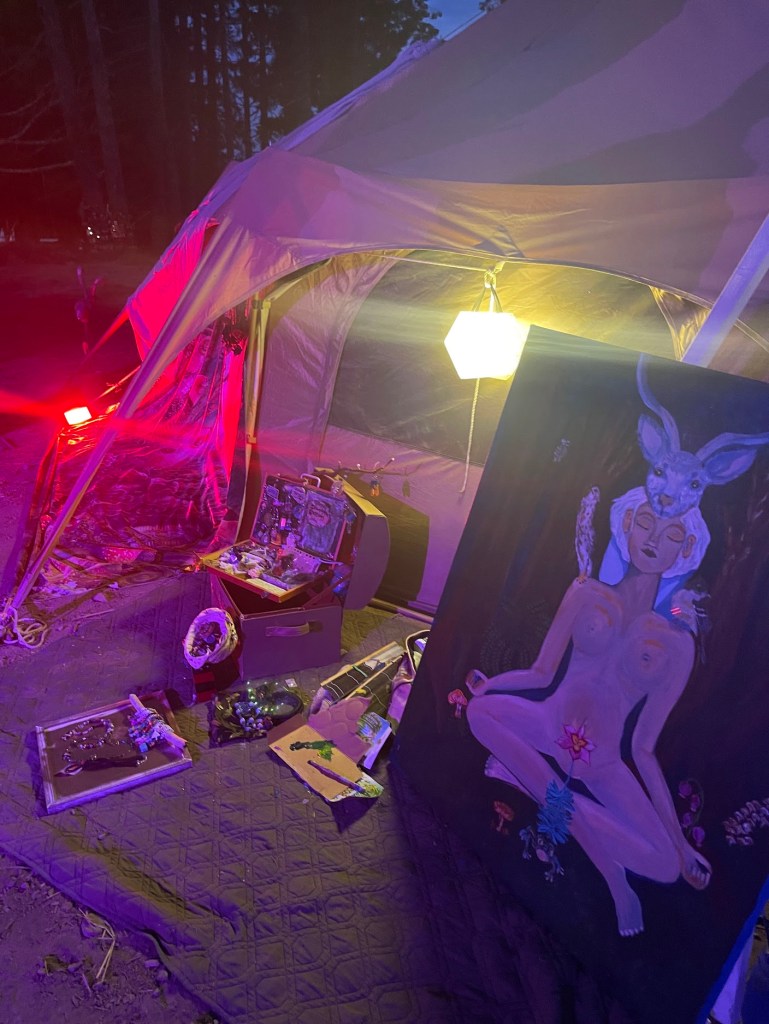
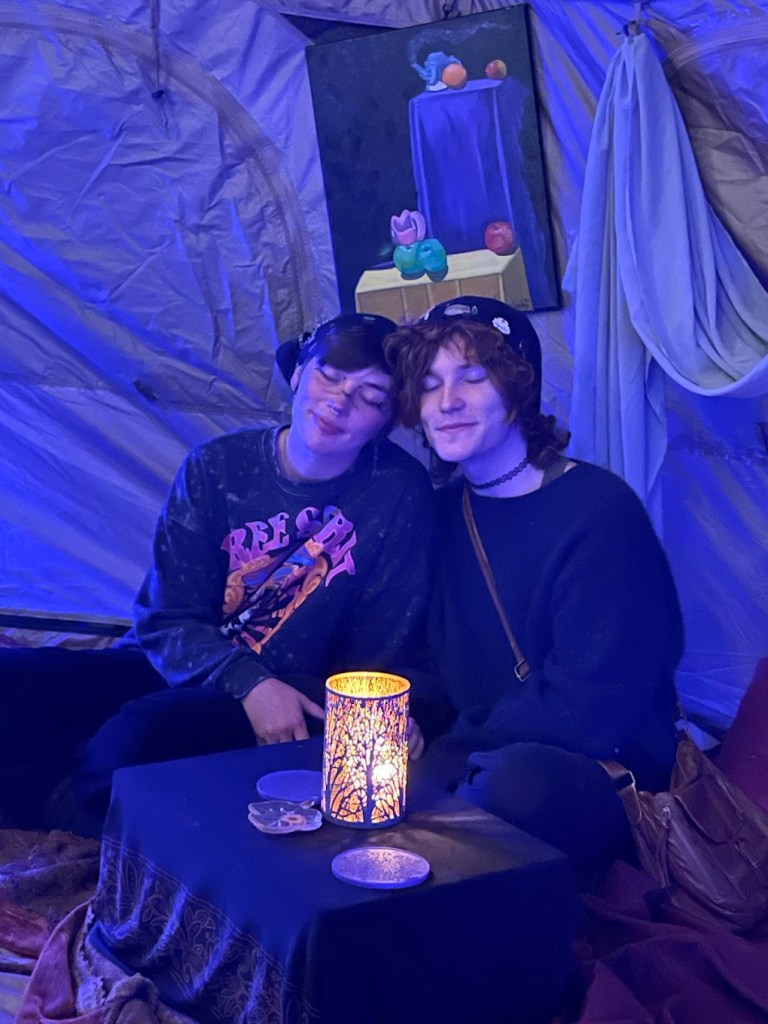
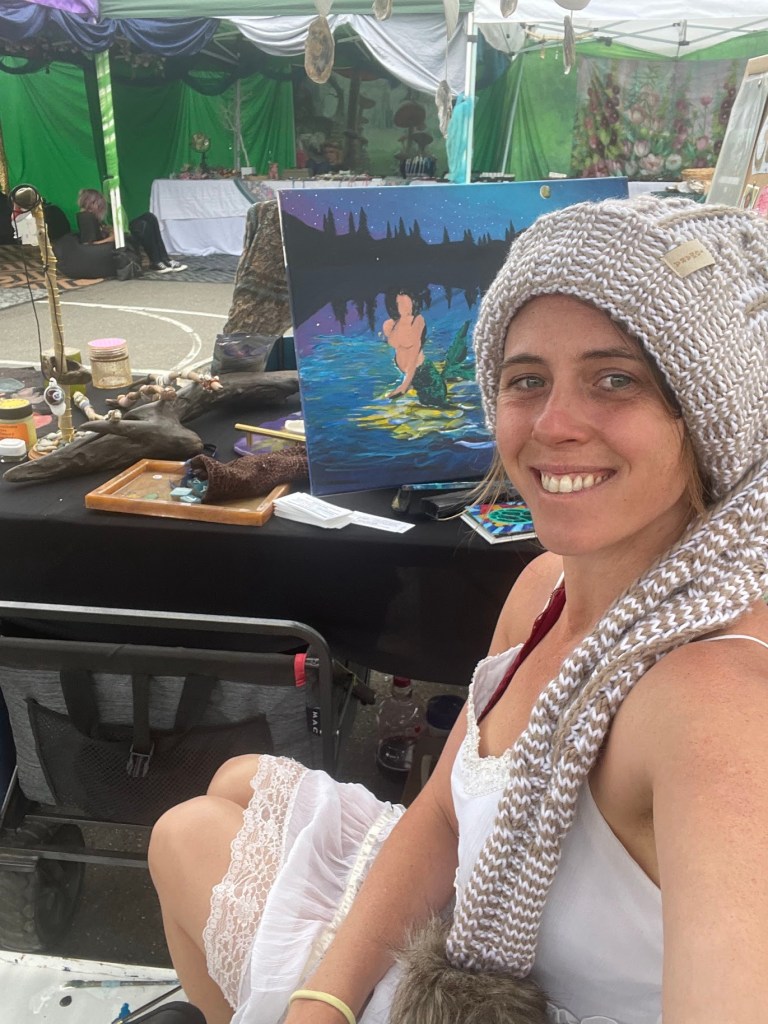
Our Tea Lounge is a new addition to the Eclectic Farms parties. Our goal is to create a place to relax, revive, and connect with the community. The Tea Lounge dome tent came from a grant for the Festival of Dreams in Eureka, where many of our crew members participated in the “Wigi Dome” project. The Tea Lounge displays art by local artists, offers donation-based tea and sweet treats, and has a plethora of pillows, blankets, and small tables. I enjoy offering tarot readings in the tea lounge, along with live painting outside of the lounge. Some of the aesthetics might be familiar to those who know Little Lost Forest, with themes of the forest, the human body, and otherworldly creatures. As a team, we collaborate on art projects and strive to create immersive art so others can join in the experience of creation. In July we featured Cal Poly Artist Jolie

This Saturday 8/10/24 we will be back on Titlow Hill. Tealulah will be joining us with @tealullahstravelingtealounge. We look forward to serving unique tea blends that stimulate or relax the mind. I expect to be showcasing ceramic sculptures by Jackalope Studios. Jackie is a Cal Poly graduate, ceramics studio artist and painter. We display paintings by Natascha and Jeremy Pearson. Natascha has been painting at EDM events since 2012 with San Diego crews Triptych, Soul Works and the Cool Cat Cafe. Jeremy is a local cannabis grower with twenty years of experience, currently working @primeexotics_dispensary off broadway in Eureka. @Orioncooksit is our team chef, who specializes in health conscious and energizing organic options. Our newest team member @disenchantedcreations is our rave mom who is embarking on a van life adventure and world schooling. Together we make the Tea Lounge a place for you to enjoy. 

See you on the mountain. 

@eclecticfarms for event information. 

Mushroom Identification in Humboldt County

Happy Winter Solstice! 

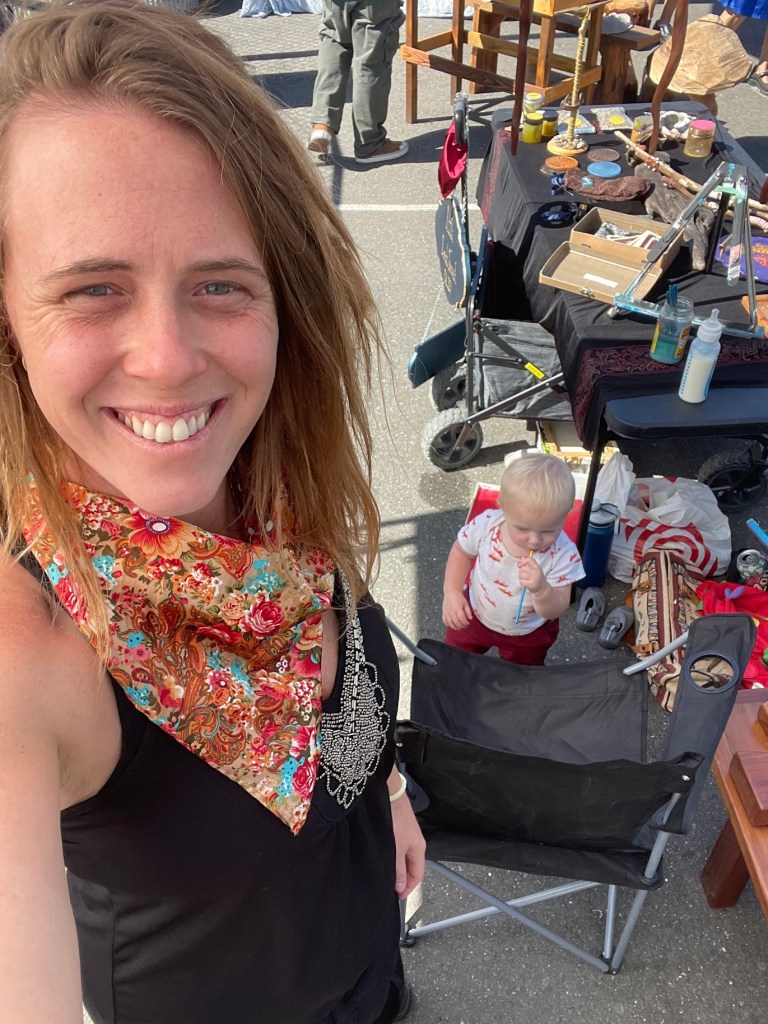
December has come, and rain has poured, which, to us enthusiasts, means the mushrooms are popping! We have done some local exploring over the past two weeks, and I have some pictures from Redwood Fields to share with you. We did not forage these mushrooms (#takepictures, #leavefootprints) but spent time locating and identifying them with our two-year-old helper, Malakai! 

They say kids are better at finding mushrooms because their eye level is closer to the ground! All the reason to take your young ones out mushroom hunting! 

If you are interested in the basics of mushroom foraging please check out my blog post Foraging Mushrooms in Humboldt County.

When entering Redwood Fields, we turn right to the back of the parking lot where the trailhead begins. When hiking this trail, it’s easy to get lost in time and space, so note where you’re going. This trail is less maintained than others and has a roughness that I appreciate. Many fallen trees aid in the production of fungus and flora. Here is what we found. 

All of these fungi are inedible to my knowledge. 

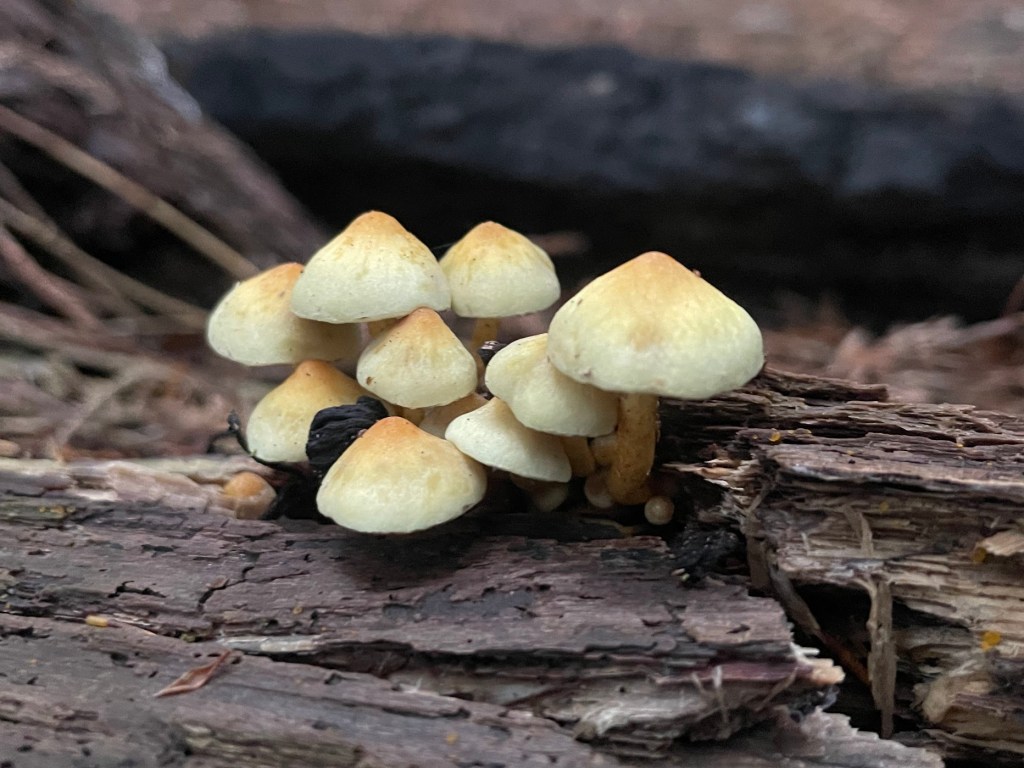
Hypholoma fasciculare, also known as Sulphus Tuft, grows from wood, stumps, or roots and is a beautiful reminder to check tree growth for clusters. 

Above is another photo we got of the Sulphus Tuft.

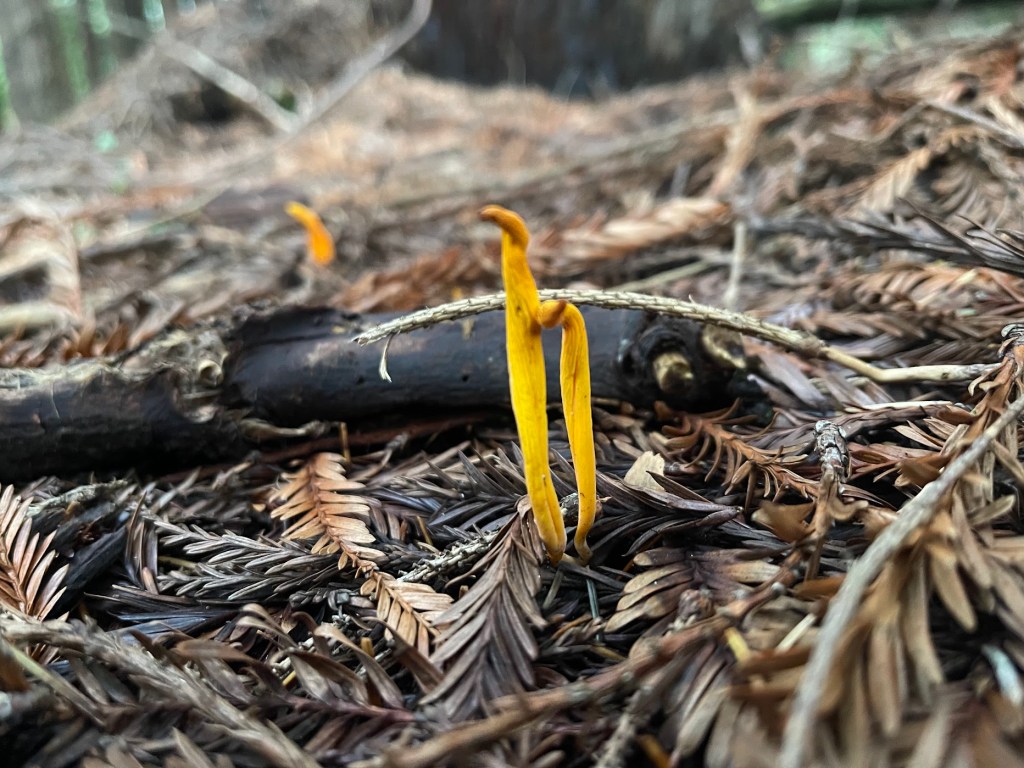
Clavulinopsis Laeticolor has a solid yellow ochre color and has a wiggly alien look growing in tall, thin towers coming out of the hardwood undergrowth.

Hygrocybe Punicea are related to agaric, meaning they are gilled and part of the Hygrophoraceae family. They are locally known as scarlet waxy caps. They are beautiful in color and shape. 

Here is a scarlet waxy cap whose gills are upward; this is to release all of its spores at the end of its life cycle before decomposing back into the earth and reiterating the ground around it for the new generation of mushrooms to sprout. 

This is also a Hygrocybe Punicea!

This slimy, narly orange mushroom pouring out of the ground (to the left) is the starter of a Hygrocybe flavescens, also called a golden waxy cap. As you can see, this mushroom pushes up from the ground to disperse spores in its fruiting body; this part of the cycle is called the primordial formation. To the Right is the Hygrocybe flavescens in its midlife progression. 

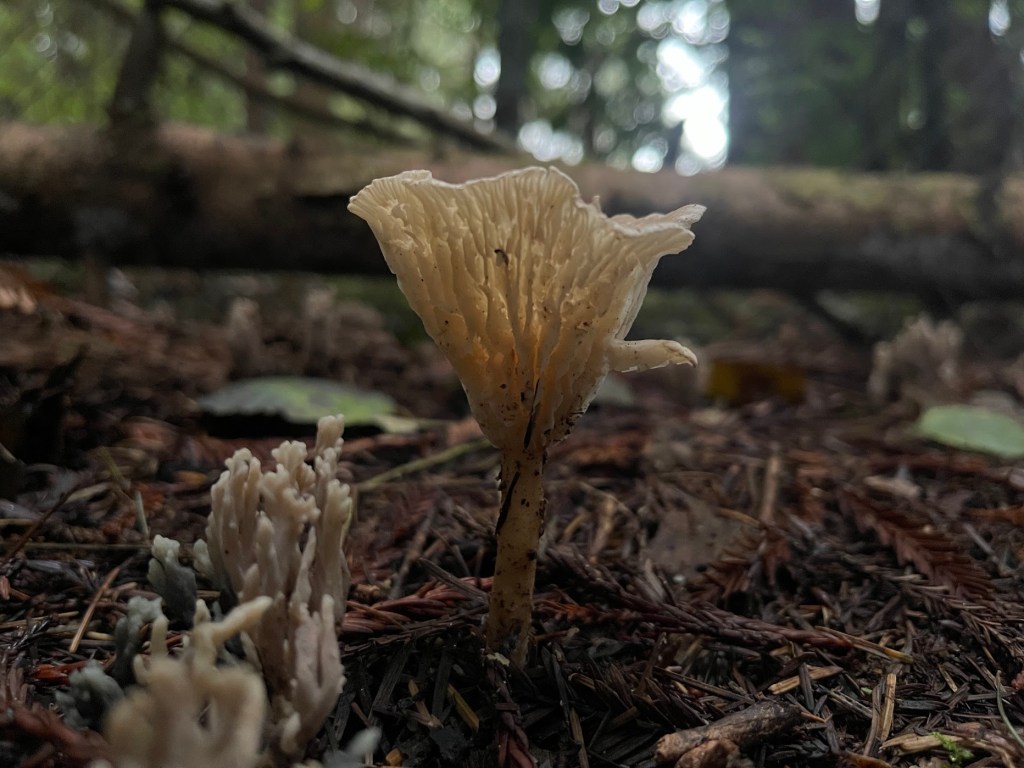
We came across a little patch of Infundibulicybe gibba al, a common funnel. This mushroom may resemble a Clitopulus Prunulus (the Sweetbread mushroom), but you can tell, unlike the Sweetbread mushroom which has a thicker lip, the Common funnel reaches its name by concaving inward with a thin lip. 

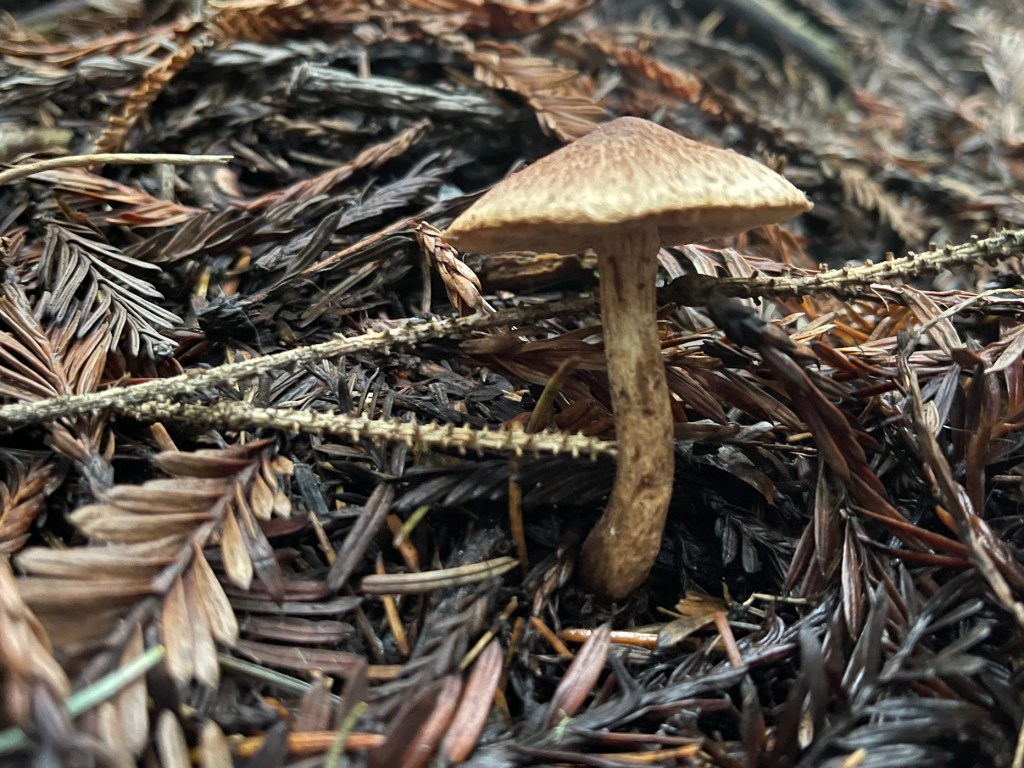
I could not correctly identify this mushroom (#10). I believe it is a Lepiota. As you can see in this photo, it is an older mushroom. Not all mushrooms curl up at the end of their life cycle, or they could have died before it was ready to dispense their spores. Mushrooms are more identifiable when a picture of their gills, stems, and overside is captured.

I couldn’t even get close to identifying Mushroom 11. 

The Alice in Wonderland mushroom, scientifically known as Amanita muscaria, has a minor toxin and can be dangerous. I don’t recommend processing it without extensive knowledge. It is known that North American medicine healers would gather the urine of reindeer that took on the hallucinogenic properties of the Amanitas and drink the substance to create a spiritual journey. 

I’ve identified this mushroom as the Russula Xerampelina, or the Shellfish-scented Russula. Many types of Russulas can easily be identified by their deep rose color that varies in shades and thick white gills. 

The mushroom above (Mushroom 15) remains unidentified but feel free to leave your thoughts in the comments!

The tall, thin fungus on the left side is the Tremellodendron pallidum or Ttremellodendron Schweinitzii; its street name is the Jellied False Coral. It is not actually in the coral family but in the Jelly because of the microscopic structure of its spore-producing basidia. The centered mushroom in its late stage is not remarkable anymore, but looking at the next photo, I assume they are the same fungus species. 

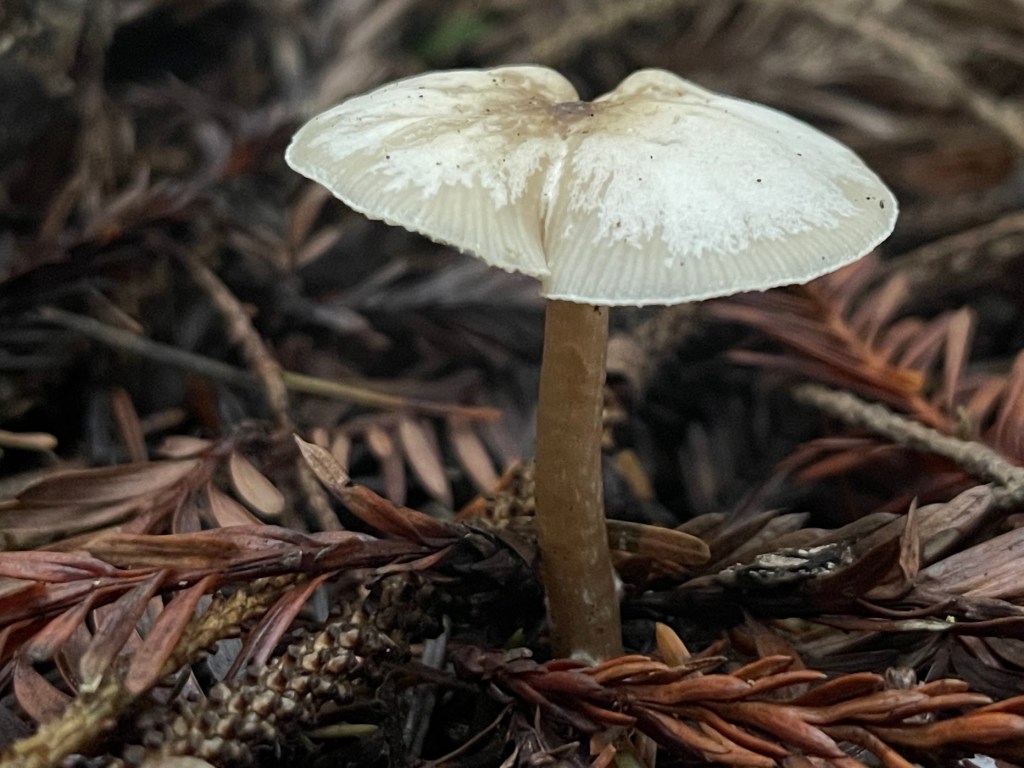
This beautiful white mushroom is the Cuphophyllus virgineus, also known as the Snowy waxcap. This cap is rounded until it ages and flattens as it is exposed upward. In this photo, it resembles a blossoming flower. 

Interestingly enough, this mushroom is devastating the forest. It’s called Heterobasidion annosum and causes root rot commonly in pine trees. It is responsible for one billion US dollars annually, according to Wikipedia. This virus usually is infected with fresh cuts in the tree and spreads through the roots to neighboring trees and by insects. It causes large cavities in the roots and lower stems, and when the tree dies, it creates gaps in the canopy, affecting the area’s moisture and the sunlight, impacting the lives of the forest critters. After the tree dies, the fungus lives in the stump and spreads. ScienceDirect.com says this fungus originates from Laurasia. This fungus is hard and dark brown, which can turn black with white polypores on the underside.

Tyromyces chioneus, whose common name is White cheese polypore, is the cause of white rot in birch trees and most hardwood trees. It is also necessary as a deadwood decomposer. A polypore is a shelf-like fungus (instead of a mushroom’s stem) that’s spore-producing cells line pores. This white shelf fungus can be found individually or in clusters of 2-3. 

Thank you for reading and I hope this information is accurate and helpful while you explore Humboldt County forest!

References:

https://www.mushroomexpert.com/

https://lostcoastoutpost.com/nature/

https://en.wikipedia.org/

https://www.sciencedirect.com/

The Wigi Dome

An Interactive Art Installation

What inspired the Wigi Dome?

The end of the school semester came in June, which meant a break from substitute teaching for me, and the beginning of summer. My daughter’s previous teacher and good friend forwarded me the “Call to Artist” by the Festival of Dreams in the Lost Coast Outpost. They were giving out $40,000 of art grants up to $2,500/ ea. The gears of my imagination pushed forward. 

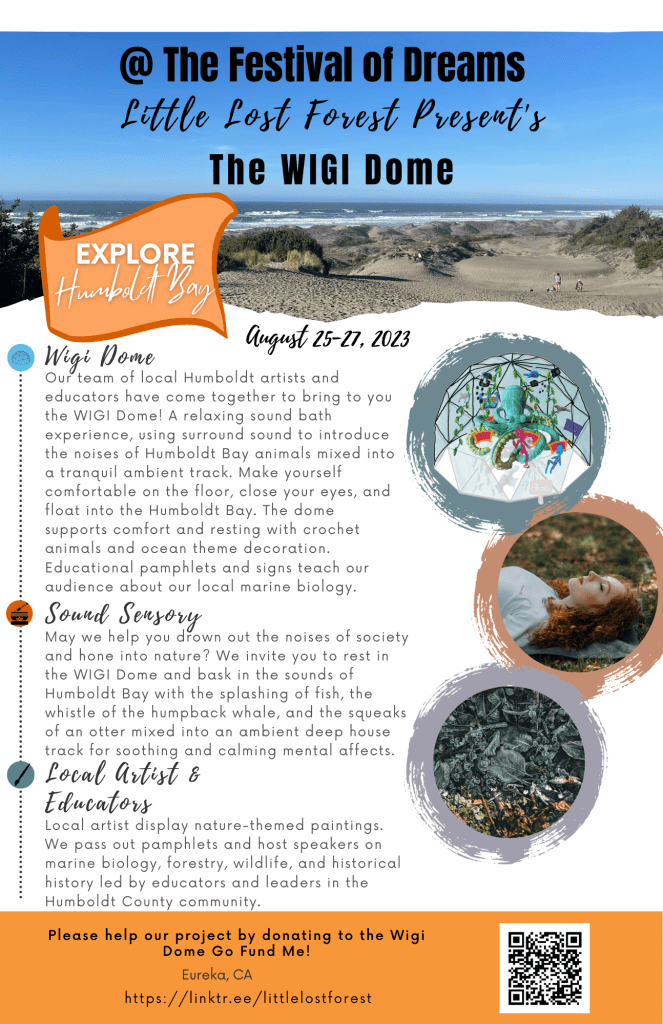
The event’s theme was the Wigi, the Wiyot name for the Humboldt Bay. I was inspired to combine my job as a substitute teacher and my passion as an artist to come up with the Wigi Dome, An Educational type of Magic. 

What is the Wigi Dome? 

The Wigi Dome is a 19×18′ tent that can fit about 13 people, funded by the City of Eureka for the Festival of Dreams. For the event, Fun Facts were lined outside the tent made by second and third-grade students from Laurel Tree Elementary in Arcata. On the top of the canopy, local artists spray painted with water-based acrylic on cloth panels to represent different times of the day and places of the Manila Dunes. Artist such Gizmo (@neudepths), Jackie (@jackalope_studios_arts) and Joe Fox, Ruth (@ruthcreaates_4), and Amber (@mushroom.firy.logs), Autumn, Sera and Georgia.

What is the Festival of Dreams?

The newly created event is Festival of Dreams – a collaboration between the North Coast Repertory Theatre (NCRT), Ink People Center for the Arts and the City of Eureka. The festival will happen in two parts: an outdoor event Aug. 18 through 20 that will take place at Halvorsen Park and around Old Town, and an indoor festival on Oct. 5 through 8, that will be held throughout multiple different Eureka venues. And to make this new festival even more exciting, the City has made more than $40,000 in American Rescue Plan Act (ARPA) grant money available to fund local artists who want to participate. 

Stephanie McGeary, https://lostcoastoutpost.com/

The festival Started on August 25th as a parade danced through Old Town. Local businesses allowed performing artists to set a stage in their occupancy, including Eagle House and Eptimony Gallery. 

Saturday’s event took place in Halvorsen Park as the free interactive art festival commenced. There was a beer garden, vendors, and lots of interactive art. Perhaps you found yourself lounging in the Do Nothing’s Societies Oasis (@thedonothingsociety), hanging out with flow artist Zephyr, making your own tarot cards, and eating complimentary fruit. Enter the Kaleidoscope airplane or sit at a table at the Clam Juice, a psychedelic experience (@glittergizzard). Beautiful fabric acro dancers from Synapsis performed in the center of the park. You may have wandered into a forest of pom poms or the dream-like fabric maze. You step into the photo booth and allow its mechanics to hand draw your photo (@aart.by.mir). Live music and a late-night DJ rocked the stage. In the amphitheater, an artist hung a lanyard of butter wrappers painted with unique images. Ceramic artist Josh Roller (@darthgritty) displayed abstract creatures and wall hangers along the stone edges, along with a smoking dragon, a bone and metal sculpture, and much more art surrounding the amphitheater. 

How was the Wigi Dome experience at the Festival of Dreams? 

The Wigi Dome offered tea and art by Erica Brooks (@fineartbyerica), Joe Mallory (@joemalloryart), Ruth Murphy (@ruthiecreates_4), Drake Munson (@draykinarts), Natascha, and Jeremy Pearson (@littlelostforestart). 10% of all paintings sold inside the dome go to Friends of the Dunes to restore Manilla. Kris Coffman (@kriscoffmaninsight) spoke on Love and Communication with an intimate group that shared stories, laughter, tears, and animal noises. Rah Kiv (@rahkiv) played Flamenco R&B to set the mood as the vendors finished setting up and the festival began. Ruth, vocalist, and Uncle Steve, violinist (@unclesteve1352) performed sea shanty and folk music throughout the day. I made a Wigi mix that was Lofi Hop and had the sounds of the animals of the bay mixed in for in-between sets. Stories on Humboldt County were shared within the Wigi Dome between our community and collaborators, along with discussions, lessons, and music. I ended Saturday night with Alien Paintings, where we free-painted on canvas, folded the cloth in half, and opened it with a groovy alien design. On both days, Jackie (@jackalope_studio_arts) spent a few hours painting fish ceramics with “kids of all ages.” Autumn was an active emotional support partner throughout the festival. 

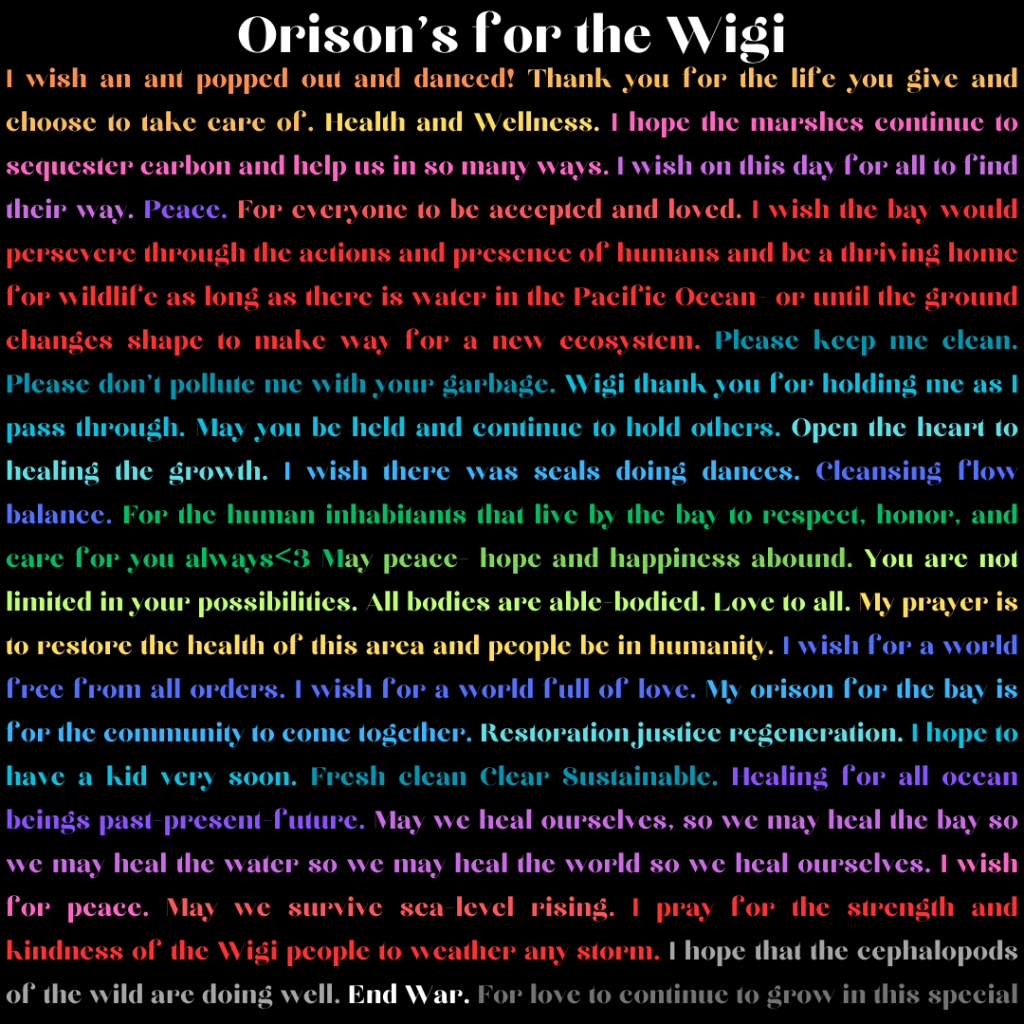
At the Welcome table, we gave out an educational pamphlet by K-12 Educator Crystal Linde about the Wigi, The Wiyot name for Humboldt Bay. We also asked our guests to write an Orison (a 13th-century word for a prayer) for the Wigi. Here is what our community had to say:

We appreciate all the effort that went into the Festival of Dreams. The coordinators, staff, and volunteers. Along with all the other artists that participated. It was truly a beautiful experience to hold space in an interactive art installation to teach our community, hold space for discussion, and supportive relaxation. Thank you to all the Wigi Dome collaborators, artists, musicians, historians, businesses, volunteers, and community guests. 

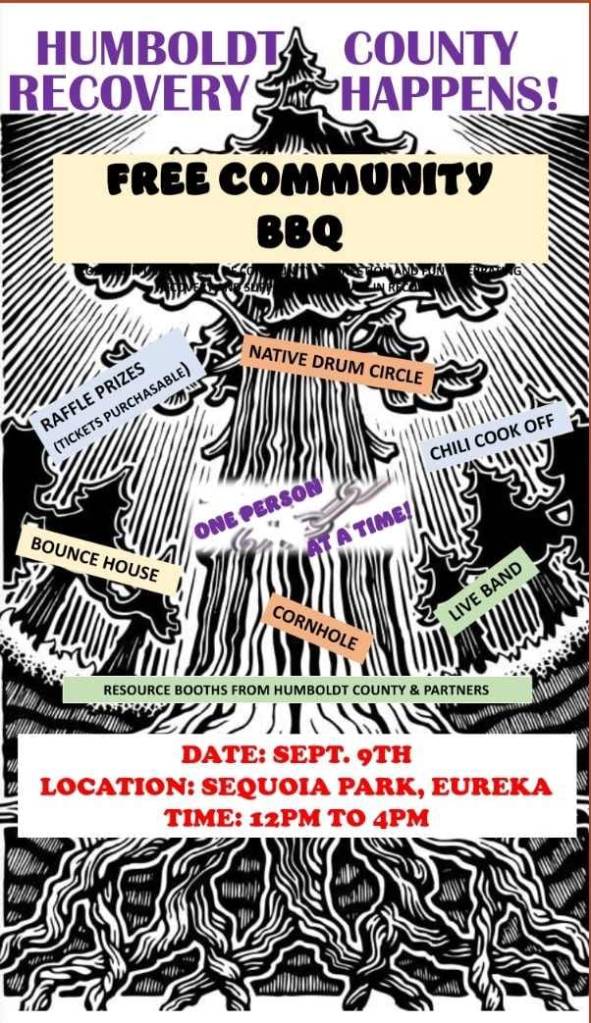
The Wigi Dome doesn’t end at the Festival of Dreams. On September 9th the Wigi Dome will have a booth at Recovery Happens. Autumn and Natascha collaborated on a small interactive art piece where we will ask the community to write on a leaf, What in their life is worth living for and clip it onto the tree. I dream of displaying this place at Morris Grave. We will also be exhibiting the Wigi prayers at the booth. In the future, I can see further collaborations with educators, community, and artists and bring this project to schools to educate our youth in an interactive manner. 

Check out the Wigi Dome Website at https://littlelostforestar.wixsite.com/little-lost-forest.

Please donate toward our Go Fund Me! https://gofund.me/bc4db4cf

Come check us out tomorrow 9/9/2023 at Recovery Happens!

The Wigi Dome: What inspired it, What it is, What it has accomplished, and Where it's going next.

Two Moms and Five Kids Camping in Petrolia, CA

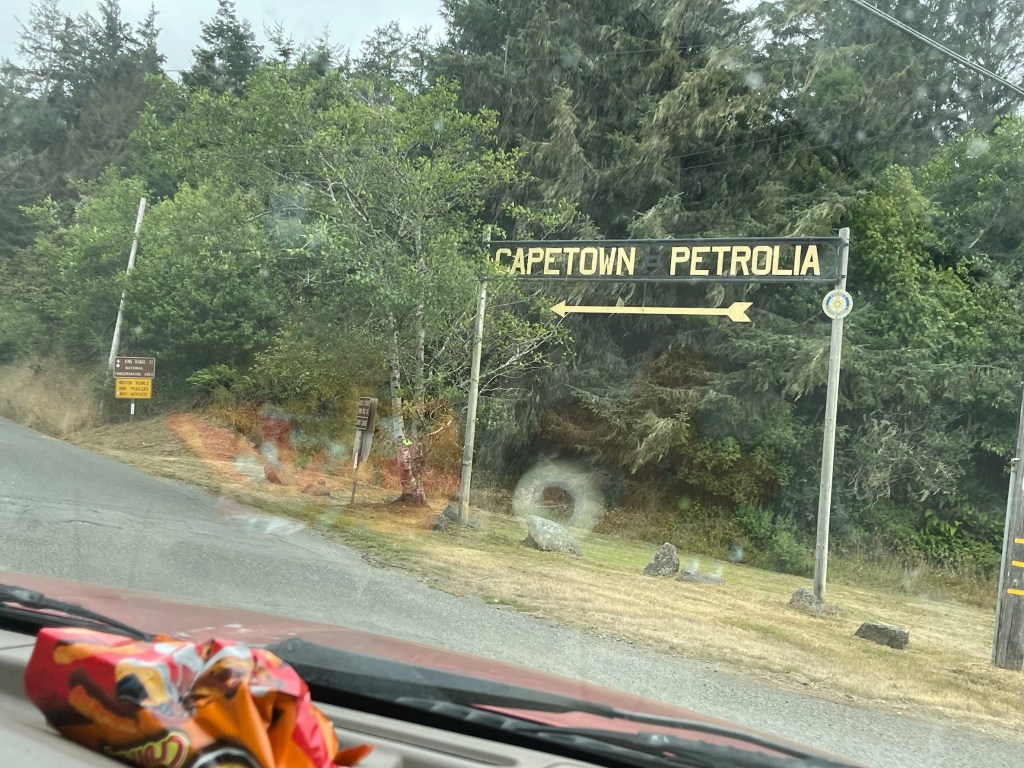
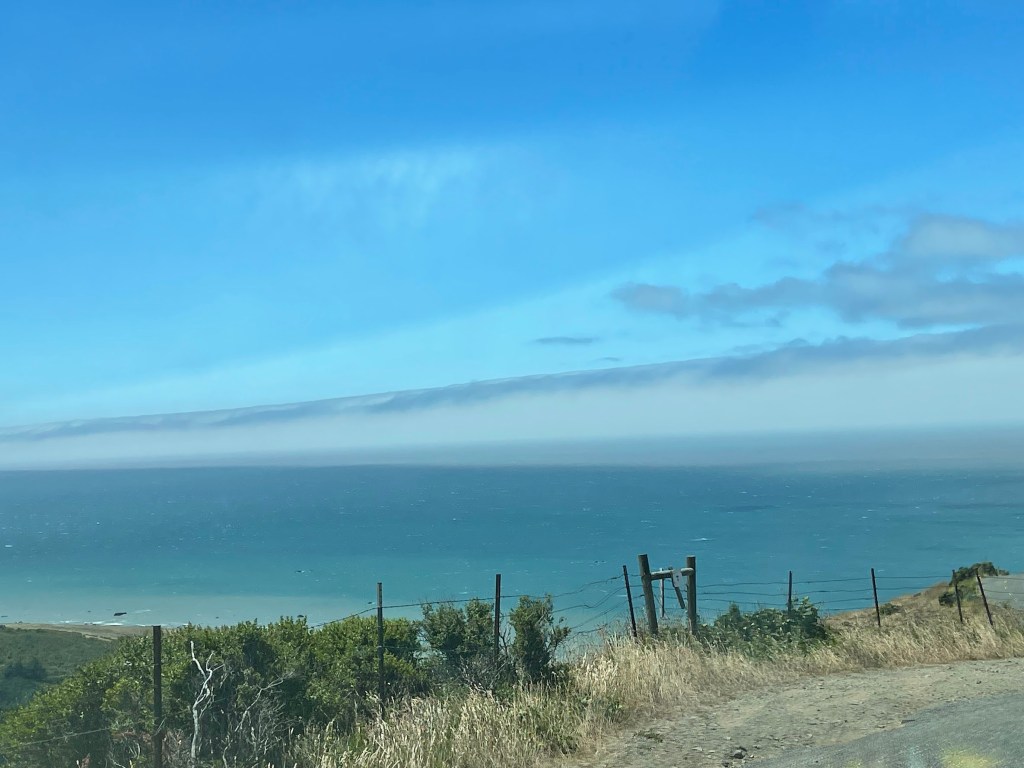
The smell of petrichor seeped through the window. The three littles ranging from two to six sat in car seats while my eldest, my friend, and I, along with the beagle, Aspen, who jumped from lap to lap sat in the front in the F150 with all our gear in the bed. We drove through the quaint Victorian town of Ferndale and past the sign that read, Capetown Petrolia, up a winding road. I put Get This Party Started on by Pink! We sang songs for about twenty minutes from the sign until we lost service and resorted to country blues CDs. We pulled off the road when it began to drizzle and questioned heading back to avoid the rain. We quickly decided we would bear through it and drove over the mountain to the coast where the fog rolled off the sea. The wind blew through fields of tall grass. Petrolia has one store/ post office, a cluster of homes, and some beautiful gardens. A skateboard ramp repping the tag “P Town” and other artist-like homes are sprinkled off the roads.

A little way out A.W. Way campsite is on the right of the road south. It is first come, first serve but there are many campsites. A.W. Way is $30 a night campground compared to the coastal campsite which is $8. We chose this one to avoid high winds. We settled on the far side/ inside of the loop, where there was easy river access. Rolling mountains surrounded the campsite. There are no redwoods in the area due to humidity and a lack of fog, said one of the trail signs near the entrance by the showers and bathrooms. We unpacked the bikes first and the kids chased after one another making the half loop around the site. The large Costco tent will fit us all. When the kids came in we had them collect pinecones and twigs to help start our fire.

We were soon greeted by our neighbors and their kids. We instantly connected and were encouraged to step out of our shells and socialize.

The mother of the neighboring kids told us after taking us in fully, “It’s easy to get caught up in the time-lapse of being a mother, we forget to forgive, and most of all we forget to forgive ourselves.”

Down on the riverbed, we found a small pool with salamanders, tadpoles, and river snakes. The kids used a net to catch and release the critters. My two-year-old played easily in his floaties with the other kids in this small pool. Further down, east, there is a bridge and a trail that we never found but got lost along the river looking for. To the west there was a bigger pool where we brought the kids and found many of the other campers lounging in. The rushing of the stream into the bigger pool was enough to quickly float the littles down a way without being too aggressive or pushing their heads underwater. I wish I had brought water shoes. I laid with the baby on the rocks and I was elevated.

If there are so many moms in the world, I thought, and this is how they feel when they hold their child, then there must be really good energy going into this world on a constant basis. 

We cooked chicken and boxed fried rice one night and the other night we made burgers. We had fruits and circus animals for snacks. Marshmallows and graham crackers for dessert. Bacon and muffins for breakfast. Top Ramen and hot chocolate after heating up some water. We always pack too much food but often forget one of the kitchen supplies- salt and pepper, dish soap, sponge, cutting board, etc.

The second day we picked up the ecstatic fifth kid from Lost Coast camp and we were met up with another friend. The wind picked up and even though our tent was staked it was pulled right out of the dirt causing it to collapse. We parked the car to face the wind and that protected our tent enough- along with a few more stakes. At night we sat under a billion stars calling out the spaceships, satellites, and exploding stars. We played Cards Against Humanity, the family edition and told scary stories that lead to old memories and funny outcomes. The kids fell asleep easily and it wasn’t freezing throughout the night, even though I’m sure it can be near the Autumn.

On the last day the park really seemed to fill. Schools, dirt bike groups, and lots and lots of families loaded into the sites. The campsite supports a good amount of people and it seems that it attracts a fun and heartfelt crowd. Leaving Petrolia we stopped by the store and loaded up on fresh snacks. We made a longer stop on the coast and collected shells and driftwood. Our camping trip was easy going and we were happy to escape the hustle and bustle of Humboldt city life.

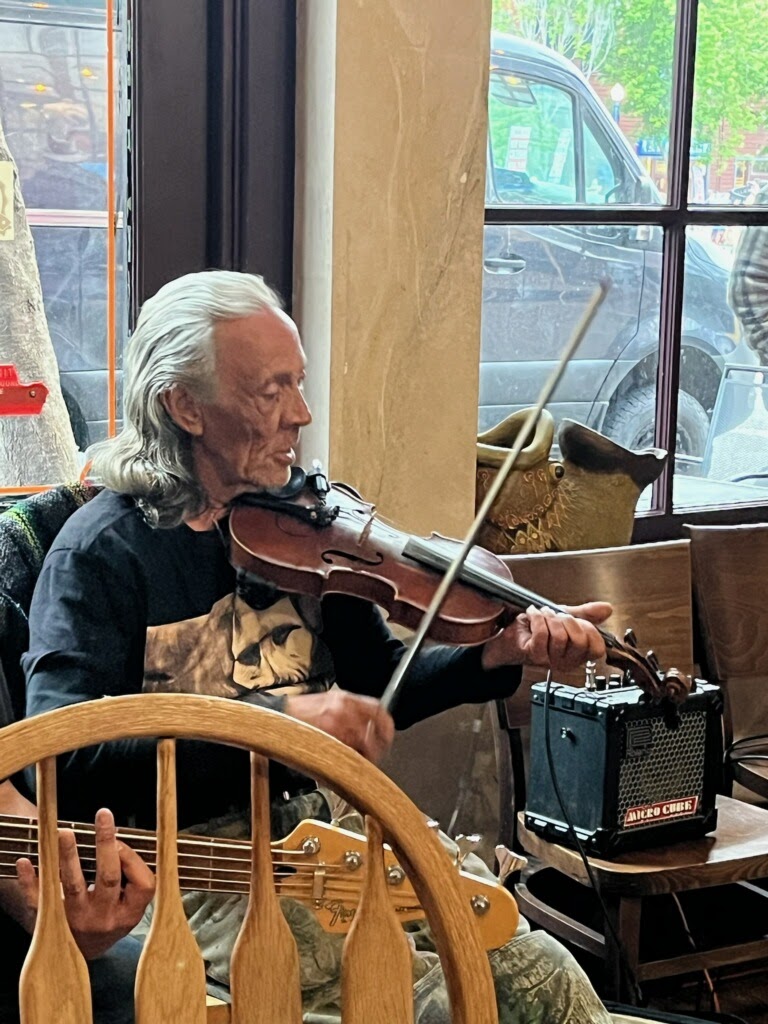
Interview with uncle Steve; Long Time Violinist from Arcata

On Monday, June 11, 2023, Natascha and Uncle Steve sit in the back patio of Everett’s, in Arcata. He sips on Corralejo tequila with cranberry juice on a beautiful yet slightly cloudy afternoon. It is the day before his seventy-first birthday. Uncle Steve turns off his speaker playing Bob Marley’s “River to Babylon” and we begin.

Uncle Steve @ Old Town Coffee and Chocolates Open Mic

Natascha: Okay. Awesome.

Uncle Steve: Just cranberry and club, I mean.

Natascha: Welcome to the Little Lost Forest blog. Today I will be interviewing Uncle Steve, an Arcata based musician. Hi Uncle Steve. How are you today?

Uncle Steve: I’m fine. How are you?

Natascha: I’m doing really.

Uncle Steve: Good. Good.

Natascha: Where are you from?

Uncle Steve:  Originally? L.a. Los Angeles.

Natascha: And now? You’re staying in Arcata.

Uncle Steve: Arcata? Yeah.

Natascha: Um, what’s your instrument of choice?

Uncle Steve: The violin.

Natascha: What else do you play?

Natascha: Uh, recorder. Soprano sax. Timbales, and timpani.

Uncle Steve: Violin is my main one.

Natascha: Who are you currently playing with?

Uncle Steve: Anybody wants me to play with them? [laugh] I play with a group called the Wild Banshee Whispers. We do Irish folk music.

Natascha: Um, where do you guys perform?

Uncle Steve: Various places. We played at Siren’s Song. We played Blondie’s. We played at Medieval Festival in Blue Lake. Yeah. Yeah.

Natascha: So cool. How long have you been playing the violin?

Uncle Steve: Off and on Since I was nine.

Natascha: What inspired you to play?

Uncle Steve: Uh, going to assembly at elementary school. They had an orchestra, and I went home, and I told them I wanted to play an instrument, and they asked me which one. I told them the violin. They kind of looked at me and laughing and said, What the hell do you want to play that one for? So because everybody else plays guitar, bass and drums, I wanted to be different. So. So off and on since I was nine. Continuously since 2009.

Natascha: What motivates you when you play? What are you thinking about? What pushes and drives you?

Uncle Steve: I love music. So, you know, a lot of people go out and play and busk and do things like that. I’ve never done that because I play for the love of music, not for it- not to make money. That isn’t my goal. So.

Natascha: Who are your childhood influences?

Uncle Steve: Uh, [laughts] that’s a, that’s that’s really a hard one because there’s so many. I mean, growing up, I mean, I’ve seen Jean-Luc Ponty, I’ve seen I like jazz violinist. I like.

Uncle Steve: I like the violin. Like I’m playing with the guy now. And our opening scene, our opening song, always. It’s our go to song signature song is “One More Cup of Coffee,” but it’s on the Desire Bob Dylan’s Desire album. So we open up every time we play together. That’s what we open up with.

Natascha: Um How is culture and heritage present in your music?

Uncle Steve: My dad was my stepdad was big band jazz guitars, and my mom played folk music and. They both play guitar. So, I mean, that was pretty much. But in the jazz influence, Yeah.

Natascha: Does spirituality play a role in your music?

Uncle Steve: I don’t. I don’t know that one. I don’t know. If it does or not, maybe for some people they see it that way. But I just do it because I love music.

Natascha: Um, how does your music represent your past?

Uncle Steve: Yeah, I had a jazz bassist friend of mine that was giving me jazz fundamentals and he told me to go out and find a 12 bar blues piece and then learn it. And the key is written in every key. But then I saw him years later. I said, Maybe I should go out and get that 12 bar blues piece now. He said, Why? You’ve lived it. Just start playing it. So that’s what I’ve been doing.

Natascha: I mean, where do you see your music going in the future?

Uncle Steve: This is on an upward swing and it’s been going that way since I moved out here. So I guess that’s how I see it. It’s moving. You know, I’m playing with people that I guess I like. This past weekend I played with, I guess, some of the top names in Northern California, all in one weekend, just all day long yesterday.

Natascha: And can you name a few?

Uncle Steve: Aw, Phil from Bow-legged Buzzards. He and I played. I let him use my acoustic and I used my electric and we sat and jammed for hours, you know, Friday night. Yeah, it was cool. And other people, I mean, I, I don’t know who they are. I mean, I just had fun playing with them. I’m going to be told that my friend that I went with Joe, the keyboard player, he knows a lot of them, knows of them and knows their stories. And so he’s going to let me know. He’s going to tell me about them.

Natascha: Oh, what is the local music scene like in your eyes?

Uncle Steve: There’s a lot of variety and I get to play with a bunch of different people that play different ways. So, you know, if I know if I could hear it or if I know what key you’re playing in, I can probably, I can do something with it.

Natascha: What advice do you have for starting musicians?

Uncle Steve: Don’t stop. Yes, it gets frustrating, especially if you’re learning classically or if you’re learning. If you’re being serious about it, it gets frustrating. Just don’t give up.

Natascha: I love that. Thank you. Um, anything else that you’d like to add about your experience, your past, or your heritage?

Uncle Steve: I, I’ve enjoyed playing music, and I, I’ve done, like 19 bicycle trips and I’ve had the violin on one of them, and I played everywhere from Marin all the way up to Cresent City and back down to Hayfork. So. And it’s what I do for fun. It’s something I enjoy and I.

Phone Speaker: Goodbye.

Uncle Steve: [To speaker] Goodbye.

Uncle Steve: I like to. I like playing music.

Natascha: Oh, Where can we see you in the future? Any upcoming shows?

Uncle Steve: I’m usually at Blondie’s at the open mic and I like going to open mic. I like being able to play with different people. When I lived in Hayfork and during the major trim seasons, you know, I must have played with 6 or 7 different countries in one night, you know? So it was pretty cool to be able to do that. You know, I get a lot of how do you do that? You know, because if I can hear it, I can do something with it.

Natascha: Okay. Thank you, Uncle Steve. We appreciate all of the followers and encourage the community to go see local musicians.

Uncle Steve: Thank you. Okay.

Uncle Steve and Natascha @ Everett’s

Medieval Festival of Courage

October 1, 2022- The Medieval Festival of Courage was hosted by Coastal Grove Charter (K-8th) in Blue Lake, CA. With 50 vendors, two stages, and three unique arenas, the festival attracted a large crowd dressed throughout the ages. I had the privilege of vending with TLC. My children, their friends, our friends, and school and work peers all came to indulge in the festivities. This two-day event spanned from Saturday to Sunday and was a very special showcasing of central Humboldt’s hidden gems.


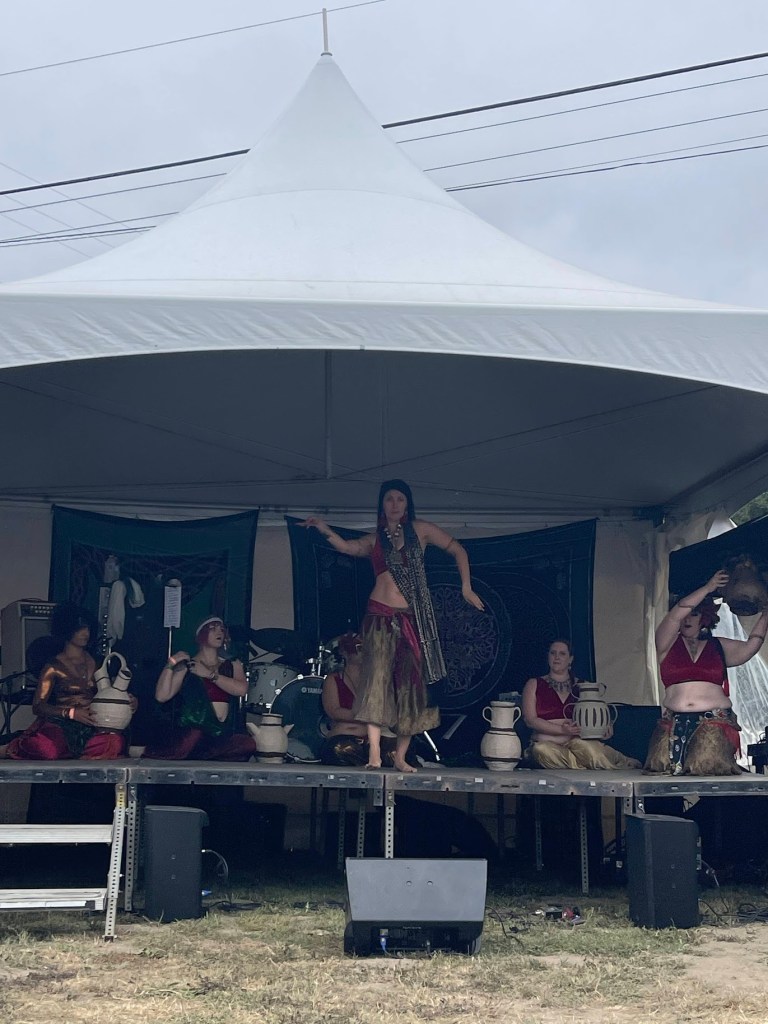
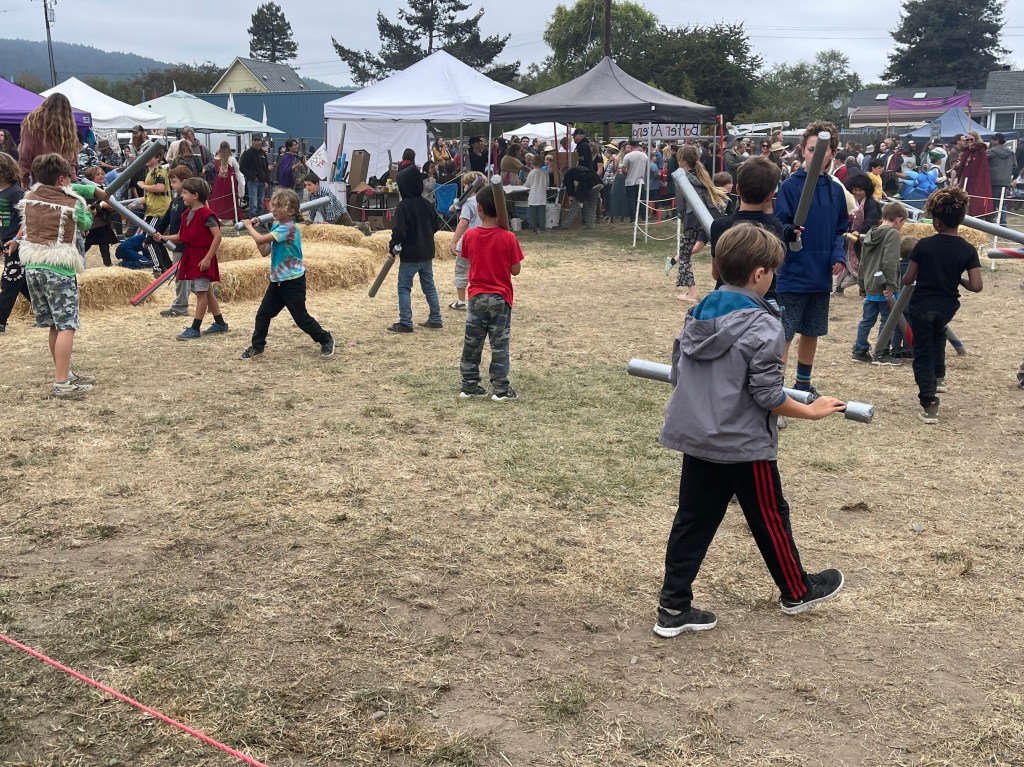
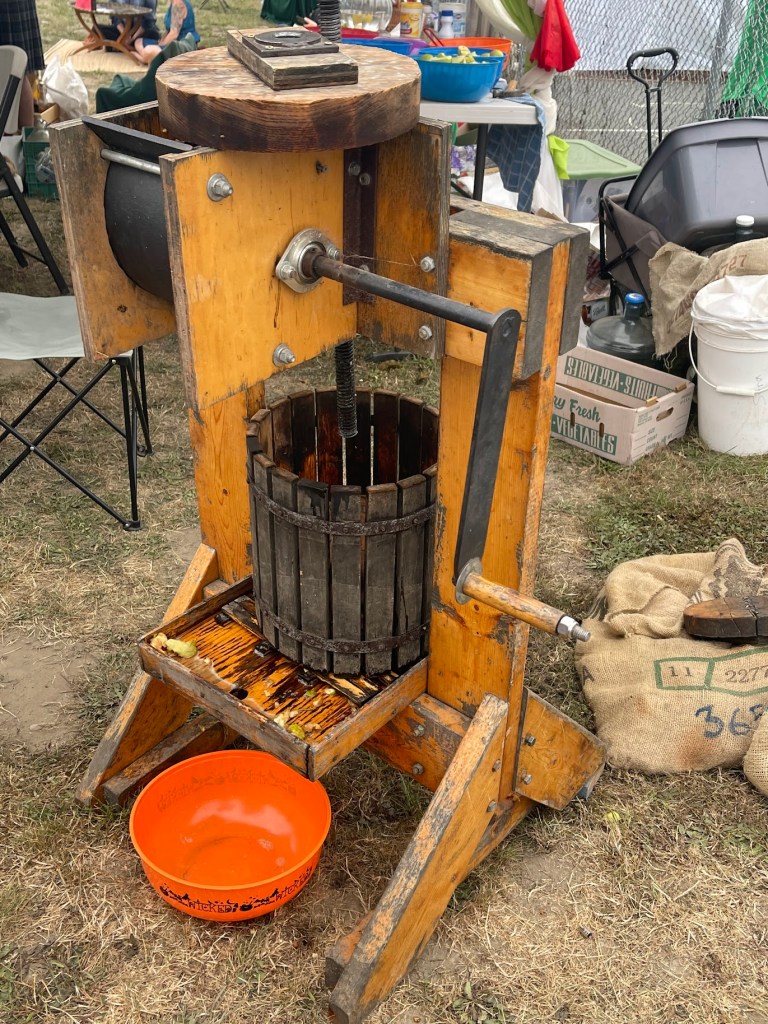
At $10 a ticket, knights, wizards, queens, and kings entered the gates! Greeted by a sword-fighting arena for children and a few rowdy fathers, took on foam-covered sticks and fought to the death! The sword fighting arena was one of the most popular activities full of children’s rampage. The front stage was bedecked with belly dancers, clog dancers, poetry, and bagpipes. The days were full of thespians and musicians belching out their hearts in a medieval dialect. Surrounding the arena were vendors of jewelry, clothing, food, and wine. The cherry wine flushed the lady’s cheeks and beer overfilled grizzly bearded men’s mugs. Carmel dripped off green apples like witches’ muck, and meats and corn were cooked on open grills.


Over by the paddock was a tent for the kings and queens, dressed in authentic 500-1500 ce costumes excluded from the common folk. A large crowd lined the fences as men on horses jostled, flinging one another from the horse’s back. Between shows, men in armored suits and beautiful women dressed as royalty paraded the horses for the audience to touch. Within this arena were a petting zoo, a miniature pony ride, and even axe throwing! The animals warmed the children’s hearts while leaving their turds along the pathway.


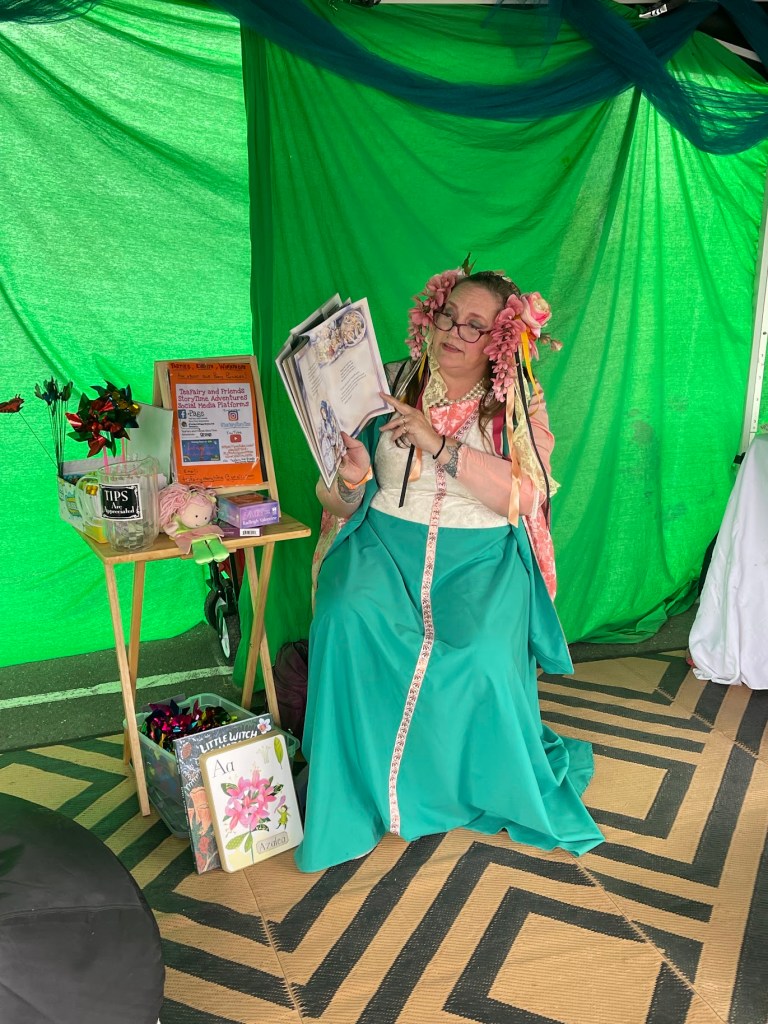
Even though there was a metal fence on the high-top areas, I combined this arena as one. The front entrance welcomed the crowd to a beautiful children’s area and homely vendors. One tent offered toys for the children, blocks to make castles, animals to dress, and playsets decorated with dangling tassels and velvet flooring. A majestically dressed woman read stories from a book and welcomed groups on a story quest with the legend of the Sword in the Stone. Also displayed were gem vendors, free pin-making stations, and a gnome dome, the safe haven for the tired-out child to live in a fairyland.

Then there was “TLC” a non-profit showcasing local artists, including me! I represented Little Lost Forest displaying wands, resin trays, acrylic art, and ruins! I had the pleasure of live painting and reading tarot. My friend Savana showed her unique electroplating copper jewelry, and Patrick his locally made wood tables, mushrooms, and swords. We advertised for our upcoming festival in Manila next month! Behind the metal fence were aerial silk performers with young girls climbing the ropes! Musicians played at a small stage in the back, serenading us with the violin. A jump house, jewelry vendor, and archery station fit with plenty of room along the basketball court. Men, women, and children pulled back their bows and shot toward haystack targets. A few performers free-flowed with staff, poi, and Hoola hoops.

The Medieval Festival of Courage was a well put on event that brought the community together, offered affordable vending spaces, and showcased some top performers. The children ran the show, and Coastal Grove Charter did a good job relating its artistic and out-of-the-box curriculum. More adults (then I think would like to admit) dressed in their favorite garb and transported back in time. At the end of the day, the playful and innocent collaboration of our communities youth shinned through, and I can’t wait to return next year.

Interview with Adam Schluter: Hello, From a Stranger.

August 24, 2022: Transcribed Zoom Interview

Natascha : Hello Readers,

My name is Natascha with Humboldt counties lifestyle blog, Little Lost Forest. Today I will be talking to Adam Schluter, producer, and photographer of Hello, From a Stranger.

Hi Adam.

Adam: Hey Natascha, thanks for having me.

Natascha: How are you feeling today?

Adam: I’m feeling- I’m feeling pretty good. Honestly, I think you saw I had open heart surgery like two months ago and I just had some weird ups and downs but it’s summertime, it’s wedding season, we’re filming the show, it’s Monday Night Dinners, I’ve just been pushing it too much. I think I’ve just been an introvert crashing, hard but other than that life’s good.

Natascha: You’re looking great and you’re spreading positive energy, you are much appreciated.

Adam: Thanks, Natascha.

Natascha: Where are you talking to us from?

Adam: I’m in Coeur D’Alene, Idaho.

Natascha: Cool. How’s the weather out there?

Adam: It’s magic, perfect. Like 85 sunny but in Coeur D’Alene, Idaho you have like three months of good weather, June, July, August. September, October are usually pretty nice. You never really know. But then you have literal six months of deep pure winter. There’s six hours of sunshine during the day. It’s brutal. This area is perfect.

Natascha: Do you stay in the area year round?

Adam: No, fuck, no. That’s why I photograph weddings during the summer. I make all my income for the whole year in those three months and then I have nine months off, so I like to spend like one month in the winter because, it’s very ideal like a hallmark town. Everything shuts down, you walk everywhere. It’s like ten feet of snow a month. It’s just gorgeous. But you know if I’m not working, and I don’t have routines in place it’s really easy to succumb to seasonal depression and my mental health stuff. So, it allows me that time to travel out into the world and focus on my project which gives me a lot of purpose.

Natascha: I can understand that we have a year around cloud coverage here in Eureka. Winters can be harsh.

Adam: What do you mean year around?

Natascha: We’re right there by the bay. Right there in Eureka, not in southern Humboldt or in Oregon but right where I’m at, clouds accumulated by the water and were stuck with it.

Adam: That’s tough.

Natascha: Can you tell my audience a little about Hello, From a Stranger?

Adam: Six years ago, I lived in Mexico and I wanted to move to a place with more opportunity. I was in a long-term relationship with a girl that I loved like crazy- with all my heart. I thought we were going to get married. So, we got sponsored by this outdoor company to travel the Pacific Coast highway from the southern tip of Mexico to Alaska and pick the best place to live out of the three countries. 22,000 miles, I spent ten months on the PCH, and I chose this town where I’m living now, Coeur D’Alene, Idaho.

We spent ten months together. Every day was bliss. We were on vacation, everything was cool. We were both travelers, so everything was cool. We were running from some demons. She was really running from some demons. She was getting over drugs and alcoholism, and a whole bunch of some darkness we were running from.

So, once we slowed down and we moved into this home that I’m in right now we literally had nothing, we only had enough money for the prorated first month’s rent and the deposit- we had nothing left for groceries, for food, we had no jobs, didn’t know anyone. But we made it work, got jobs, figured it out, obviously. Once we got more comfortable those demons came back and it pulled us apart. It came to a spot where I couldn’t do it anymore and we ended up breaking up. I was in a town where I didn’t know a single person and I was way far away from my family and friends, and I moved here with this girl that I thought I was going to marry and be with for the rest of my life and now she’s gone.
I was living in Mexico for three and a half years and I didn’t have a phone, so I just didn’t know what to do. I didn’t know how to make meaningful relationships without technology in America, especially. It’s easier in third world countries. I finally hit a wall. I was going into the first winter out here and I was suicidal. I was thinking about suicide, I was actually planning it. And one day, I really just didn’t want to do it to my family. So, one day I was just looking at a world map, just kind of dreaming, still very broke, not very much money. I was waiting tables at a restaurant, but I knew I was going to die if I stayed in this house stuck in my thoughts. I just said fuck it I’ll just do what scares me the most. If it confirms my fears that I’m alone and the worlds not there, then I can still commit suicide and give up but maybe it will wake me up and get me out of my head.

I booked the cheapest flight the furthest I could away, which was Copenhagen, Denmark and almost no money left, again. I was homeless in my late twenties. It never bothered me. I’ve always lived a very minimal life guy. I don’t mind being uncomfortable. I was like fuck I need to sleep somewhere, and I need transportation. The trains- the trains are all over Europe. There’s one company, Euro Rail, that does 95% of all trains in Europe. I just started hounding them to sponsor me for it, I didn’t have a big portfolio, it was just an idea, and we went down to Fort Bay to ask the group that sponsored part of the trip. Okay I can sleep on the trains; I can move around on the trains. From there my only plan was to find the beauty in the world and try to wake myself up creatively and do what scared me the most, which was to say hello to people and to interact with people. It’s easy as a photographer to be behind the camera and photograph stuff from a distance. I was trying to wake up. I was really trying to wake myself up. I knew I had to really challenge myself.

I’m an introvert. I’m terrified of rejection. So, I was like what is the scariest thing I can do? It’s like just go say hello to strangers and try to have conversations with them. That was the base of this whole thing. Now we’re twenty-one countries in thousands and thousands of strangers, been published three times by National Geographic, there’s a Ted Talk. There’s a book and we have a second book coming out on it this year. We started filming the show last year. We’ll have a show coming up here too. It’s still a work in progress. Mental health is not like one and done, alright I’ve solved this. No, I need to continue moving this project forward. It’s because give me a lot of purpose and it reminds me of the things I need to do for my own mental health and just keep trying.

Natascha: Your story gives me goosebumps. Congratulations on moving this project forward.

Adam: Thanks, Natascha.

Natascha: Of course. Out of all the creative outlets you could have pursued what influenced you to talk with strangers?

Adam: I think- A) I was incredibly alone. I felt incredibly alone but I was surrounded by people. It was like how the fuck does that make sense- I’m sorry, I guess you can take that out- I’m surrounded by people, I feel completely alone. We have social media and people around us, but there’s no in-person depth of those relationships, and that’s hard. It’s easy to send a text but it’s hard to sit with someone. It can be awkward sometimes. And ask for help, sometimes, and to give help when it is asked of you. They really need to learn this, because the technology, it doesn’t matter how many friends I have on that. It makes me feel worse. It makes me feel more alone. Because it’s not in person. The cool thing about this, I was actually so afraid, the first night I was throwing up in my room. I was deathly terrified. And there was no turning back. I didn’t have the money to go back. So, I put it all on the line and it saved my life, but I made up this script because I thought I better sound cool approaching strangers. I have to sound like I have this all thought out and put together. The script was on approaching and saying hello to strangers all over the world but only if I saw something beautiful and, in this moment, this is so beautiful would you mind if I took your photograph? That sounds aliquant and cool. but what I found was that when I approached these strangers you have a millisecond to earn their trust. You have to decide if they can trust me, if I’m trying to sell you something, see if I’m trying to get something from you and if you think that I’m bullshit then in that millisecond you’ll just walk away. You’ll never stop to talk to me. I found that script was dis-ingenuine. And so, through hundreds of rejections. I was getting rejected 90% plus when I was using the script. I just became more and more vulnerable. I was tired and beat down, I was still trying to figure this out. And the more vulnerable I became- you know I thought as a man it was dangerous to be vulnerable, weak to be vulnerable and foolish, obviously. The more vulnerable I became, everyone started trusting me and everyone started opening up to me. Strangers are crying on my shoulder five minutes after I said hello to them, it’s like what the fuck is going on. I didn’t have to do anything. I’m awkward and goofy. I don’t have the right thing to say, there’s moments when I don’t know what to say but like- it’s read as authentic and that’s all it takes.
Natascha: Cool. How do you choose your subjects? How do you decide that a moment is beautiful?

Adam: Honestly just pure curiosity. I love to pay attention to the world around me. There are absolutely no rules to it. It’s never forced, there’s days where I’m like I should get some stories today and I’ll go out and I just don’t find anything that inspires me that day but it’s just mostly I try to inspire people to put their phones down and notice the world around them and I feel that if people did that- come here [grabs cat]- I feel that if people do that and get off of the technology I think we’ll have a much more realistic, the actual beauty of the world around us, no fluff, no over optimism, reality by itself is pretty fucking beautiful. It’s pretty fucking special. And so, I just go out into the world, I’ll pay attention and I’ll see something that makes me curious. A lot of times it’s like a person reading a book in a park, it’s a person covered in tattoos, some of that sticks out. But I’ll say this, I never approach anybody that is staring at a phone.

Natascha: [laughs]

Adam: I don’t try to be cynical about that, it’s just really there’s nothing interesting about that and I already feel that your head is going to be completely busy if I say hello to you and it’s just not my deal. I prefer people that are doing something else.

Natascha: While abroad how did foreigners view you as an American?

Adam: Yeah, really cool question. The main reason above all why I wanted to do this internationally is that I wanted to do it in places where I didn’t speak the same language, I don’t look the same as the other people that are with me. I’m doing it all in countries that I have never been to. That I don’t know the customs, the rules, the cultures, and what I’m really trying to show above all, now, is the power of vulnerability and the crucial necessity of intuition. Those two things together are enough to open the entire world to help you navigate it.

I found me by being myself, being vulnerable and being curious, it’s also- people like to see curiosity because you can see that I’m excited about something I’m passionate about it. People open up to me with that. I’ve been in some of the most complicated situations in countries around the planet, like the Jamaican story, I did this for six weeks in Jamaica. I would always be the minority. I wanted to be the minority, as a white guy to be the minority- unlike in America where I’m not. I wanted to really stick out, I wanted to earn that respect and not be able to hide at all and that’s a great example of that. We never felt those differences. We never noticed it. We’re sitting there, we’re not talking about things that divide us, we’re not talking about things that are different, we’re not talking about politics or religion, we’re talking about life and humanity and emotions and relationships and stuff that as humans we all share. Whatever the differences are we never notice them because they really don’t matter, we’re talking about real human stuff and in those conversations we both feel very human together. I’ve always been welcomed. I have only had one bad situation ever out of thirty-eight countries I think I’ve been in throughout my life. This is all spontaneous traveling. I only have plans for the first two nights, to get established and then it’s up to me to meet the communities, interact with the world, leave my comfort zone, and let them lead me to where to go next. I am very very vulnerable in these spots. And they do have chances too but I’m intuitive and that’s crucial but I’m also, the world is a pretty damn good place, it really is.

Natascha: You must be pretty street smart as well.

Adam: It comes with experience.

Natascha: If you don’t talk about current affairs, religion, or politics, do you avoid these subjects or does it not come up, does it not cause people pain and other emotions when you approach them?  

Adam: I try not to set any rules to it. The problem is if we get into a political conversation accidently let’s say, I’m just very honest. I don’t know enough about politics to have a strong opinion about it and that’s by choice. Also, I’m not saying that everyone should be like that, that’s just how I am. I haven’t owned a TV in ten years. I haven’t watched the news in six months. I just blissfully go out into the world to go see the real story and see what it is for myself. I just don’t know a lot about it. If someone is- the problem with politics or religion- people have already made up their minds. They’ve already created their identities. They already know their speech, they know exactly-there’s no balance to that. Most of the time, like 95% of the time, there’s no doubts to those conversations. It’s I know this, and this is this, and that’s how it’s going to be. There’s nothing for me to learn from in that. I learn a little bit but there’s nothing for them to learn also. Those conversations aren’t very connected. If they do come up, I’ll stop it or I’ll let someone do a rant. If it just continues to not be balanced, I’ll just wish them a nice day and walk away.

Natascha: Are there any common topics or themes that arise in conversations?

Adam: No not at all, honestly. A very broad one, I love to talk about relationships. I love to talk about what inspires people, what they do outside of their jobs that give them inspiration or purpose. I love to talk about families, because I’m really trying to learn about those things. A lot of this is me being curious to help myself learn how to continue growing. I’ve never been married, I don’t have kids, I would love those things. I’ve been through some really tough relationships and I’m trying to learn from other people on how to make sense of that but it’s also a way for me to learn about myself too, in conversation. I’ll tell you this- the secret sauce to this is people know when I’m talking to them that my mind is totally clear. They know that I’m listening. They know that I am genuinely there, present in that conversation and that’s what allows people to open up to me so much because they know that I’m listening. If I had bullet point questions, oh yeah there’s that sound snippet – okay, next! They won’t tell you anything. And that’s fair, I shouldn’t. I’m not really listening. But I really am listening and there’s no format to the conversation and that’s why they go so deep.

Natascha: What are some fears or passions you’ve heard of?

Adam: That’s a great question. Passions are very individual and unique. I’ve just heard millions from juggling to painting to, I hear lots of music, to being a mom. Really beautiful stuff. I just love to hear all the stuff that people are passionate about because it inspires me to continue trying to find them myself. Fear is a lot more- there’s definitely a dread in the entire world right now of fear about life as we know it changing so dramatically so as a global humanity, as a global society, whatever you want to call it, were breaking apart. And so there’s a lot of loneliness that is felt all over the world, everywhere I go. There’s less in third world countries because those are really built on relationships because there’s poverty and poverty doesn’t have much besides the relationships. There’s deep, deep, deep understanding being communicated about technology creating a bit of a chaos that we don’t know what to do about. And the world’s very scared of that. What it’s doing to relationships to communication, friendships to love, and daring. The addiction, people don’t really know what it’s going to continue doing to us. It’s just taking us away from each other in person, so I think we’re going to see a lot of the damage that it causes.

Natascha: Thank you for sharing. Can we talk about your hardware for a second? What is your favorite camera and lens for portrait photography?

Adam: Great question. I always use only one lens ever, for my entire project and it is a Sigma R rig 50 ml 1.4 lens. I’m cheap and I travel light. I just mastered that lens. And I’ve always used ninety-nine cameras. I’ve had a Nikon, D7000, but this project has always been on the D750 and I moved it to the Nikon Z6 last year and it’s made my job incredibly easy. What’s so helpful about having the exact same camera and lens for the entire thing is- I’ve always seen the world in pictures. I’m cursed as a photographer, a lot of us are. I already see the exact picture. I don’t need to take out the camera, I don’t need to take out the lens, I don’t need to look through it. I know the lens so well, it’s like in my eyes so well that it saves me a lot of time and also, I already know exactly what the picture is going to be. If it is something real quick, like holy shit this is an amazing shot, I can get it in to take a picture in two seconds I can get the picture and then we can get into conversation. It helps me a lot.

Natascha: Nifty, cheap and trustworthy.

Adam: Yes.

Natascha: I know we’ve talked about this a bit but what is your stance on the social media dilemma?

Adam: I think that it’s the end of the absolute foundation of relationships that is absolutely critical to us being able to move forward. We’re already seeing it, I mean suicides of despair are down to the age of eight now. There’s eight-year old’s committing suicide. It is so heartbreaking.

An example of that is, I was photographing a wedding and there was this adorable girl, she was eight years old too. She had this little dress her mom gave her and we were all running around. And I said, Hey! Let me get this shoot, it is such a beautiful shot of you. I went to take the pictures and she says, no! Not this side of my face. I only like this side of my face. And I was like, you’re eight years old, where did you get it? She was like, my mom says it all the time. And I see it on TikTok all the time. Children are mimicking what they’re seeing.

I didn’t know when it got cool to be so self-critical. Somehow it got cool for people to feel ugly and talk about themselves poorly. If we don’t have self-confidence then- it’s not ego, it’s self-confidence. It’s like pride in the person that you are. You don’t have to have the best body or be the most beautiful person in the world. Just being okay with who you are. It takes some self-work and that’s a gift we should give ourselves and to the world around us but right now that’s just not the norm. The norm is self-criticism, self-deprecating, belittling ourselves. That’s a bit of cancer to other people around us because then other people around us are like hey that persons beautiful, then I’m ugly. They think they’re ugly then I have to be ugly. There’s no end to that.

So that all being said, with this insane addiction that didn’t exist a few years ago, where people wake up with their phones and they go to bed with their phones, everything in the present moment has been lost. And obviously, the less present we are, the more anxious we are, more depressed we are, the more chaotic we are, we’re not planning on the future, we’re not thinking about people that are right in front of us in that moment everything is expedient, everything needs to be fast. And the most important parts in life are not fast. Love is not fast; relationships are not fast. Like communication is not supposed to be fast. And now I feel like I need to jam in a thirty-minute scheduled time with my friends just to catch up on how life is. We can’t live like that; people are dying because of that and have been. It’s just getting worse and worse every day.

Natascha: Thank you. How do you suggest breaking down barriers within a community?

Adam: I think that’s an easy one, I mean A) barriers are obviously constructed on pride, again, whatever barriers have come in between connections has to come from us swallowing our pride first. And so, the only reason that I wouldn’t go out and try to connect with the community and the people around me is if I was being prideful. Like oh man if they reject me, I’m going to be hurt by it or I’m going to be mad about it, so we think about ourselves so much that we end up not doing what the world needs us to do. To help the world out also, so.

For me, breaking down those barriers is forming relationships and conversations that are vulnerable, authentic, but also not focusing on those things that divide us. I mean, because that is just too easy to do and those are based on identity. Not based on who that person actually is. A lot of people right now with social media, all the stimulus and technology, they don’t really know who they are, they don’t really give themselves the time to find out who they are. They latch on to an identity, this is who I am, this is how I think, this is what’s right, this is what’s wrong. Again, there’s no balance to that. Focus on what’s behind all of that. It’s like who are you really and what do you love? What scares you? What inspires you? And not just question, question, question, because that’s not balanced. It’s like telling them about you also, like really having a balanced conversation. It allows people to have this foundation of trust, that all those barriers just melt away.

Natascha: Good. How do you see conversations with strangers as a healing tool? How can a person overcome their own barriers and talk to a stranger?

Adam: Yup, well however to overcome your own barriers, it’s kind of related to the question before. But again, just try. Like that’s honestly all I can say. What do you have to lose other than your pride? Just try. Hey, I want to talk to that girl. Hi, my name’s Adam. How are you? Hi my name’s Natascha. Nice to meet you. Hey ya’- I’m really busy right now, I can’t really talk. Okay, no worries. And then you learn a little bit. Have a nice day, I just wanted to say hello.

Also, I’d say appear to people without expectations and without an agenda because people can feel an agenda, too. So that’s important, to have an open personality when you approach someone. I think the most healing part of conversations with strangers is this understanding that I saw you. Everybody sees you, and we know that everybody sees us. So rarely do people interact with the world around them that even though everyone sees us, we still feel alone. And so, here’s an idea, I saw you, I said hello to you, and I was vulnerable with you. It’s very scary to do but now I know that you see me. And now we’re going to have a real conversation and we’re both going to walk away from that feeling less alone and more connected to the world around us but also understanding that each and every day we can do that. It might be hard, it might not work, it might be awkward sometimes. But we can do that. So now we have that understanding, we’re back in our home or apartment or whatever and our mental health is having a bad day we know what to do about it. Now if we do it, that is up to us but we at least know something that we can do to help.

Natascha: Do… you believe in BigFoot?

Adam: Oh, that’s a cool question.

Natascha: We are big believers here in Humboldt County.

Adam: I was going to say no. But I’ll just say no because I don’t know enough about it. To not know definitively but know I haven’t researched and don’t know enough about it. I watched I’m All Gas No Breaks on the BigFoot rally, it was pretty revealing but I don’t know enough about it. Do you believe in BigFoot?

Natascha: Yeah, yeah. They are interstellar type of beings that can be- not necessary here all the time, kind of jumps through dimensions type deal. I have another Humboldt County question for you, any stories that relate to pot farms for marijuana enthusiasts.

Adam: Oh man, I can do a whole movie on my time there. I mean the whole thing was so wild. We lived in Clear Lake, but it was off the grid in the wild, this was like twelve years ago. It was like the wild west. Those people are recreational. It was like you can have ninety-nine plants with a doctor’s order, if you had one hundred it was a federal felony so like ninety-nine plants. There were no police because Fish and Game Conservation were the closest thing to police that we had. You’re on your own fucking island. Out in the middle of nowhere. Lots of money in the house, lots of weed plants in the house, you have guns in the house, it was wild. And, toward harvest time there’s like no protection, you know, there’s no regulation. Everyone would do these twelve-hour shifts and there’s people sleeping on patios with shotguns. There were these two sixteen-year-old kids that were out there, and they came out on four wheelers. Not on our farm but the neighboring farms, grabbed a bunch of plants and the people from the farm chased them down and the kids accidently drove off the cliff on the four wheelers and killed both of them. It’s the wild west. There’s a lot of- you probably want more of an optimistic story, but you know.

Natascha: That’s a common story unfortunately.

Adam: Yeah, it is. A lot of boredom really, so fucking boring. You’re trimming ten hours a day, and it was before cell phones were big. You get bored of it. Everybody’s on drugs, a lot of people are on drugs because of the boredom, and I never did drugs. I smoked pot and ate mushrooms. I love those two things, a lot. But I’ve never done hard drugs. And everyone’s on some real hardcore drugs. We had people overdosing. One of our closest friends, out there, OD’d and died. It’s just boredom. People really don’t know what the fuck to do. They’re really just sitting in the house together doing nothing at all. Every once in a while, there will be cool stuff. Like one of the owners of the farm who would never talk to us like the trimmers and the people in it, but he’d come in and he was this very ominous figure. He was nice. He’d go up to the kitchen and sterilize every single thing in the kitchen and nobody was ever allowed to go toward the kitchen. He would put on Grateful Dead, and he would stand there for like twelve hours and he’d just be silent. You know never say a word. We’re all feeling his presence. And then he would walk away without a word, and we’d never see him again. So, there’s just interesting characters.

Natascha: Yeah, yup. My zoom is cutting me short. It says I have three minutes remaining unless I upgrade to pro, which was unexpected. Can you just tell us what you plan on doing next?

Adam: In my personal life I am starting to date for the first time in my life. Really trying to figure out relationships. It’s kind of complicated for me, for the reasons that we talked about before. With my show, my project, we just sold forty percent of it to a major production studio and now we have a major team that is taking, really my team- which is just my director and my camera man, two close friends of mine, and were all merging forces. The next six weeks we are creating our new trailer and we’re taking that too market to sell the show. Which we expect it to sell. Hopefully in the next two to three months we’ll have the show sold and you guys will be able to see what it looks like.

But for my Monday Night Dinners, concept which I do in just Coeur D’Alene, I’m going to be taking it on the road this winter. The idea is to put me in a new city, new country, new place, anywhere in the world. I have two weeks to be there. I have to meet all the strangers but everyone that I meet, every stranger that I met and have a story, I’m going to invite them to have dinner on the end of that trip, two weeks down the line because I always wanted to leave the cities and countries more connected after I leave because, you know, I’m meeting these people and then I just leave. I want to put you all around a table together and I want you to meet each other too. Because of my time there, because of all of our time together, we’re just connecting the world, bringing it a little closer together with every place we visit. Hello, from a Stranger is merging with Monday Night Dinners and that would be the actual show. Some really cool stuff. I’m very excited for them.

Natascha: Alright Adam. Thank you so much for sharing with us. These are some beautiful projects you got going on that are very inspiring and feel good. Looking through your art makes me feel- good.

Adam: Thank you, I appreciate you looking at it and I appreciate this time I really do! It’s an honor and an opportunity. I just want to spread it and remind people that they can do this too. I actually need them to do it because I’m only one person and it’s a big world out there.   

Natascha: Thank you, readers, for checking in at Little Lost Forest. Please check out our IG @littlelostforestart. You can find Adam Schluter at hellofromastranger.com and purchase his book at hellofromastranger.com/orderthebook. 100% of all sales go back to the humanitarian mission.