March 18th 2026- I met up with Andia in Arcata, CA at her studio for an Energy Healing. I had a wonderful experience. I’ll post my experience below along with my intentions! Here is Andia’s interview about her intuitive energy-healing practice, Teachings of the Earth.
Natascha: All right, thank you for tuning in to the little Lost Forest blog. Today I’m sitting here with Andrea in her studio in Arcata. I just had a healing session. This is my first session of this kind. Andia, how are you doing today?
Andia: I’m good. How are you?
Natascha: I’m great. Thank you so much for giving me this offering. What brought you to ask me to come here today?
Andia: Well, I know we talked a long time ago about doing an energy healing session, and I needed to get my window fixed because it was leaking. I’m just getting back into energy healing and wanting to lean into that more, build more clientele, and just practice more. You’re definitely one of the first people I thought of because you’re one of my good friends, and also because we had talked about that. I just wanted to circle back and share this with you.
Natascha: I had a really amazing experience, which I’ll share in the blog post after the interview. What is energy healing?
Andia: Energy healing is. It’s, I would explain it like we all have an energetic body. There is energy that exists, you know, like there’s a type of energy healing called Reiki or that there’s Qi and there’s different things that we call this energy. And it’s a healing frequency that we’re all connected to. Anyone could have the ability to channel it. It’s like setting the intention for this energy to facilitate healing and cleansing, stagnant energy, transmuting the energy into whatever we want to create, into whatever healing we’re calling in. And basically, I would say it’s when a person has received attunements to be able to channel energy healing, they are able to channel natural healing energy that exists through them. They’re just a channel, you know, they’re not exactly doing anything. They’re channeling it. But the energy is what’s coming through, and it’s a healing energy that knows where to go and just exists in this reality.
Natascha: Where is that energy source from?
Andia: I think it’s just the existence, like I personally believe in a spirit world. I believe we’re in the physical realm and that a spirit world exists simultaneously with us. And I believe that energy healing is coming from there.
Natascha: What keeps the positive energy and not the negative energy?
Andia: It’s all intention. It’s like every time you give energy healing, you set the space before. I always ground myself to the earth, cleanse my energy of what no longer serves me, what I don’t want to be sharing or transmuting, just letting that go. And then I always put a bubble of protection of energetic light around me. When I’m going into channel the energy healing for someone– First I talk with them, and check with them, what their intentions are, and what they want to get out of it. Then I can set intentions. And for me, I set, you know, positive, loving, healing intentions and use that energy in a good way, and then also go off what the person says about what their intentions are and calling that in as well.
Natascha: Super cool. What brought you to this kind of healing?
Andia: It was like 11 years ago. It was just a deep calling for me. It’s really interesting because I, I don’t know, it’s like that kind of feeling, like I kept going to festivals and transformational festivals and just finding different healers. And I kept connecting to different energy healers.
And it was this, really deep calling, like, I might as well not exist if I don’t become a healer.
It was just so strong. I need to do this, and also, just my family lineage on my mom’s side comes from healers, and my grandpa did energy work, like in his older years, and just different ancestors of mine on that side have. So I felt very deeply connected to it because, I mean, I was taught to meditate and do energy. I received energy healing and was taught to meditate when I was little. And so yeah, about 11 years ago, I don’t know what year that would be, 2015, I really felt called to that. And then someone gave me my first energy healing session. And I just remember I felt this blockage or this weird energy in my left shoulder while they were doing it. And at the end I was asking them what their experience was, without telling them what mine was.
Andia: And they were saying, um, yeah, you know, everything was really good, except there was this blockage in your left shoulder and I was just like, whoa, like, so mind blown because I felt that. And then at that time, I started leaning into learning how to receive energy, which brought me to Reiki initially. I got my first attunement from someone. And then I was trying to find someone to teach me my second attunement. And I met this woman, Victoria Luna, whom I wanted to get another attunement from. And she was like, ” Oh, actually, I meditated on it, and I wanted to take you from your first attunement all the way through your Reiki mastership. So she taught me everything that I know, but she did an interesting way because she taught me traditional Usui Reiki, but she also taught me to really lean into my intuition and just do it in a different way.
And now I no longer practice Reiki because for me, it’s a more intuitive practice— that’s deeply connected with the earth, that’s what I do now.
Natascha: If you don’t mind me asking, what is your lineage heritage?
Andia: Like my ethnicity.
Natascha: The culture that your family came from.
Andia: On my mom’s side, it’s, it’s interesting. They’re all from Mexico, but a lot of them came from Europe before that. Then they lived for hundreds and hundreds of years in Mexico. So they are blond-haired, blue-eyed Mexicans. So I have a lot of French, Italian, German and Polish. And then, I do have some indigenous Mexican in me, indigenous from Mexico. Then on my dad’s side, I’m Ashkenazi Jewish. So it’s 50% of my lineage. Yeah.
Natascha: It’s so interesting. I do not come from a lineage of healers. I come from a lineage of war vets and journalists. So that’s why I was just interested in where they draw their form of healing from culturally. That’s beautiful, thank you for sharing. Anything else that you want to share? Maybe, how could people find you if they’re interested in a session?
Natascha: I’ll tag that. And after a session, what can somebody expect to come out of it with?
Andia: I would say it depends on what your intentions are, but most of the time I find people are very much relaxed, and that a lot of processing is going to continue happening. So I always tell people, make sure you rest and drink a lot of water. But I think what you come out of it really depends on your intentions. Like, obviously, people are coming for healing. So I would say like that continues to unfold and things continue to deepen, but it just really for specifics, I think it depends where you put your energy into.
Natascha: Awesome. Well, thank you so much for your time.
Andia: Thank you.
Teachings of the Earth gave me a two-hour energy-healing session. It was my first time, and I received incredible benefits from it. I set clear intentions and spoke them aloud. While I was on the table, I could feel where the energy was being exchanged as she moved around my body. There was no doubt that energy is a quantifiable source and that the practitioner could channel it. Toward the middle of the session, I felt myself wanting to transcend, lifting inches beyond my physical realm. I had thoughts of my first love, of giving birth, and of my father’s influence on me. After the session, I felt relaxed and rejuvenated. We discussed my experience, and she shared that much of the healing energy had been focused on the womb. We also talked about how the energy process works. Afterwards, I rested and drank lots of water. Thank you so much for this experience, and I can’t wait to do it again!
My Intentions:
Make Room to become the author and writer I always dreamed of.
Secure a positive dynamic with my husband.
Be an uplifting and child-first mom
Not to offer unsolicited advice, but to hold boundaries and be mindful of community and world struggles.
Creature and Natascha sit in a home office in Eureka, CA after a craniosacral massage. Before the interview, Natascha relaxed into her second session with Creature full of powerful energy from the Hunter’s Moon. Natascha wanted to get to know this practice through the practitioner more thoroughly. Together they wrote down Creature’s bio and dove even deeper with a few interview questions. On the end of this post you can read Natascha’s experience during the massage and how she has benefited from Creature’s practice.
Natascha: Hello, welcome to the Little Lost Forest blog. Today we’re going to be interviewing Creature (they/ them) from Eureka, California, practicing massage, spiritual energy work and craniosacral therapy. It’s a beautiful cloudy October afternoon. Hello, Creature. How are you doing today?
Creature: I’m doing really well. I just gave a session not too long ago, and afterwards I feel very clean and clear and centered. Happy to be doing this with you.
Natascha: Thank you. And thank you for the craniosacral massage experience. I really appreciate that as well. What is your mission?
Creature: As far as this work goes, doing body work with people, it really is to offer what has been inherently bubbling up through me over the last decade.I’ve been getting nudges for a while now to offer healing work, and have been hesitant and insecure about it as I’ve been working through my ups and downs. I would say my mission is just to meet people where they’re at. I’m working with this concept of a mirror medicine and really just wanting to help folks get to an empowered state with themselves, with their body, mind, spirit. And I feel like I’m really just here to be a companion on that path for folks. I’m not here to heal anyone, but I’m just here to listen and respond and follow the lead of their own body and nervous system.
Natascha: Okay, thank you. What are your philosophies?
Creature: I would say that I walk a line between spirituality and politics. I don’t feel like they can be separated from me. In my own journey of healing has been very tied in with my identity as a queer and trans person, and also my journey of decolonizing as a white settler person. With those two realities, it’s also this experience of of neurodivergence that the more I embrace, I realize that I’m also embracing my healing gifts, and that being someone that doesn’t operate in dominant culture actually strengthens my role as a healer. It’s directly in opposition to a capitalist, patriarchal, society. And so I see healing and self-care and rest as resistance. And I also see the more that I let go of the expectations of what success looks like in this world, the more I listen to my inner guidance- that I have a lot more to give to other folks. So it’s really for me getting outside of my head and analytical mind and dropping more into trusting my intuition and trusting my energy and my body and my spirit and less of a like. Less of a, um, like I have. I have the answers or the tools to heal you. More like, um, something brought us together, and I’m here to be present and respond.
Natascha: How has plant medicine helped you on your spiritual journey?
Creature: Plant medicine has definitely helped me unlearn and unwind a lot. I was pretty naive and sheltered from a lot of the challenges of the world. Before I started working with plant medicine I was a big believer in college education and feeling like I needed to use that education to have upward mobility in society. But plant medicine really broke that down for me in big ways that that weren’t so much fun all the time. Now that I’ve managed to come through the… Dismembering, falling apart… I realize that there’s a lot more to me than I was aware of.
The plant medicine really helps me drop out of this analytical, judgmental state of mind that I inherited and helps me flow more, helps me dance with my reality. Helps, helps me with neuroplasticity. And was really a guiding force for me. Finding my inherent skills through my lineage that I wasn’t really aware of until I started working with plant medicine.
-Creature
Natascha: On a spiritual path, what does “doing the work” mean to you?
Creature: It means a lot of things. I think primarily it means being in my integrity, which is kind of a constant path of falling in and out of that and finding it again. There’s also lots of layers to that. I also think it’s interesting and funny that we use the word “work,” because I also like to think of it as play. It’s strange to use that word, but also, I think, good to reframe that word and take it back. There’s the work with myself and unlearning, decolonizing, returning to my integrity. Then there’s the play with with others and finding peers who are similarly on that path and learning to discern boundaries and who are healthy people to be around. When am I attracting unhealthy relationships with people? So definitely discernment is a big piece for me.
Natascha: Thank you for that. How does spirituality play a part in your massages?
Creature: I would say spirituality plays a part in most every part of it. Because in order to be present and open enough, I need to to to do the work to wind down and rest and not get all swirled up in the chaos around me. So it requires a certain preparation and lifestyle. I definitely am nowhere close to perfect in that and have my own, you know, struggles like anyone, my own addictions and coping mechanisms. But it requires me to to intentionally drop out of that and take take time to rest before and after. I experience my work as as being a channel of sorts. And so it requires that I have relationship with guides and ancestors, and that I have a practice that is familiar enough to step out of my conscious ego mind and listen and follow. And yeah, it’s, um, about recognizing the more than physical aspects of us our energy body, our emotional or spiritual body, and the many layers involved. It’s also pretty integral with the somatic quality of emotion and trauma and memory and Ancestral generational kinds of of ways that energy gets locked and trapped in our body. I guess beyond the physical layers of muscle and membrane and bones and structure of the body, everything else is entirely spiritual.
Natascha: Thank you. That’s really great to hear. How does self-care play a part?
Creature: It’s definitely essential. I struggle, you know, having regular routines sometimes deciding to commit more to this practice and this way of making a so-called career or identifying as a practitioner, um, was an impetus for me to take self-care more seriously and not put it on the back burner. Um, I spent a lot of time in fight or flight mode, you know, racing around feeling like I need to hustle in this capitalist world. And often self-care it takes a second or third or fourth and so on to all these other things that seem like a priority. This practice is teaching me that it’s actually a guiding force that once I do have a baseline of self-care that speaks to everything else that I do from that state. And and it adds to the quality of, of anything that I have to offer to the world. Whereas without that self-care, I’m more fumbling, agitated and not showing up at in as good a way as I could be.
Natascha: Who introduced you to Craniosacral practices and why did you start practicing?
Creature: Let’s see. I first encountered Craniosacral actually during ayahuasca retreat. I’d never experienced it before, but I was already struggling with, um, dysregulation from the medicine I wasn’t quite prepared for entering so quick and so deep. And there was a practitioner there who gave me some sessions that were really helpful. And since then, it’s been the primary type of therapy that has helped me integrate from my ou-of-body plant medicine trauma. And it’s also been really key to me healing some physical traumas. I have a brain injury, concussion from forest activism. And I’ve recently been able to integrate that more through craniosacral. Out of all the modalities that I’ve experienced, Craniosacral stands out as, it’s hard to compare with with other modalities because there is this there is this spiritual kind of trance state quality to it that. It rides the line between energy work and physical manipulation. I’ve been privileged to receive a couple practitioners really only want one practitioner consistently. It has been pretty inaccessible financially for me. So being able to study it in a beginner way has helped me have a relationship with that [Craniosacral therapy] and myself. So I do some of the work on myself sometimes, and I’ve even learned to, to just sense, the shifting and unwinding in my own body as I do my own meditation and self massage practice
Natascha: What can your clients expect to get out of a session? And what about multiple sessions?
Creature: A lot can happen in one session, but yeah, it’s really the multiple sessions that start to really, really ingrain and train the nervous system to do its own healing, but to keep that new shape and posture.
I would say in one session, it’s kind of like an introduction. It might be the first time ever or first time in a while that the body and nervous system has been reminded that it can adjust the way it’s holding, that it can relax on a deeper level. That it is safe to do so.
-Creature
I think it can be kind of- what’s the word?- It can be surprising to realize how much tension we’re holding and how much dysregulation we experience from the world, especially if we’re used to functioning at a pretty decent level. In my experience, I’ve spent a lot of the last decade very dysregulated, and so even one session can do a lot as far as just a little nudge or reminder that there is another way to be and exist. With multiple sessions, it’s just an opportunity to go deeper and to return to those places that we find the stillness that we’re seeking. It’s certainly not likely that after one session, we won’t just return to those old holding patterns that we’ve likely been familiar with most of our lives. So, each time we return and get that reminder, it’s more likely that we will be able to stay in those new shapes and those new postures and those new vibrations.
Natascha: Yeah. That’s great. What do you think while performing craniosacral therapy?
Creature: Oh, what do I think?
Natascha: What is going through the practitioner’s mind when they’re performing?
Creature: I would say very little. I mean, there’s definitely, um, moments where I’m wondering, like how how the client’s doing. Are they are they feeling this? Sometimes I’m like, “Oh, it’s just working.” You know, little mundane things like, you know, the temperature in the room or how much more time we have. But I would say the majority of the practice, I’m dropping out, out of thinking, and I’m going into a trance state. Um, that’s that’s familiar, you know, from plant medicine or being in ceremony where I fall into a mode with spirit more and I’m feeling the subtleties in the other person. And so my mind is going more into sensation and to feeling the depth of of tension and feeling all the knots and the twists and where those travel and almost just into my hands and not even in my head. So that’s part of why it’s so therapeutic for me as well because it allows me to step outside of that head space that our society teaches us to spend most of our time. It’s actually a huge gift to be able to drop into that state with other people because it does have a mirror effect for me, and it allows me to slow down. And I come out of a session feeling a lot more still and centered and whole then I feel most of the day when I’m not in a session with someone.
Natascha: That really resonates with me. When I got my massage, I’m much more in a state of meditation than I would be in a normal massage. So to think that you’re meditating to while I’m in this like, heightened state of meditation is just such a beautiful combination, like you said, a mirroring effect.
Creature: Yeah. It’s like like co-regulation kind of, you know, it’s that, you know, maybe someone’s coming in just regulated and I have probably some degree of dysregulation from being in the world. But the moment we like tune in there’s this balancing back and forth effect that starts to create this quality that allows for the healing process to unfold.
Natascha: How do you cleanse yourself from the client’s energy after a practice?
Creature: These are great questions. I mean, there’s ways that I do it during the session. The snapping is probably my favorite. Or just flicking the energy off. I can start to feel like pain build up in my arms if I’m, like, holding too much. And so I’ll just release that. I would say even just simple things like washing my hands, going outside and just kind of like opening up to earth energy. Yeah, just brushing myself off. Pretty pretty simple methods. I don’t really have like any sort of complex, wild way that I do that, but it’s definitely important. I definitely don’t like to go rush into something else and like to kind of take a good while to, um, just be in that state and not jump in a car or, you know, go out into, you know, go grocery shopping or something where it’s going to be overstimulating or dysregulating right away because, yeah, it’s important to feel. Let the process of returning to myself before what I might have to like accomplish for the rest of the day. But I would say like, oh, I forgot we had tea. Yeah, like tea or ingesting some sort of, like, gentle plant food. Eating is really good and helpful.
Natascha: Lovely. Where do you see yourself in the future?
Creature: Oh. Where do I see myself in the future? I see a lot of potential paths. I think the one consistent goal for me is to be on land. It’s really important for me to live with nature, live with the trees and the plants and have respite from the hustle and bustle of even a town like Eureka or Arcata. I am pretty sensitive and easily overstimulated, and this work only kind of heightens that, sometimes. It both heightens it and strengthens my capacity to have boundaries from a chaotic, frenetic energy. I really see myself living on land and having some semblance of community.
I really would like to be in alignment, in more solidarity with indigenous peoples and tribes and potentially working with food sovereignty projects and growing food and growing medicine, is really important to me.
-Creature
A lot is up in the air as far as, like how how those goals would work with a body work practice, but I’m staying open. I hope to be in a place where I am just living in reciprocity with with the land and with the people of that place.
Natascha: This is our last question. How has your healing journey positively affected your life?
Creature: My healing journey has positively affected my life just in the way that I can relate to people. I think I was pretty disconnected a lot of my life up into my 20s, and I didn’t really have a sense of purpose or understanding of the miracle of this planet that we live on. And so being able to have a personal living relationship with the earth, with trees and the plants and the animals and the other humans that relate in that way is immensely positive for me. Being able to feel connected to a lineage and like a way of existing before colonization is overall really positive. It’s it can be a challenge at times and has been fairly dark and self destructive for me at times. Just moving forward and continuing to find hope and find guidance has been able to pull me through that. And so now I feel like I have the life experience to to offer to other people, no matter where they are, on that non-linear path. And it just kind of imbues quality into most aspects of life. When I can see through that lens of, of spirit and the more than mundane reality before us it’s very easy to get weighed down by all the pressures of the world and all the toxicity of dominant culture and the ways that it seeps into communities that I’m a part of. When I returned to that simple path of just trusting what’s before me and not getting ahead of myself. Not getting too righteous about where we’re at as humans, then I’m able to, just slow down, sit back and have a more like. Just there’s a simplicity to life through that perspective that is really healing in its own right. I’m grateful for that.
Natascha: Well, thank you, Creature. Thank you for being vulnerable with us, for sharing your gifts, your service and your kindness. I really appreciate your time. I hope you have a wonderful night.
Creature: Yeahhhhhhh.
That was a lot of information for one blog post, but wait I’m not done. I want to share with you my experience with craniosacral massage. I found the results calming, my awareness heightened, and my body more capable of relaxing throughout the day.
My first session was very mesmerizing. I walked into the massage expecting a female’s presence and was happily surprised when my practitioner had the hands of a man. Relaxing on the table I started face forward. Again, I had these expectations that I would start on my back. When we began the massage there was a lot of focus on my head and face, something I had never expected before. As time went on, I noticed that I was becoming very relaxed. So relaxed, I almost fell asleep. Everything was so calming, I felt relaxed in places I didn’t know I had tension.
I think we spent a lot of time on just relaxing my mind and then body. It was like no massage I’ve ever had before. Pressure points were hit but it wasn’t the deep tissue massage I was used to, and I loved it. They flipped me over and massaged my back as well. When I came out of the massage I was beyond grateful for the experience. Even better later when I left the massage, I felt incredibly calmed, like someone had taken their time to feel my body and understand my body rather than mindlessly preform a service. This was like working with body and soul, not overlooking where the pain comes from but giving that pain attention and nurturing it’s needed to process and heal. Maybe that’s why they say they don’t do the healing but offer space for healing, I felt like my body for the first time in a long time could relax.
The second massage was after a stressful week. I was able to relax on the table, back up this time but I was not able to calm my mind. My rushing thoughts were on past and future but hardly focusing on the now. I wonder if this was because the intensive cranalsacral work that we did on the first massage was not the primary focus. This time I felt more energy shift, moving tension and emotion through the body. There was a point when I felt an intense pain in my shoulder I never felt before, not because of their touch but because like some stored trauma was raising to the service. This made me think that there is a lot more going on during Creature’s work than what’s on the surface.
Coming out of the massage I was very relaxed. My body felt great, and my mind was at ease. I felt like I trusted, bonded, and have achieved some kind of mental clarity with my practitioner. I also felt like some emotional wounds I was dealing with earlier on that week was processing. It makes me curious what multiple sessions would look like. What kind of person would I become if my body had time to process pain and emotion so that I didn’t store it in my body. I think I handled problems that arose afterwards with an honest and open hearted. More willing to go through arguments without getting heated. After I was able to relax into my bones. I really appreciate the work that Creature offers, and I look forward to working with them again in the future. I highly recommend trying carinal sacral massage and working with Creature if you want a safe, honest, and receptive light worker. It makes me wonder what I was really getting from the deep massages I’ve received over the years, was it healing my body or was it an instant gratification that wasn’t really allowing my body the time to rest, settle and reset.
Book your appointment today and get a 2 for 1 special: Creature (707) 572-7302
September 28, 2024, Eureka High School, Eureka, CA: After seeing Sage preform next to local Native students at two different Eureka City Schools during California Native American week I was able to sit down with him and Mia, a Eureka High School student, and ask him a few questions about his non-profit and his mission to showcase Native American culture and ceremony to our community. Never before have I seen cultural healing practices in educational setting. I was intrigued by these assemblies going on in Northern California schools and community centers.
Natascha: Hello! Welcome to the Little Lost Forest blog. I am here today with Sage at Eureka High School. He has been performing at schools in Northern California for California Native American/ Indian day.
Natascha: Hello Sage, thanks for sitting with us. How is your day going?
Sage: Manahu, it’s going well. Thank you.
Natascha: I just want to know, what’s your mission?
Sage: So, my mission is to help spread awareness of us as native people still being present. You know, we still have our culture. We still have a living way of sharing the traditions that our people have today, and also that we have a presence, you know, because there are many times when our people are overlooked or often seen as no longer really around. We don’t have a voice. Or there’s even where I’m from there’s this, perspective of like, oh, you guys are you’ve been defeated. You know, you need to sit quietly and, uh, it’s just a mentality that’s, you know, that’s been in people’s minds for a long time. So, my mission is to, you know, show that we’re still here. We still have strength. We still have grace. We’re still all about keeping things going. And, uh, you know, it’s about honoring the legacy of our loved ones that have gone on, the ones that have, uh, that are no longer here, that we can continue the traditions of song and dance and language and things that they taught and keep them going. So that’s what my mission is.
Natascha: And when you say we, you’re talking about your tribe? What tribe are you from?
Sage: So, I’m from the Big Pine Paiute tribe. From my mother, my late mother, Margaret Romero. And we call ourselves the Tovowahammatu Numu. And I’m also of the Taos Pueblo, the Tuah-Tahi people, people of the Red Willow. That’s the people of my late father, Andrew Romero. And we, when I say we, it’s obviously talking about my tribe, my community. But then again, you know, I don’t really have the right to speak for everybody. I’m just generally speaking, in terms of everybody that’s within our community. But, you know, I say it in a respectful way. So that’s who I mean.
Natascha: What about your culture do you feel has been lost?
Sage: Quite a few things have been lost. Where we come from, our people experience the Owens Valley Indian Wars, which was in 1862. And so, you know, fairly recent if you think about the history of the United States. And within that, our people were removed from our valley. And it wasn’t until the early 1900s, 1912, 1914, that our people started coming back because of the failure of the fort systems. They weren’t able to, you know, retain or keep our people there in a healthy manner or also just functional manner because it was so terrible back then. But back then they started putting our people back in the valley. Our people started moving back. And within that, of course, there was a loss of a lot of, you know, family members that didn’t survive the movement, the basically trail of tears of our Paiute people during that time.
Sage: And so, we lost a lot of connection to language, dances, songs, stories, things that had been passed down because obviously people that held those didn’t survive those times. So, they weren’t able to carry it on. And then with the introduction of Colonization efforts and, you know, being indoctrinated into different religions of people from different parts of the world. You know, it made our people forget about who we were and start adopting the beliefs of others because they lost a lot of the connection of the ancestors from that time. And so, you know, they started learning like Christianity and different teachings from other people.
Sage: And so, within that, there was also the effort of eliminating the Indian identity and making sure we all become a part of the general population, you know, the melting pot of America. And so, the idea was to eliminate language, eliminate culture, eliminate things that they do and just make them citizens of the United States. Work job, pay bills, retire, and that’s it. You know, you’re done. Uh, so within that, we lost a lot of culture, and now our people are really working to revitalize a lot of those things. There’s a big revitalization of language, right now. Of course, with dance and song, you see a lot of these things coming back. More people are practicing, more people are learning. Young, young ones are starting to learn earlier. And, uh, you know, that’s a big part of our culture. And we still got it going on today. But we did lose a lot in those times.
Natascha: And when you refer to the medicine, what are you referring to?
Sage: So, when I’m doing my presentations, I often talk about medicine. And as i explained to the children, it’s not about pills or a drink you have to take. It’s just the medicine to us is a spirit and the emotion. Your body, what’s around you, how you portray yourself, how you carry yourself, how you treat others. That’s a medicine. How you make people feel. And so, when you’re doing something like me sharing the hoop dance, you know, it’s, uh, affecting people differently that watch it, you know, some people will see it and they’ll see take something out. And I believe that, that’s a medicine. That feeling that I’m giving them. And so, within myself, I have to make sure I’m living in a good way. I don’t partake of any type of drugs or alcohol. Things like that, substances. Because I know that when I’m out there dancing, I want to make sure every message that’s going through my body, through the hoops is received in a good way. You know, because when you mix just like any prescription drug, you mix them wrong. You can make people sick, right? So, there’s that whole aspect of the spirit.
Sage: Same idea.
Sage: You want to make sure you’re in a good place when you’re sharing these type of things. Because that medicine, the dance, the songs, everything that helps people and that’s what it is to us.
Natascha: Well, thank you for sharing the medicine with our community.
Speaker1: Thank you.
Natascha: Do you feel like the community as a whole can and should participate in a Native American cultural celebration?
Sage: Uh. It depends. It really is dependent upon what community you’re around, because there are some ceremonies that our people keep private that we still have. And oftentimes our people will share that, this is just for our community, this is for our people. And, you know, it’s just a way of having respect given people, our people and space and time to have that just for our people. But like with the gatherings like tonight or like a powwow or a social gathering, a big time, which often happens here, that’s everybody’s welcome to come to those. So that’s always a good thing. And I think it’s a good spirit, you know, because it shows people what we do. You hear the stories, you hear the protocol. You learn how to how to act when you’re there. And oftentimes, you know, we ask people when you come to these gatherings, so make sure you’re not under any type of influence. You’re not drunk, you’re not high or anything like that. Come with a clear mind when you’re there so you can be present. And, you know, as I talked about before, medicine, how it’s important. That’s also so you can receive that good medicine and balance.
Sage: So, I think it’s good for people to come and attend to our public ones like tonight and take part and learn, you know, because as my mission is to, you know, spread awareness. If nobody’s coming, they’re not going to, you know- it’s not going to- my awareness efforts aren’t going to spread because people aren’t hearing the stories. But if people from the community non-natives are coming, they’ll hear the stories. They’ll see the perspective; they’ll experience it hands on in a sense. You know, being right there and hearing it and seeing things in person is so much more powerful than, you know, watching YouTube videos or TikToks and things like that. There’s more, you know, it has more impact upon your soul when you’re there, present with it. So that’s always good to have. So yeah, I’d encourage people to come to public, but remember the protocols and make sure you. Ask first if it’s something that the public can come to, or if it’s just for the tribe.
Natascha: Thank you. Can you tell us the story on love?
Sage: So, there’s many stories of love within our tribal peoples, and really depends on where you’re at and what time of the season it is and stuff like that. But the one I’ve been telling at the presentations, because I play the Native flute, has been a story of courtship about the efforts someone would take if they had become interested in somebody. And this comes from the Plains people.
Sage: And so, this story talks about an individual falling in love with another. And so, when that time comes and they’re of age, you know, the proper age, they’re kind of grown a little bit. And they’re given permission by their family that they could start doing these types of things. Perhaps they had gone through their puberty ceremonies, adolescent ceremonies, because that’s something you have as native people, so they’re seen as an adult.
Sage: All right. So, if you become interested in somebody you would often start learning the protocols of your family. So, one of those protocols is a flute song for those people from the plains. And the flute song would have been passed down for generations. So, their family has a song that’s specific to them. And they would go, and they would learn that song. And then once they knew it, they took time and devoted themselves to that practice. They would take the time to go to that person that they were interested in, go to their lodge, which was not just the person, but also their family, and they would sit outside it at night after the sun had gone down. And then they would begin playing that one song, and they’d play that song all through the night until, you know, the first light started coming.
Sage: And then they would take the time to go get a little rest themselves, because you’re not supposed to sleep all day just because you’re trying to be romantic. And so, they would go and rest up, and they would come back the next night, and they would do that again all through the night. And then after that they would come back again. Third night. Then they’d come back again a fourth night. So, they would do this for four nights in a row. And then after the fourth night was the time to show it out, because as they were doing that, the person being played for in the lodge, that they’d have an idea, you know, someone was interested in them, so they know, but they were never allowed to look out and see who was playing for them.
Sage: So, it was a little bit of a mystery, per se. And so, after that fourth night, the individual that was interested played the flute would go in front of everybody in the village in the middle of everybody, and they would start playing that same song over and over again in the middle of the day. And this would, you know, make people say, oh, there’s that song that was played at that lodge over there. Somebody go get that individual that was living there. Someone go find them and bring them back so they could see who’s been playing for them. And so, they would do that and that person would come back to the village and they could finally see who was playing the flute. And so, if they were interested, you know, and they accepted that courtship, all they had to do was go up to that person and take their hand in front of everybody in the front of the village, and then everybody would bear witness and say, okay, these two are now together. Let’s let them build a relationship. Let’s let them get to know each other. Nobody else tried to come and disrupt that. Let’s respect that space so that. That’s what that would be known.
Sage: And from there, that couple would begin, you know, their life, whatever their family would be, they would start creating that. And there was also the turn of maybe they weren’t interested. And if that would happen, they would simply just have to turn around and walk away. And that person in the middle with the flute would continue playing and just wait and wait and wait and maybe someone will come and tap him on the shoulder and say, it’s okay, how come you know that? Kind of give them the give them the little assurance that they’ll be all right. You know, and it’s time to stop.
Sage: So, there’s that story there.
Sage: And then they would just continue on. And I was accepted. You know, it wasn’t something that you wouldn’t try to go and protest and say, how dare you not accept my flute song? You know, you couldn’t do that. You just said accept it because it wasn’t your time. And so that’s how it was done. And that’s a story that’s passed down. And that’s the way that a lot of families were created back in the day, was using such a technique of courtship.
Speaker1: Out of curiosity. Did you ever play the flute for four days?
Speaker3: I’ve tried, yes, I’ve tried and failed, unfortunately.
Natascha: It’s awfully romantic.
Sage: Sometimes, too romantic for this day and age. [Both laughing] Yeah.
Natascha: How do you think sharing culture can unite and make our communities stronger?
Sage: As I said before, it’s about raising awareness and getting an understanding of each other. Because if you’re creating barriers, if you’re pushing people away, you don’t want to have them around. You’re never going to get a sense of connection. You’re never going to be able to form any type of relationship, whether it’s a big one or a small one or whatever. So, to be able to have that connection of seeing each other and hearing each other’s stories and feeling things on a human level, you know, that’s important because that’s what is so important about multicultural gatherings, people coming together and sharing whatever it may be. It gives you an understanding of where other people come from.
Sage: It doesn’t necessarily mean you’re going to go and, you know, um, be an appropriator go appropriate to the culture. You know, it’s not that. It’s just your understanding of what they’re doing because, you know, everybody’s life journey is different, and it’s beautiful to see all these cultures and how they became the way they are. Even within tribes, native tribes, different languages, different songs, different types of dances. But still, you know, we all respect that. We give each other space and time and understand that, oh, this is how you do it. Oh, this is how we do it. But it’s not like an argument. It’s not like, oh, we’re doing it better and we’re doing it right. No, it’s just that, oh, this is our people’s way. This is your way. That’s good, I understand that. So, I’ll give you space when I need to. You know, that’s that understanding. And I think that’s really important to have in the world today some, some connections so that people can experience each other and just see where they’re coming from. I think it’s beautiful when you can use art and culture as a way to connect to that.
Natascha: Oh, I totally agree. I’m talking about art and culture. How does art play a part in your ceremony?
I think there is a teaching of an elder that said that to us, art is our ceremony. It’s not necessarily art. It is just a ceremony. What it is, you know, our dances and our songs. You could label it as art, right? But to us, to do this dance in itself is a ceremony. There’s no distinction, there’s no separation.
Sage Romero
Sage: It’s just one thing to us. And so, to us, you know, it has to be there where we can share these things together. And, well, like you look at the sand paintings of the Diné people, how they paint with sand and my people with our baskets, how we utilize them. Again, people can see that as arts and crafts, right? But to us, there’s always a deeper meaning to these things. And there’s just it just doesn’t really make sense to me as a native person to separate them because they’re so intertwined and connected. And I think it’s just it’s pretty much just one thing to us.
Natascha: Awesome. Is there anything else you would like to add or share on culture and community to our readers?
Speaker3: I would just say continue learning about others in a good way. You know, appropriate way. Don’t be appropriator or don’t be going and stealing other people’s culture. You know, always ask permission and find out what’s proper for you to do and what’s something you can learn. And you can go and develop yourself. Make sure there’s communication. You know that’s important. But as for other things, I think it’s just important to be a part and share it. Like these gatherings like this, community gatherings, experiencing things, you know, be in the moment. That’s the important part. Be there, be there, be present. Use your eyes to watch. Use your skin to feel the wind around you, the air, the music. You know, how the drum can impact the air around you and all the things that are happening and just be there. That’s what I would say is take it in as much as it is. Take it for what it is. You know, make that effort to be a part of something and go with an open mind and a good mind and good heart. That’s all I can say about that.
Natascha: Well, thank you so much, Sage, for sharing all this awesome wisdom and stories with me.
Sage: All right. Thank you.
Sage Andrew Romero is a member of the Tovowahamatu Numu (Big Pine Paiute) and Tuah-Tahi (Taos Pueblo) Tribes. He is an accomplished Hoop Dancer/ Cultural Presenter/ Director/ Animation Artist/ Singer/ Keynote Speaker and has traveled internationally sharing the Culture of his people through song, story, dance and art. He is the founder and Director of the AkaMya Culture Groups, a Native American owned and operated 501(C)(3) Nonprofit Organization based in Tovowahamatu, Payahu Nadü (Big Pine, California).
Little Lost Forest presents the Tea Lounge at Eclectic Farms, providing a donation-based tea and cuddle puddle space.
Eclectic Farms is a Northern California event located in the mountains of Titlow Hill, a multi-generation oasis for underground music events. The lively EDM scene hosts multiple stages and genres, artists, and play areas for performers, carnies, and lovers of nightlife. Located an hour from Cal Poly Humboldt, people aged 18-99 from all over the world and different walks of life gather to dance under the musical umbrella. Supporting local talent, Eclectic Farms is a community-made event that showcases local DJs, musicians, painters, interactive art pieces, paracord trampolines, farm living, and is placed in the heart of the Redwoods. Lasers, concert visuals, premium sound, pole dancing, aerial performers, fire dancers, and go-go dancers all enhance the main stage, while two garage stages played live music and more trap-style EDM. This year, the Mush Love Crew hosted a second stage lit with black lights, neon decor, and bodypaint with a pop-rock dance vibe. If you dare enter the tea lounge, Little Lost Forest hosts a relaxing space in a bell tent covered in local art, cushy pillows, and delectable tea.
The past three events have been out of this world. You might be familiar with some of the talent coming through Eclectic Farms. DJ and live artist Joe Mallory opened the first party in June with psychedelic ambient music. June’s headliner was Rammun, a couple from Willits who played spiritual funk rap. While Narion worked the mixing board, Luna rapped conscious, mind-expanding lyrics. Maggie fire-hooped with Humboldt Circus, and her performance was both mesmerizing and inspiring. Something about the relationship between the dancer and the fire creates a trance-like ambiance on the dance floor. LoCo Flow Fusion is a central Humboldt-based fire troupe. Bartending and performing is the incredible Boofy the Clown. Mushroom cocoa and niche tea blends offered by Ana’s Herbals. Deep, intercate tarot readings channeled by TOAD and art and firespinning by local artist @psychicmisfit.
When asking Mush Love Crew to make a statement for the blog, they gladly told us a little about themselves:
“Our June show was our first all-night outdoor party as Mush Love Crew, so that was super special. Our deco coordinator is Stacia Weener at @Staciaflowersolutions on ig, she absolutely deserves to be mentioned because our stage only looks that good because of her. We also did that one as a collaborative effort with Siskiyou Psytrance. At that party we had an international dark psy duo called Promnesia play. We also had Feral Selector from SoHumSyndicate, Agent 37 from Siskiyou Psytrance.
Our July party we collaborated with our sister crew Fractal Factory out of Oakland. Our headliner was Tugadoom, a brilliant live experimental dark psy act from South Africa originally. Also from the crew was Luzidtrip who played an outstanding forest set.
Mush Love Crew’s resident DJs are Melting Vision, Pymander, and Joe-E. I founded this crew on New Year’s Eve of 2023 with the goal of building a home for psytrance in Humboldt County. Hope this is helpful, and I’m happy to provide any more info! We’ve got another party in the works for early November!
Stacia is renowned as a found and foraged artist, creating her works using materials she finds around her. She emphasizes reusing, repurposing, and utilizing nature as much as possible. Her unique vision aligns perfectly with our Psytrance crew. Additionally, she’s very welcoming to other artists who wish to collaborate or get involved.”
I highly appreciate their ability to bring high-energy dancing and a neon atmosphere to the event. The DJs bring high-quality psytrance back to the dance floor.
Our Tea Lounge is a new addition to the Eclectic Farms parties. Our goal is to create a place to relax, revive, and connect with the community. The Tea Lounge dome tent came from a grant for the Festival of Dreams in Eureka, where many of our crew members participated in the “Wigi Dome” project. The Tea Lounge displays art by local artists, offers donation-based tea and sweet treats, and has a plethora of pillows, blankets, and small tables. I enjoy offering tarot readings in the tea lounge, along with live painting outside of the lounge. Some of the aesthetics might be familiar to those who know Little Lost Forest, with themes of the forest, the human body, and otherworldly creatures. As a team, we collaborate on art projects and strive to create immersive art so others can join in the experience of creation. In July we featured Cal Poly Artist Jolie.
This Saturday 8/10/24 we will be back on Titlow Hill. Tealulah will be joining us with @tealullahstravelingtealounge. We look forward to serving unique tea blends that stimulate or relax the mind. I expect to be showcasing ceramic sculptures by Jackalope Studios. Jackie is a Cal Poly graduate, ceramics studio artist and painter. We display paintings by Natascha and Jeremy Pearson. Natascha has been painting at EDM events since 2012 with San Diego crews Triptych, Soul Works and the Cool Cat Cafe. Jeremy is a local cannabis grower with twenty years of experience, currently working @primeexotics_dispensary off broadway in Eureka. @Orioncooksit is our team chef, who specializes in health conscious and energizing organic options. Our newest team member @disenchantedcreations is our rave mom who is embarking on a van life adventure and world schooling. Together we make the Tea Lounge a place for you to enjoy.
Natascha: Hello. You’ve made it to the Little Lost Forest blog. Today I’m going to be interviewing Jonathan, a Kambo practitioner. After doing my third session of Kambo. Hi, Jonathan. Thank you so much for our session.
Jonathan: Thanks, Natasha. I really appreciate you having me on here today.
Natascha: How are you feeling?
Jonathan: I’m feeling great. I’m feeling good. Nice and grounded.
Natascha: I’m just going to ask you a few quick questions. What inspired you to offer Kambo ceremonies?
Jonathan: Yeah. Beautiful. So. I’ve been an advocate and a body worker and a coach for transformational practices for ten, fifteen plus years. And so, in my experience, when I when I come across a modality or a transformational practice, something that really transforms and causes a huge shift in my energy and in my life, it’s made me really inspired to go study those modalities and then offer them as sacred service to the world as my passion and as my service, my sacred service. So in terms of the Kambo, it’s a heart medicine and it really recalibrates the heart, much like Kundalini yoga and breathwork and those types of things. The Kambo, after the first time I did it, I could really feel the medicine working, you know, physically, emotionally, spiritually, working on many, many different levels to cut cords, cut energetic hooks and cords of things that were not really serving my highest consciousness and my highest evolution. And what really inspired me about this medicine is it’s a fire medicine, and I’m a fiery being and use fire as my element. So that was really inspiring and also as well a non-psychedelic. So psychedelics are great and I’ve really enjoyed using them in my life, yet they’re not the end all, be all. And ideally psychedelics in a way they take us out of our body. And so where I’m at in my life now, I want to be in my body. I want to be quick and strong and fast and embodied in my body. The Kambo [makes shooo sound] drops us directly into an embodied state of self, of groundedness, strength in a really practical and applicable way. So. So that’s really what that’s really what what drew me in to the Kambo was just firsthand experience of a complete shift. A catalyst may have you in my own spiritual growth.
Natascha: Thank you so much for your service. What led you on your spiritual path?
Jonathan: What has led me, just in general?
Natascha: What was the beginning that began seeking out?
Jonathan: The beginning of my spiritual path. Yeah. The beginning of my spiritual path was was nature. So excuse me. I draw a lot of inspiration and power and vitality and reflection and meaning. Just from nature, just from the beauty, the reflection, the immersing my my soul and spirit in nature. And so growing up, I didn’t I wasn’t like an iPhone generation baby, thank God. And, you know, AOL was just like dial up internet and all the things. So anyway, I wasn’t a tech kid. And my parents. Did a lot of camping with me and my brother and sailing and fishing. And so I grew up in a nature based reality. Thankfully, my parents shared the same values and they bestowed those, those values onto me.
Natascha: What unique insights has this path given you?
Jonathan: The path of nature?
Natascha: The path of spiritual awareness.
Jonathan: The path of spiritual awareness. Unique insights. Wow! Hmm.
Jonathan: Well, I would say, you know, studying Buddhism and whatnot in college, just the ephemeral nature of all things, the fact that everything is in a way, temporary. So that includes our pain, that includes our suffering, that also includes our joy, our gratitude, the higher vibratory states bliss that we that the brain really seeks us to experience. But there is a certain. Acceptance. I think that comes with the realization that everything is impermanent. So it brings us what does it bring? It brings us into present awareness that if we’re having a hard day, if we’re having a hard feeling, a hard emotion, that this too shall pass. So really it’s a liberating. It’s a liberating thing for me.
Natascha: And that’s beautiful. In your experience, how has Kambo enhanced your clients lives?
Jonathan: Yeah. Great question. Well, I mean, the Kambo has, as I mentioned before, it’s a it’s a heart medicine and it recalibrates the heart to the heartbeat of the universe and to the heartbeat of the earth. And I think when people come and see me, they come and see me for a variety of different reasons. Candida, depression, addiction. Some people just want to like, supercharge their immune system and not get Covid or something like that. I think that that the Kambo, is a very powerful catalyst for change, and it shows us the areas of our lives where that need attention. And then it asks us, it also shows us what our fears are. In life, everyone has fears, so it shows us these fears in a very real and palpable way. And then it asks us to summon the courage to overcome those adversities and those challenges. And so, in a way, when any individual does their work, when they do the work to change, when they do the work to shift, to transform, to uplift their life, to uplevel their consciousness. Then everybody wins. Then all of the collective consciousness is raised because that individual is choosing to do their medicine work. So I think the Kambo has really been really profound for a lot of people with heart blockages, you know, because a lot of people have been hurt. They’re carrying trauma, PTSD. Some of it’s from this lifetime, some of it’s from ancestral previous lifetimes. And, you know, until that stuff is really looked at and healed, it can be really difficult to move forward in life in a clear and in a purposeful way. And so the the Kambo can really show us our trauma and help us to overcome it.
Natascha: What does the Caboclo inoculation offer?
Jonathan: Yeah. So the Caboclo Inoculation is a modern-day take on taking three sessions of Kambo within a 28-day lunar cycle. So the Caboclo people are a tribe of indigenous that live in Brazil and they left the Amazon to come out into the cities. So they started this tradition with Kambo. And the idea behind it is that Kambo works accumulatively in the system to detox the body, spirit and mind. And so if you do one session, if you do another session shortly thereafter, it’s going to go a little bit deeper and then it’s going to go a little bit deeper. So much in the way that sometimes, you know, an ayahuasca ceremony, if there’s a two-night ceremony, the first night is about working through energetic congestion. That’s maybe outside the energy field or right on the edge of the energy field. And then the next night, the medicine moves more, more inward to the physical because it’s already cleared out the energy, the energetic realm. So in the same way Kambo is, is similar. That way, every time that you take Kambo, you’re flooding your body with beneficial bio peptides, which are short chain amino acids which do an amazing job at detoxing the cells, and also causing white blood cells on the liver to start rapidly, rapidly producing. This in turn greatly enhances the immune system of the body.
Natascha: Where do you where do you see yourself in the future?
Jonathan: [laughs] Yeah great question. Well, I see a family in my future and I see it just continuing to be an educator and a teacher of Kundalini yoga and also retreats like that’s been like a big calling for me for, for many years is how to create and market and successfully pull off. Transformational, immersive retreats where people come and have an amazing experience with nature, food, all these things that are medicines, right? Nature as medicine, food as medicine, breathing, breathwork, yoga, alignments and perhaps Kambo as well. So all the different heart medicines. So that’s what I would love. That’s what I am creating. It’s what I’m working on and would also get me out of Humboldt in the wintertime, which would be lovely.
Natascha: Thank you Jonathan, for sharing your knowledge and watching over me and giving me the medicine. I really appreciate you and thank you to everyone that reads the blog.
Jonathan: Yeah, thanks a lot Natascha. That was that was really a beautiful transformation to witness. So, thanks for showing up for yourself when you do your work. When you win, I win. We all win. We’re all here to do our work. And so, we’re up leveling humanity one day at a time.
Natascha: So true.
My voice was frail during that interview. I had just finished my third Kambo session, which meant twenty to thirty minutes of intense purging and detoxing. I followed up that session by going to work with frog (swollen) lips. So, let’s get into this, shall we?
What made me take Kambo? I saw the Kambo sessions marketed on a signal group called “What’s going on?” An Arcata-based group. A friend had told me she was into trying it perhaps two years ago. She mentioned they take an incense stick and some medicine and go through an experience. I think this is all she told me. After my sessions, when I told her I had done the Kambo, she said she hadn’t tried it yet. So, I had very little knowledge of Kambo. I don’t even think I researched it before my first session. I knew it would be healing. I was smoking mole bowls (a mix of tobacco and marijuana in a bong) at the time, a nasty habit I had been exposed to in my college years in San Francisco, and I set the intention to stop smoking moles. This was my intention. I had a quick orientation over the phone with Jonathan, agreed to a donation, and met up a few days later in Arcata to a quaint healing facility. He recommended three days of a vegetarian diet prior to the Kambo session and that we do not drink any water for eight hours prior to the session. I went upstairs into a flat with a waiting area, bathroom, kitchen, and two rooms.
I did a group session, and we were asked to bring two liters of water, a pillow, and a yoga mat. I laid out my yoga mat in front of Jonathan, who sat on his knees next to a drum and a ceremonial serving tray. On the tray was a small statue of a green frog. Another woman joined us. He asked us if we wanted an alignment, and taking turns, he took us to the other room to give us one. By the end of the alphabiotic alignment, he said something along the lines of how your legs are now equal lengths. It felt great, and I’m generally scared of any alignment work.
He had the other woman and myself speak about our intentions, and then we began the ceremony. We saged one another, washing away bad energy. Jonathan chanted and then started by thanking the directions, the participants, and the medicine, and intensively bringing awareness and appreciation to the indigenous of the Amazon and Brazil who had taught this practice. He awoke our higher consciousness and spoke of the sun’s power, burning within our hearts. He called in our ancestors. He asked for there to be a physical reaction that would tell us when they had landed. I had an incredible shift at this moment, calling on the help of my ancestors and feeling their presence with me in the room. After this meditation, he asked us how much medicine we wanted to take. He said, “Think of it like you are doing any entheogen. Do you like to microdose, or are you a heavy doser?” He suggested the most we take during our first session was five. The lady beside me decided on four, even though she said she would usually dose lightly, and I went for five. Jonathan began to burn a coal incense. With a knife, he scrapped off the medicine from a wood stick that came out of a wooden box. The medicine was clear with a slight tint of yellow. He placed the doses onto a quartz crystal. Then he showed us the patterns the burns would be in. I chose a straight-line pattern. Than he asked where we would like the burns placed. The traditional way was for women to get it on the inside of their ankles and men on their triceps. I decided to do it on the backside of my heart, next to the spine. He told me this is a very powerful place to put the medicine. He then burned small dots into my back with an incense stick in a line.
I opted to go first, sitting upright (like he instructed) on my yoga mat in front of an empty bucket. I began drinking the water. Jonathan drummed as I drank and drank. I drank so much water it came up, and I thought I had already taken the medicine. He told me to keep drinking, and I did, and then he asked if I was ready to take the medicine. At this point, I had already spat out water. He then placed the five doses onto my back. I could feel the medicine on my back. I could feel the medicine like a rush inside my body. I didn’t know what to expect. I wasn’t tripping, but I was hyper-aware of my body. A few minutes went by, and it wasn’t so bad. Ten minutes later, I started to feel nauseous. I began to purge, and I purged a lot. Twenty minutes, maybe thirty, after he wiped the medicine off and began a ritual with the lady next to me. I felt hungover, but I was no longer purging. Afterward, I was glad I had followed through with my goal and sent a picture of my frog lips to my friend.
Immediately after my session, I had no cravings for alcohol, tobacco, or cannabis. My liver seemed rejuvenated, and my mind was clear, like my third eye had opened, and I could see things for what they were.
The following day, I questioned myself. I no longer craved to drink, but why would I want to stop drinking? This wasn’t my intention going into Kambo. I like drinking; it helps me manage my stress, and I have fun with my friends when I drink. Then I thought of all the goals I set out when I was a young adult: I wanted to write a book, do animation, and, most of all, sail the world. Before taking the Kambo, I had fallen into a depression. I told my partner, “I no longer see a future. All the goals I have ever had seem to be distant memories now.” So when I started questioning myself why I wouldn’t want to drink, these thoughts came up, and I told myself that I wanted to see a future again where I’m alive when my kids are old and happy with my partner. I want to see a future where all my dreams come true, and I have worked hard to achieve them. Most of all, I thought, I want to be my best self for my children so they can have a mommy who is present with them and not intoxicated. With these thoughts, I knew I had to contact Jonathan again and tell him I was ready to continue on my path of Kambo by completing the Caboclo Inoculation.
The next session was done a week later. He drove me to the beach, where we sat in a ceremony in a secluded dune. This time, I intended to feed my creativity, become a writer and an artist, and fulfill my goals. Again, I drank the water to his chants, and he placed the medicine in a line on my back—this time, I did seven hits. A beautiful image came to me, one where I was in a prayer pose, and a deer with antlers was over my head, birds and butterflies were coming off my arms, mushrooms, and flowers supported me on the ground, and the frog was in front of me. An elderly male to the left of my head and an elderly female to the right were there to help me get through my processing. When the medicine hit me, I pucked into the sand in agony. I moved away from the watery vomit and rolled in the sand, trying to find comfort in the earth. Jonathan directed me to breathe to try and soothe the sensations. In twenty minutes, he wiped off the medicine, and the ceremony came to a closure.
After my second session, I went to an EDM show with my best friend at Blue Lake Casino. I drank NA drinks and danced all night. My energy and personality wasn’t less of from being sober. We had a blast.
In my third Kambo session, I asked myself why am I even doing this again. I’m putting my body through agony, and even though I feel great after, the purging process is so intense; why would I do this to myself? We completed the ceremony, and I left feeling like, well like a frog. (Did you know frogs only jump forward? Not backward?)
During the time of taking Kambo, I had distanced myself from my partner. I felt he needed to be more supportive of me taking on the role of a breadwinner, working long shifts, and not getting the time I craved with my kids. After my third session, I was able to communicate differently with him. I didn’t give him what he wanted to make peace. Instead, I told him what I needed to feel fulfilled and supported. This is straightforward advice to give someone, but doing it can be hard when you feel stuck in routine, and your partner won’t listen to you. I starved him of my attention until he would listen, and when he was ready to listen, I didn’t let him fall back into routine. I asked for the things I needed: time with the kids, time with him, and to be non-competitive with chores and daily practices. Our business has taken off since my Kambo sessions. I feel like Kambo helped me achieve these things, and I hope I can continue moving forward with a clear mind to reach more of the goals I have set out.
On Monday, June 11, 2023, Natascha and Uncle Steve sit in the back patio of Everett’s, in Arcata. He sips on Corralejo tequila with cranberry juice on a beautiful yet slightly cloudy afternoon. It is the day before his seventy-first birthday. Uncle Steve turns off his speaker playing Bob Marley’s “River to Babylon” and we begin.
Uncle Steve @ Old Town Coffee and Chocolates Open Mic
Natascha: Okay. Awesome.
Uncle Steve: Just cranberry and club, I mean.
Natascha: Welcome to the Little Lost Forest blog. Today I will be interviewing Uncle Steve, an Arcata based musician. Hi Uncle Steve. How are you today?
Uncle Steve: I’m fine. How are you?
Natascha: I’m doing really.
Uncle Steve: Good. Good.
Natascha: Where are you from?
Uncle Steve: Originally? L.a. Los Angeles.
Natascha: And now? You’re staying in Arcata.
Uncle Steve: Arcata? Yeah.
Natascha: Um, what’s your instrument of choice?
Uncle Steve: The violin.
Natascha: What else do you play?
Natascha: Uh, recorder. Soprano sax. Timbales, and timpani.
Uncle Steve: Violin is my main one.
Natascha: Who are you currently playing with?
Uncle Steve: Anybody wants me to play with them? [laugh] I play with a group called the Wild Banshee Whispers. We do Irish folk music.
Natascha: Um, where do you guys perform?
Uncle Steve: Various places. We played at Siren’s Song. We played Blondie’s. We played at Medieval Festival in Blue Lake. Yeah. Yeah.
Natascha: So cool. How long have you been playing the violin?
Uncle Steve: Off and on Since I was nine.
Natascha: What inspired you to play?
Uncle Steve: Uh, going to assembly at elementary school. They had an orchestra, and I went home, and I told them I wanted to play an instrument, and they asked me which one. I told them the violin. They kind of looked at me and laughing and said, What the hell do you want to play that one for? So because everybody else plays guitar, bass and drums, I wanted to be different. So. So off and on since I was nine. Continuously since 2009.
Natascha: What motivates you when you play? What are you thinking about? What pushes and drives you?
Uncle Steve: I love music. So, you know, a lot of people go out and play and busk and do things like that. I’ve never done that because I play for the love of music, not for it- not to make money. That isn’t my goal. So.
Natascha: Who are your childhood influences?
Uncle Steve: Uh, [laughts] that’s a, that’s that’s really a hard one because there’s so many. I mean, growing up, I mean, I’ve seen Jean-Luc Ponty, I’ve seen I like jazz violinist. I like.
Uncle Steve: I like the violin. Like I’m playing with the guy now. And our opening scene, our opening song, always. It’s our go to song signature song is “One More Cup of Coffee,” but it’s on the Desire Bob Dylan’s Desire album. So we open up every time we play together. That’s what we open up with.
Natascha: Um How is culture and heritage present in your music?
Uncle Steve: My dad was my stepdad was big band jazz guitars, and my mom played folk music and. They both play guitar. So, I mean, that was pretty much. But in the jazz influence, Yeah.
Natascha: Does spirituality play a role in your music?
Uncle Steve: I don’t. I don’t know that one. I don’t know. If it does or not, maybe for some people they see it that way. But I just do it because I love music.
Natascha: Um, how does your music represent your past?
Uncle Steve: Yeah, I had a jazz bassist friend of mine that was giving me jazz fundamentals and he told me to go out and find a 12 bar blues piece and then learn it. And the key is written in every key. But then I saw him years later. I said, Maybe I should go out and get that 12 bar blues piece now. He said, Why? You’ve lived it. Just start playing it. So that’s what I’ve been doing.
Natascha: I mean, where do you see your music going in the future?
Uncle Steve: This is on an upward swing and it’s been going that way since I moved out here. So I guess that’s how I see it. It’s moving. You know, I’m playing with people that I guess I like. This past weekend I played with, I guess, some of the top names in Northern California, all in one weekend, just all day long yesterday.
Natascha: And can you name a few?
Uncle Steve: Aw, Phil from Bow-legged Buzzards. He and I played. I let him use my acoustic and I used my electric and we sat and jammed for hours, you know, Friday night. Yeah, it was cool. And other people, I mean, I, I don’t know who they are. I mean, I just had fun playing with them. I’m going to be told that my friend that I went with Joe, the keyboard player, he knows a lot of them, knows of them and knows their stories. And so he’s going to let me know. He’s going to tell me about them.
Natascha: Oh, what is the local music scene like in your eyes?
Uncle Steve: There’s a lot of variety and I get to play with a bunch of different people that play different ways. So, you know, if I know if I could hear it or if I know what key you’re playing in, I can probably, I can do something with it.
Natascha: What advice do you have for starting musicians?
Uncle Steve: Don’t stop. Yes, it gets frustrating, especially if you’re learning classically or if you’re learning. If you’re being serious about it, it gets frustrating. Just don’t give up.
Natascha: I love that. Thank you. Um, anything else that you’d like to add about your experience, your past, or your heritage?
Uncle Steve: I, I’ve enjoyed playing music, and I, I’ve done, like 19 bicycle trips and I’ve had the violin on one of them, and I played everywhere from Marin all the way up to Cresent City and back down to Hayfork. So. And it’s what I do for fun. It’s something I enjoy and I.
Phone Speaker: Goodbye.
Uncle Steve: [To speaker] Goodbye.
Uncle Steve: I like to. I like playing music.
Natascha: Oh, Where can we see you in the future? Any upcoming shows?
Uncle Steve: I’m usually at Blondie’s at the open mic and I like going to open mic. I like being able to play with different people. When I lived in Hayfork and during the major trim seasons, you know, I must have played with 6 or 7 different countries in one night, you know? So it was pretty cool to be able to do that. You know, I get a lot of how do you do that? You know, because if I can hear it, I can do something with it.
Natascha: Okay. Thank you, Uncle Steve. We appreciate all of the followers and encourage the community to go see local musicians.
October 29, 2022- (Manila, CA) I am honored to share my latest volunteer assignment at TLC and our first Artisan’s fair that took place last Saturday. TLC showcased seven local artists, a band, and DJ at their new building on the Samoa peninsula. The TLC location includes a wood and artist studio space and a festival location open for the community to educate, create, and display in a safe and judgment-free environment.
TLC, “Teach, Learn, Create,” is a nonprofit funded by Jonas Kavanaugh and Patrick Murphy, two Humboldt County artists whose goal is to promote community interaction, share the knowledge of entrepreneurship, and showcase local artists. Jonas with Monument Settings builds benches for Arcata Skate Park, the Eureka waterfront, and other local sites. His partner, Patrick, owner of Redwood Humboldt, facilitated an art gallery in Arcata and is known for his picnic-styled wood benches. Patrick closed down his gallery due to multiple hospital trips and brain surgery. He is now on a mission to allow artists the freedom to showcase their art and get it out in the public’s eye.
TLC has set up booths at the Medival Festival of Courage in Blue Lake and the Zero Waste festival in Fortuna. Now they have put on TLC’s first festival at its home location. They plan to have a booth at Humboldt Cal Poly and other upcoming events and host TLC artisan fairs bi-monthly. You, too, can be a part of TLC, come to our meetings every Monday from 6-7pm at 2050 Peninsula Dr., Manila, CA to be a volunteer.
Photographer Matt Fahey is a supportive volunteer of TLC, offering his extensive knowledge in photography and videography to help artists with product photography, commercials, and documentation. He vends Hypertufa (concrete pots), suitable for succulents and concrete/ upcycled stepping stones.
Andrew Morin, an active TLC volunteer, is a metal welding artist who incorporates local tumbled rocks. Anything from metal key rings to stone door knobs, hangers, and much more. He has been getting back into metalworking since moving to the area last year. He enjoys reusing steel from the scrap yard or from the locals. He also enjoys incorporating other local resources, including reclaimed wood. He makes practical pieces with fun features such as enamel and beach stones.
Micah Edgar is a music producer, musician, and sound engineer. He is an active TLC build crew volunteer. He has been producing music with a friend for a year and a half. He started working on custom instruments by repurposing old electronics about six months ago. Since then, they have changed the invention of sound and look forward to putting out their first album. Patrick and Micah collaborated on a tape loop sampling synth. Micah’s collaborative electronic music reminds me of an early-day Radiohead. You can find his music here.
Natascha Pearson (that’s me!) is also a frequent volunteer. I am an acrylic painter with themes of surrealism, the female body, mythology, and spirituality. I am also a practicing pagan supplying my community with altarpieces, salves, bath salts, and tarot readings under the name Little Lost Forest. I help connect artists and collectors to our TLC community. I also vend my husband, Jeremy Pearson’s paintings. He paints landscapes and space.
The Tea Fairy brought a child-friendly, fantasy shell-building station with moss, mushrooms, and natural goods to decorate in a shell! She also displayed degradable glitter, Dream Sachets, and needling art.
Mihael Kavanaugh preformed on stage. He is a singer song writer, and poet. His business is Fairwind Botanicals with lavender sprays and balms.
Primitive Roots with Fortuna farm owner Sarah (info@primitiveroots.art and FB at Primitive Roots 707) displayed resin and wood bowls, cutting boards, some with transformer-burned wood designs with a resin coating, unique cribbage boards, and much more. You can find a video of Sarah’s partner Loren woodburning with a neon sign transformer here and his IG.
Steadfast Creations offered knitted and crotched goods and cute octopus plushies!
Violinist, Uncle Steve, an Arcata local, played with band members Erick on drums, Joe playing keyboards, and Frank on the flute.
I look forward to more TLC artisan fairs, and I encourage you to spread the word to any upcoming artists still getting their feet on the ground to contact Patrick on the TLC Facebook page or come to a Monday night meeting to participate!
October 1, 2022- The Medieval Festival of Courage was hosted by Coastal Grove Charter (K-8th) in Blue Lake, CA. With 50 vendors, two stages, and three unique arenas, the festival attracted a large crowd dressed throughout the ages. I had the privilege of vending with TLC. My children, their friends, our friends, and school and work peers all came to indulge in the festivities. This two-day event spanned from Saturday to Sunday and was a very special showcasing of central Humboldt’s hidden gems.
At $10 a ticket, knights, wizards, queens, and kings entered the gates! Greeted by a sword-fighting arena for children and a few rowdy fathers, took on foam-covered sticks and fought to the death! The sword fighting arena was one of the most popular activities full of children’s rampage. The front stage was bedecked with belly dancers, clog dancers, poetry, and bagpipes. The days were full of thespians and musicians belching out their hearts in a medieval dialect. Surrounding the arena were vendors of jewelry, clothing, food, and wine. The cherry wine flushed the lady’s cheeks and beer overfilled grizzly bearded men’s mugs. Carmel dripped off green apples like witches’ muck, and meats and corn were cooked on open grills.
Over by the paddock was a tent for the kings and queens, dressed in authentic 500-1500 ce costumes excluded from the common folk. A large crowd lined the fences as men on horses jostled, flinging one another from the horse’s back. Between shows, men in armored suits and beautiful women dressed as royalty paraded the horses for the audience to touch. Within this arena were a petting zoo, a miniature pony ride, and even axe throwing! The animals warmed the children’s hearts while leaving their turds along the pathway.
Even though there was a metal fence on the high-top areas, I combined this arena as one. The front entrance welcomed the crowd to a beautiful children’s area and homely vendors. One tent offered toys for the children, blocks to make castles, animals to dress, and playsets decorated with dangling tassels and velvet flooring. A majestically dressed woman read stories from a book and welcomed groups on a story quest with the legend of the Sword in the Stone. Also displayed were gem vendors, free pin-making stations, and a gnome dome, the safe haven for the tired-out child to live in a fairyland.
Then there was “TLC” a non-profit showcasing local artists, including me! I represented Little Lost Forest displaying wands, resin trays, acrylic art, and ruins! I had the pleasure of live painting and reading tarot. My friend Savana showed her unique electroplating copper jewelry, and Patrick his locally made wood tables, mushrooms, and swords. We advertised for our upcoming festival in Manila next month! Behind the metal fence were aerial silk performers with young girls climbing the ropes! Musicians played at a small stage in the back, serenading us with the violin. A jump house, jewelry vendor, and archery station fit with plenty of room along the basketball court. Men, women, and children pulled back their bows and shot toward haystack targets. A few performers free-flowed with staff, poi, and Hoola hoops.
The Medieval Festival of Courage was a well put on event that brought the community together, offered affordable vending spaces, and showcased some top performers. The children ran the show, and Coastal Grove Charter did a good job relating its artistic and out-of-the-box curriculum. More adults (then I think would like to admit) dressed in their favorite garb and transported back in time. At the end of the day, the playful and innocent collaboration of our communities youth shinned through, and I can’t wait to return next year.
I had an amazing at-home birthing experience last week, and out of it came a beautiful baby and the life-giving placenta. The placenta is responsible for providing oxygen to the baby, discarding waste, and giving nutrients. The umbilical cord comes from the placenta and is attached to the baby’s belly. The placenta, bloody and bag-like, also resembles the tree of life within its design. Even though one can consume the placenta, I choose to plant it in a tree. My doula offered to do a placenta print, and so we did!
Tree of Life within the Placenta
Before I get to the placenta, I would like to talk about my experience with the doula.
My doula, Sarah with Sacred Cycle Doula, gave me pregnancy tea to help induce labor and support my immune system. Sarah (https://www.sacredcyclesdoula.com/) picked me up two days before my birth to take me on a walk on the beach. I expressed my insecurities, and we spent the time getting to know each other at the Samoa Dunes in Humboldt County. A doula is an emotional support person during birth. She helped me with my breathing during labor. Afterward, she helped me with my milk production by offering me a bulk serving of a soup made from coconut, sweet potato, and nettle. This sweet porridge-like meal worked wonders, and after a few days, with the help of Mother’s Milk Tea, my milk was abundant.
The day after my birth, we took the placenta out of the fridge and placed it on a chux pad to make the print. Using the blood still in the ziplock bag, she painted the placenta with it and, with a large drawing paper, she made a perfect print of the placenta that helped support, feed, and nourish my baby.
Placenta Print
I knew I wanted to plant my placenta. I initially was drawn to a lemon tree, but I couldn’t find one anywhere local in late summer. I settled with a Mutsu, green apple tree. I bought a large pot to put it in until we have found a permanent home. My husband, the farmer, filled the bottom of the pot with Fox Farm Soil. We placed the placenta inside and added another layer of soil before adding the tree so that the organ wasn’t directly underneath the tree. Then, we filled the rest of the pot up and watered it lightly.
Placenta in Apple Tree
The tree symbolizes the tree of life reflected on the placenta, as well as the journey ahead of my baby boy. It also resembles the change of the seasons that will make its leaves transition in color which will fall and regrow. The tree will provide fruit that helps nourish and feed its community, as I hope my son will foster to his. These are the reasons I choose to plant my placenta. Please comment below with what you did with yours!
Eureka, CA: July 7, 2021: I met Ceak (pronounced like seek) painting on 2nd Street and F in downtown Eureka during the wind down of COVID about a month and a half ago. His outgoing personality and welcoming smile easily draws in anyone passing by. Hours can be spent, staring at his artwork, deciphering the larger picture. I had the opportunity to interview Ceak at my home while he was working on a tribute piece to African American Women athletes, starring Sha’Carri Richardson. This is what Ceak had to share.
Ceak, Monday’s with Michaele, and Myself in downtown Eureka.
Me: Today, we will be interviewing Ceak. Please introduce yourself and your social media accounts.
Ceak: Hello, my name is Ceak.I am a visual artist that uses paints, more than likely acrylic paints. You can find me on Instagram at @CeakKytrelll and @Visions_Channels_.
Me: Thank you very much! Where are you from?
Ceak: I am originally from Virginia, North of the seven cities. Shout out to them. Do I miss it? No. But, it’s cool to visit my peoples whenever I can.
Me: What is your history in art?
Ceak Kytrell
Ceak: My history in art is pretty much. I grew up drawing a whole lot in school when I was a young whooper snapper. I just sort of, I didn’t take any classes. It was just something I really loved doing. It gave me motivation and gave me energy. It gives me the feeling of life, pretty much, when I do it, and people like it, so I keep doing it.
Me: That’s beautiful. What style do you paint?
Ceak: Well, I don’t know, really. There’s a couple people that say I’m an impressionist. There’s a couple of people that say Im a comic. I do a whole lot of cartoon work or whatever. I just do what feels right as far as the colors is concerned.
Me: Can you tell us more about the colors?
Ceak: Well, for me, when many people ask me which my favorite one is, I can’t really say just one color because literally all of them. It takes every color in the spectrum to make what is so called one color, red, green, blue, yellow. Any color, it needs every color, every shade, every hue to make that one color. I can’t really say I like either one of them. My colors on my paintings reflect that, and they just come out as far as how I feel.
Me: I know you said you use acrylics but can you tell us a little more about the project besides acrylic on canvas? What else can we see you painting on?
Ceak: You can see me painting on wood, on a school, or painting pretty much anywhere. Anywhere I get an opportunity to paint, that where I choose to paint and everything. I paint on canvas, but it’s not limited to, and I’m not in a box as far as that’s concerned. I go where the art takes me.
Me: What influences your style?
Ceak: What influences my style is, I would say, a heavy background in a whole lot of comic book art, honestly. There is this one guy named Joe Jusko which I really love the way he brings out the characters that he displays, Julie, and there’s this one artist, I can’t believe I forget, people keep saying, oh yeah, Alex Gray, people keep telling me ohh you’re just like that. I swear to god I’m not trying to be like Alex Gray. I’m nowhere near his fucking talent, but yeah, he just sort of influences the flow of my art pieces sometimes. It’s really awesome, honestly. Me: Do you feel like your style has changed since you lived on the East Coast compared to the West Coast? Ceak: Absolutely. When I was on the East Coast, I was doing nothing but working my fucking butt off for people who didn’t really care. Over here, it’s kind of the same, but you can kind of feel the love more so out here. But maybe for meit has just been a growing journey experience. Nobodies really got to care about you for you to make who you are, who you are, and everything. It really boils down to what you want to do. You know what I’m saying? Your passions, your life, pretty much. It really has nothing to do with anyone else but you and what you’re trying to display in your art, you know. I see some of your art and stuff, and it blows me away some of the things that you do, you know. Keep doing it, keep going. For me, it’s just, like I said, a constant maturing and growing, what I know, and incorporating what you see.
Me: That’s awesome. What gets you in a flow state-
Ceak: Hahaha,
ME: -When you’re painting for hours at a time-
Ceak: Mushrooms!! Okay, I’ll stop.
Me: No, that’s okay. Be honest with it.
Ceak Kytrell
Ceak: It definitely has a lot to do with the people that I hang around. Shout out to Joel and Carol Lily and their children. Shout out to you, too. If I get around people who are generally down for being cool like that, it really motivates me to paint and continue to shine my light, my particular light, and just have a good, good camaraderie. That’s what helps me and motivates me.
Me: That’s awesome. How long does it take you to finish a painting?
Ceak: Depending upon the size, it could take me from a week to, it can take me from even a night, depending on how motivated I am, to a week, pretty much.
Me: Is that like a medium-sized canvas or like a large-sized.
Ceak: Yeah, it’s like a medium-sized canvas.
Me: So between a day and a week?
Ceak: Mmhm.
Me: Wow. Where do you see your art career in 10 years?
Ceak: Wow, thats a good question, actually. I don’t think of the future when it comes to my art. I would like people to. I would love it if, not necessarily be known, but like, it would be nice for people to want more of my stuff honestly and constantly gravitate toward it, you know. That’s crazy. I mean, ten years…. I’m thinking five. I’m thinking like one. Me: Okay, in five years, where do you see it in five years?
Ceak: I see myself blowing up in five years. I see a whole lot of people, literally, getting my stuff.
Me: That’s great.
Ceak: And wanting more of me.
Me: Absolutely.
Ceak: And all of that, my growth honesty, in my artwork. Maybe within five years-
Me: Well, in five years, it’s gotta look like Alex Gray.
Ceak: It has to be. It has to look like Alex Gray. Not that I’m trying to look like him but-
Me: When you’re painting everyday.
Ceak: He wants people to be influenced by his stuff, so- why not? Absolutely, I’m down. I’m definitely cool with that.
Me: Alright, we’re almost done here. Any advice to amateur artists?
Ceak: Hmm. Keep moving, keep going, don’t stop. If this is what you like to do, I know life happens, and I know that things will get in the way, but if you love doing it, don’t stop doing it. It’s the worst thing in the world. Sometimes, I’ve seen people have a great awesome talent. They show me their own stuff, or they do a little sketch, but their lives are pulling them elsewhere, and it’s okay. It’s what happens. It’s almost like a wasted god’s gift that you have, that you really need to capitalize on and that people will buy and people will gravitate to. They will love it. It’s the conundrum of the century. Life, you have all this talent. I’m not even talking about art or painting or anything. I’m talking about raw talent. They get left behind ’cause, not even left behind, but they let their artwork falter just because, simply because, quote on quote, people don’t want to buy it or see it or whatever. You should always sharpen your sharpest blade. You know what I’m saying. You should always keep it on point, on fire.
Ceak Kytrell
Me: You never know, huh?
Ceak: You never fucking know.
Me: Where can we catch you next?
Ceak: You can catch me- outside. You can probably catch me anywhere, I say anywhere, but that’s where I’m trying to take it too. I’m trying to expand beyond Arcata and Eureka. You know what I’m saying, but nine times out of ten you will see me in those areas. Yeah.
Me: Alright, thank you so much! I appreciate it! Anything else you want to add?
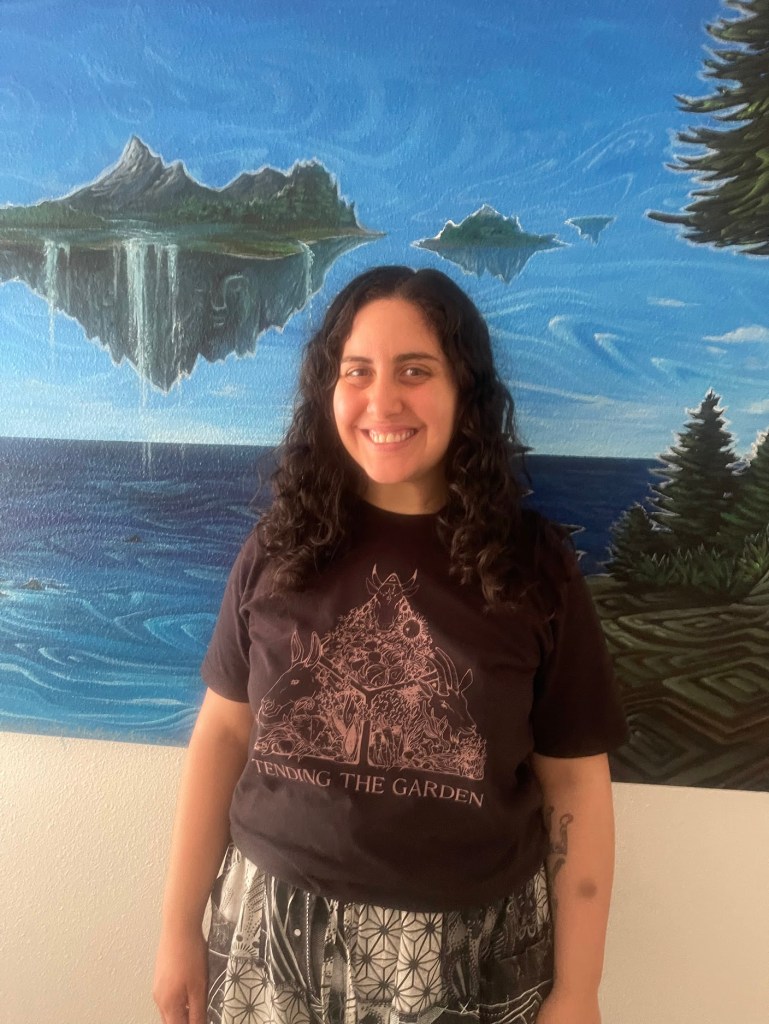
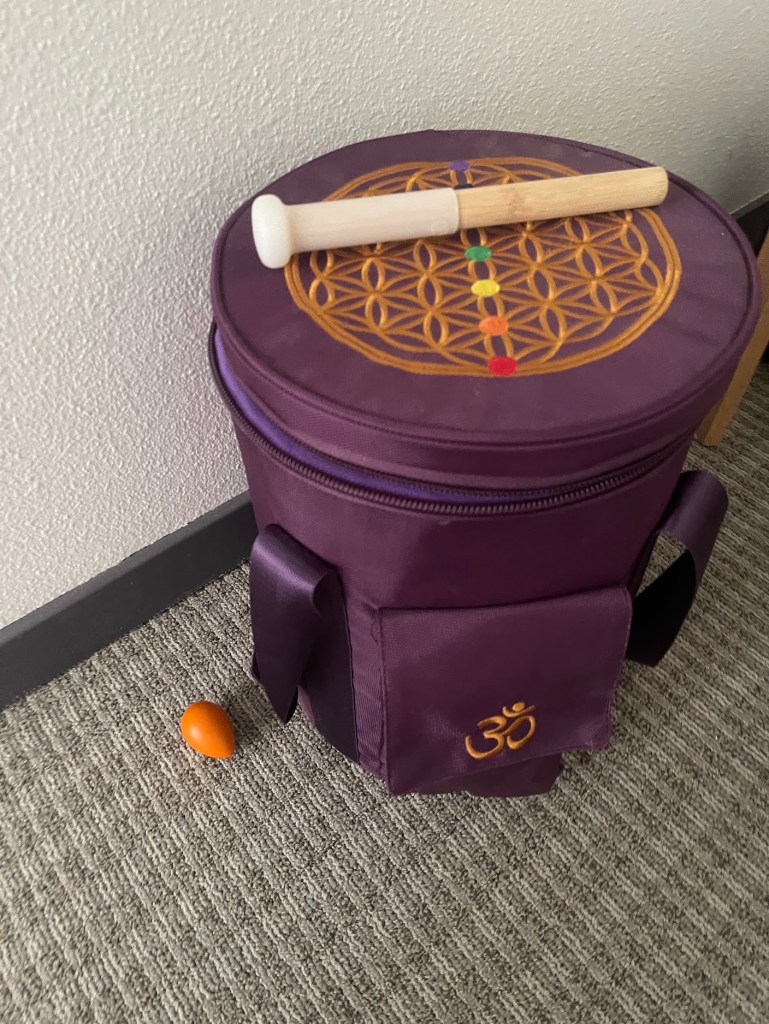
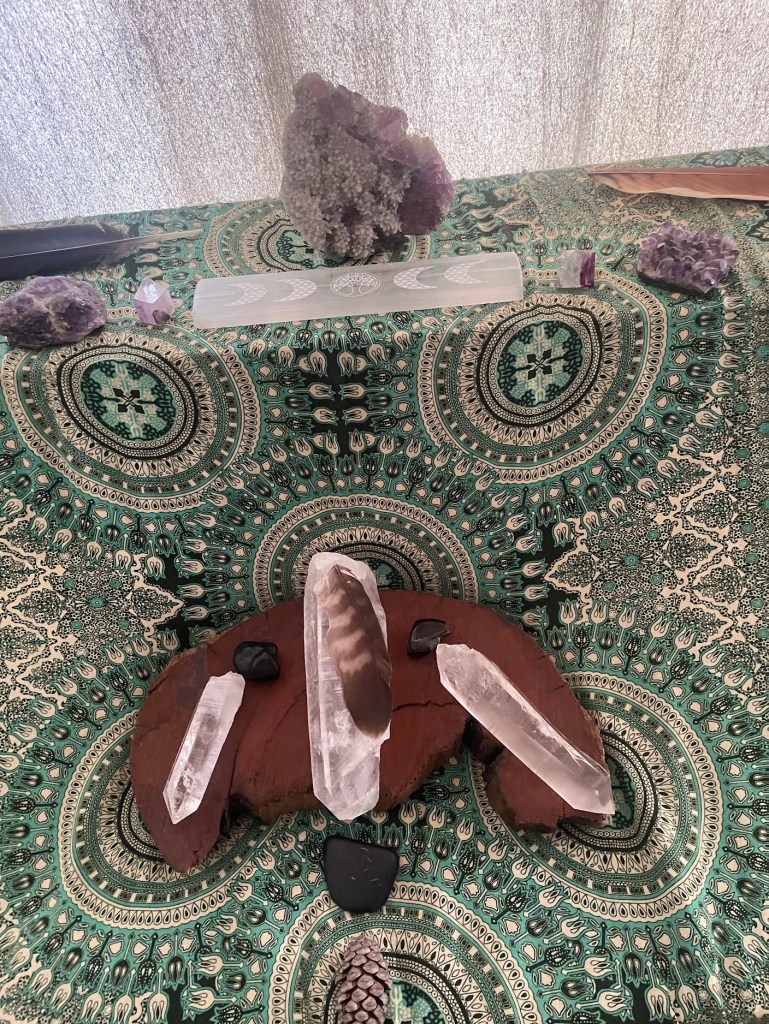

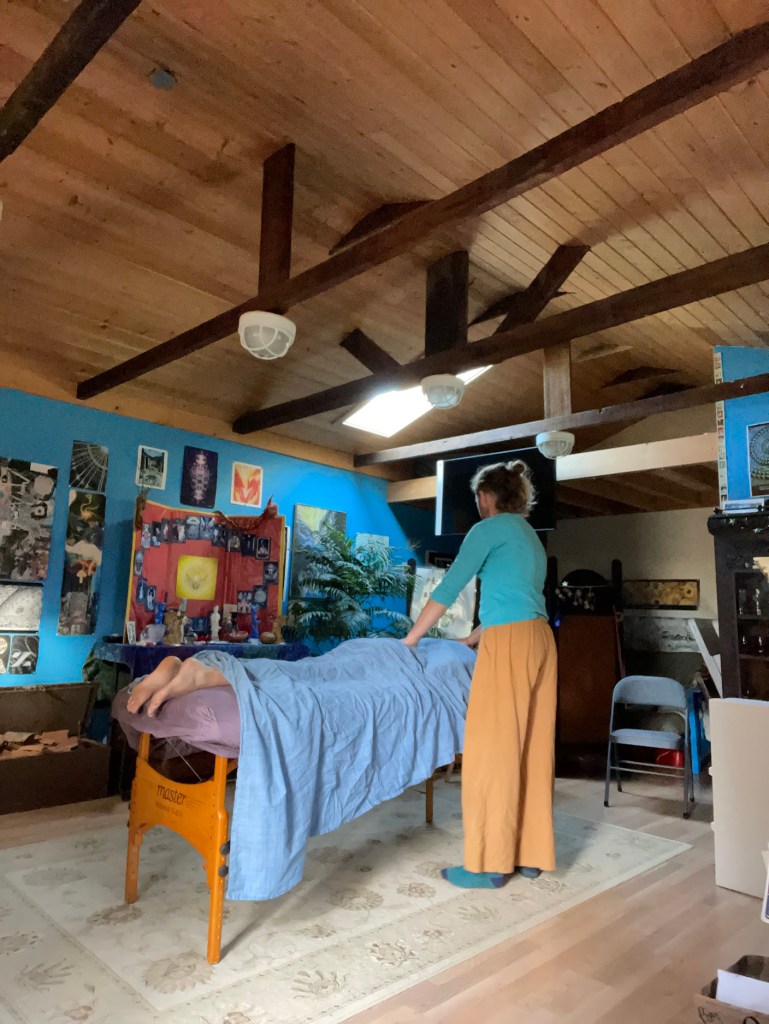


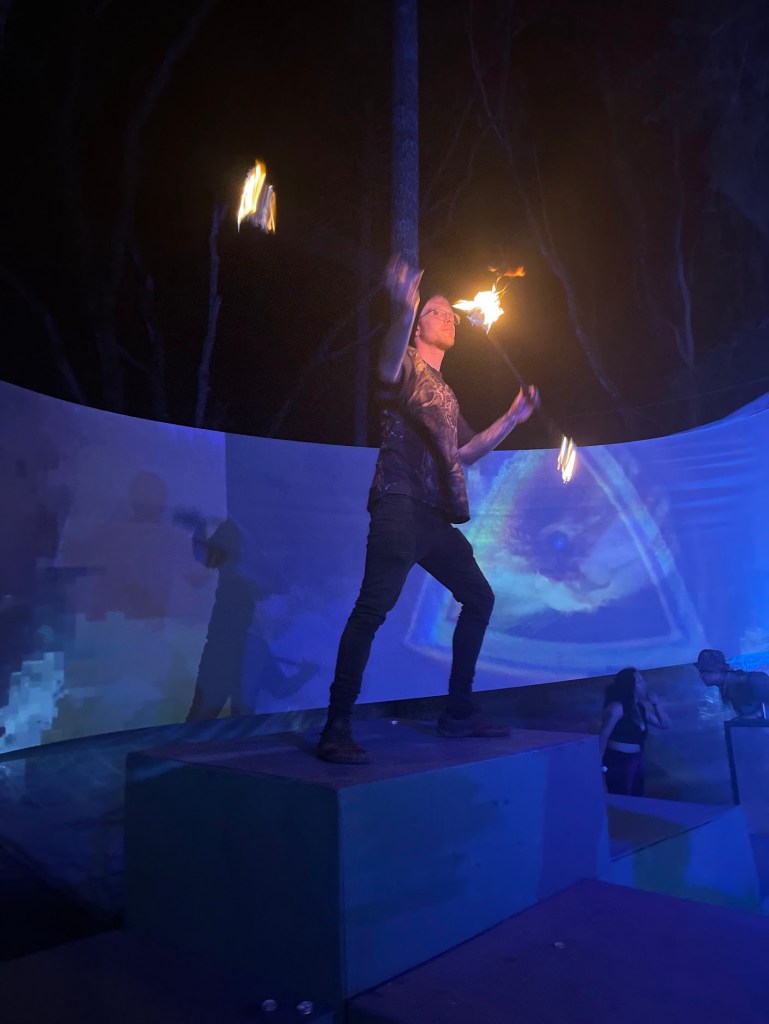


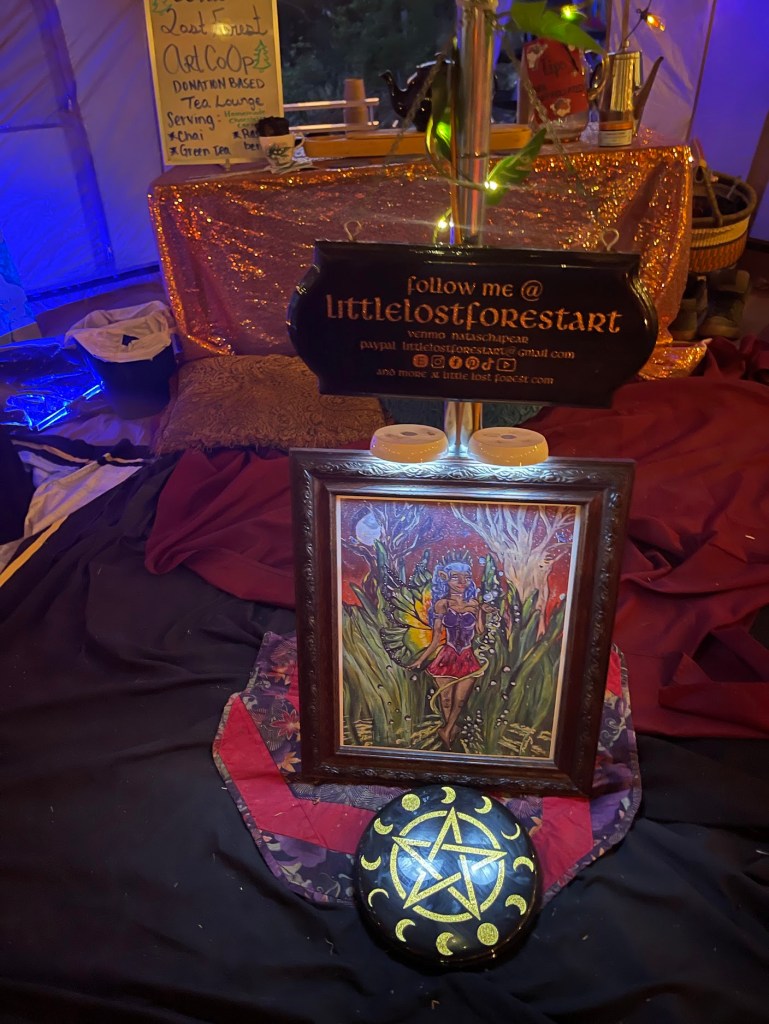
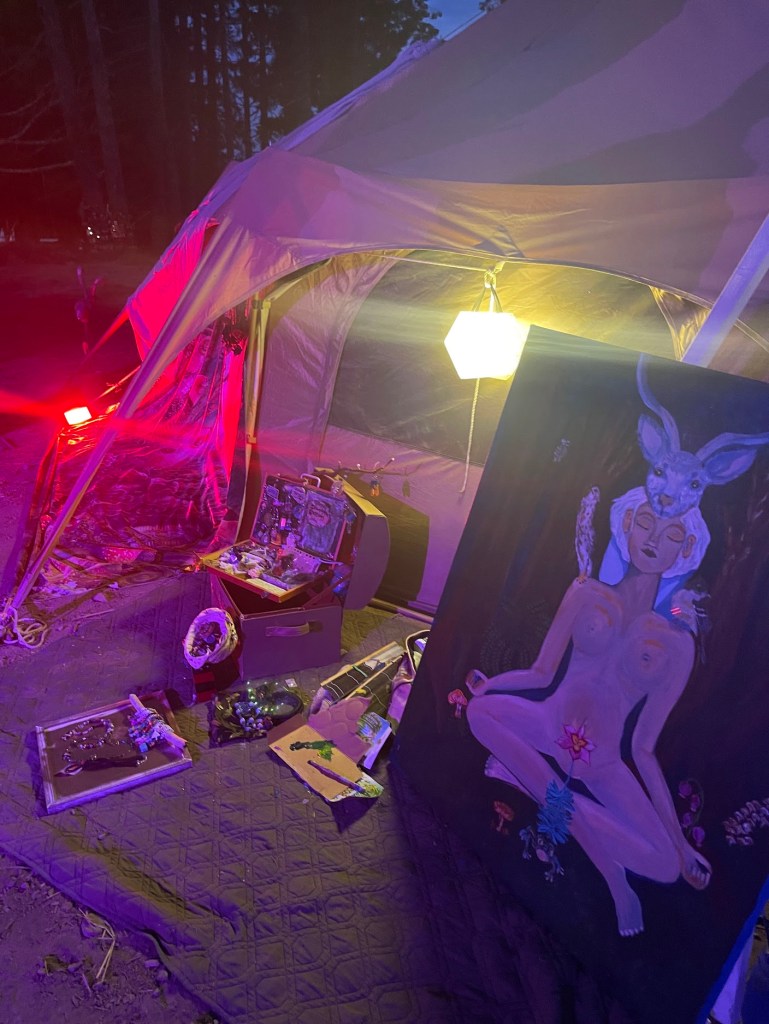


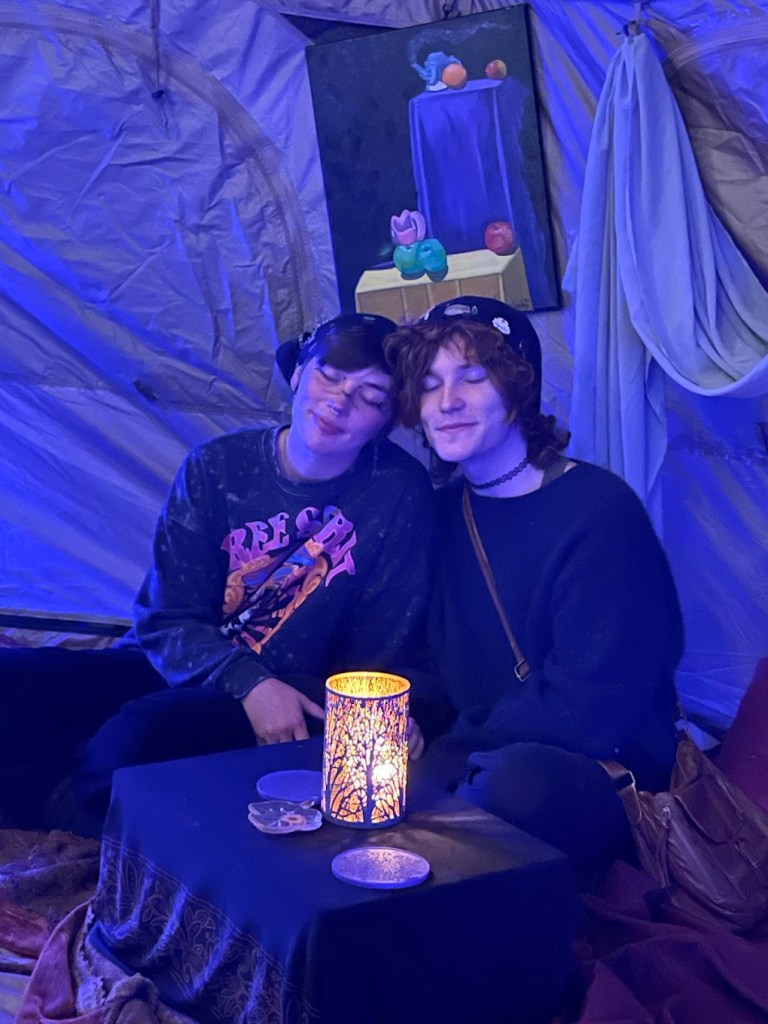


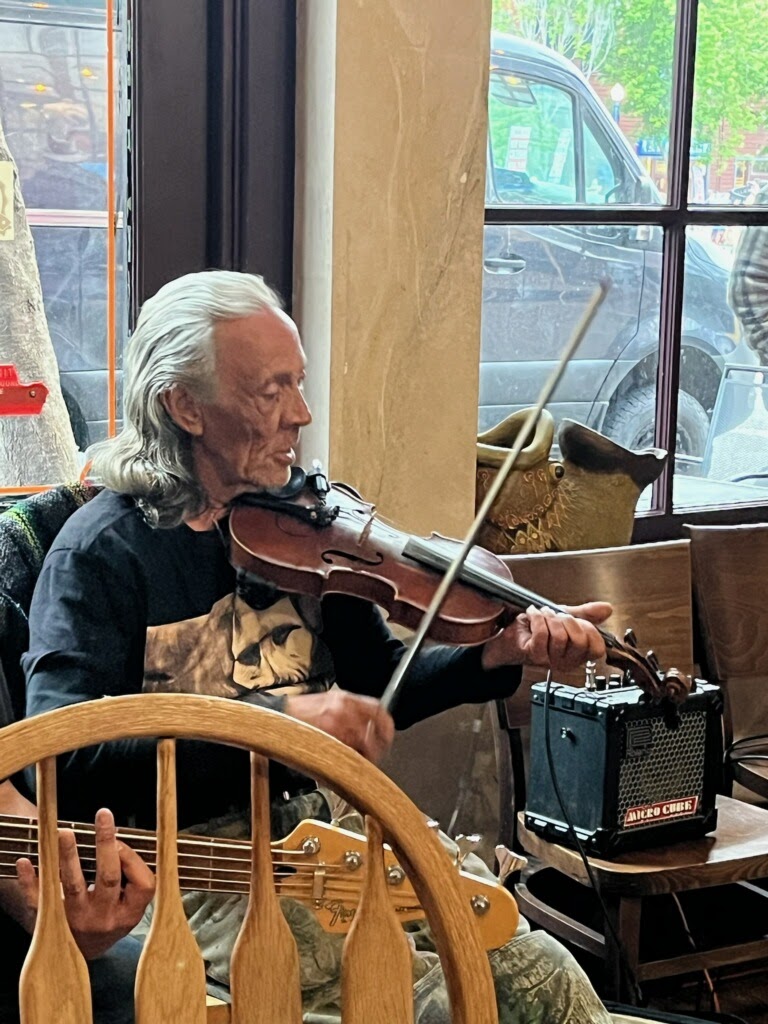


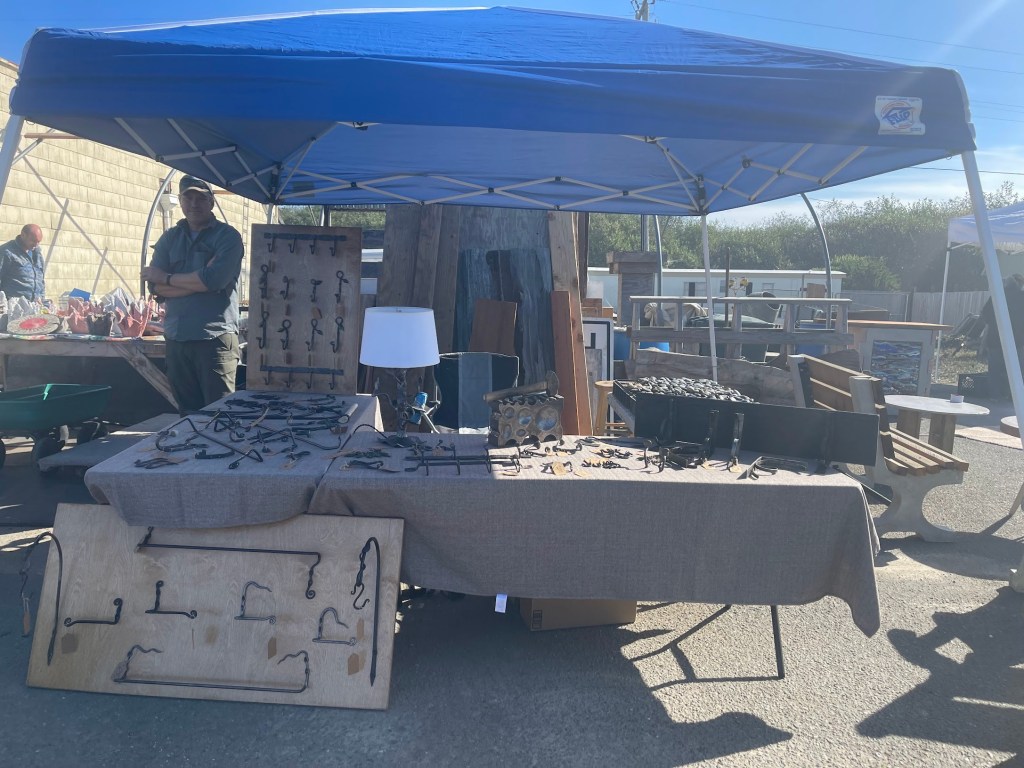

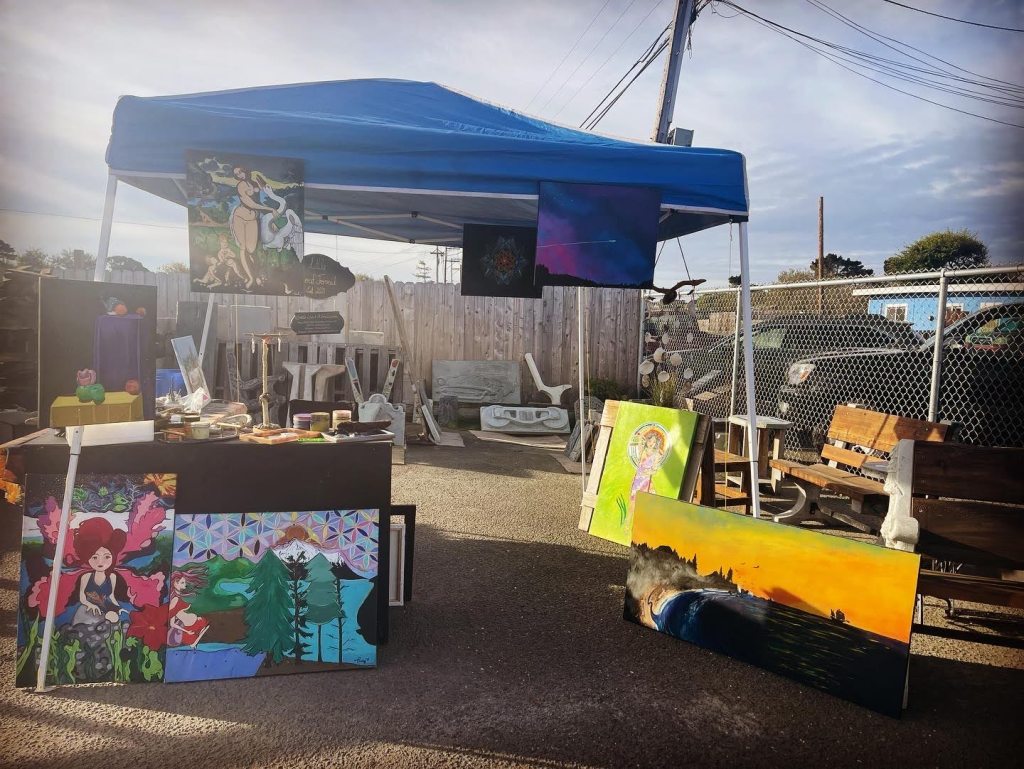

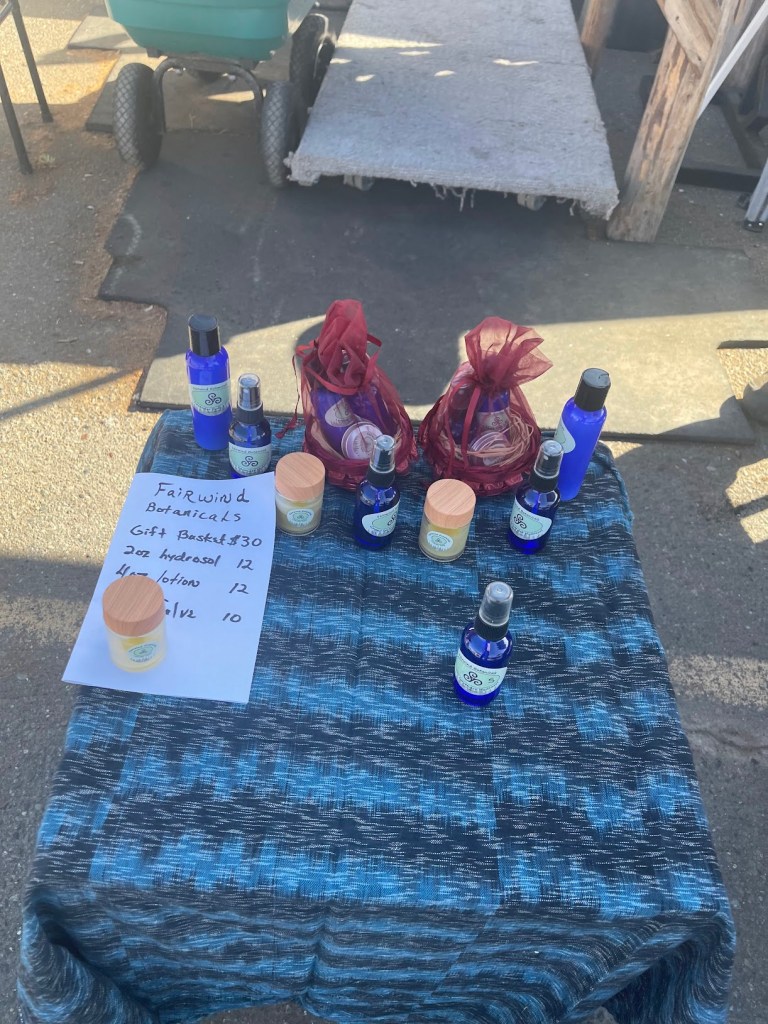


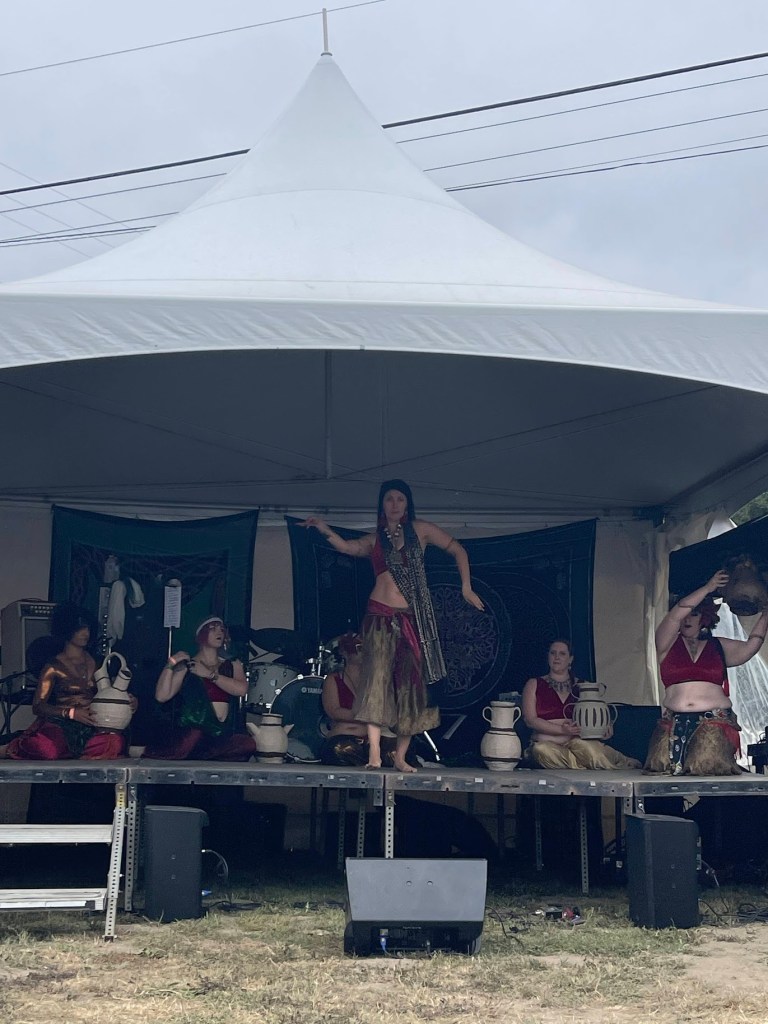
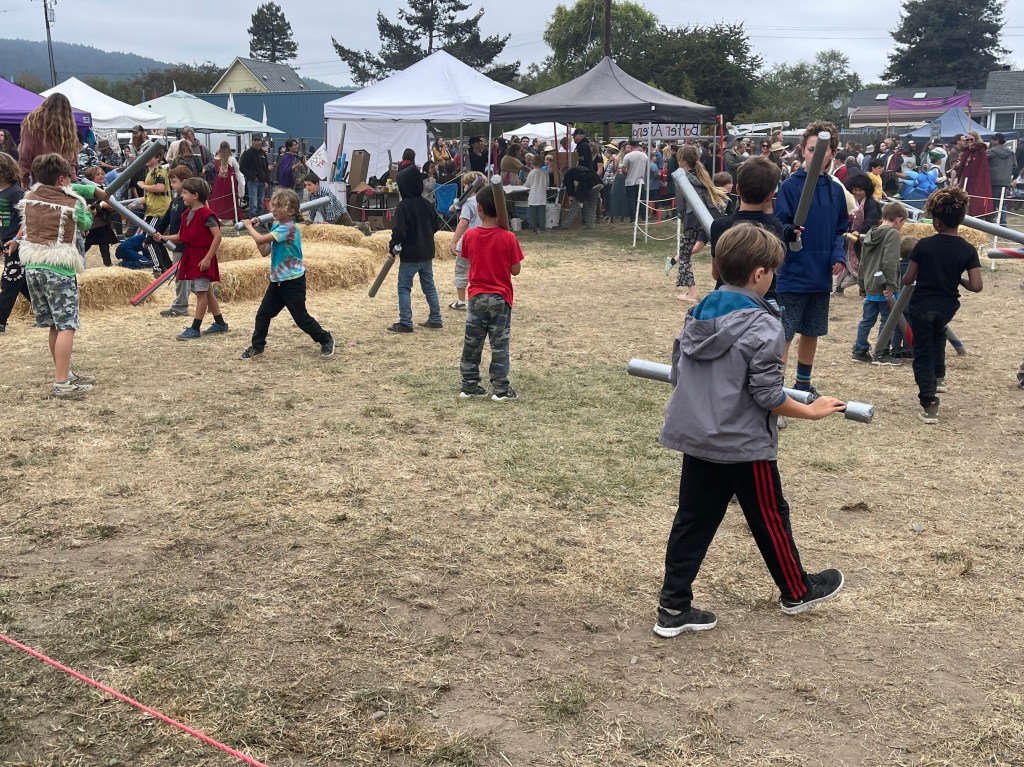
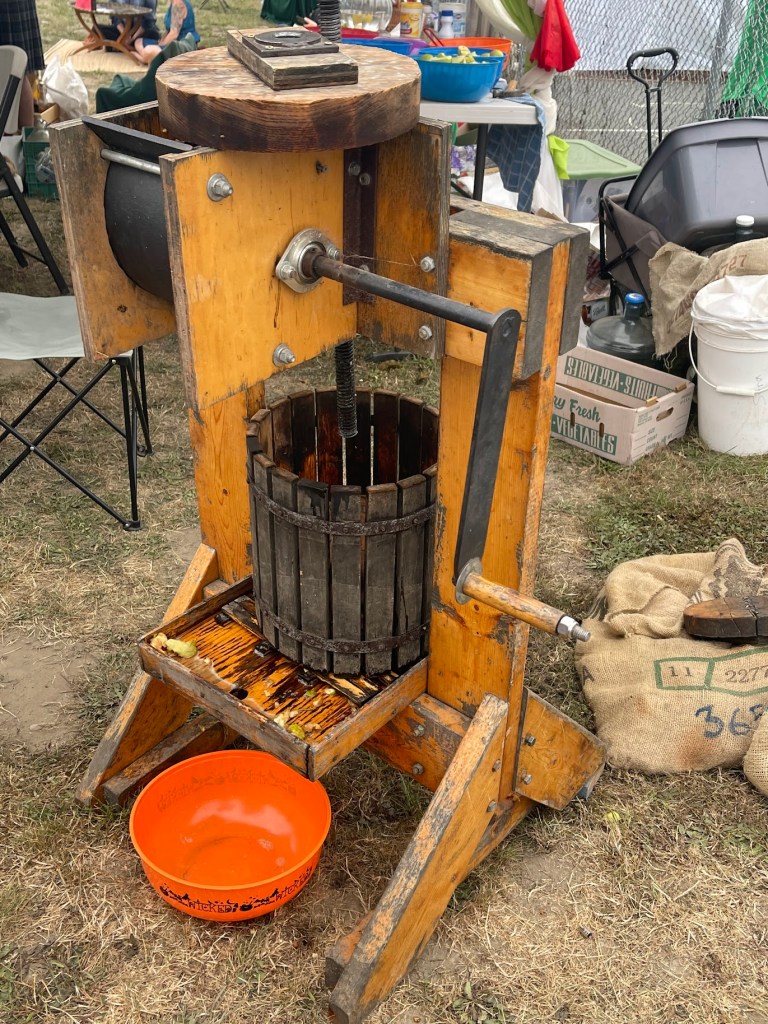


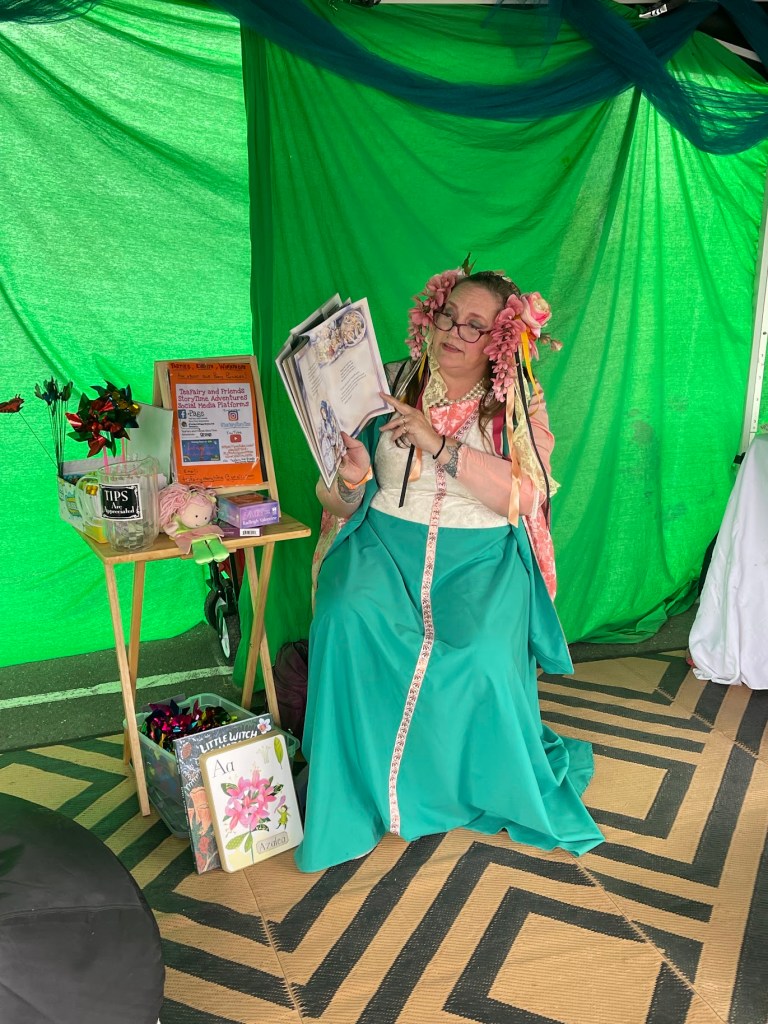

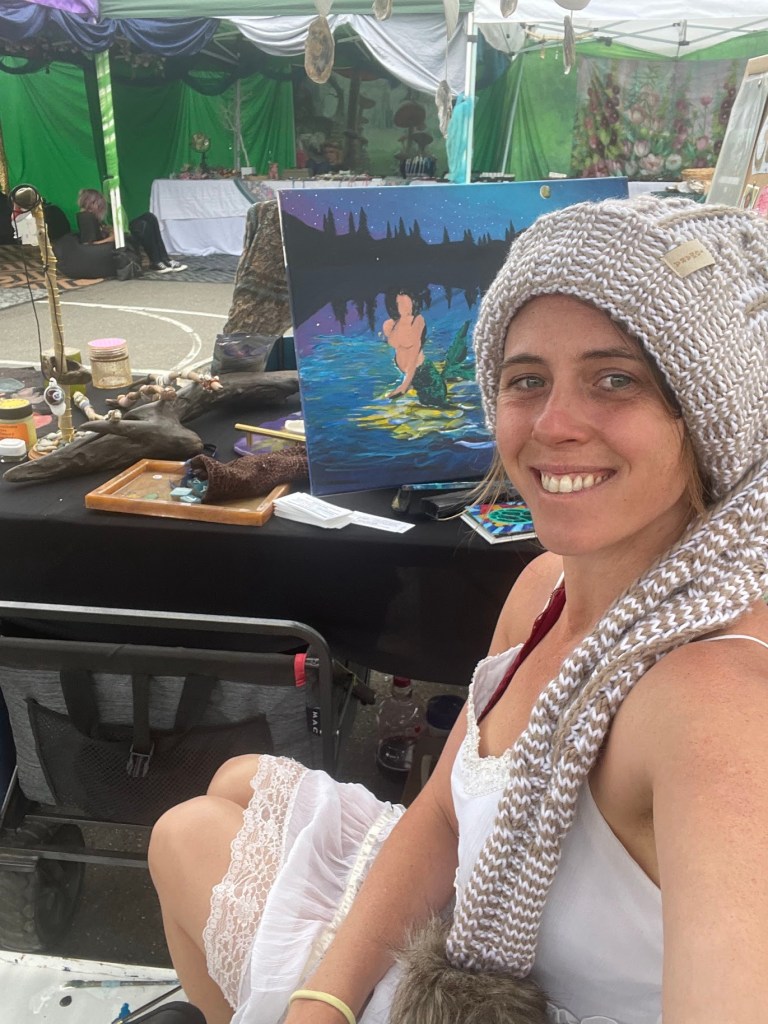


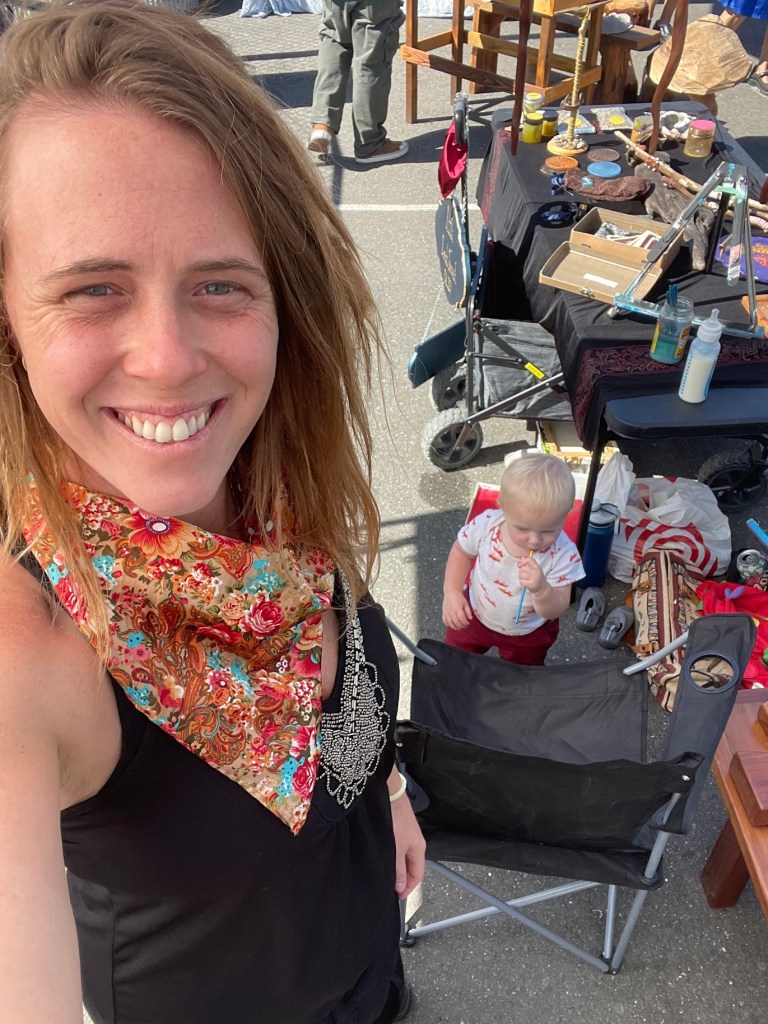


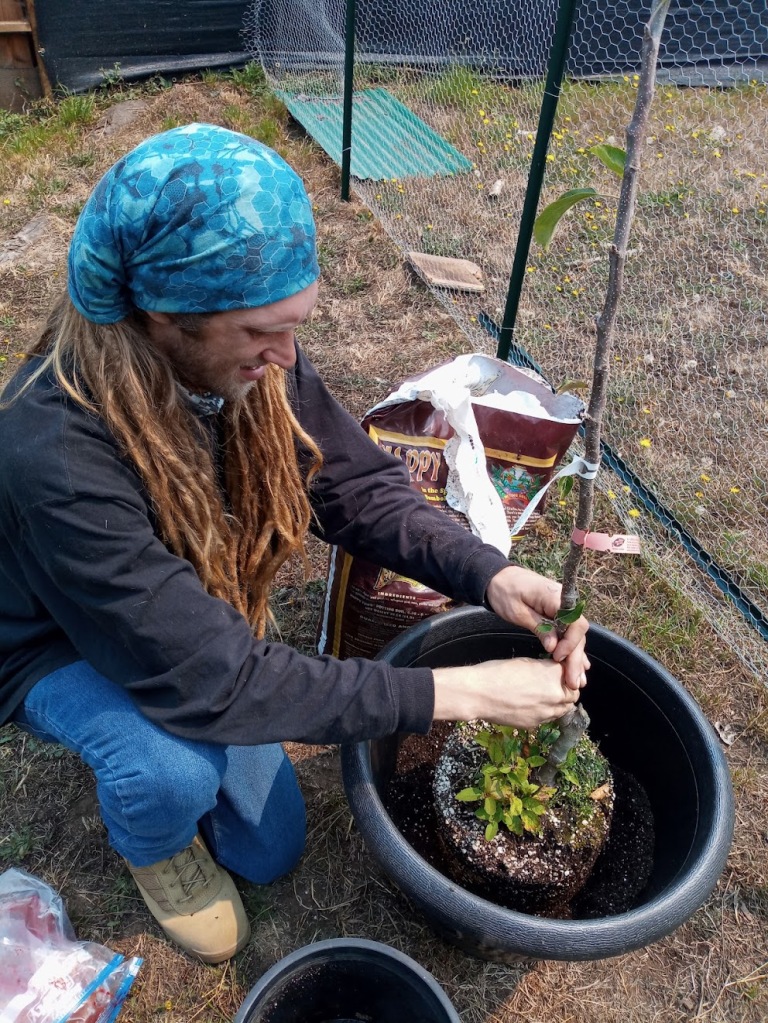


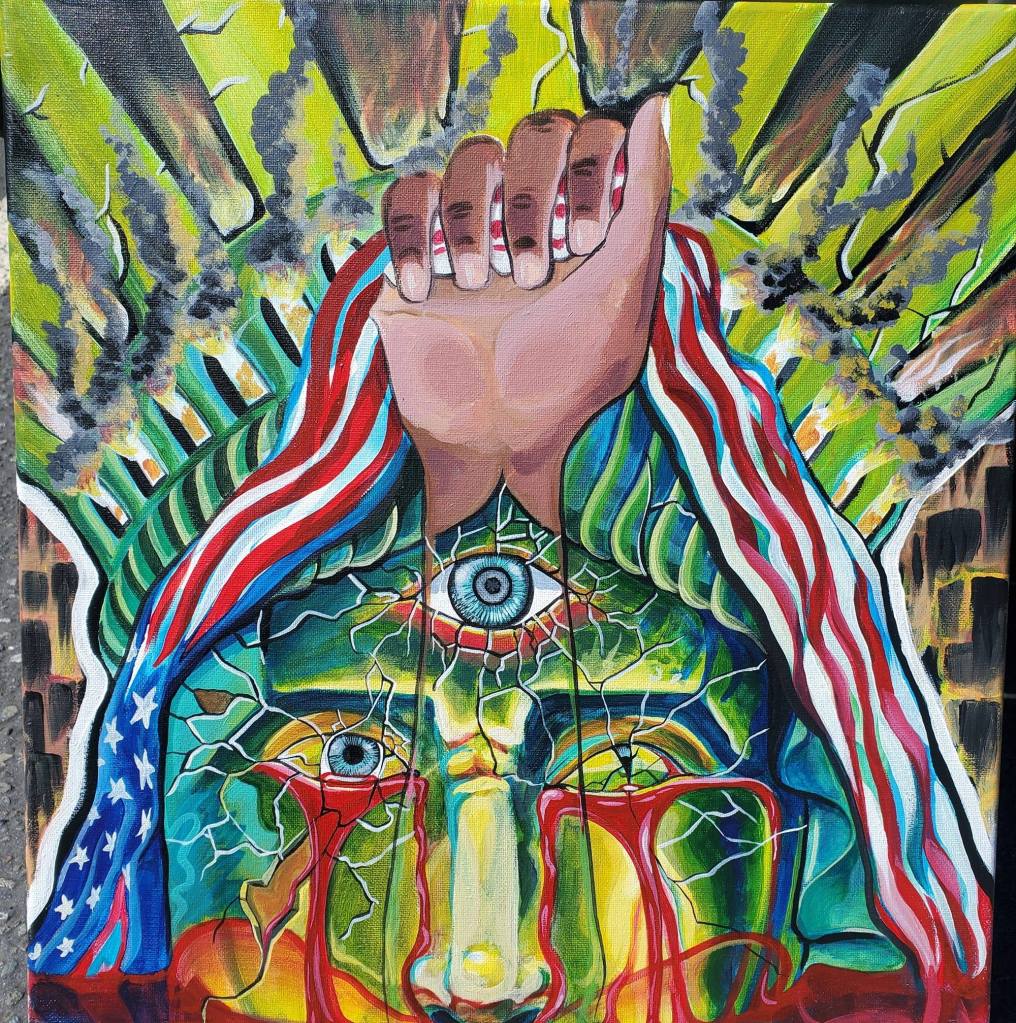
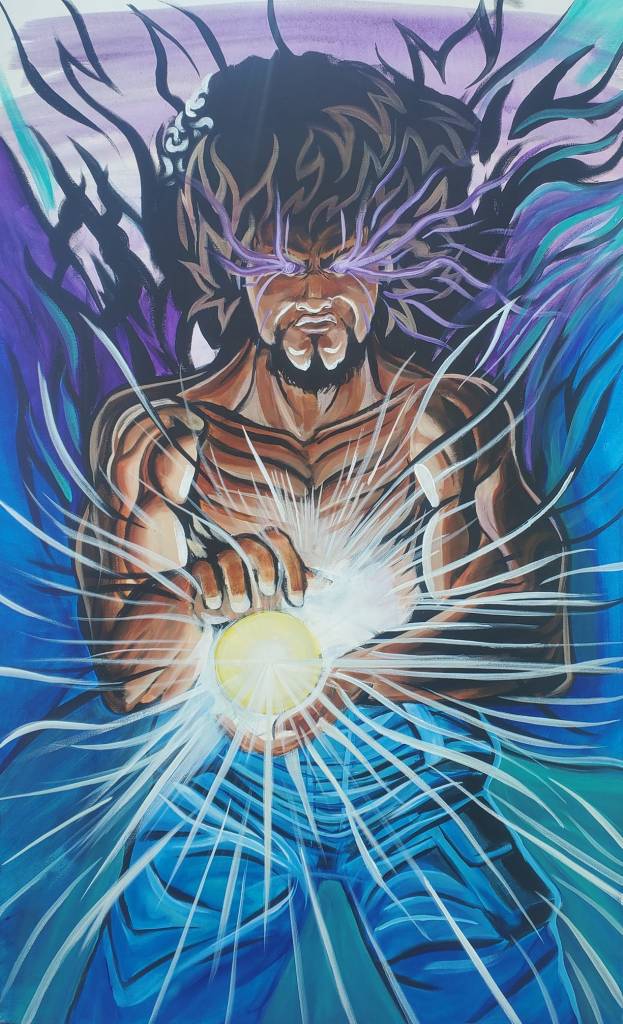
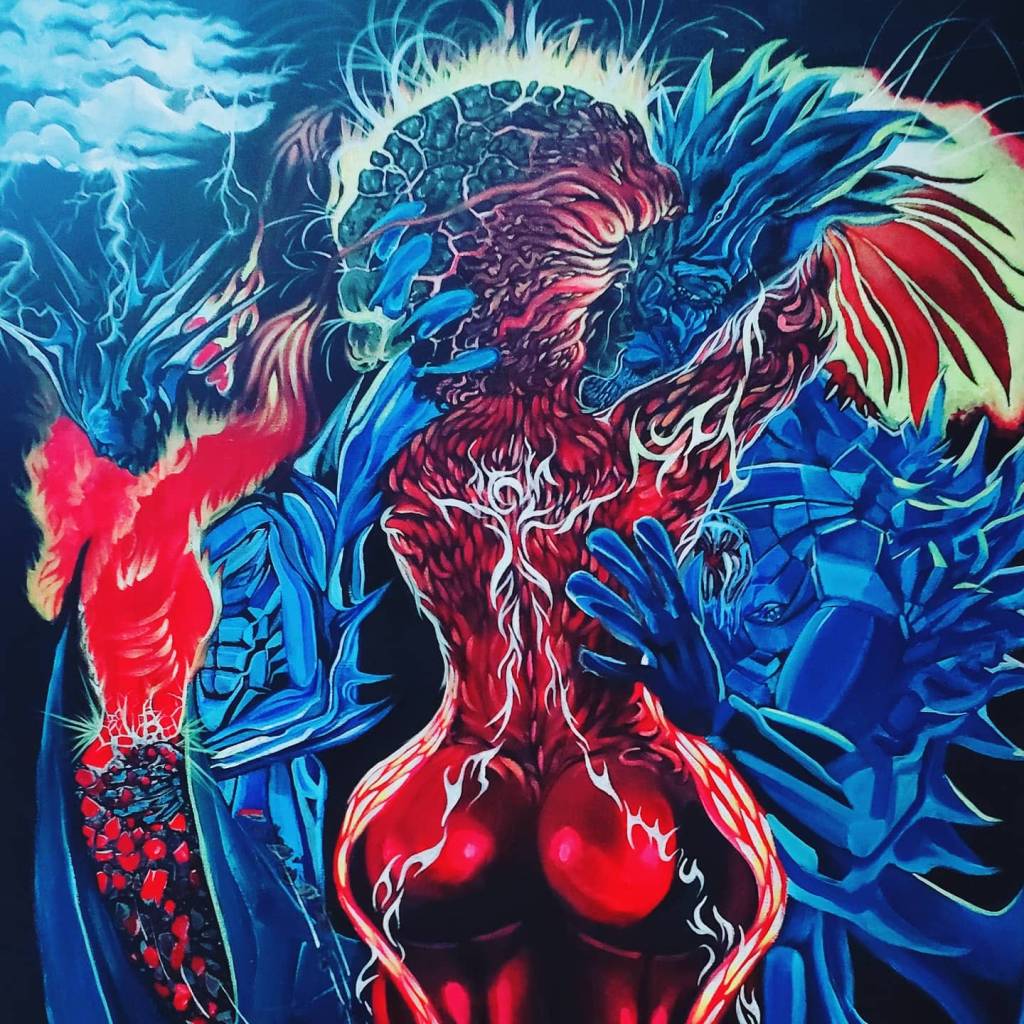
 Little Lost Forest