Natascha: This is Natascha with the Little Lost Forest blog. Today I will be interviewing Noelle Cox, a local Eureka legend who specializes in oil paints, gold leaf, and customized frames. Noel Cox showcased her exhibit Underneath the Surface at Morris Graves in January 2024. Noel takes a surreal and abstract approach to local animals. Fantasized creatures, glorified bugs, and self-portraits. In her sci-fi paintings, a dark humor lingers in the foreground as each piece is staged with class and elegance. It’s September 7th, around 5:00, and we’re sitting down together in her home studio.
Natascha: Hi, Noel. How are you doing today?
Noelle: I’m okay. I’m good. It’s good to have you.
Natascha: Thanks for having me.
Noelle: Thank you for having an interview with me.
Natascha: I was very excited all the way up to this point. So thank you so much for sitting with me.
How old were you when you started seeing yourself as an artist?
Noelle: Well, I think it was kind of gradual, but I think that I really got serious when I was about 16. I painted my first oil painting. Yeah, but I would draw, you know, I took it very seriously, actually. It was something I could do by myself that I could feel sacred about.
Natascha: And what was the oil painting of?
Noelle: It was kind of dark. It was a dead lady. With strings attached to it in the night sky.
Natascha: And how did it make you feel when you saw the finished piece?
Noelle: I wasn’t quite, you know, what do you call it? Satisfied with it. But when I look at it/ when I looked at it, I was like, wow, okay, This is kind of how I feel, you know?
Natascha: From what I understood, your father just passed.
Noelle: Yeah.
Natascha: I’d like to take a moment of silence in remembrance of him. What was his name?
Noelle: David Dinkfeld.
[Pause]
Natascha: I wanted to know, how has your father influenced your art?
Noelle: Yeah, that’s still something I’m trying to figure out. But I know that my dad was a very intense person, and he, you know, he had the sort of the mentality of that if your second place thats the first loser. And I was a swimmer before. He wanted me to win. Win, win.
Natascha: Yeah.
Noelle: Yeah. I think that when I pushed, you know, when I stepped back from that, because I had to. Because it was too much pressure. That was kind of a time when I retreated back into art. That was something that I could hold for myself. I would lock myself in my room and do art. I think.
Noelle Cox, Mr.Sadie
Natascha: Did you ever have any professional training?
Noelle: No, I mean. I went to; when I was seven, I went to watercolor classes that my dad took me to- my mom, my parents. I learned how to do a little bit of art. But no, I have- I tried to take a class in junior college but I’m so stubborn. I don’t want to be told how to paint, so.
Natascha: Wow. The work that you’re putting out looks like it has gone through many courses.
Noelle: Well, it takes a long time to do too. Yeah.
Natascha: How long did it take you to look at a finished piece of yours and think, this is good quality work? I’m really feeling proud of the standard of work I’m putting out.
Noelle: I think it’s more of a feeling that it gives me when I see it. But no work is really ever finished. I think mostly it’s about, for me: When I look at it, I’m just done with it. And it’s also combined with, that the image sort of disappears for me and then it doesn’t have anything else that I can add. Like disappears in the sense of not like not seeing it, but there’s nothing left.
Natascha: I love the way you phrased that. What are your favorite things to paint?
Noelle: Anything that means a lot to me. Yeah. The feeling it has to have some sort of meaning to me and something to say. Those are my favorite.
Natascha: You mentioned that you use oil. Can you expand on the mediums you use and where you source your mediums?
Noelle: I buy my oil paints from Blick and I get the Winsor and Newton. I mean, they’re not the greatest, but they’re affordable.
Natascha: Okay.
Noelle: I mean, it depends on which ones. There’s the higher end and then there’s the lower end, and I usually get the lower end.
Natascha: And then you have to use a thinner with it, correct?
Noelle: I just use the refined linseed oil.
Natascha: Interesting. Thank you. What events in your life have influenced your work as a painter?
Noelle: So many things. Being a mom, being a woman, you know, in this weird capitalistic, patriarchal culture that it seems like you can’t- it’s almost like we see ourselves as women through, like the patriarchal eye. And I think that it can be very confusing.Yeah, it’s bizarre.
Noelle Cox, I love you Zed
Natascha: Your gallery work is different than your commissioned work. Next to you is a commission of my dog Zed, who passed a year ago. While your gallery work really encompasses these fantasized creatures and the animals and bugs. How has becoming a commissioned artist impacted the way you paint?
Noelle Cox, The Fly on the Wall
Noelle: I think that what it does is it puts less- I think about myself less and I think about what other people want from me more. That’s the difference. My personal work is about my voice, about saying what I want to say. And then when you have the commission work, it’s- you’re trying to telepathically sort of connect with what another person wants out of your work, you know?
Natascha: Yeah, there’s definitely a connection there.
Natascha: What was the timeline and process like through the transition of painting for yourself and painting for others? When did you start opening yourself up to commission work?
Noelle: So that was when the pop market died. It’s not just one time. It was a gradual thing, but it happened pretty quickly.
Natascha: Yes.
Noelle: And. You know, my husband and I we grew pot and that was how we made a living. And that was how I had the time and the money to be able to do art. I think that once we lost the farm I was like, what? What am I going to do? You know what everybody says is like, well, I shouldn’t say what everybody says, but what a lot of people say is, do what you love and make money at that. And so I tried. And I don’t regret it at all. But art is a tricky thing to make money on. It’s, you know, and especially in an economy, I think the economy globally is having a rough time right now. And on top of that our area here in Humboldt is having an even worse time because of that. There’s not as much money.
Natascha: Agreed.
Noelle: Yeah.
Natascha: Has art played a healing role in your life?
Noelle: Oh, yeah. Oh, yeah. If I didn’t have it, I don’t know where I would be. It gives me stability and a voice. I would probably be an addict, honestly.
Natascha: Go art.
Noelle: Seriously, yeah. Because I’m so determined to do it and to keep doing it that I want to have the right state of mind for it. I don’t want to waste my life. I want to be able to do the best I can with what I have.
Natascha: I think you’re speaking loudly to this community. And a lot of people could gain a lot of inspiration just from the words that you’re saying now. Thank you.
I did have a chance to glance at your bio on the Morris grave site, and you mentioned that your move from SoCal to NorCal, was a culture shock that was both healing and dark. Would you say that your paintings now express your impression and self-expression of Humboldt?
Noelle: Oh, yeah. But I don’t think it’s like- I think it’s more subliminal. The culture here in Humboldt is, in my opinion, way better than down in Southern California. Southern California is very, you know, it’s about money and looks, itemizing your body and it’s very Capitalistic, cultural, patriarchal. I don’t know, it’s very destructive.
Natascha: Okay
Noelle Cox
Noelle: And up here, there’s more of- at least in the social ring that I was in, there’s more of an awareness of the goddess and more of the feminine- the feminine power, rather than down in Southern California. It’s more like you’re an object for making money and stuff, and there’s not really any power besides how you are sexualized or whatever that is. This place is a very healthy place, compared to down there.
Natascha: That really makes me wonder. Can you tell me a little bit more about your experience in Los Angeles and how perceptions of body image may have influenced your process as a painter, and what you paint?
Noelle: Yeah, there’s a lot of pain in self-image when you grow up on movies and TV and plastic surgery and all this stuff. You start to learn what you’re valued as. I think that a lot of my self-portraits are a quest to accept myself as a human being, for being beautiful the way that I am and not an item.
Natascha: Thank you.
Noelle: Yeah.
Natascha: What impact on your community do you want to convey with the message in your work?
Noelle: I think that I want people to question why. Why things are the way they are. Don’t just go with what people say. Question it. You know, we need to reevaluate our perception and our way forward.
Natascha: How does politics, governing, and even corruption play a part in your art?
Noelle: Oh, politics is greatly corrupted no matter where you go. I’m sure that it has a lot of influence in subtle ways, but I try not to concentrate too much on it because I don’t really have a lot of faith in politics. And because I’ve understood that when you’re someone who wants to be in power, a politician. Those are the people that you don’t want to have in power. And I’m not really sure how to solve that in this system.
Natascha: I think talking about is a great first step.
Noelle: Yeah.
Natascha: How does fun and play interact with your art and processing?
Noelle: I used to have more fun. I think the trick is to not be married to your ideas so tightly and to try to let loose. When you get an image done, to not hold so tightly to it. If it’s not working, let it have room, and that’s the play. But it does take discipline too. And then sometimes I have good days where I’m painting and I’m just like, yeah, this is great, you know, and I do like a little jig or whatever.
Natascha: And then others, you don’t.
Noelle: Yes.
Natascha: Every time you see people painting on social media, they look so happy. And sometimes when I paint, it’s like, fuck, shit.
Noelle: Oh, yeah.
Noelle Cox
Noelle: Well, I mean, that’s like at least half of it. You know, it’s a lot of frustration and it’s a lot of work. And I think that one of the things that a lot of people who don’t paint don’t realize is- that I think a lot of people think that painting is just like this happy go lucky. You know, you just poop out of product without any like, you know, effort. But it takes a lot of effort and a lot of commitment and a lot of times, a lot of times it is very consuming and frustrating. And it’s a lifestyle, really.
Natascha: Wow.
Noelle: Yeah.
Natascha: How long does it take you to paint a painting?
Noelle: Well, I think it depends, but for this one, it takes. I think it took about 25 days of full, full 25 days. Not including building the frame and working the image, like going, okay. I’m going to work with this image and then you dream on it and you think about it and you kind of formulate it. And that takes time too. It’s more just like a subconscious time. But yeah, it consumes you, you know? It’s the way that I live.
Natascha: You’re very generous with the way you value your art, the way that you offer to others. Thank you. Thank you for putting all your time and effort into it.
Noelle: Yeah. You’re welcome, very much.
Natascha: How do you know when the painting is done?
Noelle: When I’m just done, [laughter] I mean, I don’t know. Yeah. That’s a hard question. I mean, when it sometimes a painting will start to become invisible to me, as in, not like I can see it, but it’s not- I’m not feeling it anymore. And I think that’s kind of when it becomes done is there’s nothing else I can add.
Natascha: What motivates your color palette?
Noelle: I love warm colors. Um, you know, but blues are not my favorite. Um, but I love the sky. You know, the sky blues are- When you’re painting a sky, you got to use blue but I, you know, my favorite colors are red, black and gold.
Natascha: Cool. Who are some of your favorite artists?
Noelle: You know, I don’t really look at a lot of art, honestly. I think that a lot of people are artists that don’t create art. I’ve gone through my different, like, I like Klimt. But lately, the artists that I’ve been really inspired by are people who have been doing research and, you know, creating ideas of a reality that we don’t see in what we’re taught in our culture. You know, like Marija Gimbutas and Vicki Noble and people who are visioning a different reality, a different future for us. That’s important. It’s very important.
Natascha: What work of art that you’ve made are you the proudest of? And can you tell me in depth details about your processing?
Noelle: I think- I’m not sure about proud, but I guess, I don’t know, probably Beneath The Veil. The cross one. That was the most- it took a while, and it was the most involved. It took a lot of [pause] looking inside about how I’m feeling about all this and what it means. How I’m feeling about the signals I’m getting from- throughout my life. With that one, because I used to have, like, sort of a vague image that would come to me and then I would create a frame around it. But with that one- I had to make that cross frame. And it had sit in storage for a good year or two until I finally formulated what needed to be on it. And that’s usually what I do now, is that I create different shapes.
Noelle Cox
[Recording got interrupted.]
Noelle: Yeah, the actual frame. Because I like to create frames that are different sizes or different shapes and stuff because I get tired of painting in squares and rectangles. The different shapes actually conjure different feelings for me. And so that’s an avenue that I can work with.
Noelle: That one was in storage for a while and it took a little bit. Well, a little bit, it took probably about a year to actually really be… Honest with how I’m feeling. I mean, I’m really good at being honest about things, but you have to let things, solidify and coagulate and then you start working with the image and drawing it on a piece of paper and kind of working through the different symbolism and what it means to me and how people might interpret it. So, there’s a lot of cerebral stuff. You have to kind of be in touch with your subconscious. I’ve been learning more about the things that I didn’t learn in public school or just the culture in general, is that there’s quite a bit of subconscious stuff going on for everybody. And I try to, you know, use my intuition and to go into that route of subconscious.
Natascha: Would you say it’s a joint subconscious? Is this something that you feel on a communal level?
Noelle: I think.
Noelle: The older I get, the more I realize that it’s possible that I have sort of empathic, or I don’t really know what that is, but there’s signals and it’s hard to- it’s hard to know. What it is. But I think that there’s communication and there’s like, I just have to say what I’m feeling, I’m still trying to figure this out [head scratch.]
Natascha: Sometimes I like to think that it bubbles out. It comes up to the surface and-
Noelle: Just.
Natascha: Comes out.
Noelle: And that’s the way that I can- or that I feel like I can. That’s my voice. I feel most confident being able to communicate through painting, through imagery.
Natascha: Lovely.
Noelle Cox
Natascha: If you had a message you wanted to share with emerging artists, what would it be?
Noelle: I think it depends on what kind of artist you are.
Natascha: Okay.
Noelle: People want, you know, neutral, beautiful images, and they’ll buy them. But there’s not a lot of money right now. I think that part of an artist’s job, if you want to make money at it, because I don’t, you know, I make a little bit here and there but it’s connections. You have to be social. You have to socialize in a group that has a lot of money. But at the same time, a lot of people who have a lot of money. And I’m not saying everybody, but a lot of people who have a lot of money, they’re not going to- You’re kind of a toy. You’re something to play with. And I mean, not saying that with everybody, but they launder money through it and, you know, it’s a whole game. But yeah, it’s not. Anyways my advice is to be careful and to listen to yourself, your inner self and what it is that you want out of it. Because this world is full of givers and takers, and there’s a lot of takers. And you have to be careful and to not don’t dishonor yourself. Yeah.
Natascha: What upcoming pieces or exhibits can we look forward to see from you in the future?
Noelle: I don’t have any personal work shows coming up, but I do have the mounted prints that I make. They’re going to be shown at the Humboldt Herbs Herbals this November and December and then in Arcata, at the A to Z, I care. Yeah.
Natascha: The same pieces?
Noelle: I’m making a whole stack of mounted prints.
Natascha: Well, thank you so much for your time today. I’m happy to take home our commission piece. I love you, Zed. My family’s 12-year-old terrier passed away in the summer of 2024. Below is Noelle Cox’s oil on canvas painting and Zed’s obituary. Thank you so much.
Noelle: Thank you so much. So much.
Noelle Cox
Zed’s Obituary
I met Zed in February 2016, the first night I stayed with Jeremy in the Tarzan house in Oceanside. We watched Courage the Cowardly Dog, and Zed had his precious tennis ball. Jeremy drew his pointer finger along the horizon, and Zed nudged the ball with his nose, following Jeremy’s line. I remember Jeremy having a profound connection with his dog, and I thought if this guy is that good to his dog, he will be that good to his woman. Zed always loved to lick face and bark at squirrels. On long car rides, he would get excited over the cows. No matter where we went, Zed was always a good guard dog, friendly to cats, a cuddler, and licker. When it was just Jeremy, Zed, and me living in the tent, Zed would sleep curled against my belly, and I imagined him as my baby.
When I moved in with Tallulah in her LB apartment, Jeremy followed shortly after, and Tallulah was nervous to host Zed with her two cats. But Zed was really good with the cats, and she grew to love Zed. On our wedding day Zed walked with Orion and I down the aisle. Everyone thought it was rehearsed, but Zed just knew, knew that the day was something special, and when we got down to the stand, he stood post at Jeremy’s side. I cannot imagine the sense of loss Jeremy has; their bond was unbreakable. Every day with Zed was absolutely beautiful, full of love and care. He was an emotional support dog for me and kept me calm and supported while I went through hard times. He was an emotional support dog to Halaya as she transitioned into a new home with a new mother figure, and he was by Malakai’s side from the moment of birth. Zed went on lots of walks, he ate lots of good meat, and slept in our bed every night. I got to spend his last night with him against my belly; after we’ve gotten so far together, into a home, a family, our babies. Jeremy got to spend Zed’s last moments with him, watching the sunrise. I wish I could spend a million more nights with Zed, a million more walks, a million more face licks, but he’s in a better place, and I am grateful for the memories we had. I love you, Zed.
Saturday 2, 2024; 2 pm-2 am MushLove Crew threw a twelve-hour psytrance party at Ramp Art Skatepark in Arcata, CA. Local DJs came together with some out of town talent on the Day of the Dead, and a crowd, mixed of all ages, danced together under the continuous loop of psychedelic tunes like a space cadet’s first encounter with aliens. Sam Murphy (DJ Melting Vision), the event’s host and production manager, worked alongside Stacia, co-host and stage designer, whose creative vision transformed the space and Kale Oliver (DJ PYMANDER) project manager and CoCreator helped Sam dial in the details and logistics leading up to these events.
“[Kale] He’s our old school, Sam’s our new school, and I bridge the gaps in between! I Thoroughly enjoy Kales classic picks that stimulate a particular vibration and nostalgia while Sams strong drive to provide new music in his sets both live and weekly on Humboldt hot air (every sunday 12-2) typically has a bouncy but deep vibration ” They came together as a team and created the perfect pallet for me and the crew to enhance with Creative and interactive installs.” -Stacia
The decor was like stepping into a neon Mayan Jungle, with flowers, skulls, and mushrooms. VIP offered a smoke lounge, skate bowl, and bar. The feeling of unity, inspiration, and movement flooded my veins while dancing with my community during the waxing moon.
Music by Minds medicine, Andrus, Luzidtrip and Formless are a few of the DJs who performed. Amazing sound engineering was provided by Paul Westerman. Stacia’s stage design transported us to a neon Mayan Jungle filled with vibrant flowers, skulls, and mushrooms. The decor pulsed with energy, drawing everyone into the atmosphere. The VIP area featured a cozy smoke lounge, skate bowl, and bar, creating spaces to connect and recharge. In the warm glow of the waxing moon, a powerful sense of unity, movement, and inspiration flowed through the crowd as we danced together, embodying the spirit of community and shared joy.
Here are two questions that were asked at the party and recorded later on.
Stacia: Two of the questions you had asked me during the party were two that not only did I like being asked but I also really liked my answer. One of the questions you asked me was where do I get my flowers from? Which is, you know, a lot of them I grow myself and dry. Many of them are foraged in small bits when I’m out adventuring with my dog (such as the bunny tail grasses and yarrow on some of my most recent beach visits!) Some of them are from clients’ properties that have given me access to their gardens or saved from previous events and utilized differently. Then also for the hydrangeas, I had reached out to my community on Craigslist and basically said, I will trade my time for your blooms. I will help you reset your bush so that it can bloom better next year. And I actually had three different families reach out that I went and basically traded resetting their hydrangea bushes in exchange for blooms that will last years. And I was just really appreciative that the community supported my search for foraged materials and also was able to help a couple families who can be expecting more healthy stronger blooms next year!
Stacia: The other question you had asked me was about some of the inspiration, I’m always inspired by what I have access too and that is where the creative visualization begins and all the ideas unfold from there with trial and sometimes error until it all works !!! -And there was that whole wall surrounding the paint play table with portraits that were by a local artist, who passed away about ten years ago. His mom and I were organizing the garage and it was an emotionally bonding experience as we each took in the different portraits one by one both seeing them for our first time
-I’m going to ask his mom, who lent me that art, if she would like his name mentioned in the article [Ryan Cox], because that might be a cool way to carry on life throughout death. That art was just so emotionally intense and, and just kind of made your brain think in a way that, for me, felt very much like a searching…[trails off]
Artist Ryan Cox
Artist Ryan Cox
Artist Ryan Cox
Artist Ryan Cox
Artist Ryan Cox
Artist Ryan Cox
Stacia and I were sorting out the garage one day and we found a tightly rolled bundle of canvases. I was thinking ‘this should go but knew that I should look at what I was throwing out. We unravelled the bundle and it was a collection of portraits R [Ryan] had painted. I had never seen them before. They brought me to tears. Stacia felt them with me and [I] was moved [when] asked if she could get them out into the world. I said yes, as I know my son would want his brushstrokes, his expression to continue speaking even after his death. He was dedicated to art, music, and all that helps us see each other and love more. He pushed boundaries and was the kindest person I’ve ever known. I don’t say this because I am his mother, I say this because that’s the legacy he left us. Passion for expression, play, insight, always infused by his kindness, his huge spirit and generosity that infused his life.
-Ryan’s Mum
Adriana Orta infront of Ryan’s paintings.
Sunday, I sat down with Stacia of StaciaFlowerSolutions At Clam Beach. The interview may have started the night before, but this was a quieter, more intimate setting. As my children played with her dog, Neptune, I had a few minutes to ask her questions about her flower arrangements and her goal as an artist. You may be surprised how this artist strives for connection, collaboration, and sustainability to make her dreams of the “Avatar Jungle” come true.
Natascha: Hi, this is Natascha with the Little Lost Forest, a Humboldt County lifestyle blog. I’m here with Stacia after going to a MushLoveCrew event hosted by Sam, Kale, and Stacia. Stacia is a Creative amongst other things and she puts together floral designs and visually satisfying interactive spaces.
Hi, Stacia. How’s it going?
Stacia: I’m doing great today. How about you?
Natascha: I’m doing really well. Thank you. Last night was the Day of the Dead. How did the Spanish holiday inspire your floral arrangements?
Stacia: Day of the Dead was a great inspiration because it encompasses a lot of what I have been doing for my creations and alter spaces already. You know, there’s life and death, and then there’s us; kind of everything in the middle. And that’s what Dia De Los Muertos is about. It’s about remembering its ok to feel sad about what you’ve lost or how things have changed. But also remembering to celebrate all the joy and life and energy that was here at one time. It was a great day to know that we could hold space for what we’ve lost, even if it’s not people or animals, but even just our stories and our lives as they change. There’s death, there’s life, there’s everything in between. And together it can be so beautiful and harmonious (especially while sharing space on the dance floor)
Natascha: That’s wonderful. There are dried, dead flowers and then there’s also live flowers in your arrangements. Is that correct?
Stacia: That is correct, yeah. Dried/preserved flowers that will last multiple events and fresh cuts from that day! To be dried later Trying to curate a balance between the two for both visual aesthetic and function of being gifted or repurposed
i especially love utilizing herbs that smell good and keep the dance floor fresh
Natascha: And I noticed that some of them were glowing. Is there another aspect to your design?
Stacia: I am inspired by the Avatar Forest, and I would love to create that atmosphere for other people to enjoy! You know, these installs start out with simple enhancements with the neon, but I dream to collaborate with someone who can actually assist me with their knowledge for engineering wiring and programming and together we would be able to create it, where people can go and interact and touch it and it glows and moves and breathes.
Natascha: It sounds like interactive art. How do you, how does your audience perceive your art? What kind of feelings and emotions are you trying to inspire within them?
Stacia: Interactive is definitely on point. I’ve been getting a lot of great feedback about things that can be moved, things that can be played with. One of my highlights this year being our blacklight body paint table, leaving it out sometimes for people to help themselves, or sometimes being there to kind of start the playful process. Watching not only the flowers become neon, but the people become neon. And we’re all part of the installation and we’re all moving and playing and, you know, I’m painting, they’re painting, everybody’s painting each other, and it’s so fun to watch it spread through the crowd!
Natascha: That’s great. What are your ideas for the future with the flower arrangements?
Stacia: My ideas with flower arrangements are infinite. I love everything about flowers, whether it’s the metaphors for our lives and the way we are or, you know, the fact that they’re natural materials that we can use and repurpose. The dried flowers used at this event have made it onto multiple altar spaces across multiple genres of music, with so many different energies being absorbed into them. Our earth, our stones, our plants, it’s all absorbing and vibrating everything around us. I love creating custom anything and i’m up to the challenge! I love repurposing and my biggest dreams would be building a tribe of creators and all playing to our strengths to help people’s custom creations ,floral dreams or event ideas come true. Really- whether it’s weddings, events, storefront installs, custom celebrations and everything in between.
Natascha: Wonderful. What’s your position with the MushLove crew?
Stacia:I joined Much Love Crew as they started out this year I had a strong desire to contribute in a big way and i feel lucky to take on the roll of deco coordinator. Im passionate about psy trance and the healing its helped me with so when i met sam and learned of the vision i wanted to help make that dream come true
I feel lucky to have had some amazing inspiring people come and collaborate and volunteer their time, their energy and a willingness to be in the present moment and grow from there
You know, I have a general vision, and a plethora of materials. But the crew is like, we’re all new, we’re all coming together. It’s like, I’m sort of there to lead, but more- I just want to bring people together to make weird art and MushLove is here to bring people together to be weird and just be together.
Natascha: What is your past history with the music scene?
Stacia: Starting on the East coast, I have been involved in the music scene of all different genres for many, many years. (I remember my first event solo vision was a womp wednesday at the wonder bar in allston MA featuring wobble sauce ) after moving from MA to CA i was compelled to work with another flower i’m passionate about and I took a decent hiatus from the music scene while I was working at The Lost Whale Inn found in Trinidad gaining many of my amazing floral skills along with many other skills i utilize to chase my dreams now!. Um, and now that I dream bigger, it’s…. You put part of your heart into your passion and kind of just dream big that you can survive off of what your passionate about
Natascha: Totally. Well, is there anything else you want to add?
Stacia: I just I, I would love it if people- not even just as the MushLove psytrance thing but in general like we’re all here and there’s a lot of people that want to create together. I’m happy to hold space and gather materials and reach out if you feel inspired by anything that I do, or you have an idea that you need an assist with, I’m happy to contribute. Like other people have for me and my visions.
[Added after interview] Stacia: I’m really appreciative of the spaces I’ve been welcomed to with the intent to let my creative form flow. The trust I’ve been given by not only the properties, the teams, the crews, the volunteers and everyone in between. But just like it’s all helping me grow into a better person, too, you know? Making art is a beautiful thing. collaborating on art with other humans is even more beautiful, especially on a creative journey of helping each other grow, change, and inspire
Natascha: If somebody wants to contact you, what would be the easiest way for them to get Ahold of you? Um, probably through Instagram.
Stacia: Has my email there too and then through there. If we need a more direct contact, we can share numbers and all of that.
I came to Cannifest to support my local cannabis scene, and it didn’t disappoint. Sponsored by SAFFY THC, the first Black and Jamaican-owned cannabis farm in Humboldt County that offers the community sun-grown, greenhouse-controlled dank light dep flower that can be found at Zen Humboldt and Proper Wellness. What I discovered went beyond my favorite cannabis community, local glass artists, and funky, groovy music—what truly captivated me was the underground street art culture.
Cannabis businesses, dispensaries, and farms from all over California gathered to showcase their products. Local dispensaries like Arcata Fire, Proper Wellness, Phenotopia (Santa Rosa), Zen Humboldt, Moca + The Ganjery, and Heritage (Ukiah) were all in attendance, showing the diversity and dedication of California’s cannabis industry. Many out-of-towners were surprised to see street artists painting directly on the city walls. These murals stay up until Cannifest rolls around the following year, when they are painted over, and the cycle starts again.
“It’s too bad,” Ember from Soulshine Glass remarked to me. “I really liked some of the previous art.” “Well, it’s kind of like your glass art,” I said, perhaps a bit dimly. “It doesn’t last forever.” “Well, it can,” she replied. That’s when I realized I’ve been seriously mistreating my own glass collection.
The impermanence of street art is something I find absolutely beautiful. Artists create for themselves—to express a fleeting moment, connect with their community, push boundaries, and make bold statements. Knowing their work will eventually be covered challenges them to create again and again, evolving with every piece. It’s a cycle of relentless creativity. Maybe that’s why graffiti culture pulls at my heartstrings so strongly.
This year at Cannifest, I made it a point to chat with some of the street artists to hear what they had to say about their work and the impact of this ephemeral art form.
Willow + Ember from Soulshine ArtWinning Banger
And of course, the music was on fire! The main stage lineup featured incredible performances from Lettuce, the Dirty Dozen Brass Band, Rainbow Girls, Mendo Dope, Oteil & Friends, the Nth Power, Junior Toots, the Magnificent Sanctuary Band, and a Wiyot Tribe Blessing to honor the event. Over at the Unity Stage, Deep Groove Society, Storytime Crew, Pressure Anya, One Wise Sound, Redwood Roots, and Marjo Lak kept the energy flowing.
Note from Conversations with Participants Indoor growers will tell you they’re too good for trimming—“Trimming sucks!” Meanwhile, outdoor homegrown farmers will tell you how much joy they get from trimming fat, crystal-coated nugs—“Oh yeah, I love trimming!”
Take the poll: Where do you stand on trimming?
Natascha: So. What’s your tag name?
Artist1: Eesh.
Natascha: Eesh. Can you tell me some advice about tagging to unexperienced artists?
Artist1: Get in where you fit in.
Natascha: All right. Thank you very much. I love the colors that you use. Is there anything that inspires this piece that you did today?
Artist1:Artwork and vandalism.
Natascha: Hi. I’m here with a tag artist. What was your tag name?
Artist2: Oh, I don’t have a tag name. My name is Matthew Olivieri, though.
Natascha: Okay. Thank you, thank you. Matthew. Um, this is a very distinct cube.
Natascha: What kind of cube is this?
Artist2: Well, um. That’s a different question. Um, yeah, it’s.
Natascha: Revert back to the original question.
Artist2: The original question? Um, yeah. The shape of the cube is an isometric cube.
Natascha: Yes. Thank you. And where did you learn about isometric? And, like, what inspired the isometric cube?
Artist2: Well, I actually teach a lot of, uh, I teach art at the juvenile detention facility here in town. Yeah, so I teach how to do 2D or. I’m sorry. Two. Two point perspective and three point perspective and things like that. So I’ve been working with kind of geometric stuff like this for a little while. Um, but in an educator capacity. But I kind of take my, my work home with me a little bit by drawing things like this for myself, you know? So this is actually a logo of sorts. Um, a shout out of sorts for the business that I’m starting with my cousin.
Natascha: Oh, I see it. So, so, um, and then we do.
Artist2: He does, uh, augmented reality on top of my artwork.
Natascha: Wow.
Artist2: So if you scan this QR code, you can actually activate activate the the augmented reality on your phone.
Natascha: Sweet. I’ll tag it in the blog. I really appreciate your time and your art and what you do for the community. That’s awesome. Thank you.
Artist2: Thank you.
Natascha: Hi. What’s your tag name?
Artist3: Uh, Lauren Wheeler. Oh, tag. Uh, I’m. For what? For this. Okay. Yeah. Or. Yeah. Uh, 21 bangers over Instagram.
Artist3: What does this piece mean to you- Politically.
Artist3: Politically?
Natascha: Yeah.
Artist3: Uh, I’m not into politics, so it doesn’t have anything to do.
Natascha: So is it anti-political?
Artist3: It ain’t. Anti anything. It’s it’s it’s pro thinking.
Natascha: Um, you don’t feel like there’s revolutions going on all the time when people protest and speak up?
Artist3: Well, I feel like revolutions just puts you right back into the same spot. It’s an evolution that has to happen.
Natascha: Do you think that happens within, or do you think that happens on a governmental level, on a whole country level.
Artist3: That happens within because it’s thought that put us into these spots. It’s thought that even is going on right now. Everything is only a thought and people’s been killed to think this thought for many years. And then everybody thinks the same thought about the revolt or what’s going on with the government or the money or all this thing. Right? So to evolve, you got to think drastically different and not in those terms.
Natascha: If people are looking for healing, what kind of community do you recommend to find healing in.
Artist3: The same vibration.
Natascha: All right. Thank you very much.
Artist3: Yeah. Thank you.
“The people shouldn’t confirm around the community, the community should confirm around the people.
Lauren Wheeler
Natascha: Hi. What’s your tag name?
Artist4: Uh, my name is Zevo. Z-E-V-O.
Natascha: All right. Zevo, I was wondering, what part of your culture has influenced your tag piece today?
Artist4: Uh, so I’m Chicano, and the Chicano handstyle really influenced me. The old English letters and stuff like that. It’s a big part of my culture.
Natascha: All right. It’s super dope. And where are you from?
Artist4: I’m from Santa Barbara. Socal.
Natascha: Okay. All right. Thank you so much.
Natascha: Hey, what’s your tag name?
Artist5: My tag name is Golden Flower underscore CA.
Natascha: This is a really awesome piece. What is the hand in the in the snake represent to you?
Artist5: To me it represents a connectedness with the water as well. And, yeah, the symbols of just, something humanistic or creature like. Yeah.
Natascha: What about SEON? What does that represent?
Artist5: So this is a collaboration with my friend from Chile. And so this is supposed to be some type of compass. And that is literally the country of Chile in a chili like pepper form.
Natascha: I love it. That totally brings the two pieces together. Thanks for the explanation.
Natascha: Hi Christopher, I love this piece that I’m looking at. Can you tell me a little bit about your style?
Artist 6: Um, yeah. Just try to keep it sharp and clean and vicious looking. And we’re doing, we’re doing a comic book called the Max. Kind of like a tribute to it and putting our own graffiti twist to it.
Natascha: Okay. Thank you so much. It looks sick.
Natascha: Hi, Erica. This is a really beautiful, feminine piece that you put up here at CanniFest. Can you tell me a little bit about the story behind this piece?
Artist7: Well, quick blurb. We have our queen bee and her best buds, and it’s- I’ve been messing around with doing figurative work with creature heads, alluding to a more feral side of things that we often don’t acknowledge and probably should acknowledge more.
Natascha: All right, I see that absolutely.
Artist7: -Know your monsters. I like to paint a lot of the animals that are often given a bad rep and, you know, misunderstood monsters and bees are definitely one of them. So we gave a feminine woman with a bee head and her beast buds.
Natascha: Awesome. Thank you for keeping it fresh, I love it.
Little Lost Forest presents the Tea Lounge at Eclectic Farms, providing a donation-based tea and cuddle puddle space.
Eclectic Farms is a Northern California event located in the mountains of Titlow Hill, a multi-generation oasis for underground music events. The lively EDM scene hosts multiple stages and genres, artists, and play areas for performers, carnies, and lovers of nightlife. Located an hour from Cal Poly Humboldt, people aged 18-99 from all over the world and different walks of life gather to dance under the musical umbrella. Supporting local talent, Eclectic Farms is a community-made event that showcases local DJs, musicians, painters, interactive art pieces, paracord trampolines, farm living, and is placed in the heart of the Redwoods. Lasers, concert visuals, premium sound, pole dancing, aerial performers, fire dancers, and go-go dancers all enhance the main stage, while two garage stages played live music and more trap-style EDM. This year, the Mush Love Crew hosted a second stage lit with black lights, neon decor, and bodypaint with a pop-rock dance vibe. If you dare enter the tea lounge, Little Lost Forest hosts a relaxing space in a bell tent covered in local art, cushy pillows, and delectable tea.
The past three events have been out of this world. You might be familiar with some of the talent coming through Eclectic Farms. DJ and live artist Joe Mallory opened the first party in June with psychedelic ambient music. June’s headliner was Rammun, a couple from Willits who played spiritual funk rap. While Narion worked the mixing board, Luna rapped conscious, mind-expanding lyrics. Maggie fire-hooped with Humboldt Circus, and her performance was both mesmerizing and inspiring. Something about the relationship between the dancer and the fire creates a trance-like ambiance on the dance floor. LoCo Flow Fusion is a central Humboldt-based fire troupe. Bartending and performing is the incredible Boofy the Clown. Mushroom cocoa and niche tea blends offered by Ana’s Herbals. Deep, intercate tarot readings channeled by TOAD and art and firespinning by local artist @psychicmisfit.
When asking Mush Love Crew to make a statement for the blog, they gladly told us a little about themselves:
“Our June show was our first all-night outdoor party as Mush Love Crew, so that was super special. Our deco coordinator is Stacia Weener at @Staciaflowersolutions on ig, she absolutely deserves to be mentioned because our stage only looks that good because of her. We also did that one as a collaborative effort with Siskiyou Psytrance. At that party we had an international dark psy duo called Promnesia play. We also had Feral Selector from SoHumSyndicate, Agent 37 from Siskiyou Psytrance.
Our July party we collaborated with our sister crew Fractal Factory out of Oakland. Our headliner was Tugadoom, a brilliant live experimental dark psy act from South Africa originally. Also from the crew was Luzidtrip who played an outstanding forest set.
Mush Love Crew’s resident DJs are Melting Vision, Pymander, and Joe-E. I founded this crew on New Year’s Eve of 2023 with the goal of building a home for psytrance in Humboldt County. Hope this is helpful, and I’m happy to provide any more info! We’ve got another party in the works for early November!
Stacia is renowned as a found and foraged artist, creating her works using materials she finds around her. She emphasizes reusing, repurposing, and utilizing nature as much as possible. Her unique vision aligns perfectly with our Psytrance crew. Additionally, she’s very welcoming to other artists who wish to collaborate or get involved.”
I highly appreciate their ability to bring high-energy dancing and a neon atmosphere to the event. The DJs bring high-quality psytrance back to the dance floor.
Our Tea Lounge is a new addition to the Eclectic Farms parties. Our goal is to create a place to relax, revive, and connect with the community. The Tea Lounge dome tent came from a grant for the Festival of Dreams in Eureka, where many of our crew members participated in the “Wigi Dome” project. The Tea Lounge displays art by local artists, offers donation-based tea and sweet treats, and has a plethora of pillows, blankets, and small tables. I enjoy offering tarot readings in the tea lounge, along with live painting outside of the lounge. Some of the aesthetics might be familiar to those who know Little Lost Forest, with themes of the forest, the human body, and otherworldly creatures. As a team, we collaborate on art projects and strive to create immersive art so others can join in the experience of creation. In July we featured Cal Poly Artist Jolie.
This Saturday 8/10/24 we will be back on Titlow Hill. Tealulah will be joining us with @tealullahstravelingtealounge. We look forward to serving unique tea blends that stimulate or relax the mind. I expect to be showcasing ceramic sculptures by Jackalope Studios. Jackie is a Cal Poly graduate, ceramics studio artist and painter. We display paintings by Natascha and Jeremy Pearson. Natascha has been painting at EDM events since 2012 with San Diego crews Triptych, Soul Works and the Cool Cat Cafe. Jeremy is a local cannabis grower with twenty years of experience, currently working @primeexotics_dispensary off broadway in Eureka. @Orioncooksit is our team chef, who specializes in health conscious and energizing organic options. Our newest team member @disenchantedcreations is our rave mom who is embarking on a van life adventure and world schooling. Together we make the Tea Lounge a place for you to enjoy.
Sunday March 17, 2024. Natascha drove down to Red Bluff in Southern Humboldt County, with her father and son to meet up with Soulshine on their property to talk glass. Inspired by their work she had seen at Summer Arts and Music, as well as their last shop in Eureka, and their fun-ky Facebook podcast. Her quest was to find out ‘What’s next?’
Natascha: Thank you for meeting with me today. I’m Natascha from the Little Lost Forest blog. I’m excited to learn more about Soulshine and your new space here in Southern Humboldt. How are you guys doing today?
Ember: I’m doing awesome.
Willow: Yeah, we’re really, really enjoying this spring day.
Natascha: Ember and Willow, welcome back from Wisconsin. How was your trip?
Ember: We were in Wyoming. [They mentioned they did have a studio in the past in Wisconsin, Natascha messed up.] And the trip was awesome.
Willow: It was awesome. We were there for, like, six weeks.
Ember: We really enjoy going to different studios, which we got to do in Wyoming. We got to teach and help them develop classes and product and then we also got to blow glass of our own. So, it was just a really awesome situation. Sam and Alicia, they’re awesome people. We had a great time.
Natascha: That sounds like so much fun.
Ember: Hoping to do more with them in the future. So that’s kind of fun and exciting for us. So, moving in more than one direction. But at the same time, we’re going to get to blow glass, we’re going to get to teach. So, a couple of our passions.
Willow: Yeah. Lots of exciting things.
Natascha: Right on. I watched a video on your website. It mentioned that you’ve been blowing glass for 19 years. Is that still accurate?
Willow: Uh, I have been blowing glass since 1994. So, this is 30 years this year.
Natascha: Wow. Congratulations. Woohoo! How about you?
Ember: I’ve been blowing glass. I actually took glassblowing in college. I don’t know if I should even say what year it was. It was a very long time ago. But I also, at the same time, had three kids living on the mountain and really got into that for a while. And I think I’ve been back into glassblowing full-time since 2010.
Natascha: What’s your process like? Do you sketch out your artwork before creating it, or do you prefer to work spontaneously?
Willow: I think both. Sometimes you’re making things that have to fit in a box, because it’s an order for something. And other times you’re making things, where you have to share a vision with other artists and you have to be able to kind of have a plan for that. It can just flow as it go(es) kind of thing. But everybody needs to understand the same kind of end goal. So, that each person can find where they fit into that collaborative team. It’s hard to do that. You know, when you’re by yourself and you’re just going for it, making shit, then you can just be open and free.
Ember: I think that’s one of the things that you’re really good at is in a collaborative class teaching situation, you do, he does a great job at actually drawing out the plan, organizing people so that everybody’s got a part, and a job. And it’s kind of somewhat defined as- not as far as what artwork they’re doing, but where that part will be on the piece. And that, I think is a talent of yours. It’s super helpful in teaching and collaborating with other artists. Yeah.
Natascha: Lovely. Your artwork features brilliant and smooth colors. What’s your favorite palette to work with?
Willow: I think I have some crazy ideas. I think the best color palette we get are the ones where, uh, where I let Amber pick the colors.
Natascha: Ooh.
Willow: Wait, you know, not even that. I like when she just drives the ship. She’s like, this is what it’s gonna be. And I love it because then I…
Ember: We, like, you know, go back and forth, we go…
Willow: Back and forth like we always battle between; I like bold black line outlines, you know what I mean? Like, I like everything to look like a traditional tattoo, you know, with a really fat black outline and a bold image, like a sticker, like you would see a bright poster image.
Ember: I like all the colors between.
Willow: So, she wants it like, white and, like, she wants white in between every line.
Ember: I don’t just like white, I like all the colors!
Willow: And I want black in between every line. And so somewhere between white and black, you have to find a balance, you know. But as far as the colors together, I don’t really have a good sense of that. Like, she definitely influences that unless I know like I’m gonna do a fire water palette, but then I know. Well, all right, I’m gonna pick the fire colors and then the water colors and then- But otherwise if I don’t go with what she says…
Ember: I love color.
Willow: If I don’t go with what her plan is then…
Ember: -If it has purple and fuchsia. Yeah, right. You know, bright, beautiful green. Oh, yeah. Just the drippy, yummy stuff that just makes you want to kind of drool a little at the mouth and makes your eyes just kind of pop and your heart like, whoa.
Willow: You can’t argue with that. You gotta be like, fuck yeah, right. This is the perfect blend, right?
Ember: Throw some sparkles in there.
Willow: If it was up to me, it would be like; yeah, it’s black and white and purple and blue and yellow and green and like, holy shit balls. You know what I mean?
Ember: We have fun with color together. Yeah.
Natascha: I dig it. What is the learning process like for mastering glassblowing?
Willow: Hours is powers. [pause] It’s how you get to Carnegie Hall, right? You got too hours with powers, right? That’s the same thing. It’s like. Hours is powers. If you want to do anything. It’s not really about how talented you are or how smart you are, or how dumb you are or how cool you are, it’s about how much do you want to do that thing, and how much are you willing to dedicate your life to doing that thing.
Ember: So, passion, passion does come in there because hours, you still have to have passion for that medium. Uh, I like think about glass all the time and how much I actually love the medium. Like I was just, for some reason, thinking about it the other night. And I was thinking about how I look at it has changed over the years. And now, where at one time I was afraid, kind of, for when I’d get the glass so hot that it would just flow and move. Now I get off on that. I like, love it. I love how it gets so soft and movement and I can control and make the movement happen. It’s really symbiotic feeling. I love that feeling of symbiosis with the medium. I think that is really…
Willow: Yeah. It’s like an extension of your hand.
Ember: Or your whole body. More, more beyond that. Yeah. Your passion.
Natascha: What are some of the dangers and risks associated with glassblowing?
Willow: Uh, you get addicted to glassblowing. It’s just like.
Ember: It’s like it’s addicting.
Willow: Kind of like crack or heroin or any of those kinds of drugs, really.
Ember: Let’s refer to it as bitten by the glass bug. It’s a little bit nicer. It’s happier, I like it.
Willow: It’s really hard on your bank account. You gotta be dedicated and willing to bust your ass. And so, you gotta be willing to be rich, be poor, be rich, you’re poor, you’re rich, you’re really poor, you’re rich, you’re poor. And that’s like how it is. And if you’re lucky, there’s a you’re rich part that’s like enough to save enough money that you can, like, actually buy groceries. You know, like it’s a commitment that you’re like, this is what I’m gonna do. And some people, they just have another job and they just do that on the side. And those are some people that got a pretty good idea sometimes because it’s hard. It’s hard. And so, it’s hard on that. You know I don’t think like other risks. Like you’re not going to blow your ass up. Maybe. People get burned, but I, I think the pizza taking pizza out of the oven is way sketchier. I don’t know. I get a lot of little cuts that like, they’re just tiny little cuts, you know, but they’re in like a shitty spot and then you get them, like, all over, and then suddenly you have like 8 or 9 and you’re like, I have some kind of curse of the 10,000 cuts and these. That sucks really bad.
Ember: You know what? I get cut, I get burned, and I, I don’t know, it’s still like, somehow, I hardly even feel it. I just want to get back and do it more.
Willow: You get superpowers.
Ember: Yeah, yeah.
Willow: You just like, gotta push through it.
Ember: Yeah. I got the worst burn on my hand right here.
Willow: Oh yeah, that hot graphite.
Ember: I dropped a graphite tool. And I tried to catch it because I didn’t want it to break on the floor because, you know, they’re expensive.
Willow: It didn’t, it didn’t break.
Ember: It didn’t break, but it burned my hand pretty bad.
Willow: That graphite. Don’t fucking play. That graphite like, just fucking hurts.
Ember: But aloe is a wonderful thing. Aloe and a little lanacane.
Willow: And weed.
Ember: And weed.
Willow: I’ve heard, that weed is really good for that.
Ember: I don’t know.
Willow: I heard that, yeah.
Ember: I think so. I yeah, I smoked, I did try, I used it, it seemed to help.
Natascha: Talking about budgets, what aspects of glassblowing tends to be more expensive and are there ways for beginners to start on a budget?
Willow: Ooh, glass is expensive.
Willow: I think that (where) there is a will, there is a way. I think you can totally start on a budget. Willow will kind of say the opposite. He’s like, buy the giant torch, spend all the money right away. But I don’t feel that way. I feel like starting out at your comfortable spot and working your way that direction. Because even if you buy yourself a small torch, I think buying yourself the largest, the best, hottest, small torch or a torch that you can work with, I don’t know. You’ll have to get out there on the glass classifieds and look for somebody who’s no longer interested or upgrading. People upgrade all the time.
So starting out small with a torch that you can afford and working your way up. As you get better, you’ll be able to sell more things and put that money back into your glassblowing. Just like if you had any type of business or something passionate that you were about you would take whatever money came that way and put it back into it, you know? So, I think that is a really good thing to do with glassblowing because you can start out and if you’re really strong and passionate about doing this, you’re going to find a way and you’re going to make those really awesome pendants, those little things, those sculptures or those small pieces that make you happy. You’re going to go out there and you’re going to show them to people. You’re going to share your love, your passion for what you’ve made, and people are going to want part of that. And then you’re going to be able to build your kind of pocket full of things you can do, and that you have, you know, to get through life with. And put that back into your business and get more color, get a bigger torch, and keep moving forward. Because just like life glass is a journey.
Natascha: Wonderful. Can you share some advanced techniques that you guys have mastered?
Willow: We do a lot of sectional montage and linework techniques. Ember does a lot of incredible sculptural pieces that we bring together, like the two a lot, and that has been some of the best kind of things we’ve been doing lately.
Ember: Yeah, I love when we just, like, come up with an idea and I get to sculpt some amazing picture that came into my mind and make it three-dimensional out of glass. I love it. It’s amazing. And then we get to put that together with some amazing shapes that Willow comes up with color and we work together.
Willow (whispers): She picks the colors.
Ember: We do some awesome stuff together at the same time. Like, my love for glass doesn’t stop at lampworking. I really love working out of the furnace and making big pieces of glass work, which involves a lot of body movement. It’s a whole nother part of the medium. And it’s one of the awesome things about the medium is I feel like it’s endless learning. So, if you’re one of those people who likes to be challenged, you love learning. I feel like I could keep learning about different parts and areas of glass my whole life and still not feel like I’ve touched everything. So that’s exciting.
Natascha: Yeah, it’s humble coming from such a master. Super cool. Is it possible to accidentally burn the glass during the blowing process?
Ember: Mm mm. Interesting. Yes. Depending on the type of glass, you can.
Willow: You can boil the glass by heating it with two forceful and hot of a flame or whatever you’re heating it with at one time. And you’re blasting it so hard that the surface boils before the heat can radiate into the core of the piece, like thermodynamics. Right? It’s like a pot pie. It stays hot in the middle, and it cools from the outside, but it has to heat up the same way, because glass is an insulator and it’s going to pull its heat into the core. That’s what makes it gather into a round ball or something like that. And so any flame that you put to it, it’s gonna get hot and it’s gonna melt. But if you like, heat it on high, it’s gonna boil the rice, you know, and you don’t want to boil the rice, and you want to simmer the rice really slowly. And so when it can hold that water in and absorb that, you know, then you have that perfect rice. And it’s the same thing with the glass. It wants to be heated in the right kind of flame for the situation. Even different kinds of glass, different…
Willow: –colors.
Ember: Different colors. Yeah. Uh, have different chemicals or reactive properties that sometimes you want to boil. You want to boil the rice, sometimes a little bit that you get to break the rules or bend the rules. And then there’s other times that you want to like activate the system and you heat the glass and when you heat it, in a different kind of flame, different shit happens, you know what I mean?
Molecules inside the matrix get to float to the surface and create different colors or different effects. Right?
-Ember
Ember: Yeah.
Willow: Kind of like that.
Natascha: Yeah. That was a really good answer.
Willow: Is it too sciency?
Natascha: No, that was so cool.
Willow: Fucking science shit’s awesome.
Natascha: I think so too. Yeah. What’s your favorite type of piece to create?
Ember: I love creating sculptural pieces. I pretty much do a lot of sculptural pieces that I would want to put on functional pieces. And I do a lot of sculptural pieces. I like to make pendants so that people could wear them.
Natascha: What kind of themes do you like to use?
Ember: Um, mostly themes from nature. I love everything about the world in nature, and I love flowers, I love animals, I love trees, I love, yeah. And I actually get really inspired by colors of nature, I don’t know.
Natascha: How about you, Willow? Favorite type of piece to create?
Willow: I like to work with line work, and what that means is that I make a tube that’s a hollow tube but has like encased different colors all around it. So, it’s a lined tube that’s hollow. And I make that first, and then I pull that out, and when I pull it out, I get about four feet of that same color, really dense color, lined tube. And then I take that one piece and I rip it up into like 30 smaller pieces of line tubing, and then I twist them all together in different ways and then reassemble them back together in different ways often on like a 90 degree off-axis. And then there’s all this math that goes into it, and, uh, I get really into shape with the math formula of taking the spirals and stacking them together and reassembling the sections to make more patterns. And then if I make this many here and, you know, three, three, three, anyway, you know what I mean? It gets all mathy. But I like to create patterns like through that with the lines, by reassembling the lines and create really elegant forms. I think I really like extreme flat like transitions, you know, like, I don’t know, instead of slopey bubbles. I like to be, like, cut shapes. Yeah.
Natascha: Ember, now I hear what you mean about the shapes.
Willow: And it’s all math, though. That puts that back together again. That’s the… I don’t know, I sucked at math in school.
Natascha: I did too, I’m not good at math.
Ember: Math’s not my favorite thing at all.
Natascha: But now you’re using math in a different way and it is how you connect with it now.
Willow: That’s how I see math, I guess, all along.
They [teachers] didn’t show me that, like, hey, you can take a spiral and put three spirals together and it makes this other spiral.
-Willow
I’d be like, oh shit, there you go. I get the math. I’d have gotten an A. [laughter] They just didn’t teach me like that. They just taught me the other way. Yeah. You know they taught me the other math.
Natascha: And we talked a little bit about your inspirations being nature. Are there other inspirations that come through in your design work and your art?
Ember: I mean, if we’re going to do something like a collab piece, there’s different things that’ll create inspiration. If we’re going to do lighting for somebody’s house. Okay. I love doing that, too. [dream-like] What’s going to make their house look beautiful, you know? Yeah.
Willow: That’s always fun. Envisioning color palettes in lighting. They’re made in layers. So, we start with white on the inside, and then we put down other colors. And then we put down other colors over that. And then the light is inside shining out. So, you’re seeing that radiate out. So, you’re really seeing this like matrix of layers of glass and transparent colors over opaque colors over different other colors, you know, with spaces and gaps in between. So, you can create something that’s like, really cool and create a whole effect in somebody’s house. You know, I think that was really a fun thing to do. You can really, uh, really it ties the room together, you know?
Ember: Well, and it’s just also knowing you’re making this functional piece that’s going to be part of people’s lives every day and light their world… In glass it looks amazing.
Willow: Yeah, I love glass.
Willow: Um. Uh oh. I almost knocked the bong over.
Natascha: Before getting into glassblowing, what other forms of art were you guys involved in?
Ember: I think that I did all kinds of art growing up my whole life. My dad’s a really awesome artist and a painter and sculptor. And my mom had us involved in doing all kinds of arts and crafts. That’s how our family communicated. That’s how our family got along. I don’t know, I feel pretty blessed that was my world growing up, because I think that carries over into my life and my kids’ lives that I get to share that love with them. And I’ve always said if I wasn’t working in glass, I’d be working in another medium. Whatever’s available out there, I would grab and want to make stuff with it. So, I don’t know. I feel like I’m really blessed to get to work with glass, but also working with anything that’s out there in your world that you can see, like you can make art out of anything, everything. And that’s one of the amazing things about it, just go outside and look around you. If you can’t make it outside, look around your house, make art out of something you have. I, yeah, I think that I guess.
What did I do before? Let’s see before. Right before I got into glass, I was making jewelry using glass beads, and I was like, fuck, I want to make my own glass beads. I don’t want to use other people’s glass beads. These beads were from all over wherever, you know, and I wasn’t feeling conscious about that. I was like, I want to make my own glass jewelry with my own glass beads. So I took, uh, glass bead-making class in college. And back then, I mean, there wasn’t hardly any glass classes or anything hardly going on. It was like, uh, this couple came over. He had designed some, like, head for the map gas. And we all, like, used map gas to make beads. And we stuck them in vermiculite and, um.
Willow: Low tech.
Ember: Very, very low tech. So that’s why when people say, oh, I don’t have enough money to set up a situation to blow glass, I kind of feel like, just like that. Go back to that first time that I blew glass, and, it took nothing; but it took a metal rod, some bead release, some vermiculite and a metal bucket and a little Mapp gas with an airhead on it and I made glass beads. And that’s because I think that there’s that whole situation. If you really want to do it, don’t wait, don’t wait till you have that big, thick thing of money. Don’t wait. Take that little bit and start and let it grow.
Ember: Crazy.
Natascha: Cool. So, do you guys sell your artwork in Wyoming as well?
Willow: Yes, we did.
Natascha: Are there other locations where you guys display your art?
Willow: Let’s see, we have our artwork at Ph Glass, Plaid Hemp Company. They have five locations in Wyoming. You can buy some of our functional pieces and we sell our other work. On our Facebook page or off of our Instagram.
Ember: Yeah. I have a proto line that I’ve sold to different shops.
Ember: They have 19 stores throughout Washington and Oregon. Ash Denton has some of my pieces he picked up at Vegas.
Willow: Xhale City. They have 29 stores in Georgia, and they have a bunch of our glass.
Ember: So, I think it’s all over the place. It’s all over.
Willow: But if you want, like, you can just hit us up in the DMs. That’s what the kids say. Yeah. And we’ll be happy to make something for anybody. And we’re almost ready to have people out taking classes.
Ember: Yeah. And we’re happy to start doing custom orders.
Willow: Custom orders, all this stuff.
Ember: And we should be doing classes, hopefully. You know, I think it’s going to take us probably another few weeks. 3 or 4 weeks, I would say. And then we can maybe start doing class. Actually depends on the weather. If we get a lot of rain, it might be too muddy. But if the weather stays gorgeous like this. Yeah, that’ll be amazing.
Willow: If it dries out a little bit. It’ll be perfect.
Ember: But eventually that’s our big plan, you know, that we see in our future is being able to set this place up so people can come out here. We especially want to start a community out here where maybe we’re working with underprivileged youth and kids at risk and being able to have kids out here where they can be part of nature, relax and maybe get in touch with their spiritually motivated passions, and art forms that we can see all around us. And being able to share that with them and hopefully get them in the glass shop, experiencing that as a medium. One of the things I love about it is that we can make it super fun, super simple. You don’t have to play the concert right off. You know, you can make some just really happy, fun things that just bring you joy. And I want to share that with people.
Natascha: I love your passion for the community. Right on. You kind of talked about this, but I recall your previous location in Old Town, Eureka. It was a glass shop with a studio in the back. What motivated you guys to move into this current space?
Ember: We’ve always had this dream about having Glass Camp, so we had that place in our studio over there in Eureka for ten years, and it was an awesome spot. We’re super, proud of everything that we got to do there and make happen, and all the classes and people that came through. We still feel really connected to that. But also at the same time, after the ten years we were there we felt like we could offer more. I think that us having this dream of Glass Camp and still sharing our passion when this place came up and was offered, we thought this was just the best place to grow a glass camp because it’s beautiful. It’s really not that far outside of many towns around here. We’re 20 minutes from Fortuna. We’re still only 40 minutes from the old glass shop. All that’s going to happen is you’re going to come out here instead of the place in town, you’re going to breathe fresh air. You’re going to relax and I feel like you’re just going to be able to get more in touch with that artist side of yourself, you know? And I don’t know, for me, I think it’s just bringing that good quality to life, to ourselves, our friends, our family, and sharing it with the community.
Natascha: You have the Eel River right here in the backyard?
Willow & Ember: Yeah, yeah, yeah.
Willow: We got riverfront.
Ember: In the summer. We’re hoping to make a path down to the river. People can picnic, you know, and enjoy the water.
Willow: There’s kind of a path now.
Ember: We’re working on it a little.
Natascha: I admire how you’re growing everything from the bottom up. It’s too cool.
Willow: We were when we got here. It was like camping. We were camping here. It was. It was crazy.
Ember: Yeah, it was awesome.
Natascha: Can you give me a verbal visualization of what the new studio space might look like.
Willow: Oh, let’s see, right now it’s a 46-foot by 8.5ft wide. Refrigerated Safeway semi-trailer truck. Awesome, right? So, we put the shop in there. It’s ugly too, by the way. It is not a pretty one.
Ember: We’re gonna paint it.
Willow: She’s ugly, but you gotta have the vision. The current state on the outside is like, wow, that truck’s seen some miles, right?
Ember: We’re taking artistic designs right now for the outside of the truck. You never know. It could be like some amazing mural that we’re gonna put on there. That’s magic.
Willow: That’s exactly. The vision inside of there is, the very back is like a co-working room where we can do lapidary and polishing and cold cutting with the saw and all that kind of stuff. Ventilated, separate back area. And then there’s a spot where Ember’s torch and my torch are right together in there. And then there’s a spot where the lathe will go right next to that. And then after that, it’s kind of like another [Marvin. Leave her alone. (Talking about the dog)] Another long table where we’re going to have room for classes up to four people at a time. And then after that, on the end is hippie Chris. He has his spot right there. And so, there’s another side of the shop [Ember: That, Dave’s in there], and Dave’s in there as well with his torch.
Ember: We’re gonna bump it out…
Willow: We’re bumping it. Right. So that’s all on one side of the truck on the other side is pretty much an open wall, except we have our color rack somewhere in there, but we don’t know exactly where it goes. But we just got a sliding glass door that’s seven feet wide by 80in tall. So that’s pretty fucking tall, right? And it’s a sliding glass door. [Talking about the dog: Marvin. No, Marvin. He’s really. He’s really. Yeah. He likes people.] Uh, anyway, uh, yeah, it’s seven feet, seven feet wide. We got this big ass sliding glass door. And then, uh, right next to that, we have this other giant windows like we have in our house there, that eight foot wide by 2.5ft tall windows. We’re gonna put that right in next to it. And so we’re gonna then build a deck out there. But we have two trucks, right. You can’t see the other one. We have another one that was a Salvation Army, donation truck. She’s 32ft. That one actually has paperwork, man. It’s a pretty fucking nice truck.
Ember: We had a way to drive it. We could take it places. She’s a pretty nice truck. That’s part of a dream further down the line, now that…
Willow: -Now that the rain is over. Right. So, like, what we’ll do is where they’re at. They’re just parked parallel to each other. But we’re gonna move the salvation truck out of the way, take the big truck and slide it down like 10 or 20- as many 20fts as we can do down that way. And then we’re gonna turn the Salvation Army truck the other way. So it’s back end is like that, and it makes like a L or a T or wherever the fuck it fits. Right. And then…
Ember: –we can have a nice big deck.
Willow: Now we’re in that L pocket, we can hang out.
Ember: People can even hang out and watch glass blowing through the big sliding glass door or window.
Willow: Yeah, with the deck outside it.
Ember: You know, people want to go out and smoke. You can still watch us. You can still gather out there, create a really nice space.
Willow: With like a covered area. So that way people have an outdoor (area). Even in the winter, it might be pretty cool. And then we could even have an entrance into the other truck from the other side of the alley, you know. But they’re still trucks, so they’re temporary and they’re on wheels, and the decks won’t be attached to the buildings. They’ll be two inches apart.
Ember: Right next to it.
Willow: So, they’re temporary. And the county, you know, we’ll follow all the county guidelines because we’re like in a floodplain. So, we can’t like do build like that. We’ve had to kind of figure out all these other ways what’s allowed, what’s not allowed. We wanted…
Ember: -we wanted creativity.
Willow: …shipping containers, and then have an upstairs and all that. But then the county was like, no, you can’t have shipping containers. So, we had to get rid of our shipping containers. And then we got-
Ember: I know we’re lucky they took them back.
Willow: -semi trucks- I know.
Ember: We bought them locally, luckily. We wouldn’t have been able to do that if we bought them you know (big corp)…
Willow: And the people were super cool. They helped us find the semi-truck.
Willow: And the truck driver guy. He even went and got the semi-truck trailers and brought them here for us in the rain. And it was like right when the trucker parade was, yeah, Kenny, Kenny Howard, he’s awesome. And Travis and Cousin Travis, they both had an excavator and a semi-truck, and they got this.
Ember: They got the big rig stuff.
Willow: Yeah, they brought them in here and it was already Mud City. And Kenny got his big-
Ember: They moved our houses.
Willow: Yeah, they moved our houses. We couldn’t be over there because of the neighbors. So, Travis has, like, a big thing with a flatbed that moves, and we cut our houses in half because now they’re ten by 12, so they’re 120ft² under. You know, you guys can’t be over 120ft² without a permit.
Natascha: So, you’re following all the rules.
Willow: We cut them in half. Now we have 220ft². And Travis is awesome [Ember: I know]. He brought them all the way over here and put them back on the pure blocks.
Ember: Anyway, the shop’s going to be awesome when we get it together. Yeah, but it’s-
Willow: But it’s on wheels.
Natascha: It’s a party I wanted to attend. That sounds really cool.
Ember: Yeah, yeah. We’re gonna have little Christmas lights. It’s gonna be really nice.
Natascha: Does Soulshine have a motto or a guiding principle?
Willow: Oh, she’s got all those. You got all the good ones. Be the ripple. Uh, what was your?
Ember: Be the ripple.
Willow: Let your soul shine.
Ember: Why dream small when you can dream big? Yeah. And it’s I don’t know if you know. Remember, I don’t know. We have a lot of, um.
Ember + Willow: Lot of them. Shoot.
Willow: Stay lit.
Ember + Willow: Stay.
Willow: Stay lit, folks.
Ember: Yeah.
And, you know, don’t settle for the life that you have.
-Ember
If you don’t love it, you know, that’s part of dreaming big. What is the best vision of your life that you can envision? And when you see that, follow it, find that, follow it and don’t give it up. Just keep that in your vision. And I believe that it will keep unfolding in every, every fold that happens is like another part of that. So, you can see it. You can see it happening, you can see how close it is. Just wait. It will keep getting closer. And the other part of that is, is that’s going to keep changing. Just staying fluid in your art and staying fluid in your life and not just sticking to one thing, because there’s going to be times when you need those other things that you know and have learned and experienced or want to. Being able to stay fluid makes those new places happen.
Natascha: Those words resonate with me. Can you share some of the challenges you face in the glassblowing process or even within the business?
Willow: Glassblowing is just part of the business. Everybody thinks, oh, if I could learn to blow glass and I could learn to do this technique or make that kind of product, I could just be rich or I could make it and be successful. But really you have to be smart. You got to be a business person first. The glassblowing part is important and is why you do it. It’s what you’re passionate about, but it’s not what makes it happen.
You know what makes it happen is being a smart business person and knowing how to market yourself.
-Willow
Uh, a great artist with a shitty marketing department is not going to make it or is not going to really make it, you know, in any kind of way that’s able to put the kids through college and pay their bills. But crappy artists with a great marketing department and a really good photographer are gonna go far, you know, it’s just the way it is. And so, you have to find balance in what you want your life to be, or else you have to have good partners or friends or whatever to handle. You have to have a team, you know what I mean? And that takes different kind of business sense.
Ember + Willow: It’s hard.
Ember: It’s a hard job being an artist. You have to have a lot of hats.
Ember + Willow: There’s a lot of-
Ember: Hats, a lot of hats to wear.
Willow: A lot of pieces to the pie that all have to be able to come together – where the rubber meets the road, you know what I mean? Like, can you buy food? Can you buy gas? Can you live a way that you feel like you’re comfortable, whatever that level is that you need? You know, like I’ve seen artists find all those things. Like everybody, it’s different for every person. Some people just want to go out in the garage and make cool things and be inspired, because it doesn’t matter who you are, whether you’ve had a 30-minute marble-making class and you’re sitting there on the torch staring at that fire, trying to keep the little ball of goo from falling on the table or whatever the fuck. Or you’ve been doing it for 30 years and ten-million hours behind the torch or behind the fire in some way or another. That experience that high, that whatever- Like that experience. That ride is the same thing. That’s the same rush, that’s the same euphoria or catharsis or whatever.
I was having a really shitty day. I was really depressed. And then all of a sudden I, like, juggled the ball of goo and I can’t even remember why I was upset. And now I’m just like, whoa, look, I didn’t drop the ball of goo, right? And it’s like, it’s so simple, you know what I mean? But, like, it doesn’t matter why you blow glass or why you do that. Because if you juggle the ball of goo, you’re gonna feel that kind of experience. And it’s always the same. And I think that’s pretty cool. It transcends- glassblowing is like a staircase. Everybody’s on the staircase. Some people just started moving up before you. And some people do it every day for ten hours a day. And some people do it once a week or once a month, and everybody’s on that staircase. But everybody’s like, feeling that same feeling every time they go up the next step. Right? That same rush, that same, it’s fucking amazing. That’s if you can find a way to do that and pay your fucking rent, drop the mic right there. And it takes a lot. It takes a lot, I think. I think it’s like that with any art though. You can’t just expect because you can make cool art, that you’re gonna be able to sell it and make a living. And I’m gonna have a nice house and a picket fence, and their dog’s gonna be cute, and everything’s gonna be cool, you know what I mean? Like, yeah, I think that’s a great idea.
Natascha: It’s hard.
Ember: That’s just a fairy tale thing. Yeah, you know, it is. Life is hard work. If you really, really want something and it’s worth having, then you have to work a little bit for it. Yeah, maybe you have to work really hard for it and you-
Willow: –gotta keep working.
Ember: And maybe you have to work harder than you’ve ever worked in your whole life, but eventually you’ll get past that and it’s worth all that hard work.
Willow: And then you might have to start.
Natascha: I saw that when I met you guy. You put a lot of work into your relationship and into your art and to your business, and I see that.
Willow: It’s pretty amazing. You gotta really want something really bad. You know? You gotta really want something.
Ember: I think it takes that to make it through like those hard times, you know?
Willow: That’s the secret sauce right there. You just gotta really, really want that super bad and just do whatever it takes every day. You know, the successful artists aren’t the one that make a really badass piece of art. You go to like, the, we go to Glass Vegas, right? This big boiler silicate flameworking show all the big artists, everybody, all the everybody’s there. Big guys, small guys, famous guys, every guy, every guy, every girl, every amazing glass artist that’s in the scene. They’re all there. And there’s like a whole area in the beginning when you walk in with all this crazy ass amazing stuff, you’re like, holy fucking shit, right? Blows you away. And the best artists aren’t the ones that can make something like that. The best artists, the ones that can, like, make something and then on Monday morning, go back in the studio and make something again. And then in the morning, go back in the studio and make something again. And you know what I mean? Like, that’s what makes it, your ability to make art and then go back again and make something again. Whether it’s like coming up with another incredible idea that you’re passionate about for a whole new project that you’re gonna start all over again or what?
Ember: That’s where the whole world and whole community of glass comes in. I think that there’s many cogs on the wheel that in, like, art, it’s not one way, it’s not one person. It’s many ideas and many people and all of them are valid, and all of them have value and are amazing because, like, some of those big art pieces are truly, truly works of art. That person had a vision and they probably drew it out and they got together with multiple people and they made that dream happen. They made that come true. And so when we do go to that place in World Cup of Champions and of glass, you know, anywhere, and there’s so many of them, you know, in different types of glass. Yeah. Uh, admiration and, you know. No thought of you know what, what does that person actually do to make their money? I’ve just, like, in awe of, uh, how somebody can just dream their dream and make it in their medium. And it’s a piece of beauty that just makes me feel inspiration to be able to make people feel that and everyone gets to admire that. I think that’s what keeps helping them push us all forward in our medium. Wherever you’re at, if you’re wanting to just do proto if you want to do, you know, big art pieces or you just want to do your little thing. Either way, that inspiration of what can be is out there for us to see. And that’s what keeps pushing our community of borrow glass workers forward. It keeps pushing not just our artists, but it also keeps pushing, more than that; our tools, our colors, it all keeps moving forward, you know, and that is fucking community of glass. That is not just one person, not ten. It’s a huge worldwide community. And it is amazing.
Ember + Willow: Yeah.
Ember: Magic. There’s magic.
Natascha: You really hit my next question on the head, I was going to ask about the glassblowing community. Is there anything you wanted to add about the glassblowing community to help somebody that’s not in it, understand what that community looks like?
Ember + Willow: Mhm. Ah.
Willow: I think there’s a lot of people that see people from the outside looking in in the beginning, like artists that have been successful for a long period of time. And they seem to set wierd milestones based on what they see from artists who maybe have been doing it for 40,000 hours of time. And here somebody starts something and they have a good talent, but they get frustrated because they can’t compete with somebody that has 40,000 hours of practice ahead of you. And so I think that there’s a lot of like highs and lows in setting realistic expectations. Like if you want to blow glass to make money, you could blow glass for about three weeks. Learn like a set few things like how to make a little pendant, how to make a little marble, how to make a little league, you know, doodly bopper. And like, you could open up a pendant marble doodly bopper fucking mega domain on the internet and pay your kid’s college education, right? If you want to blow glass because you’re passionate about it, you just want to learn and grow and improve, and you don’t set those kinds of barriers to your own learning in front of you, then it’s a better ride. You know what I mean? Like, I don’t know, uh, because I think, I think a lot of people, they just see, like, all these things, I want to be able to do this or I want to be able to do that, and that’s all cool. You could do that and you could maybe make money doing that. But you can also do these really easy this, this, this and this make a bunch of money and then you can pay and afford to be able to do whatever your heart (desires).
Ember + Willow: Yeah.
Ember: Because all those little things are your practice. Yeah. Those are your small practice. It’s like your small meditation every day. That really comfortable zone where you’re like relaxed, you’re comfortable, and meditation starts happening. It’s that way for the glass when you’re starting, and it’s just comfortable with that small pendant and doing it again and again and again. And pretty soon meditation is happening and you’re not really thinking about so much what you’re doing. You’re just-
Willow: –just meditating. Meditating is huge. Breathing is-
Ember + Willow: -big.
Willow: Breathing with the glass.
I think once the glass starts moving, learning to time your rhythmic breathing in with the glass as you’re working, I find is really important for me, breathing through it.
-Willow
Otherwise, I notice I’m like getting really into something and I’m holding my breath and I’m like. And I’m tense and my shoulders are turning and my arms are working and my neck is tense as fuck. All in this contorted, really weird position. Or maybe I’m trying to use gravity in different ways, so I’m contorting my body and all kinds of angles in order to push the glass one way or the other. And if I don’t breathe out, I’m like, otherwise, I’m holding my breath and gritting my teeth and it’s-
Ember: Like, you don’t breathe, you could faint.
Willow: Yeah, you could go down. You saw that one go down. That guy go down one time. But he was kind of a dick.
Ember: Oh, yeah.
Willow: That guy went down anyway.
Ember + Willow: Wasn’t breathing.
Willow: No, he just was holding his breath. It got too hot. He was kind of a jerk. So, it happened.
Ember: Too many heats.
Ember: But that was in the, uh, in-
Willow: the hot shot. It was really hot that day.
Willow: Anyway.
Willow: We tried to tell him to breathe.
Ember + Willow: Shit.
Natascha: I think you got a full circle around the community. Thank you. [laughter] Yeah.
Willow: The glass community is all different people, though. There’s a lot of different people. There’s so many kinds of glass. There’s a million different…
Ember + Willow: -directions.
Willow: You can go. And each one involves a very deep fucking rabbit hole that you could suck you in for your whole life. Each one. Or you could pull out and say, I’m gonna be the jack of all trades, and I’m gonna, like, go down this rabbit hole and this one and this one, and then I’m gonna start combining rabbit holes together.
Ember: I’m a rabbit.
Willow: And so, it just depends on how many rabbit holes you want to go down. But there’s a different community for every rabbit hole. And then there’s a bigger, broader community of glass, and then there’s a bigger, broader community. It just depends on what you’re looking for. Some people just want to hang out in their garage and make cool shit. They’re gonna get the same high as the other people. Whatever you’re looking for in life, if you just look for it.
Ember: It’s a big community of people who are just people. Yeah, just like when you go out in the world, you’re going to meet all kinds of people. It’s like that in the glass community.
Willow: Yeah.
Willow: Not everybody likes licorice. Some people like licorice. They really like licorice.
[Natascha looks really confused]
Ember: You gotta think about that one.
Natascha: As talented of artists, as you guys are yourselves. Are there any other artists you particularly admire in this trade?
Ember: I’ve, I personally, girl fan out on some female glassblowers because it’s a male-dominated medium.
Willow: It is definitely a boys club.
Ember: I’ve noticed throughout the time I’ve been with glass that it is a boy’s club. It’s hard to even get in. It’s hard to even learn as a female glassblower. It’s getting, it’s changing and it’s changed, I think, a lot in the last ten years. But before then, it’s been really difficult for female glassblowers to not only be respected, that’s been lacking and still does in our community, but also sharing is different. Sometimes a lot of guys get together and, you know, maybe they can communicate together, but communicating with, uh, female that you’re kind of sometimes not in the big circle of, of everything. And so that’s been, I think, really challenging. As a female glassblower, I enjoy teaching because I want other women who have experienced that to experience more freedom. I want female community glassblowers to share. I would like to see there be more of a female glassblowing presence together and stronger. And there is that small group, but it’s really like a part of a little bit of a, you know, echelon group, which are, you know, people that I fan out on. So, you know, it’s okay.
Natascha: Can you name a few (female glassblowers)?
Ember: I really love Windstar. I, right now, I hope I don’t slaughter her name, Sibelley. She hasn’t been blowing glass very long, but she was able to move really far in the glass world. And I admire that about her. And I like that she’s moved around a lot, and she’s doing well. And she recently got a job teaching at Corning. And, fuck, I think it’s amazing. And she’s pretty young also. All different glass of flowers that I, like, admire. I love Kelly Howard, who has the Lincoln City glassblowing place right there in Oregon. I love what she did, and I love that she is a female glassblower. It’s fucking empowering.
Natascha: Okay. We only have one more question and this is the silliest. This is the one that I came up with last night before I printed everything and drove out. So, this one’s just for fun. If you see a shift of consciousness already happening in our world, what is it?
Ember: Uh, shift of consciousness is, I see it as a change in community. I think people are moving into from a physical community to an online communities. And so, I worry about the importance of being- eye contact, one-on-one, the importance of touch, the importance of hug, the importance of knowing people, truly knowing them. Because when we sit across from each other and this one-on-one, or even multiples, when we sit across from each other and we talk and we communicate and we share, we get to share so much more. We’re not only using our voice and our ears, but we’re also using what body language people use. The eye contact, just even the vibe, the feel, the energy that moves between us all; life, everything is energy. And I worry about us missing that. And that’s part of us wanting to have a community space and glass that we get to share. And, you know, we’re like- really- open to having all kinds of art and artists also sharing. So, you know, it moves beyond in creating more of that one-on-one community with each other. I think there’s a reason why we move in and out of each other’s lives. I think noticing the importance of that and the value in that, I think creates a bigger and better love for the community and each other. And I think that that’s what’s starting to move out of us all. And I don’t want that.
Natascha: Beautiful. Anything to add? Hello? Nope. It’s okay. You don’t have to.
Ember: What are we talking about again?
Natascha: The shift in consciousness.
Willow: Well, I think people are waking up. Some people are waking up and other people are resisting because their focus is maybe not ready for change, but I think there’s a lot of people waking up. I think there’s a lot of big things that are going to happen. And I think. Yeah. You got to be a warrior, though. This is great weed, right?
Natascha: Yes.
Ember: Maybe you’re in for the long haul, but that the part that really is, is not, not that you’d be at war, but that you be at peace. That you be at love, that you be open. Yeah. That you be open to the universe. To be open to love, share love, give love. One fucking smile can change somebody’s life in one moment. In one moment, that person could have needed that. Just one small gift didn’t cost you a penny, but you gave it and they respond back. Man, you know you did something. You know you changed something. The energy of that one person, they give back to you when they notice that your energy, you vibe, that energy, I don’t know. But the energy of being in touch with that energy of us all being together. That buzz, that fucking beehive.
Willow: What she said. Yeah.
Ember: Love, love.
Natascha: Well, thank you so much, Soulshine, for offering me your time, trusting me with your space, and sitting down for this interview. I hope that the Humboldt County community gets some really great information from this. And thank you to everyone who comes to visit my blog.
Josh Roller and Natascha sip on iced green tea at a table in Ramone’s Bakery in Old Town. Natascha excitedly plays with the voice recorder to ensure it is working.
Natascha: Is it working? Test. Test. Red button on. Hello. Today, Natasha with Little Lost Forest is interviewing Josh Roller. Did I say that right, Josh? Awesome. A ceramics artist participating in the Festival of Dreams, August 25th to the 27th in Eureka. Hey, Josh. How is your week going?
Josh: My week is going good. Very busy with creating.
Natascha: What are your pronouns, Josh?
Josh: He. Him.
Natascha: Thank you. What do you have brewing up for the Festival of Dreams?
Josh: I am going to create or currently, I’m creating, intuitive sculptures made from stone, stoneware, and ceramics. It fires up to cone-ten usually, which is really hot, high fire. My process really is not having an actual idea or goal. It’s really very intuitive. It’s very feeling the moment.
Natascha: Josh was one of many artists that got a grant for the Festival of Dreams. They supplied local artists with $40,000 of artist grants. Josh, how long have you been making ceramics for?
Josh: I have been doing ceramics since I was actually a senior in high school. I learned how to throw on the wheel back then and did a little bit of hand-building. So, it’s been quite a while, but I’ve actually been away from it for ten years. I kind of just stepped away to do other stuff and found myself back with my hands in the dirt.
Natascha: What high school was that that you learned?
Josh: I went to Eureka High School in- In Eureka.
Natascha: Super cool. I bet you that program is still going on, and other kids are seeing your art and being inspired to continue making ceramics after high school. What inspired your pieces for this festival? You said it’s a kind of intuition and feelings. Can you tell me more?
Josh: Yeah. So basically, a couple of months ago, I recently got back into ceramics. I had a few sketches in my sketchbook, so I had goals of some things that I wanted to make. But as I was trying to make them and trying to shape the things that I was going for, I just kind of lost interest. I got kind of bored trying to, to duplicate something or translate this particular thing.
So, I just- maybe- I stepped away for a day or so, and I came back and just kind of went with it and I just started making a coil pot and just went for it and was just having fun. It’s all about- it’s all about the process and the fun, for me.
(Interview with Josh Roller)
Natascha: How does this process reflect your everyday lifestyle?
Josh: I would say that I’m- I’m a very like, I don’t know, go with the flow sort of person. Not that I don’t like plans because I think plans for your everyday life are pretty important, but at the same time, you know, it’s all, it’s all in how you feel at the moment. Like you can plan on doing something tomorrow, going somewhere, doing something. But if you don’t feel like it, whether you- whether you go for it or not, I’m trying to, to feel good. I’m trying to be confident and understand that, that it’s really all about feeling good. And I think that’s kind of like my new way of looking at things, because before I would do a lot of a lot of stuff that I didn’t really want to do, and I’m tired of that.
Natascha: Well, that’s a beautiful lesson. Yeah. When you consider yourself empathic.
Josh: 100%. Yeah, absolutely.
Natascha: Can you tell us a little bit about your childhood and how that could be reflected in some of your art?
Josh: Yeah. I was a spaz. I was very energetic, very all over the place. Very loud. Um, yeah. So, I feel like that kind of, the whole play aspect, has become a really important thing to my art. Because before, like I said, when I was trying to, copy things or make certain things, it was just like more frustrating and less freeing. And so, when I think about me as a child, just kind of just out there roaming, doing, doing whatever. Being kind of crazy and all over the place. That’s what translates in my art through that intuitive nature that I enjoy.
Natascha: Awesome. Yeah. Who are some of your artistic influences?
Josh: That’s a good question. Since I have been away from the art world for so long, I’m not really good with names. So, I don’t have, like, particular names. But lately I’ve been really into music and, and kind of seeing that crossover with musicians doing other art forms. So, people like Erykah Badu and, Andre 3000. Like those, those kind of eccentric folks who are very musically talented. But it’s cool to see them, like dabble into other things, dabble into fashion, dabble into painting and doing weird-just, just doing their weird, eccentric things- I find things like that to be very fascinating and inspiring.
Natascha: By any chance, are you a musician, too?
Josh: Um, of sorts.
Natascha: That’s wonderful. I like the cross between the two. The artistic brain. Where do you envision your art going in the future?
Josh: That’s a really good question. I’m not too sure because of that intuitive nature, that is the most fun. I don’t know if I really see a direction or goal for it, but I know that I want to keep on doing it. I won’t stop doing it because it feels, it feels good to do. But it is also very nice to have people recognize and be interested in it too. And I think I’ve been away for so long that I haven’t, I haven’t gotten that for a long time. It’s really cool to see other people interested in it, asking questions, and curious. And I think that kind of drives me to, to keep going. I think that as long as people are interested then I’ll keep wanting to put myself out there because it’s, it’s definitely a thing that I’ve shied away from in the past. This is kind of my first, first go for it.
Natascha: When was a time when your art took you by surprise?
Josh: That’s a very good question. Think lately almost every piece has taken me by surprise because of that, that nature of not having an initial idea. And basically just like taking a couple of steps and, and taking steps back and looking and kind of talking with the clay and, figuring out, what do you, what do you want to be, you know? So, I feel like that has, has been always surprising when, you put a coil up to one side and you’re like, wow, that actually looks really cool there. Let’s… let’s just do that. Because if it messes it up, I could always make another one. And I think that’s something that I never had instilled in me before. I was always like so afraid to make the next move because it would ruin the best thing that I’ve ever made. But now it’s like, no, this, the base of this didn’t take very long. Like, I’m just going for it so I could always do it again, you know? So.
Natascha: What advice do you have for a younger or a beginner artist?
Josh: My advice is super simple. It’s just to do it.
If you feel like doing it, just do it.
(Interview with Josh Roller)
Because it doesn’t, it doesn’t matter- ultimately. It’s for you do the art for you. Don’t try not to do it for other people. And just keep going because, you know, the more that you put it off, the more you’re probably going to want to do it. But it kind of creates an anxiety that you’ll stay away from. And I think really the advice to my younger self also would even just be to, to just do it. Stop talking about it and just try it.Because the more that you fail, the better you will be, because failure isn’t scary, It’s- it’s learning.
Natascha: Check out Josh and his art and ceramics at the Festival of Dreams August 25th to the 27th at Halvorsen Park Pre-party with us August 13th as we parade through Old Town Eureka. Thank you, everyone, for reading and thank you, Josh, for the wonderful, amazing interview.
October 29, 2022- (Manila, CA) I am honored to share my latest volunteer assignment at TLC and our first Artisan’s fair that took place last Saturday. TLC showcased seven local artists, a band, and DJ at their new building on the Samoa peninsula. The TLC location includes a wood and artist studio space and a festival location open for the community to educate, create, and display in a safe and judgment-free environment.
TLC, “Teach, Learn, Create,” is a nonprofit funded by Jonas Kavanaugh and Patrick Murphy, two Humboldt County artists whose goal is to promote community interaction, share the knowledge of entrepreneurship, and showcase local artists. Jonas with Monument Settings builds benches for Arcata Skate Park, the Eureka waterfront, and other local sites. His partner, Patrick, owner of Redwood Humboldt, facilitated an art gallery in Arcata and is known for his picnic-styled wood benches. Patrick closed down his gallery due to multiple hospital trips and brain surgery. He is now on a mission to allow artists the freedom to showcase their art and get it out in the public’s eye.
TLC has set up booths at the Medival Festival of Courage in Blue Lake and the Zero Waste festival in Fortuna. Now they have put on TLC’s first festival at its home location. They plan to have a booth at Humboldt Cal Poly and other upcoming events and host TLC artisan fairs bi-monthly. You, too, can be a part of TLC, come to our meetings every Monday from 6-7pm at 2050 Peninsula Dr., Manila, CA to be a volunteer.
Photographer Matt Fahey is a supportive volunteer of TLC, offering his extensive knowledge in photography and videography to help artists with product photography, commercials, and documentation. He vends Hypertufa (concrete pots), suitable for succulents and concrete/ upcycled stepping stones.
Andrew Morin, an active TLC volunteer, is a metal welding artist who incorporates local tumbled rocks. Anything from metal key rings to stone door knobs, hangers, and much more. He has been getting back into metalworking since moving to the area last year. He enjoys reusing steel from the scrap yard or from the locals. He also enjoys incorporating other local resources, including reclaimed wood. He makes practical pieces with fun features such as enamel and beach stones.
Micah Edgar is a music producer, musician, and sound engineer. He is an active TLC build crew volunteer. He has been producing music with a friend for a year and a half. He started working on custom instruments by repurposing old electronics about six months ago. Since then, they have changed the invention of sound and look forward to putting out their first album. Patrick and Micah collaborated on a tape loop sampling synth. Micah’s collaborative electronic music reminds me of an early-day Radiohead. You can find his music here.
Natascha Pearson (that’s me!) is also a frequent volunteer. I am an acrylic painter with themes of surrealism, the female body, mythology, and spirituality. I am also a practicing pagan supplying my community with altarpieces, salves, bath salts, and tarot readings under the name Little Lost Forest. I help connect artists and collectors to our TLC community. I also vend my husband, Jeremy Pearson’s paintings. He paints landscapes and space.
The Tea Fairy brought a child-friendly, fantasy shell-building station with moss, mushrooms, and natural goods to decorate in a shell! She also displayed degradable glitter, Dream Sachets, and needling art.
Mihael Kavanaugh preformed on stage. He is a singer song writer, and poet. His business is Fairwind Botanicals with lavender sprays and balms.
Primitive Roots with Fortuna farm owner Sarah (info@primitiveroots.art and FB at Primitive Roots 707) displayed resin and wood bowls, cutting boards, some with transformer-burned wood designs with a resin coating, unique cribbage boards, and much more. You can find a video of Sarah’s partner Loren woodburning with a neon sign transformer here and his IG.
Steadfast Creations offered knitted and crotched goods and cute octopus plushies!
Violinist, Uncle Steve, an Arcata local, played with band members Erick on drums, Joe playing keyboards, and Frank on the flute.
I look forward to more TLC artisan fairs, and I encourage you to spread the word to any upcoming artists still getting their feet on the ground to contact Patrick on the TLC Facebook page or come to a Monday night meeting to participate!
October 1, 2022- The Medieval Festival of Courage was hosted by Coastal Grove Charter (K-8th) in Blue Lake, CA. With 50 vendors, two stages, and three unique arenas, the festival attracted a large crowd dressed throughout the ages. I had the privilege of vending with TLC. My children, their friends, our friends, and school and work peers all came to indulge in the festivities. This two-day event spanned from Saturday to Sunday and was a very special showcasing of central Humboldt’s hidden gems.
At $10 a ticket, knights, wizards, queens, and kings entered the gates! Greeted by a sword-fighting arena for children and a few rowdy fathers, took on foam-covered sticks and fought to the death! The sword fighting arena was one of the most popular activities full of children’s rampage. The front stage was bedecked with belly dancers, clog dancers, poetry, and bagpipes. The days were full of thespians and musicians belching out their hearts in a medieval dialect. Surrounding the arena were vendors of jewelry, clothing, food, and wine. The cherry wine flushed the lady’s cheeks and beer overfilled grizzly bearded men’s mugs. Carmel dripped off green apples like witches’ muck, and meats and corn were cooked on open grills.
Over by the paddock was a tent for the kings and queens, dressed in authentic 500-1500 ce costumes excluded from the common folk. A large crowd lined the fences as men on horses jostled, flinging one another from the horse’s back. Between shows, men in armored suits and beautiful women dressed as royalty paraded the horses for the audience to touch. Within this arena were a petting zoo, a miniature pony ride, and even axe throwing! The animals warmed the children’s hearts while leaving their turds along the pathway.
Even though there was a metal fence on the high-top areas, I combined this arena as one. The front entrance welcomed the crowd to a beautiful children’s area and homely vendors. One tent offered toys for the children, blocks to make castles, animals to dress, and playsets decorated with dangling tassels and velvet flooring. A majestically dressed woman read stories from a book and welcomed groups on a story quest with the legend of the Sword in the Stone. Also displayed were gem vendors, free pin-making stations, and a gnome dome, the safe haven for the tired-out child to live in a fairyland.
Then there was “TLC” a non-profit showcasing local artists, including me! I represented Little Lost Forest displaying wands, resin trays, acrylic art, and ruins! I had the pleasure of live painting and reading tarot. My friend Savana showed her unique electroplating copper jewelry, and Patrick his locally made wood tables, mushrooms, and swords. We advertised for our upcoming festival in Manila next month! Behind the metal fence were aerial silk performers with young girls climbing the ropes! Musicians played at a small stage in the back, serenading us with the violin. A jump house, jewelry vendor, and archery station fit with plenty of room along the basketball court. Men, women, and children pulled back their bows and shot toward haystack targets. A few performers free-flowed with staff, poi, and Hoola hoops.
The Medieval Festival of Courage was a well put on event that brought the community together, offered affordable vending spaces, and showcased some top performers. The children ran the show, and Coastal Grove Charter did a good job relating its artistic and out-of-the-box curriculum. More adults (then I think would like to admit) dressed in their favorite garb and transported back in time. At the end of the day, the playful and innocent collaboration of our communities youth shinned through, and I can’t wait to return next year.
Sometimes it’s hard to commit to buying art. I’m sure I have made plenty of excuses, particularly that art can be expensive. I want to propose some ideas about why buying art is good for you and your community and why you should make a habit of buying it.
Art is excellent for placing color on a white wall without upsetting your landlord. We aren’t meant to live within a world of walls, but if we must be confined to a box, we might as well make it beautiful. Putting art up on your wall contributes to the Feng Shui of a room. It creates ambiance in a space meant to entertain guests and will help them feel comfortable and welcomed. It sparks conversation, unique thoughts, ideas, or concepts. Art can provoke meditation, deep thinking, and inner healing. Art is an excellent form of self-expression, giving your peers an insight into your style, personality, dreams, and fears. Art can remind you of something you are trying to put into your practice or take out of your routine.
You can find art that resonates with you by attending local events. All types of themes attract artists and entertainers who gather at festivals as well as fairs. If you have a niche you’re dying to scratch, search for the nearest festival that caters to that niche. If there isn’t one, try something similar to it, and you will come to recognize people at the event who also relate to your niche. You can also turn to Instagram and social media to find artists that produce what you’re looking for.
But you’re a starving artist or don’t have the money to spend. This is no excuse. Buy art you can afford, prints are a great alternative! Get something small or settle with an artist that may not be your absolute favorite. When you buy art, you learn about the process. You have a product to critique, admire, to share with the people you love. Only good things come from buying art. Even better, the more art you purchase and the more of a collection you acquire, the more you expand your mind, provoke conversation, support your community, engage in imagination, and gain an inner fulfillment that people who do not buy art will never understand.
Deviation runes are said to have come before time from the center of the cosmos. They were used by Norse and Germanic civilization. The original 18 letter alphabet is told to have been a gift from Odin after he went through nine obstacles that cost him a lot of pain and distress. There are many different tales of how he sacrificed himself by hanging himself and being reborn a higher being. Each rune has a spiritual meaning and was used for writing language as well as mystic purposes. Later this set would become a 23 letter set with an added destiny card.
Choose a set of runes and speak clearly to you. Tad lock them rather in blood or saliva mixed with water and paint and draw the symbol on the rune and then on your forehead. Meditate with the rune and its meaning. Say out loud a spell that works to your liking similar too “I do this as an offering to create a link so that this rune can speak its truth to me.” Or “I name you _”runes name”, I breathe life into your meaning. To you this name I fasten. As I will it, it shall be.” or “Mote it be.” Finish by breathing toward it. (Bewitched Bemused, You Tube.)
You may use the runes in multiple ways. Use the symbol in your everyday routine either in charm bags, under your pillow, in a window seal or shrine to amplify its energy and purpose. Clear the stones energy before each use either with incense, shaking the bag or with a crystal.
You can use the deviation runes to ask as single question by pulling a rune. If more information is needed pull out another and place in a row from left to right discarding any runes that are showing a blank face. You can pull three stones for past, present, and future. Again, if more information is needed you can draw more runes for clarification. When casting the bag of stones, empty the bag onto a surface and remove any backward facing runes. Read the runes, taking special notes of any clusters. I prefer to shape them as a circle as you can see I have done in my last blog post.
We are selling sets of runes on the Etsy Little Lost Forest store made from epoxy resin. We can customize front and back colors, and have options to add gold flakes or fine glitter.
Deviation Meanings
The runes are in the order as displayed in this photo.
1. Kenaz Torch/ Luck/ Purging Fire/ Controlled Energy/ Gift for Skill/ Knowledge/ Warmth/ Caregiving/ Intellectual
Enlightenment/ Transformation/ Purification/ Clarity of Mind/ Stagma/ Creative Work
2. Ansuz Odin/Wisdom/ Ancestor/ the God
Wisdom/ Healing Power/ Occult Power/ Language/ Communication
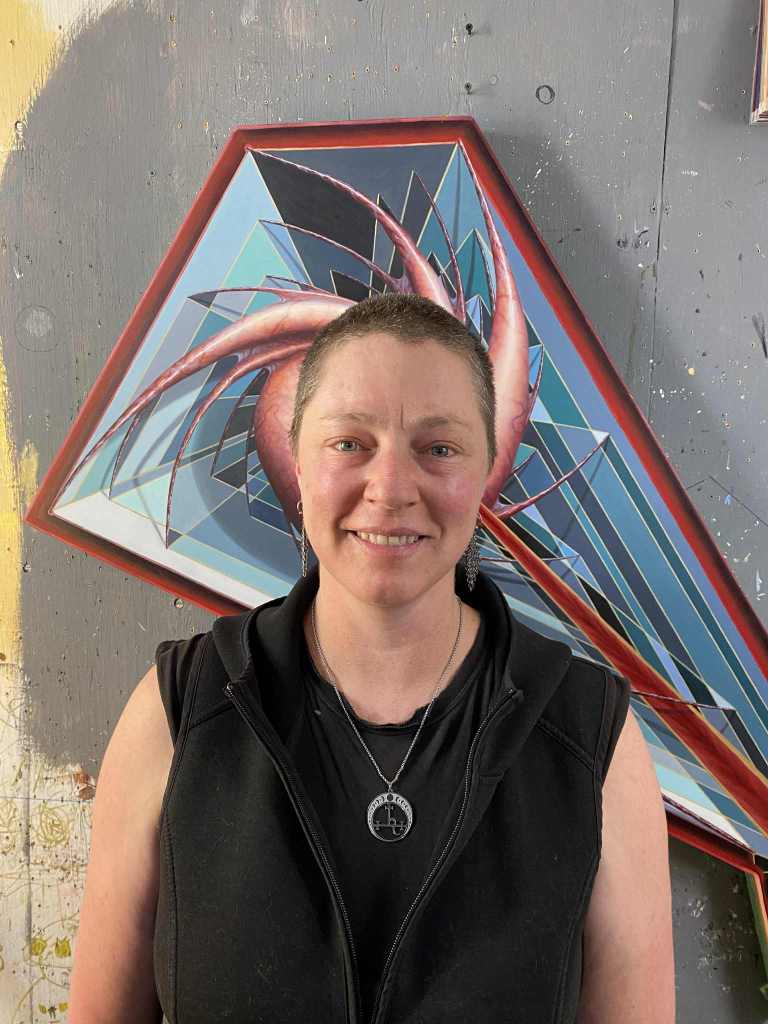

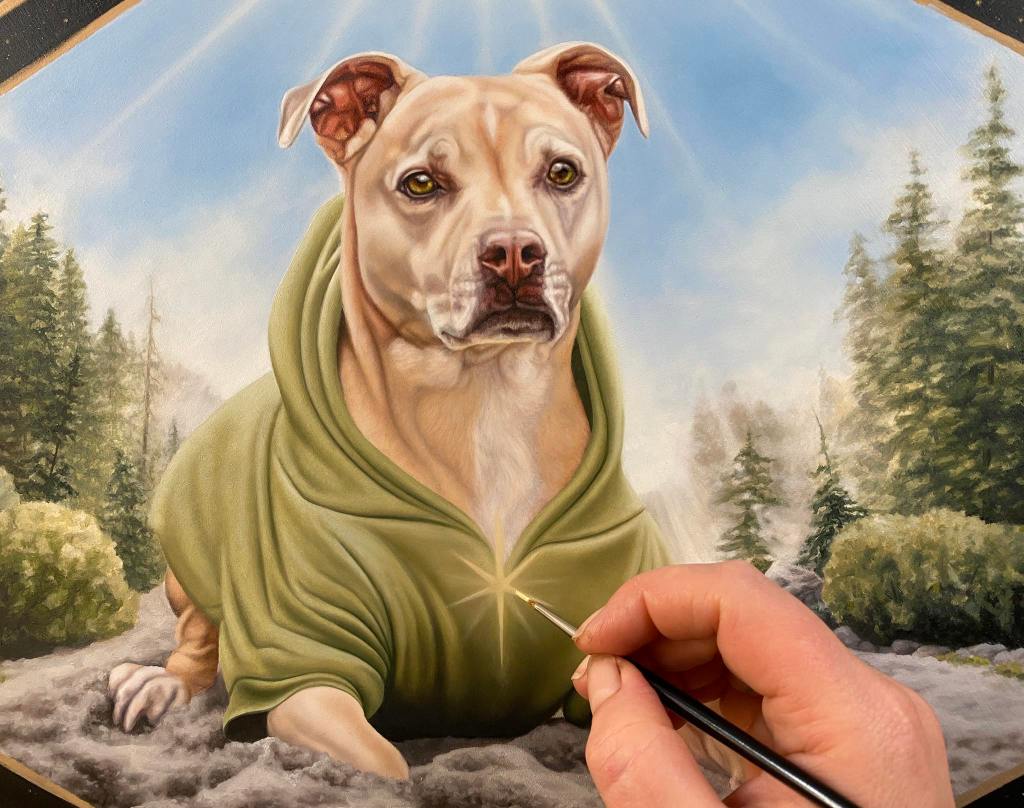


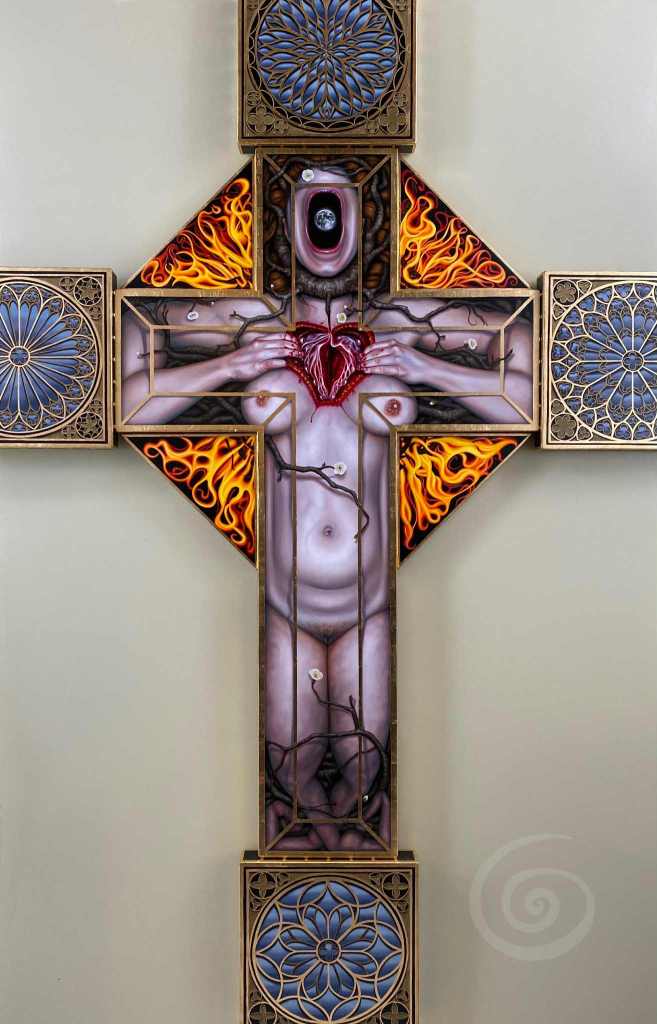
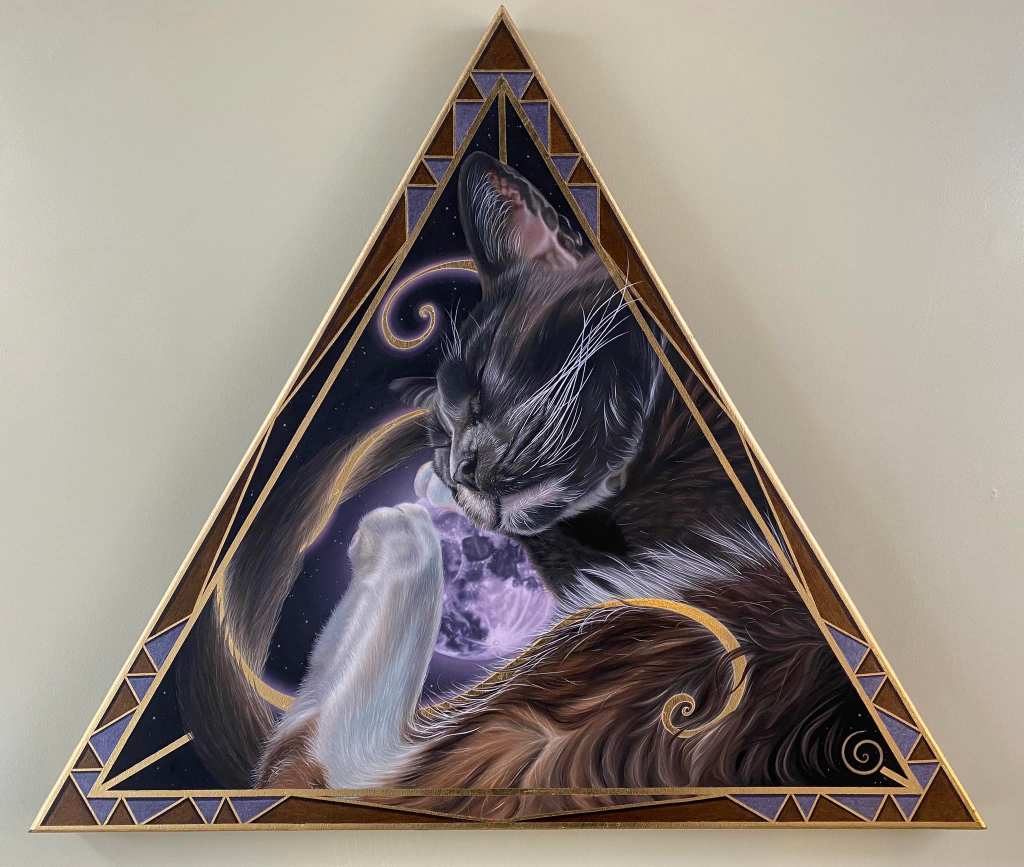


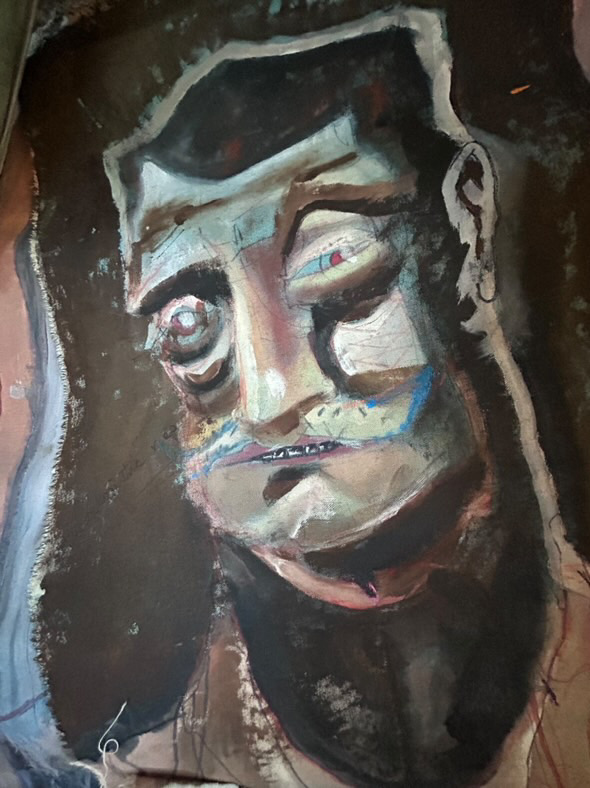
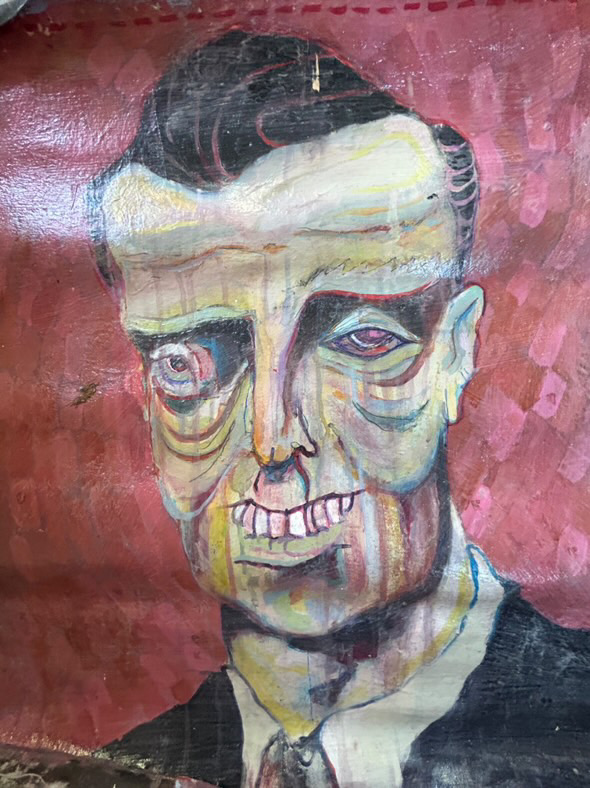


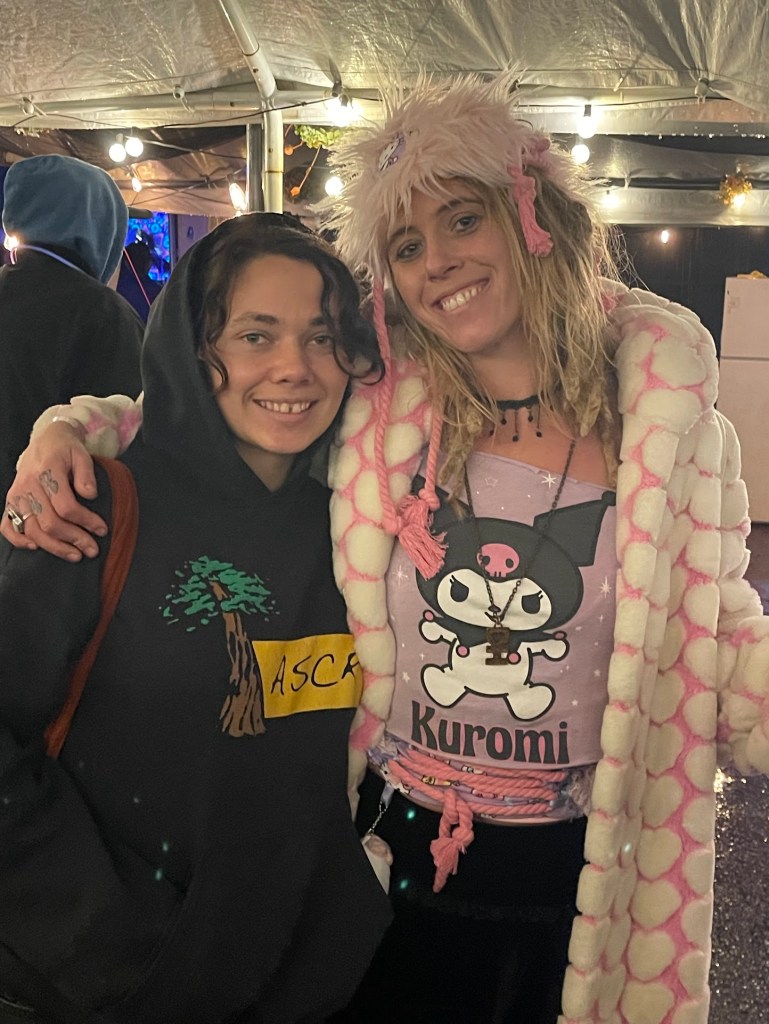
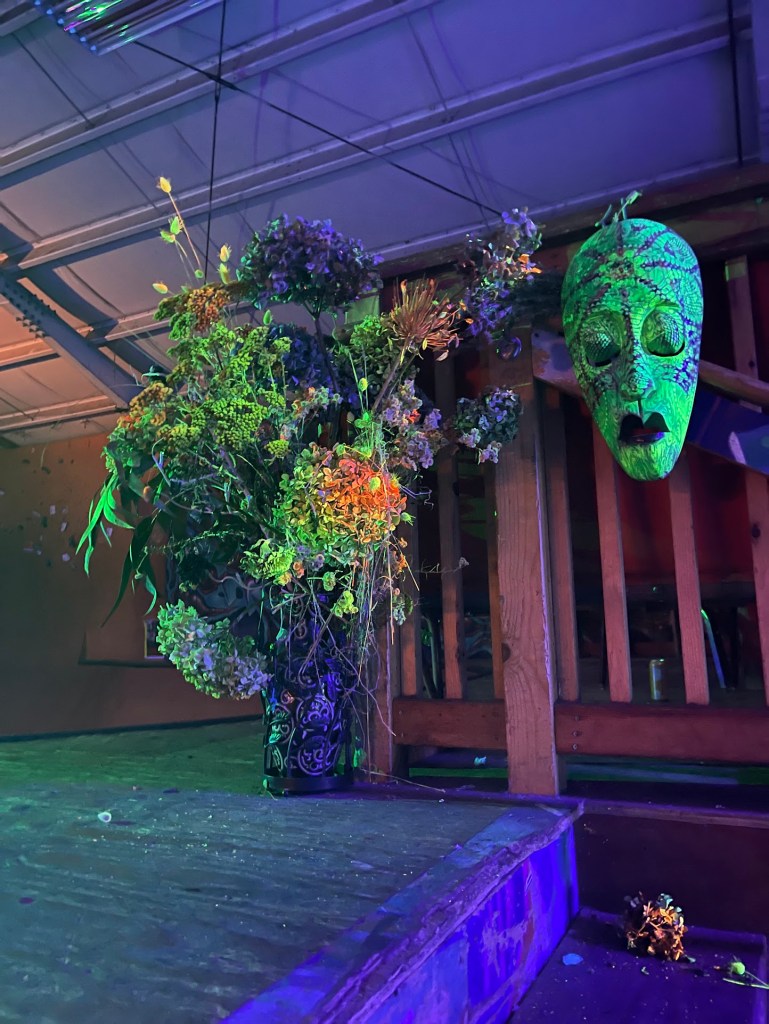
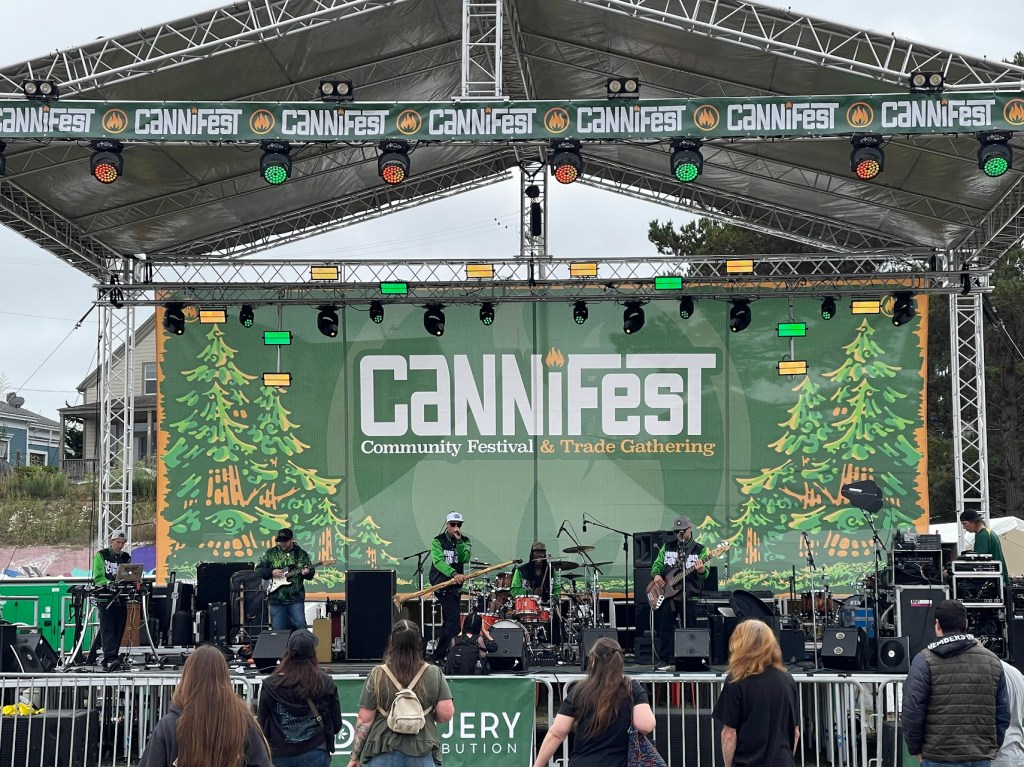


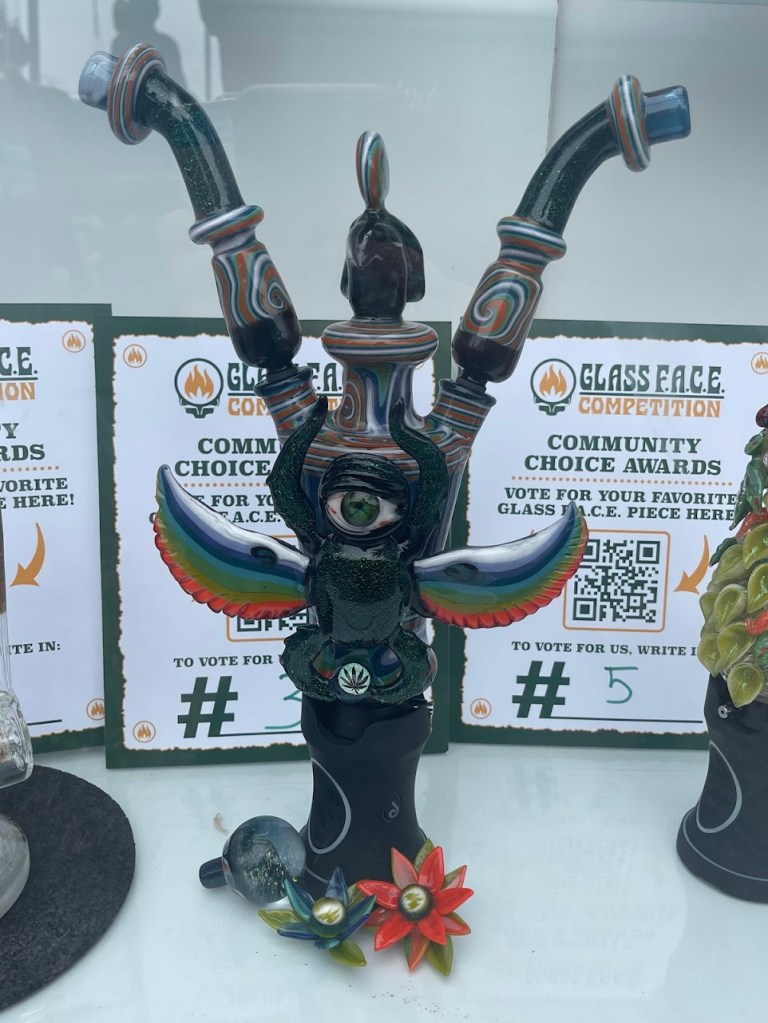

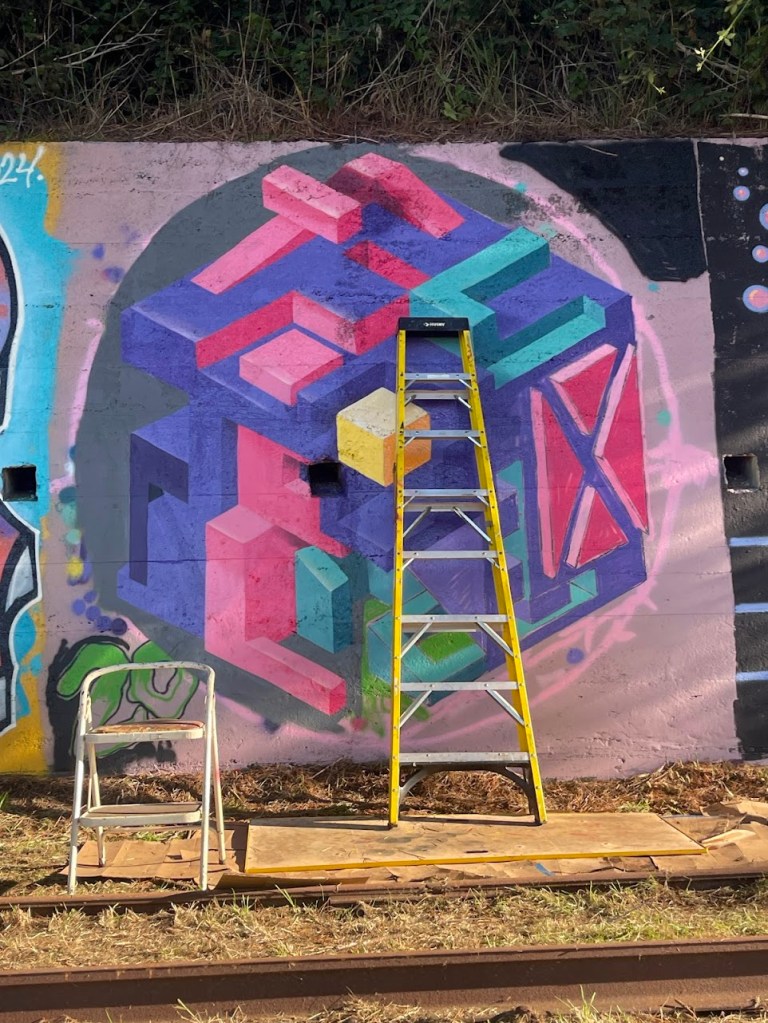

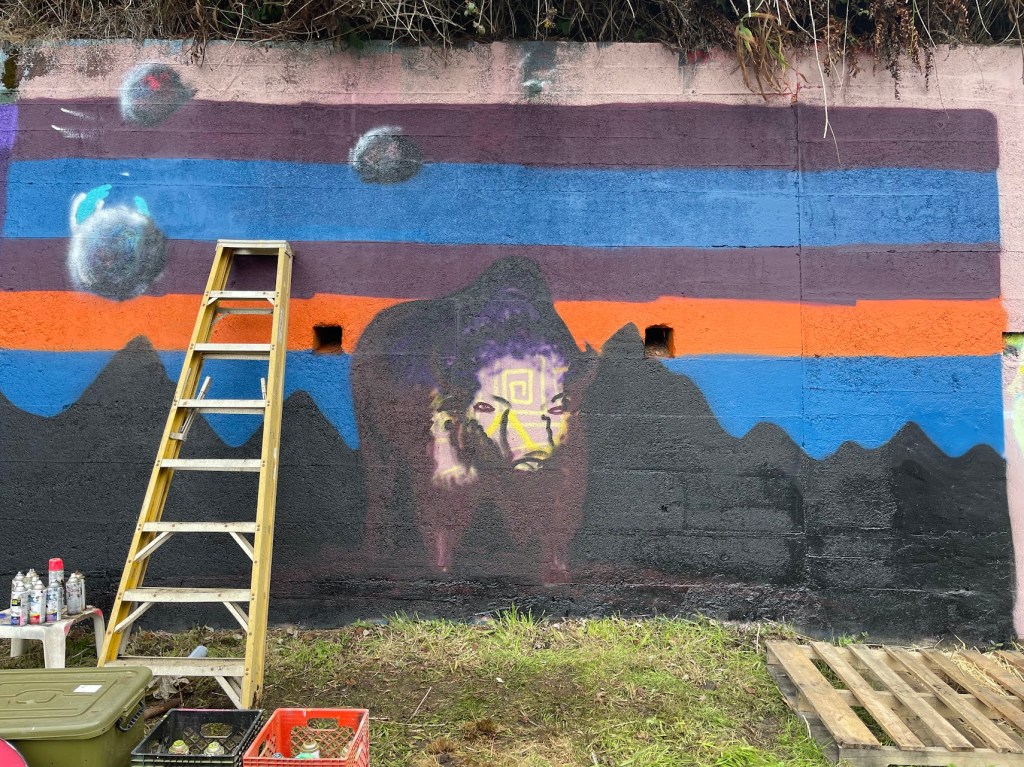
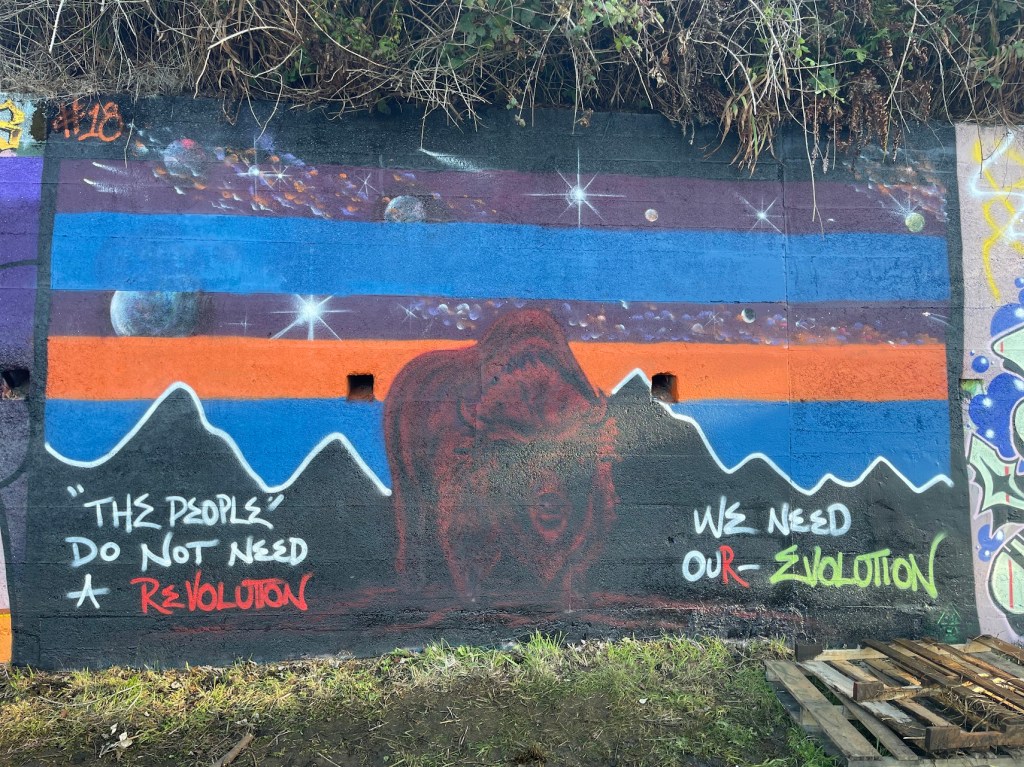

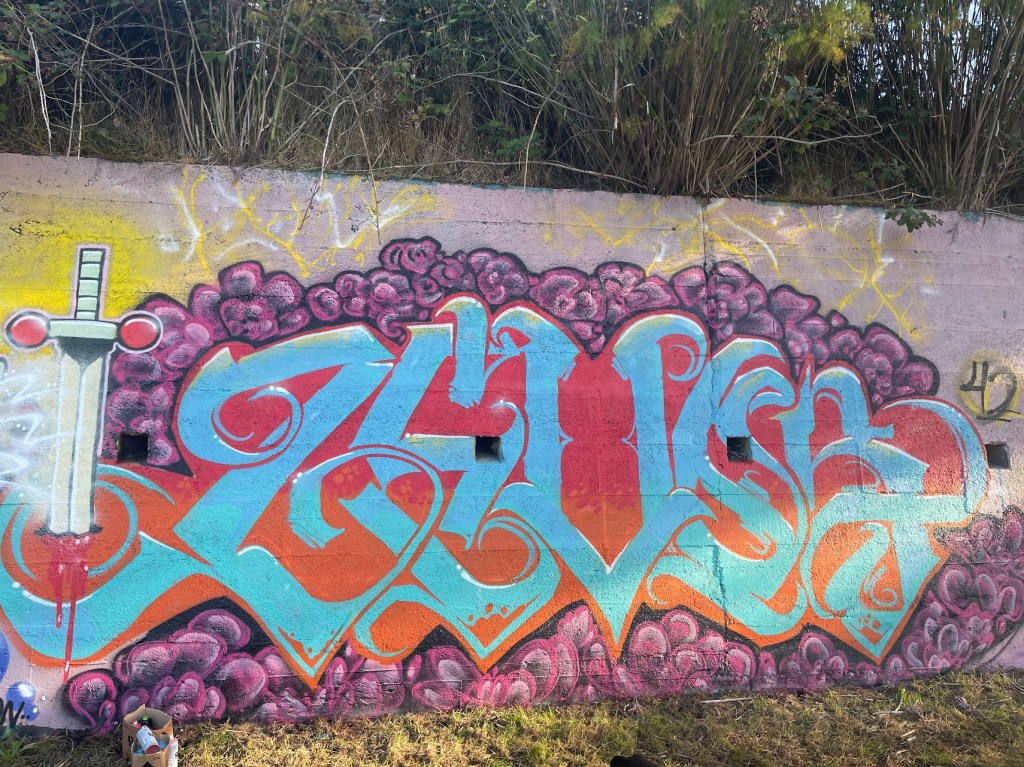


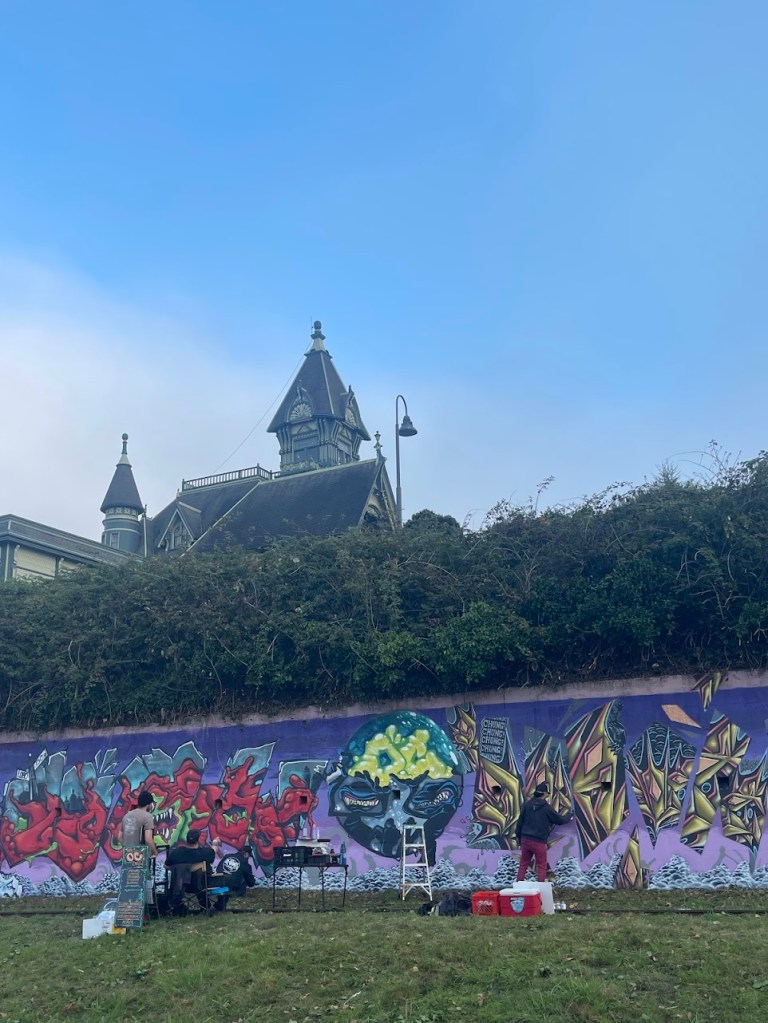
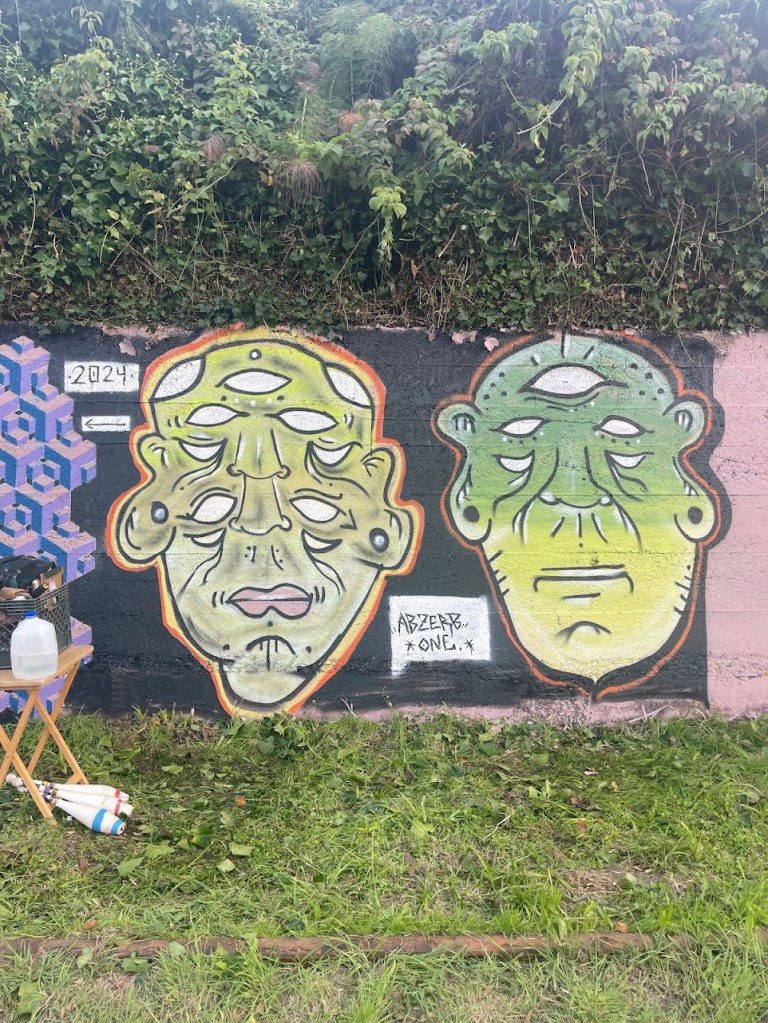


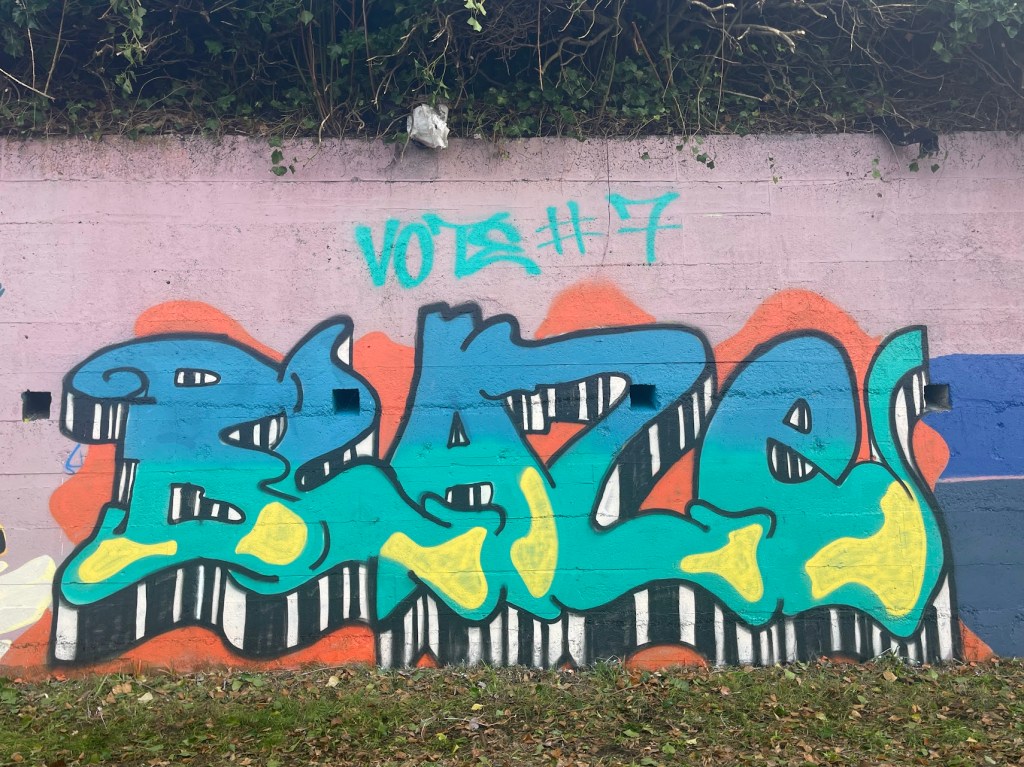


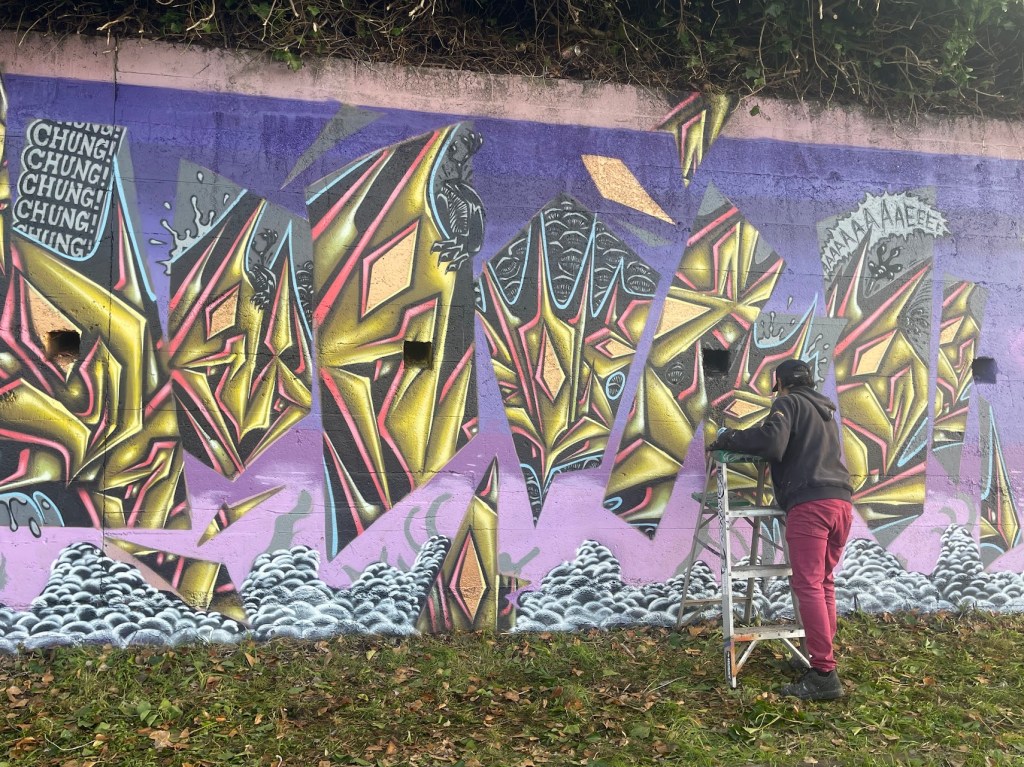
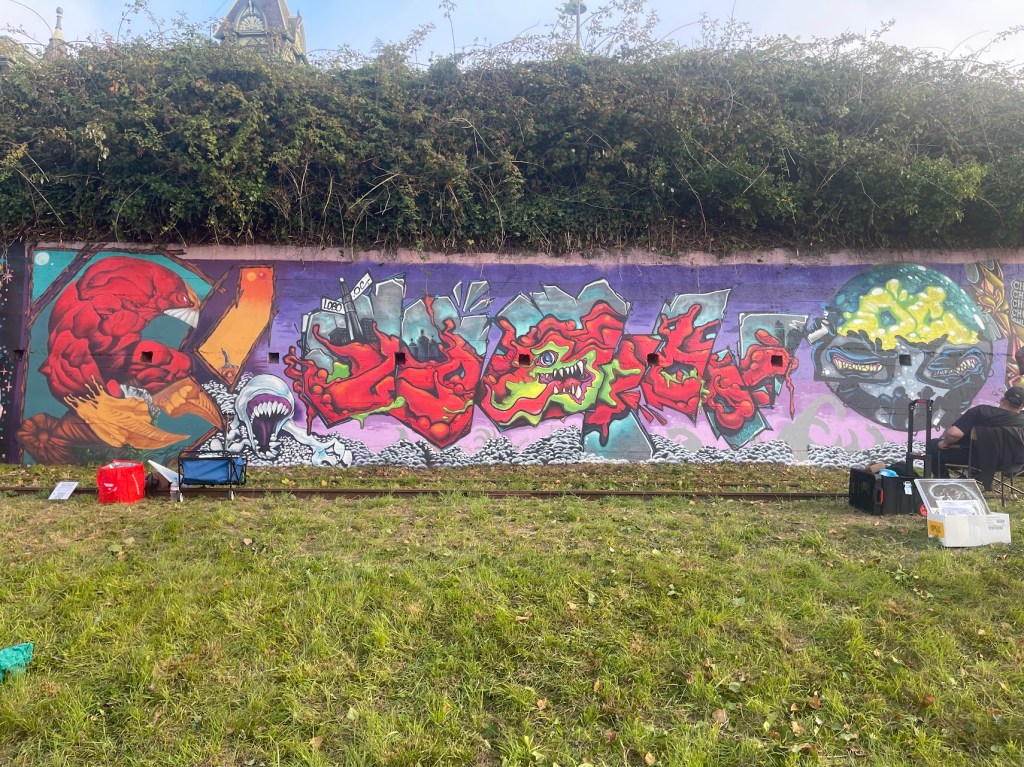
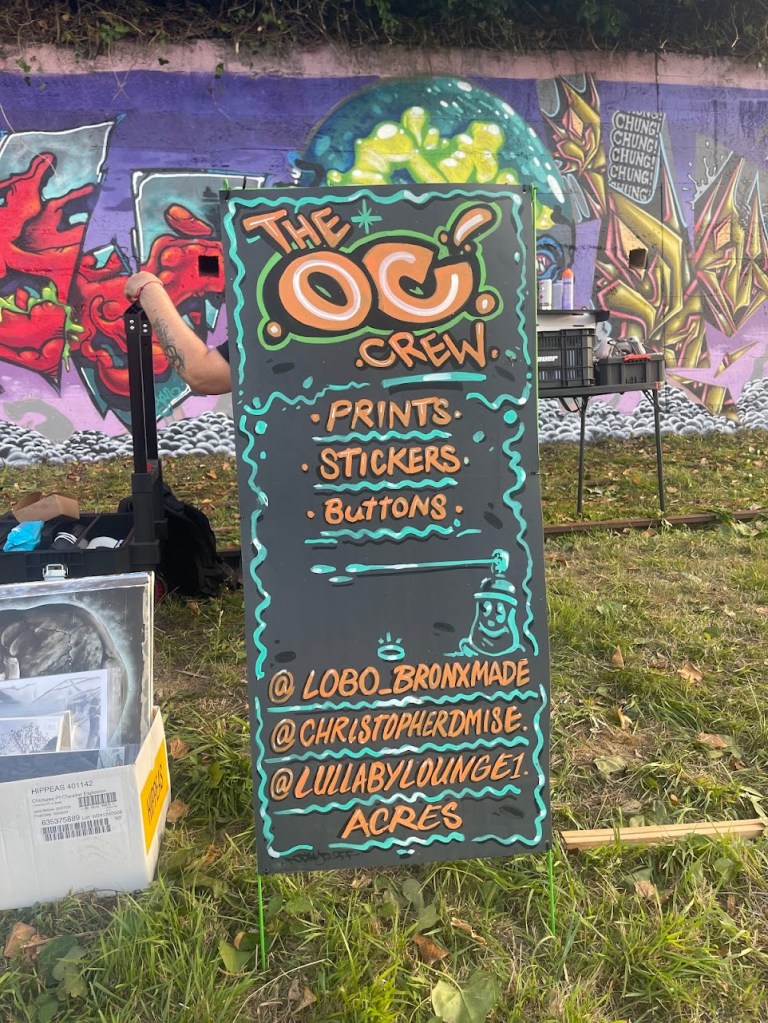


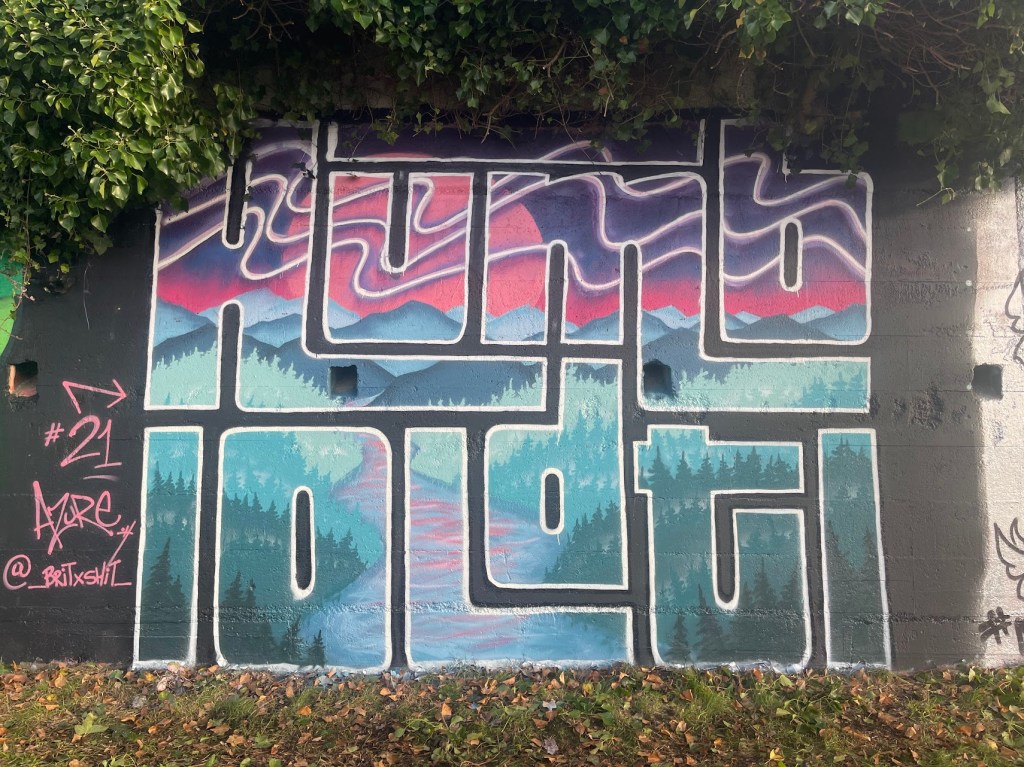

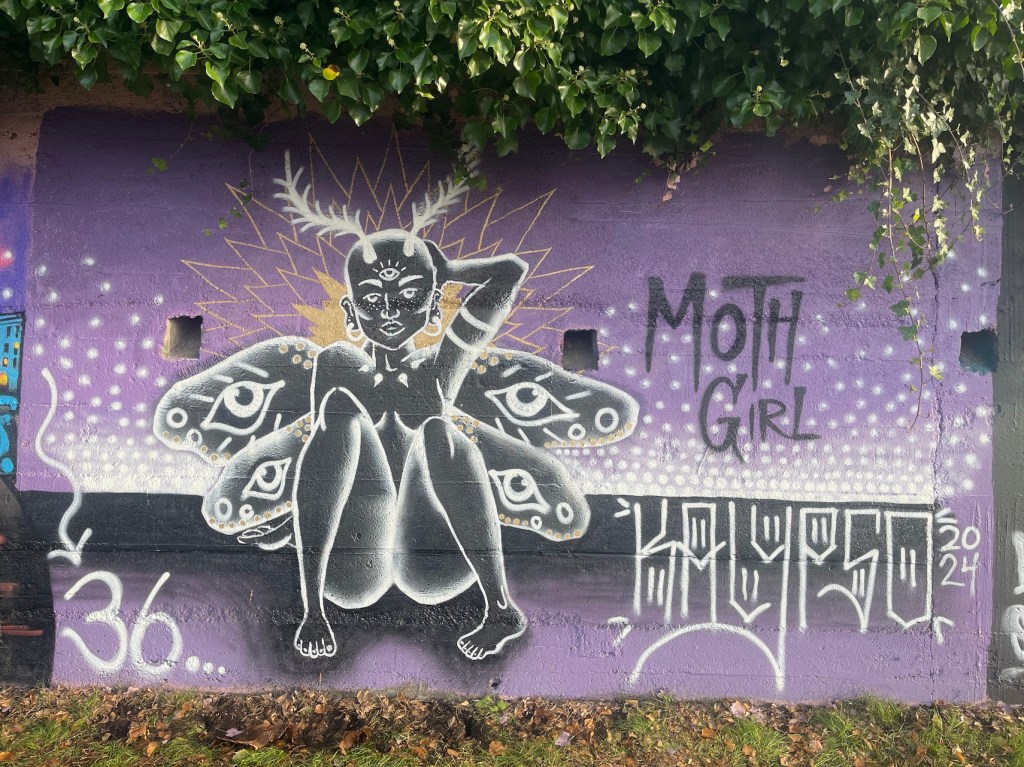

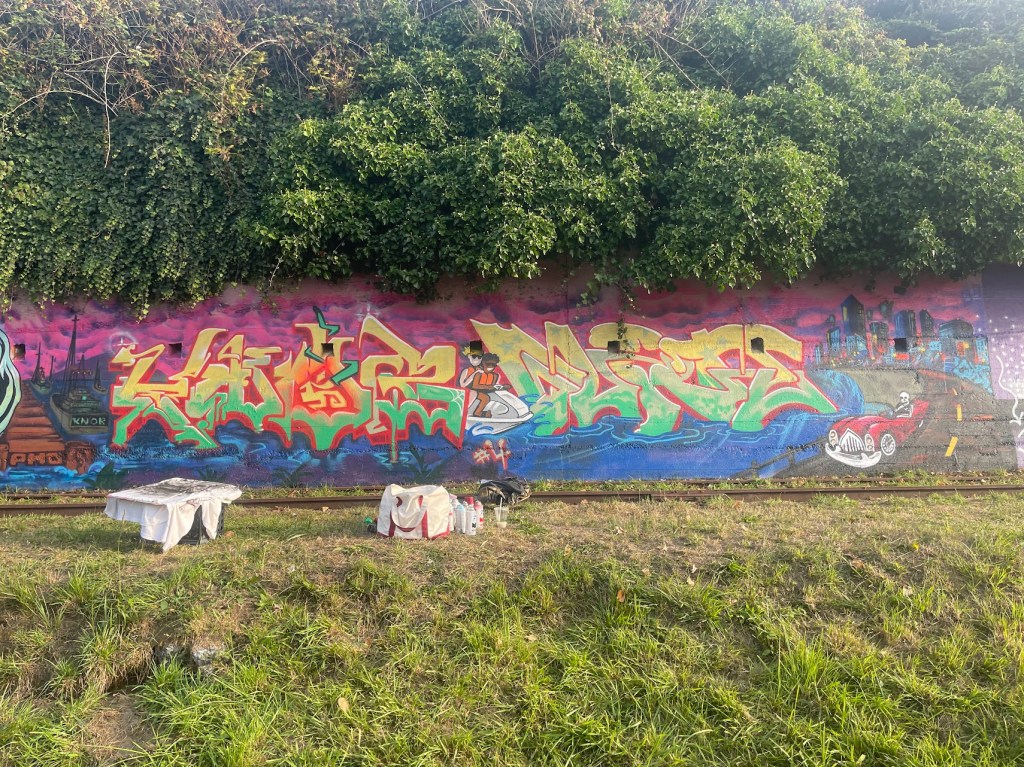
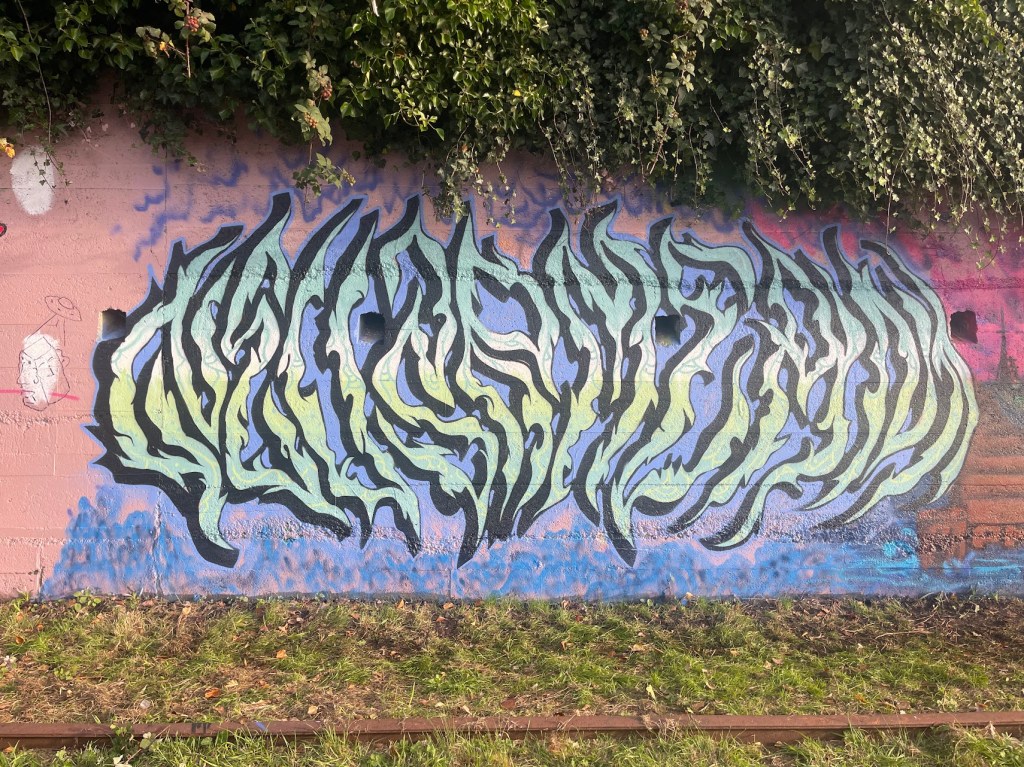

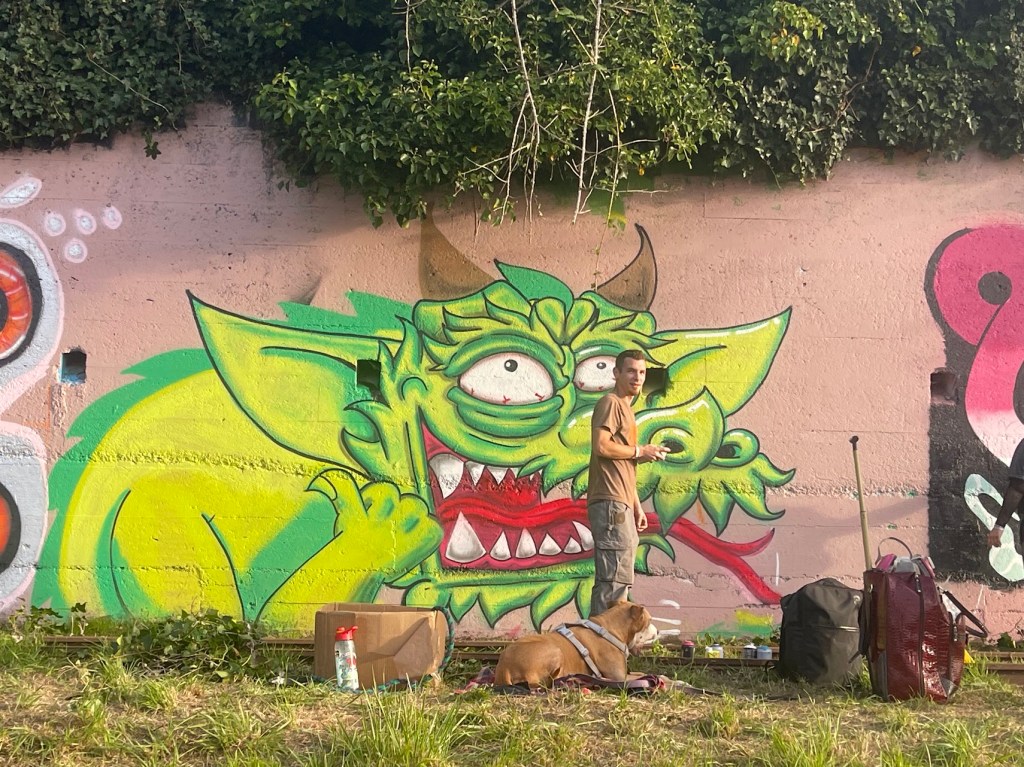

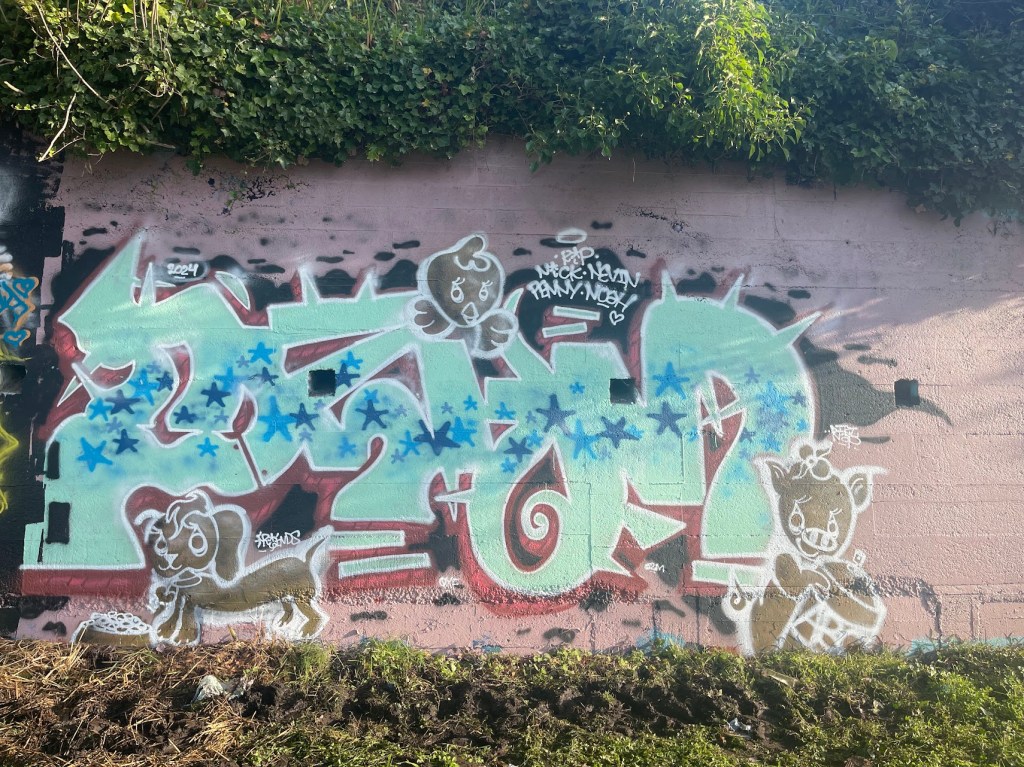


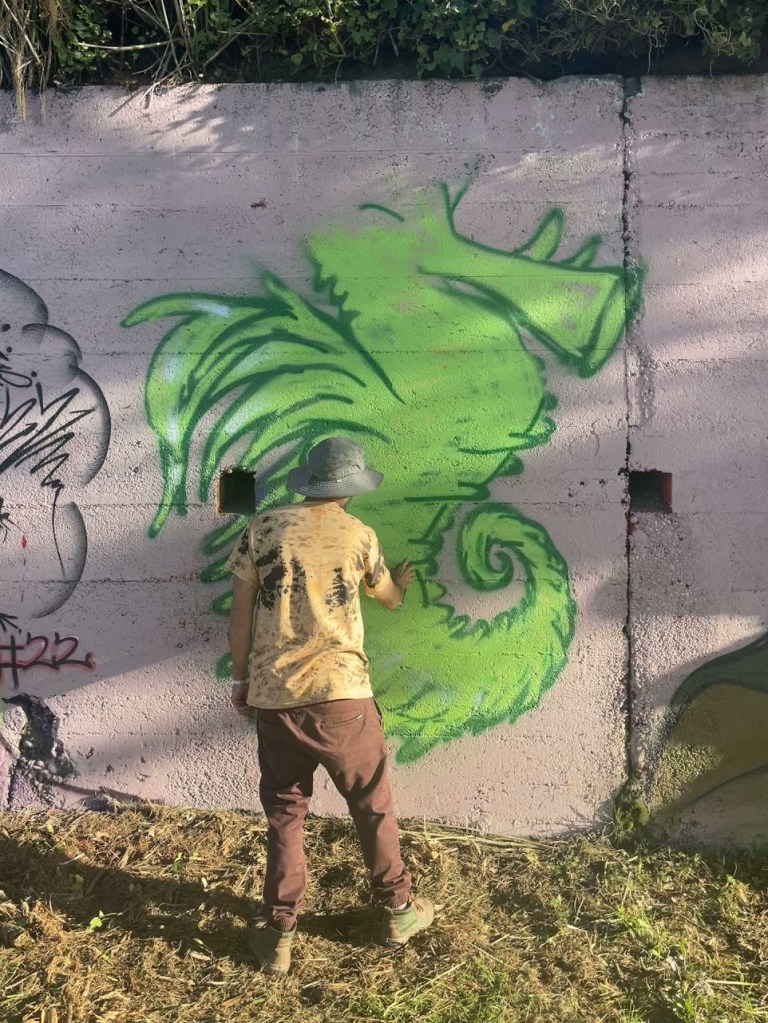


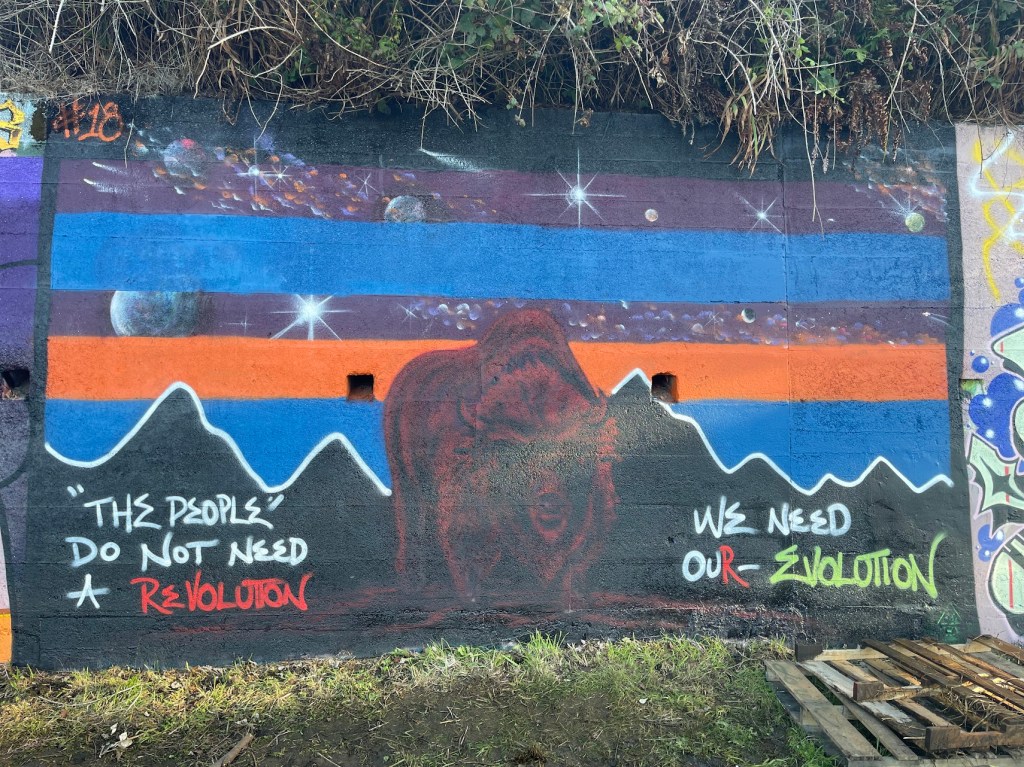
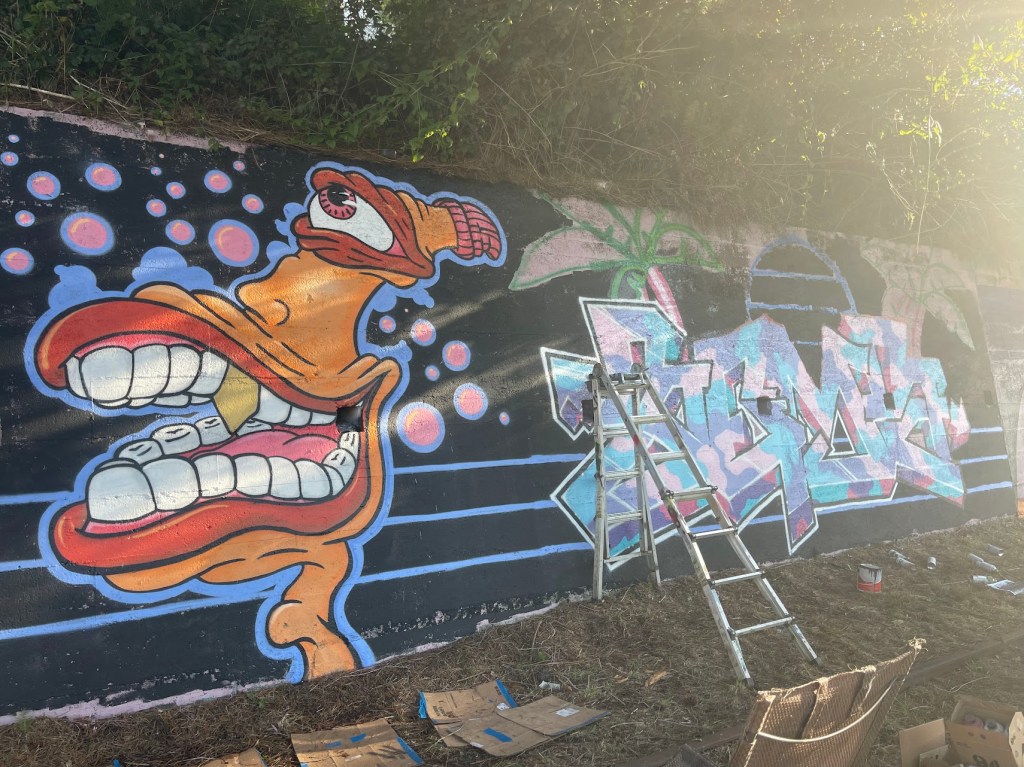
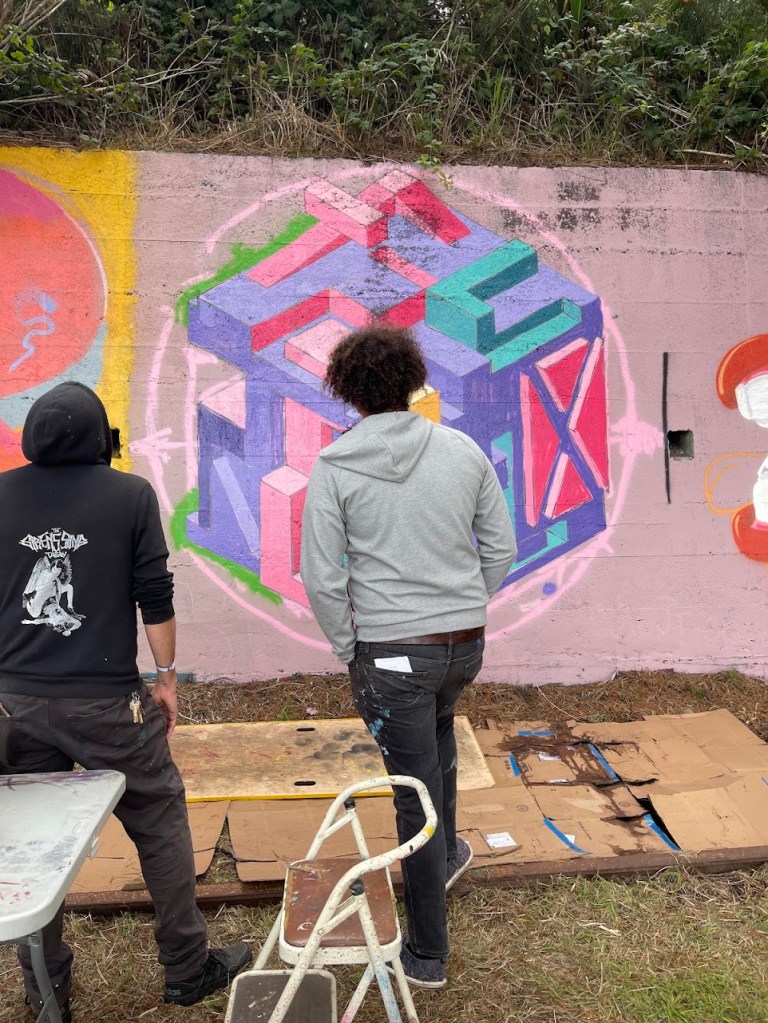
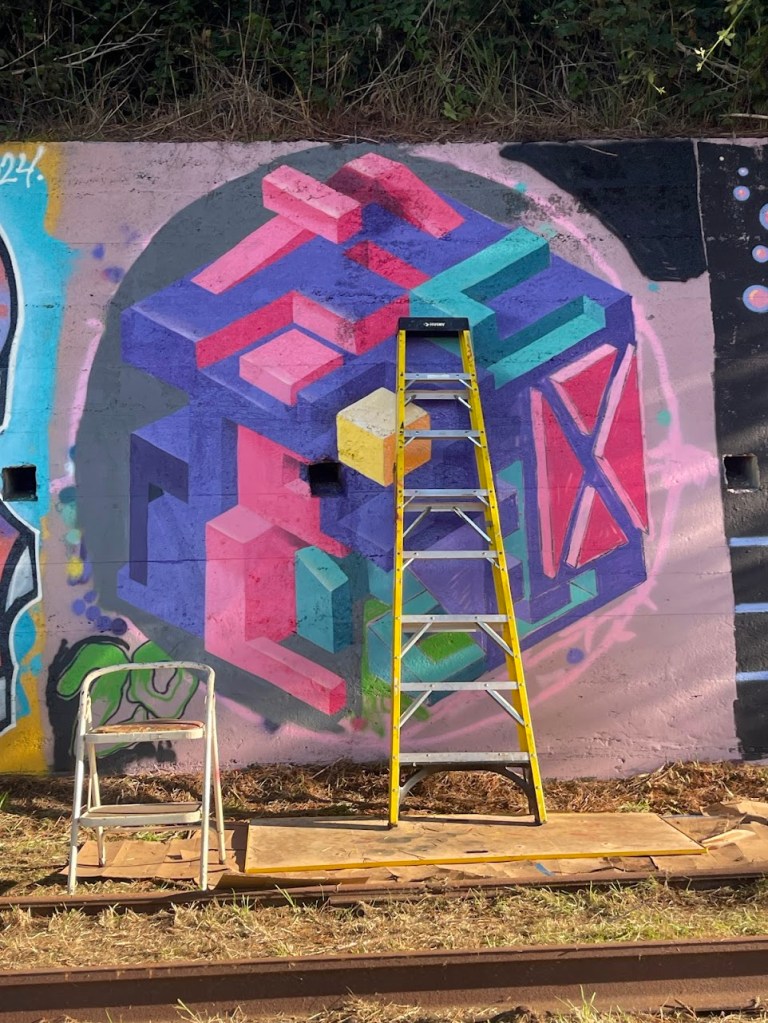
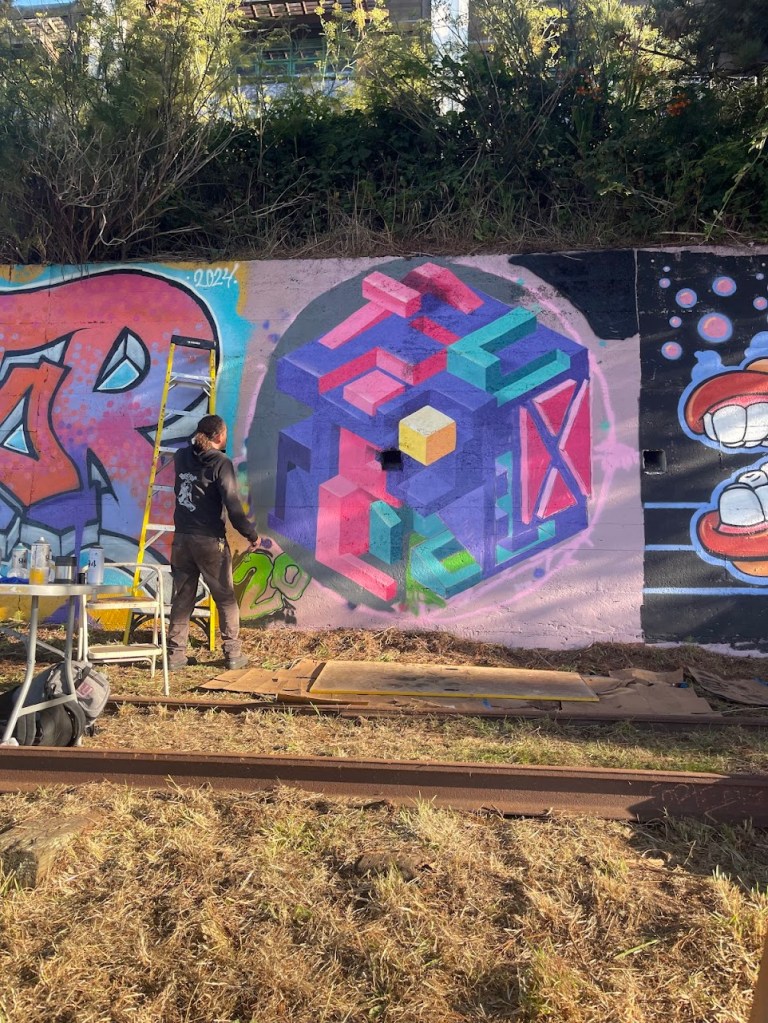


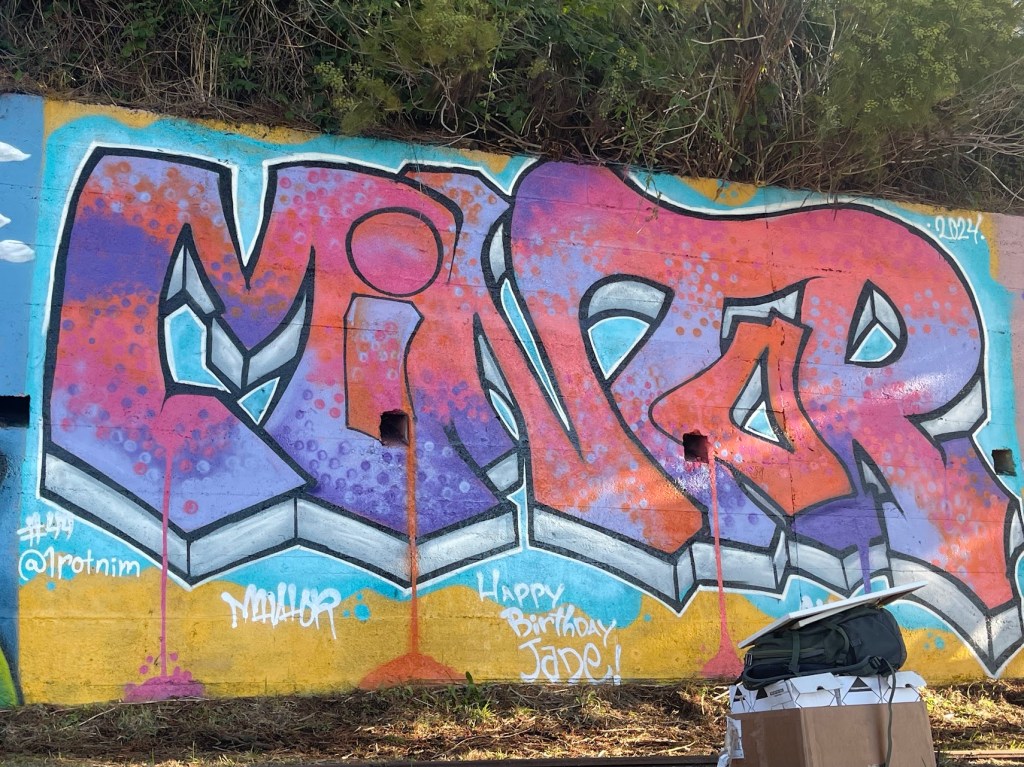


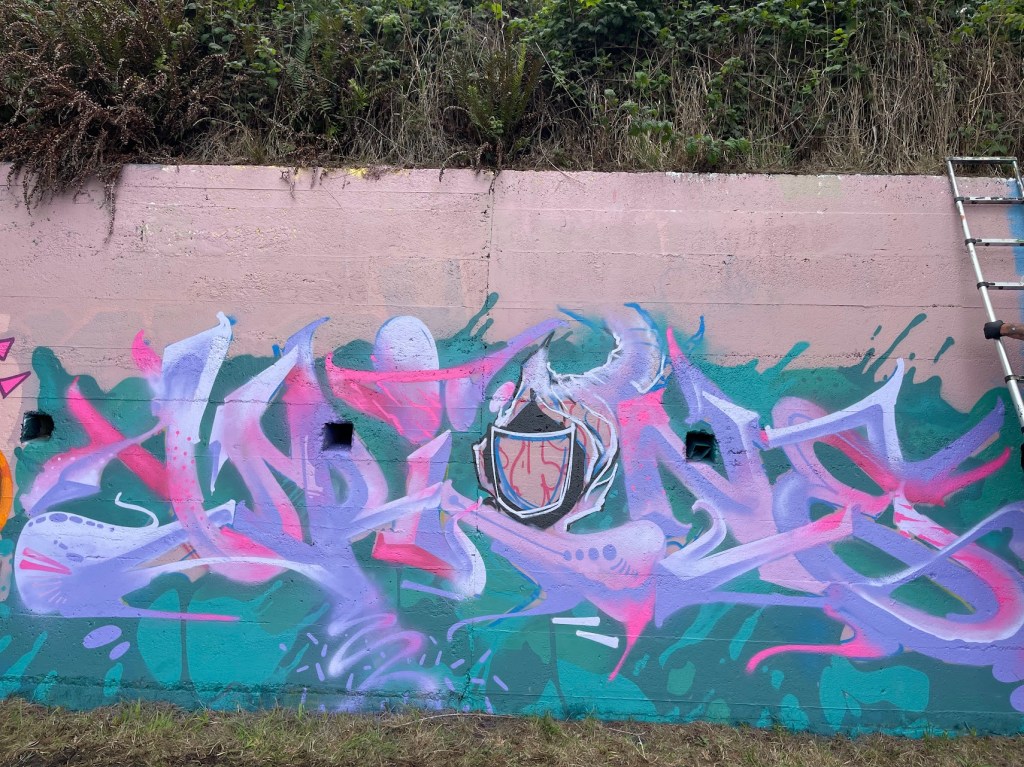
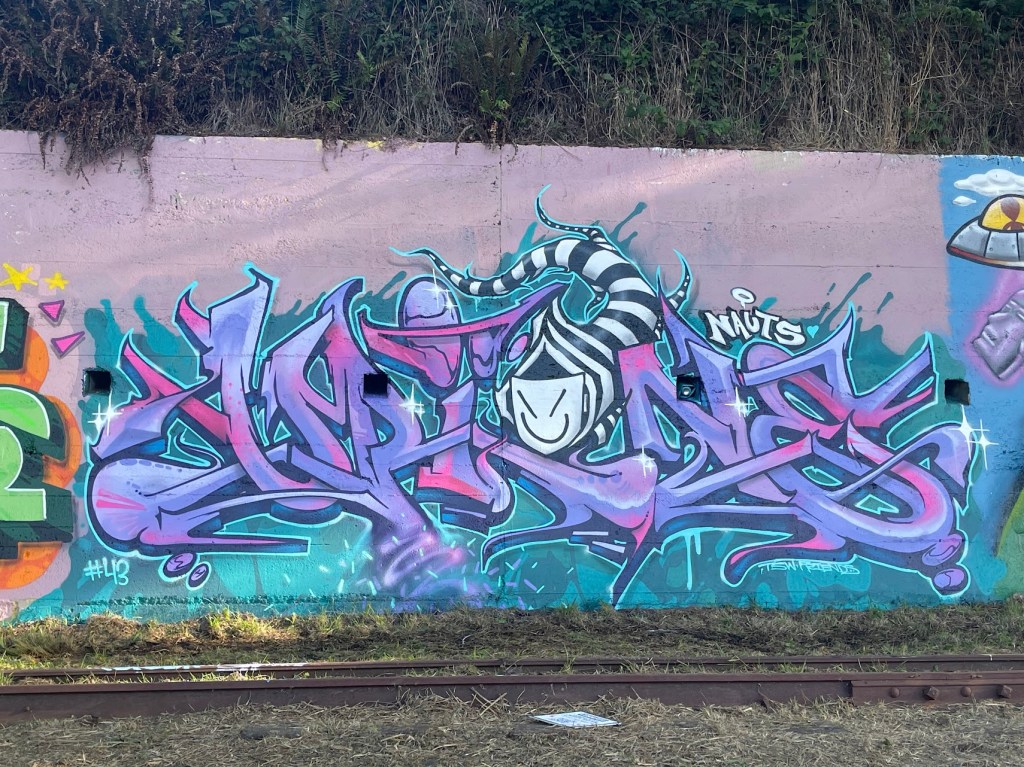
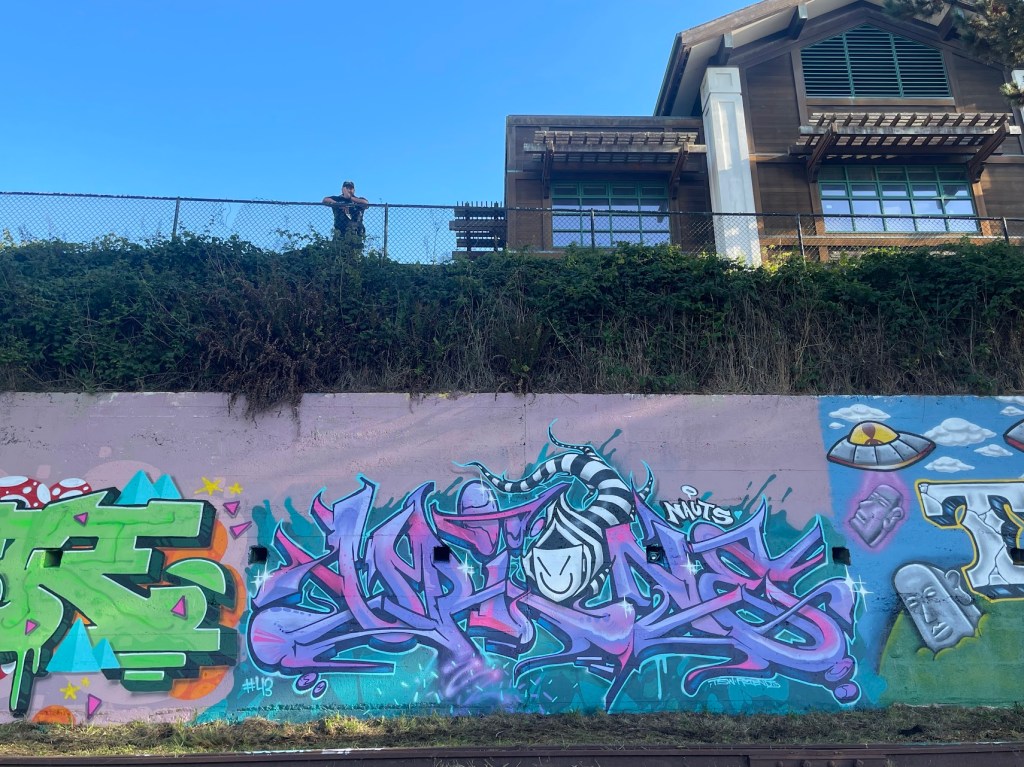


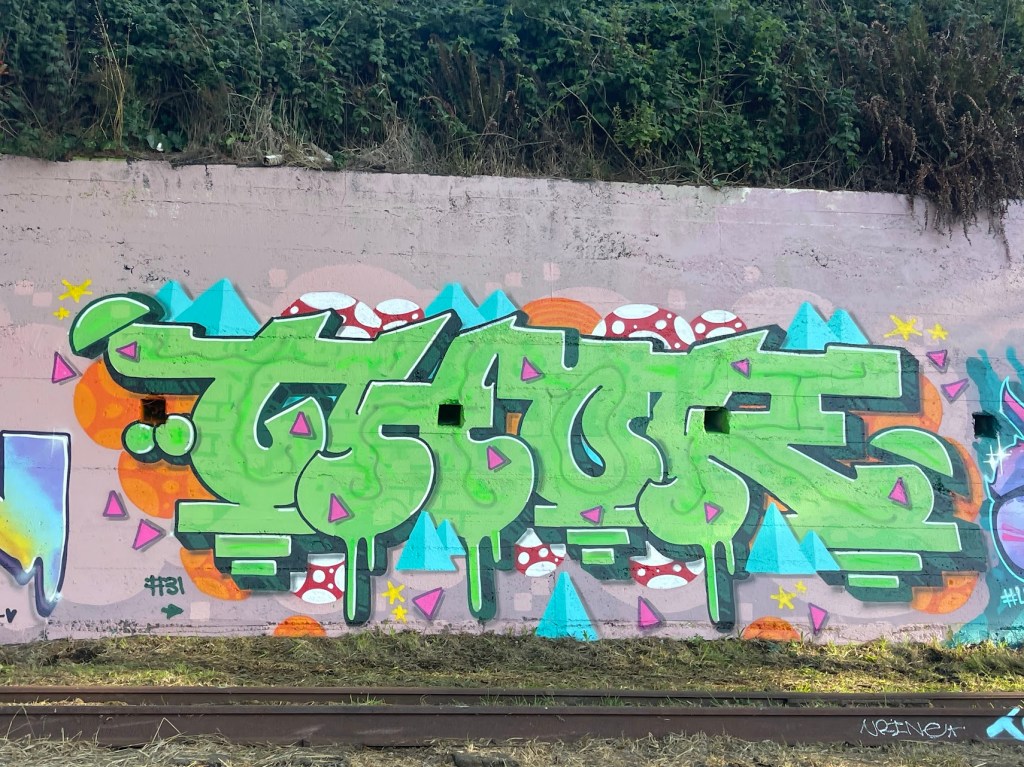


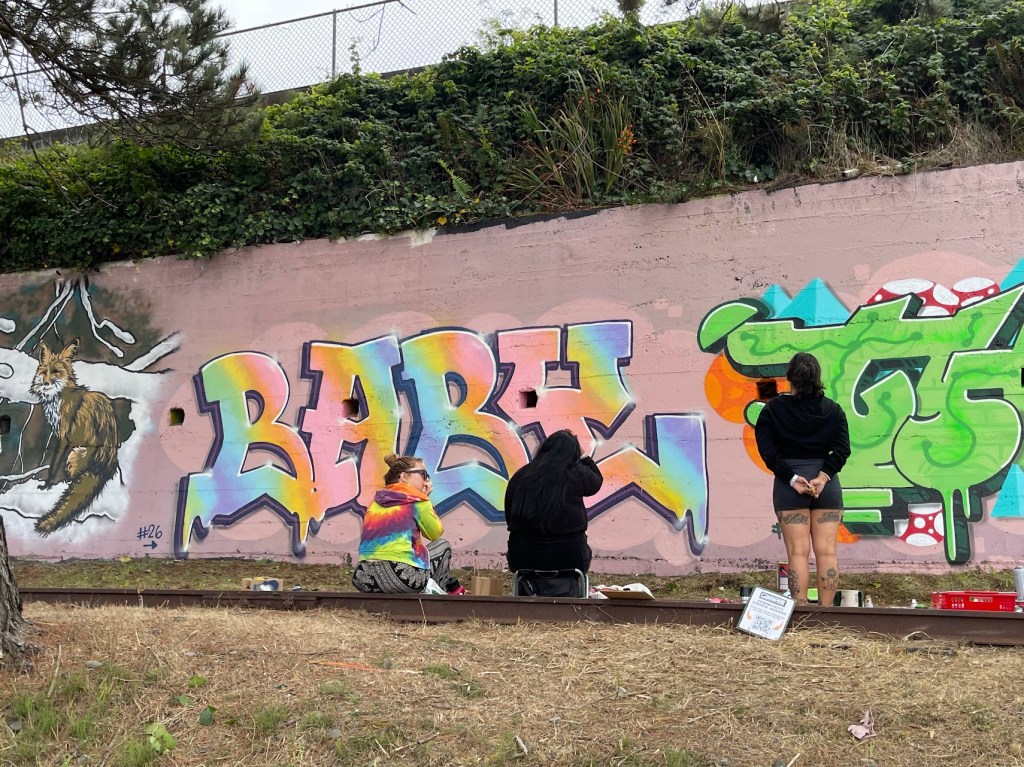


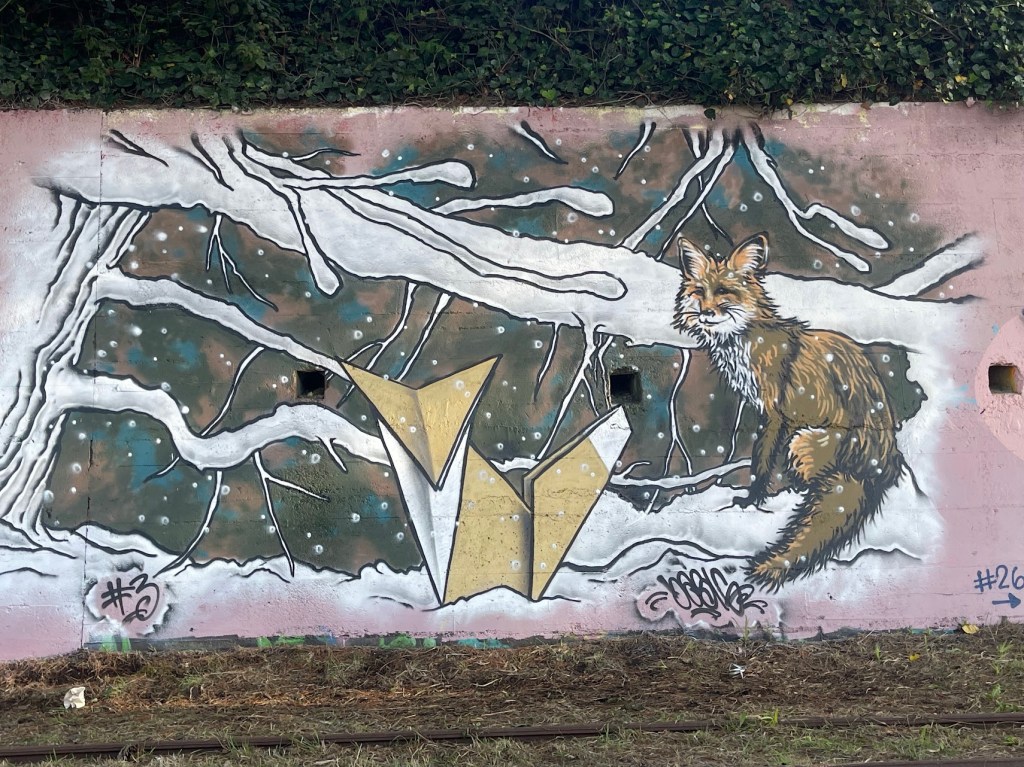


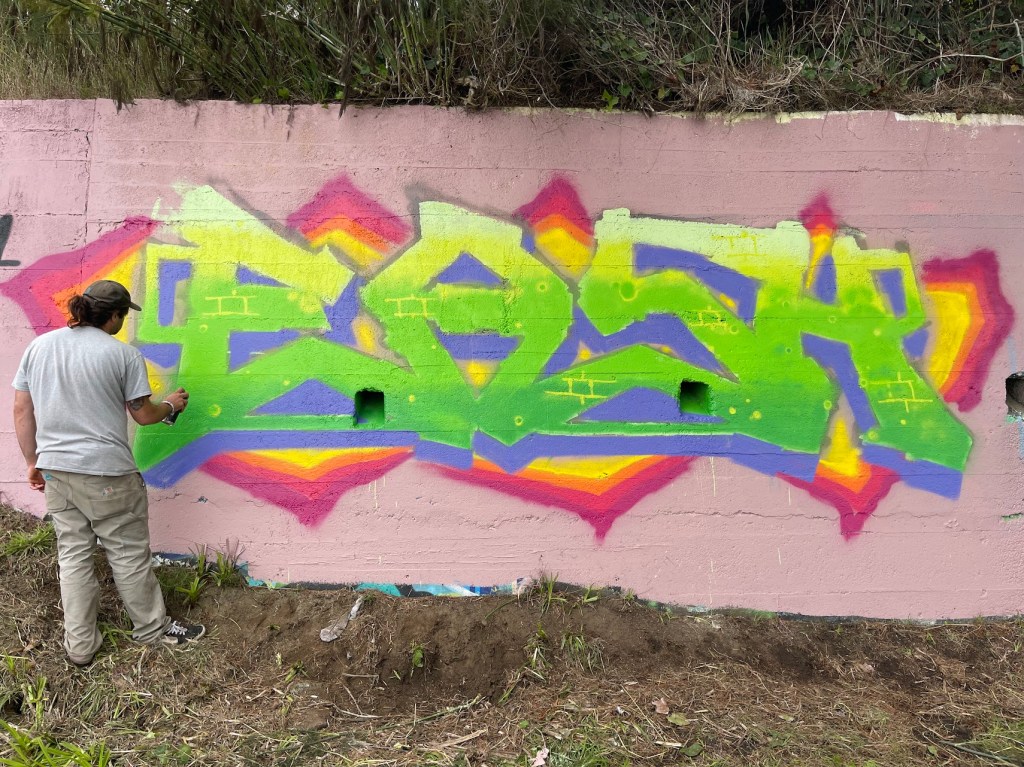
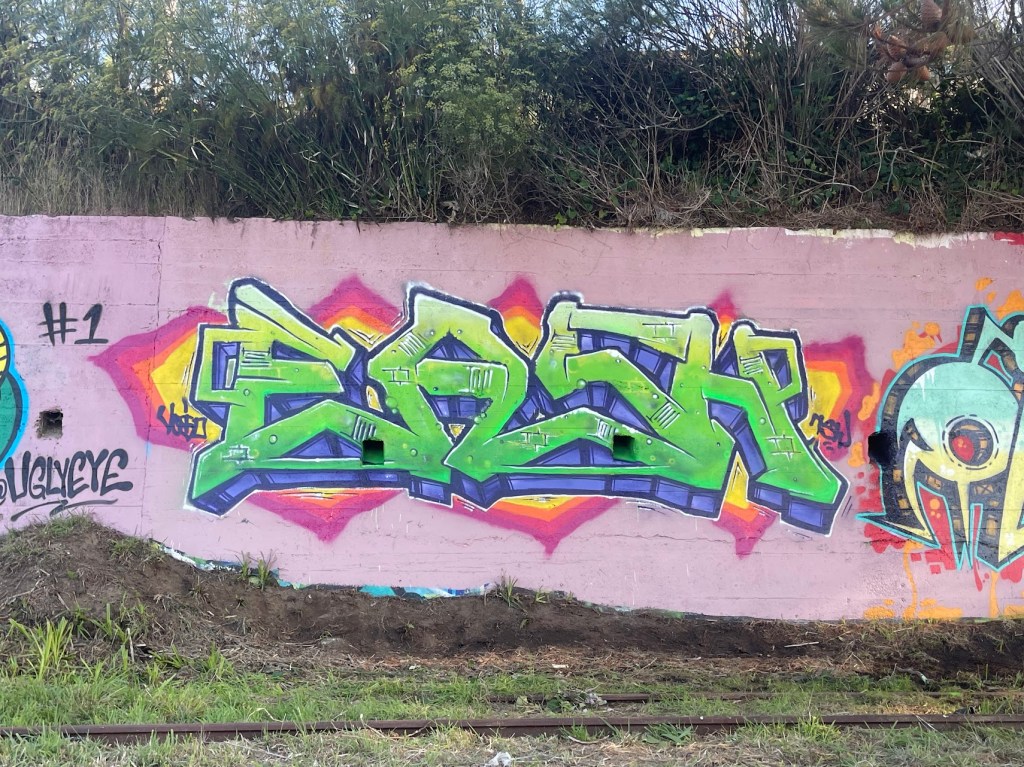
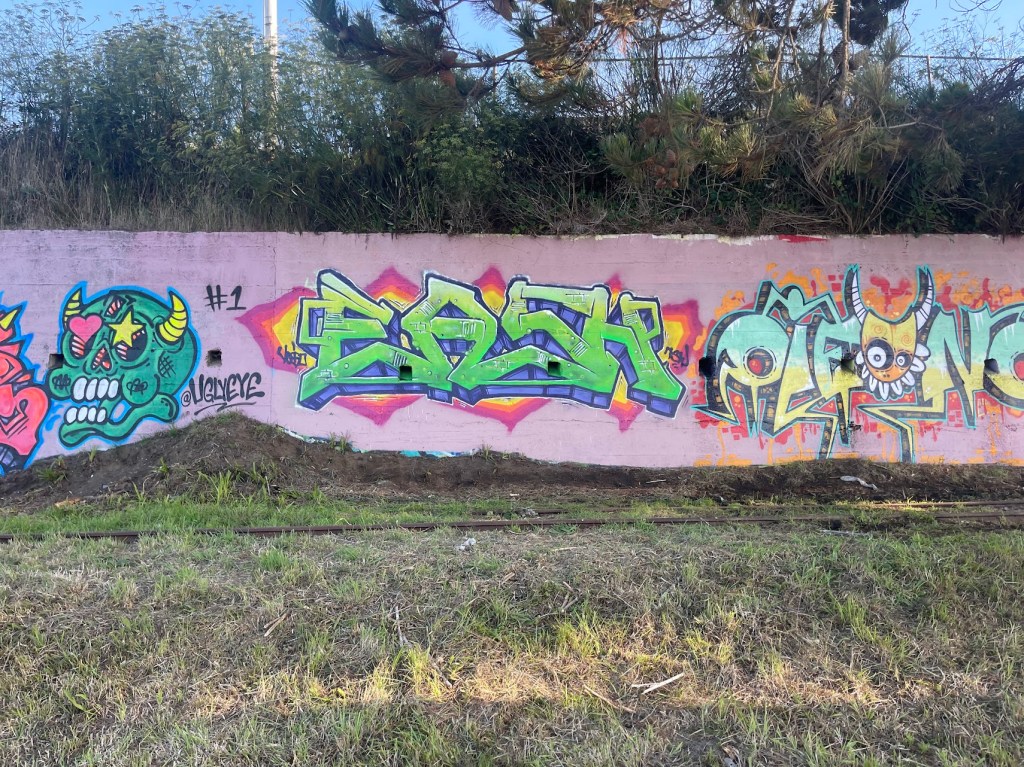

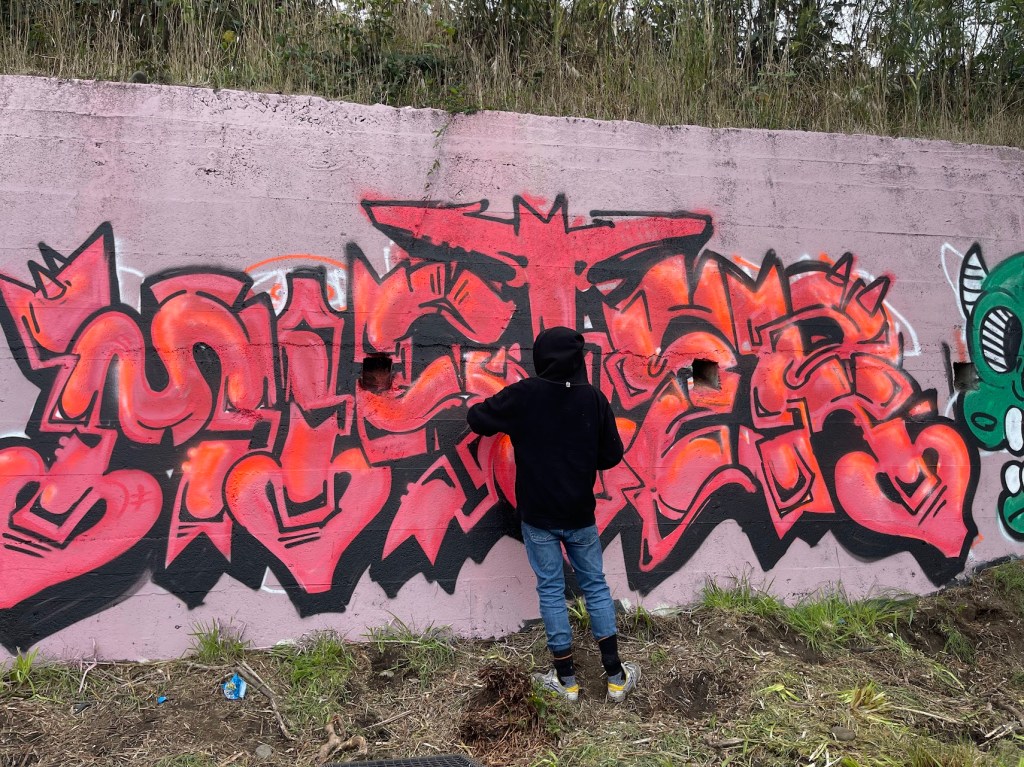
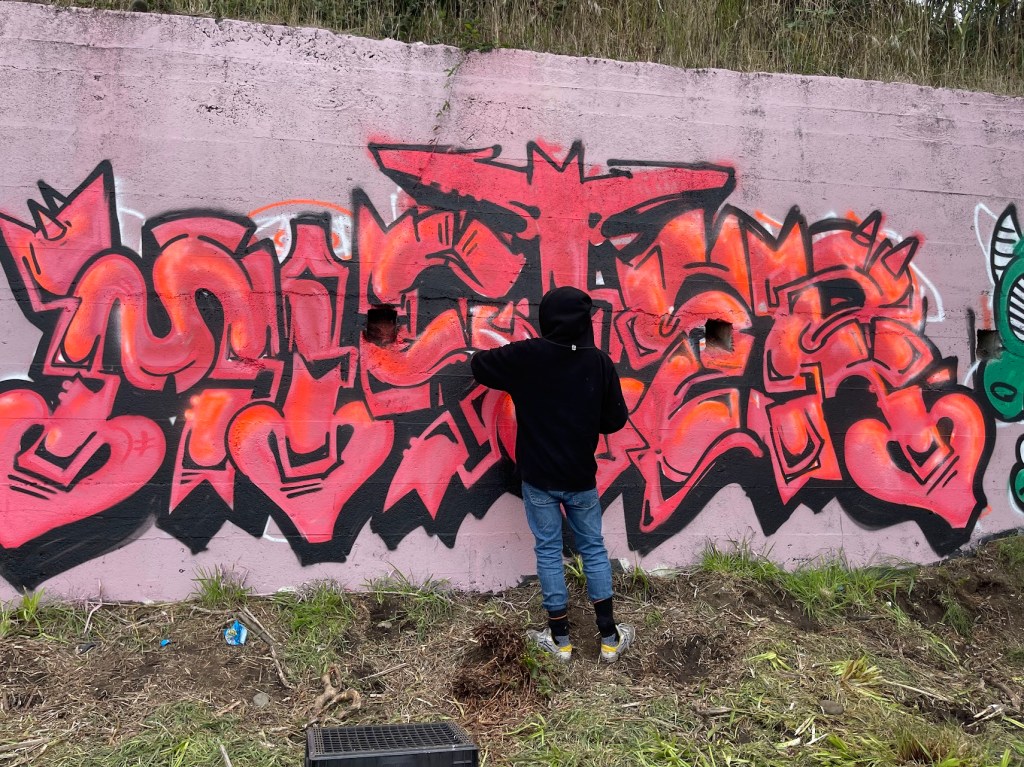


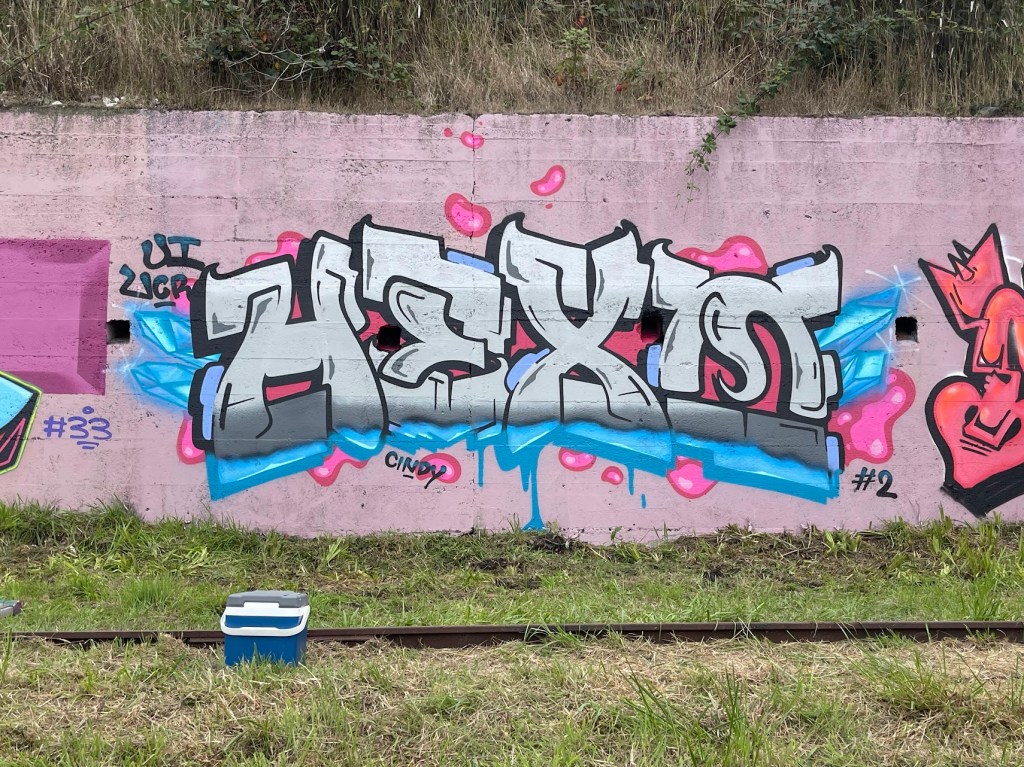
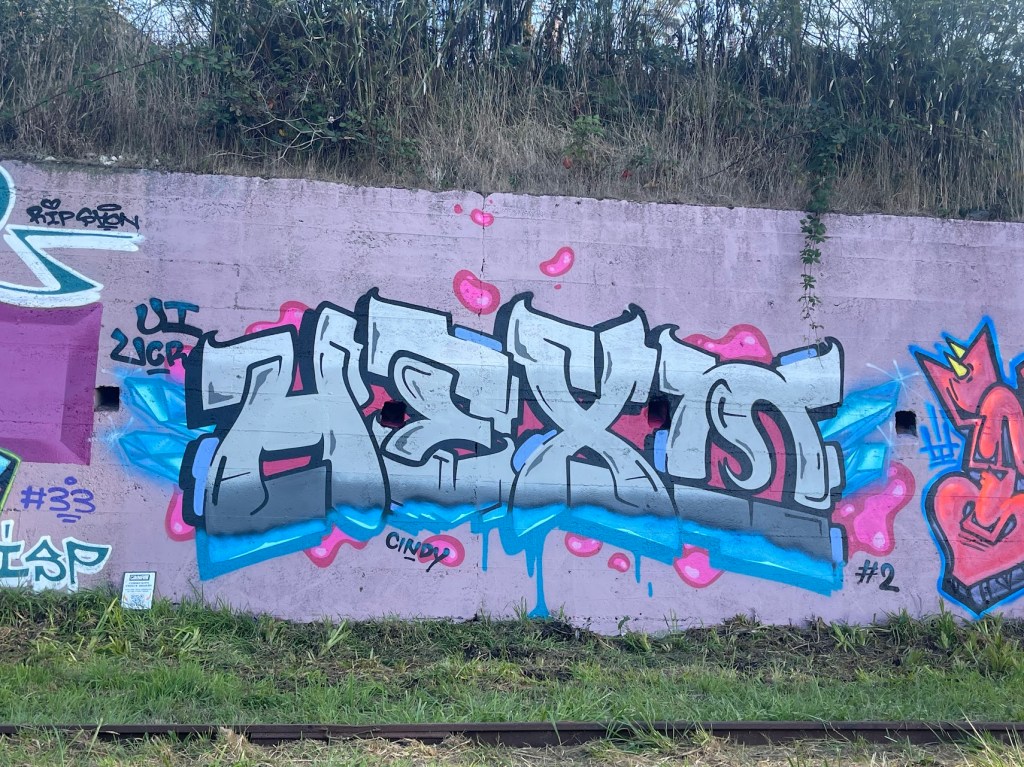
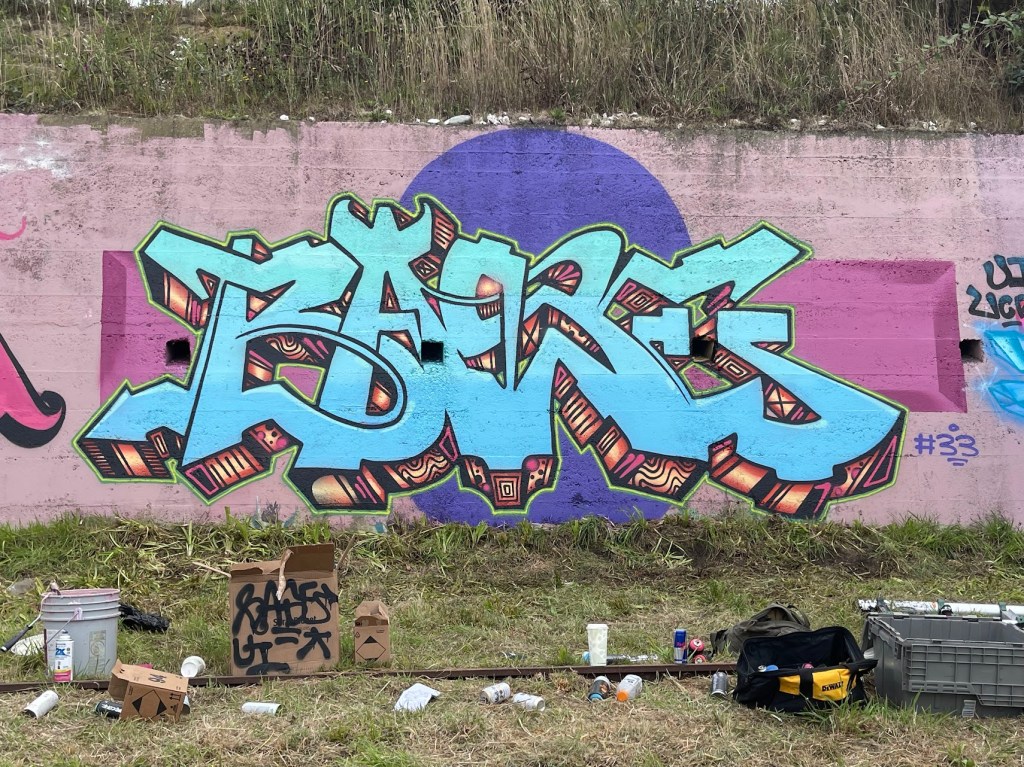


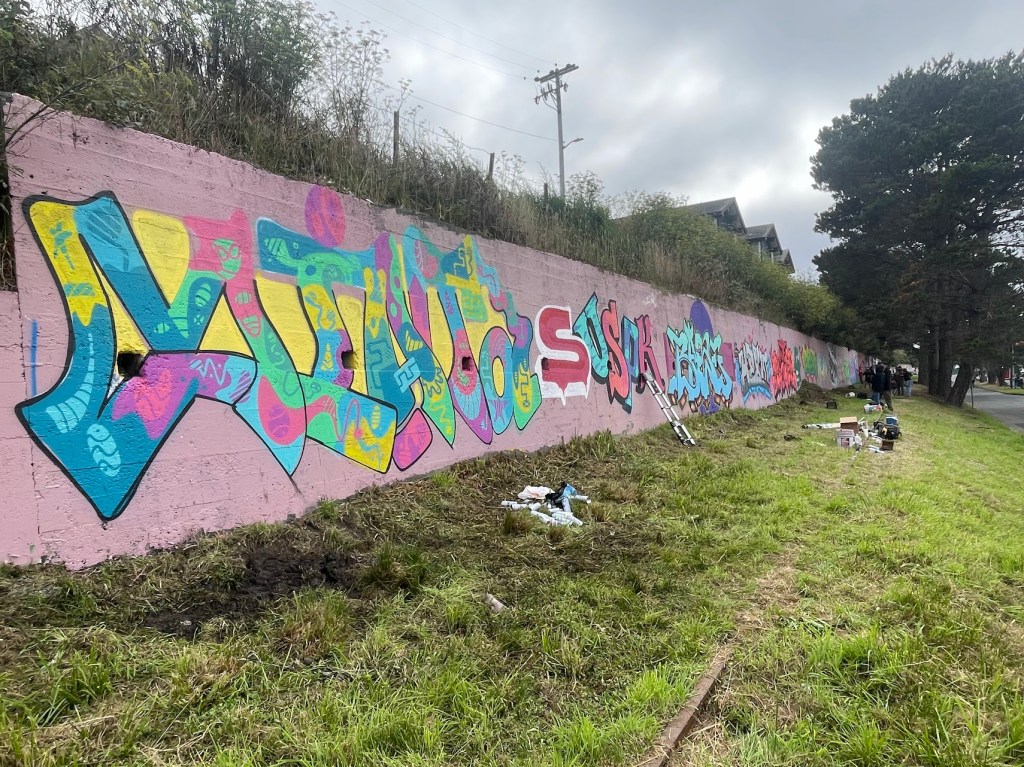
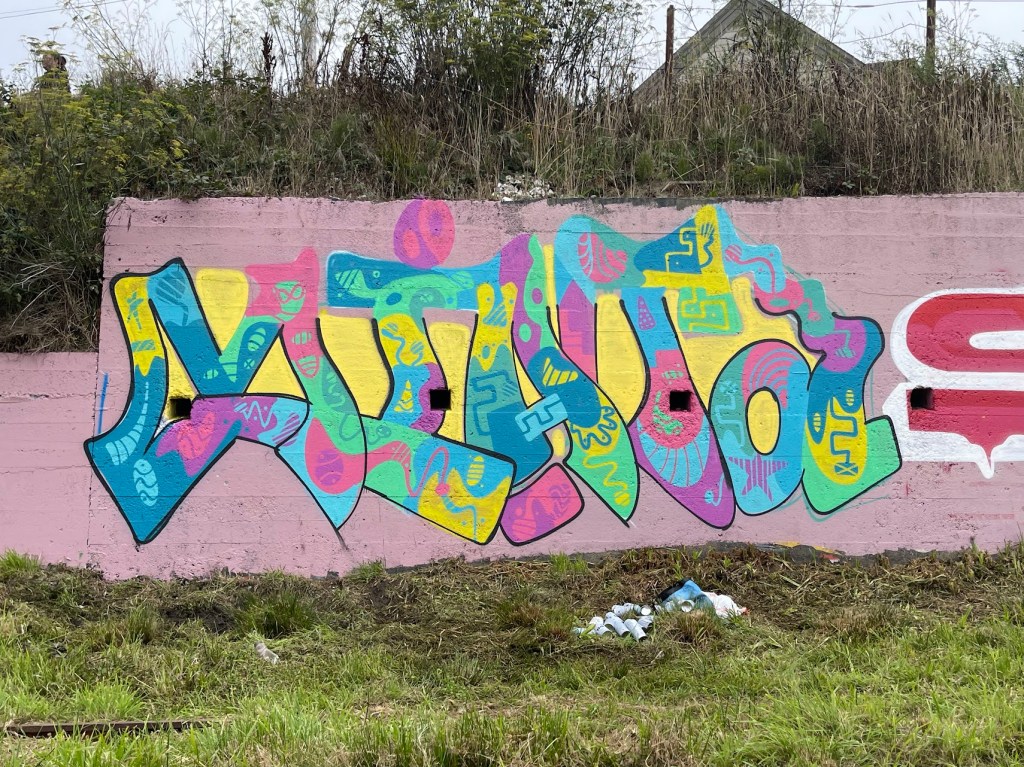


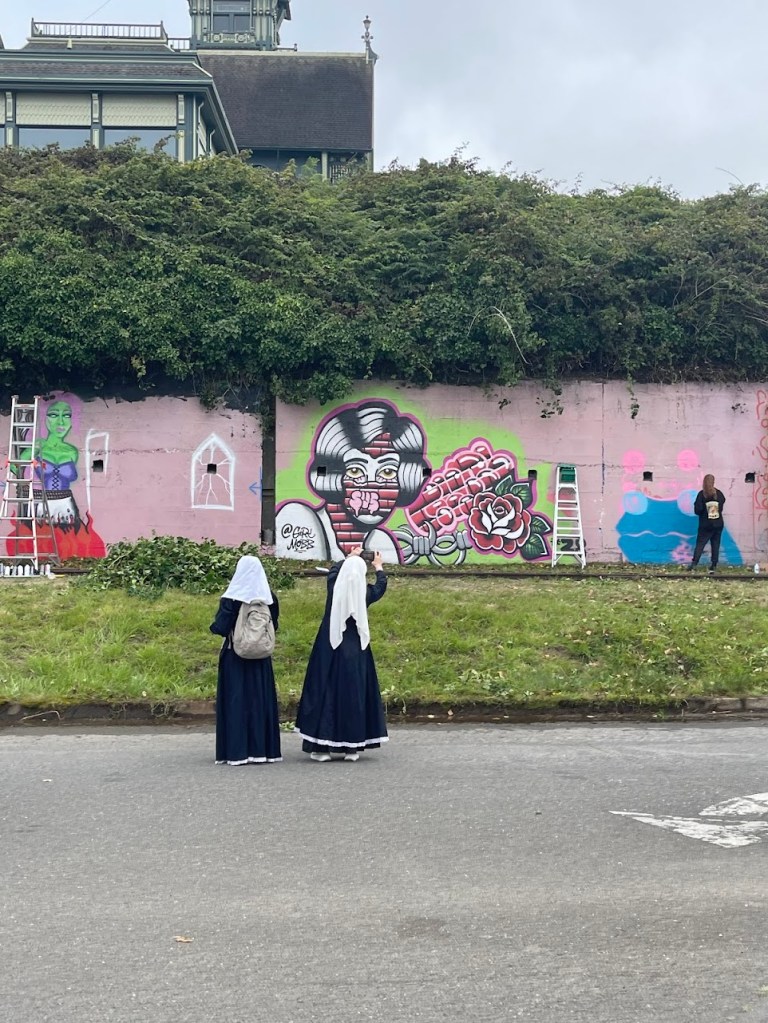


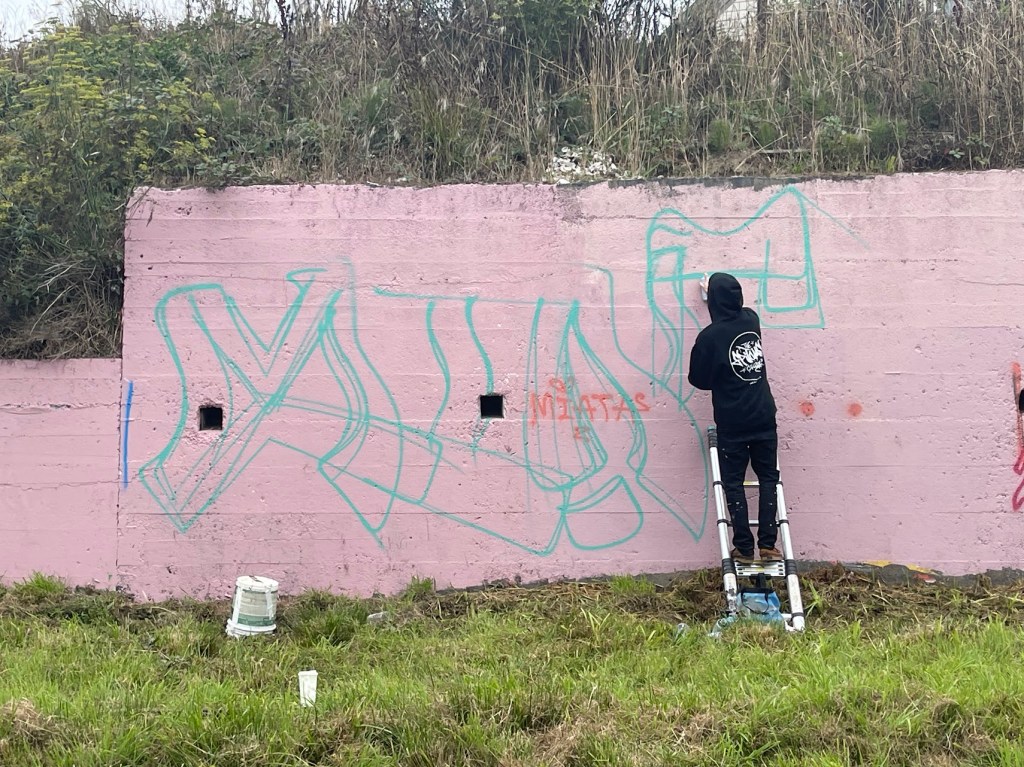

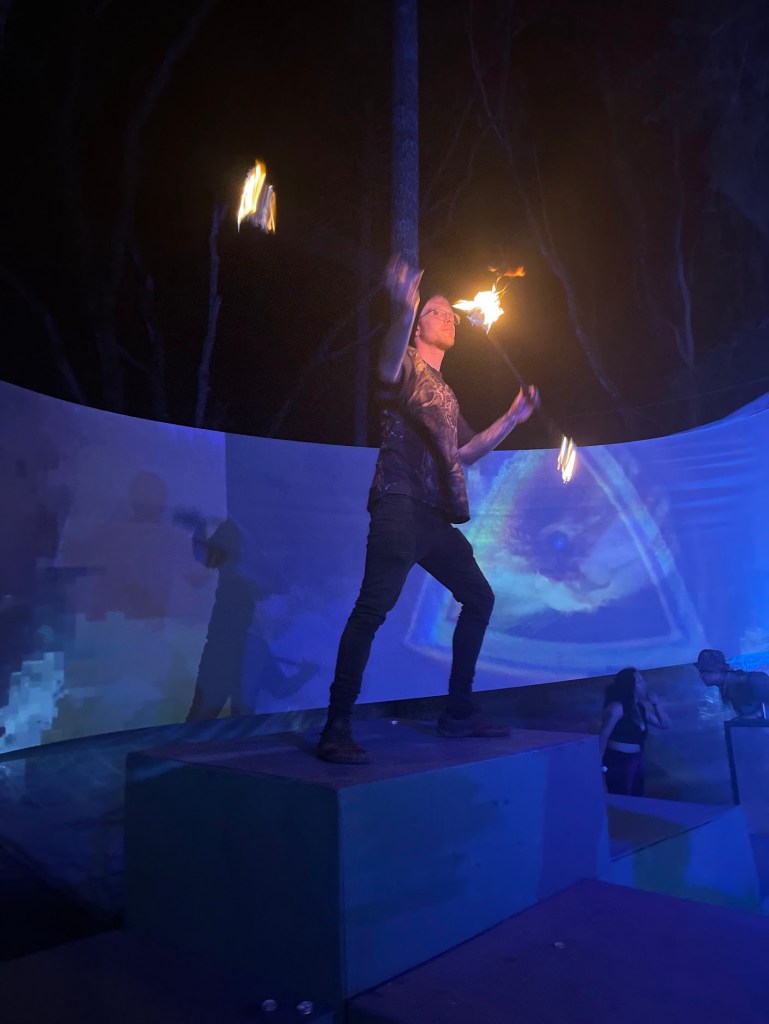


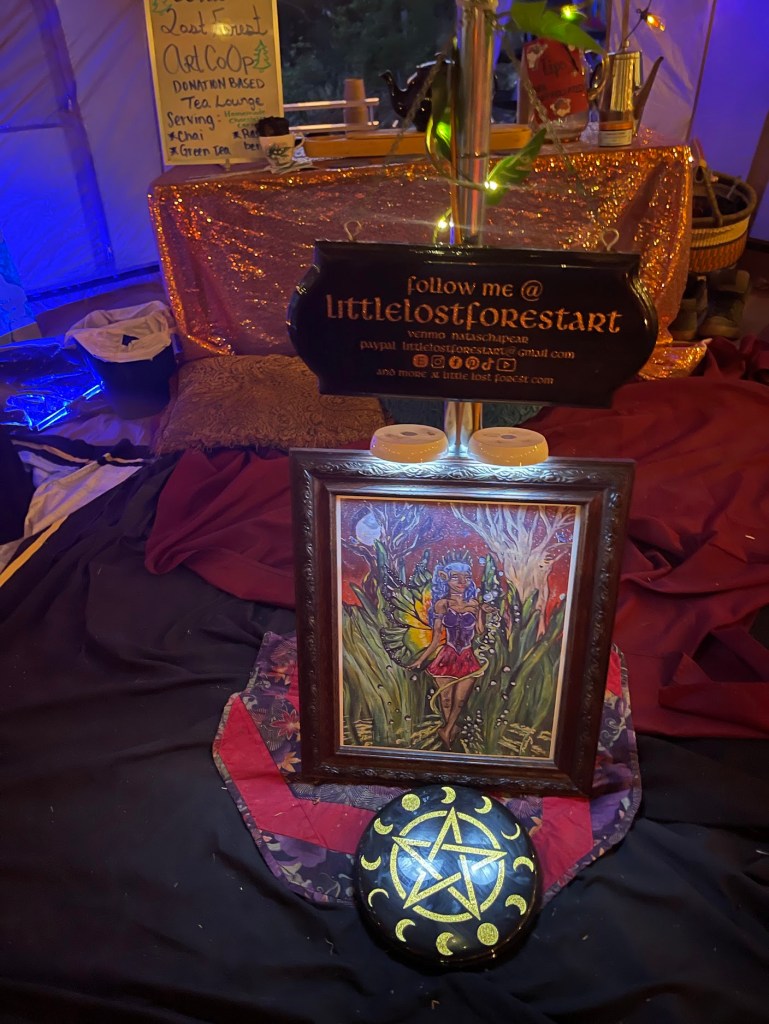
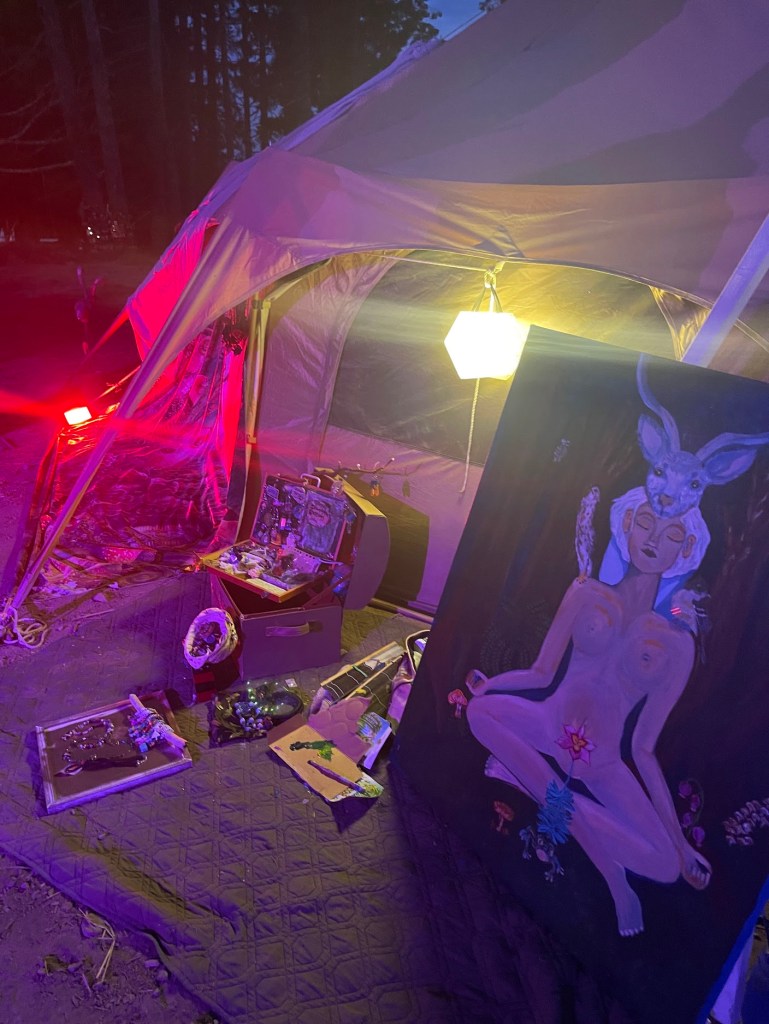


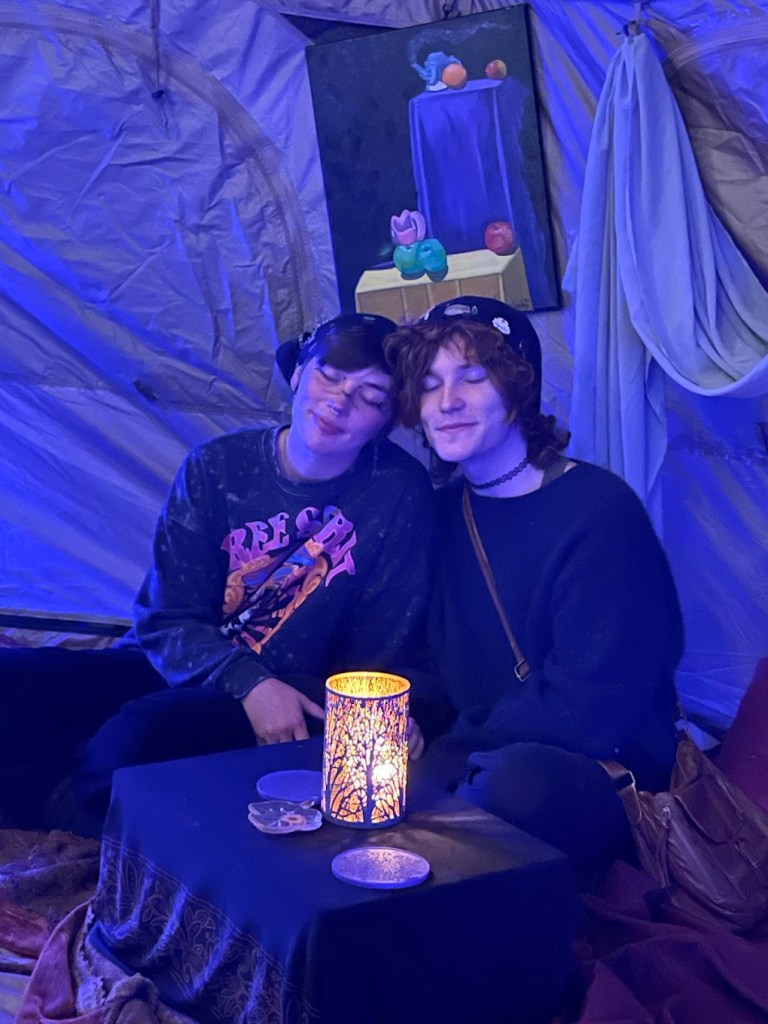


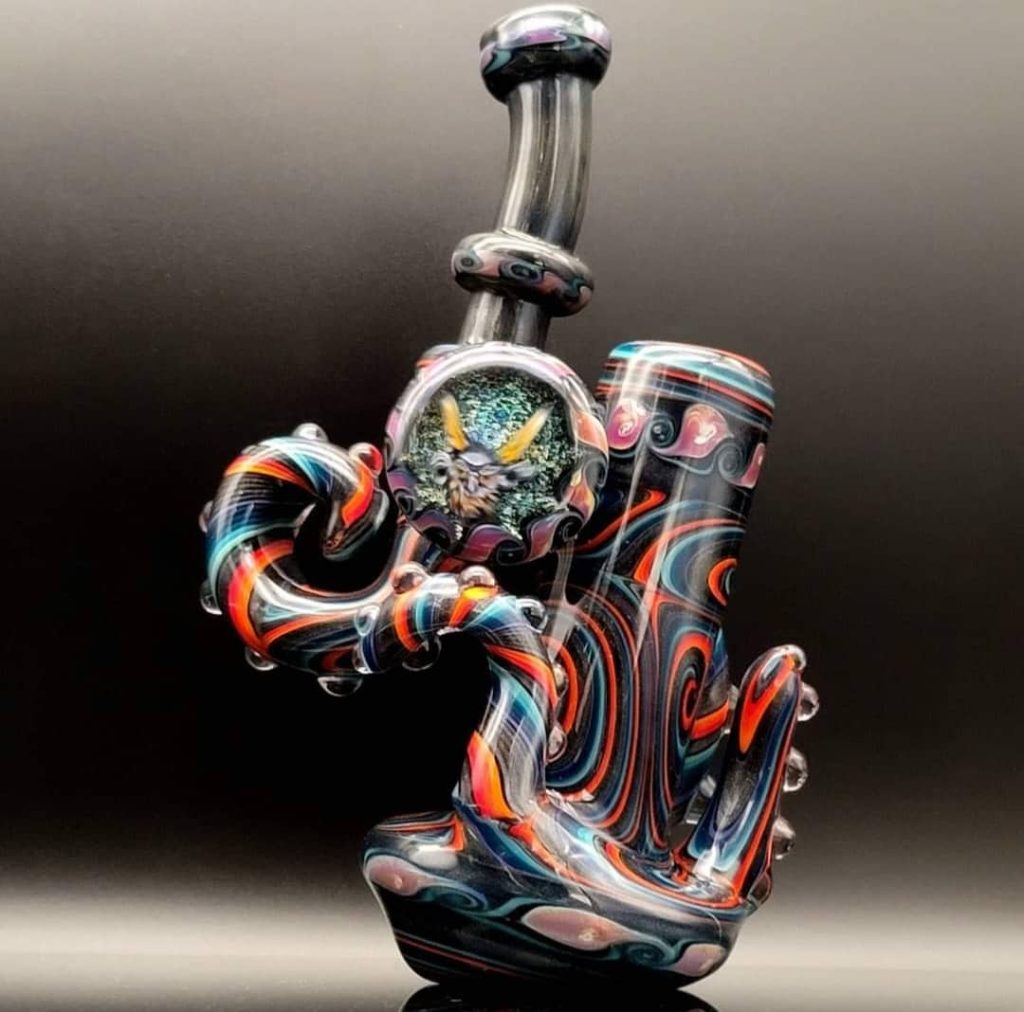


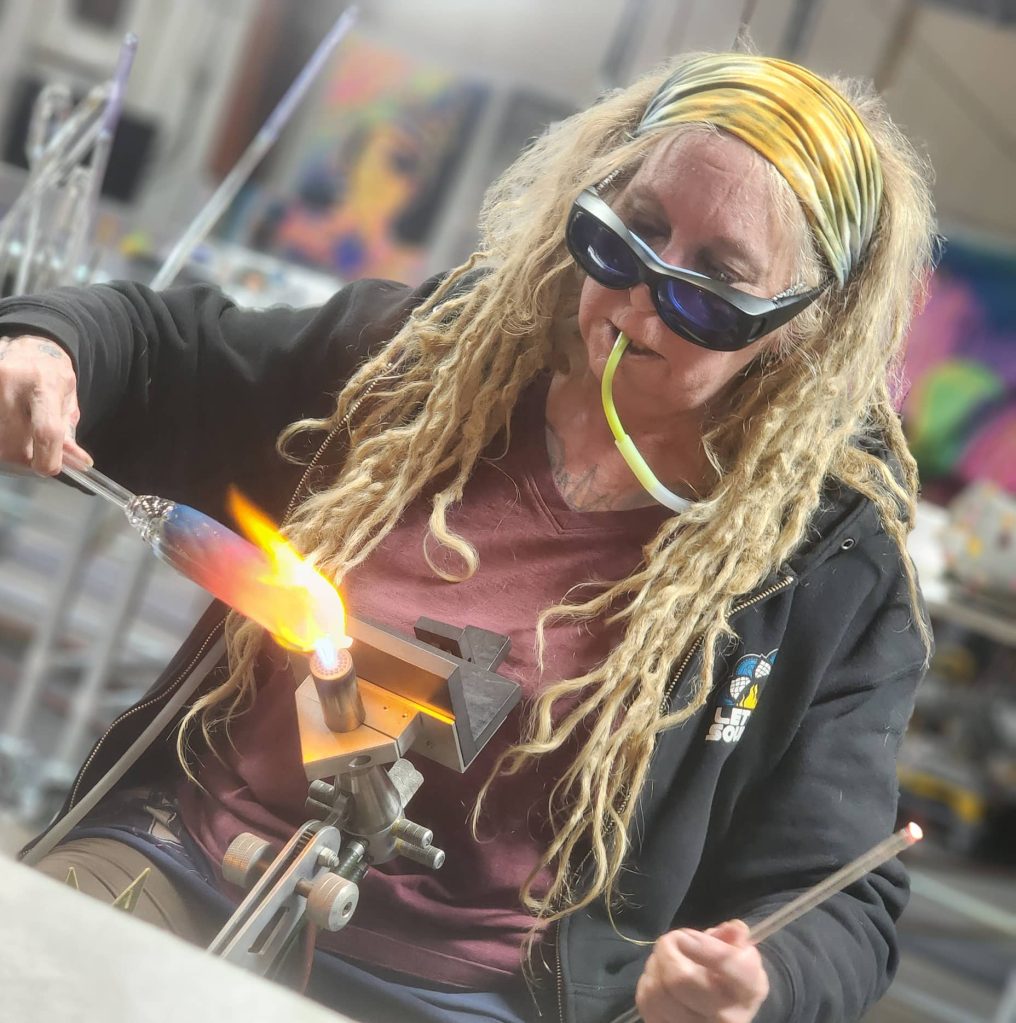

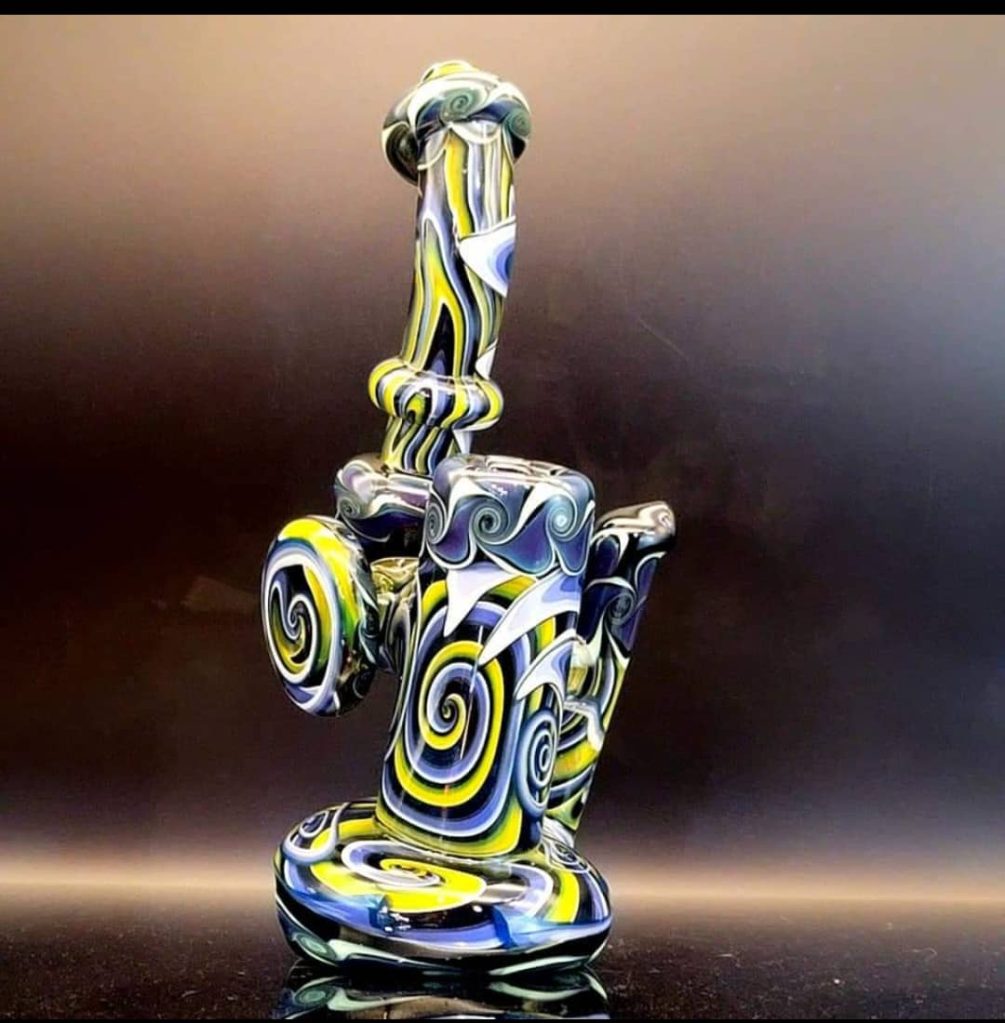





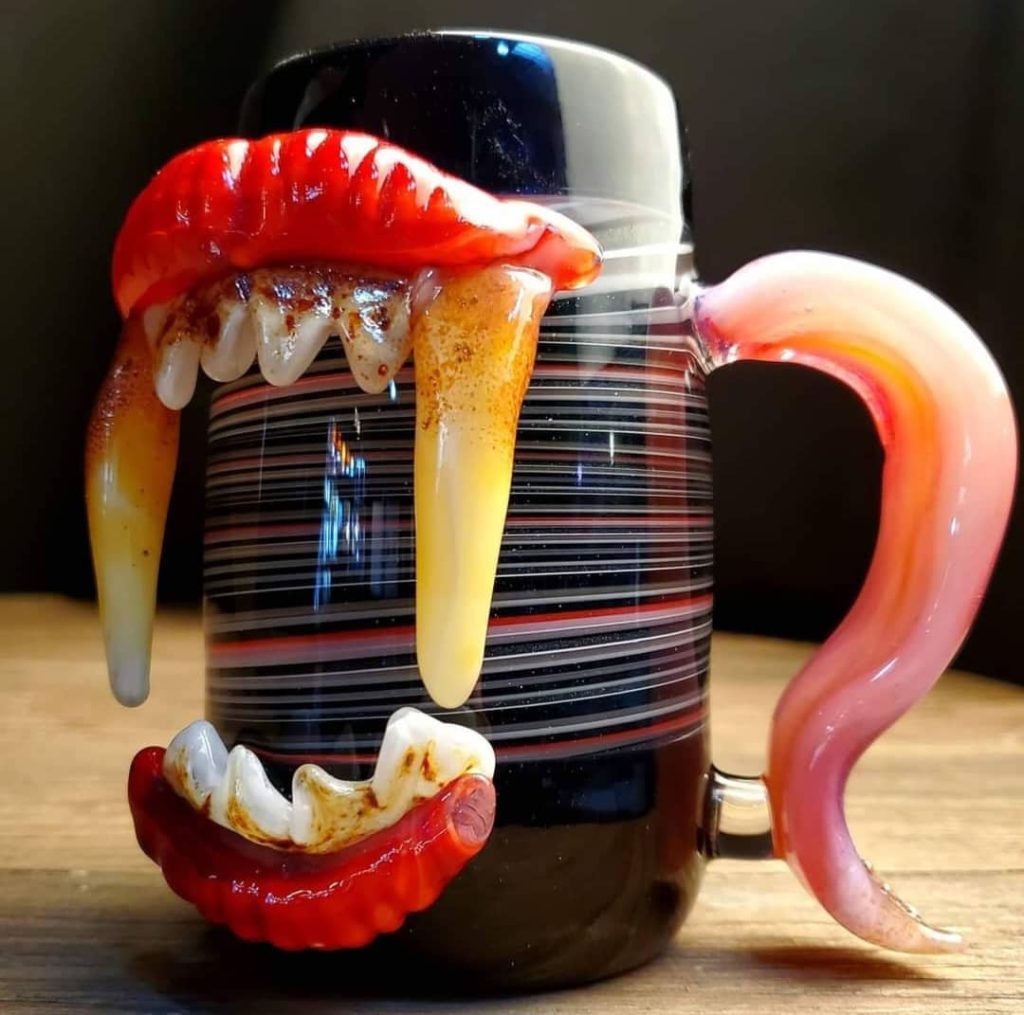

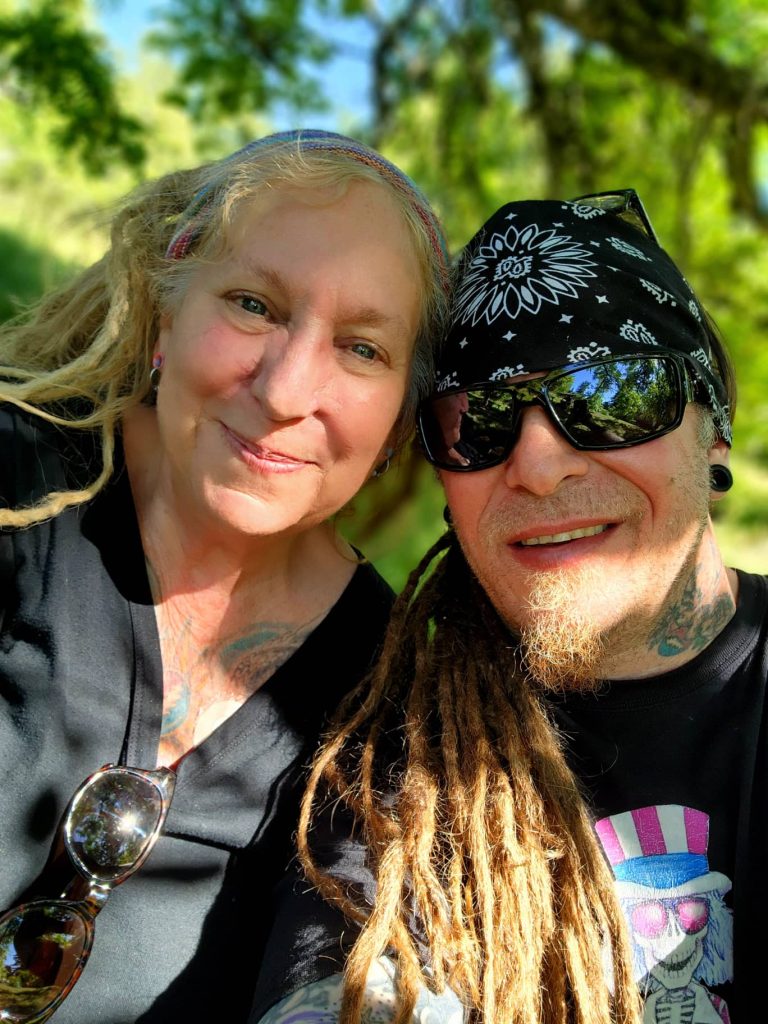
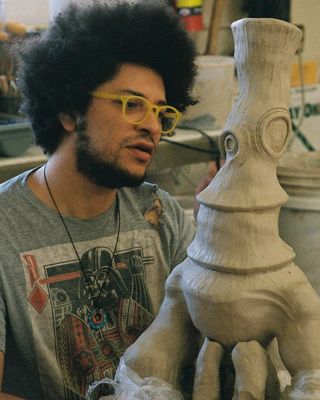


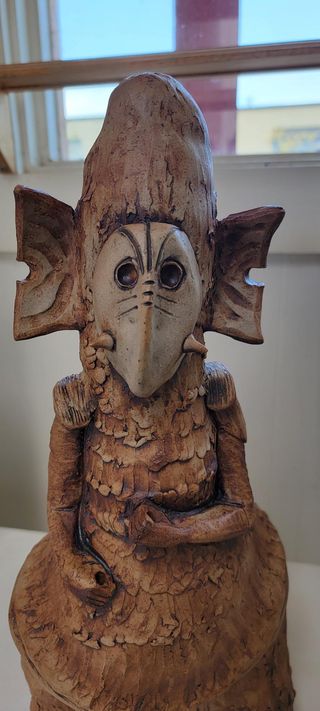

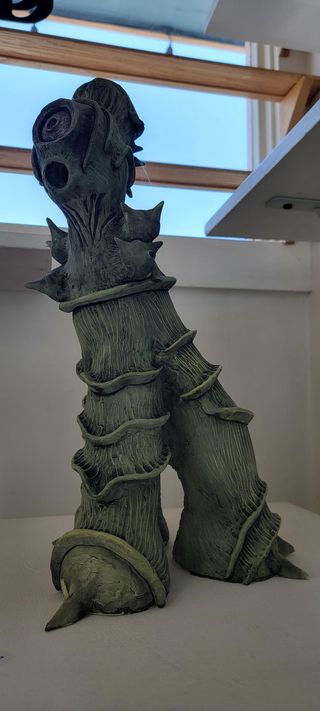

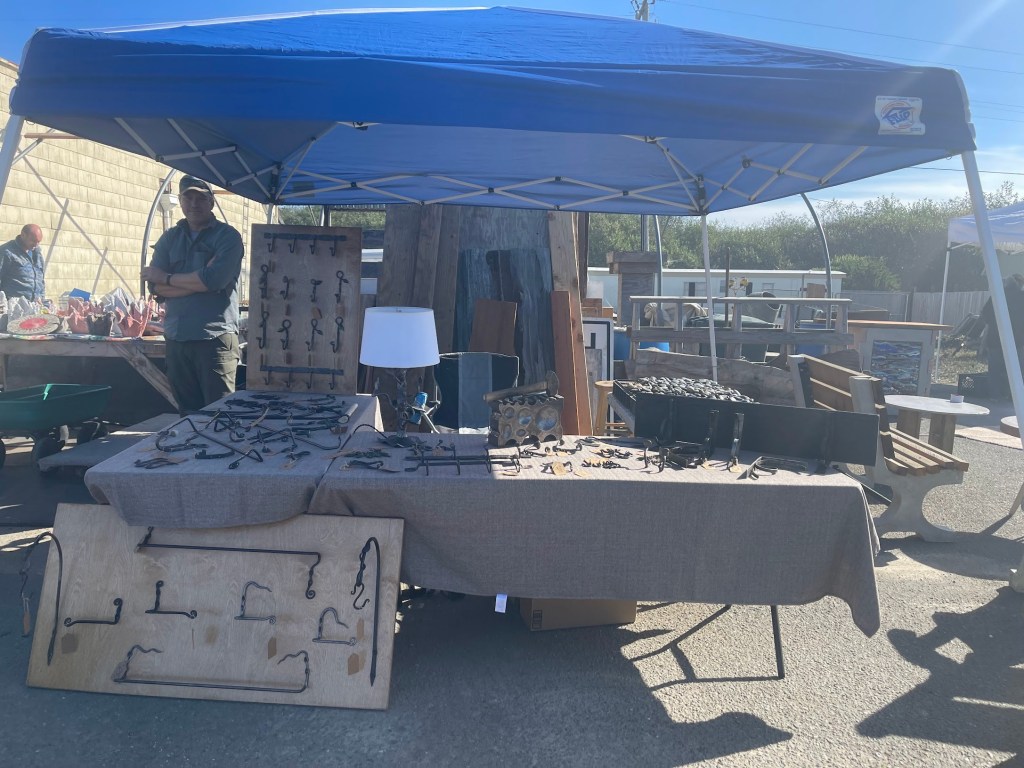

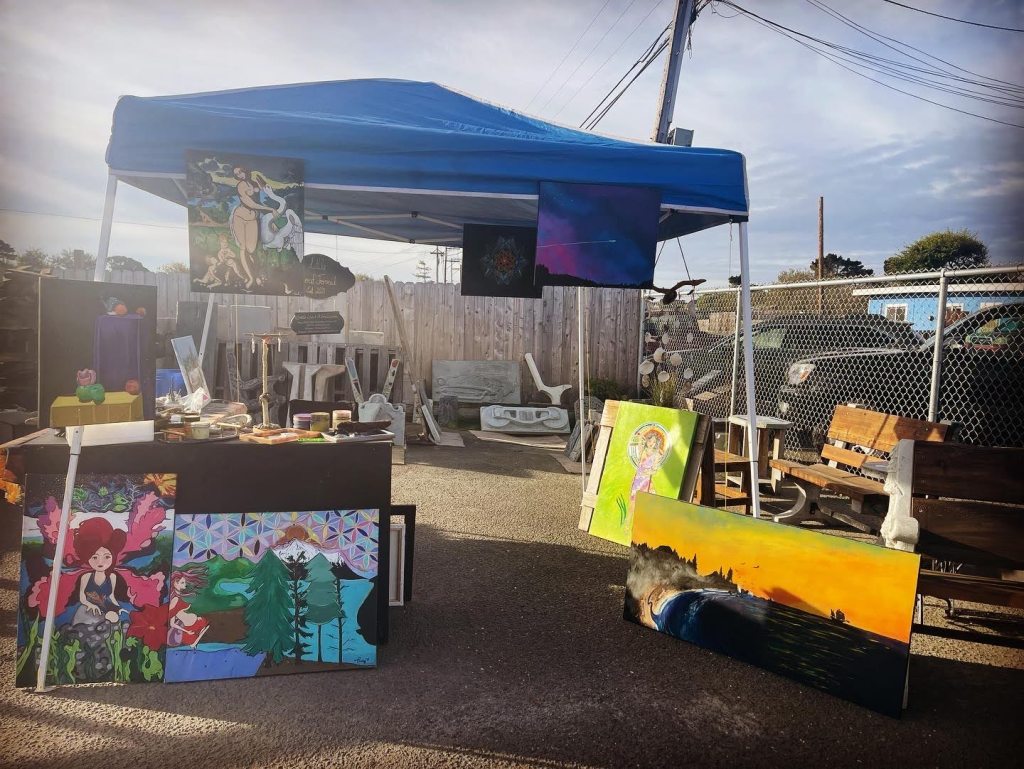

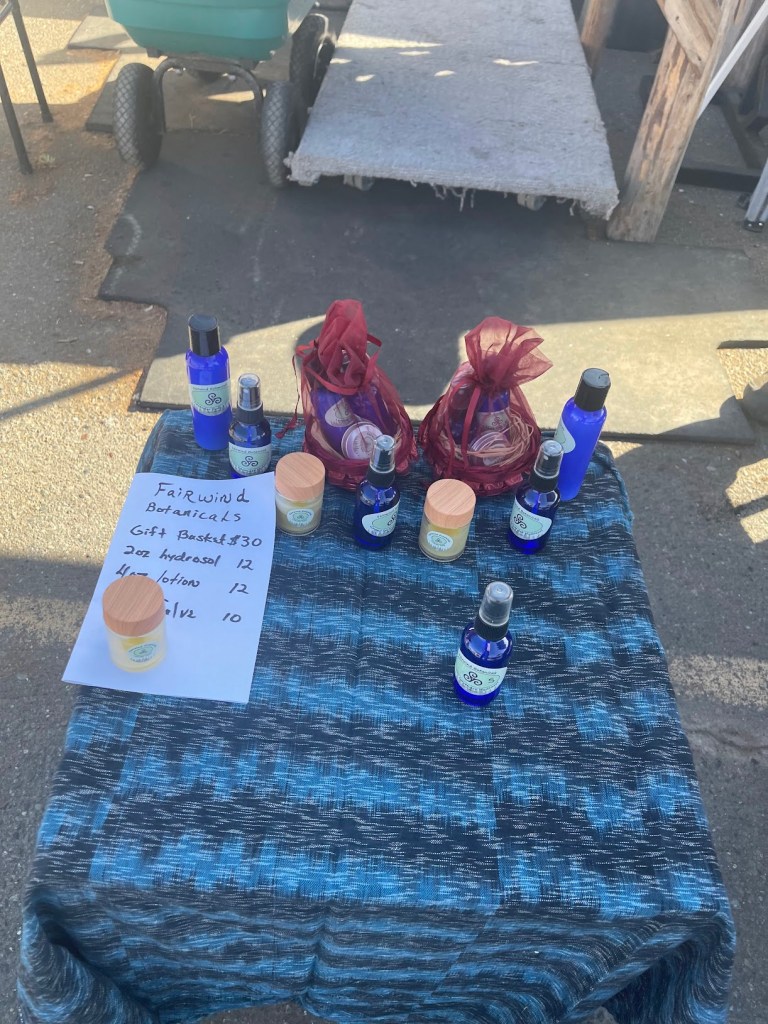


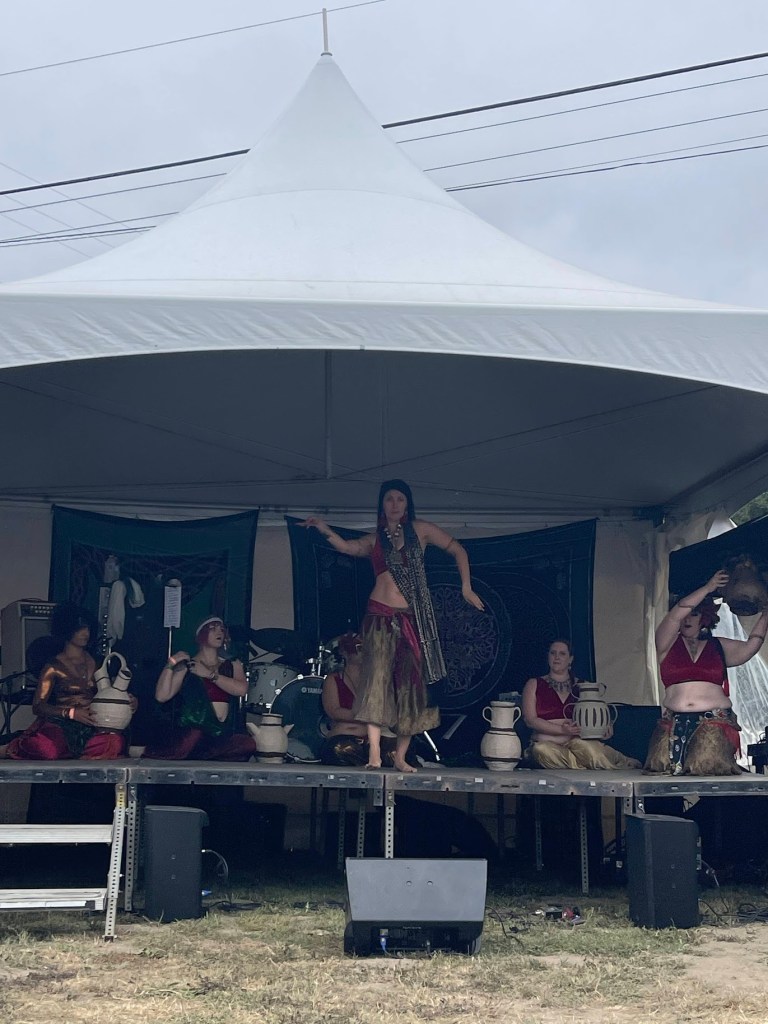
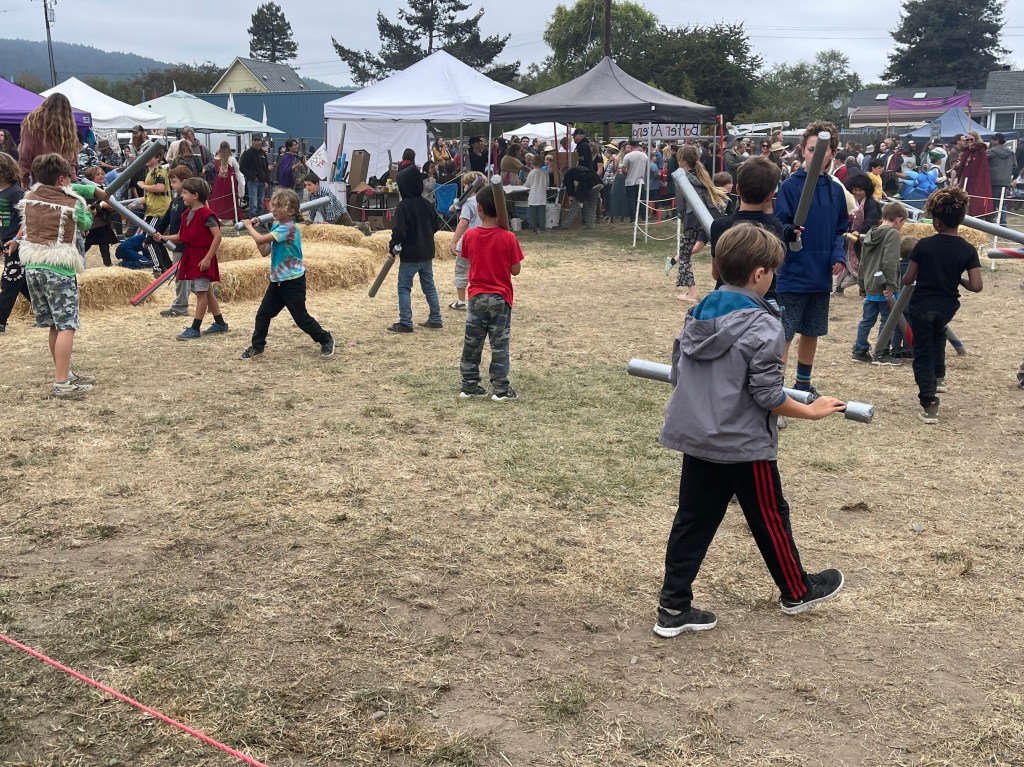


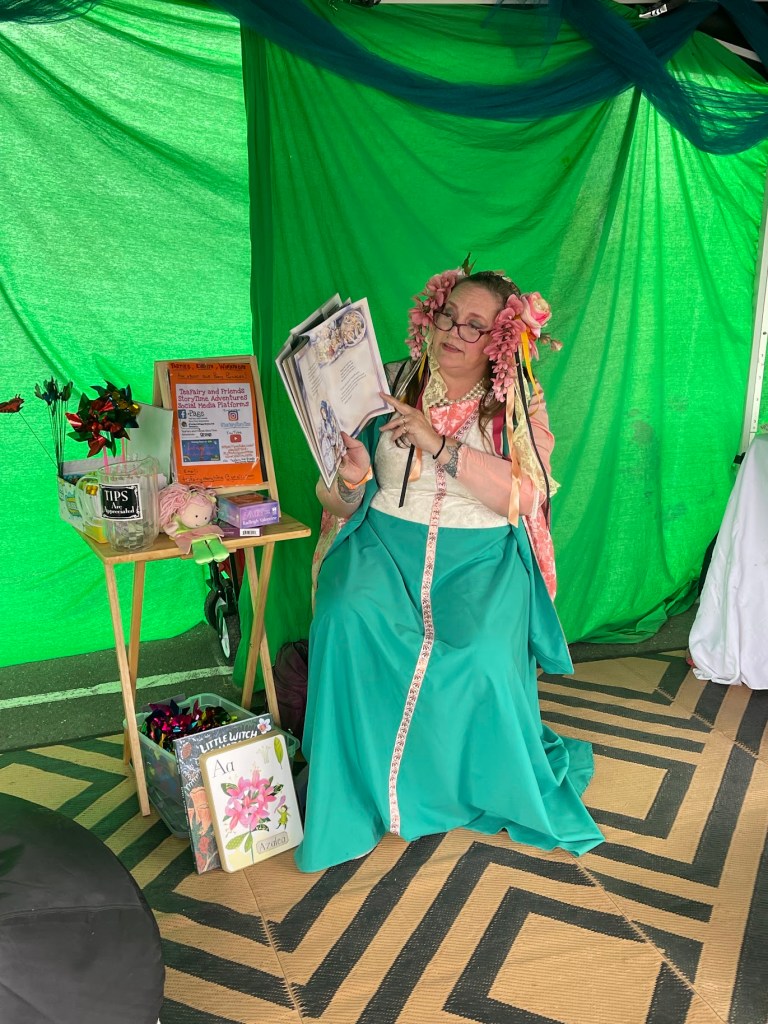

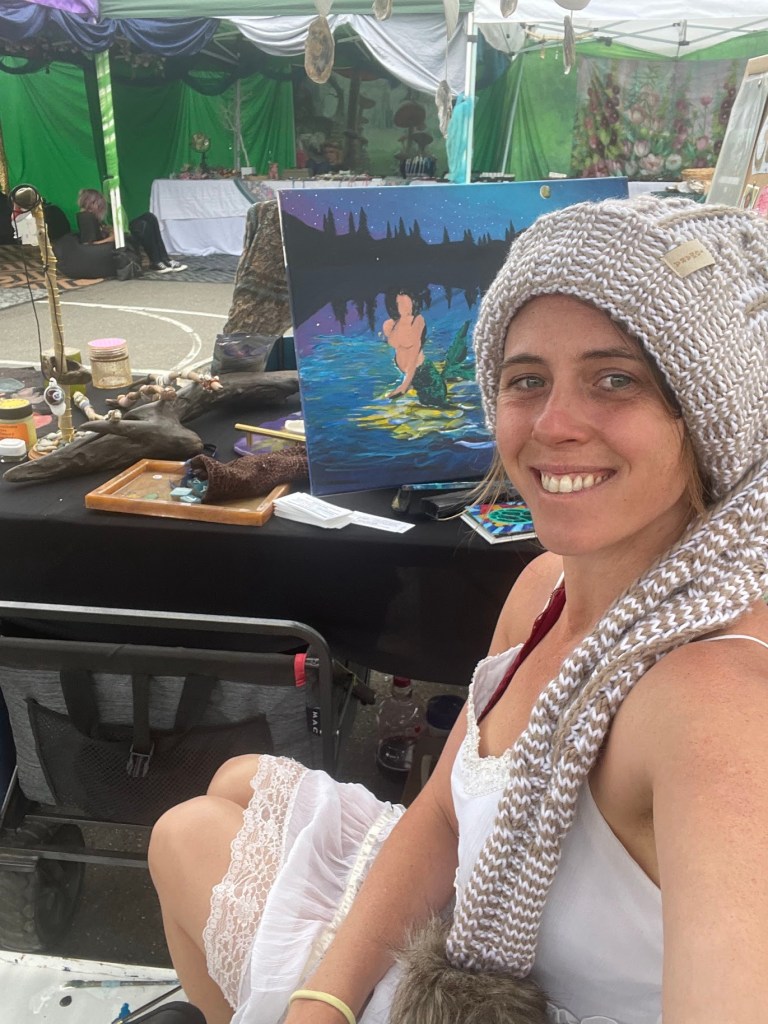


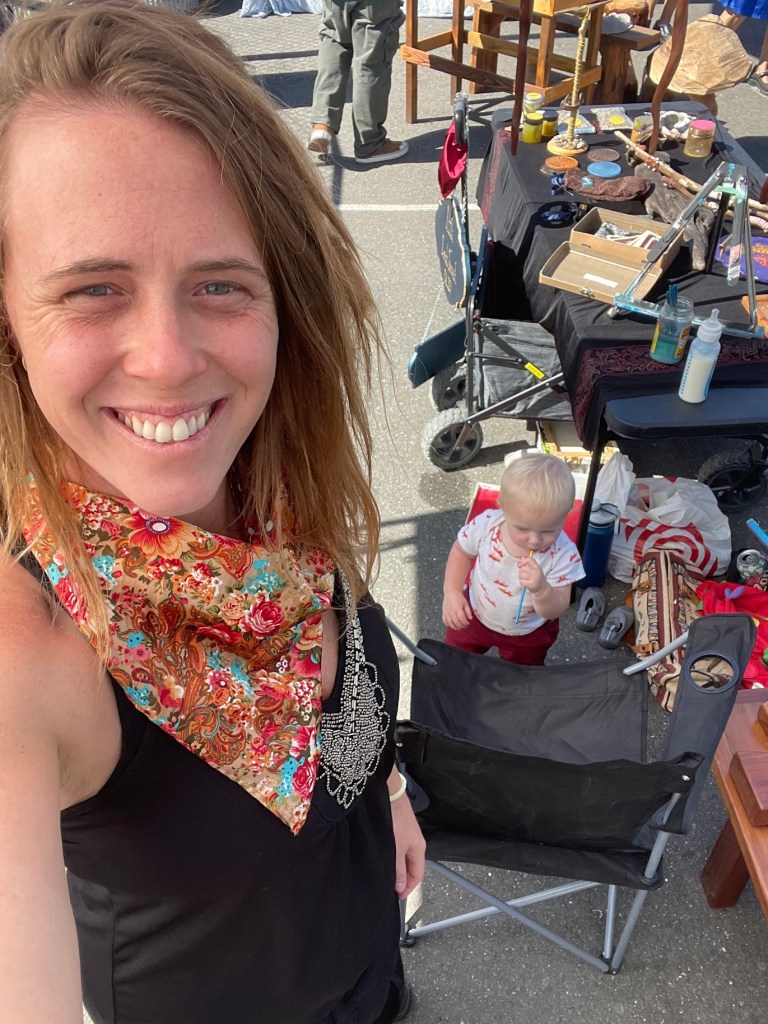

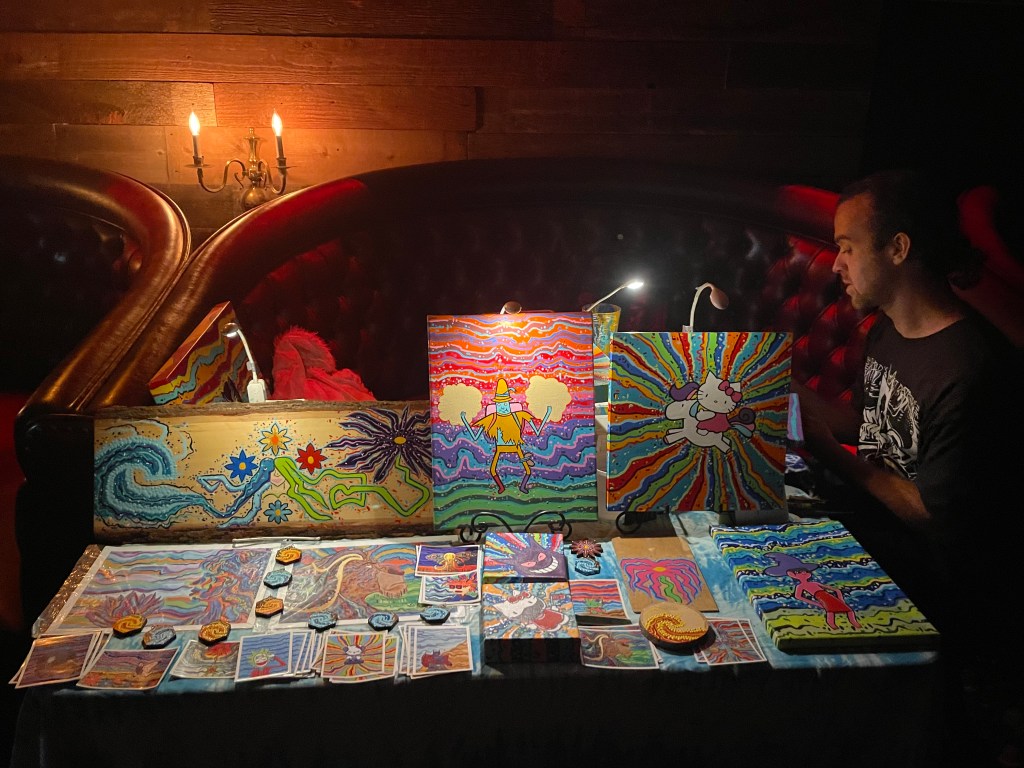
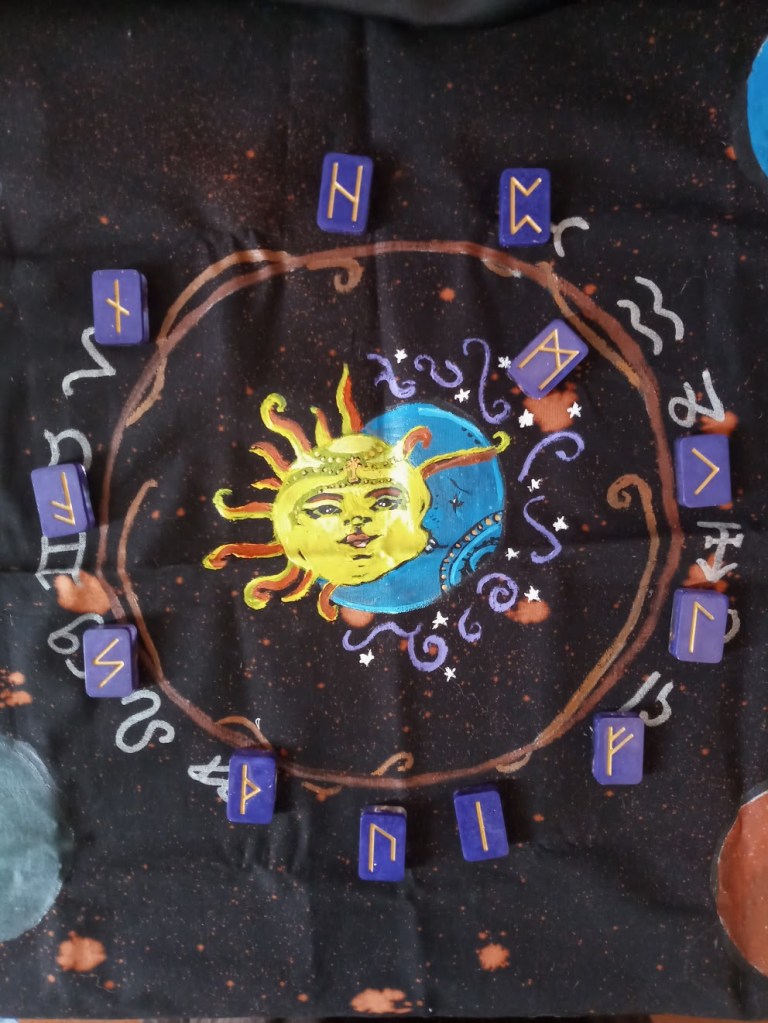


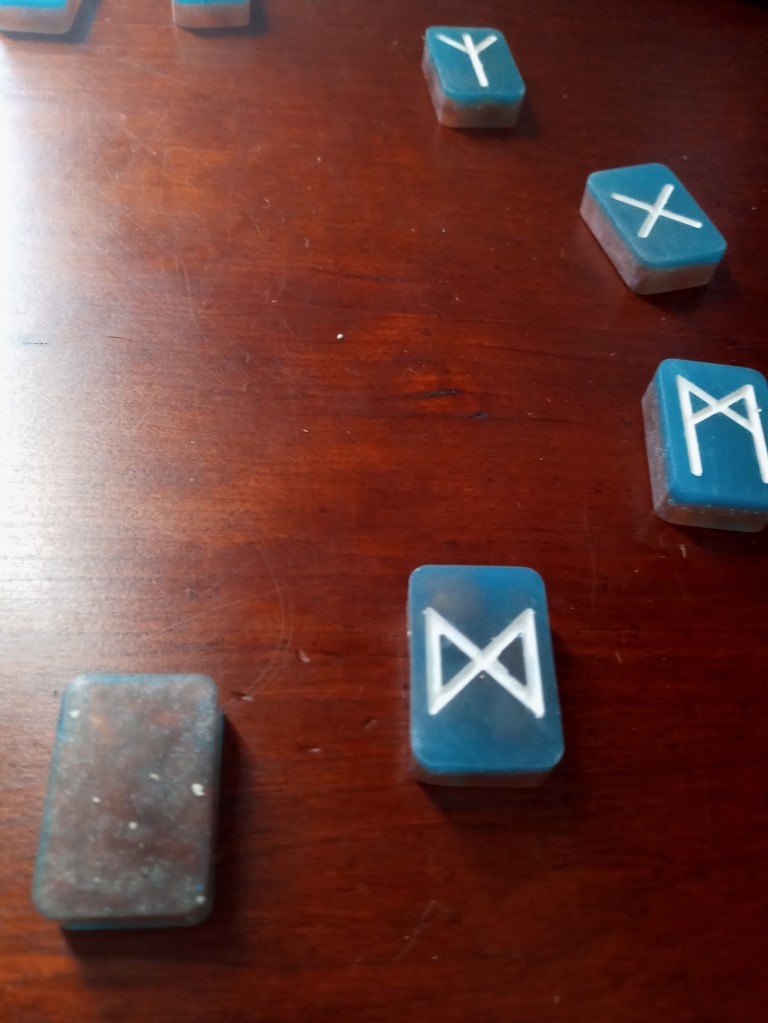
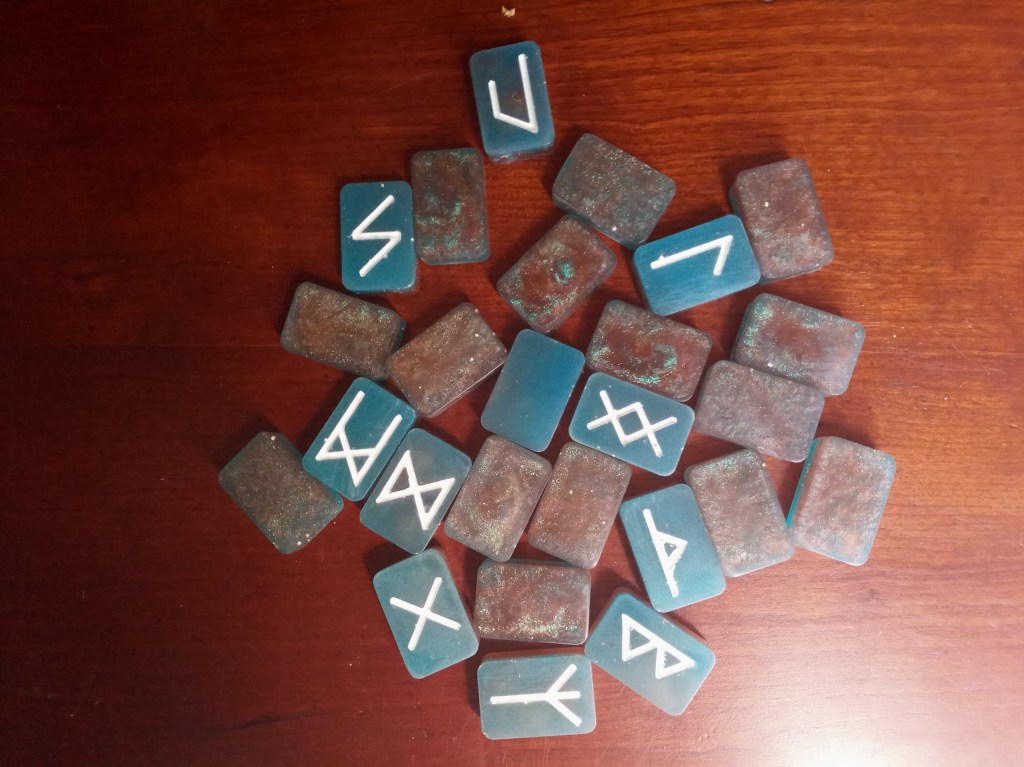

 Little Lost Forest