
The Season of Anya
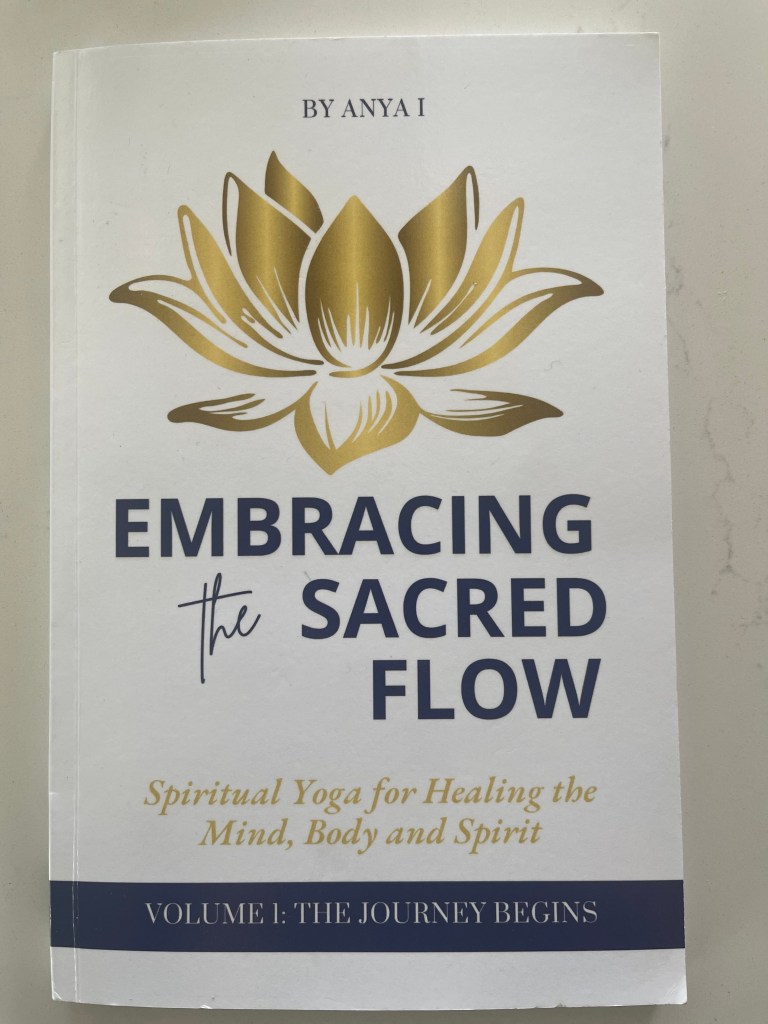
On Dec 21, 2025, I sat down with Anya, and we discussed her new book Embracing the Sacred Flow. You can find it at this Amazon affiliate link. Before we begin with the interview, I’d like to share with you the dedication:
Dedication
This book is dedicated to anyone who has ever felt broken beyond repair, lost without a sense of direction, or silently suffering through the chaos. I see you. It is never too late to reclaim your sense of self, to heal, to transform, and to set yourself free. Spirit is here to guide your soul back home where it’s warm and cozy.
Let’s dive in:
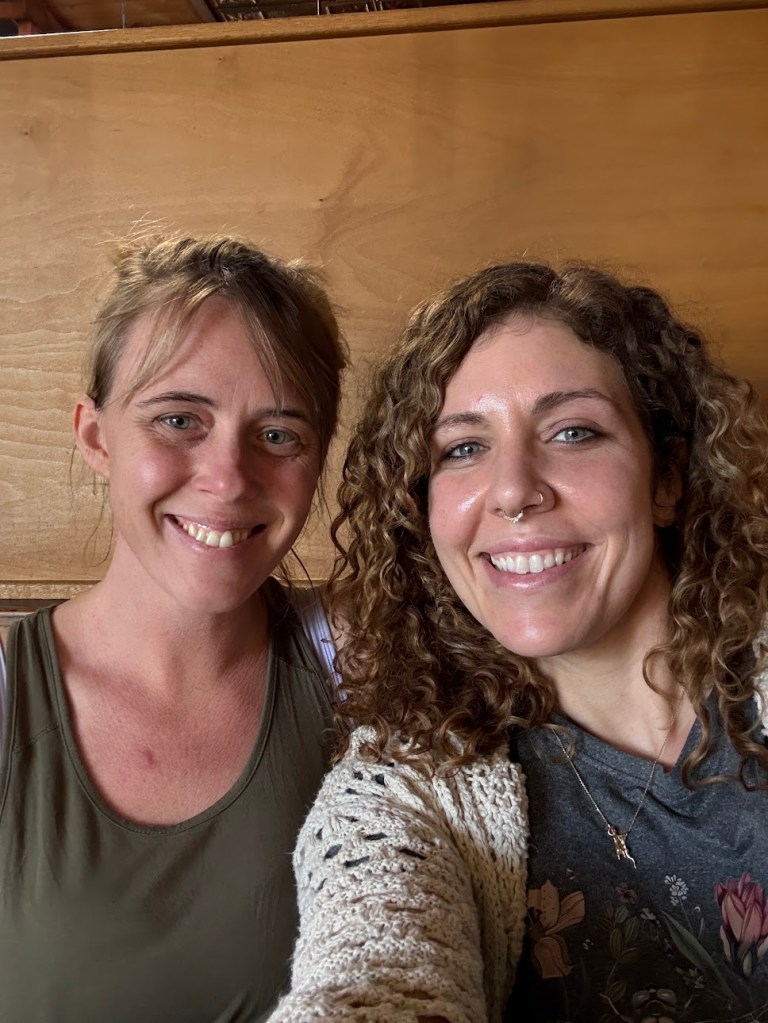
Natascha: Hello, this is Natascha with the Little Lost Forest blog. Today we will be interviewing Anya with the season of Anya and her new book, Embracing the Sacred Flow. We were sitting at the Revolution Roasters with a cup of coffee, and my son Malakai. Anya and I are doing a cross-promotion. She interviewed Spellbound earlier this month and plans to share in the next few weeks I will link the podcast here once it’s available. Anya, how are you doing today?
Anya: I’m doing so well. Just enjoying this beautiful sunny San Diego weather in December. And happy to see you, girlfriend.
Natascha: Yeah, it’s really nice to see you, too. Years of friendship has brought us here to this point where we’re both working on our businesses and our brands, and we get to talk about the different art that we enjoy. And I just so appreciate doing this with you and being here with you today.
Anya: Likewise. Likewise.
Natascha: Can you tell me a little bit about The Season of Anya?
Anya: Yeah. So basically, Season of Anya is an online community, a culmination of healing modalities that are for those of us who are looking to transform ourselves, to transform our personal identities, to maybe transform our physical, mental, spiritual health and finding ourselves. Typically, it’s a journey for those of us who are interested in spirituality. My main healing modalities with The Season of Anya are yoga, magick, and witchcraft. Yoga is for grounding. Magick is for finding that love for life. And then witchcraft is the ritual. It is the practice that ties it all together. Yoga grounds me, witchcraft elevates me and magick is everything else in between. Because life is ultimately what you make it. And so many of us just really don’t understand how much power we have to change and transform. And I am bringing everyone together to give them their own tools and create a positive community filled with individuals who wish to change themselves and the world for the better.
Natascha: Yeah, that really makes me want to self-reflect and see how I could change my life for the more positive. What got you to start this healing journey?
Anya: What got me started? It all started, probably, I mean, well, I used to be 325lbs. That was not a result of just a girl who loved food, but a girl who was in a lot of pain, a lot of emotional pain. Didn’t know how to process her trauma, didn’t have the tools and resources to just feel normal. That resulted in my weight loss journey, which was my commitment to my physical health. Why physical health? Because the three of them are related; mind, body and Spirit. Right? They all interconnect, and with finding that discipline and with finding that balance within – Then yoga came into my life shortly after, and that taught me kind of how to embrace the physical practice of yoga and learning how to feel good in my body. Then shortly after that, my spiritual practice came into act, and that resulted in me learning how to live a spiritual life so I could transform, but also remain positive and free flowing and just feel better about the trajectory of my life. Because it’s been imperative for me to understand that it is me and only me who’s responsible for my trajectory, not the course that others have set for me my whole life. Same goes for those of you tuning into this today.
Natascha: Yeah, I also started with yoga before I got into my witch practices. So that resonates with me as well. Were there mentors early on that helped you when you were most in pain, or did you find yoga and your spiritual practice on your own?
Anya: Oh, absolutely. There are two groups of people that I find really keen that helped me on my journey. First of all, it was Mel and Kaleo from Rebel and Muse. My friend Kristan invited me to their yoga retreat back in 2018, and from there I realized…how messed up I was. If we’re being perfectly honest. Yoga retreats are so awesome and empowering because they remind you that you’re in a safe space to simply be yourself. That experience slowly started my self-awareness, self-reflection journey of, “oh boy, my normal, is not everybody else’s normal”. So, that kind of was an awakening for me. With that, especially with feeling comfortable in my body and just having kind of that mirror of reflection on me help set the stage for the inner work ahead. Then shortly after I met who would become a huge mentor of mine: Taren S with the House of Witchcraft. She opened the Witches Cottage out here in San Diego, and I got to dance around the bonfire with her and our coven out there for many moons. Through that, I learned spirituality, I learned accountability, I learned healing, I learned what it was to take care of myself and to empower myself, but also how important community is and how we are truly in it for one another.
Natascha: Yeah. On the subject of community, how has your spiritual and health journey changed the way that you hold your friendships and your romantic relationships?
Anya: Ooh. That’s a great question. I feel like it’s taken the people pleaser out of the scenario- for sure. I no longer wish to hold on to what’s not for me. And also with that, though, I do give all my friends the benefit of the doubt through open communication and through being vulnerable and being communicative. I mean, the ones who get it, get it. If I bring up an issue with a friend and be like, hey, what the heck? And they respond- that’s the kind of people I want in my life. I find that romantically, it’s been awful because I realize a lot of partners don’t want to do the work, and it’s hard, especially being at this point in my journey and single. Well, I need somebody who’s at least going to match where I’m at.
Natascha: Well, that’s really important for young folks and for women of all ages to hear. We so easily will go along with what partners want from us because we want to appease them, or we don’t want to be by ourselves. By holding your energy and by being an empowered woman, you’re holding boundaries that maybe some of us put down just to get along with others.
Anya: You know, for better or worse, I sometimes- I feel like I have nothing else to lose. I’ve had some pretty horrible life experiences and with that, you know, has come strength, especially my romantic relationships. And it’s like, ‘Hey, I’ve got nothing to lose,’ so why not walk in faith and see what happens and see if I can actually stop limiting myself and create the life I deserve.

Natascha: Before we get into your book, did you want to tell us any more about The Season of Anya? What kind of content you put out, or products or things that people can engage in?
Anya: Sure! So the Season of Anya is the main hub. I’m really passionate about my free monthly newsletter. So, to those of you tuning in to this, I highly recommend you check that out. That is the heart of my blog. Uh, I know that newsletters are so outdated, but that’s where I share my monthly tips, and not only just that, but also shine light about being in tune with the world around me. I have very cute little witchy stories, I share that are just true moments of surrendering to the flow, and I love sharing those stories, and they often bring a laugh out of my audience and give them opportunities to reflect and connect. So, definitely, definitely- check that out. Then I’m also working on YouTube and social medias and trying to figure out my flow and grind with that. But it all centers back to The Season of Anya community, where ultimately, I’d like to host witchcraft retreats. In fact, next year with my friends at House of Witchcraft, we are co-hosting a retreat in New Orleans in July because I want to give that experience of retreats to the rest of the community, so you too, can learn how to open up and feel safe and vulnerable in a protected environment, an empowering environment and find yourself again.
Natascha: Yeah, that sounds like a great community experience. Does your lineage come into play with your practice?
Anya: Ooh, Great question, actually. It has been for sure. So, I’m Italian, American, first generation, and with my lineage being Italian is so much there’s so much witchcraft actually associated with Italian culture. And it’s just so funny because it’s this interesting connection of witchcraft meets Catholicism. And that was actually understanding my Italian roots, even connecting through the Italian Goddess Aradia and other deities, but specifically, she has really just connected me to the essence of who I am as an Italian American witch. And it has been a really cool journey.
Natascha: All right. Thank you so much for sharing that with us. Here I am looking at Embracing the Sacred Flow. What inspired this book?
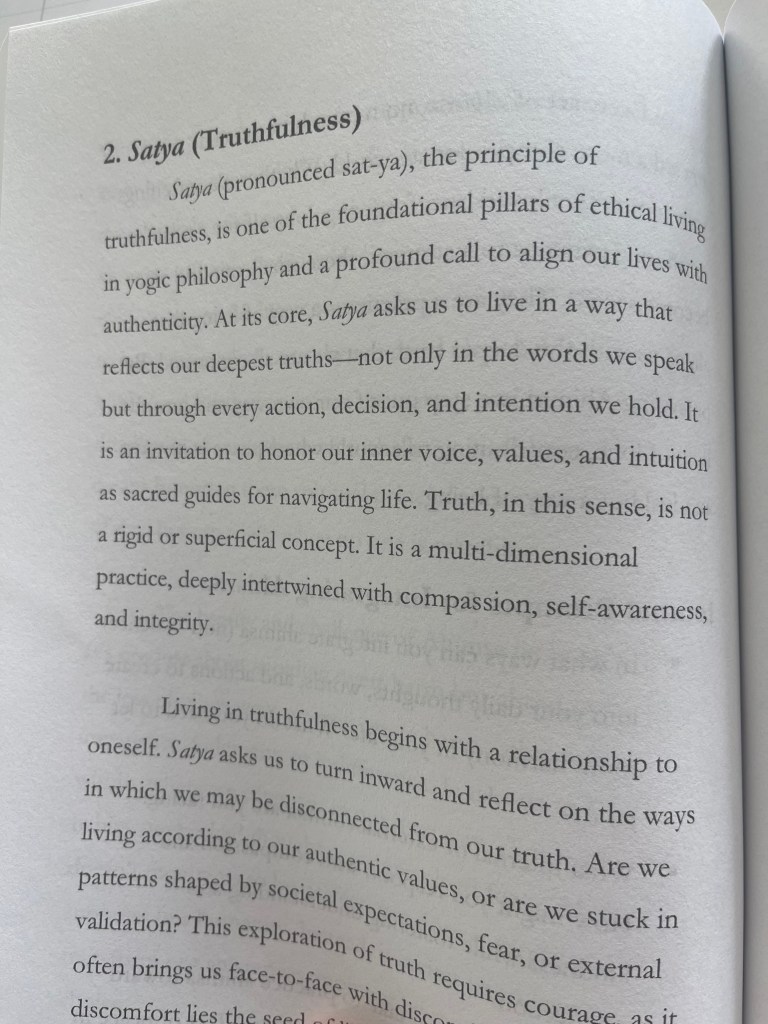
Anya: Well, you know, as somebody with really chronic anxiety and an addiction to over productivity and not learning how to just be present in my body, yoga has been a really crucial component for not only my healing journey, but also my life journey. This book kind of just goes over [that]. It’s going to be a multi-volume series. I wanted to give my audience something that’s really easy to read. I mean, honestly, you can read this in an hour or two, and it’s something reflective that gives you prompts for going inward and just kind of tips to get through your life. I talk about some breathing exercises in there. We talk about yoga philosophies, and I talk about learning how to be comfortable and being in tune with your body. Because especially if you are on the path of a witch, learning how to flow and just feel connected to yourself will always, always, always be your saving grace. It’s your anchor. It’s your life force. I’m really proud of it. I’m happy with this content. It’s a start of many, many books to come. I’m excited for you to check it out.
Natascha: If somebody follows the practices in this book, how often do you recommend that they do the yoga, do the breathing? What kind of schedule does this look like in your everyday life?
Anya: Well, yeah. Well, with everyday life, I try to make it very routine where it’s something that you can just tap into immediately. Yes, I do talk about creating an altar and the stretches and the flows, but really, I mean, it’s almost about like micro meditations because we don’t always have time for the big stuff, right? It’s learning on how to feel comfortable and not overwhelmed in any moment. As somebody who had been overwhelmed with literally everything my whole life, this is a new me, you know? But learning how to get rid of that overwhelm and just be here and learning how to release tension in your body and feel comfortable in every moment is life changing and I want to share that freedom with everyone.
Natascha: Wow. That’s amazing. I mean, I feel like if you’re working in a cubicle or if you have children that drive you crazy, or if you’re just a student that’s trying to find their way, this book could really help create a positive routine in your life and a sacred flow that doesn’t only align with the mind and body, but with your higher consciousness and creating a healthy future for the person that’s tapping into this magic. Yes. So, what’s next?
Anya: Ooh, well what’s next? Writing wise, I definitely have been sitting on a spell jars book: Spell Jars 101 book that I just need to kind of polish up a little bit. Just put my last little touches to it. And I really am excited for this upcoming book as well. You know, it’s like, okay, we learn how to tune in, we know how to stay sacred, we know how to stay connected and this book really talks about manifestation. And it demystifies the practice, a little bit of witchcraft, of spells and workings. Because it’s not about sitting at your altar, it’s about getting out there too and doing the work. You want a better life, you got to do the work…while adding a little witchy twist to it. That makes it my own. And I feel like Spell Jars 101 takes a fresh approach that you haven’t seen in your standard witchy books.
Natascha: That’s wonderful. Thank you so much for being an outstanding witch, doing positive work, light work, spiritual work, tuning into the body, soul, and mind. Is there anything else you’d like to share with us before we end the interview?
Anya: No, just go ahead and check me out on my website, subscribe to my free newsletter, and I promise your life will be forever changed.
Natascha: All right. Thank you so much.
Anya: Thanks, girl!
www.theseasonofanya.com to sign up for my free monthly newsletter, blog, and be the first to know about my upcoming witchy retreats.
https://www.youtube.com/@theseasonofanya
 Little Lost Forest