Happy Winter Solstice!
December has come, and rain has poured, which, to us enthusiasts, means the mushrooms are popping! We have done some local exploring over the past two weeks, and I have some pictures from Redwood Fields to share with you. We did not forage these mushrooms (#takepictures, #leavefootprints) but spent time locating and identifying them with our two-year-old helper, Malakai!

They say kids are better at finding mushrooms because their eye level is closer to the ground! All the reason to take your young ones out mushroom hunting!
If you are interested in the basics of mushroom foraging please check out my blog post Foraging Mushrooms in Humboldt County.
When entering Redwood Fields, we turn right to the back of the parking lot where the trailhead begins. When hiking this trail, it’s easy to get lost in time and space, so note where you’re going. This trail is less maintained than others and has a roughness that I appreciate. Many fallen trees aid in the production of fungus and flora. Here is what we found.
All of these fungi are inedible to my knowledge.
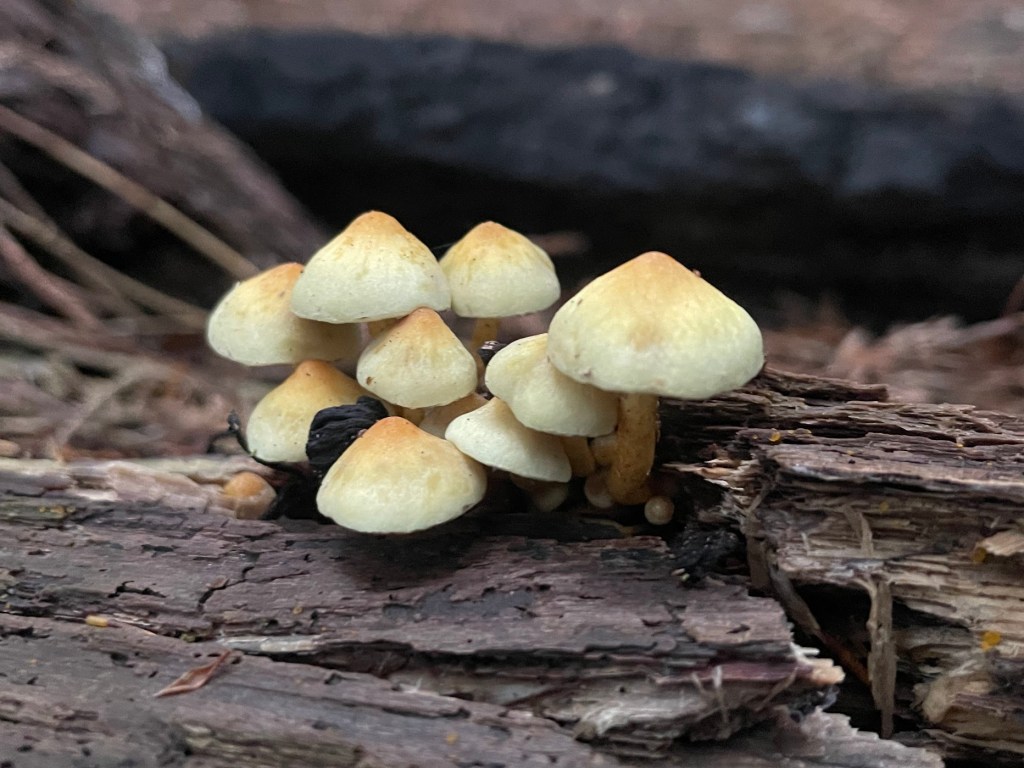
Hypholoma fasciculare, also known as Sulphus Tuft, grows from wood, stumps, or roots and is a beautiful reminder to check tree growth for clusters.

Above is another photo we got of the Sulphus Tuft.
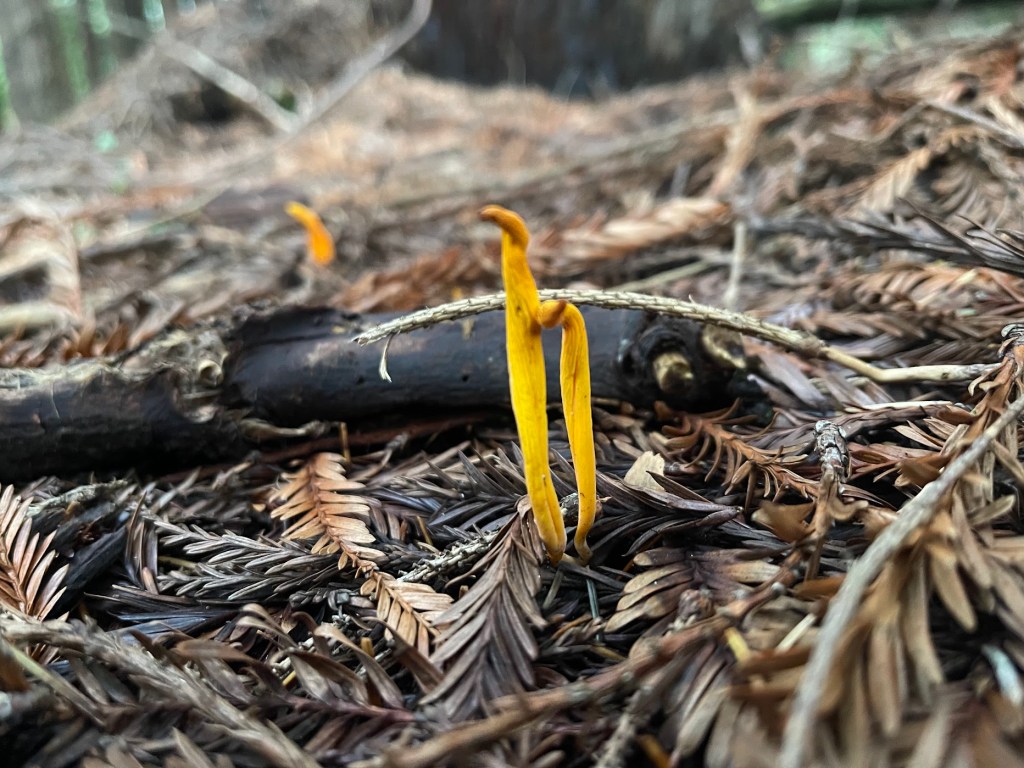
Clavulinopsis Laeticolor has a solid yellow ochre color and has a wiggly alien look growing in tall, thin towers coming out of the hardwood undergrowth.

Hygrocybe Punicea are related to agaric, meaning they are gilled and part of the Hygrophoraceae family. They are locally known as scarlet waxy caps. They are beautiful in color and shape.

Here is a scarlet waxy cap whose gills are upward; this is to release all of its spores at the end of its life cycle before decomposing back into the earth and reiterating the ground around it for the new generation of mushrooms to sprout.

This is also a Hygrocybe Punicea!


This slimy, narly orange mushroom pouring out of the ground (to the left) is the starter of a Hygrocybe flavescens, also called a golden waxy cap. As you can see, this mushroom pushes up from the ground to disperse spores in its fruiting body; this part of the cycle is called the primordial formation. To the Right is the Hygrocybe flavescens in its midlife progression.

We came across a little patch of Infundibulicybe gibba al, a common funnel. This mushroom may resemble a Clitopulus Prunulus (the Sweetbread mushroom), but you can tell, unlike the Sweetbread mushroom which has a thicker lip, the Common funnel reaches its name by concaving inward with a thin lip.
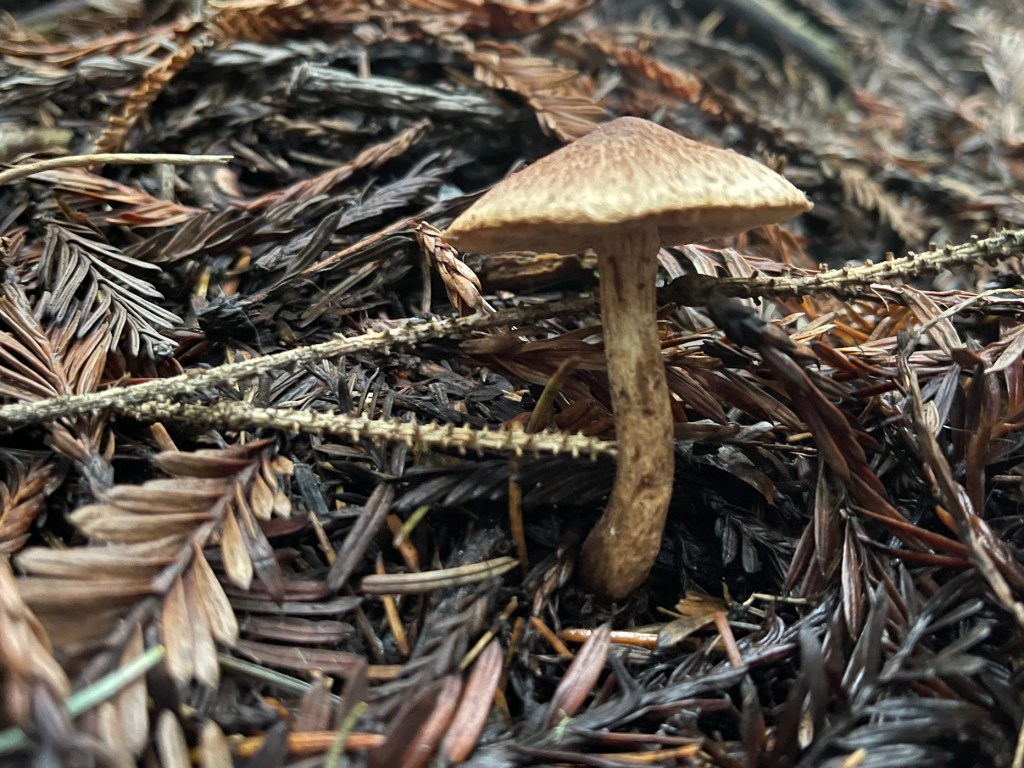
I could not correctly identify this mushroom (#10). I believe it is a Lepiota. As you can see in this photo, it is an older mushroom. Not all mushrooms curl up at the end of their life cycle, or they could have died before it was ready to dispense their spores. Mushrooms are more identifiable when a picture of their gills, stems, and overside is captured.
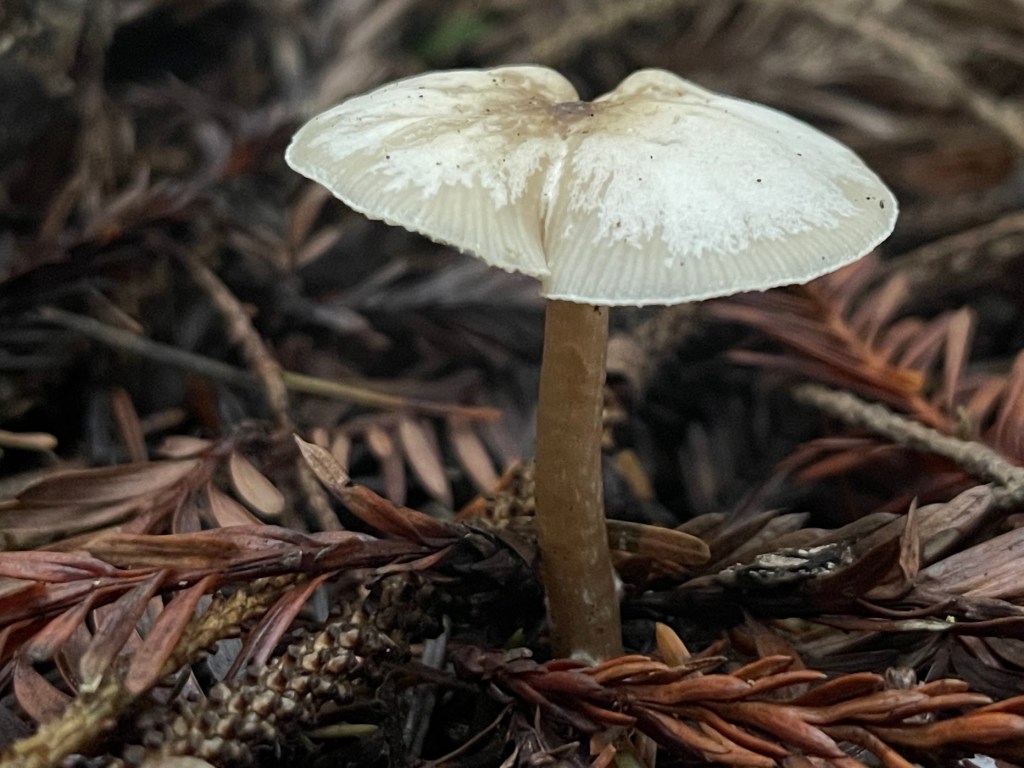
I couldn’t even get close to identifying Mushroom 11.

The Alice in Wonderland mushroom, scientifically known as Amanita muscaria, has a minor toxin and can be dangerous. I don’t recommend processing it without extensive knowledge. It is known that North American medicine healers would gather the urine of reindeer that took on the hallucinogenic properties of the Amanitas and drink the substance to create a spiritual journey.

I’ve identified this mushroom as the Russula Xerampelina, or the Shellfish-scented Russula. Many types of Russulas can easily be identified by their deep rose color that varies in shades and thick white gills.

The mushroom above (Mushroom 15) remains unidentified but feel free to leave your thoughts in the comments!
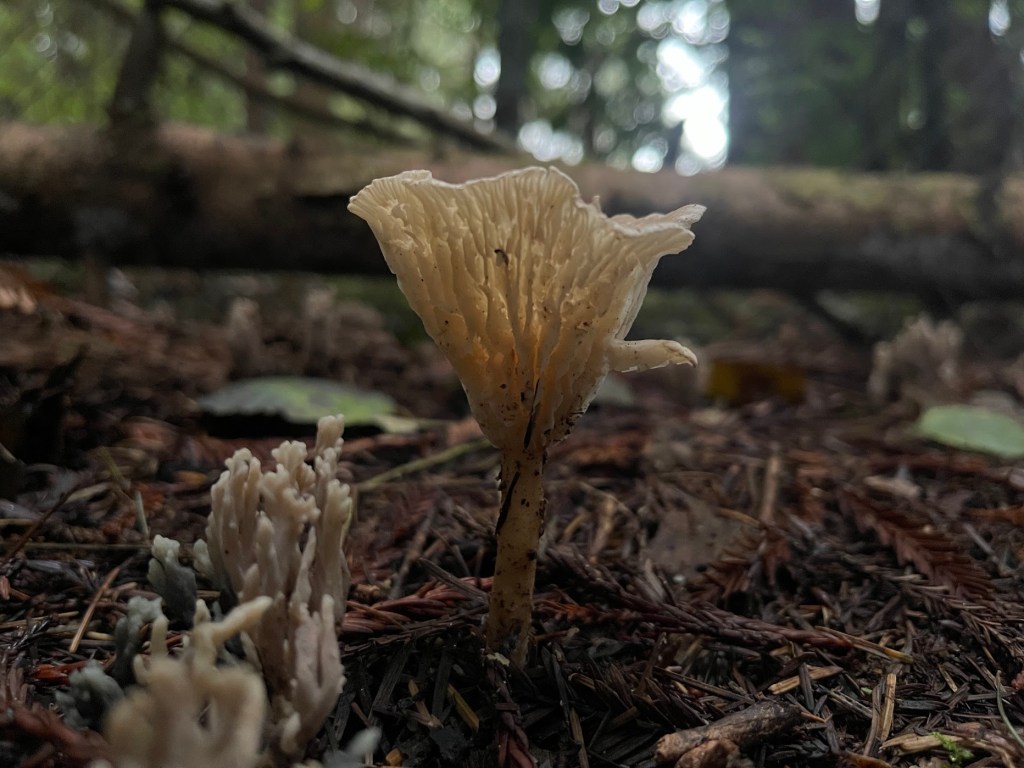
The tall, thin fungus on the left side is the Tremellodendron pallidum or Ttremellodendron Schweinitzii; its street name is the Jellied False Coral. It is not actually in the coral family but in the Jelly because of the microscopic structure of its spore-producing basidia. The centered mushroom in its late stage is not remarkable anymore, but looking at the next photo, I assume they are the same fungus species.

This beautiful white mushroom is the Cuphophyllus virgineus, also known as the Snowy waxcap. This cap is rounded until it ages and flattens as it is exposed upward. In this photo, it resembles a blossoming flower.

Interestingly enough, this mushroom is devastating the forest. It’s called Heterobasidion annosum and causes root rot commonly in pine trees. It is responsible for one billion US dollars annually, according to Wikipedia. This virus usually is infected with fresh cuts in the tree and spreads through the roots to neighboring trees and by insects. It causes large cavities in the roots and lower stems, and when the tree dies, it creates gaps in the canopy, affecting the area’s moisture and the sunlight, impacting the lives of the forest critters. After the tree dies, the fungus lives in the stump and spreads. ScienceDirect.com says this fungus originates from Laurasia. This fungus is hard and dark brown, which can turn black with white polypores on the underside.

Tyromyces chioneus, whose common name is White cheese polypore, is the cause of white rot in birch trees and most hardwood trees. It is also necessary as a deadwood decomposer. A polypore is a shelf-like fungus (instead of a mushroom’s stem) that’s spore-producing cells line pores. This white shelf fungus can be found individually or in clusters of 2-3.
Thank you for reading and I hope this information is accurate and helpful while you explore Humboldt County forest!
References:
https://www.mushroomexpert.com/
 Little Lost Forest