Life is a trip. After living in our Eureka home for five years, we’ve finally started cleaning out the garage. I sorted through the kids’ toys and learned plastic toys are apparently the number one thing thrift stores no longer want because they already have too many. My eldest has three sizes of clothes ready to part with. Everything is boxed, labeled, and separated. I sorted my own clothes from years of hand-me-downs. I donated half-used art supplies and unfinished paintings to The Maker’s Apron.
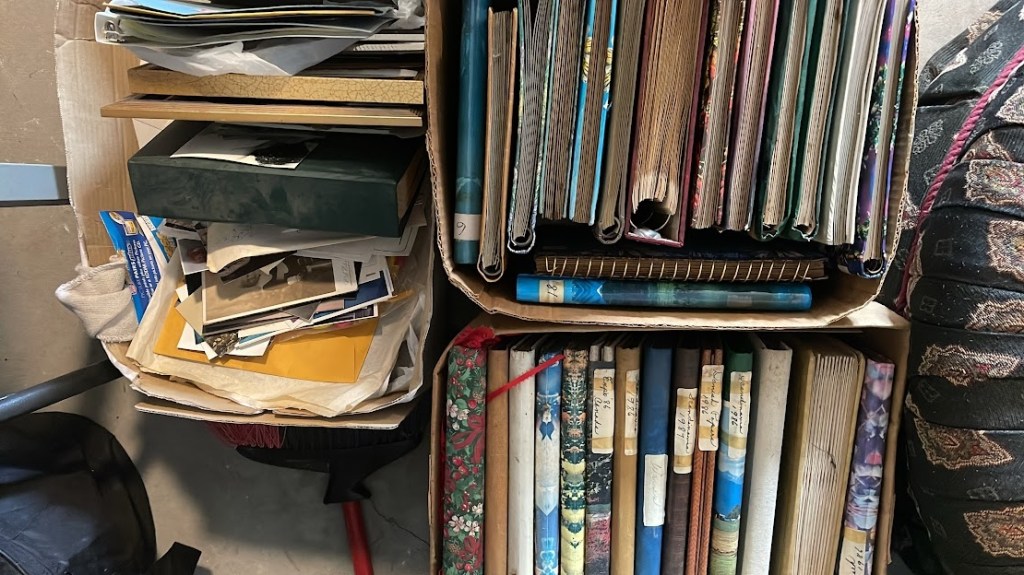
Now in the back of my car are the things nobody wants: an old, sour car seat, battered clothes, and boxes of family photo albums.
Not my family’s albums. Someone else’s.
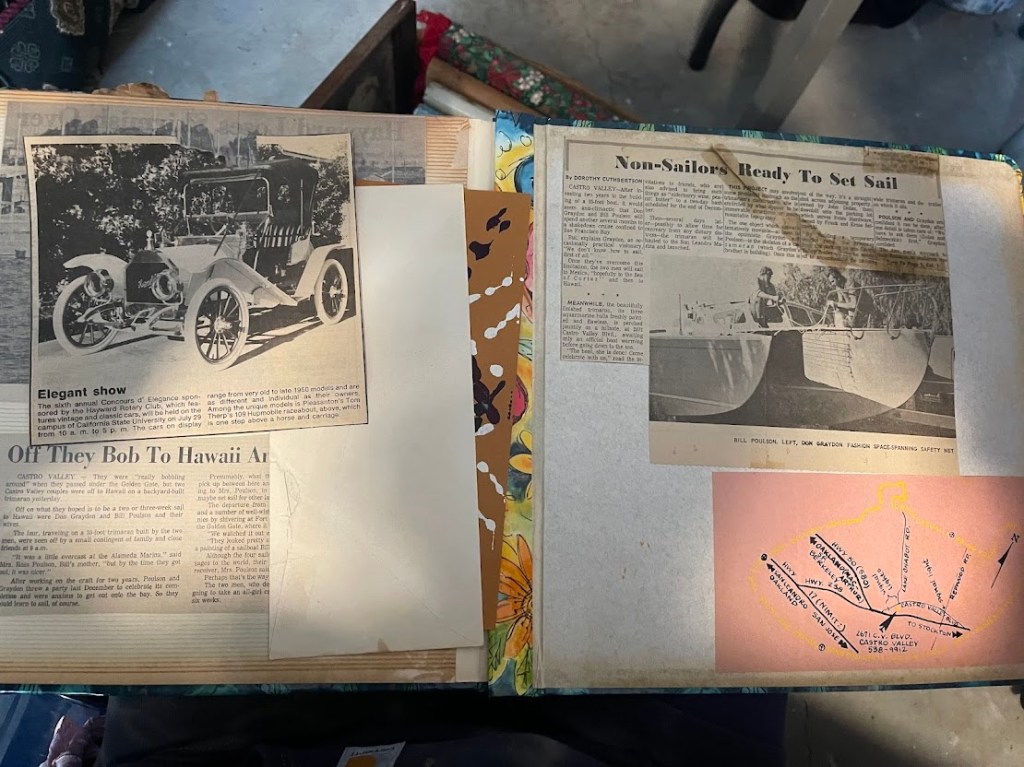
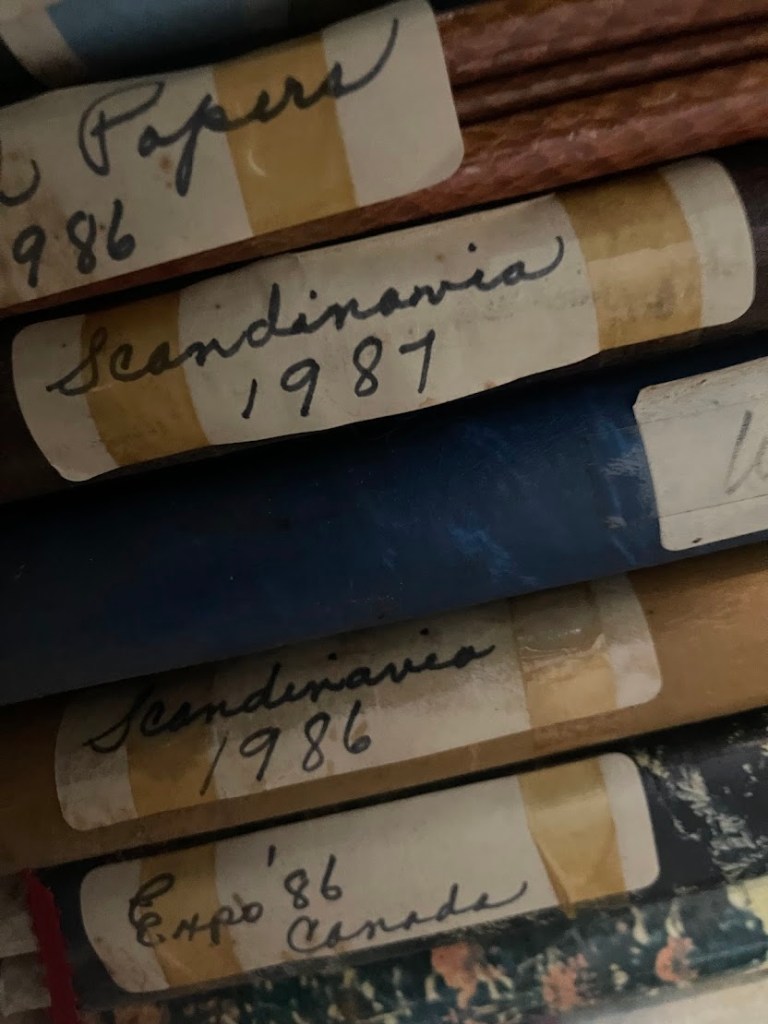
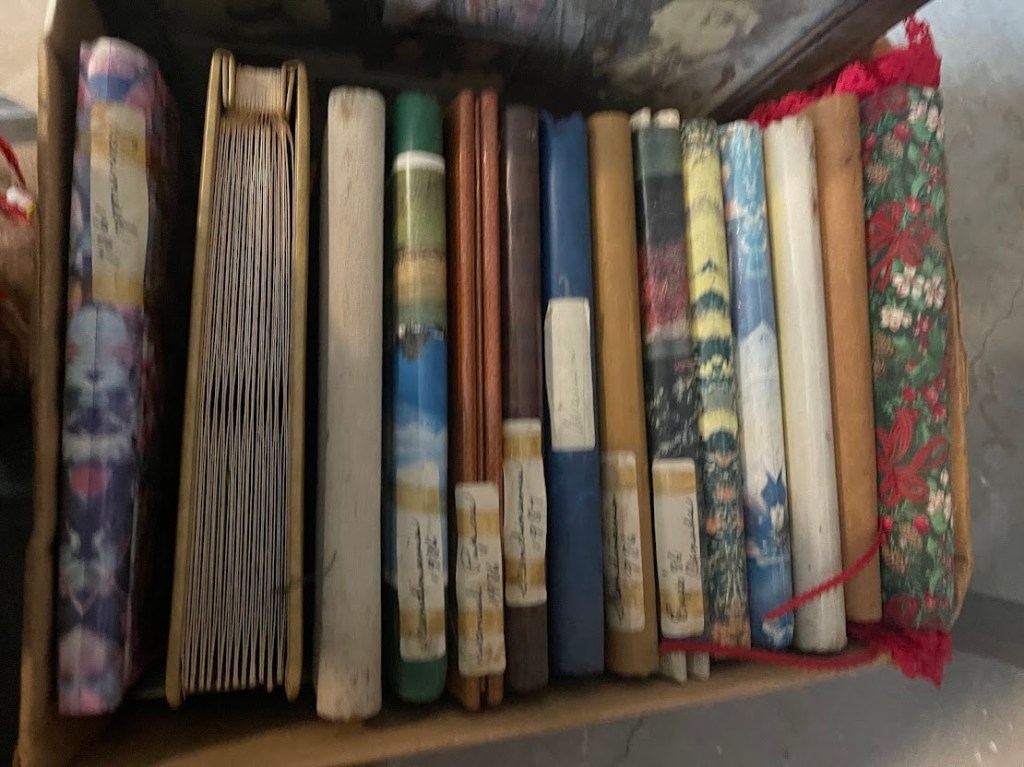
Months ago, I picked up three boxes of 1980s family photo albums from Facebook Marketplace, thinking I would use them for scrapbooking or maybe for the Grimoire workshop. The women had perfect hairdos, the children looked happy, and newspaper clippings from the era were pasted beside photographs like tiny time capsules. But the longer they sat in my car, the heavier they became.
I messaged the library. The historical society. Nobody answered.
Eventually I listed them back on Facebook. A woman who happened to be my neighbor picked them up, promising that if she couldn’t use them, I would take them back. A few days later, she called. Even she couldn’t figure out what to do with them.
So now they’re back in my car.
And I cannot bring myself to throw them away.
The more I think about dumping somebody’s memories into a landfill, the more impossible it feels.
We’ve all heard the myths before: photographs steal souls, mirrors are cursed, vampires can’t appear in either. But what do these stories actually say about photography and memory?
The idea that photographs can curse someone or steal part of their soul stems from spiritual beliefs, folklore, and the unsettling mystery surrounding early 1800s photography. Many cultures viewed cameras as supernatural because they captured an exact likeness permanently, something humanity had never experienced before.
Some Indigenous and traditional cultures believed an image contained part of a person’s spirit or life force. Mirrors carried similar fears. Reflections were often associated with the soul, death, and alternate realities. In Victorian mourning traditions, mirrors were covered after death to prevent spirits from becoming trapped inside them.
The mythology surrounding vampires evolved from these same beliefs. In Eastern European folklore between the 1600s and 1800s, vampires were seen as corrupted beings without proper souls. Later Gothic literature, especially Dracula in 1897, reinforced the idea that vampires could not appear in mirrors because mirrors symbolized divine reflection and humanity.
Photography eventually inherited the same anxieties.
But now we’ve entered a new stage of the curse: the digital image.
Unlike physical photographs, digital pictures can exist infinitely. They can be duplicated endlessly, altered invisibly, stored in clouds we cannot touch, and forgotten beneath thousands of nearly identical images. The curse of the digital photograph is no longer spiritual in the traditional sense. It’s psychological.
We document more than ever before while remembering less.
Digital photography created what I think of as the Paradox of Infinite Memory. Because storage is endless, moments lose sacredness. Instead of fully living experiences, we perform them for documentation. The image becomes more important than the memory itself.
Social media intensifies this. Photographs no longer simply preserve memories; they create identities. Filters and curated feeds distort reality until people begin comparing themselves to perfected versions of others and themselves. Mirrors once reflected the soul. Now algorithms reflect curated selves.
There’s also the strange permanence of it all. A printed photograph can fade naturally over time, but a digital image may survive forever online while simultaneously becoming inaccessible due to dead hard drives, forgotten passwords, obsolete formats, or deleted accounts. Modern memory exists in unstable systems we barely control.
And maybe that’s what unsettles me most about these albums.
These people existed. They loved each other. They celebrated birthdays, vacations, and holidays. Someone carefully scrapbooked these pages by hand. Now their entire history sits forgotten in the backseat of my car because nobody knows what to do with it anymore.
So for now, I keep thinking I might burn the photographs one by one as a release ritual. Or bury them. Or use them in art.
Maybe memories deserve transformation instead of disposal.
In my studies lately, I’ve been thinking a lot about memory and the human condition. Sometimes, memory is all we truly have to learn from life, to appreciate it, and to evolve through it. Some spiritual traditions even believe the key to remembering past lives is first learning to remember this life fully and intentionally.
Facebook is strange in this regard. Sometimes it holds more photographs of our lives than we do ourselves. What kind of magic do we hand over when we offer our memories to social media platforms? Is memory itself part of what keeps those systems alive?
I stopped scrapbooking after my son’s first birthday. Maybe because digital photography changed the ritual of remembering. The articles are right: sorting through endless images can be overwhelming. And often the Facebook photos aren’t the ones worth printing anyway. It’s the uncandid photos, the accidental moments, the imperfect images, that feel the most alive.
I have a friend who doesn’t use social media, and I decided I’m going to print our photographs together for her. She rarely gets to see the images floating through everyone else’s feeds. Maybe people without social media receive photographs more intentionally, more like gifts.
I wonder what will happen to all the photos I’ve taken someday.
Will my kids keep them? Pass them down? Throw them away?
I didn’t inherit many albums from my grandparents. Mostly just a few passed down from my parents. And honestly, one of my biggest regrets is that I didn’t spend more time visiting my grandfather before he died. I convinced myself I didn’t have enough money, enough time, enough stability.
But a photograph can’t replace presence.
Sometimes you have to create the memories you want to capture in the image of your past.