March 18th 2026- I met up with Andia in Arcata, CA at her studio for an Energy Healing. I had a wonderful experience. I’ll post my experience below along with my intentions! Here is Andia’s interview about her intuitive energy-healing practice, Teachings of the Earth.
Natascha: All right, thank you for tuning in to the little Lost Forest blog. Today I’m sitting here with Andrea in her studio in Arcata. I just had a healing session. This is my first session of this kind. Andia, how are you doing today?
Andia: I’m good. How are you?
Natascha: I’m great. Thank you so much for giving me this offering. What brought you to ask me to come here today?
Andia: Well, I know we talked a long time ago about doing an energy healing session, and I needed to get my window fixed because it was leaking. I’m just getting back into energy healing and wanting to lean into that more, build more clientele, and just practice more. You’re definitely one of the first people I thought of because you’re one of my good friends, and also because we had talked about that. I just wanted to circle back and share this with you.
Natascha: I had a really amazing experience, which I’ll share in the blog post after the interview. What is energy healing?
Andia: Energy healing is. It’s, I would explain it like we all have an energetic body. There is energy that exists, you know, like there’s a type of energy healing called Reiki or that there’s Qi and there’s different things that we call this energy. And it’s a healing frequency that we’re all connected to. Anyone could have the ability to channel it. It’s like setting the intention for this energy to facilitate healing and cleansing, stagnant energy, transmuting the energy into whatever we want to create, into whatever healing we’re calling in. And basically, I would say it’s when a person has received attunements to be able to channel energy healing, they are able to channel natural healing energy that exists through them. They’re just a channel, you know, they’re not exactly doing anything. They’re channeling it. But the energy is what’s coming through, and it’s a healing energy that knows where to go and just exists in this reality.
Natascha: Where is that energy source from?
Andia: I think it’s just the existence, like I personally believe in a spirit world. I believe we’re in the physical realm and that a spirit world exists simultaneously with us. And I believe that energy healing is coming from there.
Natascha: What keeps the positive energy and not the negative energy?
Andia: It’s all intention. It’s like every time you give energy healing, you set the space before. I always ground myself to the earth, cleanse my energy of what no longer serves me, what I don’t want to be sharing or transmuting, just letting that go. And then I always put a bubble of protection of energetic light around me. When I’m going into channel the energy healing for someone– First I talk with them, and check with them, what their intentions are, and what they want to get out of it. Then I can set intentions. And for me, I set, you know, positive, loving, healing intentions and use that energy in a good way, and then also go off what the person says about what their intentions are and calling that in as well.
Natascha: Super cool. What brought you to this kind of healing?
Andia: It was like 11 years ago. It was just a deep calling for me. It’s really interesting because I, I don’t know, it’s like that kind of feeling, like I kept going to festivals and transformational festivals and just finding different healers. And I kept connecting to different energy healers.
And it was this, really deep calling, like, I might as well not exist if I don’t become a healer.
It was just so strong. I need to do this, and also, just my family lineage on my mom’s side comes from healers, and my grandpa did energy work, like in his older years, and just different ancestors of mine on that side have. So I felt very deeply connected to it because, I mean, I was taught to meditate and do energy. I received energy healing and was taught to meditate when I was little. And so yeah, about 11 years ago, I don’t know what year that would be, 2015, I really felt called to that. And then someone gave me my first energy healing session. And I just remember I felt this blockage or this weird energy in my left shoulder while they were doing it. And at the end I was asking them what their experience was, without telling them what mine was.
Andia: And they were saying, um, yeah, you know, everything was really good, except there was this blockage in your left shoulder and I was just like, whoa, like, so mind blown because I felt that. And then at that time, I started leaning into learning how to receive energy, which brought me to Reiki initially. I got my first attunement from someone. And then I was trying to find someone to teach me my second attunement. And I met this woman, Victoria Luna, whom I wanted to get another attunement from. And she was like, ” Oh, actually, I meditated on it, and I wanted to take you from your first attunement all the way through your Reiki mastership. So she taught me everything that I know, but she did an interesting way because she taught me traditional Usui Reiki, but she also taught me to really lean into my intuition and just do it in a different way.
And now I no longer practice Reiki because for me, it’s a more intuitive practice— that’s deeply connected with the earth, that’s what I do now.
Natascha: If you don’t mind me asking, what is your lineage heritage?
Andia: Like my ethnicity.
Natascha: The culture that your family came from.
Andia: On my mom’s side, it’s, it’s interesting. They’re all from Mexico, but a lot of them came from Europe before that. Then they lived for hundreds and hundreds of years in Mexico. So they are blond-haired, blue-eyed Mexicans. So I have a lot of French, Italian, German and Polish. And then, I do have some indigenous Mexican in me, indigenous from Mexico. Then on my dad’s side, I’m Ashkenazi Jewish. So it’s 50% of my lineage. Yeah.
Natascha: It’s so interesting. I do not come from a lineage of healers. I come from a lineage of war vets and journalists. So that’s why I was just interested in where they draw their form of healing from culturally. That’s beautiful, thank you for sharing. Anything else that you want to share? Maybe, how could people find you if they’re interested in a session?
Natascha: I’ll tag that. And after a session, what can somebody expect to come out of it with?
Andia: I would say it depends on what your intentions are, but most of the time I find people are very much relaxed, and that a lot of processing is going to continue happening. So I always tell people, make sure you rest and drink a lot of water. But I think what you come out of it really depends on your intentions. Like, obviously, people are coming for healing. So I would say like that continues to unfold and things continue to deepen, but it just really for specifics, I think it depends where you put your energy into.
Natascha: Awesome. Well, thank you so much for your time.
Andia: Thank you.
Teachings of the Earth gave me a two-hour energy-healing session. It was my first time, and I received incredible benefits from it. I set clear intentions and spoke them aloud. While I was on the table, I could feel where the energy was being exchanged as she moved around my body. There was no doubt that energy is a quantifiable source and that the practitioner could channel it. Toward the middle of the session, I felt myself wanting to transcend, lifting inches beyond my physical realm. I had thoughts of my first love, of giving birth, and of my father’s influence on me. After the session, I felt relaxed and rejuvenated. We discussed my experience, and she shared that much of the healing energy had been focused on the womb. We also talked about how the energy process works. Afterwards, I rested and drank lots of water. Thank you so much for this experience, and I can’t wait to do it again!
My Intentions:
Make Room to become the author and writer I always dreamed of.
Secure a positive dynamic with my husband.
Be an uplifting and child-first mom
Not to offer unsolicited advice, but to hold boundaries and be mindful of community and world struggles.
Images shown for historical documentation purposes.
The story of Humboldt County’s cannabis economy is not a single narrative but a collection of lived experiences shaped by land, labor, community, survival, and change. For decades, small family farms, intergenerational growers, and informal networks built what many came to know as the backbone of Northern California’s underground economy. Legalization promised safety, stability, and opportunity, yet the transition also brought unexpected challenges: regulatory barriers, corporate expansion, displacement of small farmers, and shifting cultural meaning.
“The Green Rush” oral history series, hosted by Little Lost Forest, documents these personal histories so they are not lost to policy debates or economic statistics. Through conversations with growers, workers, and community members, this project explores how legalization transformed livelihoods, local identity, and the broader economic landscape of Humboldt County.
This interview offers one perspective from someone who grew up in a multigenerational cannabis family, witnessing both the era of small-farm prosperity and the dramatic restructuring that followed legalization. Their reflections highlight the resilience of Humboldt communities while also raising difficult questions about who benefits—and who is left behind—when an informal economy becomes regulated and industrialized.
As you read, consider this interview not only as a personal story, but as part of a larger collective archive documenting the rise, transformation, and ongoing evolution of the region’s cannabis culture.
Natascha: Hello. And thank you for participating in the Little Lost Forest interview focused on Humboldt County’s economic growth and decline surrounding the legalization of cannabis. My name is Natascha, and today I’m sitting with CannaClaus. CannaClaus, where are you calling from?
CannaClaus: Arcata, California.
Natascha: How are you doing today?
CannaClaus: I’m doing great, relaxing day.
Natascha: Sweet. How would you define the cannabis culture prior to legalization?
CannaClaus: Prior to legalization was the black market, and it was small families and small farms. There was my great-grandfather and grandfather grew hemp for World War II and Vietnam or something like that. Then there was a huge struggle and the 70s and 80s between northern and southern Humble and Mendocino and the Emerald triangle, there’s a lot of fights and a lot of back-alley deals, and a lot of people died and things happened. And then we got into the 80s and 90s, and it was more like what I was just explaining at the beginning. Small farms, small families. It became the grandmas and grandpas. And then pretty soon, the industry was legalized, and the big guys came in.
Natascha: What would you say your first job in the cannabis industry was?
CannaClaus: My first job. Let me see. I started making clones for my family farm when I was about 11.
Natascha: Wow, that’s super young. What was the economy like during that time?
CannaClaus: Oh, for Humboldt, it was booming. Fisheries were booming; the logging was booming. And then marijuana was our third big– How do you say just big profession out here, that Humboldt County. Everywhere. Everybody was killing it.
Natascha: How would you describe community relationships and even mutual support during these early years?
CannaClaus: Oh, during the early years, you had, it wasn’t black ops, but it was, God, I forget what they camped. They used to have camp that rolled around in black helicopters and went around with the police forces and tried to get everybody and catch everybody and get these families, even though they label us as drug dealers or bad people. But it was really just families trying to make a living and get a little extra on the side to have a nice vacation or something. It was really nice because the community understood that, like when the cops in camp would come to town, they would go meet somewhere, like in a big parking lot or a restaurant, and all the farmers and everybody everywhere would start getting the phone calls. Hey, they’re on this mountain on this side. They’re coming up these roads. And so we would all get ready for them. And it wasn’t get ready for them, like get your guns or nothing. It was get ready for them and lock your gates, lock down. Get, you know, kids out of there if there’s kids there and so forth, and get ready for these helicopters, because they used to come into our greenhouses and fly as close as they could to them to bust the top of the greenhouse off. So, if they can visualize and see inside there and see actual marijuana, even if you want or not. You had a farm in the greenhouse. They’re going to try it. If they blew that top off and see marijuana, they can come down and rope down into your property with their big AKs. They’re mean people. So.
Natascha: Why do you think people kept growing after that?
CannaClaus: I know that I kept growing after that just because the money was good. I had more time to spend with my family. We made good money. We were able to donate and share in the community. My family, along with many other families, always donated our extras to people that couldn’t spend the money for it or that needed it. We also
would set up fundraisers for the veterans, and it was called Weed for Veterans. And we would go around and make big meals and hand them out to the homeless in different places and the community. I mean, with all the money we’re getting in and all the taxes and everything. I mean, the city was doing really well and doing really good for itself and starting to clean itself up because we all know in the 80s and 90s around here that it was pretty trashed. And then the city started cleaning up.
Images shown for historical documentation purposes.
Natascha: What do you mean, literally trashed?
CannaClaus: Or pretty much. I mean, all the downtowns, all the parks. I mean, we just started getting new parks like this last ten years.
CannaClaus: The homeless rate went skyrocketed when I was a kid. It was just you went; you walked from the mall up to like the bay or whatever. The back parts over there, you’d always see like 2 or 3 little homeless camps. And now with the fentanyl and heroin and meth and all that stuff, those homeless camps have grown to hundreds, hundreds, and hundreds. The community lately has gotten them to where they’re compacted in certain areas. They move in and clean up after them and then move them back out. A lot of community members are finding ways to come together to help them and get them off the streets in different ways and stuff. The drugs made it so bad, and everybody always blames pot or pot’s a gateway drug or blah blah. No, that’s not true at all. I don’t believe it. I believe alcohol is more of a gateway drug than anything, but I think I got off topic there. Sorry about that.
Natascha: No. It’s good. I want to dig into this. Just one more question. Do you feel like the cannabis industry brought in a lot of traveling folks or homeless people?
CannaClaus: I definitely think it brought in a lot of traveling people, because every summer we call them trim-igrants, and they would come in usually around August, September, and you would just see them hanging out at Murphy’s or Safeways or Winco’s or, grow stores or different places like that, finding work because they can come here and get a visa, like a student visa or like a visiting visa and trim for three months from September to November, or mattering how big the farm was. And they would make anywhere from like 10 to 20 grand trimming because they can make around 200 to 300 a pound. And then it went down to last, or ten years ago; it went down to 100 a pound. And then five years ago, it went down to 60 a pound. And then the machine trimmers started coming out. Then they would just pay them, you know, 15 or 20 bucks an hour to run the machine trim, and then they would give them 40 bucks a pound to clean it up. And so, then those people are slowing down and not coming out here as much. I believe the homeless rate around here is due to these, I forget what it’s called, it’s not like asylum cities or whatever, but they we have buses that literally pick
up homeless people from different cities and places of the state and just drop them off here.
Natascha: Right. Would you say that trim-igrants were bringing money into the economy in Humboldt?
CannaClaus: No, no, they took it out.
Natascha: Okay.
CannaClaus: Because they would make their 15-20 grand and go back home to their families. And I know a lot of them that would make around 20 grand or whatever, and 20 American US dollars. They would go back home and go to school or learn a trade or do whatever, and just live the whole year off of that, and then come back and do it again.
Natascha: How big was your family farm?
CannaClaus: We had three farms, I think, at the most. My farm was an acre and a half. My two sisters, I have three sisters: two of them grew. The other one had a two-acre farm. And the oldest sister, she had a 40-acre farm.
Natascha: Did any of them stay in business?
CannaClaus: My sister [Heather] was the last one to go out of business. And this was this last year. They came out to the property. Our permits weren’t all aligned, and we were still going through paperwork and getting everything ready with the state, the city, the county, and da da da. And every loophole that they make you jump through and every paper they have, you triplicate and sign and bring back and take here and spend this. I mean, literally just trying to get legal or legalized was costing around 100 to $150,000. And these farmers are now, with outdoor farmers anyways, are now only making, 200 to 400 max on a pound. And when you put in your time, energy, food, water, hourly wage, you’re making like 20 bucks an hour. It’s just not worth it anymore. Everybody thinks marijuana is like it grows on trees, like money grows on trees, and that’s marijuana. That was when we were getting indoor for 3000. That’s when we were getting outdoor for 1500, you know. Now indoors 1000 and outdoors 200 to 400. And
depths are like 500 to 600 max. You know, you can’t make a living wage off of that anymore. You might as well just go get a regular job.
Natascha: What was the furthest license that you got on your farm?
CannaClaus: Mine was medical. I’ve always done medical. I never got permitted. I just always did my 99 plants. And I would donate half of my crop to different people that needed it. Every ounce I sold, every pound I sold; I would donate an ounce or donate a pound. And everything I got to people was people that had medical cannabis cards and actually needed it. I never was for the legalization of it, just for anybody over 18 to smoke marijuana. I don’t think it’s for everybody. I believe marijuana can really make a person way dumber and just do idiotic things and become slow and not learn trades or learn skills and just become a slug. But when it’s medically grown and it’s for medical reasons for people that actually need it. They use it in the right way. I believe it’s a miracle drug. And I love it. Love it to death.
Natascha: Well, that’s great that you were able to donate to people because that would help boost economic growth. Let’s say there’s somebody that is not working in their career path or maybe somebody struggling to pay rent. They could utilize the cannabis to also help them financially into a better financial situation. I would assume.
CannaClaus: That’s why we helped a lot of the vets because it’s, you know, it’s still a class one. All these years, every summer we get together, and we get all the farmers together and do a bit of weed for vets. They come around and we give them their dabs and their flowers and things and utensils to work with it and different meditations. And just like every booth has something different. If everything was free, everything was free. If you’re a vet, everything was free. So that was super cool. And I mean, if you can’t give back and you can’t get good karma in this life, then it’s not worth doing.
Natascha: Yeah. Super green work. Uh, how did you protect your farm?
CannaClaus: Back in the early days in the 90s and stuff. I mean, we protect it with our dogs and our guns. It’s not, you know, the ideal suit for having a family around it and stuff. But my dad was in his early days a very hardcore mountain man. And he felt like what came from the earth is what we’re allowed to. And then we can do what we need to do– what we want with it. And the actual human laws only follow the ones that do
right and do good. And the ones that don’t make any sense or that are about government, taking your money, or blah, blah, blah, don’t follow those ones. Stay true to your mountain, your mountain heart, and everything. And then once we got older and we didn’t have to have the guns anymore and, well, besides for bears and mountain lions and stuff, and the dogs became more of family pets, other than the protections of the farm, even though they still were out there for rattlesnakes, mountain lions, bears, different stuff like that. It got a lot more chill. And then in the 2010s, we started getting a lot of people coming from like Hurricane Katrina and different people coming up from Oakland and Richmond and stuff like that, and coming up and lobbying everybody.
CannaClaus: And so then we had to bring back out the protection and come back as a community and make phone calls. And then we had social media by that time to be able to share people’s pictures or videos or different stuff with these thieves coming through town, or fake money, or fake this, or fake cops or whatever it is. Then the legalization or recreation, I mean, it dropped the price tremendously. Nobody really cares about robbing you anymore because it’s not worth it. I just seen a post the other day. A cop pulled me over and got 60 lbs of marijuana, and they’re like, we’re keeping our Trinity County safe. And every single comment on there along with mine is, oh my God, you got 60lbs. Like, oh, it’s like six grand worth of money. And you just hurt a family that was struggling to make ends meet this year. And you guys think you’re keeping the community safe from these pot dwellers. You know, everybody’s just laughing at them. It’s just dumb. Like, get this meth and get this fentanyl off these streets. And that’s how I lost my little sister this year, a couple months ago was from fentanyl. I just wish the cops paid more attention to that and just still paying attention to pot, like, come on, dude, get out of here, guys.
Natascha: Yeah. I’m so sorry to hear that.
CannaClaus: Yeah. It sucks.
Natascha: How did you sell your product?
CannaClaus: Before I got medically licensed, I did black market or through family and friends. And, I mean, I started early. I used to roll joints in seventh and eighth grade, and I would sell them, uh, two for 5 or 1 for three. Okay. And then when I got to high school, we got our first house, a little tiny house my dad got. And we lived in trailers and
projects and stuff before that. We got our first house, and he needed help with paying the mortgage and different things. And so, I started selling bud and to friends and people in school. And then I got really entwined in the marijuana community because of my family name and everything. I started growing my sophomore year outdoors, and then I started growing indoors after I left high school and went to college. I started doing my indoor scene, and everything was still really going black market. Then I became medically legal when I was twenty-eight, I believe, which was 13 years ago. And then I because from 2020-28 I worked for an oil change place, and just went straight and narrow for a while, just to see the other side of life, and just not be around
CannaClaus: The price was dropping then, too, but not like it is now. And I just wanted to do something different. Um, then I went back at 28, and at 30, um, I had a medical delivery service in Eureka in Humboldt County. And then I started another one in New Jersey. And to get product out there for my medical patients, which, again, I was a straight medical, I had to drive it out there, and I had a friend or a partner that would drive it out there for me, but he ended up breaking down, in Sacramento. And so, I went and got a rental car and put it in the back and tried to make it myself and got pulled over in Ohio, about four hours away from where I was, and ended up doing almost two years in the Ohio prison system. So.
Natascha: Is there anything else you would like to add to that? Maybe, the way that they treat cannabis growers and the jail system or the way that the judge
CannaClaus: They acted like we were the biggest drug dealers. I actually had a lot of seniority or like, higher up, mentality in that prison because I only had 100lbs on me when I got caught. And 100lbs out here is like, like a medium to average guy out there, 100lbs they acted like I was some kind of mafia boss. They pulled me into a back room and tried to get me to, like, say some names, and we’ll let you go, or we’ll give you a lighter sentence. And I was like, what do you mean? I was like, I grew it. It’s my company. I packaged it, and I drove it. So, if you want a name, here’s the name CannaClaus, motherfucker. And then when I got to the police station, they had the news station out there, and they were laughing at me and pointing at me in the car. When I got to prison, the actual inmates treated me very well. Actually, a lot of inmates and a lot of society inside of prison is very respectable. You respect others, you respect your place, you respect your space, their space. And everybody has their hierarchy.
Then there’s the CEO, the correctional officers, which are just the biggest dicks I’ve ever met in life. That anybody or anywhere they have a seniority or like a senior complex, but like a bully, like they were either bullied in school, or they bullied people in school, and they get to do it again. They would make fun of me and call me a California fag.
CannaClaus: Why can’t- and I had another correctional officer ask me, well, why can’t you guys just make pills? Just make pills like all the other doctors do? And I was like, we do make pills. I was like, I got pulled over with pills. I was like, I had CBD pills, and I had THC pills, and I had a THC, CBD, hybrid pill. And I was like- and they were for specific patients. And everybody is different. Every patient is different. You can smoke, one patient can smoke flower all day, and just have a great life. Another patient smokes flower and has an allergic reaction. One patient like me, I- I cannot eat edibles. I can smoke dabs and marijuana all day. Be completely normal. Fine. You know, do everything I can in a normal day. But if I eat an edible, I am shaking, I am paranoid, I am sitting on the couch. I am trying to figure out how to get this to stop. So, everybody’s body is different. And I was trying to explain that to him. And then, you know, just says a bunch of messed-up racist and sexist things to me because I’m a California boy, I must be a surfer or stuff like that. You don’t even know what you’re talking about.
Natascha: Right.
CannaClaus: When I got pulled over, and they were making fun of me and talking to me about being a drug dealer, I was like, that’s funny, because in your state, marijuana is illegal, but you can fuck your dog. I was like, you guys, bestiality in Ohio right now is legal, and marijuana is illegal. And I go, so you guys are completely backwards over here, dude. And they would say a bunch of, you know, mean stuff to me, drugs, blah, blah, blah, blah. And I go, go fuck your German Shepherd motherfucker. We talked a lot of shit back and forth, and I didn’t get along with the correction officers, but the inmates treated me really nicely and respectfully. And a lot of movies, a lot of working out, and a lot of books. That’s about it on that one.
Natascha: Yeah. When you reflect on your upbringing, was the lifestyle desirable?
CannaClaus: When I was a kid, to make a long story short, my parents divorced when I was two, and the courts back then always gave the kids to the mother. My mother was a heroin addict for 28 years, and so we lived a really bad childhood for about 4 or 5 years. I ended up going to the hospital for malnutrition and passing away for a little bit, but they brought me back, and I was bedridden for a year.
Natascha: Oh.
CannaClaus: My sisters and my grandma raised me. And then my dad finally got us back from the court system, and then he raised us all the way until we were adults. And then my mom came back into the picture once we were- I’m the youngest. So, once I turned 18, she came back, and she cleaned up everything. She stopped drugs, she stopped drinking. She stopped smoking cigarettes. And she’s been the best grandma and just an amazing person. These last years. But after that childhood with the badness, and us going with my father, and my father being a pot grower. We spent a lot of time in the woods, fishing, hunting, hiking, cracking, and doing all that fun stuff these Humboldt kids do. It was very nice at that point, and I did love it a lot, but we were wary of out-of-towners coming in or people trying to rob the farm or bears, mountain lions, and snakes, and so forth. You know what you have to worry about out in the mountains. But other than that, it wasn’t. It was a good childhood.
Natascha: Was it worth it in your adult years, going to jail over cannabis?
CannaClaus: No, because my son was nine months old when I went. When I got back out, he was two years old , and I missed his first steps. I missed a lot of his first- a lot of things. [Voice strains] When I was in prison, I used to watch the sunset every night and know that my son was almost 2000 miles away, and there’s nothing I can do about it. Constantly looking at fences, barbed wire, razor wire, and guards with guns. Even though prisoners were respectful of each other, they were still, you know, people on drugs or gangs or stuff that, those fights or different kinds of crazy things that happened. I would definitely change it. And that’s what I did when I got back out. When I got out of prison, I just got a normal job and didn’t care if I made good money or not. And if we were poor or rich or not. As long as I had time with my son every day. There was never a chance of him being taken from me again. I’ll live that life over odds or money or anything. So that’s when I made that choice.
Natascha: Beautiful. What was the hope in legalization? Did you see hope in the community?
CannaClaus: I did. When we finally got medical, it was awesome. It was so cool. We could finally come out of the woodworks and out of the shadows, and we all did anyway, but we couldn’t do it in front of cops. And then it was like all of a sudden, like, we can actually be stoned and not worry or be paranoid of these cops coming in and robbing us, just stealing from us. And this still happens, especially with Camp and Officer *******. That guy robbed me quite a few times. And there were other crooked cops, but that was the one that messed with me. And a lot of people around here ended up passing away on 36. There was a landslide that ended up killing them last year, I believe. And I’m sorry for the family and everything, but that guy was a piece of crap, and he would rob a lot of us. Take our money, take our pot, and take our hash. No write-ups, no tickets, no nothing. See you later. You know. And I’m sorry. What was the question again on that one?
Natascha: We were talking about the hopes of legalization, that things would continue to thrive.
CannaClaus: When it became medically legal, it was awesome. And we were all super stoked. And then we thought the legalization of recreational, which I didn’t vote for, but the thought of everybody else in the talk around town and through our small knit groups and everything, was that we can finally be free of the police and free of the FBI and different places coming in and robbing us and taking us and taking our kids away from us, or taking our properties away from us or our, um, annual income for the year to feed us or pay our bills or whatever. And then what it did was when recreational became legal. These bigger companies came in, and they still shut down our smaller farms with all the processes, paperwork, and permits, and you gotta pay taxes on every single acre. You got to pay taxes on every single square foot. You’ve got to pay taxes on how many plants you grow, even though they don’t understand that plants, just like any other crop, you’re going to have pests, you’re going to have molds, you’re going to have bears, deer, all sorts of things that happen. And no matter what, you still got to pay the taxes on that square foot. And for that plant. And they made it impossible for us small guys to go through.
CannaClaus: So, they shut down about 90% of our small farms out here. And all the big guys came through, and they’re buying these big chunks of the mountain. And another big one, I forget what it’s called- it’s a greenhouse world, the greenhouse
something. And it was a bunch of old police officers that got together, and they were the ones that drove a bunch of us out, got together and bought a big parcels of these mountains, and now they’re doing all these legal grows that provide to all these little shops and everything everywhere. But most of it goes down to LA and San Francisco, and they just completely- we thought it was going to be a good thing, but most people didn’t. I didn’t, but most people did. They ended up biting us in the ass to where all these families and home grows and family-oriented and family this and grandma and grandpa and small farms, they’re pretty much all gone. You rarely see any of them out here anymore. And it’s just these big farmer grows now, and it’s just going to get worse. I think I’ve heard Philip Morris was coming in and buying some of the mountains up here.
Natascha: Where do you think these small farms went? Where did those families go? What happened to them?
CannaClaus: I knew about between 50 and 60 different families and farms here, and most of them went to Oregon to try their hand up there because it was cheaper land, still beautiful land. A lot more wet. So, you have a little bit of a different season up there due to mold and snow. A lot of them went up there with the last bit of money they had; some went to Washington. Same thing. Then others sold their farms at a high price or sold their stuff at a high price. But, you know, back in the day and got out of it real fast and started up little shops or things around the town, either a Mexican restaurant or a nail salon or a barber and they just started their own little businesses or food trucks. God, we have like 30 food trucks now. It’s ridiculous. They tried their hand at something different. What I did was I had my little indoor, my little greenhouse out in the backyard for my own little personal and my own family personal. But other than that, I went and got a job with a big lumber company. That’s one of our big things out here is lumber and fish. It used to be lumber fish, and pot, but now it’s just- now the fishing is dying too. Pacific seafood or whatever, shut down, and lumber is basically the only thing we have left out here. And it’s getting hard.
Natascha: Would you say there’s more or less crime now than before legalization?
CannaClaus: There was more crime prior, for pot and people coming up from Richmond and Oakland and stuff, and robbing us. But there’s more crime now due to fentanyl and hard drugs that are up here, eating all of our kids. Crime in all genres, there’s more crime now. But if you’re looking at crime for just marijuana, crime now for marijuana is down, and crime back then was up.
Natascha: How would you say legalization has affected labor, jobs, wages, and housing in this area?
CannaClaus: Housing went way up. Jobs, because I think when COVID hit and everything, we were all able to get jobs and go back to work and do stuff. When I was younger, I used to have to hit, you know, 20 different places with a resume and an application to get one job. And now there are 30 to 40 places hitting you up to get a job. So I think there’s plenty of more jobs out there. I don’t know if it’s just this younger generation doesn’t want to work, or they’re going to school and buying into crypto or whatever the hell they’re doing. They’re not having to work as much. And so there’s a lot more jobs, but I just believe it’s for different reasons than the legalization. Legalization and the pot market trimming jobs went down, trim-igrants coming in went down, Money coming into the county went down, because now all the people from the East Coast that used to come out here and buy our pot because we have the best pot growing in the triangle, and then bring it back out to the rest of the country. Now they have all these farms in these middle states, and it’s all this really fast-growing weed. It’s called autoflower. And they made a hybrid of a flower that can; it grows to a certain height, and then it just automatically flowers no matter what season it is, no matter how much sun it gets, how much light it gets; it grows to a certain height and then flowers. They have these massive- where it used to be cornfields- it’s just pot fields. It’s the pot that looks really nice and really pretty.
CannaClaus: But they spray them with pesticides. They have tons of chemicals in them. And now these East Coast people, they don’t care that the pot’s not Humboldt, grown. And it’s this beautiful, amazing pot. The more care, distance, time, money, and it still looks and smells good. I don’t give a fuck if it has chemicals or bad things in it for my clients, I don’t care. I’m here to make money. So, all these East Coast people used to bring us money, but that’s gone. All the trim-igrants coming in used to take our money, but they helped us thrive. They helped us trim our product. So it wasn’t horrible to let that money go. They were helpful. The trimming jobs for just your sisters and brothers or cousins and nephews or whatever, that’s gone. There’s no more trimming jobs. All the places that were doing really good and the farms were expanding. Once the location hit, boom, they hit us with all these taxes and these permits and these paperworks, and then they can legally know, because all these farms tried; they really tried, and they put up all these fences and made it so hard that we couldn’t. And then they knew where we were. So, we just put ourselves on the map, and they came in and started busting everybody that way. ‘Like, oh, we see that you tried and failed. So now I’m going to take your farm. Now we know where you’re at. Now we know where to get you.’ The realization medical was good, but recreational just destroyed the community.
Natascha: Did you witness economic stress, displacement, or loss within the community?
CannaClaus: Yeah. Yeah, a lot of people, like I said, a lot of people moved to Oregon and Washington. A lot of people left. They were fleeing where? Humboldt County and California, people usually fleeing to.
Natascha: Mhm.
CannaClaus: Nowadays, I see people fleeing from. Rents too high, mortgages too high, rates are too high, foods too high, gas too high, fires. There’s no more money in pot anymore. So, everybody’s just like there’s no reason to live here anymore. Why can’t I just go to Texas or go to these other states and buy a mansion for a hundred grand? When out here, a hundred grand gets you a one-bedroom shack. So, it ruined it.
Natascha: What do you think the long-term effects of cannabis legalization are going to be on Humboldt County?
CannaClaus: Oh, it’s just going to be sold at Walmart, Target, and everywhere else. You pick up alcohol and cigarettes behind the counter. You’re going to have your pre rolled swishers, your pre-rolled joints and, all these dispensaries around here, they’re
going to pretty soon they’re going to be gone. It’s going to be in the classification of it- goes from class one to class three. And they can start studying it inside of the colleges, and it becomes recreational legal around the country. Walmart and Amazon, and all that. It’s going to take over, and there’s going to be big farms and big farmers, but
it’s going to be from big pharma, like it’s going to be the one percenters that own it. Then we work it for them, and then they sell it through Walmart and Amazon for that stuff. It’s going to be delivered right to the house. Most of it’s going to be crap. I believe it’s going to be like wine; you got your $5 bottles of wine you can get at Costco or WinCo, but then you have your thousand-dollar bottles of wine that are amazing and tasteful and age and so forth. So, I believe there will still be small farmers, like real petite small farmers, like you would have at a farmer’s market. But other than that, there’s not going to be anything like we do right now. It’s all going to be gone.
Natascha: What hopes do you have for the future of Humboldt County?
CannaClaus: Well, if we can become sustainable in the logging community and keep doing what we’re doing, like Sierra Pacific and the other guys, North Fork and stuff that they’re doing. Every time they go and cut down a bunch of trees, they’re replanting and reforming and going forth. And so that’s been awesome. And now that we’ve got these dams out of the Klamath and so forth in different places. The fish is starting to come
back. So, I have hopes, hope the fishery markets come back, and then we can provide and supply our county off of that, and the logging, and we won’t have to worry about pot anymore. Everybody will have their small homebrews and stuff like that. But other than that, there is no money anymore. There’s no making a company out of it anymore. It’s going to be Amazon and Walmart and so forth that will have that corner of the market. Fishing and logging stay sustainable, and as a county, we can make it through that. But other than that, there’s nothing else we have up here. Maybe solar, maybe some kind of hydro from ocean waves, or something like that. But I don’t see anything else coming from up here.
Natascha: Can you describe the local cannabis culture today?
CannaClaus: It’s like where you used to go out to the plaza and give nugs to the homeless guys around there and stuff, and be really proud of it and be really happy that they get this really nice medical tasty, you know, strain. And now you go out there to give it to them, and they give you some back. And there’s so much of it everywhere. And everybody has it that it’s not a present anymore. It’s not special anymore. It used to be like you go and get a coffee ,and you give a nice tip. Now you have to give a bud to somebody, and they just say, nah I don’t need it or I don’t want it. It’s not special
anymore. Cannabis up here has changed to just basically taking your medicine at night. Everybody takes their gummies at night, or everybody smokes a joint on a road trip or something, you know? But it’s nothing. It’s not like it was. It’s not nostalgic anymore. And I don’t know, maybe it’s because I’m getting older, but that’s how I see it.
Natascha: No, I think that’s very true. I can think of instances when I was a trimmer, and I gave people a jar of weed, and they’d be so excited. You’re right, now everyone’s kind of got their own boutique stuff from the dispensaries that they’re paying $50 for an eighth or whatever.
CannaClaus: Yeah. It’s ridiculous. Mine’s always been organic, so it’s always just fucking tasty and beautiful and white ash and just the best of the best. But then, you know, if I’m out or can’t get any, then they go to dispensaries and get a, you know, an ounce of indoor for 60 bucks or 80 bucks, but it’s just crap, you know? Like, it’s pretty, but it’s old or stinks, or it’s chemical-bound or so forth.
CannaClaus: It’s crazy.
Natascha: My last question for you is: Can you detail how the cannabis farms prior to legalization helped the Humboldt community?
CannaClaus: To the legalization of recreational.
Natascha: Yes.
CannaClaus: How did they help the community?
Natascha: Yeah, the economy in Humboldt.
CannaClaus: Well, I mean, that’s how they brought in so much money because we’re still black market and medical. It went from 4000 to 3000 to 2000 a pound, but it was still 2,000lb, still good money. We were still bringing in a lot of money into this economy up there. The roads are getting fixed. The schools are getting fixed. More shops were opening up, where you have your pot farm and husband or your pot-farming family. You had a cousin, a nephew, a niece, a wife, or somebody who was starting a business in town. And so, there were a lot of businesses started off of the pot community and the
medical and black market. But once it became recreationally legal and you had to get these permits and licenses, everybody spent their money trying to do that, or trying to get away from it, or trying to hide from it, or trying to go with it. And it was pretty much a loss. There’s abandoned farms, there’s thieves that came through and stole the good and left those people that have molded, hundreds or thousands of pounds of mold-weed just sitting in a basement somewhere because it couldn’t sell. It’s optimal utilization. The economy definitely took a huge hit, and it happened right when COVID hit and all that stuff too. This whole community has been struggling so hard. I’m not for any of these presidents, liking neither Trump nor Biden. And yet they’re all crap. All rich white men that are pedophiles and pieces of shit. I’m not for any of them. I’m not a Democrat, a Republican, a leftist, or a rightist. I’m for doing what’s right, being part of the community, and living life to be as happy as you can before your last day comes. And with COVID, the politics, and the realization of this community, the prices of everything are going up. We are struggling so badly out there, it’s ridiculous.
Natascha: Yeah, I hear you on that. Well, thank you so much for sharing your story and your time. Your experiences are an important part of Humboldt County’s living history.
Images shown for historical documentation purposes.
The story shared here is one voice among many that together form the living history of Humboldt County’s cannabis era. Behind policy changes and market statistics are families, workers, and communities whose livelihoods, identities, and landscapes were shaped by the rise—and transformation—of this industry. Listening to these experiences reminds us that economic shifts are never abstract; they are deeply personal, carried in memories of land worked, risks taken, communities built, and futures reimagined.
Little Lost Forest continues to collect these stories to ensure that the cultural, social, and economic legacy of the Green Rush is preserved in the words of those who lived it. If you or someone you know would like to share your experience, we invite you to contribute—because the history of Humboldt County is still being written, and every story helps illuminate the full picture.
Photo Disclaimer: The photographs accompanying this article are presented for journalistic, historical, and educational documentation purposes only. They are intended to reflect the lived experiences, cultural history, and economic realities discussed within the oral-history project “The Green Rush: NorCal — The Rise and Fall of Humboldt County’s Cannabis Economy.”
Little Lost Forest does not promote illegal activity or the sale, distribution, or misuse of cannabis. All content is shared to preserve regional history, community narratives, and research-based storytelling. Viewers are encouraged to follow all local, state, and federal laws regarding cannabis in their area.
Participation in this project is voluntary, and identifying details may be altered or anonymized when requested to protect the privacy and safety of contributors.
I was invited to an Imbolc ceremony last weekend. Imbolc is the midpoint between the winter and the spring solstice. It is associated with the Celtic goddess Brigid. This is a time when we should come together to abolish darkness and share light. Cleansing our hearts of what doesn’t benefit us and considering which seeds we want to plant in the spring. When we move with intention, we can take this time to consider what we want to manifest in our lives before calling it in. This is a time to finish reflections on past lessons and appreciate the people who stick by us, who appreciate and love us.
This is a call on the four directions. Welcoming the elementals into the circle in a time of darkness, calling for resistance, change, and guidance.
Call of the Four Directions
We gather at the threshold of winter and spring, in the quiet moment where the soil stirs beneath frost. Imbolc hums softly now— a promise of the light to come and green growth
not yet visible, but undeniably there.
We call the Four Directions, The elements within us and outside the forces that remind us who we are To rise, again, and again, above fear, above silence, above tyranny of spirit.
It’s the elements that cause change but always foster internal growth.
May this circle be a place of remembering— our resilience, our community, and our sacred power.
Spirits of the East, Guardians of Air, we welcome you.
Breath of dawn and birdsong, you arrive like the first crack of light after a long, unyielding night. You are the wind that carries seeds across frozen fields, the idea that sparks before action, the thought that refuses to be caged.
We honor the Air, of new beginnings and sharpened intellect, of clear vision and truth spoken aloud. Teach us the resilience of the raven and the crow, wise messengers who adapt, remember, and endure.
Move through us like pollen on the breeze, stirring dormant dreams, lifting us above imposed limits, reminding us that thought itself is an act of freedom.
As the stars shift and the days grow longer, may we listen to the whispers of the cosmos— That change is already in motion.
Spirits of the East, be welcome.
Spirits of the South, Guardians of Fire, we welcome you.
Flame of hearth and heartbeat, You are the returning warmth beneath the snow, The spark Imbolc hides in candlelight and in Brigid’s forge.
You are passion reclaimed— not solitary flame, but shared warmth. The courage to stand is found shoulder to shoulder, the courage to act in voices raised together, the courage to transform in community, refusing to freeze.
We honor the fire of people gathering in the cold— kitchens, streets, homes, and hearts— tending one another when systems fail.
This is the fire burning across this land now, not given by the government, not extinguished by power, but carried by the people
Teach us the power of the stag and the phoenix, symbols of vitality, rebirth, and fierce presence. Burn away what was imposed upon us— fear, control, smallness— and temper us instead into something true.
Like the sun fusing elements in distant stars, remind us that creation is born of heat and pressure, And that transformation is sacred.
Spirits of the South, be welcome.
Spirits of the West, Guardians of Water, we welcome you.
Tide, rain, river, and tears You carry us into the deep— where memory is stored, and truth awaits, passed down by our ancestors.
Yet here we meet you with waters warming too quickly, The currents altered, The silence grows where songs once traveled for miles. You are the grief of the oceans and the endurance still pulsing beneath it.
We call now upon the ancestral waters, and upon the whales, keepers of ancient songs, migratory wisdom older than nations, voices that have taught this planet how to remember itself.
Their songs are thinning. Their paths are breaking. Extinction depleting.
Teach us how to listen again. Teach us how to grieve without turning away, to feel without drowning, to mourn without surrendering
May the wisdom of the whales move through us— slow, vast, and communal— reminding us that survival has always been collective, that life endures through relationships,
not domination.
We ask the waters to carry our vow: to resist forgetting, to fight erasure, To live once again with the Earth, bound with care—
and to offer that same care
to every human life entwined with our own.
Spirits of the West, Waters of Memory and Life, be welcome.
Spirits of the North, Guardians of Earth, we welcome you.
Stone, root, bone, and soil, You are the deep memory of the land, the quiet strength beneath winter’s stillness. You teach us that rest is not weakness,
and endurance is not loud,
but strengthened by return—
by lives folded back into the Earth,
becoming ground.
We honor the wisdom of the earth the patience of mountains, The resilience of evergreens and moss that thrive in shadow and cold.
Teach us the grounding of the bear and the tortoise, keepers of ancient knowing, Anchor us in our bodies, in our boundaries, in the unshakeable truth of who we are.
As planets turn and time stretches vast and slow, remind us that liberation is not always swift— but it is inevitable.
Spirits of the North, be welcome.
Air, Fire, Water, Earth— within us, around us, and beyond us. At Imbolc’s threshold, We rise from the winter
May we walk forward inspired, act with passion, trust our inner tides, and stand rooted in our power.
The circle is cast. The path is opening. We remember who we are.
In my MFA class at Antioch University Los Angeles, The Uses of Invented Language, Redefined Language, and Foreign Language as Tools for World Building, taught by Rita Bullwinkel, we explored how writers can make language their own by inventing it, subtly altering familiar words to create emphasis, or redefining their meanings entirely.
For this exercise, each writer was assigned a familiar word and asked to redefine it within a fictional world—allowing its meaning to emerge through story rather than explanation. The goal was to let language quietly shape the rules of the world and the limits placed on its characters.
The word canoe was assigned to me. (I offered the word triptych to my partner.)
In this piece, canoe is redefined as a place a woman goes alone to give birth—a space of autonomy, danger, and taboo. Once she enters, no one is meant to follow.
Below is an excerpt from that exercise.
This piece takes place in an imagined world and does not represent any real cultural practice.
Canoe (Excerpt)
My feet hit the ground, brush, and sticks, stabbing the soft cradles of my soles. Through the long grass, I saw the floating structure ahead—a long form with a narrow entrance. A fire burned inside it, smoke slipping upward through a small chimney at the back, surely lit by the swamp witch who knew the intentions of my arrival.
I could hear Agatha screaming from afar.
“Jefferson, Jefferson! Wait, my darling—please don’t do this alone.”
Her voice was desperate. This would be her twelfth delivery—four sons, seven grandchildren—and none of them had been born in the canoe. None of them until this one.
My body ached, and a cry escaped me. My stomach clenched in agony. My water had broken long ago, and I could feel the baby pressing downward.
Why didn’t I come sooner? Why didn’t I listen to my intuition? Now it was almost too late.
Agatha had fallen into a deep depression after my husband’s sudden death. She was weakened by grief and fatigue and could no longer keep pace with me.
The ground shifted to wood and rattled beneath my weight. When was the last time anyone crossed this bridge? Surely it was Jagara—the young nymph who once danced in the trees for play, until play led her into the shelter of the canoe.
“Don’t!” Agatha screamed.
I paused at the edge of Siskou Lake, breathing in the stillness, the warm yellow and inky sunset smeared across the water’s surface.
Inside, the canoe was dark and narrow. I followed the fire’s glow, forcing my body through the tight squeeze of mud and hay adobe. At the far end, the space opened into a wide chamber with a rounded ceiling. The hearth fumed softly, smoke slipping through a small vent toward the heavens.
Now the villagers will not choose how this baby enters the world.
I will birth my child here—despite the risk—and from this place, we will grow within our community without being controlled by a system.
On November twentieth, around nine in the morning, Natascha and her family friend, Sam P, met with Satya at Ramone’s Bakery and Coffee in Eureka. Their conversation became a deep dive into Satya’s history in the healing arts and the many ways she serves the community as a facilitator of sound baths, microdose offerings, yoga, reiki, and tuning fork sessions. Satya has brought peace of mind to many by offering a safe space to release, recover, nurture, and learn how to move through life’s challenges with greater ease.
As we enter the winter season, we invite you to explore the power of sound healing and discover how giving this practice a chance can enhance your life in the most positive way.
Natascha: Good morning Satya. Thank you so much for joining me today. At Little Lost Forest we’re always honored to highlight local healers, artists and visionaries. And today we’re in for a special treat. Humboldt County sound healing artist Satya Earth, founder of Satya Healing, is here to share her journey, her craft and the heart centered intention behind her work. I first discovered Satya during one of her sound healings and mushroom microdose sits. Over the course of about 90 minutes, a small mushroom microdose, gentle yoga and closed eyes opened the door to a vivid inner landscape. The soundscape she and her collaborators created carried me from the depths of the ocean to a fairy lantern forest, and eventually into the far reaches of space. The magic she facilitates comes not only from the instruments she uses, but from a deep well of knowledge, intuition, and care. Today we dive into that magic, its origins, its purpose, and the person behind it. Can you tell us a little bit about yourself?
Satya:Thank you for having me here. It’s really great to see you. A little bit about myself. I’m a mama of two little ones. They are my whole world and have been a driving force for my evolution in the landscape of sound healing, energy work and working with medicine. My background comes from psychology. I majored in psychology and got my bachelor’s in 2014, and from there I decided to branch out and study different forms of holistic healing. I studied yoga and herbalism, energy work, and sound healing, and have now branched out into the realm of working with psilocybin.
Natascha: Yay! Thank you for sharing. When did your journey with sound healing begin?
Satya: I attended my first sound bath with Jen Madrone back in 2017, and that was an initiation into the world of sound healing and experiencing. Noticing where I was in my life at that time.
Sound healing can stir up a lot of things for us, especially if we’re just beginning the journey. Throughout the years, I’ve gathered tools to support integrating the experiences and emotions that arise when receiving sound healing. This has helped to make it easier to understand and navigate the things that come up. It can really bring up a lot of stuff. Like old stories and thought patterns. Bringing them forward to be acknowledged and felt. It was a beautiful introduction to getting to know myself. The stories that I hold and how to how to work with them and how to transform them. In 2021 was when I bought my first gong and that was inspired through the birth of my second daughter. I had a very challenging experience with postpartum depression. In a place of desperation to not return to pharmaceuticals, I searched online things that could help my nervous system and help with depression and anxiety. Sound healing was the first thing that popped up. I was reminded of my experiences with Jen and decided to take the leap to purchase my first gong.
Natascha: That’s beautiful. I really love how you worked against the postpartum and found natural ways to heal instead of falling into it. Did you have any mentors or influential teachers along the way?
Satya: Absolutely. My number one mentor, her name is Josie Bravo. I met her when I was when I was in a hospital. I had a really hard adolescence; childhood. She met me at some of the hardest times in my life. I’ve known her for 29 years now. She has been a guiding light and I wouldn’t be where I am today without her support.
Natascha: Wow.
Satya: She’s been a really big influence. Like a guardian angel for me along this path. My other mentors are Jen Madrone. She’s an incredible being, here in Humboldt County. I’ve studied Reiki II and my Master Reiki course with her. A couple other influential teachers are Eileen McKusick. She’s the woman that discovered tuning the human biofield. I love blending my own interpretation of her teachings into my sessions. I scan the field with a tuning fork and listen for different sounds and that resonate from the tuning forks to let me know where there is perhaps some stuck energy that can be brought into coherent energy. Another incredible teacher that I haven’t had the opportunity to learn from yet, but I’ve heard great things of his name is Mike Tamburo and he will be here in Humboldt County in March 2026.
Natascha: What will Mike be teaching you or working with you?
Satya: He’s a gong master. He’ll be doing three day long class for a few days. And we’ll be learning different techniques and styles of how to work with sacred healing instruments, mainly gongs.
Natascha: During your sessions, there’s usually other people in the room that are playing the instruments along with you or offering the mushroom micro-doses. Who do you choose to collaborate with for your sound healing sessions?
Satya: I just collaborated with Fallon Orr. We had a beautiful offering where we offered microdosing, yoga nidra and sound healing. It was a different space from the class that that you attended. More stillness and opportunity to reflect in that stillness. It was very supportive for rest.
I just received my certification as a psychedelic facilitator through Emerald Valley Institute. After sharing medicine in the community for nearly 4 years, I decided I wanted to learn more about the history, culture and varying approaches to holding ceremony in psychedelic spaces. Another person I have worked with is Michiah Tobin. She’s an acupuncturist based out of Fortuna. I love blending multiple modalities together for a transformative intentional experience.
Natascha: Well thank you. How do these sounds and frequencies impact your participants?
Satya: That’s a great question. Each person and how they experience sound is very unique. And each session is very unique. Some of the things that I have noticed participants experience would be emotional clearing and release. I’ve heard some really good feedback on how people will come into a session feeling highly stressed and overwhelmed with life and would leave with a new state of grounded clarity. The beautiful thing about sound healing is that it creates neural plasticity and neurogenesis. By approaching your session with an intention this offers us an opportunity to see, feel and think differently about the things that we’re experiencing in life. And like you said, when we’re in this space there are visuals, there’s feelings of floating. It can be a psychedelic experience without the medicine, with the things that we see and that we feel. It offers a place of deep rest for the nervous system.
Natascha: Absolutely. I definitely found a release for my anxiety when I go to your sound healings and I feel really well going back into the world, more prepared. Your vocal work is especially moving where you learn to sing? What language or tradition are you drawing from?
Satya: I’ve been singing since I was three. Song has been a part of my whole life. I was in choir for eight years, and I was in a band for a couple years. Interestingly, I always felt nervous. And to this day, I still feel some nerves before I sing. But, after I traveled to India back in 2014, I was studying yoga there and we learned a lot of mantras and Sanskrit prayers. It is in this place of prayer that the anxiety dissolves and my intention of sharing song expands. I sing in Sanskrit, and the songs that you’ve probably heard are called the beginning prayer, the ending prayer and the Anahata prayer.
Our voices are our most powerful instrument, and it’s my mission to continue sharing this instrument, along with these other instruments and empowering other people to come into a place of comfort in their own body and their voice. I encourage people when I’m singing, when the sounds are going; we can hum, we can sing too, and start to vocalize because that’s how we can move energy throughout our body.
Natascha: Yeah, that’s some of my favorite moments. I really enjoy your singing, and I like that you pushed me to sing and your participants to sing, because oftentimes I don’t use my voice. It does resonate with me, and it does bring something positive out. So thank you for doing that. What dreams and aspirations do you have for such a healing moving forward?
Satya: I love this question.
Natascha: What’s next?
Satya: Yes I am so excited about what’s next.
I am creating some packages to make these experiences more accessible. After going through my psychedelic facilitator training, I really want to work with marginalized communities. Whether that means I look into what it would be to become a nonprofit or I look into fiscal sponsorship. I really believe that this type of medicine is something that everybody needs.
Natascha: Cool. I can’t wait to see where you go with it. Was there anyone who inspired the evolution of your art or an event? Possibly.
Satya: Absolutely. I had some moments to reflect on this, and the evolution of my art truthfully, has come from a place of pain and suffering and knowing that these wounds can be transformed. And I’m speaking from a mother wound that without that experience and without those wounds, I wouldn’t be where I’m at today. Having a troubled relationship inspired me to ask: how can I best show up for myself and how can I best show up for my children and for my community? How can I create this space of safety and trust within myself and within my community?
I’ve been learning different communication styles, like compassionate communication, paraphrasing and reflecting. These are all practices that I’m in a space of learning right now and eager to implement into how I parent my children and how I speak to myself, how I speak to my community and to my clients, and I’m really encouraging all of us to become more curious about how are we communicating with ourselves? How are we communicating with our loved ones? Because this is where we can we can really come together and come together in a space of safety and trust.
Natascha: I think you’re really advocating for people that are struggling, that there’s a light on the end of the tunnel. As a mother, too, there’s a lot of stress in motherhood and seeing you blossom and bloom that shows that we don’t have to be the pain of our families, but that we could create our own positive walk of life and the way that you impact your community. It loudly speaks that you walk the walk that you’re not just talk. So thank you for doing all the all the work you do with us here in Humboldt. What are your thoughts on human consciousness?
Satya: Another fabulous question, Natascha. My thoughts on human consciousness; human consciousness to me, is a state of being. I come from a spiritual and perhaps Buddhist approach where I believe that all living sentient beings from our animals to the trees to the rocks, to the dirt, to the insects. We all have a consciousness. We are all here coexisting as one on this cell of Earth. And when we can come into that place of connection, we can really start to come together in this collective ecosystem.
Natascha: That’s beautiful. How does that deconstruct the ego when you come into a mindset of a universal consciousness?
Satya: Mmm, yeah. We’re definitely deconstructing the ego and perhaps deconstructing the hierarchy of humans being at the top and everything else being below us. I know that there is definitely some advancement in technology where we are now having the opportunity to communicate with our animal friends. And it is deconstructing how we view our existence and how we view the existence of other beings in this world. It’s really powerful. We can come into this from a wholehearted space, or we can, you know, use it for power. So it’s really up to the individual and how we approach this type of technology. Language is technology too. You know, it’s like these things are always advancing. And so it’s like, who is behind this and what are our intentions behind it? And it’s how we show up and how we reflect that into our circles and into our community. And that’s when we really have that opportunity again, to come together into this collective space of awareness, which is kind of linking to that state of consciousness, the consciousness and the awareness, how we show up, how we reflect, how we have awareness of our energy and how we impact the environment around us. I feel like I could go on forever.
Natascha: I love this, I just want to dig a little deeper into it. You mentioned animals briefly. Is there a connection between your sound healing and nature? Maybe you play your music outside, or you feel a deeper connection to the earth and to the animals when you perform sound healing?
Satya: Absolutely. I have a very deep connection with the elements and with nature. When I take my gong out and I play next to that maple tree and Cheatham Grove, I’m playing for that tree and I’m playing for the land. And I just imagine this time lapse of this tree living there and all the things that have surrounded it. And for me, I just, I want to be with that tree for that moment and play the sounds. And when I play my infinity disc, that sounds like the ocean, I’m like, man, this tree won’t ever have that opportunity to be by the ocean. So maybe I could bring the ocean to the tree.
Natascha: Cool and lastly, what are your beliefs or reflections on the afterlife?
Satya: Reflections on the afterlife. I do believe that we are reincarnated. I do believe in karma. I believe that the things that we’re experiencing in this life are perhaps a reflection of the life we’ve led before. I also go between this, you know, when we die, we go into the void. We go into emptiness. No one knows. And we have access to so much information that we can decide what we want to believe. But we truly just don’t ever know. So when I think about what the afterlife is, I like to consider a lot of things. But I also don’t have a concrete belief because nobody truly knows.
Natascha: Absolutely.Do you have any advice for someone that might be depressed, anxious, or struggling in their life? How to get out of that negative spiral?
Satya: Well, there are many approaches to helping ourselves through these stagnant, dark places. The first approach that I like to suggest is, depending on the severity of it, is having a counselor or a therapist. Somebody to offer an objective perspective, somebody who will support us in our stories that we share and perhaps guide us into healthier states of thinking. Also bringing in the element of what are we putting in and on our body. And that’s not just food, that’s not just cosmetics. That includes the things that we watch, that includes the people that we surround ourselves with. That includes supplements that we’re taking. So it’s really a whole approach when we start getting into this world of depression and anxiety. I mean, we can look at our gut microbiome that’s definitely linked to anxiety. Parasites are linked to anxiety. And then when we start to go in a little bit deeper outside of the the physical being of depression and anxiety, we can start to go into like the emotional body and the ethereal body, and that’s where we can bring in these alternative modalities to help us. That could be energy work, that could be sound healing and microdosing. But then again, drawing it back into the self, it’s really about our perspective, how we speak to ourself. So again, coming into that tug of war that we experience when we’re going into this place of depression and anxiety: The stories that we tell ourselves, how we talk to ourselves. And a lot of this is linked to how we were raised and how we were talked to and how we were taught to manage these things.
Satya: In my psychedelic facilitator training, we learned about this thing called the default mode network. And when we’re born, up until we’re about four, this network in our mind is very malleable. But around the age four, we are now learning to exist in the world through the way that we are talked to by our family members and the authority around us. And those pathways start to get very rigid. And so then we start existing in that story. So when we are working with psilocybin in larger doses, we have the opportunity to do what is called a reset dose, where the default mode network gets shut down. And this is where we have access to new pathways, new ways of thinking and feeling existing, perceiving and we want to be slow with this. Whenever we’re in this place of depression and anxiety, how long did it take us to get here? How long have we been in that place? And just know that there’s no one pill. There’s no one experience that’s going to shift things. This is a practice that we have to implement and be dedicated to daily. The most important facet of that is who are we surrounding ourselves with? Who is our support system, our community, the classes we attend, the people we talk to. These are all factors to consider when we’re starting to address these symptoms of depression and anxiety.
Natascha: Coming into the winter, is there are certain practices that you do seasonally; more winter style forms of healing?
Satya: When we come into the winter. I personally think about darkness. I think about going into a place of hibernation. I think about what is nature doing? And I do my best as a single mother, to slow down. Some practices that we can do is look at how we can slow down. How we can create spaciousness and just noticing when we are overdoing. When we are doing too much and just taking a moment to step back, reflect and say “hey, I need to cancel.”
Satya: One practice that I learned recently that’s been so helpful, is tuning into our breath and tuning into what it means to clear our energetic field. When we are starting to experience that tightness in the body, or we notice we’re getting really overwhelmed and feeling frantic. Come back into the breath. Breathe through the souls at the feet.
Satya: And as we’re exhaling, we’re releasing this energy out through the crown of the head. And this is the cycle. Breathing in through the feet, coming through the center of the body, breathing out through the crown. And as we continue this breath, we’re starting to think about, I’m breathing in calm and I am letting go of any tension. I’m letting go of any chaos that I’m holding in my belly, that I’m holding in my heart. I’m holding in my brain. I’m letting that go. I’m returning it to sender. I’m returning it to the universe. And I love this practice, especially for people who are highly sensitive or for highly empathic people. People who tend to absorb energies easily. This is an amazing breath practice, because then we get to tune into not only our breath and clearing our fields, but we’re starting to acknowledge what is mine and what is not mine. What am I holding on to? Maybe I’m holding on to something that I experienced yesterday, and now it’s time to let that go. And it’s time to bring in that clearing and that self-forgiveness, so that we can have a clear field and show up for our friends and our family in a more balanced state.
Natascha: As we move into the winter, sound healing offers a powerful way to calm the nervous system, reconnect with the heart, and bring clarity to the mind. Satya, thank you so much for your time and for sharing your wisdom with our Little Lost Forest community.
Satya: Thank you so much. I appreciate you. Thank you for calling me in and sharing these moments together. Blessings.
I am looking forward to the Super Winter Moon—also known as the Cold Moon—on December 4th at 3:14 p.m. PST.
The Cold Moon is traditionally understood as the final full moon of the year and has been associated with stillness, endurance, and introspection. The name “Cold Moon” appears in the traditional lunar calendars of several Indigenous peoples of the Northeastern United States, including the Mohawk, who used the term to describe the deepening cold and the natural slowing of the world. Other cultures—such as early European agrarian communities—also recognized this moon as a marker of winter’s threshold, a time of rooting inward and preparing for spiritual renewal.
I will be offering a Grounding Ceremony at the Grove of Hecate on Saturday, December 6th, where we will honor the season by calling the Cailleach—the ancient winter goddess of Scotland and Ireland—into our practice. The meditation below is one I created specifically for this ceremony to support grounding, clarity, and connection during the Winter Moon.
If the meditation aligns with you, please feel free to use it in your own practice, or join us in person on Saturday. May this season bring deep rest, insight, and renewal.
🧊 Who Is the Cailleach?
Pronunciation:KY-lakh (the “kh” like a soft clearing of the throat) Origins: Scotland, Ireland, and the Isle of Man Domains:
Winter, storms, and the fierce cleansing cold
Ancestors, the ancient ones
Transformation, endings, thresholds
Bones, stone, mountain magic
Sovereignty, the wisdom of age
Renewal through stillness
Her imagery: An ancient blue-faced crone, tall as a mountain, with white hair streaming like winter waterfalls. She carries a staff or hammer that freezes the land. She shapes cliffs and valleys, raises storms, and guards the thresholds between seasons.
Her teaching: The Cailleach is not a “gentle” goddess—she is honest, raw, clarifying. She strips away illusion, clears what must die, and makes space for new cycles. Winter is not absence—it’s gestation, the deep dreaming that precedes rebirth.
Invoking her means:
Honoring endings
Honoring ancestors
Honoring the deepest inner knowing
Stepping into personal sovereignty
Allowing the cold to purify and sharpen intuition
She is perfect for cord-cutting, deep release, and intuitive messages.
🌬️ Grounding + Centering Ritual Script
Opening & Smoke Cleansing
(Light the sage) “Sacred smoke, we welcome you. Carry away what clings, what obscures, what weighs upon spirit or breath. Leave only clarity, presence, and the soft hum of truth.”
(Pause and let the smoke pass)
Settling Into the Body
“Please find a comfortable seat. Let your spine lengthen softly, as if a thread of moonlight is drawing the crown upward. Let your shoulders melt down your back. Let the jaw unclench. Allow the belly to soften.”
“Close your eyes if you wish, and bring your awareness to the sacrum—the root of the spine— the ancient bone where instinct, memory, and ancestry live.”
🌱 Rooting Into Gaia
“Imagine roots unfurling from your sacrum, spiraling down through the floor, through soil and stone, reaching deep into the warm heart of Gaia.
With each inhale, feel those roots thicken. With each exhale, feel the Earth rise to meet you.”
“Call in your ancestors—those of your blood, your spirit, and your path. Feel them settle behind you like a warm cloak.”
🫁 Breath Through the Chakras (Guided Visualization)
“And now that we are rooted, we come into the breath.
We will be breathing in through the nose, slowly and intentionally, inhaling for a count of four… holding the breath for a count of four… and then exhaling through the mouth for a count of six.
The longer exhale signals to the body and spirit that it is safe to soften, safe to open, safe to release.
We will use this breath as we move through the chakras — taking a few breaths in each chakra, first bringing our awareness to the energy center itself, and then breathing life into it.”
(Pause)
“Let’s practice three rounds together before we begin our ascent.”
Breath Practice “Inhale through the nose for 1…2…3…4… Hold for 1…2…3…4… Exhale through the mouth for 1…2…3…4…5…6…
Again — Inhale…2…3…4… Hold…2…3…4… Exhale…2…3…4…5…6…
One more — Inhale…2…3…4… Hold…2…3…4… Exhale…2…3…4…5…6…”
(Pause, let the energy settle)
“When we move through each chakra, you will take several breaths just like this — first feeling into the energy of the center, and then letting the breath illuminate it.”
“Now we begin our ascent.”
1. Root
“Inhale into the base of the spine. A deep red glow forms—steady, grounding, anchoring.”
Take a slow inhale through the nose, feeling the pelvic floor gently expand downward. Exhale through the mouth, imagining heaviness draining into the Earth. Feel warmth gather in the hips like glowing coals.
2. Sacral
“Let the breath rise to the pelvis. A warm orange tide moves through you, igniting creativity, flow, and sensual presence.”
Let the lower belly swell softly on the inhale like a rising wave. Exhale and imagine the water smoothing your emotions from the inside. Feel a gentle sway or natural rocking in the hips
3. Solar Plexus
“Breathe into the belly. A golden ember brightens—your power, your autonomy. Let it expand with your inhale, and soften with the exhale.”
Inhale and feel the diaphragm press outward in all directions. Exhale with intention, softening the stomach. Feel heat spreading across the ribs like sunlight breaking through clouds.
4. Heart
“Draw breath into the chest. A green flame unfurls and opens like a blooming rose. With the exhale, release anything gripping the heart— old stories, old hurts, old armor.”
If comfortable, place a hand over the sternum. Inhale as though your breath widens the collarbones. Exhale and let your shoulders melt. Imagine a breeze traveling through the lungs, clearing space.
5. Throat
“Inhale into the throat. A blue ring of truth begins to spin, clearing space for your authentic voice.”
Inhale slowly, cooling the back of the throat. Exhale with a soft sigh, releasing tension in the jaw and neck. Feel a subtle vibration at the throat—your inner tuning fork.
6. Third Eye
“Bring breath to the space between the brows. An indigo star brightens, opening intuition, insight, and inner sight.”
Inhale and imagine breath traveling upward behind the eyes. Exhale slowly, smoothing the forehead. Sense a slight pulsing at the brow, like an inner lantern igniting.
7. Crown
“And finally, inhale to the crown of the head. A white-gold pillar ignites, shooting upward into the night sky, connecting you to your higher self— the luminous, timeless version of you that has always known your way.”
Inhale and feel the top of your head gently lift. Exhale gently, letting light rain down through the scalp and spine. Feel yourself become a conduit—open, luminous, receptive.
👁️ Receiving a Message From the Higher Self
“Allow that light to pour down into you. Ask silently: What do I need in this moment? What truth wants to come forward?
Maybe your higher self cradles the inner child in the soft cavern of the belly. Maybe forgiveness rises like thawing snow. Maybe a manifestation shimmers on the horizon. Maybe a cord appears—thin, frayed, ready to be released.”
✂️ Cord-Cutting / Release
“If there is something pulling at you— a fear, an expectation, a sorrow, a person, a pattern— see it now as a strand of shadow.
With your next exhale, imagine the strand dissolving into frost and blowing away on a winter wind.”
“Feel the space that opens. Feel the light that replaces it.”
❄️ Inviting the Cailleach
“And now, we invite the Cailleach, Ancient Mother of Winter, Shaper of mountains, Keeper of endings, To stand at the edge of our circle.”
“Feel her presence like crisp winter air— sharp, honest, clarifying. Her blue gaze sees truth without fear. Her cold wind sweeps away what is dead, leaving room for what is becoming.”
“Cailleach, grandmother of storms, we honor you. Cleanse us. Strengthen us. Guide our steps through winter’s threshold.”
(Pause to let the energy settle)
🌕 Closing Gratitude + Three OMs
“Thank you, higher self. Thank you, beloved ancestors. Thank you, Gaia, for holding us. Thank you, Cailleach, for standing guard over this sacred space.”
“When you are ready, place your hands at your heart.”
Instructions for Leading Three OMs
Speak calmly:
“We will close with three OMs. Each OM is one long breath— Inhale fully, then let the sound roll out in three parts:
Aaaah… Uuuuuh… Mmmmmm…
Let the M vibrate in the skull, as if you are ringing a bell inside the body.”
“First OM— Inhale deeply… OMMMMMMMMM…”
(Let the sound fade completely before speaking again)
“Second OM— Inhale… OMMMMMMMMM…”
(Pause)
“Final OM— Inhale… OMMMMMMMMM…”
Let silence hold for a moment, then:
“Blessed be. The circle is grounded, the work is done.”
Perhaps you’ve read Beloved by Toni Morrison and seen Sethe as a cold-blooded killer who abandons her parenting to her daughter, Denver, and gradually loses her sanity after escaping slavery. However, I believe the brutal hardships of slavery deeply shaped Sethe’s motives- her act of killing came from a desperate desire to protect her child from a life of bondage. You might also think Paul D left because he couldn’t handle Sethe’s trauma, but I’m convinced he walked away not from her pain, but from his own inability to confront the constant threat and trauma that came with being Black in that time. Before judging Sethe, I recommend watching this video, which offers a perspective on how societal oppression affects individuals and connects these historical injustices to modern issues such as abortion laws and ICE policies.
This is a seven-week series of book annotations. Please read the books and join the discussion.
Natascha: This is Natascha with the Little Lost Forest blog. Today I will be interviewing Noelle Cox, a local Eureka legend who specializes in oil paints, gold leaf, and customized frames. Noel Cox showcased her exhibit Underneath the Surface at Morris Graves in January 2024. Noel takes a surreal and abstract approach to local animals. Fantasized creatures, glorified bugs, and self-portraits. In her sci-fi paintings, a dark humor lingers in the foreground as each piece is staged with class and elegance. It’s September 7th, around 5:00, and we’re sitting down together in her home studio.
Natascha: Hi, Noel. How are you doing today?
Noelle: I’m okay. I’m good. It’s good to have you.
Natascha: Thanks for having me.
Noelle: Thank you for having an interview with me.
Natascha: I was very excited all the way up to this point. So thank you so much for sitting with me.
How old were you when you started seeing yourself as an artist?
Noelle: Well, I think it was kind of gradual, but I think that I really got serious when I was about 16. I painted my first oil painting. Yeah, but I would draw, you know, I took it very seriously, actually. It was something I could do by myself that I could feel sacred about.
Natascha: And what was the oil painting of?
Noelle: It was kind of dark. It was a dead lady. With strings attached to it in the night sky.
Natascha: And how did it make you feel when you saw the finished piece?
Noelle: I wasn’t quite, you know, what do you call it? Satisfied with it. But when I look at it/ when I looked at it, I was like, wow, okay, This is kind of how I feel, you know?
Natascha: From what I understood, your father just passed.
Noelle: Yeah.
Natascha: I’d like to take a moment of silence in remembrance of him. What was his name?
Noelle: David Dinkfeld.
[Pause]
Natascha: I wanted to know, how has your father influenced your art?
Noelle: Yeah, that’s still something I’m trying to figure out. But I know that my dad was a very intense person, and he, you know, he had the sort of the mentality of that if your second place thats the first loser. And I was a swimmer before. He wanted me to win. Win, win.
Natascha: Yeah.
Noelle: Yeah. I think that when I pushed, you know, when I stepped back from that, because I had to. Because it was too much pressure. That was kind of a time when I retreated back into art. That was something that I could hold for myself. I would lock myself in my room and do art. I think.
Noelle Cox, Mr.Sadie
Natascha: Did you ever have any professional training?
Noelle: No, I mean. I went to; when I was seven, I went to watercolor classes that my dad took me to- my mom, my parents. I learned how to do a little bit of art. But no, I have- I tried to take a class in junior college but I’m so stubborn. I don’t want to be told how to paint, so.
Natascha: Wow. The work that you’re putting out looks like it has gone through many courses.
Noelle: Well, it takes a long time to do too. Yeah.
Natascha: How long did it take you to look at a finished piece of yours and think, this is good quality work? I’m really feeling proud of the standard of work I’m putting out.
Noelle: I think it’s more of a feeling that it gives me when I see it. But no work is really ever finished. I think mostly it’s about, for me: When I look at it, I’m just done with it. And it’s also combined with, that the image sort of disappears for me and then it doesn’t have anything else that I can add. Like disappears in the sense of not like not seeing it, but there’s nothing left.
Natascha: I love the way you phrased that. What are your favorite things to paint?
Noelle: Anything that means a lot to me. Yeah. The feeling it has to have some sort of meaning to me and something to say. Those are my favorite.
Natascha: You mentioned that you use oil. Can you expand on the mediums you use and where you source your mediums?
Noelle: I buy my oil paints from Blick and I get the Winsor and Newton. I mean, they’re not the greatest, but they’re affordable.
Natascha: Okay.
Noelle: I mean, it depends on which ones. There’s the higher end and then there’s the lower end, and I usually get the lower end.
Natascha: And then you have to use a thinner with it, correct?
Noelle: I just use the refined linseed oil.
Natascha: Interesting. Thank you. What events in your life have influenced your work as a painter?
Noelle: So many things. Being a mom, being a woman, you know, in this weird capitalistic, patriarchal culture that it seems like you can’t- it’s almost like we see ourselves as women through, like the patriarchal eye. And I think that it can be very confusing.Yeah, it’s bizarre.
Noelle Cox, I love you Zed
Natascha: Your gallery work is different than your commissioned work. Next to you is a commission of my dog Zed, who passed a year ago. While your gallery work really encompasses these fantasized creatures and the animals and bugs. How has becoming a commissioned artist impacted the way you paint?
Noelle Cox, The Fly on the Wall
Noelle: I think that what it does is it puts less- I think about myself less and I think about what other people want from me more. That’s the difference. My personal work is about my voice, about saying what I want to say. And then when you have the commission work, it’s- you’re trying to telepathically sort of connect with what another person wants out of your work, you know?
Natascha: Yeah, there’s definitely a connection there.
Natascha: What was the timeline and process like through the transition of painting for yourself and painting for others? When did you start opening yourself up to commission work?
Noelle: So that was when the pop market died. It’s not just one time. It was a gradual thing, but it happened pretty quickly.
Natascha: Yes.
Noelle: And. You know, my husband and I we grew pot and that was how we made a living. And that was how I had the time and the money to be able to do art. I think that once we lost the farm I was like, what? What am I going to do? You know what everybody says is like, well, I shouldn’t say what everybody says, but what a lot of people say is, do what you love and make money at that. And so I tried. And I don’t regret it at all. But art is a tricky thing to make money on. It’s, you know, and especially in an economy, I think the economy globally is having a rough time right now. And on top of that our area here in Humboldt is having an even worse time because of that. There’s not as much money.
Natascha: Agreed.
Noelle: Yeah.
Natascha: Has art played a healing role in your life?
Noelle: Oh, yeah. Oh, yeah. If I didn’t have it, I don’t know where I would be. It gives me stability and a voice. I would probably be an addict, honestly.
Natascha: Go art.
Noelle: Seriously, yeah. Because I’m so determined to do it and to keep doing it that I want to have the right state of mind for it. I don’t want to waste my life. I want to be able to do the best I can with what I have.
Natascha: I think you’re speaking loudly to this community. And a lot of people could gain a lot of inspiration just from the words that you’re saying now. Thank you.
I did have a chance to glance at your bio on the Morris grave site, and you mentioned that your move from SoCal to NorCal, was a culture shock that was both healing and dark. Would you say that your paintings now express your impression and self-expression of Humboldt?
Noelle: Oh, yeah. But I don’t think it’s like- I think it’s more subliminal. The culture here in Humboldt is, in my opinion, way better than down in Southern California. Southern California is very, you know, it’s about money and looks, itemizing your body and it’s very Capitalistic, cultural, patriarchal. I don’t know, it’s very destructive.
Natascha: Okay
Noelle Cox
Noelle: And up here, there’s more of- at least in the social ring that I was in, there’s more of an awareness of the goddess and more of the feminine- the feminine power, rather than down in Southern California. It’s more like you’re an object for making money and stuff, and there’s not really any power besides how you are sexualized or whatever that is. This place is a very healthy place, compared to down there.
Natascha: That really makes me wonder. Can you tell me a little bit more about your experience in Los Angeles and how perceptions of body image may have influenced your process as a painter, and what you paint?
Noelle: Yeah, there’s a lot of pain in self-image when you grow up on movies and TV and plastic surgery and all this stuff. You start to learn what you’re valued as. I think that a lot of my self-portraits are a quest to accept myself as a human being, for being beautiful the way that I am and not an item.
Natascha: Thank you.
Noelle: Yeah.
Natascha: What impact on your community do you want to convey with the message in your work?
Noelle: I think that I want people to question why. Why things are the way they are. Don’t just go with what people say. Question it. You know, we need to reevaluate our perception and our way forward.
Natascha: How does politics, governing, and even corruption play a part in your art?
Noelle: Oh, politics is greatly corrupted no matter where you go. I’m sure that it has a lot of influence in subtle ways, but I try not to concentrate too much on it because I don’t really have a lot of faith in politics. And because I’ve understood that when you’re someone who wants to be in power, a politician. Those are the people that you don’t want to have in power. And I’m not really sure how to solve that in this system.
Natascha: I think talking about is a great first step.
Noelle: Yeah.
Natascha: How does fun and play interact with your art and processing?
Noelle: I used to have more fun. I think the trick is to not be married to your ideas so tightly and to try to let loose. When you get an image done, to not hold so tightly to it. If it’s not working, let it have room, and that’s the play. But it does take discipline too. And then sometimes I have good days where I’m painting and I’m just like, yeah, this is great, you know, and I do like a little jig or whatever.
Natascha: And then others, you don’t.
Noelle: Yes.
Natascha: Every time you see people painting on social media, they look so happy. And sometimes when I paint, it’s like, fuck, shit.
Noelle: Oh, yeah.
Noelle Cox
Noelle: Well, I mean, that’s like at least half of it. You know, it’s a lot of frustration and it’s a lot of work. And I think that one of the things that a lot of people who don’t paint don’t realize is- that I think a lot of people think that painting is just like this happy go lucky. You know, you just poop out of product without any like, you know, effort. But it takes a lot of effort and a lot of commitment and a lot of times, a lot of times it is very consuming and frustrating. And it’s a lifestyle, really.
Natascha: Wow.
Noelle: Yeah.
Natascha: How long does it take you to paint a painting?
Noelle: Well, I think it depends, but for this one, it takes. I think it took about 25 days of full, full 25 days. Not including building the frame and working the image, like going, okay. I’m going to work with this image and then you dream on it and you think about it and you kind of formulate it. And that takes time too. It’s more just like a subconscious time. But yeah, it consumes you, you know? It’s the way that I live.
Natascha: You’re very generous with the way you value your art, the way that you offer to others. Thank you. Thank you for putting all your time and effort into it.
Noelle: Yeah. You’re welcome, very much.
Natascha: How do you know when the painting is done?
Noelle: When I’m just done, [laughter] I mean, I don’t know. Yeah. That’s a hard question. I mean, when it sometimes a painting will start to become invisible to me, as in, not like I can see it, but it’s not- I’m not feeling it anymore. And I think that’s kind of when it becomes done is there’s nothing else I can add.
Natascha: What motivates your color palette?
Noelle: I love warm colors. Um, you know, but blues are not my favorite. Um, but I love the sky. You know, the sky blues are- When you’re painting a sky, you got to use blue but I, you know, my favorite colors are red, black and gold.
Natascha: Cool. Who are some of your favorite artists?
Noelle: You know, I don’t really look at a lot of art, honestly. I think that a lot of people are artists that don’t create art. I’ve gone through my different, like, I like Klimt. But lately, the artists that I’ve been really inspired by are people who have been doing research and, you know, creating ideas of a reality that we don’t see in what we’re taught in our culture. You know, like Marija Gimbutas and Vicki Noble and people who are visioning a different reality, a different future for us. That’s important. It’s very important.
Natascha: What work of art that you’ve made are you the proudest of? And can you tell me in depth details about your processing?
Noelle: I think- I’m not sure about proud, but I guess, I don’t know, probably Beneath The Veil. The cross one. That was the most- it took a while, and it was the most involved. It took a lot of [pause] looking inside about how I’m feeling about all this and what it means. How I’m feeling about the signals I’m getting from- throughout my life. With that one, because I used to have, like, sort of a vague image that would come to me and then I would create a frame around it. But with that one- I had to make that cross frame. And it had sit in storage for a good year or two until I finally formulated what needed to be on it. And that’s usually what I do now, is that I create different shapes.
Noelle Cox
[Recording got interrupted.]
Noelle: Yeah, the actual frame. Because I like to create frames that are different sizes or different shapes and stuff because I get tired of painting in squares and rectangles. The different shapes actually conjure different feelings for me. And so that’s an avenue that I can work with.
Noelle: That one was in storage for a while and it took a little bit. Well, a little bit, it took probably about a year to actually really be… Honest with how I’m feeling. I mean, I’m really good at being honest about things, but you have to let things, solidify and coagulate and then you start working with the image and drawing it on a piece of paper and kind of working through the different symbolism and what it means to me and how people might interpret it. So, there’s a lot of cerebral stuff. You have to kind of be in touch with your subconscious. I’ve been learning more about the things that I didn’t learn in public school or just the culture in general, is that there’s quite a bit of subconscious stuff going on for everybody. And I try to, you know, use my intuition and to go into that route of subconscious.
Natascha: Would you say it’s a joint subconscious? Is this something that you feel on a communal level?
Noelle: I think.
Noelle: The older I get, the more I realize that it’s possible that I have sort of empathic, or I don’t really know what that is, but there’s signals and it’s hard to- it’s hard to know. What it is. But I think that there’s communication and there’s like, I just have to say what I’m feeling, I’m still trying to figure this out [head scratch.]
Natascha: Sometimes I like to think that it bubbles out. It comes up to the surface and-
Noelle: Just.
Natascha: Comes out.
Noelle: And that’s the way that I can- or that I feel like I can. That’s my voice. I feel most confident being able to communicate through painting, through imagery.
Natascha: Lovely.
Noelle Cox
Natascha: If you had a message you wanted to share with emerging artists, what would it be?
Noelle: I think it depends on what kind of artist you are.
Natascha: Okay.
Noelle: People want, you know, neutral, beautiful images, and they’ll buy them. But there’s not a lot of money right now. I think that part of an artist’s job, if you want to make money at it, because I don’t, you know, I make a little bit here and there but it’s connections. You have to be social. You have to socialize in a group that has a lot of money. But at the same time, a lot of people who have a lot of money. And I’m not saying everybody, but a lot of people who have a lot of money, they’re not going to- You’re kind of a toy. You’re something to play with. And I mean, not saying that with everybody, but they launder money through it and, you know, it’s a whole game. But yeah, it’s not. Anyways my advice is to be careful and to listen to yourself, your inner self and what it is that you want out of it. Because this world is full of givers and takers, and there’s a lot of takers. And you have to be careful and to not don’t dishonor yourself. Yeah.
Natascha: What upcoming pieces or exhibits can we look forward to see from you in the future?
Noelle: I don’t have any personal work shows coming up, but I do have the mounted prints that I make. They’re going to be shown at the Humboldt Herbs Herbals this November and December and then in Arcata, at the A to Z, I care. Yeah.
Natascha: The same pieces?
Noelle: I’m making a whole stack of mounted prints.
Natascha: Well, thank you so much for your time today. I’m happy to take home our commission piece. I love you, Zed. My family’s 12-year-old terrier passed away in the summer of 2024. Below is Noelle Cox’s oil on canvas painting and Zed’s obituary. Thank you so much.
Noelle: Thank you so much. So much.
Noelle Cox
Zed’s Obituary
I met Zed in February 2016, the first night I stayed with Jeremy in the Tarzan house in Oceanside. We watched Courage the Cowardly Dog, and Zed had his precious tennis ball. Jeremy drew his pointer finger along the horizon, and Zed nudged the ball with his nose, following Jeremy’s line. I remember Jeremy having a profound connection with his dog, and I thought if this guy is that good to his dog, he will be that good to his woman. Zed always loved to lick face and bark at squirrels. On long car rides, he would get excited over the cows. No matter where we went, Zed was always a good guard dog, friendly to cats, a cuddler, and licker. When it was just Jeremy, Zed, and me living in the tent, Zed would sleep curled against my belly, and I imagined him as my baby.
When I moved in with Tallulah in her LB apartment, Jeremy followed shortly after, and Tallulah was nervous to host Zed with her two cats. But Zed was really good with the cats, and she grew to love Zed. On our wedding day Zed walked with Orion and I down the aisle. Everyone thought it was rehearsed, but Zed just knew, knew that the day was something special, and when we got down to the stand, he stood post at Jeremy’s side. I cannot imagine the sense of loss Jeremy has; their bond was unbreakable. Every day with Zed was absolutely beautiful, full of love and care. He was an emotional support dog for me and kept me calm and supported while I went through hard times. He was an emotional support dog to Halaya as she transitioned into a new home with a new mother figure, and he was by Malakai’s side from the moment of birth. Zed went on lots of walks, he ate lots of good meat, and slept in our bed every night. I got to spend his last night with him against my belly; after we’ve gotten so far together, into a home, a family, our babies. Jeremy got to spend Zed’s last moments with him, watching the sunrise. I wish I could spend a million more nights with Zed, a million more walks, a million more face licks, but he’s in a better place, and I am grateful for the memories we had. I love you, Zed.
Natascha: This is Natascha with the Little Lost Forest blog, and I’m thrilled to be here today with abstract mixed media artist Sam Pedisich, who is currently showcasing his work at Gallery Cor in Asheville, North Carolina. Fun fact Gallery Cor takes its name from the Latin root “cor”, meaning heart and courage, which feels like a perfect reflection of Sam’s work and artistic spirit. Sam and I are connecting over Zoom today. He’s at his home in North Asheville, North Carolina. It’s 130 in the afternoon, and I’m here in Eureka, California. And it’s 10:30 in the morning. Sam is not only an incredible artist, but also a former middle school teacher of mine from the Environmental Resources Academy. We call the ERA at Guajome Park Academy. He’s been a close family friend of mine ever since. Hi, Sam. How are you doing today?
Sam: I’m great. Thank you. Natascha.
Natascha: Alright, let’s jump into it. I read in your bio on Gallery Cor’s website that you have an avid history as a motorcycle rider, teacher, having served a jail sentence, a youth boat builder, instructor, and so much more. Can you please touch on some points of your expansive history?
Sam: Wow. I think a common thread is being outside, and it was important to me that that when we were working together at Guajome Park Academy, I think you were in the seventh and eighth grade, that that it was outside and we, we experienced the elements and I’ve always tried to look for that. So, my current job enables me to, to see all of what nature is doing now that I’m working on tugboats for the last 12 years. I think the key point with everything about my career path is that I’ve always tried to be outside and encourage other people to be outside.
Sam Pedisich Mixed Media
Natascha: That’s lovely. I know I’ve enjoyed the hard lessons we endured in middle school, up on the hill in the sun. I don’t remember too many times in the rain, but definitely there might have been a couple of camping trips we’ve done and diverse weather. How old were you when you started seeing yourself as an artist?
Sam: I made a pretty firm commitment when I was probably about eight, that I wanted to do what I saw in the Chrysler Museum in Norfolk, and I was most attracted by, um, highly textured, probably what might have been the 50s abstract expressionist movement that was going on. And I managed to get in that museum about once a month, it seemed, because it was free, and it still is. And not that big, but global, important pieces in there worldwide throughout history. But the modern American stuff really fascinated me. And I noted that acrylic, which I’d never heard of, of course, was what the paintings were made with. And they sold those paints in the museum gift shop. And the more I think about this, the more important I realize my mother was and how she raised her four kids. I asked for some paints, and she bought some acrylic paints from the museum gift shop, which probably was four times more than it could have been. But over the years, the two of us figured out what kind of bulk we should buy. And like, I needed a lot more white and black and that I could mix colors so we didn’t need to buy a 36 color set. But she would respond pretty quickly if I told her I needed a canvas. I was typically painting like, you know, ten by 20 was big to me.
Like, I remember being 13 or 14 when I painted maybe a, a 24 by 30. And I thought that was huge. And I actually just sold that last year. It was a puma that I painted between my eighth and ninth grade in 1977. And that was oils and oil paints expensive. And, um, you know, I would use a tube of, of any given color for one painting. And it’s just remarkable that my mother figured out how to keep me in, in supplies. So, when I think I was in the early fifth grade, beginning of fifth grade, we moved and at that point I told my mother I needed art lessons. And the art at school was- was essentially playtime. And later on in high school, I was fascinated by my fellow students who were in legitimate art classes. But I was very I was interested in electives like band and music and sports. So, I didn’t I didn’t take any academic, public school or even private school, um, art classes or in college either. So that’s why Gallery Core owner, Leslie Rowland, calls me an outside, outsider artist. But that doesn’t mean I’m not. I’m not attuned to the academic traditions. My wife Erin jokes that I’m an outsider artist because when I’m painting something big in the house, she says. Can you take that shit outside? So, I knew when I was eight that I was going to paint.
And when we showed up in North Florida in the boonies, I don’t know how she did it, but my mom found a painter that was just a couple of miles from the house that, had lessons and a small studio that he had. It was a busy little hub for the county for all kinds of artists. And I can remember one named Brita, Brita Hobbs, who was, quite, quite, quite effective in what her vision was. She painted the realistic scenes of the rural South, but also some African animals. And she had she had a predilection for how to present an animal in a way that you wanted to hang it on the wall. And my, my mentor teacher was Jean Barber, and I, I know that he charged $5 every Wednesday, and I was probably there for anywhere between 2 and 3 hours once a week until, let’s see, that would have been fifth, sixth, seventh, eighth, ninth grade and then 10th grade. I went to Catholic school for a couple of years and missed him. Then I went to college in Jacksonville, not far from where Gene Barber Studio was. But he would come out to Jacksonville once in a while because he had some studio friends and some collectors closer to where I was going to college. So maybe once a month I would get on my motorcycle and have a rolled canvas or something, or I’d get one from his, whatever art store he was giving a lesson in, and I would show ad hoc, show up and enjoy his company, and have him coach me with whatever I was working on.
I can remember how he introduced me to palette knives, and I thought that at that point that I was a demigod because I could swing paint around on the canvas. And I like looking back. And I can honestly, truly, totally remember some of those palette strokes that I’ve made when I see some of those works from now. And I actually have a bodily central nervous system memory of those swipes.
So, I don’t I don’t know if you decide that you’re an artist or creator. I just think that, um, this term neurodivergent, I don’t I don’t think that has a whole lot of meaning. I think every single human being is so unique that, um, as an educator, when I figured that out, I was in about my sixth year, and that changed everything. So, when I to answer the question succinctly, when did I decide I was an artist? I mean, I was born to put color on a canvas because that’s all I did. And I, I love doing it. When I was three, I would draw a circle and put some shit in it to make it look like what I thought a face would look like and then two sticks hanging down and you know, my mom would glue that onto a piece of wood, and she probably has it in the attic now, and it’d be hilarious to look at it, because I just love it when- There’s a, there’s a term going around like, um, well, my four year old could do that. I’m like, yes, of course they can. That’s what’s so wonderful about being a person who wants to share, like, yeah, what’s wrong with that? Like, I bet your four-year-old can sing and dance too. And, you know, I just met a man today at physical therapy, and he had to pass some time away doing a certain exercise. And his coach was giving him different ways to account for the time. And I said you could just sing a song. And he goes, I can’t sing. I’m like, I wish somebody would tell me that. So, uh. Yeah. How long have you known you were a singer? Um, I’m not a singer. That doesn’t mean I’m not going to sing. That enough? [funny/sarcastic] I looked at the questions that you’re going to ask me, and some of them I’m going to have, like three words for. So, I’m not going to take four hours doing this interview.
Natascha: I love asking this question, actually. I love hearing the timeline of people’s art history. When they kind of figured that they were an artist and coming into themselves because you see pieces of everything you’ve mentioned in the art you do now, if that’s your passion for history, to using the palette knife, the animals that you saw, it all shows in the artwork that you create now. So, it’s actually, I know it might be a commonsense thing that, “Oh, I’ve always been an artist,” but hearing people explain when and how that evolved for them is a lot of fun for me. So, thank you for explaining thoroughly.
Sam Pedisich
Sam: I’d like to give a couple of milestones that are opportunities for parents and educators to really blow it on this. My family, the older generations owned a wallpaper factory, so we were frequently putting up new wallpaper in our house. And then it occurred to me that that some of the prints were essentially what would look like if you had used a brush. So, there was a commercial for a life saver commercial candy, where there was a monster with a long tongue, and he was catching the Life savers as they fell through the sky. And I was fascinated by that when I was about 11. So, I asked my mom, I just want, I want to paint that on my wall with- and I had a crazy uncle that just died recently- And he was he was very supportive of my art, and he would dabble in everything. He was he was a radio DJ. He gave me a lot of music and he had some Day-Glo stuff in his house. So, I got a bunch of Day-Glo paint which will ruin a wall. You can’t paint over it with latex paint. It will keep bleeding through. But my mother let me paint the lifesaver monster with Day-Glo paint, knowing that no matter what happened, she would just put another coat of wallpaper on it. So, um, so much happened to me from being able to paint my own bedroom walls over and over again. So, I had, you know, a ten foot by eight foot canvas perpetually. And when I got tired of whatever the mural I had, which would sometimes only last a couple of weeks, I’d either put clear coat, clear color wallpaper on it or paint over it and do something different. And in terms of encouragement, it’s just so easy to tell somebody that, “Well, we don’t have time for that” or “that costs money and, or, you know, you can’t paint that wall or we just limit people so much.
And then even with technology. The other issue is you got a ten-year-old, he’s not going- he or she is not going to produce anything of commercial value for years. And this idea, okay, you got talent. That’s meaningless. Nobody has talent. They have practice. It’s the same as walking. Look how long it takes a kid to learn how to walk. Like, I don’t know, a year. But we won’t give them a year to dabble with watercolors. We’ll just find a watercolor set, and then they lose it, and that’s the end of it.
I was never encouraged. I just was never discouraged. And then in middle school, you know, the kids noticed, your classmates noticed that, that you’ve got a tiger painted on the back of your jacket, and they’re like, how’d you do that? I’m like, you know, I’ve been learning how to do this for years. And they go, I want one. I’m like, yeah, you’re going to give me $10. So, I was charging ten bucks and there were several kids walking around in my eighth grade who had various jungle animals on- which was popular back then to have your denim jacket with shit on it, you know? Embroidery and stuff like that. But it takes acrylic paint really well. And the point I’m trying to make is that we act like we respect stuff as a community and as a culture, but we don’t support it in some of the most simplest ways. Make sense?
The Elephant She Knows, Sam Pedisich, Mixed Media
Natascha: Yeah. All right. Have you had any other professional training besides the training that you’ve mentioned? Any other classes?
Sam: I was, I was impoverished and I had a broken leg that wasn’t healing correctly, and I really needed money. And this was in 90 or 89, 89, 90. And I saw an ad for a German club wanted, wanted some murals done. So, they were about an hour away. I managed to get to their clubhouse near Pensacola, and they had these photos They had photographs of people in the club, and they wanted them in, in four foot by four foot, scenes that they could spread around their hall. And I said, okay. It’s going to take me thinking to myself, it’s going to take me a couple of hours to do an impressionistic reasonable cartoon of what they were looking for. And they had about ten of them. So, I charged 35 bucks each for a four foot by four foot, basically portraits of members of the club doing traditional German activities. And they really liked it. And I thought I was rich.
And then I saw an ad in the paper when they used to do that, and there was a sign company that just said painters needed signs. So, I showed up. And I had no idea how to… I knew how to do layout because my father had had had been a poster maker in college. And he had taught us how to space out letters in order to win um elementary school council elections. Like whoever has the best posters wins. Yeah. I showed up at the sign shop that was hand painting signs back before everything was vinyl and technical. I said I don’t have a lot of lettering experience, but I know how to do layout and, you know, I showed him a couple of pictures of some of the murals I’d been doing, and he hired me, and I think that was because I had rowed in college and he had been a coxswain. And so anybody who rowed in college can do anything. And he knew that, and I got to go out on site climbing up ladders to literally hand paint some of the billboards that needed small changes on them. But basically, we would take the billboards in 11 pieces and hang them up in the warehouse and turn the lights off and shoot a projector. So, it was pretty much paint by number kind of shit. But I got to do some portraits of- I did a portrait of Pancho Villa on a billboard by hand, and that took me a day, and I learned how to paint really fast and especially under circumstances where there’s not going to be any up close scrutiny, but it’s, you know, it’s going to be looked at from 100 yards away on the highway. So, you have to know how to work with where the viewer’s eye is going to be so that early 1990 is when I realized that I was set up to be a commercial artist.
Sam Pedisich, Mixed Media
Natascha: Now, were you using stencils for that, or was that all freeform?
Sam: Um, both. It depended on what the pictorial was. Later on in San Diego I was doing, they would just say, we need a palm tree and they’d have an eight and a half by 11 image that they’d taken. They didn’t really care how I got that onto the four foot by eight foot sign up in the corner. So sometimes I would just freehand it. I’m happy with free forming anything that’s not much bigger than me, but I have to get way back. I’ll graph it out. And I learned how to do that from a high school Renaissance class about how the cathedral painters cut, literally cut their… they graph their stuff out just like anybody would, you know, so that AA1, a one inch by one inch piece of paper in your hand equates to one foot by one foot on the cathedral ceiling. And then at that sign painting, the first sign painting job I had, I learned how to make a pounce pattern, which is when you draw the life size thing on a big roll of paper, and you put cardboard underneath it and you take a sewing wheel that puts little holes in it where, where you’re going to put your thread, but instead of sewing thread, you just put the whole piece of paper up on the billboard and then beat on it with a sock full of chalk. Take the paper off and you can see the dotted lines. So that’s how, that’s how, brick wall mural painters often work. Does that answer your question, or did I stray from that too much?
Natascha: I absolutely love that idea. I like thinking of big murals, and I always wonder sometimes how they do things at that big of a scale. So, I’ve never heard the chalk.
Speaker5: Um, it’s called a pounce pattern.
Sam: I mean, you can go online and find some really cute ones. There in these beautiful cedar boxes with, you know, this real soft thing. And it’s actually a little hole you open up and you pour the chalk in there, and then you take that wooden block, and you beat it on the wall and you go, oh, the chalk is coming out. It’s kind of nice- pounce patterns.
Sam Pedisich, Mixed Media
Natascha: So how has art played a healing role in your life?
Sam: I don’t usually prefer to spend time alone. I’m so insecure and neurotic that I like to surround myself by a lot of stimulation. And one of the I have a terrible, terrible short attention span. So it works in my benefit to be working on a painting, because then I’ll spend three, 4 or 5, eight hours by myself happy. AndI think that’s really good for my brain. And I’ll listen to music, but I’m not listening to podcasts where I have to think. I’ll just listen to one single song for 24 straight hours, and then I’ll end up naming the painting after that. And I mean, there’s no way that that cannot be healing, especially if it’s a good song.
Natascha: I think you sent me one of your songs or some inspiration before.
Sam: And you listen to it. You’re like, I don’t know where it’s got to do with the painting, but, I mean, I have a painting of an elephant, you know, two elephants, an uncle and his nephew. And the title is, uh, “they were red violins playing in my dreams.” And, you know, I actually wrote it around the border in pretty sloppy lettering. It’s like, critical to the painting.
Natascha: I like words on paintings. I think that’s fun.
Speaker6: Yeah. Yeah.
Natascha: What is your relationship with Gallery Cor?
Sam: The owner, I met Leslie in our rowing club back maybe over ten years ago. And I don’t know how she found out that I painted. Somebody must have told her. But she had a studio gallery called the London Studio that was located in- it was well placed in the city of Asheville. And it was like an October or something. She said, Sam, I think your stuff’s pretty good, do you want to you want to do a show? And I was like, hell yeah. And then I go like what? And she told me the wall space, she goes, do you have enough? And I said, I mean, I could gather ten paintings, but I don’t feel right about doing that. If I’m going to do a show, they’re going to be the last ten paintings I’ve done. I’m not dredging. It’s not consistent because it doesn’t fit my growth. And, what? I give a shit about my paintings [enough] to be throwing stuff up from five years ago. It’s kind of funny because my (this will tell you that) daughter at the time was about ten and I consider her an artist ever since she was young. So, I came home from that meeting with Leslie and I said, you know, Leslie, I’m working on a tugboat.I don’t have a lot of time to produce, but I can have a series of ten paintings in the beginning of February, which would mean I’d have to paint, uh, 1 or 2 paintings every piece of the six days that I’m home. Which is a pretty good schedule for me if I’m intense. So, actually, I might have been home a week or two at a time then. And so I said, yeah, I can have ten paintings for you in February. She said, great, I’ll give you the month of February and you can have the whole studio. I was like, oh hell yeah. Previous to that, I’d only shown at the little sidewalk thing, you know, every six months in some small town, and I’d sell 3 or 4 paintings of a monkey hanging from a tree or something. I had a gallery in Jacksonville that I was showing stuff in regularly when I was a teenager, young teenager, that, pretty much whatever I painted, it would sell because I was charging like 30, 35 bucks for, you know, an 18 by 24 that was functional. So, Leslie gave me that show, and I think I might have sold 5 or 6 paintings out of there and paid her rent for the month, and she’s pretty happy about that.
[We] had a big party there, and I just I just felt incredibly awesome. That was 2016. And, she’s been keeping track of my stuff on Facebook and around town and occasionally she visits my home, and we’re friends, and we rowed a lot together. We spent a whole much more time rowing together in the old fart rowing Club than having anything to do with art. But I, um, a huge, huge, huge turning point happened last spring when the owner of a big antique barn, who I don’t know, she’s a friend of my son. Oh, let me tell you what Marlene said. When I came home and told my family that, “Hey, Leslie’s going to give me a month. She’s going to give me a show in February. I’m going to have-” and this was like, in October- And I said, “yeah, I’ve got an idea for ten paintings that’s going to be on all one theme. And matter of fact, that’s one behind me right there my mom bought. It’s a portrait of her. She wanted it to stay in the family. I said, well, you’re gonna have to buy it.
Natascha: Right on.
Sam: So, I said my wife is not that in tune with how artists think and what their work is like. But when I said, yeah, I’ve got some ideas start to finish. I’ve already got them sort of sketched out to have ten paintings ready by February. And my daughter just was like, “Dad, you have work to do.”
Natascha: Yeah. Go do it.
Sam: My son had a friend in the house, and she saw- She saw a heron and the elephants that I had. And she said,”Oh my gosh, Elan, you gotta, you gotta- Whose paintings are these? Where did you get these? What’s going on with this?” And he goes, “That’s my dad. He’s a painter.” She goes, “We need to talk, man, because I want him to do a show at the Antique Tobacco Barn because we need to diversify there. And we’ve got this whole outdoor area that maybe it would work.” So I linked up with her in the spring of last year and she has so much room that I was painting six foot by eight foot portable pieces that that were boxed that you could hang anywhere you wanted and you could just lean them up on the wall from the floor. So we arranged. I wanted to have, like, a blowout show where my son, who’s a chef, could smoke a hog and we’d get a band to play, and I’d have about 15, 16 paintings up, which I ended up having 16 paintings up, and I sold ten of them. So, I made enough money to pay a reasonable amount to a rock band that I really like called Hello, June that came down from West Virginia. They stayed at the house. It was one of the best parties in the world. And I mean that stimulated me to start taking shit really seriously. And that show had some much more developed confidence. And that was more expressionistic, realistic stuff. And I wasn’t doing too much abstract back then.
Sam Pedisich, Mixed Media
I’m I’ve only really become confident with straight up abstracts. And in the past year where I’ll start a painting and just go, this is, this is it. It doesn’t need anything else. I’m just going to keep it. What I’m trying to get out is already there and has nothing to do with speed or intention. It’s like you dig a hole and it’s deep enough to lie down in and cover yourself up. Why would you dig it deeper? You know? After that August 2nd show last year, as Lesley was paying attention, and she said she used different words to describe my work that were much more positive. So, I don’t want to sound grandiose, but it was a lot better than “Sam your shits okay.” She’s highly respectful and encouraging and impressed by what I’m up to now. She’s Gallery Cor.
She goes, you’re going to do well in Gallery Cor and we’re going to price these things what you should be charging rather than the ridiculously insane, pathologically low prices that you’re charging right now. And she just rolls her eyes and goes, I can’t believe you sold that for that, because I could have got you, like, a way different number. And I’m like, I’m not doing this for the money because I make a good living. But she’s like, you got to be part of the artist community and you have to, you know you don’t have to but it’s really good for the artist community to keep the price points in a location in a spectrum that can allow artists to survive if they’re good.
Natascha: Well, I like what you said earlier about when you were younger, and you priced everything at $35 and it fly off the shelves. You know, I think there’s a good balance and it’s nice to see the progression and the respect. Your art’s amazing. It definitely deserves recognition.
Sam: Thank you.
Natascha: Yeah. Of course. So you do use mixed media and we’ve talked a little bit in the past about where you source your media. Do you mind telling us what media you use and where you source it from?
Sam: I use any kind of paint I can find. I don’t give a shit what. I don’t care how much is in the can. I’ll go to the hardware store and go “Let me see your bad mixes and your samples and shit.” I’ll go, “Look, nobody’s buying that. I’ll give you ten bucks for those four sample cans.” And you know, what are you going to do? You’re cabinet of bad mixes is full. Here’s 20 bucks. Let me have those six quarts right there because I use a lot of paint. And I mean, I don’t know if you’ve checked lately, but it’s not hard for me to put a quart of paint on a six by eight, and that’s $22. Like, not that I don’t want to spend money on the paintings, but the shit is not free. So, I’m not buying paint at an art store. And I don’t judge people who do that. They can. They can live their life any way they want. And I’m seriously, truly not judging people who paint with expensive oils because they’re painting. They’re doing something different than what I’m doing. I’m a sign painter. And I’m, you know, I like having the label of being an outside artist because then I can do whatever I want, and I don’t have- I mean, I have clients who like my work who have bought more than two of my paintings. And I know that every several months they’ll have an idea and they want me to produce it for them, and I’ll just knock it out and immediately, even if it’s not the style I’m happy with. And I may buy some kind of outdoor epoxy if I know they’re going to have it outside. But to answer your question, I use whatever I can get a hold of.
Natascha: Yeah. Besides paint, what else do you use? Uh, if you don’t use anything else, it’s fine.
Sam: I use a lot of fabric, and I’ll find out what I want to what the image is going to be after I’ve dug through the bins. I mean, I have one of my favorite paintings I think is the best I’ve done called Little Things. The inspiration for that was this velvety printed, flowery little blue jacket vest that must have belonged to, like a 7 or 8 year old girl that I found on the street downtown during Hurricane Helene recovery. I don’t know that jacket was in the street because of the hurricane, but it just happened to be there, and I said, oh my God, I love that blue. And I love that print on it. So, then I knew that I was going to paint this this row of monkeys, snow monkeys in a pool. And, you know, I wanted a lot of different cool colors and hot colors so that blue really helped. This last painting I did, I had a collection of about five different earthy, warm, soft, gauzy, you know, pinks and oranges and pale tangerine colors. Things that I thought really went well together. And lately I’ve been covering the entire substrate with fabric, up to maybe ten layers. And some of those fabrics are lace or gauze that you can see through. It provides a lot of depth in the painting. So, besides paint, I’ll use fabric. I’m not trying to put like a bunch of collage and crazy shit on a painting, but I did the monkeys that I was speaking of that had the blue jacket. That frame was carefully constructed, intentional, charcoaled, that a wood frame that had been burnt consistently. You had the sense that there had been a fire, but you can also see that it was a very intentional piece that the artist had created that, that that wasn’t just finding firewood, you know.
Sam Pedisich, Mixed Media
Natascha: Is there reoccurring themes and symbols in your art? What would you say is the best example of those?
Sam: Oh gosh, I don’t I don’t even really give a whole lot of attention to what’s reoccurring. I think what usually if there’s a figure they’re looking at the viewer. That might be a recurring theme. Lately there might be a recurring theme of some sort of audacity where the narrative, the thematic narrative is not classic. It’s usually eventful. That’s a tough question. I don’t know. Uh, one of the recurring themes is I’ll have a totally ungrounded figure, like I did a painting of a Fennec fox. Where, I mean, he’s just floating in space. I mean, I’m not really concerned about scenery.
Natascha: In your pieces, I see faces of your community. How do you channel community and individuals in your work?
Sam: I paint people that have changed the way I think about people in general. Like, I choose to paint people who have awakened me in some way. That’s all I can tell you.
Natascha: That’s beautiful. What else inspires your art?
Sam: I went through fabric, um, textures.
Natascha: Maybe events, life events that may influence your art.
Sam: No I don’t. That doesn’t- usually it’s music. The feelings that music gives me. Where I’m feeling something that I want to get out.
Natascha: Does politics governing or even corruption ever play a part in your art?
Sam: I think that we’re experiencing complacency and focusing on minutia. Now, give me an example. Like, you can bring up some really big theme, like human rights where it’s like, let’s discuss what a human right is. A human right means it’s a fucking human right, that there can be no discussion about it, it can’t be parsed. So, it can’t be broken into pieces and turned into some parliamentary procedural thing, because either I have a right or I don’t, and it doesn’t matter if it belongs to the states, the community, the electorate or the executive department. It’s my right. And without getting into any, you know, political discussion about what my human rights are, we don’t need to have a political discussion about what my human rights are, because we know what a human right is. I have control over. Right. So, I don’t want to waste my time with a political discussion. So lately I have been choosing subjects that are audacious or bereft of hope. Like the fox that I painted. He’s on one side of the canvas and he’s not going anywhere. It’s a ten foot long canvas, and from one end of it to the other, it was just an abyss. And there’s nothing on the other side. He’s not looking at it. He’s where he is. All he has is his own self-awareness. And, um, it’s philosophically complicated, but I think you can understand it.
It’s easy to say that we have to be in charge of our own consciousness and our own visions, and I try to paint like that.
Natascha: So yes.
Sam: Yes.
Natascha: Yes, yes, yes.
Sam: I’m not going to paint a pastoral scene because somebody needs/ somebody wants to have a beautiful painting of a wooden barn on their house. I’m so disinterested in that. But I know a painter named Bonnie Mackenzie. She can paint that subject, and it will stir your psychological, philosophical soul. Because she’s that good.
Natascha: Yes.
Sam: And she’s in rifle, Colorado. I’ve been really close with her since 89, I guess. She was a good inspiration for me when I look at what she’s doing today. It just blows my mind. Her command of the medium and her consistency. She’s right up there with Georgia O’Keeffe as far as I’m concerned, even though she paints in a completely different style. This is the last thing that she painted that I saw of her. She’s just full board. I could just see the maelstrom. And we’re looking at scene in the high. You’re not in the mountains, but in rifle, Colorado. It’s not real high mountain. So, you’re not looking at the range of the Rockies or anything. And it’s just it’s you can see the sky swirling and the activity of the wood and the architect of a decaying couple of barns and the way the foliage and the landscape works. It’s just astounding. Now, if I could do that, I would maybe do more of it. I’m not trying not to paint like that. I’m just not attracted to painting, barns and cows. And I remember being at a county fair in Texas, in rural Texas, and being initially very disappointed that all the high school art was paintings of the noses of cows and chickens and people holding eggs and stuff like that.
And it was like, you know, 10% of the artwork was provocative and challenging and risk taking, you know. And I calmed down a bit and I was like, okay, these are 14, 15, 16 year old kids. They’re painting what they love. I mean, they chose those subjects because that’s what they that’s what they’re immersed in. And they want they’re bonded. So, they’re incredible witnesses. And I matured. This was about five years ago. I matured, and I realized that it’s not my job to tell people what they could paint or not even just tell them, but even judge it personally. It’s got nothing to do with me. They’re struggling and they’re trying to figure out what they want to care about and how they want to honor it, and whether it’s a ritual of technique which is prayerful. They’re paying homage to the life around them. The best way they know how. And that’s what I do. So there you go.
North Dartmouth Smoked Your Travel Team
Natascha: I love it. How does fun and play interact with your art?
Sam: If I’m not having fun, I’m not doing it, man. I’ll go get drunk. I mean, I’m ecstatic when I’m painting. And I’ll be celebratory when I’m done. I’ll be like, “God damn, honey, did you see that? Holy shit. I’m so happy with this.” And she’ll go “Do all artists talk about their work like that?” And I’ll go. “The good ones do.”
Natascha: Yeah. Your processing seems very positive. Mine might not always be that way.
Sam: The next day, I always have to make some repairs and fix some things that I didn’t notice when I was in my frenzy the day before. So yeah, I’ll walk slowly into the work and then I’ll, and then there’s a crescendo and then like I’m getting frenzied and then I kind of just call it quits and I’ll leave an incredible mess out and then get a few hours of sleep and wake up and take a look at it and go, oh my God, that red stripe over there just does not work, you know, or something.
Natascha: So, you work on barge boats, and you spend long periods away from your family and home. You talked about how you find time to paint. By scheduling these very disciplined few days when you’re home that you work hard on your paintings. If that’s the case, then is there any times that you maybe take breaks where you feel like you need to step back from your discipline to recuperate or how else does your scheduling tend to fluctuate?
Sam: I don’t put a premium on my painting time. That’s like one of my fifth priorities. If somebody invites me to go hiking in the woods, I’m going hiking in the woods and- I never, ever have tension or any sort of discipline with the schedule. The actions of my painting are disciplined, even though they might not look like it.
I mean, there’s a way to splash in the water intentionally with control. Just because it’s splashing doesn’t mean its pure chaos. I had a young artist friend tell me that they see me, like exploring the edge of chaos. So, I do not prioritize my painting time. There have been a few times when it’s been like two days before a show, and I had a show that I really wanted six paintings in, and it just didn’t seem right. I had a composition/ I had a layout that I really was looking for and like two days before the show, this was in December of last year. I was like, I’m going to do this portrait of Clara. I have to. I’m just not going to leave it in my back pocket anymore. And that took a push, and it turned out to be a powerful piece that actually sold immediately. And I was astounded. Well, you never know. But to answer your question more directly, I don’t push things aside because I want to paint. Painting is not the priority, and that’s why I always just have fun doing it.
Natascha: I think that’s an important point because we’re told that we must work our whole lives and to push, push, push. There’s something about art where, you know, if it if it’s flowing, it’s flowing, and if it’s not, there’s no reason to push it. So, I’m glad that you you clarified that.
Sam: Yeah. I agree with what you just said. I could have said that. Yes, I agree totally.
Natascha: How long does it take you to paint a painting on average?
Sam: Oh, the average would probably be 15 to 20 hours from, well, you got to count starting to build the substrate. You know, I boxed the plywood and that takes an hour and a half to two hours. And then I prime it, and then I’ll glue some fabric here and there and get my color forms down. And I’ll it takes a couple hours to get the basic feel for the fields. You know what I mean by fields of color. Like, okay, it’s going to be a huge big piece of velvet blue over here. And then I’m going to have this kind of intricate shit with a bunch of layers. So oftentimes I don’t even start putting the image on there for about 3 or 4 hours. So, it’ll take me a day or a good session to just prepare the substrate, and then I’ll do a 5 or 6 hour session until I run out of energy. And then oftentimes I’ll paint in one session and it’s typically at night, like after dinner, you know, I’ll get going about 8:00 and I might not finish until 4:00 in the morning, and then I’ll be exhausted and then I’ll fix it. I’ll put another couple hours into it. So, I think it’s fair to say somewhere between 15 and 20 hours typically.
Natascha: Cool. And how do you know when the painting is done? Are there any times when you keep adding and keep adding and keep adding.
Sam: You know, I never really had a problem with that.
Natascha: Okay.
Sam: I always, I always kind of knew when it was done. Usually it’s done sooner than I think.
Natascha: Yeah.
Sam: I’m not trying to be cocky about it, but it’s like, okay, that’s what I was feeling, and we’re good.
Natascha: Uh, what motivates your color palette?
Sam: The fabric that I find that I’m stimulated by. So, I don’t usually have a preconceived notion about how that’s going to happen until I see it. I can tell you, I’m certainly not trying to make it look like what you think the natural world looks like. I don’t really care about that at all. Like, I’m not going to paint a tree with purple leaves. I’m not a visionary or a fantasy illustrator. Right. And that’s left over from Gene Barber when I was a kid. When I painted raccoons and ponds and I was hilariously afraid of painting people because, you know, immature, ignorant viewers, all they care about is what you painted looks like, what they think that thing’s supposed to look like, which is ridiculous. So, it took me. It took me until I was in my 20s to give that up. And it turns out it’s not that hard to paint something that looks like what people think that thing looks like. So color. I don’t really try to make it be realistic. And I usually make the colors more prevalent. And I think maybe you’ve seen have you seen that blue lake with the lake swimmers in it?
Lake Jones State Park, Sam Pedisich, Mixed Media
Natascha: No, it doesn’t ring a bell.
Sam: A lot of those colors are natural colors? But that scene wouldn’t have had the vividness of those colors. I’ll send it to you when we’re done. When we’re done?
Natascha: Yeah, I want to see it.
Sam: I’m really happy with those colors.
Natascha: When I think of your art, I think of earthy tones and bright reds. Blacks and whites. Like a big, major grayscale. I would like to see the lake one with the vibrant colors.
Sam: Have you seen these two sisters called Sisters? They’re armed guerrilla rebel fighters from Eritrea. That’s very, very abstract. Expressionistic. And it’s all black and white, except for the green and red of their uniforms and the wedding dress that I cut up with these yellow flowers on it that I painted yellow. Um, so it’s basically a black painting with overly vivid- what’s the word when there’s a whole… saturation, saturated colors.
Natascha: That’s amazing.
Sam: I’ll send you that.
Natascha: Yeah, I’ll definitely post it in the interview. That sounds great.
Sam: Cool. Yeah, that’s a good example.
Natascha: I know you said that there’s not many events [ that influensed you] and this questions on traveling. Has travel influenced your art? Have you learned new skill sets when you traveled or has travel at all influenced, if anything the theme of your art? Or the way you paint?
Sam: No, traveling just allows me to see more art, and that’s inspiring. I would say reading and understanding different cultures through my avid reading. Like, I learned a lot about composition from reading Joseph Campbell describing the difference between an eastern painter and a Western painter. And then I was fascinated by this book, Orhan Pamuk about the Muslim and the Renaissance painters who were figuring out that you could paint an actual likeness of somebody and maybe not go to hell. Because the Islamic, the Islam art history is, is that it’s um, it’s just not appropriate when in their religious beliefs. At least in what very importantly, in the 1400s, that it was inappropriate to paint someone’s likeness. And it was done surreptitiously because they were imitating the Venetian artists who were doing these gloriously beautiful portraits with oils and stuff. And Joseph, I had a painting that I stole the image from a magazine. The Christian Science Monitor had a photo of two kids, and I think they were in China and they’re squatting down- their asses are almost sitting on the road- and they’ve got this bowl of water between the two of them, and each of them has a wash rag up to their face and they’re facing each other.
So it’s just totally balanced, totally mathematically set up. I was inspired to recreate that because it’s such an eastern motif where it’s a very balanced pattern of equilibrium on both sides. And I think that that is a challenging composition in contemporary art, to have something that’s both sides of the camera are exactly the focus point is in the middle, and you know that each figure is a mirror of itself. And so, I was you know, I may be an outside outsider artist, but that doesn’t mean I haven’t read 75ft on shelves worth of art history and theory and things like that. I know what happens to the eye when it looks at it. When it looks at something. Inspiration has not been traveled. It’s just been learning.
Natascha: I love that, thank you. Thanks for sharing. Is there a few of your favorite artists maybe that you haven’t mentioned yet that you would like to share with us?
Sam: I was heavily influenced by Picasso for 20 years, and one of my favorite paintings is Three Musicians. It’s different. He came up with a new language and he almost be like discovering a new instrument. And I, I have carried those images around, from that painting, forever. And I’m only like in the past decade or so, kind of released the film that’s always going on, the “Imax theater” inside my skull, has that image of that painting gone away. I have recently been very attuned with Soutine. He’s a Jewish French post-war painter who, Leslie of Gallery Cor, turned me on to a few years ago, and it was very complimentary that she said, I think you would like this guy because it reminds me of how you paint. I was like, Jesus Christ, this guy’s amazing. And I like Chagall a lot because he puts stuff untethered. And his stuff is not aloof. It’s not. You don’t have to work your ass off to find out what he’s trying to tell you. I like the fact that it’s memory and it’s fantasy going on, but he doesn’t really care whether or not everything is anatomically perfect other than Scheille. Scheille is one of my favorites because of his audacity and his confidence. He just does not fuss around. He fascinates me because there’s no telling what would happen to him. He died at 27 of the Spanish flu in the same room that his girlfriend had died.
Was a terrible judge of that. So he interests me. And he was the darling of Klimt. Klimt I like, even though his shit is so prevalent. Um. But then. Then there’s. I forget their names. Forgive me this, but the crass Krasner, I think. Or Krasinski. Uh, I’m feeling like an asshole right now, but, um. Um. Oh, shit. Who’s the guy who was slinging paint that everybody was like, uh, you’re painting? Who’s that? God damn it. I can’t think of his name. Oh, but his wife was better than him because you could tell that that she had, um…
Natascha: Jackson Pollock.
Sam: Yeah. Pollock’s wife (Lee Krasner). He’s a super pain in the ass dude. He was a terrible, terrible person to live with. And it’s amazing that she was even able to survive and put up with him. He’s just a total drunk. Like, way worse than Hemingway. And she’s good. You would look at her stuff and you go, he was doing her poorly. I mean, he was a shitty rendition of what she could come up with. And there’s also another male famous 50s American abstract expressionist. And I think his last name begins with an R (Willem de Kooning), but I’m old. I forget all kinds of shit. His wife (Elaine de Kooning) was badass, and, uh, I think I meant to have it written down in front of me because I knew you would ask me this, but, um, it’s interesting to go back to the 50s because there’s so many women who were badass painters that nobody gave a shit about because it was so patriarchal.
Natascha: Yeah.
Sam: And there’s a lot, a lot of good discoveries still to be made.
Natascha: Yeah.
Sam: What else you got?
Natascha: How does your art align with Gallery Cor mission to make the world a better place?
Sam: They are trying to get people to see- to give more opportunity to get out of, to get out of the boundaries of what you think needs to go up on your living room wall. The clients at Gallery Cor are acquisitive in a positive way. They are wanting to get a hold of something that has value in the realm of the humanities. So, they’re really very respectful of the creative process that helps us understand our senses and our sociology and for example, just beautiful sculptures that make beautiful noise. There’s a sculptor there. His first name is John. I forget his last name, but he takes cast-off metal pieces and makes these gorgeous Japanese style looking things. They’re highly balanced and sort of like a good flower arrangement where it’s just not -everything’s not in perfect arrangement. But yet, if you strike this bell with one of the pieces of metal that are appropriated into the sculpture, it’s just beautiful. So, you know, John the sculptor is asking you to participate in the creation. This is not a new idea in museums of contemporary art to have had interactive exhibits, since probably the 60s.
Natascha: Yeah.
Sam: I’ve been to some very interesting ones that still resonate with me. So Gallery Cor is trying to- It sounds preposterous or like excessive- but I hate to use the word, but I can’t think of a better word. They’re trying to redefine the relationship between the viewer and the painting. A lot of the artwork in there, it’s clear what the engagement of the body of the artist was. You can visualize the process. That brush was drug from the top to the bottom. And over there it was drug from the bottom to the top. And it’s evident. And so, to make the world a better place, they’re choosing subjects that that are not necessarily that popular in the fine art museums.
Natascha: Nice.
Sam: If you look at their website, it’s pretty evident.
Natascha: That’s cool. It’s radical. Were you living in North Carolina during Hurricane Helena, and how did it affect your community and your daily life?
Sam:
It inspired me to do. I painted every night during the recovery, and it was, it was blood and guts. I’ve done a lot of difficult things, and I’ve, I’ve been traumatized in various different ways. I can tell you that Helene fucked this city up, and we’re fucked up, and we’re not- We’re not good to go. We’re damaged. Heart, body, soul. Terrain. The Asheville, the city of Asheville is fucked up.
And it affected everybody. I did a portrait towards the end of the- We didn’t have drinking water for 53 days. Think about it. We’re not a town. We have apartment buildings that are socially subsidized, that have residents on the 11th floor who are not ambulatory. They can’t go up and down stairs. We didn’t have electricity for weeks, so people had to carry five-gallon buckets upstairs, me, to flush toilets for people who hadn’t had their toilet flushed for over a week. So that’s just one concrete image that you can multiply by 100 to figure out what we were going through. So how are you going to eat when there’s no ATM and there’s no grocery store open because, HELLO, there is no electricity?
So, it didn’t look like dystopia, it was dystopian and it didn’t look like a movie. It was real. And so, you had to just walk down the street to figure out where you were going to eat, and there’d be somebody with a fire cooking food. And that was going on for weeks. It was unbelievable. [Deep Breath] So back to that. I painted a portrait of a young woman who I identified in my own heart as like, the hardest working person in recovery. Everywhere I went, I saw her doing something. She was hooking a trailer up or unloading/ hauling water or organize and or telling people what was still left to be done at a certain site that had been had been cleared out. She was amazing. The painting is called Clara, and the woman who bought that painting didn’t even know why, why that portrait was done at all. And when she found out, she was even more, more pleased, than understood why she was attracted to it. Because I think it comes across in the painting.
Natascha: Was she able to see the painting?
Sam: Oh, yeah. Yeah, she was appreciative of it. She was endeared to it.
Natascha: Well, I’m so sorry you guys had to go through that. That’s tragic. And I hope that the recovery is continuing and that you guys are getting some support.
Sam: We’re improving. We’re improving. Nobody gave up. Nobody’s in despair.
Natascha: Yeah. What work of art is your favorite? And can you tell us some details about the processing of that painting?
Sam: You mean my own personal work?
Natascha: Yeah.
Sam: I think this fennec fox that I spoke about. This fox is aligned with the writings of Antoine de Saint Exupéry, who wrote The Little Prince. There’s a fox in that story. And it turns out Antoine de Saint-Exupéry was a pilot for decades. And he was a shitty pilot because he crashed a lot, and he was flying his airplane in the 20s across Africa and shit. And he’d end up in the desert. And he had like three near-death experiences and so did I, and not three, but a couple. It’s hard to, it’s hard to really tell when, what, they are, you know? But I definitely had 1 in 2020 where I was in the abyss and there were no lights and nobody was wearing robes and nobody was assigning me a harp. I didn’t know how I could speak about that, and I, I actually figured out how to paint it. And it’s the ten foot long by three feet wide of a fox coming out of/ from behind some burlap that looks like it could be either a building or a tree or something. So, the fabric is suggestive of damaged trees. And this I painted at the end of the first week in recovery. And it took me a good 20 or 30 hours, of a couple hours every night, several hours every night.
Because when it got dark, it was hard to do any more recovery work. And we were moving trees out of people’s driveways or figuring out how to keep a roof from leaking. Thank God it didn’t rain after that. But people’s roofs were caved in all over the place, from trees falling and wind ripping the roofs off. So, there was a huge scramble to try to get as much as we could get done as quickly as possible. And so, I was exhausted.
These paintings that I did, I did six of them and hung them at a gallery on December 7th. And that hurricane hit the last weekend of September. So those eight weeks were still recovery. I took a break for about a week and a half. I rode my motorcycle down to Jacksonville and took a breather. I just could not believe how affected I was by that hurricane. But this painting that I spoke about before with this fennec fox, Antoine de Saint-Exupéry, was fascinated by how little, little they need. They survive on no water, no food. And they’re just really compact. And they’re cute as fuck. They have these big old long ears. And everybody loves them. And it was interesting because this thing was hanging up across the alley outside of the gallery, because it was too big to fit with the rest of my other five paintings in there. And across the alley was a Christmas, crafts warehouse pop-up gallery with maybe 200 vendors. And I felt like my painting was the perfected antithesis of the Christian myth. And one of my Christian friends says, “Well, I see some hope in this painting.” I said, “Identify because I’m going to tell you, there’s no hope in this painting. The fox doesn’t even have any eyes. He’s just his eyes are black. There’s nothing for him to see, and his body’s position where he’s not moving anymore. He’s stopped and he’s just floating. It’s he is noticing. That’s all he’s doing.” I actually named it after a friend of mine named Byron, and I asked him ahead of time if I could do this, and he said, “Yes, that’d be. I want you to name a painting after me if you feel like you want to.” And it’s called Byron Notices Joy. The joy is that he knows. He’s noticing he’s got nothing, nothing, nothing but his ability to be aware. And that’s the best painting and the most important painting I’ve ever done.
Natascha: I love that. Thank you for sharing. Um, okay, so we had if you had a message you wanted to share with emerging artists, what would it be?
Sam: It’s it’s going to be hard to get critique because everybody loves you and they want you to create. So, you have to listen to what they like and you can ask them questions instead of saying, hey, would you like to hang this on your wall? You say, what part of this do you find compelling? Or they’ll go, oh, I just love the way you did the grass. And hold that. Hold what they say.They mean your loved ones because it’s your family that’s going to tolerate you first and then. So, my advice is to listen and stop thinking that you’re doing some sort of personal expression.None of this shit that I just told you about this fox has anything to do with me. It’s not my self-expression. It’s Antoine de Saint-Exupéry. It’s the fox. It’s the abyss. It’s. It’s like people who go to go find themselves. There’s no self to find. You already are yourself. You’re sitting with yourself, so there’s no looking you can learn. Instead of going, oh, I want to go find myself. What you might mean is I want to pour some more shit into my brain. In my heart. But you’re still going to be yourself. You’re still going to be that fox with nowhere to go. That’s not really advice. That’s just philosophy.
I don’t know what to tell somebody who wants to paint if just paint or create or you know, and it doesn’t, it does. Nothing matters if it’s- you’re going to die anyway.Nobody gives a shit about your art. You just do what you want to do, you know? And don’t take advice either. My dad gave me the best advice in the world. He said, the reason you shouldn’t take advice from anybody, they’re not you. How’s that?
Natascha: I think you’re going to create emerging artist rebels. A coming explosion. But I love that. What upcoming pieces or exhibits can we look forward to of yours in the future at Gallery Cor or elsewhere?
Sam: I’m loyal to Gallery Cor. I’m thinking that when I get back from Alaska I’ll speak with Gallery Cor about approving or encouraging me to do a series that would show up maybe in early March of 2026. Where Hello, June would play again. It would be more of a multi- what’s it called? You know, like a festival. You’d have music and you’d have some art and there’s a farm not far from downtown Asheville called Rare Bird. And it’s a good venue for something like that because they have a big giant cabin, they can put a band up. They have beautiful, lush grass, and they have a wonderful, wonderful barn performance space where it’s just idyllic. So, I’m going to be in Alaska for seven months. I’m going to take a break from art. I might do some charcoal or some pencil portrait work or to try to hone my skills about some stuff like that. But I’m going to be busy in Alaska. I’m certainly not going to be painting large canvases and stuff until November of this year when I get back, so it remains to be seen. But I do dream of having another festival that I might bring another couple of artists into, but that’s about a year from now.
Natascha: What would you name your festival?
Sam: Oh God. That’s interesting. Oh, I don’t even know yet. I’m going to think of something. That’s a good idea.
Natascha: Um, would you live to paint at your festival?
Sam: I’m starting to see that that would be a good idea, because the owner of the tobacco barn that gave me that show in August of last year. She is keen on having some live painting going on. I saw a live artist at a New Orleans style, jazz horn and saxophone band that we all love in Asheville. And, a dude was doing a wonderful, wonderful piece off to the side. It was inspiring. That seems like something that people are interested in. Anybody who I talk to, I mean, dozens of people I brought that up with have always been enthusiastic about the concept. I’m totally happy with somebody seeing how I start to finish the painting.
Natascha: Yeah. If you have the canvas or the wood block made already, I can imagine you almost finishing or, you know, getting a good, a good start on it.
Sam: Yeah. If I start, if I had everything primed and all my fabric in a pile, I mean, I could have something feasible that three feet by five feet in the course of 3 or 4 hours.
Natascha: Well, that’s really exciting. That is something to look forward to.
Sam: Right on.
Natascha: Well, thank you so much, Sam, for your time today.
Sam: It’s been a wonderful break from acting like I’ve got important shit to do.
Natascha: I’m here at Azila’ Cauldron in Eureka with Roman, a visionary artist and OG creative force of Humboldt County. My name is Natascha, and I want to thank you for tuning into the Little Lost Forest blog. I’m beyond excited to dive into the art, theory, history, and creative journey of Roman a.k.a Synchro Mystic. How are you doing?
Roman: Doing pretty good. Thank you.
Natascha: Awesome. Roman, where are you from?
Roman: Mind, body or spirit?
Natascha: All. All of the above.
Roman: I typically say that that way because my body is from Mexico. My spirit is universal, and my mind is global. My mind knows and exists and is part of a global reality that we’re perceiving together. And that definitely is who I am. But also, my physical body is a certain part of who I am, and my spirit is definitely on this mission. That is who I am as well. And those three are distinctly different things in a certain way, and my job is to try and align those together, that’s why.
Natascha: Your universal consciousness has landed you here.
Roman: Yes, but so many dimensions we can talk about that from. And that’s why I like to do art.
Natascha: Wonderful. Well during these interviews, feel free to dive into rabbit holes. We’re all really interested to see what inspires this beautiful art you make.
Roman: Thank you.
Natascha: How old were you when you first started drawing and creating?
Roman: I called myself, and this is, like, one of the most profound and silly, experiences in my life. I called myself an artist at three years old, and I specifically remember this experience that did that. And one of my older sisters came home from school with this big pad of paper, and it looked huge. But then again, I was a little kid, so it might have been a normal sized pad of paper. [Natascha’s Laughter] But then she puts it down, and then she shows me her drawings and I’m like before this moment, I considered myself a magician. And I was like, always pretending to make things disappear out of handkerchiefs and silly things that I saw. And I thought, I’m a magician. So, there’s first, there’s that. And I think that’s very symbolic because I think art is very magical. But anyway, I saw this sketchbook that my sister had, and one there was a crocodile she drew, and I could see a crocodile on this paper with lines drawn on a two-dimensional flat piece of paper, and I could see the three-dimensional crocodile that it was. And I was like, wow, that’s cool. And then the next one was a girl in a bikini. And I was like, that’s a girl in a bikini. I know exactly what it is. And it’s just a few simple lines on a flat piece of paper. And I was like, that’s magical. [Natascha: Mhm.] So, from that moment onward, I instantly call myself an artist, even though I didn’t know how to draw or whatever, because, uh, because at first, I was a magician. So, what did you have to learn?
Natascha: Would you say at a young age you related magic to art.
Roman: Instantly at three years old.
Natascha: That’s wonderful. I think you kind of answered this question, but what initially inspired you? Maybe outside of your sister’s drawing, what were some of the inspirations that have ended up fueling your creativity now?
Roman: Oh, man, I could have countless and countless stories, but I guess one fundamental, um, experience was, uh, being in Seattle during a very critical time in history, and I mean that in many different ways. The music scene and then the technological explosion that was coming from Microsoft at that time, an era when the very beginning and I tried LSD and, something I was never really too proud to boast about. But I also think that it’s a very important thing to express, that there’s these moments of that we can utilize as tools to activate something. Because on my psychedelic awakening, I definitely had so many things come together. And it isn’t all based on the psychedelic awakening. The Psychedelic Awakening gave me a view into the things that were already happening in my life. Like, calling myself a artist/ magician at three years old and a lot of mystical experiences that I never really understood growing up. That happened throughout my life. But for some reason, having a reflection like psychedelics or something external outside of us, like aliens or whatever, if you’re blessed enough to see that. But these external reflections allow us to look back at ourselves to witness these things from a third point perspective. And that helps us wake up, you know, like, oh, yeah, I notice these patterns throughout my life, I’ve never really realized how to deal with those experiences. And sometimes when you have like a psychedelic awakening, it gives you an angle to look at those things through.
Natascha: Wonderful. How would you define visionary art?
Roman: Well, visionary art to me means a lot of things. It leads me to the next thing I’m going to talk about. But just to answer your question first is, you know, at first when I got introduced to visionary Art, it was, outsider art. That was because I looked at a visionary art, magazine when I was really young, and I remembered i. It was more from people that I didn’t go to school to do art. For some reason, it was like, they call them outsider art. I thought that was interesting because there’s a visionary art museum with, uh, all these artists in there before the psychedelic visionary art movement. So then when they called the visionary art movement visionary art movement, it kind of like, wasn’t sure about that. And also, to me, vision means of our vision. But I don’t know what other art isn’t from our vision as much. (Natascha: Okay.) But don’t get me wrong, I still use that title to express our movement of artists because it’s something that people recognize right now within our circles of people, which is very powerful.
Natascha: Mhm.
Roman: However, I don’t think that it specifically talks about the movement that I’m a part of which I feel like the people of artists that you recognize yourself liking to are not a part of necessarily only. I created an art movement called the Interdimensional Art movement. (Natascha: Lovely.) And I even told Alex Gray about these things before we named the thing visionary art movement. And this was a long time ago. And he never even heard of that. And he really was vibrating with that idea, too. Which is really cool to always be able to share your ideas with other people and get reflection. And the Interdimensional art movement the acronym is I.M. (Natascha: Nice.) It’s based on the finite of yourself, your personality, your ego or whatever it is you’re that you’re wanting to express. And then the full title, Interdimensional Art movement has no limits. I think that’s more true to the what the visionary art movement that we synchronize with at the moment.
Natascha: Interdimensional Art Movement.Got it. Can you share a bit about your history as a visionary artist?
Roman: To simplify things, psychedelic awakening in Seattle. Recognizing everything at once and wanting to be part of an art movement. Because as an artist, you always look back at art movements and you relate to certain groups like the Surrealists, the Pre-Raphaelites, or like any segment throughout history, which is really inspired in certain ones inspired us more than others. Art Nouveau or whatever. I couldn’t deny that I didn’t want- I wanted to be part of a group like that, but there was no real group to that I could associate myself to at that moment. Plus, I wasn’t that advanced. But these ideas were coming. These desires were coming to me. But then I started paying attention to what kind of art movement would I want to be a part of? And then that’s when a lot of answers started coming, and that’s when I recognized, oh, those art movements. And we’re answering these questions that they ask themselves. And that’s why they became art movements, because they were answering a question of defining who we are as a culture. And that’s what creates a movement. And we attract each other that are representing this, this reality together. And then, um, that harmonizes us as a collective.
Natascha: That’s beautiful. Who are some of your colleagues in the visionary art community?
Roman: To me, I love the way you ask because there’s a seriousness to it. And then that kind of makes me laugh because I’m also a space cadet artist. But my colleagues. I’ve been blessed enough to have colleagues of all different sorts. Like, my Seattle experience was pretty profound because, when I was having this psychedelic awakening, and I was reinterpreting reality. And then I was like, I want to hang out with the Beatles. But the Beatles already happened many years before me. So, like, put the vibration I was getting the LSD vibe or whatever, you know, and I was like, wait a minute, I’m in Seattle. [Natascha laughs.] Just to bring that into perspective and for a few many years I would keep on running into people like Nirvana, Soundgarden, Alice in Chains. And this is my canvas. And I played in this dimension for a few years of running into these people all the time, getting to know these people from different perspectives. Like, I have so many memories to even remember at the moment, but one of them that’s on my mind right now is, uh, Soundgarden when they were recording BadMotorFinger. They had my paintings in the studio while they were recording a little bit of that album and stuff like that.
Roman: I remember going in there and picking up my artwork and them being all, like, polite and kind and gentle, but they’re like, really, they’re all really tall, like over six feet, you know? For me, that’s tall. Just having those memories ingrained in my brain and seeing how influential these people were, it was pretty intense. So there’s colleagues like that, but more precisely, to the art world is like, from Alex Grey. I don’t know. It’s hard to tell because the way that I learned about my colleagues is through a party that we started. That’s why it’s really hard to answer that question, because I have to, like, share the story of why I know these people. Because if I say Alex Grey, who might be the most famous and people recognize him, but there’s. I don’t want to skew the vibe just by that attention when there’s so many other beautiful and amazing artists and they all were attracted from this interdimensional art show we threw up in Seattle. And this was the beginning of before where? Before what we were doing. There was hardly ever, like, a live artist and galleries at events. That’s like something that was, I wouldn’t want to say that we started it, but we definitely made it a ritual.
Roman: And it brought together all these artists that some are now famous visionary artists from Luke Brown, Carrie Thompson. It’s like really challenging to even start naming them because there’s so many that I can’t even name. A lot of them, I’m sure that you would recognize. For instance, like Carrie Thompson came to make the most beautiful stages of electronic events throughout the world. You would recognize them because they’re super beautiful and Alex Gray and Mark Henson. I don’t know if you know Mark Henson, but he’s an amazing artist from not that far from here, from Lake County. And if I showed you his art, you would obviously recognize him.
But the reason why I really enjoy these people is because it was a family calling that brought us together, like these shows that we used to throw up in Seattle. Were exactly that. It really bonded a large group of artists together that never recognized themselves before. Now it’s easy to see. It’s all easily recognizable. But before then, we didn’t have anybody. This was like the beginning of us recognizing each other, which was really amazing.
-Roman
Natascha: Wonderful. At that time, were you part of a community? You say we.
Roman: I would say we because I can’t. I don’t ever want to feel like I’m taking responsibility for it. That’s one aspect which is still egotistical, but I am an ego, [laughter] and it’s very influential to where my idea is coming from. But at the same time, it is a collective thing that I’m just being aware of and I’m wanting to share that with people. So, I say we because, you know, I might have been inspiring certain ideas, but it came to be through a network of different people.
Natascha: Awesome. Okay. So, in your art, you use mixed media in your paintings on canvas, and they’re all very incredible and beautiful. We’ve discussed acrylic paint, pencil and paint pens in the past. Are there other mediums you’d love to work with?
Roman: Did you say airbrush?
Natascha: No.
Roman: That’s probably one of my favorite things, even though my relationship hasn’t been too intense with it yet lately. Definitely airbrush. Cool pencil for sure. Yeah.
Natascha: That leads us to our next question. What role does pencil play in your paintings beyond sketching the initial image?
Roman: Well, lately it’s been like taking a central role and I’ve allowed myself to draw more. Then I keep on realizing why I didn’t allow myself to do that more often. Because it really brings my vision together. Because I really love to draw with a pencil, and it really flows. And it’s a relationship between the lead and the and whatever the paper or canvas or whatever. It allows me to put a lot of detail as soon as I start painting, it becomes an emotional thing and I start relating to the canvas with emotions. And then oftentimes I’m I get lost in the emotions of it. When drawing with a pencil, it’s more mental, more ideas. That helps me like navigate because I’m an idea person. I can constantly be channeling my ideas, but then I bring in the emotions of color, and that’s when it starts to get the feeling. But it’s not as controllable for me.
Natascha: Can we take a second and look at this painting over to your left. Is there a pencil in that painting right there?
Roman: Yeah, this one is one of like I said recently, it’s been taking main stage. This is one of the paintings that I did as a live painting. Mhm. And I just allowed myself to just feel the music and vibe and not care about painting and just draw. So I drew pretty much the whole thing with pencil. And then I loosely started airbrushing and painting on top of it, but without covering the pencil. Of course it’s very raw and very loose. But there’s something I like about it. There’s something metallic about it that I really like.
Natascha: How do you select your color palette? You have a very nice rainbow assortment of colors in a lot of your paintings.
Roman: Yeah, definitely spectral for sure, because that’s the reality that I’ve seen. You know, a lot of my art was inspired by me walking around a lot. So, whatever I could bring with me, because that’s the way I’ve explored my reality. But also, with what I have and what I had for a while was black India ink and with airbrush, and that was it, a big bottle of it. And then I started wanting to paint with color. And then you realize you want the least amount of colors, or that was my experience. And then that led me to like, oh, the spectrum, the southern colors. From here I can do different shades of shades of whatever. That was if I look at it from the physical aspect. Like I said, you asked me who I am or, you know, uh, that’s physical. There’s also the mental and the mental is, it’s more chakra style. I use the rainbow colors because I feel like there are these seven dimensions. Those are perceiving reality. So, to me, when I learned about the chakras, it started making sense.
And being a psychedelic artist, I like to travel to different dimensions, so to speak. And the chakra system seems to be a way to understand that because each of the colors are a vibration and each vibration has a negative and a positive polarity. And if you start understanding how they interact with each other, then you can travel consciousness in that manner.
-Roman
Roman: And that’s the primary reason I use the rainbow color palette.
Natascha: Oh. That’s lovely. I hear a lot of entombment in your body when you paint and meditation as you’re painting and choosing your color palette is very interesting. Can you tell us more about the reoccurring themes in your work, what those might look like?
Roman: Definitely a lot of meditating beings, and sometimes I question myself on that. But like, I’ve had visions of tapping higher states of consciousness and feeling that. And there’s always people in the meditating pose and really high vibration. Maybe it’s just me, but I’ve heard this from other people, too that these beings come in from other or we tap into a vibration or dimension that they are meditating in. When I experience that, it makes so much sense why I would be so infatuated with painting that because I’m not necessarily Buddhist, but I definitely visit the teachings a lot because very super profound. And it definitely helps as far as, you know, being present with yourself. So, there’s all those things too. I definitely have to admit there’s a lot of goddess imagery. A lot of awakening. A lot of dance parties. The dance parties are the symbol for humanity, I feel.
Natascha: Yeah. Who are the characters that we’re looking at? Do they have names? Personalities?
Roman: I don’t think about it too much, because I think it’s just like who we are on one level. So, I don’t really recognize any separation from just a snapshot of anywhere I would go. There are people dancing or whatever. That’s the main thing. But then the other profound thing is, I don’t know if you’ve heard of Tribe 13, but that was like our production company up in Seattle that through the Interdimensional Art shows. And it still continues to this day. And we have thousands of artists connected to that name. I think that you would consider visionary artists specifically. But essentially Tribe 13 is a traveling gallery at different events and that’s what we’ve been doing since Seattle, but definitely been to that gallery like boom Festival and Envision Festival and a myriad of other ones.
Natascha: You know, he just posted this on your Instagram, but can you tell us more about the meaning of Tribe 13? What where did you guys derive the name from
Roman: It’s really profound vision that happened to me as I was awakening. I told you about me about my psychedelic awakening that led me into really questioning my reality and really, dropping out, so to speak, to just meditate on these things. I started recognizing different patterns and the desire to be myself and to be accepted for myself and accept other people for themselves, which is a freedom, and all based on just the basic fundamentals of this country. So, it kind of unified all these things. But I was recognizing that nobody’s really living up to it. What does that mean? So, then I started questioning who I am. Who? Where do I belong? Or as a part of society or whatever? As I was having these profound questions, I would run into signs of different things.
And Tribe 13 stems from those realizations- as I was awakening up to this way of looking at reality- the symbols are infinite, and I can point them out later. But essentially what makes a Tribe 13 member is to recognize that we create reality, which means the only way to tap into this presence is to be in a state of giving and constant giving.
-Roman
Roman: A lot of people say, oh, yeah, it makes a lot of sense. That way you can receive. I’m like, no, that’s not the point. You can’t, um, you can’t live in a binary perspective. It’s got to be a unified perspective. And it has to come from source. So, to become a Tribe 13 member is to recognize that you are marrying yourself to your true self, which essentially synchronizes, synchronizes that to all the other beings that are doing that themselves. There’s no control mechanism, no one’s better or worse than you from from that perspective, those kind of perspectives can only come from the outer world. But the outer world is not a reality because we have to be in a state of giving. If you’re wanting to receive things, and that is one way of looking at it, but that you’re going to receive an illusion. So, Tribe 13 is the beings that are synchronized by giving from within out. Which art is the symbol of.
Natascha: Wonderful.
Natascha: I you’ve been talking about spirituality a lot, but how does spirituality influence your creative process?
Roman: Well, it helps me recognize who I am. You ask me who I was in the beginning, and I can’t answer that from one perspective. Like mind, body and spirit and spirituality. I feel like it helps guide us into what we’re supposed to be doing or wanting to do. And we don’t have to be deceived by an external belief of spirit or whatever, but to really recognize what you’re really wanting to intend as your person on this earth, which is really basic and not spiritual at all. But I would consider that spirituality because, again, chapter 13 and the vision of having to offer yourself from this source, from this center, is crucial to that. And why I would call it spirit is because it’s beyond what I could perceive. If I’m in a state of offering, I will be in this state of awe of the actual manifestation, if that’s going on.
Natascha: Would you say your art is an extension of that?
Roman: Without a doubt. But what is not. Everything is from that state. But oftentimes comes from like a really, maybe not evolved state or a weird interpretation or even negative. All these things have a way of manifesting.
Natascha: Sure. Yeah. Okay. What draws you to sacred geometry?
Roman: I definitely use sacred geometry as a thing, but I never really stick to it like some of my contemporaries, for sure. Um. Uh, yeah, I have, like, this deep gratitude for it. But I was thinking, like, if, uh, sacred geometry exists, then, uh, we are part of this, uh, sacred geometry. So, whatever I do is a part of the sacred geometry, because I can’t have a choice other than to create through the sacred geometry. So then at that point, I’m like, out the door. Don’t pay attention to it.
Natascha: Don’t even think about it.
Roman: I know exactly.
Natascha: It’s in the flowers, it’s already there.
Roman: Exactly.
Natascha: All right. What about your local community? How does that inspire your art?
Roman: That it confuses me, which inspires my art. I think our community and that’s why I, like I make a big deal with the dance party and social event because it gives us a view into our community. Where we come and show our art, our dance, our vibe, our talk, or this or the way we get drunk and shitfaced. I only say that that way because we need a safe place that people get to experience themselves and then figure out themselves so they can correct themselves. And I feel that these social settings in a loving and open environment have a way to heal. So those kinds of experiences wouldn’t be happening. And I just say that because we have a lot of healing to do, and we really need to, like, allow people to people to process their inspiration by not just accepting a rude behavior, but to recognizing and knowing that being recognized also starts having an alignment of sorts.
Natascha: I really appreciate you saying that. What shifts have you noticed in the festival scene, and why do you keep returning as an artist?
Roman: Well, to me, if there’s going to be any time traveler’s ever to come into existence, they’ll probably come through portals such as psychedelic events throughout the world.
Natascha: Cool.
Roman: I really believe that because when we go to an event like this with the artists, with the musicians, with the styles, with everybody offering their little trips, it really is like an eclectic group of people that are highly open and well, as far as judging against other forms of people in the world. We’re definitely at that point because we’re in this offering state of being or curious state of being, I guess might be better. That it allows a lot of things to come through, and that’s exciting to me.
Natascha: Kind of like they’re creating something new in these communities. There’s some kind of evolution/ evolving going on.
Roman: I definitely think that there is, but that it’s up to us for being open, because the opposite is also true, where people are being dumb and like, not learning or whatever. But I think that’s part of the fun for me because and what keeps me coming back is because I’m coming back now as an older person that has experienced certain things and like sometimes, I’ll get on my, like, flow where, like, I already know every conversation. [Natascha: Oh, no] -in a really amazing way. Not that I know the whole conversation, but what people are experiencing. And I feel like if we can develop our language, we can help bring people through a lot of experiences, a lot faster by just communicating with each other. And that’s one of my favorite things at a festival.
Like when I open myself up, I get attracted to these little circles and we get to share the pipe and then talk, and then all of a sudden, they’re like I had this one vision, blah blah, blah blah. I’m like, I’m like, I would look at the person and say, so what? And then they’re like, got their little spirit shattered. But then they recognize, like, what do you mean? Like, well, what are you going to do about it? And then like start talking to people like that and then like really brings this awareness to the person’s trip, like, oh, somebody’s actually listening to me. And then they go even deeper into their thing. And then you experience those kinds of awakenings so you can express your awakening to those people, and then you can stop and start helping guide this awakening collectively. So yes, there is an evolution of sorts like that.
-Roman
Natascha: Like, cool. So, on a global level, what changes would you like to see and how do you channel that vision into your art?
Roman: Well, there’s only one mission. The mission is to recognize that everything comes from within, out, and start not judging the external world or feeling like the you’re going to get validation from the external world. But to really believe in oneself, to be able to provide the offering that you really want to provide to the external world, not the other way around. If we could all start understanding that that’s how we fit in.
I feel like that’s when the big change happens, because so many people are trying to consume what they need to be or trying to acquire a sense of belonging from an external world to validate themselves. And it really screws up the whole mechanism of our existence. Because the universe is also like a, not an ego. So, it’s like whatever we’re creating is like going to manifest, uh, hugely, you know, because it’s like what we’re focusing on at the moment. So, I feel like once we start offering our true gift from inside then the universe reacts and recognizes that it can only provide abundance.
-Roman
Natascha: Lovely. That goes back to giving, giving, giving, giving. I love that so much. What upcoming events can we expect to see you at?
Roman: I’m excited to show my art across the street at Los Bagels next month in Eureka.
Natascha: Arts alive, right?
Roman: Yeah. Yeah. I still got a piece myself together, so I’m like, oh, yeah. That’s happening.
Natascha: Wonderful. What are some of your bigger goals as an artist?
Roman: I don’t know, I would like to write a book. I guess that’s one of my goals, because then I can solidify what I’ve been talking to with every people and just document it to be able to share that idea to other people, and it’s always been a lifelong dream. As an artist, oh, artist book, that’s an accomplishment. Uh, so there’s that. But that’s the physical. But on the spiritual plane, I’m on the quest to the eternal party at the end of time. Cool.
Natascha: I’ll meet you there.
Roman: Well, that’s the that’s the trick you just mentioned there. But I’m talking about the end of time. So, there are parties right. Right now.
Natascha: That’s happening right now. Yeah, we’re in it.
Roman: It comes back from the state of giving. That’s how you tap into it. So, if you’re in a constant state of giving, you’re at the eternal party.
Natascha: I love that. Awesome. Well, Roman, thank you so much for taking the time to chat with us. We’re here at Azila’s Cauldron. You can find it on Instagram at @azilascauldron. It’s been an absolute pleasure. You can find Roman’s Instagram @Synchromystic and a huge thank you as well to Julian for recording this interview. You can check out his work on Instagram @depixture_media. All right. Thank you everyone.
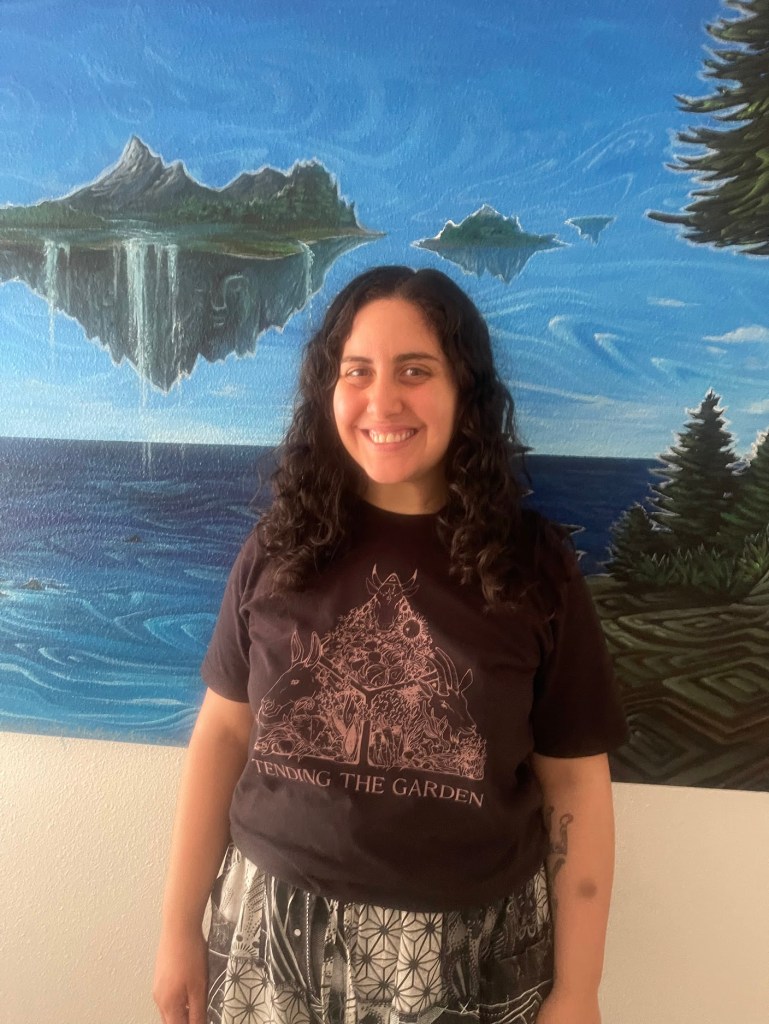
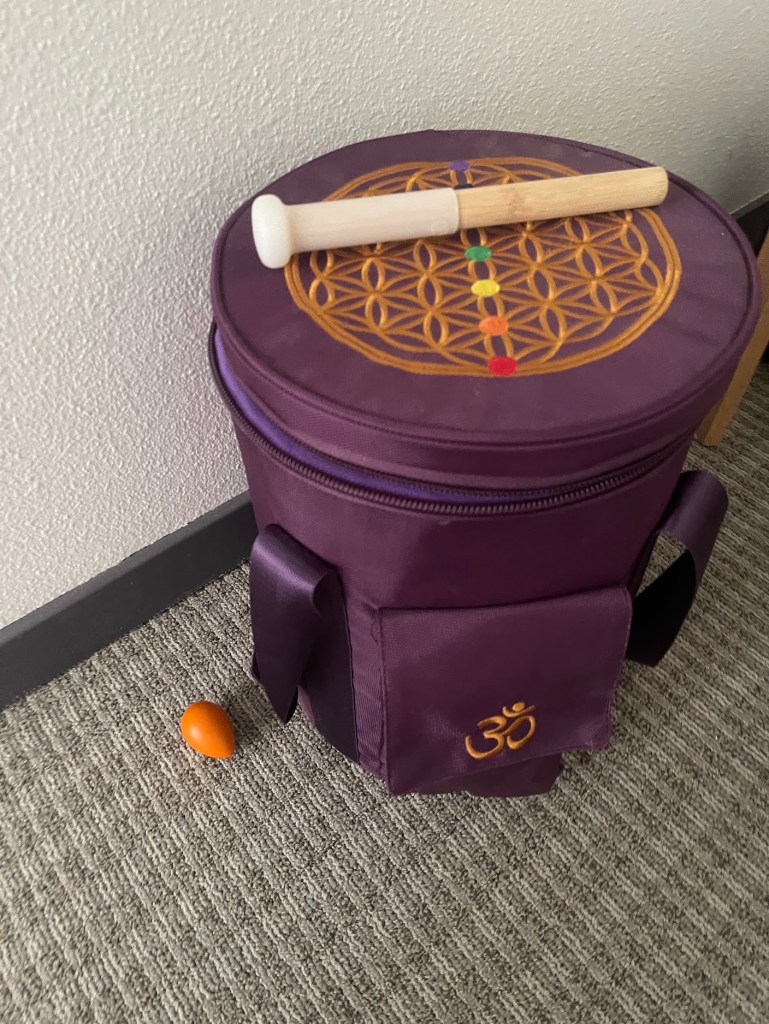
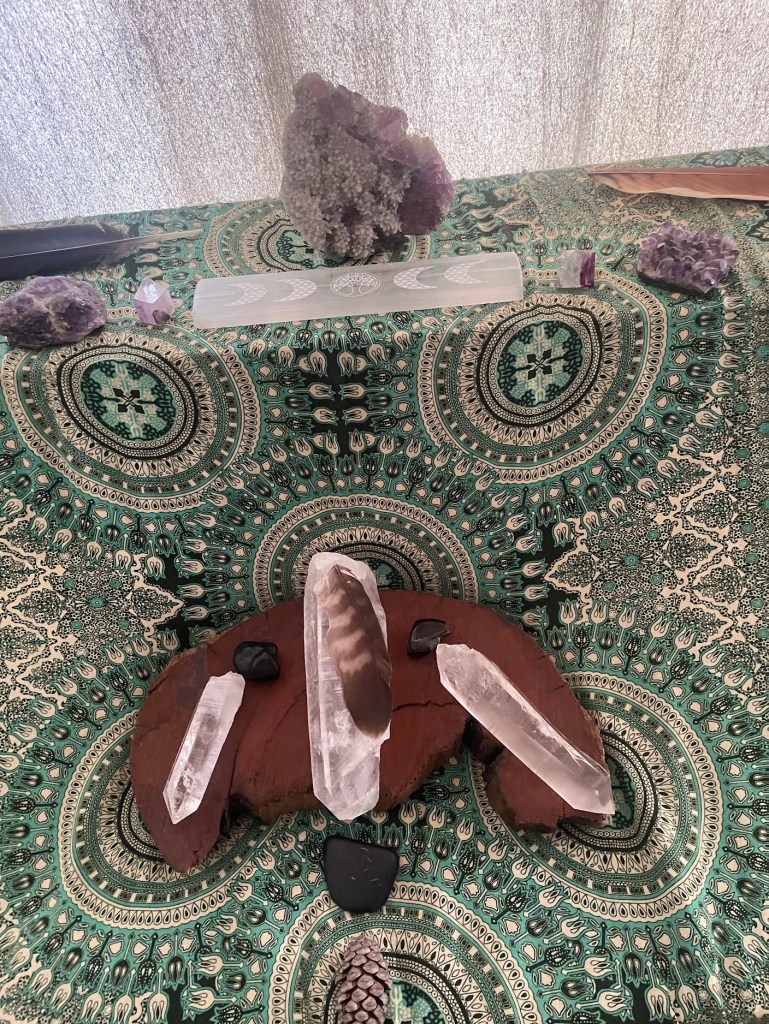
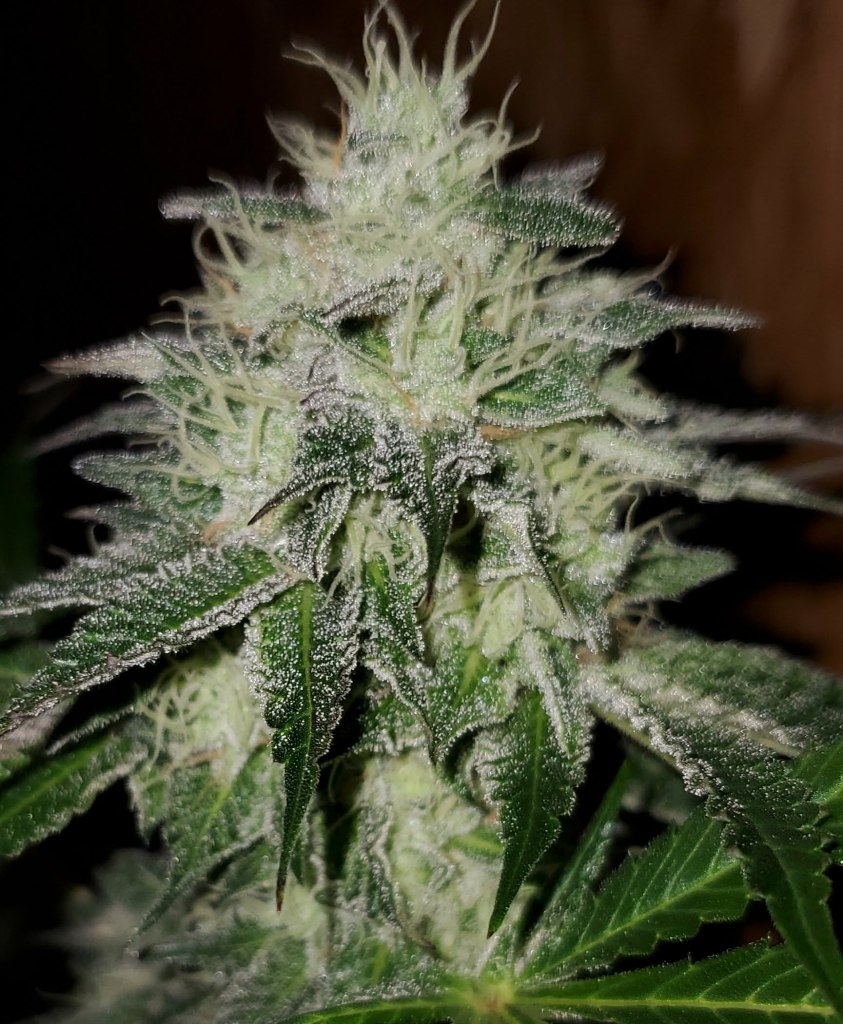
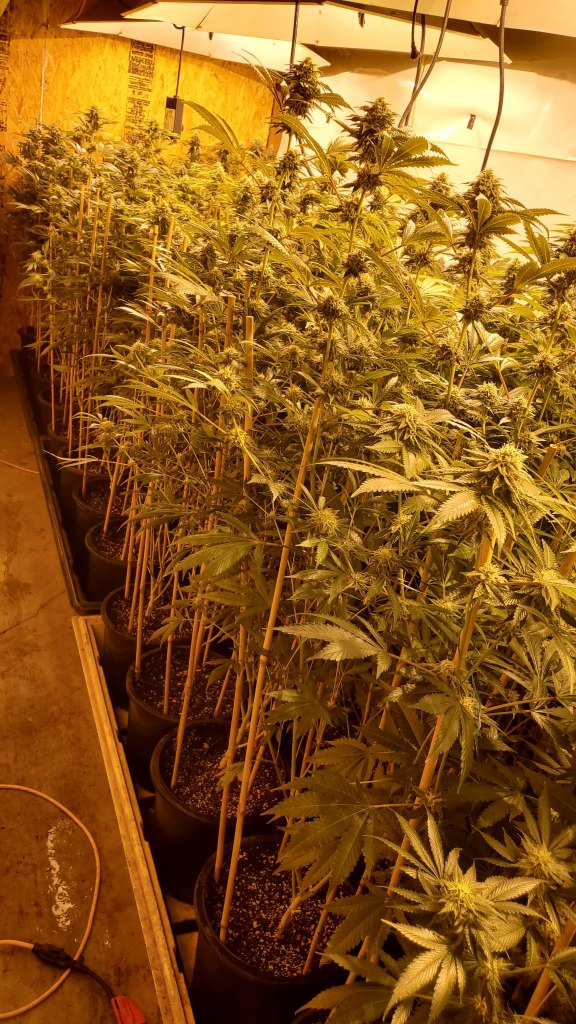
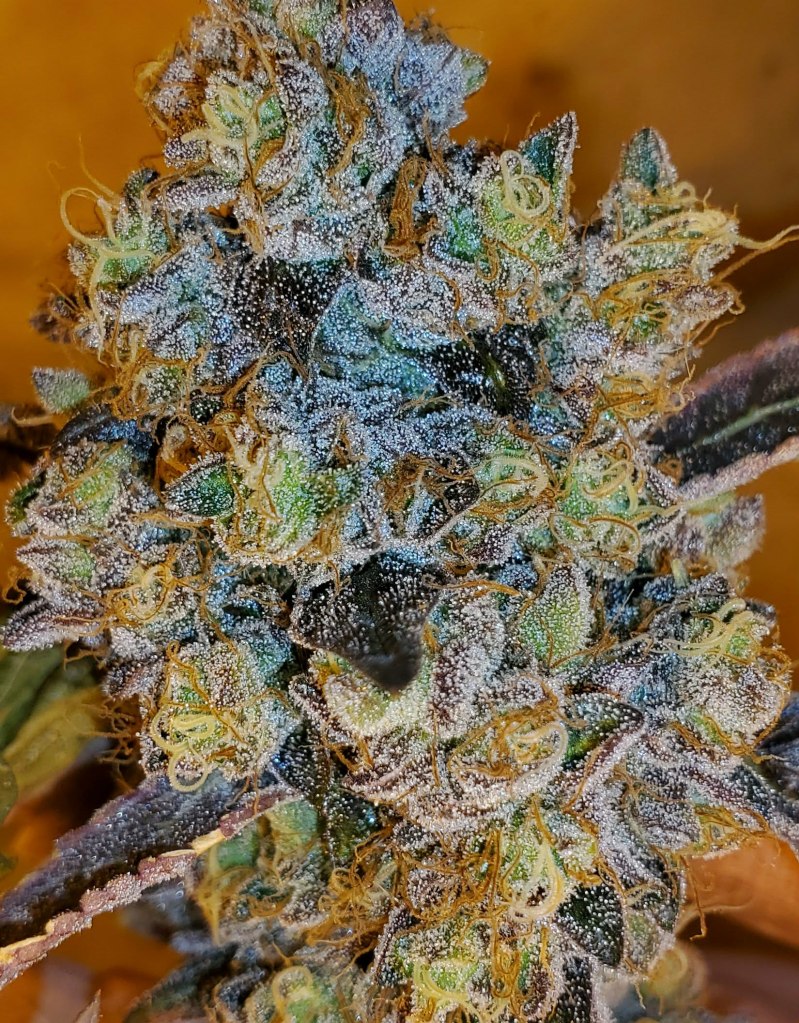
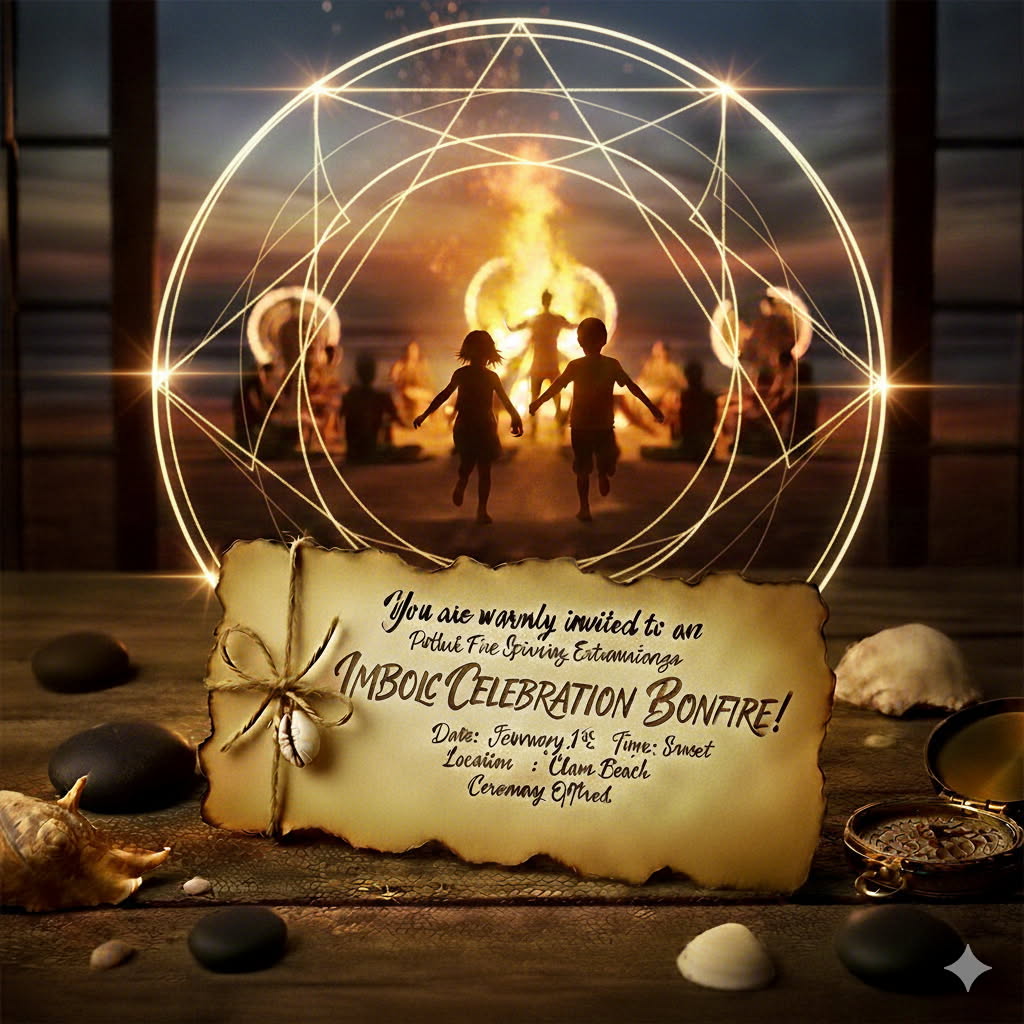

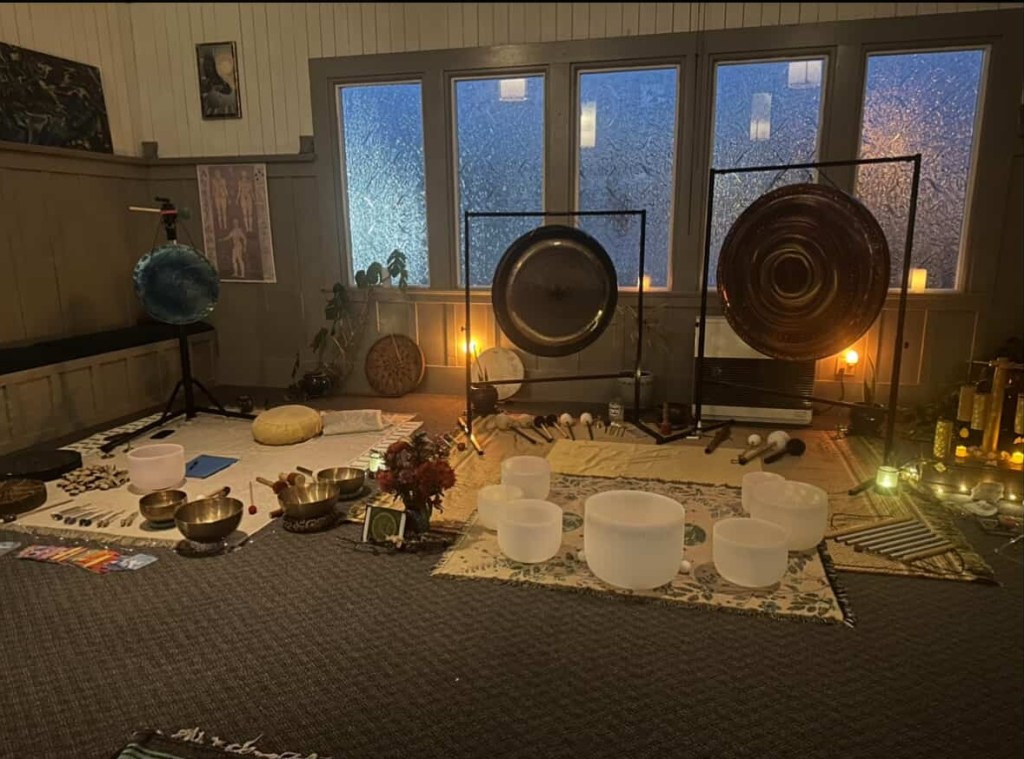
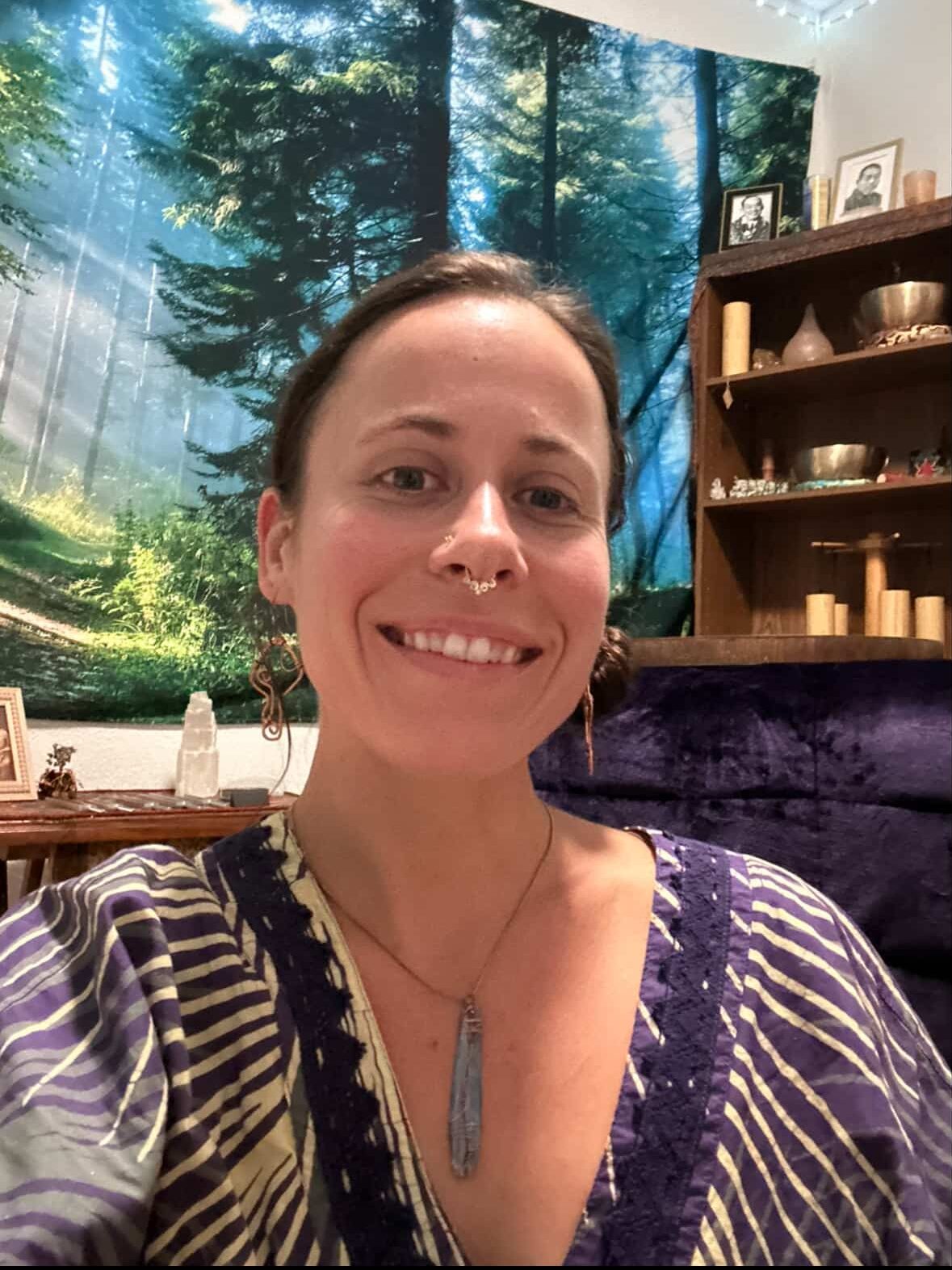


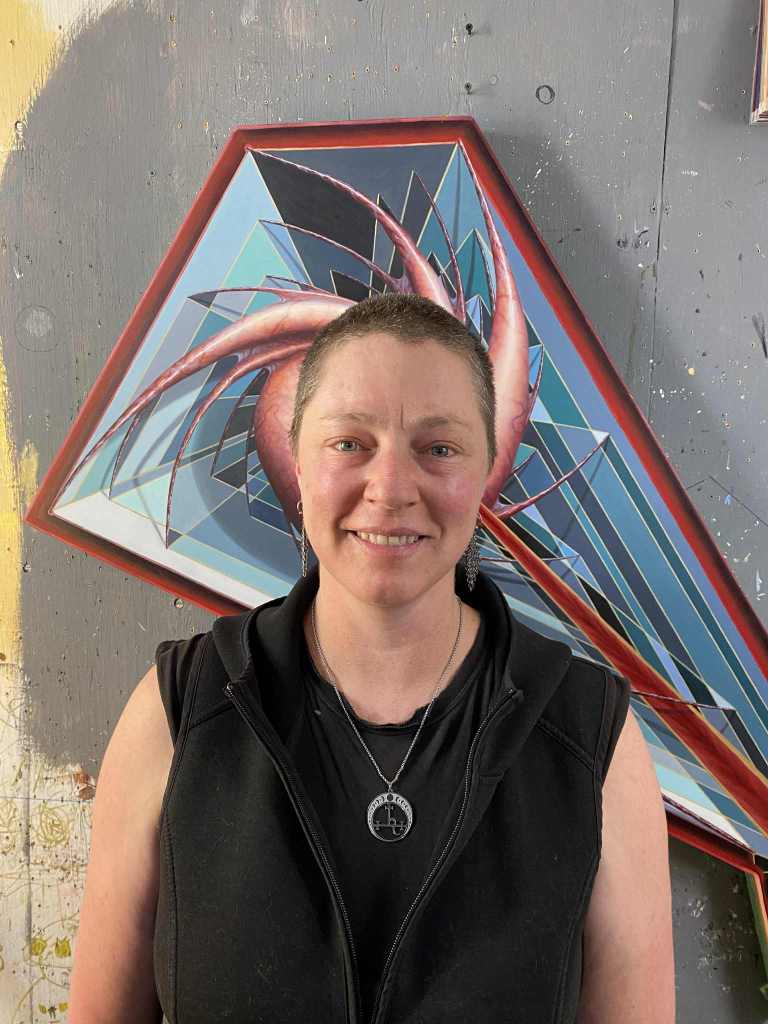

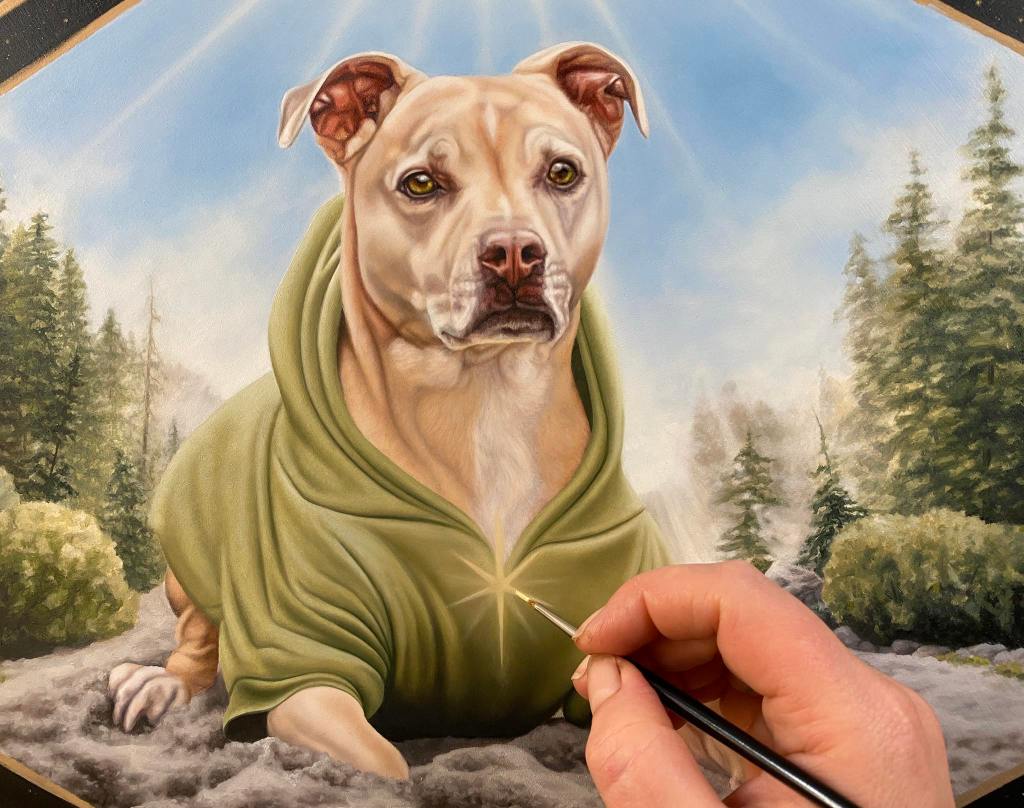


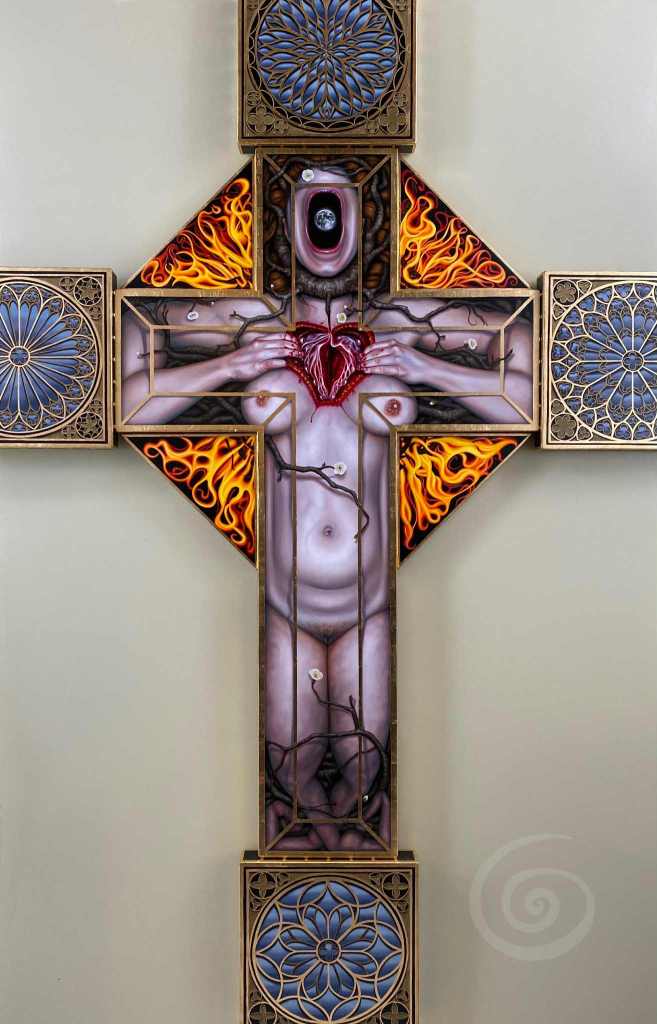
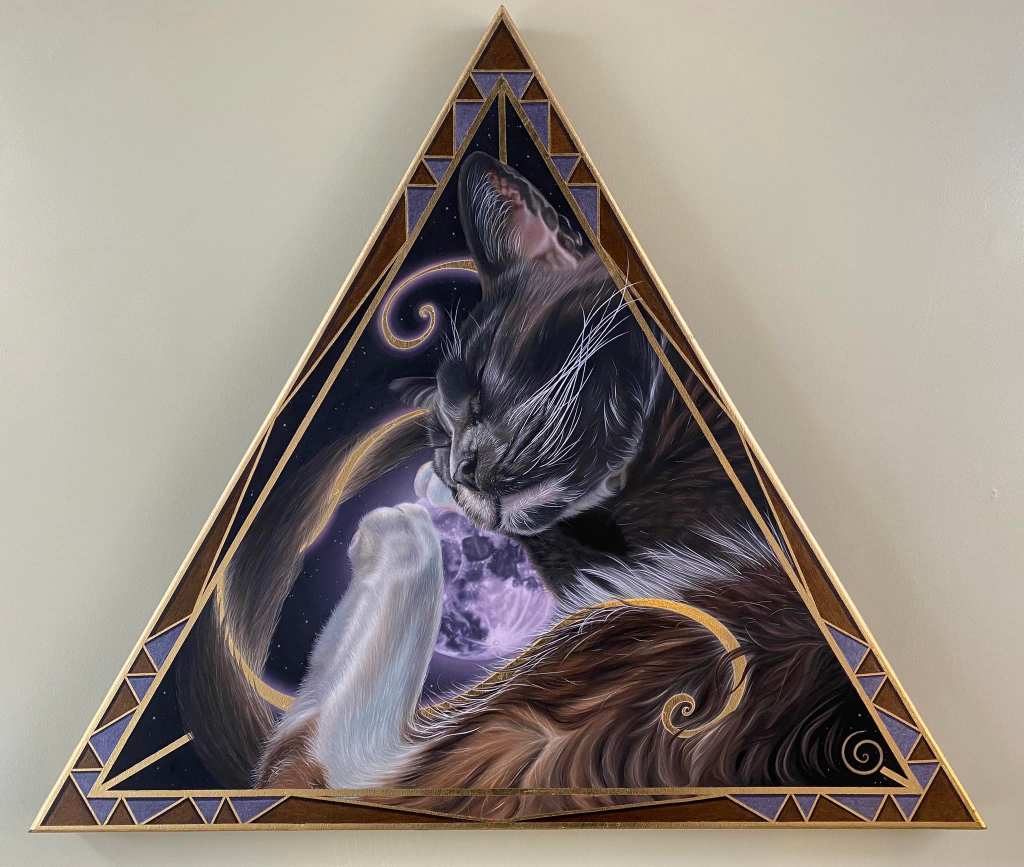









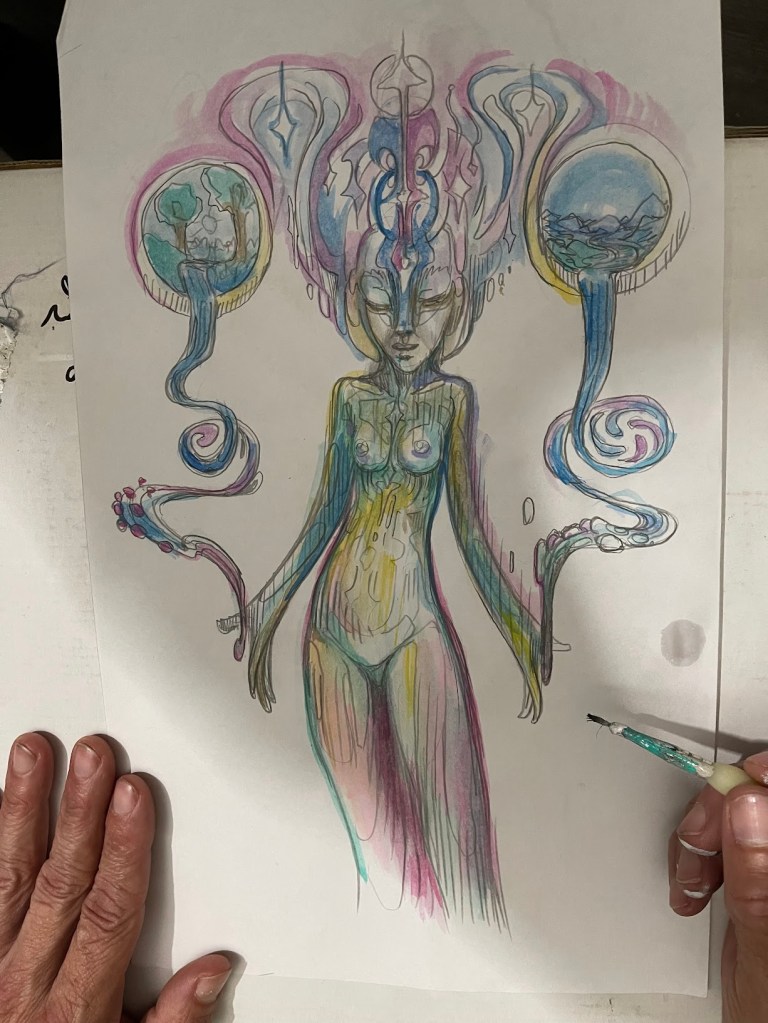
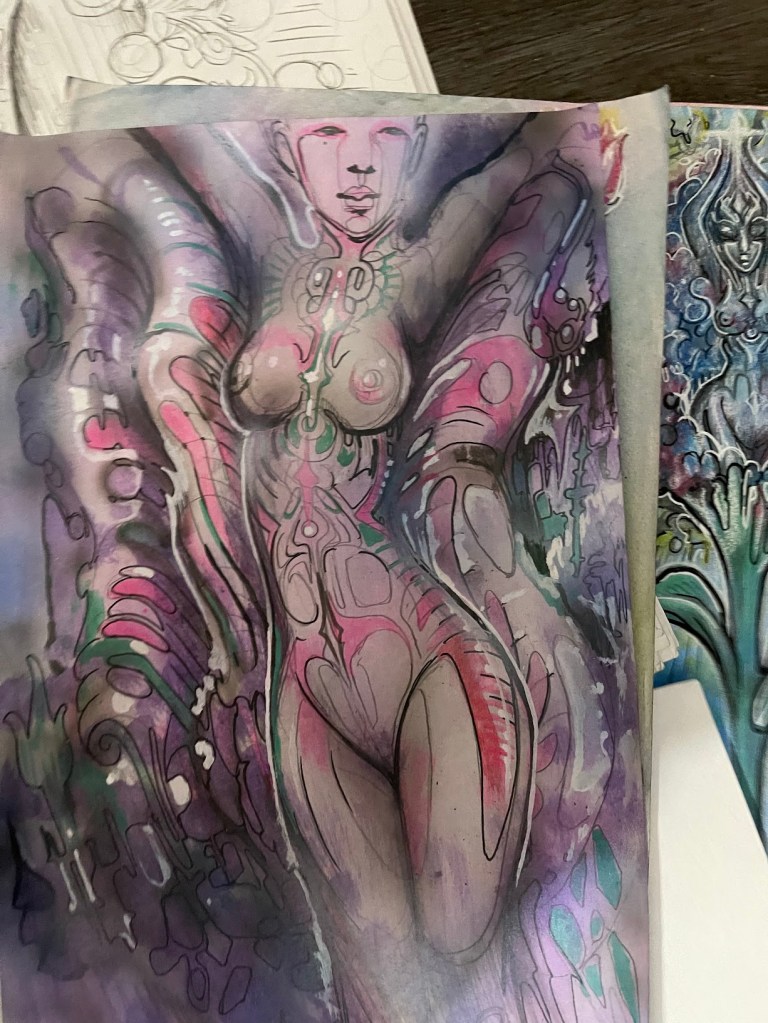

 Little Lost Forest