On Dec 21, 2025, I sat down with Anya, and we discussed her new book Embracing the Sacred Flow. You can find it at this Amazon affiliate link. Before we begin with the interview, I’d like to share with you the dedication:
Dedication
This book is dedicated to anyone who has ever felt broken beyond repair, lost without a sense of direction, or silently suffering through the chaos. I see you. It is never too late to reclaim your sense of self, to heal, to transform, and to set yourself free. Spirit is here to guide your soul back home where it’s warm and cozy.
Let’s dive in:
Natascha: Hello, this is Natascha with the Little Lost Forest blog. Today we will be interviewing Anya with the season of Anya and her new book, Embracing the Sacred Flow. We were sitting at the Revolution Roasters with a cup of coffee, and my son Malakai. Anya and I are doing a cross-promotion. She interviewed Spellbound earlier this month and plans to share in the next few weeks I will link the podcast here once it’s available. Anya, how are you doing today?
Anya: I’m doing so well. Just enjoying this beautiful sunny San Diego weather in December. And happy to see you, girlfriend.
Natascha: Yeah, it’s really nice to see you, too. Years of friendship has brought us here to this point where we’re both working on our businesses and our brands, and we get to talk about the different art that we enjoy. And I just so appreciate doing this with you and being here with you today.
Anya: Likewise. Likewise.
Natascha: Can you tell me a little bit about The Season of Anya?
Anya: Yeah. So basically, Season of Anya is an online community, a culmination of healing modalities that are for those of us who are looking to transform ourselves, to transform our personal identities, to maybe transform our physical, mental, spiritual health and finding ourselves. Typically, it’s a journey for those of us who are interested in spirituality. My main healing modalities with The Season of Anya are yoga, magick, and witchcraft. Yoga is for grounding. Magick is for finding that love for life. And then witchcraft is the ritual. It is the practice that ties it all together. Yoga grounds me, witchcraft elevates me and magick is everything else in between. Because life is ultimately what you make it. And so many of us just really don’t understand how much power we have to change and transform. And I am bringing everyone together to give them their own tools and create a positive community filled with individuals who wish to change themselves and the world for the better.
Natascha: Yeah, that really makes me want to self-reflect and see how I could change my life for the more positive. What got you to start this healing journey?
Anya: What got me started? It all started, probably, I mean, well, I used to be 325lbs. That was not a result of just a girl who loved food, but a girl who was in a lot of pain, a lot of emotional pain. Didn’t know how to process her trauma, didn’t have the tools and resources to just feel normal. That resulted in my weight loss journey, which was my commitment to my physical health. Why physical health? Because the three of them are related; mind, body and Spirit. Right? They all interconnect, and with finding that discipline and with finding that balance within – Then yoga came into my life shortly after, and that taught me kind of how to embrace the physical practice of yoga and learning how to feel good in my body. Then shortly after that, my spiritual practice came into act, and that resulted in me learning how to live a spiritual life so I could transform, but also remain positive and free flowing and just feel better about the trajectory of my life. Because it’s been imperative for me to understand that it is me and only me who’s responsible for my trajectory, not the course that others have set for me my whole life. Same goes for those of you tuning into this today.
Natascha: Yeah, I also started with yoga before I got into my witch practices. So that resonates with me as well. Were there mentors early on that helped you when you were most in pain, or did you find yoga and your spiritual practice on your own?
Anya: Oh, absolutely. There are two groups of people that I find really keen that helped me on my journey. First of all, it was Mel and Kaleo from Rebel and Muse. My friend Kristan invited me to their yoga retreat back in 2018, and from there I realized…how messed up I was. If we’re being perfectly honest. Yoga retreats are so awesome and empowering because they remind you that you’re in a safe space to simply be yourself. That experience slowly started my self-awareness, self-reflection journey of, “oh boy, my normal, is not everybody else’s normal”. So, that kind of was an awakening for me. With that, especially with feeling comfortable in my body and just having kind of that mirror of reflection on me help set the stage for the inner work ahead. Then shortly after I met who would become a huge mentor of mine: Taren S with the House of Witchcraft. She opened the Witches Cottage out here in San Diego, and I got to dance around the bonfire with her and our coven out there for many moons. Through that, I learned spirituality, I learned accountability, I learned healing, I learned what it was to take care of myself and to empower myself, but also how important community is and how we are truly in it for one another.
Natascha: Yeah. On the subject of community, how has your spiritual and health journey changed the way that you hold your friendships and your romantic relationships?
Anya: Ooh. That’s a great question. I feel like it’s taken the people pleaser out of the scenario- for sure. I no longer wish to hold on to what’s not for me. And also with that, though, I do give all my friends the benefit of the doubt through open communication and through being vulnerable and being communicative. I mean, the ones who get it, get it. If I bring up an issue with a friend and be like, hey, what the heck? And they respond- that’s the kind of people I want in my life. I find that romantically, it’s been awful because I realize a lot of partners don’t want to do the work, and it’s hard, especially being at this point in my journey and single. Well, I need somebody who’s at least going to match where I’m at.
Natascha: Well, that’s really important for young folks and for women of all ages to hear. We so easily will go along with what partners want from us because we want to appease them, or we don’t want to be by ourselves. By holding your energy and by being an empowered woman, you’re holding boundaries that maybe some of us put down just to get along with others.
Anya: You know, for better or worse, I sometimes- I feel like I have nothing else to lose. I’ve had some pretty horrible life experiences and with that, you know, has come strength, especially my romantic relationships. And it’s like, ‘Hey, I’ve got nothing to lose,’ so why not walk in faith and see what happens and see if I can actually stop limiting myself and create the life I deserve.
Natascha: Before we get into your book, did you want to tell us any more about The Season of Anya? What kind of content you put out, or products or things that people can engage in?
Anya: Sure! So the Season of Anya is the main hub. I’m really passionate about my free monthly newsletter. So, to those of you tuning in to this, I highly recommend you check that out. That is the heart of my blog. Uh, I know that newsletters are so outdated, but that’s where I share my monthly tips, and not only just that, but also shine light about being in tune with the world around me. I have very cute little witchy stories, I share that are just true moments of surrendering to the flow, and I love sharing those stories, and they often bring a laugh out of my audience and give them opportunities to reflect and connect. So, definitely, definitely- check that out. Then I’m also working on YouTube and social medias and trying to figure out my flow and grind with that. But it all centers back to The Season of Anya community, where ultimately, I’d like to host witchcraft retreats. In fact, next year with my friends at House of Witchcraft, we are co-hosting a retreat in New Orleans in July because I want to give that experience of retreats to the rest of the community, so you too, can learn how to open up and feel safe and vulnerable in a protected environment, an empowering environment and find yourself again.
Natascha: Yeah, that sounds like a great community experience. Does your lineage come into play with your practice?
Anya: Ooh, Great question, actually. It has been for sure. So, I’m Italian, American, first generation, and with my lineage being Italian is so much there’s so much witchcraft actually associated with Italian culture. And it’s just so funny because it’s this interesting connection of witchcraft meets Catholicism. And that was actually understanding my Italian roots, even connecting through the Italian Goddess Aradia and other deities, but specifically, she has really just connected me to the essence of who I am as an Italian American witch. And it has been a really cool journey.
Natascha: All right. Thank you so much for sharing that with us. Here I am looking at Embracing the Sacred Flow. What inspired this book?
Anya: Well, you know, as somebody with really chronic anxiety and an addiction to over productivity and not learning how to just be present in my body, yoga has been a really crucial component for not only my healing journey, but also my life journey. This book kind of just goes over [that]. It’s going to be a multi-volume series. I wanted to give my audience something that’s really easy to read. I mean, honestly, you can read this in an hour or two, and it’s something reflective that gives you prompts for going inward and just kind of tips to get through your life. I talk about some breathing exercises in there. We talk about yoga philosophies, and I talk about learning how to be comfortable and being in tune with your body. Because especially if you are on the path of a witch, learning how to flow and just feel connected to yourself will always, always, always be your saving grace. It’s your anchor. It’s your life force. I’m really proud of it. I’m happy with this content. It’s a start of many, many books to come. I’m excited for you to check it out.
Natascha: If somebody follows the practices in this book, how often do you recommend that they do the yoga, do the breathing? What kind of schedule does this look like in your everyday life?
Anya: Well, yeah. Well, with everyday life, I try to make it very routine where it’s something that you can just tap into immediately. Yes, I do talk about creating an altar and the stretches and the flows, but really, I mean, it’s almost about like micro meditations because we don’t always have time for the big stuff, right? It’s learning on how to feel comfortable and not overwhelmed in any moment. As somebody who had been overwhelmed with literally everything my whole life, this is a new me, you know? But learning how to get rid of that overwhelm and just be here and learning how to release tension in your body and feel comfortable in every moment is life changing and I want to share that freedom with everyone.
Natascha: Wow. That’s amazing. I mean, I feel like if you’re working in a cubicle or if you have children that drive you crazy, or if you’re just a student that’s trying to find their way, this book could really help create a positive routine in your life and a sacred flow that doesn’t only align with the mind and body, but with your higher consciousness and creating a healthy future for the person that’s tapping into this magic. Yes. So, what’s next?
Anya: Ooh, well what’s next? Writing wise, I definitely have been sitting on a spell jars book: Spell Jars 101 book that I just need to kind of polish up a little bit. Just put my last little touches to it. And I really am excited for this upcoming book as well. You know, it’s like, okay, we learn how to tune in, we know how to stay sacred, we know how to stay connected and this book really talks about manifestation. And it demystifies the practice, a little bit of witchcraft, of spells and workings. Because it’s not about sitting at your altar, it’s about getting out there too and doing the work. You want a better life, you got to do the work…while adding a little witchy twist to it. That makes it my own. And I feel like Spell Jars 101 takes a fresh approach that you haven’t seen in your standard witchy books.
Natascha: That’s wonderful. Thank you so much for being an outstanding witch, doing positive work, light work, spiritual work, tuning into the body, soul, and mind. Is there anything else you’d like to share with us before we end the interview?
Anya: No, just go ahead and check me out on my website, subscribe to my free newsletter, and I promise your life will be forever changed.
Natascha: All right. Thank you so much.
Anya: Thanks, girl!
www.theseasonofanya.com to sign up for my free monthly newsletter, blog, and be the first to know about my upcoming witchy retreats.
Natascha: I’m here at Azila’ Cauldron in Eureka with Roman, a visionary artist and OG creative force of Humboldt County. My name is Natascha, and I want to thank you for tuning into the Little Lost Forest blog. I’m beyond excited to dive into the art, theory, history, and creative journey of Roman a.k.a Synchro Mystic. How are you doing?
Roman: Doing pretty good. Thank you.
Natascha: Awesome. Roman, where are you from?
Roman: Mind, body or spirit?
Natascha: All. All of the above.
Roman: I typically say that that way because my body is from Mexico. My spirit is universal, and my mind is global. My mind knows and exists and is part of a global reality that we’re perceiving together. And that definitely is who I am. But also, my physical body is a certain part of who I am, and my spirit is definitely on this mission. That is who I am as well. And those three are distinctly different things in a certain way, and my job is to try and align those together, that’s why.
Natascha: Your universal consciousness has landed you here.
Roman: Yes, but so many dimensions we can talk about that from. And that’s why I like to do art.
Natascha: Wonderful. Well during these interviews, feel free to dive into rabbit holes. We’re all really interested to see what inspires this beautiful art you make.
Roman: Thank you.
Natascha: How old were you when you first started drawing and creating?
Roman: I called myself, and this is, like, one of the most profound and silly, experiences in my life. I called myself an artist at three years old, and I specifically remember this experience that did that. And one of my older sisters came home from school with this big pad of paper, and it looked huge. But then again, I was a little kid, so it might have been a normal sized pad of paper. [Natascha’s Laughter] But then she puts it down, and then she shows me her drawings and I’m like before this moment, I considered myself a magician. And I was like, always pretending to make things disappear out of handkerchiefs and silly things that I saw. And I thought, I’m a magician. So, there’s first, there’s that. And I think that’s very symbolic because I think art is very magical. But anyway, I saw this sketchbook that my sister had, and one there was a crocodile she drew, and I could see a crocodile on this paper with lines drawn on a two-dimensional flat piece of paper, and I could see the three-dimensional crocodile that it was. And I was like, wow, that’s cool. And then the next one was a girl in a bikini. And I was like, that’s a girl in a bikini. I know exactly what it is. And it’s just a few simple lines on a flat piece of paper. And I was like, that’s magical. [Natascha: Mhm.] So, from that moment onward, I instantly call myself an artist, even though I didn’t know how to draw or whatever, because, uh, because at first, I was a magician. So, what did you have to learn?
Natascha: Would you say at a young age you related magic to art.
Roman: Instantly at three years old.
Natascha: That’s wonderful. I think you kind of answered this question, but what initially inspired you? Maybe outside of your sister’s drawing, what were some of the inspirations that have ended up fueling your creativity now?
Roman: Oh, man, I could have countless and countless stories, but I guess one fundamental, um, experience was, uh, being in Seattle during a very critical time in history, and I mean that in many different ways. The music scene and then the technological explosion that was coming from Microsoft at that time, an era when the very beginning and I tried LSD and, something I was never really too proud to boast about. But I also think that it’s a very important thing to express, that there’s these moments of that we can utilize as tools to activate something. Because on my psychedelic awakening, I definitely had so many things come together. And it isn’t all based on the psychedelic awakening. The Psychedelic Awakening gave me a view into the things that were already happening in my life. Like, calling myself a artist/ magician at three years old and a lot of mystical experiences that I never really understood growing up. That happened throughout my life. But for some reason, having a reflection like psychedelics or something external outside of us, like aliens or whatever, if you’re blessed enough to see that. But these external reflections allow us to look back at ourselves to witness these things from a third point perspective. And that helps us wake up, you know, like, oh, yeah, I notice these patterns throughout my life, I’ve never really realized how to deal with those experiences. And sometimes when you have like a psychedelic awakening, it gives you an angle to look at those things through.
Natascha: Wonderful. How would you define visionary art?
Roman: Well, visionary art to me means a lot of things. It leads me to the next thing I’m going to talk about. But just to answer your question first is, you know, at first when I got introduced to visionary Art, it was, outsider art. That was because I looked at a visionary art, magazine when I was really young, and I remembered i. It was more from people that I didn’t go to school to do art. For some reason, it was like, they call them outsider art. I thought that was interesting because there’s a visionary art museum with, uh, all these artists in there before the psychedelic visionary art movement. So then when they called the visionary art movement visionary art movement, it kind of like, wasn’t sure about that. And also, to me, vision means of our vision. But I don’t know what other art isn’t from our vision as much. (Natascha: Okay.) But don’t get me wrong, I still use that title to express our movement of artists because it’s something that people recognize right now within our circles of people, which is very powerful.
Natascha: Mhm.
Roman: However, I don’t think that it specifically talks about the movement that I’m a part of which I feel like the people of artists that you recognize yourself liking to are not a part of necessarily only. I created an art movement called the Interdimensional Art movement. (Natascha: Lovely.) And I even told Alex Gray about these things before we named the thing visionary art movement. And this was a long time ago. And he never even heard of that. And he really was vibrating with that idea, too. Which is really cool to always be able to share your ideas with other people and get reflection. And the Interdimensional art movement the acronym is I.M. (Natascha: Nice.) It’s based on the finite of yourself, your personality, your ego or whatever it is you’re that you’re wanting to express. And then the full title, Interdimensional Art movement has no limits. I think that’s more true to the what the visionary art movement that we synchronize with at the moment.
Natascha: Interdimensional Art Movement.Got it. Can you share a bit about your history as a visionary artist?
Roman: To simplify things, psychedelic awakening in Seattle. Recognizing everything at once and wanting to be part of an art movement. Because as an artist, you always look back at art movements and you relate to certain groups like the Surrealists, the Pre-Raphaelites, or like any segment throughout history, which is really inspired in certain ones inspired us more than others. Art Nouveau or whatever. I couldn’t deny that I didn’t want- I wanted to be part of a group like that, but there was no real group to that I could associate myself to at that moment. Plus, I wasn’t that advanced. But these ideas were coming. These desires were coming to me. But then I started paying attention to what kind of art movement would I want to be a part of? And then that’s when a lot of answers started coming, and that’s when I recognized, oh, those art movements. And we’re answering these questions that they ask themselves. And that’s why they became art movements, because they were answering a question of defining who we are as a culture. And that’s what creates a movement. And we attract each other that are representing this, this reality together. And then, um, that harmonizes us as a collective.
Natascha: That’s beautiful. Who are some of your colleagues in the visionary art community?
Roman: To me, I love the way you ask because there’s a seriousness to it. And then that kind of makes me laugh because I’m also a space cadet artist. But my colleagues. I’ve been blessed enough to have colleagues of all different sorts. Like, my Seattle experience was pretty profound because, when I was having this psychedelic awakening, and I was reinterpreting reality. And then I was like, I want to hang out with the Beatles. But the Beatles already happened many years before me. So, like, put the vibration I was getting the LSD vibe or whatever, you know, and I was like, wait a minute, I’m in Seattle. [Natascha laughs.] Just to bring that into perspective and for a few many years I would keep on running into people like Nirvana, Soundgarden, Alice in Chains. And this is my canvas. And I played in this dimension for a few years of running into these people all the time, getting to know these people from different perspectives. Like, I have so many memories to even remember at the moment, but one of them that’s on my mind right now is, uh, Soundgarden when they were recording BadMotorFinger. They had my paintings in the studio while they were recording a little bit of that album and stuff like that.
Roman: I remember going in there and picking up my artwork and them being all, like, polite and kind and gentle, but they’re like, really, they’re all really tall, like over six feet, you know? For me, that’s tall. Just having those memories ingrained in my brain and seeing how influential these people were, it was pretty intense. So there’s colleagues like that, but more precisely, to the art world is like, from Alex Grey. I don’t know. It’s hard to tell because the way that I learned about my colleagues is through a party that we started. That’s why it’s really hard to answer that question, because I have to, like, share the story of why I know these people. Because if I say Alex Grey, who might be the most famous and people recognize him, but there’s. I don’t want to skew the vibe just by that attention when there’s so many other beautiful and amazing artists and they all were attracted from this interdimensional art show we threw up in Seattle. And this was the beginning of before where? Before what we were doing. There was hardly ever, like, a live artist and galleries at events. That’s like something that was, I wouldn’t want to say that we started it, but we definitely made it a ritual.
Roman: And it brought together all these artists that some are now famous visionary artists from Luke Brown, Carrie Thompson. It’s like really challenging to even start naming them because there’s so many that I can’t even name. A lot of them, I’m sure that you would recognize. For instance, like Carrie Thompson came to make the most beautiful stages of electronic events throughout the world. You would recognize them because they’re super beautiful and Alex Gray and Mark Henson. I don’t know if you know Mark Henson, but he’s an amazing artist from not that far from here, from Lake County. And if I showed you his art, you would obviously recognize him.
But the reason why I really enjoy these people is because it was a family calling that brought us together, like these shows that we used to throw up in Seattle. Were exactly that. It really bonded a large group of artists together that never recognized themselves before. Now it’s easy to see. It’s all easily recognizable. But before then, we didn’t have anybody. This was like the beginning of us recognizing each other, which was really amazing.
-Roman
Natascha: Wonderful. At that time, were you part of a community? You say we.
Roman: I would say we because I can’t. I don’t ever want to feel like I’m taking responsibility for it. That’s one aspect which is still egotistical, but I am an ego, [laughter] and it’s very influential to where my idea is coming from. But at the same time, it is a collective thing that I’m just being aware of and I’m wanting to share that with people. So, I say we because, you know, I might have been inspiring certain ideas, but it came to be through a network of different people.
Natascha: Awesome. Okay. So, in your art, you use mixed media in your paintings on canvas, and they’re all very incredible and beautiful. We’ve discussed acrylic paint, pencil and paint pens in the past. Are there other mediums you’d love to work with?
Roman: Did you say airbrush?
Natascha: No.
Roman: That’s probably one of my favorite things, even though my relationship hasn’t been too intense with it yet lately. Definitely airbrush. Cool pencil for sure. Yeah.
Natascha: That leads us to our next question. What role does pencil play in your paintings beyond sketching the initial image?
Roman: Well, lately it’s been like taking a central role and I’ve allowed myself to draw more. Then I keep on realizing why I didn’t allow myself to do that more often. Because it really brings my vision together. Because I really love to draw with a pencil, and it really flows. And it’s a relationship between the lead and the and whatever the paper or canvas or whatever. It allows me to put a lot of detail as soon as I start painting, it becomes an emotional thing and I start relating to the canvas with emotions. And then oftentimes I’m I get lost in the emotions of it. When drawing with a pencil, it’s more mental, more ideas. That helps me like navigate because I’m an idea person. I can constantly be channeling my ideas, but then I bring in the emotions of color, and that’s when it starts to get the feeling. But it’s not as controllable for me.
Natascha: Can we take a second and look at this painting over to your left. Is there a pencil in that painting right there?
Roman: Yeah, this one is one of like I said recently, it’s been taking main stage. This is one of the paintings that I did as a live painting. Mhm. And I just allowed myself to just feel the music and vibe and not care about painting and just draw. So I drew pretty much the whole thing with pencil. And then I loosely started airbrushing and painting on top of it, but without covering the pencil. Of course it’s very raw and very loose. But there’s something I like about it. There’s something metallic about it that I really like.
Natascha: How do you select your color palette? You have a very nice rainbow assortment of colors in a lot of your paintings.
Roman: Yeah, definitely spectral for sure, because that’s the reality that I’ve seen. You know, a lot of my art was inspired by me walking around a lot. So, whatever I could bring with me, because that’s the way I’ve explored my reality. But also, with what I have and what I had for a while was black India ink and with airbrush, and that was it, a big bottle of it. And then I started wanting to paint with color. And then you realize you want the least amount of colors, or that was my experience. And then that led me to like, oh, the spectrum, the southern colors. From here I can do different shades of shades of whatever. That was if I look at it from the physical aspect. Like I said, you asked me who I am or, you know, uh, that’s physical. There’s also the mental and the mental is, it’s more chakra style. I use the rainbow colors because I feel like there are these seven dimensions. Those are perceiving reality. So, to me, when I learned about the chakras, it started making sense.
And being a psychedelic artist, I like to travel to different dimensions, so to speak. And the chakra system seems to be a way to understand that because each of the colors are a vibration and each vibration has a negative and a positive polarity. And if you start understanding how they interact with each other, then you can travel consciousness in that manner.
-Roman
Roman: And that’s the primary reason I use the rainbow color palette.
Natascha: Oh. That’s lovely. I hear a lot of entombment in your body when you paint and meditation as you’re painting and choosing your color palette is very interesting. Can you tell us more about the reoccurring themes in your work, what those might look like?
Roman: Definitely a lot of meditating beings, and sometimes I question myself on that. But like, I’ve had visions of tapping higher states of consciousness and feeling that. And there’s always people in the meditating pose and really high vibration. Maybe it’s just me, but I’ve heard this from other people, too that these beings come in from other or we tap into a vibration or dimension that they are meditating in. When I experience that, it makes so much sense why I would be so infatuated with painting that because I’m not necessarily Buddhist, but I definitely visit the teachings a lot because very super profound. And it definitely helps as far as, you know, being present with yourself. So, there’s all those things too. I definitely have to admit there’s a lot of goddess imagery. A lot of awakening. A lot of dance parties. The dance parties are the symbol for humanity, I feel.
Natascha: Yeah. Who are the characters that we’re looking at? Do they have names? Personalities?
Roman: I don’t think about it too much, because I think it’s just like who we are on one level. So, I don’t really recognize any separation from just a snapshot of anywhere I would go. There are people dancing or whatever. That’s the main thing. But then the other profound thing is, I don’t know if you’ve heard of Tribe 13, but that was like our production company up in Seattle that through the Interdimensional Art shows. And it still continues to this day. And we have thousands of artists connected to that name. I think that you would consider visionary artists specifically. But essentially Tribe 13 is a traveling gallery at different events and that’s what we’ve been doing since Seattle, but definitely been to that gallery like boom Festival and Envision Festival and a myriad of other ones.
Natascha: You know, he just posted this on your Instagram, but can you tell us more about the meaning of Tribe 13? What where did you guys derive the name from
Roman: It’s really profound vision that happened to me as I was awakening. I told you about me about my psychedelic awakening that led me into really questioning my reality and really, dropping out, so to speak, to just meditate on these things. I started recognizing different patterns and the desire to be myself and to be accepted for myself and accept other people for themselves, which is a freedom, and all based on just the basic fundamentals of this country. So, it kind of unified all these things. But I was recognizing that nobody’s really living up to it. What does that mean? So, then I started questioning who I am. Who? Where do I belong? Or as a part of society or whatever? As I was having these profound questions, I would run into signs of different things.
And Tribe 13 stems from those realizations- as I was awakening up to this way of looking at reality- the symbols are infinite, and I can point them out later. But essentially what makes a Tribe 13 member is to recognize that we create reality, which means the only way to tap into this presence is to be in a state of giving and constant giving.
-Roman
Roman: A lot of people say, oh, yeah, it makes a lot of sense. That way you can receive. I’m like, no, that’s not the point. You can’t, um, you can’t live in a binary perspective. It’s got to be a unified perspective. And it has to come from source. So, to become a Tribe 13 member is to recognize that you are marrying yourself to your true self, which essentially synchronizes, synchronizes that to all the other beings that are doing that themselves. There’s no control mechanism, no one’s better or worse than you from from that perspective, those kind of perspectives can only come from the outer world. But the outer world is not a reality because we have to be in a state of giving. If you’re wanting to receive things, and that is one way of looking at it, but that you’re going to receive an illusion. So, Tribe 13 is the beings that are synchronized by giving from within out. Which art is the symbol of.
Natascha: Wonderful.
Natascha: I you’ve been talking about spirituality a lot, but how does spirituality influence your creative process?
Roman: Well, it helps me recognize who I am. You ask me who I was in the beginning, and I can’t answer that from one perspective. Like mind, body and spirit and spirituality. I feel like it helps guide us into what we’re supposed to be doing or wanting to do. And we don’t have to be deceived by an external belief of spirit or whatever, but to really recognize what you’re really wanting to intend as your person on this earth, which is really basic and not spiritual at all. But I would consider that spirituality because, again, chapter 13 and the vision of having to offer yourself from this source, from this center, is crucial to that. And why I would call it spirit is because it’s beyond what I could perceive. If I’m in a state of offering, I will be in this state of awe of the actual manifestation, if that’s going on.
Natascha: Would you say your art is an extension of that?
Roman: Without a doubt. But what is not. Everything is from that state. But oftentimes comes from like a really, maybe not evolved state or a weird interpretation or even negative. All these things have a way of manifesting.
Natascha: Sure. Yeah. Okay. What draws you to sacred geometry?
Roman: I definitely use sacred geometry as a thing, but I never really stick to it like some of my contemporaries, for sure. Um. Uh, yeah, I have, like, this deep gratitude for it. But I was thinking, like, if, uh, sacred geometry exists, then, uh, we are part of this, uh, sacred geometry. So, whatever I do is a part of the sacred geometry, because I can’t have a choice other than to create through the sacred geometry. So then at that point, I’m like, out the door. Don’t pay attention to it.
Natascha: Don’t even think about it.
Roman: I know exactly.
Natascha: It’s in the flowers, it’s already there.
Roman: Exactly.
Natascha: All right. What about your local community? How does that inspire your art?
Roman: That it confuses me, which inspires my art. I think our community and that’s why I, like I make a big deal with the dance party and social event because it gives us a view into our community. Where we come and show our art, our dance, our vibe, our talk, or this or the way we get drunk and shitfaced. I only say that that way because we need a safe place that people get to experience themselves and then figure out themselves so they can correct themselves. And I feel that these social settings in a loving and open environment have a way to heal. So those kinds of experiences wouldn’t be happening. And I just say that because we have a lot of healing to do, and we really need to, like, allow people to people to process their inspiration by not just accepting a rude behavior, but to recognizing and knowing that being recognized also starts having an alignment of sorts.
Natascha: I really appreciate you saying that. What shifts have you noticed in the festival scene, and why do you keep returning as an artist?
Roman: Well, to me, if there’s going to be any time traveler’s ever to come into existence, they’ll probably come through portals such as psychedelic events throughout the world.
Natascha: Cool.
Roman: I really believe that because when we go to an event like this with the artists, with the musicians, with the styles, with everybody offering their little trips, it really is like an eclectic group of people that are highly open and well, as far as judging against other forms of people in the world. We’re definitely at that point because we’re in this offering state of being or curious state of being, I guess might be better. That it allows a lot of things to come through, and that’s exciting to me.
Natascha: Kind of like they’re creating something new in these communities. There’s some kind of evolution/ evolving going on.
Roman: I definitely think that there is, but that it’s up to us for being open, because the opposite is also true, where people are being dumb and like, not learning or whatever. But I think that’s part of the fun for me because and what keeps me coming back is because I’m coming back now as an older person that has experienced certain things and like sometimes, I’ll get on my, like, flow where, like, I already know every conversation. [Natascha: Oh, no] -in a really amazing way. Not that I know the whole conversation, but what people are experiencing. And I feel like if we can develop our language, we can help bring people through a lot of experiences, a lot faster by just communicating with each other. And that’s one of my favorite things at a festival.
Like when I open myself up, I get attracted to these little circles and we get to share the pipe and then talk, and then all of a sudden, they’re like I had this one vision, blah blah, blah blah. I’m like, I’m like, I would look at the person and say, so what? And then they’re like, got their little spirit shattered. But then they recognize, like, what do you mean? Like, well, what are you going to do about it? And then like start talking to people like that and then like really brings this awareness to the person’s trip, like, oh, somebody’s actually listening to me. And then they go even deeper into their thing. And then you experience those kinds of awakenings so you can express your awakening to those people, and then you can stop and start helping guide this awakening collectively. So yes, there is an evolution of sorts like that.
-Roman
Natascha: Like, cool. So, on a global level, what changes would you like to see and how do you channel that vision into your art?
Roman: Well, there’s only one mission. The mission is to recognize that everything comes from within, out, and start not judging the external world or feeling like the you’re going to get validation from the external world. But to really believe in oneself, to be able to provide the offering that you really want to provide to the external world, not the other way around. If we could all start understanding that that’s how we fit in.
I feel like that’s when the big change happens, because so many people are trying to consume what they need to be or trying to acquire a sense of belonging from an external world to validate themselves. And it really screws up the whole mechanism of our existence. Because the universe is also like a, not an ego. So, it’s like whatever we’re creating is like going to manifest, uh, hugely, you know, because it’s like what we’re focusing on at the moment. So, I feel like once we start offering our true gift from inside then the universe reacts and recognizes that it can only provide abundance.
-Roman
Natascha: Lovely. That goes back to giving, giving, giving, giving. I love that so much. What upcoming events can we expect to see you at?
Roman: I’m excited to show my art across the street at Los Bagels next month in Eureka.
Natascha: Arts alive, right?
Roman: Yeah. Yeah. I still got a piece myself together, so I’m like, oh, yeah. That’s happening.
Natascha: Wonderful. What are some of your bigger goals as an artist?
Roman: I don’t know, I would like to write a book. I guess that’s one of my goals, because then I can solidify what I’ve been talking to with every people and just document it to be able to share that idea to other people, and it’s always been a lifelong dream. As an artist, oh, artist book, that’s an accomplishment. Uh, so there’s that. But that’s the physical. But on the spiritual plane, I’m on the quest to the eternal party at the end of time. Cool.
Natascha: I’ll meet you there.
Roman: Well, that’s the that’s the trick you just mentioned there. But I’m talking about the end of time. So, there are parties right. Right now.
Natascha: That’s happening right now. Yeah, we’re in it.
Roman: It comes back from the state of giving. That’s how you tap into it. So, if you’re in a constant state of giving, you’re at the eternal party.
Natascha: I love that. Awesome. Well, Roman, thank you so much for taking the time to chat with us. We’re here at Azila’s Cauldron. You can find it on Instagram at @azilascauldron. It’s been an absolute pleasure. You can find Roman’s Instagram @Synchromystic and a huge thank you as well to Julian for recording this interview. You can check out his work on Instagram @depixture_media. All right. Thank you everyone.
After being in the festival scene for ten years, I have been introduced to a fair share of magical creatures. Most women I run into associate with the magical Faye. This includes fairies, pixies, and whatever version of the winged, magical creatures. I’ve never been gentle or graceful. Faye is different from the category I fall under. For me to manifest, I have to call to the Earth, ground down, clear my mind, and call upon helping energy. It has never been a flicker of a wand or a little bit of pixie dust; in other words, things have never come to me easily.
I have realized that I stomp on the ground, dance like a monkey, and sneeze like an elephant. My space is organized for those who can appreciate an earthly way of organization, and my heart is always open until given a reason to be closed, and then it’s hard to get it to open up again. Now trolls are a Norwegian myth. They are creatures of the Earth, and when exposed to the sun, they turn to stone. They live in solitude or small clans. They travel and like to make dark, damp, and forgotten places of the forest their home. They are often criticized for being evil and ugly, but trolls are widely misunderstood. They are also full of knowledge, hope, and adventure. Trolls can come in all sizes but are descendants of giants; hence they are known to be large creatures. Some trolls are forest trolls, bridge trolls, and dormant underground trolls. Hell, I think I started as a desert troll. Dancing to drum and bass and dark house out in the High/ Mohave desert. Spinning fire in the dust, the audience being the stars whom I was sure could see my flames. My point is we don’t all have to be fairies, and we don’t have to give a damn what other people think of us.
As a troll, I have a dry sense of humor but find myself funny, laughing in my head over my jokes. I enjoy kicking up dirt, and before I met my husband, I searched for him at every party, gathering, and event, stomping around till the wee night. This fire kept me going and awake, making me particularly worn and dirty compared to my peers. When I met Jeremy and told him my weird troll idealism, he said he knew I was the one. He is the hermit. He is the gatekeeper. He is a source of hermetic philosophy. When I met him, we fit like a glove; when we are apart, like a puzzle, not all the pieces are there.
I get criticized by the wisest of fairy folk for my trollin’. I also understand where they come from. Why would you call yourself that? Why would you categorize yourself as something dimwitted and ugly? Well, my life wasn’t full of acceptance. Instead, I found myself rejected, pushed away and exiled. The more time I spent alone, the more I found myself, learned to express my weird ways, and came to peace with who I am. The more I come into myself, the less I have to hide, and the more I can turn away from the people who hurt me. It’s hard to let go of the people I have been told to trust, those who are supposed to guide me. Having a partner who loves and accepts me allows me to let go of that crow pecking at my shoulder, telling me I can’t do it, I’m not good enough, I’m incapable. Even more so, he has helped me gain the energy to turn away from the people I trusted to guide me, that instead ostracized and controlled me. By turning away, I have given myself space to love myself, work on myself, and be myself- not what society has told me I must be.
I am coming to a remarkable transition in my life where I can break away from the societal norms that were pressured onto me, the long aboding laws that were carved into my mind and body, and instead make my own story up, my reality—one where I fit into my version of self, can reach my potential and can grow in my art, literature, and well-being. My advice is not to be scared to go against the grain, and when everyone tells you, why would you want to be that? Why would you categorize yourself as something like that? Make your own narrative. Not every troll has to be rude, ugly, and drooling. No, the trolls are working with the Earth to help create the space and magic the fairies live in. Respect all creatures, magical or not, and find your own potential.
I just finished Healing Through Writing, a ten-week writing group hosted by Francesca Lia Block. Francesca has been my favorite writer since I was twelve and readI Was A Teenage Fairy, “a postmodern fairy tale, a teen model’s friendship with a fairy helps her overcome abuse,” (amazon.com) and the last book I finished was House of Hearts, her newest book with themes of mythology, death, and rebirth taken place at the Salton Sea. I always appreciated her work because she writes about taboo, abnormal, and traumatic topics accompanied (or disguised) by magical realism. Her language, details, and symbols will take you to another world, engulf you in its essence and bring you back into your existence more light-hearted. I always wanted to be a writer, and after reading Francesca’s books, I knew why; I had never felt more understood.
I recommend this course. I finished my BA at Full Sail University in creative writing but struggled to publish. Since I graduated, I have taken a writing class at a community college. In this course, I read and analyzed plenty. I even started a new story, but I wanted more. I had yet to accomplish what I wanted. I came to Francesca with questions about getting a Master’s. If you read my blog post on my BA experience, you know I am overwhelmed with student loans and think college can be risky. She told me about her writing group. I’d known about it but needed the money for it. We worked out a payment plan, and I was ecstatic to dive in.
We met on Sundays on Zoom and submitted ten pages a week, along with the answers to the questions she provided. She used the twelve questions from her book The Thorn Necklace and other questions for deeper thinking. These questions weren’t just about writing but about you, the writer. I am a brick wall regarding trauma, but even these questions helped me open up and reflect. As a writer, I learned that we are pushed to express our deepest desires, write about our childhood, admit our flaws, and appreciate our gifts. After all, without these things, good characters wouldn’t exist.
So, of course, I struggled. I struggled to open up, struggled to write ten pages, and struggled to give back good critiques, but I got better at these things. I continued writing a story idea I had when I took my first in-person class by Francesca Lia Block in 2016. The story I worked on was a high fantasy that could quickly go wrong since I was an inexperienced writer. I got so caught up in world-building that I lost concrete details that helped the reader relate or the characters come to life. She asked me to write a non-fiction piece for submission in week three. (I will post it on my blog in the upcoming weeks). It was called Somebody’s Giant, about a death in front of our home in downtown Oceanside. This piece was a great release for me, and it was nice to hear the feedback from my peers. Even though writing non-fiction doesn’t come naturally to me, getting support from my group was healing.
We met every Sunday evening and worked in a group of four. These writers were very talented. For the price of the class and the amount of writing, the kind of people this class attracts are die-hards. Reading their stories changed me. Giving them feedback, getting their feedback, was more than someone close to me could offer. We are all striving for a common goal, all being vulnerable, and all there to support one another in the process. There was little time to chat, but Francesca allowed us as long as we needed to give each other our reports, talk about our work, and get her feedback. We had group exercises and even sat in a brief ceremony for the full moon. Reading their stories changed me more than I can say for my community college class because I was a part of their story. They took in my advice and comments, and it reflected in the upcoming submissions. They trusted me with their secrets, and the sisterhood bond was healing for me.
In the tenth week, I didn’t submit my work. I’m not perfect, and I got stuck six pages into my chapter and was overwhelmed with work, illness, and stress. I didn’t move forward. Instead, I focused on my reviews and gave my group the best analysis I could for that week. I would recommend two hours a day put aside for this class, Monday through Friday, with a break on Saturday and a meeting on Sunday. I’m not saying it takes that long to write ten pages but you have to map out your chapter/ or short story, you have to answer the questions, review your classmates stories, take notes and execute the notes from the prior week and write your story. If I could do this class again, I would take the questions more seriously and put aside more time to focus.
I wrote 66 pages, 21952 words for my story Discordia, gained notes on an existing short story and a ten-page non-fiction called Somebody’s Giant. I received four notes (including Francesca’s professional notation) on each chapter. I learned how to become a better writer, how to plan and analyze my process, and I was pushed to write by taking this course. Because she allowed me a payment plan, I was able to manage the class fee, and I would 100% retake this class.
If you are a reader, I recommend you pick up Francesca’s fiction books. If you want to become a writer, I recommend A Thorn Necklace. If you are a writer, take the course. There is nothing to lose and so much to gain. I am so proud of what I have accomplished in just ten weeks.
Thank you for reading my blog! I am happy to be back.
(Some links in this blog post are affiliate links.)
Thank you to my 50 followers. I appreciate your commitment.
This New Year has been a resting period for me. I apologize that the blog has been less active, and this can be expected for the next two months.
Opportunities have come up with my edible company, and I am currently trying to settle on a name that captures my brand and stands out from the crowd. Since we also offer salves.
We have sold out of products at Emerald Genetics/ Cal Sole, and our next harvest is in February. We will have on the shelves Gelato 25/ Dosido and OG. Sales and building client relationships have proven to be a challenge. I must constantly reevaluate why our product stands out and what we offer that no one else does. As I’ve been told, growing cannabis in Humboldt county isn’t enough. Even though we can’t hold onto product, I am still establishing myself as a sales face for Cal Sole. You can find Emerald Genetic Products at 101 M Street Dispensary inc. in Crescent City.
I am taking a writing course with my favorite writer Francesca Lia Block. This is the real secret my blog is being put on hold. I write ten pages a week, and I answer some questions that help me explore my characters and also myself as a writer. I then review my peer’s work and then meet on Sundays to review our pieces. It has been a dream of mine to take this course and I am very thankful to be under her guidance.
Little Lost Forest is working on getting its business license and signing up for upcoming fairs. Competing with the artists in Humboldt county takes work. All the talented people seem to come out of the woodwork to live here! So I am going strong with my Etsy and will update it soon.
My best friend, who you might be familiar with, Orion, moved in. He is going to Cal Poly and working on a social worker degree. He will be helping me with the edibles and also with the children.
My husband and I have talked about doing more things together, but we still need to do actually do them. We spent many years getting stable enough to have a child while raising our oldest. We don’t have a lot of time with each other… alone. For now, it is what it is, but since I talk about marriage and relationships in this blog, this is a genuine piece of my life. I miss having “fun” with my partner, like going on car rides along the coast or spending time together at the beach without the kids.
Please take a second to reflect on how you have come into the New Year. Reflect on all the progress you’ve made in the past fifteen days and the goals you have set in place for the rest of the year. Your goals are attainable.
I hope that you are going through the New Year with ease. Enjoy the rain Humboldt County.
Snapshot. Choose a sing card and write a one-page story that explains or describes what’s happening. Try to add drama. Be imaginative. –Tarot for Writers by Corrine Kenner.
Death
A woman of wings, feathers, and beastly qualities emerges from the embers. She held a half-moon metallic staff with a burning red ember at its center. She hovered forward. The darkness of the underworld is colder, the stillness denser, and the vastness hollower than she had ever experienced on Earth. The creatures crawled toward her in fear, pulled by power. They bowed and trembled, pushing through the energy to graze her presence. She stepped up on the night crawlers and lost souls as they traveled into a staircase, throwing themselves over each other as she ascended out of the darkness until a blue light illuminated Pluto’s gate.
“Come with me,” she spoke to the doomed. “You deserve closure.”
Eris opened the gates of hell for all the creatures to return to earth. She flipped the hourglass and froze the stone doors open until the end of Samhain. “May chaos bring peace and understanding.”
The man on the moon sent Pegasus down from the cosmos and invited Eris for tea, and she gladly accepted.
“A shift,” A strong man with skin the color of bark and the face of a sacred ibis spoke.
“Yes, I have emerged,” Eris lit an herbal sacrament and inhaled, and she found a suitable stone like an altar to make herself comfortable on.
“To make changes, “Eris spoke arrogantly.
The eternal being Yah’s eye squinted. “I make the changes.”
“I have basked in the light of your earthly realm presence and experienced your ‘changes,’ “she spoke unhindered.
“Well, please… indulge me on your human experience.”
“I was not needed,” she flicked the joint, and plants began to grow from its ashes. Yah quickly stomped them out.
“And what makes you think you are needed now?” Yah said dryly and annoyed.
“I thought you invited me for tea?” Eris responded. She felt no need to reveal her skin or to batter her eyes.
Yah snapped his fingers, and the creatures of the moon, blue earth-dwelling characters, set up a table and porcelain arrangement along with silver utensils.
“What are you doing on earth?”
“Creating chaos. There’s a need for that.” Eris said, making up her tea the way she liked it- black.
My name is Natascha with Humboldt counties lifestyle blog, Little Lost Forest. Today I will be talking to Adam Schluter, producer, and photographer of Hello, From a Stranger.
Hi Adam.
Adam: Hey Natascha, thanks for having me.
Natascha: How are you feeling today?
Adam: I’m feeling- I’m feeling pretty good. Honestly, I think you saw I had open heart surgery like two months ago and I just had some weird ups and downs but it’s summertime, it’s wedding season, we’re filming the show, it’s Monday Night Dinners, I’ve just been pushing it too much. I think I’ve just been an introvert crashing, hard but other than that life’s good.
Natascha: You’re looking great and you’re spreading positive energy, you are much appreciated.
Adam: Thanks, Natascha.
Natascha: Where are you talking to us from?
Adam: I’m in Coeur D’Alene, Idaho.
Natascha: Cool. How’s the weather out there?
Adam: It’s magic, perfect. Like 85 sunny but in Coeur D’Alene, Idaho you have like three months of good weather, June, July, August. September, October are usually pretty nice. You never really know. But then you have literal six months of deep pure winter. There’s six hours of sunshine during the day. It’s brutal. This area is perfect.
Natascha: Do you stay in the area year round?
Adam: No, fuck, no. That’s why I photograph weddings during the summer. I make all my income for the whole year in those three months and then I have nine months off, so I like to spend like one month in the winter because, it’s very ideal like a hallmark town. Everything shuts down, you walk everywhere. It’s like ten feet of snow a month. It’s just gorgeous. But you know if I’m not working, and I don’t have routines in place it’s really easy to succumb to seasonal depression and my mental health stuff. So, it allows me that time to travel out into the world and focus on my project which gives me a lot of purpose.
Natascha: I can understand that we have a year around cloud coverage here in Eureka. Winters can be harsh.
Adam: What do you mean year around?
Natascha: We’re right there by the bay. Right there in Eureka, not in southern Humboldt or in Oregon but right where I’m at, clouds accumulated by the water and were stuck with it.
Adam: That’s tough.
Natascha: Can you tell my audience a little about Hello, From a Stranger?
Adam: Six years ago, I lived in Mexico and I wanted to move to a place with more opportunity. I was in a long-term relationship with a girl that I loved like crazy- with all my heart. I thought we were going to get married. So, we got sponsored by this outdoor company to travel the Pacific Coast highway from the southern tip of Mexico to Alaska and pick the best place to live out of the three countries. 22,000 miles, I spent ten months on the PCH, and I chose this town where I’m living now, Coeur D’Alene, Idaho.
We spent ten months together. Every day was bliss. We were on vacation, everything was cool. We were both travelers, so everything was cool. We were running from some demons. She was really running from some demons. She was getting over drugs and alcoholism, and a whole bunch of some darkness we were running from.
So, once we slowed down and we moved into this home that I’m in right now we literally had nothing, we only had enough money for the prorated first month’s rent and the deposit- we had nothing left for groceries, for food, we had no jobs, didn’t know anyone. But we made it work, got jobs, figured it out, obviously. Once we got more comfortable those demons came back and it pulled us apart. It came to a spot where I couldn’t do it anymore and we ended up breaking up. I was in a town where I didn’t know a single person and I was way far away from my family and friends, and I moved here with this girl that I thought I was going to marry and be with for the rest of my life and now she’s gone.
I was living in Mexico for three and a half years and I didn’t have a phone, so I just didn’t know what to do. I didn’t know how to make meaningful relationships without technology in America, especially. It’s easier in third world countries. I finally hit a wall. I was going into the first winter out here and I was suicidal. I was thinking about suicide, I was actually planning it. And one day, I really just didn’t want to do it to my family. So, one day I was just looking at a world map, just kind of dreaming, still very broke, not very much money. I was waiting tables at a restaurant, but I knew I was going to die if I stayed in this house stuck in my thoughts. I just said fuck it I’ll just do what scares me the most. If it confirms my fears that I’m alone and the worlds not there, then I can still commit suicide and give up but maybe it will wake me up and get me out of my head.
I booked the cheapest flight the furthest I could away, which was Copenhagen, Denmark and almost no money left, again. I was homeless in my late twenties. It never bothered me. I’ve always lived a very minimal life guy. I don’t mind being uncomfortable. I was like fuck I need to sleep somewhere, and I need transportation. The trains- the trains are all over Europe. There’s one company, Euro Rail, that does 95% of all trains in Europe. I just started hounding them to sponsor me for it, I didn’t have a big portfolio, it was just an idea, and we went down to Fort Bay to ask the group that sponsored part of the trip. Okay I can sleep on the trains; I can move around on the trains. From there my only plan was to find the beauty in the world and try to wake myself up creatively and do what scared me the most, which was to say hello to people and to interact with people. It’s easy as a photographer to be behind the camera and photograph stuff from a distance. I was trying to wake up. I was really trying to wake myself up. I knew I had to really challenge myself.
I’m an introvert. I’m terrified of rejection. So, I was like what is the scariest thing I can do? It’s like just go say hello to strangers and try to have conversations with them. That was the base of this whole thing. Now we’re twenty-one countries in thousands and thousands of strangers, been published three times by National Geographic, there’s a Ted Talk. There’s a book and we have a second book coming out on it this year. We started filming the show last year. We’ll have a show coming up here too. It’s still a work in progress. Mental health is not like one and done, alright I’ve solved this. No, I need to continue moving this project forward. It’s because give me a lot of purpose and it reminds me of the things I need to do for my own mental health and just keep trying.
Natascha: Your story gives me goosebumps. Congratulations on moving this project forward.
Adam: Thanks, Natascha.
Natascha: Of course. Out of all the creative outlets you could have pursued what influenced you to talk with strangers?
Adam: I think- A) I was incredibly alone. I felt incredibly alone but I was surrounded by people. It was like how the fuck does that make sense- I’m sorry, I guess you can take that out- I’m surrounded by people, I feel completely alone. We have social media and people around us, but there’s no in-person depth of those relationships, and that’s hard. It’s easy to send a text but it’s hard to sit with someone. It can be awkward sometimes. And ask for help, sometimes, and to give help when it is asked of you. They really need to learn this, because the technology, it doesn’t matter how many friends I have on that. It makes me feel worse. It makes me feel more alone. Because it’s not in person. The cool thing about this, I was actually so afraid, the first night I was throwing up in my room. I was deathly terrified. And there was no turning back. I didn’t have the money to go back. So, I put it all on the line and it saved my life, but I made up this script because I thought I better sound cool approaching strangers. I have to sound like I have this all thought out and put together. The script was on approaching and saying hello to strangers all over the world but only if I saw something beautiful and, in this moment, this is so beautiful would you mind if I took your photograph? That sounds aliquant and cool. but what I found was that when I approached these strangers you have a millisecond to earn their trust. You have to decide if they can trust me, if I’m trying to sell you something, see if I’m trying to get something from you and if you think that I’m bullshit then in that millisecond you’ll just walk away. You’ll never stop to talk to me. I found that script was dis-ingenuine. And so, through hundreds of rejections. I was getting rejected 90% plus when I was using the script. I just became more and more vulnerable. I was tired and beat down, I was still trying to figure this out. And the more vulnerable I became- you know I thought as a man it was dangerous to be vulnerable, weak to be vulnerable and foolish, obviously. The more vulnerable I became, everyone started trusting me and everyone started opening up to me. Strangers are crying on my shoulder five minutes after I said hello to them, it’s like what the fuck is going on. I didn’t have to do anything. I’m awkward and goofy. I don’t have the right thing to say, there’s moments when I don’t know what to say but like- it’s read as authentic and that’s all it takes.
Natascha: Cool. How do you choose your subjects? How do you decide that a moment is beautiful?
Adam: Honestly just pure curiosity. I love to pay attention to the world around me. There are absolutely no rules to it. It’s never forced, there’s days where I’m like I should get some stories today and I’ll go out and I just don’t find anything that inspires me that day but it’s just mostly I try to inspire people to put their phones down and notice the world around them and I feel that if people did that- come here [grabs cat]- I feel that if people do that and get off of the technology I think we’ll have a much more realistic, the actual beauty of the world around us, no fluff, no over optimism, reality by itself is pretty fucking beautiful. It’s pretty fucking special. And so, I just go out into the world, I’ll pay attention and I’ll see something that makes me curious. A lot of times it’s like a person reading a book in a park, it’s a person covered in tattoos, some of that sticks out. But I’ll say this, I never approach anybody that is staring at a phone.
Natascha: [laughs]
Adam: I don’t try to be cynical about that, it’s just really there’s nothing interesting about that and I already feel that your head is going to be completely busy if I say hello to you and it’s just not my deal. I prefer people that are doing something else.
Natascha: While abroad how did foreigners view you as an American?
Adam: Yeah, really cool question. The main reason above all why I wanted to do this internationally is that I wanted to do it in places where I didn’t speak the same language, I don’t look the same as the other people that are with me. I’m doing it all in countries that I have never been to. That I don’t know the customs, the rules, the cultures, and what I’m really trying to show above all, now, is the power of vulnerability and the crucial necessity of intuition. Those two things together are enough to open the entire world to help you navigate it.
I found me by being myself, being vulnerable and being curious, it’s also- people like to see curiosity because you can see that I’m excited about something I’m passionate about it. People open up to me with that. I’ve been in some of the most complicated situations in countries around the planet, like the Jamaican story, I did this for six weeks in Jamaica. I would always be the minority. I wanted to be the minority, as a white guy to be the minority- unlike in America where I’m not. I wanted to really stick out, I wanted to earn that respect and not be able to hide at all and that’s a great example of that. We never felt those differences. We never noticed it. We’re sitting there, we’re not talking about things that divide us, we’re not talking about things that are different, we’re not talking about politics or religion, we’re talking about life and humanity and emotions and relationships and stuff that as humans we all share. Whatever the differences are we never notice them because they really don’t matter, we’re talking about real human stuff and in those conversations we both feel very human together. I’ve always been welcomed. I have only had one bad situation ever out of thirty-eight countries I think I’ve been in throughout my life. This is all spontaneous traveling. I only have plans for the first two nights, to get established and then it’s up to me to meet the communities, interact with the world, leave my comfort zone, and let them lead me to where to go next. I am very very vulnerable in these spots. And they do have chances too but I’m intuitive and that’s crucial but I’m also, the world is a pretty damn good place, it really is.
Natascha: You must be pretty street smart as well.
Adam: It comes with experience.
Natascha: If you don’t talk about current affairs, religion, or politics, do you avoid these subjects or does it not come up, does it not cause people pain and other emotions when you approach them?
Adam: I try not to set any rules to it. The problem is if we get into a political conversation accidently let’s say, I’m just very honest. I don’t know enough about politics to have a strong opinion about it and that’s by choice. Also, I’m not saying that everyone should be like that, that’s just how I am. I haven’t owned a TV in ten years. I haven’t watched the news in six months. I just blissfully go out into the world to go see the real story and see what it is for myself. I just don’t know a lot about it. If someone is- the problem with politics or religion- people have already made up their minds. They’ve already created their identities. They already know their speech, they know exactly-there’s no balance to that. Most of the time, like 95% of the time, there’s no doubts to those conversations. It’s I know this, and this is this, and that’s how it’s going to be. There’s nothing for me to learn from in that. I learn a little bit but there’s nothing for them to learn also. Those conversations aren’t very connected. If they do come up, I’ll stop it or I’ll let someone do a rant. If it just continues to not be balanced, I’ll just wish them a nice day and walk away.
Natascha: Are there any common topics or themes that arise in conversations?
Adam: No not at all, honestly. A very broad one, I love to talk about relationships. I love to talk about what inspires people, what they do outside of their jobs that give them inspiration or purpose. I love to talk about families, because I’m really trying to learn about those things. A lot of this is me being curious to help myself learn how to continue growing. I’ve never been married, I don’t have kids, I would love those things. I’ve been through some really tough relationships and I’m trying to learn from other people on how to make sense of that but it’s also a way for me to learn about myself too, in conversation. I’ll tell you this- the secret sauce to this is people know when I’m talking to them that my mind is totally clear. They know that I’m listening. They know that I am genuinely there, present in that conversation and that’s what allows people to open up to me so much because they know that I’m listening. If I had bullet point questions, oh yeah there’s that sound snippet – okay, next! They won’t tell you anything. And that’s fair, I shouldn’t. I’m not really listening. But I really am listening and there’s no format to the conversation and that’s why they go so deep.
Natascha: What are some fears or passions you’ve heard of?
Adam: That’s a great question. Passions are very individual and unique. I’ve just heard millions from juggling to painting to, I hear lots of music, to being a mom. Really beautiful stuff. I just love to hear all the stuff that people are passionate about because it inspires me to continue trying to find them myself. Fear is a lot more- there’s definitely a dread in the entire world right now of fear about life as we know it changing so dramatically so as a global humanity, as a global society, whatever you want to call it, were breaking apart. And so there’s a lot of loneliness that is felt all over the world, everywhere I go. There’s less in third world countries because those are really built on relationships because there’s poverty and poverty doesn’t have much besides the relationships. There’s deep, deep, deep understanding being communicated about technology creating a bit of a chaos that we don’t know what to do about. And the world’s very scared of that. What it’s doing to relationships to communication, friendships to love, and daring. The addiction, people don’t really know what it’s going to continue doing to us. It’s just taking us away from each other in person, so I think we’re going to see a lot of the damage that it causes.
Natascha: Thank you for sharing. Can we talk about your hardware for a second? What is your favorite camera and lens for portrait photography?
Adam: Great question. I always use only one lens ever, for my entire project and it is a Sigma R rig 50 ml 1.4 lens. I’m cheap and I travel light. I just mastered that lens. And I’ve always used ninety-nine cameras. I’ve had a Nikon, D7000, but this project has always been on the D750 and I moved it to the Nikon Z6 last year and it’s made my job incredibly easy. What’s so helpful about having the exact same camera and lens for the entire thing is- I’ve always seen the world in pictures. I’m cursed as a photographer, a lot of us are. I already see the exact picture. I don’t need to take out the camera, I don’t need to take out the lens, I don’t need to look through it. I know the lens so well, it’s like in my eyes so well that it saves me a lot of time and also, I already know exactly what the picture is going to be. If it is something real quick, like holy shit this is an amazing shot, I can get it in to take a picture in two seconds I can get the picture and then we can get into conversation. It helps me a lot.
Natascha: Nifty, cheap and trustworthy.
Adam: Yes.
Natascha: I know we’ve talked about this a bit but what is your stance on the social media dilemma?
Adam: I think that it’s the end of the absolute foundation of relationships that is absolutely critical to us being able to move forward. We’re already seeing it, I mean suicides of despair are down to the age of eight now. There’s eight-year old’s committing suicide. It is so heartbreaking.
An example of that is, I was photographing a wedding and there was this adorable girl, she was eight years old too. She had this little dress her mom gave her and we were all running around. And I said, Hey! Let me get this shoot, it is such a beautiful shot of you. I went to take the pictures and she says, no! Not this side of my face. I only like this side of my face. And I was like, you’re eight years old, where did you get it? She was like, my mom says it all the time. And I see it on TikTok all the time. Children are mimicking what they’re seeing.
I didn’t know when it got cool to be so self-critical. Somehow it got cool for people to feel ugly and talk about themselves poorly. If we don’t have self-confidence then- it’s not ego, it’s self-confidence. It’s like pride in the person that you are. You don’t have to have the best body or be the most beautiful person in the world. Just being okay with who you are. It takes some self-work and that’s a gift we should give ourselves and to the world around us but right now that’s just not the norm. The norm is self-criticism, self-deprecating, belittling ourselves. That’s a bit of cancer to other people around us because then other people around us are like hey that persons beautiful, then I’m ugly. They think they’re ugly then I have to be ugly. There’s no end to that.
So that all being said, with this insane addiction that didn’t exist a few years ago, where people wake up with their phones and they go to bed with their phones, everything in the present moment has been lost. And obviously, the less present we are, the more anxious we are, more depressed we are, the more chaotic we are, we’re not planning on the future, we’re not thinking about people that are right in front of us in that moment everything is expedient, everything needs to be fast. And the most important parts in life are not fast. Love is not fast; relationships are not fast. Like communication is not supposed to be fast. And now I feel like I need to jam in a thirty-minute scheduled time with my friends just to catch up on how life is. We can’t live like that; people are dying because of that and have been. It’s just getting worse and worse every day.
Natascha: Thank you. How do you suggest breaking down barriers within a community?
Adam: I think that’s an easy one, I mean A) barriers are obviously constructed on pride, again, whatever barriers have come in between connections has to come from us swallowing our pride first. And so, the only reason that I wouldn’t go out and try to connect with the community and the people around me is if I was being prideful. Like oh man if they reject me, I’m going to be hurt by it or I’m going to be mad about it, so we think about ourselves so much that we end up not doing what the world needs us to do. To help the world out also, so.
For me, breaking down those barriers is forming relationships and conversations that are vulnerable, authentic, but also not focusing on those things that divide us. I mean, because that is just too easy to do and those are based on identity. Not based on who that person actually is. A lot of people right now with social media, all the stimulus and technology, they don’t really know who they are, they don’t really give themselves the time to find out who they are. They latch on to an identity, this is who I am, this is how I think, this is what’s right, this is what’s wrong. Again, there’s no balance to that. Focus on what’s behind all of that. It’s like who are you really and what do you love? What scares you? What inspires you? And not just question, question, question, because that’s not balanced. It’s like telling them about you also, like really having a balanced conversation. It allows people to have this foundation of trust, that all those barriers just melt away.
Natascha: Good. How do you see conversations with strangers as a healing tool? How can a person overcome their own barriers and talk to a stranger?
Adam: Yup, well however to overcome your own barriers, it’s kind of related to the question before. But again, just try. Like that’s honestly all I can say. What do you have to lose other than your pride? Just try. Hey, I want to talk to that girl. Hi, my name’s Adam. How are you? Hi my name’s Natascha. Nice to meet you. Hey ya’- I’m really busy right now, I can’t really talk. Okay, no worries. And then you learn a little bit. Have a nice day, I just wanted to say hello.
Also, I’d say appear to people without expectations and without an agenda because people can feel an agenda, too. So that’s important, to have an open personality when you approach someone. I think the most healing part of conversations with strangers is this understanding that I saw you. Everybody sees you, and we know that everybody sees us. So rarely do people interact with the world around them that even though everyone sees us, we still feel alone. And so, here’s an idea, I saw you, I said hello to you, and I was vulnerable with you. It’s very scary to do but now I know that you see me. And now we’re going to have a real conversation and we’re both going to walk away from that feeling less alone and more connected to the world around us but also understanding that each and every day we can do that. It might be hard, it might not work, it might be awkward sometimes. But we can do that. So now we have that understanding, we’re back in our home or apartment or whatever and our mental health is having a bad day we know what to do about it. Now if we do it, that is up to us but we at least know something that we can do to help.
Natascha: Do… you believe in BigFoot?
Adam: Oh, that’s a cool question.
Natascha: We are big believers here in Humboldt County.
Adam: I was going to say no. But I’ll just say no because I don’t know enough about it. To not know definitively but know I haven’t researched and don’t know enough about it. I watched I’m All Gas No Breaks on the BigFoot rally, it was pretty revealing but I don’t know enough about it. Do you believe in BigFoot?
Natascha: Yeah, yeah. They are interstellar type of beings that can be- not necessary here all the time, kind of jumps through dimensions type deal. I have another Humboldt County question for you, any stories that relate to pot farms for marijuana enthusiasts.
Adam: Oh man, I can do a whole movie on my time there. I mean the whole thing was so wild. We lived in Clear Lake, but it was off the grid in the wild, this was like twelve years ago. It was like the wild west. Those people are recreational. It was like you can have ninety-nine plants with a doctor’s order, if you had one hundred it was a federal felony so like ninety-nine plants. There were no police because Fish and Game Conservation were the closest thing to police that we had. You’re on your own fucking island. Out in the middle of nowhere. Lots of money in the house, lots of weed plants in the house, you have guns in the house, it was wild. And, toward harvest time there’s like no protection, you know, there’s no regulation. Everyone would do these twelve-hour shifts and there’s people sleeping on patios with shotguns. There were these two sixteen-year-old kids that were out there, and they came out on four wheelers. Not on our farm but the neighboring farms, grabbed a bunch of plants and the people from the farm chased them down and the kids accidently drove off the cliff on the four wheelers and killed both of them. It’s the wild west. There’s a lot of- you probably want more of an optimistic story, but you know.
Natascha: That’s a common story unfortunately.
Adam: Yeah, it is. A lot of boredom really, so fucking boring. You’re trimming ten hours a day, and it was before cell phones were big. You get bored of it. Everybody’s on drugs, a lot of people are on drugs because of the boredom, and I never did drugs. I smoked pot and ate mushrooms. I love those two things, a lot. But I’ve never done hard drugs. And everyone’s on some real hardcore drugs. We had people overdosing. One of our closest friends, out there, OD’d and died. It’s just boredom. People really don’t know what the fuck to do. They’re really just sitting in the house together doing nothing at all. Every once in a while, there will be cool stuff. Like one of the owners of the farm who would never talk to us like the trimmers and the people in it, but he’d come in and he was this very ominous figure. He was nice. He’d go up to the kitchen and sterilize every single thing in the kitchen and nobody was ever allowed to go toward the kitchen. He would put on Grateful Dead, and he would stand there for like twelve hours and he’d just be silent. You know never say a word. We’re all feeling his presence. And then he would walk away without a word, and we’d never see him again. So, there’s just interesting characters.
Natascha: Yeah, yup. My zoom is cutting me short. It says I have three minutes remaining unless I upgrade to pro, which was unexpected. Can you just tell us what you plan on doing next?
Adam: In my personal life I am starting to date for the first time in my life. Really trying to figure out relationships. It’s kind of complicated for me, for the reasons that we talked about before. With my show, my project, we just sold forty percent of it to a major production studio and now we have a major team that is taking, really my team- which is just my director and my camera man, two close friends of mine, and were all merging forces. The next six weeks we are creating our new trailer and we’re taking that too market to sell the show. Which we expect it to sell. Hopefully in the next two to three months we’ll have the show sold and you guys will be able to see what it looks like.
But for my Monday Night Dinners, concept which I do in just Coeur D’Alene, I’m going to be taking it on the road this winter. The idea is to put me in a new city, new country, new place, anywhere in the world. I have two weeks to be there. I have to meet all the strangers but everyone that I meet, every stranger that I met and have a story, I’m going to invite them to have dinner on the end of that trip, two weeks down the line because I always wanted to leave the cities and countries more connected after I leave because, you know, I’m meeting these people and then I just leave. I want to put you all around a table together and I want you to meet each other too. Because of my time there, because of all of our time together, we’re just connecting the world, bringing it a little closer together with every place we visit. Hello, from a Stranger is merging with Monday Night Dinners and that would be the actual show. Some really cool stuff. I’m very excited for them.
Natascha: Alright Adam. Thank you so much for sharing with us. These are some beautiful projects you got going on that are very inspiring and feel good. Looking through your art makes me feel- good.
Adam: Thank you, I appreciate you looking at it and I appreciate this time I really do! It’s an honor and an opportunity. I just want to spread it and remind people that they can do this too. I actually need them to do it because I’m only one person and it’s a big world out there.
Natascha: Thank you, readers, for checking in at Little Lost Forest. Please check out our IG @littlelostforestart. You can find Adam Schluter at hellofromastranger.com and purchase his book at hellofromastranger.com/orderthebook. 100% of all sales go back to the humanitarian mission.
Living in a liberal state, I am surprised to hear the uproar in the mom’s’ community on LGBTQ (Lesbian, Gay, Bisexual, Transgender, Queer) in Disney, Pixar, and children’s animation in general. Children’s’ cartoons have always had heterosexual lead roles. As society becomes more accepting of people in our community, diversity is inching onto the big screen. Yet, some parents insist that homosexuality is being pushed onto their children. For years the princess will one day meet her prince was the “only way” that a child’s movie would play out. I want to ask, “How long are we going to keep homosexuality in the closet?”
In 2013, the hit movie “Frozen” came out, a coming-of-age animation about two princesses, Elsa and Anna, one of whom is overcome with the powers of winter. Frozen was the first Disney movie to portray witchcraft in a positive light, a significant progression compared to Disney’s bias towards Christianity. The hit song “Let it Go” was said to have been an innuendo for coming “out of the closet” and a piece on self-acceptance. Even though I did not find any correlation with to homosexuality in this film, this song started the buzz. When will Disney include everyone in their movies, not just heterosexuals?
In 2020, the Pixar animation “Onward” was released with a butch lesbian supporting character as the father figure. By no means was this character a leading role. Now with the cat out of the bag, we’re not all made to fit into generic categories. I witnessed mother’s’ taking offense to this character like she was invading their children’s perspective on how they might feel about themselves. If this is the root cause, then these parents also need to reflect on how they view their children, and whether they would love them if they are different. Perhaps that is what Disney has tried to teach people through diversity in their movies: to love everyone and not just those that fit into your category.
“When The Proud Family premiered on Disney Channel in 2001, it was not only the first original animated show on the channel but one of the few all-ages animation programs on television at the time centered around a Black family.”
(-Radulovic, polygon.com)
Bringing back “The Proud Family” was nostalgic to all 90’s babies. What kind yet strong-headed lead would we want on television for our kids, other than 14-year-old Penny ProudDisney brought it back as “Louder and Prouder,” and accompanying the Proud family, in a supporting role is a gay couple with non-binary siblings. They brought in voice actors that also identify as their characters—bringing work and awareness to the community. I am an open space, but it pains me to hear other mothers take offense to this rising trend and the feeling that we can’t be honest with our children about treating people as equals. Let your children follow their hearts instead of making them feel like they have to hide.
So on that note, is it just a rising trend? This is a rebuttal I heard the other day. “I would be okay with it [homosexuality in animation] if they [animation studios] weren’t doing it to make money from a fad.”
Well, I hate to break it to you, but as a bisexual female, I have been waiting my whole life for homosexuality to be in children’s animation. I honestly found heterosexuality kind of gross growing up. Seeing the go-to man marry a woman scenario over and over; got me sick. There are so many things we should be protecting our children from,: war, violence, hatred, negativity, but love? If we shield our children from love, what kind of hope are we giving them for the future?
Lastly, Disney released a short film called “Out,” about a man having difficulty telling his parents he’s in a relationship with another man. He switches lives with his dog and they play cat-and-mouse, almost exposing his live-in boyfriend to his folks. My husband didn’t like the movie when he saw it. The situation was all too familiar to him. We’ve all heard of the struggle LGBTQ people may have coming out to their parents. He wasn’t seeing what I was seeing. This was the first step. There it’s “out,” it’s been spoken. For a story to be told, it has to build from the beginning. Otherwise, the audience may not understand the world’s laws, but here it was. I would expect Disney to prep their audience to understand the struggle of queerness through this simple short, so that more complex characters can come into play in the future. Instead of immediately judging the characters, the audience may show compassion. We all live on this earth together.
Finding time to yourself with a newborn can be challenging, let alone to write.
As a mom that writes, I have to be very cautious about where my time is going. The days flew by in a blur, and I found myself trying to catch up on last week’s tasks that were catch-ups from the week before. As a new mom finding time to maintain a pre-pregnancy way of living is impossible but creating a work-flow schedule isn’t! It might be helpful to take a step back and evaluate how you are taking the time to execute your plans.
Here are a few tips I found helpful to get back on track after falling behind in my work studies, especially my writing tasks!
Don’t overload yourself. The minute you put too much on your plate, you will find yourself back where you started. With businesses in need of workers, if you decide to go back to work, consider part-time as a new mother and maintain your focus on a single line of work instead of keeping the side gigs you picked up during pregnancy. If you have multiple projects at home, focus on finishing one task.
Wake up early. Laying in bed awake since 7 am with the baby is not the same as getting up and ready. An early start will get your body in motion to excel in your tasks. Making your bed will motivate you to be productive instead of laying back down on the sheets.
Baby’s first nap is an excellent time to write. This nap may only be twenty minutes, but this is the time the writing mom has to jibe. It can be hard to find the motivation once the baby wakes up and later throughout the day. It is also a good time for a friend or neighbor to sit with the baby so your work can be finished.
Now- in my case- the rest of the day flies by, and I’m holding the baby. I can place the baby on the floor for tummy time, and someone will come by and comment on how cute the baby is, pick him up, and pass him to me a minute later. At this point in the day, it is a constant flow of baby and me, even if I try to put him down.
When the baby is feeding, I will find the time to read. Reading helps stimulate the brain after hours of baby playtime. It’s calming and relaxing.
The next chance I will get to set a productivity time is at 6 pm when I go to work. Working for 5-8 hours will give you enough time to sleep and also allow you to spend precious moments with your baby during the day. Working at night can also complement your partner’s schedule if they work during the day. Going to work helps keep a feeling of self and individuality apart from the baby.
Now to keep up with a schedule and do not give up! The schedule might be challenging, and there will be times when you want to not show up, but surrounding yourself with an encouraging team to make sure that you have your eyes on the goal will help you when times get tough.
Write down your goals and watch them be crossed off by following these simple steps.
I have been reading Tarot for Writers by Corrine Kenner. I highly recommend this book to fiction writer’s that fancy tarot cards. Here is my first writing exercise, I’d like to share with you based on the Tarot Card, “The Fool.”
Tarotlovers.com
Description
The fool is upside down like his ultimate plan of disaster has a higher consciousness guiding him through his travels. His dog looks at him intently. A guard dog, his companion, is a strong dog of the night. The moon shines behind the fool’s head. His makeup has been done with precision. He holds a staff with a pointed edge for the tough journey ahead. The road is long but promising. The fool is in his best outfit and stands with confidence.
Short Story
How very excited am I, to leave this dreadful town behind. Goodbye milk-maiden and laundry girls who never bat me an eye, I am off to better things. Where the road goes, I do not know, and I am sure my mother will be worried about me so. With these charming looks and my trusty stead there is nowhere but up for me.
-The Fool
Oh, look at that fool. He is leaving everything behind and when I was going to set him up with that beautiful broad coming to town to live with her mother and her new step daddy. Now I must devise a new plan. Oh shamats, Dwiddle, where is my paperwork! The fool has made a move! He has left his safe haven and now wonders down the path surly to be eaten by the wolves. I can’t have another one of my men die so young, I must find a better plan for him. Yes, a great plan, indeed! I will stir up a potion, make a concoction, and I will see that this fool makes it to Olympia so he can compete… with the gods! Scrawny, yes, I’m aware. Dimwitted, self-absorbed, melancholy by nature I see. I can work with this. I will turn him into a man, Dwiddle, just wait and see.

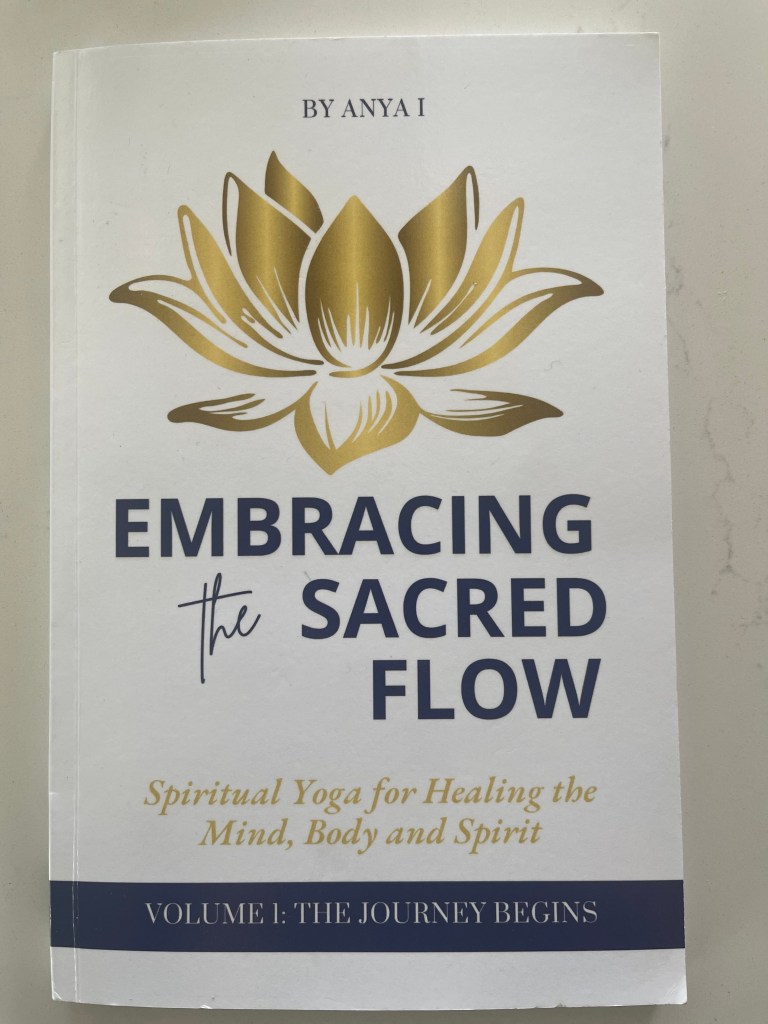

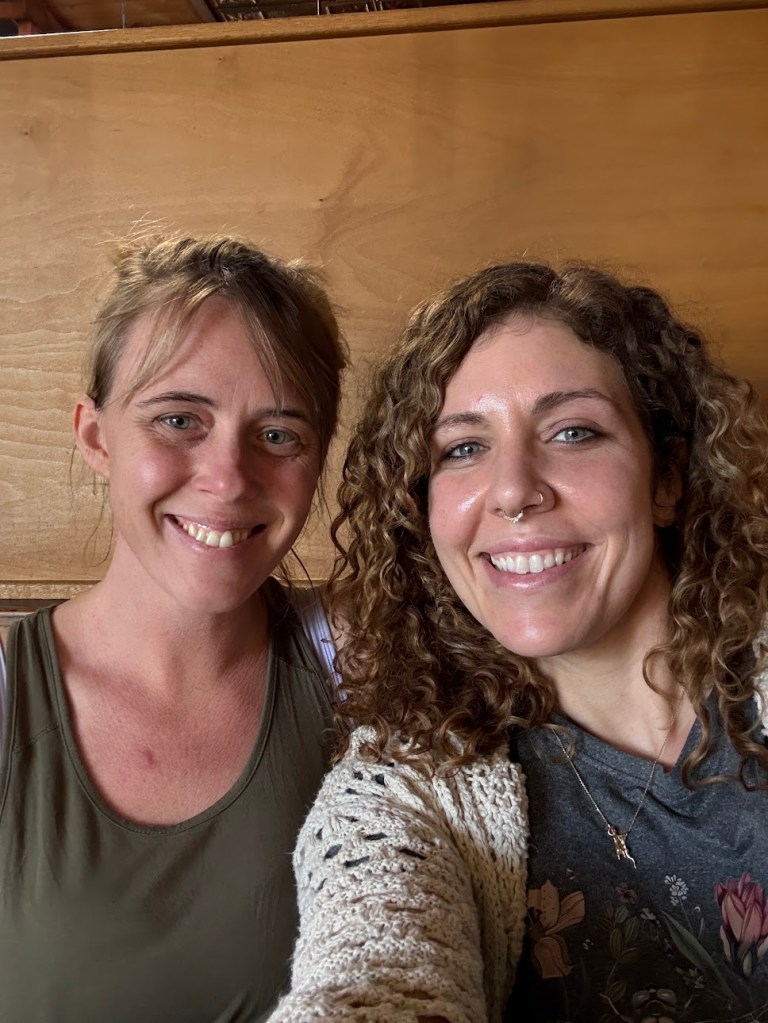


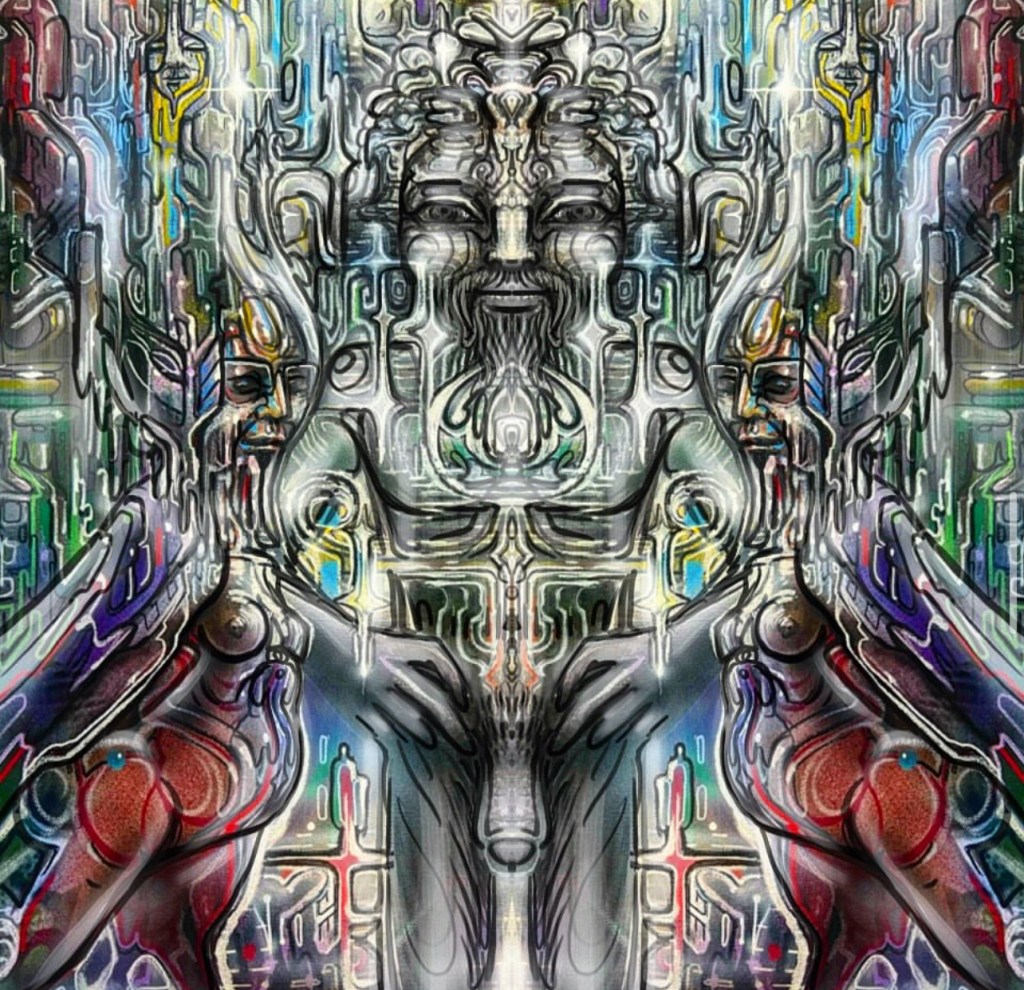
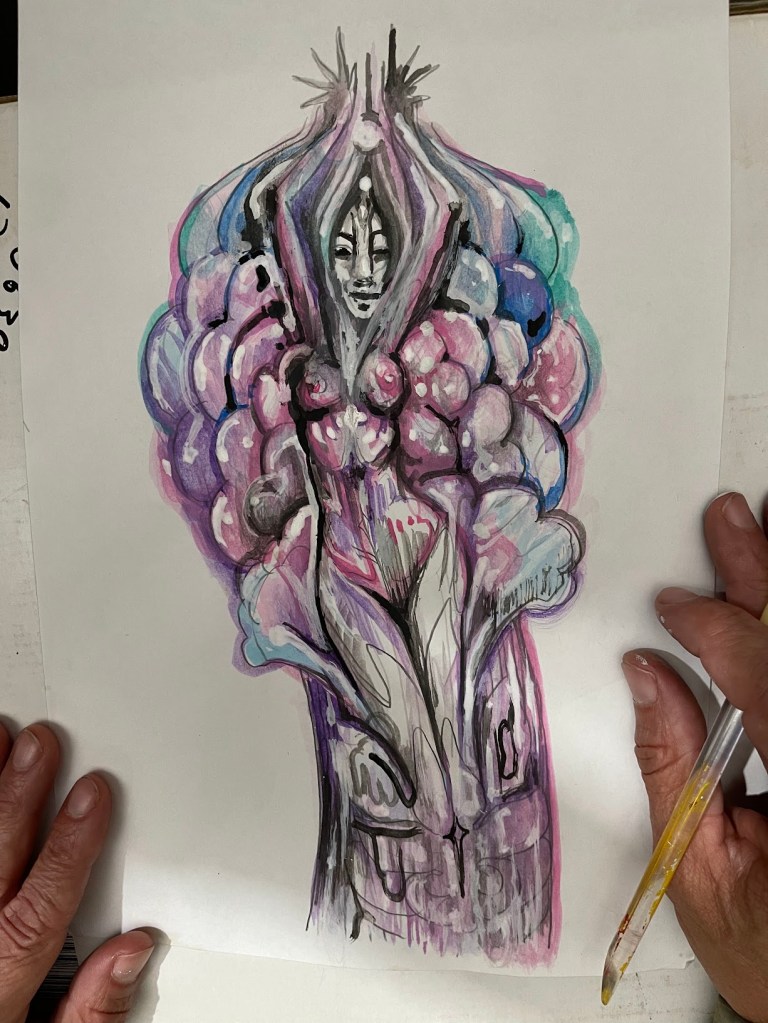

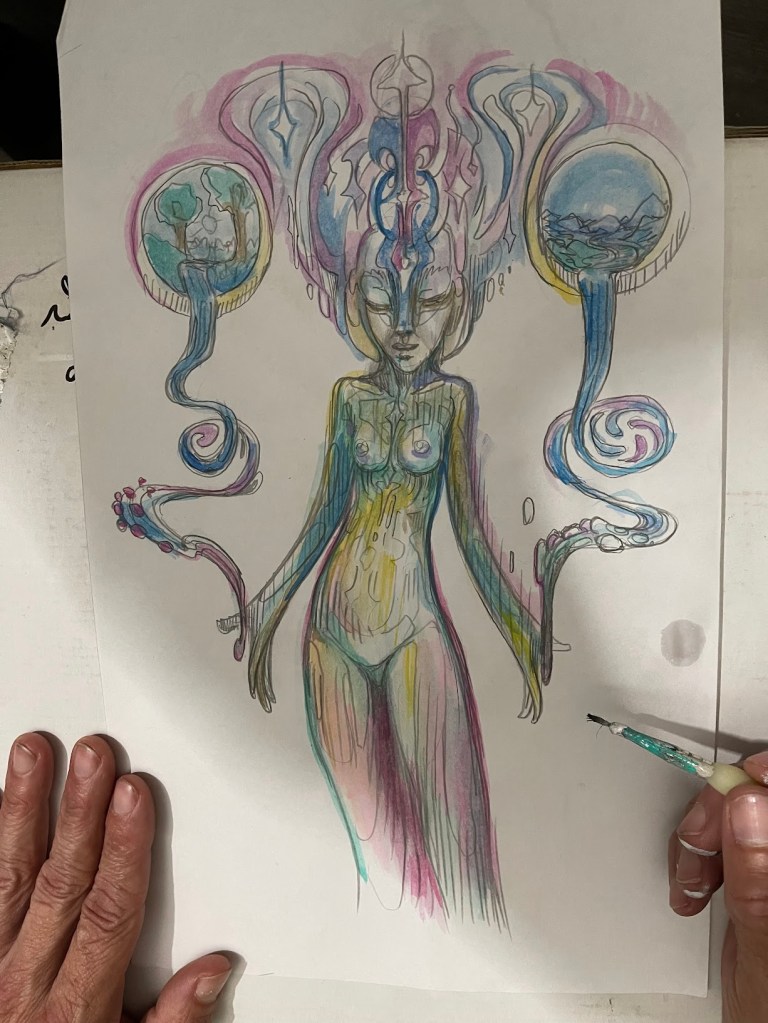
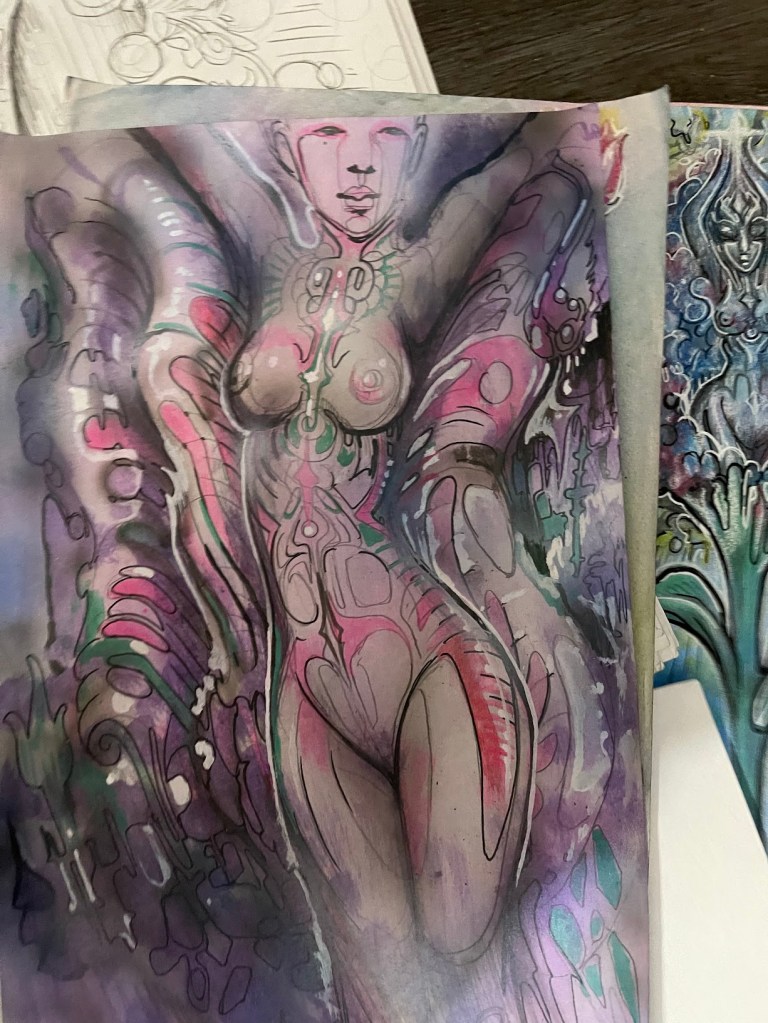



 Little Lost Forest