Interview With Satya Healing at Ramone’s

On November twentieth, around nine in the morning, Natascha and her family friend, Sam P, met with Satya at Ramone’s Bakery and Coffee in Eureka. Their conversation became a deep dive into Satya’s history in the healing arts and the many ways she serves the community as a facilitator of sound baths, microdose offerings, yoga, reiki, and tuning fork sessions. Satya has brought peace of mind to many by offering a safe space to release, recover, nurture, and learn how to move through life’s challenges with greater ease.

As we enter the winter season, we invite you to explore the power of sound healing and discover how giving this practice a chance can enhance your life in the most positive way.

Natascha: Good morning Satya. Thank you so much for joining me today. At Little Lost Forest we’re always honored to highlight local healers, artists and visionaries. And today we’re in for a special treat. Humboldt County sound healing artist Satya Earth, founder of Satya Healing, is here to share her journey, her craft and the heart centered intention behind her work. I first discovered Satya during one of her sound healings and mushroom microdose sits. Over the course of about 90 minutes, a small mushroom microdose, gentle yoga and closed eyes opened the door to a vivid inner landscape. The soundscape she and her collaborators created carried me from the depths of the ocean to a fairy lantern forest, and eventually into the far reaches of space. The magic she facilitates comes not only from the instruments she uses, but from a deep well of knowledge, intuition, and care. Today we dive into that magic, its origins, its purpose, and the person behind it. Can you tell us a little bit about yourself? 

Satya:Thank you for having me here. It’s really great to see you. A little bit about myself. I’m a mama of two little ones.  They are my whole world and have been a driving force for my evolution in the landscape of sound healing, energy work and working with medicine. My background comes from psychology. I majored in psychology and got my bachelor’s in 2014, and from there I decided to branch out and study different forms of holistic healing. I studied yoga and herbalism, energy work, and sound healing, and have now branched out into the realm of working with psilocybin. 

Natascha: Yay! Thank you for sharing. When did your journey with sound healing begin? 

Satya: I attended my first sound bath with Jen Madrone back in 2017, and that was an initiation into the world of sound healing and experiencing. Noticing where I was in my life at that time.  

Sound healing can stir up a lot of things for us, especially if we’re just beginning the journey. Throughout the years, I’ve gathered tools to support integrating the experiences and emotions that arise when receiving sound healing. This has helped to make it easier to understand and navigate the things that come up. It can really bring up a lot of stuff. Like old stories and thought patterns. Bringing them forward to be acknowledged and felt. It was a beautiful introduction to getting to know myself. The stories that I hold and how to how to work with them and how to transform them. In 2021 was when I bought my first gong and that was inspired through the birth of my second daughter. I had a very challenging experience with postpartum depression. In a place of desperation to not return to pharmaceuticals, I searched online things that could help my nervous system and help with depression and anxiety. Sound healing was the first thing that popped up. I was reminded of my experiences with Jen and decided to take the leap to purchase my first gong. 

Natascha: That’s beautiful. I really love how you worked against the postpartum and found natural ways to heal instead of falling into it. Did you have any mentors or influential teachers along the way? 

Satya: Absolutely. My number one mentor, her name is Josie Bravo. I met her when I was when I was in a hospital. I had a really hard adolescence; childhood. She met me at some of the hardest times in my life. I’ve known her for 29 years now. She has been a guiding light and I wouldn’t be where I am today without her support. 

Natascha: Wow. 

Satya: She’s been a really big influence. Like a guardian angel for me along this path. My other mentors are Jen Madrone. She’s an incredible being, here in Humboldt County. I’ve studied Reiki II and my Master Reiki course with her. A couple other influential teachers are Eileen McKusick. She’s the woman that discovered tuning the human biofield. I love blending my own interpretation of her teachings into my sessions.  I scan the field with a tuning fork and listen for different sounds and that resonate from the tuning forks to let me know where there is perhaps some stuck energy that can be brought into coherent energy. Another incredible teacher that I haven’t had the opportunity to learn from yet, but I’ve heard great things of his name is Mike Tamburo and he will be here in Humboldt County in March 2026.  

Natascha: What will Mike be teaching you or working with you? 

Satya: He’s a gong master. He’ll be doing three day long class for a few days. And we’ll be learning different techniques and styles of how to work with sacred healing instruments, mainly gongs. 

Natascha: During your sessions, there’s usually other people in the room that are playing the instruments along with you or offering the mushroom micro-doses. Who do you choose to collaborate with for your sound healing sessions? 

Satya: I just collaborated with Fallon Orr. We had a beautiful offering where we offered microdosing, yoga nidra and sound healing. It was a different space from the class that that you attended. More stillness and opportunity to reflect in that stillness. It was very supportive for rest. 

I just received my certification as a psychedelic facilitator through Emerald Valley Institute. After sharing medicine in the community for nearly 4 years, I decided I wanted to learn more about the history, culture and varying approaches to holding ceremony in psychedelic spaces. Another person I have worked with is Michiah Tobin. She’s an acupuncturist based out of Fortuna. I love blending multiple modalities together for a transformative intentional experience.

Natascha: Well thank you. How do these sounds and frequencies impact your participants? 

Satya: That’s a great question. Each person and how they experience sound is very unique. And each session is very unique. Some of the things that I have noticed participants experience would be emotional clearing and release. I’ve heard some really good feedback on how people will come into a session feeling highly stressed and overwhelmed with life and would leave with a new state of grounded clarity. The beautiful thing about sound healing is that it creates neural plasticity and neurogenesis. By approaching your session with an intention this offers us an opportunity to see, feel and think differently about the things that we’re experiencing in life. And like you said, when we’re in this space there are visuals, there’s feelings of floating. It can be a psychedelic experience without the medicine, with the things that we see and that we feel. It offers a place of deep rest for the nervous system. 

Natascha: Absolutely. I definitely found a release for my anxiety when I go to your sound healings and I feel really well going back into the world, more prepared. Your vocal work is especially moving where you learn to sing? What language or tradition are you drawing from? 

Satya: I’ve been singing since I was three. Song has been a part of my whole life. I was in choir for eight years, and I was in a band for a couple years. Interestingly, I always felt nervous. And to this day, I still feel some nerves before I sing. But, after I traveled to India back in 2014, I was studying yoga there and we learned a lot of mantras and Sanskrit prayers. It is in this place of prayer that the anxiety dissolves and my intention of sharing song expands. I sing in Sanskrit, and the songs that you’ve probably heard are called the beginning prayer, the ending prayer and the Anahata prayer.

Our voices are our most powerful instrument, and it’s my mission to continue sharing this instrument, along with these other instruments and empowering other people to come into a place of comfort in their own body and their voice. I encourage people when I’m singing, when the sounds are going; we can hum, we can sing too, and start to vocalize because that’s how we can move energy throughout our body. 

Natascha: Yeah, that’s some of my favorite moments. I really enjoy your singing, and I like that you pushed me to sing and your participants to sing, because oftentimes I don’t use my voice. It does resonate with me, and it does bring something positive out. So thank you for doing that. What dreams and aspirations do you have for such a healing moving forward? 

Satya: I love this question. 

Natascha: What’s next? 

Satya: Yes I am so excited about what’s next. 

I am creating some packages to make these experiences more accessible. After going through my psychedelic facilitator training, I really want to work with marginalized communities. Whether that means I look into what it would be to become a nonprofit or I look into fiscal sponsorship. I really believe that this type of medicine is something that everybody needs. 

Natascha: Cool. I can’t wait to see where you go with it. Was there anyone who inspired the evolution of your art or an event? Possibly. 

Satya: Absolutely. I had some moments to reflect on this, and the evolution of my art truthfully, has come from a place of pain and suffering and knowing that these wounds can be transformed. And I’m speaking from a mother wound that without that experience and without those wounds, I wouldn’t be where I’m at today. Having a troubled relationship inspired me to ask: how can I best show up for myself and how can I best show up for my children and for my community? How can I create this space of safety and trust within myself and within my community?

I’ve been learning different communication styles, like compassionate communication, paraphrasing and reflecting. These are all practices that I’m in a space of learning right now and eager to implement into how I parent my children and how I speak to myself, how I speak to my community and to my clients, and I’m really encouraging all of us to become more curious about how are we communicating with ourselves? How are we communicating with our loved ones? Because this is where we can we can really come together and come together in a space of safety and trust. 

Natascha: I think you’re really advocating for people that are struggling, that there’s a light on the end of the tunnel. As a mother, too, there’s a lot of stress in motherhood and seeing you blossom and bloom that shows that we don’t have to be the pain of our families, but that we could create our own positive walk of life and the way that you impact your community. It loudly speaks that you walk the walk that you’re not just talk. So thank you for doing all the all the work you do with us here in Humboldt. What are your thoughts on human consciousness? 

Satya: Another fabulous question, Natascha. My thoughts on human consciousness; human consciousness to me, is a state of being. I come from a spiritual and perhaps Buddhist approach where I believe that all living sentient beings from our animals to the trees to the rocks, to the dirt, to the insects. We all have a consciousness. We are all here coexisting as one on this cell of Earth. And when we can come into that place of connection, we can really start to come together in this collective ecosystem. 
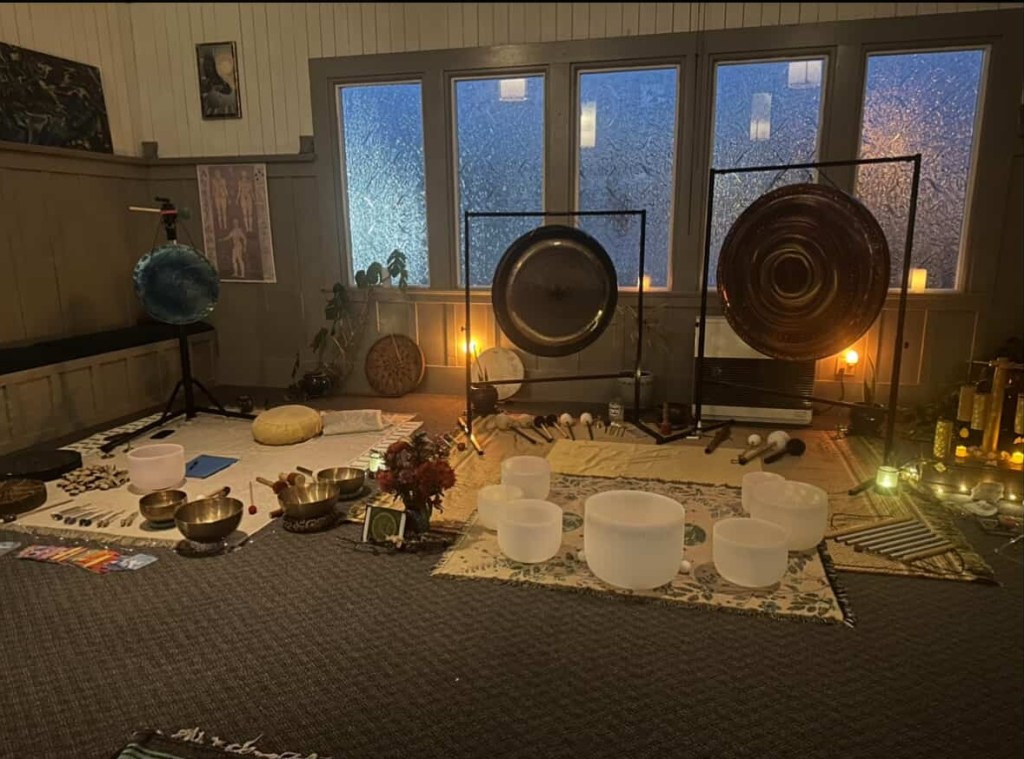
Satya Sound Baths

Natascha: That’s beautiful. How does that deconstruct the ego when you come into a mindset of a universal consciousness? 

Satya: Mmm, yeah. We’re definitely deconstructing the ego and perhaps deconstructing the hierarchy of humans being at the top and everything else being below us. I know that there is definitely some advancement in technology where we are now having the opportunity to communicate with our animal friends. And it is deconstructing how we view our existence and how we view the existence of other beings in this world. It’s really powerful. We can come into this from a wholehearted space, or we can, you know, use it for power. So it’s really up to the individual and how we approach this type of technology. Language is technology too. You know, it’s like these things are always advancing. And so it’s like, who is behind this and what are our intentions behind it? And it’s how we show up and how we reflect that into our circles and into our community. And that’s when we really have that opportunity again, to come together into this collective space of awareness, which is kind of linking to that state of consciousness, the consciousness and the awareness, how we show up, how we reflect, how we have awareness of our energy and how we impact the environment around us. I feel like I could go on forever. 

Natascha: I love this, I just want to dig a little deeper into it. You mentioned animals briefly. Is there a connection between your sound healing and nature? Maybe you play your music outside, or you feel a deeper connection to the earth and to the animals when you perform sound healing? 

Satya: Absolutely. I have a very deep connection with the elements and with nature. When I take my gong out and I play next to that maple tree and Cheatham Grove, I’m playing for that tree and I’m playing for the land. And I just imagine this time lapse of this tree living there and all the things that have surrounded it. And for me, I just, I want to be with that tree for that moment and play the sounds. And when I play my infinity disc, that sounds like the ocean, I’m like, man, this tree won’t ever have that opportunity to be by the ocean. So maybe I could bring the ocean to the tree. 

Natascha: Cool and lastly, what are your beliefs or reflections on the afterlife? 

Satya: Reflections on the afterlife. I do believe that we are reincarnated. I do believe in karma. I believe that the things that we’re experiencing in this life are perhaps a reflection of the life we’ve led before. I also go between this, you know, when we die, we go into the void. We go into emptiness. No one knows. And we have access to so much information that we can decide what we want to believe. But we truly just don’t ever know. So when I think about what the afterlife is, I like to consider a lot of things. But I also don’t have a concrete belief because nobody truly knows. 

Natascha: Absolutely.Do you have any advice for someone that might be depressed, anxious, or struggling in their life? How to get out of that negative spiral? 

Satya: Well, there are many approaches to helping ourselves through these stagnant, dark places. The first approach that I like to suggest is, depending on the severity of it, is having a counselor or a therapist. Somebody to offer an objective perspective, somebody who will support us in our stories that we share and perhaps guide us into healthier states of thinking. Also bringing in the element of what are we putting in and on our body. And that’s not just food, that’s not just cosmetics. That includes the things that we watch, that includes the people that we surround ourselves with. That includes supplements that we’re taking. So it’s really a whole approach when we start getting into this world of depression and anxiety. I mean, we can look at our gut microbiome that’s definitely linked to anxiety. Parasites are linked to anxiety. And then when we start to go in a little bit deeper outside of the the physical being of depression and anxiety, we can start to go into like the emotional body and the ethereal body, and that’s where we can bring in these alternative modalities to help us. That could be energy work, that could be sound healing and microdosing. But then again, drawing it back into the self, it’s really about our perspective, how we speak to ourself. So again, coming into that tug of war that we experience when we’re going into this place of depression and anxiety: The stories that we tell ourselves, how we talk to ourselves. And a lot of this is linked to how we were raised and how we were talked to and how we were taught to manage these things. 

Satya: In my psychedelic facilitator training,  we learned about this thing called the default mode network. And when we’re born, up until we’re about four, this network in our mind is very malleable. But around the age four, we are now learning to exist in the world through the way that we are talked to by our family members and the authority around us. And those pathways start to get very rigid. And so then we start existing in that story. So when we are working with psilocybin in larger doses, we have the opportunity to do what is called a reset dose, where the default mode network gets shut down. And this is where we have access to new pathways, new ways of thinking and feeling existing, perceiving and we want to be slow with this. Whenever we’re in this place of depression and anxiety, how long did it take us to get here? How long have we been in that place? And just know that there’s no one pill. There’s no one experience that’s going to shift things. This is a practice that we have to implement and be dedicated to daily. The most important facet of that is who are we surrounding ourselves with? Who is our support system, our community, the classes we attend, the people we talk to. These are all factors to consider when we’re starting to address these symptoms of depression and anxiety. 

Natascha: Coming into the winter, is there are certain practices that you do seasonally; more winter style forms of healing? 

Satya: When we come into the winter. I personally think about darkness. I think about going into a place of hibernation. I think about what is nature doing? And I do my best as a single mother, to slow down. Some practices that we can do is look at how we can slow down. How we can create spaciousness and just noticing when we are overdoing. When we are doing too much and just taking a moment to step back, reflect and say “hey, I need to cancel.” 

Satya: One practice that I learned recently that’s been so helpful, is tuning into our breath and tuning into what it means to clear our energetic field. When we are starting to experience that tightness in the body, or we notice we’re getting really overwhelmed and feeling frantic. Come back into the breath. Breathe through the souls at the feet.

Satya: And as we’re exhaling, we’re releasing this energy out through the crown of the head. And this is the cycle. Breathing in through the feet, coming through the center of the body, breathing out through the crown. And as we continue this breath, we’re starting to think about, I’m breathing in calm and I am letting go of any tension. I’m letting go of any chaos that I’m holding in my belly, that I’m holding in my heart. I’m holding in my brain. I’m letting that go. I’m returning it to sender. I’m returning it to the universe. And I love this practice, especially for people who are highly sensitive or for highly empathic people. People who tend to absorb energies easily. This is an amazing breath practice, because then we get to tune into not only our breath and clearing our fields, but we’re starting to acknowledge what is mine and what is not mine. What am I holding on to? Maybe I’m holding on to something that I experienced yesterday, and now it’s time to let that go. And it’s time to bring in that clearing and that self-forgiveness, so that we can have a clear field and show up for our friends and our family in a more balanced state. 

Natascha: As we move into the winter, sound healing offers a powerful way to calm the nervous system, reconnect with the heart, and bring clarity to the mind. Satya, thank you so much for your time and for sharing your wisdom with our Little Lost Forest community. 

Satya: Thank you so much. I appreciate you. Thank you for calling me in and sharing these moments together. Blessings. 
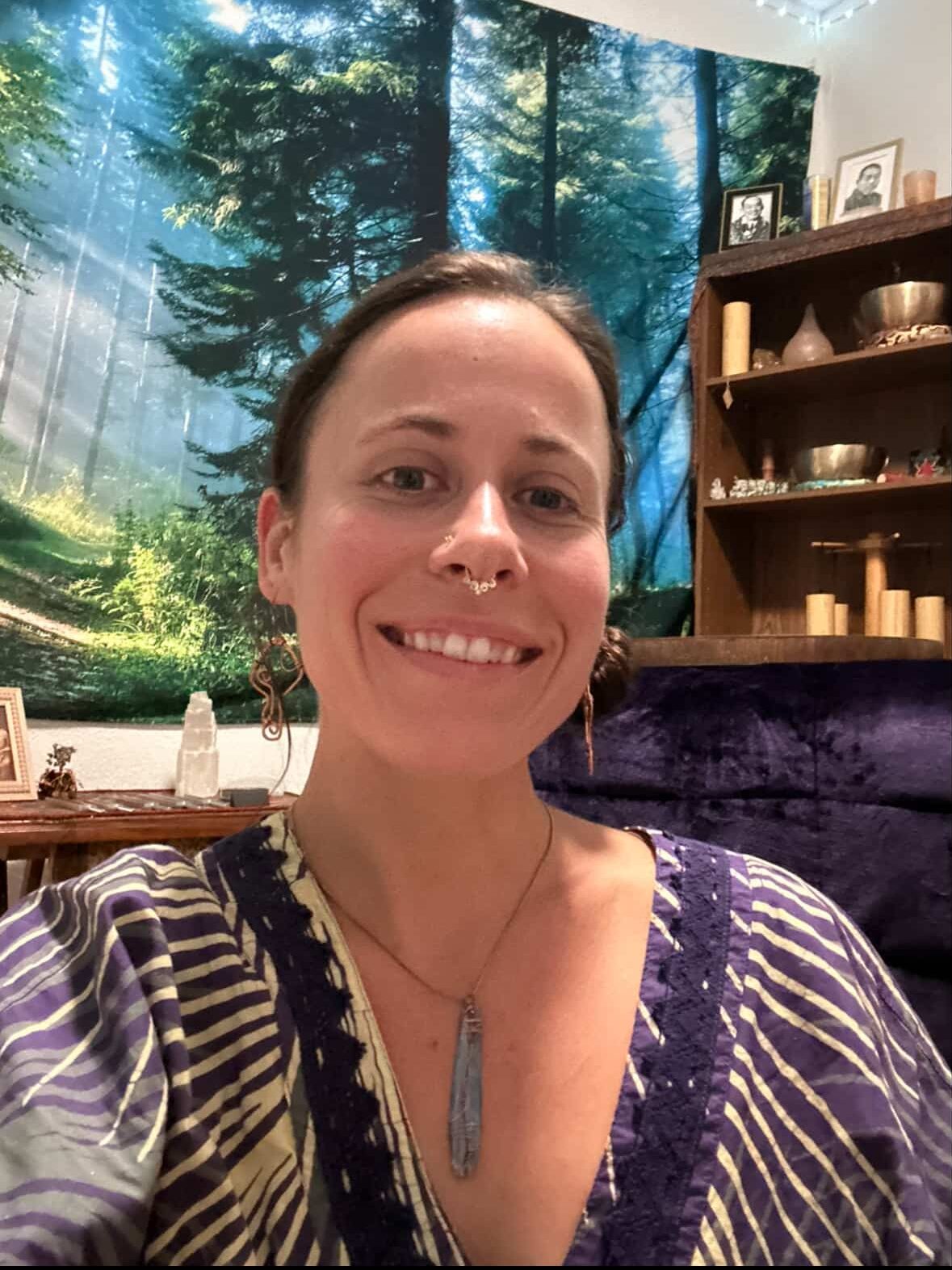
Next Sound Bath is Dec. 18th 2025

Instagram

Website

Interview with Heather Against Forced Children Vaccinations

The interview with Heather was conducted over the phone. Here is an insight from a mother who has first-hand experience with the consequences of vaccinating her child as her pediatrician recommended.

Parents have more power than you believe. You need to be your child’s voice.

-Heather

Natascha: Hi Heather,
Today we will be discussing child vaccinations. I believe you are against forced vaccinations, is that right?

Heather: I believe that where there’s a risk there should be a choice. There is always a risk when vaccinating your children because you never know what the reaction can be.

Natascha: Thank you. Can you tell me a little about who you are, your background, and if you have kids of your own?

Heather: Well, my name is Heather. I’m from southern California. I’ve spent most of my life in Missouri. I have a nine-year-old son, and I am currently pregnant with my second child.

Natascha: Congratulations, woohoo!

Heather: Thank you.

Natascha: So you know all about the fears of getting your child vaccinated and being pressured to get your child vaccinated, especially when you’re pregnant. That’s when this subject came to me, being pregnant and after having a baby and getting these vaccinations but not finding a lot of information about it.

Heather: Ya definitely. When I was vaccinating my son or whenever I was pregnant for the first time, I didn’t think anything about it. I was just doing what I was told, basically. You know, the doctor is always right.

Natascha: Exactly, and I’m starting to realize that it is not always the case.

Getting started, I think that one of the major concerns of vaccinating children is if it is worth the risk of injuries such as long-lasting shoulder pains, paralyzation, and even death. Do you think the risk is worth your child having any of these kinds of injuries?

Heather: When I thought vaccinating my son was the right thing to do, I thought I was doing everything right. When I brought up my concerns about my son’s delayed speech and behavior issue, the pediatrician thought it was normal. I knew it wasn’t normal because, you know, mothers know their children, and I knew something was going on. So when I first moved to California in 2016, I started doing more research on vaccines, and then I found a group on Facebook called “Stop Mandatory Vaccinations.” There were a lot of parents on there that were talking about the MTHFR gene and how if you have this gene, your will be more than likely to have a bad reaction to vaccines. So I had my son tested for that gene, and he has that gene. My son growing up-, I had his voice in a lot of situations. So if I knew the information I know now when I was younger, I would have delayed vaccines or not done vaccines at all. I do have friends that vaccinate their children, and they are healthy, and they live normal lives.

Natascha: I am so sorry you guys had to go through that. If vaccines have curred common diseases, is there a healthy medium to waiting to vaccinate children? I know you said that waiting is something to consider. What would you do now as a pregnant mother?

Heather: I personally am not going to do any vaccines while I’m pregnant at all. I don’t feel that they are necessary while being pregnant. I don’t feel like they’re necessary. Your baby is safe in the womb, and if they plan on vaccinating your child for all the things they vaccinate you while you’re pregnant, then what is the point?

Natascha: Absolutely. What about after you have- is it a boy or a girl?

Heather: I’m not sure yet.

Natascha: Oh, how exciting!

Heather: I need to get an ultrasound. My first appointment is on the first. I’m 16 weeks, but I guess a lot of people are pregnant, so I haven’t been able to see a doctor yet, get an ultrasound, those kinds of things.

Natascha: I think it took me till 22 weeks to find out the sex.

Heather: It’s really packed out here.

Natascha: Congratulations, yay! Do you think you will go through with vaccinations once he or she is born?

Heather: Yeah, definitely no.

Natascha: Good.

Heather: Yeah, my experience with my son changed my outlook on everything. I just don’t feel comfortable. I don’t feel right doing it. Basically, I was told that it was normal, and I knew that it wasn’t normal. My son was healthy. I did everything whenever he was supposed to. There was no reason why that happened.

Heather: Another thing that I believe is that they are scheduling the vaccines too early. I feel like it is too much on a little body that hasn’t been here that long. You can always do a delayed vaccine schedule, and you have to find the right doctor that is willing to do that because a lot of doctors won’t even do it. The MMR vaccine is one that I recommend delaying. This is one vaccine that most kids have an issue with. Vaccines are given way too early and too many at a time, and that can be the cause of many of the reactions that the children are experiencing. I do have friends that have done the delayed vaccines, and their kids are fine too.

Natascha: What would be a solution to opening our school to vaccinated and unvaccinated children so that way we don’t have to force these decisions on parents?

Heather: Yes, I honestly don’t know what the school’s deal is when opening the schools to vaccinated and unvaccinated children. Some parents who are vaccinating their children feel that unvaccinated children are putting their children at risk. But that’s not the case. From personal experience, some parents who vaccinate their children aren’t interested in listening to parents who don’t vaccinate their children. So from the parent’s side, I don’t know. From my experience, they don’t care. “Oh, you don’t vaccinate your children? You should vaccinate.” But why, why should I?

Natascha: This is a response I get a lot, especially conducting this line of interviews. If we force vaccinations on people and children, how does it affect a person’s freedom of choice?

Heather: There’s no respecting a person’s freedom of choice if you’re forcing them to vaccinate their children. Like I’ve said before, where there is a risk, there should be a choice. A lot of people feel like it’s not a big deal because the unvaccinated people are putting the vaccinated people at high risk, so that leads them to feel like they should be forced to do something that they don’t want to do because they are putting other people at risk. That’s really what it is. I always say that if you’re vaccinated then you should be protected, right? What does me being vaccinated have to do with you? It’s a lot.

Natascha: Knowing that some kids have severe reactions to vaccines, how do you feel prioritizing the lives of children without reactions and accepting that some will have severe reactions for the benefit of the greater good?

Heather: If someone wants to vaccinate their child, that should be up to them. It shouldn’t be something that we do out of fear. The parents who don’t vaccinate their kids have reasons. They’ve done the research they experience sleepless nights and hospital visits. It’s not something that they just do one day. It’s something that you had to go through or know someone that has had to go through it too.

Natascha: What are the best ways to keep unvaccinated children away from diseases?

Heather: I am a big fan of herbal medicine. I’ve been giving my son herbs since he was four years old. I believe that children who are unvaccinated and children who are vaccinated have about the same risk of getting the same disease. Because vaccines stop you from getting a disease, and it doesn’t make it less severe. That’s just not something you can predict. You can’t predict how someone’s body is going to react to disease if you’re vaccinated or not. Even a doctor will tell you that it’s not going to stop you from getting the disease. They’re going to tell you that it can make it less severe. But they don’t know that either. Because everybody is different, you can’t say how someone’s body is going to react. You just can’t do that.

Natascha: What kind of natural herbs and medicines do you use to keep your child from getting sick.

Heather: I am a big fan of sea moss. That is a sea vegetable with tons of minerals in it, gives them energy and boosts their immune system. Elderberry has been around for a long time. If you go into stores, you will see elderberry gummies and a lot of elderberry supplements. Especially at Sprouts, Clarks and Wholefoods you’ll see that type of stuff. I make elderberry syrup that has elderberry, mullen leaves, wild cherry bark, ginger, cinnamon, cloves, and star anise. Those are all powerful herbs that help with mucus, cough, and congestion. I give that to my son all the time. If there is something going around at school, I give it to him. I had COVID. I had COVID twice, actually. But my symptoms weren’t; I was sick for probably two days, but my son never got sick. He tested negative. Everybody in the house tested positive besides him. I was giving him herbs and stuff the whole time, and he never got sick.

Natascha: You need to be taking care of yourself as well as you do your son!

Heather: I know that is how I feel! And then, when I got pregnant, I thought I needed to step my game up. I am better with that. It’s hard whenever you have kids. You feel like you have to take care of them better than you take care of yourself.

Natascha: I know it.

Heather: You have to remember to take care of yourself because if you’re not here, you can’t take care of your kids. So, I have to tell myself that.

Natascha: Thank you so much. It is really nice to have the view of someone in the medical field and with kids. People need to hear this, and I appreciate you taking the time.

End of interview.

Heather proceeded to inform me that if you have your kid tested for any disability and fall into the category of an IUP, they do not have to be vaccinated to go to a public school. You can schedule an IUP meeting through your school.

You can find Heather on Tik Tok @hmonroe2.

Please stay tuned, next week I will be interviewing a teacher that sees the advantages of vaccinating your child and strongly pushes every mother to follow a pediatrician’s guidelines to vaccinate children despite misinformation.

8 Year Sibling Age Gap

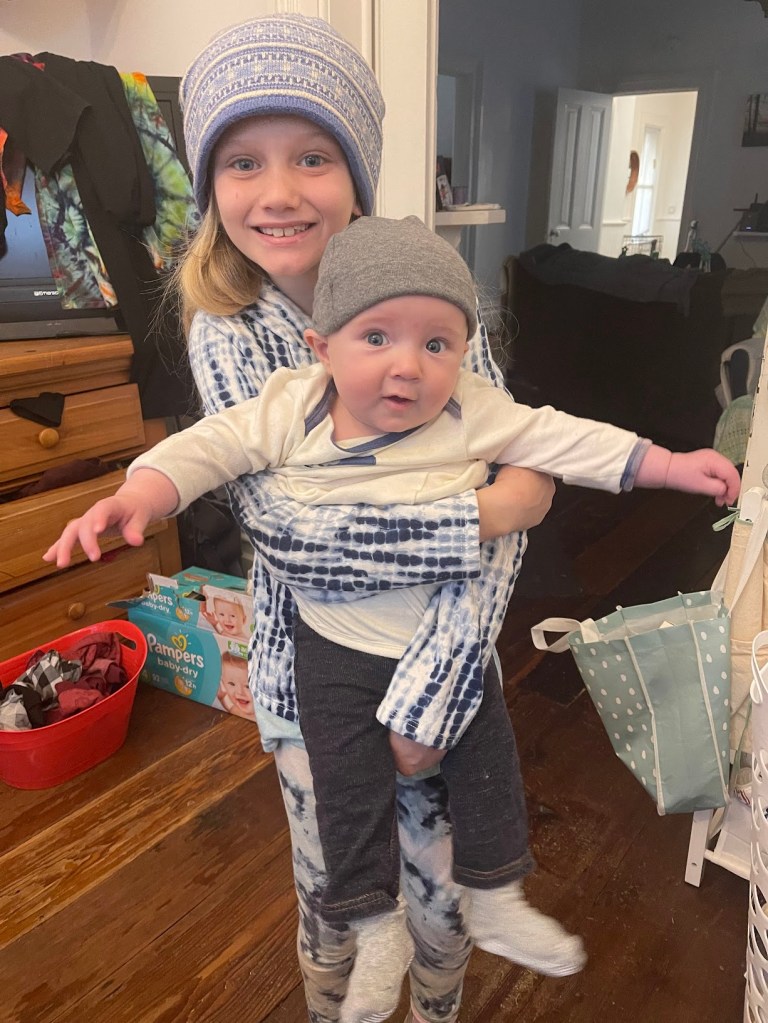
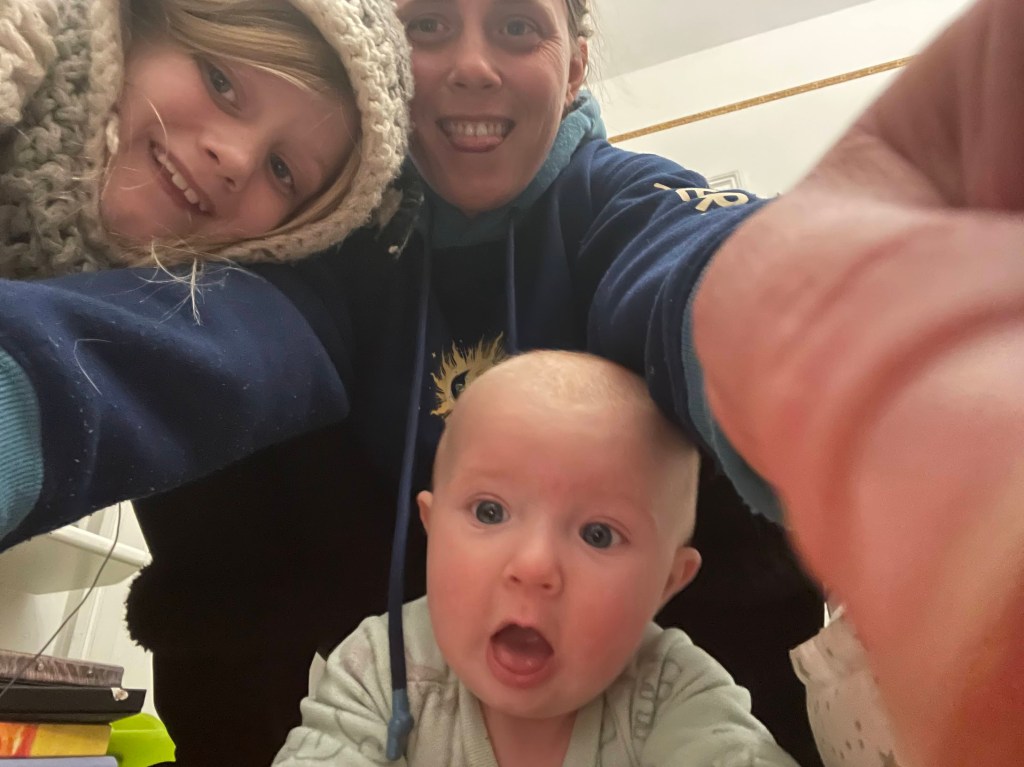
It’s incredible having children eight years apart. I get to enjoy raising a child from a different perspective. I already know that studying and reading are crucial development skills and that gentle words can be better than any discipline. Better than that, my eight-year-old has an appreciation for being an older sibling and loves being helpful when interacting with the baby.

I adopted my daughter in 2018. Long before then, she asked me for a sibling. I fed into her fantasy that was surrounded by barriers like having a big enough home. In 2021 we settled into a house in Humboldt county where it was possible to expand our family, and so we did! Bringing baby Malakai into the world was a lot of fun for all of us, even if I chickened out on letting Halaya, my daughter, watch the actual delivery. Since then, it has been the biggest blessing to have such a helpful big sister.

I prepared Halaya the same way I prepared myself. Talk to the baby, make birth art, and write letters to the future of you and baby. When the baby came, well, no one can prepare you for that.

I practice EC (Elimination Communication) with my son; it’s an infant potty training method. At first, I was so embarrassed putting him on the toilet at random times that I found fitting; and then he wouldn’t “go.” My daughter is who got me into it. She would do pee dances and make the sound of whooshing water. She would make funny grunts to indicate him to go poop. She fell out of this habit, but I wouldn’t have had the confidence to do EC training if it weren’t for her.

There were doubts and fears at first. I was paranoid. I didn’t want my daughter picking up my son and walking with him, which lasted for about three months. She could hold him sitting down, and that was it. I don’t know if she has gained arms of steal or was always capable of keeping him, but at Malakai’s age of six months, she is more willing to hold and help with the baby than some adults in the house.

When I work nights or need some extra sleep after being up with the baby for most of the night, my daughter will come into our bed and watch my son as I sleep. She enjoys watching TikTok on my phone while holding the baby. She has helped me sleep countless times.

My daughter knows how to play with my son. While I lack a sense of “play,” my daughter can relate to my son and the types of toys there are for infants. She makes his play area entertaining and draws his interests with funny impersonations, dances, loud songs, and movements.

It’s hard to share the attention as an eight-year-old, so we encourage her to play with friends and join sports. We do what is affordable to us, and when funds are tight and can’t be invested into curricular activities, I take it upon myself to visit her friends and go to the park, even with the newborn.

Now that we started feeding the baby, I want to encourage Halaya to make baby food. We are introduced to moms with similarly aged babies (there does seem to be a boom happening), and I think it would help her development by making organic food that she processes and jars for friends and family. I think it will help her have a more significant appreciation for organic fruits and vegetables and eat them as they are.

My best friend, who has an eight-year gap between his sister and self, says, “It’s really great!”

If you are expecting a child or want to conceive and you have an older sibling in the house, here are some great things to consider: you have help from a child that can do their chores, reading books becomes a family sport again, and your older child is developing and learning so much with their sibling. A lifelong friend is a good answer: How will my eight-year-old perceive my newborn?

2 Months Postpartum

I struggle as a full-time breastfeeder. I half formula feed (organic) and half breastfeed. I could cry about this, but I try not to. Every mom has a different story, and the best thing I can do for myself is not compare myself to other mothers. I try to do the best I can do.

My baby sleeps in the bed between us. We hold each other tight every night. When placed in the crib, he will wake up and cry till I clean him and bring him back into our bed. His little body cups my chest, eyes closed and mouth slightly open. When he falls asleep before me in the rocker, I have my husband put him in the bassinet, and it takes every ounce of my control not to bring him into the bed with me. Learning separation and independence is a two-way street. 

I can’t seem to find the motivation to leave the house, and my workouts have dwindled to a couple of hours a week in my home. On my IG is beautiful California mamas that have boomeranged back into shape after birth. I know I want to do more, but I feel so tired, unlike the rushes of energy I got throughout my pregnancy. I am a couch potato. 

My postpartum may not be drastic, but some things are different, and it’s taking me a while to adjust. Every moment with the baby is precious, as well as every moment without him. As soon as I put the baby down, I run to the bathroom, grab a cup of tea or get a little bit of laundry folding in. I don’t have a lot of time to sit around and mope.

I need to do more, seems to be the driving narrative in my mind, but there isn’t much to do now. I couldn’t imagine being away from my child for an 8-hour work shift. I don’t know how we’d survive. I need his coos and his touch as much as he needs my breast. I’m left to work odd jobs and particular hours.

My postpartum journey has just begun, but I gladly accept the negatives and the positives as I float through it. I find myself without direction or lacking motivation. These obstacles don’t stop me from balancing being the best mom possible while supporting my family and caring for my oldest. 

I stay sane by utilizing my support team and taking time for myself. I have an old classmate I zoom with weekly, and even though I miss many appointments, we always share our goals and encourage each other throughout the week to achieve them. Family has come to visit and each grandmother has had the magical touch of calming baby down and rocking him to sleep. On a normal day when the baby’s sleeping, I do an hour workout, and I either pause the video or my walk to cater to the baby’s cries. I write down in a notebook ideas, unique designs, or thoughts. I execute art projects, career goals, and personal projects with my family, using the different skills of my husband and daughter to overcome any challenges. 

When the baby wakes, I first try to breastfeed him. I will put on a television show but end up just staring intensely into his eyes. I set up breastfeeding stations with either books, television, drawing tools, and water bottles around the house. I get so thirsty when I breastfeed. 

We work on elimination communication together, and so far, we have been able to catch a handful of pees and a poop. I like that I respond when he makes potty faces instead of letting him “go” in his diaper. It’s a long path, but I’m glad we have begun responding to his potty faces by putting him on a top hat toilet and making the cue sounds. 

At the end of the day, it’s little achievements. I have found myself slowing down incredibly after my pregnancy routine. I can see where this could lead to depression- thoughts that I’m not enough, contributing enough, showing up enough for friends and family. Still, it’s not like that at all.

I look forward to “practicing” traveling further and doing more things with the baby, but for now, the comforts of my own home are about as far as I have taken it.   

Setting Your Birthing Space


We prepare our bodies and minds for birth for nine months, but what about our birthing space?

Giving birth at home gave me time to prepare my birthing space. A popular question during my pregnancy was, where are you going to give birth? I imagined in the bathtub or on all fours in the bathroom. My mom foresaw me giving birth in the bedroom- and that’s where it happened. Regardless of where you give birth, in the hospital, or at home, starting to prepare your birthing space can begin right away. Even though nothing will ever go perfectly to plan, making these items and putting energy into your birthing space will help prepare you and comfort you for when the time comes.


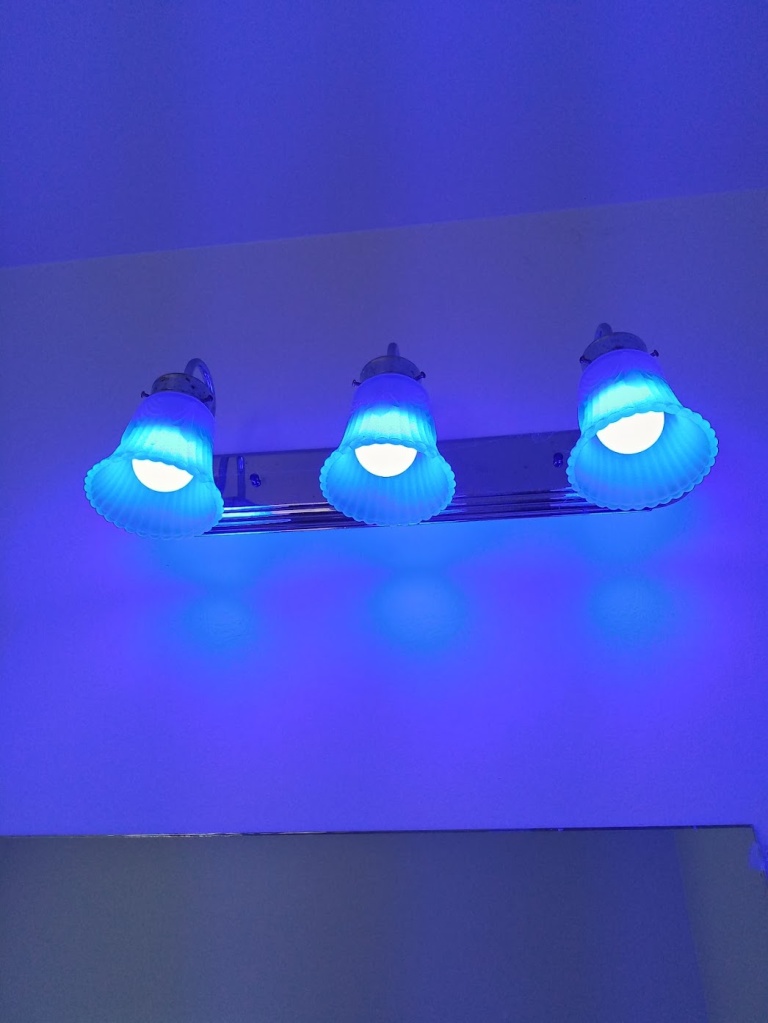
As soon as I decided to make the bathroom my birthing space, I began my south-facing water shrine, and I knew I had to do something about the lights. I am not a fan of fluorescent light. We switched out the mirror lights with blue LEDs for an aquatic mood. When I went into labor, it was still light outside, but we still like the blue lights.
I painted Circus Lion Malakai on the shelf. I got a fern, a common plant that grows under Redwoods, and a beautiful blue vase (which ended up not being practical.) A few candles and a vintage starfish mirror made up the rest of my south-facing alter.

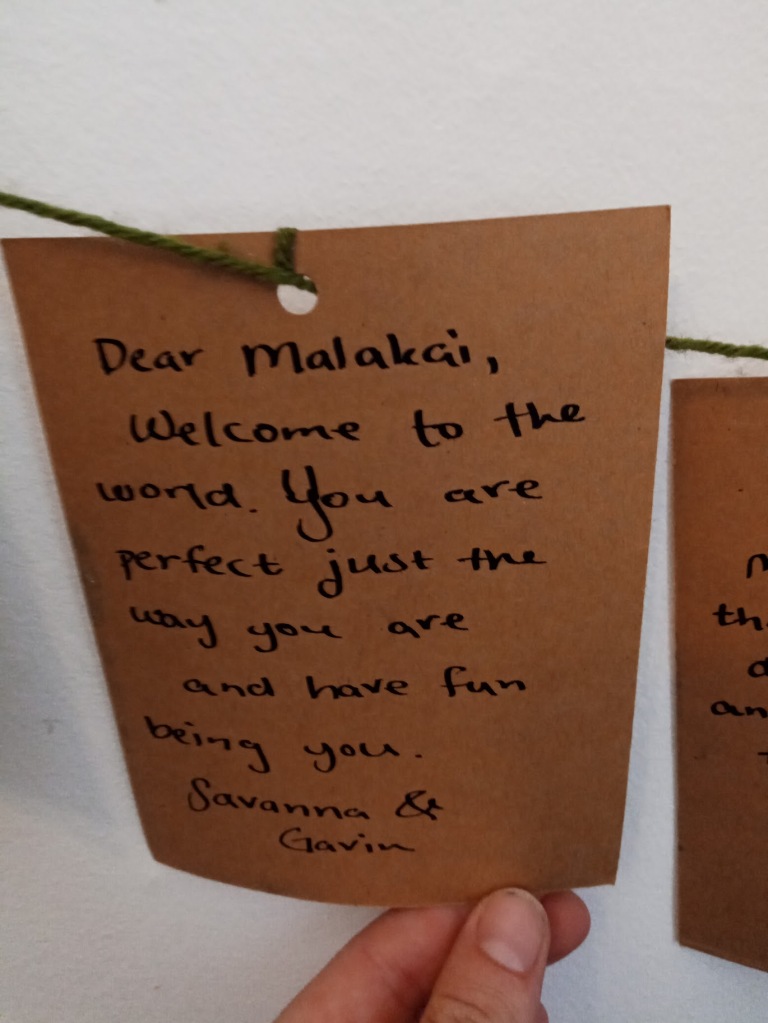
To prepare my daughter, Halaya, for the birth of her brother, I had her read “Kid’s Book to Welcome a New Baby” by Barbara Collman. One of the activities was to make welcome signs for the baby, and a baby is sleeping sign. Halaya miss understood the “baby is sleeping” sign and wrote, “Malakai go to sleep!” I love the “Welcome to the World Malakai” sign she made. I smile every time I pass it. After having the baby, you have to bring him into his body. Stretch him out, move around for him. I feel like these signs are another way of welcoming him into his body by acknowledging his presence.

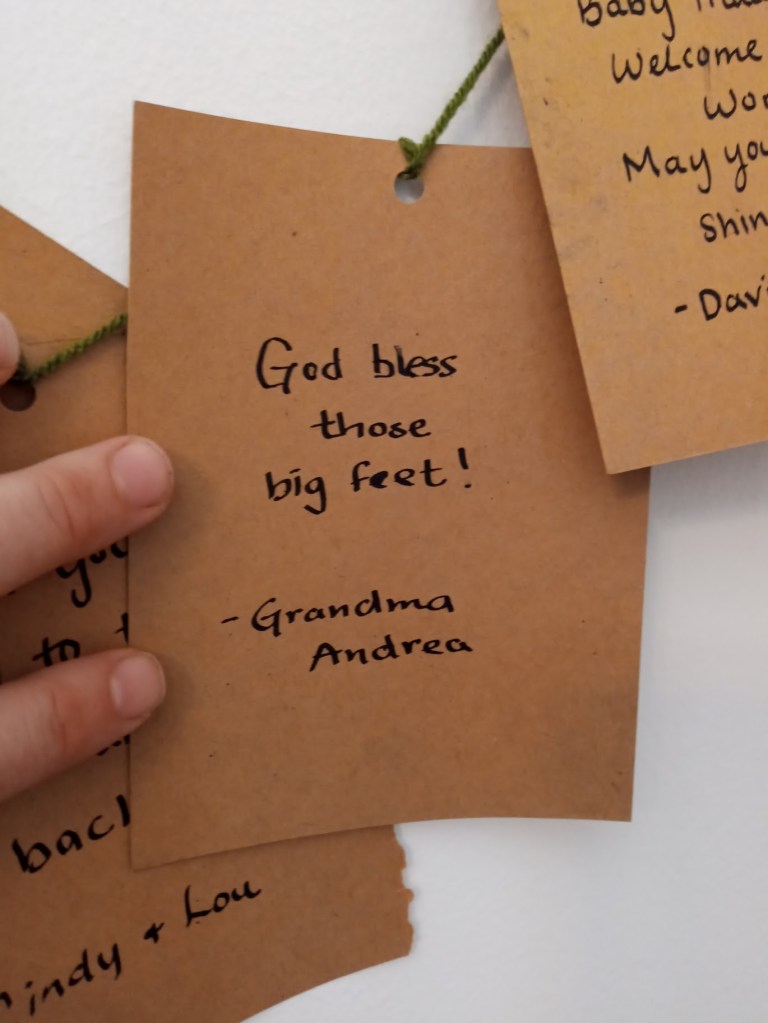
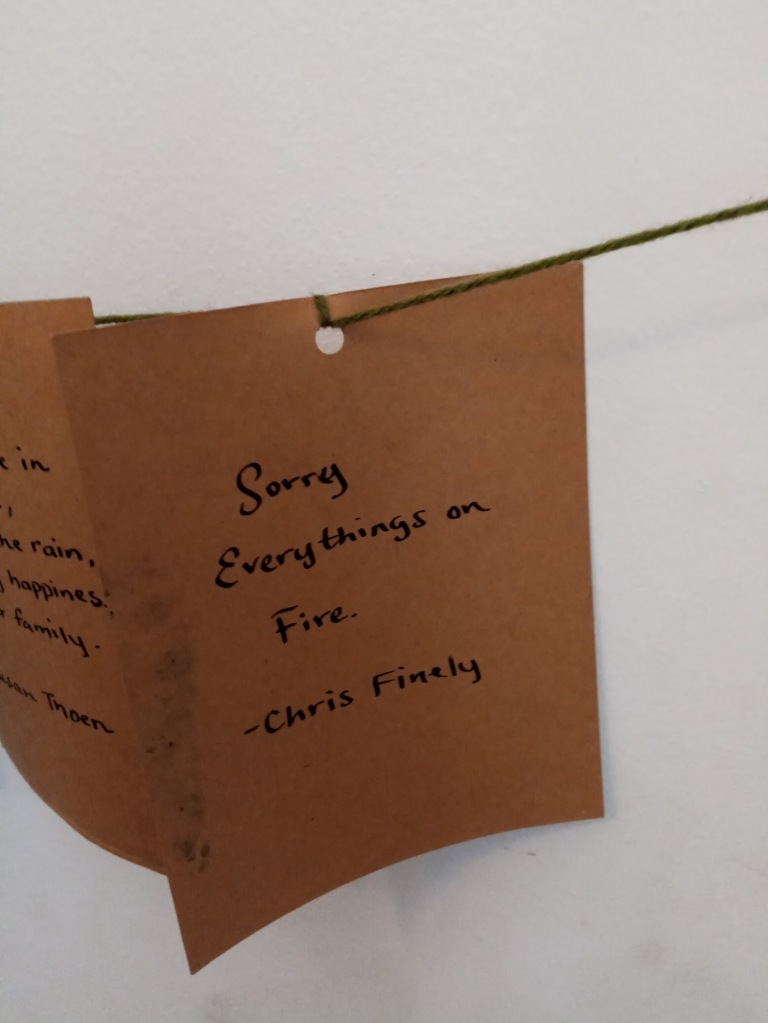
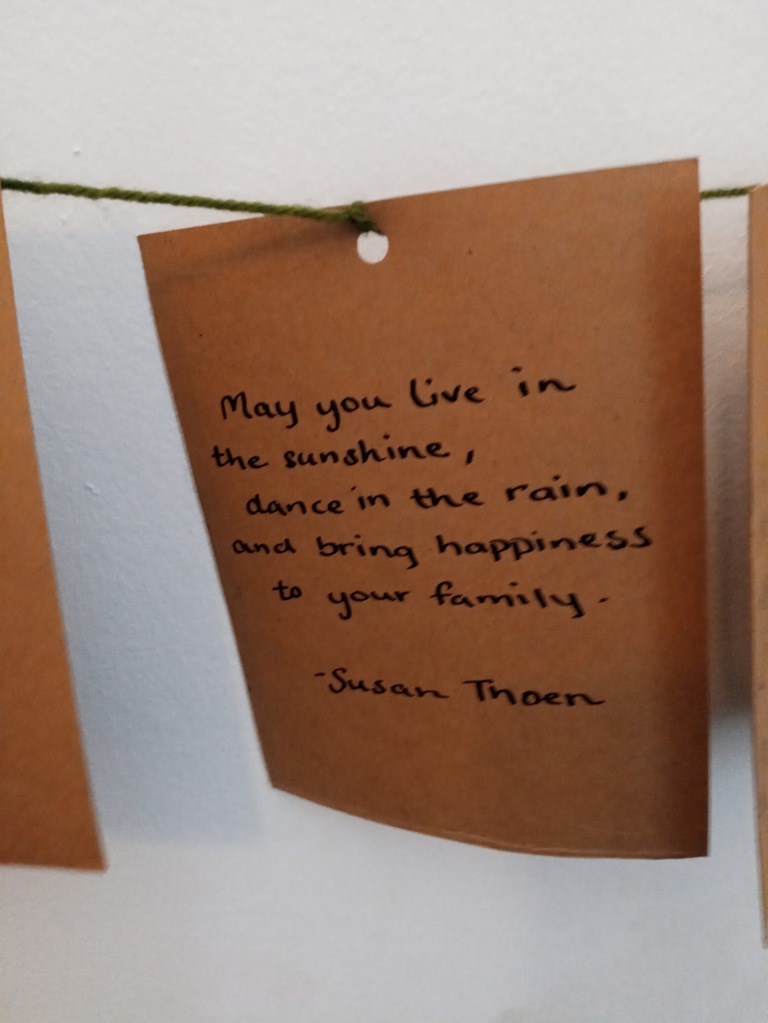
For my baby shower, I orchestrated prayer flags. Prayer flags are a sentence or two welcoming a baby into the world from the book Birthing from Within by Pam England and Rob Horowitz. Everyone reacted differently to the prayer flags and uniquely wrote their flags. It was heartwarming to hear what everyone had to contribute to Malakai’s coming, and it helped me feel supported by a network of friends and family. Later in life, Malakai will also appreciate the people who supported him in his journey into the world.

It was eight days after my estimated due date, and the whole house was getting ansie. I had all the time in the world, but feeling like you could pop any minute is distracting. There was this little art project I wanted to do for my birthing space inspired by a decoration in the window of the downtown clothing store, Belle Starr.


My mom and daughter were buzzing around me like frantic bees, so I bought different-sized ribbons and used a wreath base from two Christmases ago and had them work together on this octopus. It ended up being a bonding project that they were both proud of. At first, we hung it in the bathroom, and it looked beautiful with the blue light, but I had my husband remove it once the rushes became too intense. Now, this birthapus is hanging in the art room.

This picture was gifted to me by a mother friend friend, Mikaela. I found it entirely appropriate for my birthing space and felt I could use this mandala to meditate through my rushes. The painting was looking out for me and supported my journey into motherhood.

Last but not least the mobile I made for Malakai that I hung over the bed where I actually gave birth. This mobile took me two tries and hours of a DYI Mobile Macrame Youtube video with a tedious Christmas carol playing in the background. This mobile represents dreams and he loves looking up at it.


Even if you don’t give birth in your birthing space, preparing yourself with comfort items to help with the rushes and set a comfortable mood will allow you to ease your birthing experience. Also, having a humidifier with your favorite essential oils will calm the mind. Stimulating all the senses in positive ways can help with birth! Planning your birthings space ahead of time helps prepare your mind, so you can enjoy the ride.

Planting the Placenta: How I Honored my Placenta and how it Resembles the Tree of Life

I had an amazing at-home birthing experience last week, and out of it came a beautiful baby and the life-giving placenta. The placenta is responsible for providing oxygen to the baby, discarding waste, and giving nutrients. The umbilical cord comes from the placenta and is attached to the baby’s belly. The placenta, bloody and bag-like, also resembles the tree of life within its design. Even though one can consume the placenta, I choose to plant it in a tree. My doula offered to do a placenta print, and so we did!

Tree of Life within the Placenta

Before I get to the placenta, I would like to talk about my experience with the doula.

My doula, Sarah with Sacred Cycle Doula, gave me pregnancy tea to help induce labor and support my immune system. Sarah (https://www.sacredcyclesdoula.com/) picked me up two days before my birth to take me on a walk on the beach. I expressed my insecurities, and we spent the time getting to know each other at the Samoa Dunes in Humboldt County. A doula is an emotional support person during birth. She helped me with my breathing during labor. Afterward, she helped me with my milk production by offering me a bulk serving of a soup made from coconut, sweet potato, and nettle. This sweet porridge-like meal worked wonders, and after a few days, with the help of Mother’s Milk Tea, my milk was abundant.

The day after my birth, we took the placenta out of the fridge and placed it on a chux pad to make the print. Using the blood still in the ziplock bag, she painted the placenta with it and, with a large drawing paper, she made a perfect print of the placenta that helped support, feed, and nourish my baby.

Placenta Print

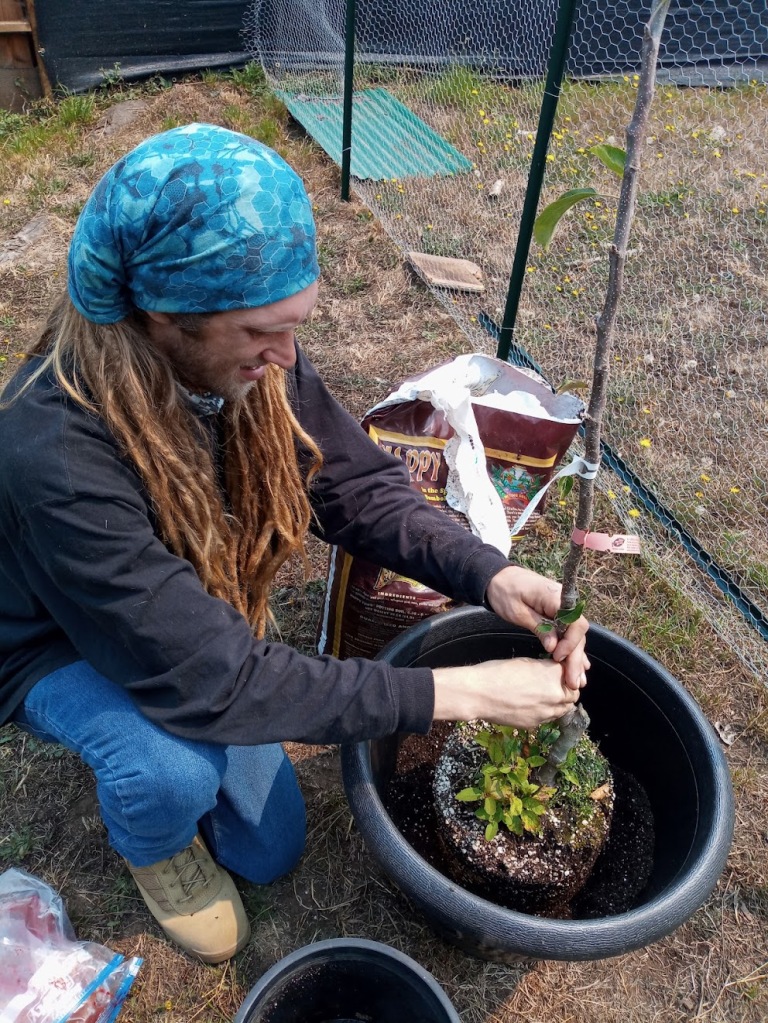
I knew I wanted to plant my placenta. I initially was drawn to a lemon tree, but I couldn’t find one anywhere local in late summer. I settled with a Mutsu, green apple tree. I bought a large pot to put it in until we have found a permanent home. My husband, the farmer, filled the bottom of the pot with Fox Farm Soil. We placed the placenta inside and added another layer of soil before adding the tree so that the organ wasn’t directly underneath the tree. Then, we filled the rest of the pot up and watered it lightly.

The tree symbolizes the tree of life reflected on the placenta, as well as the journey ahead of my baby boy. It also resembles the change of the seasons that will make its leaves transition in color which will fall and regrow. The tree will provide fruit that helps nourish and feed its community, as I hope my son will foster to his. These are the reasons I choose to plant my placenta. Please comment below with what you did with yours!

File:Tree of life.jpg
The Tree of Life (wikimedia.org)

Malakai Klaus Pearson at Home Birth

August 10, 2021

Birthing Story

Warning *Nudity and Adult Content*

Check out my “Unassisted” Birth Plan I wrote at 18weeks for a complete perspective of my birthing experience.

IG: the_glowing_expectant

I never thought the words “I do” would follow me beyond eloping. At the peak of my transition, I shouted, I couldn’t do it any longer, and my husband said, “Remember, your body is made to give birth,” and I responded, “I do.” After that, I knew I could do it.

My contractions started around 4 am on August 10th. My mom, Sascha, was visiting from San Diego. My due date was August 2nd, and I was now ten days late. As a first-time birther, I didn’t know what to expect. I laid in bed, and when I felt myself dilating, I went to the bathroom. Going back and forth would go on for the remainder of the morning. I texted my midwife at 7:32 am, “Feeling contractions. I think today’s the day. I’ll see you at one.” We had a scheduled visit for that afternoon, and I thought I’d ride the waves until then. My daughter, Halaya, stayed home from her school camp, and my mom prepared the house and catered to my needs.

When the midwife, Jami, came, I had her check my dilation. I was at 2cm, and she told me I was doing great as I paced the room and bounced on my birth ball. Her assistant, Elise, helped her bring in supplies and set up the bed with a mattress cover and sheets. They told me they had a 3 pm prenatal visit and that, as a first-time birther, I shouldn’t expect to have the baby until later that night or possibly the following day. They reassured me that they would stay locally and to call them when the contractions were stronger. Elise told me as she left to call Sarah, the doula, in a few hours if I needed help.

Sarah is a newer doula and was offering her services for the experience. I called her around 3:15 pm. It was hard for me to talk in between contractions, and I asked her to come within the hour. She got to my house at 4:05 pm, and I was in between being on all fours and the toilet. I was internalized and not speaking clearly. Sarah offered me water, broth, and labor-aid in between contractions, from which I could take only a few sips. I was throwing up and having a hard time keeping anything down. They were about three minutes apart when she timed my transitions, lasting about a minute and in a pattern. She would tell me later that they progressed very quickly from the time she was there. I yelled at her that I felt the need “to shit.” I went as far as asking her if the baby was coming out of my ass.

When I sat on the toilet again, I felt the need to push and a lot of pressure. I held onto my surroundings which was a sign to Sarah that I had the need to bear down and that it was time to call the midwife. I responded fiercely, “Call the fucking midwife.” That’s when the mucus plug came out.

Sarah said with beautiful big brown eyes that I needed to pant. We began to pant together. She asked me if I would get into the tub, and a little resiliently, I did so. There was a moment when I sunk into the tub, and I got back onto all fours when I felt the next contraction. My husband soothed me with kind words and petted my forehead. My daughter also came into the bathroom and kissed me but then left the room at my request. Then again, I sunk into the tub, but I couldn’t do it anymore and wanted out when the next contraction came.

I was back on the floor and saying “Oww” in rhythm while on all fours. My mom suggested that I go into the bedroom, but I couldn’t move and told her aggressively to leave the room. I gave a few heavy pushes, and Sarah told me to try not to push and instead pant while we waited for the midwife. I got my husband to walk me to the bedroom, where I’d have more space.

I got onto the bed, and there was no stopping me at this point. Halaya tried to come into the room, and out of fear, I asked her to wait in her room. With bulging eyes, I looked at Sarah to guide me through my breathing techniques. We did a few breaths out and a long awww sound to get things moving. I strongly depended on her at this point to guide me through my experience. My husband stood behind, waiting for the baby. He would tell me he thought the baby was also coming out of my rectum until he mentally corrected himself. The baby’s head began to crown after a few pushes. I gave a high pitch scream. Sarah reminded me, “lower tones bring the baby,” and I followed her lead. She told my mom to get the receiving blankets. There was a moment I couldn’t see Sarah, and I screamed her name. She returned to locking eyes with me, and we breathed through the rushes together.

Jeremy saw the baby’s head. The baby’s face turned purple, and he noticed that the cord was wrapped tightly around the baby’s neck. I didn’t feel the need to push suddenly and wanted to rest. My husband told me I had to push, and I responded that I did not. Sarah reiterated that it was vital for me to continue pushing at this time, and I did so.

Jeremy grabbed Malakai as he was sliding out at 5:01 pm. He said the baby had mucus draining from his nose. He untwisted the cord instinctually. There was a lot of blood, and the concern to call 911 arose. Sarah asked Jeremy and me, and we both rejected. The baby was behind me from in between my legs. J held the baby on its stomach to get it to sputter out the fluid. The baby was limp, and I requested they bring the baby back through my legs and onto my chest. I immediately swiped his mouth for mucus and patted the baby on the back. Malakai began to cry softly and was finally coming into his body. As I laid on the bed with my newborn, Sarah offered me a shepherd’s purse tincture to help stop the bleeding.

We all took a deep breath, and the midwife came about 5 minutes later. I was hemorrhaging, but I felt relieved that my baby was in my arms and we were all alive. Jami and Elise came into the room, shocked to see us all sitting calmly on the bed with a newborn baby. My mom got Halaya and brought her into the room. She was able to greet her new baby brother. Halaya smiled with excitement and gave baby and me a kiss on the forehead.

Jami gave me a shot to help with the blood loss. There was no tearing and I accredit it to a constant burning sensation that caused me to massage my labia frequently. After about 15 minutes, Jami recommended I sat on a stool and pushed out the rest of the placenta. I was uncomfortable, but shortly after squatting, it ejected out. After the cord stopped pulsing, we got two black candlesticks from my altar. Jeremy and I burned the cord together. Halaya watched while we sang tunes and waited for the cord to burn, which took about 5-8 minutes. Once the cord was burnt, we had a chance to settle, and Elise took the baby’s vitals. Halaya listened to the baby’s heart and lungs, and Elise weighed him at 7lbs 12 oz and his height to be 21 inches. He had long fingers and large feet.

Looking at my baby in my arms was so fulfilling. I said to Sarah that Malakai had an old soul. His cues warmed the room, and we all sat awe-stricken as the baby looked around at his new world. It took him a while to latch, but Jami ensured he did so before leaving the room. I filled my peri bottle with a homemade sitz bath extract and used it to soothe myself when I used the restroom.

Everyone went home before 8:15 pm, and we had the rest of the evening to enjoy as a family. My mom made eggrolls. Halaya held her little brother, and my mom sat with him on the rocking chair. We all reminisced about the excitement of the birth. We were all impressed with J’s quick actions to unwrap the umbilical cord, and my mom expressed her fear when she saw his purple face. I would look back on the helping hand Sarah offered me and the deep connection I felt with her as she helped me ride the waves of my birthing experience. In the end, our baby boy came out alive and well.

That night Malakai nursed for what seemed like hours. We tried to put him in the bassinet, but he wouldn’t have it. We moved him from the bassinet to the dock-a-tock in between us on the bed. He cried, forcing me to hold him on my chest as I tried not to drift off to sleep. He took a handful of loaded poops, a tar-like dark brown. Around 4 am when everyone was on cloud 9, I put him back in the dock-a-tock, cuddled next to my husband, and slept for a few hours.

I appreciate everyone that contributed and was so proud of my home birth experience. Reading all the books prepared me not to be afraid and ride my contractions’ waves. I wouldn’t give it up for the world. And even though they say your birth never goes as you planned, my birth unexpectedly went exactly as I had wanted.

If you are a Humboldt local here are my recommendations for birthing assisstants:

All of these woman were incredibly helpfully and I highly recommend their services for a spiritual and centered birthing experience.

Midwife: Jami Johnson: (707) 272-0339

Doula: Jessika Shinn: (503) 791-7330

Doula: Sarah @ Sacred Cycles Doula: (386) 882-1652

Masseuse: Audrie Kuhl @ Subliminal Sensation: (707) 296-4806