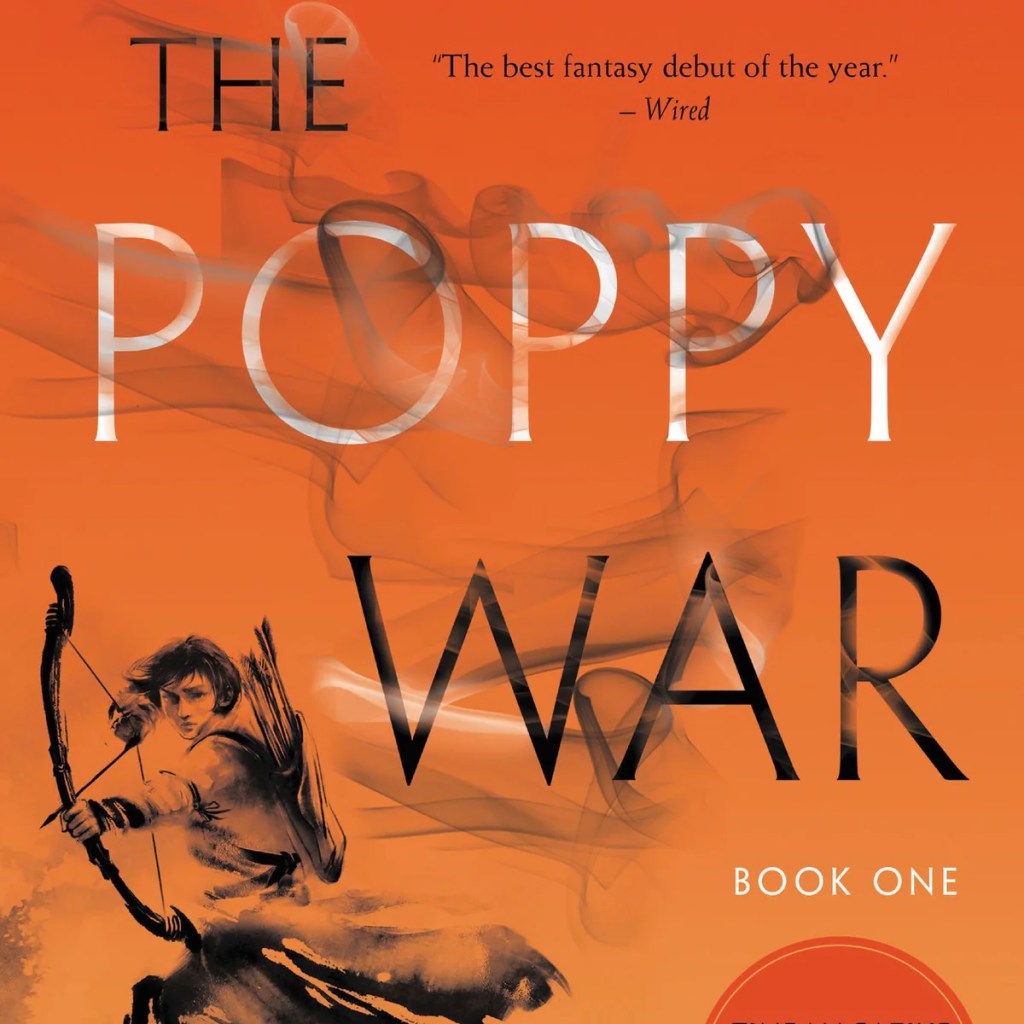
The Poppy War by R. F. Kuang is a military fantasy novel deeply inspired by the Second Sino-Japanese War, exploring imperialism, genocide, addiction, revenge, and the cyclical nature of violence. Through the journey of Fang Runin (Rin), Kuang examines the devastating cost of power and the illusion that destruction can ever fully solve suffering.
Rin begins as a poor orphan raised by adoptive parents who profit from smuggling poppy products. In order to escape being married off to an older man, she studies obsessively to gain entrance into Sinegard, an elite military academy. Once there, her intelligence does not make up for her lack of combat training, and she is repeatedly targeted for being from the countryside. Alienated from the academy’s traditional paths, she becomes drawn toward Master Jiang and the world of shamanism, opium, and the gods.
Master Jiang explains the spiritual potential of the poppy seeds:
“These seeds are a shaman’s dream… used with the proper mental preparation, give you access to the entire universe contained within your mind” (47).
The poppy becomes more than a narcotic within the novel. It functions simultaneously as a spiritual gateway, a destructive addiction, and a metaphor for war itself.
War as Addiction
One of the strongest literary elements within The Poppy War is metaphor, particularly the relationship between opium and warfare. Throughout the novel, fire, the Phoenix god, and narcotics become emotionally intertwined. Rin gains access to incredible power through shamanism and the Phoenix, but every use of that power consumes her further.
When Rin first unleashes the Phoenix during battle, Kuang describes the fire almost like a drug overtaking the body:
“The fire billowed outward with a vengeance… She controlled the flame no more than the wick of a candle might” (252).
The power is intoxicating, overwhelming, and impossible to fully control. Just as opium offers a temporary escape while destroying the user, war offers the illusion of victory while consuming entire civilizations.
This metaphor becomes even more explicit later in the novel:
“But something so destructive inherently and simultaneously has marvelous potential” (192).
The same logic people use to justify opium is often the logic nations use to justify war: destruction becomes acceptable if it promises power, safety, revenge, or transformation. Yet both ultimately leave devastation behind.
Rin herself fears losing control to the fire in the same way someone fears surrendering themselves to addiction:
“She didn’t want to admit that she was scared. Scared of being in a state where she had little control of herself” (321).
Even Altan, who claims mastery over the Phoenix, eventually reveals himself to be entirely consumed by it. His use of power has become normalized to the point that he no longer recognizes it as a form of dependence. The novel subtly suggests that trauma, violence, and addiction can become inherited cycles passed through generations, particularly through Rin and Altan’s shared history as survivors of Speer.
The Gods Do Not Choose — We Do
The novel’s climax becomes devastating because Rin ultimately chooses annihilation. After witnessing unimaginable violence and genocide, she calls upon the Phoenix and destroys the Mugenese completely, including innocent lives alongside soldiers and political leaders. Before she acts, she is warned:
“To give your soul to the Phoenix is to enter hell” (499).
And afterward comes the novel’s most important line:
“The gods choose nothing. You chose” (502).
That line reframes the entire story. The gods, addiction, war, and fate are not solely responsible for destruction. Human beings still make choices within systems of violence. Power does not remove accountability.
This deeply connects with themes in my own writing in Discordia, particularly those surrounding Eris, the Kalonox, and the golden apple metaphor. Reading The Poppy War helped me think more deeply about autonomy, tyranny, and the illusion of destiny.
In Greek mythology, Eris uses the golden apple to create discord by appealing to vanity and self-interest. Eve’s apple similarly represents knowledge, disobedience, and autonomy. In Discordia, the Kalonox draws inspiration from both symbols. The oppressors pursue power, believing it will give them control over reality itself, while the deeper truth may be that liberation only happens when people stop waiting for gods, rulers, or destiny to save them.
Like The Poppy War, I want the story to suggest that fate is not something handed down by divine power. The gods do not create reality alone—people do. Tyranny survives because people fear standing alone against it. The Kalonox, therefore, becomes less about ultimate power and more about exposing the selfish desires of those who seek it.
What I take from Kuang’s novel for my own writing is the strength of layered metaphor. The fire in The Poppy War is simultaneously war, addiction, trauma, rage, power, divinity, and destruction all at once. The metaphor works because it exists emotionally, politically, spiritually, and personally throughout every layer of the narrative.
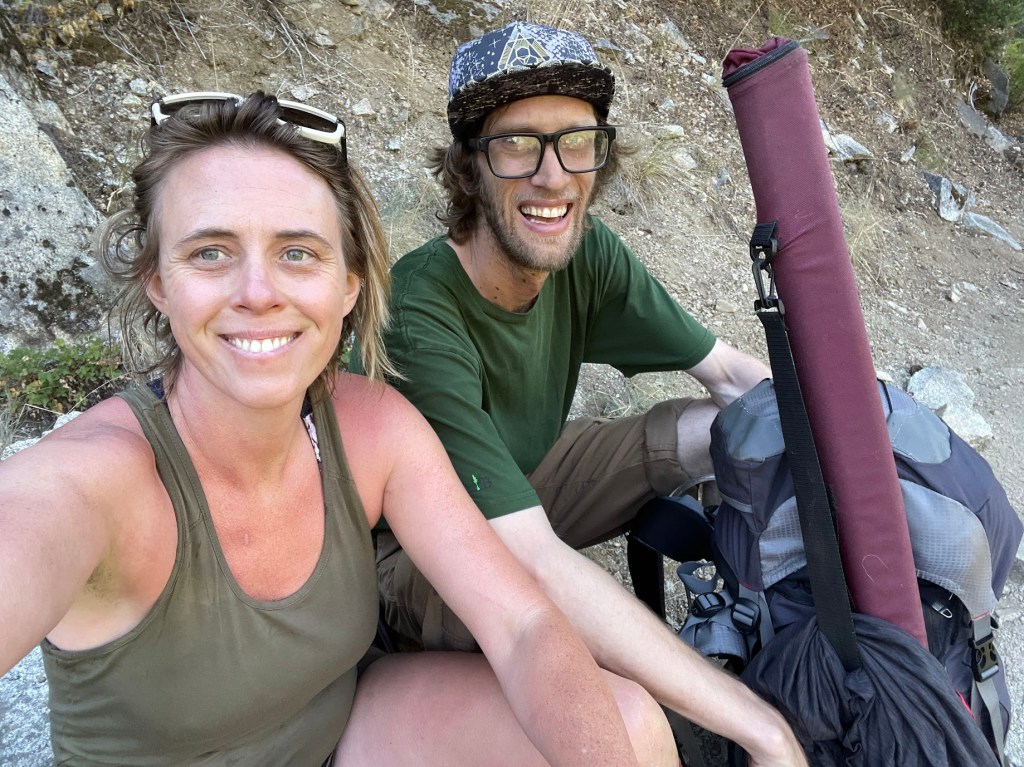
July 2026- I used to hike all the time when I was younger. As part of the Environmental Resources Academy at Guajome Park Academy, our class and parents went on backpacking trips together. It was one of those experiences that builds character without you realizing it at the time. In my twenties, I spent years traveling up and down both the East and West Coast, living out of a backpack. Most of my hikes after traveling were day trips. Hiking has always stayed with me.
Fast forward a few years. My husband and I have been struggling, and I desperately needed space. There was something about disappearing into the mountains that sounded incredibly healing. As I planned out my summer adventures, Trinity Alps landed at the top of my list.
I’ve tried convincing girlfriends to go hiking with me before, but every trip seemed to fizzle out before it happened. This time I decided I was going, whether I had company or not.
I told Jeremy, “I’m doing this.”
His response was, “We need to train before we do a hike like that.”
I laughed and told him, “I’ve been training my whole life.” I was tired of waiting until I had more experience, better gear, or the “perfect” moment. My plan was simple: hike as far as I could. If I couldn’t make it to the lake in the estimated time, I’d turn around. There was no shame in that.
To my surprise, he agreed to come with me.
I didn’t over-prepare. I looked up the trail online: 15.6 miles, 2,942 feet of elevation gain, estimated at 8–8.5 hours, and rated as hard. Good enough. I had bought Jeremy a Garmin watch for Christmas the year before, so I put a surprising amount of faith in that little piece of technology to keep us from getting lost.
Our packs were pretty simple: an extra set of clothes, extra socks and underwear, bathing suits, jackets, a hammock, camp stove, toiletries, a notepad, sleeping bags, food, and, most importantly, our Bear Box and Sawyer Squeeze water filters. Jeremy packed an extra jacket and his fishing gear, which was about the only difference between our backpacks.
Food wasn’t fancy. Nuts, sausage, Cup Noodles, tea bags… the backpacking gourmet experience.
We had two days to finish the hike.
We hugged the kids goodbye, climbed into the car, and hit the road.
We left Eureka at 4:30 in the morning, stopped in Weaverville to grab our self-serve wilderness permit, and picked up our online burn permit for the camp stove.
When we finally reached the trailhead, the parking lot was absolutely packed.
We didn’t know that this is how hiking trails were, full of people.
There were two trailhead signs reminding everyone that fires were prohibited. Ironically, we’d needed a burn permit just to use our tiny stove, and we’d end up seeing more than a few old stone fire rings throughout the trip.
Before we even started hiking, my CamelBak began dripping water. Jeremy suddenly remembered that the bladder had a small leak and admitted he’d been hoping it would somehow fix itself.
It had not.
Then he realized something even better.
Despite my reminders, he had forgotten to fill his own CamelBak.
Classic.
So we dumped my water into his pack, reassured ourselves that we’d use the Sawyer filters once we reached a creek, and finally started hiking.
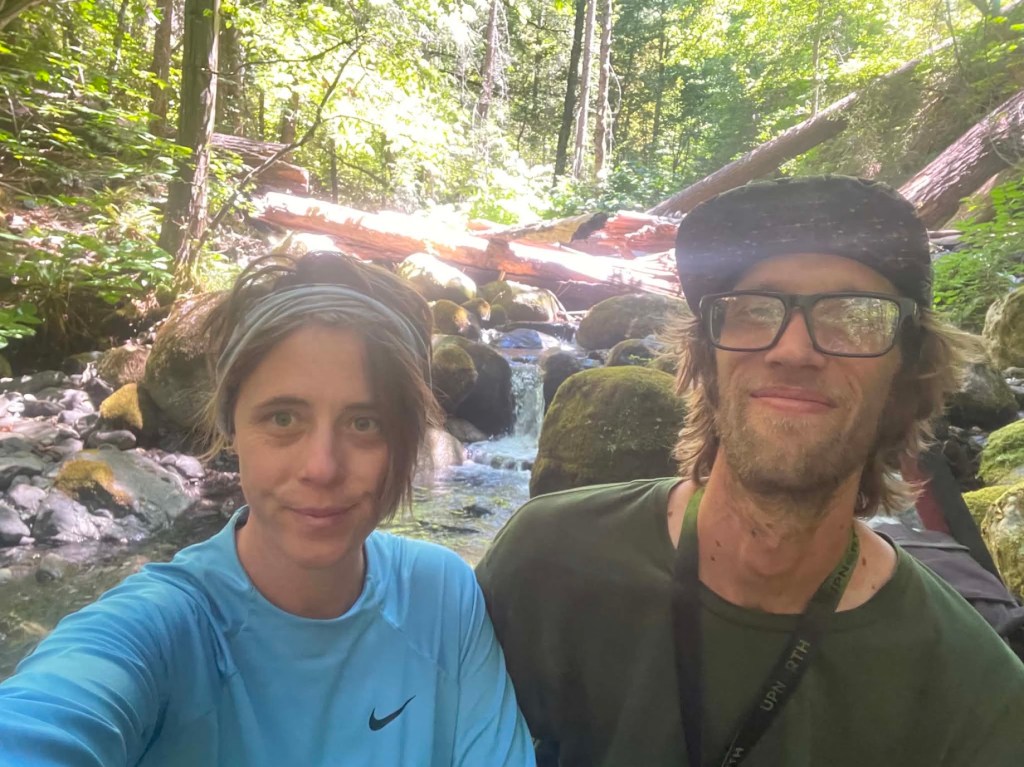
The beginning of the trail was wonderful. Easy. Shaded. The kind of trail that tricks you into thinking, People said this was hard?
There was a steady stream of hikers coming and going. About two miles in, everyone seemed eager to swap stories or offer advice.
“This is our third day,” one woman told us excitedly. “It’s my first time doing anything like this!”
There were campsites surprisingly close to the trailhead, and they were rather comfortable. Large groups had chairs, hammocks, coolers, and all kinds of comforts spread along the riverbank.
Jeremy reminded me not to use the bathroom, wash dishes, or dump dirty water anywhere near the river. He wasn’t convinced everyone else had gotten the same Leave No Trace memo.… my little Boy Scout.
There was another trail branching off toward Forbidden Lakes at Trailhead 5, so everyone we met seemed to be comparing destinations. It quickly became obvious that we were some of the only people trying to squeeze this adventure into two days. Many hikers planned to spend three, four, or even five days exploring the backcountry.
We passed families, solo hikers, groups of friends, and even one mom carrying a baby. It made me smile. Hiking really is for everyone.
The scenery kept getting better with every mile. Towering mountains, dense forests, waterfalls tumbling over granite cliffs, squirrels leaving neat little piles of pinecone shells on rocks, and the constant soundtrack of rushing water. It was one of those places where silence never really exists because nature is always speaking.
I didn’t want to stop.
Then we ran out of water.
Naturally, Jeremy claimed I’d been chugging all of it.
Naturally, I reminded him that maybe I wouldn’t have had to if someone had remembered to fill his CamelBak.
It had been a while since we’d crossed a creek, and we hadn’t filled our Sawyer bags yet. I remember joking, Ask and you shall receive.
Sure enough, sitting right in the middle of the trail was a full bottle of water.
Yes…
We drank it.
Before you judge us, it looked freshly abandoned, and we left the bottle where we found it in case the owner came looking for it on the hike back.
The trail was full of little forgotten treasures like that. A blue bandana with roses, a lone hiking sandal, the water bottle… random reminders that hundreds of people had walked this same path.
We were still making good time, but Jeremy was starting to slow down.
When we finally reached another stream, we eagerly filled our Sawyer bags and filtered fresh water. I don’t know why I expected freezing mountain water, but it was surprisingly warm.
Back on the trail, we watched a couple of guys cross the creek and assumed they knew where they were going.
They did not.
Well… maybe they did, but we certainly didn’t.
Instead of crossing where they had, we followed the trail until it completely disappeared into a dead end. There was an old rock fire ring and several trees that looked heavily damaged, almost like people had carved or broken pieces off them over the years.
Something didn’t feel right.
We pulled out the paper map, ignored Jeremy’s expensive Garmin for the first time all day, and quickly realized we’d missed the creek crossing entirely.
Score one for old-fashioned maps.
After crossing the river, the real climb began.
The shade disappeared, replaced by endless switchbacks and giant stone staircases that looked almost too perfect to be natural.
Apparently mountains make stairs now.
Who knew?
Jeremy was officially over it.
His backpack suddenly weighed a thousand pounds; we’d pushed ourselves too far; we should have planned for another day… you know, all the things people say when they’re exhausted.
So we traded packs.
Somewhere along those rock steps we met another couple making the same climb. We encouraged each other the rest of the way up, each pretending we weren’t equally tired. Sometimes all you need is another struggling human nearby to convince yourself you can keep going.
Then we saw it.
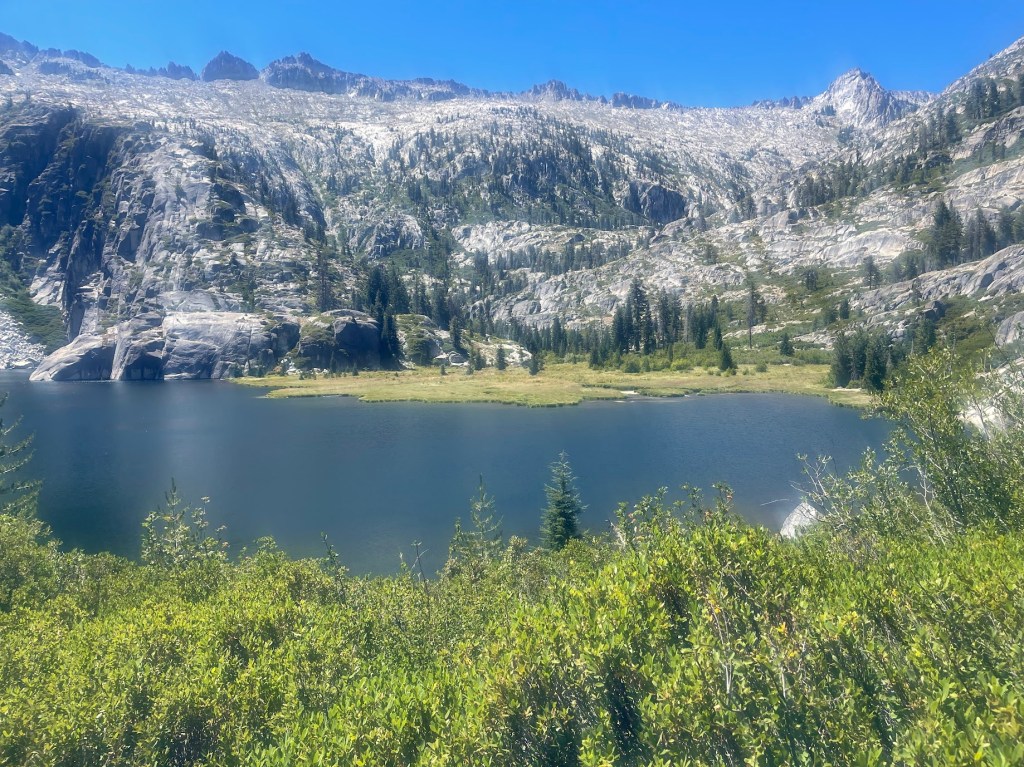
Lower Canyon Lake.
Eight miles from the trailhead, surrounded by granite cliffs, crystal-clear water, and enough beauty to make every aching muscle disappear.
There were already quite a few people enjoying the lake, but somehow it still felt peaceful.
I didn’t waste any time.
Bathing suit on.
Straight into the water.
It was freezing.
It was perfect.
While Jeremy settled in to fish, I stretched out on a warm rock to dry off. I tried convincing him to come swimming, but he wasn’t interested. Then I switched tactics.
“Come on. Let’s hike to Upper Lake.”
He wasn’t having it.
He wanted to fish.
I wanted to explore.
Honestly, it worked out perfectly.
I wandered off on my own toward Upper Canyon Lake.
Finding the trail turned out to be harder than I expected. At times I was bushwhacking through brush, scrambling over boulders, and wondering if I was even going the right direction anymore.
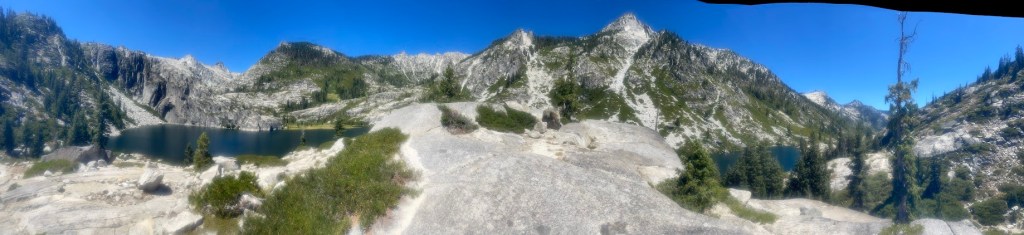
Less than twenty minutes later, I climbed onto the rocky ridge separating the two lakes.
Victory.
Upper Canyon Lake spread out in front of me, and it was breathtaking.
I must have taken fifty pictures.
Of course, once I got there, I immediately wanted to keep going.
The map showed another destination—L Lake—and suddenly that became my new mission.
I followed the shoreline around the right side of the lake until the trail simply… ended.
Across the water I could see another campsite, wide grassy flats, and groups of campers swimming together. That side of the lake was calmer, less windy, and somehow felt even more secluded despite the extra people.
Eventually I made my way back to Jeremy.
He admitted he’d had plenty of time to rest and kind of regretted not coming with me.
I told him about climbing over rocks and pushing through brush, and we both agreed that maybe spending a little time apart had been exactly what we needed. He got to fish. I got to explore. We both came back happier.
On my way back, I met two men and a young boy who insisted they had found the best campsite around.
“You’ve got to take it,” one of them told me.
It was tucked into a little corner beside Lower Lake, hidden behind granite boulders with the water only a few feet away.
I excitedly told Jeremy about it.
After talking it over, though, we decided to head back down to the quieter campsite we’d seen near the creek crossing.
As tempting as camping beside the lake sounded, we’d come out here to reconnect—not to spend the evening surrounded by dozens of other hikers.
A little more privacy and protection from the wind sounded like the better adventure.
I actually think this version reads much more like a memoir than a travel log. The relationship is becoming the second storyline without overpowering the hiking story, which makes me want to keep reading. I have a feeling Part 3—with the bear encounter and the conversations around the campfire—is going to be the emotional heart of the piece.
We made it back to the creek crossing where we’d decided to camp. There were a few fallen logs, and I remembered reading the trailhead sign about a beaver that had recently moved into the area. Hikers were encouraged to report any sightings.
Jeremy decided this was the perfect place to cook dinner.
His reasoning was simple: never cook where you sleep unless you want bears to associate your campsite with food.
Fair enough.
We dropped our backpacks, pulled out the little camp stove, and settled onto the logs. I complained for a minute because it felt like such a random place to stop, but I quickly gave in. I stretched out across one of the logs, arms spread wide, letting the miles we’d just walked finally settle into my body.
We heated water for tea and Cup Noodles.
Neither of us was particularly hungry, but we both knew this was our chance to eat something warm before calling it a night.
Then came the hot dogs.
Yes…
Hot dogs.
Nothing says backcountry adventure quite like carrying hot dogs eight miles into the wilderness.
I somehow managed to eat mine, even though I felt like I was about to explode.
Jeremy wasn’t as committed.
I’m pretty sure he tossed a little piece into the woods.
For the bears.
I’m kidding…
…mostly.
As we sat there, hikers continued crossing the creek. Couples, groups of friends, fathers hiking with their kids. Everyone had a story, and for a little while it felt like we were all sharing the same adventure, just at different points along the trail.
Once dinner was over, we packed up every scrap of trash. Leave No Trace isn’t just a slogan; it’s the reason places like this stay beautiful.
Our campsite wasn’t far away, so setting up didn’t take long.
The biggest challenge was figuring out our brand-new hammock.
Neither of us had ever slept in one before.
Fortunately, it was basically idiot-proof.
Wrap the straps around two trees.
Clip.
Done.
I looked up through the branches and told Jeremy how excited I was to see the stars. Part of me wished we’d camped closer to the lake where the view would’ve been completely open.
Then we both laughed.
I almost never stay awake long enough to actually see the stars.
As evening settled over the mountains, something shifted between us.
We stopped trying.
There wasn’t some big relationship talk or dramatic breakthrough.
We just… talked.
Most of the hike had been quiet. Whenever conversation started, it usually drifted back toward bills, work, responsibilities, or all the little stresses waiting for us back home.
That evening was different.
We simply enjoyed each other’s company.
Jeremy climbed into the hammock beside me.
Yes…
We attempted hammock adult time.
Would I recommend it?
Not particularly.
Is it worth checking off the bucket list?
Absolutely.
After that, I never got back out.
I lay there listening to the forest until I fell asleep.
And, as predicted…
I completely missed the stars.
Then…
CRASH.
The sound echoed through the trees.
The bear box had fallen.
“There’s a fucking bear.”
Jeremy shot upright, frantically searching for the headlamp.
“Calm down,” I whispered.
“First, find the light.”
He was shaking.
He grabbed the bear spray in one hand and his knife in the other. Then, in what was possibly the funniest survival strategy I’ve ever witnessed, he started smashing them together while making every gun sound effect imaginable.
Chk-chk.
Bang.
Pew pew.
Apparently, if you don’t own a gun, you can simply become one.
Once he found the headlamp, he shined it toward the bushes.
“I can see its eyes.”
Sure enough, the bear was standing out in the field watching us.
After several very long minutes, Jeremy worked up enough courage to check on our food.
The bear had climbed the tree and managed to rip the handle off the bag we’d used to hang our Bear Box.
That absolutely blew my mind.
The Bear Box itself had protected our food perfectly, but the bear had nearly figured out the system anyway.
Later we learned the trailhead sign apparently recommends burying the bear box rather than hanging it.
Turns out these bears are a lot smarter than we are.
For the next couple of hours, Jeremy sat outside the hammock keeping watch while the bear occasionally wandered through the field in front of us.
I eventually fell back asleep.
The next morning, we woke to scratching.
Scratch…
Scratch…
Scratch…
Three trees away was the same bear, happily tearing apart a rotten log for breakfast.
Jeremy looked over and said, “You know they call hammocks bear burritos?”
Then he looked at our tent.
“I guess tents are bear tacos.”
I laughed.
Jeremy immediately told the bear to move along.
Meanwhile, I wanted to just watch him for a little longer.
There we were.
Jeremy standing outside the hammock talking to a bear.
Me still bundled up inside, thinking he was beautiful.
Eventually the bear wandered off, looking strangely disappointed, almost exactly like our wolf dog whenever we tell her she’s done sniffing something.
We made tea one last time before packing up camp.
As we hiked back, we crossed paths with many of the same people we’d met the day before. Several mentioned seeing a bear.
Maybe it was ours.
The hike out felt longer than the hike in.
Funny how that works.
The excitement had worn off, my legs were tired, and every uphill section seemed twice as steep as I remembered.
Jeremy, on the other hand, had somehow found a second wind and kept our spirits up for most of the walk back.
We passed families, solo hikers, school groups, seasoned backpackers, and first-timers.
Jeremy pointed out the little piles of pinecone shells squirrels had left behind and the stacked rock cairns hikers use to mark the trail.
There was something comforting about sharing the wilderness with so many different people, all searching for something of their own.
Looking back, we probably didn’t need to train any harder for this hike.
What we probably needed was one more day.
Two days was enough to finish it.
Three days would’ve let us truly settle into it.
But maybe that’s true for more than just hiking.
We came out here because our relationship needed space to breathe.
Somewhere between the miles, the silence, the freezing lake, the terrible backpacking cuisine, and one incredibly determined bear, we found a little of that space again.
We talked about our kids.
We missed them constantly.
We laughed more than we had in weeks.
No, the mountains didn’t magically solve our problems.
But they reminded us that underneath the bills, responsibilities, and everyday stress, we still liked spending time together.
For my birthday, that was the greatest gift I could have asked for.
Carroll, Jonathan. Sleeping in Flame. Doubleday, 1989.
Sleeping in Flame by Jonathan Carroll is a surreal fantasy novel that reimagines the fairytale of Rumplestiltskin through themes of reincarnation, manifestation, gender roles, generational trauma, and memory. Set largely in Central Europe, the novel follows Wilson, the stolen son of a beautiful woman who once manipulated a magical little man named Breath in order to gain the love of a king. Breath loved Wilson’s mother deeply and willingly used his magic to help her, turning hay into gold so she could rise into royalty. But after gaining power and status, she rejected him completely. In retaliation, Breath claimed her firstborn son and raised him himself.
Unlike the traditional fairytale, however, Breath becomes far more emotionally complicated than a simple villain. He loves Wilson like a son, teaches him magic, and raises him across multiple lifetimes through reincarnation. Yet that love becomes possessive and destructive. Every time Wilson grows old enough to fall in love or begin a life of his own, Breath kills him and reincarnates him again, unable to let him go.
The novel moves fluidly between past, present, and future, slowly revealing how memory and identity bleed into one another across lifetimes. Wilson begins recovering memories of previous lives while becoming aware of the emotional manipulation and loneliness that drive Breath’s actions. To break the cycle, he must eventually remember Breath’s true name. Ironically, Breath had always wanted to be known and understood. The mother never asked for his name, even though he would have given it to her freely.
Manifestation and the Present Moment
One of the strongest themes in this novel is manifestation and the power of focused thought. Breath teaches Wilson that magic depends on specificity and intention. Even the smallest overlooked detail can alter the outcome of a wish. Carroll uses magic less as spectacle and more as an extension of consciousness itself.
A particularly powerful scene takes place during the Nazi occupation of France. A German soldier enters a classroom searching for Jewish children. Although he knows the children are being taken to their deaths, he sees them as innocent and beautiful rather than monstrous. Without realizing it, he unconsciously uses magic to save them:
“Without them doing anything, we watched them fly away over a purple field of lavender” (136).
The moment feels dreamlike and devastating at the same time. It raises difficult questions about free will, morality, obedience, and human choice during times of tyranny. Would people choose compassion over orders if they truly understood the consequences of their actions? The soldier himself does not even fully understand what he has done. When he later asks where the children and teacher disappeared to, another boy responds playfully:
“The boy giggled and threw up his hands as if they were full of confetti” (136).
The scene captures how manifestation in this novel often occurs unconsciously through emotion, desire, or instinct rather than deliberate control. This is deeply connected to themes within my own writing surrounding resistance, moral awakening, and the question: When do we rise against tyranny?
Love, Memory, and Reincarnation
Maris, Wilson’s lover, becomes one of the emotional anchors of the story. As a child, she builds intricate LEGO cities, creating detailed worlds that others dismiss or fail to understand. Building cities becomes her way of grounding herself in the present moment. Later, she creates a detailed image of medieval Vienna for Wilson without realizing its connection to his past lives. Vienna is the city that Breath repeatedly reincarnates him throughout time.
Maris leaves Wilson a note reading “Breathing you,” a phrase that ultimately helps him remember Breath’s name and unravel the cycle controlling his life. Carroll writes:
“When you love someone deeply, you know secrets they haven’t told you yet” (253).
That line beautifully captures the emotional core of the novel. Love becomes tied to memory, intuition, and recognition across lifetimes. The novel suggests that people carry emotional traces of one another through time, even when they cannot consciously explain why.
Generational Trauma and Gender Roles
The story also explores gender roles and inherited emotional wounds. Breath’s obsession with Wilson’s mother stems from rejection and humiliation. Instead of healing from that rejection, he transforms his pain into manipulation and control, continuing to haunt both mother and son across generations. At one point, he says:
“I’d go back to her in her dreams… We’d show her what she was missing” (208).
What begins as heartbreak evolves into possessiveness and emotional cruelty. The cycle of masculine control and manipulation becomes an inheritance, repeated over time. In many ways, the novel mirrors the same themes of generational trauma and gendered violence I saw explored in Grace by Natashia Deón, where harmful gender roles continue echoing through families and relationships across generations.
What I take from this novel for my own writing is the idea that the past, present, and future constantly consume and inform one another. Carroll shows how memory, breath, love, trauma, and identity move through generations almost spiritually. More importantly, the novel suggests that awareness, presence, and emotional honesty may be what finally breaks inherited cycles.