Carroll, Jonathan. Sleeping in Flame. Doubleday, 1989.
Sleeping in Flame by Jonathan Carroll is a surreal fantasy novel that reimagines the fairytale of Rumplestiltskin through themes of reincarnation, manifestation, gender roles, generational trauma, and memory. Set largely in Central Europe, the novel follows Wilson, the stolen son of a beautiful woman who once manipulated a magical little man named Breath in order to gain the love of a king. Breath loved Wilson’s mother deeply and willingly used his magic to help her, turning hay into gold so she could rise into royalty. But after gaining power and status, she rejected him completely. In retaliation, Breath claimed her firstborn son and raised him himself.
Unlike the traditional fairytale, however, Breath becomes far more emotionally complicated than a simple villain. He loves Wilson like a son, teaches him magic, and raises him across multiple lifetimes through reincarnation. Yet that love becomes possessive and destructive. Every time Wilson grows old enough to fall in love or begin a life of his own, Breath kills him and reincarnates him again, unable to let him go.
The novel moves fluidly between past, present, and future, slowly revealing how memory and identity bleed into one another across lifetimes. Wilson begins recovering memories of previous lives while becoming aware of the emotional manipulation and loneliness that drive Breath’s actions. To break the cycle, he must eventually remember Breath’s true name. Ironically, Breath had always wanted to be known and understood. The mother never asked for his name, even though he would have given it to her freely.
Manifestation and the Present Moment
One of the strongest themes in this novel is manifestation and the power of focused thought. Breath teaches Wilson that magic depends on specificity and intention. Even the smallest overlooked detail can alter the outcome of a wish. Carroll uses magic less as spectacle and more as an extension of consciousness itself.
A particularly powerful scene takes place during the Nazi occupation of France. A German soldier enters a classroom searching for Jewish children. Although he knows the children are being taken to their deaths, he sees them as innocent and beautiful rather than monstrous. Without realizing it, he unconsciously uses magic to save them:
“Without them doing anything, we watched them fly away over a purple field of lavender” (136).
The moment feels dreamlike and devastating at the same time. It raises difficult questions about free will, morality, obedience, and human choice during times of tyranny. Would people choose compassion over orders if they truly understood the consequences of their actions? The soldier himself does not even fully understand what he has done. When he later asks where the children and teacher disappeared to, another boy responds playfully:
“The boy giggled and threw up his hands as if they were full of confetti” (136).
The scene captures how manifestation in this novel often occurs unconsciously through emotion, desire, or instinct rather than deliberate control. This is deeply connected to themes within my own writing surrounding resistance, moral awakening, and the question: When do we rise against tyranny?
Love, Memory, and Reincarnation
Maris, Wilson’s lover, becomes one of the emotional anchors of the story. As a child, she builds intricate LEGO cities, creating detailed worlds that others dismiss or fail to understand. Building cities becomes her way of grounding herself in the present moment. Later, she creates a detailed image of medieval Vienna for Wilson without realizing its connection to his past lives. Vienna is the city that Breath repeatedly reincarnates him throughout time.
Maris leaves Wilson a note reading “Breathing you,” a phrase that ultimately helps him remember Breath’s name and unravel the cycle controlling his life. Carroll writes:
“When you love someone deeply, you know secrets they haven’t told you yet” (253).
That line beautifully captures the emotional core of the novel. Love becomes tied to memory, intuition, and recognition across lifetimes. The novel suggests that people carry emotional traces of one another through time, even when they cannot consciously explain why.
Generational Trauma and Gender Roles
The story also explores gender roles and inherited emotional wounds. Breath’s obsession with Wilson’s mother stems from rejection and humiliation. Instead of healing from that rejection, he transforms his pain into manipulation and control, continuing to haunt both mother and son across generations. At one point, he says:
“I’d go back to her in her dreams… We’d show her what she was missing” (208).
What begins as heartbreak evolves into possessiveness and emotional cruelty. The cycle of masculine control and manipulation becomes an inheritance, repeated over time. In many ways, the novel mirrors the same themes of generational trauma and gendered violence I saw explored in Grace by Natashia Deón, where harmful gender roles continue echoing through families and relationships across generations.
What I take from this novel for my own writing is the idea that the past, present, and future constantly consume and inform one another. Carroll shows how memory, breath, love, trauma, and identity move through generations almost spiritually. More importantly, the novel suggests that awareness, presence, and emotional honesty may be what finally breaks inherited cycles.
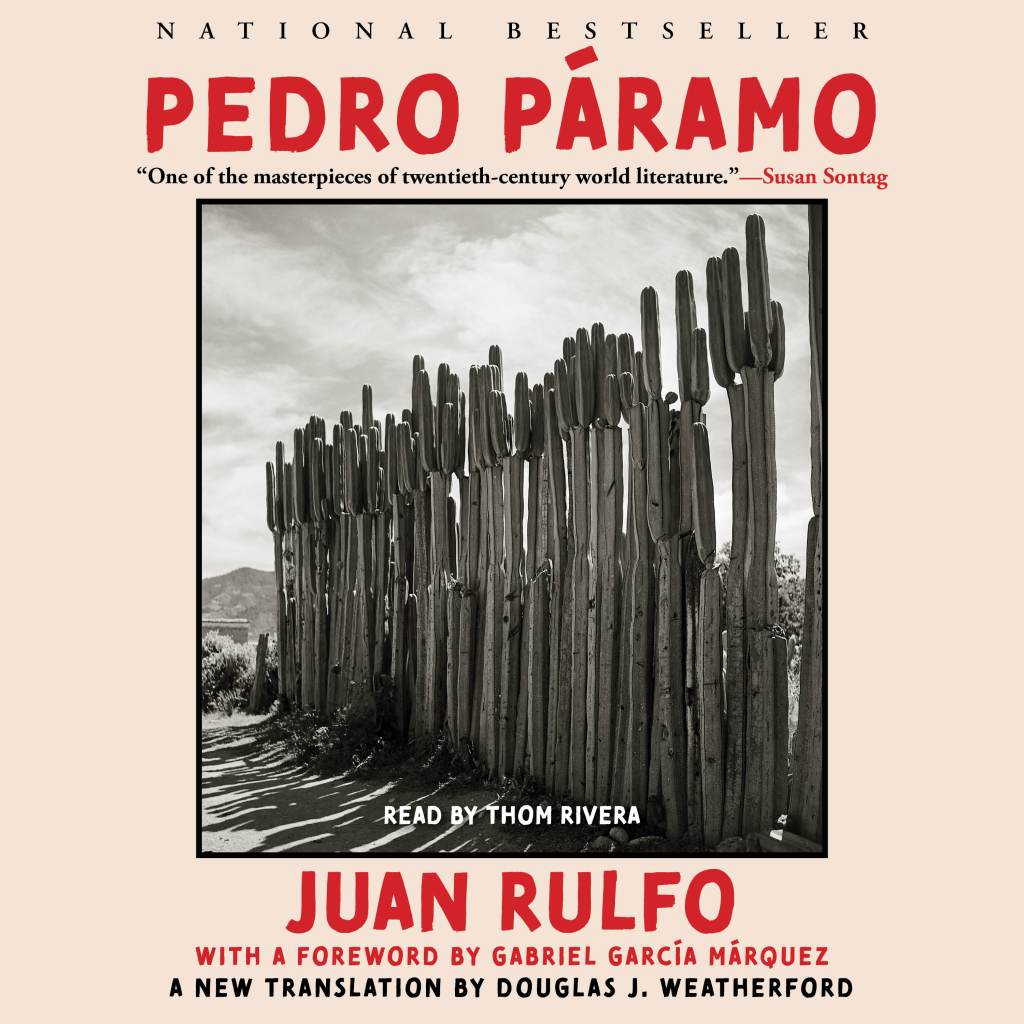
Rulfo, Juan. Pedro Páramo. Translated by Margaret Sayers Peden, Grove Press, 1994.
Pedro Páramo by Juan Rulfo is a ghost novel of magical realism, centered on generational trauma during and after the Mexican Revolution. The story follows Juan Preciado, who travels to the town of Comala after his mother’s death in search of his father, Pedro Páramo. What he expects to find is the beautiful town his mother once described to him: “a beautiful view of a green plain, with a bit of yellow from the ripening corn” (13). Instead, he arrives in a decaying landscape, almost entirely occupied by ghosts.
The guide who first leads Juan into Comala describes the town as “the very mouth of Hell” where the dead return to reclaim their blankets (15). From the beginning, death is normalized within the setting itself. The living and the dead exist together, conversations blur between memory and hallucination, and time moves in fragments rather than straight lines. Juan eventually becomes consumed by the voices and ghosts surrounding him, dying from fear and exhaustion before continuing the story as one of the dead himself.
One of the most striking aspects of this novel is its nonlinear structure and fragmented narration. The story shifts between timelines, memories, conversations, ghosts, and interior thoughts without warning. At times, this can feel disorienting, but it also reflects the emotional collapse of Comala itself. The town is haunted not only by literal ghosts, but by the lingering violence of exploitation, corruption, revolution, and abandonment.
Setting as a Protagonist
What interested me most in this novel was the way Comala itself functions almost like a protagonist. The town is not merely a backdrop to the story; it actively shapes the emotional atmosphere of every scene. Comala represents exploitation, ruined revolution, abandoned women, inherited suffering, and the decay left behind by powerful men like Pedro Páramo.
Throughout the novel, the setting constantly shifts between memory and reality. Damiana Cisneros recalls hearing celebrations and parties in the streets: “There was a time when I could hear the commotion of a party that kept going night after night…” only to discover “Nothing” when she investigates (50). Ghosts roam through the town as though death itself has become part of the landscape: “If only you could see the horde of shadows roam the streets” (60). Yet memories of the past briefly illuminate the darkness through Juan’s recollections of his mother describing carts filled with corn and life moving through the streets (55).
The novel repeatedly contrasts beauty with decay. One moment, the sky is described as bright and full of light, and the next, the physical world becomes suffocating and grotesque:
“The bed was made of otate reeds and covered with burlap sacks that smelled of urine…” (64).
The environment mirrors the emotional and moral collapse of the town itself. Rain, heat, rot, dust, and darkness all become extensions of grief, violence, and abandonment. Later, after Susana San Juan recounts traumatic memories connected to her father, the narration shifts outward:
“Outside it continued to rain. The Indians had left. It was Monday, and the valley surrounding Comala was still drowning in rain” (100).
The environment reflects the narrative’s emotional state. The endless rain feels less like weather and more like accumulated grief soaking into the town itself. In Pedro Páramo, nature and atmosphere become emotional language.
Pedro Páramo and the Corruption of Power
Pedro Páramo’s influence poisons every layer of Comala. Wealth protects him from accountability while everyone beneath him becomes disposable. When a woman comes demanding justice because Pedro’s son murdered her husband, Pedro’s administrator attempts to pay her off with corn rather than acknowledge responsibility:
“I offered her fifty hectoliters of corn if she’d forget the whole thing…” (74).
When Pedro asks who the grieving people were, and his manager responds that he does not know them, Pedro simply replies that they therefore “do not exist.” This moment captures the emotional core of the novel: people without power become invisible. Comala is haunted because suffering was ignored rather than healed.
Susana San Juan becomes one of the most emotionally powerful figures in the story. Her mental instability, trauma, sensuality, and longing are written with poetic intensity. Before her death, she speaks of swimming naked in the ocean and surrendering herself to the sea (105). Water becomes symbolic of purification, release, and returning to something natural beyond suffering.
When Susana dies, the town erupts into celebration:
“They buried Susana San Juan and few in Comala noticed. They were celebrating” (126).
The celebration is not because of Susana’s death itself, but because the town is distracted by festivities while Pedro loses the only person he ever truly loved. Her death marks the emotional collapse of his power. Just as Pedro spent his life taking from others, loss is finally returned to him. After Susana’s death, Comala fully descends into ruin.
What I Take Into My Own Writing
This novel taught me how setting can function as an emotional force within a narrative rather than simply a location. Through memory, atmosphere, ghosts, weather, and fragmented storytelling, Rulfo transforms Comala into a living embodiment of generational trauma.
For my own work in Discordia, I want to explore a similar setting by showing Zetheus before and after societal collapse, using memory, hallucination, storytelling, and environmental shifts to reflect emotional change within the world itself. Pedro Páramo also reminded me to pay close attention to diction, pacing, and the emotional rhythm of sentences. Even in confusion and darkness, the language remains poetic and intentional.
Beneath its ghosts and fractured timelines, the novel ultimately becomes a story about how violence and exploitation echo through generations long after death itself.