Mongrels — Generational Trauma, Monstrosity, and Memory Through Motion

NIG72LPZIJNTESAFAXFLXQKGDA


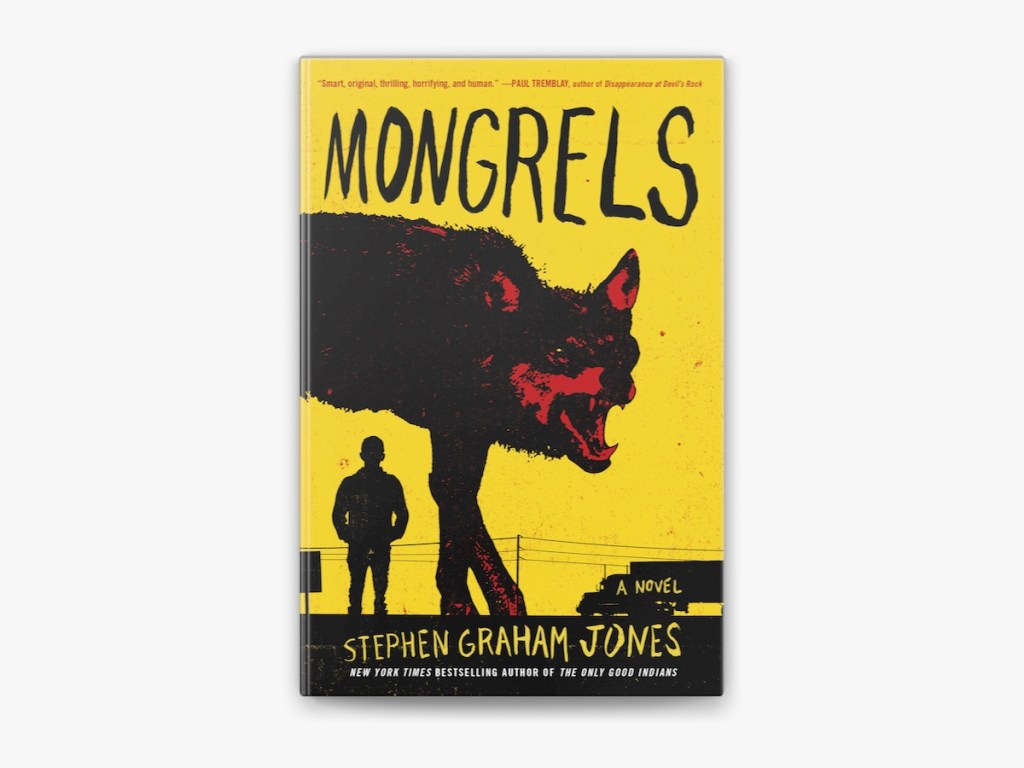
Jones, Stephen Graham. Mongrels: A Novel. HarperCollins/William Morrow, 2016.

Mongrels by Stephen Graham Jones is a coming-of-age horror novel told through the perspective of an unnamed boy growing up in a nomadic family of werewolves. Living alongside his Aunt Libby and Uncle Darren, the nephew struggles to understand who he is as he waits to discover whether he will eventually transform himself. Throughout the novel, Jones uses the werewolf figure not simply as a monster but as a metaphor for poverty, marginalization, generational trauma, displacement, and survival.

The nephew is rarely named directly. Instead, he is often referred to through shifting identities such as “the nephew,” “the vampire,” “the mechanic,” or “the prisoner.” This creates a feeling of instability surrounding identity itself, reflecting the uncertainty of adolescence and self-discovery. Although his experiences are supernatural, the emotional core of the story feels deeply human: the desire to belong somewhere while fearing what you may become.

As the family is forced from town to town, instability becomes their normal way of life. Darren works dangerous and degrading jobs, while Libby repeatedly pulls the family back together whenever things fall apart. Eventually, Darren disappears after falling in love with a woman outside the family, leaving the nephew once again abandoned by a male role model. Shortly before the nephew’s own transformation, Libby promises she will remain beside him:

“I’ll still be here,” the aunt says, reaching her hand across, taking his.
“Just like Darren,” the nephew says. “Werewolf promises aren’t any good, don’t you know that one by now?” (296).

That line captures one of the novel’s strongest emotional themes: the fear of abandonment inherited across generations.

Werewolves as Social Outsiders

One of the most powerful aspects of Mongrels is the way Jones compares werewolves to the poor, the criminalized, and the socially unwanted. The nephew grows up believing imprisonment and suffering are inevitable for people like him: “Everybody goes to jail at some point. Werewolves especially” (53). The family survives through scavenging, temporary work, theft, and constant movement. Childhood friendships are temporary because they never last long enough to take root.

The werewolf mythology becomes a framework for exploring inherited trauma. The nephew’s mother became pregnant after an act of violence and died during childbirth. Throughout the novel, there are fragmented stories surrounding her death, some softened or disguised by family storytelling. The grandfather often “humanizes” horrific events through strange, indirect narratives instead of telling the truth directly. One disturbing example involves him describing killing a rabid dog:

“Once I hit her that first time, little pup, I like to have never got that next lick in…” (17).

The story feels awkward, violent, and emotionally detached, especially through the child’s eyes. Later, however, the novel reveals a much darker parallel beneath the story: the brutal death of the nephew’s mother during childbirth while infected with the werewolf condition. The grandfather seems more comfortable transforming trauma into folklore than confronting the real violence directly. In Mongrels, the “humanized” stories often become the fantasy, while the true human experiences underneath remain unbearable to speak aloud.

Memory Through Cars

One literary element that deeply stood out to me was the way cars function throughout the novel. The vehicles are disposable, stolen, temporary, patched together, and constantly changing, much like the family itself. Yet at the same time, the make and model of each car becomes a way of tracking memory, emotion, and periods of life. The cars become emotional landmarks.

Jones repeatedly introduces vehicles with careful specificity:

“Nearly two weeks later, he finally drifted in again. What he drove… was a pretty pristine old Mercury Monterey” (71).

And later:

“The Sabre wasn’t close to street legal anymore…” (71).

The naming of the cars grounds the timeline emotionally. Instead of remembering life through stable homes or permanent places, the family remembers periods of survival through whatever means carried them at the time. The cars become connected to memory, identity, grief, movement, and family history. Each one marks a chapter in the nephew’s life. Because the family is constantly uprooted, the vehicles become one of the only consistent ways to orient time and memory.

This detail resonated with me deeply because it reflects how people living unstable or nomadic lives often attach memory to objects in motion rather than permanent locations. In Mongrels, cars become temporary homes, escape routes, symbols of survival, and emotional timestamps all at once.

Monstrosity and Emotional Truth

What I take from this novel for my own writing is the permission to lean into dramatized or monstrous figures to express emotional truth. By filtering lived experiences through imaginative characters like werewolves, the novel creates a bridge between realism and metaphor, allowing readers to emotionally inhabit difficult truths. The supernatural elements never feel disconnected from humanity. Instead, they intensify it.

Libby’s warning to the nephew echoes throughout the novel:

“Not all kids born to a werewolf are a werewolf” (21).

Beneath the horror and mythology, Mongrels becomes a story about inheritance—what we fear inheriting, what we cannot escape, and the possibility of becoming something different despite where we come from.

Grace — Motherhood, Survival, and Lyricaly Haunting


Deón, Natashia. Grace. Counterpoint, 2016.

Grace by Natashia Deón is a historical horror novel that follows the life and death of a young Black woman named Naomi. Told through a nonlinear narrative, the novel follows Naomi as a ghost after her death, watching over her daughter Josephine while reflecting on the trauma, violence, love, and resilience that shaped her life. The story blends ghost story, historical fiction, and lyrical prose into something emotionally devastating and deeply human.

Gender roles and the brutality of slavery play a major role throughout the novel. Naomi begins as a hidden child, concealed by her mother from Massa, the slave owner who controls their lives. After witnessing abuse and violence against her family, Naomi kills Massa in order to protect herself and avenge her mother. She is then forced into survival alone, wandering through a world where Black women are constantly vulnerable to exploitation and violence.

Throughout the novel, men repeatedly fail the women around them through manipulation, abandonment, rape, cheating, and abuse. Yet alongside this darkness is an equally powerful theme of motherhood and feminine endurance. Naomi’s mother survives by complying outwardly while secretly protecting her children. Hazel, Naomi’s sister, becomes an example of survival and sacrifice. Even when Naomi herself is betrayed by Jeremy—the first man she truly loves—she eventually refuses to remain trapped in abuse. Jeremy attempts to pimp her out, abandons her during pregnancy, and later returns only to shame her. Naomi ultimately walks away, choosing both herself and her child over submission.

Motherhood Beyond Death

Shortly after Josephine’s birth, Naomi is killed by slave catchers. However, death does not end her connection to her daughter. As a ghost, Naomi remains tethered to Josephine, unable to fully let go. Some of the most haunting moments in the novel are not the supernatural ones, but the emotional truths surrounding motherhood, attachment, and grief. Annie tells Naomi’s spirit:

“One day you will leave her, by your choice. It’s what you’re supposed to do. At some point, every mother has to let her child go” (185).

That line stayed with me long after reading the book. It transforms the ghost story into something much larger about the pain of motherhood itself: loving someone enough to eventually release them into the world.

Lyrical Prose and Emotional Rhythm

One of the strongest literary elements in Grace is Deón’s lyrical prose. She slows down intimate moments and emotional observations until they almost feel suspended in time. Her writing often moves with a poetic rhythm that makes even painful scenes feel beautiful and deeply sensory.

“I wish he would smell sweet to me like a man looking for love or seemed soft like a man who could love me silly and forgive me for the thangs he didn’t know about me” (38).

The prose lingers inside physical sensation, emotion, memory, and desire. Rather than rushing through events, Deón allows moments to fully breathe. Her storytelling carries humor, sexuality, tenderness, and humanity even within the horror of slavery and violence.

What I take from this novel for my own writing is the importance of slowing down and honoring the details of life itself. Grace reminded me that storytelling is not only about plot progression but about fully inhabiting emotional moments, relationships, and sensory experience. The novel feels like a ghost story not simply because of Naomi’s spirit, but because it honors the cycle of life, motherhood, trauma, love, and memory itself. It suggests that even after death, the emotional imprint we leave on one another persists.

The Burning Earth — Man vs. Nature and the Cost of Empire

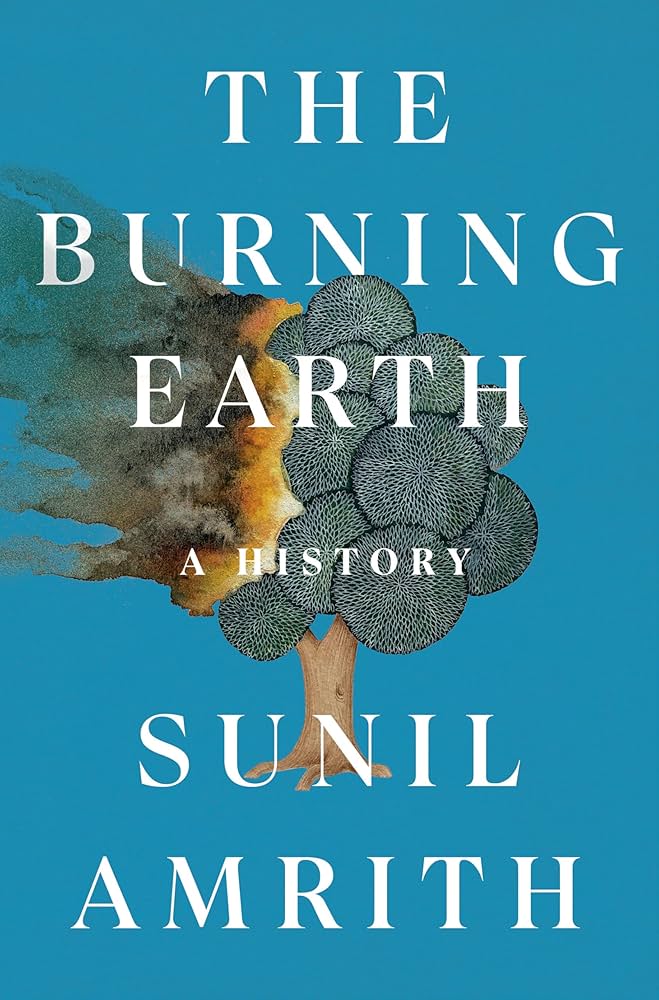
Amrith, Sunil. The Burning Earth: A History. W. W. Norton & Company, 2024.

The Burning Earth by Sunil Amrith is a historical examination of climate change, empire, war, and humanity’s relationship with the natural world. The book explores how rising populations, industrialization, greed, and global conflict directly reshape the environment, while environmental collapse simultaneously reshapes the human condition. Throughout the text, Amrith presents history as deeply interconnected with nature rather than separate from it.

One of the most compelling ideas within the book is the danger of believing that technology alone can solve climate collapse. Amrith discusses the concept of the technosphere, humanity’s attempt to “engineer the climate itself” (331), while warning of the consequences that follow: “species loss, the depletion of fresh water, assaults on the forests and the oceans—and reducing the incentive for the wealthy and the powerful to change their behavior in any way” (332). The book repeatedly returns to the idea that those in power often exploit both land and people while avoiding responsibility for the damage left behind.

War Against Nature

A major theme throughout this book is Man vs. Nature, but also the illusion that humanity exists separately from nature. Amrith argues that environmental destruction and human suffering are directly intertwined. Civilization expands, consumes, wages war, and extracts resources while ecosystems collapse alongside it. He writes, quoting Hannah Arendt, that “earthly nature, for all we know, may be unique in the universe in providing human beings with a habitat in which they can move and breathe without effort and without artifice” (252).

This quote deeply resonated with me because it reinforces how fragile and rare our planet truly is. The Earth is not simply a backdrop to human history but the condition that makes human life possible at all. Throughout history, conflict between rulers and the ruled, empires and indigenous peoples, industrialization and sustainability, has repeatedly led to environmental collapse alongside human suffering.

Amrith traces these patterns through multiple eras of history. In 1426, Portuguese colonizers burned the forests of Madeira for sugar plantations, destroying ecosystems alongside local culture and community. During periods of empire and expansion, gold, oil, and resources fueled war while forests, oceans, animals, and entire ways of life were erased in the process. The industrialization of warfare only accelerated this destruction. “War machines were thirsty for oil” (171), Amrith explains, connecting environmental extraction directly to global violence and political ambition.

Discordia and Environmental Tyranny

This book strongly reinforced the central themes within my own novel, Discordia. My thesis asks: How does tyranny affect our environment? And beneath that: When and how do we rise against tyranny?

What The Burning Earth helped crystallize for me is that war, environmental collapse, and the human condition cannot truly be separated from one another. As long as we treat issues like sustainability, politics, war, and social inequality as isolated problems, the destruction continues to spread outward into every part of life.

One of the most haunting passages in the book describes wounded soldiers during World War II, comparing modern warfare to mythological monsters and apocalyptic visions. A Punjabi Rajput soldier wrote, “This is not a war… this is the end of the whole world” (172). That line captures something deeply relevant to our present moment. Environmental destruction is not disconnected from political violence or greed; they are reflections of the same imbalance.

This book ultimately reminded me that humanity behaves as though it stands above nature, when in reality, we are part of a singular living organism. To harm the planet is to harm ourselves. Healing the environment also requires healing the systems of violence, exploitation, and tyranny that continue to consume it.

The Road — Repetition and Emotional Desolation

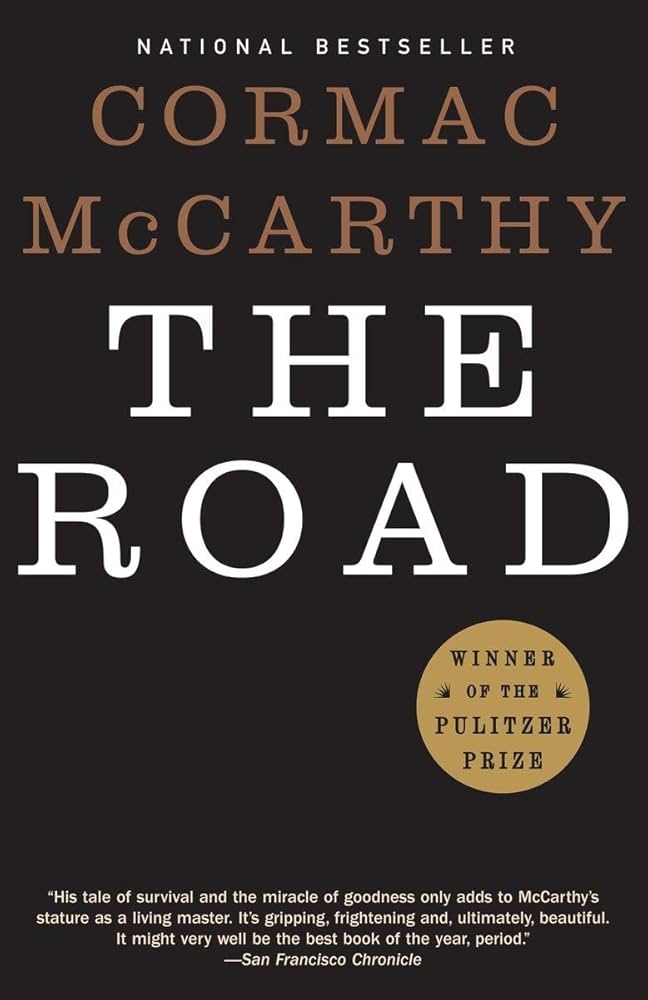
McCarthy, Cormac. The Road. Vintage International, 2007.

The Road by Cormac McCarthy is a dystopian horror novel set in an apocalyptic America where cannibalism has become normalized, and survival itself feels unnatural. The story follows a father and son, referred to only as “the man” and “the boy,” as they travel west toward the coast searching for warmer weather and some remaining fragment of hope. Along the road, they encounter starvation, violence, death, and the constant fear of other survivors.

When they finally reach the coast, however, they discover the same emptiness and danger they faced throughout the journey. At one point, they discover an abandoned ship and recover supplies, including a gun. After the boy accidentally leaves the gun behind, the father injures himself retrieving it, further weakening his already dying body. Eventually, the father dies on the road, leaving the young boy alone in a brutal world. By the end of the novel, another man approaches the child, claiming to have a family, and the two continue down the road together.

Repetition as Atmosphere

One of the most noticeable literary devices in this novel is repetition. Much of the story moves back and forth between short conversations between the father and son. The dialogue often revolves around death, survival, fear, or reassurance. The boy constantly seeks affirmation from his father, asking whether his father is telling the truth or whether things will be okay. McCarthy writes:

“The man was trying to kill us. Wasn’t he. Yes he was. Did you kill him? No. Is that the truth? Yes. Okay. Is that all right? Yes” (270).

The repetition creates a bleak emotional rhythm throughout the novel. The dialogue is stripped down, sparse, and often emotionally restrained. Even moments of tenderness feel muted by exhaustion and by the need to survive.

Another repeated element is the physical movement across the landscape: “They slept… They hiked… they followed” (88–89). The repetition of actions and imagery reinforces the emptiness of the world around them. Town after town, road after road, ash after ash, the setting rarely changes. This creates a suffocating atmosphere where time and geography almost blur together.

Emotional Flatness and Monotony

While I understand that McCarthy intentionally uses repetition to create emotional desolation, I personally struggled to fully enjoy the novel because the dialogue and prose became overly repetitive. Conversations often felt dry or emotionally flat:

“Is it okay? Yeah. It’s okay. Does it hurt? Yes. It hurts” (266).

The characters themselves sometimes felt similarly muted. Most people they encounter blend together under the same grayness of survival, fear, and hopelessness. I also noticed repeated imagery throughout the novel that made the world feel emotionally stagnant: “In the morning they stood in the road, and he and the boy argued about what to give the old man” (173). The landscape, conversations, and interactions often carried the same tone, with little variation.

For my own writing, this book helped me think about balance. Repetition can absolutely be powerful when used intentionally to create mood, rhythm, or emotional weight. However, I also realized how important it is for me, personally, to vary dialogue, imagery, pacing, and character voice to maintain emotional engagement with the reader. Even in bleak or desolate worlds, I am more drawn to stories where moments of tonal variation, personality, or vivid emotional shifts break through the darkness.

The Gilda Stories — Chosen Family, Immortality, and Resistance


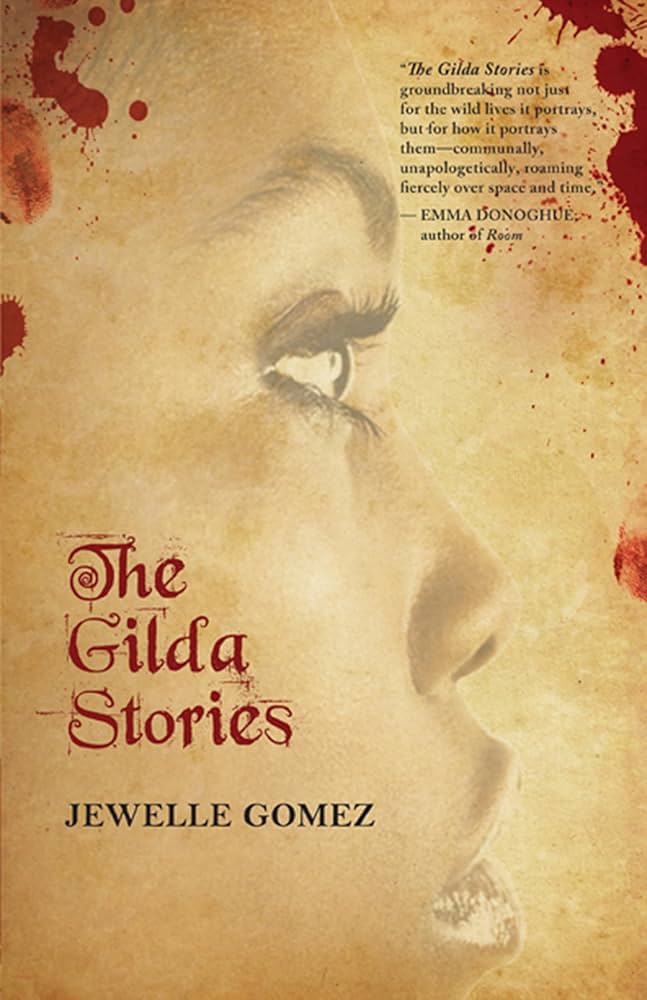
Gomez, Jewelle. The Gilda Stories. Beacon Press, 2023.

The Gilda Stories by Jewelle Gomez is a vampire novel that explores racism, queer love, slavery, chosen family, and survival across generations. More than simply a vampire story, the novel examines what it means to belong to one another in a world built on violence and displacement. The story begins with a frightened young woman escaping slavery and finding refuge in Gilda’s brothel, where she is introduced to compassion, education, and community in a way she has never experienced before.

“The gambling, musical divertissements, and the private rooms were all well attended. Gilda employed eight girls, none yet twenty…” (14). From the beginning, Gomez creates a setting that feels alive with intimacy and emotional texture. The young woman remains fearful of white men and the possibility of being dragged back into slavery: “Any of these men could capture her and take her back to the plantation” (29). Yet within Gilda and Bird’s household, she witnesses something entirely different from the cruelty she has known. The women are intelligent, capable, compassionate, and empowered: “They all had manners of ladies, could read, write, and shoot” (24).

Eventually, the young woman learns that Gilda and Bird are vampires, though Gomez reimagines vampirism as something rooted in connection rather than violence. “It is through our connection with life, not death, that we live” (43). The vampires in this world do not exist purely as predators. Instead, they exchange energy, dreams, and emotional understanding with humanity. Gomez writes, “We draw life into ourselves, yet we give life as well… It’s a fair exchange in a world full of cheaters” (43).

Chosen Family and Queer Love

One of the strongest elements in this novel is its exploration of chosen family. The emotional architecture of the relationships feels deeply intentional, especially the connection between Gilda and Bird. Their love is romantic, nurturing, and spiritual all at once. When Gilda prepares to die, she asks the young woman to remain with Bird, believing she belongs among them. Eventually, the young woman takes on the name Gilda herself, continuing the family’s lineage and identity she has entered.

Throughout the novel, Gomez repeatedly returns to the idea that family is not solely determined by blood, but by loyalty, protection, understanding, and mutual care. Eleanor later says, “…to choose someone for your family is a great responsibility. It must be done not simply out of your own need or desire but rather because of a mutual need” (63). That line felt especially powerful to me because it defines family as a responsibility rather than ownership.

The language surrounding community and belonging throughout the novel is often breathtakingly beautiful: “Those of us who can withstand that uneasy pulling of the sea’s waters swirling about the bay feel firmly rooted here and protective of each other” (71). Gomez creates an emotional atmosphere where intimacy and survival become deeply intertwined.

Resistance Against Exploitation

The antagonist, Fox, represents exploitation, cruelty, and domination. Unlike Gilda’s compassionate philosophy, Fox treats working women as disposable and slave-like. Because Gilda herself escaped plantation slavery, her conflict with Fox becomes deeply personal and symbolic. As the story unfolds over time, Gilda also becomes involved in activist movements such as Greenpeace and the Black Panther Party, continuing the novel’s larger themes of justice, resistance, and collective care.

One thing I struggled with personally was pacing. I found myself wishing Fox had been introduced earlier within the story, possibly within the first sixty pages, to create a stronger central tension sooner. I also wanted the novel to slow down more often and remain longer inside the emotional and sensual details of each scene. The relationships, touches, environments, and emotional moments were among the novel’s strongest parts, and I often found myself wanting more time to fully inhabit them before the story moved forward. By the end, the pacing felt rushed to me compared to the emotional depth established earlier in the novel.

Still, what stayed with me most was the novel’s belief in companionship and healing across time. Even after centuries, distance, grief, and transformation, the characters continue searching for connection with one another. The story ultimately suggests that survival alone is not enough; people also need intimacy, community, and love in order to remain whole.

A Swim in a Pond in the Rain — Winning through Authenticity

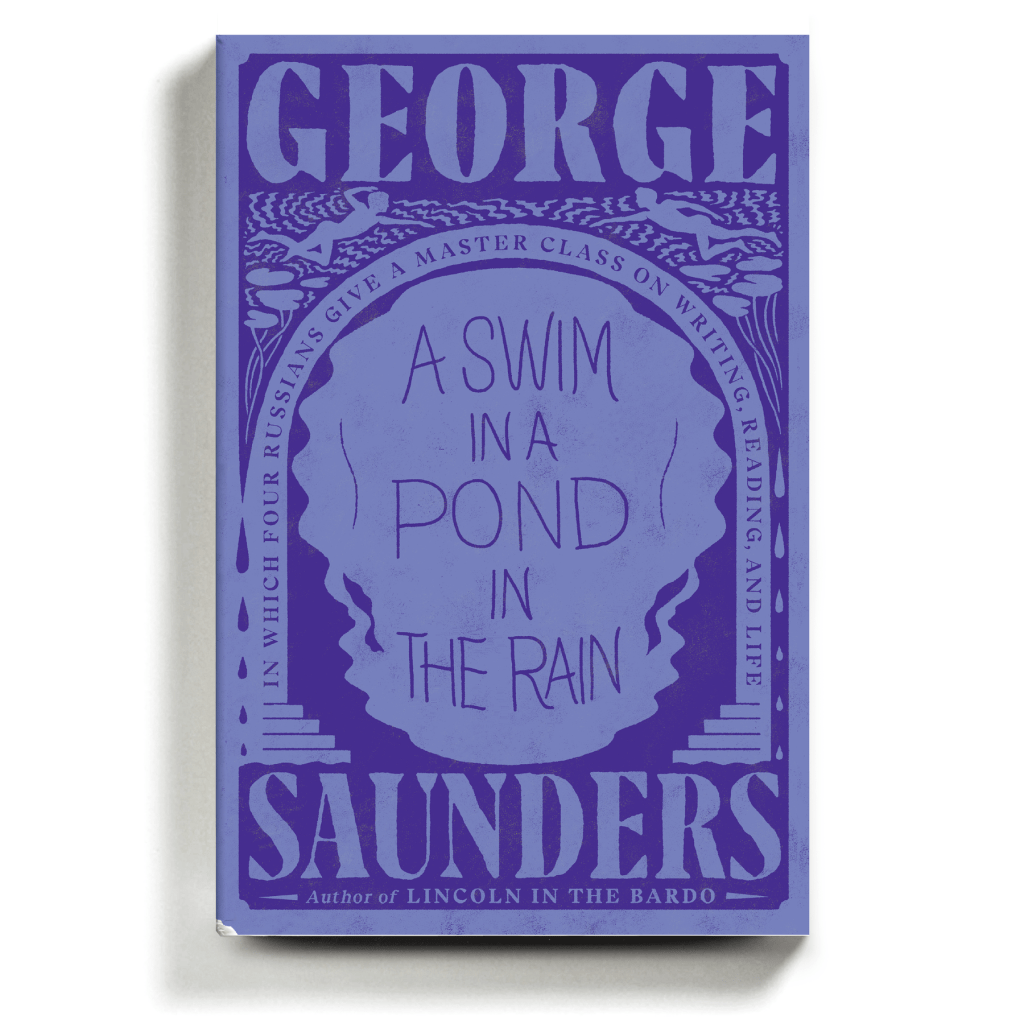
Saunders, George. A Swim in a Pond in the Rain: In Which Four Russians Give a Master Class on Writing, Reading, and Life. Random House, 2021.

A Swim in a Pond in the Rain by George Saunders is a craft book that examines four Russian authors and how storytelling can reflect morality, culture, human nature, and community. Saunders breaks down the mechanics of storytelling sentence by sentence, showing how every detail matters and how intentional writing creates emotional resonance.

One story that stood out to me was The Singers. The story slowly introduces an entire tavern full of people before the singing contest even truly begins. Saunders writes, “It was an unbearably hot July day when, scarcely able to drag one foot after the other, I walked slowly, accompanied by my dog, up the Kolotovka ravine in the direction of the Cozy Corner” (67). Immediately, we are placed into the exhaustion, the heat, and the atmosphere of the setting.

At first, the pacing almost feels too slow. The first eleven pages are mostly descriptions of people sitting in a bar. But that slowness becomes the point. Instead of simply saying the tavern was crowded, the story allows us to feel the room through observation, gossip, body language, and internal dialogue. The tavern becomes alive.

Community as Character

One of the most interesting craft choices in this story is how the community itself becomes a character. Every person in the tavern seems connected through shared history and quiet observation. The narrator notices Yashka the Turk standing in the center of the room: “a lean, slender man of twenty-three, wearing a long-skirted blue nankeen coat” (69). Small details like clothing, posture, and mannerisms layer the scene until the reader can almost smell the tavern and hear the crowd shifting around the room.

The emotional tension builds between the two singers. The contractor performs perfectly, technically polished and controlled. Yashka, however, sings with emotion and vulnerability. His voice is imperfect, but it resonates far deeper with the people listening.

Authenticity Resonates More Than Perfection

This story reminded me that authenticity will almost always move people more than perfection. A technically flawless performance may impress an audience, but emotional honesty is what creates connection. Yashka’s flaws are what make him human, and because of that, his singing reaches the community in a way the contractor’s performance cannot.

Saunders also discusses how long the buildup is before the actual “heart” of the story occurs. The exposition takes patience, but without it, the emotional payoff would not land the same way. The reader must first understand the people, the environment, and the culture before the climax can truly matter.

The Child Within the Adult

At the end of the story, after the celebration and drinking have ended, the narrator walks home and overhears a boy shouting to his brother, “Dad wants to give you a good hiding!” (82). It is such a small and almost humorous ending, but it carries something universal within it. No matter how old we become, there is still a child somewhere inside us. Across cultures, generations, and countries, people continue echoing the same emotions and relationships.

This book deeply influenced the way I think about storytelling. Sometimes spending extra time in setting, atmosphere, and internal observation can create a much more immersive emotional experience. It also reminded me that flawed characters are often the most lovable because they feel real. Most importantly, it reinforced the idea that, despite our cultural differences, there are deeply human experiences that connect us all.